
Performio has built its reputation on a single promise: calculating commissions more accurately than anyone else. In a category where most organizations still use spreadsheets and calculation errors regularly erode trust between sales and finance, that promise carries weight. The platform handles the full commission lifecycle: ingesting deal data from dozens of source systems, configuring complex plan structures, and delivering payout statements that reps trust.
To create this Performio review, we analyzed the platform in detail. We believe it's the right choice if:
You manage complex commission plans with tiered rates, accelerators, SPIFFs, and split crediting
You need enterprise-scale calculation handling 20,000+ payees and millions of monthly transactions
You want to eliminate spreadsheet-based commission processes and the errors that come with them
You require audit-ready payout records for finance and compliance
You need reps to see the exact logic behind every commission payment
However, Performio might not be the best choice if:
Your commission structure is simple enough that spreadsheets still work
You have fewer than 50 commission-earning employees
You need a self-serve tool deployable in days without managed onboarding
Published pricing and a free trial are important to your evaluation process
You want a combined CRM-plus-compensation platform in one product
While Performio handles compensation, it operates after deals close. The sales intelligence, buyer data, and prospecting tools that drive pipeline sit outside its scope.
This is where ZoomInfo fits as a complementary platform: a go-to-market platform built on a large B2B database that helps sales teams find, engage, and close the deals whose commissions Performio then manages.
We've included a look at ZoomInfo later in this review as a complement for sales organizations building a connected operations stack. If you're ready to explore what ZoomInfo can do for your pipeline, start with a free trial here.
What is Performio?
Performio is a cloud-based incentive compensation management (ICM) platform founded in 2006 by David Marshall in Melbourne, Australia. Marshall built the company from firsthand experience with large organizations on incentive plan execution. The SaaS product launched in 2009, and Performio became the leading commission management provider in Asia Pacific before establishing its US headquarters in 2017.
In 2019, Grayson Morris and Luke Teeple acquired the company. Under their leadership, revenue grew 77% year-over-year and the global employee count more than doubled in 2021. That momentum attracted a $75 million growth investment led by JMI Equity in June 2022, followed by additional funding in 2023.
Today, Performio serves mid-market and enterprise organizations across manufacturing, MedTech, transportation and logistics, banking, insurance, distribution, media and advertising, SaaS, and telecom. The platform reports 1M+ admin hours saved, 40,000+ active users, and $53B+ in commissions calculated. Named customers include Equifax, News Corp, Westpac, Toll Brothers, WP Engine, Uber Freight, and Trinity Logistics.
Independent analysts have confirmed its position. Forrester named Performio a Strong Performer in The Forrester Wave for Sales Performance Management Solutions for Incentive Compensation, Q1 2025, noting it was one of only three (of twelve evaluated vendors) to receive above-average customer feedback scores. Gartner lists it as a Representative Vendor in the 2025 Market Guide for Sales Performance Management. The ISG Buyers Guide awarded it an Exemplary rating (the top tier) for Sales Performance Management Emerging Providers, highlighting Performio among vendors scoring highest on Customer Experience.
Performio Pros & Cons
Pros | Cons |
|---|---|
- Component-based plan builder handles complex commission structures without formulas | - Salesforce sync can lag up to 24 hours |
- Scales to 20M+ monthly transactions and 20,000+ payees | - Steep administrative learning curve |
- Six native crediting models cover team, territory, and multi-level hierarchies | - Pricing is fully custom with no published rates |
- AI Admin Assistant embedded in the compensation workflow | - No free trial or self-serve evaluation |
- 40+ data integrations including industry-specific connectors | - Implementation can take longer than initially quoted |
- Transaction-level drill-down builds rep trust in payout accuracy | - Limited admin role granularity |
- Above-average customer support per Forrester and ISG | - Analytics Studio may require separate purchase |
Performio Review: How It Works & Key Features
Commission Calculation & Plan Management: Performio replaces spreadsheet-based commission processes with a component-based engine built for enterprise complexity.
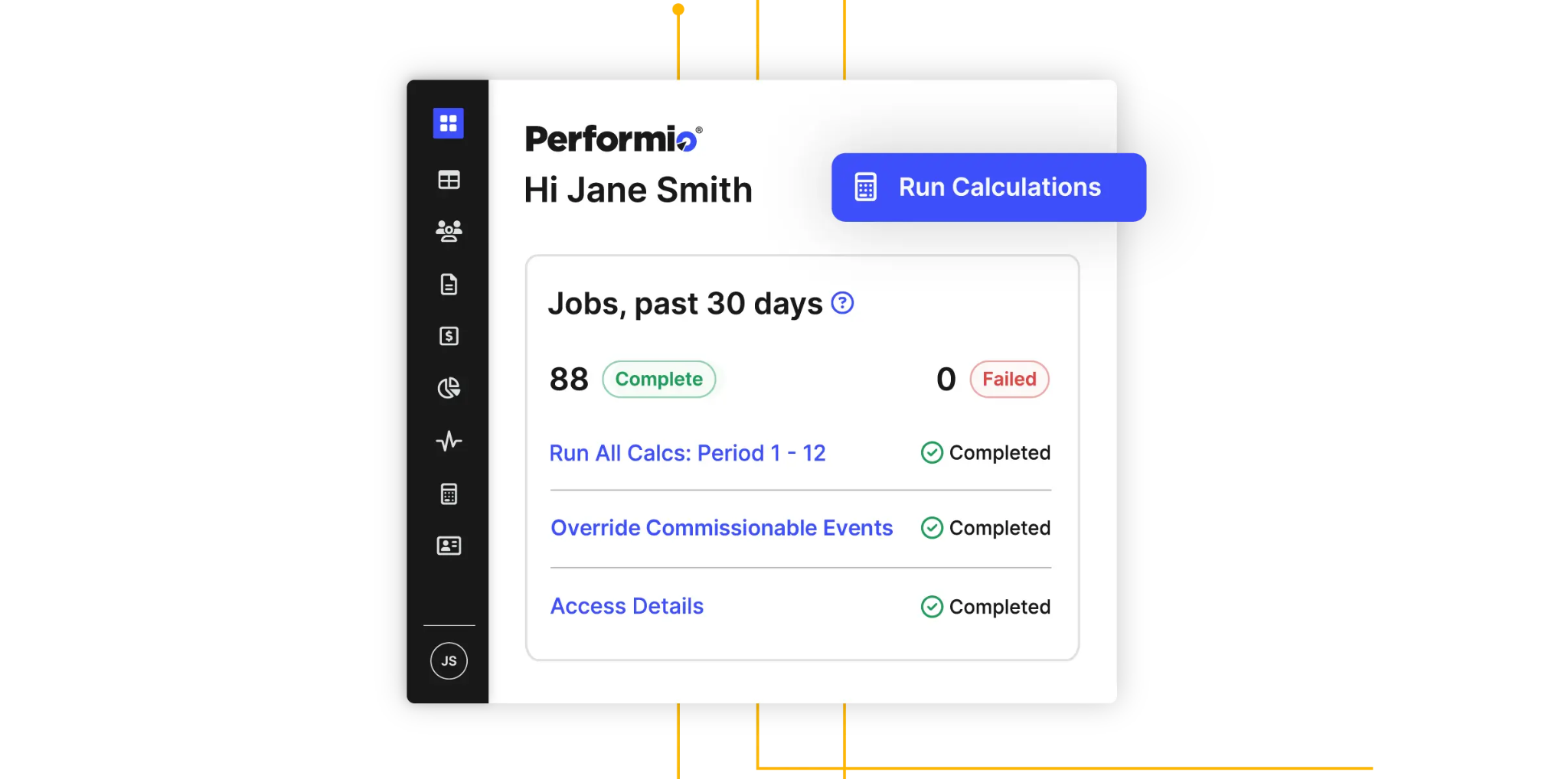
The core of Performio is its Incentive Compensation product, built on what the company calls the Adaptable ICM Core. Instead of forcing admins to write formulas or configure rigid rules, the platform uses a component-based Plan Builder where plan elements are modular and reusable. Change a component once, and it updates everywhere.
Source: Performio
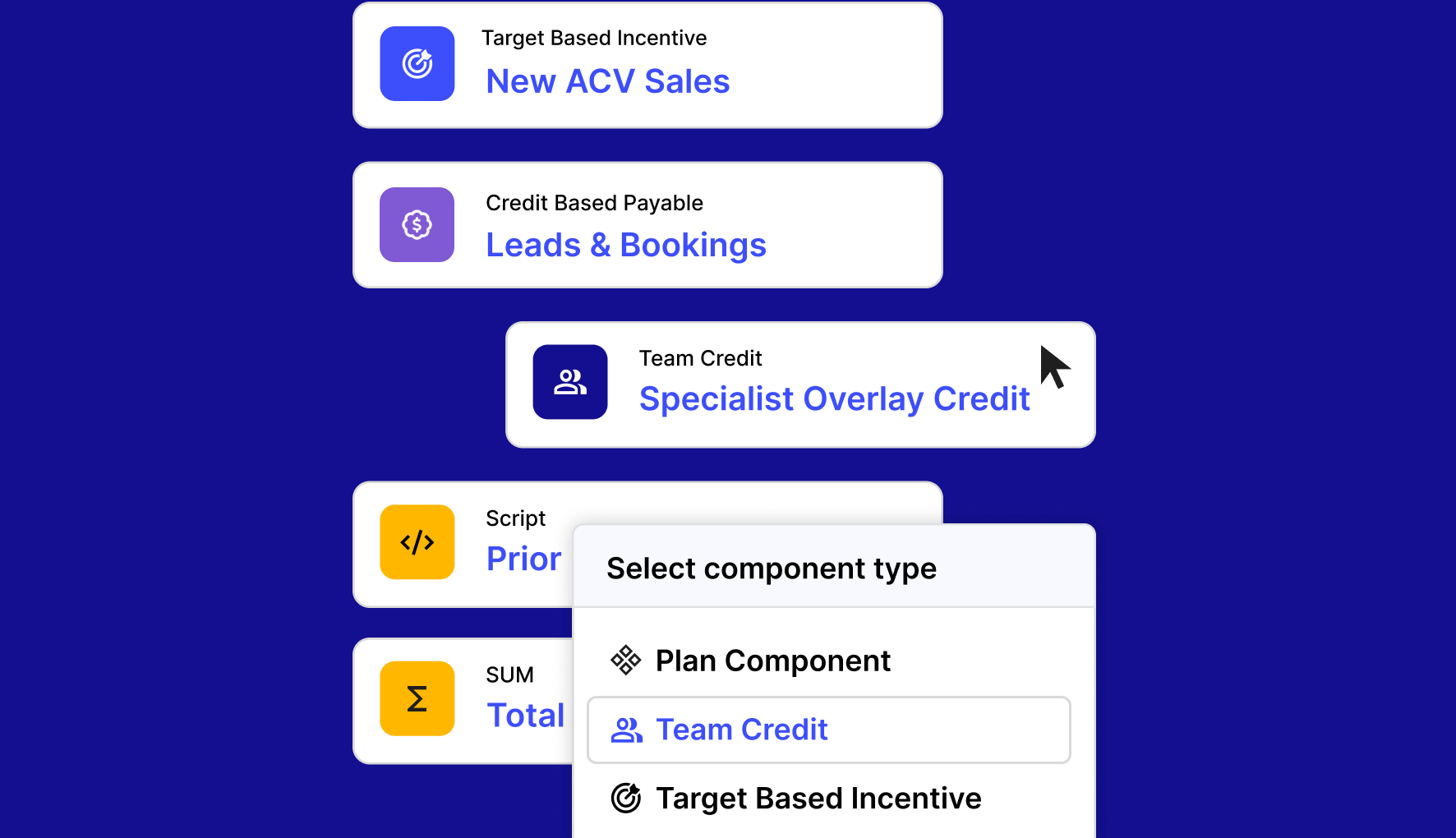
The workflow runs in four stages. First, Performio ingests data as-is from CRM, ERP, HRIS, and finance systems without requiring pre-transformation. Second, admins configure plans through the Plan Builder using a library of prebuilt components: target-based incentives, commission-per-credit, tiered performance measures, matrix rates, accelerators, decelerators, and SPIFFs. Third, the engine runs calculations with full traceability to the transaction level. Fourth, results flow into seller dashboards and approval workflows, with support for holds, clawbacks, true-ups, draws, caps, and reconciliations.
Source: Performio
What sets the calculation engine apart is its crediting architecture. Performio supports six crediting models out of the box: participant credit, team credit, territory credit, roll-up credit, roll-down credit, and credit-on-credit (where one credit is calculated based on another). These cover matrixed organizations and multi-level hierarchies without custom code. Commission rates are stored in reusable rate cards with built-in effective dating, so historical data remains accurate when rules change retroactively.
At enterprise scale, Performio reports the infrastructure handles 20M+ monthly transactions, ingests 2B records with 4-second load times, and supports 20,000+ payees per processing cycle.
Analytics & Reporting: Self-service analytics for compensation teams, plus transparent dashboards that reps trust.
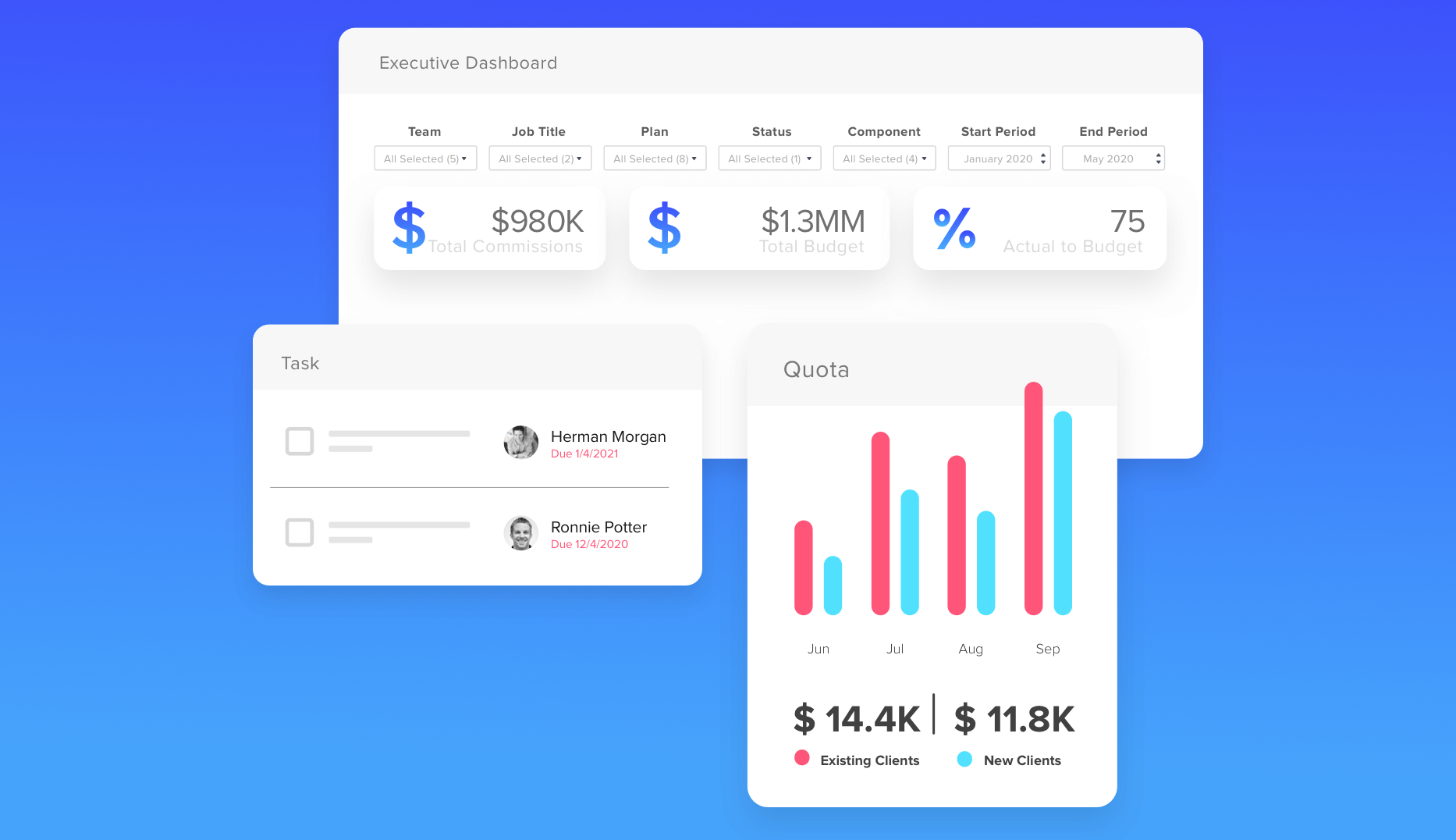
Performio's reporting operates at two levels. The base layer, Seller Performance Insights, gives sellers and managers interactive dashboards showing real-time earnings, quota attainment, and deal-level commission breakdowns. Sellers can drill into transactions, rates, and the plan components behind every payout. A what-if calculator lets reps model how closing a specific deal would affect their compensation. Performio frames this as a motivation tool that focuses sellers on the right deals.
The advanced layer is Analytics Studio, a dedicated business intelligence product launched in February 2023. It adds natural language querying (type a question in plain English and get a chart), Automatic Insights that run thousands of queries in the background to surface anomalies and trends, and Change Analysis for identifying what caused a spike or drop between any two data points.
Source: Performio
Analytics Studio also estimates future payables based on current CRM pipeline data, enabling commission forecasting. Role-based access ensures executives see aggregated data, managers see their teams, and reps see only their own numbers.
The transparency matters because it addresses a real problem. When reps can trace every dollar to its source, shadow accounting drops.
AI Capabilities: An admin assistant embedded in the compensation workflow, plus open protocol access for external AI tools.
In October 2025, Performio launched two AI components: the AI Admin Assistant and the Performio MCP Server.
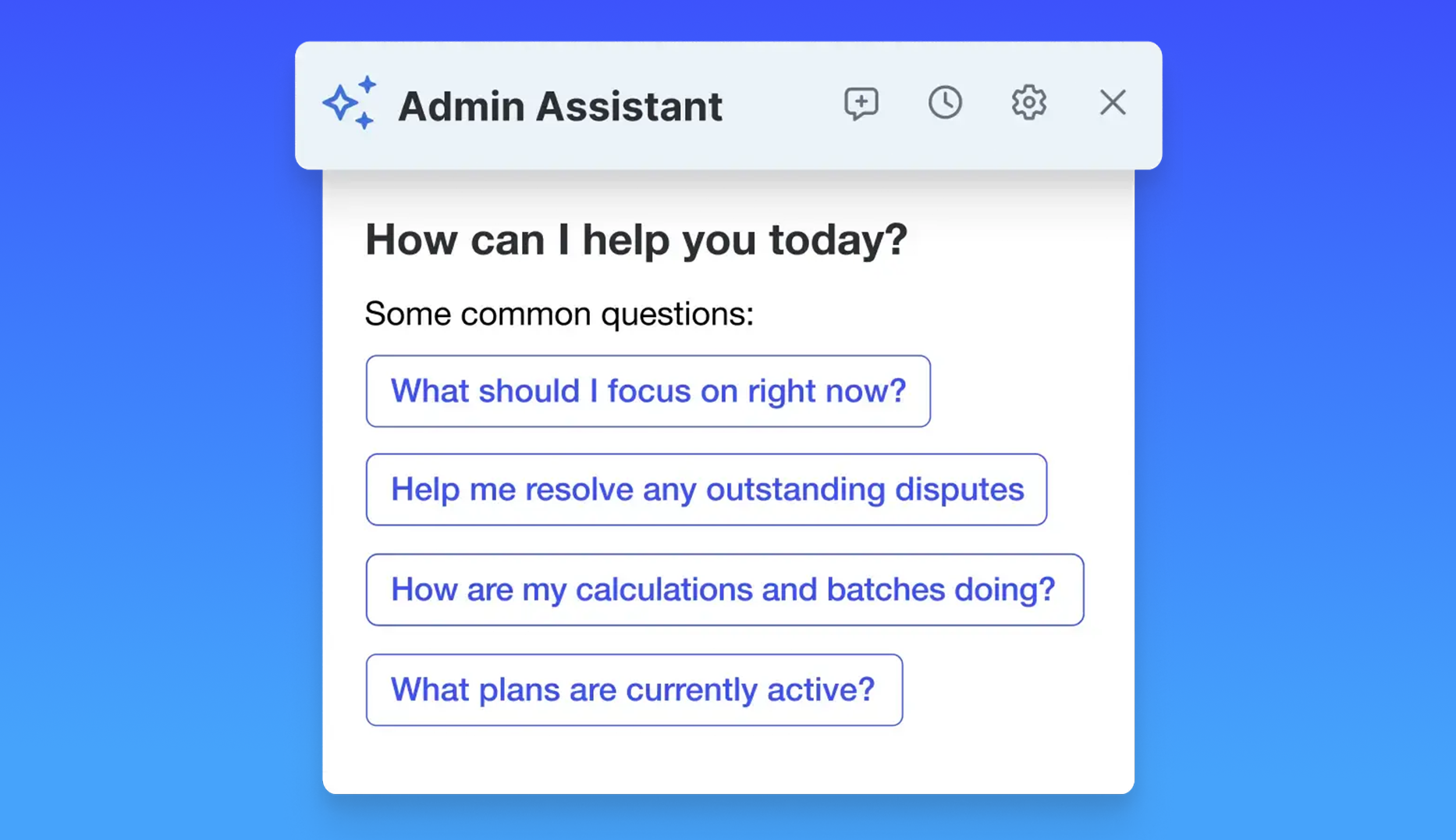
The AI Admin Assistant is a natural-language interface for compensation administrators. Unlike a chatbot layered on top, it reads actual plan configuration, data, and rates within a customer's environment. Admins can ask it to explain plan logic, investigate why a specific payout occurred, summarize commission disputes with suggested resolutions, or guide them through plan updates. It pauses for human approval before applying changes, which addresses the concern about AI making autonomous modifications to payroll-adjacent systems.
Source: Performio
The MCP Server lets users interact with Performio through external AI tools like Claude Desktop or Salesforce Agentforce. Users can automate workflows (importing data, triggering calculations, fetching results) without opening the Performio application. Performio describes this as the first MCP implementation in the ICM industry.
All AI processing runs on AWS Bedrock with strict data isolation, and Performio states it never trains models on customer data.
Data Integrations: 40+ connectors across CRM, ERP, HRIS, and industry-specific platforms.
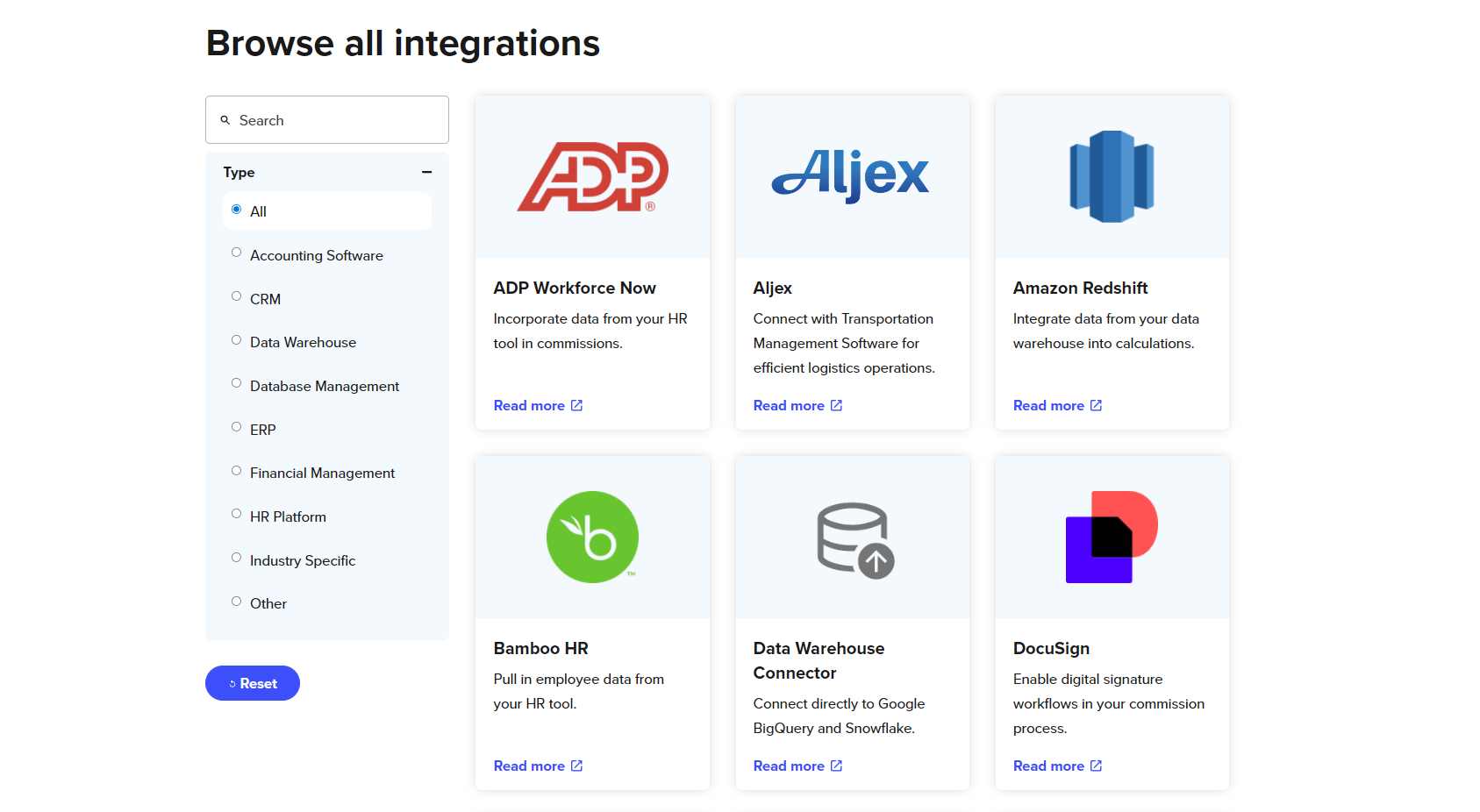
The platform offers three integration pathways: out-of-the-box connectors (notably Salesforce and NetSuite), a REST API with OAuth2 and HTTPS, and flat file/SFTP ingestion for file-based workflows. Built-in transformation tools structure and validate data inside Performio, eliminating the need for a separate ETL layer.
The integration catalog spans 40+ named systems across seven categories: CRM (Salesforce, HubSpot, Microsoft Dynamics), ERP (SAP, NetSuite, Epicor), HRIS (ADP, Workday, BambooHR), data warehouses (Snowflake, BigQuery, Redshift), financial systems (Xero, QuickBooks, Zuora), and analytics tools (Tableau, Qlik). Performio also offers industry-specific connectors for transportation and logistics (McLeod, Aljex, TMW/Trimble), banking (FIS, Finastra, Jack Henry, nCino), and manufacturing (Plex, QAD), serving industries with non-standard data structures.
Source: Performio
Performio can push data back to Salesforce and payroll systems after calculations complete, making the integration bidirectional. Pricing is not tied to data volume or API usage, so costs stay predictable as data grows.
Pricing: Fully custom, quote-based pricing with no published rates.
Performio does not publish pricing tiers or dollar amounts. Every quote is custom, built from two structural components described on the pricing page:
Subscription pricing (recurring), determined by the number of commissionable employees, admin seats, whether Analytics Studio is included, and whether dedicated or sandbox database environments are needed.
Implementation cost (one-time), scoped based on the number of compensation plans, data sources and integrations, reports and dashboards, and custom workflow requirements.
The only budget benchmark Performio publishes: "Many mid-market and enterprise teams allocate less than 3% of total commission payouts to compensation software."
There is no free plan and no free trial. The primary entry point is scheduling a demo, a sales-led product walkthrough rather than a self-serve evaluation. This is standard for enterprise ICM vendors but creates a barrier for teams wanting to test before committing.
The platform holds SOC 1 and SOC 2 Type II certification, uses AES-256 encryption in transit and at rest, supports SSO and MFA, and aligns with GDPR and CPRA requirements. A Frankfurt data center launched in November 2022 serves European customers under local data residency requirements.
Where Performio Falls Short
Performio is a focused ICM platform. But regular use reveals friction points around data freshness, administrative complexity, and evaluation barriers.
Salesforce Sync Lag. Multiple G2 reviewers report that changes in Salesforce can take up to a day to appear in Performio. For teams that rely on near-real-time deal data for commission tracking, this creates uncertainty. Reps checking their dashboards see yesterday's numbers, not today's, which undermines the transparency that should eliminate shadow accounting.
Administrative Learning Curve. Despite its no-code positioning, the platform requires significant ramp-up time for administrators. Capterra and GetApp reviewers note the steep learning curve, with one admin stating the platform was too complex to engage with for an extended period. Plan changes may still require implementation-team involvement for organizations with complex structures, which contradicts the self-service promise.
Pricing and Evaluation Opacity. Performio publishes no pricing tiers, no dollar amounts, and offers no free trial. For buyers comparing ICM platforms, this forces a sales conversation before any hands-on evaluation. Combined with implementation as a separate one-time cost (scoped by plan complexity, data sources, and reporting needs), the total cost of ownership is difficult to estimate in advance.
Limited Admin Role Granularity. A GetApp reviewer noted the absence of a limited admin role, meaning organizations cannot delegate specific administrative functions without granting full system admin access. For larger teams with distributed compensation responsibilities, this is a governance gap.
Implementation Delivery Gaps. Some Gartner Peer Insights reviewers reported implementations that took longer than promised, with specific features (automated agreements, advanced dashboards) delayed or underdelivered at rollout. For a platform that requires managed onboarding, implementation quality directly affects time-to-value.
These limitations reflect the trade-offs of building a specialist ICM platform. They are manageable for organizations with the scale and internal resources to work within them. But they matter when evaluating how Performio fits into a broader sales operations stack, where commission management is one piece of a larger system that includes sales intelligence and pipeline generation tools.
Completing the Sales Operations Stack: ZoomInfo
Performio handles what happens after deals close: calculating commissions, distributing payouts, and giving reps visibility into their earnings. But commission management is one component of a broader sales operations system. The pipeline that feeds those commissions requires accurate prospect data, buyer intelligence, and execution tools that Performio was never designed to provide.
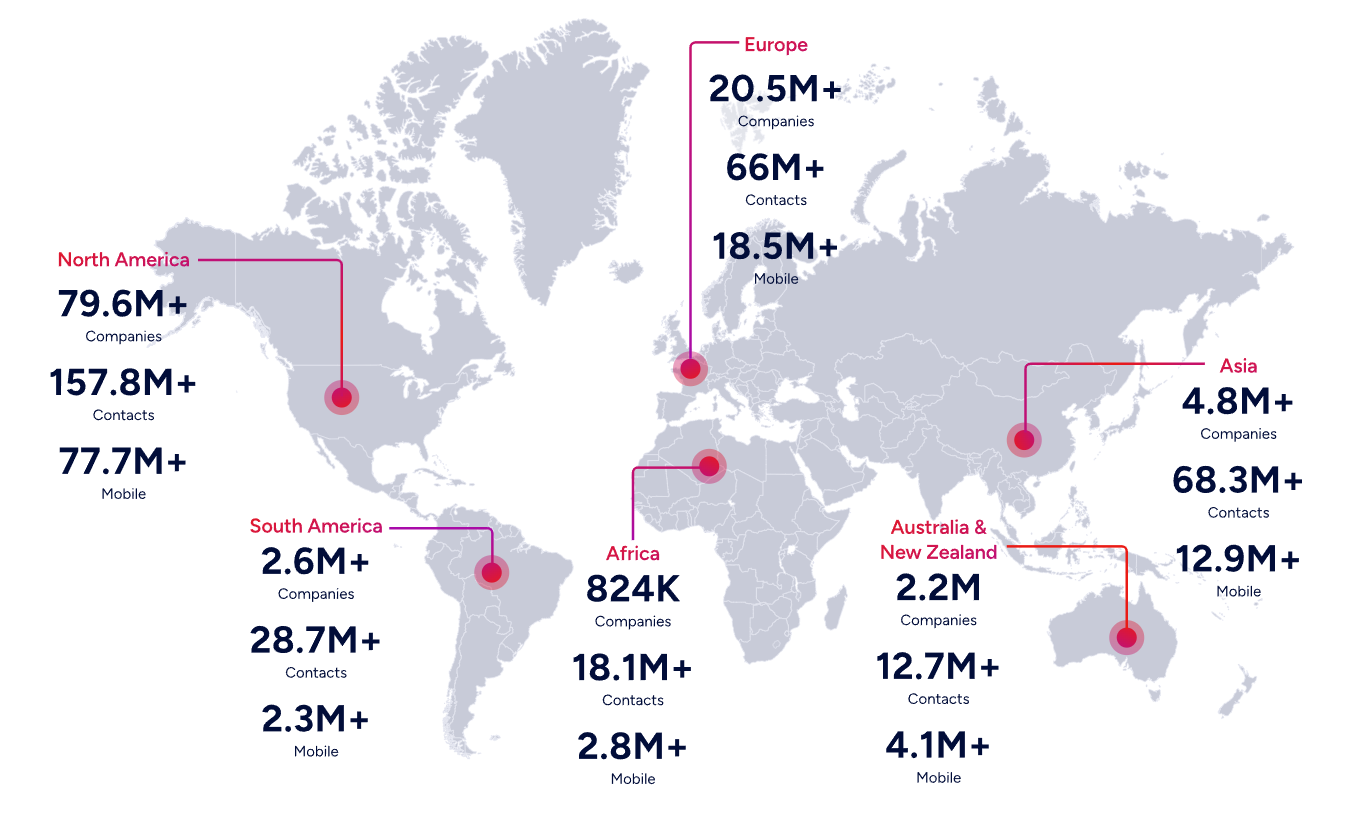
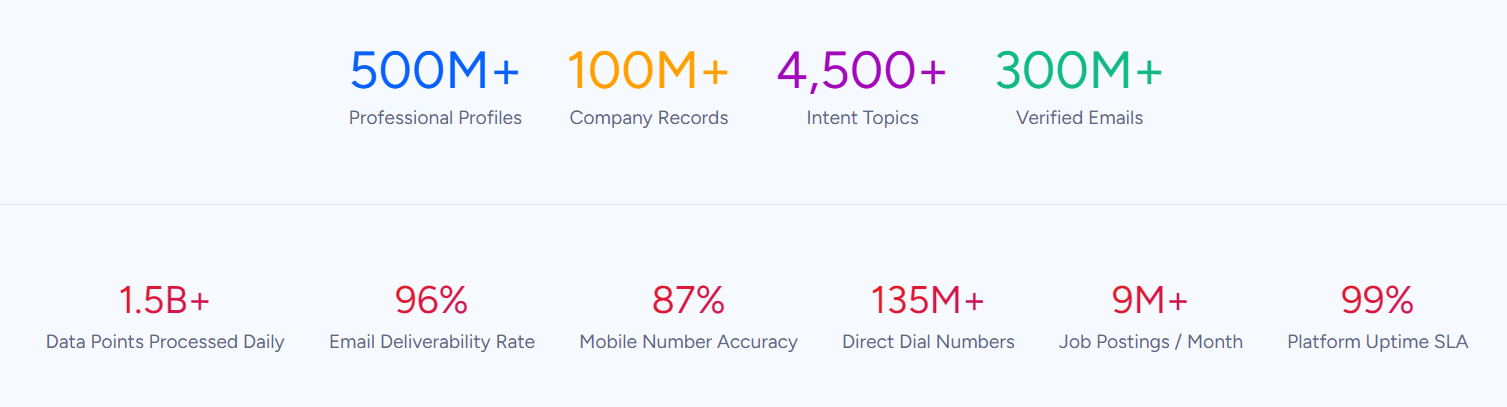
ZoomInfo is a go-to-market platform built on a large B2B database: 500M contacts, 100M companies, 135M+ verified phone numbers, and 200M+ verified business emails. Its GTM Context Graph processes 1.5B+ data points daily, combining this data with your CRM records, conversation transcripts, and behavioral signals to show the full picture of your accounts: what happened, why it happened, and what to do next.
For sales organizations already using Performio for commission management, ZoomInfo addresses the other half: making sure reps have the data and tools to close the deals that generate those commissions.
B2B Data That Powers Pipeline: ZoomInfo gives reps the prospect intelligence that Performio's dashboards depend on.
Performio's what-if calculator shows reps how a deal would affect their payout. But that projection is only useful if reps know which deals to pursue. ZoomInfo's data platform gives them the answer.
The database covers three dimensions: identity data (who buyers are and how to reach them, including 120M direct-dial phone numbers and 200M+ verified business email addresses), company context (100M companies with org charts and technographics), and signals that reveal when accounts are in-market.
A multi-source pipeline backed by 300+ human researchers verifies data quality, with up to 95% accuracy on first-party data. In a Fortune 500 competitive RFP analyzing 25 million contacts across vendors, an independent consultant concluded that "no other competitor came even close."
Vensure eliminated manual prospect research with ZoomInfo's data. Its VP of Revenue Operations reported the team was "three steps ahead" in reaching clients and accelerating pipeline. (Vensure)
GTM Context Graph: ZoomInfo's intelligence layer captures not just what happened in a deal, but why it happened.
Where Performio tracks commission outcomes (what reps earned), ZoomInfo's GTM Context Graph captures the intelligence behind those outcomes. By combining CRM records, conversation transcripts, email threads, and product usage data with ZoomInfo's third-party intelligence, the Graph maps connections between signals and outcomes.
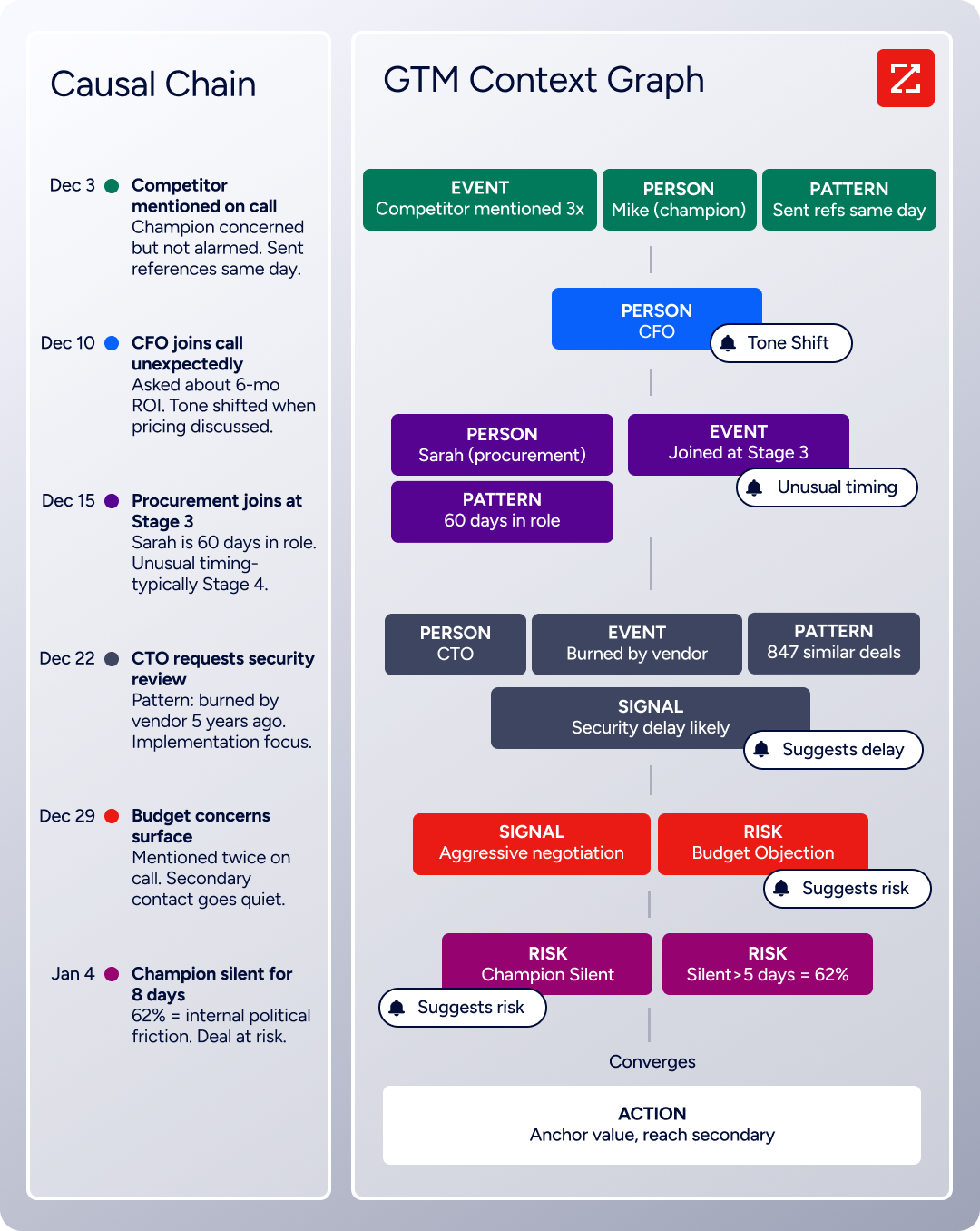
A CRM records that a deal moved stages. The GTM Context Graph reveals why it moved: maybe the CFO joined the last call and asked about ROI, or maybe a champion went quiet during an internal budget battle. That intelligence powers follow-up emails that address specific concerns, plays targeting accounts whose signal patterns match past wins, and forecasts weighted by buying evidence rather than stage labels.
This layer exists because ZoomInfo spent two decades building B2B data infrastructure, then extended it to first-party data through conversation intelligence and behavioral signals.
Seismic attributed 39% of its active pipeline to opportunities identified or influenced by ZoomInfo signals, with sales teams reporting 54% higher productivity. (Seismic)
Seller Execution Through GTM Workspace: An AI-powered workspace that handles administrative work so reps focus on selling.
GTM Workspace is the seller's interface to ZoomInfo's data. It pulls CRM data, ZoomInfo signals, conversation history, and market intelligence into one view, with AI agents that handle account research, outreach drafting, CRM updates, and signal monitoring.
For sellers already using Performio to track their commissions, GTM Workspace completes the workflow. Performio shows what they've earned and what they stand to earn. GTM Workspace shows which accounts to pursue next, what to say, and when to engage. The Action Feed surfaces in-market buyers with pre-drafted actions for each signal. Views let reps filter for intent spikes, technology changes, funding events, or personnel movements across their book of business.
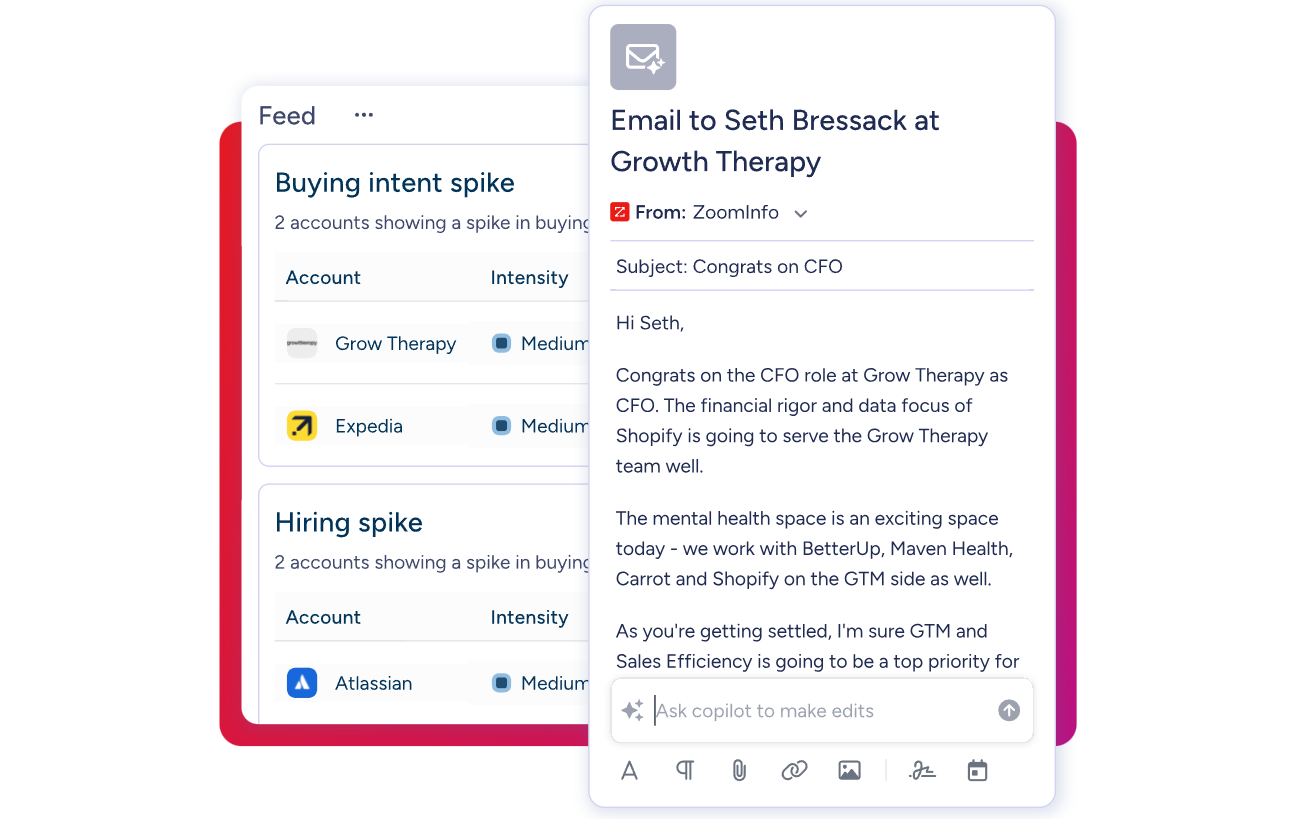
The same data is available in GTM Studio for marketers and RevOps teams, and through APIs and MCP for custom tools or AI agents.
Spekit's RevOps Manager noted that ZoomInfo's single view eliminated the need to navigate between systems, reducing context switching for the sales team. (Spekit)
Performio and ZoomInfo: How They Fit Together
Aspect | Performio | ZoomInfo |
|---|---|---|
Primary purpose | Commission calculation and payout management | Sales intelligence and GTM execution |
Where it operates | Post-sale: after deals close | Pre-sale: finding, engaging, and closing deals |
Who uses it daily | Comp admins, finance teams, sales reps (for statements) | Sales reps, SDRs, marketers, RevOps |
Data it manages | Commission plans, payout rules, attainment data | Prospect contacts, company intelligence, buyer signals |
AI focus | Admin assistance for plan configuration and disputes | Account research, outreach drafting, signal monitoring |
CRM relationship | Pulls deal data from CRM to calculate commissions | Enriches CRM with prospect data and buying signals |
Rep motivation mechanism | Transparent commission statements and what-if calculators | Prioritized accounts, AI-drafted outreach, deal intelligence |
Pricing model | Custom quote (subscription + implementation) | Consumption-based pricing with free tier available |
Free evaluation | No free trial or plan | ZoomInfo Lite (permanent free) + 7-day trial |
Final Verdict
Performio and ZoomInfo serve different stages of the same revenue operation, and the choice between them is not either/or.
Choose Performio if your organization needs to replace spreadsheet-based commission processes with a platform that handles enterprise complexity: multi-tier plans, split crediting, clawbacks, draws, and territory hierarchies at scale. Its component-based architecture, AI admin assistant, and transaction-level drill-down make it a good fit for mid-market and enterprise teams, especially in manufacturing, logistics, banking, and SaaS, where commission accuracy affects financial reporting and rep retention. The trade-offs are a steep learning curve, opaque pricing, and an implementation process that requires patience.
Add ZoomInfo to give your sales team the data and tools to fill the pipeline whose commissions Performio manages. While Performio ensures reps are paid accurately for what they close, ZoomInfo gives them the prospect data, buyer signals, and workspace to close more. Together, they create a connected system: ZoomInfo drives pipeline, the CRM tracks deals, and Performio calculates what everyone earns.
Get started with ZoomInfo here.
For sales operations leaders building a tech stack, the combination addresses both sides of performance: motivating reps through transparent, accurate compensation and equipping them with the data to act on that motivation.
Performio FAQ
Is there a free version or trial of Performio?
No. Performio does not offer a free plan or a free trial. The primary evaluation path is scheduling a demo, a sales-led product walkthrough rather than self-serve access. This is standard for enterprise ICM vendors but creates a barrier for teams wanting to test the platform before committing. ZoomInfo, by contrast, offers a permanent free tier (ZoomInfo Lite with 10 monthly export credits and access to its B2B database) plus a separate 7-day free trial with no credit card required.
How much does Performio cost?
Performio does not publish pricing tiers or dollar amounts. Every quote is custom, based on the number of commissionable employees, admin seats, selected products (Analytics Studio is listed as a separate selection), and implementation scope. The company's only public benchmark states that many mid-market and enterprise teams allocate less than 3% of total commission payouts to compensation software. Expect a recurring subscription plus a one-time implementation fee.
What types of commission plans can Performio handle?
Performio supports many commission structures through its component-based Plan Builder, including target-based incentives, tiered performance measures, matrix rates, accelerators, decelerators, SPIFFs, bonuses, draws, clawbacks, caps, and split crediting. The platform offers six native crediting models covering participant, team, territory, roll-up, roll-down, and credit-on-credit scenarios. This makes it suitable for organizations with complex compensation programs that have outgrown spreadsheets.
How long does Performio implementation take?
Performio describes expert-led onboarding tailored to each customer's plans and data but does not publish specific timelines. Some Gartner Peer Insights reviewers reported implementations that took longer than initially promised, with certain features delayed at rollout. The timeline depends on the number of compensation plans, data sources, integrations, and reporting requirements. Organizations with complex plans should expect a multi-week process.
What CRM integrations does Performio support?
Performio offers native connectors for Salesforce, HubSpot, and Microsoft Dynamics CRM, plus a REST API for custom integrations. The full integration catalog spans 40+ systems across CRM, ERP, HRIS, data warehouse, and financial platforms, including industry-specific connectors for transportation, banking, and manufacturing. However, some reviewers note that Salesforce data sync can lag up to 24 hours, which may affect real-time commission visibility.
Who is Performio designed for?
Performio targets mid-market (51 to 1,000 employees) and enterprise (1,000+ employees) organizations. G2 data shows 51% of users are mid-market and 32% enterprise. The platform serves industries including manufacturing, MedTech, transportation, banking, insurance, SaaS, and telecom. It is not designed for small businesses or startups with simple commission structures, as the pricing, implementation requirements, and feature depth assume a minimum scale of roughly 50 commission-earning employees.
Does Performio use AI?
Yes. Performio launched its AI Admin Assistant and MCP Server in October 2025. The AI Admin Assistant reads actual plan configuration and data to answer questions, investigate disputes, explain plan logic, and guide plan updates, pausing for human approval before applying changes. The MCP Server allows interaction with Performio through external AI tools like Claude Desktop or Salesforce Agentforce. All AI processing runs on AWS Bedrock with strict data isolation, and Performio states it does not train models on customer data.
How does Performio compare to spreadsheets for commission management?
Performio reports that 80% of its customers used spreadsheets before switching. The platform eliminates manual calculation, formula errors, and version control issues inherent in spreadsheet-based processes. It adds audit trails, automated data ingestion from CRM and ERP systems, rep-facing dashboards with transaction-level drill-down, and what-if modeling that spreadsheets cannot provide at scale. The trade-off is a higher cost, longer setup time, and a learning curve for administrators who manage plan configuration.
See more Performio comparisons and alternatives:
