
Choosing between Performio and CaptivateIQ for incentive compensation management comes down to five questions:
Do you need a dedicated ICM specialist, or a platform that also handles territory planning, quota setting, and capacity modeling?
How complex are your commission plans, and can your team manage changes without filing IT tickets or calling the vendor?
Are you in an industry with non-standard data sources (transportation TMS, banking core systems, manufacturing ERP) that need native connectors?
Do you want AI that assists with plan building and admin tasks, or AI that also automates sales planning and territory configuration?
How much does the quality of the sales data feeding your commissions matter to payout accuracy?
In short, here's what we recommend:
Performio is the ICM specialist built for organizations with complex, multi-tier commission structures. Its component-based Plan Builder lets compensation teams configure layered rules (tiers, accelerators, splits, roll-ups, clawbacks) without IT involvement or formula rebuilding. Performio handles 20M+ transactions per month and 20,000+ payees per processing cycle, with native connectors for industries like transportation, banking, and manufacturing that other ICM tools rarely serve. However, Performio does not offer native sales planning. Its territory and quota management relies on a strategic partnership with LINEN Cloud, which means buyers who need planning and incentives in one system will manage two vendors instead of one.
CaptivateIQ combines incentive compensation and sales planning under one roof. Its SmartGrid engine processes 10M+ source transactions in 12 seconds and powers commission calculations, territory management, quota setting, and capacity planning. CaptivateIQ earned the highest possible scores in 12 of 26 criteria in The Forrester Wave Q1 2025, including AI capabilities and time-to-value. The trade-off is setup complexity: because CaptivateIQ is a blank canvas, reviewers note that getting started requires significant time and internal resources before the system becomes productive. Organizations with simpler needs may find the ramp steeper than expected.
Both platforms solve commission calculation well. But there's a factor upstream (how productive your sales team is, how many deals they close, how much commission they earn) that neither ICM tool addresses: the intelligence your reps use to find, engage, and close the right buyers.
ZoomInfo is an AI GTM platform built on a data foundation of 500M contacts, 100M companies, 135M+ verified phone numbers, and 200M+ verified business emails. This data feeds your CRM, which feeds your ICM tool. But ZoomInfo does more than enrich records. Its GTM Context Graph processes 1.5B+ data points daily, fusing your CRM data, conversation transcripts, and behavioral signals to reveal not just what happened in a deal, but why, so reps focus on the accounts most likely to close. Better intelligence means more productive reps, more closed deals, and more accurate commissions. Your team accesses it through the GTM Workspace for sellers, GTM Studio for marketers and RevOps, or APIs and MCP in any front-end.
If improving the sales intelligence that drives your commissions sounds like the missing piece, see how ZoomInfo works with your GTM stack.
Performio vs. CaptivateIQ vs. ZoomInfo at a glance
Performio | CaptivateIQ | ZoomInfo | |
|---|---|---|---|
Core focus | ICM specialist | Unified ICM + Sales Planning | B2B sales intelligence and GTM |
Founded | 2006 | 2017 | 2007 |
Commission calculation | Component-based Plan Builder | SmartGrid no-code engine | N/A (feeds upstream data) |
Sales planning | Via LINEN Cloud partnership | Native (territory, quota, capacity) | Territory/account intelligence via data |
AI capabilities | AI Admin Assistant + MCP Server | AI Agents (Comp Builder, Comp Ops, Rev Planning) | GTM Context Graph, AI agents |
Analyst recognition | Forrester Strong Performer Q1 2025 | Forrester Wave Leader Q1 2025 | Forrester Leader (Intent Data); Gartner Leader (ABM) |
Integration depth | 40+ connectors with industry-specific depth | 19 native connectors | 120+ marketplace integrations |
Pricing | Custom quote (subscription + implementation) | Custom quote (per-seat + setup fee) | Custom quote (consumption-based) |
Free trial | No | No (product tours available) | 7-day trial + permanent free tier |
Best for | Complex plans in specialized industries | Unified planning-to-payout in one platform | Sales performance that feeds commissions |
ICM specialist vs. unified platform: the fundamental split
This is the core architectural decision. Performio and CaptivateIQ made opposite bets about what an ICM platform should be.
Performio chose depth over breadth.
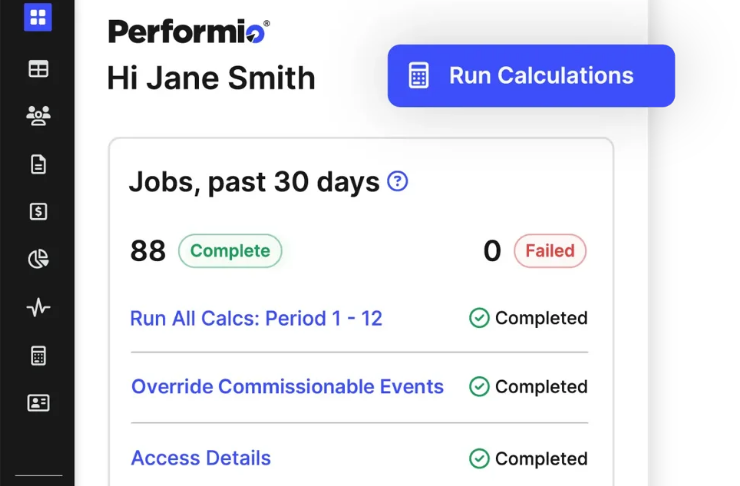
The company was designed exclusively for sales compensation and has stayed there for nearly two decades. CEO Grayson Morris has stated that Performio "focus[es] on incentive compensation and execute[s] it well." The Why Performio page positions the platform against both legacy enterprise suites (rigid, slow) and lightweight tools (too simple), claiming a middle ground: enterprise-grade functionality with modern usability.
Source: Perfomio
CaptivateIQ chose the opposite path.
What started as a commission automation tool in 2017 has expanded into a full Sales Performance Management platform. The launch of CaptivateIQ Planning in 2024-2025 added territory management, quota setting, and capacity planning alongside the core ICM product. The Why CaptivateIQ page frames the rationale directly: "Revenue strategy can't afford to be disjointed. CaptivateIQ bridges sales planning and incentive compensation in one workspace."
Source: CaptivateIQ
For buyers, this split creates a clear decision point.
If your organization primarily needs accurate, flexible commission calculations and your sales planning lives in separate tools (Anaplan, spreadsheets, or a dedicated planning platform), Performio's focused architecture may serve you better. If you want planning and incentives sharing the same data model so that quota changes flow through to commission calculations without reconciliation, CaptivateIQ's unified approach eliminates that handoff.
Neither approach is wrong. The question is whether your organization values depth in one domain or connectivity across two.
Commission plan complexity: components vs. SmartGrid
Both platforms handle complex commission structures, but their architectures differ in ways that matter for day-to-day administration.
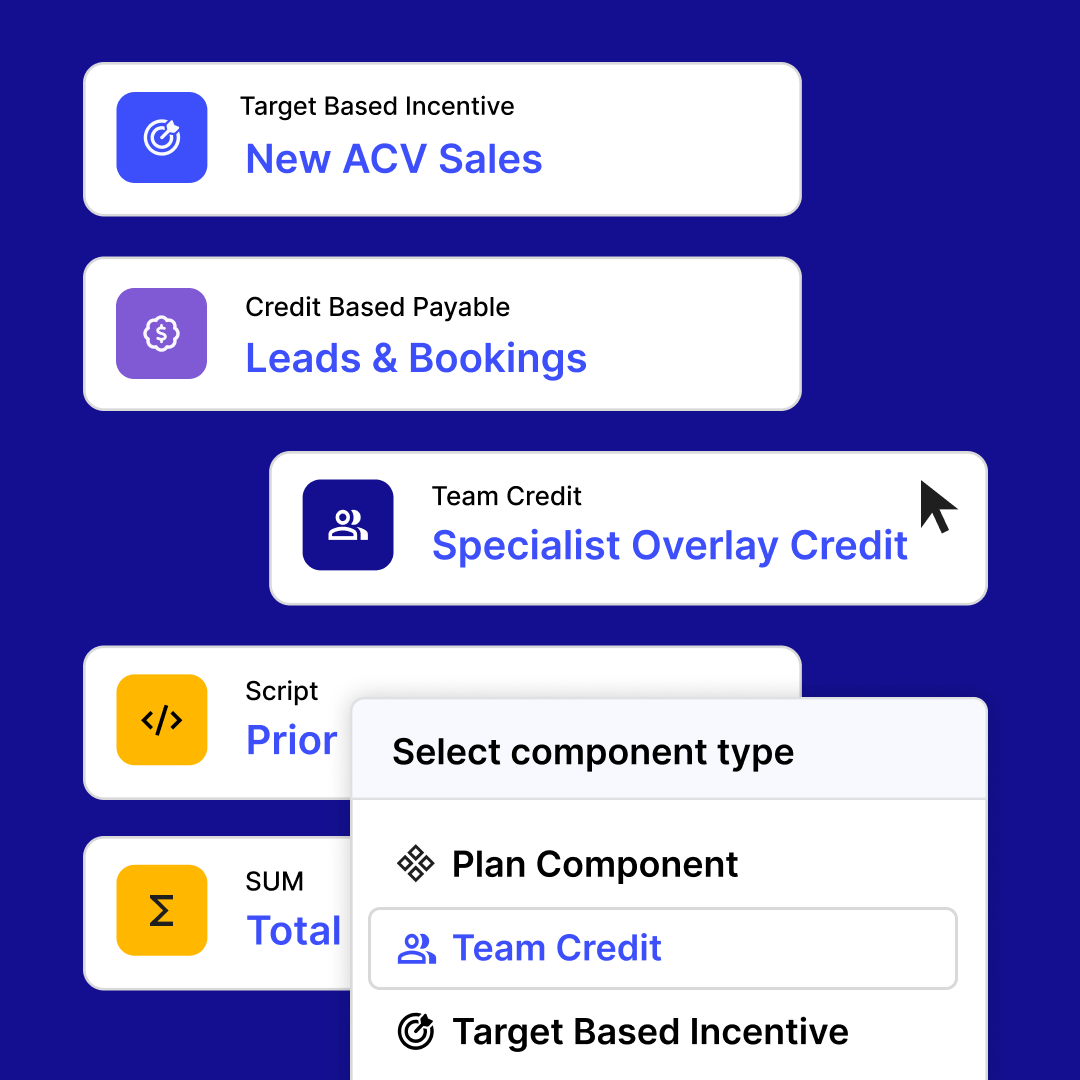
Performio uses a component-based Plan Builder where admins configure modular, reusable elements rather than writing formulas. Change a component once and it updates everywhere that component appears. This design eliminates the drift and duplication that plague formula-based systems.
Performio supports six native crediting models (participant credit, team credit, territory credit, roll-up, roll-down, and credit-on-credit) covering matrixed organizations and multi-level hierarchies without custom code. Commission rates sit in reusable rate cards with built-in effective dating and validation, so updating rates in one place applies consistently across all plans.
Source: Perfomio
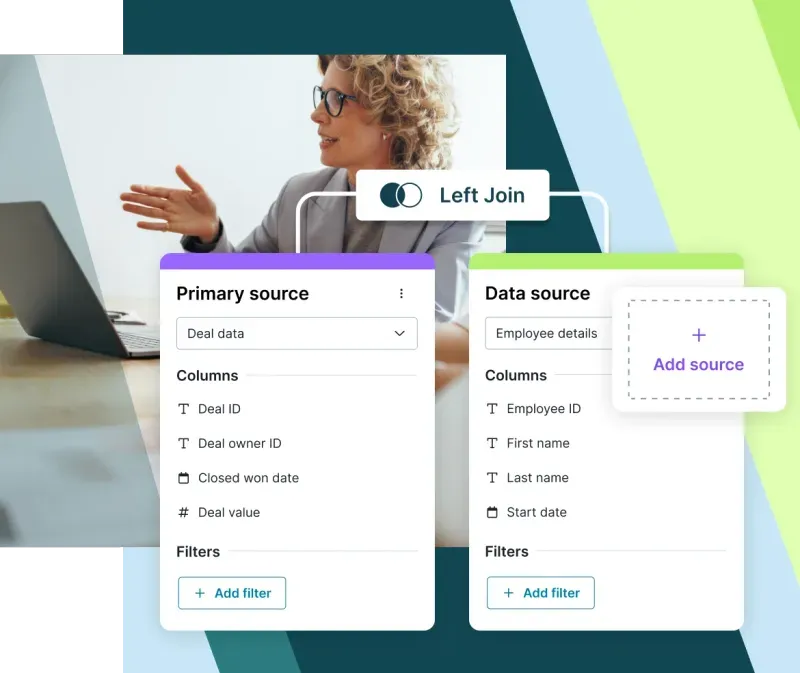
CaptivateIQ built its calculation layer on SmartGrid, a proprietary ELT and calculation engine that handles data ingestion, transformation, and computation in one step.
SmartGrid loads up to 50M records per data sync and processes worksheets with 10M+ source transactions in 12 seconds. At the platform level, it powers over 6.25 trillion calculations per month. The plan construction interface uses a spreadsheet-like Guided Plan Builder that supports up to 7,000 unique plans simultaneously.
Source: CaptivateIQ
In practice, both approaches handle the standard ICM scenarios (tiers, accelerators, splits, overlays, draws, clawbacks).
The difference shows up in admin workflows. Performio's component library gives administrators a structured framework: pick components, configure parameters, connect them. It's faster for teams who want guardrails. CaptivateIQ's SmartGrid gives administrators a blank canvas: more flexibility, but more upfront work to build the initial structure.
G2 reviewers consistently note that initial setup requires significant time and internal resources.
Sales planning: native capability vs. strategic partnership
This is CaptivateIQ's clearest structural advantage.
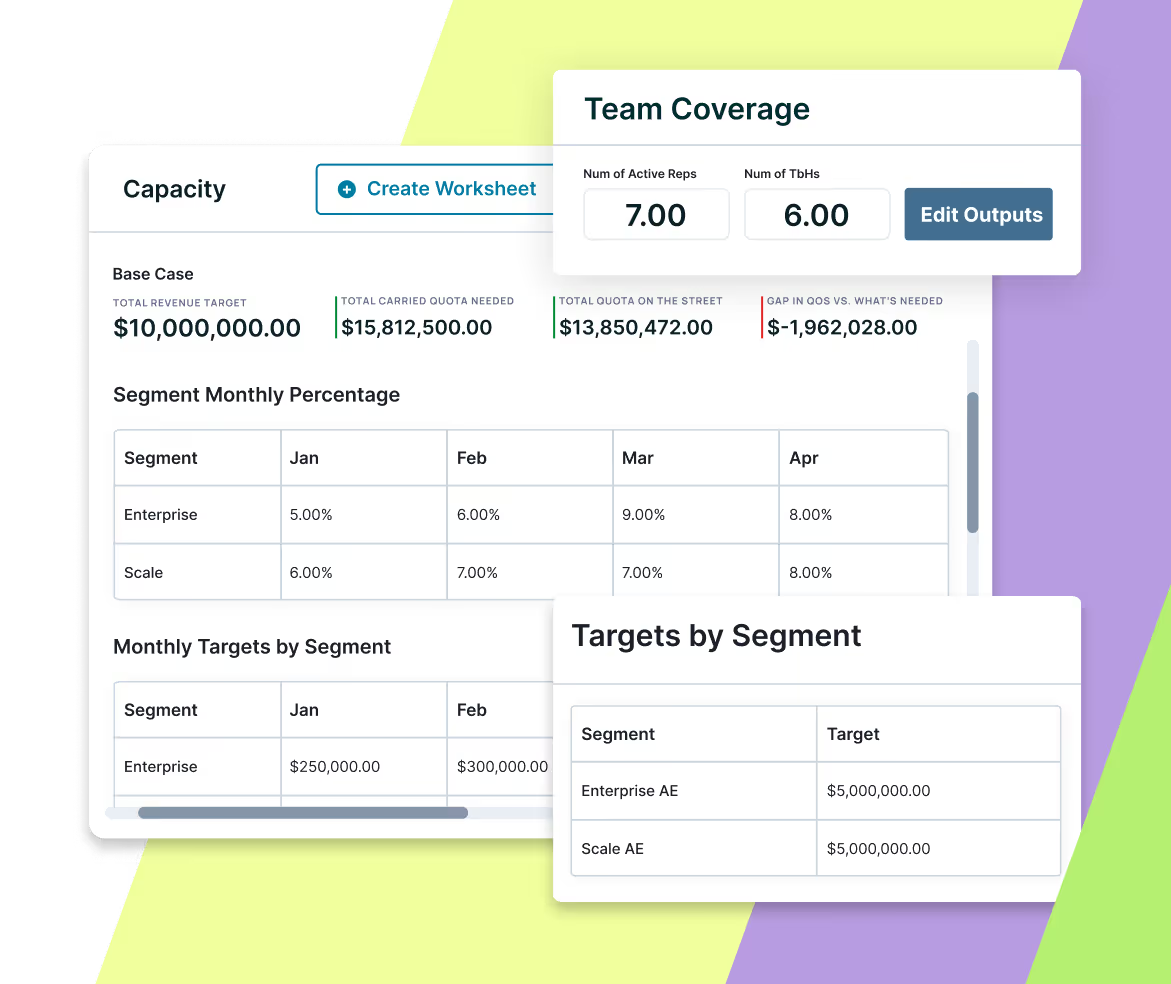
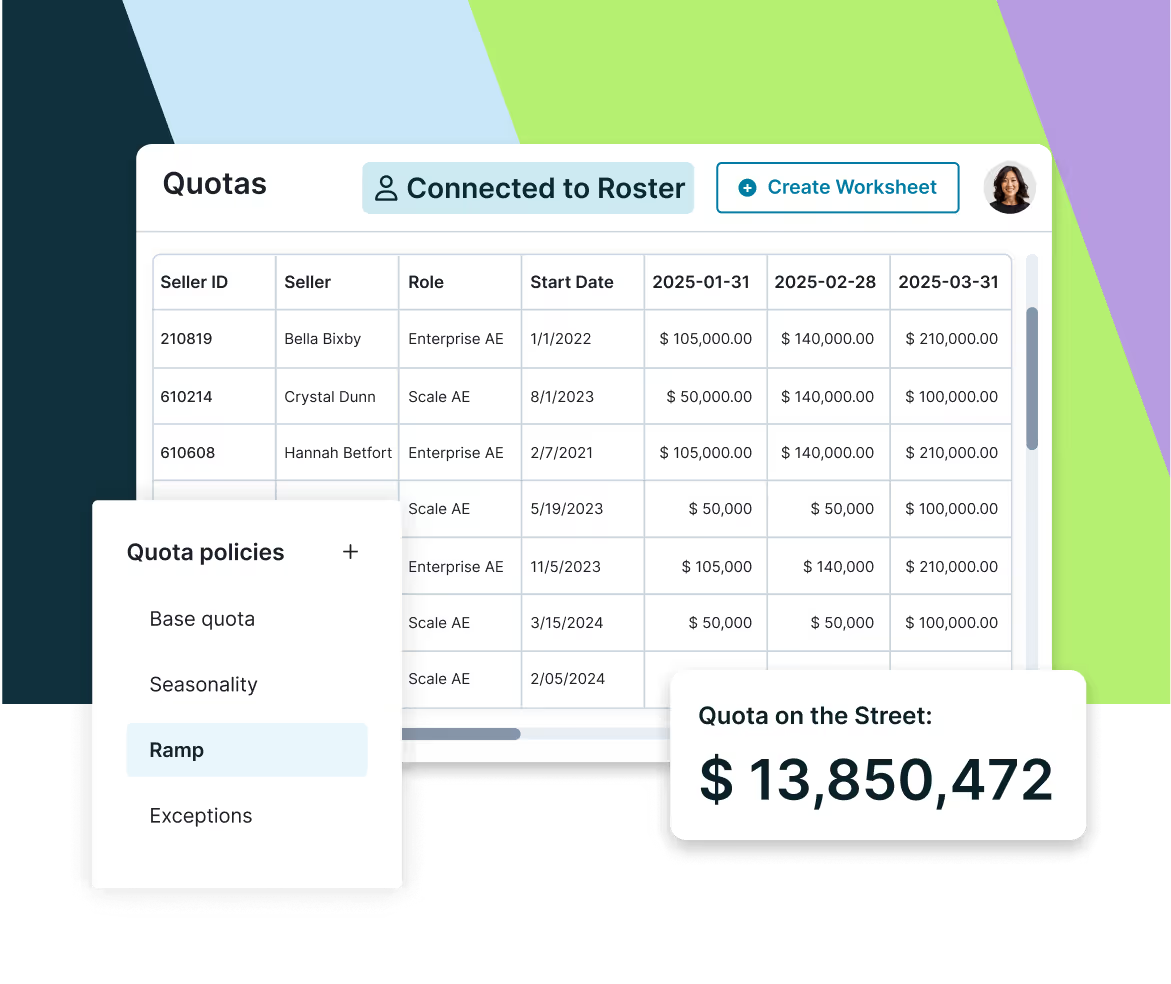
CaptivateIQ Planning covers three areas natively: sales capacity planning (modeling hiring and ramp strategies against revenue targets), quota setting (role-based quota templates with ramp adjustments and historical calibration), and territory management (rule-based account assignment in seconds with scenario and revenue impact analysis).
Because Planning and Incentives share the same SmartGrid engine, quota changes automatically sync to compensation structures, eliminating the reconciliation work that plagues teams using separate tools.
Source: CaptivateIQ
Performio addresses sales planning through a strategic partnership with LINEN Cloud, an AI-powered sales planning platform. The partnership bridges Performio's ICM with territory and quota planning. It's a pragmatic solution, but it means managing two vendors, two contracts, and an integration layer between them.
For organizations where planning and incentives are tightly coupled (quota changes trigger commission recalculations, territory moves require immediate crediting updates), CaptivateIQ's native integration removes friction.
For organizations where a separate team handles planning and only the final outputs need to flow into commission calculations, Performio's partnership approach adds a step but doesn't limit the workflow.
AI capabilities take different shapes
Both platforms have invested in AI, but their approaches reflect their broader product philosophies.
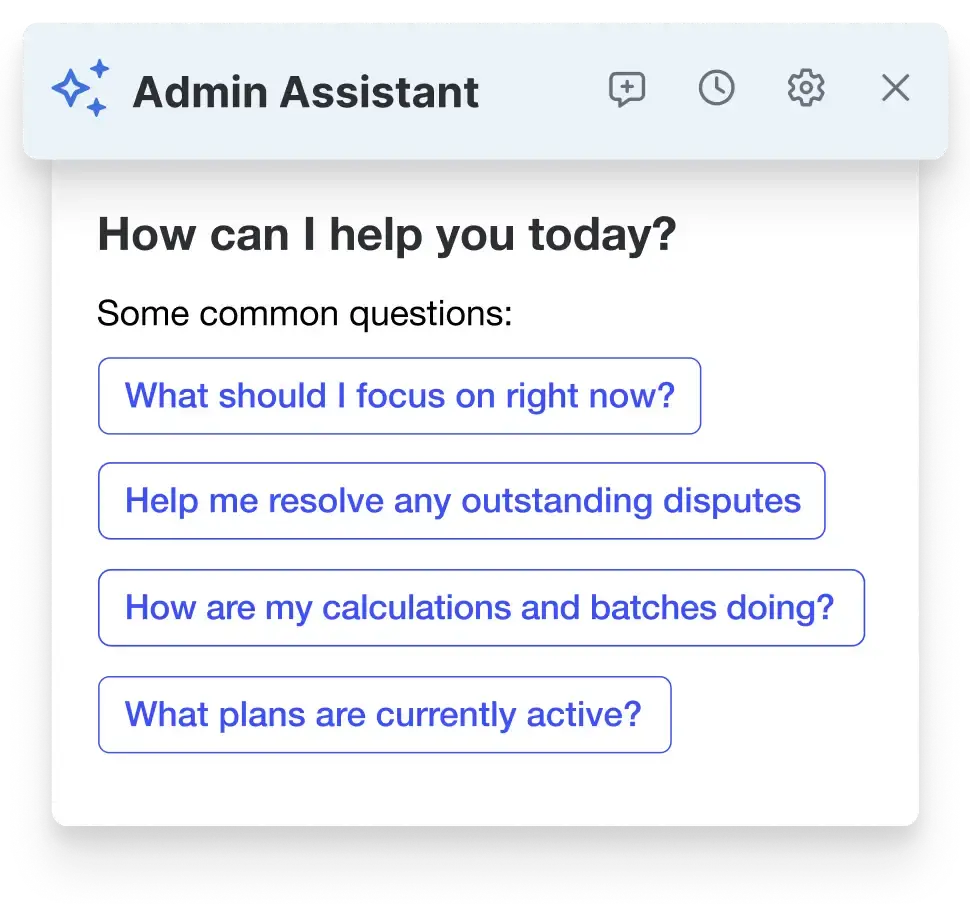
Performio's AI Admin Assistant launched in October 2025 as a natural-language interface embedded in the compensation workflow.
It reads actual plan configurations, data, and rates to answer questions accurately: explaining why a payout occurred, troubleshooting anomalies, summarizing commission disputes with suggested resolutions, and guiding multi-step administrative tasks while pausing for human approval before applying changes.
Performio also launched what it describes as the first implementation of the Model Context Protocol in the ICM industry, letting users interact with Performio through external AI tools like Claude Desktop or Salesforce Agentforce.
Source: Perfomio
CaptivateIQ's AI strategy is broader, matching its broader platform scope.
The CaptivateIQ Agents portfolio, launched in May 2026, includes three agents: a Comp Builder Agent that builds compensation plans from natural language, a Comp Ops Agent that explains commission payouts in plain English and manages payout approvals, and a Rev Planning Agent that builds territory configurations from natural-language goals for human review.
Performio's internal teams are reportedly already using AI agents built on this architecture to configure plans and workspaces, saving admins more than 20 hours a week, with those same agents planned for customer availability.
The practical distinction: Performio's AI focuses on making the comp admin's existing job faster and more accurate within the ICM workflow. CaptivateIQ's AI spans a wider surface (plan building, operations, and revenue planning), but its newer agents are not yet generally available.
The upstream intelligence that drives commissions
Both Performio and CaptivateIQ calculate commissions on the deals your sales team closes. But neither platform addresses the question that determines how many deals get closed and how accurately they're tracked: how good is the intelligence your reps use to find and engage buyers?
Commission calculations are only as reliable as the data flowing into them. CRM records with stale contacts, missing decision-makers, or incomplete account hierarchies create crediting errors, misattributed deals, and disputed payouts. Territory assignments built on outdated company data produce unbalanced coverage. Quota models disconnected from real market opportunity set targets reps can't trust.
ZoomInfo sits upstream of both Performio and CaptivateIQ in the revenue workflow.
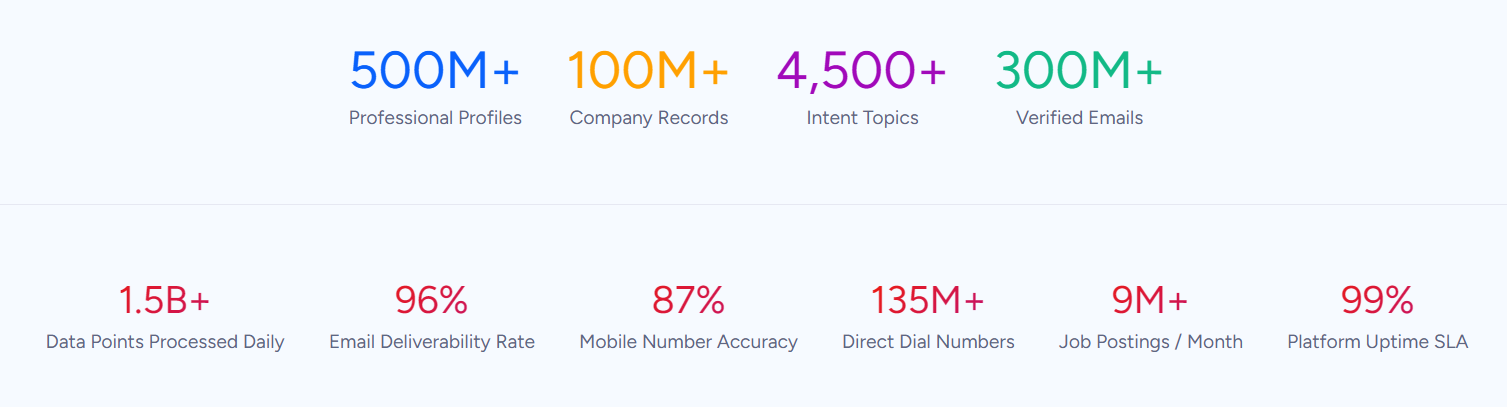
As an AI GTM platform, it provides 500M contacts, 100M companies, 135M+ verified phone numbers, and 200M+ verified business emails that flow into the CRM your ICM tool reads from. A multi-source verification pipeline backed by 300+ human researchers reaches up to 95% accuracy on first-party data.
In a Fortune 500 competitive RFP analyzing 25 million contacts across vendors, the independent consultant concluded that "no other competitor came even close."
Source: ZoomInfo
But the deeper value is intelligence, not just data.
ZoomInfo's GTM Context Graph fuses your CRM records, conversation transcripts, email interactions, and behavioral signals with ZoomInfo's third-party intelligence to capture why deals move or stall. When your reps know which accounts are actively researching solutions (via buyer intent signals tracking 210 million IP-to-Organization pairings), which decision-makers just changed roles (via Contact Tracker alerts), and what competitive dynamics are in play, they close more deals.
More deals means more commissions to process, and better CRM data means those commissions are calculated correctly.
Seismic's sales team attributed 39% of active pipeline to opportunities identified or influenced by ZoomInfo signals, boosted productivity by 54%, and saved 11.5 hours per week. (Seismic Case Study)
For compensation teams, ZoomInfo's data improves the inputs both Performio and CaptivateIQ depend on. Enriched CRM records mean cleaner crediting. Accurate org charts mean better territory assignment. Real-time account intelligence means quota models anchored in market reality rather than last year's spreadsheet.
Snowflake uses ZoomInfo for at least one-third of the most critical data features in their Account Propensity Scoring model, feeding over 70 firmographic and technographic data fields. Accounts monitored using ZoomInfo-powered scores showed 90% higher opportunity open rates and 2x higher customer conversion rates. (Snowflake Case Study)
Integration depth and data management
The platforms diverge in how they connect to external systems.
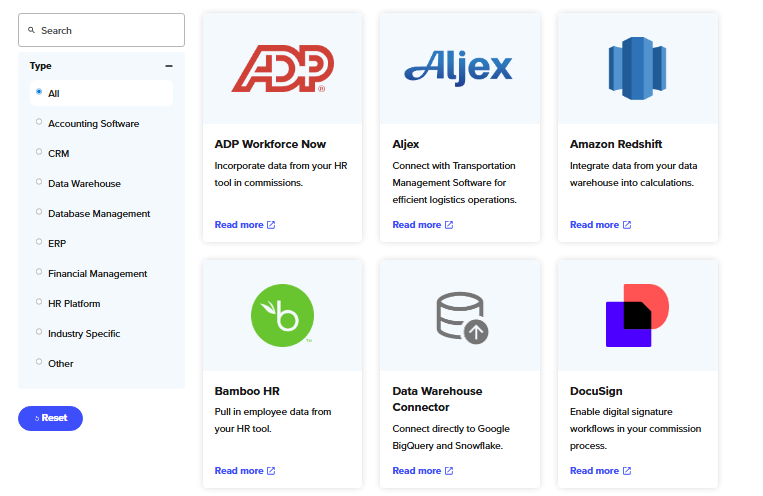
Performio offers 40+ named integrations with notable vertical depth.
Beyond standard CRM (Salesforce, HubSpot, Microsoft Dynamics), ERP (NetSuite, SAP, Epicor), and HRIS (Workday, ADP, BambooHR) connectors, Performio maintains industry-specific connectors for transportation and logistics (McLeod, Aljex, TMW/Trimble), banking and fintech (FIS, Finastra, Jack Henry, nCino, Temenos), and manufacturing (Plex, QAD).
The platform also supports data warehouse connections to Snowflake, BigQuery, and Amazon Redshift. Integration methods include native connectors, a bi-directional REST API with OAuth2, and flat file/SFTP ingestion. Performio's pricing is not tied to data volume or API usage, which matters for high-volume users.
Source: Perfomio
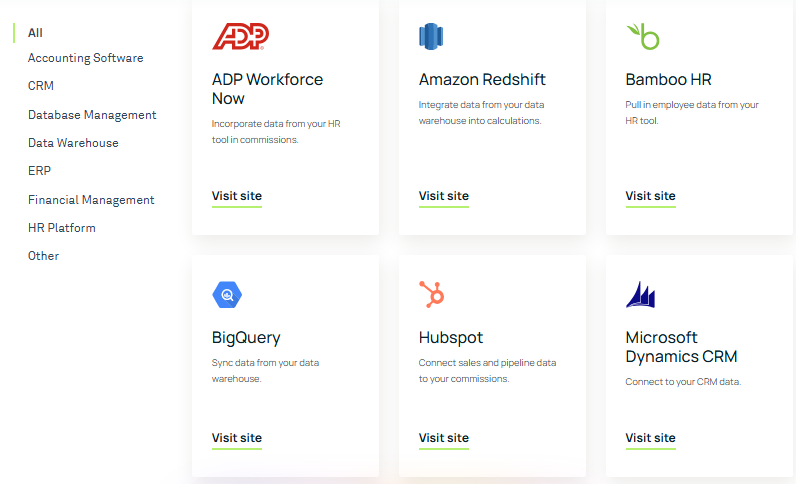
CaptivateIQ lists 19 pre-built native connectors covering CRM (Salesforce, HubSpot, Microsoft Dynamics), data warehouses (Snowflake, Amazon Redshift, BigQuery), databases (MySQL, PostgreSQL, Oracle), ERP (NetSuite), HRIS (Workday, ADP, BambooHR), and accounting platforms (QuickBooks, Sage Intacct, Xero, Stripe, Zuora). CaptivateIQ also offers an Open API for custom integrations.
One notable gap: CaptivateIQ does not list Zapier, Workato, or Make connectors, and their absence is a recurring complaint in G2 and TrustRadius reviews. Teams needing workflow automation outside CaptivateIQ must use the raw API.
Source: CaptivateIQ
For organizations in specialized industries (banking, logistics, manufacturing), Performio's connector catalog is a meaningful advantage. For organizations running standard SaaS/tech stacks built around Salesforce or HubSpot, both platforms cover the basics, and CaptivateIQ's SmartGrid engine handles data transformation within the platform without requiring external ETL.
ZoomInfo connects to both platforms' ecosystems through the CRM layer.
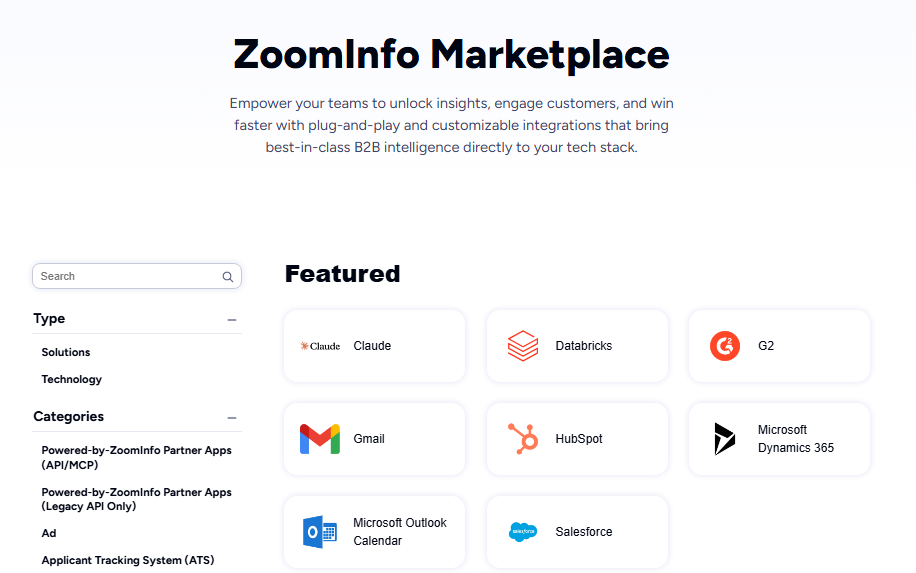
ZoomInfo integrates natively with Salesforce, HubSpot, and Microsoft Dynamics, enriching the CRM records that Performio and CaptivateIQ read from. The ZoomInfo App Marketplace lists 120+ partner integrations across CRM, marketing automation, sales engagement, data warehouses, and more. For organizations building custom data pipelines, ZoomInfo's Enterprise API and MCP server make the same intelligence available to any system in the stack.
Source: ZoomInfo
Rep transparency and payout visibility
Both ICM platforms recognize that reps who distrust their commission statements waste time on shadow accounting and create support burden. Their approaches to transparency are comparable but not identical.
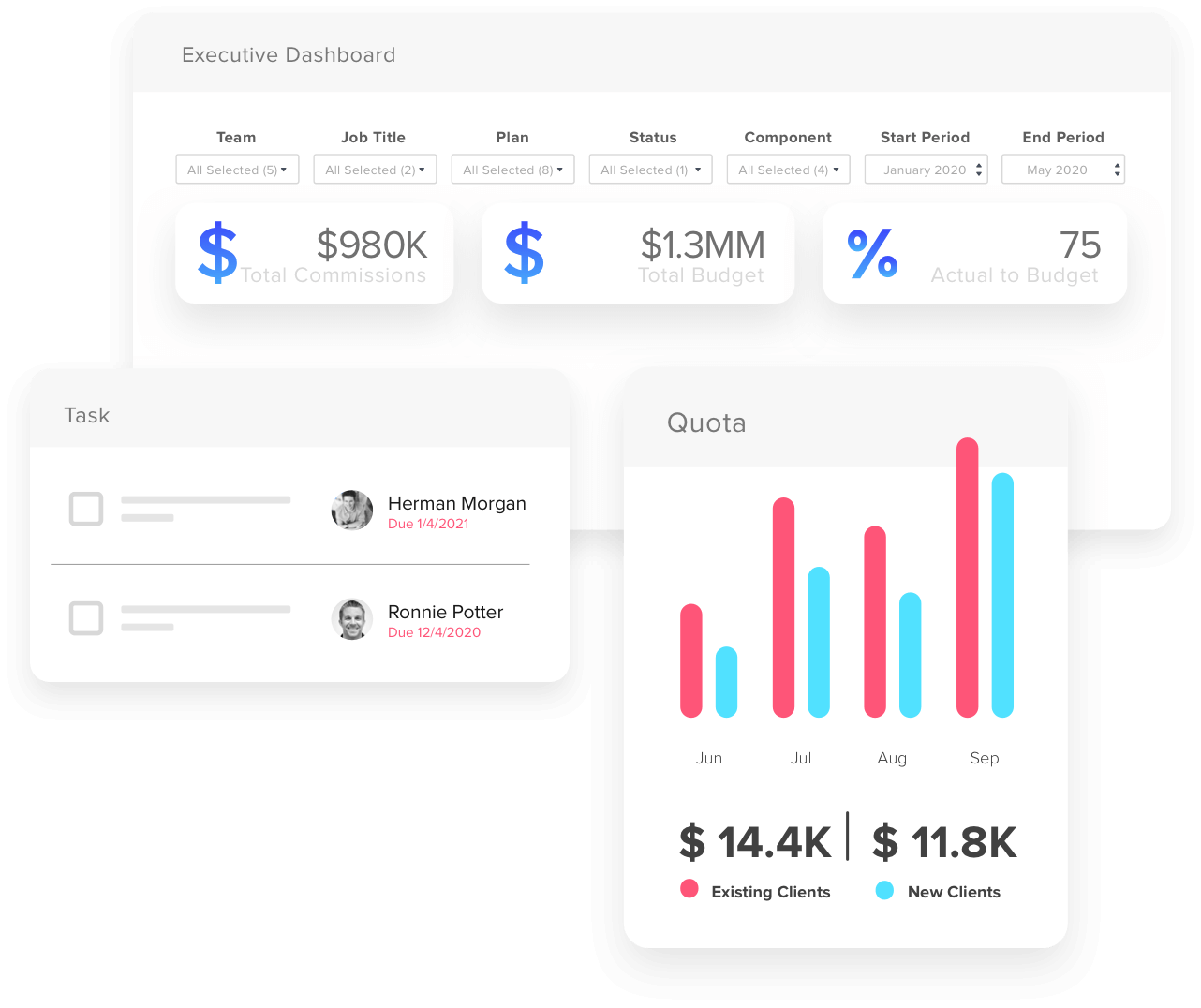
Performio gives sellers interactive dashboards with drill-down from summary views into individual transactions, rates, and plan components.
Reps can see which deals drove which payouts, which plan rules applied, and how each component contributed to their total. The platform includes real-time leaderboards, a what-if calculator for modeling how future deals affect payout, and mobile access on desktop, tablets, and smartphones.
Source: Perfomio
CaptivateIQ offers a similar transparency layer, enhanced by AI.
AI agents generate plain-English narratives explaining every line item, citing exact plan clauses and underlying transactions. Reps can run natural-language what-if analysis and receive predictive payout forecasts.
Both platforms have invested here because the ROI is clear: fewer disputes, less shadow accounting, and more time selling instead of checking spreadsheets. CaptivateIQ's AI-generated explanations suit organizations whose reps need plain-language answers rather than data drill-downs. Performio's transaction-level transparency serves organizations that need every detail auditable.
Analyst recognition and market standing
The analyst landscape separates these two platforms clearly.
CaptivateIQ earned a Leader designation in The Forrester Wave for Sales Performance Management Solutions for Incentive Compensation, Q1 2025, receiving the highest possible scores in 12 of 26 criteria, including innovation, roadmap, AI capabilities, data transformation, plan creation, and time-to-value.
CaptivateIQ also appears in the 2025 Gartner Market Guide for Sales Performance Management (fourth consecutive year), was named a Gartner Peer Insights Customers' Choice vendor for 2024, and holds a 94% CSAT from over 2,500 G2 reviews. The company ranked in G2's 2026 Best Sales Software Products Top 50.
Performio earned a Strong Performer designation in the same Forrester Wave evaluation.
Forrester described Performio as a fit for companies "looking for an easy-to-use SPM/ICM solution that allows administrators to make updates while having strong support available." Performio was one of only three of the 12 evaluated vendors to receive above-average customer feedback scores, suggesting strong customer satisfaction despite the lower overall ranking.
Performio also received an "Exemplary" rating in the 2025 ISG Buyers Guide for Sales Performance Management (the top tier), with ISG highlighting high scores on Customer Experience. On G2, Performio holds Momentum Leader and Enterprise Leader badges in Sales Compensation for Spring 2026 and a 4.4-star rating on Gartner Peer Insights.
ZoomInfo holds analyst recognition across its own categories: Leader in The Forrester Wave for Intent Data Providers B2B, Q1 2025, Leader in the Gartner Magic Quadrant for ABM Platforms for two consecutive years, and the only vendor positioned in the Customers' Choice quadrant of Gartner Voice of the Customer 2025.
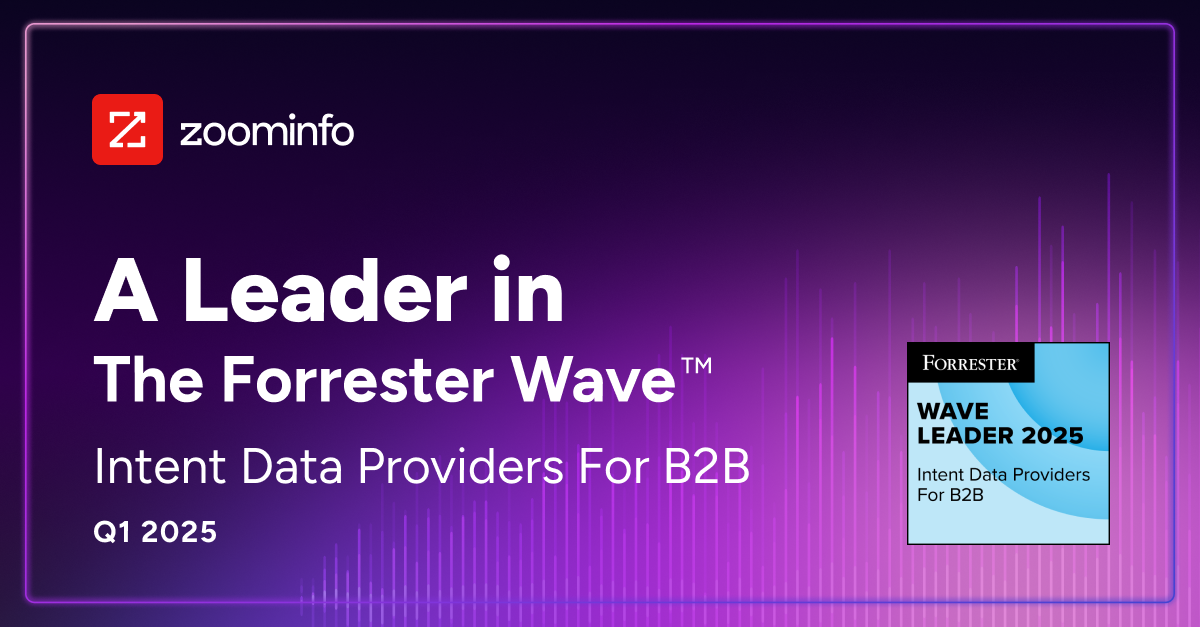
In summary: CaptivateIQ leads on analyst scores in the SPM/ICM category. Performio leads on customer satisfaction metrics within that same evaluation. ZoomInfo leads in B2B data intelligence.
Pricing comparison
Neither Performio nor CaptivateIQ publishes pricing. Both require custom quotes.
Performio structures pricing around two components: a recurring subscription based on the number of commissionable employees, admin seats, and optional add-ons (Analytics Studio, dedicated database environments, sandbox environments), plus a one-time implementation cost scoped by plan complexity, data sources, and reporting requirements.
Pricing is not tied to data volume or API usage, keeping costs predictable as transaction volume grows. The pricing page notes that "many mid-market and enterprise teams allocate less than 3% of total commission payouts to compensation software."
CaptivateIQ uses per-seat pricing with a one-time setup fee.
Seats count both admin users and payees. Three factors determine the quote: number of payees, complexity of compensation plans, and integrations required. CaptivateIQ Incentives, CaptivateIQ Planning, and CaptivateIQ Catalyst are three distinct products, each presumably carrying its own subscription cost. ASC-606 reporting is available as an add-on. Standard support is included, but commission plan configuration support requires purchasing Premier or Elite Support.
Neither platform offers a free trial or free tier. CaptivateIQ provides interactive product tours via Navattic. Performio offers a guided demo through its sales team.
ZoomInfo uses consumption-based pricing with tiers across Sales, Marketing, and standalone products.
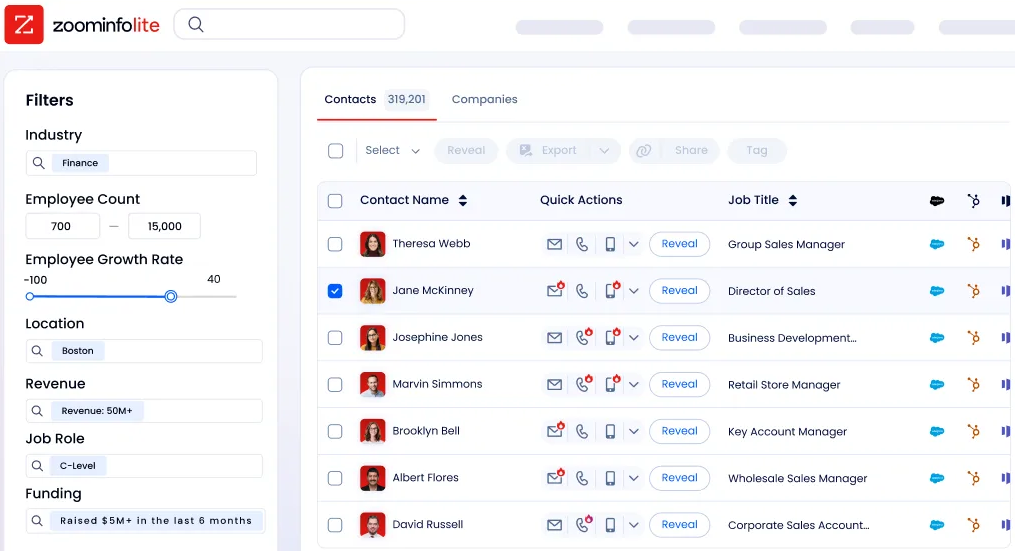
Unlike the ICM tools, ZoomInfo offers multiple entry points: a permanent free tier (ZoomInfo Lite) with 10 monthly export credits and access to the B2B database, plus a 7-day free trial with full platform access.
Source: ZoomInfo
Performio vs. CaptivateIQ vs. ZoomInfo: Which should you choose?
The right choice depends on what your organization needs most.
Choose Performio if:
Incentive compensation is your primary need and you don't require native sales planning
You're in an industry (banking, transportation, manufacturing) with non-standard data sources that need native connectors
Your compensation plans are complex and you want a component-based framework with guardrails, not a blank canvas
You value a dedicated ICM specialist with a single focus
Strong customer support and a structured implementation matter more than the broadest feature set
Choose CaptivateIQ if:
You want incentive compensation and sales planning (territory, quota, capacity) in a single platform
Eliminating reconciliation between planning and payout systems is a priority
You need the flexibility of a blank-canvas approach and have the team to build on it
Analyst-validated leadership and AI capabilities factor into your evaluation
You're a mid-market or enterprise organization in SaaS, financial services, or medical devices
Use ZoomInfo with either platform if:
You want to improve the sales intelligence that drives the deals your ICM tool compensates
CRM data quality is affecting commission accuracy, crediting, or territory assignments
Your sales team needs better account targeting, intent signals, and buyer engagement tools to close more deals
You want the upstream intelligence that makes both Performio and CaptivateIQ more effective
You need verified contact data, org charts, and technographics flowing into the systems your commission calculations depend on
See how ZoomInfo's intelligence connects to your GTM stack with a free trial.
"It's not just the data itself. It's more about the right data at the right time to help us reach out with the right message across that full buyer journey." Chelsea Kenyon, Senior Director of Digital Strategy, Redwood Logistics. (Redwood Logistics Case Study)
Commission management is a solved category. Both Performio and CaptivateIQ calculate payouts accurately, provide rep transparency, and handle complex plan structures. The real differentiator is whether you need a specialist or a unified platform, and whether the data feeding your commissions is accurate enough to trust.
Choosing the right ICM tool gets the calculations right. Pairing it with the right sales intelligence gets the outcomes right.
Performio vs. CaptivateIQ vs. ZoomInfo FAQ
What is the main difference between Performio and CaptivateIQ?
Performio is a dedicated ICM specialist focused on commission calculation, plan management, and payout transparency. CaptivateIQ is a unified platform that combines incentive compensation management with native sales planning (territory management, quota setting, and capacity planning) in one system.
Performio offers depth in ICM with industry-specific integrations. CaptivateIQ offers breadth by connecting planning to payout in a single data model.
Which platform received higher analyst ratings?
CaptivateIQ was named a Leader in The Forrester Wave for Sales Performance Management Solutions for Incentive Compensation, Q1 2025, earning the highest possible scores in 12 of 26 criteria. Performio was named a Strong Performer in the same evaluation.
However, Performio was one of only three of 12 vendors to receive above-average customer feedback scores, and earned an Exemplary rating from ISG for Customer Experience. Both platforms appear in the 2025 Gartner Market Guide for Sales Performance Management.
How does ZoomInfo relate to Performio and CaptivateIQ?
ZoomInfo is not a commission management platform. It is a B2B data intelligence and GTM platform that sits upstream in the revenue workflow.
ZoomInfo provides the contact data, company intelligence, intent signals, and buyer insights that flow into CRM systems, which are the primary data sources for both Performio and CaptivateIQ. Better upstream data means more accurate CRM records, cleaner crediting, and more productive sales reps earning commissions.
Which platform handles more complex commission plans?
Both handle complex structures including tiers, accelerators, splits, roll-ups, clawbacks, and draws. Performio supports six native crediting models and uses a component-based architecture where plan elements are modular and reusable. CaptivateIQ supports up to 7,000 unique simultaneous plans through its SmartGrid engine and no-code Guided Plan Builder.
Performio's structured components offer more guardrails. CaptivateIQ's blank-canvas approach offers more flexibility but requires more initial setup effort.
Does either platform offer a free trial?
Neither Performio nor CaptivateIQ offers a free trial or free plan. CaptivateIQ provides self-guided interactive product tours. Performio offers a guided demo through its sales team. ZoomInfo, by contrast, offers both a permanent free tier (ZoomInfo Lite with 10 monthly export credits) and a 7-day full-feature free trial.
Which platform has better integrations for specialized industries?
Performio has the broader integration catalog with 40+ named connectors, including industry-specific connectors for transportation and logistics (McLeod, Aljex, TMW/Trimble), banking and fintech (FIS, Finastra, Jack Henry, nCino, Temenos), and manufacturing (Plex, QAD). CaptivateIQ offers 19 native connectors covering standard enterprise systems (CRM, ERP, HRIS, data warehouses) but lacks iPaaS connectors like Zapier or Workato.
How do the platforms compare on sales planning capabilities?
CaptivateIQ includes native sales planning covering territory management, quota setting, and capacity planning, all sharing the same data model as its incentive compensation product. Quota changes automatically sync to commission structures.
Performio does not offer native sales planning. It addresses this through a strategic partnership with LINEN Cloud, which bridges Performio's ICM with AI-powered sales planning in a separate platform.
What are the main weaknesses of each platform?
Performio's most cited weakness is Salesforce sync lag, with reviewers reporting changes can take up to a day to appear. Some reviewers also note a steep administrative learning curve and limited admin role granularity.
CaptivateIQ's main weakness is initial setup complexity, as the blank-canvas approach requires significant time and resources before the system is productive. Reviewers also flag performance issues at scale with slow page loads and the absence of iPaaS connectors like Zapier and Workato.
Other Performio matchups worth a look:
