
The question behind every API dependency is whether the service will be there when your build depends on it.
Proxycurl's API was, for several years, one of the most direct ways for a developer to pull structured LinkedIn profile and company data into a pipeline. Real-time scraping, transparent credit pricing, a clean REST surface built for engineers. Then, in January 2025, LinkedIn filed a federal lawsuit alleging unauthorized scraping of millions of profiles, and by July 4, 2025, Proxycurl shut down entirely.
The API surface is not entirely gone. The team now operates NinjaPear, a B2B company intelligence platform at the same domain, with a narrower but live API covering company data, customer listings, competitor mapping, employee search, and RSS-based monitoring.
The LinkedIn scraping endpoints that made Proxycurl's name (People API, Jobs API, School API, person and company search) no longer appear in the current API reference.
The Proxycurl API (now NinjaPear) is likely the right choice if:
You need company intelligence data (customer listings, competitor mapping, product catalogs) via a credit-based REST API with no "contact sales" gate.
You are building competitive intelligence or customer identification workflows where company-level data is the primary input.
You want official Python or JavaScript SDKs with an OpenAPI 3.0 spec for code generation in any language.
You need RSS-based monitoring of company blogs, websites, and X/Twitter activity as event feeds.
Your volume is moderate and you want transparent per-credit pricing starting at $289/month.
However, it might not be the right fit if:
You need the LinkedIn profile scraping that originally defined Proxycurl (those endpoints are no longer documented).
You need contact enrichment at scale: verified business emails, direct-dial phone numbers, and employment history across hundreds of millions of records.
You need buyer intent signals, technographic data, org charts, or corporate hierarchy intelligence.
You need OAuth 2.0 with scoped access for multi-tenant integrations (the API uses static API keys only).
You need push webhooks for event-driven automation (the Monitor API uses pull-based RSS, not HTTP push).
Your pipeline requires more than 50 requests per minute of sustained throughput.
In this case, consider the API from ZoomInfo, a GTM platform whose REST suite covers search, enrichment, AI intelligence, and audience management across 500M contacts, 100M companies, 135M+ verified phone numbers, and 200M+ verified business email addresses, with OAuth 2.0 authentication, tiered rate limits up to 35 req/sec, and an MCP server for AI-agent workflows.
This article reviews both: the Proxycurl API as it exists under NinjaPear today, and ZoomInfo's API where your build needs the data breadth, contact intelligence, and scale that company-level data alone does not cover.
Proxycurl API at a Glance
Attribute | Detail |
|---|---|
Status | Original Proxycurl discontinued July 2025; API continues under NinjaPear at the same domain |
API type | REST over HTTPS, JSON responses |
Authentication | Bearer token (API key in Authorization: Bearer header) |
Base URL | https://nubela.co (endpoints under /api/v1/) |
Rate limits | 50 requests per minute (paid endpoints, per account) |
SDKs | Official libraries for Python and JavaScript/Node.js |
Webhooks | No push webhooks; Monitor API delivers company events via RSS feeds |
Documentation | nubela.co/proxycurl/docs (now titled "NinjaPear API Reference") |
Pricing / access | Credit-based; subscriptions from $289/month or pay-as-you-go from $0.06/credit |
Proxycurl API: What Works Well & What to Plan Around
What works well | What to plan around |
|---|---|
Transparent, credit-based pricing with no "contact sales" gate for any tier below Enterprise | Original LinkedIn scraping endpoints (People, Jobs, School, Search APIs) are no longer in the current API reference |
Public API docs with inline code samples in cURL, Python, and JavaScript on every endpoint | 50 req/min rate limit is low for high-volume pipelines |
OpenAPI 3.0 spec published for tooling integration and code generation | Static API-key auth only; no OAuth 2.0, token rotation, or scoped access |
Credits charged only on successful HTTP 200 responses; failed requests are free | No push webhooks; RSS polling is the only event delivery model |
Backward compatibility guarantee with 30-day deprecation notice | Official SDKs cover only two languages (Python, JavaScript) |
MCP server for Claude enables conversational queries against company data | Service was discontinued and rebranded; long-term platform continuity is an open question |
Proxycurl API: Authentication & Getting Started
API access starts with a developer signup at nubela.co/auth/register. There is no free tier for paid data endpoints, but a small pay-as-you-go pack (56 credits for $6) lets you test the surface without committing to a subscription. Three endpoints are free regardless of plan: Company Logo, Disposable Email Checker, and View Credit Balance.
Authentication is straightforward. Every request passes an API key in the Authorization header as a Bearer token:
curl "https://nubela.co/api/v1/customer/listing?company_domain=example.com" \
-H "Authorization: Bearer YOUR_API_KEY"
You manage API keys in the account dashboard. Rate limits apply per account and are shared across all API keys on that account, so creating multiple keys does not increase capacity. For the MCP server integration, you can also pass the API key as a query parameter (?api_key=YOUR_API_KEY) or in the X-API-Key request header.
There is no OAuth 2.0 flow. No token exchange, no rotating credentials, no scoped permissions. The simplicity is a tradeoff: static API-key auth is quick to implement but offers no delegated access for multi-tenant applications where each customer authenticates independently.
Two practical details before you start building:
The minimum credit consumption per request is 0.1 credits. Credits are charged only on successful HTTP 200 responses. Failed requests (400, 401, 403, 429, 500, 503) are never billed. HTTP 404 is the exception: it is charged, since a "not found" still represents a completed lookup.
For endpoints with a use_cache parameter, repeat requests for the same normalized query against the same cached record version are served free (X-NinjaPear-Credit-Cost: 0). Setting use_cache=never forces a fresh data pull and consumes credits.
Proxycurl API: Core Endpoints & Capabilities
The current API surface is organized into named resource groups focused on B2B company intelligence.
All endpoints use GET (or PATCH for feed management). Data returns as JSON with cursor-based pagination where applicable. Every response includes an X-NinjaPear-Credit-Cost header reporting the actual credits consumed.
Customer Intelligence
The Customer Listing endpoint (GET /api/v1/customer/listing) returns a list of probable customers, investors, and partner companies for a target company, categorized by relationship type (customers, investors, partner_platforms). Cost: 1 credit per request plus 2 credits per company returned (charged even on empty results).
What you would build with this: a competitive intelligence pipeline that maps a competitor's customer base, identifies overlap with your own accounts, and surfaces cross-sell opportunities.
Competitor Mapping
The Competitor Listing endpoint identifies competitors of a target company and returns structured CompetitorCompany objects with Competition Reason Enum classifications explaining why each company qualifies.
For a developer building a market landscape tool, this provides structured competitive relationships rather than requiring manual research.
Product Catalog
The Product Listing endpoint returns a company's product and service catalog, including Product, Pricing, and PricingTier objects with PricingModel enum classifications. For a developer building a competitive pricing tracker or market map, this endpoint surfaces what each company sells and at what price points.
Company Data
The Company API group covers several endpoints:
Company Logo: free; returns a logo URL by domain.
Company Details: full profile including industry, description, Address, Executive, and PublicListing objects.
Employee Count: headcount by domain.
Company Updates: recent blog posts and social media activity as Update objects.
Company Funding: funding history and Investor objects with Round Type classifications.
Website Lookup: resolves a company name to its canonical website URL.
What you would build with this: a company research dashboard that pulls profiles, headcount trends, funding history, and recent activity into a single view for sales or investment research.
Employee Data
The Employee API provides four endpoints:
Work Email: find a work email given a name and company domain.
Person Profile: person profile with job history (WorkExperience) and education (Education) from a work email or profile URL.
Similar People: find people with the same role at competing companies.
Employee Search: search employees of a company with filters.
What you would build with these: an account-based outreach tool that identifies decision-makers at a target company, finds their work emails, and discovers analogous contacts at similar organizations.
Contact Validation
The Disposable Email Checker is free and detects disposable or free-provider email addresses. It is the only contact-validation endpoint on the current surface.
Credit Balance
The View Credit Balance endpoint is free and returns your current credit balance, useful for monitoring consumption in automated pipelines.
What Is No Longer in the API Reference
The endpoints that originally drove Proxycurl's developer adoption are not documented in the current API reference.
The pricing page still lists credit costs for legacy endpoints (Person Profile, Person Lookup, Role Lookup, Person Search, Company Search, Jobs Listing, School Profile, Student Listing, Reverse Email Lookup, Personal Email Lookup, Personal Phone Lookup), but these do not appear in the live documentation. A developer evaluating the API today should work from the current docs, not the legacy pricing table.
Proxycurl API: Webhooks & Events
Proxycurl (NinjaPear) does not offer HTTP push webhooks. Instead, the Monitor API provides an RSS-based event delivery model for tracking company activity over time.
Developers create "Feeds" targeting one or more company domains and configure monitoring schedules for three signal categories:
blog: new blog posts
x: X/Twitter posts
website update / website new page / website unreachable: website change detection
Each feed produces an RSS 2.0 XML stream accessible at a feed URL. Items carry Dublin Core <dc:creator> for the company name, <pubDate>, <category> (signal type), and optional <enclosure> image attachments. Feeds can be set to public (unauthenticated RSS access) or private (token-required).
Feed management endpoints cover the full lifecycle: List, New, Describe, Delete, Add Target, Update Target, Remove Target, Consume Feed, and Update Feed. Email notification mode (on_updates or skip) is configurable per feed. Feeds suspended for insufficient_credits resume automatically when credits are added.
Cost: 3 credits to create a feed. Monitoring pulls are charged per target per check (blog/website: 1 credit per target, X: 2 credits per target).
Two things a developer should plan around:
There is no HTTP push delivery. Consumers must poll the RSS endpoint to detect new events. For real-time automation (triggering an outreach sequence the moment a competitor publishes a blog post, for example), polling adds latency and engineering overhead that push-based webhooks would eliminate.
The Monitor API covers company-level signals only (blog posts, social posts, website changes). There are no person-level signals (job changes, hiring activity) or buyer intent signals in the current event model.
Proxycurl API: SDKs, Docs & Rate Limits
SDKs & Libraries
NinjaPear ships official client libraries for two languages:
JavaScript/Node.js: ninjapear package, installable via npm install ninjapear. Available on npm and GitHub.
Both SDKs wrap the full endpoint surface and use the bearerAuth configuration pattern. SDK code samples appear inline throughout the API reference, with tabs for cURL, Python, and JavaScript on every endpoint.
An AI Skill for coding agents (Claude Code, Codex, Opencode) is also available. It teaches coding agents how to write integration code (authentication, endpoint selection, pagination, rate-limit handling, error handling) without calling the API directly.
Two languages is narrow coverage compared to APIs that ship SDKs in seven or more languages. No official libraries exist for Go, Ruby, PHP, Java, or .NET. However, the OpenAPI 3.0 specification is publicly available and can generate client code for any language via OpenAPI tooling, which partially offsets the limited SDK count.
Documentation & Developer Experience
The API reference is a single-page interactive documentation site organized by endpoint group in a left-nav. Every endpoint includes:
Inline code samples in three tabs (cURL, Python, JavaScript)
Full parameter tables
Response schema with typed objects
Error code tables
Example response JSON
The code samples are production-ready, including real SDK initialization patterns rather than pseudocode.
A backward compatibility guarantee commits the team to not removing parameters, changing documented response types, or retiring endpoints without 30 days' advance notice via newsletter, X/Twitter, and blog updates. Adding new attributes or headers is not considered a breaking change.
Additional documentation resources:
OpenAPI 3.0 specification for machine-readable schema consumption
Plain Markdown version of the full docs for AI agent ingestion
llms.txt index for AI-friendly discovery
Changelog at nubela.co/blog/tag/changelog/
Developer support is via email at hello@nubela.co. No community forum, Slack workspace, or Discord is documented. There is no built-in interactive API explorer (Swagger UI or Postman "Try It" button) in the docs, and no Postman collection is publicly linked, though the OpenAPI spec can be imported into Postman or similar tools for interactive testing.
Rate Limits & Constraints
Paid API endpoints are limited to 50 requests per minute, enforced per account and shared across all API keys. Monitor feed and target management endpoints count as paid traffic even when their credit cost is 0.
Rate-limited responses (HTTP 429) include headers for retry guidance:
Header | Description |
|---|---|
Retry-After | Seconds to wait before retrying |
X-RateLimit-Limit | Maximum requests in the current minute |
X-RateLimit-Remaining | Remaining requests in the current minute |
X-RateLimit-Reset | Unix timestamp when the window resets |
The docs recommend implementing exponential backoff on 429 responses and making concurrent requests to maximize throughput within the limit. API responses take 30 to 60 seconds to complete, and the docs recommend a 100-second request timeout.
The 50 req/min ceiling is the largest throughput constraint. At sustained maximum rate, that is roughly 72,000 requests per day. For pipelines processing large company datasets (tens of thousands of companies with customer, competitor, and product lookups per company), this requires careful request scheduling and prioritization.
Free API endpoints (Company Logo, Disposable Email, View Credit Balance, RSS feed consumption) have separate rate limits by subscription tier, though the exact values should be confirmed with the vendor as the documented tiers may reference legacy plan levels.
Proxycurl API Pricing & Access Costs
The API uses a credit-based model with two purchasing paths: subscriptions and pay-as-you-go.
Subscription plans (monthly-contract rates):
Plan | Monthly Credits | Cost per Credit | Monthly Cost |
|---|---|---|---|
Starter | 27,492 | $0.019 | $289 |
Growth | 274,223 | $0.011 | $2,898 |
Pro | 985,903 | $0.010 | $8,558 |
Ultra | 2,313,862 | $0.009 | $17,990 |
Enterprise | >2,313,862 | <$0.009 | Starts at $2,000/mo (12-month contract) |
Annual billing adds 2 months of free credits. Subscription credits expire at the end of each billing cycle and do not roll over.
Pay-as-you-go credits do not expire. Sample packs from the pricing page: 56 credits for $6 ($0.10/credit), 463 credits for $28 ($0.06/credit). PAYG credits cost more per unit than subscription credits but carry no commitment.
For a developer sizing costs: the Customer Listing endpoint costs 1 credit per request plus 2 credits per company returned. If a typical query returns 10 companies, that is 21 credits per call. On the Starter plan ($289/month, 27,492 credits), that covers roughly 1,300 customer listing queries per month, or about $0.40 per query at that return rate.
You can cover overages during an active subscription by purchasing additional "ala-carte" credits at the current plan's per-credit rate, though these expire at the end of the billing cycle. One detail to plan for: PAYG credits purchased before starting a subscription are consumed first, but the subscription's monthly credits take precedence once active.
All tiers include access to all API endpoints. The only difference between tiers is credit volume and per-credit cost.
Where the Proxycurl API Falls Short
These are the practical limits a developer should plan around when building on this API. Several are scope decisions that reflect the NinjaPear pivot, not deficiencies in the current product.
The LinkedIn endpoints that defined Proxycurl are gone. The People API, Jobs API, School API, and person/company search endpoints that originally drove developer adoption are not documented in the current API reference. A developer who used Proxycurl for LinkedIn profile enrichment, candidate sourcing, or job listing analysis will not find those capabilities on the current surface.
The pricing page still references legacy endpoint credit costs, creating a confusing gap between what is listed and what is documented.
The service was discontinued and rebranded. Proxycurl shut down in July 2025 following a LinkedIn lawsuit. The team pivoted to NinjaPear with a different scope. The API is live and functional, but the discontinuation raises a legitimate question about long-term continuity for developers who remember the original shutdown.
No push webhooks. The Monitor API delivers company signals via RSS feeds that consumers must poll. For event-driven architectures where latency matters, polling adds delay and engineering overhead that push-based webhook delivery would eliminate.
50 requests per minute is a tight ceiling. The rate limit is per-account, not per-key, and applies to all paid endpoints including Monitor feed management. For a developer running multiple concurrent integrations or processing large company datasets, this constraint requires careful orchestration and request prioritization.
No buyer intent signals. The Monitor API tracks blog posts, X/Twitter activity, and website changes. It does not surface buyer intent (companies researching specific topics), hiring signals, funding event alerts, or in-market behavior. For sales and marketing pipelines where timing matters, this is a significant gap.
No contact database at scale. The Employee API provides work email lookup and person profiles for individual companies, but there is no global contact database spanning hundreds of millions of records. No verified phone numbers at scale, no employment history across companies, no org chart traversal, no contact accuracy scoring.
A developer building a prospecting or enrichment pipeline needs a second data source for contact intelligence.
Static API-key auth with no scoped access. There is no OAuth 2.0 flow, no token rotation, and no per-key permission scoping. For teams with credential-rotation requirements or multi-tenant integrations, this is limiting.
ZoomInfo API: The Full-Stack B2B Intelligence Alternative
ZoomInfo is a GTM platform whose API extends well beyond company intelligence.
Where Proxycurl's current surface covers companies (their customers, competitors, products, and employees), ZoomInfo's API reaches into contact enrichment across 500 million records, buyer intent signals, technographic data, and AI-powered account research.
Its GTM Context Graph processes 1.5B+ data points daily and fuses ZoomInfo's B2B data with your first-party records to show not just what happened, but why. Developers access this intelligence through the Enterprise API and MCP server, while sellers work from GTM Workspace and marketers and RevOps from GTM Studio.
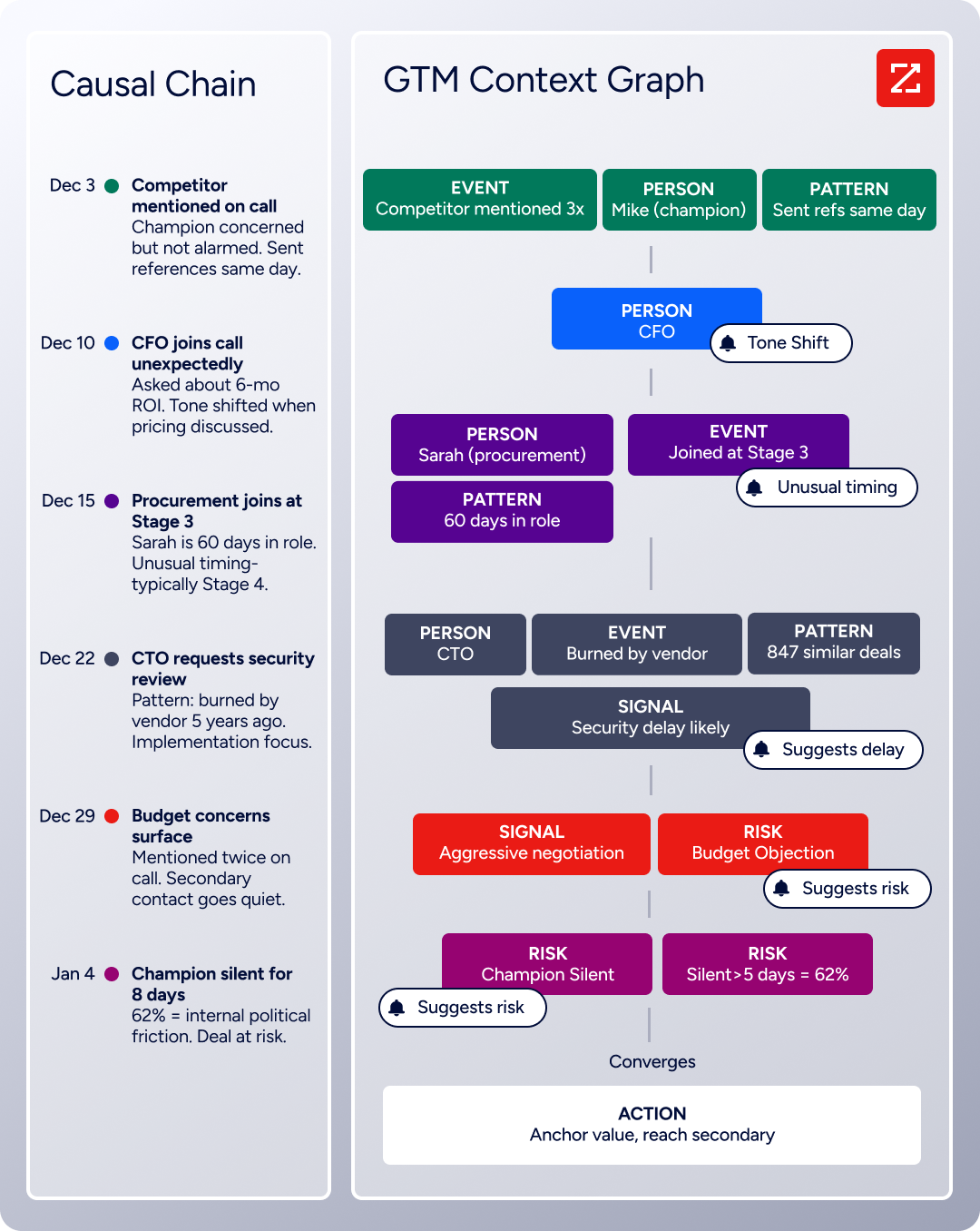
The gap between "what does this company do?" and "who should I contact there, and are they buying right now?" is exactly where ZoomInfo's API fits.
What the API Covers
ZoomInfo's Enterprise API is a REST suite served from https://api.zoominfo.com/gtm, organized into four surface areas documented in the interactive API reference:
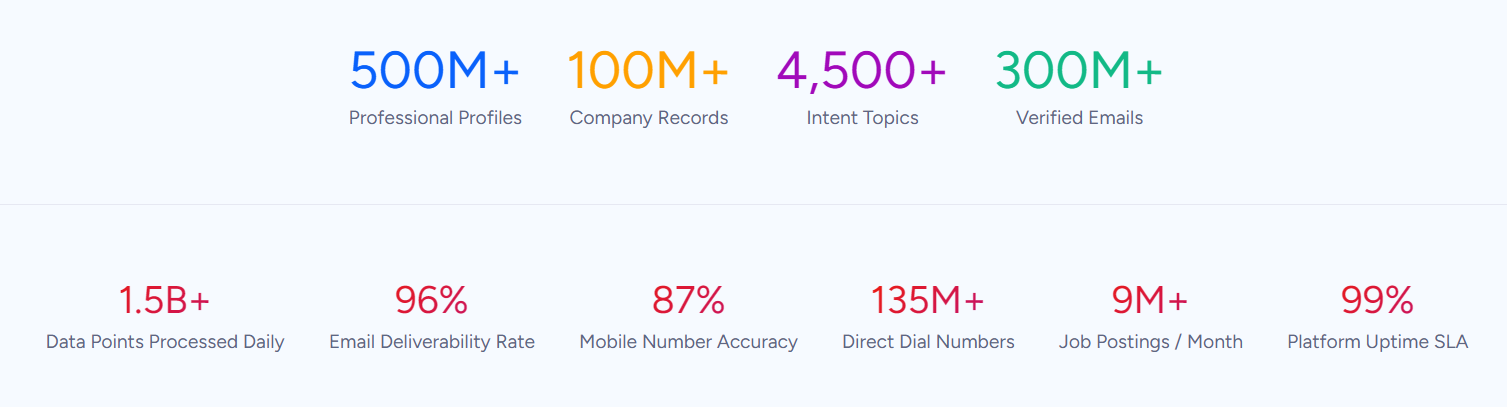
Data API (Search & Enrich): Search endpoints cover Contacts, Companies, Intent, News, and Scoops, returning matched records without consuming credits. Enrich endpoints unlock full payloads: business emails, direct dials, employment history, corporate hierarchy, org charts, technographics, and hashtag signals, up to 25 records per call.
The search-then-enrich pattern lets you filter freely, then pay only for the records you commit to. The underlying dataset spans 500M contacts, 100M companies, 135M+ verified phone numbers, and 200M+ verified business email addresses.
Copilot API (GTM Workspace AI): Account Summary returns structured account intelligence with a free-form Q&A endpoint. Find Similar Companies performs lookalike expansion from a seed account. Contact Recommendations returns AI-ranked buying-committee suggestions by motion (prospecting, deal acceleration, renewals).
Marketing API: CRUD endpoints for programmatic audience management.
Platform API (Engagements, Beta): Bidirectional engagement data via the Engagements API.
What you would build with this: an enrichment pipeline that takes a list of target companies, searches for contacts matching your ICP (free, no credits consumed), enriches the ones worth pursuing with emails and direct dials, then scores them against intent signals to prioritize outreach.
The customer listing and competitor mapping that Proxycurl's API covers is one step in that process; ZoomInfo covers the full pipeline from company identification through contact-level outreach readiness.
Authentication & Access
ZoomInfo uses OAuth 2.0 with PKCE via Okta, supporting three flows: Authorization Code with PKCE (web applications), Client Credentials (server-to-server), and Refresh Token.
Access tokens are 24-hour Bearer tokens with rotating refresh tokens. Teams register applications through the ZoomInfo Developer Portal, where they generate credentials, define scopes, and test endpoints.
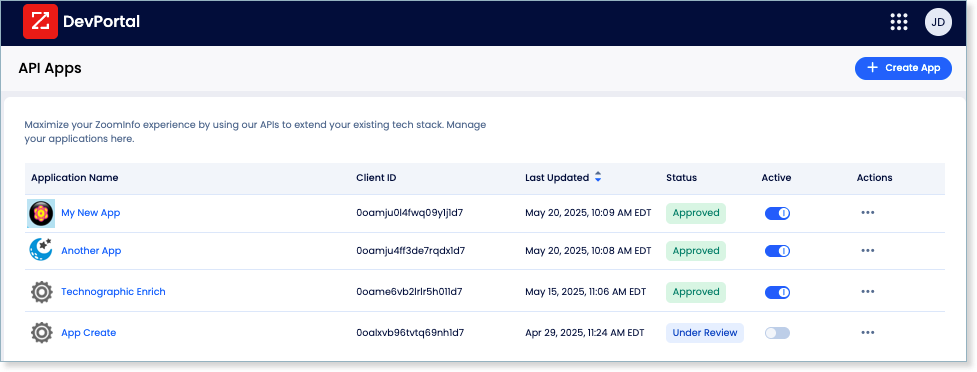
This is a different authentication model from Proxycurl's static API key. OAuth 2.0 supports delegated access, credential rotation, and scoped permissions, making it the right choice for multi-tenant integrations and enterprise security requirements.
Rate Limits, Credits & Developer Experience
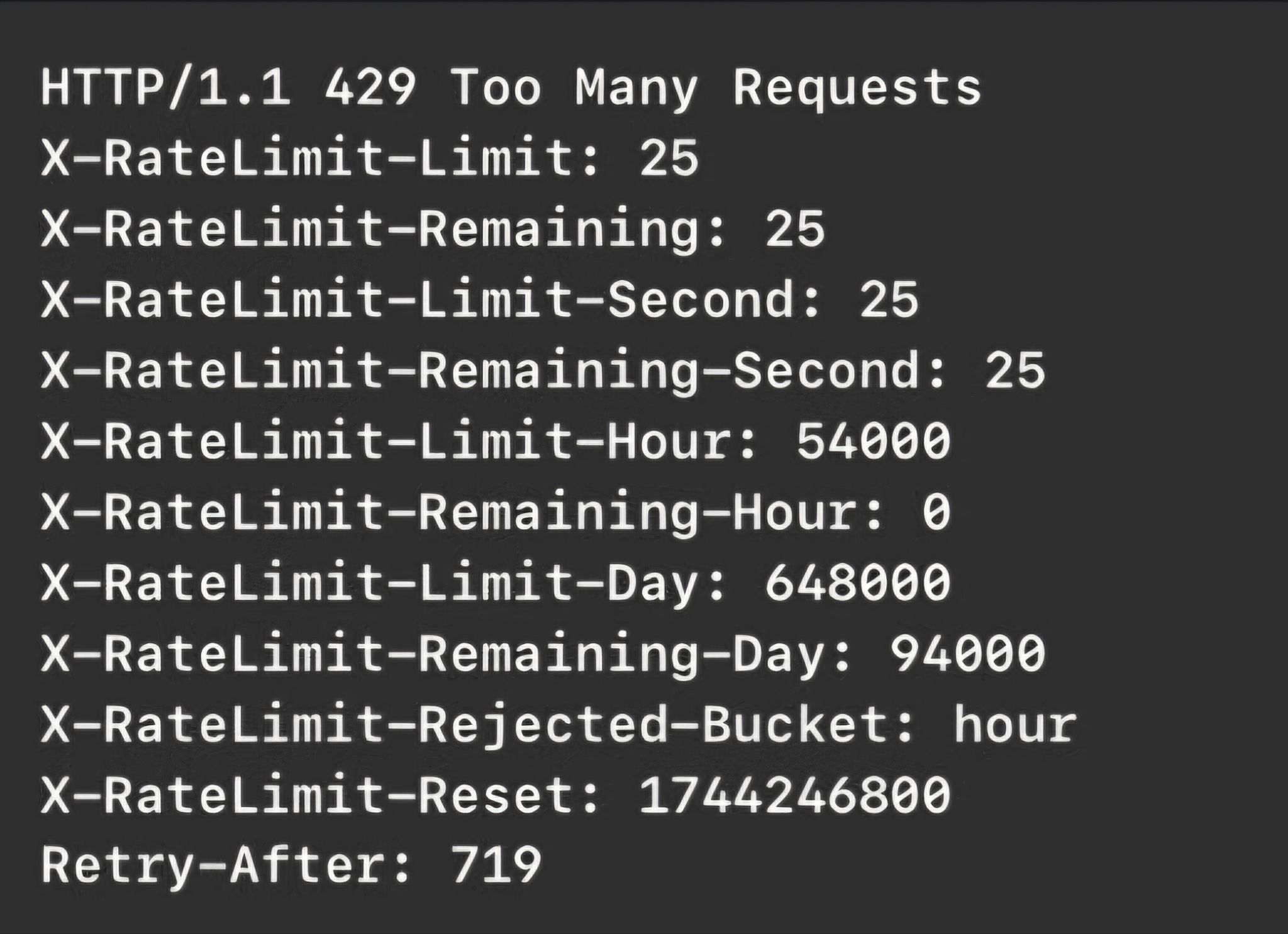
Rate limits are published by tier: Builder (5 req/sec), Standard (25 req/sec), and Scaling (35 req/sec), with per-hour and per-day sliding-window limits enforced simultaneously.
Source: ZoomInfo
Every response includes quota headers with remaining capacity, and 429 responses include a Retry-After header with exact backoff timing. At the Standard tier, 25 req/sec translates to 1,500 requests per minute, 30 times Proxycurl's 50 req/min ceiling.
Credits follow a rolling 12-month window: a record enriched for the first time consumes one credit; re-enriching the same record within the year is free. Search and lookup operations do not consume credits.
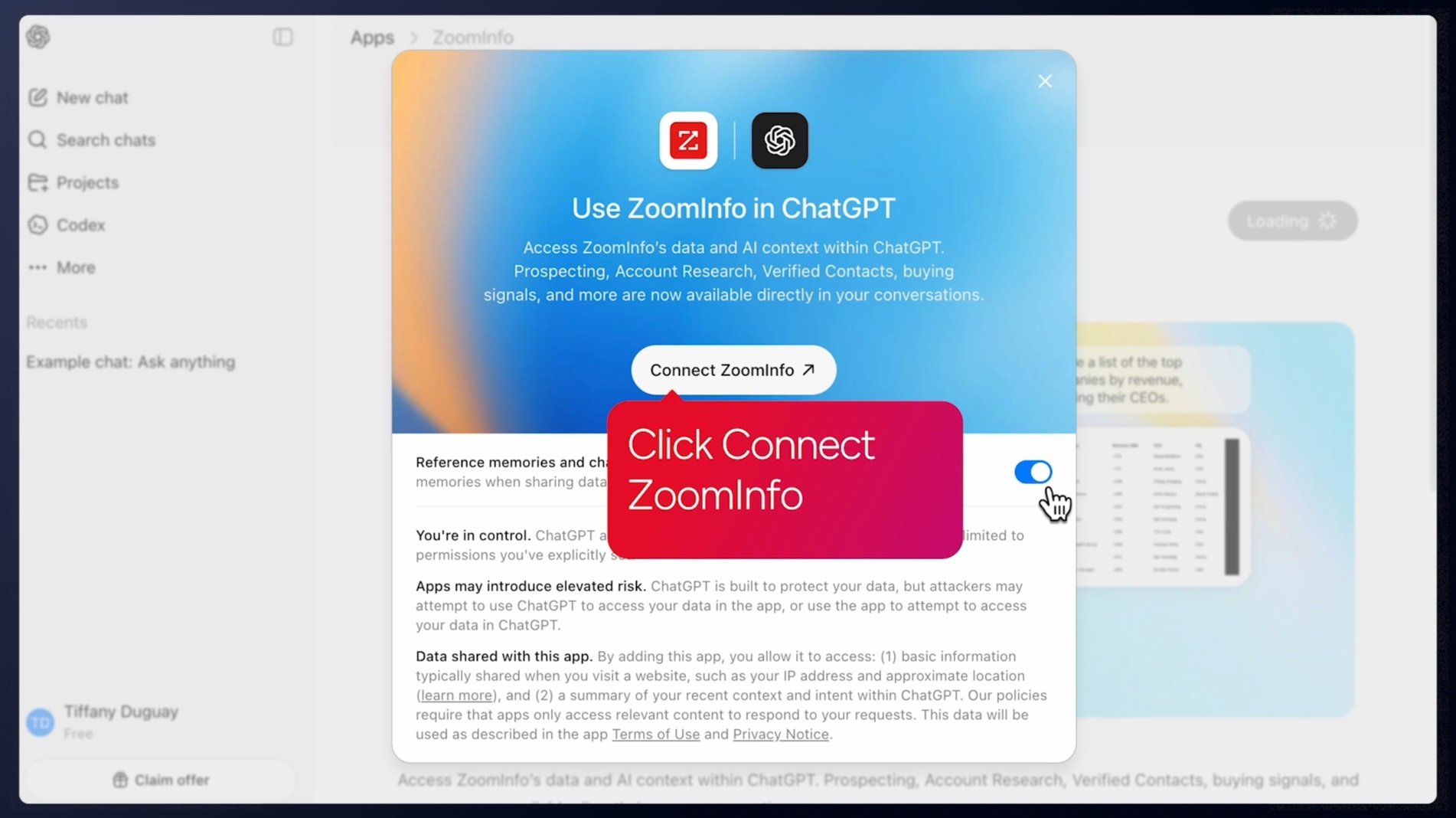
For developers building AI agents, ZoomInfo's MCP server at https://mcp.zoominfo.com/mcp exposes search, enrich, and account research as native tools for MCP-compatible assistants, currently supporting Claude and ChatGPT.
Source: ZoomInfo
Webhooks are available via the Agents API, supporting push notifications when bulk enrichment jobs complete, credit thresholds are crossed, or new GTM signals (scoops, funding events, intent spikes) become available.
Documentation lives at docs.zoominfo.com with an interactive API reference, OAuth recipes in five languages, and an llms.txt index for AI development tools. ZoomInfo does not publish official SDKs, so both platforms require direct HTTP integration. ZoomInfo uses consumption-based pricing (custom-quoted); the company has added API access to all relevant plans.
BDO Canada reported an 87% reduction in time spent updating internal data dashboards using the ZoomInfo API, with one analyst describing the integration as plug-and-play across any process. (ZoomInfo)
Proxycurl API vs. ZoomInfo API
Dimension | Proxycurl API (NinjaPear) | ZoomInfo API |
|---|---|---|
API type | REST, JSON | REST, JSON:API format |
Authentication | Bearer token (static API key) | OAuth 2.0 with PKCE (24-hour tokens, rotating refresh) |
Primary scope | Company intelligence: customers, competitors, products, employees, monitoring | B2B intelligence: contacts, companies, intent, org charts, technographics, AI research |
Contact data | Employee search and work email lookup per company | 500M contacts, 135M+ verified phone numbers, 200M+ verified business emails |
Intent / signals | RSS-based blog/website/social monitoring (pull only) | Buyer intent, scoops, news, job changes, funding signals (push webhooks) |
Webhooks | No push webhooks; RSS feed polling | Agents API webhooks (enrichment jobs, signal alerts, credit thresholds) |
SDKs | Python and JavaScript (official) | None (code samples in Shell, Node, Ruby, PHP, Python) |
Rate limits | 50 req/min per account | 5-35 req/sec by tier, with per-hour and per-day sliding windows |
AI / MCP | MCP server for Claude (SSE transport) | MCP server (Claude, ChatGPT) plus Copilot API endpoints |
Pricing model | Credit-based, transparent ($289/mo entry or PAYG from $0.06/credit) | Consumption-based, custom-quoted (search free, enrich consumes credits) |
Best for | Company intelligence and competitive analysis builds at moderate volume | Full-stack B2B intelligence with contact enrichment, intent, and AI-powered research at scale |
Final Verdict
Proxycurl's API, as it exists today under NinjaPear, is a focused company intelligence surface with transparent pricing, clean documentation, and a credit model that charges only on success.
For a developer building competitive intelligence tools, customer mapping workflows, or company monitoring feeds, the current endpoints deliver structured data without enterprise sales calls or opaque pricing. Its limits are limits of scope and scale, not of quality within that scope.
Choose the Proxycurl API (NinjaPear) if your build is company-centric: mapping customer bases, identifying competitors, tracking product catalogs, and monitoring company activity via RSS. The transparent credit pricing (starting at $289/month) and official Python/JavaScript SDKs make it practical for moderate-volume company intelligence workflows.
Choose the ZoomInfo API if your build needs the intelligence layer beyond company data: searching across 500M contacts, enriching with verified emails and direct dials, detecting buyer intent, traversing org charts, and generating AI-powered account research and buying-committee recommendations.
The search-then-enrich pattern (search is free, enrich consumes credits), OAuth 2.0 authentication, and rate limits up to 35 req/sec make it the right surface for production pipelines at scale.
Explore the ZoomInfo Enterprise API or start with the developer docs to see the endpoint surface directly.
A developer who needed Proxycurl specifically for LinkedIn profile scraping, candidate sourcing, or job listing data should look elsewhere entirely: those endpoints are no longer part of the API, and the NinjaPear successor operates at a different layer.
FAQ
Is the Proxycurl API still available?
Not in its original form. Proxycurl shut down on July 4, 2025 following a lawsuit filed by LinkedIn in January 2025. The team now operates NinjaPear, a B2B company intelligence platform at the same domain (nubela.co), with a live REST API.
The current surface covers company data, customer listings, competitor mapping, employee search, and RSS-based monitoring, but the LinkedIn scraping endpoints that originally defined Proxycurl (People API, Jobs API, School API, person and company search) are no longer documented. The API reference at nubela.co/proxycurl/docs now renders as "NinjaPear API Reference."
What is the Proxycurl API rate limit?
Paid API endpoints are limited to 50 requests per minute, enforced per account and shared across all API keys on the same account. Creating multiple keys does not increase capacity. Rate-limited responses (HTTP 429) include Retry-After, X-RateLimit-Remaining, and X-RateLimit-Reset headers for backoff guidance.
The documentation recommends a request timeout of 100 seconds, as endpoints typically take 30 to 60 seconds to respond. Free endpoints (Company Logo, Disposable Email, Credit Balance) have separate, tier-dependent rate limits.
Does the Proxycurl API support webhooks?
Not in the traditional push-delivery sense. The Monitor API provides an RSS-based event model where developers create feeds targeting company domains and configure monitoring for blog posts, X/Twitter activity, and website changes. Each feed produces an RSS 2.0 XML stream that consumers must poll.
There is no HTTP webhook push delivery, no retry policy, and no payload signing. For event-driven architectures, you need to build your own polling loop and scheduling layer on top of the RSS feeds.
Are there official Proxycurl SDKs?
Yes, but only for two languages. NinjaPear (the successor to Proxycurl) publishes official client libraries for Python (the ninjapear PyPI package) and JavaScript/Node.js (the ninjapear npm package).
Both SDKs wrap the full endpoint surface. No official libraries exist for Go, Ruby, PHP, Java, or .NET. The publicly available OpenAPI 3.0 spec can generate client code for additional languages via OpenAPI tooling.
What happened to Proxycurl's LinkedIn scraping endpoints?
They are no longer part of the API. In January 2025, LinkedIn filed a federal lawsuit against Proxycurl and its founder for unauthorized creation of fake accounts and scraping of millions of LinkedIn profiles.
Rather than fight a prolonged legal battle against Microsoft-owned LinkedIn, the company shut down in July 2025 and pivoted to NinjaPear, a B2B company intelligence platform that avoids LinkedIn scraping. The current API surface focuses on company-level data (customers, competitors, products, employees, monitoring) sourced through non-scraping methods.
What does ZoomInfo's API cover that Proxycurl's does not?
ZoomInfo's API operates at a different scale and scope.
Where Proxycurl's current surface provides company-level intelligence (customer listings, competitor mapping, product catalogs, employee search), ZoomInfo's Enterprise API adds contact enrichment across 500M contacts with verified business emails, 135M+ verified phone numbers, and direct dials; buyer intent signals tracking companies researching specific topics; technographic data across 30M+ companies; org chart and corporate hierarchy traversal; and AI-powered endpoints for account research, lookalike expansion, and buying-committee recommendations.
ZoomInfo also provides OAuth 2.0 authentication (vs. static API keys), push webhooks (vs. RSS polling), rate limits up to 35 req/sec (vs. 50 req/min), and an MCP server supporting both Claude and ChatGPT for AI-agent workflows. Pricing is consumption-based and custom-quoted rather than publicly listed, and search operations are free with credits consumed only on enrichment.
