
Choosing between QuotaPath and Everstage for sales compensation management comes down to five questions:
Are you replacing spreadsheets for the first time, or migrating off a legacy system like Xactly or Varicent?
Do you need a self-service platform your RevOps team can manage alone, or do you want guided configuration and hands-on support?
Is your priority transparent pricing you can model before a sales call, or are you willing to negotiate custom contracts for more functionality?
Do your compensation plans involve complex multi-tier structures across hundreds of payees, or are you running simpler plans for a smaller team?
Does your team need commission software alone, or would connecting compensation data to go-to-market intelligence make your plans more effective?
In short, here's what we recommend:
QuotaPath is the right choice for small-to-mid-market SaaS companies that want to run compensation operations without relying on a vendor. Its self-service plan builder, transparent pricing, and fast implementation make it accessible to RevOps teams that have outgrown spreadsheets but don't need enterprise complexity. The Atlas AI Revenue Strategist adds plan grading and scenario modeling using proprietary compensation data. However, QuotaPath hits its ceiling with complex enterprise plans, can't merge data from multiple sources at once, and its platform fees add cost beyond the advertised per-user rates.
Everstage serves mid-market to enterprise organizations that need to handle complex compensation structures across large teams. With 4.9/5 ratings across G2, Capterra, and Gartner Peer Insights, a Forrester Strong Performer designation, and the ability to manage 700+ payees with multi-tier accelerators and split credits, Everstage handles plan complexity that lighter tools cannot. Its suite now includes CPQ and Planning modules. The trade-off: custom-only pricing with no public rates, a required paid implementation, and newer products (CPQ and Planning both launched in 2025) that are still maturing.
Both platforms solve commission calculation and payouts well. But compensation plans don't exist in a vacuum. The plans your team designs are only as good as the data behind them: which accounts are in-market, which reps are targeting the right buyers, and whether your incentive structure drives the revenue behaviors you want. That connection between compensation strategy and go-to-market intelligence is where a broader platform becomes valuable.
ZoomInfo is an AI-powered GTM platform that gives revenue leaders the data compensation decisions depend on. With 500M contacts, 100M companies, 135M+ verified phone numbers, and 200M+ verified business email addresses, ZoomInfo's GTM Context Graph (a system that fuses B2B data with your CRM records, conversation transcripts, and behavioral signals) reveals which accounts are worth pursuing and why deals move or stall. For RevOps and Sales leaders designing compensation plans, ZoomInfo provides the territory data, account intelligence, and buyer signals that determine whether quotas are achievable and whether reps are chasing the right opportunities. That intelligence flows through GTM Workspace for sellers, GTM Studio for marketers and RevOps, or APIs and MCP in any front-end.
If connecting your compensation strategy to real-time account intelligence sounds like the missing piece, see how ZoomInfo works.
QuotaPath vs. Everstage vs. ZoomInfo at a glance
QuotaPath | Everstage | ZoomInfo | |
|---|---|---|---|
Best for | SMB to mid-market SaaS teams | Mid-market to enterprise orgs | Revenue teams needing GTM intelligence to inform comp strategy |
Pricing | Custom per-payee pricing (not published) | ||
Free trial | No free trial (demo account only) | ||
Implementation time | 45–60 days (some in 2 weeks) | 4–6 weeks | |
Plan complexity | Good for standard plans; limited on multi-source enterprise structures | Handles multi-tier accelerators, split credits, overlapping territories, SPIFs, draws | N/A (GTM intelligence platform, not ICM) |
AI capabilities | Atlas AI Revenue Strategist for plan grading and modeling | Agent Core with Crystal AI for rep forecasting | GTM Context Graph processing 1.5B+ data points daily |
Self-service | Full self-service plan building | Some changes require vendor support | Self-service prospecting and intelligence |
CRM integrations | Salesforce, HubSpot, Close, Pipedrive, Zoho, + others | Salesforce, HubSpot, Microsoft Dynamics, Zoho, Freshsales, Pipedrive, + others | 300+ integrations including Salesforce, HubSpot, Microsoft Dynamics |
ASC 606 compliance | Growth tier and above | Included | N/A |
Self-service flexibility vs. guided configuration
This is the sharpest distinction between QuotaPath and Everstage, and it determines which platform fits your team's operating model.
QuotaPath was designed for RevOps teams that want to control their own compensation operations.
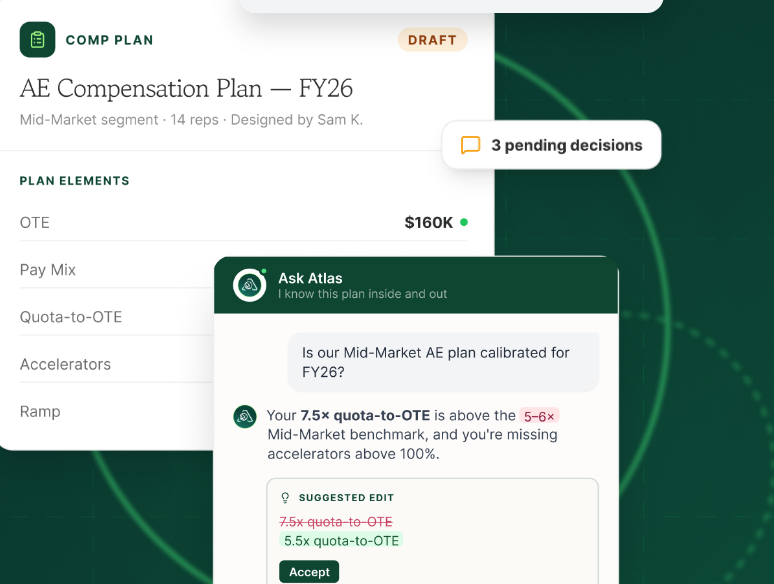
The AI-Powered Plan Builder lets admins upload a compensation document (a PDF of the signed plan, for example) and have the AI extract components, quotas, and rate structures automatically. Plans can also be built from plain-text descriptions. Once generated, admins edit, model, and publish plans without raising an IT ticket or calling their vendor.
Source: QuotaPath
Everstage takes the opposite approach.
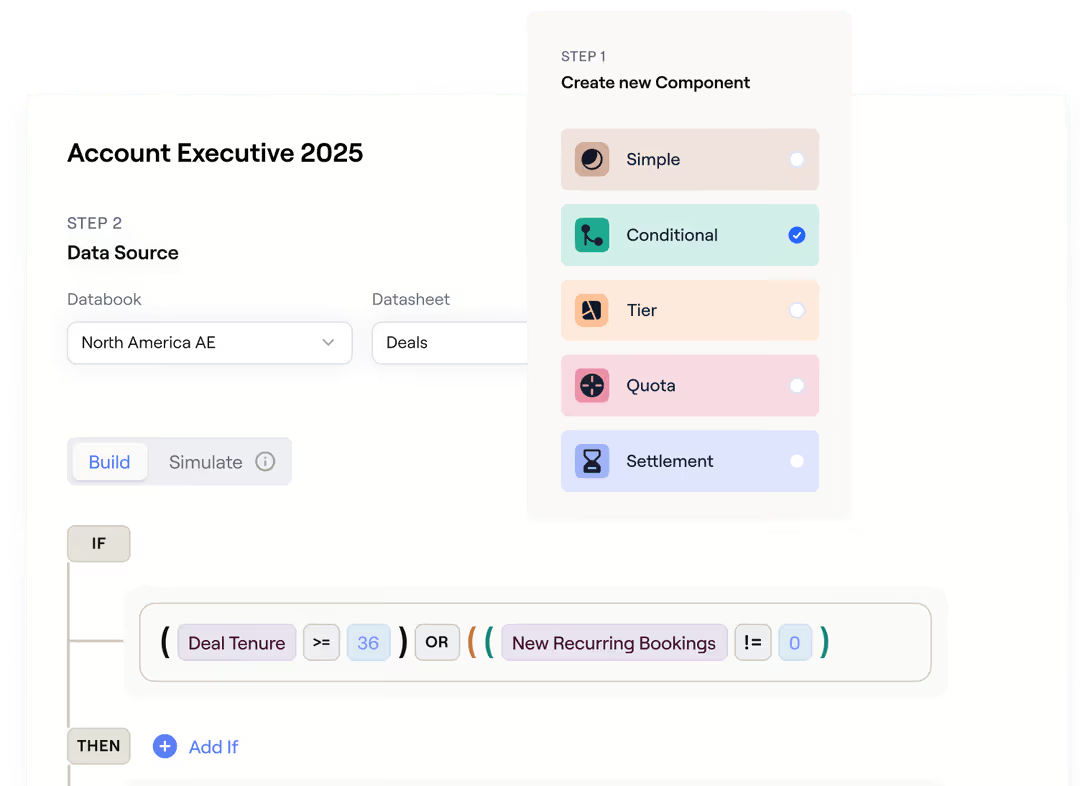
While it offers a no-code plan designer, the platform centers on guided implementation and ongoing support. 24x5 multi-channel support includes quarterly impact analysis and ROI reviews. The Forrester Wave Q1 2025 noted that "customers rave about the overall user experience and live support they receive from Everstage."
The flip side: G2 reviewers note that some complex plan modifications cannot be made self-service and require engaging the Everstage support team. If your organization changes comp plans frequently or launches mid-quarter SPIFs on short notice, that dependency could slow you down.
Source: Everstage
Neither approach is universally better. Teams with a strong RevOps function and simpler plans benefit from QuotaPath's independence. Teams with complex, multi-tier structures across hundreds of payees benefit from Everstage's guided approach and configurability.
Plan complexity is the dividing line
The plans your organization runs determine which platform can handle them.
QuotaPath covers the standard compensation building blocks well: quota components (currency or quantity-based, recurring or temporary), commission components (single-rate or tiered), and bonus components (milestone, SPIF, or target-based).
Its component library handles shared quotas, ramping schedules, and attainment multipliers. For a SaaS company with 10–200 sales reps running quota-and-accelerator plans, QuotaPath handles the math accurately.
But QuotaPath hits a ceiling with enterprise complexity.
Multiple comparisons note it cannot merge data from multiple sources at once, blocking companies with layered CRM, ERP, and data warehouse environments. Capterra reviewers call the platform "best suited for smaller companies" when plan structures get intricate.
Everstage was built for exactly those intricate structures.
The platform supports multi-tier accelerators, split credits, overlapping territories, SPIFs, and draw-against-commission without requiring code.
Source: Everstage
The practical test: if your comp plan fits on a single page and applies uniformly across your sales team, QuotaPath handles it. If your plan document runs 15 pages with territory overlays, channel partner tiers, and role-specific multipliers, you need Everstage.
The AI strategy divergence
Both platforms have invested in AI, but with different goals.
QuotaPath's Atlas (launched June 2026) is a compensation strategy tool.
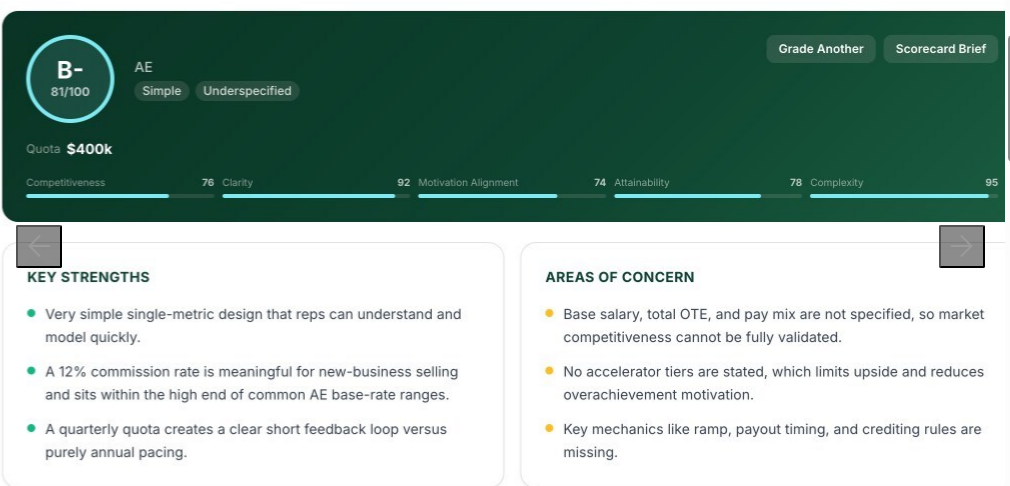
Its Comp Plan Grader scores plans across five dimensions (Competitiveness, Motivation Alignment, Clarity, Attainability, and Complexity), assigns a letter grade, and generates ranked recommendations. The Performance Modeling engine runs Monte Carlo simulations, producing P10, median, and P90 earnings distributions to stress-test plans before deployment. Atlas can also backtest a proposed plan against historical data to quantify cost differences.
Source: PR Newswire
Atlas is available as a standalone product (with a free tier offering 5 messages per day) or connected to a live QuotaPath workspace (starting at $5,000 annually). The standalone version makes Atlas useful even for teams not on QuotaPath's commission platform.
Everstage's Agent Core (launched August 2025) takes a different direction: operational automation within the platform.
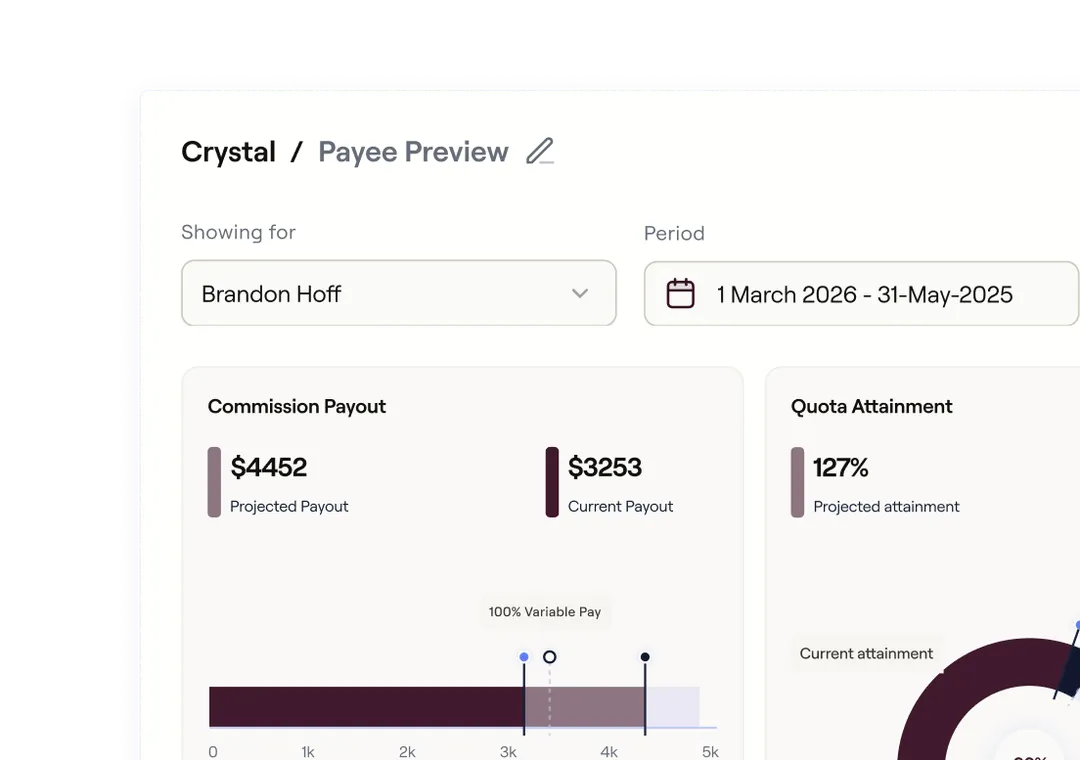
The Crystal AI Agent lets reps query payout scenarios in natural language and run deal-attribute simulations. The AI Databook Assistant prepares commission data through natural language prompts, handling joins, filters, and transformations. An AI Onboarding Assistant manages user lifecycle tasks like adding new hires and bulk-importing payees.
Source: Everstage
Everstage's AI roadmap signals more automation ahead: compensation plan creation, territory design, quota setting, and capacity forecasting are listed as coming agents.
QuotaPath's AI helps you design better plans. Everstage's AI helps you run them more efficiently. They address different stages of the compensation lifecycle.
Pricing transparency tells you who they're built for
Pricing reveals the target market more clearly than any feature list.
QuotaPath publishes its rates: $35/user/month on Growth, $50/user/month on Premium, plus a platform fee ($525/month or $800/month) that covers the first five users and includes implementation support. All billing is annual. A 30-day free trial is available across all tiers.
But the published pricing tells an incomplete story.
A Capterra reviewer called the pricing page "incredibly misleading" because the per-user rates are displayed prominently while the mandatory platform fees and annual billing requirement are less visible. For a 5-person team, the effective minimum is $525/month ($6,300/year) on Growth, not the $175/month ($35 x 5) the per-user rate implies.
The Premium tier unlocks features many teams will need: plan modeling, multi-level approvals, custom reporting, API access, and integrations with accounting platforms like NetSuite and Sage Intacct. Teams that start on Growth often upgrade within the first year.
Everstage does not publish pricing.
The homepage FAQ confirms a per-payee model with implementation and support fees priced separately. No tiers, no public rates, no self-serve purchase path. This is enterprise software sold through enterprise sales cycles.
Implementation fees are non-cancellable and non-refundable. Custom integrations, data migrations, and onsite work cost extra. Contracts auto-renew with 30 days' written notice required to prevent renewal, and Everstage reserves the right to increase prices at renewal.
For a 50-person sales team, you can calculate QuotaPath's costs before a sales conversation. Everstage's costs require multiple meetings to scope. Neither approach is wrong, but they serve different buying processes and budget cycles.
Data sync and real-time visibility
Commission accuracy depends on how quickly deal data flows from your CRM into your compensation platform.
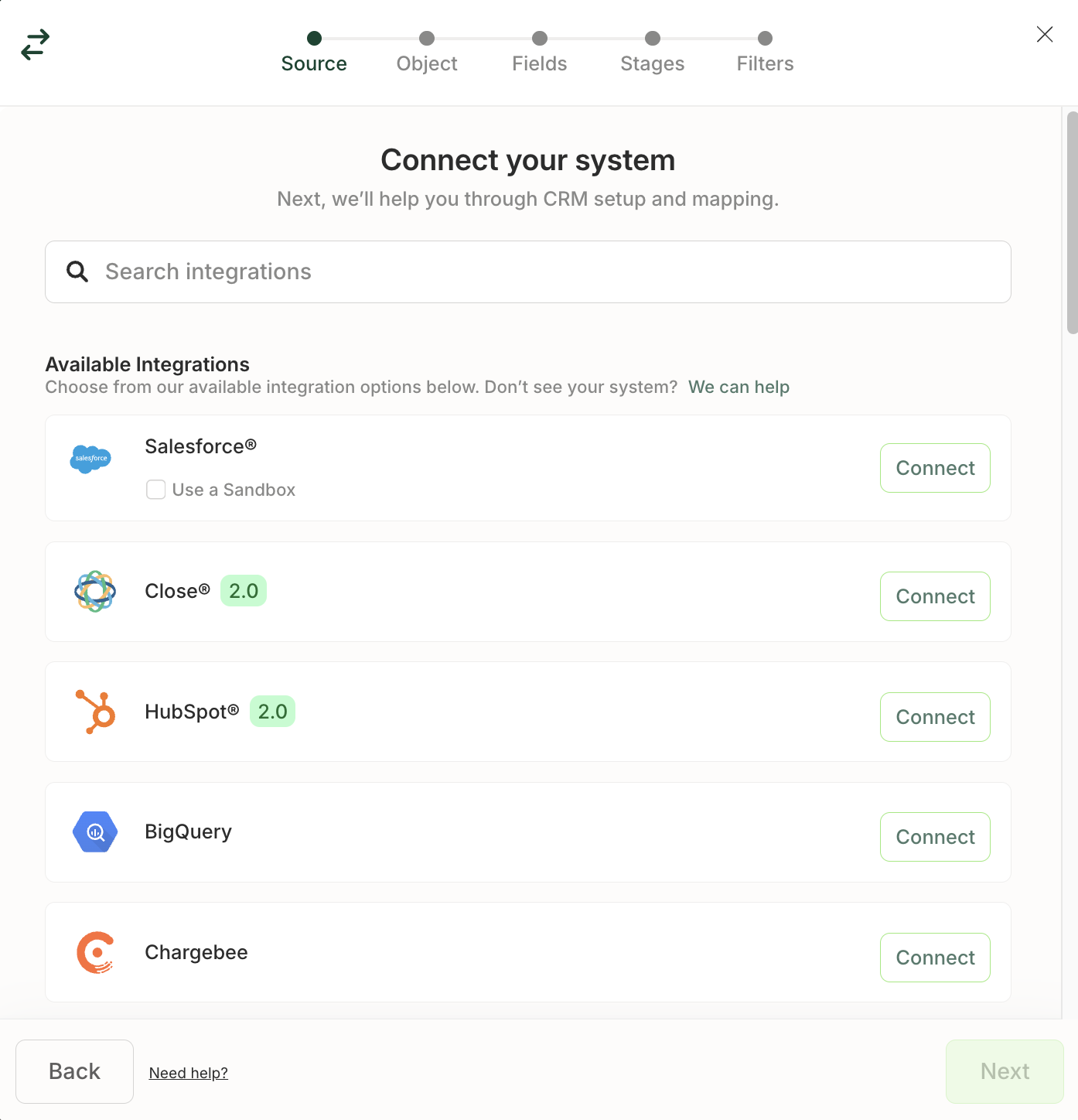
QuotaPath syncs data on configurable schedules as frequent as every two hours, with on-demand manual syncs available anytime. The Integrations 2.0 architecture consolidates authentication at the workspace level, reducing redundant API calls. QuotaPath also provides Source Record Pages that show admins exactly what data synced and when.
However, G2 reviewers note that HubSpot and Salesforce updates sometimes take too long to appear in earnings, creating friction during payout cycles when reps expect their latest closed deals to show up immediately.
A Capterra reviewer reported the software "rarely works" and "freezes every time I attempt to access," though QuotaPath released performance improvements (including cached earnings calculations) in mid-2025.
Source: QuotaPath
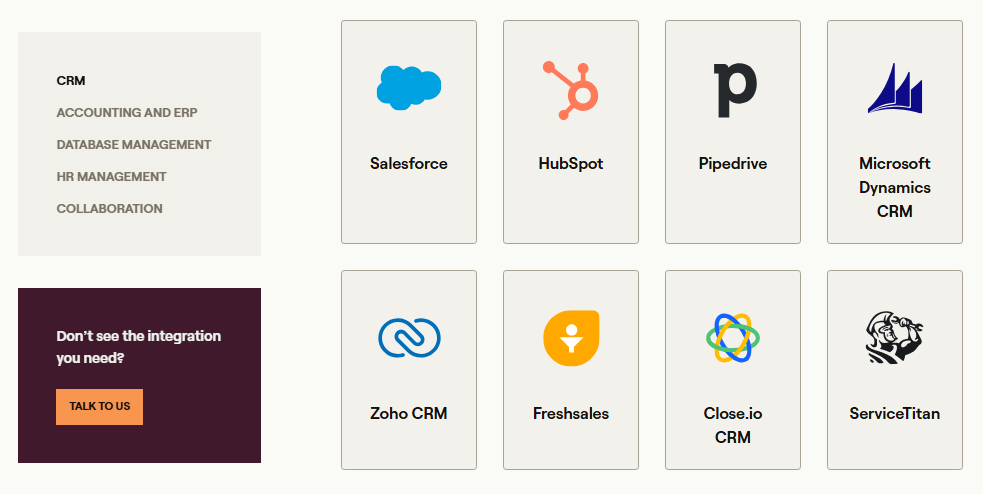
Everstage pulls data from CRMs, HRIS platforms, ERPs, and data warehouses through native integrations and APIs. The integration catalog covers a broader range of systems, including direct database connections to Snowflake, BigQuery, Redshift, and PostgreSQL.
The primary complaint from Everstage users is the daily sync window.
G2 and Capterra reviewers note that the daily data sync blocks all activity (adding plan elements, locking/unlocking statements, requesting validations) for several hours each morning. During month-end close, when commission teams are most active, this dead zone becomes a bottleneck.
Source: Everstage
Both platforms face the tension between batch processing and real-time expectations. Neither offers continuous commission processing triggered by individual deal closures. For teams where a few-hour delay matters, this is a limitation of the category, not one vendor.
The reporting gap both platforms share
Both QuotaPath and Everstage deliver good standard reports. Both struggle with custom reporting.
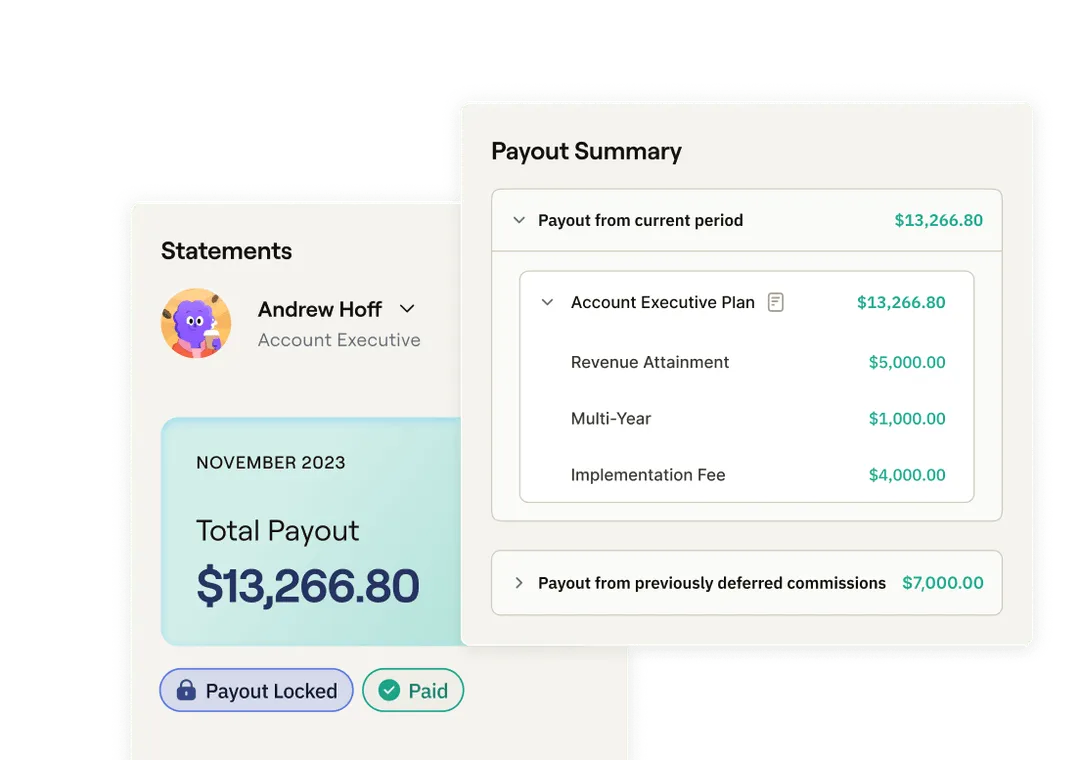
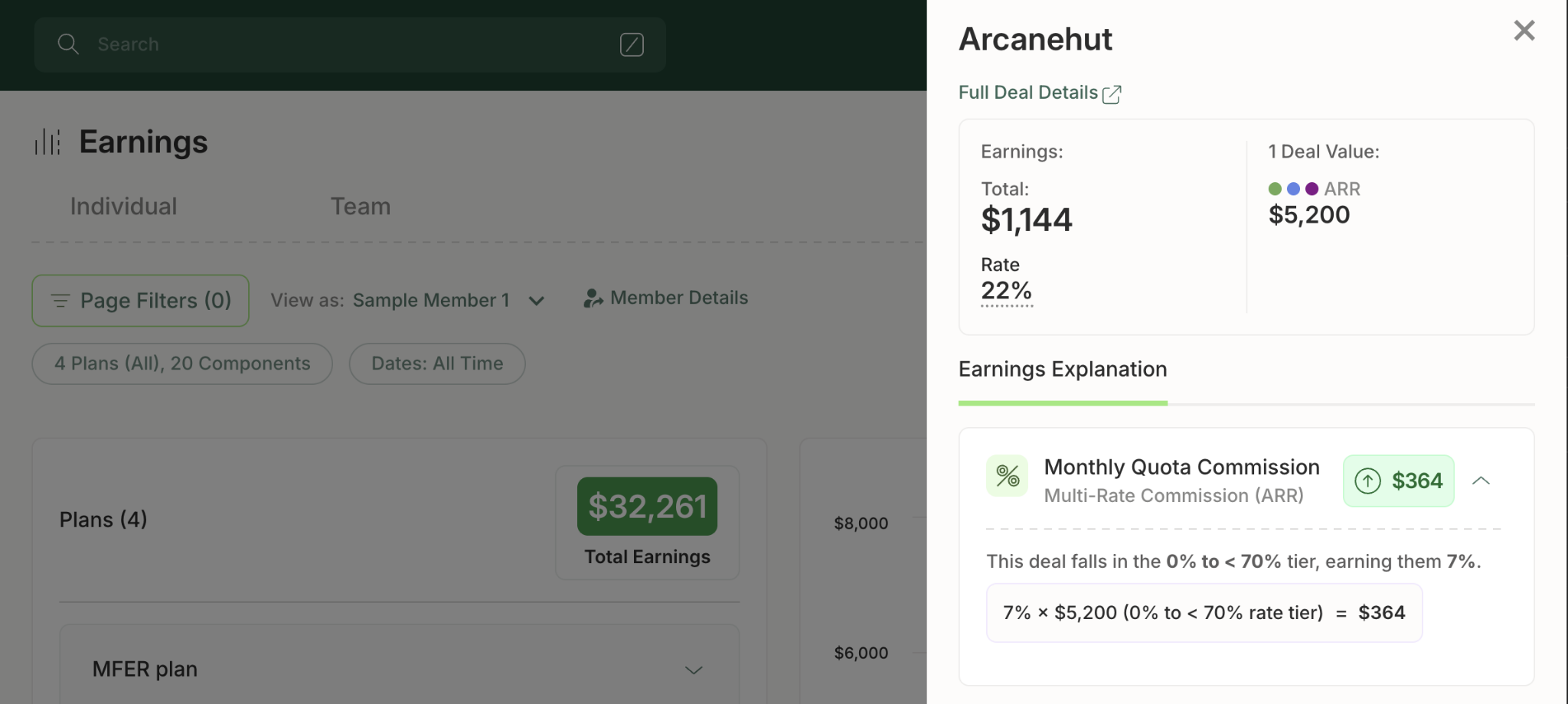
QuotaPath provides rep-facing earnings dashboards with component-level breakdowns and a deal-level table. The Earnings Explanation feature shows step-by-step calculation audits for each deal's commission. For reps, this transparency reduces disputes. For admins, it reduces support tickets.
Source: QuotaPath
But G2 reviewers flag limited reporting relative to more data-mature platforms, and a Capterra reviewer described "too many places to review commissions and no clear way to determine what's pending versus what to expect on my paycheck." Custom reporting and advanced filtering are locked to the Premium tier.
Everstage earned the highest possible score in reporting from the Forrester Wave Q1 2025, and its BI dashboards are well-reviewed.
Yet multiple reviewers on G2 and Capterra note that customizing reports for non-standard needs requires exporting to spreadsheets. The standard dashboards work well; the ability to slice data by geography, plan type, or product line does not.
For finance teams that need to answer questions the vendor didn't anticipate, both platforms push you back to Excel. This is where connecting compensation data to a broader data platform becomes relevant.
Where go-to-market intelligence connects to compensation
QuotaPath and Everstage both automate commission calculations. Neither answers the upstream question: are your reps pursuing the right accounts with the right quotas in territories that reflect actual market opportunity?
ZoomInfo operates in a different category. It's not a commission calculator. It's an AI-powered GTM platform that provides the data your compensation decisions depend on.
Territory design is only as good as the account data behind it.
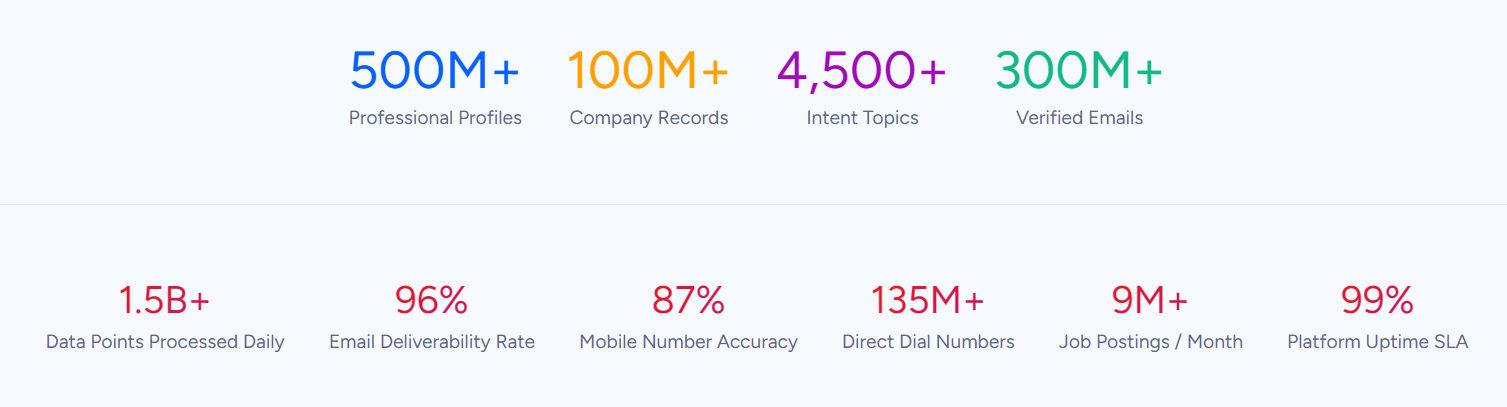
ZoomInfo's B2B dataset (500M contacts, 100M companies, 135M+ verified phone numbers, and 200M+ verified business email addresses) gives RevOps teams the company, technographic, and intent data needed to build territories based on actual market opportunity rather than arbitrary geography.
The GTM Context Graph (a system processing 1.5B+ data points daily) fuses this data with CRM records and conversation signals to show which accounts are in-market and why deals advance or stall.
Source: ZoomInfo
For compensation strategy, this matters in practice. Quotas set on incomplete account data produce unachievable targets. Territory assignments without technographic and intent signals create imbalanced books of business. Commission plans that reward volume without knowing which accounts are in-market incentivize activity over outcomes.
ZoomInfo doesn't replace QuotaPath or Everstage.
It provides the data that makes whatever compensation platform you choose more effective. Sellers using GTM Workspace walk into calls knowing who to contact, when to engage, and what to say. RevOps teams using GTM Studio design audience segments and launch plays in natural language. The same data is available through APIs and MCP for any custom workflow or third-party tool.
Seismic's sales team attributed 39% of active pipeline to opportunities identified or influenced by ZoomInfo signals, while boosting productivity by 54% and saving 11.5 hours per week per seller. (Seismic case study)
Rep-facing experience comparison
The rep experience determines adoption. A compensation platform reps don't trust or don't use is a wasted investment.
QuotaPath leads with earnings visibility.
Reps see deal-level breakdowns with a time-series earnings graph viewable by day, week, month, quarter, or year. The Earnings Explanation panel shows plain-language, step-by-step math for each deal's commission. QuotaPath also offers CRM-embedded views through HubSpot Marketplace and Salesforce AppExchange apps, so reps can check earnings without leaving their CRM.
When reps understand exactly how their compensation works, shadow accounting disappears and selling behavior aligns with plan design.
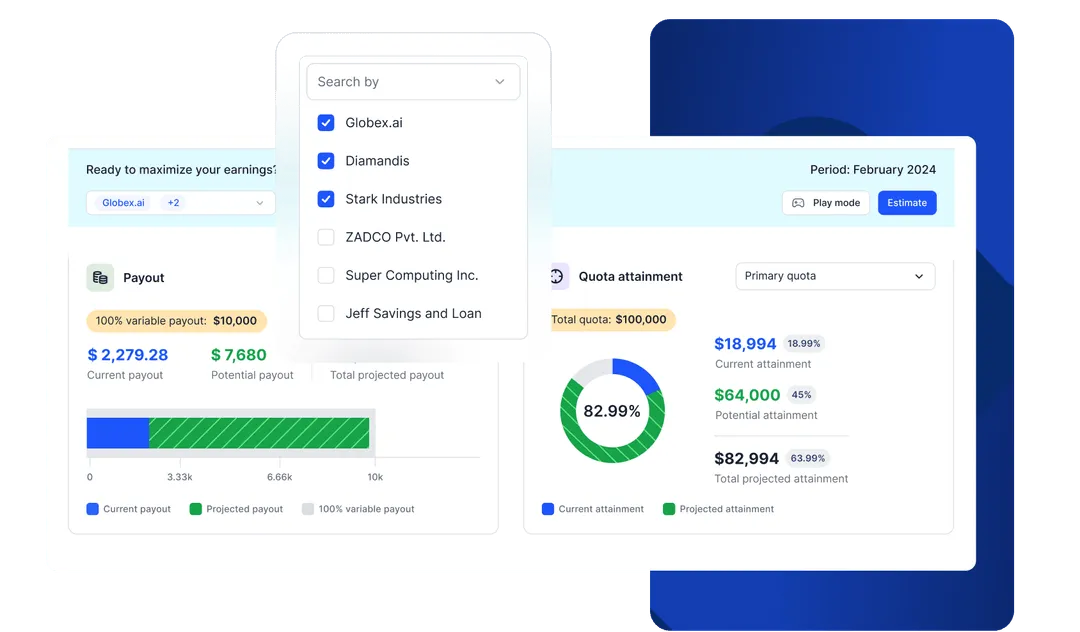
Everstage's Crystal feature gives reps visibility into quota attainment, payout forecasting, and commission logic breakdowns.
The Crystal AI Agent goes further: reps can ask payout questions in natural language and run "what-if" simulations, modifying deal attributes like size or contract duration to see how pipeline changes affect projected commissions. Commission data also surfaces within Slack, Microsoft Teams, Gmail, and directly inside Salesforce via the Everstage Connectivity Bundle.
Source: Everstage
G2 reviewers frequently cite payee-side visibility as a primary reason for adoption, noting reps proactively check the platform rather than waiting for payroll.
Both platforms solve the transparency problem well. QuotaPath's step-by-step calculation audit is particularly strong for reducing disputes. Everstage's "what-if" simulations give reps a forward-looking tool that influences deal behavior in real time.
Integration breadth and payroll connectivity
QuotaPath connects to 25+ native integration sources including 11 CRMs, accounting platforms (QuickBooks, NetSuite, Xero, Sage Intacct), payment processors (Stripe, Chargebee), data warehouses (BigQuery, Snowflake), and business analytics tools (Looker, Tableau).
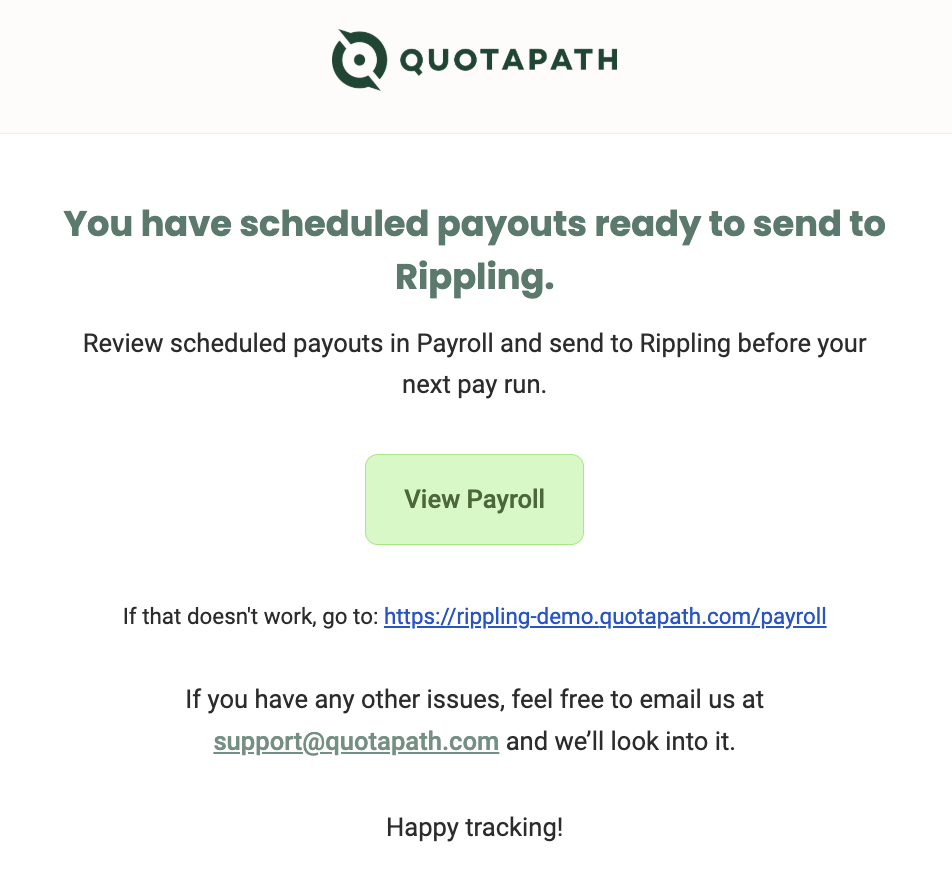
The Rippling integration stands out: resolved commission payouts can push directly into a Rippling pay run, closing the loop from deal close to paycheck. QuotaPath also offers an open API with Inbound Deals and Outbound Payouts endpoints, available to all paid subscribers.
Source: QuotaPath
Everstage's integration catalog spans CRMs, accounting/ERP, database infrastructure, HR and payroll, and collaboration tools.
The CRM coverage is broader (including ServiceTitan and Close.io alongside the majors), and direct database connections to AWS S3, Snowflake, BigQuery, Redshift, PostgreSQL, and MySQL give enterprise data teams more flexibility. The Salesforce integration is deep, with a native embedded experience for both administrators and payees.
Everstage can pull data from multiple systems at once, which is where QuotaPath's single-source limitation shows. For companies whose deal data lives in Salesforce, invoice data in NetSuite, and employee data in Workday, Everstage's broader ingestion is a practical advantage.
Security and compliance posture
QuotaPath holds a SOC 2 Type 1 certification with continuous compliance monitoring through Drata.
Data sits in cloud-hosted, password-protected databases with SSL/TLS encryption. SSO works via both Okta and Microsoft Entra ID on Growth and Premium tiers. Two-factor authentication is available. For the Atlas AI module, QuotaPath holds explicit no-training agreements with all LLM providers.
Everstage carries a broader compliance portfolio: SOC 2 Type II, SOC 1 Type II, ISO 27001, ISO 42001:2023, GDPR, and CCPA. End-to-end encryption, audit logs, version control, and SSO come standard. The ISO 42001:2023 certification (the AI management system standard) is notable given the platform's expanding AI capabilities.
For companies in regulated industries (financial services, healthcare, medical devices), Everstage's SOC 2 Type II and ISO 27001 certifications carry more weight than QuotaPath's Type 1 attestation. The difference matters in procurement evaluations where security questionnaires gate the process.
ZoomInfo maintains certifications renewed annually: ISO 27001, ISO 27701, SOC 2 Type II, TRUSTe GDPR, and TRUSTe CCPA. As a registered data broker in California and Vermont, ZoomInfo builds compliance into the data layer itself.
QuotaPath vs. Everstage vs. ZoomInfo: Which should you choose?
The right tool depends on where you are in your compensation maturity and what broader problems you're solving.
Choose QuotaPath if:
You're a small-to-mid-market SaaS company with 10–200 commissionable reps
Your RevOps team wants to build, modify, and manage plans without vendor support
Transparent, predictable pricing matters to your buying process
Your compensation plans are standard structures (quotas, tiers, bonuses, SPIFs) without multi-source data complexity
You want to stress-test plans with AI grading and Monte Carlo simulations before deployment
Choose Everstage if:
You have 75–5,000+ payees with complex, multi-tier compensation structures
You're replacing a legacy system like Xactly or Varicent and need enterprise-level handling
Guided implementation and ongoing strategic support are priorities
Your data lives across multiple systems (CRM, ERP, HRIS, data warehouse) that need simultaneous ingestion
You want a platform expanding into CPQ and sales planning on a shared data layer
Add ZoomInfo if:
Your territory and quota design needs real account intelligence, not just CRM history
You want to connect compensation strategy to which accounts are in-market
Your sellers need verified contact data and buyer signals to execute on the plans you've designed
You're building a GTM stack where intelligence flows across tools rather than sitting in silos
You want one data source powering prospecting, outreach, territory planning, and compensation alignment
Explore ZoomInfo's free trial or start with ZoomInfo Lite at no cost.
QuotaPath and Everstage both solve commission automation for their target markets. QuotaPath gives smaller teams independence and cost predictability. Everstage gives larger organizations the depth and support to handle compensation at enterprise scale.
ZoomInfo provides the go-to-market intelligence that makes both approaches more effective, connecting compensation design to the account data, buyer signals, and territory insights that determine whether your plans drive the revenue behaviors you're paying for.
The strongest revenue organizations don't treat compensation as an isolated operational problem. They connect it to the intelligence that informs every other GTM decision. That connection is where the leverage is.
QuotaPath vs. Everstage vs. ZoomInfo FAQ
What is the core difference between QuotaPath and Everstage?
QuotaPath is a self-service sales commission platform designed for small-to-mid-market SaaS teams that want to build, modify, and manage compensation plans on their own.
Everstage is a Sales Performance Management platform built for mid-market to enterprise organizations with complex, multi-tier compensation structures across hundreds or thousands of payees.
QuotaPath prioritizes ease of use and transparent pricing. Everstage prioritizes plan complexity, enterprise compliance, and guided support.
Which platform is more affordable?
QuotaPath publishes pricing at $35–$50 per user per month, plus a mandatory platform fee of $525–$800 per month that includes the first five users. Everstage uses custom per-payee pricing that is not publicly disclosed, with separate implementation and support fees.
For small teams (under 50 reps), QuotaPath is typically less expensive and more predictable. For larger deployments, Everstage's pricing may be competitive per payee, but requires a sales conversation to determine.
Can QuotaPath handle enterprise-level compensation plans?
QuotaPath handles standard quota, commission, and bonus structures well for teams up to about 200 reps. It struggles with complex enterprise plans involving multi-source data merging, territory matrix overlays, and multi-currency structures.
Everstage suits organizations with those requirements better, as shown by its management of 700+ payees with complex.
How does ZoomInfo relate to sales compensation platforms?
ZoomInfo is not a commission calculator. It is a go-to-market intelligence platform that provides the account data, buyer intent signals, and territory intelligence that compensation plans depend on. Quota setting, territory design, and incentive structures work only when they reflect actual market opportunity.
ZoomInfo provides that data layer, which complements whichever commission platform (QuotaPath, Everstage, or otherwise) a team chooses.
Which platform has better AI capabilities?
Both have invested in AI with different goals.
QuotaPath's Atlas AI Revenue Strategist grades compensation plans against industry benchmarks, runs Monte Carlo simulations for scenario modeling, and can backtest proposed plans against historical data. Everstage's Agent Core automates operational tasks within the platform: reps can query payouts in natural language via Crystal AI, and the AI Databook Assistant handles data preparation through natural language prompts.
QuotaPath's AI focuses on plan design. Everstage's AI focuses on plan execution.
How long does implementation take for each platform?
QuotaPath averages 45–60 days, with some customers going live in as little as two weeks. Everstage advertises 4–6 week go-live and holds G2's Fastest Implementation (Enterprise) badge. Both are faster than legacy vendors like Xactly (6+ months). Timelines depend on plan complexity, data readiness, and team availability.
Which platform is better for HubSpot users?
QuotaPath has an advantage for HubSpot-centric organizations. It offers native HubSpot integration including lead and invoice object support, and a HubSpot Marketplace app that lets reps view commission earnings inside HubSpot. Everstage also integrates with HubSpot, but QuotaPath's HubSpot integration is more often cited as a differentiator by its customers.
Do either QuotaPath or Everstage offer ASC 606 compliance features?
Both do.
QuotaPath includes an ASC 606 Ledger on its Growth tier and above, handling straight-line amortization, daily or monthly proration, and waterfall exports for accounting software upload. Everstage provides automated ASC 606 expense reports with waterfall views and audit trails.
For finance teams that need revenue recognition compliance alongside commission management, both platforms cover this requirement.
More QuotaPath and Everstage comparisons:
