
Choosing between Reachdesk and Sendoso for your B2B gifting and direct mail programs often comes down to five questions:
Do you need a managed gifting experience, or do you want full control over every campaign?
Is your gifting program domestic, or do you need to send across multiple continents?
How important is AI personalization for gift selection, messaging, and address discovery?
Do you need owned fulfillment infrastructure, or are you comfortable with a third-party warehouse network?
Are you confident you're sending gifts to the right people at the right time, or are you guessing?
In short, here's what we recommend:
Reachdesk is built for B2B sales and marketing teams that want a gifting and swag platform with managed services built in. With 4,600 marketplace gifts and 3,800+ eGift options across 170+ countries and a dedicated Creative Campaign Manager on higher tiers, Reachdesk handles gift sourcing, global warehousing, and event fulfillment.
Pricing starts at $20,000 per year with no self-serve option, and some users find its reporting and customization lag behind competitors.
Sendoso calls itself the category leader in sending management, combining a marketplace of 1,000+ send options with owned fulfillment centers, AI-powered SmartSuite tools, and the widest integration set in the category (45+ native integrations).
SmartSend recommends gifts by scanning public data and Gong call transcripts, while SmartDelivery finds recipient addresses with 85%+ accuracy without asking the recipient. Sendoso's acquisition of Postal in May 2025 strengthened its position, but the platform's total costs add up and the interface complexity can slow adoption.
Both platforms solve the execution side of gifting: what to send, how to pack it, where to ship it, how to track it. But execution without intelligence is expensive guesswork. Sending a $75 gift basket to someone who left the company last month, or gifting a prospect who isn't in-market, turns your gifting budget into waste. The missing layer is knowing who to reach, when they're ready to engage, and what matters to them right now.
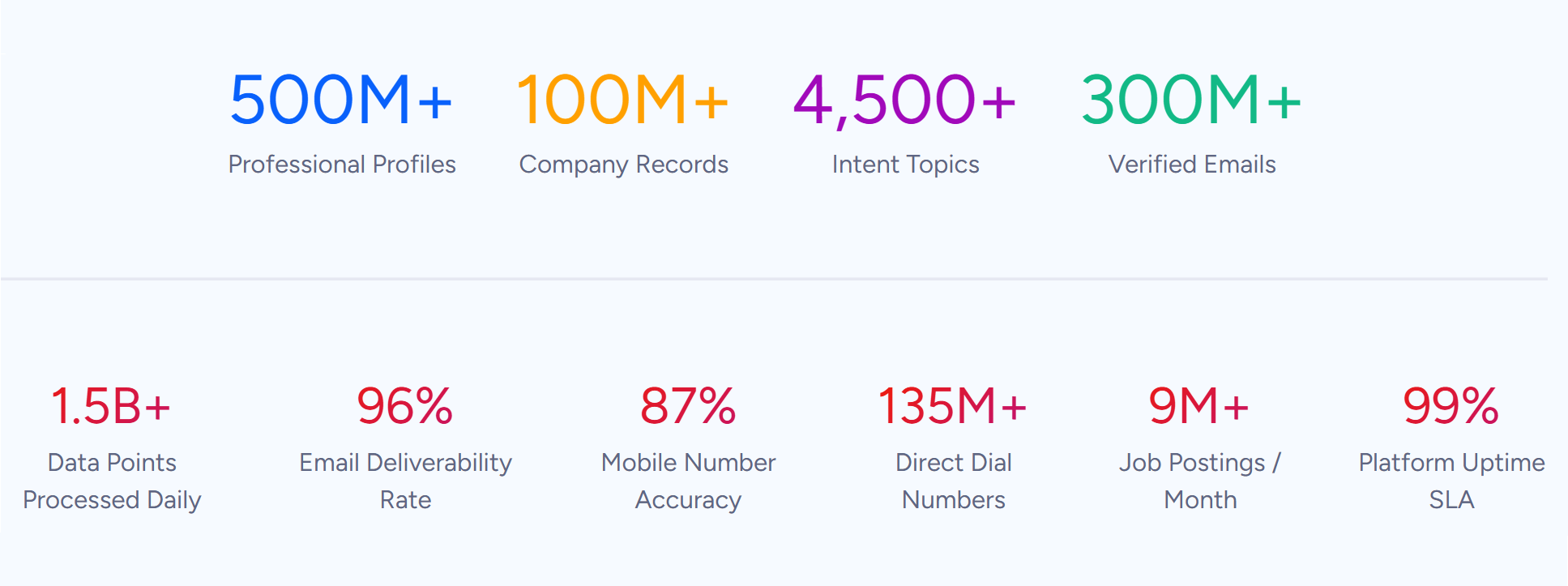
ZoomInfo is a go-to-market intelligence platform built on a broad B2B dataset: 500M contacts, 100M companies, 135M+ verified phone numbers, and 200M+ verified business emails. Its GTM Context Graph processes 1.5B + data points daily, combining this data with your CRM records, conversation transcripts, and behavioral signals to show which accounts are in-market and why deals move or stall.
That intelligence ensures your gifting campaigns target verified, reachable people when they show buying intent, not weeks after the signal passed. Your team can act on these signals through GTM Workspace for sellers, GTM Studio for marketers and RevOps, or the API and MCP in any front-end (including the same CRMs and sales engagement tools that power both Reachdesk and Sendoso).
If you want every gift to reach a verified contact at the right moment, see how ZoomInfo's data can improve your targeting.
Reachdesk vs. Sendoso vs. ZoomInfo at a glance
Reachdesk | Sendoso | ZoomInfo | |
|---|---|---|---|
Core function | End-to-end gifting & swag platform | Sending management & direct mail platform | Go-to-market intelligence platform |
Primary value | Managed gifting execution with ROI guarantee | Widest send options with AI personalization | Verified B2B data and buying signals |
Gift marketplace | 4,600 physical + 3,800 eGifts | 1,000+ sends including Amazon, virtual experiences | N/A (powers the targeting, not the gifting) |
Global reach | 190+ countries | 165+ countries | 500M contacts across global markets |
AI capabilities | Gifty (gift recommendation AI) | SmartSuite (gift, address, message, analytics AI) | GTM Context Graph + AI agents for account prioritization |
Owned fulfillment | Third-party warehouse network (5 regions) | Owned Sending Fulfillment Centers (4 locations) | N/A |
CRM integrations | Salesforce, HubSpot, Marketo, Outreach, Salesloft | 45+ native integrations | 120+ integrations via App Marketplace + API/MCP |
Starting price | $20,000/year | ~$20,000/year (estimated) | Consumption-based; free tier available |
ROI guarantee | 5x pipeline ROI or money back | 5x ROI guarantee (contractual) | N/A |
Best for | Teams wanting managed gifting with global swag logistics | Teams wanting send flexibility with AI personalization | Teams wanting intelligence to target the right accounts before gifting |
The real cost of gifting without intelligence
Both Reachdesk and Sendoso do their core job well: getting physical gifts from your warehouse to a recipient's desk. But neither platform answers the question that determines whether that gift generates pipeline or gets donated to a break room.
The question is: should you be sending this gift to this person right now?
Gifting platforms inherit whatever targeting data you feed them. If your CRM has a stale contact who left the company six months ago, Reachdesk will happily send a gift basket to their old office. If your SDR team targets accounts from a static list rather than live buying signals, Sendoso will dutifully ship $50 eGifts to companies that won't be in-market for another year.
This is where ZoomInfo changes the equation. Before a single gift ships, ZoomInfo's data layer answers three questions that gifting platforms cannot:
Is this the right person? ZoomInfo maintains 500M contacts with up to 95% accuracy on first-party data, verified through multiple sources and 300+ human researchers. That means the contact you're gifting works where you think they do, holds the title you think they hold, and is reachable at the address or email you have on file.
Is this the right time? ZoomInfo's Buyer Intent data tracks signals from 210 million IP-to-Organization pairings, identifying when target accounts are researching solutions in your category. A gift sent to an account showing strong intent signals converts at a higher rate than one sent to a cold account.
Is this the right account? The GTM Context Graph processes 1.5B + data points daily to surface which accounts match your actual win patterns, not just your ICP definition on paper.
Source: ZoomInfo
Seismic's sales team attributed 39% of active pipeline to opportunities identified or influenced by ZoomInfo signals, while saving 11.5 hours per week per seller. (Seismic Case Study)
Reachdesk bets on managed services, Sendoso bets on platform breadth
The core difference between Reachdesk and Sendoso comes down to how much work they expect you to do.
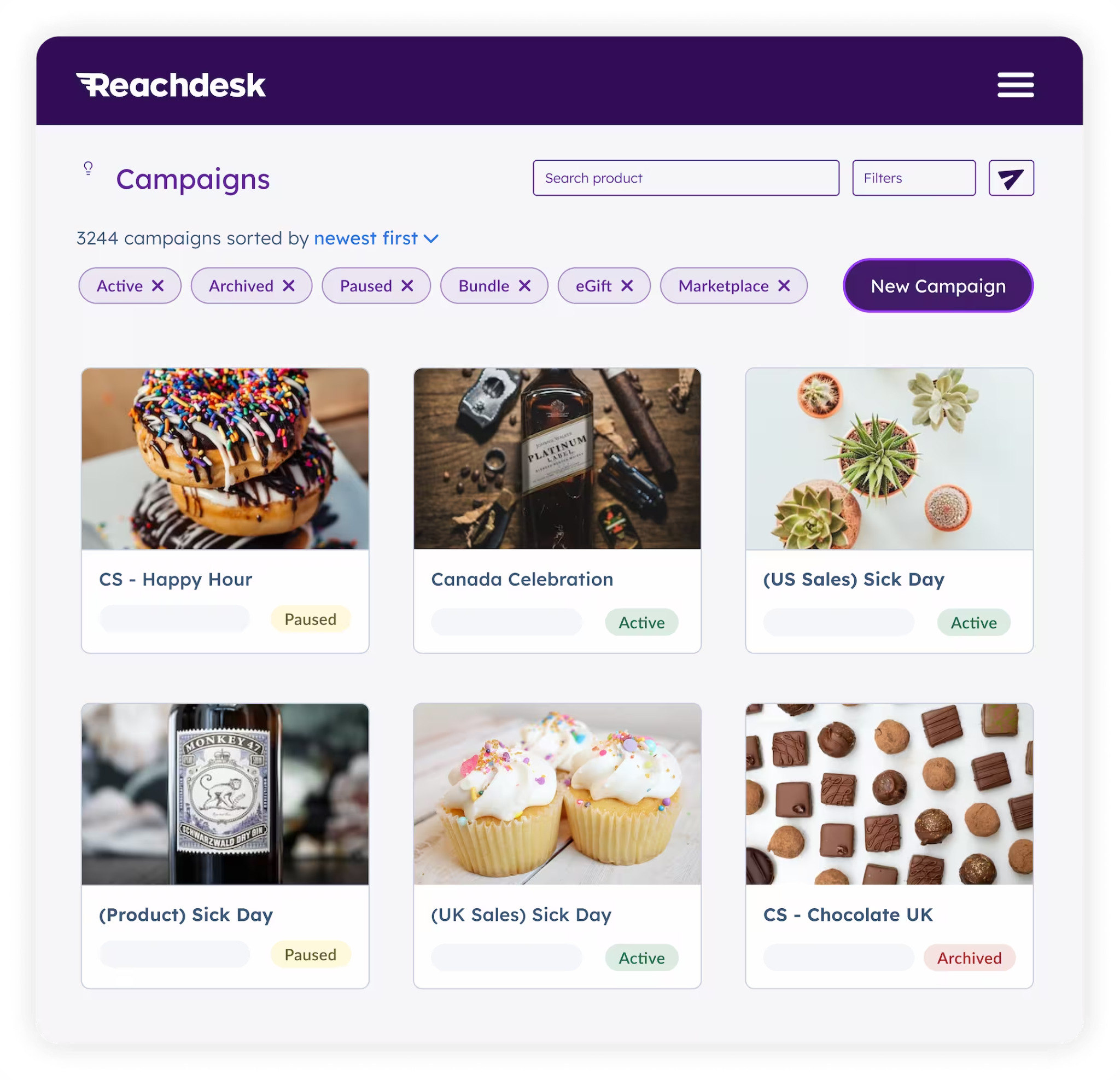
Reachdesk operates closer to an agency model. On the Premium tier, you get a dedicated Creative Campaign Manager who brainstorms gift ideas, sources items, plans campaigns, and handles logistics.
Source: Reachdesk
This concierge approach works well for marketing teams that are stretched thin and want someone else to handle the operational load of gifting. The five-stage Swag Sourcing service (consultation, supplier selection, design, production, delivery) means you're not browsing catalogs alone.
The trade-off is control. Reachdesk's managed model means you work within their process, on their timeline. G2 reviewers note that customization can feel constrained compared to platforms that give you more control.
For a deeper look at Reachdesk's features, strengths, and limitations, see our Reachdesk review.
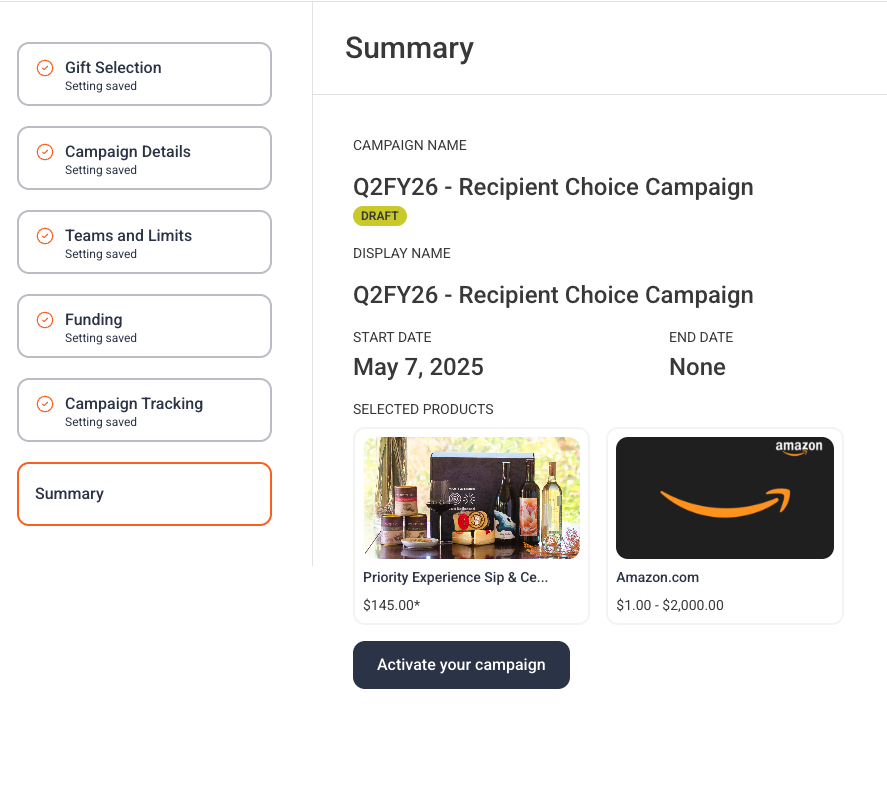
Sendoso puts more tools in your hands. The platform offers the widest range of send types: eGifts, physical marketplace items, Amazon products, Postcards on Demand ($2/send, no minimum), virtual experiences, handwritten notes, and philanthropic donations.
You can mix gift types within a single campaign using the unified campaign builder, let recipients exchange gifts for alternatives of equal value, or gate gift delivery behind a meeting booking requirement.
Source: Sendoso
That flexibility comes with complexity. G2 reviewers describe a platform that historically required navigating non-linear settings, and Capterra reviews note clunky mass-gifting processes. Sendoso completed a full UX rebuild in 2025 that addressed many complaints, but the platform remains more complex than Reachdesk for new users.
AI capabilities: three different approaches
All three platforms use AI, but for different purposes.
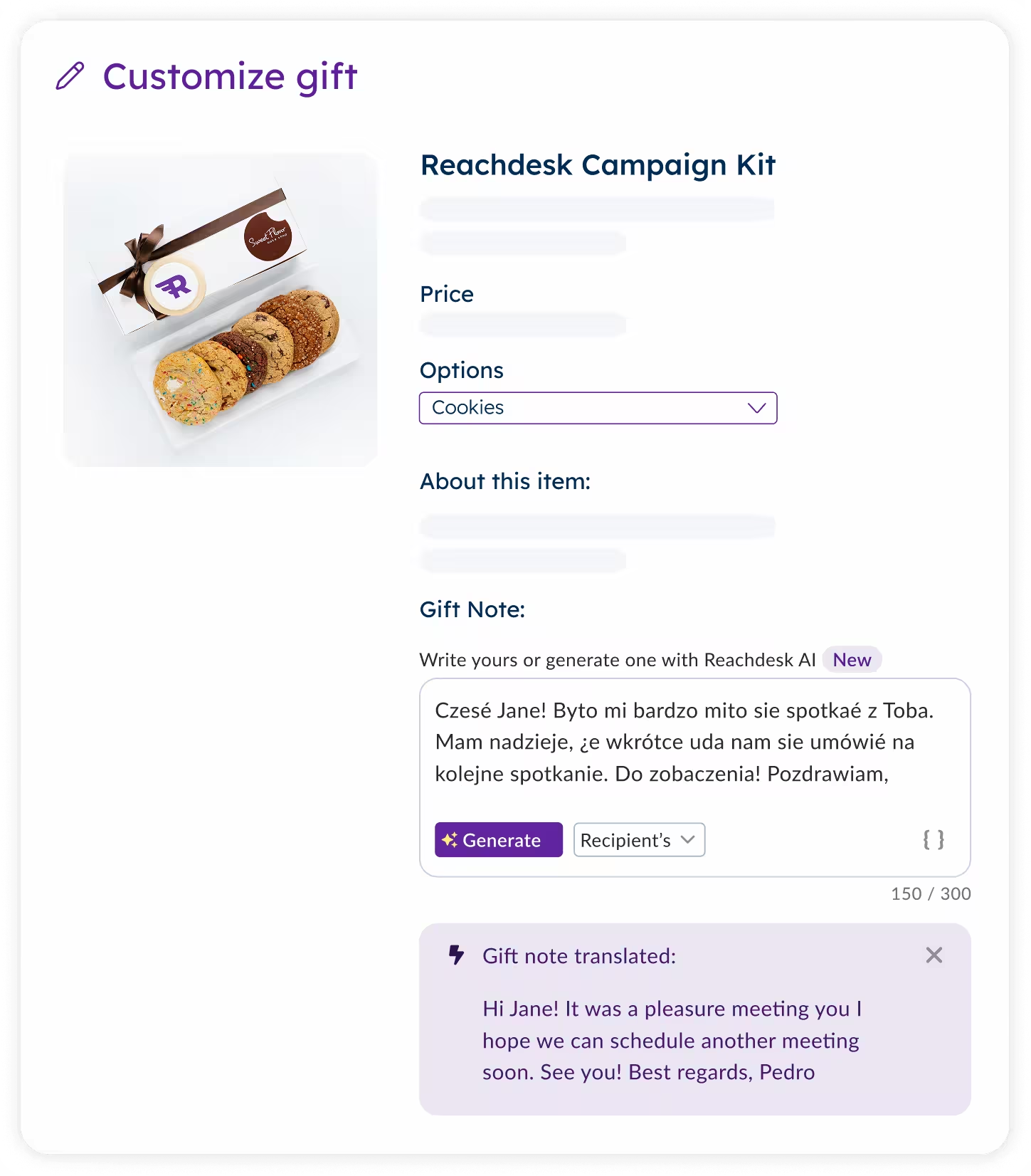
Reachdesk's Gifty is an AI gift recommendation engine that researches recipients using public information (job history, university, location, interests) and user-provided inputs (persona, budget, occasion).
Source: Reachdesk
It shows recommendations with transparent reasoning for each suggestion and generates personalized gift notes in the recipient's language. Gifty handles one piece of the puzzle well: what to send. But it relies on whatever contact data you provide.
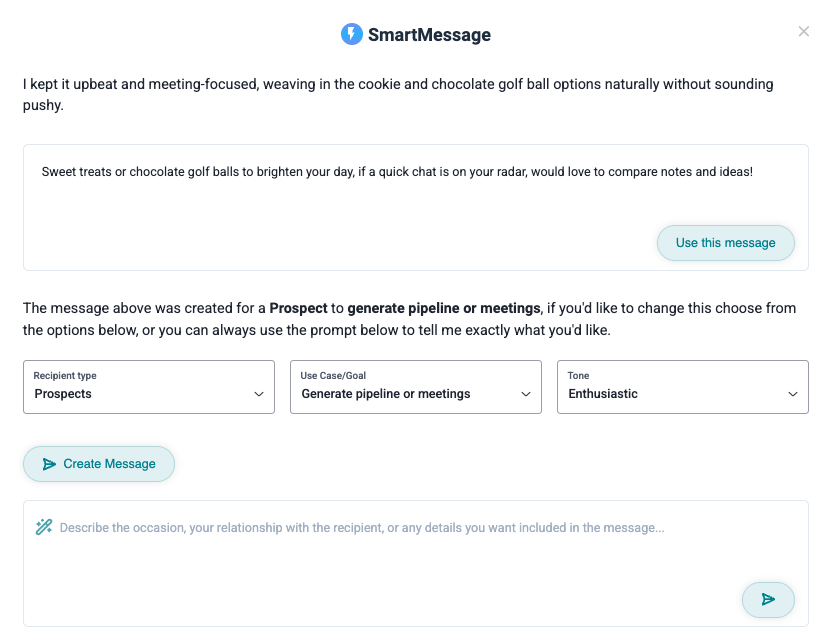
Sendoso's SmartSuite is the most developed AI toolkit among gifting platforms. SmartSend recommends gifts based on web research and Gong call transcripts, surfacing interests mentioned in actual sales conversations.
SmartDelivery finds recipient addresses from public records with 85%+ accuracy without asking the recipient, preserving the surprise. SmartMessage generates notecard copy. And Oso answers analytics questions in plain language. SmartSuite handles what to send, what to say, and where to send it. What it does not handle is whether to send at all.
Source: Sendoso
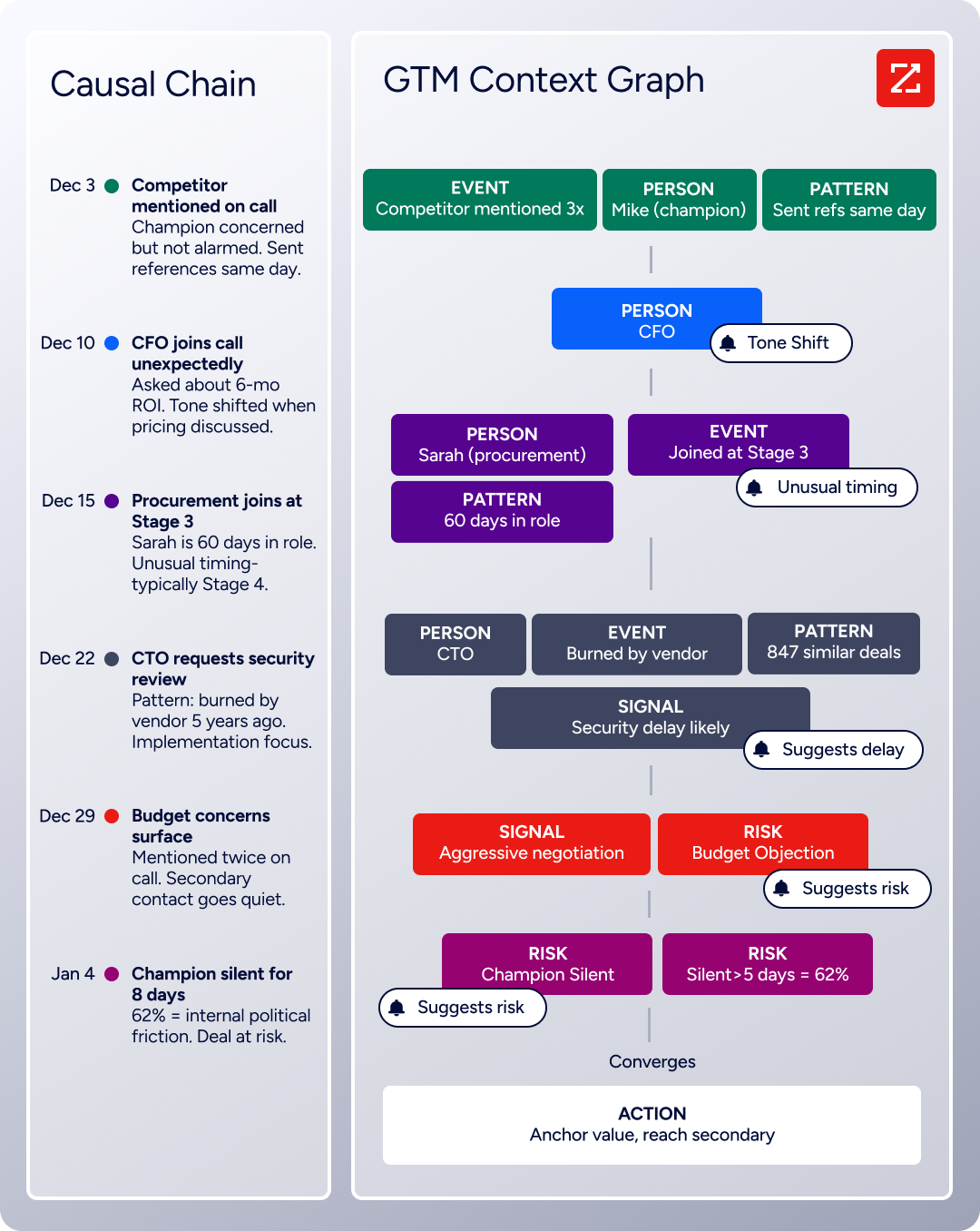
ZoomInfo's GTM Context Graph operates upstream of both gifting platforms. Instead of optimizing individual gift selection, ZoomInfo's AI analyzes your CRM records, conversation intelligence, intent signals, and its B2B dataset to determine which accounts show genuine buying behavior, which contacts within those accounts are the decision-makers, and what stage of the buying process they're in.
Source: ZoomInfo
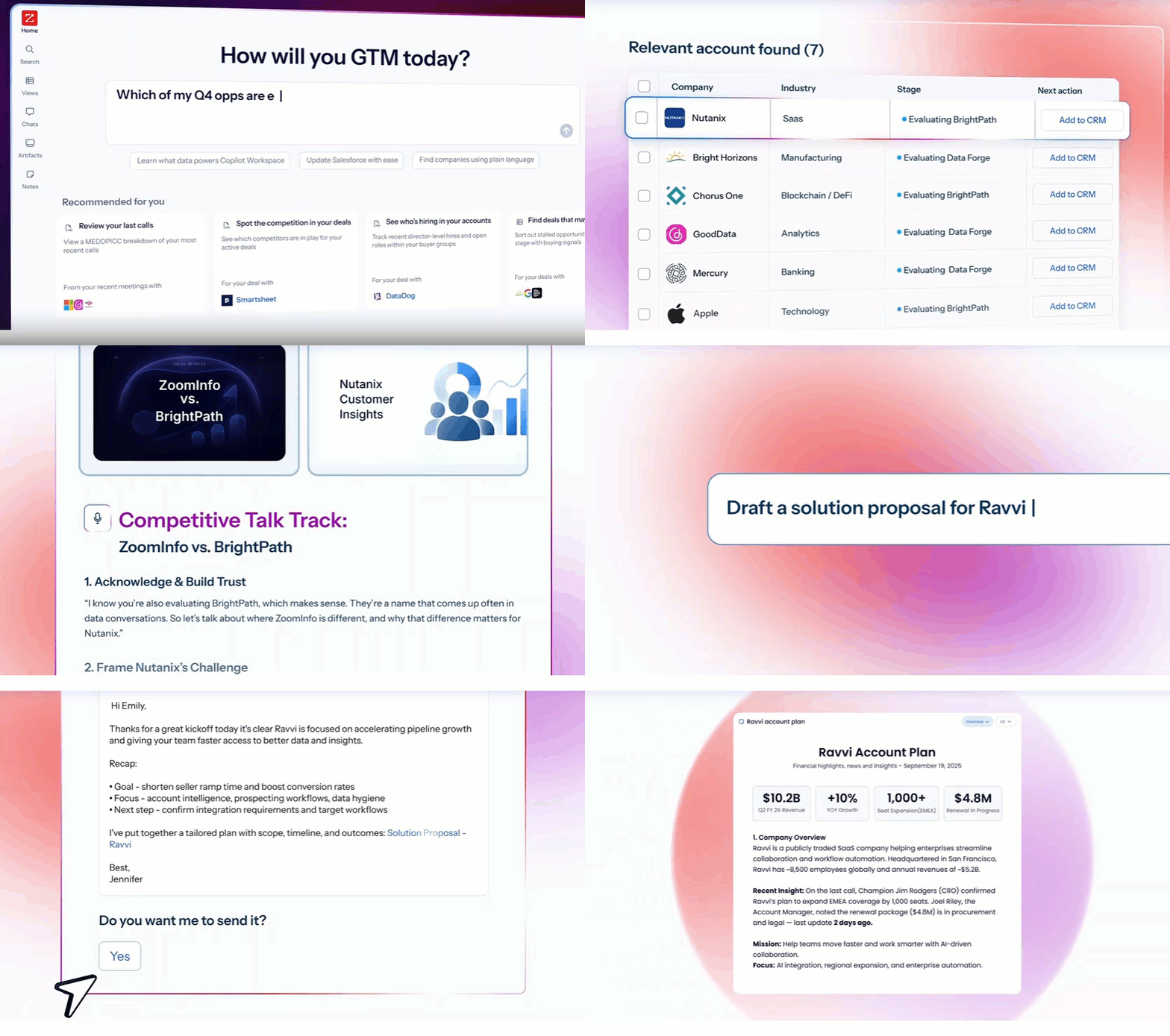
GTM Workspace shows prioritized accounts with AI-drafted outreach that addresses the specific concerns identified in calls and signals. GTM Studio lets marketers describe audiences in natural language and run campaigns targeting accounts that match proven win patterns.
Source: ZoomInfo
The practical difference: Sendoso's SmartSend might recommend sending a coffee eGift to a VP of Sales based on their LinkedIn interests.
ZoomInfo's intelligence layer would first tell you whether that VP's company is researching solutions in your category right now, whether the VP is part of the active buying committee, and whether a gift at this deal stage matches the pattern behind your closed-won deals. One optimizes the gift. The other optimizes the decision to gift.
Fulfillment and logistics: owned vs. managed
This is where Reachdesk and Sendoso diverge sharply.
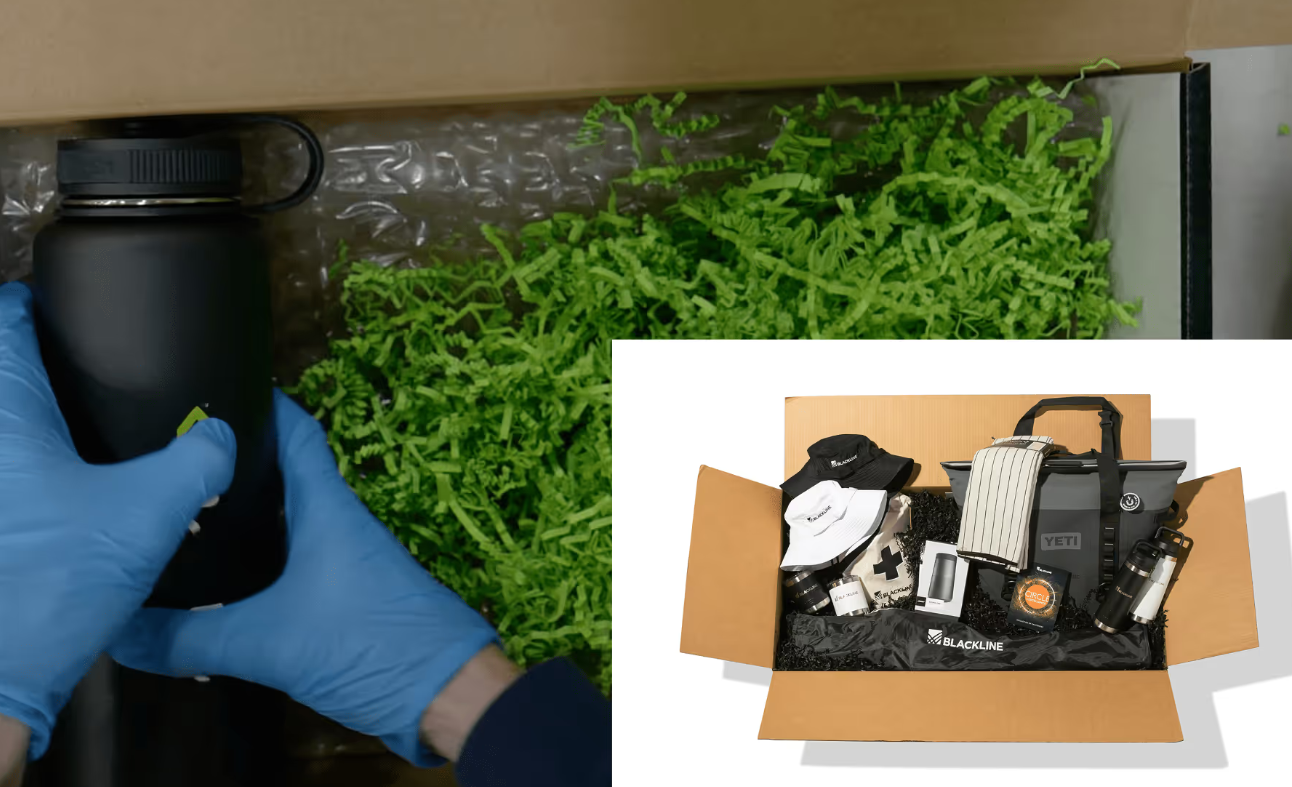
Sendoso operates its own fulfillment centers. The Sending Fulfillment Centers (SFCs) in Phoenix (USA), Ingleburn (Australia), Peterborough (UK), and Ireland (EU) are staffed by Sendoso employees who handle kitting, custom packaging, handwritten notes, and quality checks.
Source: Sendoso
Sendoso calls these the only fulfillment centers dedicated to gifting and direct mail, with four-point quality checks on every send. Standard fulfillment runs 2-3 business days for inventoried items, with a premium 1-day SLA option available at the Phoenix facility.
Owned fulfillment gives Sendoso tighter control over quality and timing. When something goes wrong, you deal with Sendoso's team directly rather than a chain of vendors. Sendoso offers SLA credits for missed targets. That said, G2 reviewers still flag inconsistent delivery times and packaging quality variation, particularly for marketplace items fulfilled by third-party vendors rather than from SFC inventory.
Reachdesk uses a managed warehouse network spanning 1.1 million square feet across the USA, Canada, UK, Ireland/EU, and Australia. Inbound processing takes 3 business days; standard outbound bundles ship in 3 business days; event bundles in 5.
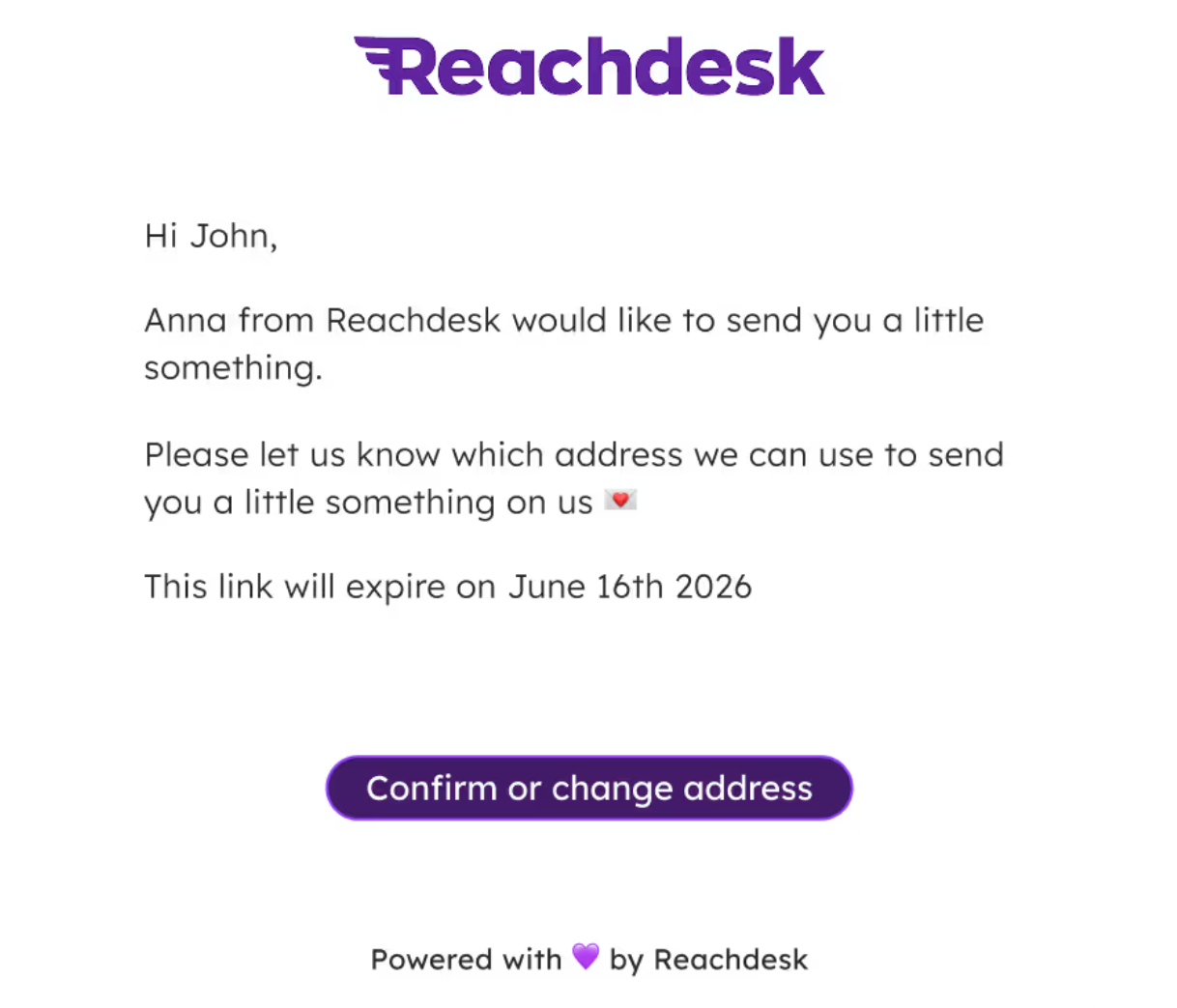
Reachdesk's Address Confirmation flow sends recipients a pre-shipment email to verify their delivery address, reducing failed deliveries before they happen. The platform also emphasizes customs-clear international delivery, claiming to eliminate the hidden fees and delays that plague cross-border shipping.
Source: Reachdesk
Reachdesk's wider geographic spread (190+ countries vs. Sendoso's 165+) gives it an edge for global programs. But without owned facilities, quality control depends on the warehouse partners in each region.
For event fulfillment, both platforms offer full logistics. Reachdesk provides a 5-day domestic shipping guarantee and a simple returns process where teams pack leftover items without counting and drop at FedEx. Sendoso handles direct-to-venue shipping with a domestic 7-day SLA and unlimited event fulfillments on qualifying plans.
Integration ecosystems shape your GTM workflow
Where each platform connects determines how well it fits your existing tech stack.
Sendoso has the largest native integration set among gifting platforms, with 45+ integrations spanning CRM (Salesforce, HubSpot, Microsoft Dynamics), marketing automation (Marketo, Eloqua), sales engagement (Outreach, SalesLoft, Gong Engage), intent data (6sense, Bombora, Terminus), scheduling (Calendly, Chili Piper), and workflow tools like Clay.
Source: Sendoso
The Clay integration, launched February 2026, targets GTM engineering workflows. Intent data integrations let you trigger automated sends on third-party buying signals before a prospect engages directly.
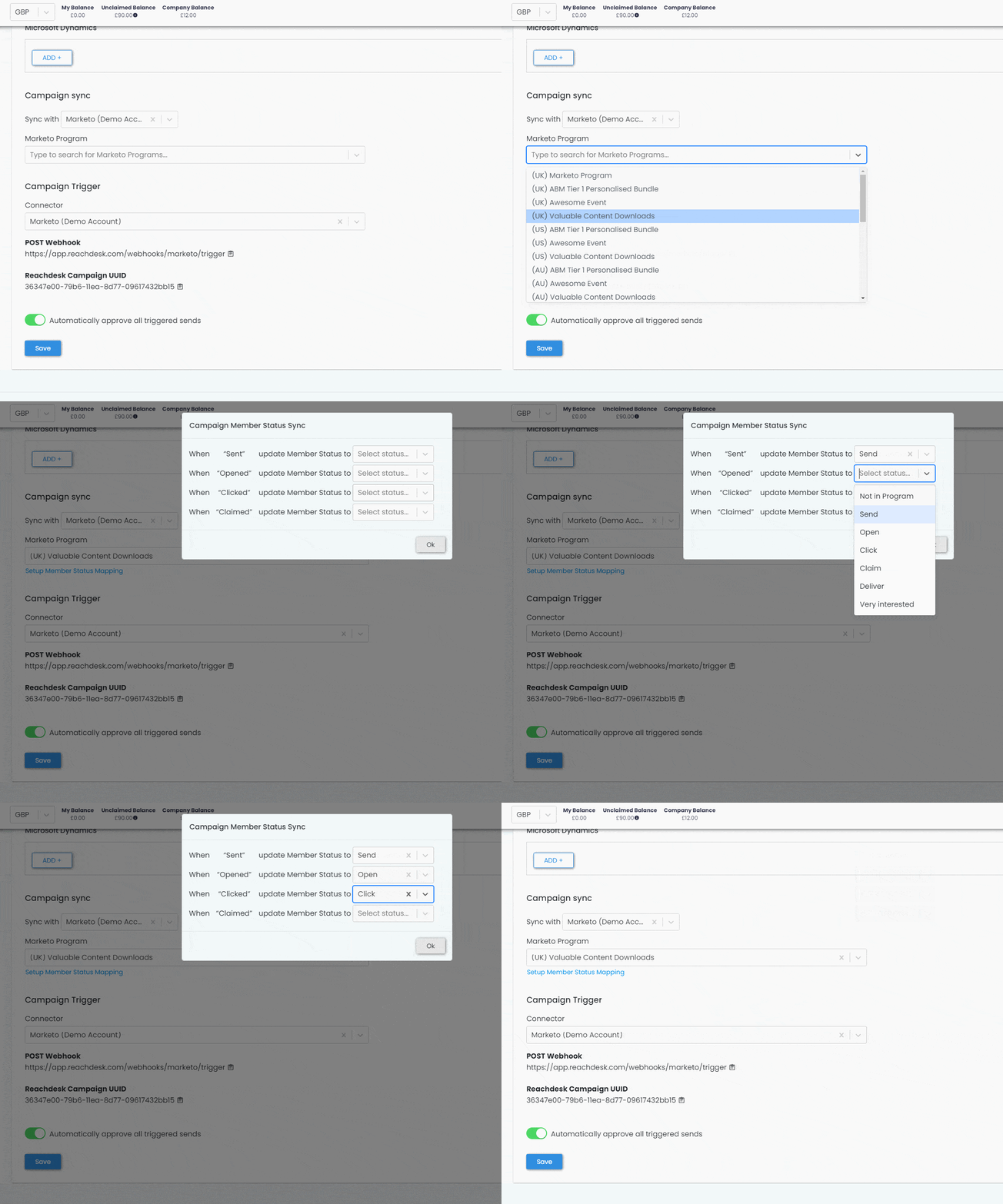
Reachdesk covers the core GTM stack with integrations across Salesforce, HubSpot, Marketo, Outreach, Salesloft, 6sense, Bombora, Calendly, Chili Piper, BambooHR, Workday, and more. The integrations page claims most integrations take "just a few clicks and less than 5 minutes to set up."
Source: Reachdesk
Reachdesk also offers Zapier connectivity to extend reach to 3,000+ apps. While the core stack is well-covered, the total integration count trails Sendoso.
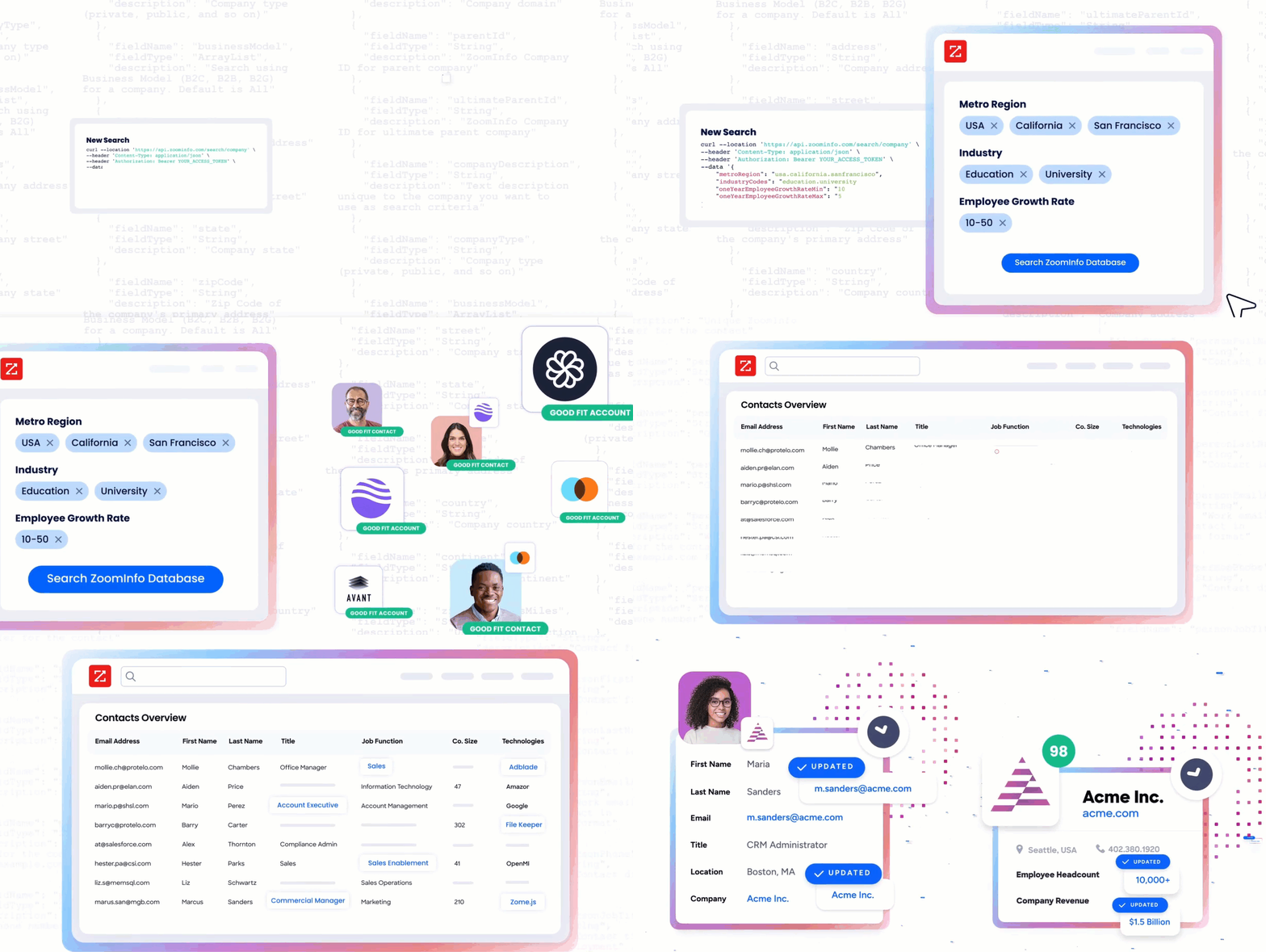
ZoomInfo connects at a different level. With 120+ partner integrations in its App Marketplace and API access included on all relevant plans, ZoomInfo feeds intelligence into the same CRMs and sales engagement platforms that trigger both Reachdesk and Sendoso campaigns.
Source: ZoomInfo
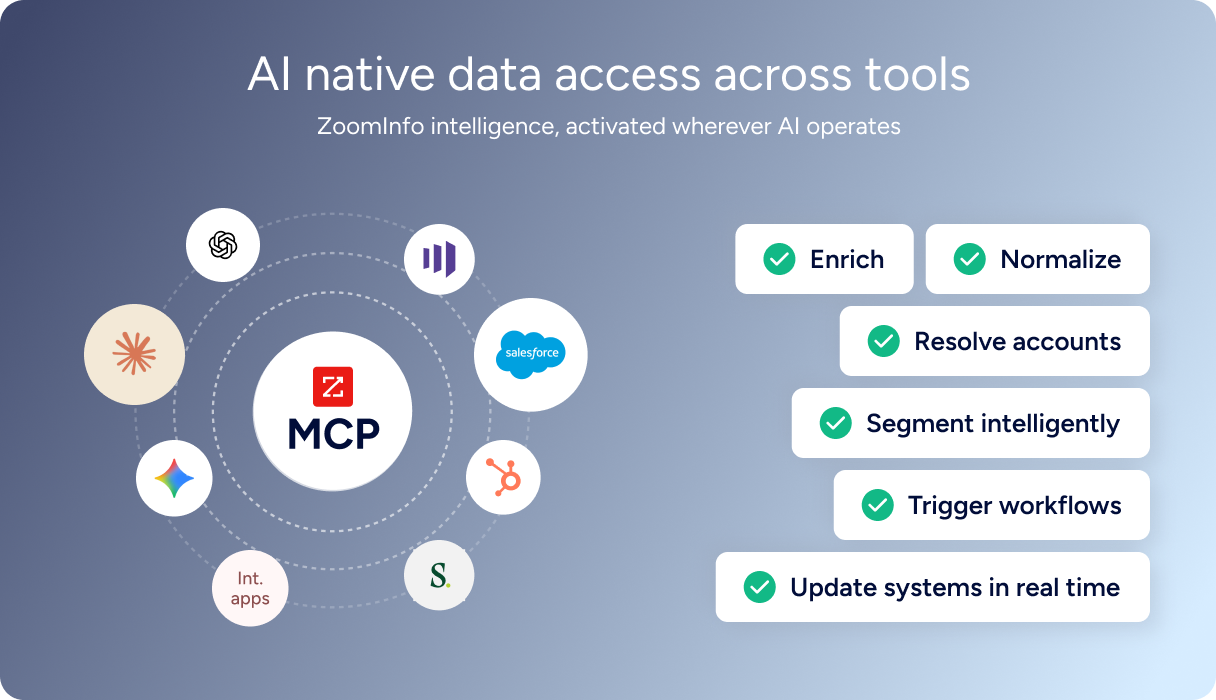
When a ZoomInfo intent signal fires in Salesforce, it can trigger a Salesforce workflow that in turn triggers a Reachdesk or Sendoso gifting campaign. ZoomInfo's MCP server extends this, letting any AI agent or custom application access ZoomInfo's data programmatically.
: ZoomInfo
The integration architecture matters because it determines whether gifting happens in isolation or as part of an intelligence-driven workflow. A Salesforce-triggered Sendoso campaign that fires when a deal reaches Stage 3 is useful. That same trigger combined with ZoomInfo intent data showing the account is researching competitors is a different motion.
"It's not just the data itself. It's more about the right data at the right time to help us reach out with the right message across that full buyer journey." — Chelsea Kenyon, Senior Director of Digital Strategy, Redwood Logistics (Redwood Logistics Case Study)
Pricing: both gifting platforms carry enterprise price tags
Neither Reachdesk nor Sendoso is accessible to small teams.
Reachdesk publishes its floor: plans start at $20,000/year. The GTM Platform comes in three tiers (Core, Plus, Premium), with features unlocked by tier. Core includes 5 users, 1 warehouse, and 1 region for eGifts and marketplace access. Plus adds a second warehouse and region plus event fulfillment. Premium unlocks 3+ warehouses, international access, and Creative Services.
All tiers include dedicated onboarding, a Customer Success Manager, and unlimited GTM integrations. On top of the platform fee, customers pay separately for actual gifts, shipping, warehousing (pick/pack/ship fees per the rate card), duties, and taxes. Standalone Swag Sourcing carries a $2,500 minimum order.
For a full breakdown of Reachdesk's pricing tiers and fees, see our Reachdesk pricing breakdown.
Sendoso does not publish exact pricing, but third-party sources estimate a similar $20,000/year starting point. Four tiers (Essential, Plus, Pro, Enterprise) unlock features progressively. Essential is domestic, limited to Salesforce and HubSpot integrations.
Plus adds international eGifts, event fulfillment, campaign services, and the full integration suite. Pro unlocks international fulfillment centers and SSO. Beyond the platform fee, Sendoso charges per-user license fees, and send costs (gift, pick-and-pack, shipping, duties) draw from a pre-paid Account Balance that expires at the end of the subscription term and is non-refundable.
Both platforms offer a 5x ROI guarantee on pipeline generated in the first year, requiring Salesforce integration to track attribution. Both also carry the same structural cost challenge: the platform fee is just the beginning, with variable send costs, shipping, warehousing, and fulfillment fees on top.
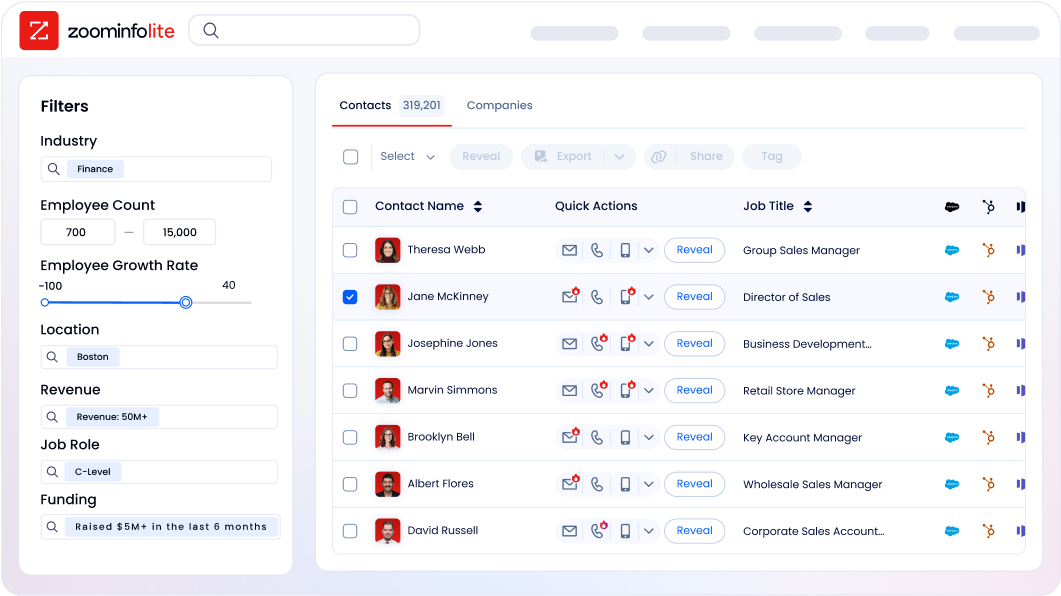
ZoomInfo uses consumption-based pricing with no published dollar amounts for paid tiers. However, ZoomInfo offers two free entry points that neither gifting platform matches: ZoomInfo Lite, a permanent free tier with access to the B2B database and 10 monthly export credits, and a 7-day free trial of the full platform.
Source: ZoomInfo
For teams evaluating whether better targeting would improve their gifting ROI, these free options provide a low-risk starting point.
ROI tracking and attribution
Proving that gifting generates pipeline, not just goodwill, is the make-or-break capability for any corporate gifting program.
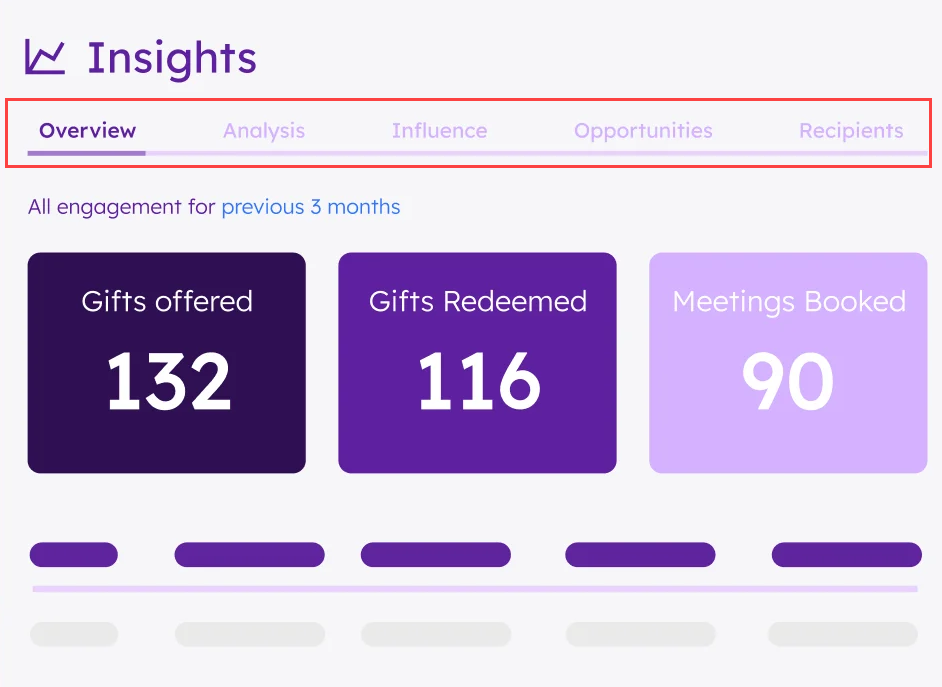
Reachdesk Insights structures analytics around five views: Overview, Analysis, Recipients, Opportunities, and Influence. The Salesforce integration connects gifts to pipeline, meetings, and revenue. Reachdesk also benchmarks your results against its broader client average, which it can do because it holds aggregate performance data across all customers.
Source: Reachdesk
G2 reviewers note that reporting is less granular than some alternatives, particularly for teams wanting custom reports.
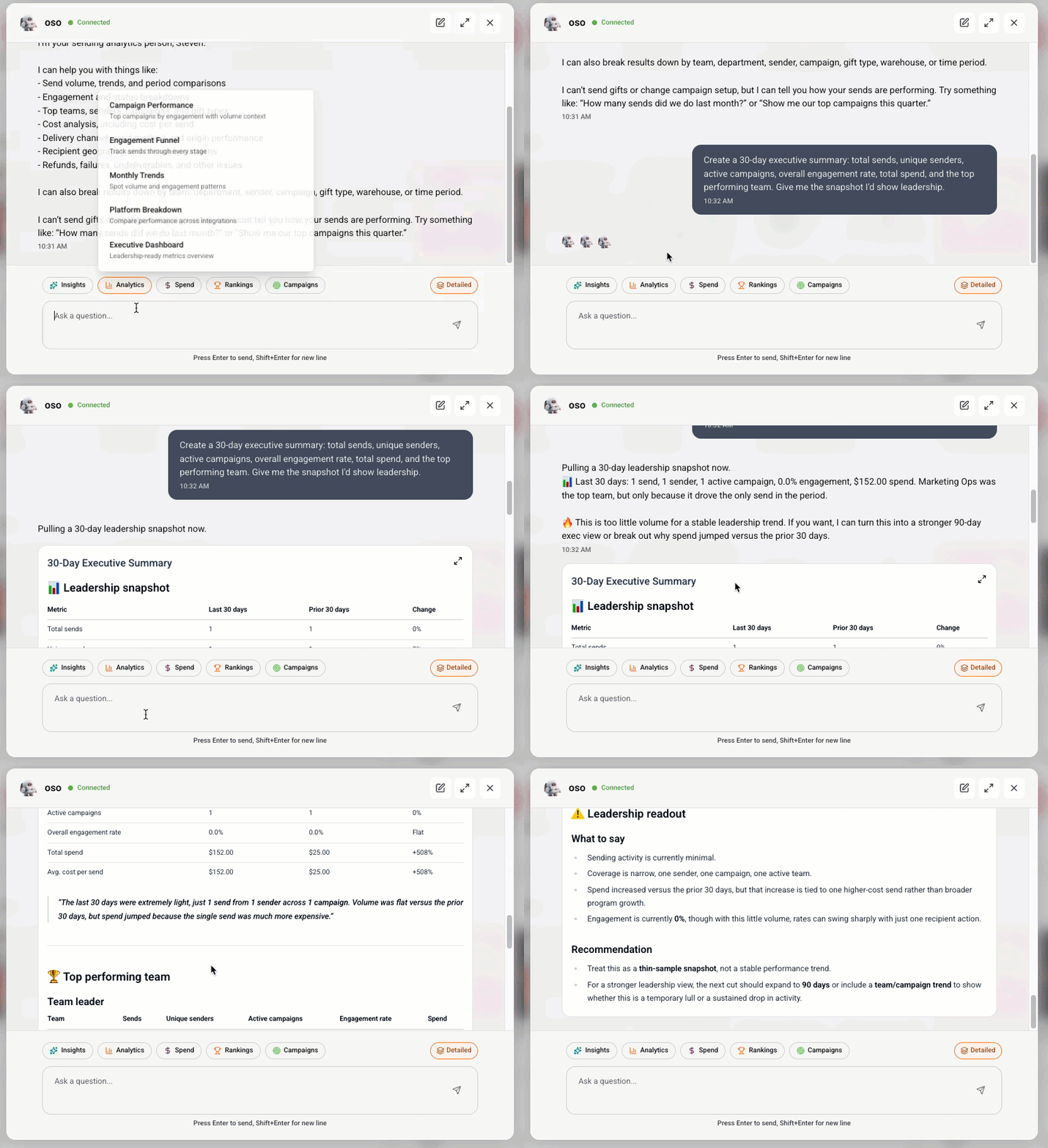
Sendoso recently overhauled its analytics. The new Dashboard (March 2026) shows send volume, spend, engagement rate, and recipient feedback in one view. The Oso AI agent answers analytics questions in plain language and generates charts, covering engagement rates, cost per engaged recipient, sentiment, and geographic performance.
Source: Sendoso
Sendoso tracks to Salesforce campaign objects for attribution. Historically, reporting was a weak point; the Dashboard and Oso launches are new, and their depth relative to established BI tools remains to be proven.
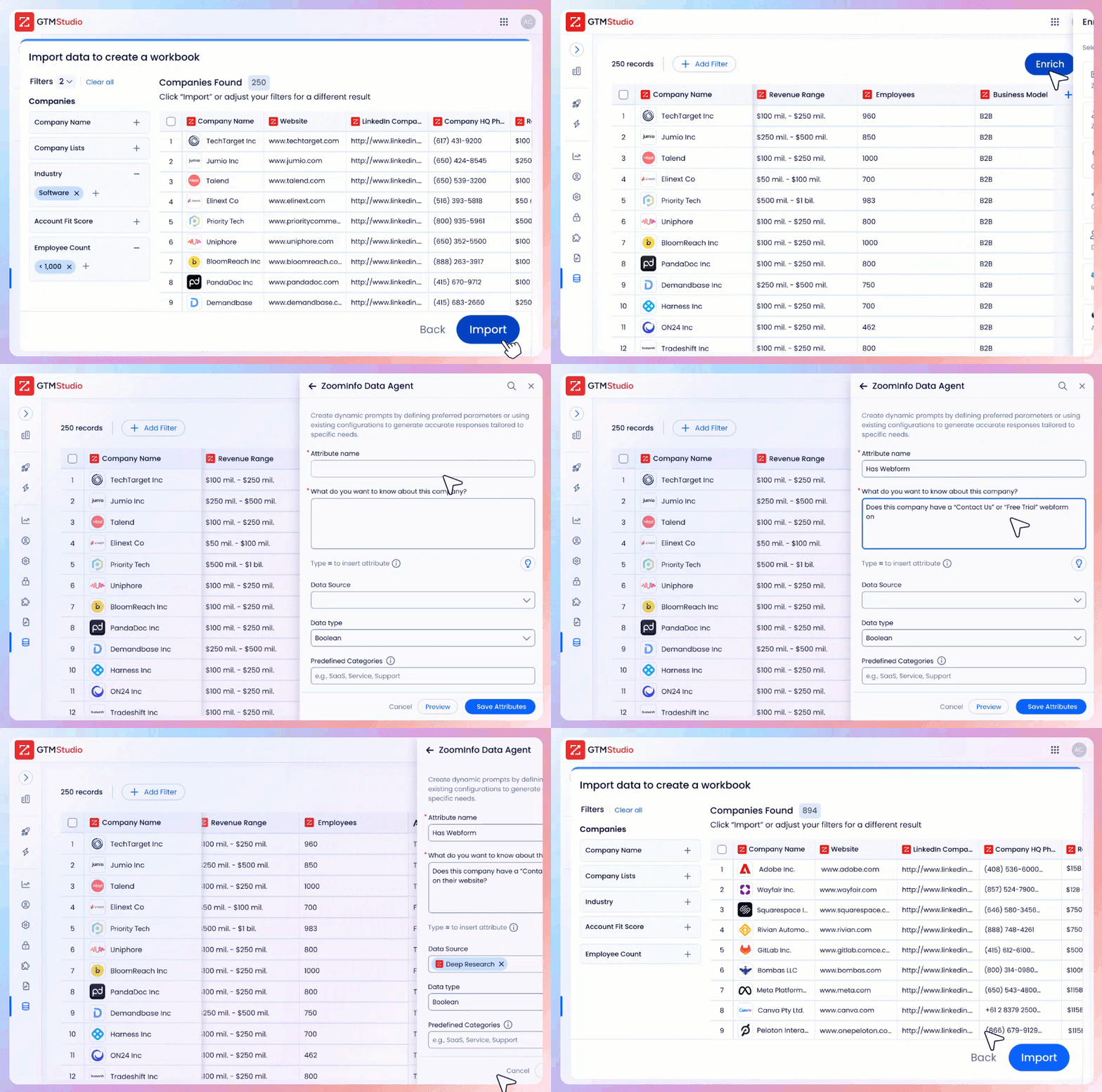
ZoomInfo approaches measurement differently because it operates upstream. Rather than tracking whether a gift was redeemed, ZoomInfo tracks whether the account was worth targeting in the first place. GTM Studio's analytics measure engagement, funnel progression, and top-performing segments across all campaigns, not just gifting.
Source: ZoomInfo
When combined with a gifting platform's attribution data, you get the full picture: ZoomInfo identified the account as in-market (intent signal), the gifting platform delivered the gift (execution), and the CRM captured the resulting meeting and pipeline (outcome).
Budget controls and governance
As gifting programs scale across multiple teams, controlling spend becomes critical.
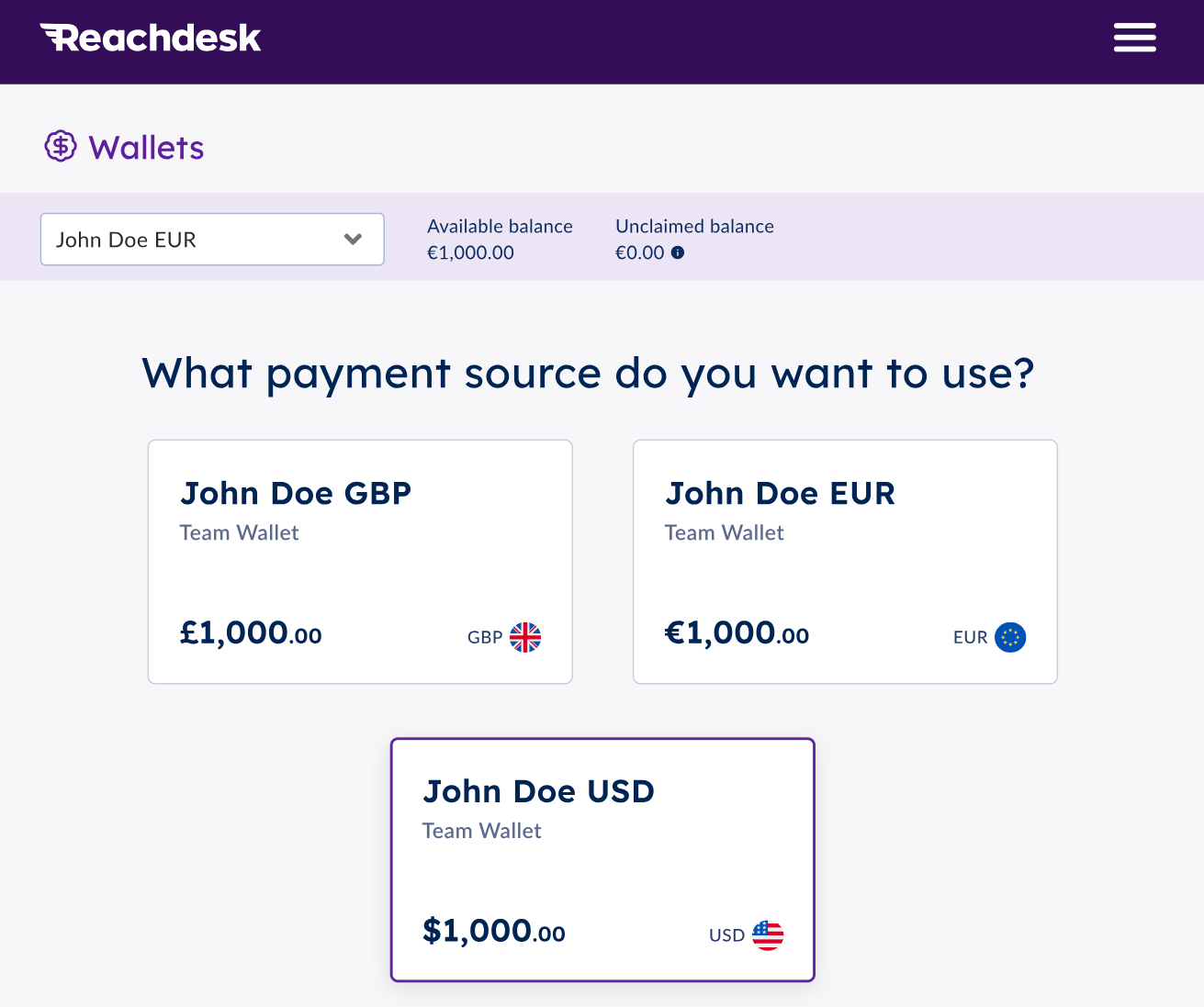
Reachdesk's Budget Control system uses centralized team wallets that marketing, sales, CS, and people teams draw from independently. Managers set per-user spend limits within wallets, with real-time tracking. Redemption controls track gift claims and prevent misuse.
Source: Reachdesk
The system supports monthly allowances, rollovers, and one-time event budgets. Budget and reporting live in the same platform, so spend ties directly to pipeline attribution.
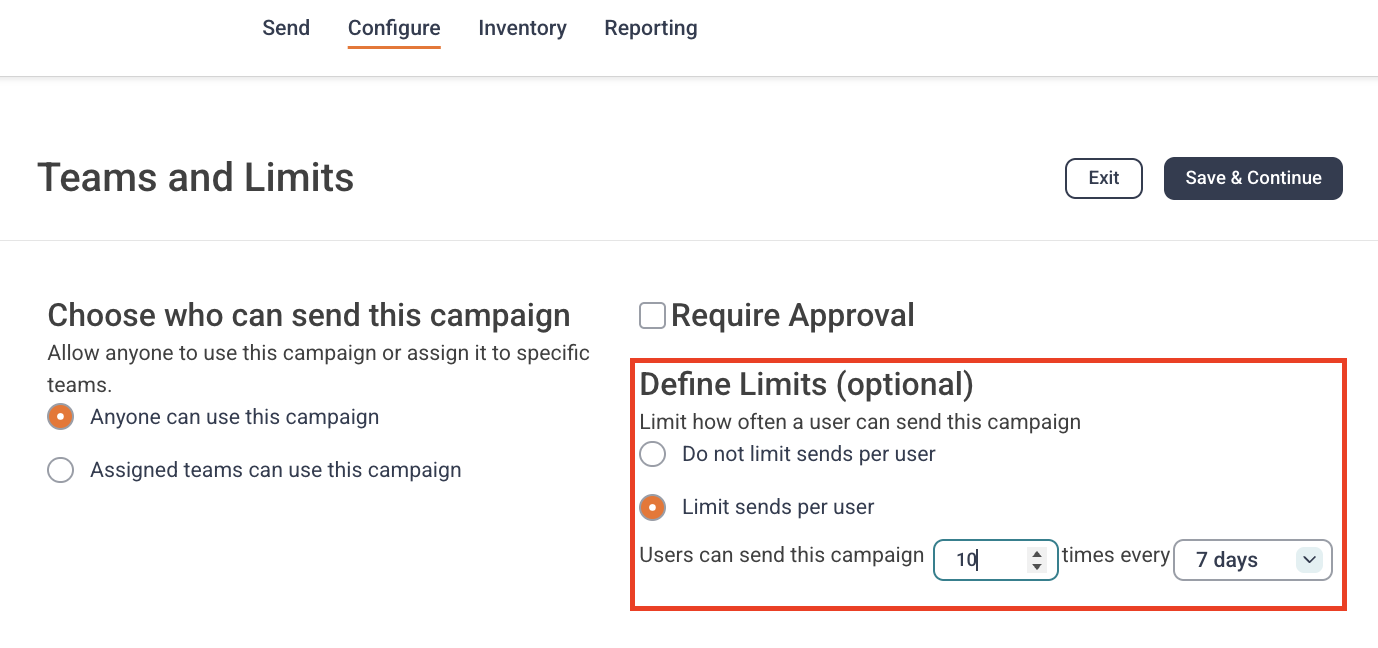
Sendoso restricts governance features by tier. Campaign creation is limited to Admin and Manager roles, and rolling-window send limits cap how many gifts a team can send within a defined period. An optional approval queue requires manager review before sends go out.
Source: Sendoso
The Policy Center provides detailed compliance controls (domain restrictions, gift category blocks, per-send dollar caps), but it is Enterprise-only. Teams on lower tiers must rely on manual oversight.
Reachdesk vs. Sendoso vs. ZoomInfo: Which should you choose?
These three platforms aren't competing against each other. They serve different functions in a B2B go-to-market stack, and the strongest gifting programs use intelligence and execution together.
Choose Reachdesk if:
You want a managed gifting experience with dedicated creative support
Global swag management and event fulfillment logistics are a priority
Your team prefers concierge-style service over self-serve platform complexity
The 5x ROI guarantee reduces internal risk of approving the budget
You're operating across multiple international regions and need customs-clear delivery
Choose Sendoso if:
You need flexibility across send types (eGifts, physical, Amazon, postcards, experiences, philanthropy)
AI gift selection, address discovery, and message generation matter to your workflow
Your tech stack requires integrations beyond CRM (Clay, Gong, intent platforms)
You want owned fulfillment infrastructure with contractual SLA accountability
Meeting-gated gifting to convert sends into booked pipeline fits your sales process
Add ZoomInfo to either platform if:
You want to ensure every gift targets a verified contact at a real, current company
Intent data should determine when gifting campaigns trigger, not calendar dates
Your sales team needs to know which accounts are in-market before spending gifting budget
You want intelligence connecting gifting execution to actual buying signals
You're building a go-to-market stack where data, signals, and execution work as one system
See how ZoomInfo's intelligence can improve your go-to-market targeting with a free trial.
The most effective B2B gifting programs don't start with gift selection. They start with knowing who matters, why they matter right now, and what their buying behavior signals about readiness to engage. Reachdesk and Sendoso are both strong at turning that knowledge into a delivered gift. ZoomInfo provides the knowledge itself: the intelligence that separates targeted gifting from guesswork.
A gift that arrives at the right desk, at the right moment, informed by real buying signals is worth more than a hundred gifts sent blind. The platform you choose for execution matters. The intelligence behind your targeting matters more.
Reachdesk vs. Sendoso vs. ZoomInfo FAQ
What is the main difference between Reachdesk and Sendoso?
Reachdesk is a managed gifting and swag platform with dedicated Creative Campaign Managers, global warehousing across five regions, and a concierge approach to campaign execution.
Sendoso is a self-serve sending platform with the widest range of send types (eGifts, physical gifts, Amazon products, postcards, experiences, philanthropy), owned fulfillment centers, and an AI SmartSuite for gift recommendation, address discovery, and message generation. Reachdesk emphasizes managed service; Sendoso emphasizes flexibility and control.
How does ZoomInfo fit with Reachdesk or Sendoso?
ZoomInfo is not a gifting platform. It provides the B2B intelligence that makes gifting campaigns more effective. ZoomInfo's data (500M contacts, 100M companies, 135M+ verified phone numbers) ensures you're targeting real, verified contacts.
Its intent data identifies when accounts are in-market. Both Reachdesk and Sendoso integrate with the same CRMs and sales engagement tools that ZoomInfo feeds, so ZoomInfo's signals can trigger gifting campaigns through your existing workflow.
Which gifting platform has better AI capabilities?
Sendoso's SmartSuite is more developed. It covers four functions: SmartSend (gift recommendations from web research and Gong transcripts), SmartDelivery (address discovery with 85%+ accuracy), SmartMessage (notecard copy generation), and Oso (AI analytics agent).
Reachdesk's Gifty handles gift recommendations with transparent reasoning and multilingual note generation, but does not include address discovery or conversational analytics.
How much do Reachdesk and Sendoso cost?
Both platforms start around $20,000 per year for the platform subscription. Reachdesk publishes this floor directly on its pricing page. Sendoso does not publish exact pricing, but third-party estimates align closely. Both charge additional variable costs on top of the subscription for actual gifts, shipping, warehousing, pick-and-pack fees, and duties. Neither platform offers a free plan or self-serve trial.
Which platform is better for international gifting?
Reachdesk covers 190+ countries compared to Sendoso's 165+. Reachdesk also emphasizes customs-clear international delivery and operates warehouses across the US, Canada, UK, EU, and Australia.
Sendoso's international marketplace and fulfillment center access require Pro and Enterprise plans, while lower-tier plans are domestic only. For teams with global programs, Reachdesk offers broader geographic reach out of the box.
Can I use intent data to trigger gifting campaigns?
Yes, with limitations. Both Sendoso and Reachdesk integrate with intent data platforms like 6sense, Bombora, and Terminus through their CRM and MAP connections. Sendoso has native integrations with all three. However, neither gifting platform generates its own intent data.
ZoomInfo provides its own Buyer Intent data from 210 million IP-to-Organization pairings and 6 trillion+ new keyword-to-device pairings monthly, including Guided Intent that identifies topics historically correlated with deal success. That intelligence can flow into CRM-triggered gifting campaigns on either platform.
Which platform has better reporting and ROI attribution?
Reachdesk Insights offers five analytical views with Salesforce attribution and benchmarking against its client base average, though G2 reviewers note the reporting is less granular than some alternatives. Sendoso recently launched a new Dashboard and Oso AI agent for plain-language analytics queries, but these are new (March 2026) and still maturing.
Both platforms require Salesforce integration for full pipeline attribution. ZoomInfo measures upstream effectiveness (account targeting, signal accuracy, funnel progression) rather than gift-level attribution.
Do either Reachdesk or Sendoso offer an ROI guarantee?
Both offer a 5x ROI guarantee on pipeline generated in the first year, contingent on Salesforce integration and campaign tracking. Reachdesk's guarantee includes a money-back commitment if the 5x threshold is not met. Both guarantees carry terms and conditions that are not fully detailed on public websites.
