
Salesfinity is a fast-growing AI parallel dialer in the SDR space. Its core promise: stop listening to ringing phones and voicemail greetings, and start talking to people. For teams where cold calling is the primary outbound channel, that promise delivers. But as sales organizations mature, the question shifts from "how do I make more calls?" to "how do I run a complete go-to-market motion?" That is where a calling-focused platform meets its limits.
To write this Salesfinity review, we've analyzed the platform extensively. We believe it's the right choice if:
You need to increase live conversations for your SDR team
Cold calling is your primary outbound channel
You want AI-powered voicemail detection and live human filtering
You manage a remote SDR team and need virtual salesfloor capabilities
You value transparent, published pricing without annual commitments
However, Salesfinity might not be the best choice if:
You need B2B data with verified phone numbers, intent signals, and technographics at scale
You want multi-channel execution across email, ads, social, and phone from one platform
You need conversation intelligence and deal analytics across your full sales cycle
You require a GTM platform serving sales, marketing, and RevOps
Your organization has outgrown point solutions and needs a platform that connects signals to outcomes
In this case, you should consider ZoomInfo: an AI GTM platform built on the largest B2B database in the market (500M contacts, 100M companies, 135M+ verified phone numbers, and 200M+ verified business email addresses), a GTM Context Graph that captures not just what happened in your deals but why, and access through GTM Workspace for sellers, GTM Studio for marketers and RevOps, or APIs and MCP in any tool.
We've included a detailed look at ZoomInfo later in this Salesfinity review, as an alternative for teams that need more than a dialer. If you're ready to explore a complete GTM platform, you can start a free trial.
What is Salesfinity?
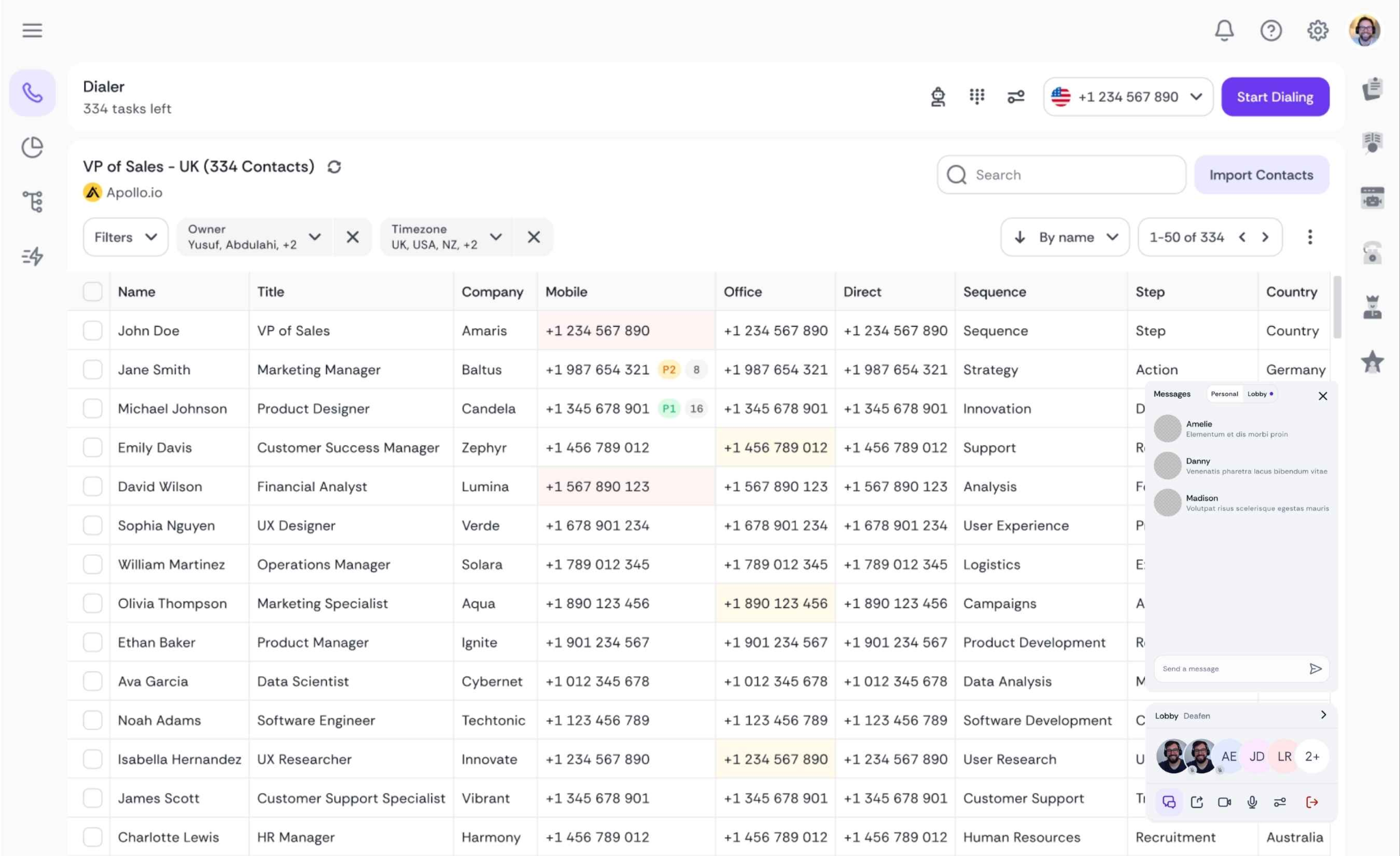
Salesfinity is an AI-powered parallel dialer and sales engagement platform founded in 2022 by Mavlonbek Muratov in San Francisco. The company started from a simple observation: SDRs spend most of their working day listening to ringing phones and voicemail greetings instead of talking to prospects. Salesfinity's AI filters that dead time and connects reps only when a live human picks up.
Source: Salesfinity
The platform's core claim: one SDR using Salesfinity performs like five. The numbers: 50 dials/day with 3 conversations versus 150 dials/hour with 7-10 live conversations, a 5.2x increase in live conversations.
With the Salesfinity 3.0 launch in January 2025, the company repositioned from a parallel dialer into what it calls a "Compound Growth Platform." The idea: every prospect interaction seeds a future deal. Rather than discarding a "not now" lead, Nurture AI categorizes the outcome and schedules a follow-up at the right moment, so warm pipeline compounds over time.
By May 2026, Salesfinity introduced its "GTM Operating System" framing, positioning itself as the workspace where SDRs already spend 3+ hours per day. The platform is used by 3,700+ SDRs worldwide and carries a 4.9/5 rating from 110+ verified reviews.
The company is SOC 2 Type 2 certified and CCPA compliant, with 100% uptime since 2024.
Salesfinity Pros & Cons
Pros | Cons |
|---|---|
- 5.2x increase in live conversations per rep | - Call quality issues at high volume (audio delays) |
- Lightning Mode detects live humans in 600ms | - No email or LinkedIn sequencing (call-only) |
- SmartRotate and SmartGuard prevent spam flagging | - HubSpot integration has documented friction |
- Virtual Salesfloor recreates in-office SDR culture | - AI features gated to Gold ($299/user/mo) and above |
- Transparent, published pricing with no seat minimum | - Cannot edit contact lists mid-dialing session |
- 4.9/5 G2 rating with 9.4/10 usability score | - Waterfall enrichment is Enterprise-only |
- SOC 2 Type 2 certified, 100% uptime since 2024 | - Small team vs. funded competitors like Orum and Nooks |
Salesfinity Review: How It Works & Key Features
AI Parallel Dialer: Salesfinity dials up to five lines simultaneously and connects reps only when a live human answers.
The AI Parallel Dialer is Salesfinity's core product. It dials up to five lines at once and uses AI to listen to each answered call in real time, filtering out voicemails, dial tones, IVRs, and robotic answering systems. The rep never hears ringing or a voicemail greeting. They talk when a real person answers.
Before any call goes out, BOSS Mode scores and prioritizes the contact list. It validates each phone number and assigns a priority tier (P1 through P3) based on carrier information, phone type, and statistical pickup likelihood. BOSS Mode also auto-enriches missing contact data and verifies numbers to eliminate calls to disconnected lines.
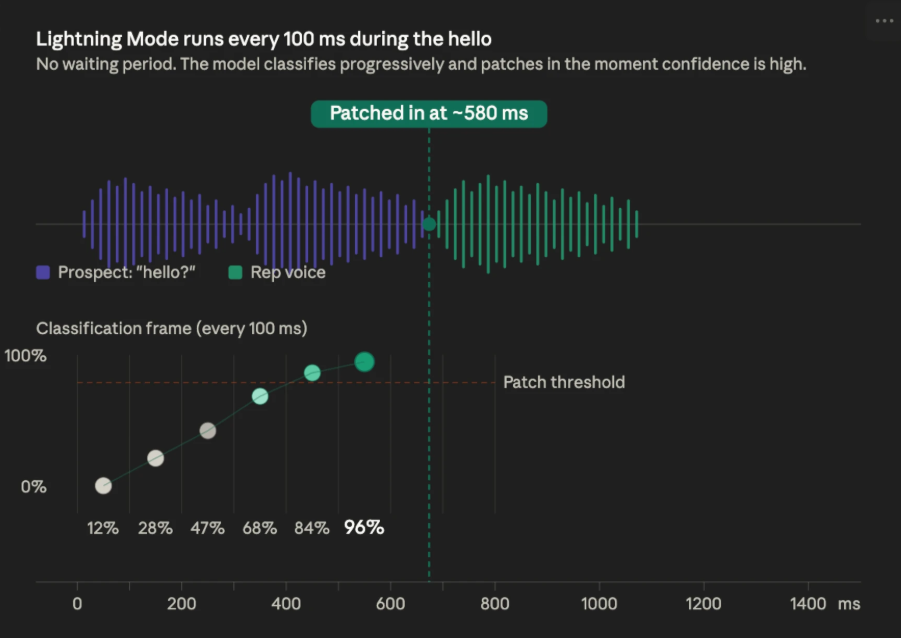
The notable recent addition is Lightning Mode, launched in May 2026. It detects live humans in 600 milliseconds (median), trained on Salesfinity's proprietary dataset of real cold-call pickups labeled by a human team.
Source: Salesfinity
The model runs every 100ms rather than waiting for a full utterance, eliminating the dead-air buffer that makes prospects hang up before the rep speaks.
Two systems manage number health. SmartRotate distributes call volume across the rep's assigned phone numbers so no single number triggers carrier spam detection. SmartGuard registers numbers with AT&T, Verizon, and T-Mobile and delivers STIR/SHAKEN A-level caller ID attestation, the highest authentication tier.
After each call, the system auto-logs notes, updates CRM records, and flags next steps. An AI Call Summary generates a recap automatically. Unreached contacts can be enrolled into email sequences via integrations with Smartlead.ai and Instantly.ai through a feature called TaskWaves.
The AI Parallel Dialer (up to 5 lines) requires the Gold plan or above. Silver provides only Power Dialer and Single Dialer access.
Phone Data & Waterfall Enrichment: SmartEnrich cascades across multiple data providers to find verified numbers before reps dial.
Salesfinity's waterfall data enrichment, branded SmartEnrich, solves a common outbound problem: SDR teams pull contact lists from a single source, and those databases are often incomplete or stale.
SmartEnrich checks every contact on a calling list against 6+ external data providers in sequence. Confirmed providers include Apollo.io, Wiza, Prospeo, RocketReach, and Upcell.io. If the first provider returns no valid number, the system queries the next, continuing until it finds a verified number or exhausts all providers.
A useful transparency feature: the UI shows which provider resolved each contact ("Enriched with Apollo.io," "Enriched with Wiza"), giving managers auditable sourcing data.
Activation is simple. Upload a list, push a button, and SmartEnrich runs. Once enrichment completes, the cleaned list enters the dialing queue. Enrichment integrates with BOSS Mode, which scores the data quality and assigns P1/P2/P3 priority within the list.
SmartEnrich is an Enterprise-tier feature only. Silver and Gold plans do not include it, so teams on those tiers still need external data providers.
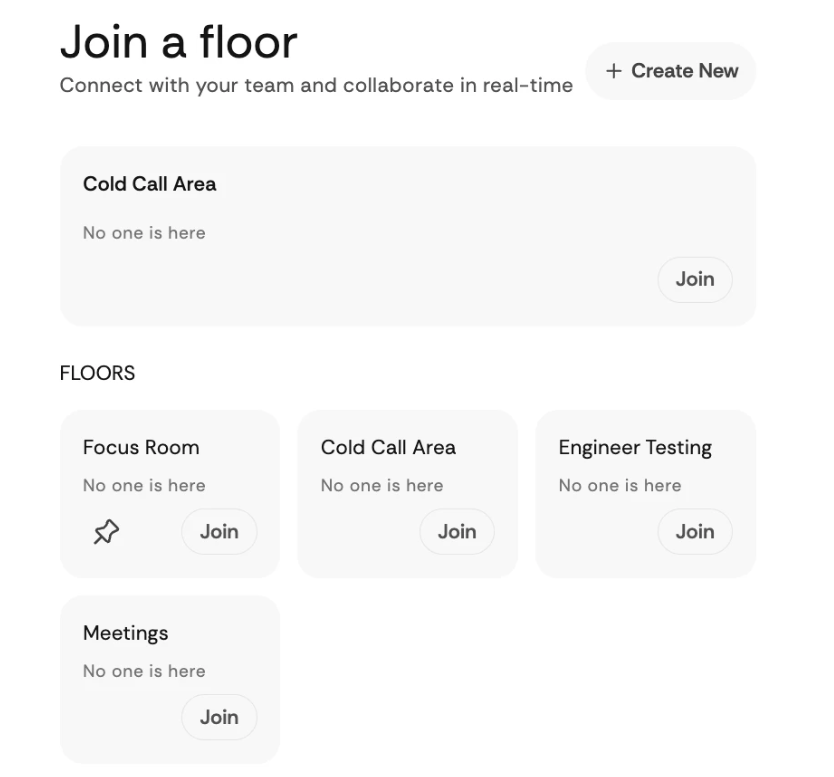
AI Coaching & Salesfloor: A virtual team calling environment with live coaching, AI scoring, and new hire onboarding.
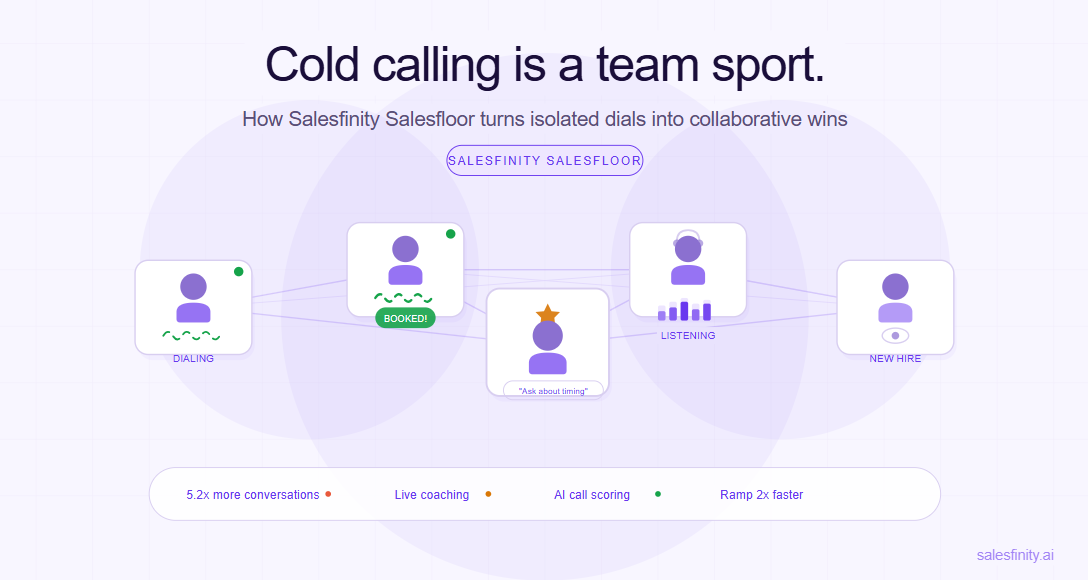
Salesfinity pairs two features: the Salesfloor (a virtual team calling environment) and an AI Coaching layer (automated call scoring, objection analytics, and improvement feedback).
Source: Salesfinity
The Salesfloor addresses a real problem for remote SDR teams. Reps dialing from home offices lose peer learning, live coaching, and the shared energy of an in-office calling floor. Managers create named virtual calling rooms organized by team, campaign, or experience level. When a rep gets a live answer, auto-mute kicks in, moving them into a private "Phone Booth" so they can focus without crosstalk.
Source: Salesfinity
Managers use live listen-in to monitor any active call and send private coaching messages mid-conversation. The May 2026 update added Krisp noise cancellation by default and Auto Listen mode for managers that works across tabs and apps.
New hires can observe senior reps in observer mode and practice with configurable AI Training Bots before stepping into live calls. Salesfinity claims this approach reduces SDR ramp time from 6-8 weeks to 3-4 weeks.
Every call is transcribed and scored by AI across weighted facets including intro, discovery, and CTA. Each call gets coaching data: top wins, improvement areas, and suggested drills. Metadata includes talk-to-listen ratio, questions asked, open question ratio, and objections detected.
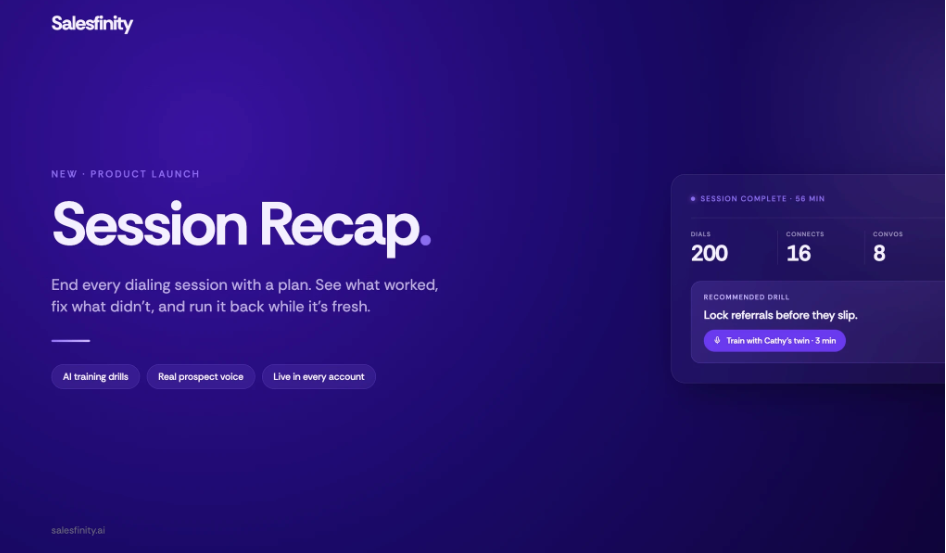
Session Recap (Enterprise, May 2026) goes further. After each dialing session, it generates a funnel summary, surfaces the highest-scored call, and queues a coaching drill built from the actual prospect's voice and the specific objection the rep missed.
Source: Salesfinity
The Salesfloor and AI Coaching features are restricted to the Enterprise plan.
Nurture AI: Automated follow-up scheduling triggered by the specific objection a prospect raises.
In traditional outbound, when a prospect says "not now," the lead dies. Salesfinity frames this as structural waste: only 3% of the market is ready to buy at any given moment, meaning 97% of every cold call list is a timing problem, not a fit problem.
Nurture AI replaces that pattern. After every call, it reads the outcome and categorizes the prospect into buckets: Meeting, Activation, Not Now, Not Me, Referred, Nurture, Not Interested, Needs Attention. Based on the category and the specific objection raised, Nurture AI schedules a follow-up calibrated to that objection.
The homepage illustrates this with examples: "James Bond, No budget, Uses HubSpot CRM, Follow up scheduled in 2 months" and "Adam Smith, Existing solution, Uses Outreach.io SEP, Follow up scheduled in 6 months."
The system records the objection reason and the prospect's current tech stack alongside the follow-up date, so the rep has full context when the contact resurfaces. No manual post-call data entry is required. Salesfinity calls this "Compound Prospecting": teams using the approach reportedly achieve 26-32% connect rates on callbacks versus standard cold rates, a 4-5x improvement.
Nurture AI is available on Gold and Enterprise plans.
Where Salesfinity Falls Short
Salesfinity makes cold calling more efficient. But several limitations appear as teams scale and their outbound strategy moves beyond phone-only prospecting.
Call-Only Channel. Salesfinity does not support email sequencing, LinkedIn outreach, or any channel beyond voice. TaskWaves routes unreached contacts to third-party email tools like Smartlead.ai and Instantly.ai, but there is no native multi-channel orchestration. Teams comparing Salesfinity to Outreach or Salesloft will see it as a dialer add-on to their sequencer, not a replacement.
Limited Data Infrastructure. SmartEnrich cascades across 6+ providers, but it is Enterprise-only and limited to phone number verification. There are no intent signals, no technographic data, no org chart visibility, and no buyer behavior tracking.
Teams still need a separate data platform to learn which accounts are in-market, who the decision-makers are, and what technology stack the prospect uses. The enrichment helps reps reach someone, but it does not tell them whether that person is worth reaching right now.
Key Features Gated Behind Enterprise Pricing. The platform's most distinctive capabilities (Salesfloor, AI Coaching, Waterfall Enrichment, Session Recap, international dialing, Gong integration, and data warehouse export) all require the Enterprise plan, which has no published price.
Silver ($200/user/month) provides only a power dialer with no AI features. Gold ($299/user/month) adds the AI Parallel Dialer and Nurture AI but excludes the coaching and team features that set Salesfinity apart from simpler dialers.
No Conversation Intelligence Beyond Cold Calls. Salesfinity's AI scoring and coaching apply only to cold call connects. There is no recording or analysis of discovery calls, demos, negotiations, or post-sale conversations. Organizations that want to understand their full sales cycle need a separate conversation intelligence platform.
Small Team Relative to Ambition. The about page lists a lean team: the CEO, three engineers, and one salesperson. Competitors like Orum (Series B funded) and Nooks ($43M raised) have more resources. The question for evaluators is whether Salesfinity can sustain its product velocity.
No Unified GTM View. Salesfinity optimizes one step of the outbound process: the call. It does not connect calling outcomes to marketing campaigns, website visitor behavior, CRM deal stages, or account-level buying signals. Sales leaders who need to understand how phone outreach fits into a broader go-to-market motion must stitch that picture together from multiple tools.
These limitations reflect a platform built to do one thing well. But they create a clear gap for teams that have outgrown single-purpose tools and need a platform that connects data, intelligence, and execution across the full go-to-market motion.
Top Salesfinity Alternative for Complete GTM: ZoomInfo
ZoomInfo addresses Salesfinity's limitations by providing the infrastructure go-to-market teams need: the data to know who to call, the intelligence to know why, and the execution tools to act across every channel.
ZoomInfo is an AI GTM platform built on the largest B2B database in the market: 500M contacts, 100M companies, 135M+ verified phone numbers, 120M direct-dial numbers, and 200M+ verified business email addresses.
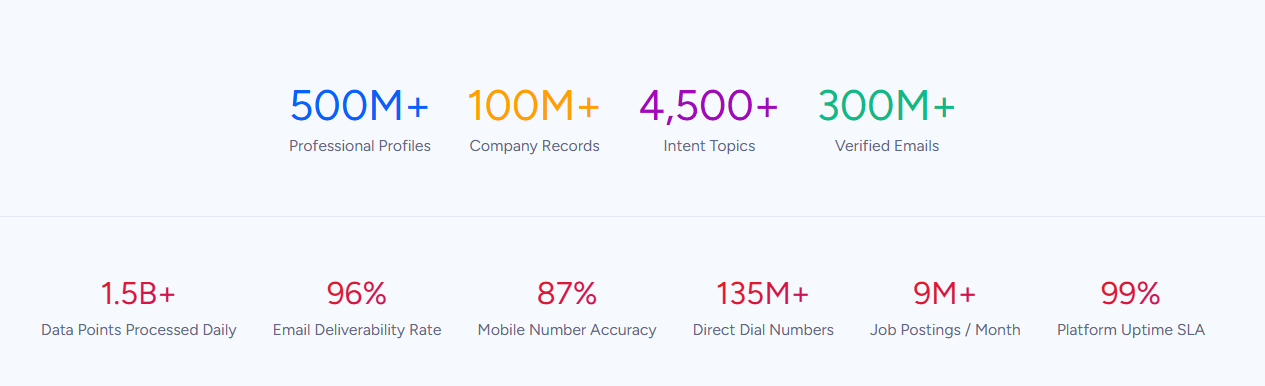
Its GTM Context Graph processes 1.5B+ data points daily, unifying this data with CRM records, conversation transcripts, and behavioral signals to reveal the full context of every account.
That context powers AI that shows not just what happened, but why, and which actions to take next. Teams access this through GTM Workspace for sellers, GTM Studio for marketers and RevOps, or APIs and MCP in any third-party application.
Comprehensive B2B Data: ZoomInfo provides the largest verified contact and company database in B2B.
Where Salesfinity's SmartEnrich cascades across 6+ data providers to find phone numbers, ZoomInfo is the data platform. The scale: 135M+ verified phone numbers and 120M direct-dials, verified through a multi-source pipeline backed by 300+ human researchers and reaching up to 95% accuracy on first-party data.
The data goes far beyond phone numbers. ZoomInfo provides company attributes (industry, headcount, revenue, parent-child hierarchy), technographics (30,000+ technologies across 200+ categories for 30M+ companies), department org charts with decision-makers' direct contact information, and Buyer Intent data that tracks signals from 210 million IP-to-Organization pairings.
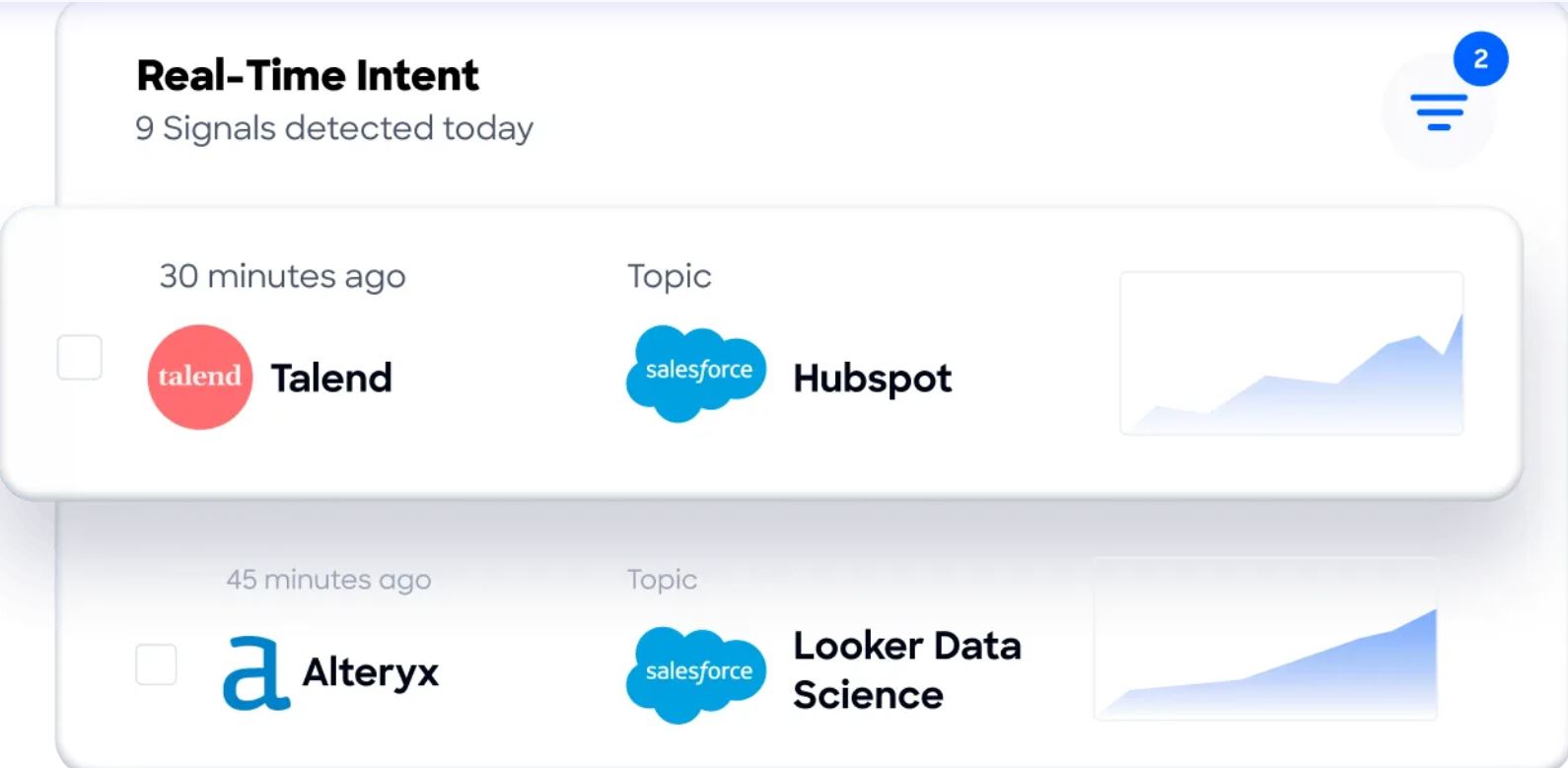
Guided Intent, exclusive to ZoomInfo, identifies topics historically correlated with deal success rather than requiring manual topic selection.
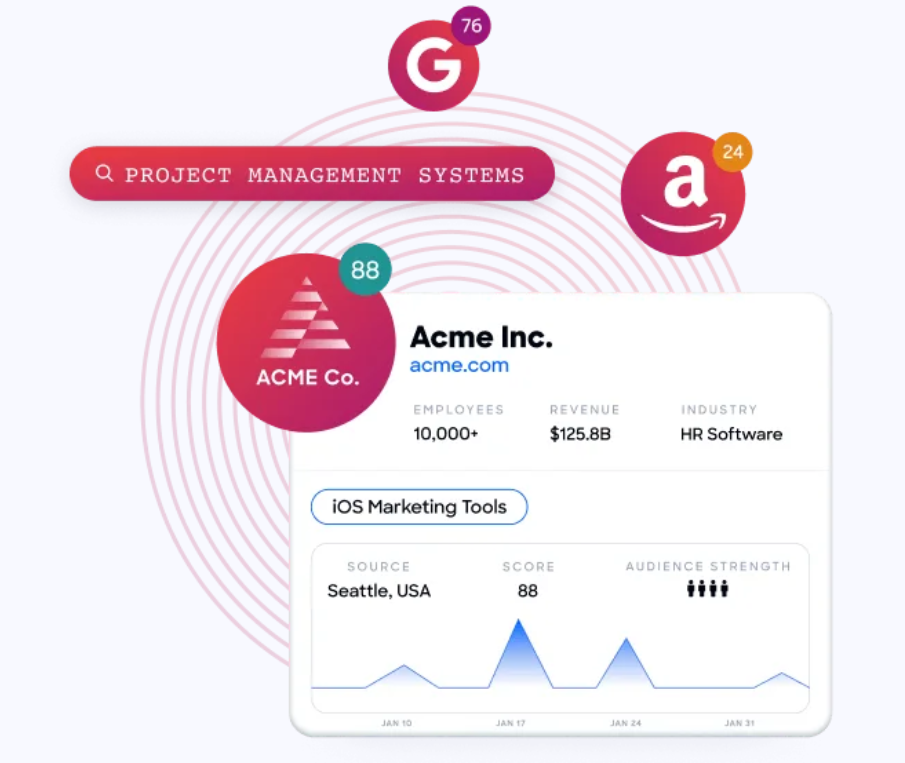
For SDR teams, this means knowing not just how to reach a prospect, but whether they should. An SDR with ZoomInfo data can see that a target account is researching competitor solutions, has hired three new VPs this quarter, and uses a compatible tech stack, before picking up the phone.
This data advantage is not self-reported. In a Fortune 500 competitive RFP analyzing 25 million contacts across vendors, the independent consultant concluded that "no other competitor came even close."
ZoomInfo's data platform gave Vensure the information they needed to execute without digging through multiple spreadsheets, helping them reach company goals and acquire clients faster. (Vensure)
GTM Context Graph: An intelligence layer that captures why deals move, not just that they moved.
Salesfinity's AI scores individual cold calls and tracks objection patterns.
ZoomInfo's GTM Context Graph operates across the full deal lifecycle: it unifies CRM records, conversation intelligence from Chorus, email threads, product usage data, and behavioral signals with ZoomInfo's third-party intelligence, then extracts connections between signals and outcomes.
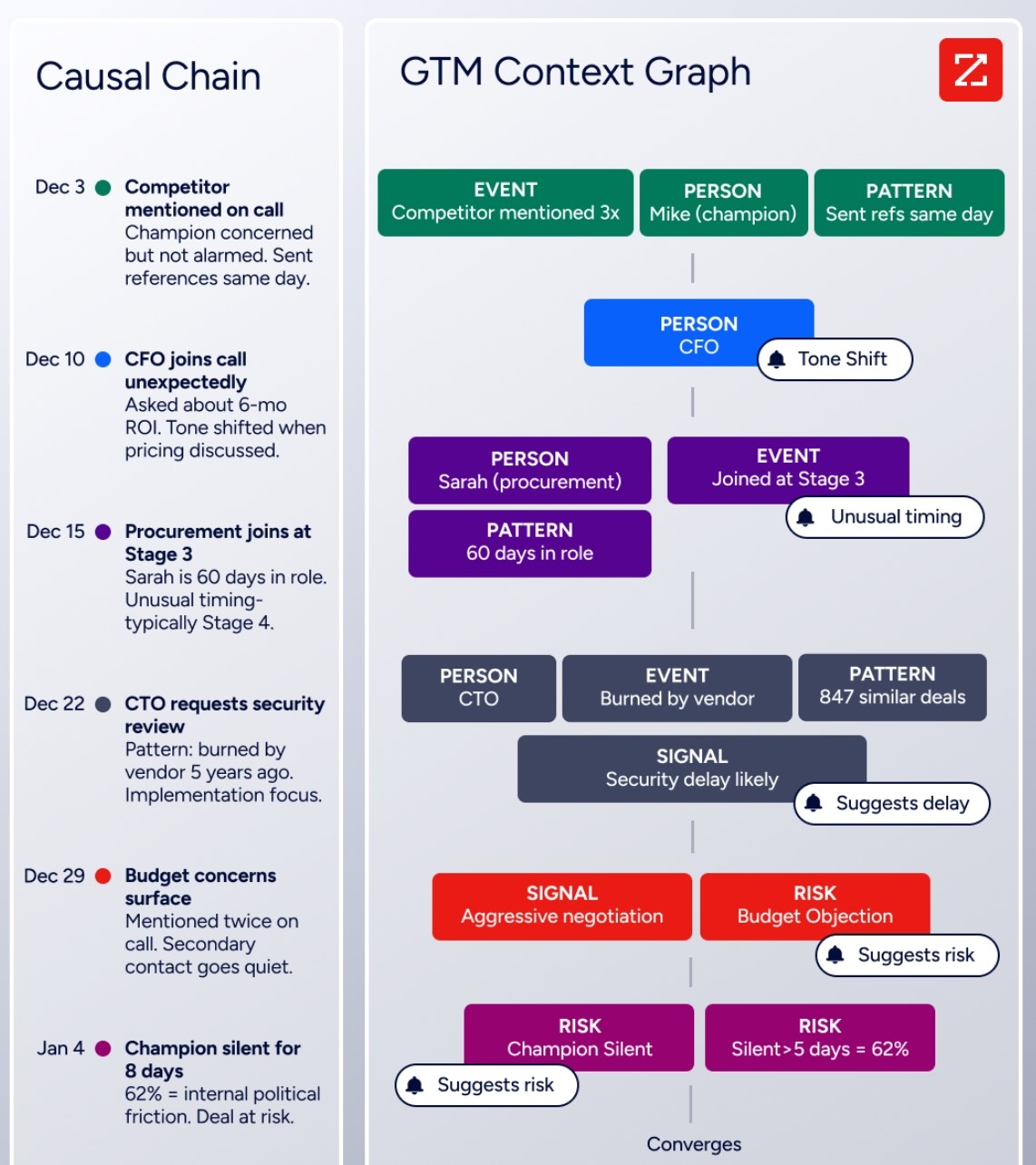
A CRM records that a deal moved to Stage 3. Conversation intelligence transcribes what the VP of Finance said on the last call. Intent data logs a spike in research activity. The GTM Context Graph reasons across all three to understand why the deal moved. As ZoomInfo's Chief Product Officer Dominik Facher writes: "The CRM recorded the state change. It has no record of why it happened."
For sales teams, this means AI-drafted follow-ups that address the specific concern a prospect raised, plays that target accounts matching proven win patterns, and forecasts weighted by buying evidence rather than stage labels. Salesfinity optimizes the quantity of cold conversations. ZoomInfo optimizes the quality and context of every interaction across the full sales cycle.
Seismic's sales team attributed 39% of active pipeline to opportunities identified or influenced by ZoomInfo signals, boosted productivity by 54%, and saved 11.5 hours per week per seller. (Seismic)
GTM Workspace and GTM Studio: Dedicated interfaces for every GTM role.
Salesfinity serves one persona: the SDR making cold calls. ZoomInfo provides dedicated interfaces for every go-to-market role.
GTM Workspace gives sellers a single screen where prioritized accounts, AI-drafted outreach, and deal execution converge. Built on Anthropic's Claude, its AI agents answer three questions for every rep: who to contact, when to engage, and what to say.
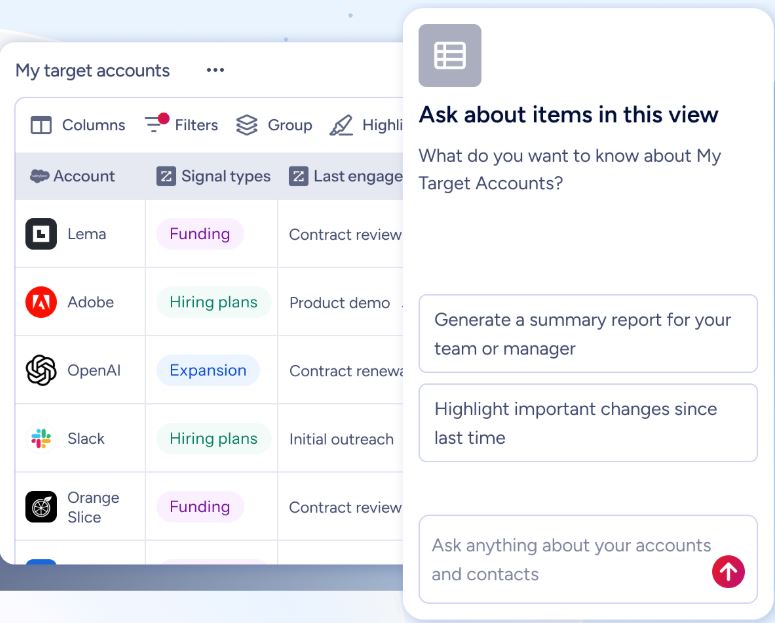
The Action Feed delivers a live stream of in-market buyers matched to target criteria, with pre-drafted actions on every signal. The AI Assistant generates 10-second account briefs pulling CRM history, company news, and stakeholder context.
GTM Studio gives marketers, RevOps, and GTM engineers a builder environment where audience definition, campaign orchestration, and pipeline measurement happen in natural language. Plays that used to take 3 weeks now launch in 30 minutes. Pre-built plays cover inbound acceleration, champion tracking, competitive displacement, and ICP targeting.
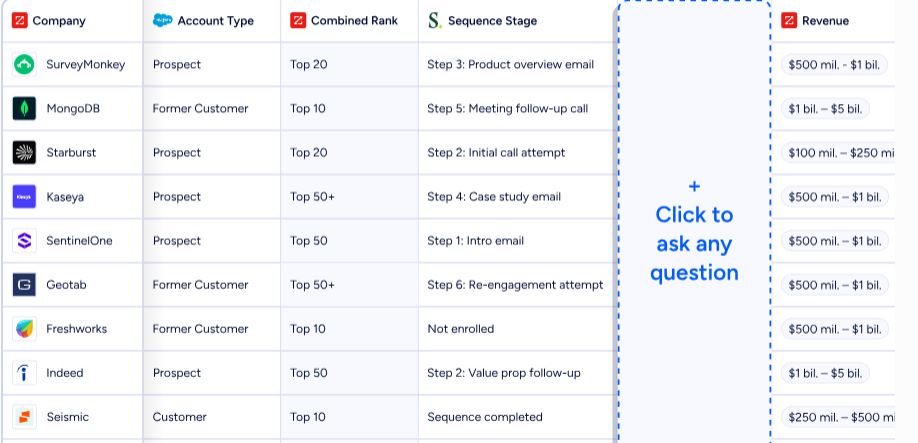
For teams that build their own tools, APIs and MCP expose the same intelligence to any custom agent, internal tool, or partner platform. All three interfaces draw from one GTM Context Graph: nothing is siloed by surface.
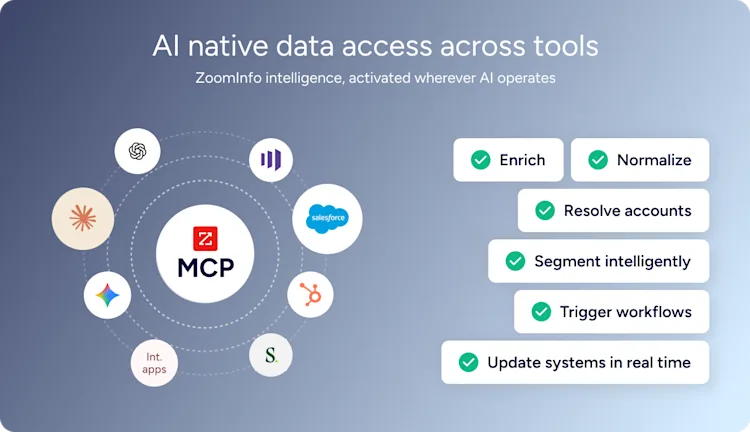
Spekit found that minimizing context-switching benefits their team, and ZoomInfo's single view eliminates the need to navigate between systems. (Spekit)
Enterprise Scale and Accessibility: ZoomInfo is the GTM data layer trusted by over half the Fortune 500, with flexible entry points.
ZoomInfo is the GTM data layer trusted by over half the Fortune 500, and its customers include Adobe, Snowflake, PayPal, and JPMorgan. It generates 35,000+ companies worldwide, including Adobe, Snowflake, PayPal, and JPMorgan. It generates $1.25 billion in revenue and holds 133 No. 1 G2 rankings, the Gartner Magic Quadrant Leader designation for ABM Platforms, and Forrester Wave Leader status for Intent Data Providers.
For teams concerned about getting started, ZoomInfo offers two free entry points: ZoomInfo Lite (a permanent free tier with 100M+ verified profiles, 10 monthly export credits, and WebSights Lite) and a 7-day free trial of the full platform. Paid plans use custom-quoted pricing based on seats, credits, and features.
Security and compliance certifications include ISO 27001, ISO 27701, SOC 2 Type II, and TRUSTe GDPR and CCPA, all renewed annually. ZoomInfo is a registered data broker in California and Vermont.
Salesfinity or ZoomInfo: Comparison Summary
Salesfinity | ZoomInfo | |
|---|---|---|
Primary focus | AI parallel dialing for SDRs | AI GTM platform |
Target users | SDRs and SDR managers | Sales, marketing, RevOps, GTM engineers |
B2B data | SmartEnrich: 6+ providers, phone numbers only (Enterprise) | 500M contacts, 100M companies, 135M+ verified phones, 200M+ verified business emails |
Intent signals | Not available | Buyer Intent with 210M IP-to-Org pairings; Guided Intent |
Outreach channels | Phone only | Phone, email, ads, chat, multi-channel orchestration |
Conversation intelligence | AI call scoring for cold calls | Chorus: full-cycle recording, transcription, deal intelligence |
AI capabilities | Call scoring, objection tagging, Nurture AI | GTM Context Graph, AI agents, AI-drafted outreach, predictive models |
CRM integration | Salesforce, HubSpot, and others (2-way sync) | Salesforce, HubSpot, Dynamics 365, plus 120+ marketplace integrations |
Coaching | Salesfloor, AI Training Bots, Session Recap (Enterprise) | Chorus scorecards, connected intelligence, clip sharing |
Marketing capabilities | Not available | ABM, display ads, FormComplete, audience orchestration |
Pricing transparency | Published: Silver $200, Gold $299, Enterprise custom | Custom-quoted; ZoomInfo Lite free tier available |
Free entry point | Free trial (duration not published) | ZoomInfo Lite (permanent) + 7-day free trial |
Security | SOC 2 Type 2, CCPA | ISO 27001, ISO 27701, SOC 2 Type II, TRUSTe GDPR/CCPA |
Company scale | Bootstrapped, sub-20 employees | Public (NASDAQ: GTM), $1.25B revenue |
Best for | SDR teams focused on cold calling volume | Organizations running a full go-to-market motion |
Final Verdict
The choice between Salesfinity and ZoomInfo depends on where your team sits in its outbound maturity and how broad your go-to-market needs are.
Choose Salesfinity if your primary challenge is SDR productivity on the phones. It's the right tool when cold calling is your dominant outbound channel and you need more live conversations per rep without adding headcount.
The AI Parallel Dialer, Lightning Mode's 600ms human detection, and the Salesfloor's virtual team environment make it a strong fit for B2B SaaS companies with SDR teams of 3-20 reps who want more from their existing cold calling motion. The transparent pricing and month-to-month flexibility make it accessible for teams trying AI dialing for the first time.
Choose ZoomInfo if your organization needs more than a faster dialer. It's the platform for teams that want to know who to call and why before they pick up the phone, that need intent signals and buyer intelligence to prioritize accounts, that run multi-channel outreach across email, ads, and phone, and that want conversation intelligence across the full sales cycle.
ZoomInfo's data, GTM Context Graph, and dedicated interfaces for sellers, marketers, and RevOps make it the foundation for a complete go-to-market operation, not just a calling workflow.
Get started with ZoomInfo here.
Salesfinity solves a real problem well: SDRs waste too much time listening to ringing and voicemails. But the calls are only one piece of outbound success.
Knowing which accounts are worth calling, reaching the right person with a verified number, understanding where that account sits in its buying journey, and connecting the calling motion to the rest of your go-to-market strategy are what separate teams that dial from teams that close.
That broader infrastructure is what ZoomInfo provides.
Salesfinity FAQ
What is Salesfinity and what does it do?
Salesfinity is an AI-powered parallel dialer that helps B2B sales development reps make more calls and have more live conversations. It dials up to five numbers at once, uses AI to detect when a live human answers, and connects the rep only to those calls.
The platform also includes automated follow-up scheduling, virtual team calling, and AI call coaching. It handles outbound cold calling, not inbound sales, demos, or multi-channel outreach.
How much does Salesfinity cost?
Salesfinity offers three published tiers: Silver at $200/user/month (Power Dialer only, no AI features), Gold at $299/user/month (AI Parallel Dialer, Nurture AI, SmartRotate, and API access), and Enterprise at custom pricing (adds Salesfloor, AI Coaching, Waterfall Enrichment, international dialing, and more). There is no published minimum seat count or contract length.
ZoomInfo uses custom-quoted pricing but offers a permanent free tier (ZoomInfo Lite) with access to its B2B database and 10 monthly export credits.
Does Salesfinity support email or LinkedIn outreach?
No. Salesfinity is a phone-only platform. It can route unreached contacts to third-party email tools like Smartlead.ai and Instantly.ai through its TaskWaves feature, but there is no native email sequencing, LinkedIn messaging, or multi-channel campaign builder. Teams that need multi-channel outreach will need additional tools.
ZoomInfo supports execution across phone, email, display ads, and website chat, with orchestration through GTM Studio.
What integrations does Salesfinity support?
Salesfinity integrates natively with Salesforce, HubSpot, Outreach, Salesloft, Apollo.io, Amplemarket, Monday.com, PipeDrive, and ActiveCampaign. Enterprise plans add Gong, Slack, and data warehouse export to Snowflake and Databricks. Some users have reported friction with the HubSpot integration, specifically around making calls from within HubSpot.
ZoomInfo offers 120+ integrations through its App Marketplace, plus API and MCP access for custom integrations.
How does Salesfinity's AI human detection work?
Salesfinity's Lightning Mode, launched in May 2026, detects live humans in 600 milliseconds (median). The system runs every 100 milliseconds, analyzing each answered call to distinguish between live voices, voicemail greetings, IVRs, and robotic answering systems. It was trained on Salesfinity's proprietary cold-call pickup dataset labeled by a human team. When it confirms a live human, it bridges the rep into the call. When it detects a non-human response, it drops the call automatically without the rep hearing it.
Is Salesfinity good for small teams or solo salespeople?
Salesfinity is designed for SDR teams of 3-20 reps at B2B SaaS companies. For solo salespeople, the pricing ($200/user/month for a power dialer, $299 for the AI parallel dialer) may be hard to justify against cheaper alternatives. The Salesfloor and team coaching features, which are among Salesfinity's strongest differentiators, deliver the most value for teams of at least 3-5 reps dialing together.
ZoomInfo Lite offers a permanent free tier for individual users who need B2B contact data without a paid subscription.
Does Salesfinity include B2B contact data?
Salesfinity's SmartEnrich feature cascades across 6+ data providers to find and verify phone numbers, but only on the Enterprise plan. Silver and Gold users must bring their own contact lists from external sources. SmartEnrich focuses on phone numbers and does not provide intent data, technographics, org charts, or company intelligence.
ZoomInfo provides 500 million contacts, 100 million companies, 135 million verified phone numbers, and 200 million verified business email addresses, along with technographics and buyer intent signals, as a core part of its platform.
What is Salesfinity's uptime and security posture?
Salesfinity is SOC 2 Type 2 certified and CCPA compliant, with 100% uptime since 2024. The company follows GDPR practices, though formal GDPR certification is listed as in progress on their trust center. SSO and MFA are available on the Enterprise plan. The platform runs on AWS with Cloudflare for CDN and DDoS protection.
ZoomInfo holds ISO 27001, ISO 27701, SOC 2 Type II, and TRUSTe GDPR and CCPA certifications, all renewed annually.
