
Comparing Salesforce vs. SAP often comes down to five questions most enterprise buyers don't ask early enough:
Is your primary challenge managing customer relationships, or running the back-office operation that fulfills what you sell?
Do you need a CRM that defines the category, or an ERP suite with CRM capabilities bolted on?
How much does your sales team depend on external B2B intelligence (contact data, intent signals, org charts) to fill and work their pipeline?
Are you willing to invest 6-12 months in implementation, or do you need to move faster?
Is your go-to-market motion driven by the data inside your CRM, or does it depend on data your CRM was never designed to capture?
In short, here's what we recommend:
Salesforce is the world's #1 CRM by IDC revenue market share, serving over 150,000 companies across every industry. Its Customer 360 suite covers sales, service, marketing, and commerce on one platform, with Agentforce deploying autonomous AI agents for everything from lead engagement to case resolution.
For organizations where the customer relationship is the center of gravity, Salesforce offers the deepest CRM available. But the CRM only knows what's inside it, and filling it with accurate, current B2B intelligence requires external data.
SAP is the leader in enterprise applications, trusted by over 400,000 businesses and more than 90% of the Fortune 500. Its strength is the integrated business suite: ERP, supply chain, procurement, HR, and financials in one system, with SAP CX (Sales Cloud, Service Cloud, Commerce Cloud) handling customer-facing operations.
For enterprises that need their CRM connected to inventory, manufacturing, and finance without middleware, SAP delivers that native link. The trade-off: a steeper learning curve, longer implementations, and a CRM that, while capable, lacks the depth and ecosystem of a CRM-first platform.
Both platforms organize the data you already have. But neither generates the B2B intelligence, verified contact data, buying signals, or org-chart visibility that revenue teams need to find and engage the right buyers. That's a different problem.
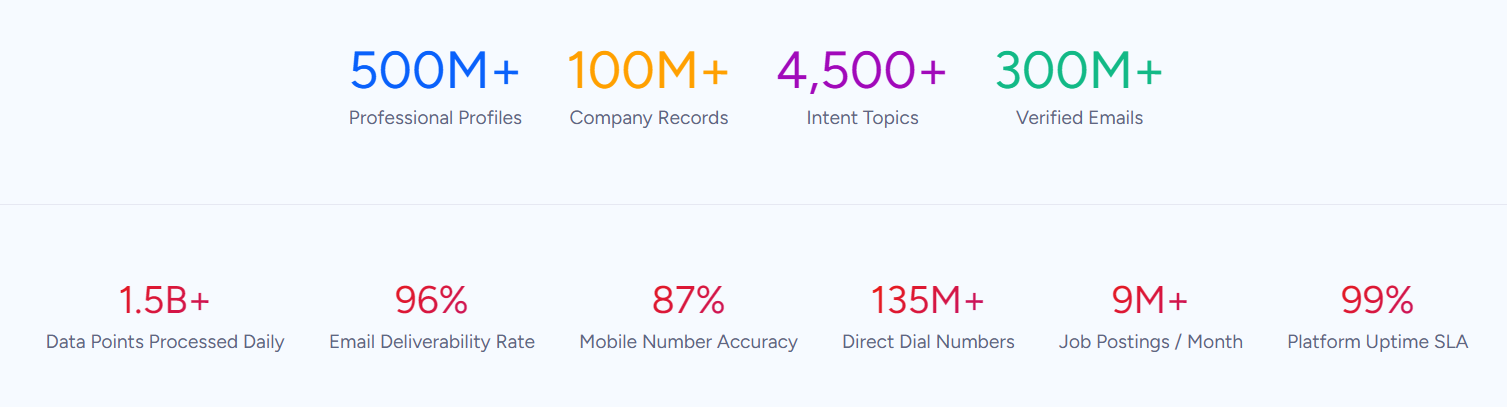
ZoomInfo is an AI-powered GTM platform built on 500M contacts, 100M companies, 135M+ verified phone numbers, and 200M+ verified business email addresses. Its GTM Context Graph combines this data with your CRM records, conversation transcripts, and behavioral signals to show not just what's happening in your pipeline, but why deals move or stall.
ZoomInfo integrates with both Salesforce and SAP, delivering intelligence through GTM Workspace for sellers, GTM Studio for marketers and RevOps, or APIs and MCP in any front-end. Whichever platform you choose, ZoomInfo provides the data layer beneath it.
If building pipeline on verified data and real buying signals sounds like the missing piece, see how ZoomInfo works with your stack.
Salesforce vs. SAP at a glance
Salesforce | SAP | ZoomInfo | |
|---|---|---|---|
Core strength | CRM and customer engagement | ERP and integrated business operations | B2B data intelligence and GTM execution |
CRM depth | 19-year Gartner MQ Leader | Capable but secondary to ERP | Enriches any CRM with verified contacts, intent signals, and org charts |
ERP capabilities | None (partners for back-office) | End-to-end | N/A |
AI platform | Agentforce (autonomous agents across CRM) | Joule (agents across the full business suite) | GTM Context Graph (unifies B2B data, CRM, and conversation intelligence) |
B2B contact data | Relies on external sources | Relies on external sources | 500M contacts, 135M+ verified phone numbers, 200M+ verified emails |
Buyer intent signals | Limited native capability | No native capability | Proprietary intent data from 210M IP-to-Org pairings |
Implementation timeline | Weeks to 6 months (typical) | 6-12 months (typical) | Deploys in weeks |
Pricing transparency | Published tier pricing | Custom quotes only | Custom quotes, free tier available |
Ecosystem | 9,000+ AppExchange apps | SAP Integration Suite, 160+ connectors | 120+ integrations, API + MCP access on all plans |
Best for | Customer-facing teams and revenue operations | Complex enterprises needing integrated operations | Revenue teams that need external B2B intelligence to fuel their CRM |
CRM-first vs. ERP-first: The architectural divide
This comparison starts with a structural truth: Salesforce and SAP were built to solve different problems, and that origin shapes everything about how they work today.
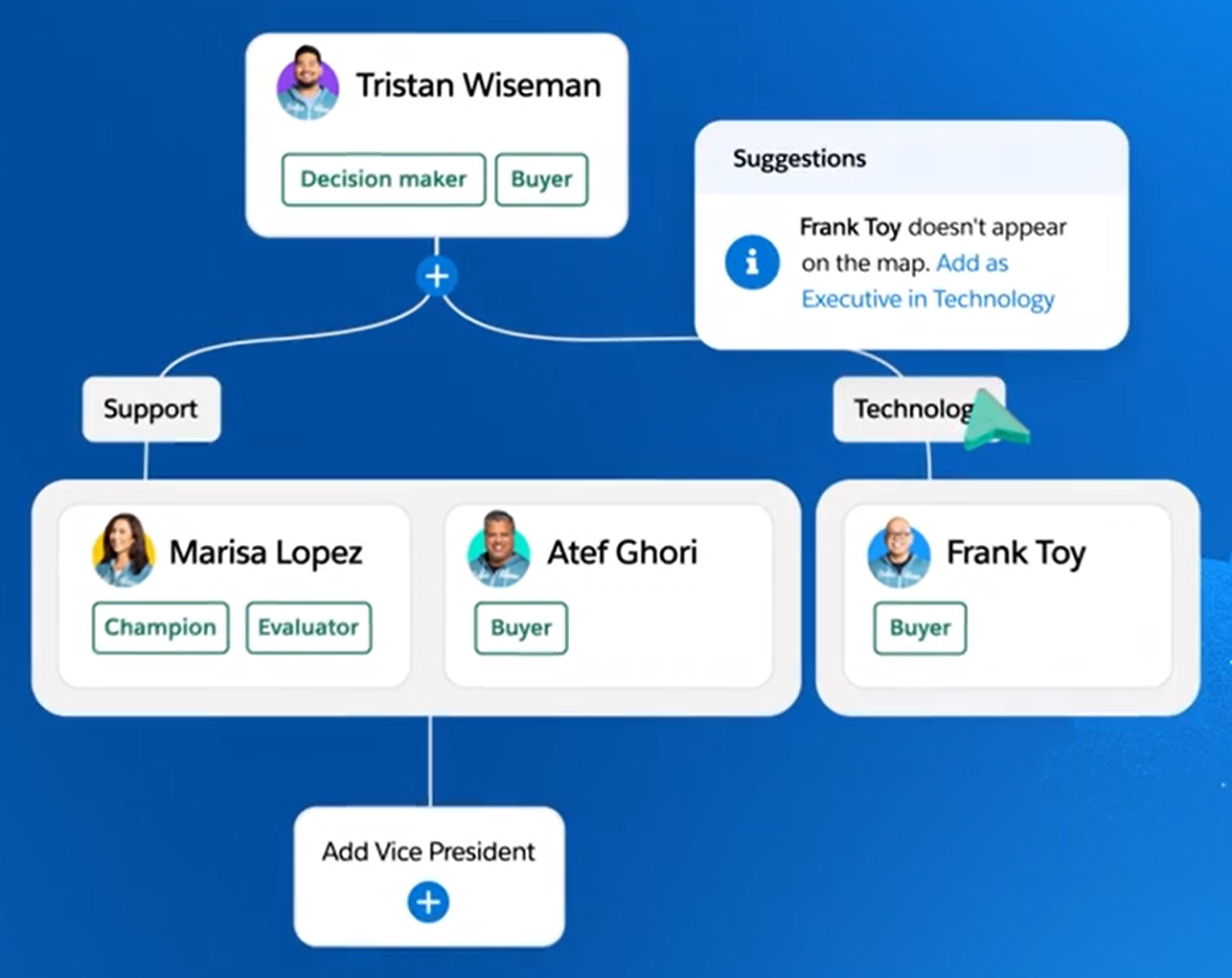
Salesforce was founded in 1999 on a single idea: deliver CRM through the cloud.
Source: Salesforce
Every product decision since has radiated outward from customer relationship management. Sales Cloud, Service Cloud, Marketing Cloud, Commerce Cloud, and now Agentforce all share one customer data model.
When a sales rep opens an account in Salesforce, they see the marketing campaigns that touched it, the service cases attached to it, and the commerce transactions tied to it, because it's all one system.
SAP was founded in 1972 by five former IBM employees who wanted to build integrated enterprise software for back-office operations.
For decades, SAP meant ERP: financial accounting, materials management, production planning, and human resources. SAP CX (the customer-facing suite including Sales Cloud, Service Cloud, and Commerce Cloud) came later, assembled partly through acquisitions, and it shows. The CRM modules work, but they exist in service of the ERP core rather than standing on their own.
This matters because it determines what each platform does best. If your challenge is managing sales pipelines, marketing campaigns, customer service cases, and cross-selling across a 150,000-contact database, Salesforce was built for that.
If your challenge is managing a global supply chain, running manufacturing operations, processing payroll in 50 countries, and connecting all of that to customer-facing processes, SAP was built for that.
The trouble arises when companies assume either platform handles the other's strength equally well. It doesn't. Salesforce has no ERP. SAP's CRM has less depth, a smaller ecosystem, and a steeper learning curve than Salesforce's. Choosing between them depends on which problem is primary for your organization.
Sales and CRM: Salesforce dominates, SAP competes
In CRM capability, Salesforce holds a wide lead.
Salesforce has been a Gartner Magic Quadrant Leader for Sales Force Automation for 19 consecutive years, a streak no other vendor has matched.
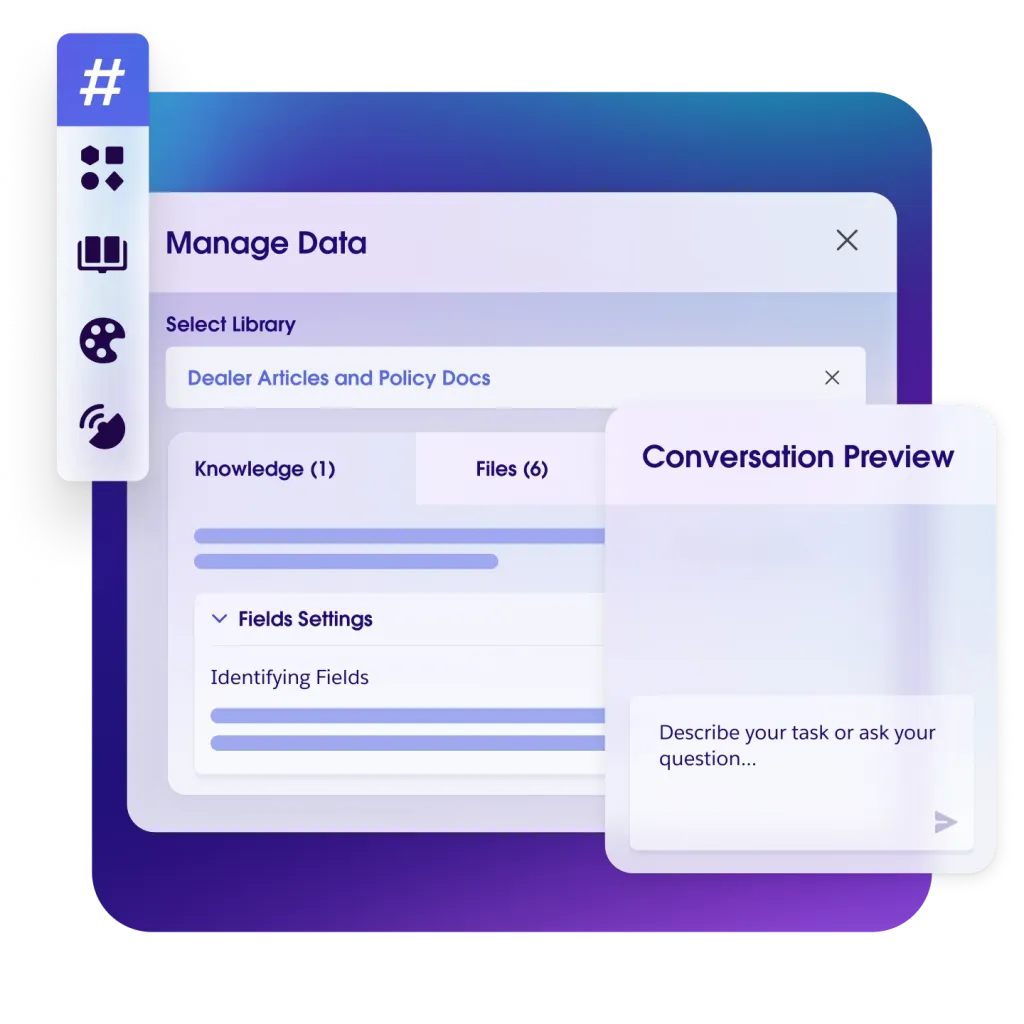
Sales Cloud covers the full revenue lifecycle: lead management with AI scoring, pipeline management with deal insights, forecast management with real-time rollups, CPQ and billing, and Agentforce Sales Agents that handle prospecting, lead engagement, and quoting autonomously.
Source: Salesforce
The ecosystem amplifies this. With 9,000+ apps on AppExchange and 14 million installs, Salesforce users can extend their CRM with specialized tools for conversation intelligence, CPQ, territory management, and more.
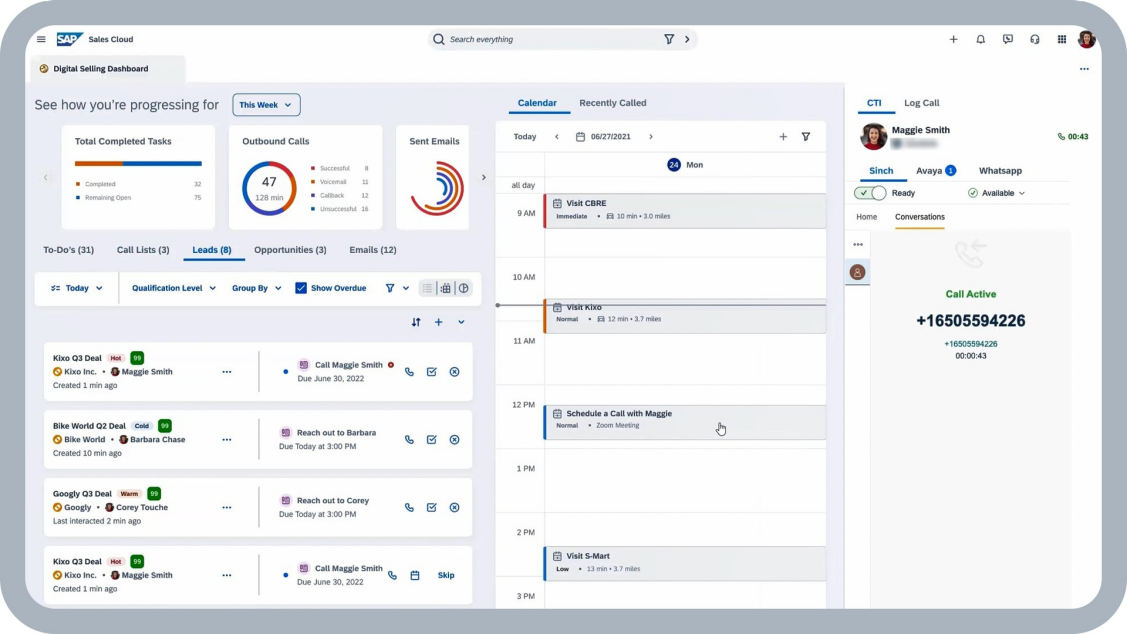
SAP Sales Cloud provides a narrower CRM with pipeline management, forecasting, and AI-powered deal intelligence.
Source: SAP
Its main advantage is native connectivity to SAP's ERP: a sales rep can check real-time inventory availability, pricing from the ERP master, and order status without leaving the CRM. For companies running SAP S/4HANA, that eliminates the integration work Salesforce customers face when connecting CRM to back-office operations.
But SAP Sales Cloud has a smaller third-party ecosystem, fewer pre-built integrations, and a user experience that reflects SAP's enterprise heritage rather than the consumer-friendly design Salesforce is known for. Companies choosing SAP CX typically choose it because SAP ERP is already the backbone of their business, not because the CRM alone outperforms Salesforce.
The data gap neither platform closes
Here's what both platforms share: they are systems of record, not systems of intelligence. Salesforce and SAP organize the customer data you put into them. Neither generates the external B2B data that revenue teams need to find new buyers, identify in-market accounts, or map buying committees.
A Salesforce instance with 50,000 accounts is only as good as the contact data, org charts, and intent signals feeding it.
If 30% of your contact emails are outdated, if you're missing the VP of Finance who just joined your target account, if you can't see which companies are actively researching solutions like yours, even the most sophisticated CRM automation fires into a void.
SAP faces the same gap.
SAP CX can orchestrate campaigns and manage deals, but it has no native mechanism for sourcing verified B2B contact data, tracking buyer intent signals, or resolving anonymous website visitors to companies.
This is where ZoomInfo changes the equation.
ZoomInfo's data platform covers 500M contacts and 100M companies, verified through a multi-source pipeline backed by 300+ human researchers with up to 95% accuracy on first-party data. Buyer Intent tracks signals from 210 million IP-to-Organization pairings and 6 trillion+ new keyword-to-device pairings monthly.
The GTM Context Graph unifies all of it with your CRM records, conversation transcripts, and behavioral signals to surface not just who to contact, but why they're worth contacting now.
ZoomInfo integrates with Salesforce, HubSpot, and Microsoft Dynamics and connects to SAP environments through its Enterprise API and MCP server. Whichever CRM you choose, ZoomInfo fills the intelligence gap it was never designed to close.
"ZoomInfo is our one source of truth for account data, and even more so for contact data. There's no other provider in the market that provides you with that level of detail." (Smartsheet)
For a direct look at how Salesforce and ZoomInfo stack up as platforms, see our Salesforce vs. ZoomInfo comparison.
AI strategies: Agentforce vs. Joule vs. GTM Context Graph
All three platforms have made major AI investments, but each approaches the problem differently.
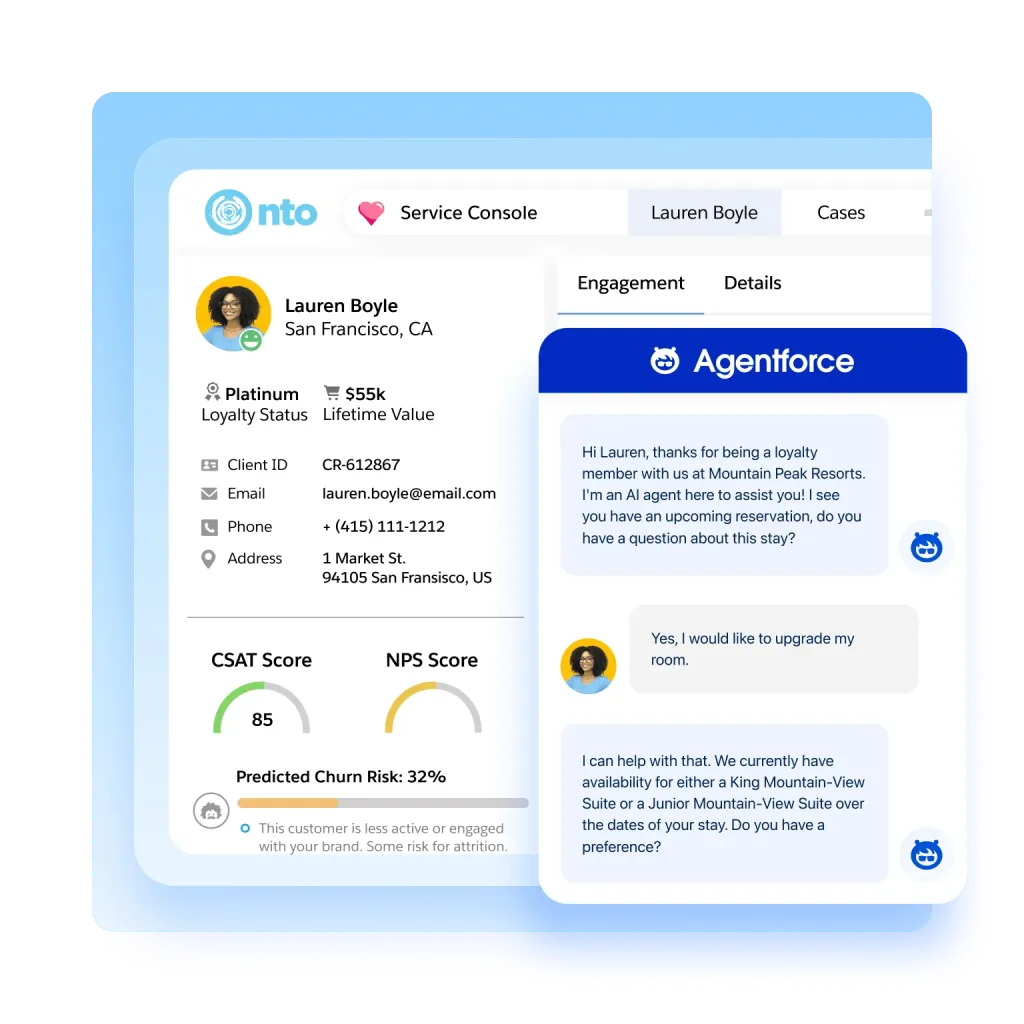
Salesforce Agentforce deploys autonomous AI agents across Customer 360. Powered by the Atlas Reasoning Engine, Agentforce agents handle prospecting, lead engagement, case resolution, and campaign creation.
The adoption numbers back this up: $800M ARR growing 169% year-over-year, 29,000 deals closed, and 85% of Salesforce's own support requests resolved without human escalation. Agentforce's strength is native access to CRM data: agents see the full customer record and can act on it.
Source: Salesforce
SAP Joule takes a broader scope.
Rather than focusing on CRM, Joule operates across SAP's entire business suite with 50+ domain-specific Joule Assistants orchestrating over 200 specialized agents across finance, supply chain, procurement, HR, and customer experience. SAP's differentiator: Joule is grounded in transactional ERP data, covering 7 million+ data fields from purchase orders to financial entries to HR records.
For enterprises that need AI to reason across business operations (not just customer-facing processes), no other platform matches Joule's breadth.
ZoomInfo's GTM Context Graph solves a problem neither Agentforce nor Joule addresses: unifying external B2B intelligence with internal CRM and conversation data.
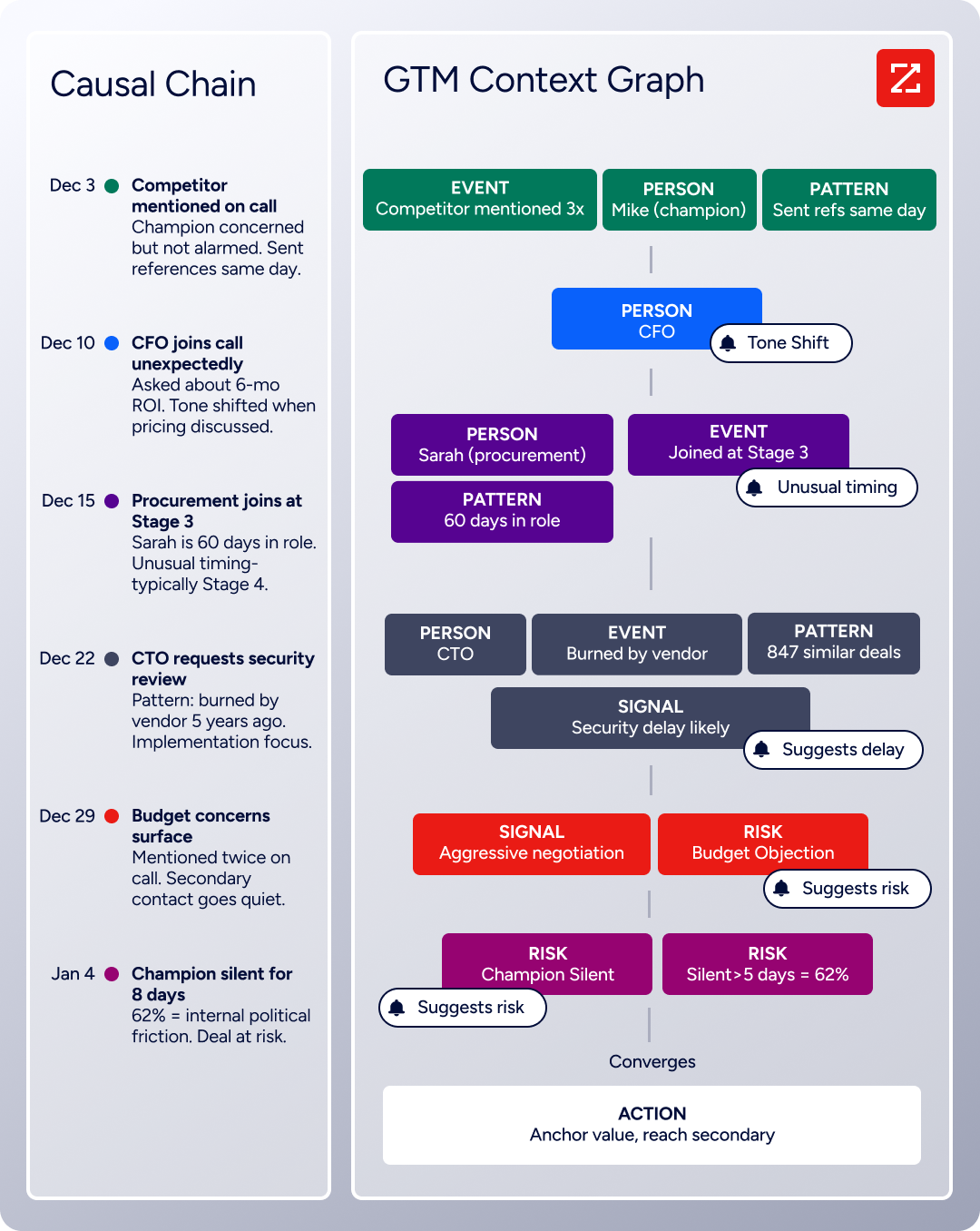
The GTM Context Graph processes 1.5B+ data points daily to capture why deals move or stall, not just that they did. It connects buying signals, org-chart changes, and conversation patterns across thousands of deals to surface intelligence you can act on. A CRM records that a deal moved to Stage 4.
Conversation intelligence captures what the CFO said. The GTM Context Graph connects both to explain what that means and what should happen next.
These three AI approaches aren't competing. They're complementary. Agentforce or Joule handles CRM and business process automation. ZoomInfo's GTM Context Graph provides the external intelligence that makes those automated actions smarter.
"That combination of our internal CRM data, external signals, and AI that's given all that context has helped us craft very specific account- and persona-based messages. And people have responded to them right away." (Seismic)
Enterprise scope: Where SAP has no equal
If your evaluation extends beyond CRM into back-office operations, SAP occupies territory Salesforce doesn't enter.
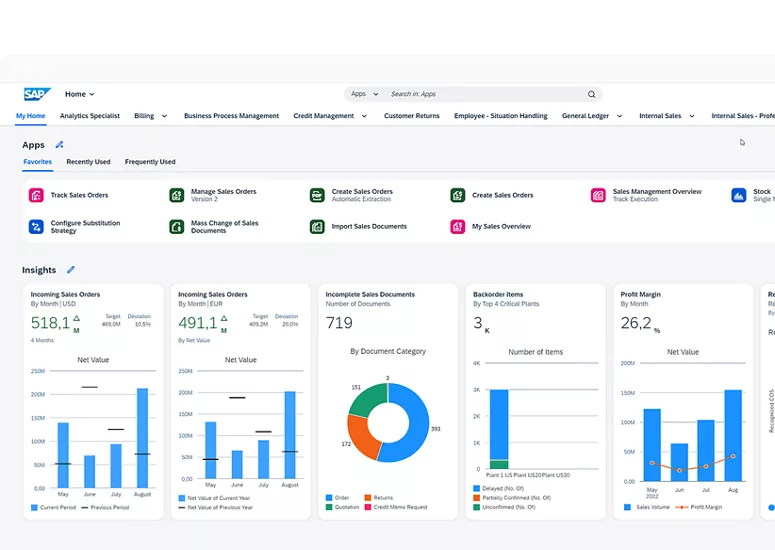
SAP S/4HANA runs on the SAP HANA in-memory database, consolidating financial accounting, supply chain management, manufacturing, procurement, and HR into one system.
Source: SAP
The Universal Journal merges financial and management accounting into one table, eliminating reconciliation. MRP runs in real time rather than overnight batch jobs. Financial close cycles that once took weeks can compress to days.
SAP's enterprise depth shows in its portfolio breadth. SAP SuccessFactors covers global HR with payroll localized in more than 50 countries. SAP Ariba manages source-to-pay procurement on the largest B2B commerce network in the world. SAP Concur handles travel and expense management at enterprise scale. No single competitor matches this out-of-the-box coverage across so many business domains.
SAP also holds Leader positions in seven separate Gartner Magic Quadrants simultaneously, spanning Cloud ERP (service-centric, product-centric, and finance), warehouse management, transportation management, financial planning, and cloud HCM.
Salesforce has no native ERP, no supply chain management, no manufacturing execution, and no global payroll.
Organizations needing those capabilities alongside CRM either build integrations between Salesforce and a separate ERP (often SAP itself) or choose SAP's integrated suite. That integration cost (both financial and operational) is a factor many Salesforce-first organizations underestimate.
Implementation and total cost of ownership
These are not weekend projects. Both platforms require significant implementation investment, but the timelines and cost profiles differ.
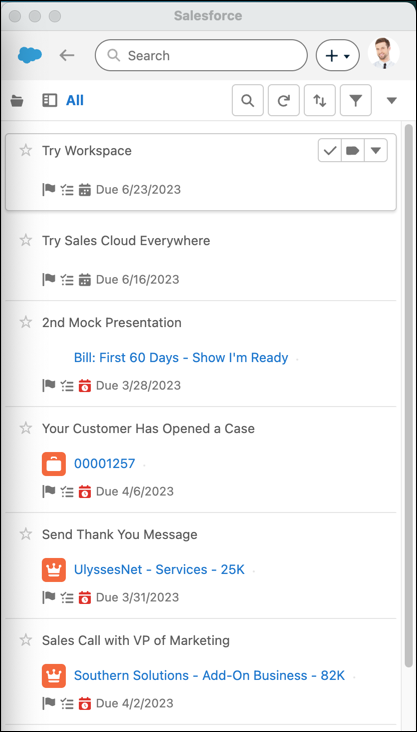
Salesforce implementations range from weeks (simple Sales Cloud) to 3-6 months (enterprise multi-cloud deployments).
Published pricing provides a starting point: Sales Cloud runs from $25/user/month (Starter) to $550/user/month (Agentforce 1), with a free CRM tier for up to 2 users. But the sticker price tells only part of the story. Premier Success Plans cost 30% of net license fees.
Source: Salesforce
Over 70% of implementations are partner-led, adding consulting costs. And Salesforce has acknowledged its pricing needs to be easier to understand, with multiple credit types, consumption tiers, and add-on layers creating complexity.
SAP does not publish list prices.
All pricing is custom-quoted through direct sales. Implementations typically take longer: 6-12 months for S/4HANA Cloud, with SAP claiming its GROW program can cut time-to-value by 40-60% for mid-market deployments. But SAP S/4HANA migrations rank among the most complex transformations in enterprise IT. More than 60% of planned budgets for S/4HANA migrations have been exceeded.
The EU Commission has also opened formal proceedings investigating SAP's on-premises maintenance practices, adding uncertainty to the migration decision.
ZoomInfo deploys in weeks, not months.
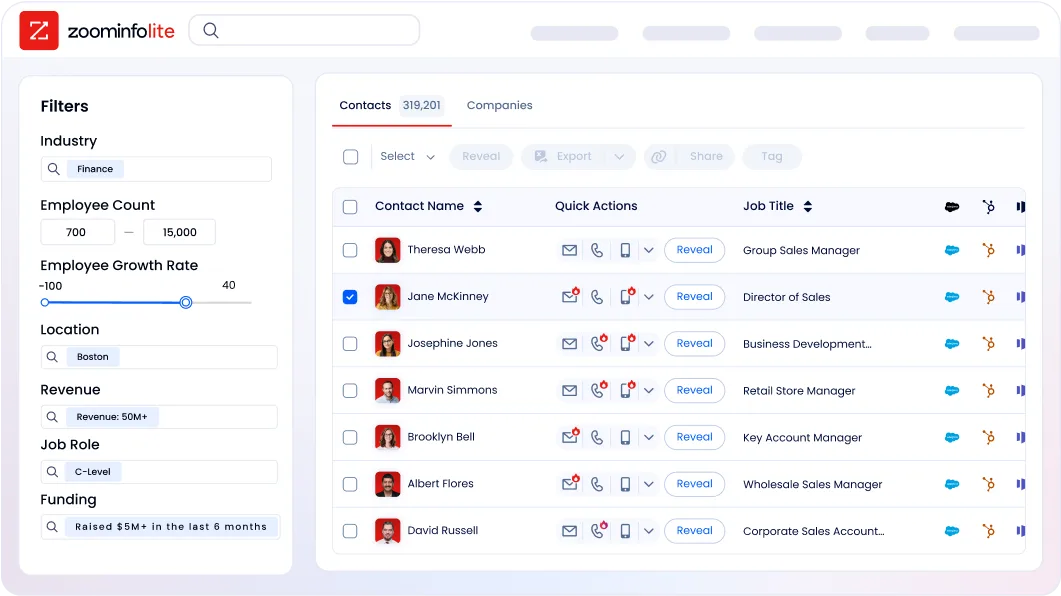
GTM Workspace ships with a redesigned onboarding program that produced a 25% improvement in customer satisfaction scores. A permanent free tier (ZoomInfo Lite) and 7-day free trial let teams evaluate the platform before committing. Paid plans use consumption-based pricing scaled to usage.
Integration ecosystems reflect different strategies
How each platform connects to the broader tech stack reveals its design philosophy.
Salesforce leads with ecosystem breadth.
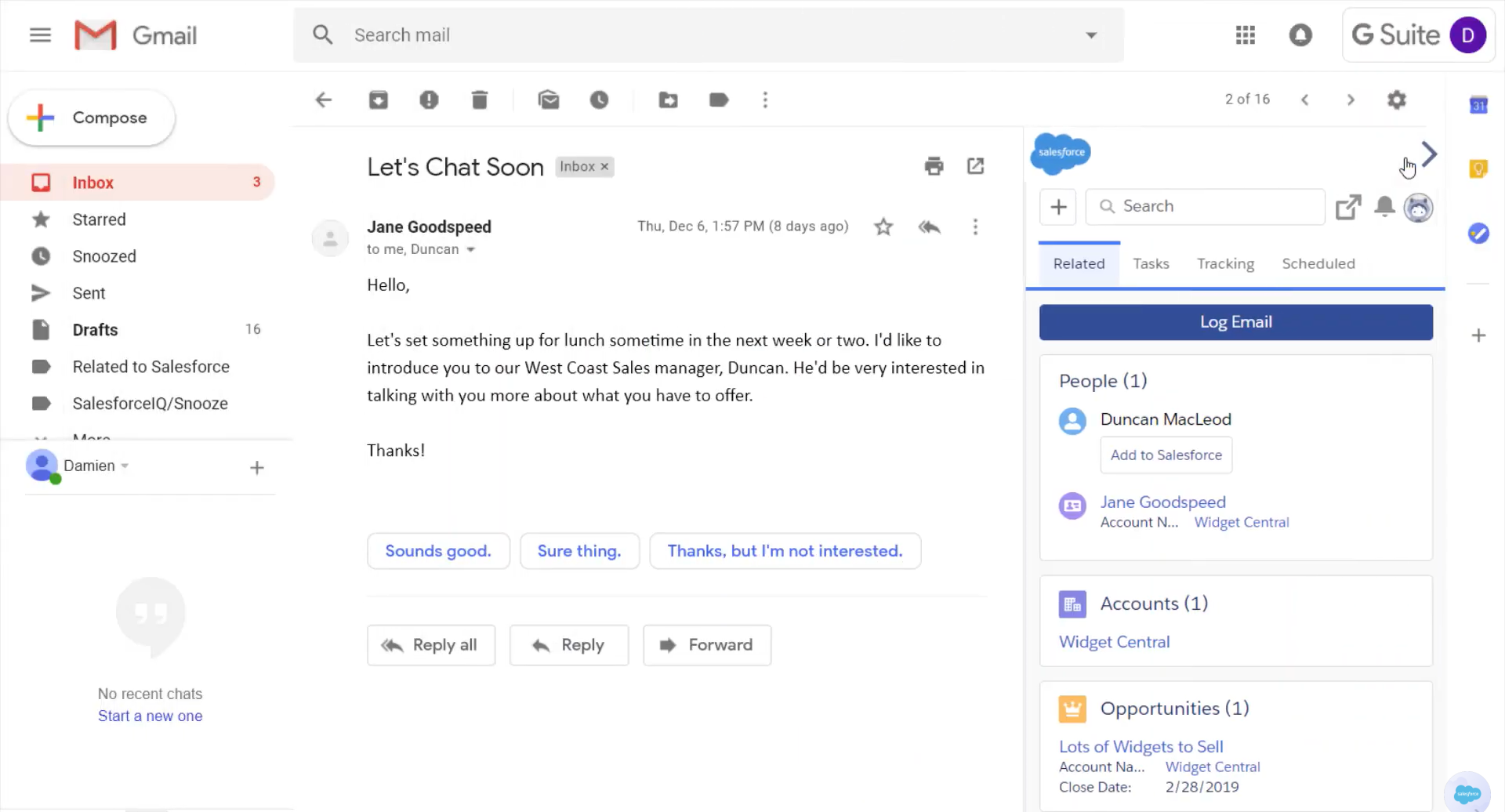
AppExchange is the largest enterprise cloud marketplace. MuleSoft (acquired for $6.5 billion) provides enterprise integration with hundreds of pre-built connectors and a Forrester-validated 426% ROI. Native integrations with Google Workspace and Microsoft Outlook and Teams cover the two dominant productivity suites.
Source: Salesforce
Slack (acquired for $27.7 billion) serves as the collaboration layer, with 5.2 billion messages sent weekly and CRM data flowing bidirectionally into channels.
SAP leads with depth of enterprise system integration.
SAP Integration Suite provides over 160 prebuilt connectors to non-SAP applications including Salesforce, Workday, AWS, and ServiceNow. The SAP Business Network connects buyers and suppliers for real-time collaboration on purchase orders, forecasts, and shipments.
For organizations running SAP ERP, the native connectivity between S/4HANA, SuccessFactors, Ariba, and SAP CX means financial, supply chain, HR, and customer data share one model without middleware.
ZoomInfo takes an open-access approach.
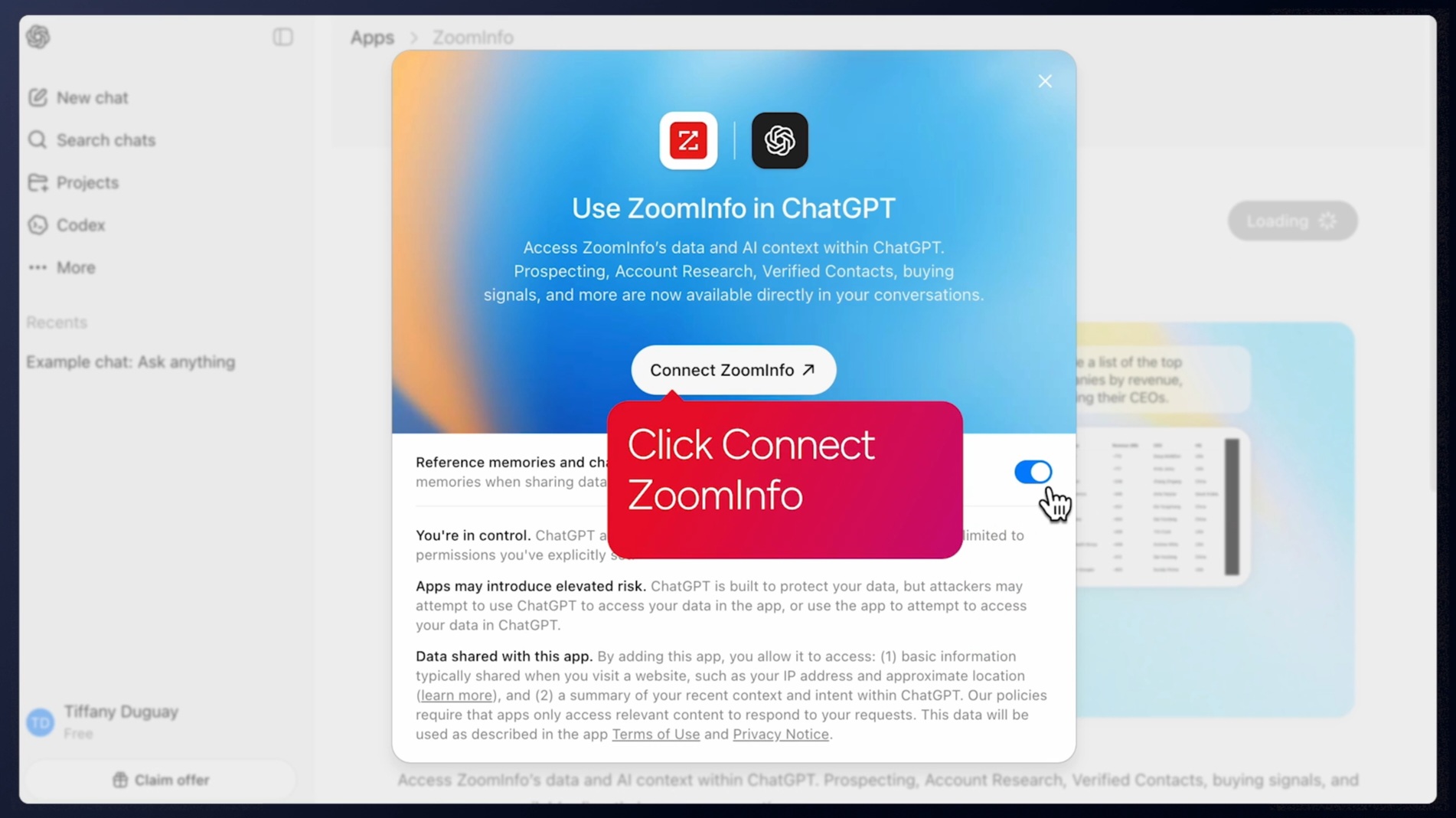
API access is included in all relevant plans, with the MCP server enabling AI models to access ZoomInfo data natively. The ZoomInfo App Marketplace lists 120+ integrations spanning CRM, marketing automation, sales engagement, and data warehouses.
Source: ZoomInfo
For Salesforce users, ZoomInfo provides bidirectional sync. For SAP users, the Enterprise API enables data enrichment and signal delivery into SAP CX workflows.
"The plug-and-play aspect of the API means I can integrate it very easily into any process and get information at a moment's notice." (BDO Canada)
User experience and adoption
The day-to-day experience of using each platform matters as much as the feature list.
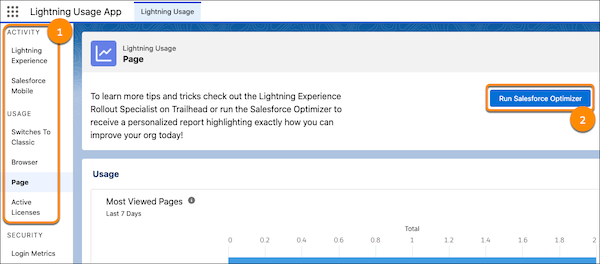
Salesforce sets the bar for enterprise UX.
Lightning Experience is a modern, component-based interface that feels closer to a consumer app than traditional enterprise software. The mobile app provides full CRM access on iOS and Android. Trailhead, with 6+ million learners and 1,500+ badges, is arguably the best free learning platform in enterprise software.
Source: Salesforce
That said, Salesforce's breadth (multiple clouds, add-ons, configuration options) creates its own complexity. Customization requires dedicated administrators, and the full platform demands ongoing investment in training and governance.
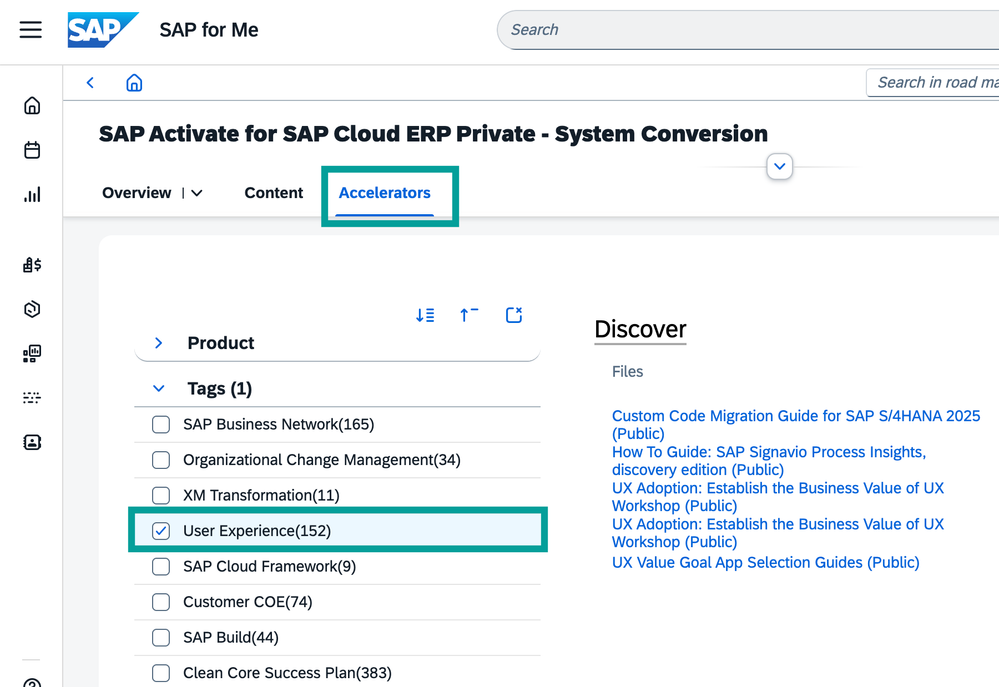
SAP has invested heavily in SAP Fiori to modernize its interface, delivering over 3,600 Fiori apps organized into more than 650 business roles.
Source: SAP
Joule Work, a conversational workspace arriving in H2 2026, will let users interact with SAP through natural language across desktop, mobile, and voice. Despite these investments, the underlying complexity of SAP's data model and transaction logic keeps the learning curve steep. Users can stay in "survival mode" for nearly a year post-implementation, according to TrustRadius reviewers.
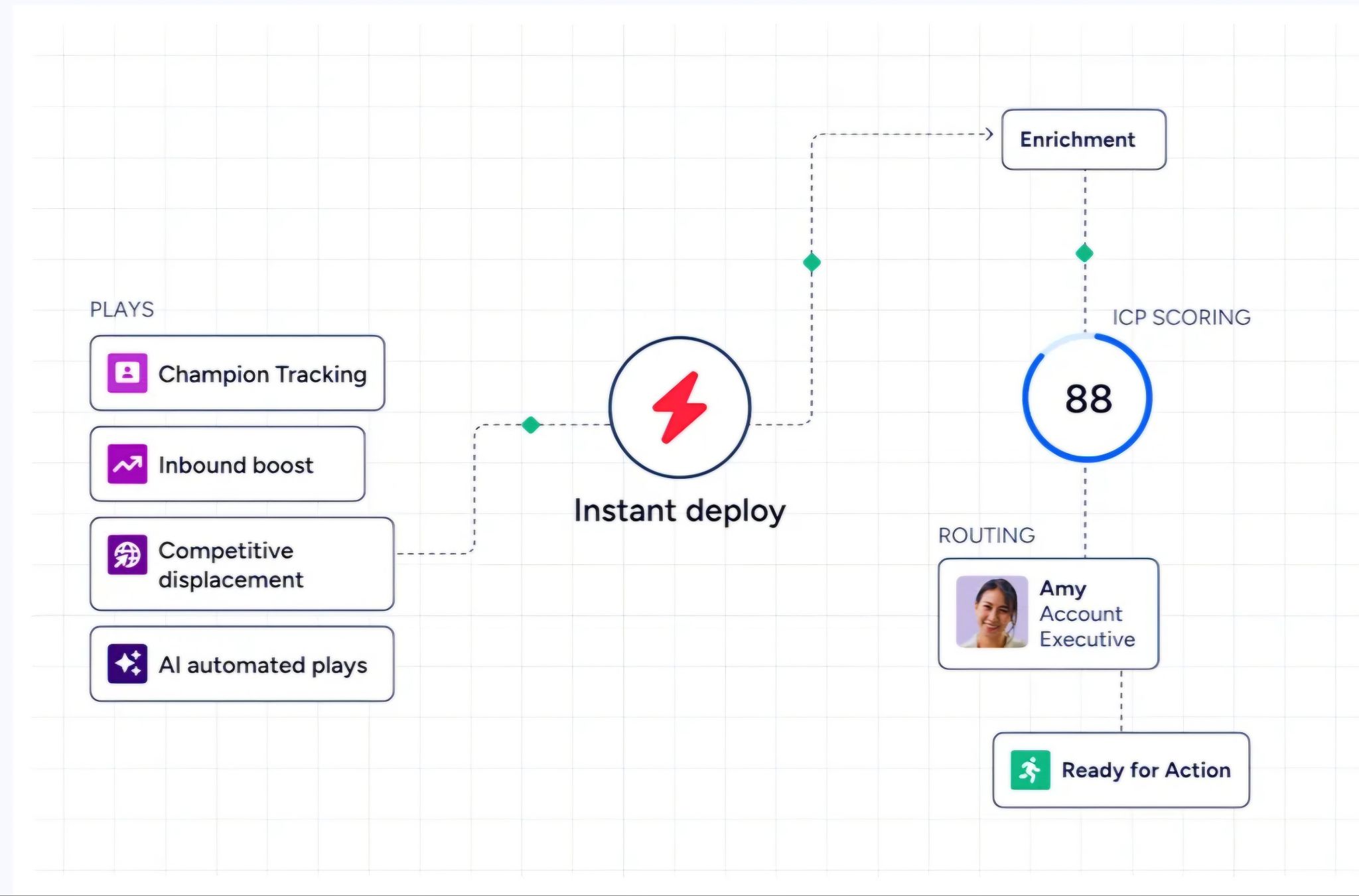
ZoomInfo focuses the UX on action.
GTM Workspace gives sellers one surface where prioritized accounts, AI-drafted outreach, and deal context converge. GTM Studio lets marketers and RevOps teams describe audiences in natural language and launch multi-channel plays without engineering tickets.
Source: ZoomInfo
ZoomInfo's 90-day structured onboarding program won the Rocketlane Golden Comet award for Best Customer Onboarding Team of 2024.
Salesforce vs. SAP vs. ZoomInfo: Which should you choose?
These three platforms solve different problems. The right choice depends on which problem is primary for your organization.
Choose Salesforce if:
Customer relationship management is your top priority
You need the deepest CRM on the market with the largest third-party ecosystem
Your sales, marketing, and service teams need a unified customer view
You want autonomous AI agents operating across customer-facing processes
You're willing to integrate with a separate ERP for back-office operations
Choose SAP if:
You need integrated ERP, supply chain, procurement, HR, and financials in one suite
Your business runs complex manufacturing, global operations, or multi-entity financial consolidation
You're already in the SAP ecosystem and want native CRM-to-ERP connectivity
Regulatory compliance and localization across 100+ countries is non-negotiable
You prioritize operational integration over CRM ecosystem breadth
Use ZoomInfo with either if:
Your revenue teams need verified B2B contact data, direct dials, and business emails to fill their pipeline
You want AI that analyzes buying signals, conversation intelligence, and CRM data to surface why deals move
You need intent data showing which accounts are actively in-market
Your CRM is only as good as the data feeding it, and you know it
You want the same intelligence accessible in your CRM, your marketing tools, and any AI agent through APIs and MCP
See how ZoomInfo powers your go-to-market with a free trial
Salesforce and SAP aren't interchangeable. Salesforce is the right choice when the customer relationship is the center of your business. SAP is the right choice when the full operational chain (from procurement through production to delivery) must be unified. Many large enterprises run both.
But regardless of which platform anchors your stack, the quality of your B2B intelligence determines how well your revenue teams use it. ZoomInfo provides that intelligence layer: the verified contacts, the buying signals, the org-chart visibility, and the intelligence that turns CRM data into closed deals.
"ZoomInfo's not just a contact data company anymore. They've built a full system of execution. GTM Intelligence works the list, writes the outreach, triggers the play, and helps drive predictable growth." (Ian Brodie, CEO & Co-Founder, Levanta)
Salesforce vs. SAP vs. ZoomInfo FAQ
What is the core difference between Salesforce and SAP?
Salesforce is a CRM-first platform built for managing customer relationships across sales, service, marketing, and commerce. SAP is an ERP-first platform designed to integrate back-office operations (finance, supply chain, procurement, manufacturing, and HR) with CRM capabilities (SAP CX) layered on top.
Salesforce excels when the customer relationship is the primary challenge. SAP excels when the full operational chain needs to be unified.
Can SAP's CRM compete with Salesforce?
SAP Sales Cloud and Service Cloud are capable, especially for companies already running SAP ERP, because they connect natively to inventory, pricing, and order data without middleware.
But Salesforce has held the Gartner Magic Quadrant Leader position for Sales Force Automation for 19 consecutive years, has a far larger third-party ecosystem with 9,000+ AppExchange apps, and offers a more intuitive user experience. Most organizations choose SAP CX for ERP integration, not because it outperforms Salesforce as a standalone CRM.
How does ZoomInfo fit with Salesforce or SAP?
ZoomInfo is not a competitor to either platform. It's a complementary data intelligence layer that integrates with both. ZoomInfo provides verified B2B contact data, buyer intent signals, org charts, and GTM intelligence that neither Salesforce nor SAP generates natively.
It connects to Salesforce through native connectors and to SAP environments through its Enterprise API and MCP server, enriching whichever CRM your organization uses.
Which platform is more expensive?
Neither publishes fully transparent pricing. Salesforce lists starting prices from $25/user/month (Starter Suite) to $550/user/month (Agentforce 1), but add-ons, premium support (30% of license fees), and partner-led implementations add significant cost.
SAP publishes no list prices; all terms are custom-negotiated, with S/4HANA migrations frequently exceeding planned budgets by more than 60%.
ZoomInfo uses consumption-based pricing with a permanent free tier and a 7-day free trial.
Which platform has better AI capabilities?
Each platform's AI solves a different problem. Salesforce Agentforce deploys autonomous agents across CRM processes, with $800M ARR and results like 85% autonomous case resolution on Salesforce's own support site.
SAP Joule operates across the full business suite with 50+ domain-specific assistants covering finance, supply chain, procurement, HR, and customer experience.
ZoomInfo's GTM Context Graph provides the external intelligence layer, unifying B2B data, CRM records, and conversation intelligence to explain why deals move or stall. The three are complementary, not competing.
How long does implementation take for each platform?
Salesforce implementations typically range from weeks to 6 months depending on scope.
SAP implementations typically take 6-12 months, with the GROW program targeting faster mid-market deployments.
ZoomInfo deploys in weeks with a structured 90-day onboarding program.
Do large enterprises need to choose between Salesforce and SAP?
Not necessarily. Many large enterprises run both: SAP for ERP, finance, supply chain, and manufacturing, and Salesforce for CRM and customer-facing operations. The trade-off is integration complexity and cost. SAP's native CRM-to-ERP connectivity avoids this, while Salesforce users connecting to SAP ERP need middleware (often MuleSoft or SAP Integration Suite).
ZoomInfo works with both configurations, delivering B2B intelligence into whichever CRM is in use.
Which platform is better for a mid-market company?
For mid-market companies focused on sales and customer engagement, Salesforce offers a faster path to value with its free CRM tier, Starter Suite, and self-service resources through Trailhead.
SAP's GROW with SAP program targets mid-market buyers new to SAP with preconfigured cloud ERP, but implementations still require partner involvement and longer timelines.
ZoomInfo Lite provides a permanent free tier with access to B2B data, making it accessible for mid-market teams building their pipeline.
