
Choosing between Salesforce vs. Vtiger for your CRM often comes down to these five questions:
Do you need an enterprise platform that scales across departments and geographies, or a focused all-in-one CRM for a smaller team?
Is your priority customization and a large app ecosystem, or getting sales, marketing, and support running quickly without dedicated IT staff?
Are you willing to invest in implementation consultants and ongoing administration, or do you need something your team can configure on its own?
How important is it that your CRM data feeds prospecting, buyer intent signals, and AI-driven outreach?
Do you need a platform that handles everything internally, or one that connects your go-to-market data across every tool your team already uses?
In short, here's what we recommend:
Salesforce is the CRM that enterprises build their operations around. With over 150,000 customers worldwide and the #1 CRM market share by IDC revenue data, it covers sales, service, marketing, commerce, and analytics more broadly than any competitor. Agentforce, its AI agent platform, deploys autonomous agents across sales, service, and marketing that handle multi-step tasks without human escalation. The tradeoff is real: pricing is complex, implementation typically requires partners, and the full value of the platform demands dedicated administrators.
Vtiger is the all-in-one CRM built for small and mid-sized businesses that need sales, marketing, and support in a single system without enterprise pricing. Its One View design gives every team the same customer record, and features like CPQ, Deal Room, and Playbooks are included at price points starting at $12/user/month. The tradeoff: a steeper learning curve than expected for advanced features, performance issues under load, and an integration ecosystem that, while broad, lacks the depth of larger platforms.
Both platforms are strong CRMs. But neither was built to answer the question that comes before every deal: who should your team be talking to, and why now? That's a different problem.
ZoomInfo is an AI-powered go-to-market platform built on a B2B data foundation of 500M contacts, 100M companies, 135M+ verified phone numbers, and 200M+ verified business emails. Its GTM Context Graph combines this data with your CRM records, conversation transcripts, and behavioral signals, processing 1.5B+ data points daily to reveal not just what happened in your pipeline, but why. ZoomInfo integrates with both Salesforce and Vtiger, feeding verified contacts, buyer intent signals, and AI-generated insights into whichever CRM you choose. For teams that want their CRM powered by intelligence rather than manual data entry, ZoomInfo is the layer that makes either platform work harder.
If powering your CRM with verified data and buyer intelligence sounds like the missing piece, see how ZoomInfo works.
Salesforce vs. Vtiger vs. ZoomInfo at a glance
Salesforce | Vtiger | ZoomInfo | |
|---|---|---|---|
Core purpose | Enterprise CRM and AI agent platform | All-in-one SMB CRM (Sales + Marketing + Support) | B2B data and go-to-market intelligence |
AI capabilities | Agentforce autonomous agents, Einstein AI scoring | Calculus AI (scoring, predictions, chatbot, content generation) | GTM Context Graph, AI-drafted outreach, buyer intent, account intelligence |
Implementation time | Weeks to 12 months depending on complexity | Hours to days for basic setup | |
Integration ecosystem | 9,000+ apps on AppExchange | 172+ marketplace partners, native CRM connectors, API and MCP access | |
Data source | Your team enters it (or integrates it) | Your team enters it (or integrates it) | 500M contacts, 100M companies, continuously verified |
Deployment | Cloud only | Cloud or self-hosted (open-source edition) | Cloud with API/MCP access |
Starting price | $25/user/mo (Starter Suite) | $0 (One Pilot); paid from $12/user/mo | Custom pricing; free tier available (ZoomInfo Lite) |
Best for | Mid-market to enterprise teams with dedicated admins | SMBs wanting unified CRM without enterprise cost | Teams that need verified buyer data, intent signals, and AI-driven prospecting |
Salesforce delivers depth that demands investment
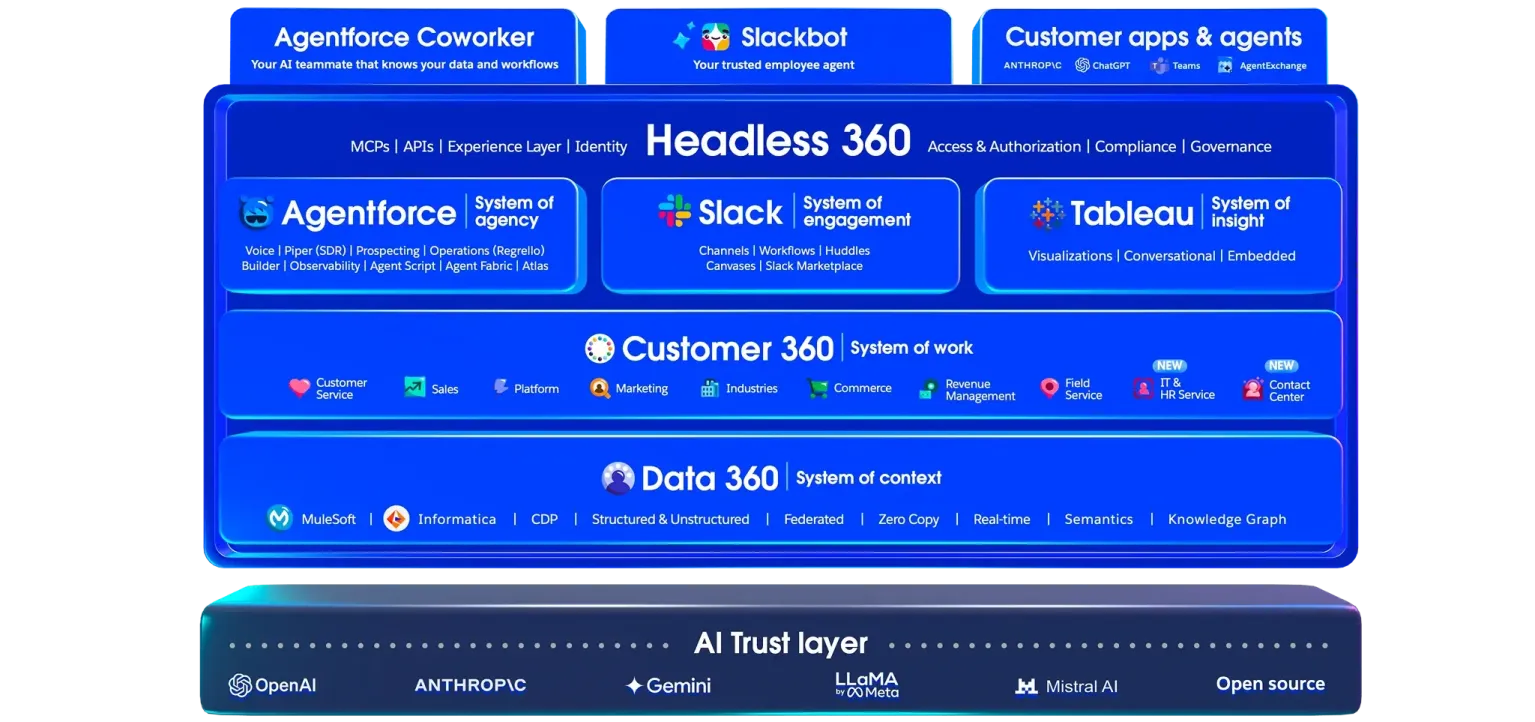
Salesforce is not just a CRM. It's an operating system for customer-facing operations. Sales Cloud, Service Cloud, Marketing Cloud, Commerce Cloud, Data Cloud, Tableau, Slack, MuleSoft, and the Salesforce Platform all sit on a single codebase, sharing customer data.
Source: Salesforce
For organizations with the resources to use it fully, this depth pays off. A service agent sees the full sales history. A marketer segments audiences using real-time commerce data. An AI agent built with Agentforce handles case deflection, prospecting, and coaching simultaneously because it accesses the same data as every human team.
But this depth has a cost beyond the license fee. Over 70% of implementations are led by partners, which means implementation quality and cost depend on your choice of consultant. Even CEO Marc Benioff acknowledged the data readiness barrier: "You have got to get your data right." The platform rewards organizations that invest in administration, data hygiene, and ongoing training. For teams without those resources, much of its power goes unused.
Vtiger packs enterprise features into an SMB package
Vtiger's pitch is straightforward: sales, marketing, and support on one shared data layer, at a price that doesn't require board approval.
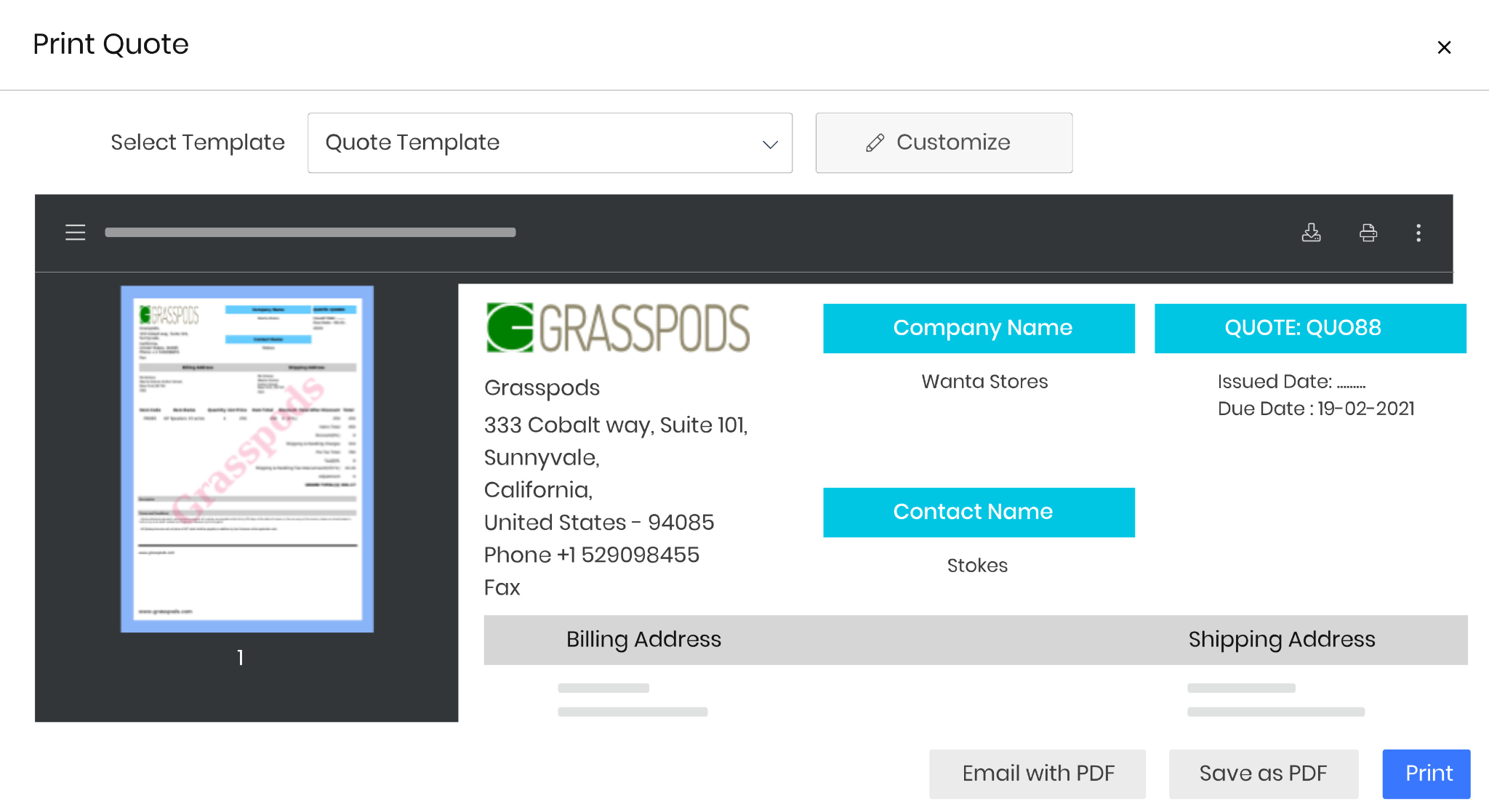
What makes Vtiger unusual for its price point is the feature set. CPQ lets reps generate dynamic quotes with approval workflows. Playbooks auto-create stage-level tasks and block deal advancement until each task is complete, turning pipeline stages from labels into enforced checkpoints. Deal Room gives buyers their own deal microsite with shared documents, a Q&A tab, and a timeline of every action. Process Designer provides drag-and-drop process automation across departments.
Source: Vtiger
These features are typically found on enterprise tiers at enterprise prices. Vtiger offers them starting at $30/user/month (One Professional, billed annually).
The One View concept is the architectural advantage. Because sales, marketing, and support all run on the same record, a support agent sees the customer's open deals and campaign history without middleware or sync jobs. A marketer sees which leads are already in active sales conversations. This eliminates the data silos that plague teams stitching together separate CRM, help desk, and email marketing tools.
Vtiger also offers what neither Salesforce nor most competitors do at its tier: a self-hosted open-source edition with over 5 million downloads. For regulated industries with data residency requirements, this is a meaningful differentiator.
The data problem neither CRM solves on its own
Both Salesforce and Vtiger are record-management systems. They organize, automate, and report on whatever data lives inside them. But neither generates the data your team needs to fill its pipeline.
A CRM can tell you a deal moved from Stage 2 to Stage 3 last Tuesday. It cannot tell you that the VP of Finance at your target account just left for a competitor, that two new VPs were hired, or that the company is actively researching your category. Those signals determine whether your outreach lands or wastes time, and CRMs were never built to capture them.
This is where ZoomInfo operates. ZoomInfo provides the intelligence layer that makes CRM data actionable. Its database of 500M contacts and 100M companies is verified through a multi-source pipeline backed by 300+ human researchers, with up to 95% accuracy on first-party data. In a Fortune 500 competitive RFP analyzing 25 million contacts across vendors, an independent consultant concluded that "no other competitor came even close."
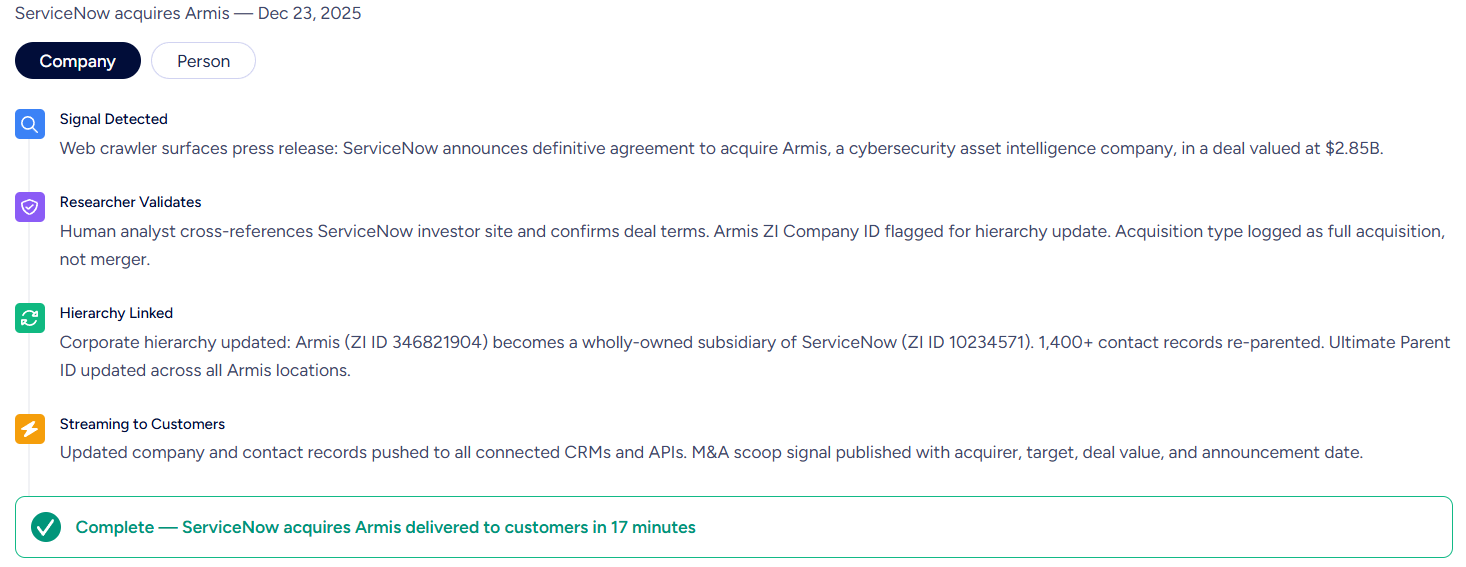
The GTM Context Graph goes beyond a static database. It combines ZoomInfo's B2B data with your CRM records, conversation intelligence, and behavioral signals to capture not just what happened in a deal, but why it happened. A CRM records the stage change. The GTM Context Graph identifies that executive sponsorship entering at this stage, combined with ROI-focused questions on the last call, matches the pattern behind closed-won deals in your segment.
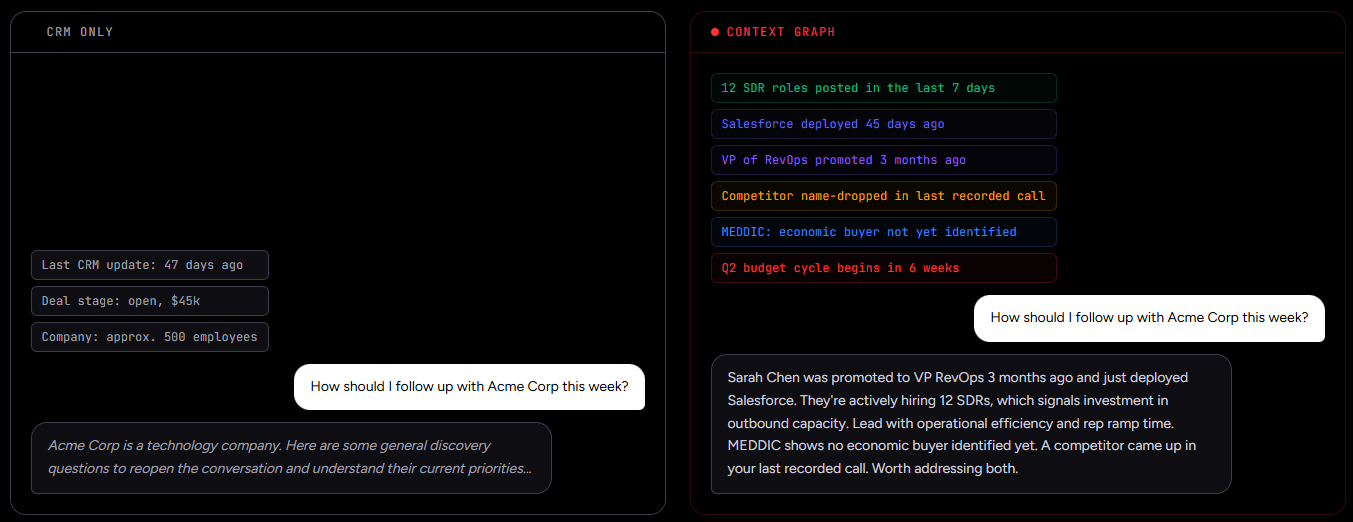
This intelligence reaches your team through three channels: GTM Workspace for sellers, GTM Studio for marketers and RevOps, and APIs and MCP for any third-party tool or custom AI agent. All three draw from the same data, so the choice of where to work never limits the quality of intelligence available.
Seismic's sales team attributed 39% of active pipeline to opportunities identified or influenced by ZoomInfo signals, with reps saving 11.5 hours per week. (Seismic case study)
For a closer look at how Salesforce and ZoomInfo compare directly as platforms, see our Salesforce vs. ZoomInfo breakdown.
AI capabilities reflect different ambitions
All three platforms invest in AI, but the applications differ.
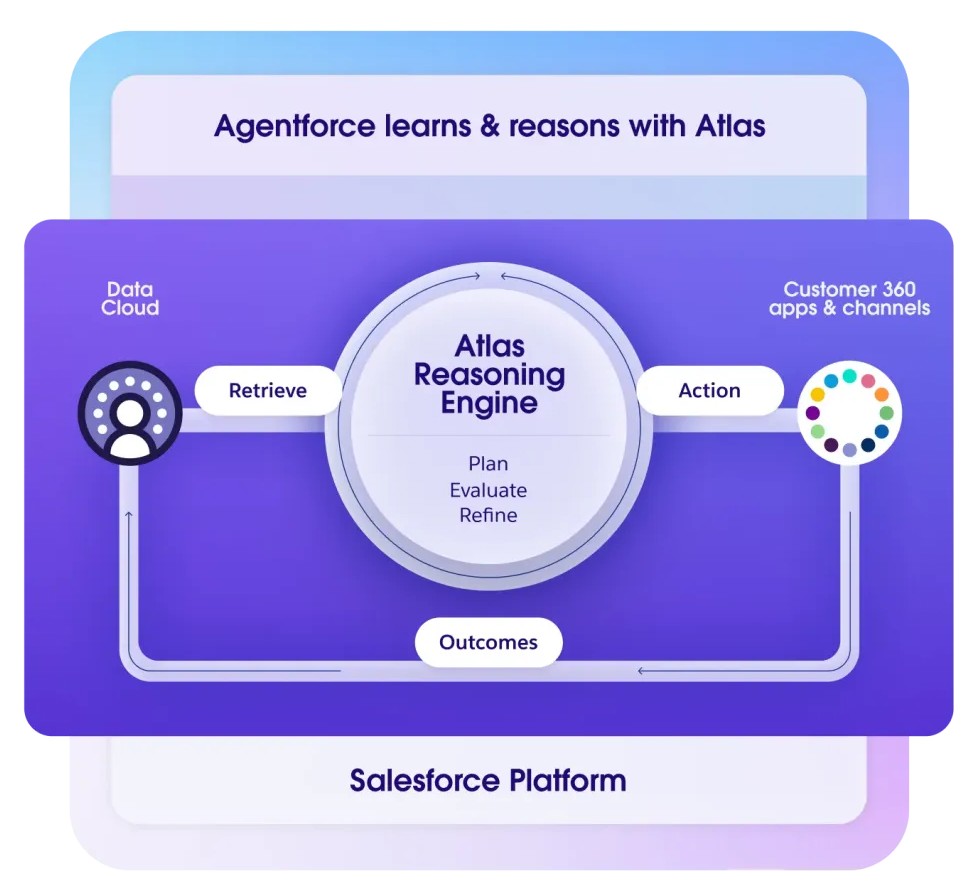
Salesforce's Agentforce is the most ambitious. Built on the proprietary Atlas Reasoning Engine, Agentforce deploys autonomous agents that handle multi-step tasks: prospecting, case resolution, campaign creation, coaching. These agents don't just suggest; they act, handling case deflection, prospecting follow-ups, and coaching autonomously. The Einstein Trust Layer provides zero data retention with LLM partners, PII masking, and toxicity detection. The limitation: Agentforce's intelligence is bounded by what's inside your Salesforce org. It cannot reason about data it has never seen.
Source: Salesforce
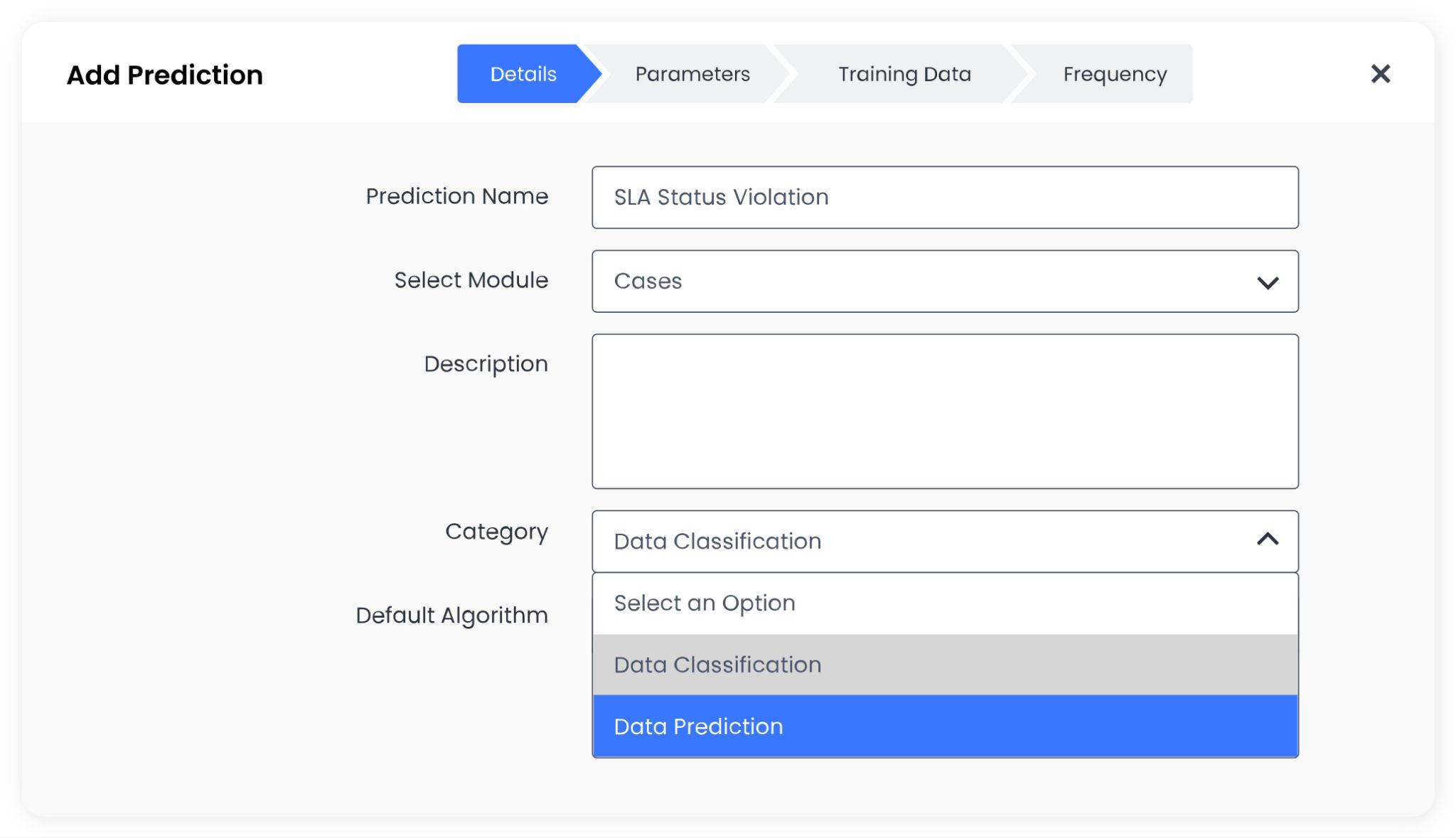
Vtiger's Calculus AI is more focused. It scores deal health, recommends the best time to contact, analyzes call quality (talk-to-listen ratio, talking speed, negative mood), flags communications needing attention, and generates email drafts. The Prediction AI Designer lets admins build classification and regression models from historical CRM data without coding. The Agent Builder supports multi-agent collaboration where specialized agents hand tasks to each other. For an SMB without data science resources, these tools surface usable intelligence from CRM activity data.
Source: Vtiger
ZoomInfo's AI operates on a different data foundation. Because the GTM Context Graph combines ZoomInfo's third-party intelligence with your first-party CRM and conversation data, its AI reasons across both. The practical difference: Salesforce AI can tell you a deal is stalling based on stage movement. Vtiger AI can flag that the rep's talk-to-listen ratio was off.
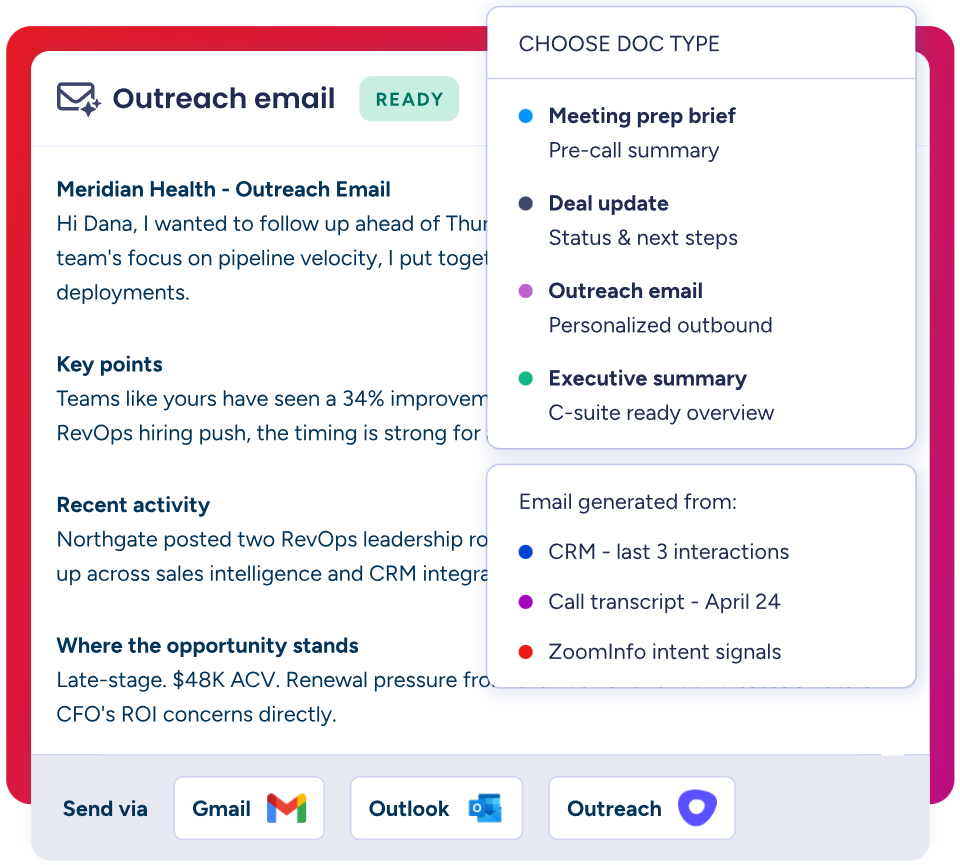
ZoomInfo AI can tell you that the CFO who joined the last call asked about six-month ROI, that the company just hired three VPs, and that this signal combination matches the pattern behind closed-won deals in your segment. GTM Workspace delivers this as AI-drafted outreach, prioritized account feeds, and one-click account briefs. GTM Studio lets marketers describe audiences in natural language and launch plays against accounts matching proven win patterns.
"It's not just the data itself. It's more about the right data at the right time to help us reach out with the right message across that full buyer journey." — Chelsea Kenyon, Senior Director of Digital Strategy, Redwood Logistics (case study)
Integration depth determines how much value you extract
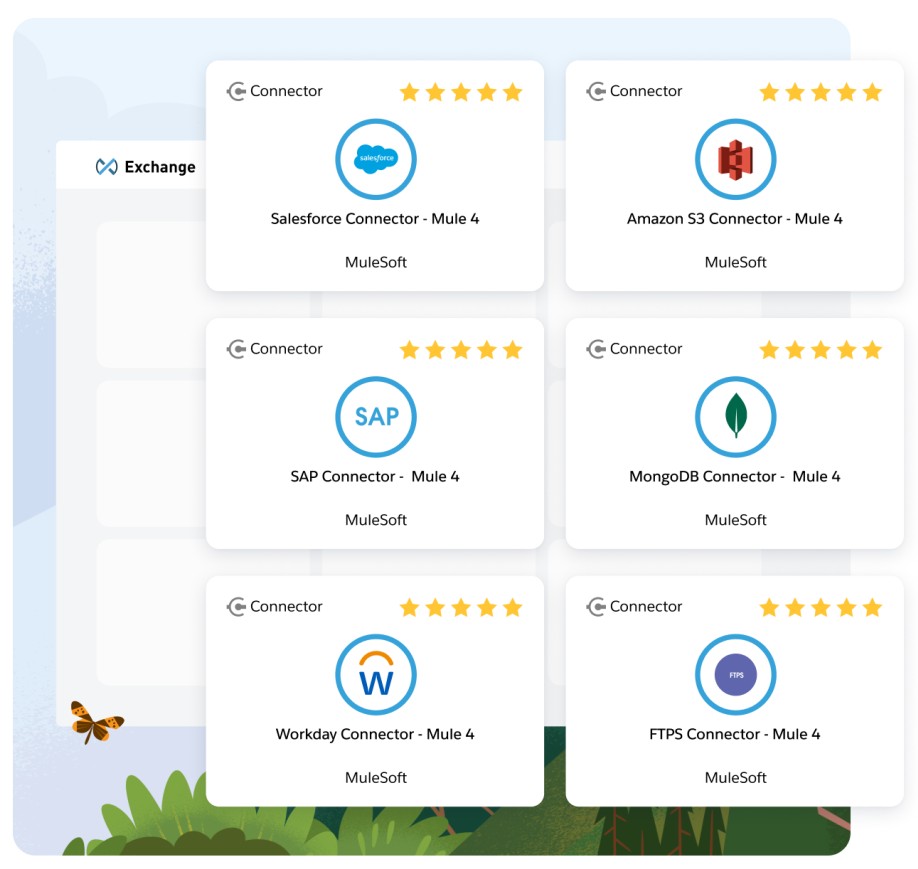
Salesforce has the largest enterprise integration ecosystem in CRM. AppExchange hosts 9,000+ apps with 14+ million installs, and 91% of customers use at least one. MuleSoft, Salesforce's integration platform, provides hundreds of pre-built connectors for enterprise systems like SAP, Oracle, and Workday. Native integrations with Google Workspace, Microsoft Outlook/Teams, and Slack are bidirectional. The API surface spans 30+ distinct APIs across REST, SOAP, GraphQL, gRPC, and event-streaming protocols. For enterprises running complex tech stacks, Salesforce ties everything together, though MuleSoft is sold separately.
Source: Salesforce
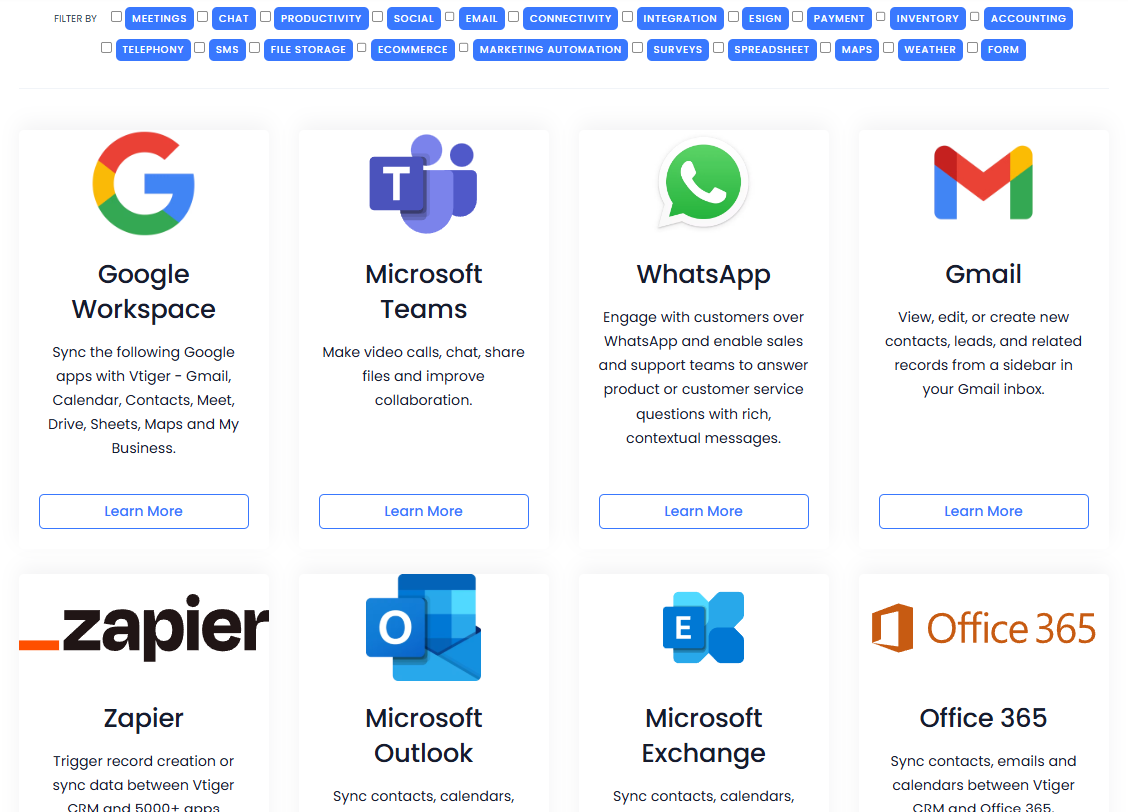
Vtiger claims 500+ integrations spanning Google Workspace, Microsoft Teams, WhatsApp, Zapier, QuickBooks, Xero, Stripe, and various telephony providers. The breadth is respectable for an SMB CRM. But G2 users note "integration limitations" and that connecting modules can be inconsistent. Native integrations vary in depth: Google Workspace and Teams are solid, while accounting and e-commerce connectors receive mixed reviews. Zapier bridges many gaps, but middleware adds cost and latency. The VTAP platform lets developers build custom REST APIs and webhooks, though without official SDKs in major languages.
Source: Vtiger
ZoomInfo integrates with both platforms directly. The Salesforce integration enriches CRM records with verified contact data, intent signals, and account intelligence. For Vtiger, ZoomInfo data flows through Zapier connectors and API integration. Beyond CRM connectors, ZoomInfo's API and MCP server expose the same intelligence to any tool, including Claude, ChatGPT, and custom AI agents. Cloud Data Cubes deliver ZoomInfo data into AWS, Snowflake, Google Cloud, and Databricks. ZoomInfo works regardless of which CRM you choose, and regardless of whether you switch CRMs later.
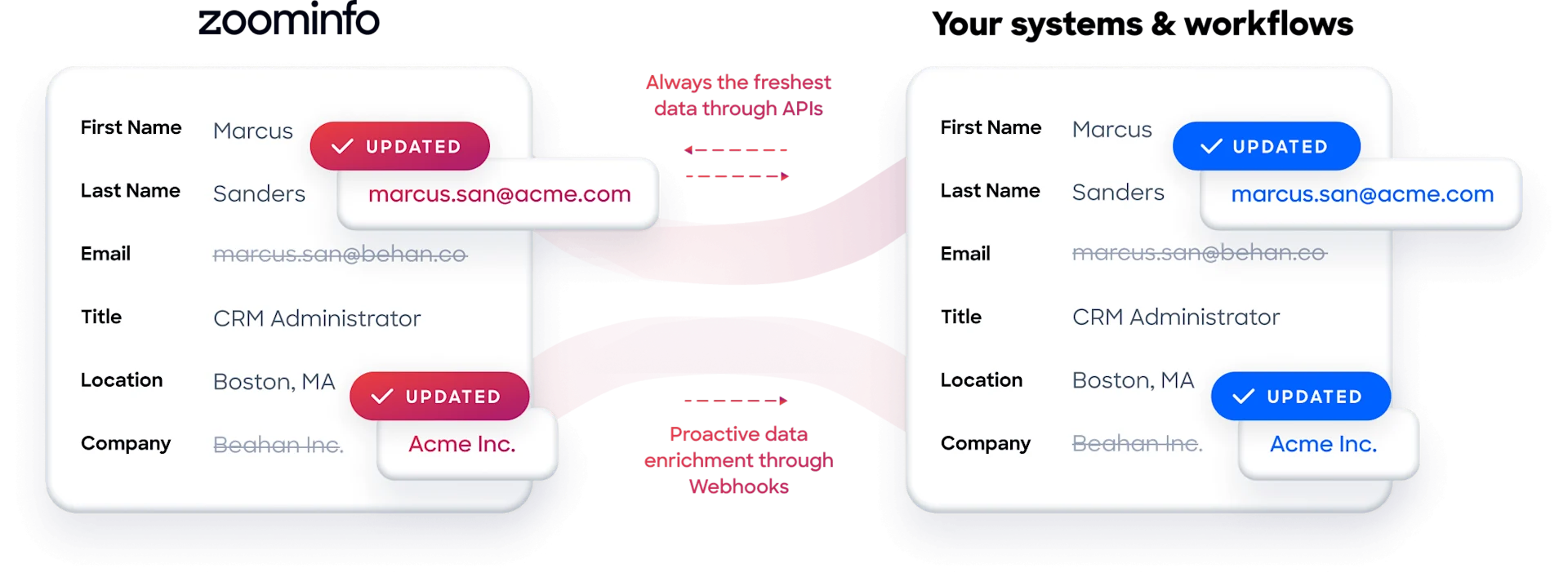
"The plug-and-play aspect of the API means I can integrate it very easily into any process and get information at a moment's notice." — Jerry Wilson, Senior Marketing Intelligence Analyst, BDO Canada (case study)
Scalability follows different curves
Salesforce was built for scale from the start. Hyperforce enables regional data residency across public cloud infrastructure. The platform serves companies like PepsiCo, FedEx, and Volkswagen. 99.99% historical uptime on Commerce Cloud. Industry clouds cover 17 verticals with vertical-specific data models. If your company grows from 50 to 5,000 employees, Salesforce will not be the bottleneck.
Vtiger scales well for its target market. Unlimited users and records start at One Professional ($30/user/month). But user reviews consistently note that limitations appear "when businesses start scaling, automating processes, or integrating with other systems". Performance and speed issues are a recurring complaint as data volumes grow. For a company growing from 10 to 200 employees, Vtiger handles the transition. Beyond that, the architecture starts to strain.
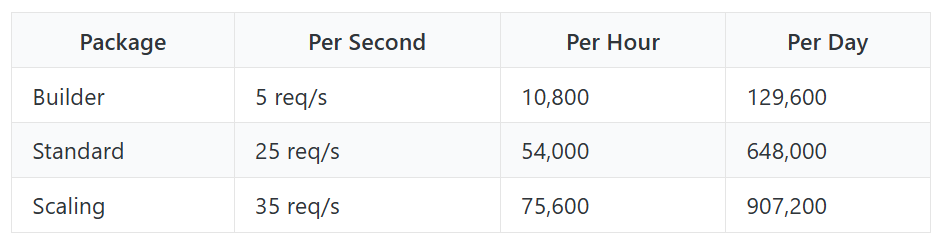
ZoomInfo scales by data volume and consumption, not user count. Enterprise customers include Adobe, Microsoft, Snowflake, and JPMorgan. Snowflake feeds 70+ data fields covering company attributes and technographics into its account propensity scoring model, achieving 90% higher opportunity open rates on top-scoring accounts. The API tier system (Builder, Standard, and Scaling packages) accommodates teams from startup to enterprise without architectural changes.
Support and learning curves reflect different audiences
Salesforce offers three support tiers: Standard (free, community and docs only), Premier (30% of net license fees, 1-hour response for business-impacting issues), and Signature (custom pricing, dedicated CSM, 15-minute response for critical issues).
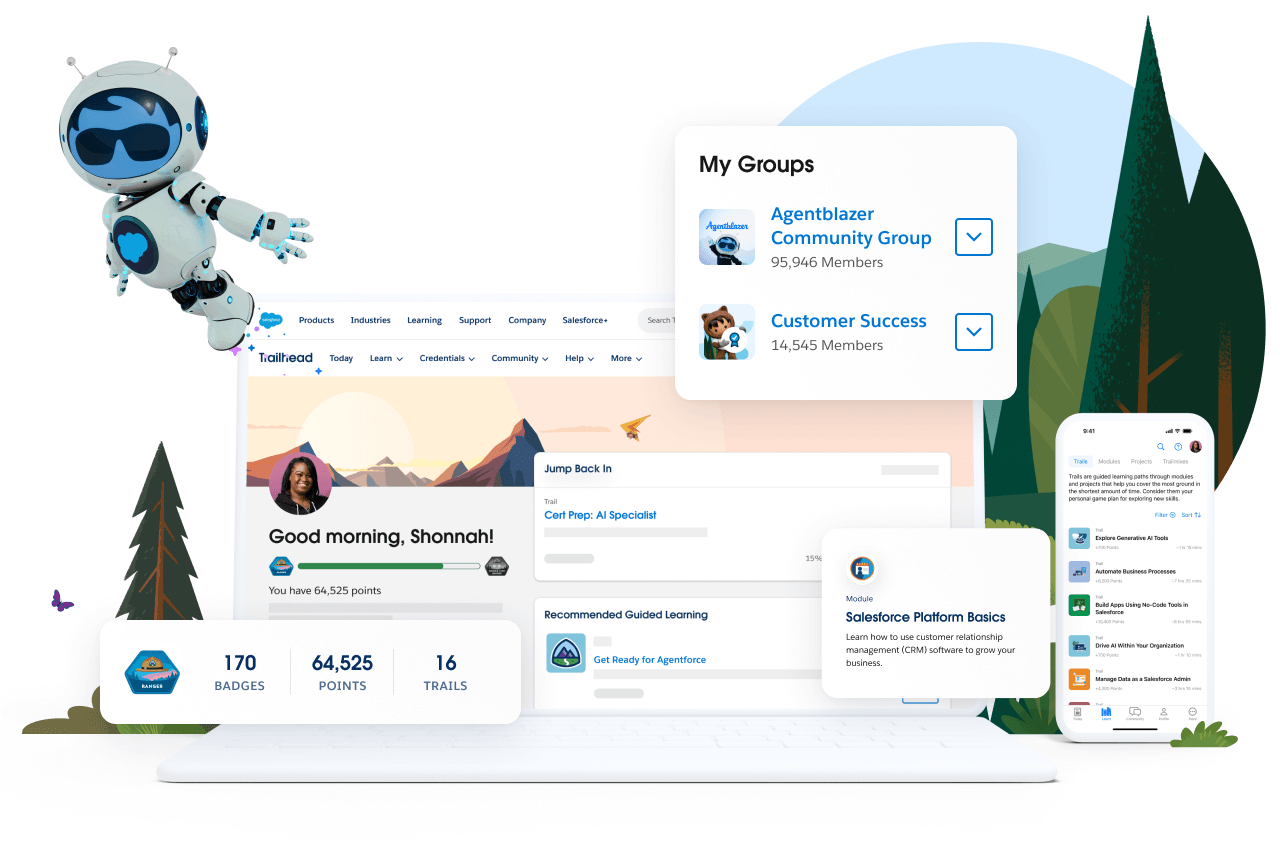
Trailhead provides 1,500+ free learning badges and 60+ certifications. The Trailblazer Community spans 20 million members. These resources are excellent, but they exist because the learning curve requires them. Meaningful Salesforce configuration demands trained administrators. Simple deployments (Sales Cloud for a small team) can be ready in weeks. Multi-cloud enterprise deployments take 3–12 months.
Source: Trailhead
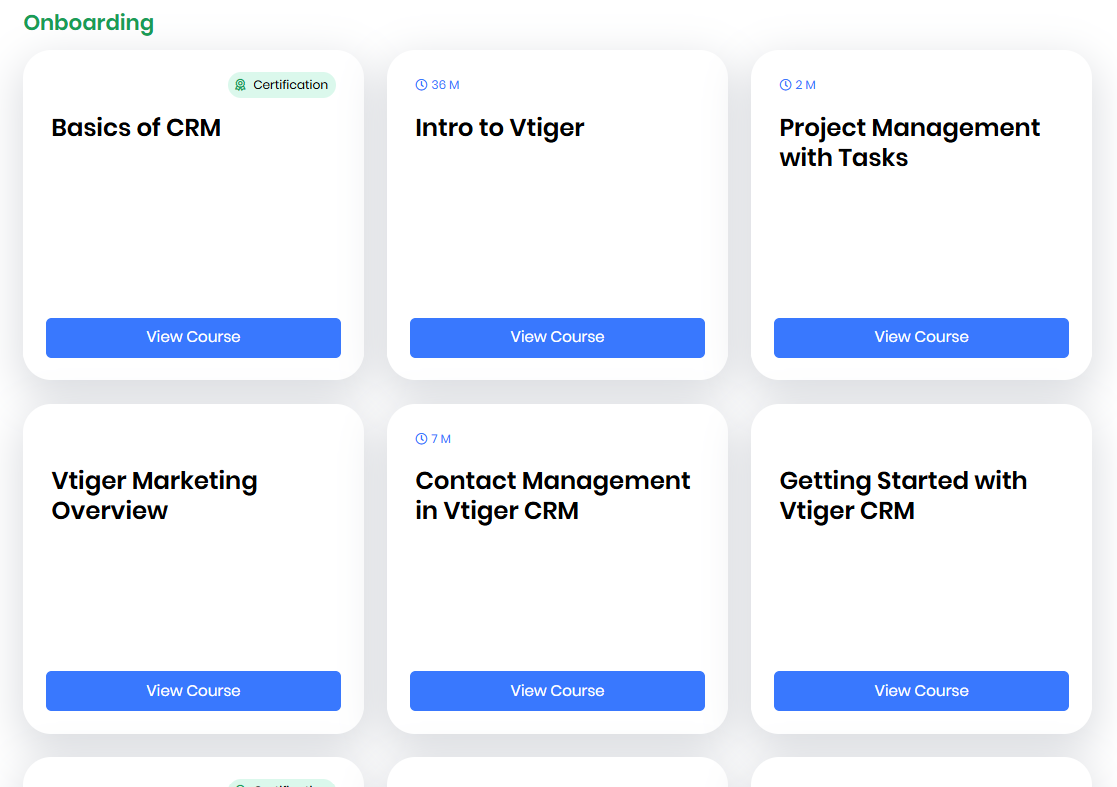
Vtiger includes 24x7 email, phone, and live chat support free for all paid editions. Premium Support (25% of subscription, 50+ user minimum) adds a dedicated account manager and subject matter expert access. Vtiger Academy offers free courses, and Kickstart implementation provides turnkey setup. The platform markets itself as easy to use, but the most consistent complaint across review platforms is that advanced configuration is "pretty complicated" and the system "requires a dedicated person to be a Vtiger expert". Basic setup is fast. Extracting the full value from Playbooks, Process Designer, and Calculus AI takes longer.
Source: Vtiger
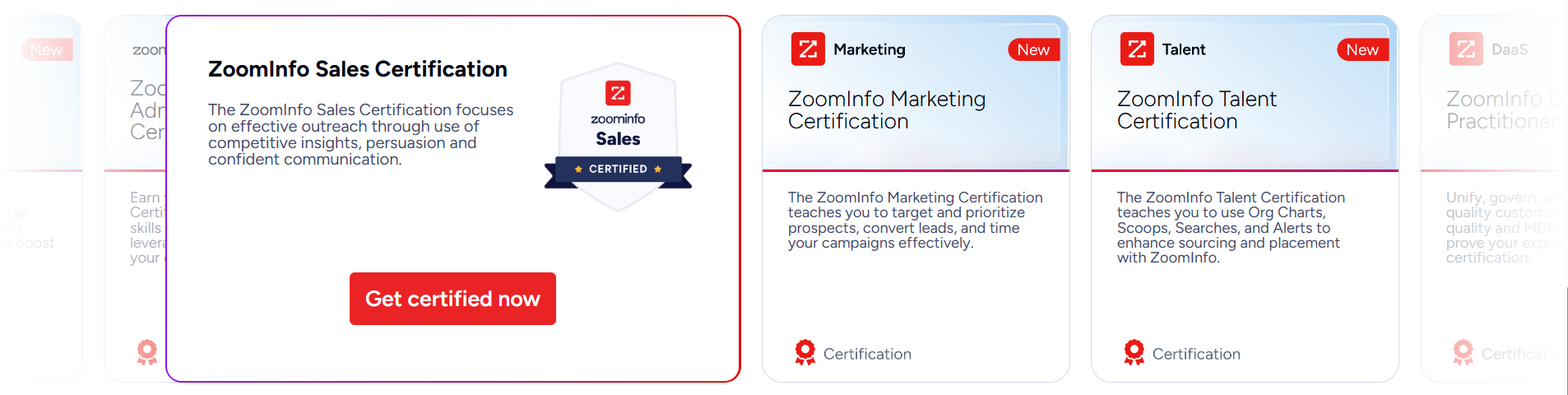
ZoomInfo redesigned its onboarding from 30 to 90 days, structured across planning, implementation, education, and adoption, producing a 25% improvement in customer satisfaction scores. ZoomInfo University provides role-specific learning paths and certifications. Direct support is available via the Help Center, phone, and professional services through ZoomInfo Labs. Because ZoomInfo is an intelligence layer rather than a system-of-record CRM, adoption is less about migrating workflows and more about integrating enriched data into existing processes.
Security and compliance for regulated industries
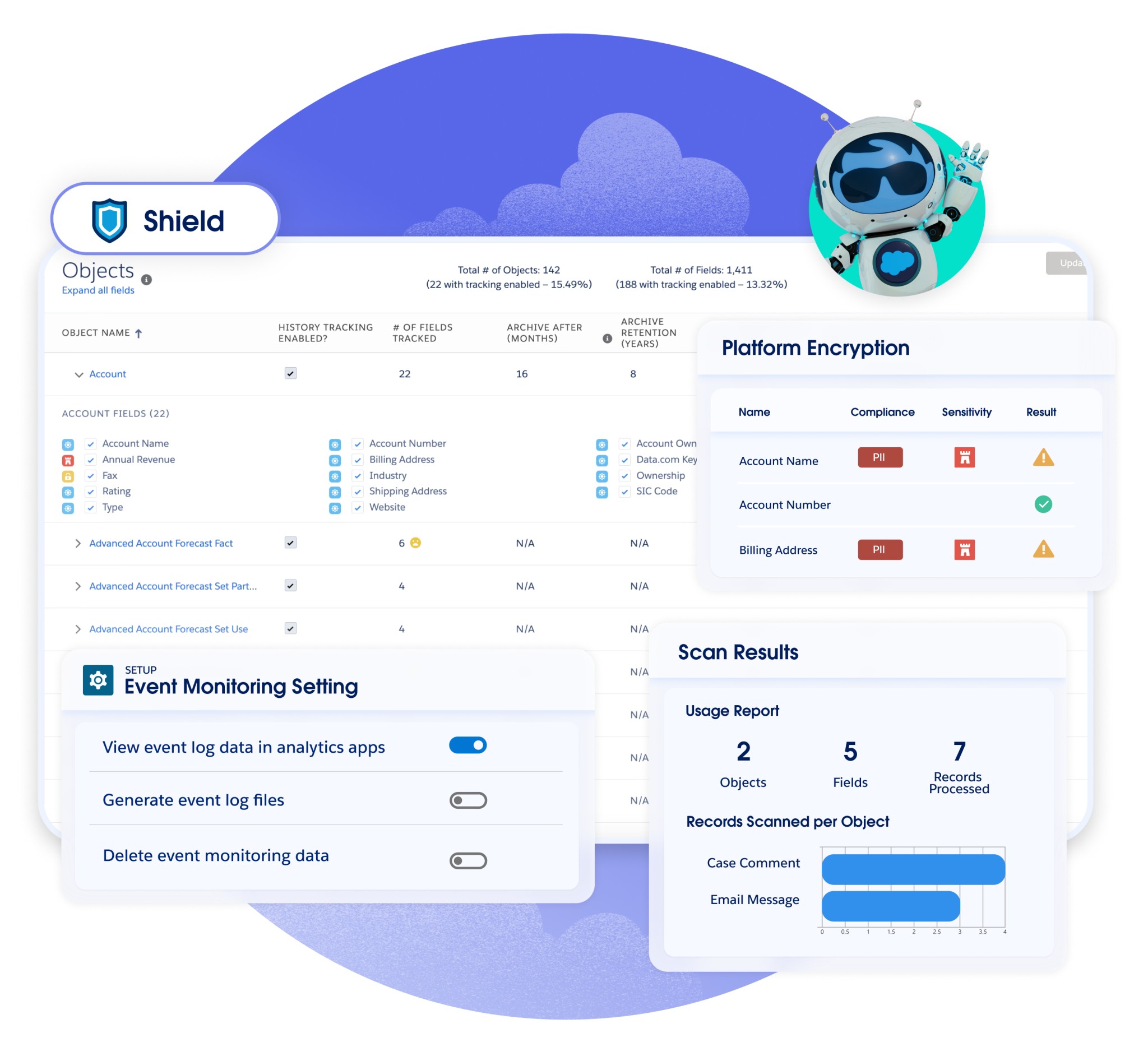
Salesforce holds ISO 27001/27017/27018, SOC 1/2/3, FedRAMP (Government Cloud), and HITRUST certifications. Salesforce Shield (premium add-on) provides event monitoring, platform encryption with BYOK, and field audit trail. The Einstein Trust Layer ensures zero data retention with LLM partners. Hyperforce supports regional data residency. For enterprises in healthcare, financial services, or government, Salesforce's compliance stack is among the broadest in enterprise software.
Source: Salesforce
Vtiger holds ISO 27001 and ISO 27701 certifications and provides a GDPR compliance portal. Infrastructure runs on AWS, Oracle Cloud, and Azure, with data centers across eight regions. Encryption uses TLS 1.2/1.3 in transit and AES-256 at rest. Each customer instance is isolated with its own allocated space. The open-source self-hosted edition lets organizations keep all data on their own infrastructure, a real advantage for industries with strict data residency requirements. No SOC 2 Type II certification was confirmed for Vtiger itself (only for its infrastructure providers).
ZoomInfo maintains ISO 27001, ISO 27701, SOC 2 Type II, TRUSTe GDPR, and TRUSTe CCPA certifications, all renewed annually. It is a registered data broker in California and Vermont. A dedicated Trust Center provides real-time compliance documentation. For B2B data, this compliance infrastructure is built into the data layer itself, not added after the fact.
Pricing reveals different philosophies
Salesforce uses a multi-tier, multi-cloud pricing model that rewards scale and punishes unprepared buyers. Sales Cloud tiers run from $25/user/month (Starter Suite) to $550/user/month (Agentforce 1). But the sticker price is the beginning, not the end. Agentforce consumption costs extra at Enterprise and Unlimited tiers ($500 per 100,000 Flex Credits or $2 per conversation). Premier Support adds 30% of net license fees. Data Cloud credits are separate. Marketing Cloud starts at $1,500/org/month. A 6% price increase hit Enterprise and Unlimited tiers in August 2025. Implementation costs routinely run 100–150% of annual license fees.
Vtiger is transparent by comparison. Five tiers from $0 to $50/user/month (billed annually). The free One Pilot plan supports up to 10 users and 3,000 records. The structural advantage is the dual user-type system: Standard Users get full access to all five apps, while Single App Users get one app at a lower price ($20–$38/user/month depending on tier). This lets teams mix access levels without overpaying for features individuals don't need. The catch: Calculus AI ($12/user/month), CPQ ($8/user/month), Field Sales ($4/user/month), and Booster Packs for workflows, custom fields, and storage can quietly inflate the bill.
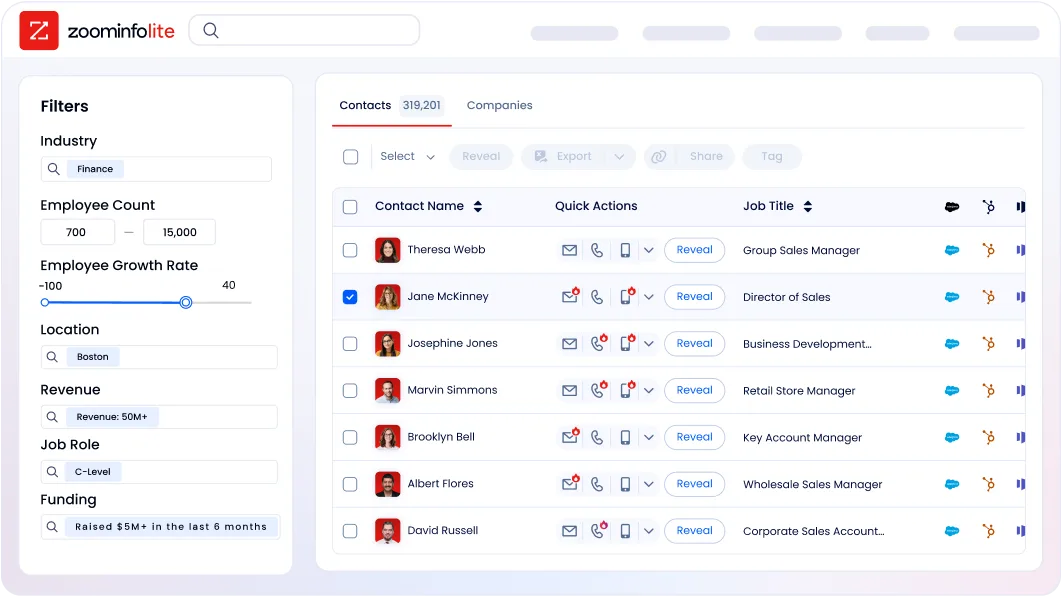
ZoomInfo uses consumption-based pricing with no publicly listed prices. Credits determine export volume (1 credit = 1 contact or company profile exported), and pricing scales based on usage patterns, features, and contract length. Two free entry points exist: ZoomInfo Lite (permanent free tier with 10 monthly export credits and access to the B2B database) and a 7-day free trial of the full platform.
The comparison that matters: a 20-person sales team on Vtiger One Professional ($30/user/month) pays $7,200/year. The same team on Salesforce Enterprise ($175/user/month) pays $42,000/year before add-ons. ZoomInfo sits alongside either CRM as the intelligence layer, and its ROI is measured differently: not by the license fee, but by the pipeline it generates and the time it saves.
Salesforce vs. Vtiger vs. ZoomInfo: Which should you choose?
The right choice depends on where your organization sits and what problem you're trying to solve first.
Choose Salesforce if:
You have the budget and internal resources for enterprise CRM
Cross-department data unification (sales, service, marketing, commerce) is a priority
You need industry-specific solutions across regulated verticals
Your team can dedicate administrators to ongoing platform management
AI-powered autonomous agents for service and sales are on your roadmap
Choose Vtiger if:
You're an SMB that needs sales, marketing, and support in one system
Budget matters and you want enterprise features at SMB pricing
Your team can configure the CRM without dedicated IT staff
Self-hosted deployment is important for data residency compliance
You value a unified customer record across all departments without middleware
Use ZoomInfo with either CRM if:
Your pipeline depends on reaching the right buyers at the right time
You need verified contact data, direct dials, and business emails that work
Buyer intent signals and account intelligence would change how your team prioritizes
You want AI that reasons across your deals, not just your CRM fields
Your data strategy should work across tools, not lock into one platform
Ready to see how ZoomInfo powers your CRM with intelligence? Start free today.
Salesforce and Vtiger each solve the CRM problem well for their respective audiences. Salesforce gives enterprises the platform to build their entire customer operation on. Vtiger gives SMBs the same unified view without the enterprise price tag. But the question most teams should ask first isn't which CRM to buy. It's whether their CRM is powered by the data and intelligence that actually drive revenue. ZoomInfo answers that question for both platforms, connecting your CRM to B2B data, the GTM Context Graph, and access through APIs, MCP, and native products that meet your team wherever they work.
Salesforce vs. Vtiger vs. ZoomInfo FAQ
What is the core difference between Salesforce, Vtiger, and ZoomInfo?
Salesforce is an enterprise CRM platform with cross-department capabilities across sales, service, marketing, commerce, and analytics, backed by autonomous AI agents. Vtiger is an all-in-one SMB CRM that unifies sales, marketing, and support on a single data layer at a fraction of the enterprise price. ZoomInfo is a B2B data and go-to-market intelligence platform that provides verified buyer data, intent signals, and AI-driven insights to power prospecting and pipeline generation. ZoomInfo integrates with both CRMs rather than replacing them.
Which platform is most affordable for a small sales team?
Vtiger is the most affordable CRM option, with a free plan (One Pilot) supporting up to 10 users and paid plans starting at $12/user/month. Salesforce's Starter Suite begins at $25/user/month but escalates as you add features, with Enterprise at $175/user/month plus add-ons. ZoomInfo offers a permanent free tier (ZoomInfo Lite) with 10 monthly export credits for basic prospecting, with paid plans custom-quoted based on usage.
Can ZoomInfo work with both Salesforce and Vtiger?
Yes. ZoomInfo has a native Salesforce integration for CRM enrichment, lead routing, and account intelligence. For Vtiger, data flows through Zapier connectors and API integration. ZoomInfo also provides APIs and an MCP server that expose the same data and intelligence to any tool, making it CRM-agnostic by design.
Which platform has the strongest AI capabilities?
Each excels in a different area. Salesforce's Agentforce deploys autonomous agents that handle multi-step tasks across sales, service, and marketing. Vtiger's Calculus AI provides deal scoring, call quality analysis, and no-code predictive model building suited to SMB teams. ZoomInfo's AI reasons across both third-party market intelligence and your first-party CRM data via the GTM Context Graph, generating account insights, buyer intent signals, and AI-drafted outreach that reflect patterns across thousands of deals.
Which CRM is easier to set up and maintain?
Vtiger is easier for basic setup, with teams able to get running in hours using templates and drag-and-drop configuration. However, advanced features like Playbooks and Process Designer require dedicated learning. Salesforce requires the most investment in setup and ongoing administration, with enterprise deployments taking 3 to 12 months and typically requiring implementation partners. ZoomInfo deploys in weeks since it layers onto existing CRM workflows rather than replacing them.
Does Vtiger offer anything Salesforce doesn't?
Vtiger offers a self-hosted open-source edition, which Salesforce does not. This gives organizations with strict data residency or regulatory requirements the option to keep all CRM data on their own infrastructure. Vtiger also includes a free forever plan and a dual user-type pricing system that lets teams mix full-access and single-app users to reduce costs.
How does ZoomInfo's data compare to what's inside a CRM?
A CRM contains whatever your team enters and whatever integrations feed into it. ZoomInfo maintains an independently verified database of 500 million contacts and 100 million companies, with 135 million+ verified phone numbers and 200 million+ verified business emails, updated continuously by automated systems and 300+ human researchers. The GTM Context Graph then combines this external intelligence with your internal CRM data to surface patterns and buying signals that neither data source reveals alone.
Which platform is best for regulated industries?
Salesforce has the broadest compliance stack for regulated enterprises, including FedRAMP for government, HITRUST, and Salesforce Shield for encryption and audit trails. Vtiger's self-hosted open-source edition provides full data sovereignty for organizations that need complete infrastructure control. ZoomInfo holds ISO 27001, ISO 27701, SOC 2 Type II, and TRUSTe GDPR/CCPA certifications, with compliance built into the data collection layer.
