
Choosing between Salesforce and Zoho for your CRM often comes down to five questions:
Are you willing to pay four times more per user for the market leader, or can a less expensive platform deliver what your team actually needs?
Do you need thousands of third-party integrations, or would a single vendor covering CRM, finance, HR, and marketing simplify your operations?
Is your team prepared to hire dedicated CRM administrators, or do you need a platform your existing staff can configure?
How important is contract flexibility? Do you want month-to-month billing, or are annual commitments acceptable?
Does your sales team have the B2B contact data, intent signals, and buying committee intelligence needed to fill your CRM with qualified pipeline?
In short, here's what we recommend:
Salesforce is the CRM that 150,000+ companies run their business on. It holds the #1 CRM market share by IDC revenue, offers 9,000+ apps on AppExchange, and has invested in AI through Agentforce, where AI agents handle customer interactions across sales, service, and marketing.
However, Salesforce deployments start at $175/user/month before add-ons, over 70% of implementations require paid partners, and the platform demands dedicated administrators.
Zoho delivers comparable CRM features at a fraction of the cost. At $40/user/month for the Enterprise tier, Zoho CRM includes lead scoring, workflow automation, territory management, and CPQ capabilities that cost more on competing platforms.
Its ecosystem of 55+ integrated applications from a single vendor means teams can run CRM, finance, HR, and marketing without stitching together third-party tools. The trade-off: Zoho requires upfront configuration, customer support quality varies by tier, and the brand carries less weight in enterprise procurement conversations.
Both are capable CRM platforms. But a CRM only manages the customer relationships you already have. For B2B sales teams, the harder problem is finding the right buyers, understanding when they're ready to purchase, and knowing who influences the decision. Neither Salesforce nor Zoho was built to solve that problem.
ZoomInfo is a B2B data and intelligence platform that gives sales teams the prospect data, buying signals, and deal context that neither CRM generates on its own. Its B2B dataset covers 500M contacts and 100M companies, 135M+ verified phone numbers, and 200M+ verified business emails.
ZoomInfo's GTM Context Graph combines this foundation with your CRM records, conversation transcripts, and behavioral signals to show not just what's happening in your pipeline, but why deals move or stall. Sellers work from GTM Workspace, marketers and RevOps build plays in GTM Studio, and API and MCP access connects the same data to any other tool in your stack, including both Salesforce and Zoho.
If building a CRM stack that generates pipeline, not just manages it, sounds right, see how ZoomInfo works.
Salesforce vs. Zoho vs. ZoomInfo at a glance
Salesforce | Zoho CRM | ZoomInfo | |
|---|---|---|---|
Primary function | Enterprise CRM platform | CRM + business application suite | B2B data and intelligence |
Starting price (CRM) | $25/user/mo (Starter); $175/user/mo (Enterprise) | $14/user/mo (Standard); $40/user/mo (Enterprise) | Consumption-based pricing; free Lite tier available |
Free plan | Up to 2 users | Up to 3 users | ZoomInfo Lite (permanent, no time limit) |
AI capabilities | Agentforce (autonomous agents) | Zia (predictive, generative, agentic) | GTM Context Graph + AI agents |
App ecosystem | 1,100+ integrations + 55+ native apps | 120+ integrations + API/MCP | |
B2B contact database | None (CRM only) | None (CRM only) | 500M contacts, 200M+ verified emails |
Buyer intent data | None native | None native | |
Contract flexibility | Annual required (most plans) | Month-to-month available | Annual contracts standard |
Implementation | Self-serve or $200/hr Jumpstart | ||
Best for | Enterprises needing depth and customization | SMBs and mid-market seeking value | B2B teams needing prospect data and intelligence |
The CRM philosophies point in different directions
Salesforce and Zoho both sell CRM software, but they built their companies on opposing philosophies.
Salesforce was founded in 1999 on the idea that enterprise software should live in the cloud.
Twenty-seven years later, it's a $41.5 billion revenue company that serves global enterprises and grows through acquisition. Tableau ($15.7B), Slack ($27.7B), MuleSoft ($6.5B), and Informatica (~$8B) were all purchased and folded into the platform. The result is breadth, and complexity to match. Salesforce has acknowledged being "historically built for large enterprises."
Zoho took the opposite path.
Founded in 1996, the company has never taken venture capital, never conducted an IPO, and has never made an acquisition. Every product in the 55+ app suite was built in-house. As the company states: "Our decision not to take venture capital, not to go for an IPO, and not to be acquired has given us immense freedom."
That freedom shows up in pricing: Zoho can offer enterprise features at mid-market prices because it doesn't need to service investor returns or amortize billion-dollar acquisitions.
These origins shape everything: how each product is priced, how fast you can deploy it, and who it's really built for.
Salesforce leads in ecosystem and enterprise depth
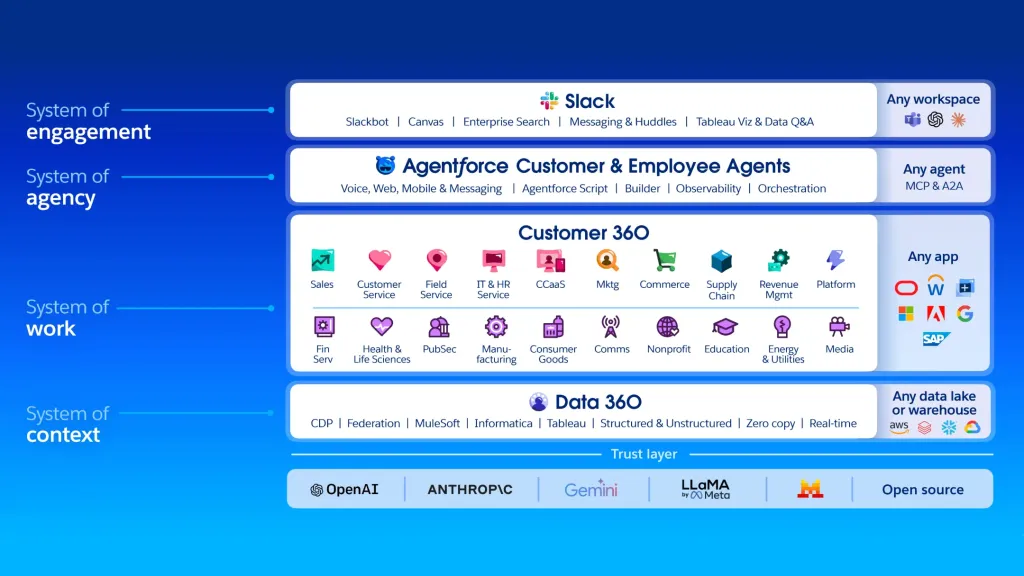
Source: Salesforce
Salesforce's advantage is its ecosystem.
9,000+ partner apps with 14 million installs and 91% of customers using at least one AppExchange app mean whatever your business needs, someone has probably built it for Salesforce already.
The platform's depth extends to 17 industry-specific clouds with specialized data models for financial services, healthcare, manufacturing, and retail. These industry solutions generated $6.6 billion in ARR, growing nearly 20% year over year.
For sales teams specifically, Sales Cloud offers pipeline management, deal insights, conversation intelligence, revenue lifecycle management (CPQ through billing), and partner relationship management. Salesforce has held the Gartner Magic Quadrant Leader position for SFA for 19 consecutive years.
The advantage for enterprises is that Sales Cloud, Service Cloud, Marketing Cloud, and Commerce Cloud all share customer data. A service agent sees the full sales history. A marketer targets based on support interactions. This cross-cloud visibility is difficult to replicate by combining point solutions.
But that depth carries an administrative burden. Salesforce configuration requires trained administrators. The company offers Trailhead with 1,500+ badges and 6+ million learners to address this, but the learning curve is real. Implementation timelines range from weeks for simple Sales Cloud setups to 3-12 months for multi-cloud deployments.
Zoho wins on pricing and single-vendor simplicity
Zoho CRM's Enterprise tier costs $40/user/month.
Salesforce's Enterprise tier costs $175/user/month.
For a 50-person sales team, that's $24,000/year versus $105,000/year, an $81,000 annual difference before implementation costs, add-ons, or support plans.
The price gap widens when you account for what each tier includes. Zoho's Enterprise tier comes with predictions and recommendations (Zia), territory management, journey orchestration, custom functions, and customer portals.
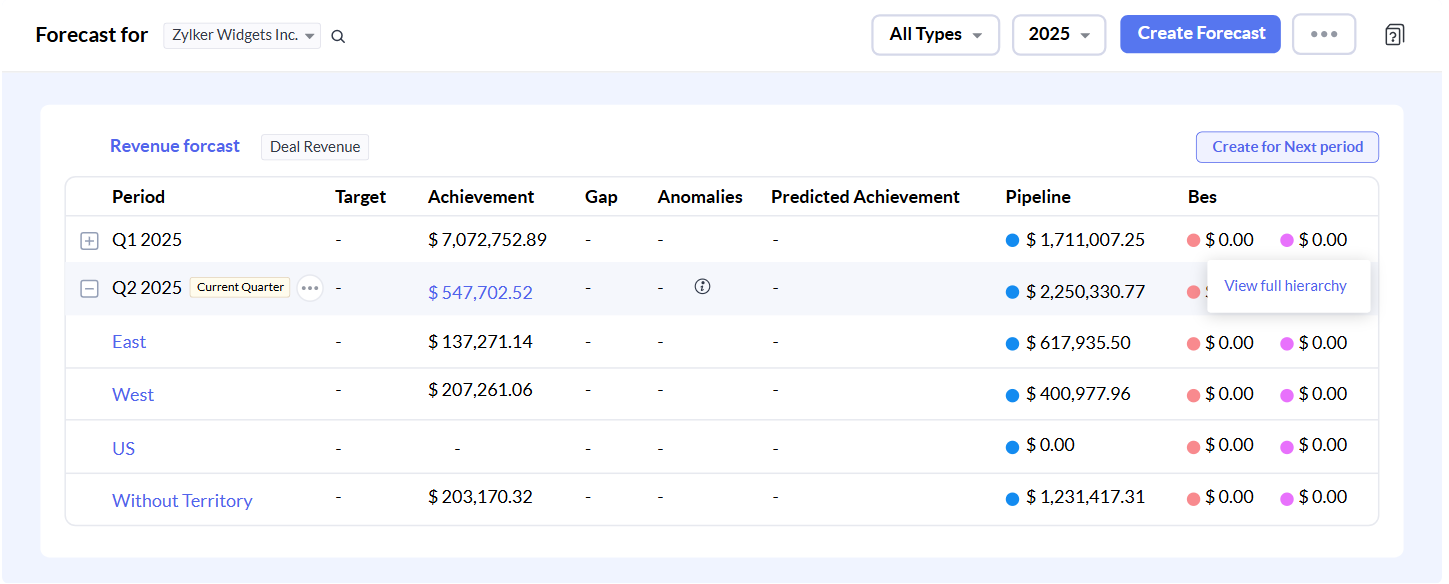
Source: Zoho
Getting equivalent features on Salesforce means Enterprise edition plus add-ons for Agentforce ($125/user/month), digital engagement ($75/user/month), and potentially Premier Support (30% of net license fees).
Beyond CRM pricing, Zoho's single-vendor model provides a cost advantage. Zoho One bundles 50+ applications (CRM, email, finance, HR, project management, analytics) at a flat per-employee rate.
Instead of paying separate vendors for each function and building integrations between them, teams get a pre-integrated suite where a closed deal flows automatically from CRM to Zoho Books for invoicing and Zoho Desk for support onboarding.
Contract flexibility adds to the appeal. Zoho explicitly positions against "predatory business practices and aggressive, multi-year contracts", offering month-to-month billing on all plans. Salesforce requires annual contracts for most tiers above Starter.
The trade-off for this value is brand perception. Zoho has been recognized in Gartner's Magic Quadrant for 15 consecutive years, but as a Visionary, not a Leader. In enterprise procurement cycles where buying committees default to established vendors, Zoho sometimes gets shortlisted late or not at all.
AI comparison: Agentforce vs. Zia
Both platforms bet on AI, but their approaches differ.
Salesforce's Agentforce centers on AI agents.
Built on the Atlas Reasoning Engine, Agentforce agents handle lead qualification, customer service, and sales coaching without constant human oversight. Salesforce reports its own support site resolves 85% of requests without human escalation using Agentforce.
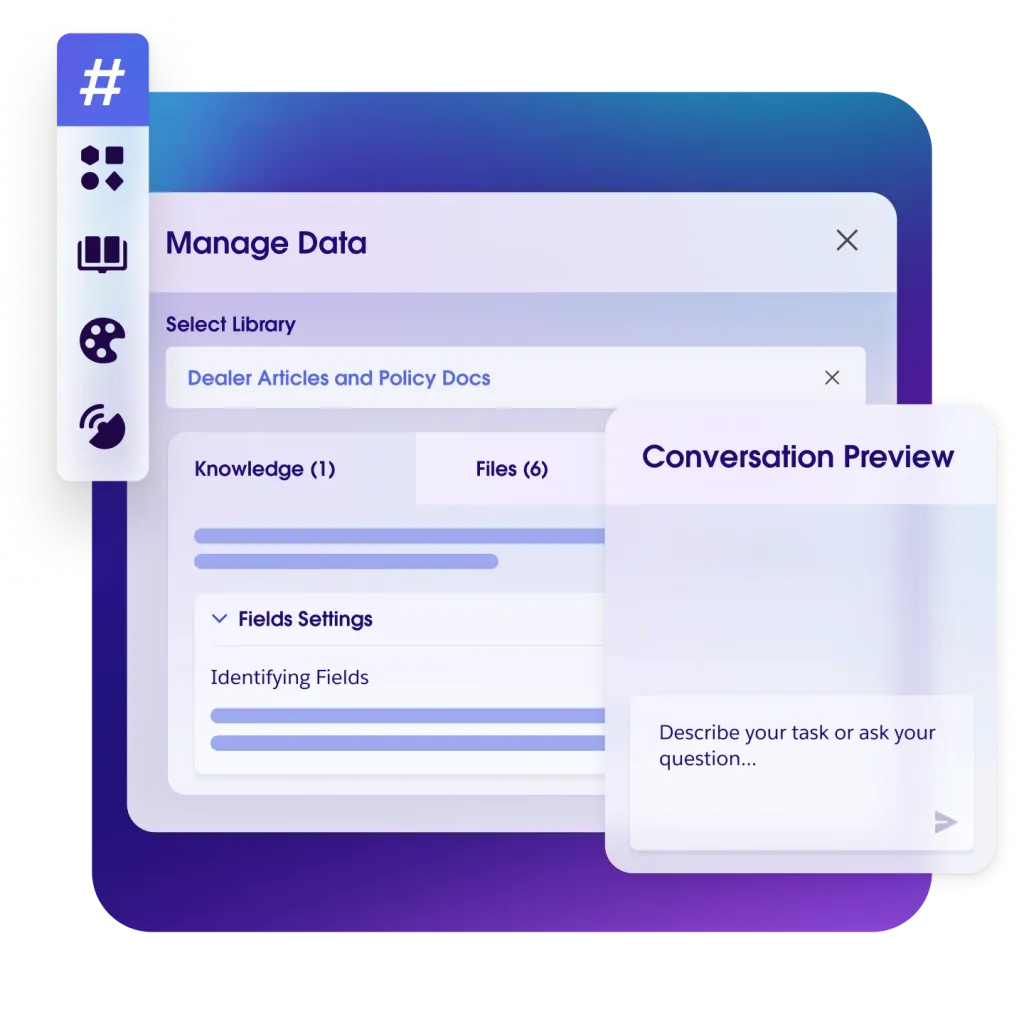
Source: Salesforce
The Einstein Trust Layer provides zero data retention with LLM partners, PII masking, and toxicity detection, which matters in regulated industries. But Agentforce is a paid add-on. At the Enterprise tier, AI capabilities cost $125/user/month extra, and consumption pricing ($2 per conversation or $0.10 per action via Flex Credits) adds variable costs on top.
Zoho's Zia takes a different approach: broad AI capabilities included at lower price points.
Zia covers predictive intelligence (lead scoring, churn prediction, AI forecasting), generative AI (module creation, workflow generation, and report building from natural language), and agentic AI with agents for SDR tasks, deal analysis, and follow-up scheduling. Zia Agent Studio offers 100+ pre-built agents integrated with 60+ applications.
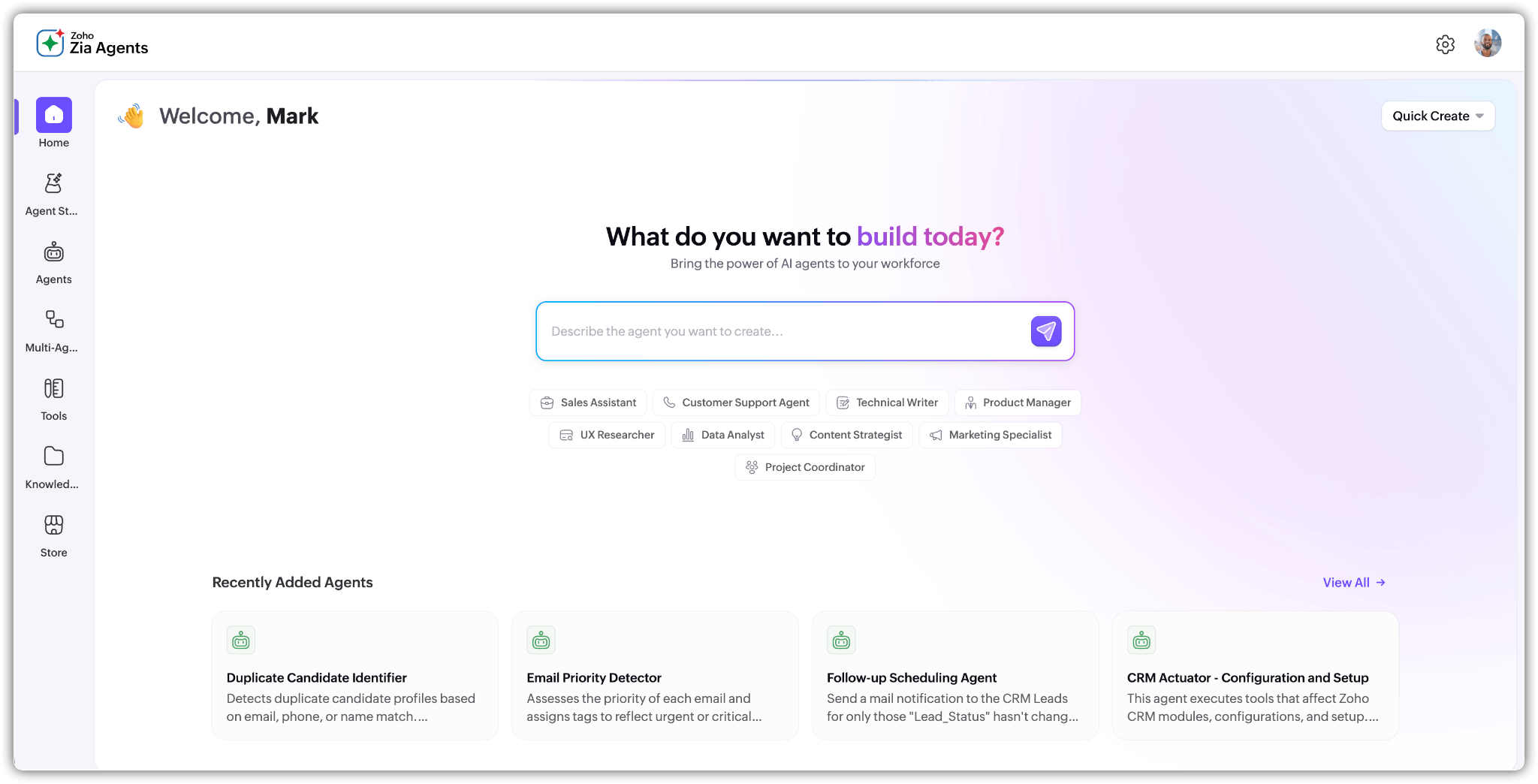
Source: Zoho
Zoho also operates proprietary language models rather than relying exclusively on third-party AI providers, reinforcing its privacy-first positioning. Email sentiment analysis, call transcription, competitor alerts, and image recognition are all included natively.
The practical difference: Salesforce's Agentforce is more advanced in enterprise contexts, with trust and governance features built for regulated industries. Zia covers more ground at each price tier but lacks Agentforce's governance and compliance infrastructure.
For mid-market teams, Zia's included AI is the better deal. For enterprises with complex compliance requirements, Agentforce's trust architecture justifies its premium.
The B2B data problem neither CRM solves
Here's what neither CRM comparison article usually mentions: the most expensive CRM in the world won't help if your sales team doesn't have accurate prospect data to fill it with.
Salesforce and Zoho both manage customer relationships.
They track deals, automate follow-ups, generate reports, and coordinate teams. What they don't do is tell you which companies are actively researching solutions like yours, who sits on the buying committee, what their direct phone numbers are, or when an account's budget cycle makes them most likely to purchase.
This gap shows up everywhere. Sales reps spend hours manually researching prospects instead of selling. Marketing teams build campaigns targeting companies with no current buying intent. CRM records decay as contacts change jobs, companies restructure, and email addresses go stale.
Forbes estimates 91% of CRM data is incomplete, which means the analytics and AI features both platforms offer run on flawed data.
Salesforce has Data Cloud for unifying first-party data from internal sources, but it doesn't generate B2B contact data. Zoho integrates with third-party enrichment tools, but the CRM itself doesn't include a prospect database. Both platforms are containers waiting to be filled.
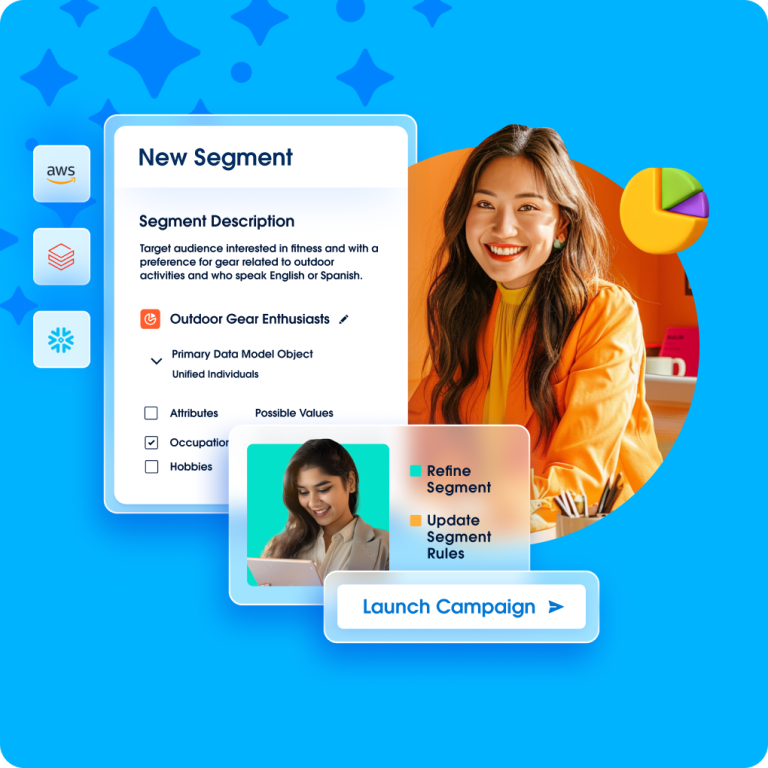
Source: Salesforce
For B2B sales teams, the CRM is only half the equation. The other half is a data and intelligence platform that feeds the CRM with verified contacts, company intelligence, and buying signals.
ZoomInfo provides the intelligence layer both CRMs need
ZoomInfo isn't a CRM alternative. It's the data foundation that makes either CRM effective for B2B sales.
The platform maintains a B2B dataset of 500M contacts, 100M companies, 135M+ verified phone numbers, 120M direct-dial phone numbers, and 200M+ verified business email addresses.
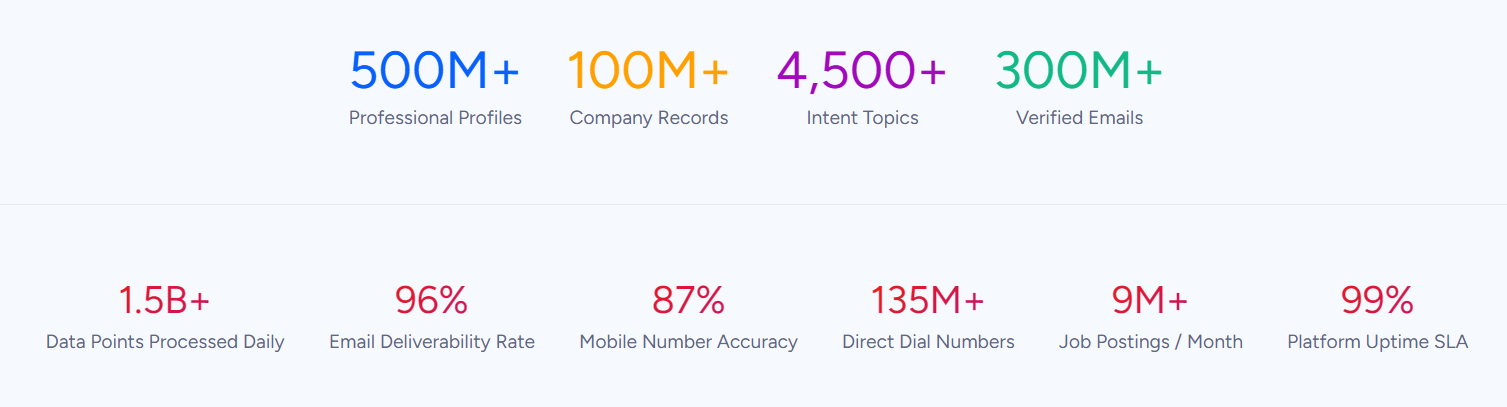
ZoomInfo maintains this data through multiple sources: automated scanning of 28 million site domains daily, third-party partnerships covering 95 million businesses, a community of 200,000+ users who share data back, and 300+ in-house human researchers. First-party data reaches up to 95% accuracy.
In a Fortune 500 competitive RFP analyzing 25 million contacts across vendors, the independent consultant concluded that "no other competitor came even close."
That data solves the contact problem. But ZoomInfo goes further with the GTM Context Graph, which processes 1.5B+ data points daily and combines ZoomInfo's third-party data with your CRM records, conversation transcripts, and behavioral signals.
The result is a layer of context that captures not just what happened in a deal, but why. A CRM records that a deal moved to Stage 3. The GTM Context Graph understands that the CFO joined the last call, asked about six-month ROI, and that this pattern matches deals that close in your segment.
Buyer Intent data tracks signals from 210 million IP-to-Organization pairings and 6 trillion+ new keyword-to-device pairings monthly, showing which companies are actively researching solutions before they fill out a form.
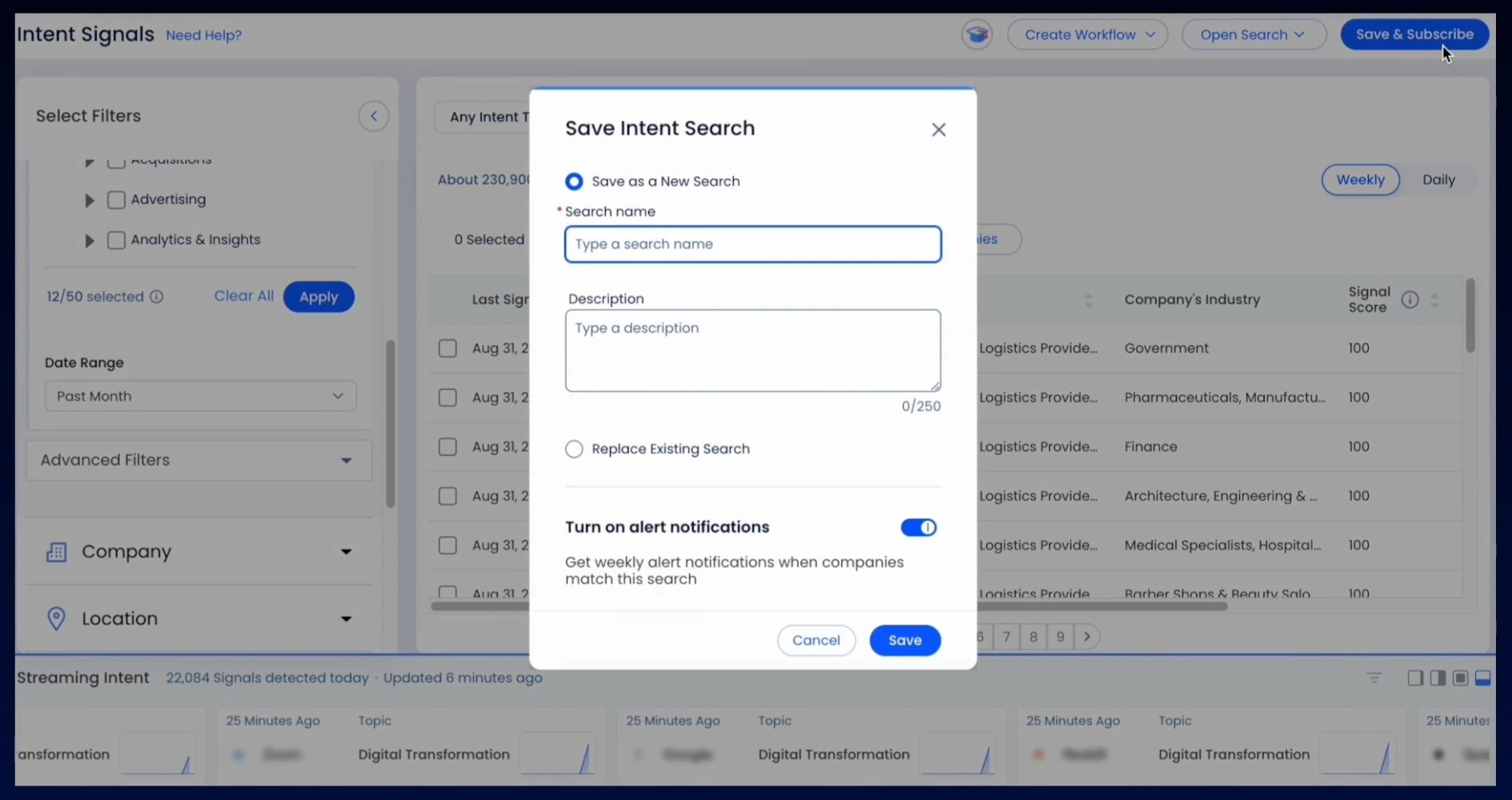
Source: ZoomInfo
Technographics profile the tech stacks of 30+ million companies across 30,000+ technologies. These signals flow directly into your CRM through native integrations with both Salesforce and Zoho.
The practical result: sales reps open their CRM to find enriched records, qualified prospect lists, and buying signals instead of empty fields and stale data.
"ZoomInfo is our one source of truth for account data, and even more so for contact data. There's no other provider in the market that provides you with that level of detail." (Smartsheet)
How ZoomInfo connects to your CRM stack
ZoomInfo delivers its data through three access points, all drawing from the same dataset and Context Graph.
GTM Workspace gives sellers a single place to find prioritized accounts, AI-drafted outreach, and deal intelligence. Instead of switching between CRM, prospecting tools, and engagement platforms, sellers work from one view that combines ZoomInfo's data with their CRM records.
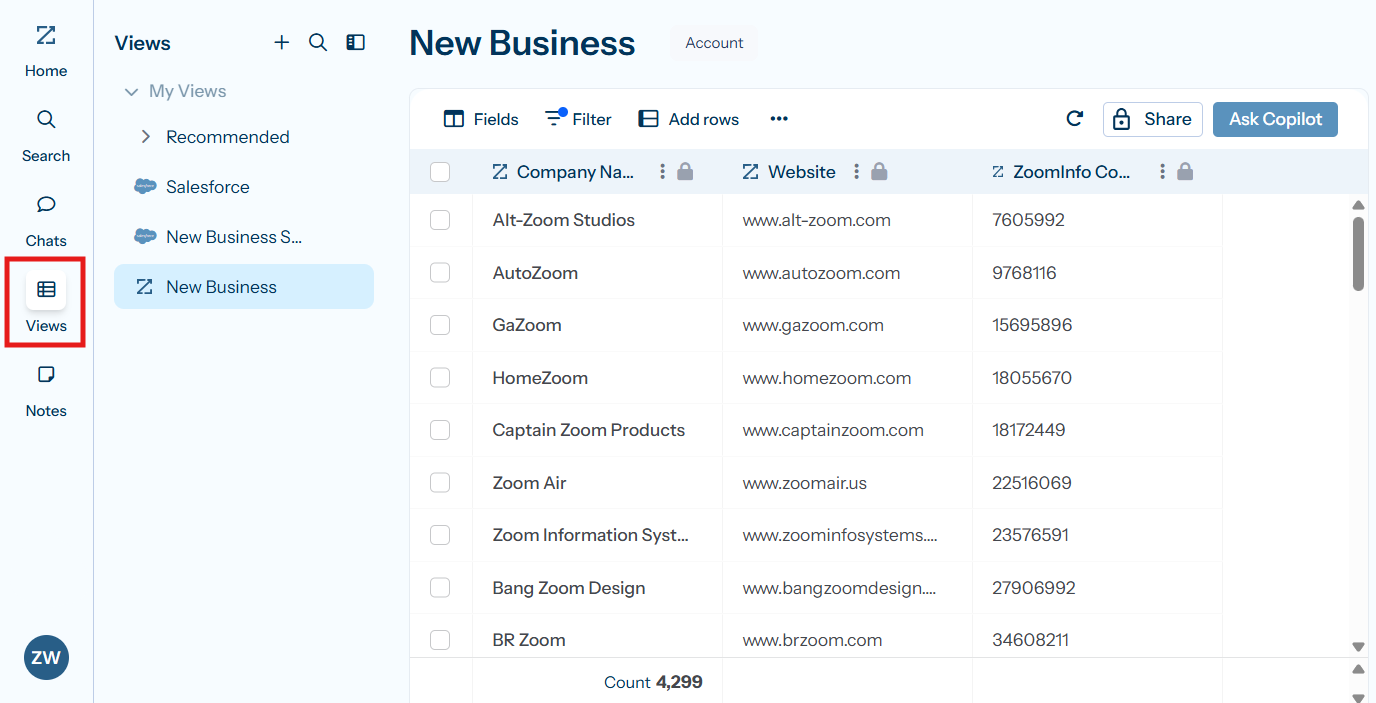
Source: ZoomInfo
Seismic's sales team boosted productivity by 54% and attributed 39% of active pipeline to opportunities identified or influenced by ZoomInfo signals.
GTM Studio lets marketers and RevOps teams define audiences, orchestrate campaigns, and measure pipeline using natural language. Expansion plays that previously took weeks now launch in 30 minutes without engineering support. Outputs (accounts, signals, recommended actions) feed directly into GTM Workspace for sellers to act on.
APIs and MCP expose the same data to any custom agent, internal tool, or third-party platform. API access is included in all relevant plans, and the MCP server connects directly to AI assistants like Claude and ChatGPT.
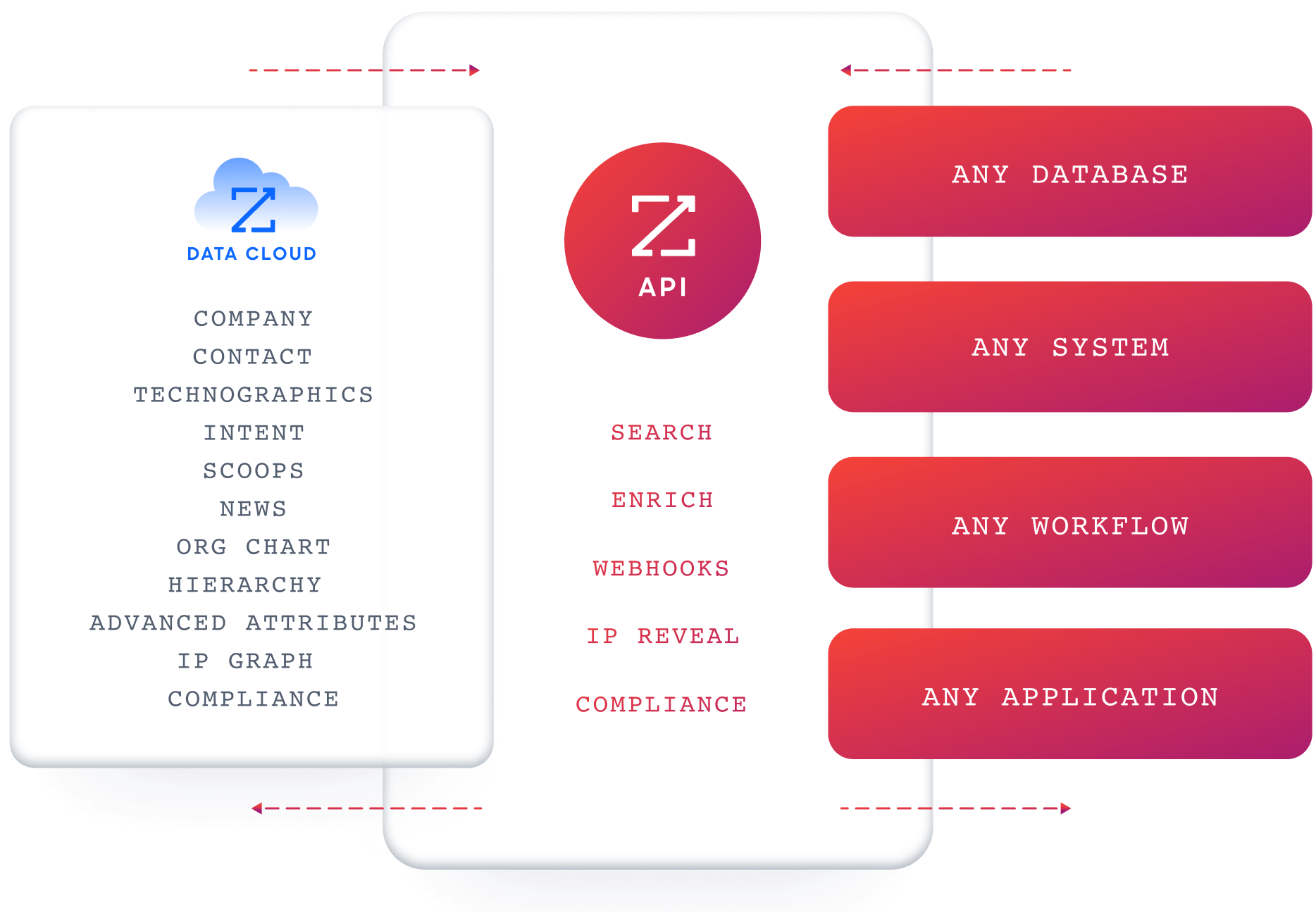
The critical point: choosing Salesforce or Zoho does not limit your access to ZoomInfo's data. Both CRMs receive the same enriched data, the same intent signals, and the same buying committee intelligence. Your CRM manages the relationship. ZoomInfo powers the pipeline that feeds it.
"That combination of our internal CRM data, external signals, and AI that's given all that context has helped us craft very specific account- and persona-based messages. And people have responded to them right away." (Seismic)
Salesforce vs. Zoho vs. ZoomInfo: Which should you choose?
The decision depends on two separate questions: which CRM fits your organization, and how will you feed it with prospect data and intelligence?
Choose Salesforce if:
You need depth across sales, service, marketing, and commerce
Your organization can invest in dedicated administrators and implementation partners
A large third-party app ecosystem is important for your workflows
Industry-specific compliance and data models are requirements
Budget for CRM is not the primary constraint
Choose Zoho if:
You want enterprise CRM features at mid-market pricing
Your team prefers to self-configure rather than hire consultants
A single vendor covering CRM, finance, HR, and marketing appeals to you
Contract flexibility and transparent pricing are priorities
You value a privacy-first platform with no advertising-based revenue
Add ZoomInfo to either if:
Your B2B sales team needs verified prospect data, not just a place to store it
Knowing which accounts are actively in-market would change how your team prioritizes
CRM data quality and completeness are ongoing challenges
You want AI that understands deal context, not just CRM field values
Pipeline generation matters as much as pipeline management
Start with ZoomInfo Lite for free, or request a demo of the full platform.
The real insight isn't which CRM is better in the abstract. It's that a CRM without reliable B2B data is an organizational system with nothing to organize. Choose the CRM that fits your budget and complexity needs. Then power it with the data and intelligence your sales team actually needs to build pipeline.
Salesforce vs. Zoho vs. ZoomInfo FAQ
What is the core difference between Salesforce, Zoho, and ZoomInfo?
Salesforce and Zoho are both CRM platforms for managing customer relationships, sales pipelines, and business operations. Salesforce is the market leader built for enterprise scale, with $41.5 billion in annual revenue and 150,000+ customers.
Zoho delivers comparable CRM features at roughly one-quarter the price, backed by a 55+ app ecosystem from a single vendor.
ZoomInfo is not a CRM. It's a B2B data and intelligence platform that provides the prospect data, intent signals, and buying committee intelligence that neither CRM generates on its own.
How does pricing compare between Salesforce and Zoho CRM?
Zoho is cheaper at every tier. Zoho's Enterprise plan costs $40/user/month versus Salesforce Enterprise at $175/user/month. For a 50-person team, that's $24,000/year versus $105,000/year for CRM licenses alone.
Salesforce costs climb further with add-ons: AI capabilities at $125/user/month, digital engagement at $75/user/month, and Premier Support at 30% of net license fees. Zoho includes AI predictions, territory management, and journey orchestration in its Enterprise tier without additional charges. Both offer free tiers: Salesforce for up to 2 users, Zoho for up to 3.
Which platform has better AI capabilities?
Salesforce's Agentforce is more advanced for enterprise AI, with agents powered by the Atlas Reasoning Engine, an Einstein Trust Layer for governance in regulated industries, and $800M in ARR.
Zoho's Zia covers a broader set of AI capabilities at each price tier, including predictive scoring, generative AI for module and workflow creation, agentic automation, email sentiment analysis, and call transcription, all without separate AI add-on pricing.
ZoomInfo's GTM Context Graph provides a different type of intelligence: context about prospects and buying behavior that feeds into either CRM's AI capabilities.
Do I need ZoomInfo if I already have Salesforce or Zoho?
If your business relies on outbound B2B sales, the answer is almost certainly yes. Neither Salesforce nor Zoho generates B2B prospect data. They manage data you've already captured.
ZoomInfo provides 500M contacts with verified phone numbers and emails, intent data showing which accounts are actively researching, and technographic data on 30+ million companies. These data points are what sales reps need to build a pipeline, and they don't exist inside any CRM by default. ZoomInfo integrates directly with both Salesforce and Zoho.
For a detailed head-to-head breakdown of how Salesforce and ZoomInfo compare, see our Salesforce vs. ZoomInfo comparison.
Which CRM is easier to implement and learn?
Zoho has a lower barrier to entry. The platform offers a 15-day free trial of the Enterprise tier, a free developer edition for testing, and a Jumpstart onboarding service at $200/hour.
Over 70% of Salesforce deployments are partner-led, and the company's Trailhead learning platform offers 1,500+ badges because the platform requires that level of training. Implementation timelines for Salesforce range from weeks to 12 months depending on complexity, while Zoho can typically be configured faster due to its simpler architecture and self-serve tools.
Which platform is better for a company with 50-200 employees?
Zoho CRM is typically the stronger fit for mid-market companies in this range. Its Enterprise tier at $40/user/month delivers AI predictions, territory management, workflow automation, and CPQ without the administrative overhead Salesforce requires. Zoho's single-vendor ecosystem also reduces the integration burden that mid-market IT teams often struggle with.
Salesforce makes more sense at this size if the company has complex multi-department requirements or operates in a heavily regulated industry where Salesforce's industry clouds and compliance certifications are necessary.
Does ZoomInfo work with both Salesforce and Zoho?
Yes. ZoomInfo maintains a native integration with Salesforce and supports Zoho through its API infrastructure. ZoomInfo's data enrichment, intent signals, and buying committee intelligence flow into either CRM. API and MCP access is included in all relevant plans, allowing any CRM or custom application to consume the same data. The choice of CRM does not limit access to ZoomInfo's data.
What are the main limitations of each platform?
Salesforce's limitations center on cost and complexity. Pricing is layered with add-ons, most deployments require paid implementation partners, and the platform demands dedicated administrators.
Zoho's limitations are brand perception in enterprise deals, inconsistent customer support on lower tiers, and a smaller third-party marketplace (1,100+ extensions versus Salesforce's 9,000+ apps).
ZoomInfo uses consumption-based pricing and does not publish standard rates for paid tiers, and its primary value is B2B-specific (companies selling exclusively to consumers would see limited benefit).
