

SPOTIO occupies a specific niche in sales software: it serves reps who sell in person, at doorsteps, at dealer locations, and on the road.
Where general-purpose CRMs treat geography as an afterthought, SPOTIO puts the map at the center of every workflow, with GPS-verified visit tracking, route optimization, and territory management designed for teams that spend their days in the field.
To write this SPOTIO review, we analyzed the platform extensively. We believe it's the right choice if:
You manage an outside sales team of 25 or more reps
You need GPS-verified accountability for field activity
Territory design, route planning, and visit tracking are daily priorities
You want a mobile-first platform built around the map, not the spreadsheet
You already use Salesforce and need a field execution layer on top of it
SPOTIO turns field activity into measurable results, but the quality of that activity depends on the data driving it. SPOTIO's built-in prospecting pulls from Google Places (returning 20 results at a time) for B2B teams and homeowner demographics for B2C.
That helps identify nearby businesses or residences, but it doesn't tell you which accounts are researching solutions, who sits on the buying committee, or when a prospect's company just secured new funding.
This is where ZoomInfo enters the picture: a B2B intelligence and GTM platform that gives field sales teams the data they need to move from high-volume territory coverage to targeted engagement.
With 500M contacts, 100M companies, 135M+ verified phone numbers, and 200M+ verified business emails, ZoomInfo gives field reps the account context and buying signals that business directory lookups cannot match.
We've included a detailed look at ZoomInfo later in this SPOTIO review because it provides the data foundation that makes field execution more effective. If you're ready to see how B2B data can sharpen your field sales work, start with ZoomInfo's free trial.
What is SPOTIO?
SPOTIO is a field sales platform founded in 2014 by Trey Gibson in Addison, Texas. Gibson built it after managing his own field sales team and hitting a recurring problem: reps working territories without optimization, managers with no visibility into field activity, and accountability based entirely on trust.
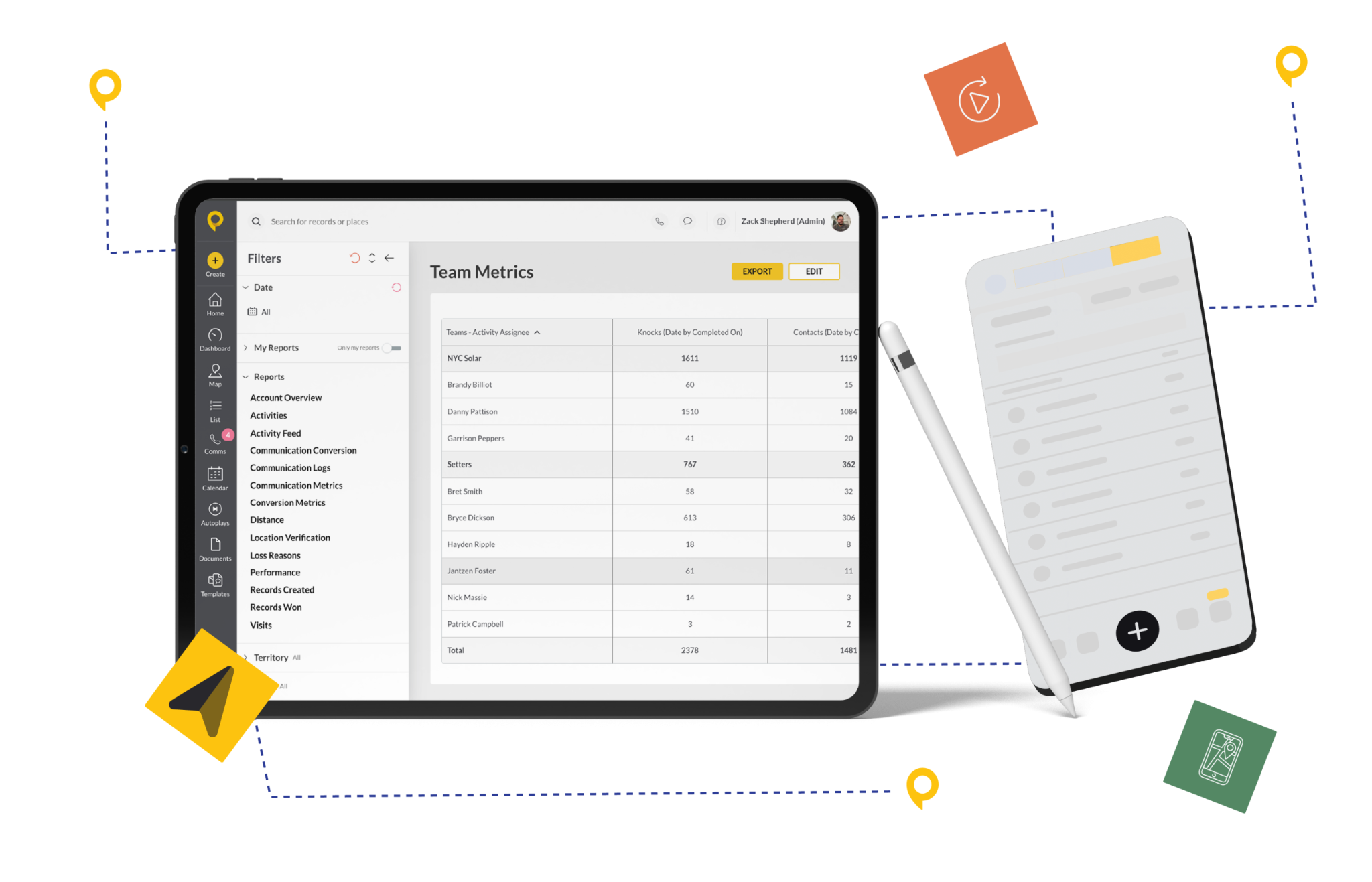
That experience shaped SPOTIO's thesis. The company positions itself as the action layer that general-purpose CRMs lack, with its homepage stating plainly: "YOUR CRM ISN'T BUILT FOR FIELD SALES. SPOTIO IS." Rather than replacing a CRM, SPOTIO sits on top of one, adding the map-based, mobile-first, GPS-verified capabilities that desk-built software was never designed to provide.
The platform now spans territory management, route optimization, activity tracking, pipeline management, sales intelligence, coaching dashboards, gamification, multi-channel communication, and a field-specific AI co-pilot called DASH.
SPOTIO targets both B2B and B2C outside sales organizations across verticals including telecom, roofing and storm restoration, home improvement, home services, medical devices, commercial construction, distribution, and business services.
SPOTIO has held the G2 Field Sales Leader position since 2018, been named to the Inc. 5000 list twice, and earned the Dallas Business Journal Best Place to Work award six times. The company raised a $4.5 million Series A in January 2020 led by Ballast Point Ventures.
SPOTIO Pros & Cons
Pros | Cons |
|---|---|
GPS-verified visit tracking with geo-fence automation | Minimum 25-license commitment excludes smaller teams |
Map-centric interface built for field workflows | No published pricing; demo required |
DASH AI co-pilot with voice-first field logging | Salesforce gets native integration; HubSpot relies on Zapier |
Route optimization handles up to 150 stops | DASH AI requires internet connectivity |
Territory hierarchies with parent/child structures | Positioned as a CRM complement, not replacement |
Offline access for up to 24 hours (Download My Day) | No free trial; pilots only for qualified prospects |
SalesScreen-powered gamification with Reward Shop | B2B prospecting limited to Google Places directory |
G2 Field Sales Leader since 2018 | All fees non-refundable per Terms of Service |
SPOTIO Review: How it Works & Key Features
DASH AI: A field-specific AI co-pilot that works between stops, not just at a desk.
SPOTIO launched DASH to address a gap the company found in its own data: 33% of field teams aren't using AI at all because most AI tools weren't designed for selling on doorsteps and from vehicles.
DASH is not a standalone chatbot. It lives inside the SPOTIO app, accessible via a chat panel that accepts typed input, voice commands, and photo uploads.
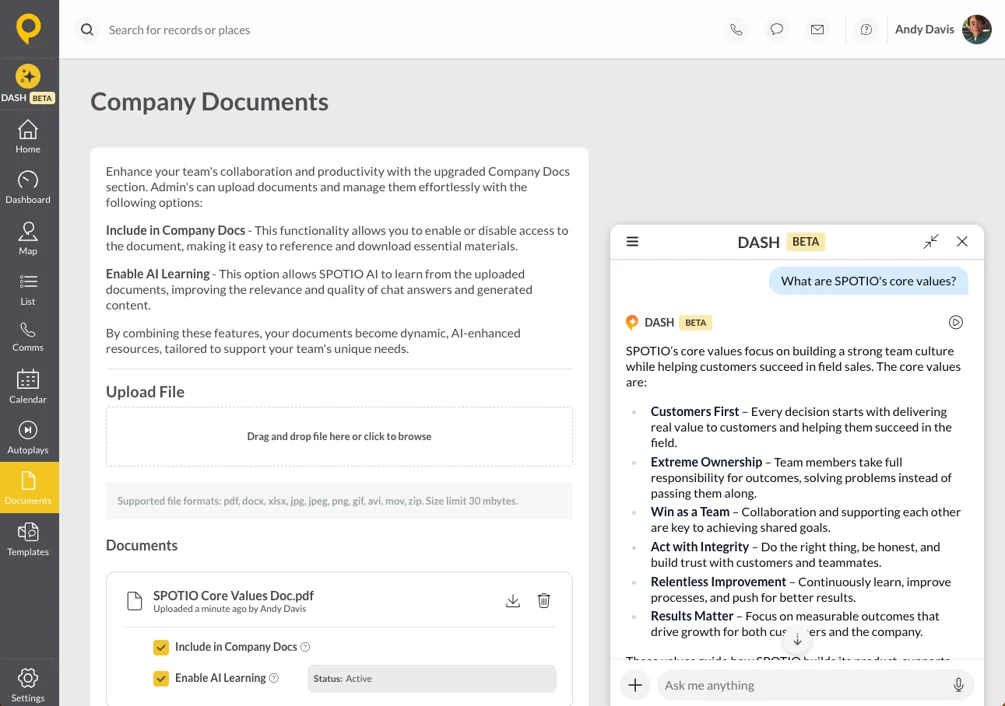
DASH has four parts. DASH IQ answers rep questions by searching uploaded company documents (pricing sheets, spec sheets, battle cards) and delivers plain-language account summaries before a rep knocks on a door.
Source: SPOTIO
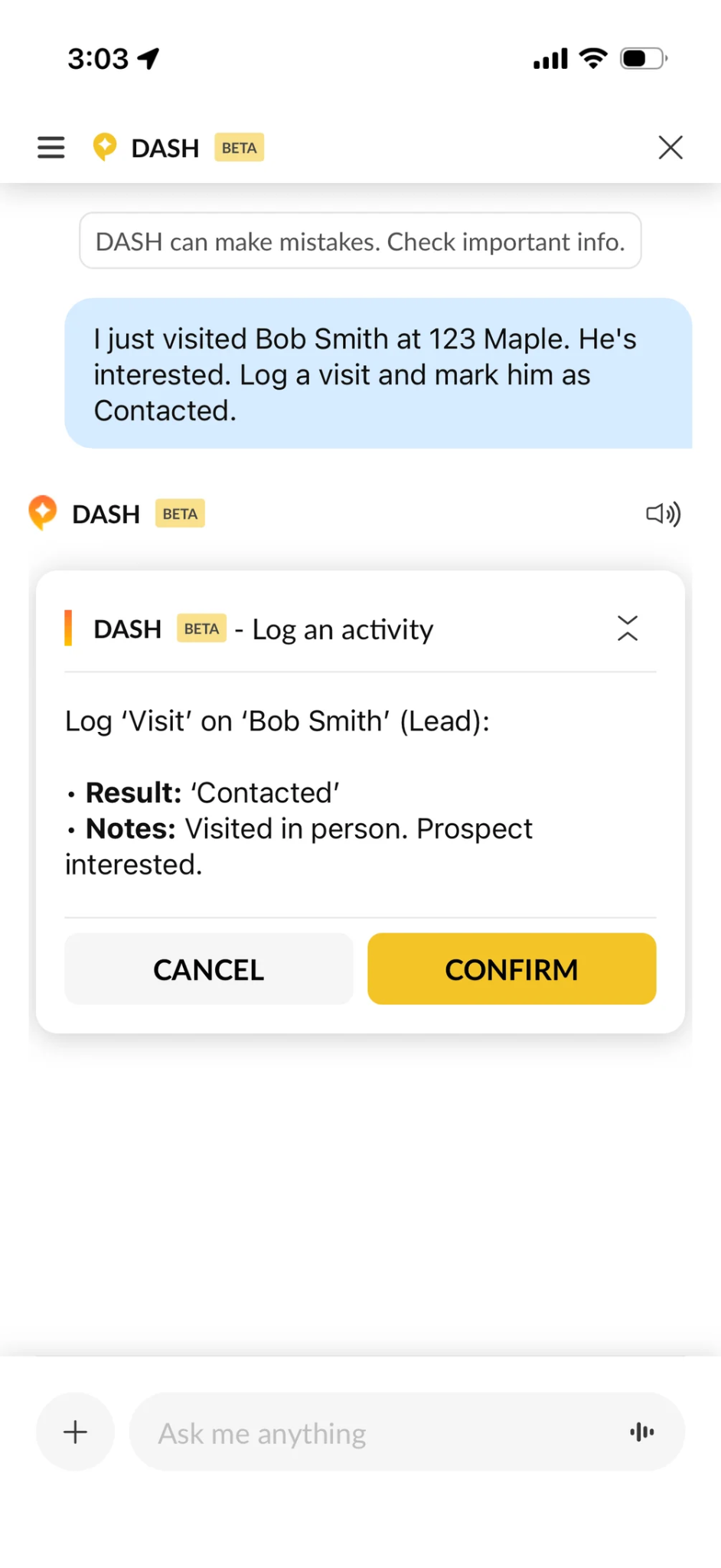
DASH Actions converts conversational input into completed tasks. A rep can say "Log a visit with Bob Smith, mark Contacted, and schedule follow-up Tuesday at 8am," and DASH shows a confirmation preview of every change before anything saves.
Source: SPOTIO
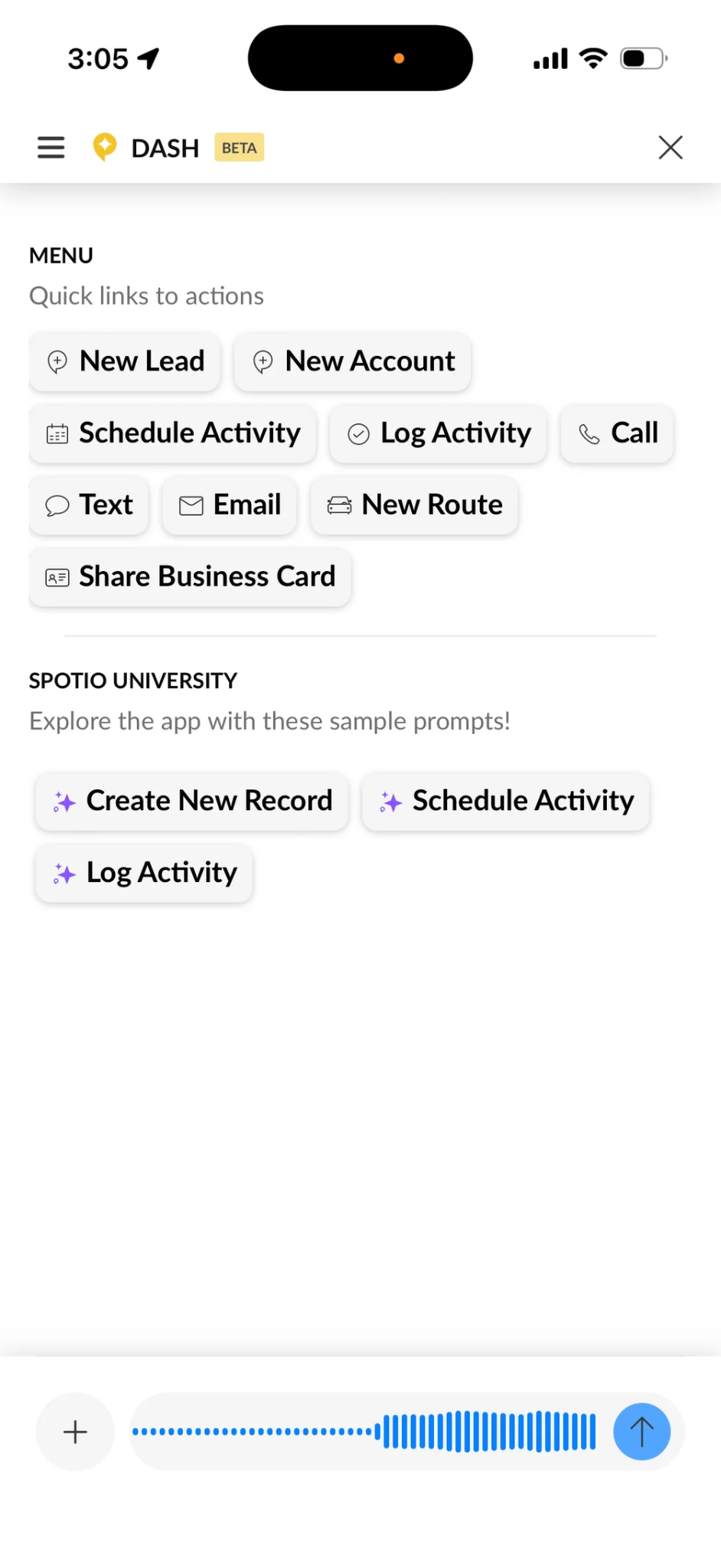
DASH Go is a voice-first mode for reps driving between stops, reading responses aloud and confirming with a single tap.
Source: SPOTIO
DASH Connect links SPOTIO to external LLMs (Claude, ChatGPT), letting managers query SPOTIO data through their preferred AI interface.
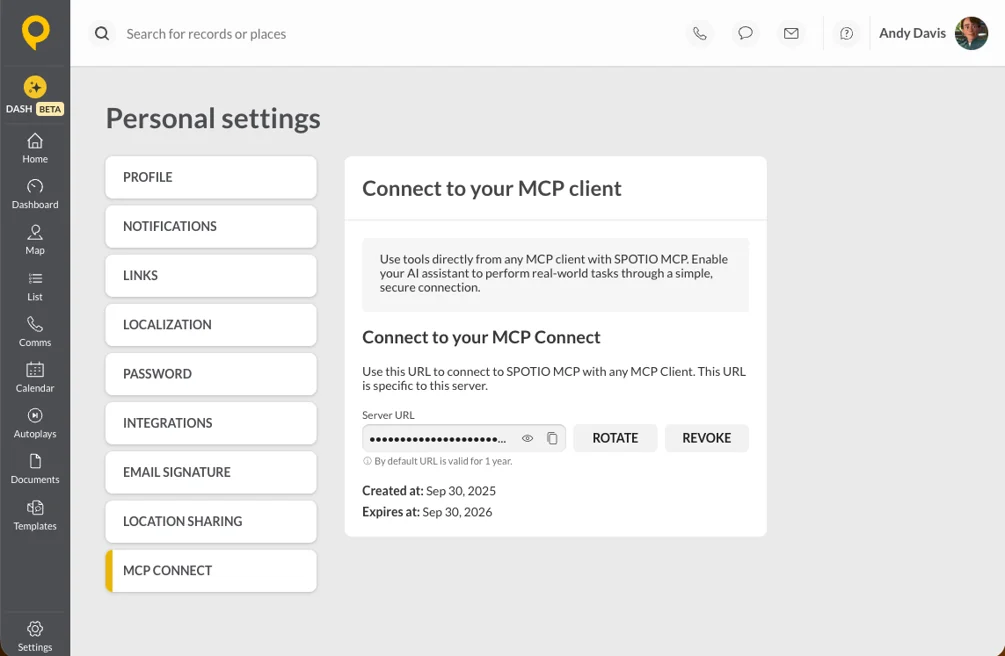
Source: SPOTIO
Every write action follows an Always Human-Approved principle: nothing saves automatically. Admins can customize DASH's behavior, including tone, constraints, topics to avoid, and response patterns, so every rep gets answers in the company's voice. DASH requires an active internet connection, so reps in rural areas or zones with poor cellular coverage cannot access its AI features.
Territory Management: Map-based territory design that connects planning to daily execution.
SPOTIO's territory management puts territory design, assignment, and monitoring inside the same platform reps use every day.
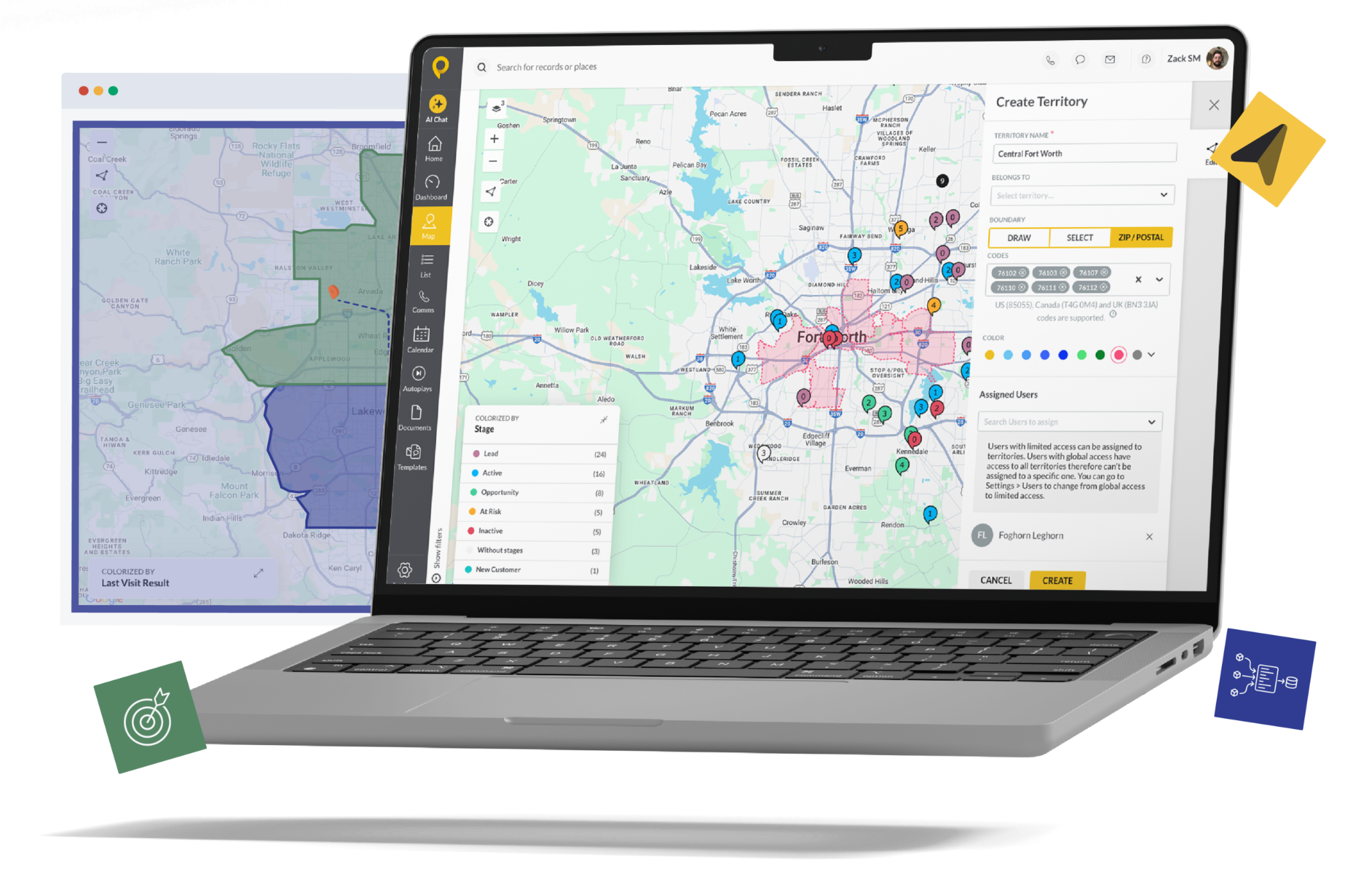
Source: SPOTIO
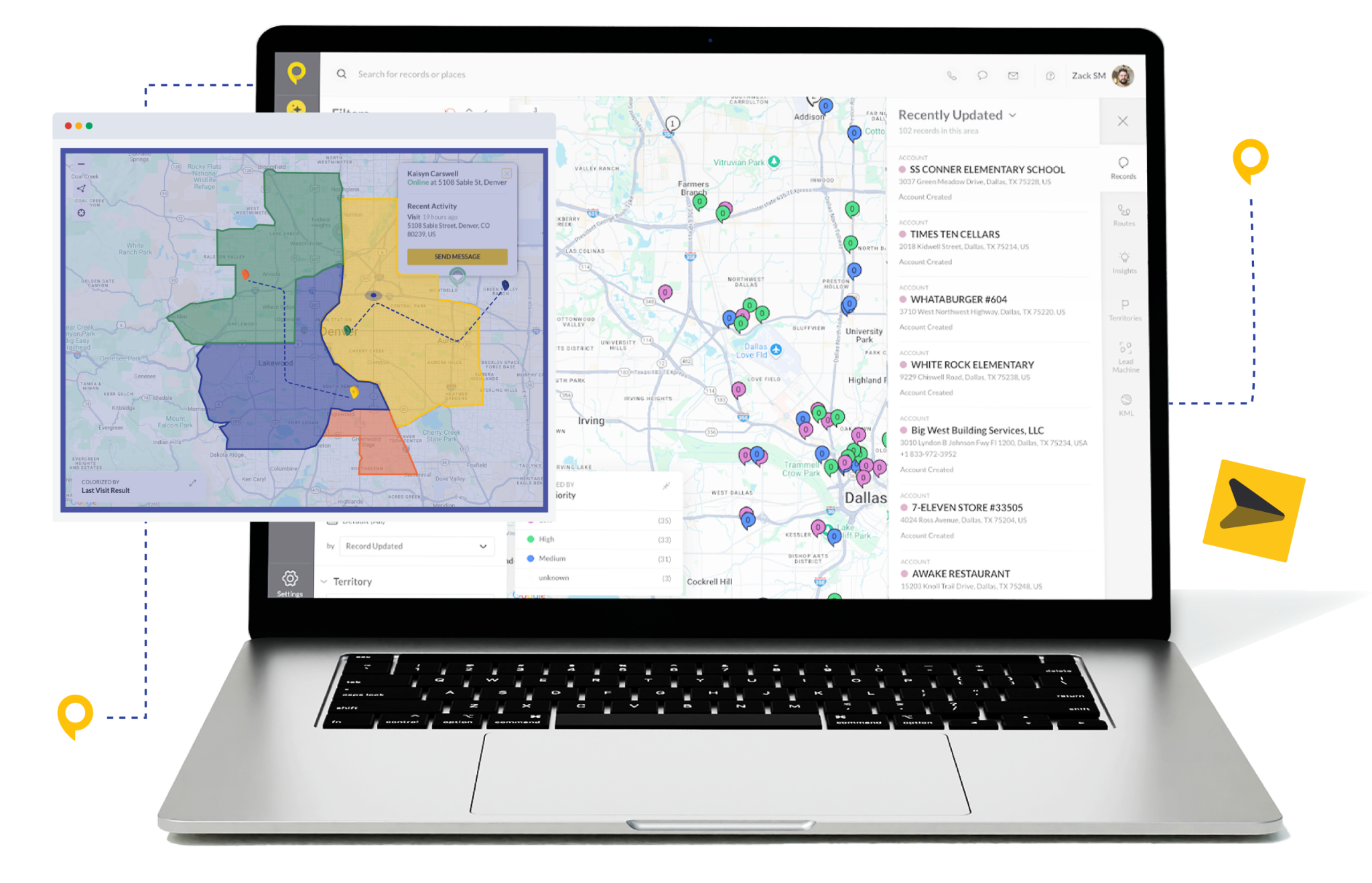
Managers create territory boundaries using three methods: a freehand Draw tool for custom polygons, a Select tool that auto-draws at the state, ZIP code, city, or county level, and a ZIP/Postal Code method for typing in specific codes.
Each territory can be color-coded, named, and organized into parent/child hierarchies where parent managers get roll-up visibility.
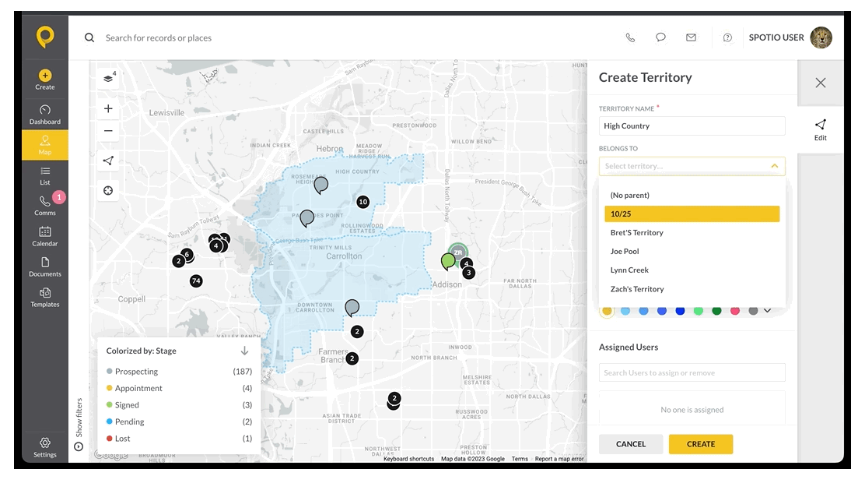
Source: SPOTIO
For large deployments, territories can be bulk-imported via KML file, supporting up to 200 territories and 70,000 polygon points per import. The platform flags overlapping boundaries visually and sends out-of-boundary notifications when reps try to work outside assigned areas.
Territory assignments sync in real time with connected CRMs, so account ownership updates automatically when territories change hands.
SPOTIO surfaces performance diagnostics by territory, identifying zones with high activity but low close rates, open pipeline with no recent visits, double-covered accounts, or zero visits in 30 days. According to SPOTIO's 2026 field sales data, 83% of top-performing teams use digital territory tools versus only 57% of lower-performing teams.
Route Optimization & Activity Tracking: Optimized routes with GPS-verified accountability at every stop.
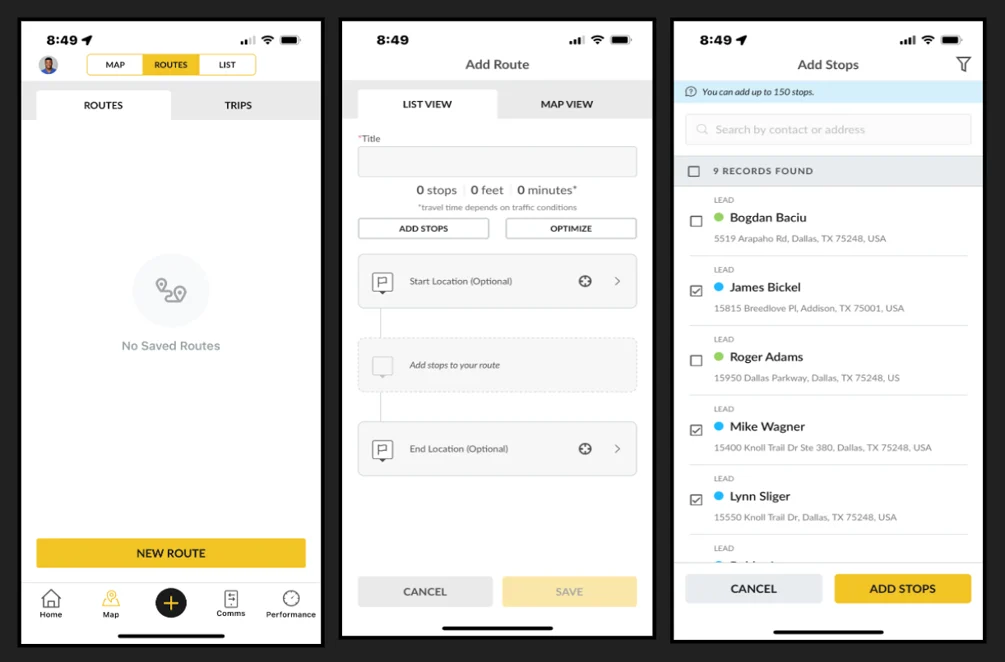
SPOTIO's route optimization calculates multi-stop routes within a rep's territory, handling up to 150 stops per route. Reps build routes by searching for records, clicking individual map pins, or using a Lasso tool to draw a shape around multiple pins and bulk-add them.
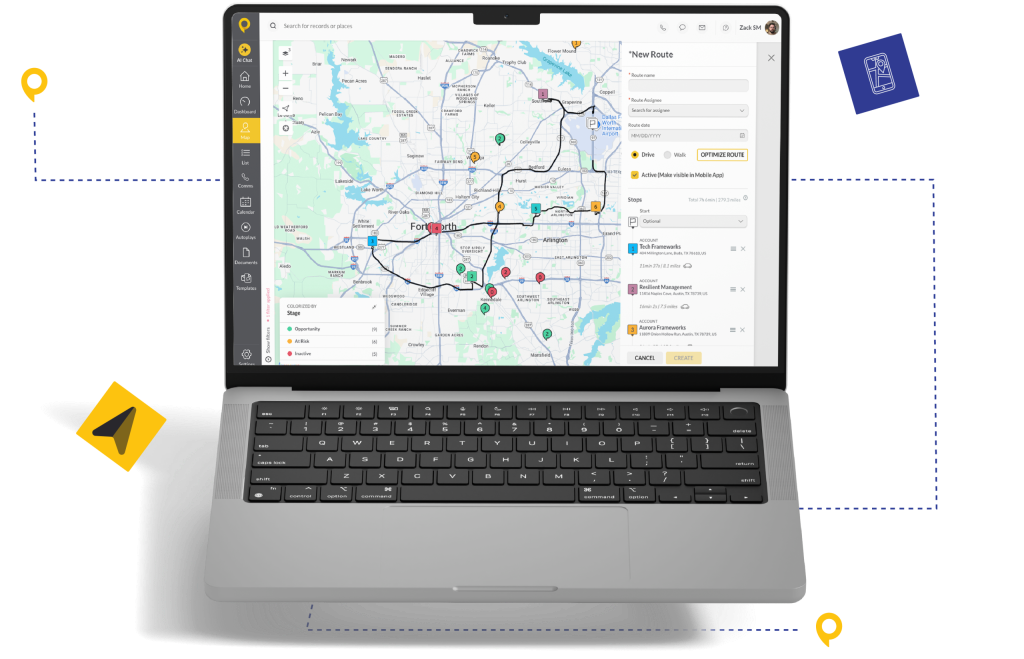
Source: SPOTIO
Routes can be ordered three ways: by schedule (calendar appointments first), by distance (shortest path), or manually via drag-and-drop. The platform hands off to Google Maps, Apple Maps, or Waze for live navigation.
Sales leaders can plan routes on the web app and push them to rep mobile devices. Reps can add stops or re-optimize the remaining route mid-trip. Completed trips log total mileage and travel time per stop, exportable as PDF or CSV.
Source: SPOTIO
SPOTIO claims route optimization can cut travel time and boost daily meetings by up to 20%. Routing is available on the B2B plan only.
On the activity tracking side, SPOTIO captures every field interaction through two mechanisms. Reps log activities with one tap, and SPOTIO attaches GPS coordinates and timestamps automatically.
The Autovisits feature uses a 100-meter geo-fence around each lead: when a rep enters the geo-fence, a visit clock starts automatically, and when the rep leaves, it stops and prompts for a result and notes.
GPS Trails stitch location pings into visible route trails overlaid on the map, and managers can view trails for up to 10 reps at once.
Lead Management & Sales Prospecting: A dual-market prospecting engine with map-based lead workflows.
SPOTIO's lead management places the map at the center of every lead workflow. Leads enter through CSV import, CRM sync, or manual entry, and appear as pins on an interactive map where they can be color-coded by status, priority, or custom criteria.
Source: SPOTIO
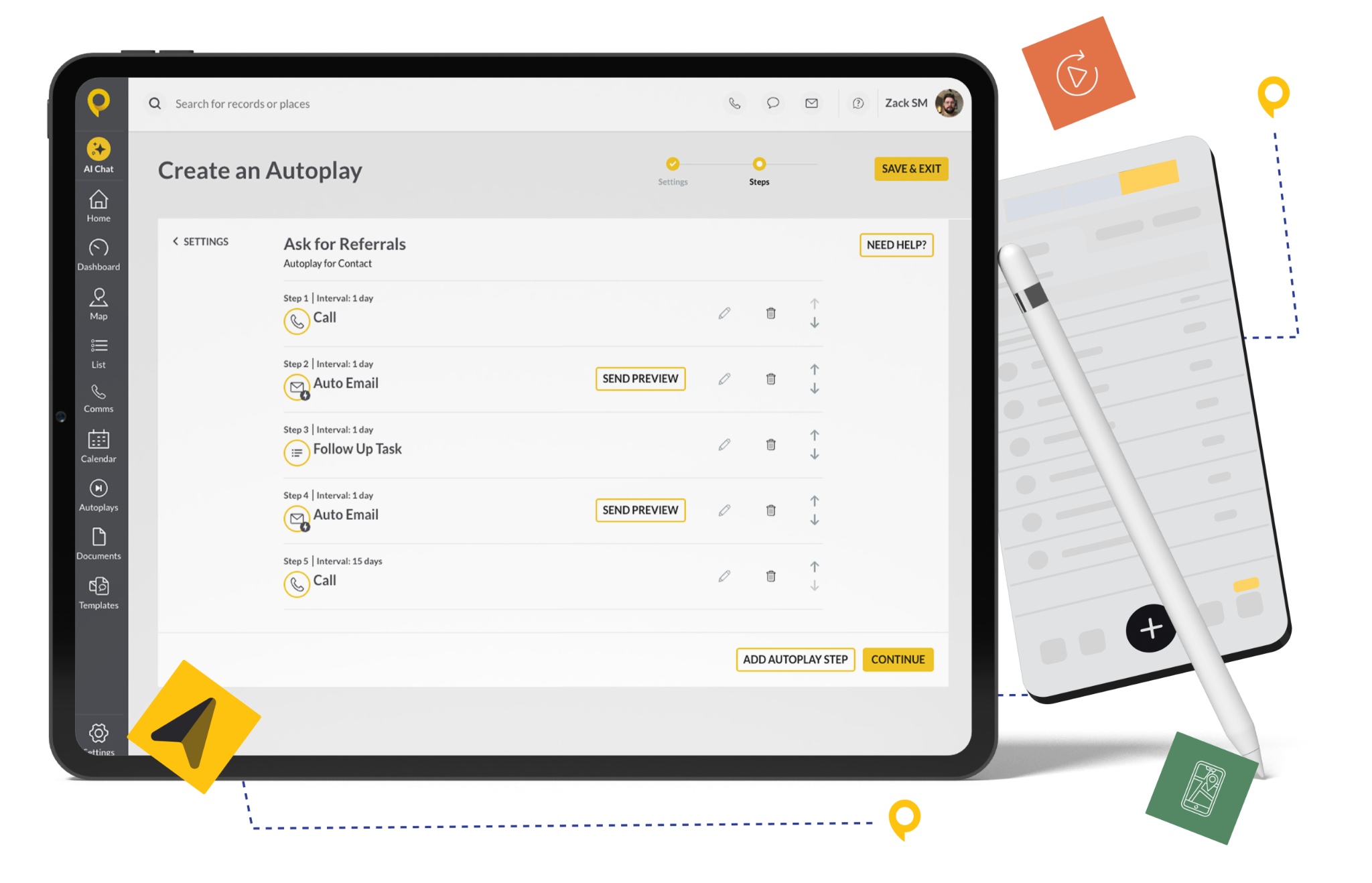
AutoPlays provide structured follow-up cadences that prompt reps at the right moment, and managers monitor lead activity through centralized dashboards.
Source: SPOTIO
For prospecting, SPOTIO serves two markets from one platform. B2C teams use Lead Machine, which filters homeowners by up to 15 demographic criteria including credit capacity, home market value, home square footage, resident age, and lifestyle interests.
Users draw a polygon on the map, apply filters, and add up to 10,000 records at a time. B2B teams use the Google Places integration, which surfaces business listings within the map view, displaying up to 20 results at a time.
The platform integrates bidirectionally with Salesforce, HubSpot, Microsoft Dynamics, Zoho, NetSuite, SAP, Oracle, Google Calendar, and Microsoft Outlook so data stays consistent across the sales operation.
Pipeline Management & Performance Analytics: Real-time deal tracking with field-native reporting.
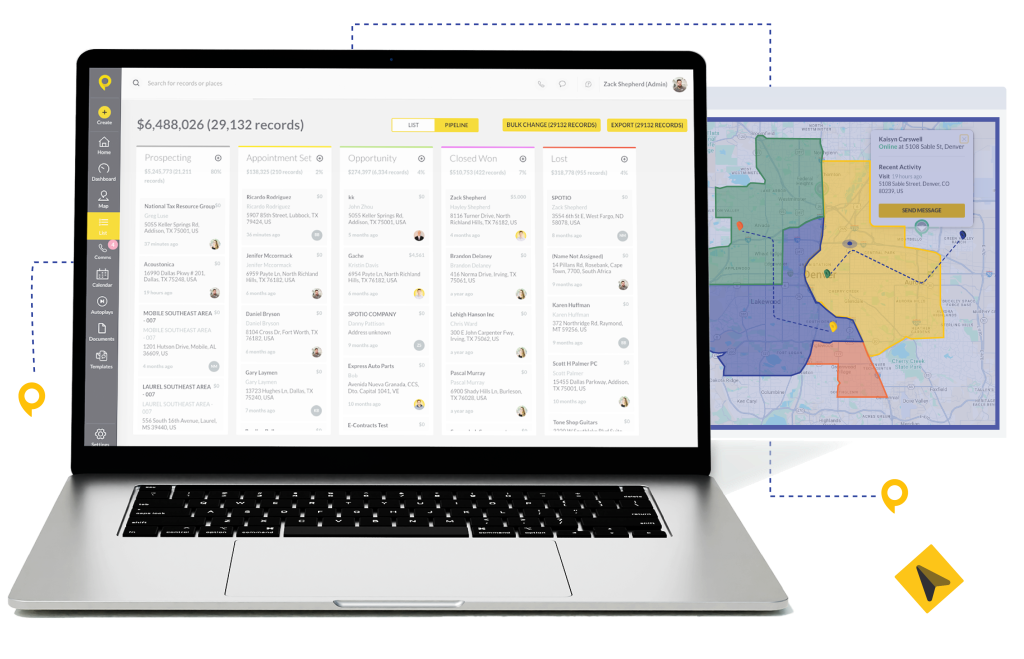
SPOTIO's pipeline management tracks deals through configurable sales stages using Kanban and List views.
Source: SPOTIO
The Kanban view displays record cards with lead name, address, last update time, record owner, deal value, and visit count, with each column showing stage value and stage percentage.
The List view is a customizable spreadsheet with auto-updating timestamp columns. Both views support stacking filters by time frame, territory, rep, stage, and custom fields.
What separates SPOTIO's pipeline from a standard CRM is its connection to field activity. Deal stage progress ties to actual logged field interactions (visits, calls, appointments) rather than self-reported stage changes alone.
Custom colorization on records based on days since last activity creates a visual heat map of pipeline health, surfacing neglected deals without running a report.
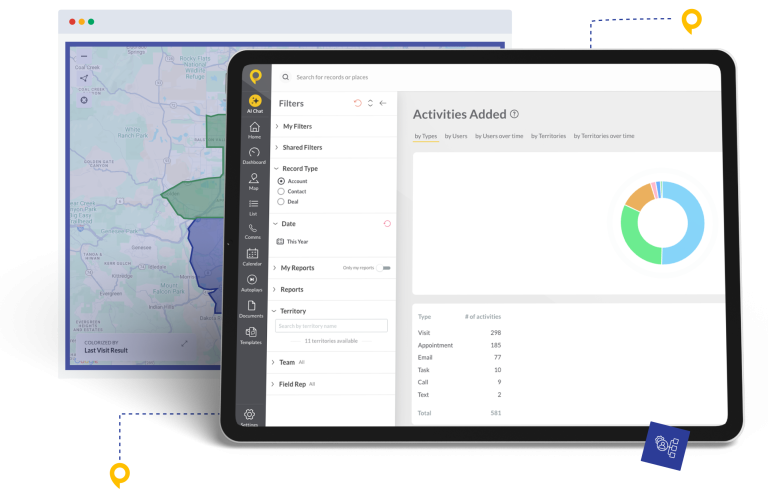
The performance analytics layer builds on this with a My Reports builder that lets users construct custom reports by selecting a category (Sales Reps, Managers, Teams, Territories, or Records), choosing metrics, and dragging fields into a table.
Source: SPOTIO
A "Display Over Time" option enables period-over-period comparison. Reports can be scheduled for delivery on daily, weekly, or custom intervals, and any My Report can be converted into a leaderboard with one checkbox.
Multi-Channel Communication & Gamification: Integrated calling, texting, and email alongside competition-driven motivation.
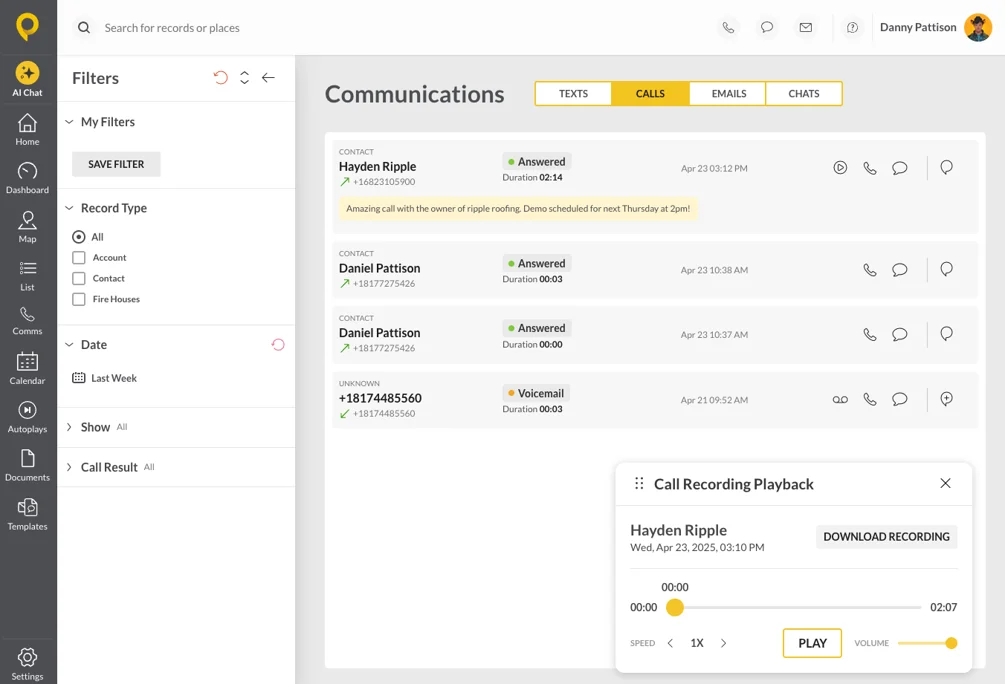
SPOTIO's Multi-Channel Communication (MCC) gives reps dedicated SPOTIO phone numbers for calling and texting, plus email integration via Nylas. Every call, text, and email logs automatically to the contact's record history.
Call Recording, released May 2025, captures voice conversations with adjustable-speed playback and MP3 downloads. AutoPlays can trigger automated multi-channel sequences blending calls, texts, and emails.
Source: SPOTIO
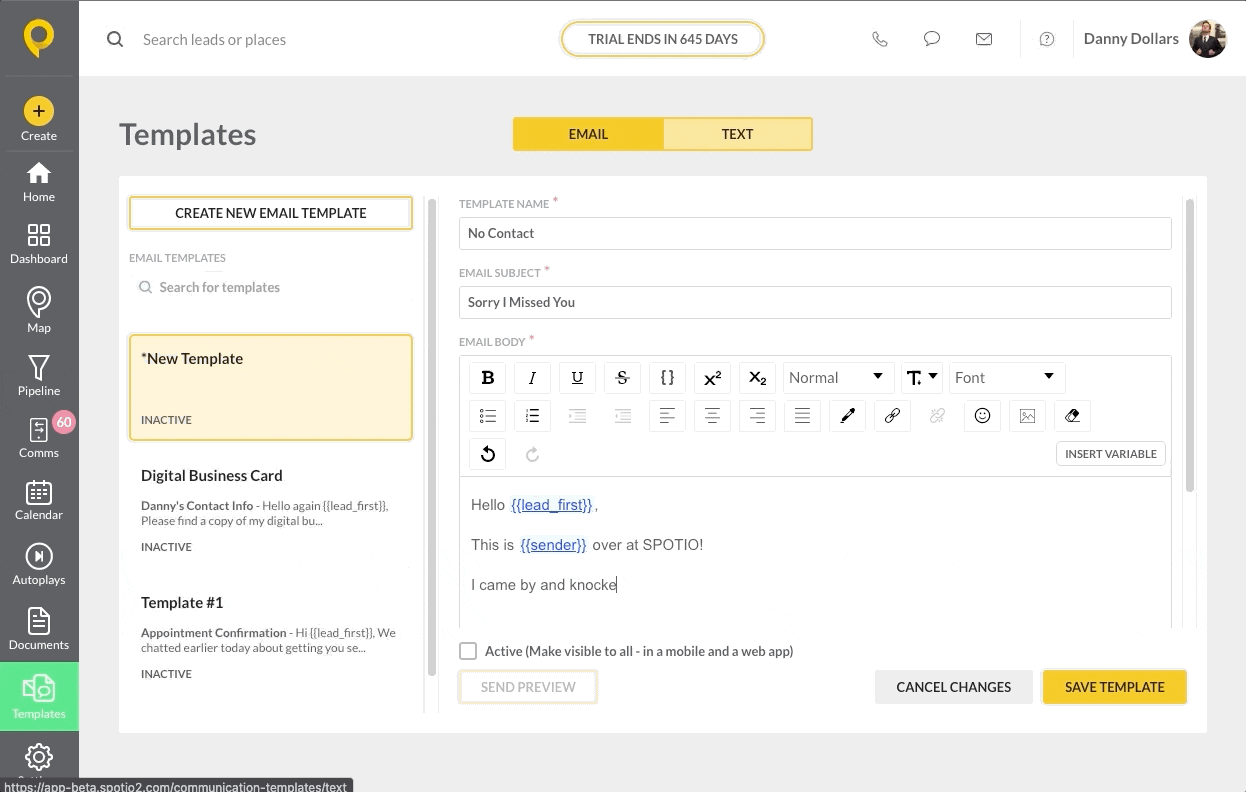
The Hybrid MCC upgrade extended communication from mobile-only to both mobile and web, supporting setter/closer models where virtual prospecting combines with in-person closing. Admin-created email and text templates standardize messaging across the team. MCC is a paid add-on (Engagement Bundle).
Source: SPOTIO
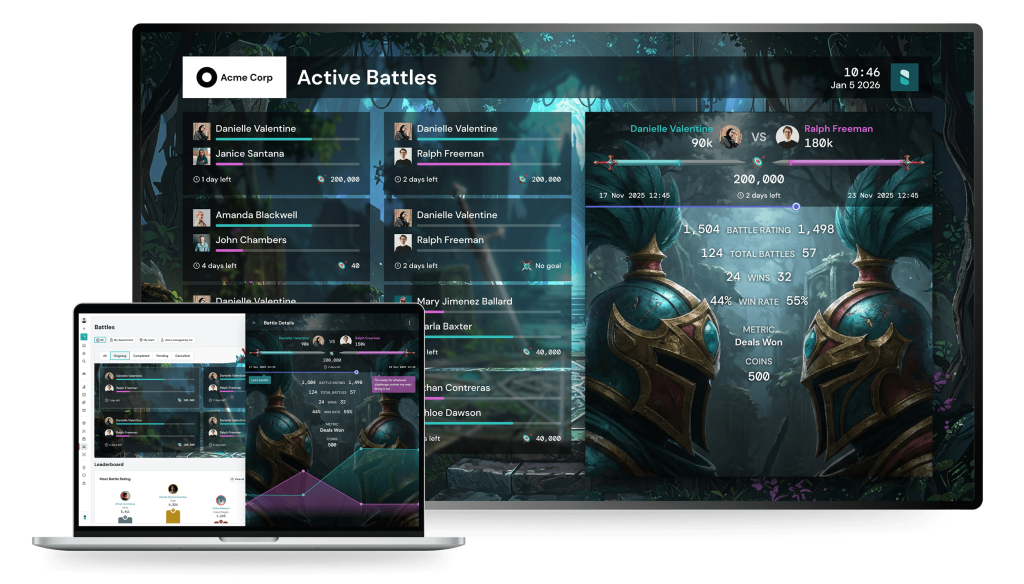
Gamification comes through a native integration with SalesScreen. Managers launch time-bound Competitions tied to live SPOTIO data, while reps can create their own head-to-head Battles against peers around any metric.
Source: SPOTIO
Missions break large targets into daily milestones, with teams using Missions seeing a 10% average increase in target attainment. A Reward Shop lets reps earn coins and redeem them for gift cards, experiences, or merchandise.
Where SPOTIO Falls Short
SPOTIO handles field execution well, but several limitations emerge as organizations evaluate how it fits into a broader sales operation. These point to a platform optimized for managing what happens in the field, not for powering the intelligence that determines where field effort should go.
High Minimum Commitment: SPOTIO requires a minimum of 25 licenses with no self-serve option or free trial. Field teams of 5 to 20 reps are excluded. Access before purchase is limited to a sales-led demo or a negotiated pilot for "qualified prospects."
Teams not yet at 25 reps face a gap between needing field-specific tools and being able to buy them.
Pricing Opacity: SPOTIO does not publish pricing. Every plan requires contacting the sales team, and all fees are non-refundable per the Terms of Service. Add-ons (Engagement Bundle, Lead Machine, E-Contracts, DASH AI) carry additional unpublished costs.
This makes direct cost comparison difficult for mid-market buyers before they enter a sales process.
Shallow B2B Prospecting Data: SPOTIO's B2B prospecting relies on Google Places, which surfaces business listings but returns only 20 results at a time.
There are no intent signals to show which companies are researching solutions, no org charts to map buying committees, no verified direct-dial phone numbers or business emails beyond what Google provides, and no technographic data to show what tools a prospect already uses.
For B2C, Lead Machine offers richer demographic filtering, but B2B field teams receive only directory data.
CRM Dependency with Uneven Integration Depth: SPOTIO states its "greatest strength is enhancing an existing enterprise CRM" rather than replacing one. Buyers typically need both SPOTIO and a CRM, adding cost and complexity.
Integration quality varies: Salesforce gets a native bidirectional sync with field-level rules and sandbox testing, while HubSpot, Dynamics, and Zoho rely on Zapier connectors with higher latency and less customization.
AI Connectivity Requirement: While SPOTIO's core platform works offline for up to 24 hours via Download My Day, DASH's AI features require an active internet connection. Reps in rural territories or areas with poor cellular coverage (a common field sales environment) cannot access visit prep summaries, voice logging, or document-based answers from DASH.
These limitations reflect SPOTIO's focus on field execution rather than data intelligence. The platform optimizes how reps move through territories and log activity, but it doesn't provide the prospecting data, buying signals, or account intelligence that separates targeted field engagement from high-volume door-knocking. That gap creates a clear opening for a complementary data platform.
The Perfect Complement to SPOTIO: ZoomInfo
ZoomInfo fills the intelligence gap that SPOTIO's field execution leaves open. Where SPOTIO answers "how do I cover my territory efficiently?", ZoomInfo answers "which accounts should I prioritize, who are the right contacts, and when are they ready to buy?"
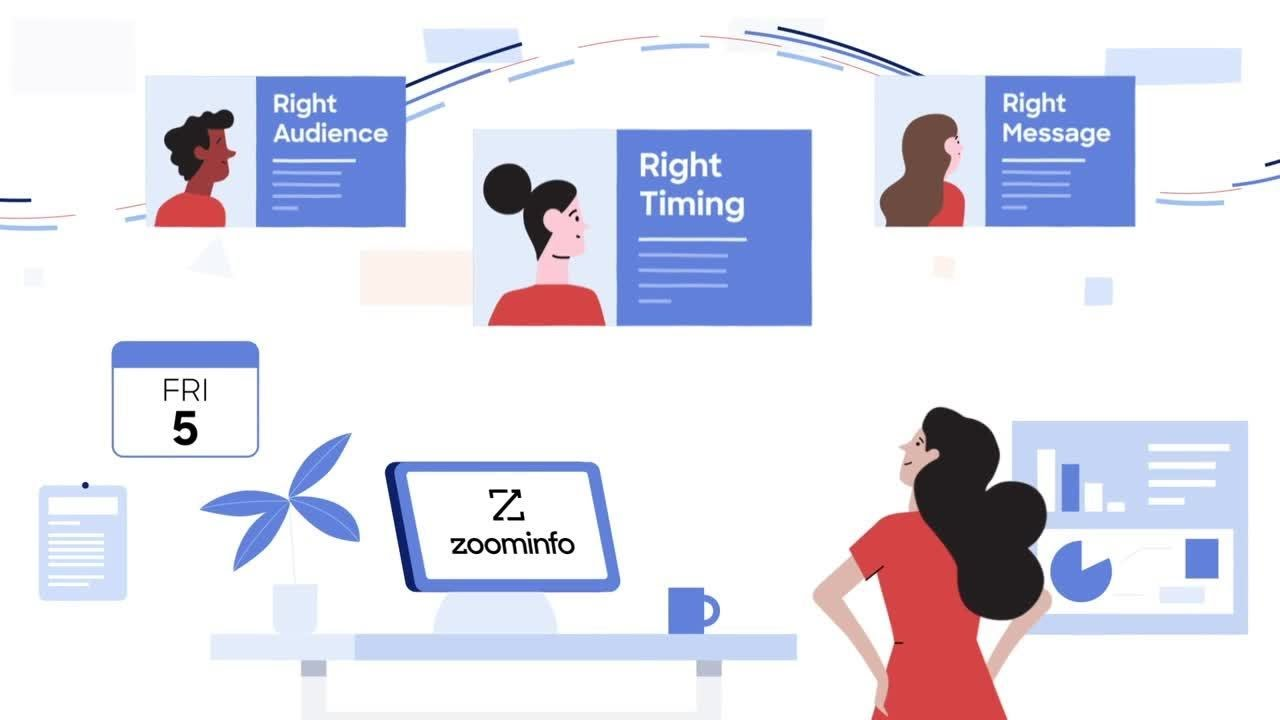
ZoomInfo is a B2B intelligence and GTM platform built on a large data foundation: 500M contacts, 100M companies, 135M+ verified phone numbers, 120M direct-dial phone numbers, and 200M+ verified business emails.
That data is verified through a collection and verification system backed by 300+ human researchers, reaching up to 95% accuracy on first-party data.
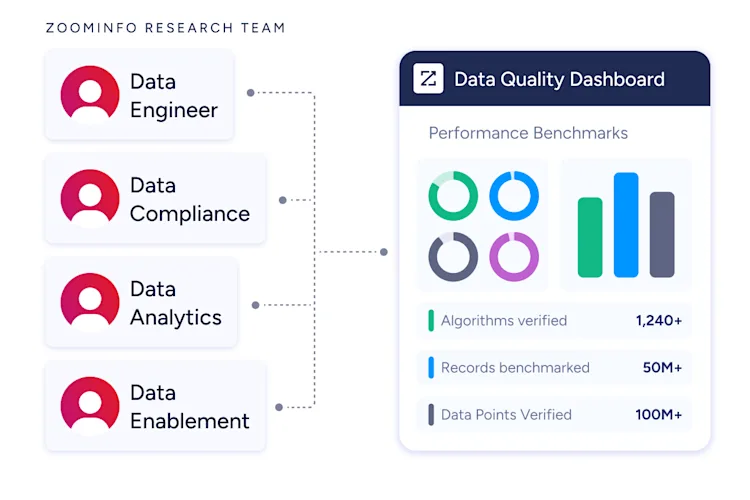
Source: ZoomInfo
In a Fortune 500 competitive RFP analyzing 25 million contacts across vendors, the independent consultant concluded that "no other competitor came even close."
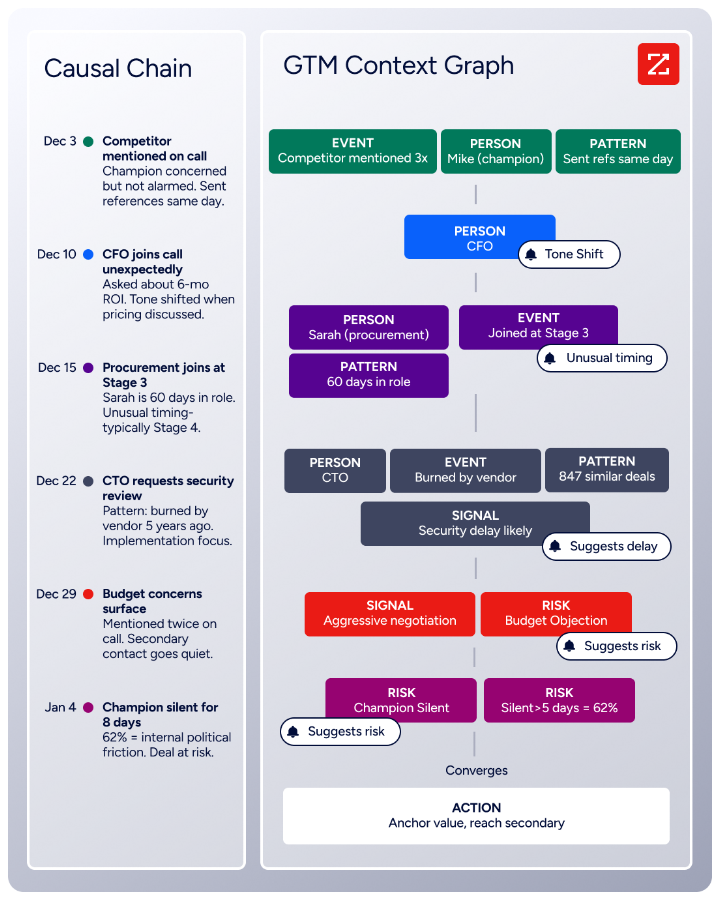
ZoomInfo's GTM Context Graph processes 1.5B+ data points daily, combining B2B data with your CRM records, conversation transcripts, and behavioral signals to show not just what happened in an account, but why, so your team can prioritize accounts showing real buying momentum.
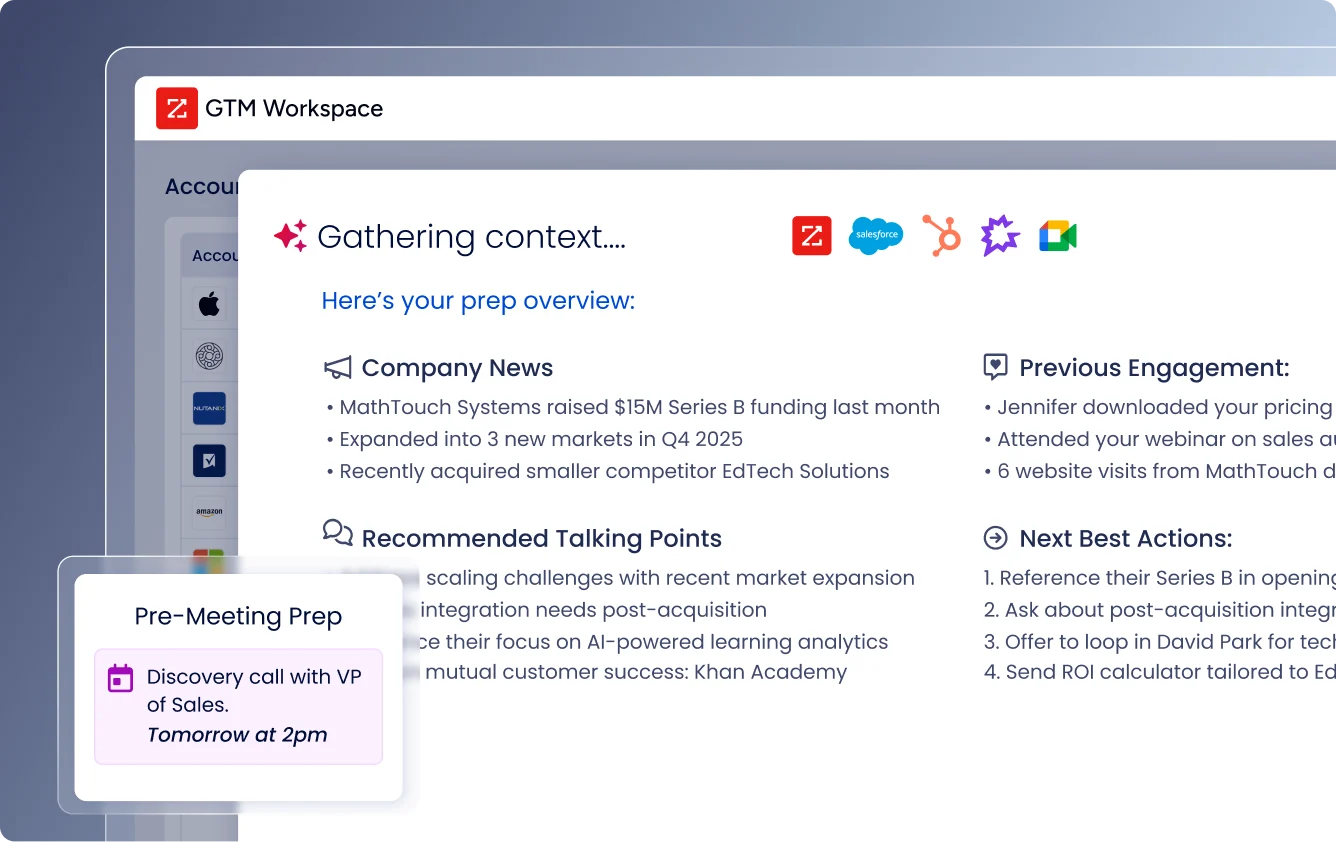
That intelligence reaches sellers through GTM Workspace, marketers and RevOps through GTM Studio, and any custom tool or partner platform through APIs and MCP.
For field sales teams using SPOTIO, ZoomInfo solves three problems that business directory data cannot.
Comprehensive B2B Data: Know who to visit before you leave the office.
SPOTIO's Google Places integration tells you a business exists at a location. ZoomInfo tells you who works there, what their title is, how to reach them directly, what technology they use, and how their company is structured.
ZoomInfo's Contact & Company Search provides access to 300+ company attributes for market segmentation, including department org charts with decision-makers' direct dials and emails, job-change alerts, firmographics (industry, headcount, revenue, locations), and technographics covering 30,000+ technologies across 30+ million companies.
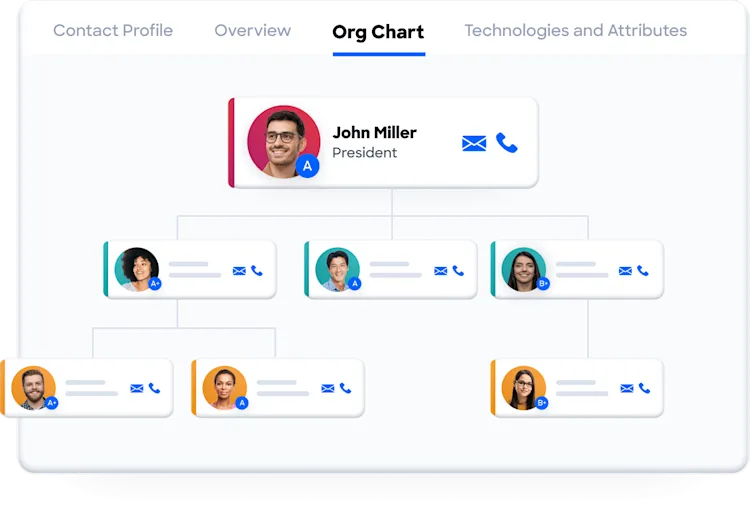
Source: ZoomInfo
Automated alerts notify you when a champion changes roles, so your field team can follow relationships rather than buildings.
For a field rep preparing a day's route in SPOTIO, the difference is between visiting an address and visiting a known contact (the VP of Operations who started two months ago at a company that uses a competitor's product and just raised a Series B). ZoomInfo turns every SPOTIO pin on the map into a qualified opportunity rather than a cold knock.
"ZoomInfo gives us the information we need to execute. It's already there, so we can be three steps ahead." (Vensure)
Buyer Intent and Signals: Visit accounts when they're actively in-market.
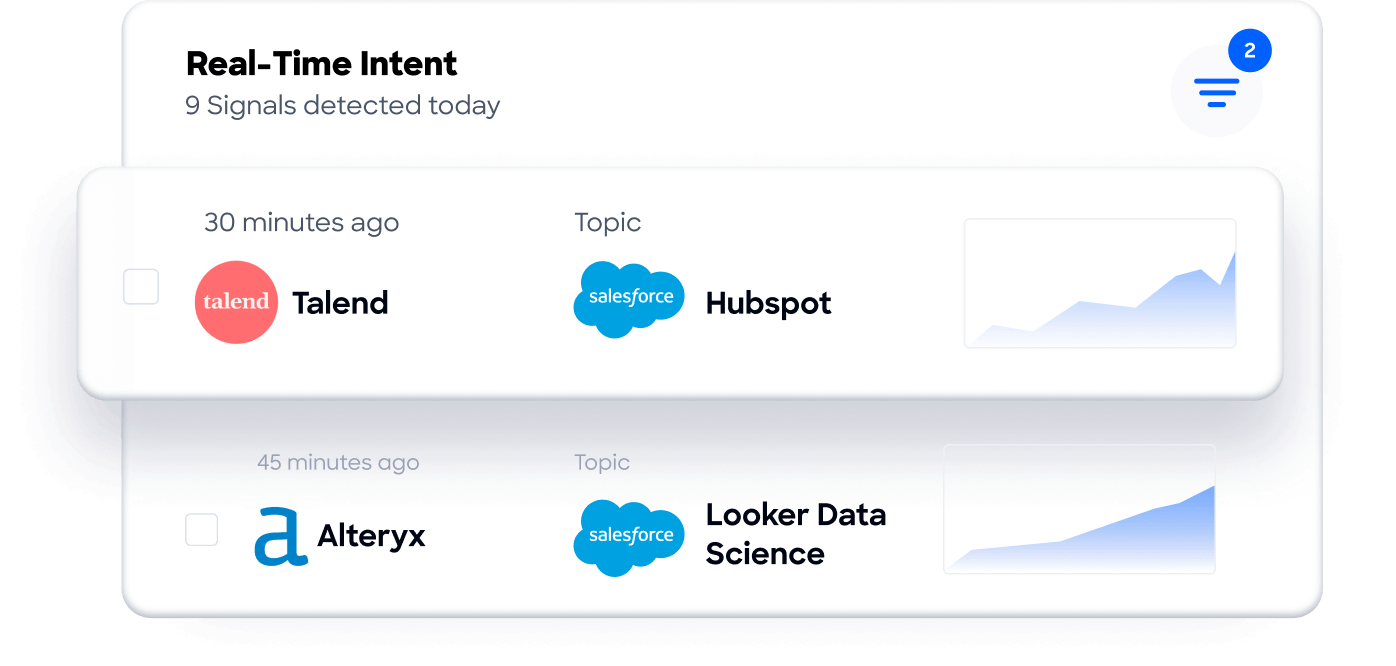
SPOTIO's territory management identifies where reps should go based on geography and past activity. ZoomInfo's Buyer Intent data identifies when they should go, tracking signals from 210 million IP-to-Organization pairings and 6 trillion+ new keyword-to-device pairings sourced monthly.
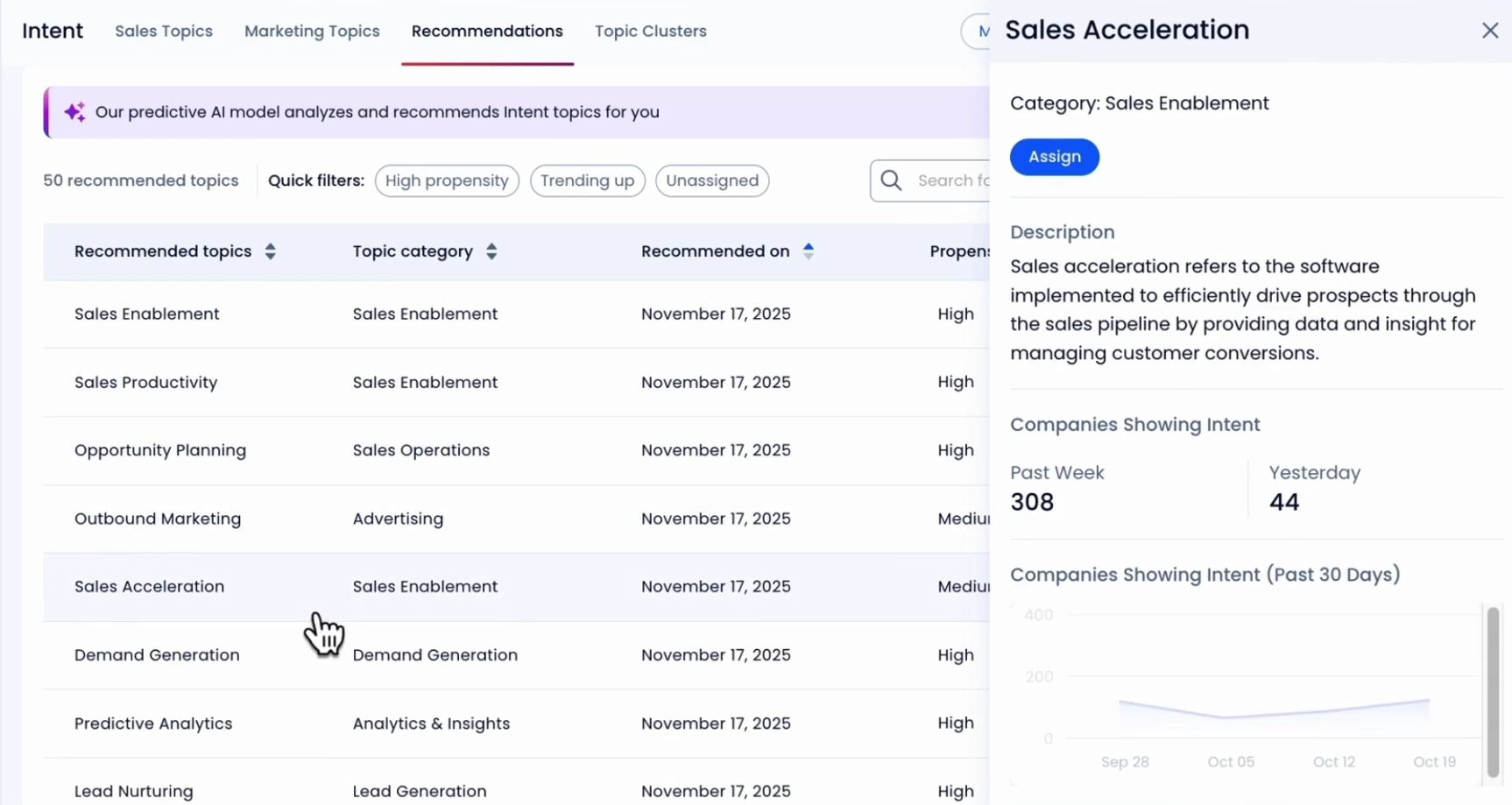
Guided Intent, exclusive to ZoomInfo, identifies topics historically correlated with deal success rather than requiring manual topic selection.
Source: ZoomInfo
This transforms field routing. Instead of covering a territory systematically from north to south, a rep can prioritize the three accounts in their territory that started researching your category this week.
ZoomInfo's GTM Context Graph goes further, connecting intent signals, CRM records, and conversation data to show not just what happened, but why, so your team can identify which accounts deserve an in-person visit this week.
Source: ZoomInfo
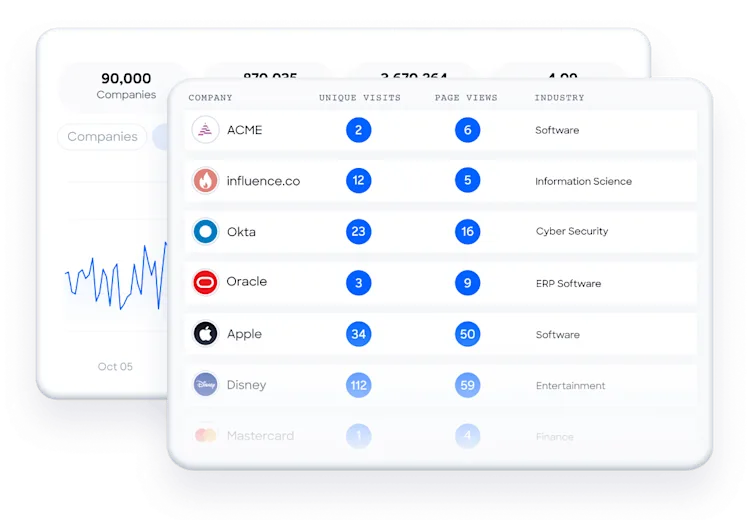
WebSights adds another signal by resolving anonymous website traffic to companies, including buying team identification. If a company on your route visited your pricing page yesterday, that visit moves from routine to urgent.
Source: ZoomInfo
"That combination of our internal CRM data, external signals, and AI that's given all that context has helped us craft very specific account- and persona-based messages. And people have responded to them right away." (Seismic)
Universal Access: Feed ZoomInfo intelligence into SPOTIO and any other tool.
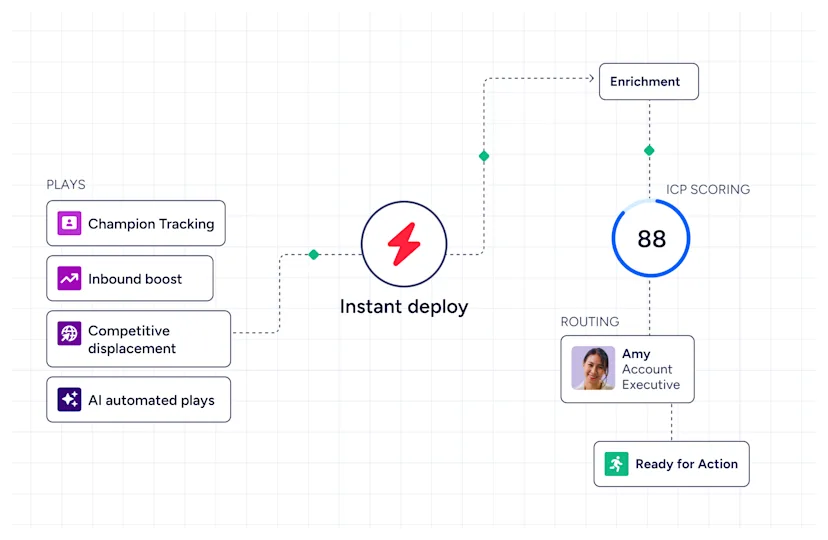
ZoomInfo delivers its intelligence through three channels. GTM Workspace gives sellers a single place where prioritized accounts, AI-drafted outreach, and deal execution converge.
Source: ZoomInfo
GTM Studio gives marketers and RevOps teams a builder for audience definition and campaign orchestration in natural language.
Source: ZoomInfo
APIs and MCP expose the same intelligence to any custom agent, internal tool, or partner platform.
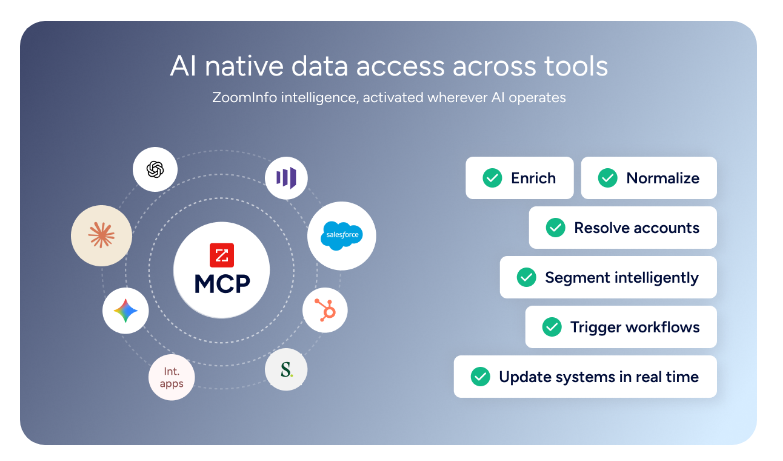
For SPOTIO users, the practical application is feeding ZoomInfo-enriched contact lists into SPOTIO via CRM sync or CSV import. A RevOps team can build a targeted account list in ZoomInfo, filter by intent signals and firmographic criteria, enrich with verified direct dials and emails, push to Salesforce, and have those records appear on reps' SPOTIO maps with the contact data and account context that Google Places alone cannot provide. API access is included in all relevant ZoomInfo plans.
"The plug-and-play aspect of the API means I can integrate it very easily into any process and get information at a moment's notice." (BDO Canada)
ZoomInfo Pricing: Entry points from free to enterprise.
ZoomInfo uses a consumption-based pricing model with custom quoting based on usage patterns, seats, credit volume, and features. Unlike SPOTIO's 25-license minimum, ZoomInfo offers two entry points that require no commitment.
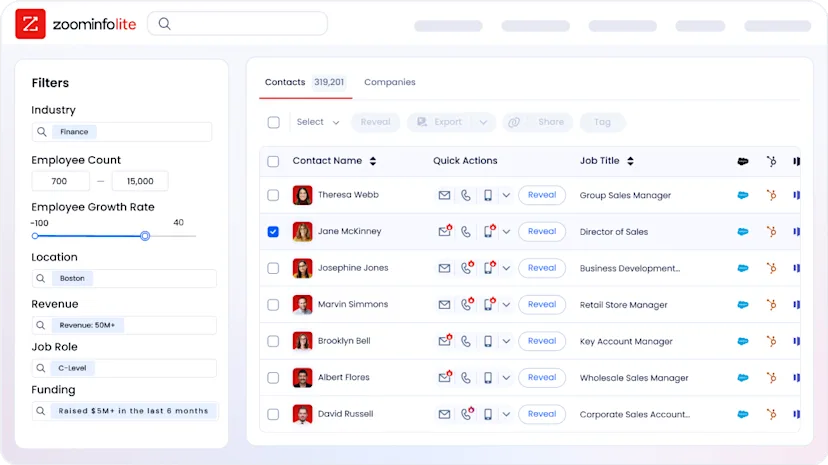
ZoomInfo Lite is a permanent free tier (no credit card, no time limit) with access to 100M+ verified profiles, 10 monthly export credits, the ReachOut Chrome Extension, and WebSights Lite.
Source: ZoomInfo
A separate 7-day free trial provides access to core platform features including contact and company search, intent signals, and email outreach.
Paid plans are organized into Sales, Marketing, and ABM tiers, each with Professional, Advanced, and Enterprise levels. Sales plans range from contact and company data at the Professional level to AI-generated account summaries, real-time intent signals, and advanced automation at Enterprise. ZoomInfo serves 35,000+ companies worldwide and is recognized as a Leader in Gartner's Magic Quadrant for ABM Platforms and a Leader in Forrester's Wave for Intent Data Providers.
SPOTIO and ZoomInfo: How They Work Together
Aspect | SPOTIO | ZoomInfo |
|---|---|---|
Primary focus | Field sales execution | B2B data intelligence and GTM |
Core strength | GPS-verified activity tracking and route optimization | Contact/company data and buying signals |
Prospecting data | Google Places (B2B) and Lead Machine (B2C) | 500M contacts, 100M companies, intent signals, technographics |
Contact data depth | Basic business listings | Verified direct dials, business emails, org charts |
Buying signals | Not available | Intent data, website visitor tracking, job-change alerts |
Territory management | Map-based design, GPS verification, hierarchy support | Territory management filters and account segmentation |
Route optimization | Up to 150 stops with live navigation handoff | Not applicable |
Activity tracking | GPS-verified with geo-fence automation | Not applicable |
AI capabilities | DASH field co-pilot (visit prep, voice logging, record updates) | GTM Context Graph, GTM Workspace AI, AI-drafted outreach |
CRM integration | Salesforce (native), HubSpot/Dynamics/Zoho (Zapier) | Salesforce, HubSpot, Dynamics (native) |
Free entry point | No free trial or free tier | Permanent free tier + 7-day trial |
Best for | Optimizing how reps cover territory | Determining which accounts and contacts to prioritize |
Final Verdict
SPOTIO and ZoomInfo serve different stages of the same sales motion, and they work best together.
SPOTIO is the field execution layer. It answers the operational questions outside sales teams face every day: how to design territories that eliminate overlap and coverage gaps, how to route reps through 50 or 100 stops, how to verify that visits actually happened, and how to coach reps using real activity data instead of self-reported numbers.
For organizations with 25 or more field reps selling in person (across B2B verticals like telecom, financial services, and distribution, or B2C verticals like solar, roofing, and home services) SPOTIO provides the GPS-verified accountability and map-based workflow that general-purpose CRMs were never designed to deliver.
ZoomInfo is the intelligence layer. It answers the strategic questions that determine whether field activity converts to revenue: which accounts are in-market, who sits on the buying committee, what technology does the prospect already use, and when did the decision-maker change roles.
For B2B field teams, feeding ZoomInfo-enriched data into SPOTIO through a shared CRM transforms territory coverage from systematic canvassing into targeted engagement. The rep still uses SPOTIO to plan routes, log visits, and manage pipeline.
But every pin on that map now carries the depth of ZoomInfo's 500M-contact database, intent signals, and verified direct dials, so the rep arrives with context, not just an address.
Get started with ZoomInfo here.
The combination works because the two platforms operate at different layers without overlapping. ZoomInfo identifies the targets and surfaces the signals. SPOTIO gets reps to those targets and tracks what happens when they arrive. Together, they close the gap between knowing who to sell to and actually getting in front of them.
SPOTIO FAQ
What types of sales teams is SPOTIO built for?
SPOTIO is built for outside sales teams: reps who sell face-to-face at customer locations, on doorsteps, and from the road. It serves both B2B verticals (telecom, financial services, medical devices, commercial construction, distribution) and B2C verticals (solar, roofing, home improvement, home services, door-to-door). The platform is not designed for inside sales teams or organizations without a field sales operation.
Does SPOTIO replace a CRM?
No. SPOTIO sits on top of an existing CRM. The company states that its greatest strength is enhancing an enterprise CRM rather than replacing one. Smaller teams can use SPOTIO as a standalone CRM, but larger organizations will typically run both SPOTIO and a CRM like Salesforce. SPOTIO's deepest integration is with Salesforce (native bidirectional sync); HubSpot, Dynamics, and Zoho connect through Zapier.
How much does SPOTIO cost?
SPOTIO does not publish pricing. The company offers three plan tiers (B2B, B2C, and Custom) priced per user, with a minimum commitment of 25 licenses. Billing intervals are quarterly and annual, though smaller accounts may be restricted to annual billing.
Add-ons including the Engagement Bundle, Lead Machine, E-Contracts, and DASH AI carry additional costs. All fees are non-refundable. Getting a quote requires contacting the sales team or requesting a demo.
Does SPOTIO offer a free trial?
No. SPOTIO does not offer a free trial or a free tier. The company provides demos and can arrange pilot programs for qualified prospects. This contrasts with ZoomInfo, which offers both a permanent free tier (ZoomInfo Lite with 10 monthly export credits) and a 7-day free trial with no credit card required.
What prospecting data does SPOTIO provide?
For B2C teams, SPOTIO offers Lead Machine, which filters homeowners by up to 15 demographic criteria including credit capacity, home market value, resident age, and lifestyle interests.
For B2B teams, SPOTIO integrates with Google Places to surface business listings within the map view, returning up to 20 results at a time.
Neither source provides intent signals, verified direct-dial phone numbers, org charts, or technographic data. B2B field teams needing deeper prospecting intelligence typically supplement SPOTIO with a data platform like ZoomInfo.
Can SPOTIO work offline?
Yes, partially. SPOTIO's Download My Day feature lets reps pre-download their full territory, route, and account data for up to 24 hours offline, with automatic syncing when connectivity returns. However, DASH AI features require an active internet connection, so reps in areas with poor cellular coverage cannot access AI-powered visit prep, voice logging, or document-based answers while offline.
What is DASH AI and what does it do?
DASH is SPOTIO's AI co-pilot, embedded in the mobile and web app. It has four components: DASH IQ (answers questions from uploaded company documents), DASH Actions (converts conversational input into SPOTIO records and tasks), DASH Go (voice-first mode for driving between stops), and DASH Connect (links SPOTIO to external LLMs like Claude and ChatGPT). Every write action requires human confirmation before saving. DASH is included on Standard AI plans.
How does SPOTIO track field rep activity?
SPOTIO captures field activity through manual one-tap logging (with GPS coordinates and timestamps attached automatically) and Autovisits, a geo-fence automation that starts a visit clock when a rep enters a 100-meter radius around a lead and stops it when they leave. GPS Trails stitch location pings into visible route overlays on the web app map, and managers can view trails for up to 10 reps at once. All activity data syncs to the connected CRM automatically.
Researching SPOTIO? These comparisons and alternatives help you decide:
