

Choosing between Storylane and Consensus for demo automation often comes down to five questions:
Do you need to create demos quickly with little production work, or are you willing to invest more time for deeper buyer intelligence?
Is your priority converting website visitors with self-serve product tours, or scaling presales across large buying committees?
Do you need a free or low-cost entry point, or is budget secondary to proven enterprise ROI?
Are your demos marketing-led (website embeds, campaigns) or sales-led (personalized presales demos, live calls)?
Does your team have dedicated presales engineers, or are product marketers and AEs building demos themselves?
In short, here's what we recommend:
Storylane is built for speed. Product marketers and sales teams can capture a product walkthrough with a Chrome extension, add AI-generated guides and voiceovers, and publish an interactive demo in minutes. With a free plan, transparent pricing starting at $40/month, and a no-code editor that non-technical teams can run independently, Storylane makes demo automation accessible to growth-stage SaaS companies. Where it falls short: mobile rendering is inconsistent, there's no conditional branching for multi-persona flows, and screenshot-based demos need manual updates when your product UI changes.
Consensus is built for enterprise presales. Founded in 2013, it pioneered demo automation and built an analytics engine called Demolytics that tracks which stakeholders view your demo, which features they care about, and who they forward it to internally. This buying-group intelligence is why 15 of the top 30 global software companies use the platform. The tradeoff: pricing starts at $600/month with no free tier, demo creation takes more steps than lighter competitors, and the platform requires a dedicated presales team to run well.
Both platforms help you show your product without scheduling a live call. But interactive demos solve only one piece of the revenue puzzle: getting buyers to see your software. They don't tell you which accounts are in-market, who the decision-makers are, or how to reach them. That's where a different kind of platform becomes essential.
ZoomInfo is an AI-powered go-to-market platform that answers the questions demo tools cannot: which accounts should your team pursue, who sits on the buying committee, and what signals indicate they're ready to buy. Its B2B dataset covers 500M contacts and 100M companies, 135M+ verified phone numbers, and 200M+ verified business emails. ZoomInfo's GTM Context Graph processes 1.5B+ data points daily, fusing this data with your CRM records, conversation transcripts, and behavioral signals to reveal not just what's happening in a deal, but why. Teams access that intelligence through GTM Workspace for sellers, GTM Studio for marketers and RevOps, or APIs and MCP connections in any tool.
If you want to know which accounts to demo before you build the demo, see how ZoomInfo works.
Storylane vs. Consensus vs. ZoomInfo at a glance
Storylane | Consensus | ZoomInfo | |
|---|---|---|---|
Primary function | Interactive demo creation and distribution | Enterprise demo automation with buyer intelligence | AI go-to-market platform (data, signals, execution) |
Demo creation speed | Minutes (Chrome capture + AI guides) | Hours to days (video + interactive tour production) | N/A (not a demo tool) |
Buyer intelligence | Intent scoring, account reveal, deal intelligence | Demolytics: stakeholder discovery, feature priorities, heatmaps | GTM Context Graph: 500M contacts, intent signals, buying committees, deal intelligence |
Free plan | Yes (1 published demo) | No | ZoomInfo Lite (permanent free tier) |
Starting price | $40/month (Starter, annual) | $600/month (Starter, 5 seats) | Custom-quoted |
CRM integrations | HubSpot, Salesforce, Marketo, Pardot, Freshsales, Dynamics 365 | Salesforce, HubSpot, Marketo, Eloqua, Pardot | Salesforce, HubSpot, Dynamics 365, 120+ marketplace integrations |
AI capabilities | AI demo creation, voiceovers, video avatars, HTML editing, translation | AI prompting, video content, scripting, voiceovers, data editing, AI agents | GTM Context Graph, AI-powered outreach, account summaries, guided intent |
Security | SOC 2 Type II, GDPR, SAML 2.0 | SOC 2 Type II, GDPR, CCPA | ISO 27001, ISO 27701, SOC 2 Type II, GDPR, CCPA |
Best for | Product marketers and growth teams building demos fast | Enterprise presales teams scaling demo capacity | Revenue teams identifying, reaching, and converting buyers |
They solve different problems at different stages
The core distinction between Storylane, Consensus, and ZoomInfo is not feature depth. It's where each sits in the revenue cycle.
Storylane and Consensus both answer the question: How do I show my product to prospects without scheduling a live demo? They differ in how they answer it, but the mission is the same. Storylane optimizes for speed and self-serve distribution. Consensus optimizes for buying-group intelligence.
ZoomInfo answers a different question: Which accounts should I be demoing in the first place, and who on the buying committee should see what?
This makes ZoomInfo complementary to both demo platforms, not a direct alternative. A team might use Storylane or Consensus to create and distribute demos while using ZoomInfo to identify target accounts, surface buying-committee contacts, and monitor intent signals that show when a prospect is actively evaluating solutions.
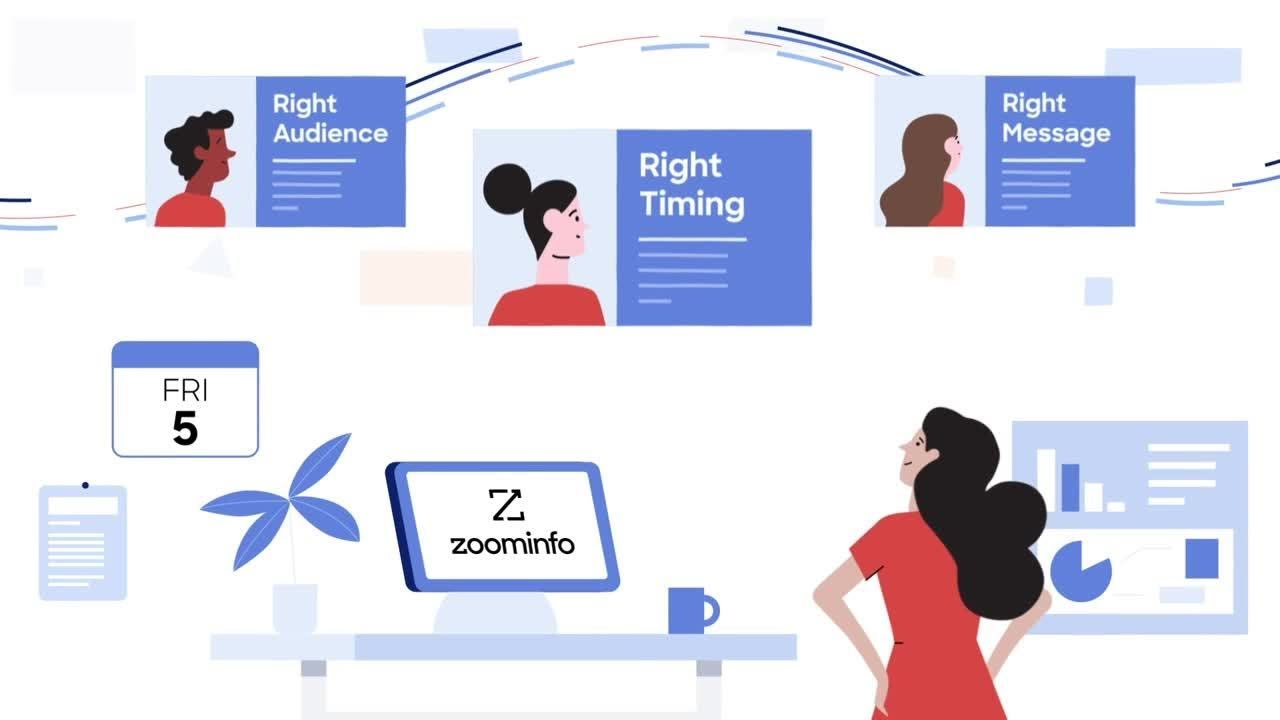
The practical implication: if your pipeline problem is that prospects don't understand your product, a demo tool helps. If your problem is that you're demoing to the wrong accounts or missing stakeholders on the buying committee, a go-to-market intelligence platform helps. Most teams need both.
Storylane wins on speed and accessibility
Storylane's reputation rests on one claim: publish your first demo in 10 minutes. In practice, the speed advantage is real.
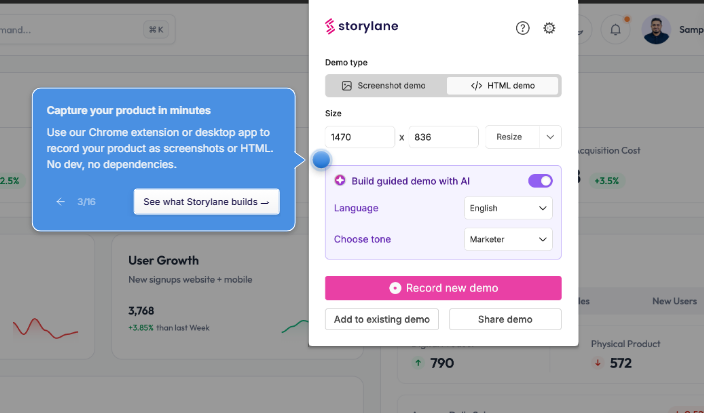
The workflow starts with a Chrome extension that captures your product interface in either screenshot mode (static images, fastest to build) or HTML mode (a responsive, editable replica of your actual UI). During capture, AI auto-generates guided steps based on your clicks. After recording, the no-code editor lets product marketers swap text, replace logos with dynamic tokens, add voiceovers in 60+ voices across 25+ languages, and publish without filing an engineering ticket.
Source: Storylane
Storylane also offers a permanent free plan with one published demo, AI voiceovers, and basic analytics. Paid plans start at $40/month. For growth-stage companies or product marketers who need to move fast on a limited budget, this accessibility matters.
The tradeoff is depth. Storylane's analytics tell you who viewed a demo and how they interacted. They don't tell you who else on the buying committee should be viewing it.
Consensus wins on buying-group intelligence
Where Storylane tracks demo views, Consensus tracks buying decisions.
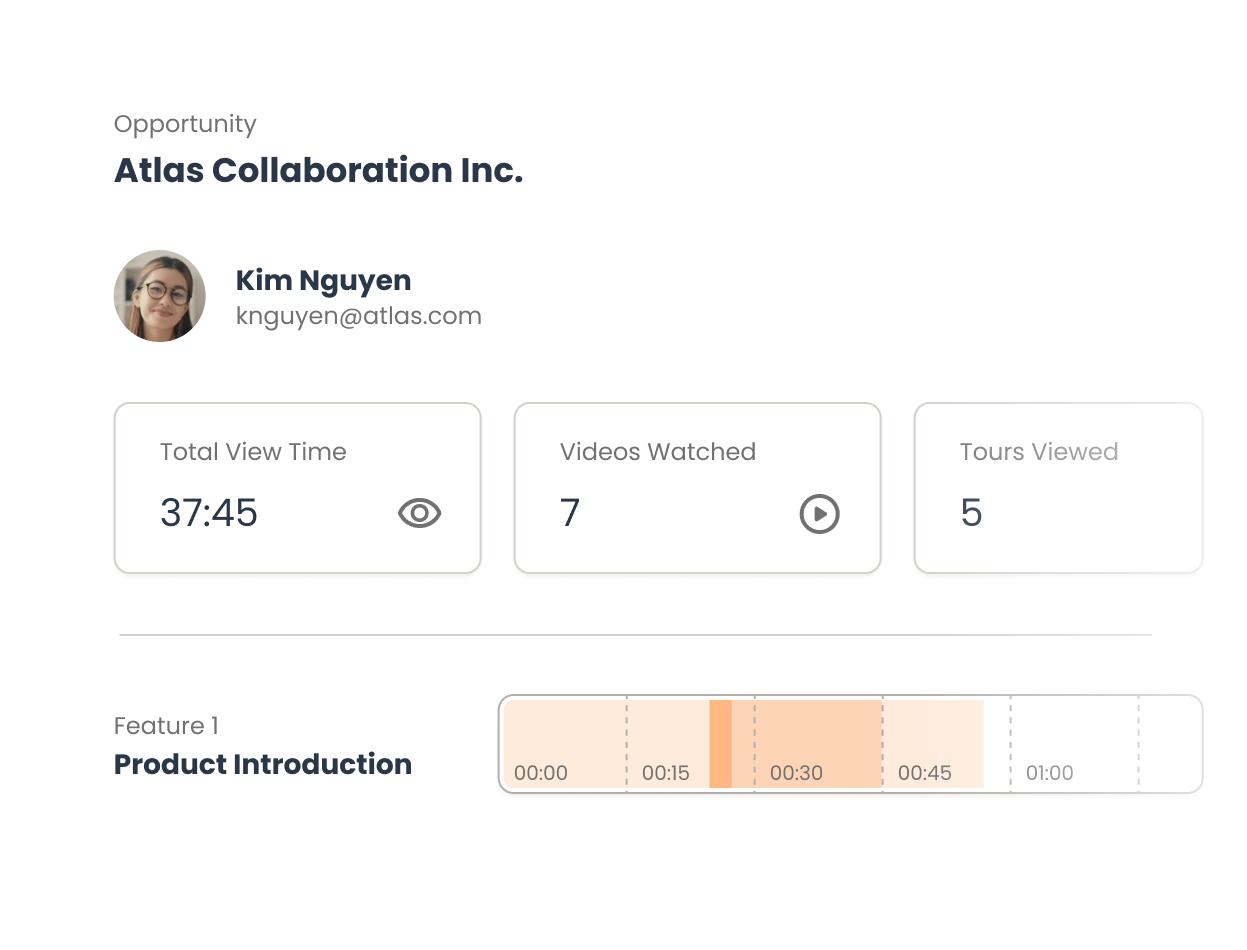
The difference centers on Demolytics, Consensus's analytics engine. When a rep sends a demo link to a prospect, Demolytics tracks not just whether that person watched, but whether they forwarded the link to colleagues. It identifies and tracks each new viewer, even if the sales team never knew they existed.
Source: Consensus
Consensus also captures what each stakeholder cares about.
Before watching, viewers rate features as "Very Important," "Somewhat Important," or "Not Important." The platform then assembles a personalized video sequence for each viewer and reports a Buyer Matrix showing the committee's collective priorities. Reps walk into the next call knowing which features to lead with and who is championing or blocking the deal.
The price for this intelligence: Consensus starts at $600/month for 5 seats, with no free plan and no self-serve trial. Pricing requires a sales conversation.
ZoomInfo fills the gaps that demo tools leave open
Demo platforms show your product. They don't tell you who to show it to.
Storylane's Account Reveal uses IP-based lookup to identify companies visiting your demo pages, with limits by plan tier (250 to 10,000 visitors per month). Consensus's Demolytics discovers stakeholders who interact with shared demo links. Both provide useful signals within the scope of demo engagement.
ZoomInfo operates at a different scale.
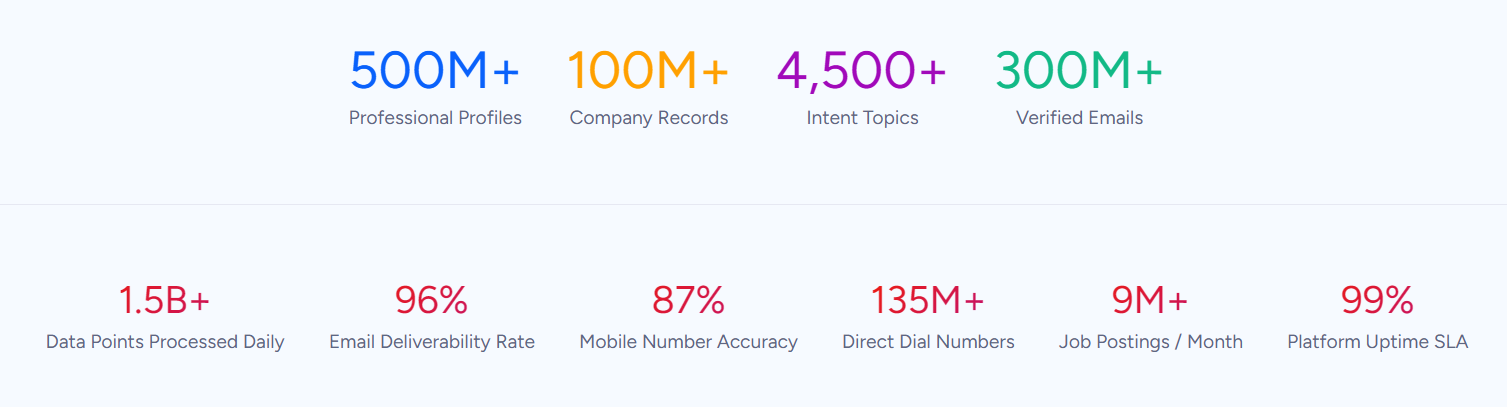
Its database covers 500M contacts, 100M companies, 135M+ verified phone numbers, and 200M+ verified business emails, verified through a pipeline that includes 300+ human researchers and achieves up to 95% accuracy on first-party data. In a Fortune 500 competitive RFP analyzing 25 million contacts across vendors, the independent consultant concluded that "no other competitor came even close."
Source: ZoomInfo
But data alone isn't the differentiator.
ZoomInfo's GTM Context Graph fuses this B2B data with your CRM records, conversation transcripts, and behavioral signals into an intelligence layer that captures why deals move or stall. Your CRM records that a deal advanced to Stage 4. The GTM Context Graph identifies that executive sponsorship at this stage, combined with ROI-focused questions on the last call, matches the pattern behind closed-won deals in your segment.
For go-to-market teams, this means the follow-up email addresses the specific concern a stakeholder raised because the system understands why it matters now. GTM plays target accounts whose signal combinations match your actual win patterns. Forecasts reflect buying evidence, not stage labels.
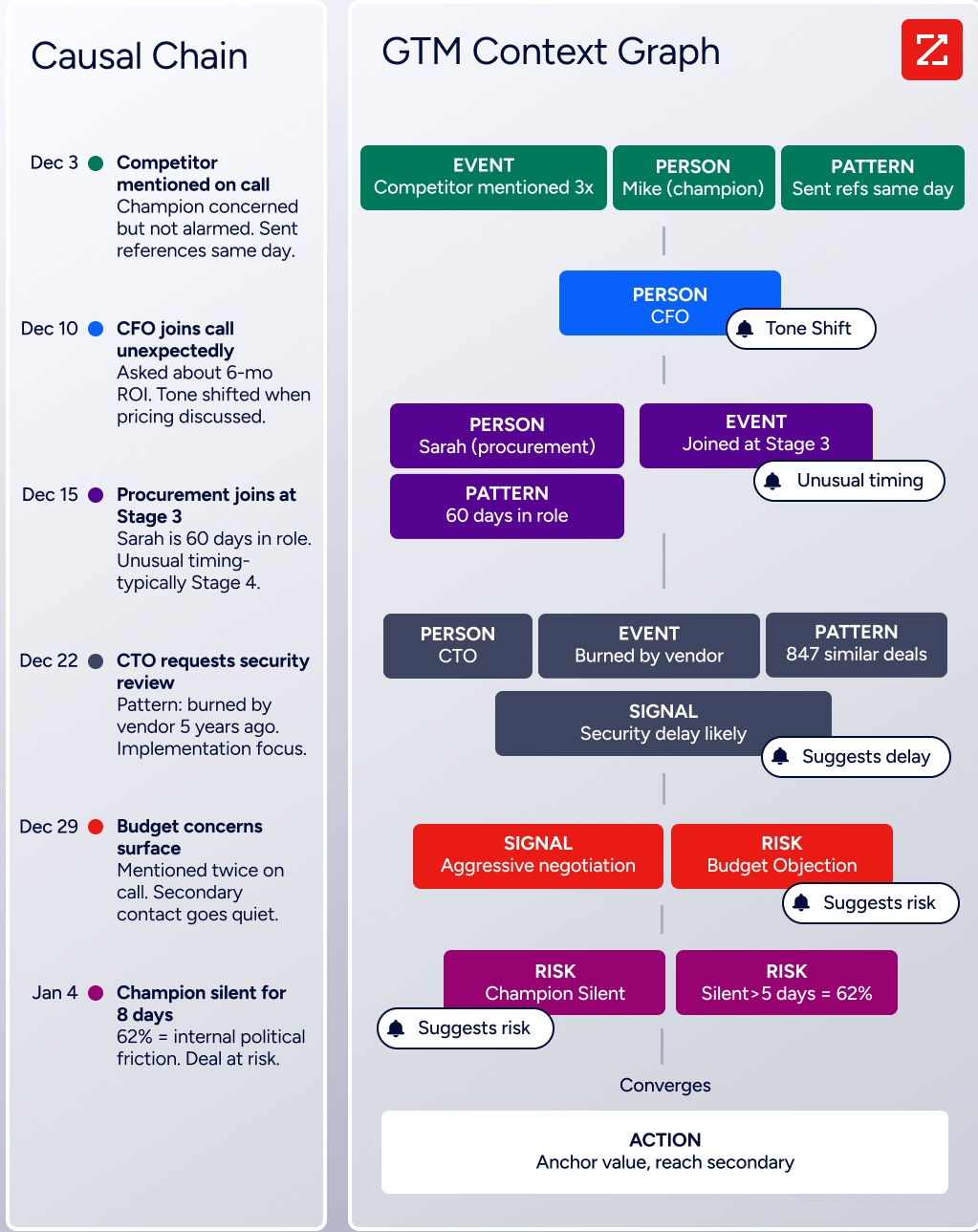
Source: ZoomInfo
"It's not just the data itself. It's more about the right data at the right time to help us reach out with the right message across that full buyer journey." (Chelsea Kenyon, Senior Director of Digital Strategy, Redwood Logistics)
Demo creation: templates vs. freedom
Each demo platform takes a different approach to building interactive experiences.
Storylane offers two capture modes.
Screenshot demos are static images that load fast and support zoom, blur, and multi-window capture. HTML demos record a responsive HTML/CSS replica where every text field, chart, and graphic is editable. The AI HTML Editor lets non-technical users change demo content through plain-language prompts. Sales reps personalize demos using dynamic tokens that swap names, logos, and data without rebuilding.
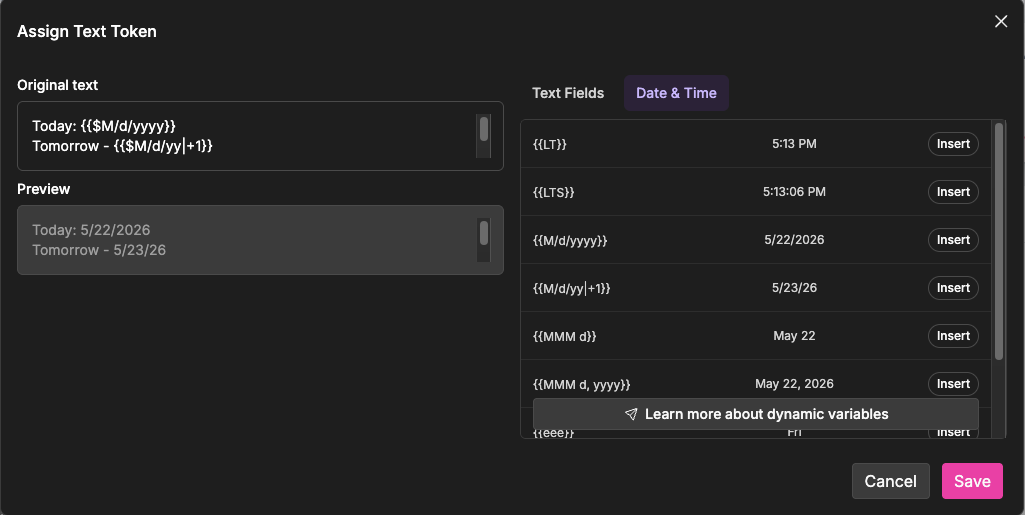
Source: Storylane
Consensus structures demos around buyer choice.
Its Feature Personalization system asks each viewer to rate features by importance before watching, then assembles a custom video playlist: important features get a long-form video, less important features get a short version, and unimportant features are skipped.
Consensus also offers Interactive Product Tours using HTML capture (similar to Storylane), Sandbox tours for POC-level demos, and a Live Demo Platform powered by Saleo that injects personalized data into the native product during live calls.
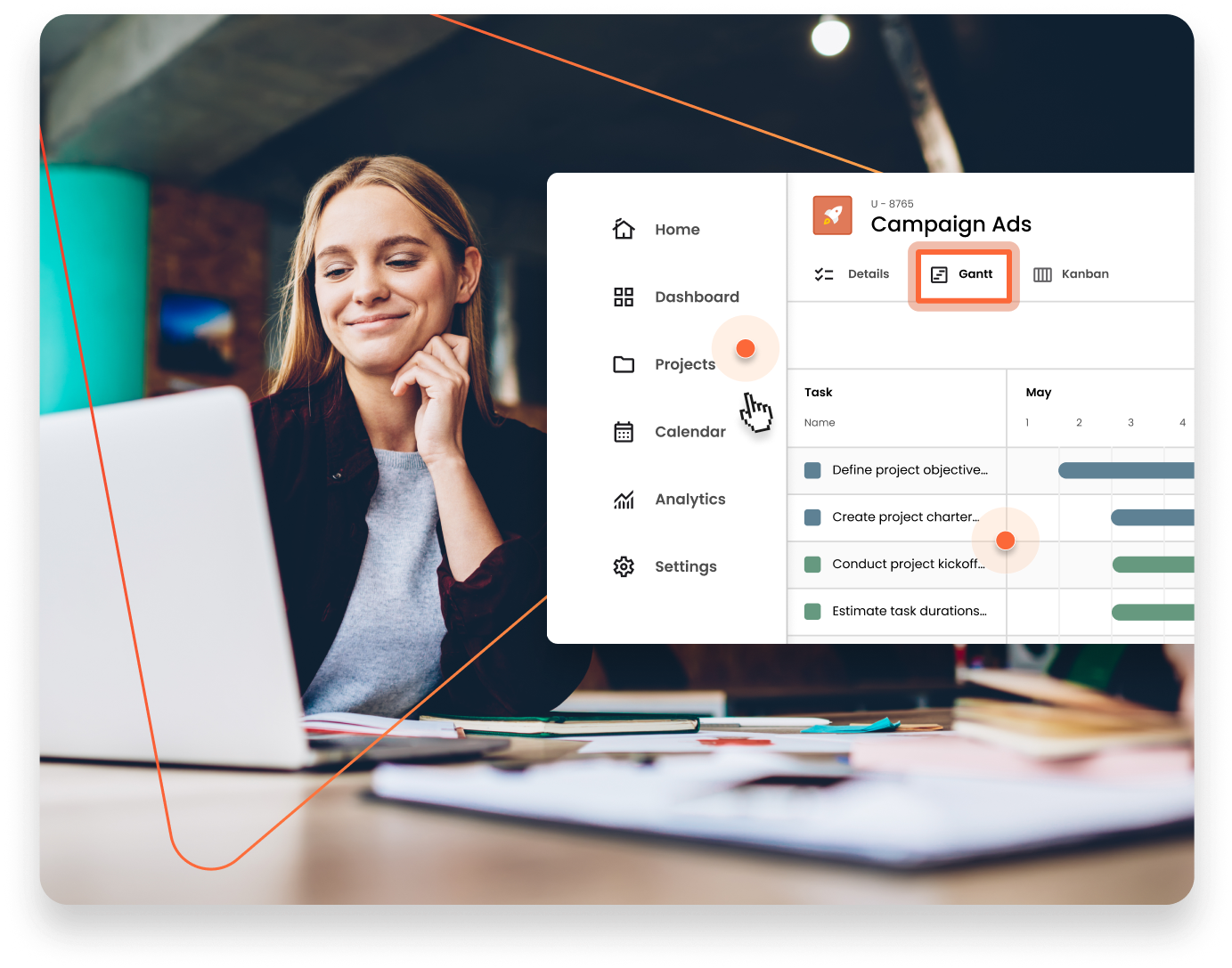
Source: Consensus
Storylane's approach favors speed and editorial control. A product marketer can update every embedded demo at once when the product UI changes. Consensus's approach favors buyer-driven personalization. Two prospects sent the same demo link see different content, in different lengths, based on what they said mattered to them.
One gap in Storylane: it lacks conditional branching, so demos follow a linear path. Consensus's Discovery demos support branching pathways that route viewers through different content based on their answers to discovery questions.
Analytics reveal different priorities
Both platforms track demo engagement, but the depth and purpose differ.
Storylane provides three analytics tiers: global analytics, per-demo analytics, and session-level replays showing what each viewer did step by step.
It calculates an automatic intent score (Low/Medium/High) from time spent, steps completed, and CTA interactions. Deal Intelligence connects demo engagement to CRM opportunities in HubSpot or Salesforce, showing which deals have demo engagement and which have stalled. A/B testing lets teams compare demo variants on conversion and intent metrics.
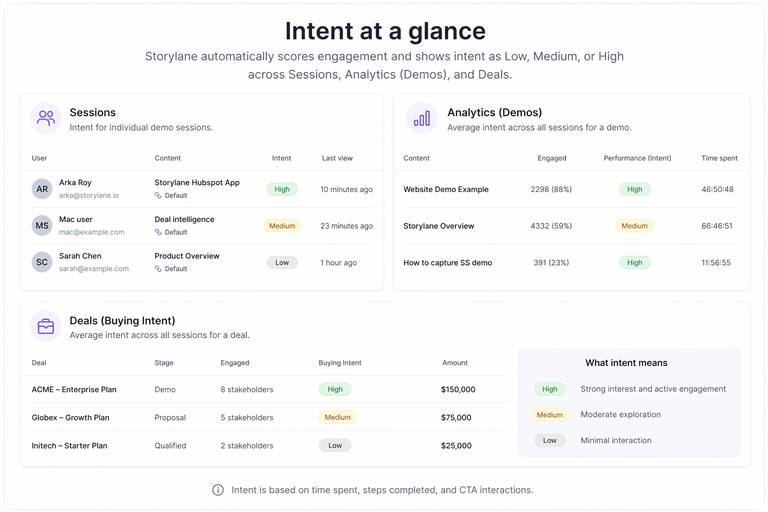
Source: Storylane
Consensus provides Demolytics at six levels: buyer group analysis, team performance, individual comparison, rep performance, recent activity, and per-demo performance.
Per-viewer heatmaps show second-by-second watch behavior, highlighting rewatched sections in orange and red. Buyer Reactions let viewers click "Love it," comment, or "Dislike" at any moment during playback, with each reaction timestamped to the exact frame. The Buyer Matrix maps feature priorities across every stakeholder in the buying group.
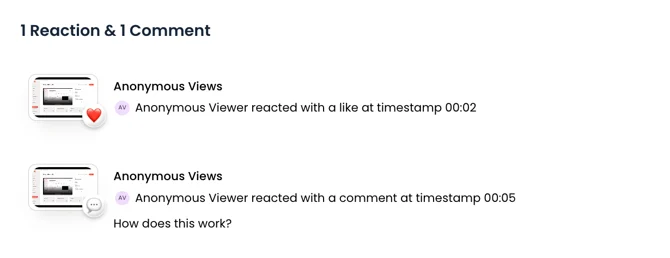
Source: Consensus
Storylane's analytics serve marketing teams measuring conversion: which demos drive the pipeline, which variants perform better, and which accounts are engaging. Consensus's analytics serve presales teams navigating complex deals: which stakeholders have seen the demo, what each one cares about, and where buying-group consensus is forming.
ZoomInfo provides intelligence at a different layer.
Rather than tracking demo engagement, ZoomInfo tracks buyer intent signals drawn from 210 million IP-to-Organization pairings and 6 trillion+ new keyword-to-device pairings sourced monthly. Guided Intent identifies topics historically correlated with deal success instead of requiring manual topic selection.
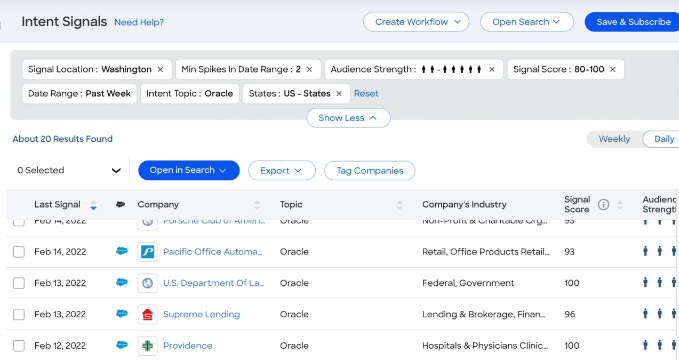
Source: ZoomInfo
WebSights resolves anonymous website traffic to companies and buying-team contacts. This signals layer operates upstream of any demo tool, telling you which accounts are researching solutions before they ever view a demo.
"That combination of our internal CRM data, external signals, and AI that's given all that context has helped us craft very specific account- and persona-based messages. And people have responded to them right away." (Toby Carrington, Chief Business Officer, Seismic)
Pricing reflects different markets
The pricing models reveal who each platform serves.
Storylane is the most accessible.
The free plan includes one published demo with screenshot/video capture, AI voiceovers, and basic analytics. Paid plans scale predictably: Starter at $40/month (annual), Growth at $500/month for 5 seats with HTML capture and full integrations, and Premium at $1,200/month for 10 seats with Salesforce, SSO, deal intelligence, and offline demos.
Enterprise adds sandbox demos and unlimited AI usage at custom pricing. Storylane charges by creator seats, not by demo viewers.
Consensus does not publish pricing on its website.
Blog posts disclose three tiers: Starter from $600/month (5 seats), Pro from $1,250/month, and Enterprise at custom pricing. There is no free plan and no public trial. Contracts require a sales conversation, and the Terms of Service specify 90 days' written notice to cancel before auto-renewal, with fees described as "non-cancelable and non-refundable." API access requires the Enterprise tier.
ZoomInfo uses custom-quoted, consumption-based pricing with no published dollar amounts.
The platform offers a permanent free tier (ZoomInfo Lite with 10 monthly export credits and access to 100M+ verified profiles) and a 7-day free trial of the full platform. Paid tiers (Professional, Advanced, Enterprise) scale by seat count, credit volume, and feature access. API access is included in all relevant plans.
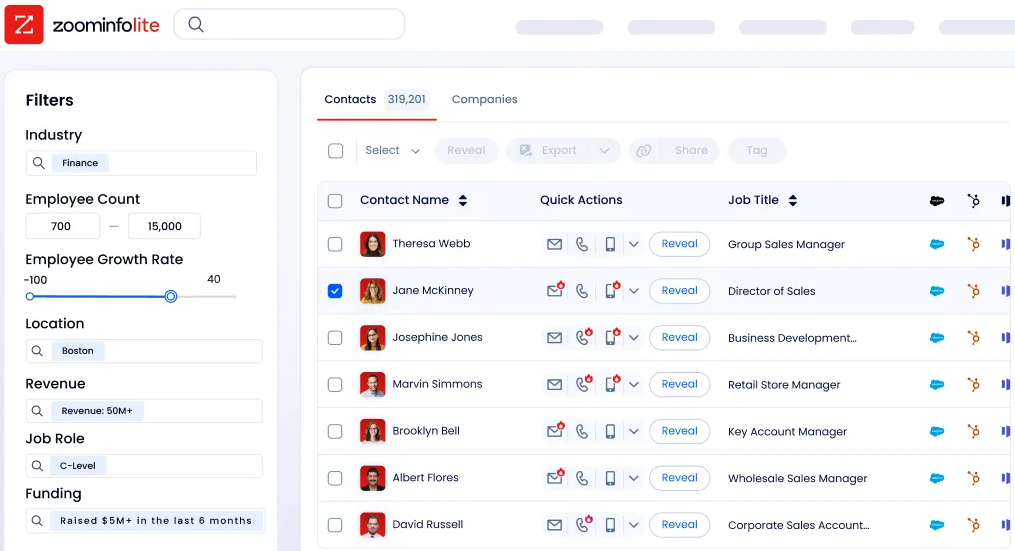
Source: ZoomInfo
For a five-person marketing team wanting their first interactive demo, Storylane's Starter plan costs $280/month (1 seat + 4 additional at $40 each). Consensus's Starter costs $600/month. The gap narrows at enterprise scale, where both move to custom pricing and the evaluation shifts from cost to ROI.
AI features are developing in parallel
Both demo platforms are investing in AI, with different emphases.
Storylane introduced Lily, a demo automation agent that generates a complete guided demo from a single browser capture, including annotations and voiceovers.
The broader AI Suite includes video avatars generated from scripts, voiceovers in 25+ languages, an HTML editor for prompt-based content changes, and translation to 27+ languages. Storylane's AI focuses on reducing demo production time.
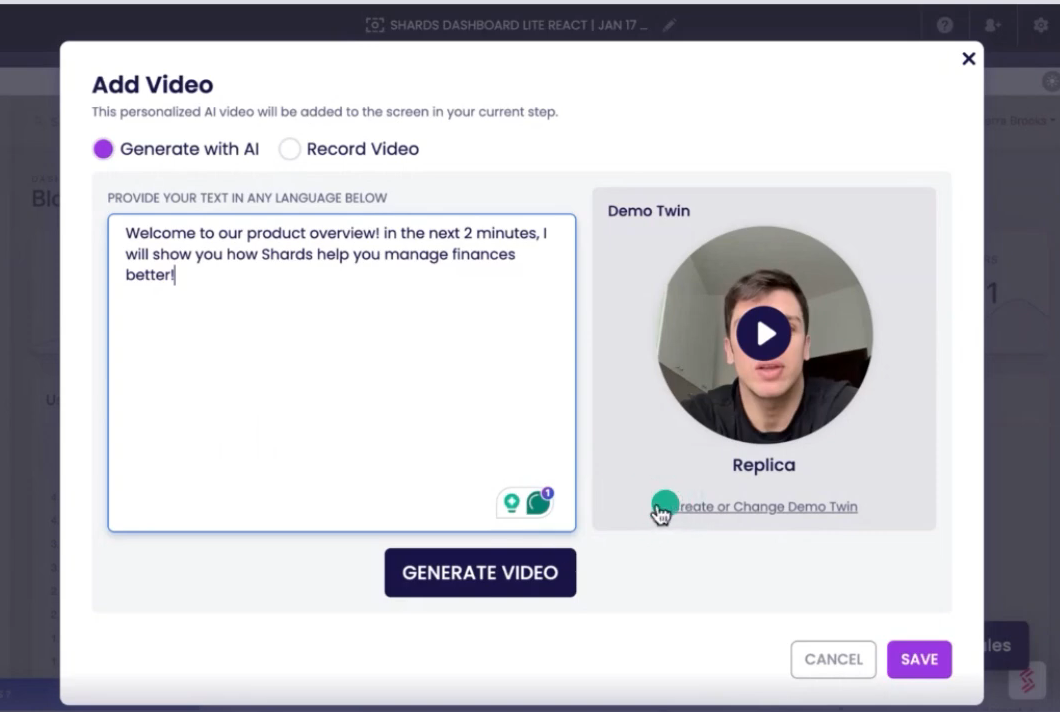
Source: Storylane
Consensus has taken a different path, building AI Agents that automate buyer engagement across the go-to-market stack.
A Marketing Agent handles inbound lead engagement 24/7. A Sales Agent delivers interactive experiences and handles technical questions. An Enablement Agent trains reps on product knowledge. The platform also supports MCP integration, letting AI assistants like Claude and ChatGPT access and create DemoBoards using natural language. Consensus's AI focuses on autonomous buyer engagement and cross-system intelligence.
ZoomInfo's AI operates at the go-to-market intelligence layer.
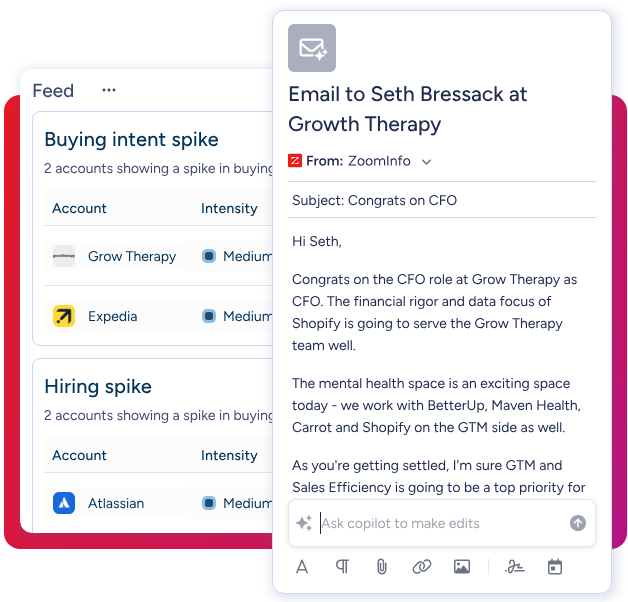
GTM Workspace deploys AI agents that research accounts, draft personalized outreach, monitor buying signals, and update CRM fields. GTM Studio lets marketers describe audiences in natural language and launch multi-channel plays that adjust based on response data. The MCP server connects ZoomInfo's data to any AI assistant. ZoomInfo's AI focuses on making its data and intelligence usable wherever go-to-market decisions happen.
Source: ZoomInfo
Integration ecosystems serve different workflows
Storylane organizes its integrations into four categories: CRM/data (HubSpot, Salesforce, Marketo, Pardot, Freshsales, Dynamics 365), sales tools (Outreach, Gong, Gmail, Calendly, Chili Piper), analytics (Google Analytics, Segment, 6Sense, Clearbit), and automation (Zapier, webhooks, external API). About 20-25 native integrations are documented, with more available through Zapier.
Consensus maintains native integrations with Salesforce (a mature connector with its own versioned release notes), HubSpot, Marketo, Eloqua, Pardot, Outreach, Salesloft, Gong, Gmail, Outlook, Slack, Highspot, and G2.
Its REST API and three webhook event types (demo_watched, new_lead, demo_utm) enable custom integrations, though API access requires the Enterprise plan. The Zapier integration is listed as beta.
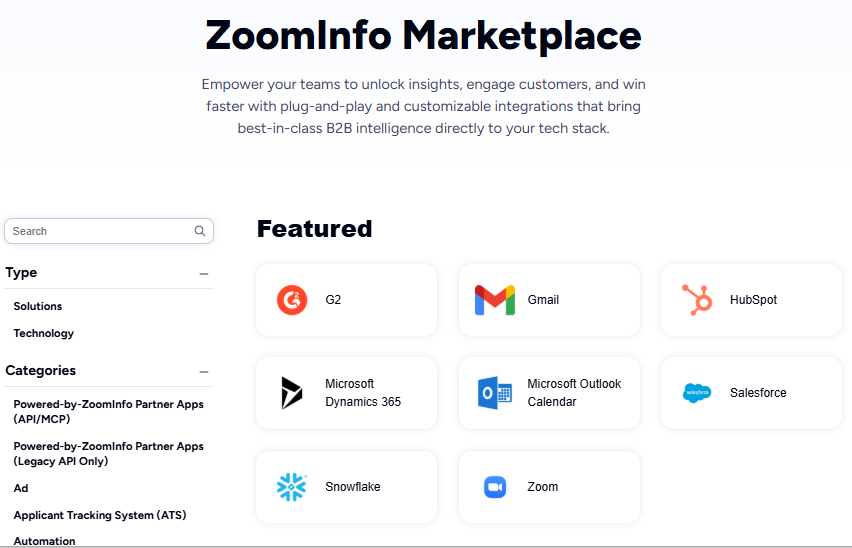
ZoomInfo's App Marketplace lists 172+ integrations across CRM, marketing automation, sales engagement, data warehouses, cloud platforms, and AI. Featured native integrations include Salesforce, HubSpot, Dynamics 365, Snowflake, Gmail, and Zoom.
The Cloud Partners program delivers ZoomInfo data into AWS, Google Cloud, Snowflake, and Databricks. The Enterprise API provides programmatic access with documented rate limits and OAuth 2.0 authentication. ZoomInfo's MCP server connects its intelligence to Claude, ChatGPT, and any MCP-compatible AI client.
Source: ZoomInfo
"The plug-and-play aspect of the API means I can integrate it very easily into any process and get information at a moment's notice." (Jerry Wilson, Senior Marketing Intelligence Analyst, BDO Canada)
Storylane vs. Consensus vs. ZoomInfo: Which should you choose?
The best choice depends on what's actually limiting your pipeline.
Choose Storylane if:
Speed of demo creation is your top priority
Your team is product marketers or AEs building demos without presales support
You need a free or low-cost entry point with transparent pricing
Website conversion and email campaign performance are your primary metrics
You want AI-powered demo production (voiceovers, avatars, automated guides) to scale content
Choose Consensus if:
You have a dedicated presales or solutions engineering team running demos at scale
Buying-group intelligence (stakeholder discovery, feature priorities, committee mapping) is critical
You sell complex enterprise software where multiple stakeholders must align before purchase
You need a platform that spans video demos, interactive tours, and live demo environments
Proven enterprise ROI matters more than entry-level pricing
Choose ZoomInfo if:
Your pipeline problem starts before the demo: identifying which accounts to pursue and who to reach
You need verified contact data, direct dials, and business emails to get demos in front of decision-makers
Intent signals and buying-committee intelligence should drive your demo distribution strategy
You want AI-powered outreach that reflects each deal's context, not generic templates
Your revenue stack needs a data and intelligence layer that works across every tool, not just your demo platform
See how ZoomInfo's go-to-market intelligence works.
Interactive demos help buyers understand your product. Go-to-market intelligence helps you find the right buyers. The strongest revenue teams use both: a demo platform to show the product, and an intelligence platform to make sure the right people see it at the right time.
"ZoomInfo's not just a contact data company anymore. They've built a full system of execution. GTM Intelligence actually works the list, writes the outreach, triggers the play, and helps drive predictable growth." (Ian Brodie, CEO & Co-Founder, Levanta)
Storylane vs. Consensus vs. ZoomInfo FAQ
What is the core difference between Storylane, Consensus, and ZoomInfo?
Storylane is a demo creation platform built for speed, letting non-technical teams build and share interactive product demos in minutes.
Consensus is an enterprise demo automation platform focused on buying-group intelligence: it tracks which stakeholders view demos, what features they prioritize, and who they forward demos to.
ZoomInfo is an AI-powered go-to-market platform that identifies target accounts, surfaces verified buyer contacts, and monitors intent signals across 500M contacts and 100M companies.
Storylane and Consensus help you show your product; ZoomInfo helps you find the right people to show it to.
Which platform is cheapest to get started with?
Storylane is the most affordable, with a permanent free plan (1 published demo) and paid plans starting at $40/month. ZoomInfo offers ZoomInfo Lite, a permanent free tier with 10 monthly export credits and access to 100M+ verified profiles. Consensus has no free plan and no public trial; its lowest disclosed tier starts at $600/month for 5 seats, and pricing requires a sales conversation.
Can I use ZoomInfo together with Storylane or Consensus?
Yes, and many teams do. ZoomInfo identifies which accounts are in-market and surfaces verified contacts on the buying committee. Storylane or Consensus then puts the product experience in front of those contacts. ZoomInfo complements both demo platforms rather than replacing them, addressing a different stage of the revenue cycle.
Which platform has the best buying-group intelligence?
Consensus leads among the demo tools with Demolytics, which tracks stakeholder discovery through demo forwarding, captures feature-priority ratings per viewer, and maps the buying committee's collective priorities. Storylane provides intent scoring and account-level insights but does not track demo forwarding or individual feature preferences.
ZoomInfo provides buying-group intelligence at a different scale, with AI-recommended buying-committee contacts, org charts, and intent signals across its database of 500M contacts.
Which demo platform is easier for non-technical teams?
Storylane is easier to operate without technical expertise. Its Chrome extension captures product screens, AI generates guided steps during recording, and the no-code editor lets product marketers update demos independently.
Consensus involves more production steps, particularly for video demos, and its platform-specific terminology (DemoBoard, Demolytics) has a steeper learning curve. Consensus does offer structured onboarding with assigned Customer Success Managers, and enterprise teams with dedicated presales resources often find the investment worthwhile.
How do the platforms handle security and compliance?
All three hold SOC 2 Type II certification.
Storylane is also GDPR compliant and supports SAML 2.0 SSO with SCIM provisioning. Consensus adds CCPA compliance and runs on AWS and Oracle Cloud Infrastructure, with SAML 2.0 SSO and role-based access controls. ZoomInfo holds the broadest certification set: ISO 27001, ISO 27701, SOC 2 Type II, TRUSTe GDPR and CCPA validations, and is a registered data broker in California and Vermont.
Which platform's AI capabilities are most advanced?
Each platform leads in a different area.
Storylane's AI Suite excels at demo production: AI-generated guides, voiceovers in 25+ languages, video avatars, HTML editing, and instant translation. Consensus's AI Agents focus on autonomous buyer engagement, with agents that handle marketing, sales, and enablement tasks, plus MCP integration for AI-to-AI communication.
ZoomInfo's AI focuses on go-to-market intelligence: account research, outreach generation, signal monitoring, and the GTM Context Graph, which analyzes thousands of deals to identify patterns behind closed-won outcomes.
Do any of these platforms offer API access?
All three offer APIs with different access models. Storylane documents an external API on its Enterprise plan. Consensus gates API access to its Enterprise tier, with pricing disclosed only through sales conversations. ZoomInfo includes API access in all relevant plans, with a documented REST API, MCP server for AI agent integration, and developer documentation at docs.zoominfo.com.
Comparing Storylane and Consensus? These related breakdowns go deeper:
