

Techsalerator sells data at scale: over 320 million business records across 219 countries, 2 billion consumer records across 144 countries, and a catalog spanning firmographics to satellite imagery. Founded in 2020 and acquired by Datasharp in November 2025, the company calls itself a "one-stop data marketplace" where buyers source both B2B and B2C data from one vendor instead of stitching together regional providers.
To write this Techsalerator review, we analyzed the platform in detail. We believe it fits if:
You need B2B or B2C datasets covering markets outside North America and Western Europe
You want a single vendor for both business and consumer data across multiple geographies
You need alternative datasets (geospatial, ESG, POI, satellite imagery) alongside contact data
You prefer purchasing pre-packaged datasets through a self-serve storefront
Your primary use case is bulk data acquisition rather than day-to-day sales execution
However, Techsalerator might not fit if:
You need verified contact data for daily sales prospecting
Email deliverability and phone number accuracy are critical to your outreach
You want buyer intent signals that reveal when accounts are actively in-market
You need execution tools (automated outreach, CRM integration, conversation intelligence) built on top of your data
You require transparent pricing and responsive post-sale support
In that case, consider ZoomInfo: an AI-powered GTM platform that goes beyond data delivery. With 500M contacts, 100M companies, and 200M+ verified business email addresses, ZoomInfo provides the data foundation, then adds an intelligence layer (the GTM Context Graph) and execution tools (GTM Workspace for sellers, GTM Studio for marketers) that turn data into action.
We've included a detailed look at ZoomInfo later in this review as an alternative for teams that need more than datasets. To see the platform yourself, start with ZoomInfo's free trial.
What is Techsalerator?
Techsalerator is a global data marketplace founded in August 2020 by Max Wahba. It launched as the COVID-19 pandemic accelerated demand for digital data infrastructure. Within five years, the company grew to serve 10,000+ companies globally, attracting enterprise clients including JPMorgan, FedEx, Allstate, and The Carlyle Group.
The platform is organized around four solution areas: B2B Data (320M+ companies, 200+ fields per record), B2C Data (2B+ consumer records, locally sourced), an API for programmatic access, and Additional Datasets covering ESG metrics, geospatial data, weather data, and more.
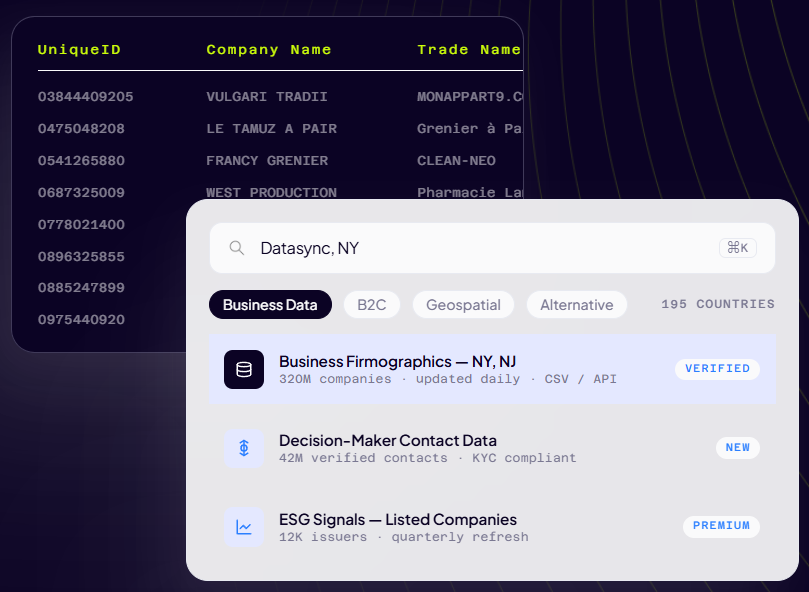
Source: Techsalerator
In November 2025, Datasharp acquired Techsalerator. Datasharp is a Belgium-based data intelligence platform backed by Strada Partners. The goal: combine Techsalerator's U.S. distribution and marketplace reach with Datasharp's data engineering and enrichment capabilities. Founder Max Wahba stayed in a leadership role focused on expanding U.S. enterprise relationships.
Techsalerator's ideal buyer is an enterprise or mid-market company that needs bulk data across multiple geographies and categories, whether for sales prospecting, market research, compliance, fraud prevention, or AI/ML training. It serves data and analytics teams, growth leaders, compliance officers, and AI engineers who need large, jurisdiction-compliant datasets.
Techsalerator Pros & Cons
Pros | Cons |
|---|---|
- Geographic breadth: B2B data across 219 countries | - Inconsistent email deliverability reported by buyers |
- Combined B2B and B2C data from a single vendor | - No published pricing for enterprise purchases |
- 1,100+ data categories including alternative datasets | - Limited third-party review presence (zero G2 reviews) |
- Self-serve DataShop for smaller purchases | - No native CRM integrations or workflow tools |
- Enterprise integrations with AWS, Snowflake, Esri, FactSet | - Post-sale support concerns on public review sites |
- GDPR and CCPA compliance declarations | - No buyer intent signals or conversation intelligence |
- 200+ fields per business record | - No free trial or free plan |
Techsalerator Review: How it Works & Key Features
B2B Data: Techsalerator provides broad global business coverage with deep record-level detail.
Techsalerator's B2B Data solution is its flagship offering. The database covers over 320 million businesses across 219 countries, with more than 200 data fields per business record. For teams that need global reach, this scope eliminates the need to piece together data from multiple regional providers.
The B2B catalog breaks into several layers. Business Firmographic Data includes revenue, employee count, years in business, sales volume, and location across 50+ fields. Business Contact Data covers phone numbers, email addresses, website URLs, and social profiles. Direct Contact Data provides 200M+ direct emails and 140M+ personal phone numbers for individual business contacts, along with LinkedIn URLs.
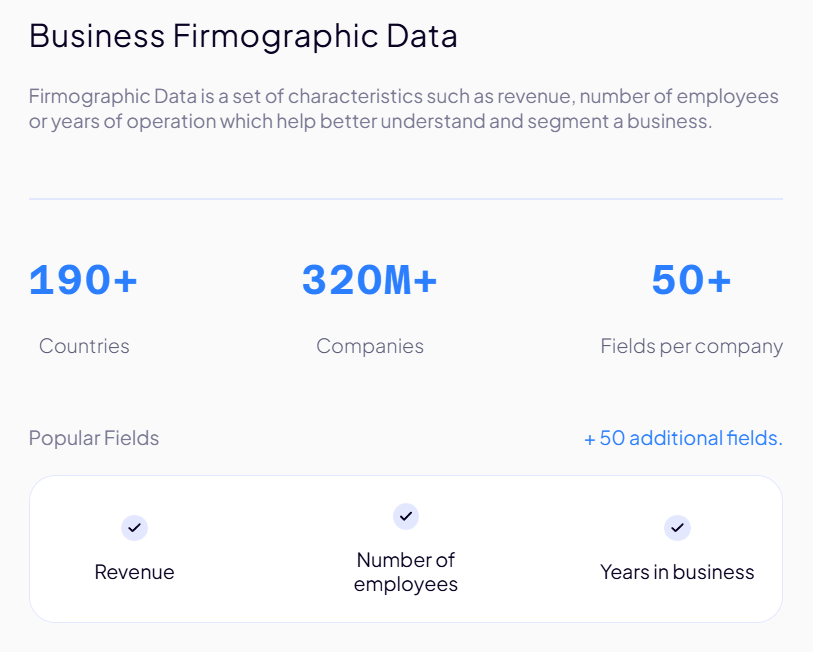
Source: Techsalerator
Beyond contact information, the catalog includes Business Financial Data (current and historical revenue for 320M+ companies with 100+ fields), Business Entity Relationship Data (parent company hierarchies, subsidiary and branch mappings), and Business Technographic Data (installed technology stacks).
Techsalerator delivers data through multiple channels: SFTP, Email, FeedAPI, and S3 Bucket, in CSV, JSON, Excel, or text formats. Buyers can request data samples before purchasing. Purchase models include one-off buys, monthly subscriptions, quarterly subscriptions, and annual subscriptions.
The contact data page claims 85% data coverage and 98% accuracy, though buyer reviews on Trustpilot suggest these figures don't hold consistently, particularly for email deliverability.
B2C Data: Locally sourced consumer records spanning 144 countries.
Techsalerator's B2C Data solution addresses the geographic fragmentation of consumer data. Most consumer data providers focus on specific regions, forcing companies in multiple markets to manage a patchwork of local vendors. Techsalerator counters this with over 2 billion consumer records sourced locally across 144 countries.
The emphasis on locally sourced consumer data means local data partners in each country handle collection rather than a centralized scraper. The 100+ data vendor network powering the ecosystem likely includes regional consumer data contributors.
Supported use cases include marketing, identity verification, fraud prevention, and AI/ML model training. Datasets are declared GDPR and CCPA compliant with data protection and telecom regulator filings in applicable jurisdictions. The DataShop has a dedicated Consumer Data category for direct purchases.
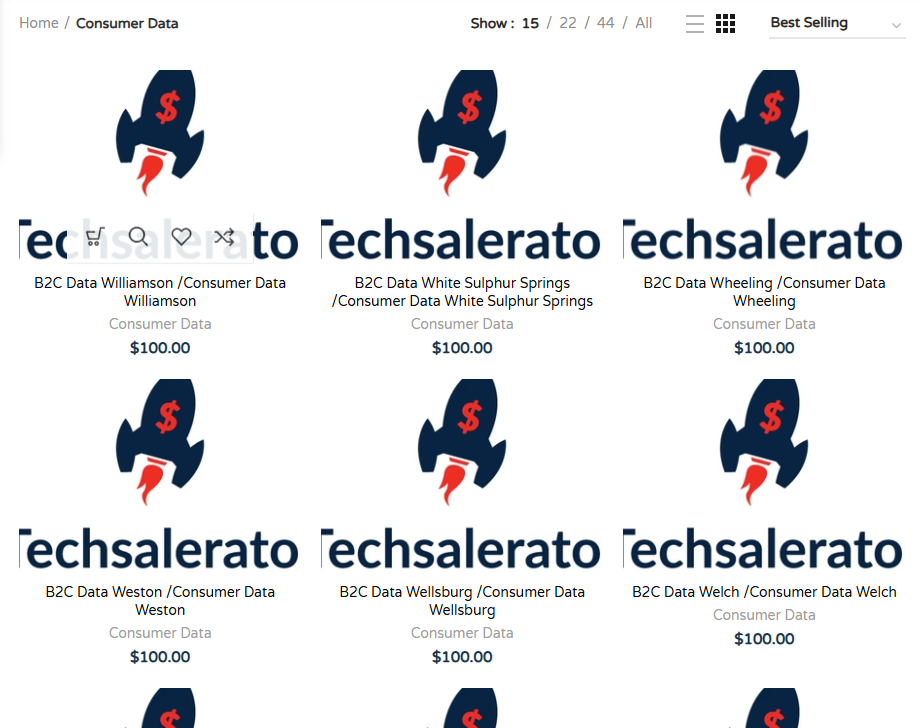
Source: Techsalerator
One limitation: the FAQ notes that B2C database enhancements "must go through a commercial contact in order to clarify the need and the nature of the input/output enhancement," making B2C enrichment a slower, more consultative process than B2B.
Data Catalog & Marketplace: A self-serve discovery layer with 1,100+ data categories.
Techsalerator's Data Catalog and Data Marketplace form the platform's browsing and acquisition layer. The Data Catalog lets buyers filter datasets across four top-level categories (Business, Individual, Geospatial, and Alternative Assets) and preview coverage statistics and field names before buying.
The Data Marketplace is organized by country, with pages for each of the 200+ countries covered. A separate DataShop adds e-commerce functionality (add to cart, wishlist, quick view) for buyers who want city- or country-level datasets without a sales conversation.
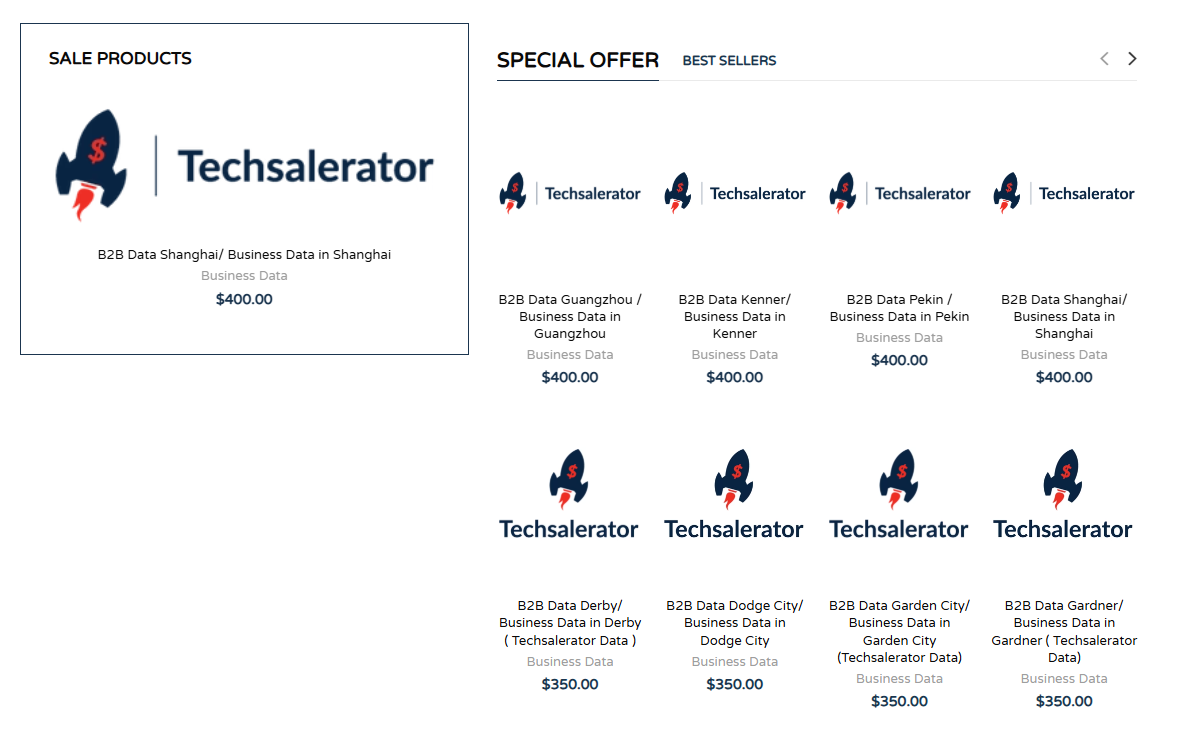
Source: Techsalerator
The breadth is notable. The Data Category Catalog lists 1,100+ data categories ranging from AI/ML Training Data to Autonomous Vehicle Sensor Data. Highlights include Satellite Imagery Data (200M+ images across 195+ countries), Foot Traffic and Mobility data (5.7B+ total MAU devices across 230+ countries and territories), and Multilingual Text and Audio Data (244M+ bilingual segments, approximately 3,180 audio hours).
Quality assurance comes through vendor vetting: data vendors go through a five-step onboarding process including a data analyst review and Due Diligence Questionnaire before their data appears in the marketplace.
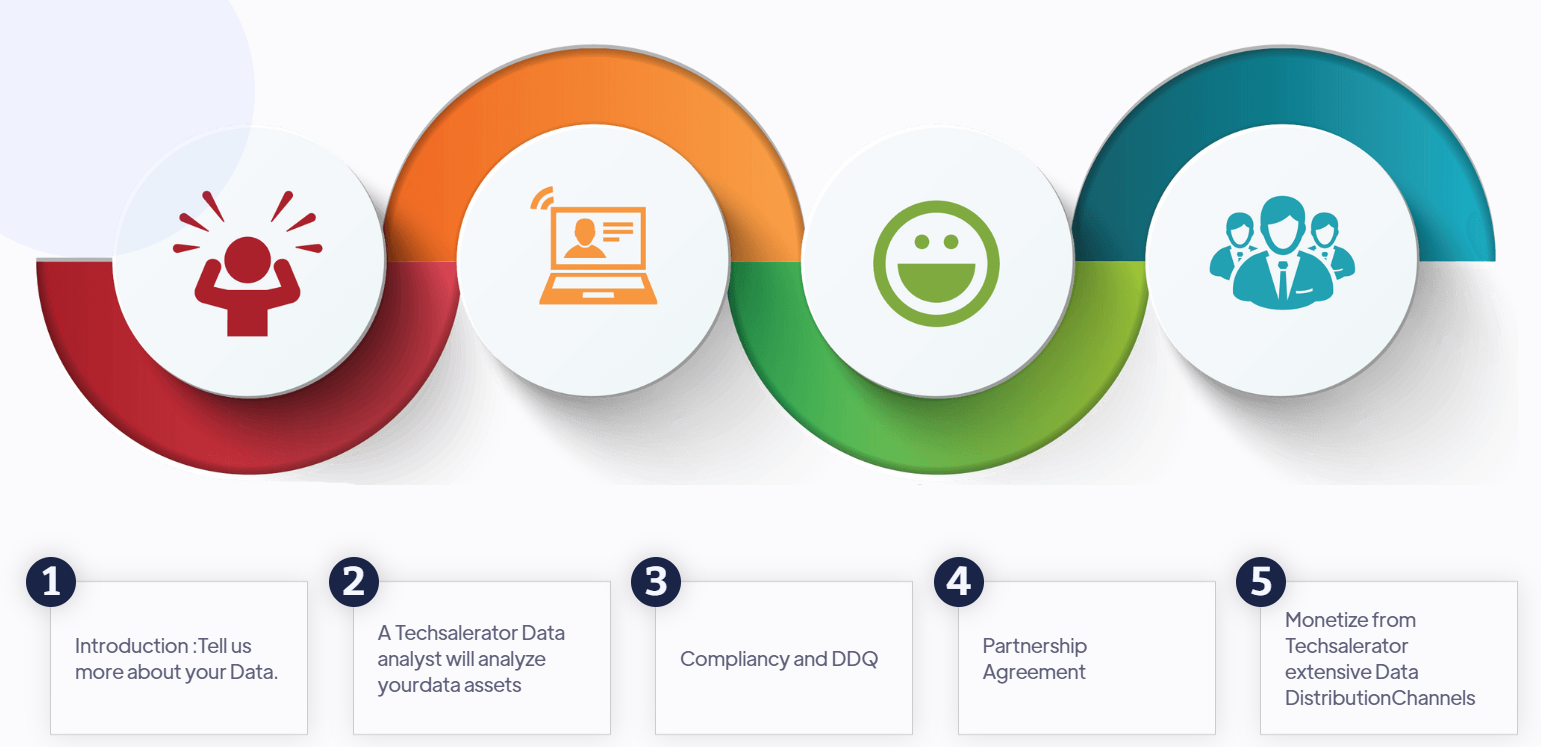
Source: Techsalerator
API: Programmatic access to the global database for automated lookups.
Techsalerator's API gives companies real-time, on-demand access to the B2B and B2C databases. It serves teams that need to embed data lookups into their products and workflows for use cases like contact verification, lead enrichment, caller ID validation, and applicant screening.
The API supports individual and professional search by criteria such as job title, location, or company. B2B database enhancement is available "by batch or by transaction", meaning both bulk and per-record lookups.
The underlying database spans 320M+ businesses across 190+ countries, 2 billion consumer records across 144 countries, and 200M+ direct emails and 140M+ personal phones.
However, technical specifics are thin. Techsalerator does not publicly document its API architecture, authentication methods, rate limits, endpoint structure, or SLA specifications. Buyers must contact the sales team for these details.
Where Techsalerator Falls Short
Techsalerator offers real value as a global data marketplace, but several limitations surface for buyers whose needs extend beyond bulk data acquisition. These are the gaps of a platform built for coverage breadth rather than intelligence depth.
Email Deliverability Concerns. The most consistent complaint across Trustpilot reviews (3.0/5 across 9 reviews) is poor email deliverability. One buyer testing a 1,000-person email list found only 3% of addresses deliverable versus 92% for a competitor. Another reported that half the emails in an Asia-Pacific SMB dataset bounced on the first send. For outbound teams, unreliable email data can damage sender reputation fast.
No Published Pricing. Enterprise buyers must request custom quotes; no tiers, volume rates, or starting prices are disclosed. The DataShop offers some transparency (individual datasets range from $350 to $750), but enterprise pricing stays opaque. There is no free trial or free plan.
Post-Sale Support Gaps. The Trustpilot profile notes the company "hasn't replied to negative reviews." Multiple reviewers described being ignored after raising data quality issues. At least one documented case involved a buyer waiting 3+ months for corrected data or a refund after receiving a dataset with postcode and gender filtering errors. The experience is polarized: 56% of reviewers gave 5 stars, but 22% gave 1 star.
No Intelligence or Execution Layer. Techsalerator delivers data but doesn't help you act on it. There are no buyer intent signals, no conversation intelligence, no AI-powered outreach tools, and no native CRM integrations with Salesforce or HubSpot. For sales and marketing teams, data arrives in a flat file and the work of turning it into pipeline happens entirely outside the platform.
Limited Independent Validation. Techsalerator has zero reviews on G2 despite being listed there. It does not appear in major analyst reports (Gartner, Forrester, IDC) or industry award lists.
These limitations aren't failures. They're the natural result of building a data marketplace rather than a GTM platform. But for teams that need data they can act on immediately (verified contacts, intent signals, workflow automation), these gaps point toward platforms built for the full go-to-market lifecycle.
Top Techsalerator Alternative for Go-to-Market Teams: ZoomInfo
ZoomInfo addresses Techsalerator's gaps by delivering not just data, but the intelligence and execution tools to turn that data into revenue. Where Techsalerator provides datasets you download and use elsewhere, ZoomInfo is an AI-powered GTM platform where data, signals, intelligence, and outreach converge in one system.
Comprehensive, Verified B2B Data: ZoomInfo maintains a large, continuously validated B2B dataset built through a multi-source pipeline.
ZoomInfo's data platform spans 500M contacts, 100M companies, 135M+ verified phone numbers, 120M direct-dial phone numbers, and 200M+ verified business email addresses. The scale is comparable to Techsalerator's. The verification process is where the platforms diverge.
Data flows through a collection and verification system: automated ML scanning 28 million site domains daily, third-party partner data covering 95 million businesses, a community of 200,000+ ZoomInfo Lite users who share business contact info from email signatures, and an in-house Data Training Lab of 300+ human researchers. First-party data reaches up to 95% accuracy.
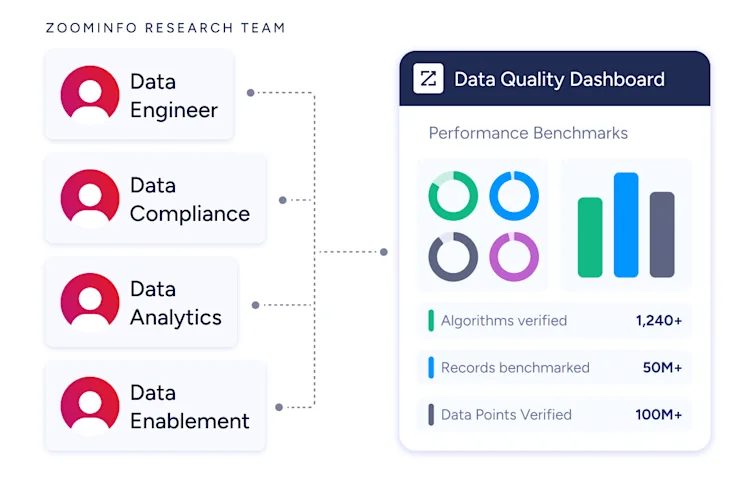
This verification matters when you pick up the phone or hit send: direct dials that ring, emails that land. In a Fortune 500 competitive RFP analyzing 25 million contacts across vendors, the independent consultant concluded that "no other competitor came even close."
Beyond contact data, ZoomInfo provides 300+ company attributes for market segmentation, department org charts with decision-makers' direct dials and emails, technographic profiles for 30+ million companies tracking 30,000+ technologies, and Buyer Intent data that tracks signals from 210 million IP-to-Organization pairings and 6 trillion+ new keyword-to-device pairings sourced monthly.
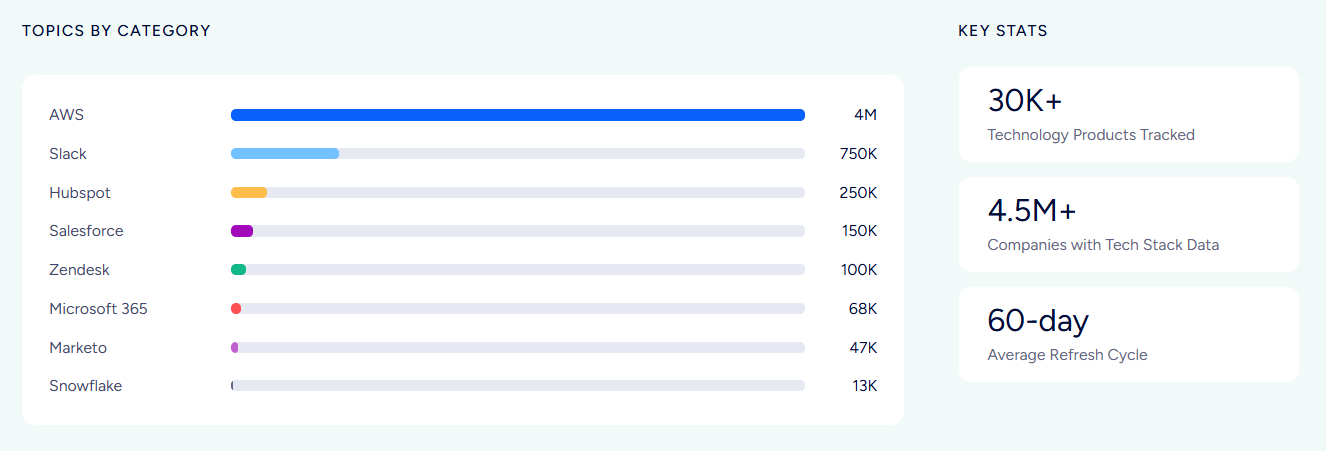
"ZoomInfo gives us the information we need to execute. We don't have to go through and spend our time digging. It's already there, so we can be three steps ahead," said William Kenimer, Vice President of Revenue Operations at Vensure. (Vensure)
GTM Context Graph: An intelligence layer that captures not just what happened in a deal, but why.
Techsalerator delivers data in flat files. ZoomInfo fuses its B2B data with a customer's own CRM records, conversation transcripts, email interactions, and behavioral signals into the GTM Context Graph, which processes 1.5B+ data points daily.
The difference is structural. A CRM records that a deal moved from Stage 3 to Stage 4. Conversation intelligence transcribes what the VP of Finance said on the last call. An intent platform logs a spike in research activity. The GTM Context Graph connects all three to show why the deal moved and what should happen next. As ZoomInfo's Chief Product Officer Dominik Facher writes: "The CRM recorded the state change. It has no record of why it happened."
This intelligence powers features that raw data cannot: AI-drafted outreach that addresses a specific concern a buyer raised, GTM plays targeting accounts whose signal patterns match proven wins, and forecasts weighted by buying evidence rather than stage labels.
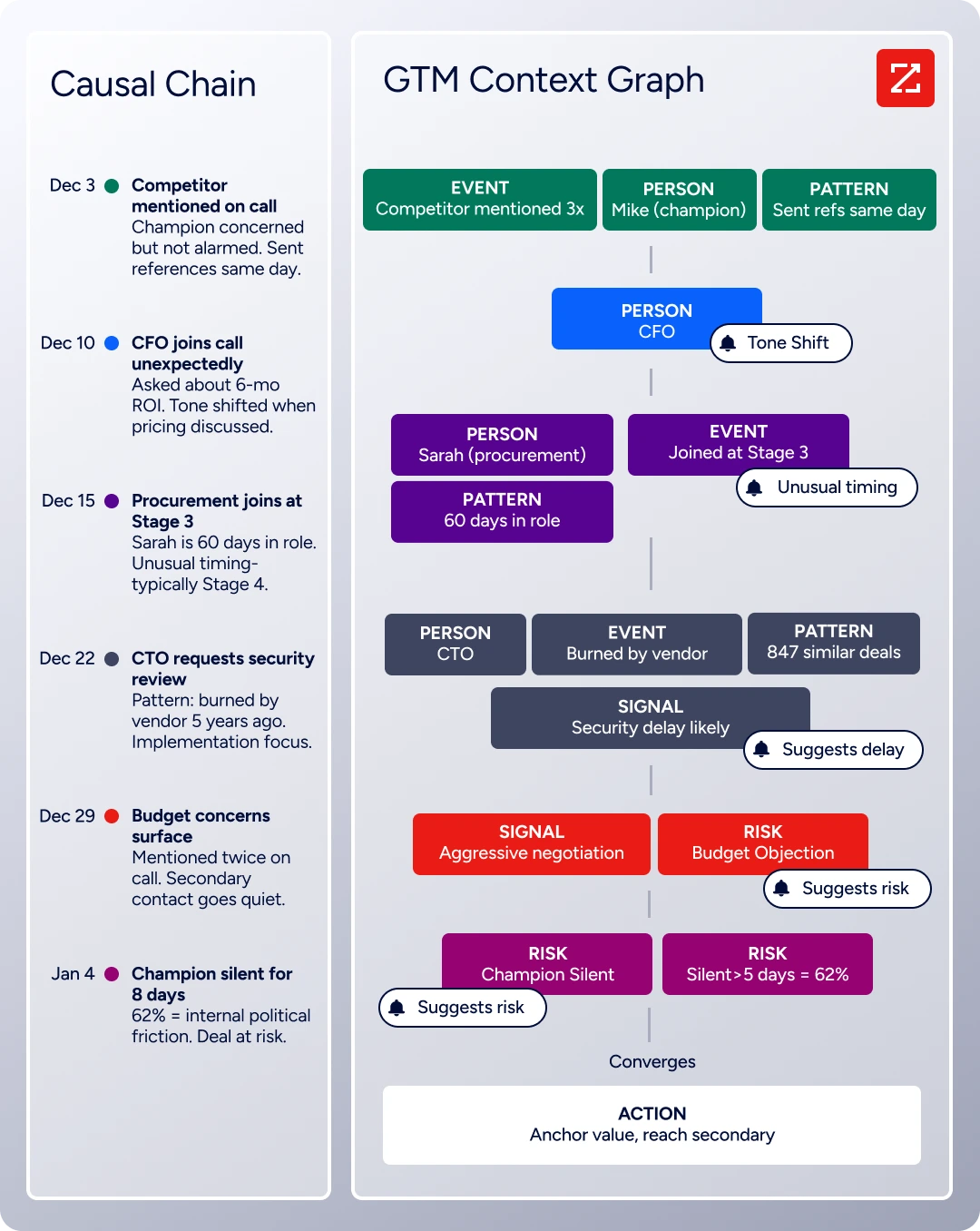
Seismic attributed 39% of its active pipeline to ZoomInfo signals, with 54% productivity gains. "That combination of our internal CRM data, external signals, and AI that's given all that context has helped us craft very specific account- and persona-based messages," said Toby Carrington, Chief Business Officer. (Seismic)
Execution Tools: GTM Workspace and GTM Studio turn intelligence into action without leaving the platform.
Where Techsalerator's workflow ends at data delivery, ZoomInfo provides two execution tools.
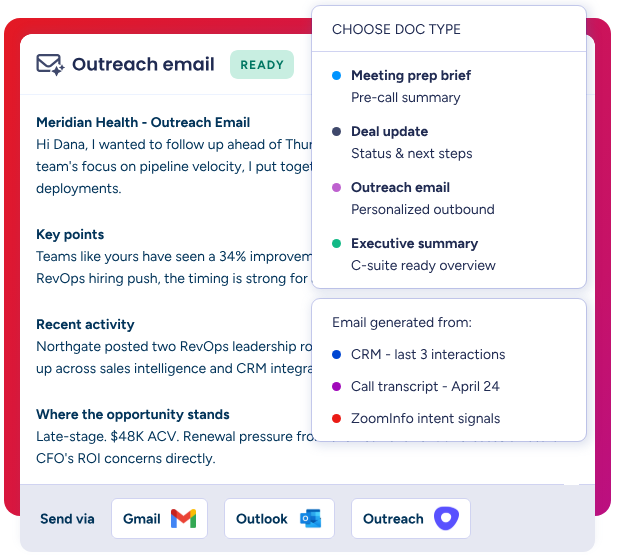
GTM Workspace is the seller's front-end to the GTM Context Graph. It consolidates prioritized accounts, AI-drafted outreach, deal context, and CRM updates into one workspace. AI agents handle account research, outreach generation, signal monitoring, and CRM updates automatically. Built on Anthropic's Claude, these agents answer three questions for every rep: who to contact, when to engage, and what to say.
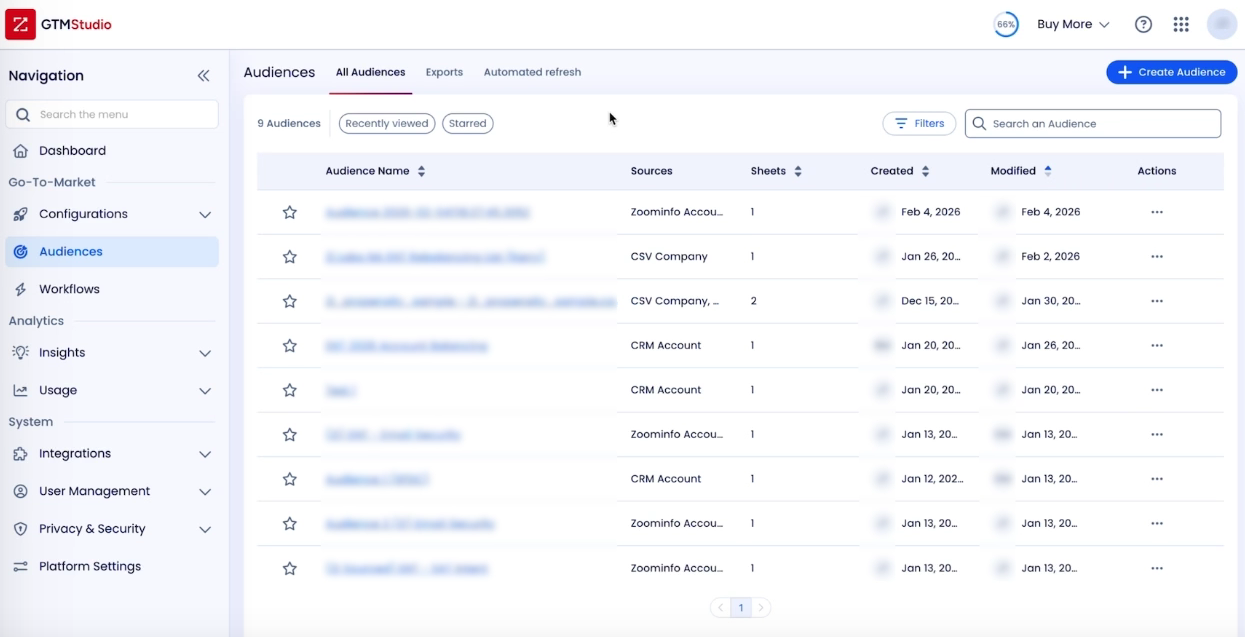
GTM Studio serves marketers, RevOps, and GTM engineers. It's a canvas where teams define audiences in natural language, build and activate multi-channel plays, and measure pipeline impact in real time, without engineering tickets. Expansion plays that used to take 3 weeks now launch in 30 minutes.
Both tools integrate natively with Salesforce, HubSpot, and Microsoft Dynamics, and ZoomInfo's App Marketplace lists 120+ partner integrations across CRM, marketing automation, sales engagement, and data warehouse categories.
Redwood Logistics used ZoomInfo's audience insights to achieve a 99% reduction in cost-per-click and a 310% increase in clickthrough rate. "It's not just the data itself. It's more about the right data at the right time to help us reach out with the right message across that full buyer journey," said Chelsea Kenyon, Senior Director of Digital Strategy. (Redwood Logistics)
Universal Access: APIs and MCP deliver ZoomInfo's intelligence into any tool, workflow, or AI agent.
For teams that build beyond ZoomInfo's own products, the Enterprise API and MCP server expose the same data and intelligence to any custom agent, internal tool, or partner platform. The API covers four areas: Data API (search and enrich), Copilot API (AI intelligence, including account summaries and lookalike discovery), Marketing API (audience management), and Platform API (engagement data).
ZoomInfo's MCP server connects AI models to ZoomInfo's B2B data as a native tool, currently supporting Claude and ChatGPT. Users query ZoomInfo data through natural language; the AI selects the right tool call automatically.
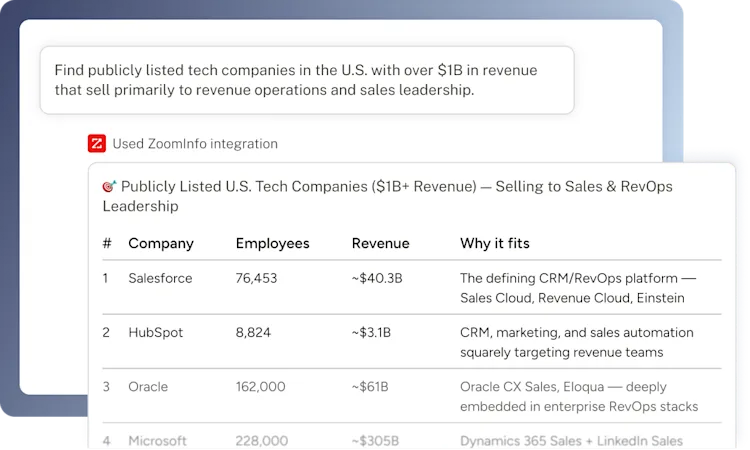
API access is included in all plans, so the same data powering ZoomInfo's native products is available in any front-end a customer builds.
BDO Canada achieved an 87% reduction in data dashboard update time by integrating ZoomInfo's API. "The plug-and-play aspect of the API means I can integrate it very easily into any process and get information at a moment's notice," said Jerry Wilson, Senior Marketing Intelligence Analyst. (BDO Canada)
Techsalerator or ZoomInfo: Comparison Summary
Techsalerator | ZoomInfo | |
|---|---|---|
Primary focus | Global data marketplace (B2B + B2C + alternative data) | AI GTM platform (data + intelligence + execution) |
B2B database size | 320M+ companies across 219 countries | 100M companies, 500M contacts worldwide |
Contact data | 200M+ direct emails, 140M+ personal phones | 200M+ verified business emails, 135M+ verified phones, 120M direct dials |
B2C data | 2B+ consumer records across 144 countries | Not offered (B2B focused) |
Data verification | Claims 95% accuracy; buyer reviews indicate inconsistency | Multi-source pipeline with 300+ human researchers; up to 95% accuracy on first-party data |
Buyer intent signals | Not available | 210M IP-to-Org pairings, 6T+ keyword-to-device pairings monthly |
AI and intelligence layer | Not available | GTM Context Graph processing 1.5B+ data points daily |
Execution tools | None (data delivery only) | GTM Workspace (sellers), GTM Studio (marketers/RevOps) |
CRM integrations | None native | Salesforce, HubSpot, Microsoft Dynamics, 120+ marketplace integrations |
API access | Available (technical specs not publicly documented) | Enterprise API with full documentation, plus MCP for AI agents |
Alternative datasets | ESG, geospatial, satellite imagery, weather, POI, AI training data | Not offered |
Pricing transparency | No published enterprise pricing; DataShop lists $350-$750 per dataset | Custom-quoted; free Lite tier and 7-day free trial available |
Free plan | None | ZoomInfo Lite (permanent free tier with 10 monthly export credits) |
Analyst recognition | None publicly cited | Gartner Leader (ABM Platforms), Forrester Leader (Intent Data), G2 (133 No. 1 rankings) |
Third-party reviews | Datarade: 4.9/5 (5 reviews); Trustpilot: 3.0/5 (9 reviews); G2: 0 reviews | Gartner Customers' Choice; TrustRadius Buyer's Choice; 2,000+ combined reviews |
Security certifications | GDPR/CCPA compliance declarations | ISO 27001, ISO 27701, SOC 2 Type II, TRUSTe GDPR/CCPA |
Best for | Bulk global data acquisition, alternative datasets, AI training data | B2B sales prospecting, account-based marketing, go-to-market execution |
Final Verdict
The choice between Techsalerator and ZoomInfo depends on what you need data to do.
Choose Techsalerator if your primary need is acquiring raw datasets at global scale, particularly for use cases beyond B2B sales. Companies sourcing consumer data across emerging markets, building AI/ML training datasets, running compliance and fraud prevention programs, or needing alternative data categories (geospatial, ESG, satellite imagery) will find Techsalerator's coverage hard to match from a single vendor. Its Data Catalog with 1,100+ categories and Data Marketplace organized by country serve buyers who know what data they need and want to procure it efficiently. Verify deliverability on a sample before committing to a large purchase.
Choose ZoomInfo if you need data that drives daily go-to-market execution. ZoomInfo provides not just contact and company records, but verified accuracy, buyer intent signals, an intelligence layer, and execution tools that turn data into pipeline. For sales teams prospecting buyers, marketing teams running account-based plays, and RevOps teams managing data quality and workflow automation, ZoomInfo delivers the complete system: the data tells you who to target, the GTM Context Graph tells you why and when, and GTM Workspace and GTM Studio handle the execution. The free Lite tier and 7-day trial let you test the platform before committing.
Get started with ZoomInfo here.
Techsalerator solves the problem of getting data. ZoomInfo solves the problem of using it.
Techsalerator FAQ
What is Techsalerator used for?
Techsalerator is a global data marketplace used for B2B prospecting, consumer marketing, market research, compliance and fraud prevention, and AI/ML model training. Its catalog spans 1,100+ data categories across business, consumer, geospatial, and alternative data types. The platform serves companies that need bulk datasets, particularly across international markets where local data is hard to source from one vendor.
How much does Techsalerator cost?
Techsalerator does not publish pricing for its enterprise data services. Buyers must request custom quotes through the main website. The only publicly priced channel is the Techsalerator DataShop, where individual city- or region-level datasets range from $350 to $750 as one-time purchases. No free trial or free plan is offered. ZoomInfo, by comparison, offers a permanent free Lite tier and a 7-day free trial.
Is Techsalerator's data accurate?
Techsalerator claims 99% data coverage and 95% accuracy on its business contact data product page. However, buyer reviews on Trustpilot report inconsistent results, particularly around email deliverability. One buyer found only 3% of a 1,000-person email list was deliverable, while another reported that half of an Asia-Pacific dataset bounced. Request a sample before making a large purchase.
Who acquired Techsalerator?
Datasharp, a Belgium-based data intelligence platform backed by Strada Partners, acquired Techsalerator in November 2025. The combined entity aims to merge Techsalerator's U.S. distribution and marketplace reach with Datasharp's data engineering and enrichment capabilities. Founder Max Wahba remained in a leadership role after the acquisition.
Does Techsalerator offer intent data or sales intelligence?
No. Techsalerator is a data marketplace focused on delivering datasets (firmographic, contact, consumer, geospatial, and alternative data). It does not provide buyer intent signals, conversation intelligence, workflow automation, or CRM integrations. For teams needing these capabilities, ZoomInfo's platform includes intent data tracking 210 million IP-to-Organization pairings, AI-powered execution tools, and native integrations with Salesforce, HubSpot, and Microsoft Dynamics.
Does Techsalerator integrate with CRMs like Salesforce or HubSpot?
Techsalerator does not offer native CRM integrations. Data is delivered through file-based methods (SFTP, Email, S3 Bucket) or through its API. While the platform integrates with data infrastructure tools like AWS, Snowflake, Esri, and FactSet, it does not connect to CRM or sales engagement platforms. ZoomInfo's App Marketplace includes 120+ integrations spanning CRM, marketing automation, sales engagement, and data warehouse categories.
What types of alternative data does Techsalerator offer?
Beyond B2B and B2C contact data, Techsalerator's catalog includes satellite imagery (200M+ images across 195+ countries), foot traffic and mobility data (5.7B+ MAU devices across 230+ countries), multilingual text and audio data, ESG metrics, weather data, points of interest, financial data, and technographic data. This breadth, organized across 1,100+ categories, is one of the platform's primary differentiators.
How does Techsalerator compare to ZoomInfo for B2B prospecting?
Techsalerator provides raw B2B data (320M+ companies, 200M+ direct emails) that buyers download and use in their own tools. ZoomInfo provides verified B2B data (500M contacts, 200M+ verified emails, 135M+ verified phones) plus an intelligence layer, intent signals, AI-powered execution tools, and native CRM integrations. For teams running day-to-day sales outreach, ZoomInfo offers a complete prospecting and execution system. For teams that need bulk datasets for research, analytics, or AI training across both B2B and B2C, Techsalerator's broader data categories may be the better fit.
Researching Techsalerator? These comparisons and alternatives help you decide:
