

Cognism is known for European B2B data, phone-verified mobiles and Do Not Call screening. This guide compares 9 Cognism alternatives from the wider field of sales and data platforms, evaluated on the five criteria that matter most to revenue teams, with hands-on notes from the five that offer a free plan.
Some tools on this list work alongside a Cognism subscription, and others cover what it does and more. The right choice depends on your team's size, where you sell and how much of your workflow you want in one platform.
How We Evaluated Cognism Alternatives
We compared all nine tools on five criteria that map to the most common reasons teams look beyond Cognism:
Data verification. Whether a tool uses human verification, multi-source checks or real-time verification at the point of search. Cognism's phone-verified mobiles set a high bar for EU numbers, and alternatives vary a lot here.
Platform breadth. Whether the tool includes execution, such as sequencing, dialing and CRM enrichment, or plugs into your existing stack as a data layer, as Cognism mostly does.
Geographic coverage. Whether the tool is built for UK and EU markets with GDPR compliance depth, or covers North America and global markets at greater scale.
Intent and signals. Whether intent data comes from the vendor's own signals, such as website visits, job changes and CRM context, or from licensed third-party providers like Bombora.
Pricing and free access. Whether you can see prices and try the tool yourself, or need a sales call first.
For the five alternatives with a self-serve free plan, we also signed up with a new work email and no card and ran the same list of US, UK and EU contacts through each one. We noted how easy it was to find contacts, what came back, including emails and direct dials, and how the free credits held up. UpLead's trial needs a card, SalesIntel's trial is set up by its sales team and Sales Navigator's trial asks for payment details, so those three are covered from their own pages and G2.
Cognism Alternatives at a Glance
The table compares the nine alternatives, with Cognism for reference, on who each one suits, its main strength, where its coverage is strongest and how you can start, using each vendor's own pages.
Tool | Best for | Key strength | Coverage | How to start |
Cognism (for reference) | EU outbound with phone-verified mobiles | Phone-verified mobiles and Do Not Call screening | Europe-first | Quote-based Standard and Pro packages |
ZoomInfo | Data, account context and AI agents in one platform | GTM Context Graph and Agent Teams | Global, with 200M+ professional profiles outside North America | Free trial with ZoomInfo or free to start on GTM.ai, for developers and builders |
Apollo | All-in-one prospecting for SMB and mid-market | Data, sequences and dialer in one login | Global | Free plan, then $49 per seat a month |
Lusha | Quick contact lookups | Extension for LinkedIn and CRMs | Global | Free plan, then $37.45 a month |
Seamless.AI | High-volume prospecting | Email and phone from a CSV in one step | Global | 50 free credits, then a custom quote |
RocketReach | Occasional email lookups | Email grades and public pricing | Global | 5 free lookups a month, then $27 a month |
LeadIQ | Job change tracking from LinkedIn | Captures contacts into CRM and sequencer | Global (UK and EU blocked on the free plan) | 50 free credits, then $15 a month |
UpLead | Verified emails with a guarantee | 95% accuracy guarantee | Global | 7-day trial with a card, then $74 a month |
SalesIntel | Human-verified contacts | Re-verified every 90 days | Global, strongest in the US | 14-day trial through sales, then a quote |
LinkedIn Sales Navigator | Social selling | LinkedIn search, alerts and TeamLink | LinkedIn network | One-month trial, then per-seat plans |
Prices come from each vendor's pricing page in November 2026, billed annually unless noted.
1. ZoomInfo
G2 rating: 4.5/5
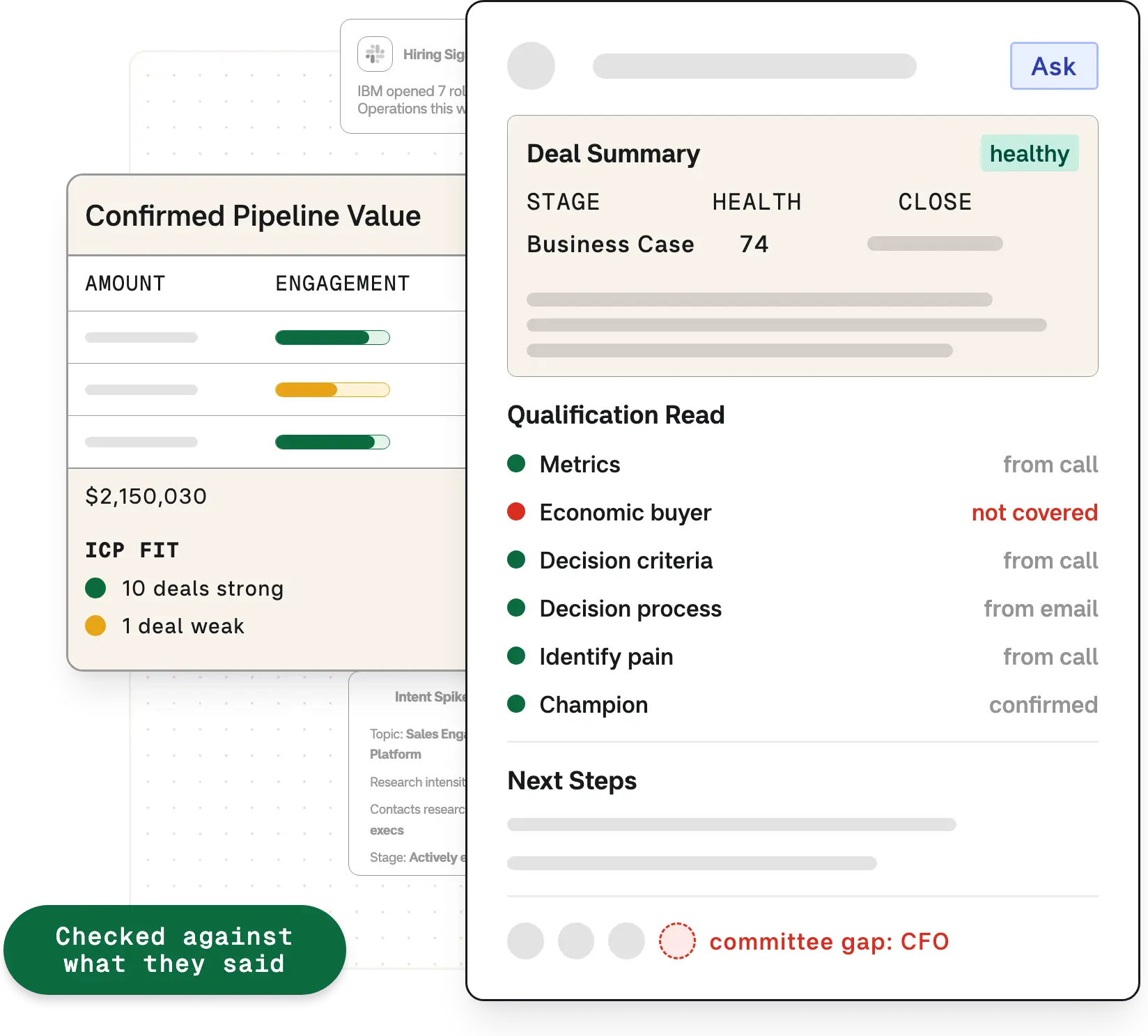
If you last looked at ZoomInfo for European data a few years ago, it's worth a second look. ZoomInfo combines the scale of a global platform with data built for European markets, including 34M+ company profiles, 200M+ professional profiles and 45M+ mobile numbers outside North America, verified by a multi-source pipeline and 300+ researchers. See ZoomInfo data sources for how records are collected.
ZoomInfo is the all-in-one AI GTM platform and the GTM data layer trusted by over half the Fortune 500. It's built as three layers that work as one system:
Data foundation. The GTM Context Graph resolves your CRM records, calls, emails and meeting notes with ZoomInfo's intelligence on 100M+ companies and 500M+ contacts into one current record per account, so every agent and app starts from the same picture.
Agents. Agent Teams carries that context through the work you define, such as account research, account summaries, audience enrichment and custom signal routing. Its specialist agents work from each account's current state and within the controls your admins set, in GTM Studio or headless through GTM.ai.
Workspace. Sellers work in GTM Workspace, where the agents' work lands in their feed with its sources attached, ready to review, edit and approve. Marketers and RevOps build audiences and plays in GTM Studio.
It's one continuous workflow running through one system, rather than three disconnected systems passing information between each other. If you'd rather build on it, the same foundation runs headless through MCP, API and CLI with GTM.ai. Same data, same governance, same credits either way.

"Since implementing ZoomInfo, we have immediately increased access to our ICP by 10%. This has given us over $4.9M in pipeline alone in the past two quarters."
Features
Beyond the three layers, ZoomInfo's platform covers:
Data. Company, contact and signal records validated against 40+ sources and connected by 16 patented AI GTM-linkages.
Intent and signals. Billions of signals, including buying intent and website visitor identification, plus 30+ ZoomInfo triggers that flag when an account is worth acting on.
Agent plays. 40+ ready-made agent plays, so a team can start from a template and adapt it to its own process.
Integrations. 20+ native integrations, so enriched records stay in sync across your CRM and other systems.
Developer access. MCP for AI assistants and custom agents, CLI for scripts and scheduled jobs, and API for production apps.
Security. SOC 2, enterprise-grade encryption, SCIM, data access controls, a data processing agreement and role-based access controls.
Strengths and limitations
Here's where ZoomInfo is strongest and where it may not fit:
Strengths
Global scale and European depth in one platform
Works from each account's current state, with your CRM, calls and emails joined to ZoomInfo's data
An Agent Team can take on a complete GTM motion, from research to CRM updates
Connects to your apps and CRM, and to any AI tool through GTM.AI
Limitations
AI credits need scoping against your real volume
Built for teams vs. solo reps (but GTM.AI is a good option for them too)
Pricing
ZoomInfo offers a free trial, or you can get started with consumption credits on GTM.ai. See ZoomInfo pricing.
Best for: Enterprise and mid-market teams that sell across regions and want data, account context and AI agents in one platform.
Read the full Cognism vs ZoomInfo comparison, or see our Cognism reviews for what users say.
2. Apollo
G2 rating: 4.7/5
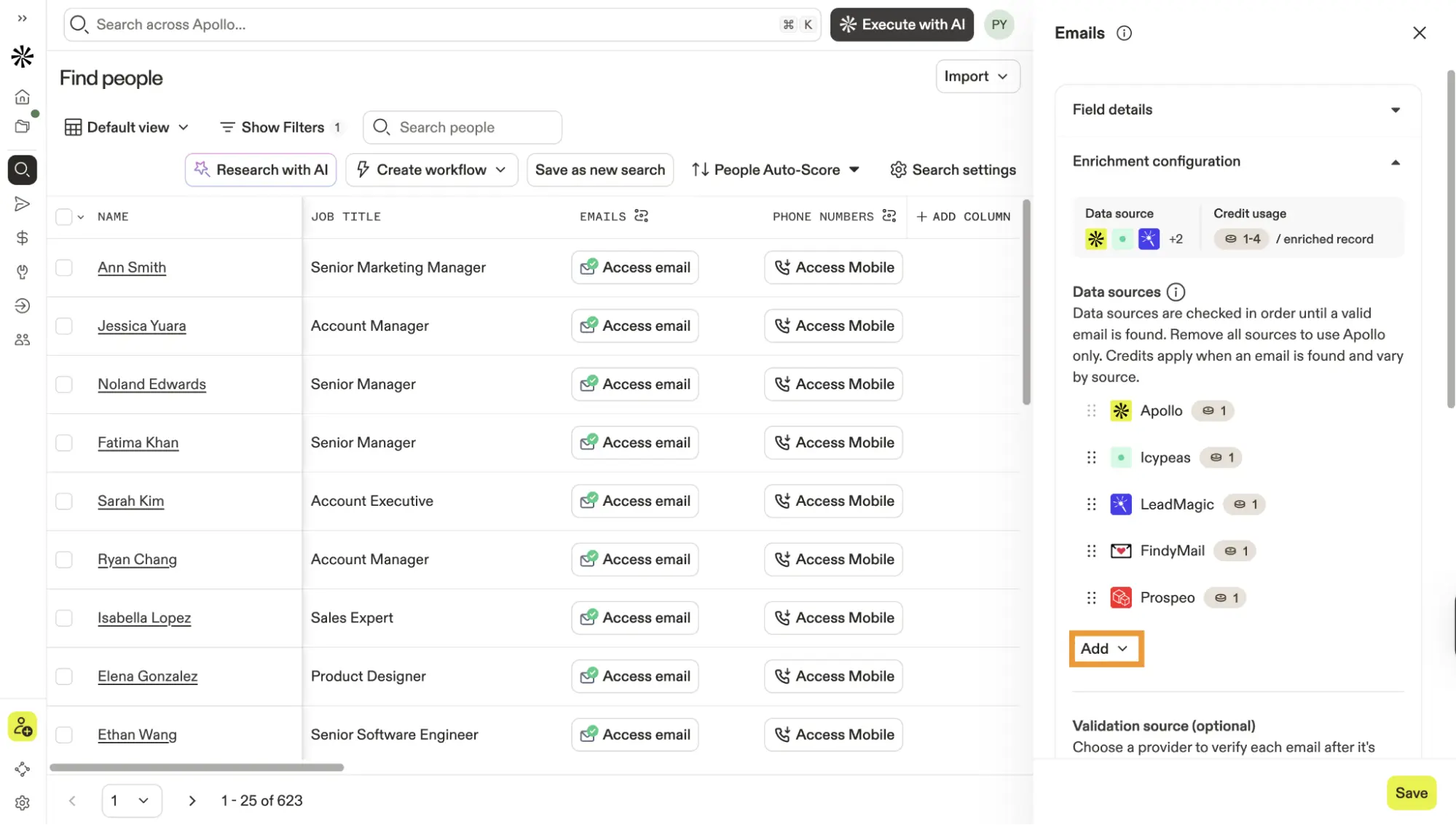
Apollo is a sales platform that pairs its own B2B database with prospecting, sequences, a dialer and deal tracking. A rep can search for contacts with filters, reveal an email or phone, and add the contact to an email sequence or call list without switching tools.
For a Cognism buyer, the difference is scope. Cognism supplies data to the tools you already use, while Apollo puts data, sequencing and dialing in one login, so a small team can run prospecting and outreach without a separate engagement platform. Most teams start on the free plan and move to a paid seat when they need more credits, CSV imports or extra sequences.
Features
Apollo's own pages describe these capabilities:
Data. 240M+ contacts and 30M+ companies, with a seven-step email verification process and a stated 98% accuracy rate.
Intent and signals. Third-party intent powered by Bombora, job-change alerts, website visitor tracking and 65+ search filters.
Enrichment. Waterfall enrichment across 20+ vendors, with bi-directional sync to Salesforce, HubSpot and Pipedrive.
Workflow and agents. Multichannel sequences, a parallel dialer, call recording and an AI assistant, plus API and MCP access.
Compliance. SOC 2 Type II and ISO 27001 certified, and GDPR compliant.
What we found
Apollo gave us a full outbound workflow on a free account, including European phones:
Ease of use. People search with title and company filters was quick to set up, and each contact could go straight into a sequence or call list. CSV import was blocked on the new account, so we revealed contacts one at a time.
Contacts. Most emails came back verified, and every phone we asked for came back, including the UK and EU numbers. One accented name only turned up through the company filter.
Credits. Emails cost 1 credit and phones 8, so phones used most of the free balance.
Strengths and limitations
Here's where Apollo is stronger than Cognism and where it falls short:
Strengths vs Cognism
Sequencing and a dialer are built in, so there's no need for a separate outreach tool.
A free plan and published per-seat prices.
The free plan returned every UK and EU phone in our test.
Limitations
New free accounts can't import a CSV, so list work is one contact at a time.
Phones use up a free allowance quickly.
Reviews often flag data accuracy, so test coverage on your own list before you commit.
Pricing
Apollo charges in credits on top of a per-seat plan. The free plan includes 75 credits a month. Basic was $49 per seat a month billed annually, or $65 monthly, at checkout on 29 October 2026, with Professional and Organization plans above it.
Best for: SMB and mid-market teams that want all-in-one lead generation software for data and outreach.
See Apollo vs ZoomInfo, our Apollo vs. Cognism comparison and the wider list of Apollo alternatives.
3. Lusha
G2 rating: 4.3/5
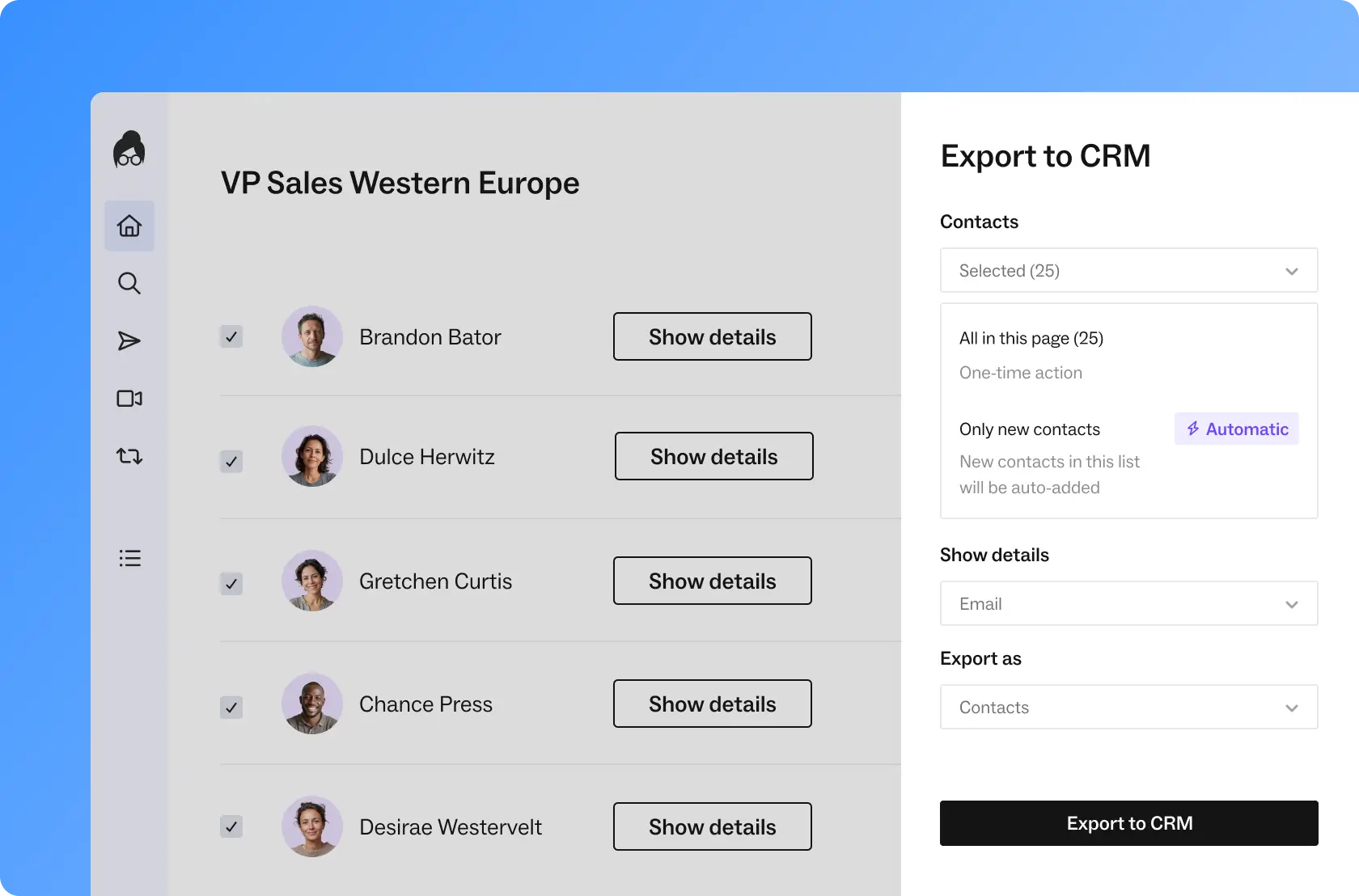
Lusha is a B2B contact data platform built around a browser extension. It works on LinkedIn profiles, company websites and inside CRMs, so a rep can pull an email or phone number on the page they're already on.
Where Cognism is sold as a team contract, Lusha suits reps who want to look up a contact on the spot on a self-serve plan. The web app adds prospect search and list building, and paid plans add bulk and CRM enrichment as a team grows.
Features
Lusha's own pages describe these capabilities:
Data. Email and phone lookups on contacts and companies across North America, EMEA, APAC and LATAM.
Intent and signals. Deep Intel, which uses your ICP, CRM history and pipeline data to prioritize accounts, plus weekly buying signals.
Enrichment. Bulk enrichment from Starter, CSV enrichment from Pro and CRM enrichment on paid plans.
Workflow and agents. A browser extension for LinkedIn, websites and CRMs, plus API access and MCP connectors for Claude and ChatGPT.
What we found
Lusha did its best work on the European contacts:
Ease of use. Search was quick to filter, and the free plan let us run one CSV enrichment for emails.
Contacts. Nearly all the emails Lusha found were for UK and EU contacts, and it returned most of the European phones. Several US contacts were flagged as being in restricted regions, with names masked and reveal disabled.
Credits. Lusha only charged for matches, and a phone costs 5 credits against 1 for an email.
Strengths and limitations
Here's where Lusha is stronger than Cognism and where it falls short:
Strengths vs Cognism
Its emails and phones came back strongest on our UK and EU contacts.
A fast extension workflow for LinkedIn and website prospecting, with no platform to learn.
A free plan and published prices.
Limitations
Region restrictions masked some US contacts on the free plan.
There's no built-in dialer, and phones use up the free allowance quickly.
Pricing
Lusha charges 1 credit per email and 5 per phone. The free plan includes 40 credits a month. Starter was $37.45 a month billed yearly, or $49.90 monthly, with Pro, Premium and Scale plans above it.
Best for: Reps and small teams that need fast lookups, including in Europe, without a platform contract.
See Lusha vs ZoomInfo, our Lusha reviews and the Lusha alternatives list.
4. Seamless.AI
G2 rating: 4.4/5
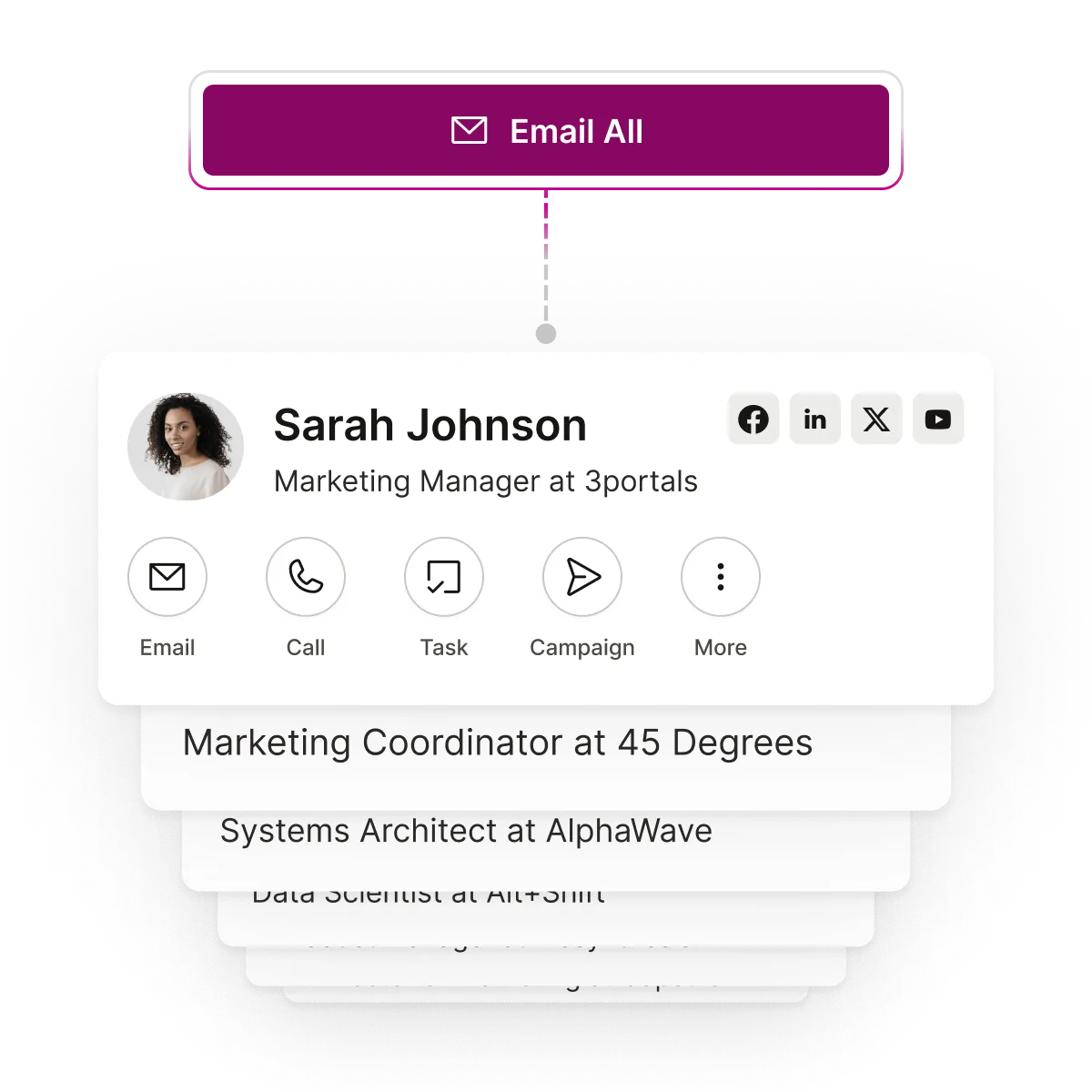
Seamless.AI is a prospecting platform that researches contact details at the moment you search. You can search by company or title in the app, look people up through its Chrome extension, or upload a CSV and let it fill in emails and phones row by row.
That real-time approach is the main contrast with Cognism, which verifies its data ahead of time and re-verifies it on a schedule. Seamless.AI suits SDR teams that work large lists and want emails and phones back in one pass.
Features
Seamless.AI's own pages describe these capabilities:
Data. 1.8B+ verified emails and 414M+ phone numbers claimed, researched in real time.
Intent and signals. A Buyer Intent module and Job Changes alerts.
Enrichment. CSV list enrichment, plus integrations with Salesforce, HubSpot, Salesloft, Outreach and Pipedrive.
Workflow and agents. AI prospecting agents, an AI-powered dialer and Autopilot for saved searches.
What we found
Seamless.AI filled in emails and phones for our whole list in one upload:
Ease of use. The CSV upload ran in one step, and the credit balance sits in the top bar. The free plan only unlocks after SMS verification, and the code never arrived for a North Macedonian number but worked for a Dutch one.
Contacts. Most contacts came back with an email and most of our phone contacts with a number, including European ones. Some rows also returned personal emails.
Credits. Each row costs up to 1 credit for email and phone together, so phones cost no more than emails.
Strengths and limitations
Here's where Seamless.AI is stronger than Cognism and where it falls short:
Strengths vs Cognism
Autopilot builds lead lists in the background from your ICP.
Email and phone come back together from a single CSV upload.
A free plan you can start without talking to sales.
Limitations
SMS verification can block signup, depending on your phone number.
Paid prices and security certifications aren't published.
Some rows return personal emails, which you'll want to filter out before B2B outreach.
Pricing
Seamless.AI charges in credits, with the free plan at 50. Pro and Enterprise are quote-based. The pricing page is a form that asks how many contacts you need a month, then routes you to sales, as our Seamless.AI pricing guide explains.
Best for: High-volume SDR teams that want to test data on a free plan before paying.
See Seamless.AI vs ZoomInfo, our hands-on Apollo vs. Seamless.AI test and more Seamless.AI alternatives.
5. RocketReach
G2 rating: 4.4/5
RocketReach is a contact and company lookup tool with unusually clear public pricing across its self-serve plans. You search by name, company or title, preview what's available, then spend a lookup to reveal the details. Each email comes with a grade that shows how confident RocketReach is in it.
It suits a different buyer from Cognism, someone who needs a handful of verified emails a month and wants to know the cost upfront. Plans split by data type, with emails on the entry plan and phones on Pro, and every plan includes API and MCP access.
Features
RocketReach's own pages describe these capabilities:
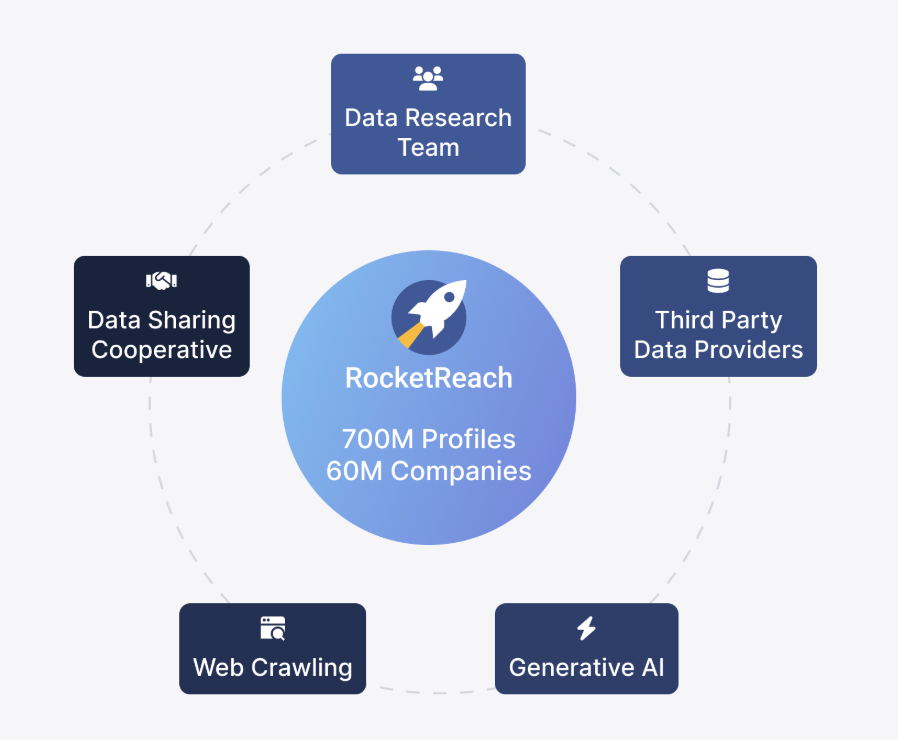
Data. 700M+ professionals, with email grades on every result and mobiles and direct dials on Pro.
Intent and signals. Technographics and org charts on Pro, with buyer intent data on Ultimate.
Workflow and agents. Autopilot for automated list refresh, plus API and MCP access on every plan.
What we found
RocketReach shows what a lookup will return before you spend it:
Ease of use. Search shows partial email domains and masked phones before each lookup, and every email comes with a confidence grade.
Contacts. Most lookups returned a work email. Phones stay masked on the free plan, and the emailed export only held company office numbers.
Credits. The 5 free lookups a month ran out before our list did, though a profile with no contact data wasn't charged.
Strengths and limitations
Here's where RocketReach is stronger than Cognism and where it falls short:
Strengths vs Cognism
Published prices, and you can start free.
Previews show what a lookup will return, and empty profiles aren't charged.
Autopilot keeps lists current without manual searches.
Limitations
5 free lookups a month covers a quick trial, so working a list needs a paid plan.
Phones need the Pro plan, so it can't stand in for Cognism's mobiles on the entry plan.
Pricing
RocketReach charges per lookup. The free plan includes 5 lookups a month. Essentials (email only) was $27 a month billed annually, Pro (email and phone) was $69 a month and Ultimate was $142 a month.
Best for: Teams that want a few verified emails a month and pricing they can plan around.
See RocketReach vs ZoomInfo and our full RocketReach review.
6. LeadIQ
G2 rating: 4.2/5
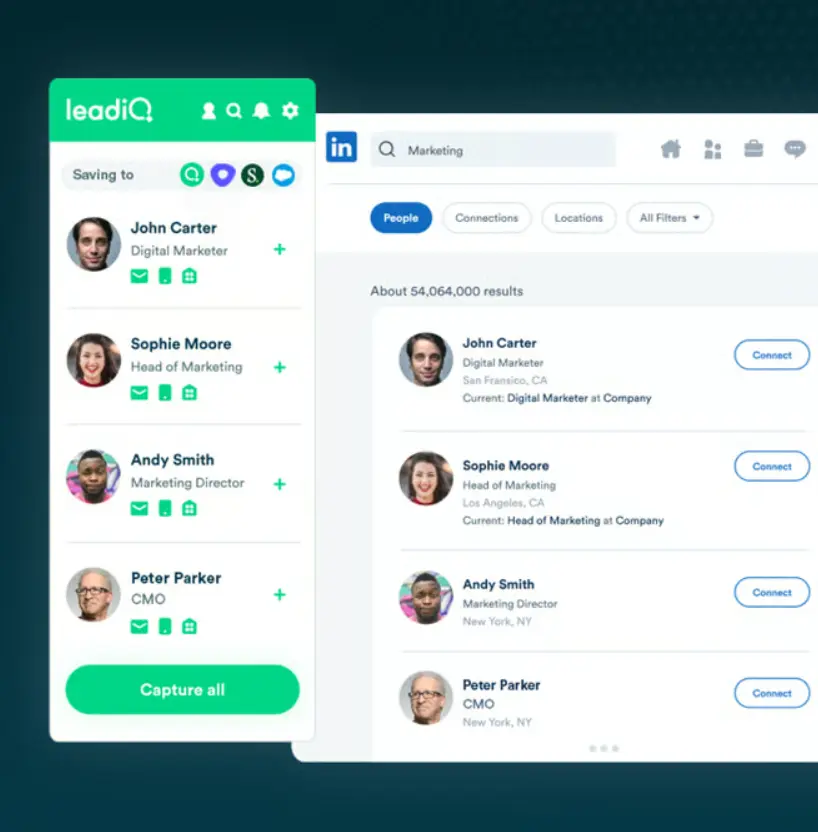
LeadIQ is a prospecting tool built around the moment a contact changes jobs. Its Chrome extension lets reps capture contacts from LinkedIn and Sales Navigator, enrich them and send them to their CRM and sequencer in one step.
Where Cognism leads with European coverage, LeadIQ leads with timing, catching a past buyer the moment they land somewhere new. Its extension includes Lando, an AI agent that reads CRM data, surfaces relevant contacts and flags champion moves with a suggested outreach angle, and any plan is free for 30 days.
Features
LeadIQ's own pages describe these capabilities:
Data. Work emails and mobile numbers, with email generation and reverification.
Intent and signals. Job change alerts and champion tracking with updated contact data.
Workflow and agents. Lando for account research, Scribe for AI-written emails, capture into CRMs and sequencers, plus MCP and API access.
What we found
Region rules decided what LeadIQ's free plan could reach:
Ease of use. Search was simple to use, though many surnames stayed masked until unlocked.
Contacts. Every UK and EU contact showed "Suppressed by Admin - Data Privacy", and US contacts in certain states are paid-only. The one email we could reveal was valid, and no phones came back.
Credits. We barely touched the free credits, and searching a company outside LeadIQ's database used up the free monthly search limit.
Strengths and limitations
Here's where LeadIQ is stronger than Cognism and where it falls short:
Strengths vs Cognism
Job change and champion tracking suit account-based sales motions.
Contacts go straight into your CRM and sequencer from LinkedIn.
Limitations
The free plan blocked every UK and EU contact in our test, which rules it out for European prospecting without a paid plan.
Phones cost 10 credits each, and reviewers often flag phone accuracy.
Pricing
LeadIQ charges 1 credit per email, 10 per phone and 3 per company. The free plan includes 50 credits that expire after a year. Pro was $15 a month billed annually, priced by credit volume, and any plan was free for 30 days, on 30 October 2026.
Best for: Account teams that use job changes as their main outreach trigger and prospect from LinkedIn, mainly in the US.
See LeadIQ vs ZoomInfo.
7. UpLead
G2 rating: 4.7/5
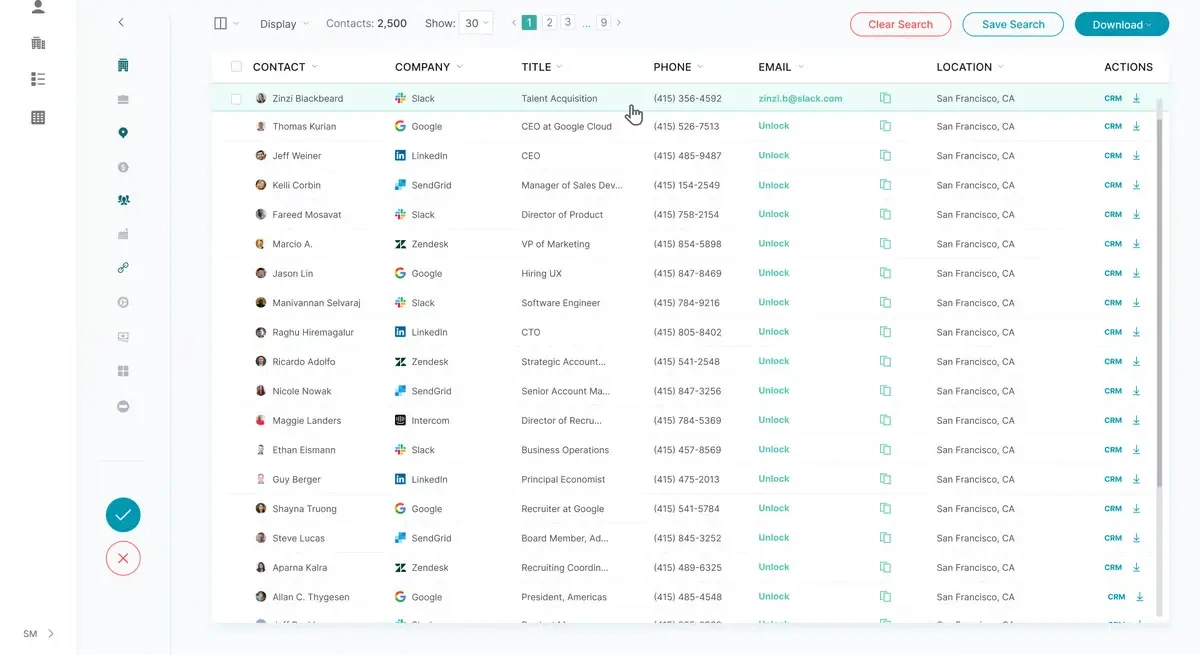
UpLead is a B2B prospecting platform built around a 95% data accuracy guarantee, backed by credit refunds on bounced emails. It lists 200M+ contacts and 16M+ companies and verifies each email in real time when you reveal it.
UpLead suits SMB teams that send mostly email and want a written guarantee on what they buy. Its 7-day trial includes 5 credits but needs a card, so it wasn't part of our no-card test.
Features
UpLead's own pages describe these capabilities:
Data. 200M+ contacts and 16M+ companies, with real-time email verification on each reveal.
Intent and signals. Buyer intent data and technographics on higher plans.
Enrichment. Data enrichment, suppression lists and API access on Professional.
Strengths and limitations
Here's where UpLead is stronger than Cognism and where it falls short:
Strengths vs Cognism
A written accuracy guarantee, with credits returned for bounced emails.
Published prices and credit costs.
Limitations
The trial needs a card and converts to an annual plan on day 7.
Full API access is limited to the custom-priced Professional plan.
Pricing
Essentials, the plan the trial converts to, was $74 a month billed annually, or $890 a year, on 30 October 2026, with Plus above it and Professional quoted. Extra monthly credits cost $0.60 on Essentials, $0.50 on Plus and $0.40 on Professional.
Best for: SMB teams that want verified emails with a written accuracy guarantee.
See UpLead vs ZoomInfo.
8. SalesIntel
G2 rating: 4.3/5
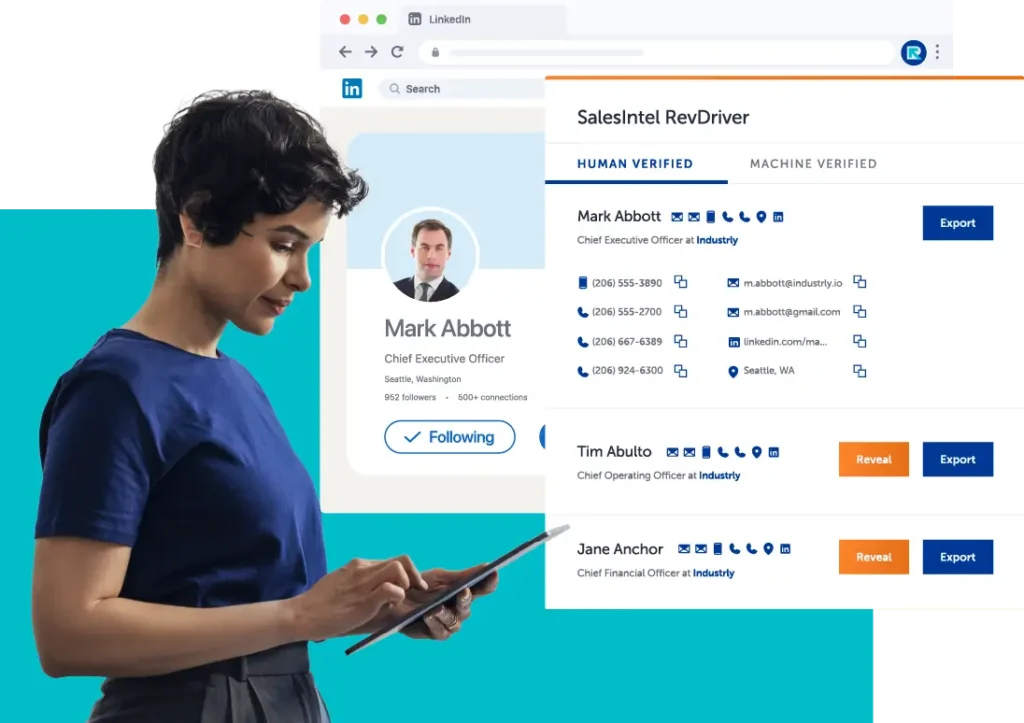
SalesIntel is a B2B data platform built around human-verified contacts, with the closest verification approach on this list to Cognism's. It lists 200M+ verified B2B contacts and 54M+ verified mobile numbers, and its researchers re-verify contacts on a rolling 90-day cycle.
That makes it the closest match for teams that chose Cognism for verified mobiles but sell mainly into North America. It pairs the data with buying signals, AI agents for account research and enrichment, and Research on Demand for contacts that aren't in the database yet. SalesIntel's team sets up the 14-day trial after signup, so we couldn't run our test.
Features
SalesIntel's own pages describe these capabilities:
Data. 200M+ verified contacts and 54M+ verified mobiles, re-verified every 90 days.
Intent and signals. Bombora intent and PredictiveIntent, plus job changes, funding rounds, hiring surges and website visitors.
Enrichment. Research on Demand for missing data, inbound lead enrichment and unlimited exports for data enrichment.
Workflow and agents. The RevDriver Chrome extension for LinkedIn, Salesforce and HubSpot.
Strengths and limitations
Here's where SalesIntel is stronger than Cognism and where it falls short:
Strengths vs Cognism
Human verification on a 90-day cycle, with researchers on demand for contacts it doesn't have.
Unlimited exports, so teams don't ration credits.
Limitations
The trial is set up through sales, much like buying Cognism.
Prices aren't published.
Pricing
SalesIntel quotes prices through its sales team. The pricing page lists what each plan includes but no dollar amounts.
Best for: Teams that want human-verified mobiles, with a verification approach close to Cognism's but broader US coverage.
See where it sits among other B2B data platforms.
9. LinkedIn Sales Navigator
G2 rating: 4.4/5
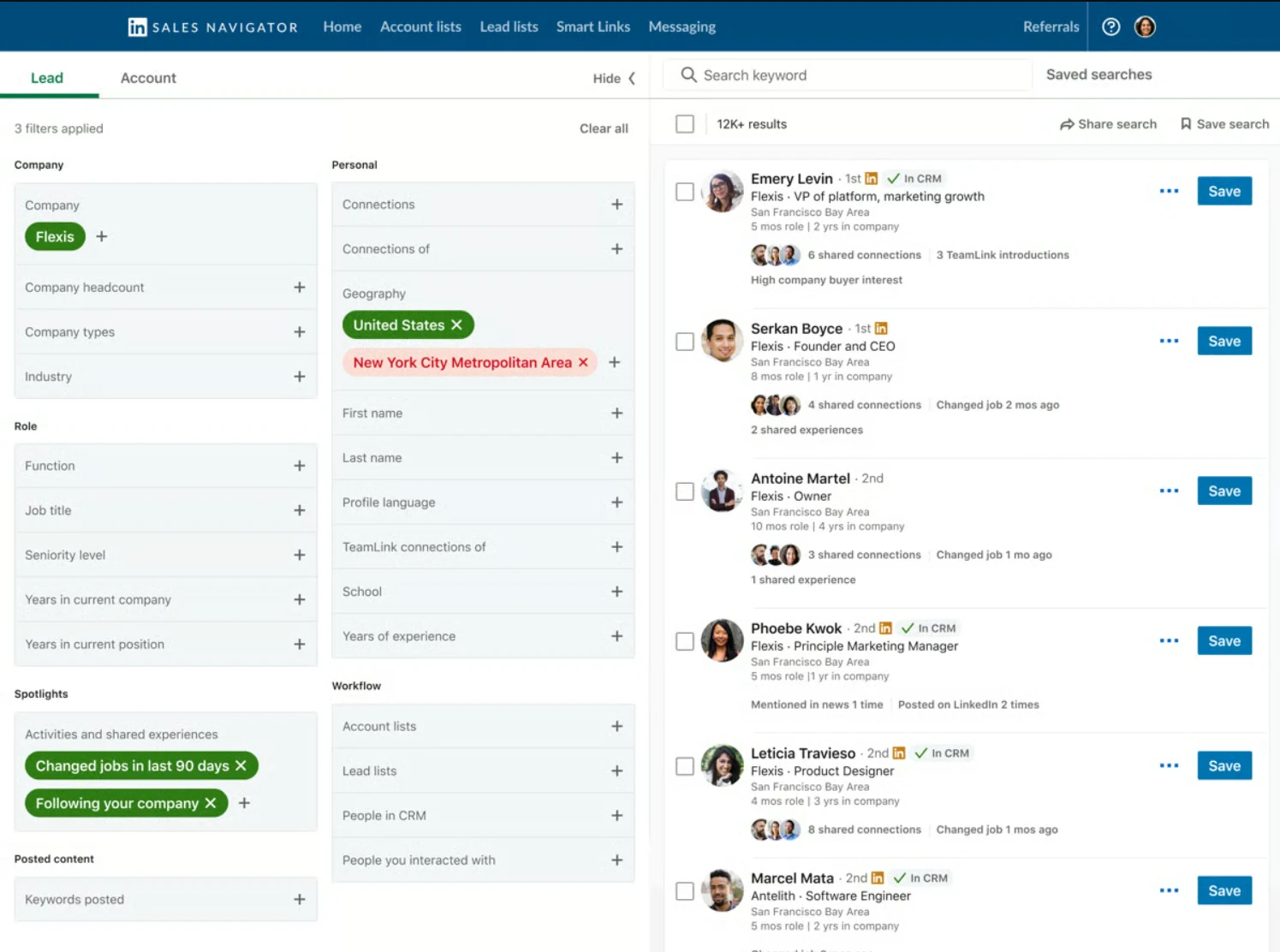
LinkedIn Sales Navigator gives revenue teams direct access to LinkedIn's professional network for prospecting, relationship tracking and account intelligence. Reps can search and save leads, follow account updates and find warm paths into target accounts.
That network is its core strength and its main limit for a Cognism buyer, because LinkedIn doesn't reveal verified emails or phone numbers. In a Forrester Total Economic Impact study commissioned by LinkedIn, a composite customer saw a 312% return over three years. The free trial asks for payment details, which ruled it out of our no-card test.
Features
LinkedIn's own pages describe these capabilities:
Data. Lead and account search on LinkedIn member data, with lead recommendations.
Intent and signals. Alerts on job changes and account news for saved leads and accounts.
Enrichment. CRM sync on Advanced, and CRM data validation against LinkedIn profiles on Advanced Plus for CRM hygiene.
Workflow and agents. InMail, saved lists and TeamLink, which reveals warm introduction paths across your team's network.
Strengths and limitations
Here's where Sales Navigator is stronger than Cognism and where it falls short:
Strengths vs Cognism
Profiles update when members update them, and alerts flag job changes on saved leads.
TeamLink and InMail help start conversations through shared connections.
Limitations
Outreach beyond LinkedIn needs a separate source for emails and phone numbers, which is what Cognism supplies.
Seats are priced per user, which adds up across a large team.
Pricing
Sales Navigator is sold per seat on Core, Advanced and Advanced Plus, with a monthly allowance of InMail credits on each. Core and Advanced have a one-month free trial for eligible accounts.
Best for: Account executives and account managers who prioritize social selling and warm introductions alongside a contact data platform.
Many teams pair it with a data tool, as our LinkedIn prospecting guide shows. See Sales Navigator vs ZoomInfo and more Sales Navigator alternatives.
Where ZoomInfo Fits
Each tool on this list covers one part of what teams buy Cognism for, whether that's contact lookup, verified data or outreach. ZoomInfo brings those parts together: verified global data with European depth, the GTM Context Graph for account context, and Agent Teams to act on it. Teams use it for outbound prospecting, keeping enriched records in sync across systems and account-based marketing, all from the same records.
The GTM data layer trusted by over half the Fortune 500, with 8,000+ G2 Reviews and ranked #1 in 142 G2 Reports.
How Much Does Cognism Cost?
Cognism doesn't publish prices. Its pricing page lists two Sales Prospecting packages, Standard and Pro, each with 5 seats included and a credit allocation for every seat:
Credits. 1 credit reveals one contact, and enriching or exporting a contact also uses credits. Viewing a contact you've already revealed is free.
Pro. Adds Bombora intent, with up to 12 topics chosen from more than 11,000.
CRM Enrichment. Sold on its own or as an add-on to either package.
You'll need a quote for the credits per seat and the contract terms. Our Cognism pricing guide covers what to ask.
Best Cognism Alternative for UK and European Teams
For teams that need EU and UK compliance depth, Cognism remains a strong option. Our test list included UK and EU contacts, and the free plans of the alternatives handled them very differently:
ZoomInfo has 200M+ contacts outside North America.
Apollo returned every UK and EU phone we asked for.
Lusha found nearly all its emails for UK and EU contacts, plus most of the European phones.
Seamless.AI returned most of the European phones along with emails.
LeadIQ suppressed every UK and EU contact on its free plan.
Whichever tool you shortlist, run a sample of your own European contacts through it before you buy.
For a wider shortlist, see our ZoomInfo alternatives test and, for ABM, 6sense vs. Cognism.
Frequently Asked Questions
These are common questions from buyers comparing Cognism alternatives.
What is the best alternative to Cognism?
It depends on what you need beyond European data. ZoomInfo suits teams that sell across regions and want account context and AI agents in one platform. Apollo suits SMB teams that want a free plan with sequencing built in, and SalesIntel is the closest match to Cognism's human-verification approach.
Is there a free alternative to Cognism?
Yes. Apollo, Lusha, Seamless.AI, RocketReach and LeadIQ all have free plans you can start without a card, and GTM.AI, ZoomInfo's API, CLI and MCP access, is free to start with consumption credits based on usage. Cognism itself offers a free data sample on request.
What is the best Cognism alternative for UK and European markets?
In our test, Apollo returned every UK and EU phone we asked for on its free plan, and Lusha found nearly all its emails for UK and EU contacts. ZoomInfo combines the scale of a global platform with data built for European markets, including 200M+ professional profiles outside North America.
Which Cognism alternative has the largest database?
Database size claims vary by vendor and by what counts as a contact. By each vendor's own count, ZoomInfo lists 500M+ contacts, RocketReach 700M+ professionals, Apollo 240M+ contacts, and UpLead and SalesIntel 200M+ each, while Seamless.AI claims 1.8B+ emails. Cognism doesn't publish a total, so test a sample of your own market.
How does Cognism compare to ZoomInfo?
Cognism leads with European coverage, phone-verified mobiles and Do Not Call screening, sold through sales. ZoomInfo combines global data with European depth, adds the GTM Context Graph and Agent Teams, and lets you start free on GTM.AI.
How did we test these Cognism alternatives?
We signed up for every alternative with a self-serve free plan, gave each one the same list of US, UK and EU contacts by name, company and domain, and noted how easy each one was to use, what came back and how many credits it used. Every returned email went through the same verifier. Tools without self-serve access are covered from their own pages and G2 reviews, and each section says why.