

trumpet ranks as the #1 Digital Sales Room on G2, and for good reason. The platform replaces the scattered email attachments, lost links, and unsigned proposals that follow a demo with a single shared workspace that tracks a deal from first touch to signed contract. For sales teams losing deals in cluttered inboxes, it solves a real problem.
To write this trumpet review, we analyzed the platform closely. It's a good fit if:
You need a branded, interactive workspace for every deal
Your sales cycle involves multiple stakeholders and a champion selling internally
You want to replace separate tools for proposals, e-signatures, and content sharing
You prioritize buyer experience and async engagement
You run a structured sales process with mutual action plans
However, trumpet might not be the best choice if:
You need help identifying which accounts to target in the first place
You require buyer intent data and signals to prioritize your pipeline
You want B2B contact data for prospecting
You need a platform that covers the full go-to-market workflow
Your team needs marketing automation, conversation intelligence, and data enrichment alongside deal management
In this case, consider ZoomInfo: a go-to-market platform that helps revenue teams find the right accounts, know when they're in-market, and act across the full sales and marketing workflow. Built on a B2B database of 500M contacts, 100M companies, 135M+ verified phone numbers, and 200M+ verified business emails, ZoomInfo combines this data with its GTM Context Graph and delivers insights through GTM Workspace for sellers, GTM Studio for marketers and RevOps, and APIs and MCP for third-party tools.
We've included a detailed look at ZoomInfo later in this trumpet review for teams whose challenges extend beyond the deal room. If you're ready to explore ZoomInfo, you can learn more here.
What is trumpet?
trumpet is a digital sales room and customer onboarding platform founded in 2021 in London by three co-founders: Rory Sadler (CEO), Nick Telson-Sillett (CMO), and Andrew Webster (CPO). The founding story traces back to Telson-Sillett and Webster's experience scaling DesignMyNight, a hospitality booking platform they sold to The Access Group in 2017. Running that company, they experienced B2B sales friction firsthand: too many attachments, too many email threads, no single place for buyers to engage.
Sadler, who previously led sales at Hotjar, brought direct selling experience to the team. They bootstrapped the initial build with £100,000 of personal capital and have since raised roughly $8 million across pre-seed and seed rounds.
The core concept is the "Pod" (a personalized, branded digital workspace where all deal content, communication, proposals, timelines, and e-signatures live under one shareable link). Buyers don't log in. They click a link and find everything in one place. trumpet now serves 15,000+ revenue teams globally, holds the #1 Digital Sales Room ranking on G2, and counts companies like Cognism, Gong, Personio, Stripe, and YouGov among its customers.
trumpet Pros & Cons
Pros | Cons |
|---|---|
#1-ranked Digital Sales Room on G2 globally | Key features locked behind $100+/user/month tiers |
All-in-one deal workspace (proposals, e-sign, MAPs, video) | Pro plan capped at 5 users |
Buyer engagement analytics with CRM sync | No native Zapier or Make integration |
AI layer (Casey, Composer, Maestro) embedded in deal context | Template design constrained by widget system |
Mutual Action Plans with proven close rate data | Feature density can overwhelm new users during onboarding |
Permanent free plan with unlimited users | Enterprise governance (SSO, SCIM) only on Elite tier |
HubSpot and Salesforce two-way integrations | No prospecting, data intelligence, or intent signal capabilities |
trumpet Review: How It Works & Key Features
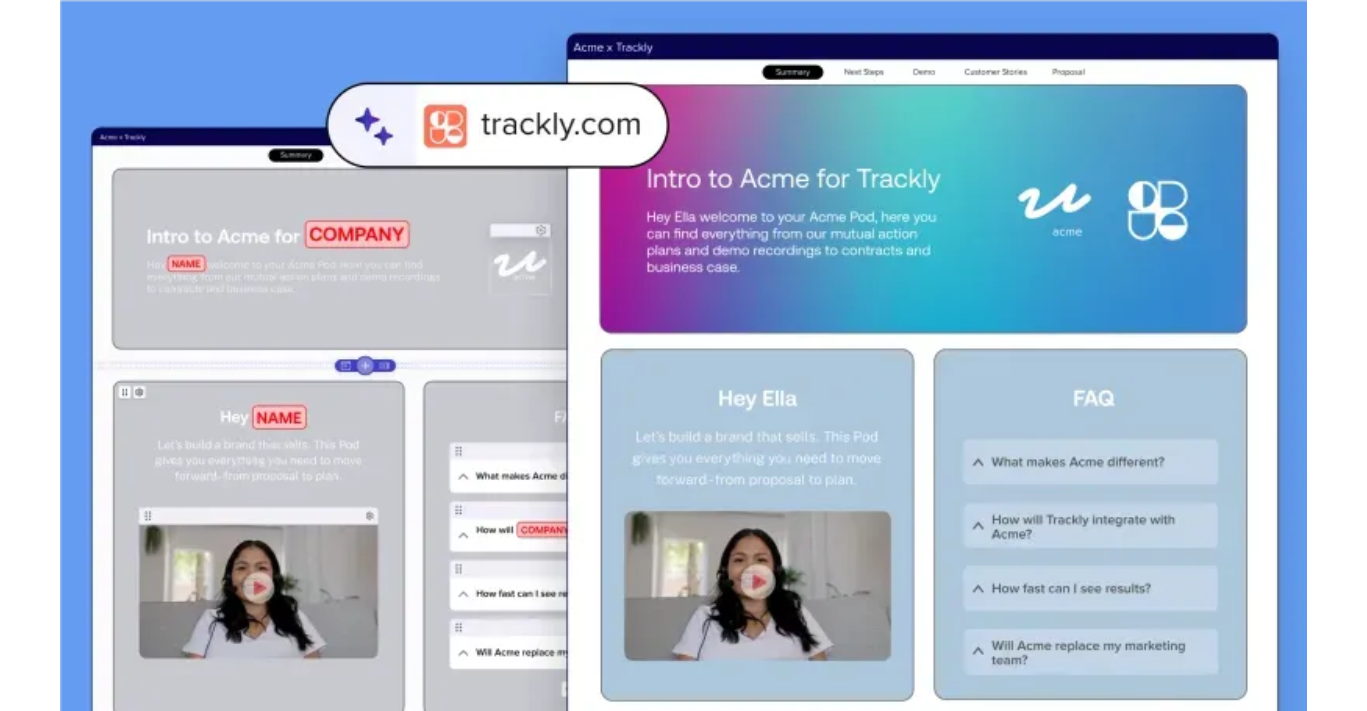
Digital Sales Rooms: trumpet centralizes every deal in a single, trackable workspace.
The Pod is trumpet's core product. A rep creates a personalized Pod in seconds from a template. CRM auto-fill pulls in the buyer's company name, logo, contact details, and deal value from HubSpot, Salesforce, CloseCRM, or Pipedrive. The Pod is shared as a single link. No login is required on the buyer's side, though email-gated access is available.
Source: trumpet
Inside, buyers find everything: the sales deck, product demo videos, a proposal, a mutual action plan, a collaboration chat, and an e-signature block. Reps control what appears and when. Every interaction is tracked in real time (views, time on page, link clicks, downloads) and pushed back into the CRM. When a new stakeholder opens the Pod, trumpet auto-enriches their contact info and alerts the rep.
The result is visibility that email chains can't provide. trumpet reports a 28% higher win rate when buyers revisit a Pod 6 to 8 times during the sales cycle, and 15-minute faster sales cycles when Pods include personalized videos. This works because it turns the post-demo black box into a trackable experience. Champions can share the Pod with their buying committee, extending the rep's reach into the organization without additional meetings.
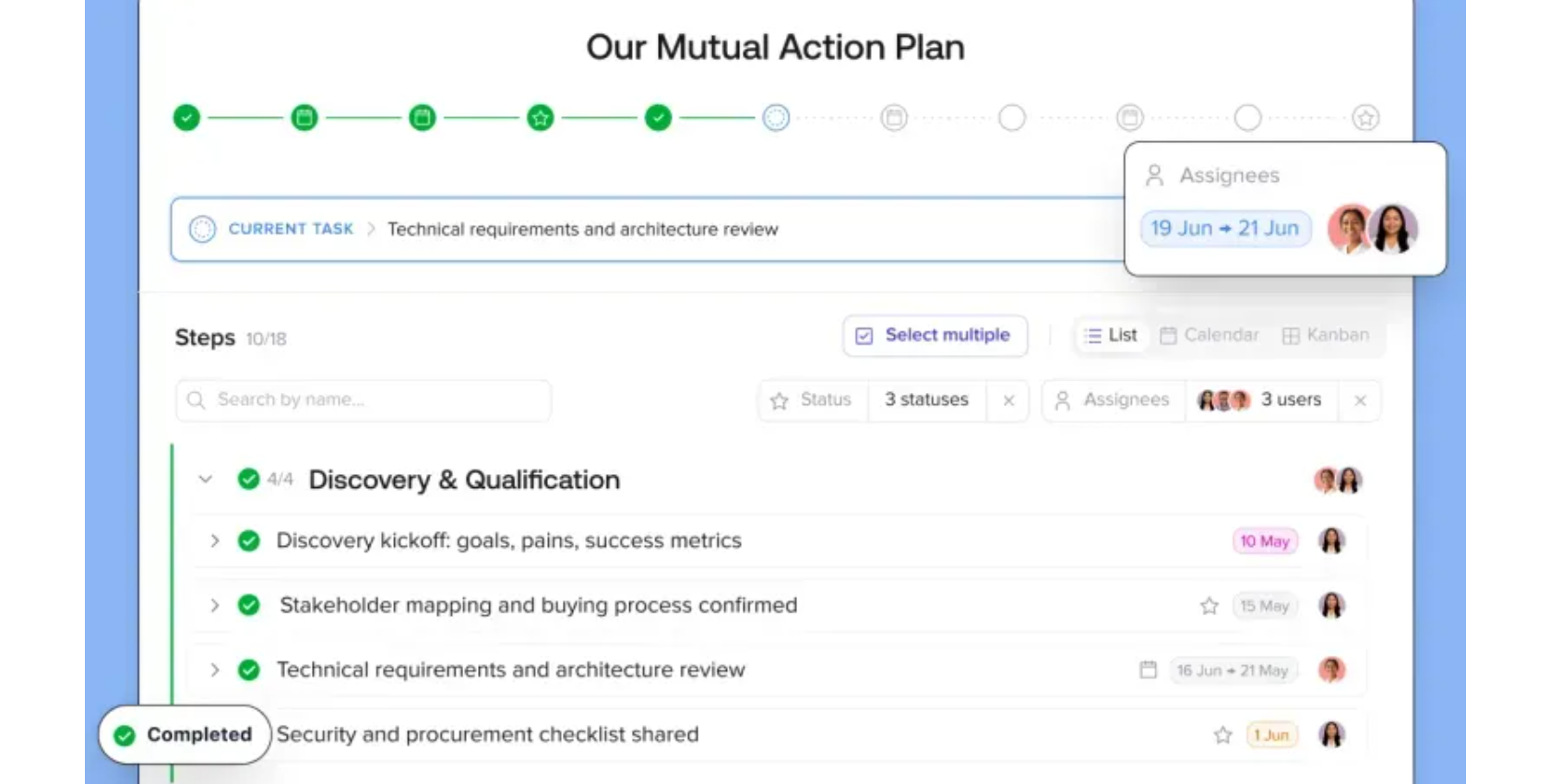
Mutual Action Plans: Shared timelines that align buyers and sellers on every next step.
trumpet's Mutual Action Plan is a shared, interactive roadmap embedded inside the Pod. Reps break tasks into steps with clear owners, due dates, and attached files. Buyers access the same plan and can tick off completed tasks, upload documents, and add their own action items.
Source: trumpet
The plan transitions from a sales close plan into an onboarding plan without switching tools. Tasks are grouped by phase (discovery, proposal, go-live), viewable in list or calendar mode, and trigger automated reminders. A central dashboard shows all MAPs across every Pod for pipeline-level visibility.
Trumpet AI: Deal coaching, document generation, and content intelligence built into the workspace.
Trumpet AI runs across the platform in three components.
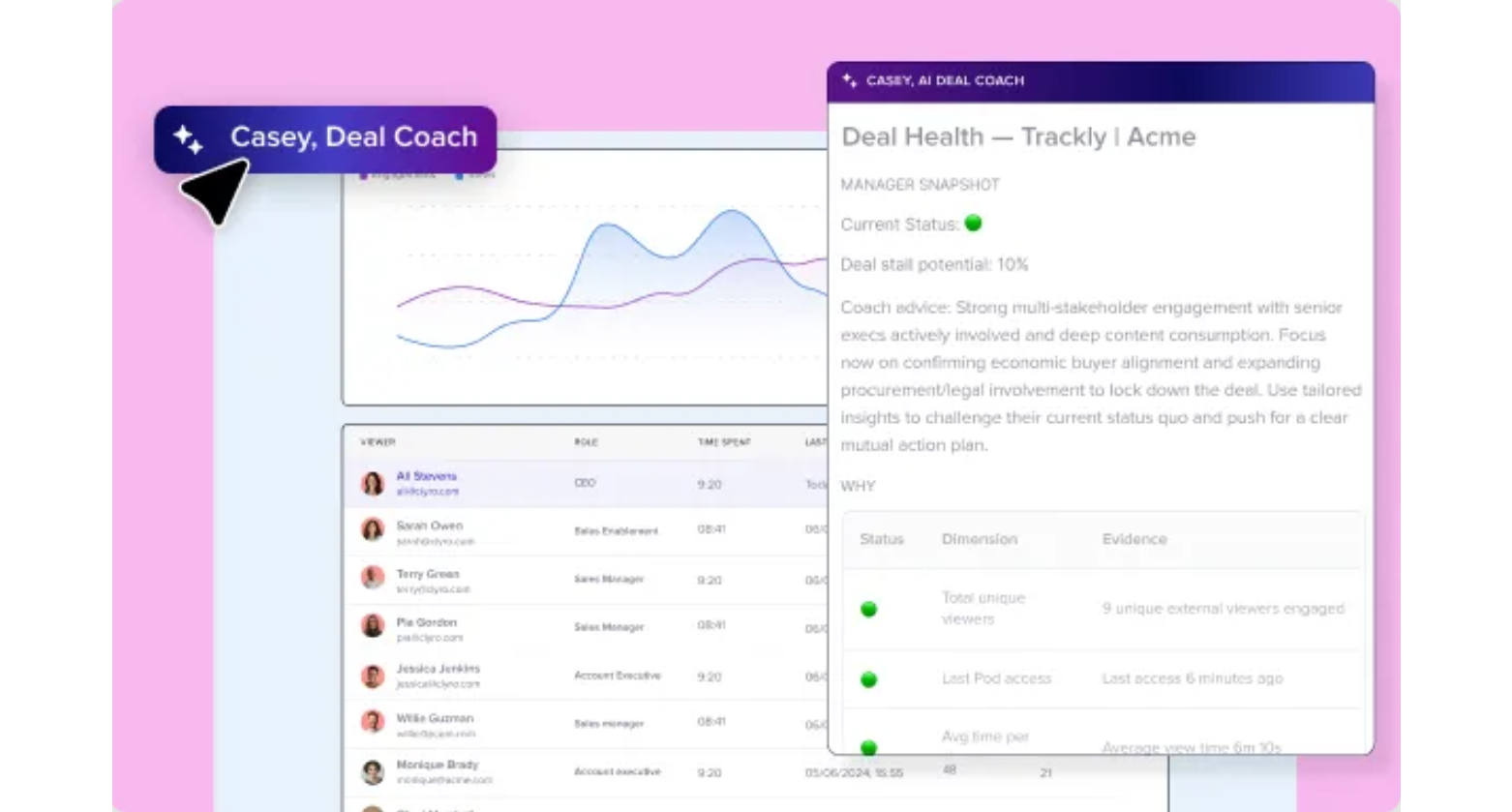
Casey AI is the deal coaching engine. It lives inside Pods and analyzes buyer engagement signals to produce deal health assessments (red/amber/green), identify stall risks, surface missing stakeholders, and deliver coaching recommendations based on MEDDICC and Challenger methodologies. trumpet calls Casey the industry's first AI deal and engagement coach.
Source: trumpet
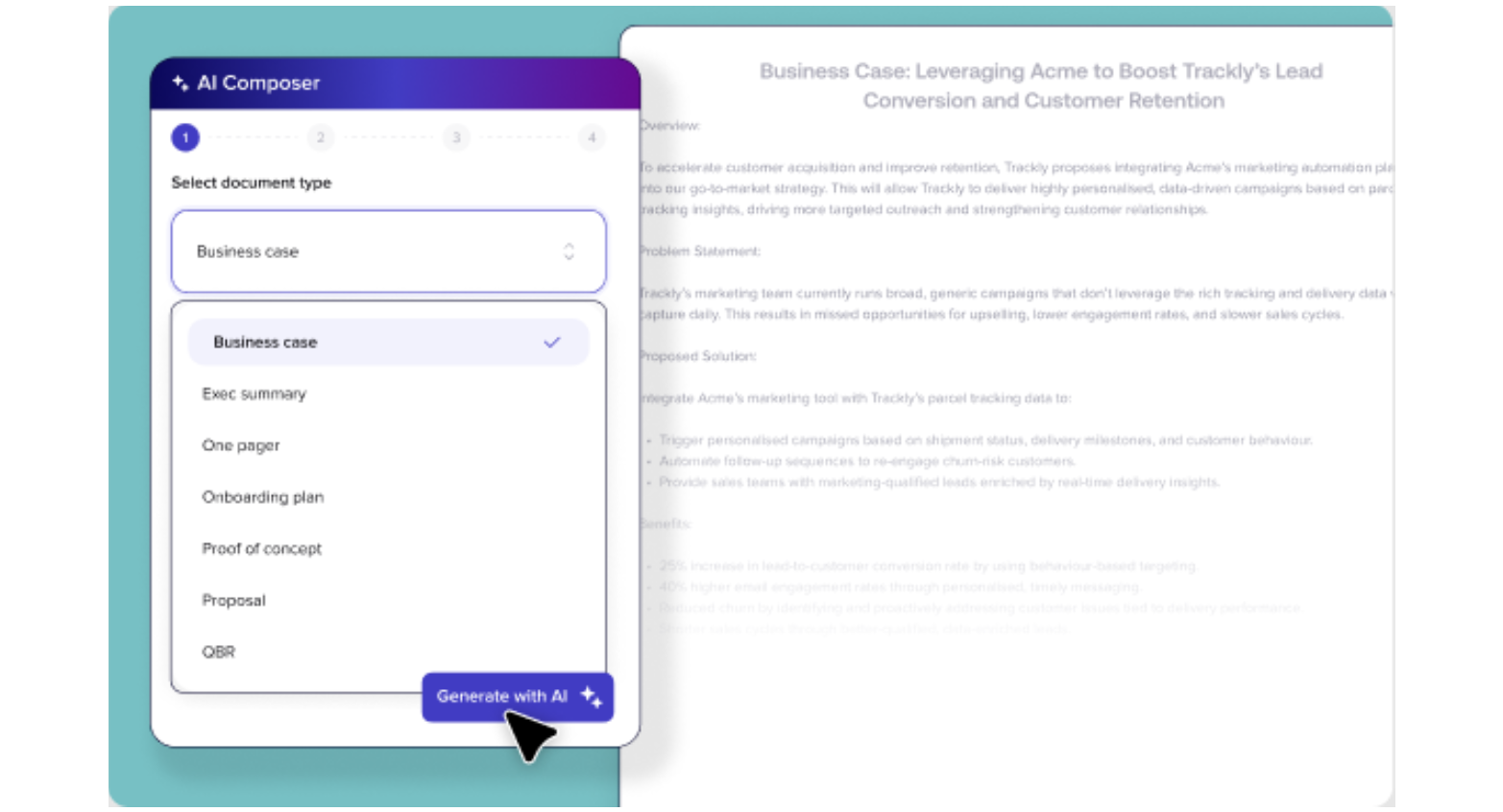
Composer AI generates buyer-ready documents (business cases, proposals, QBRs, onboarding plans) in seconds by pulling from live Pod data, Gong call recordings and transcripts, and supporting files. It covers 7 document types across 18 frameworks and supports multi-language output.
Source: trumpet
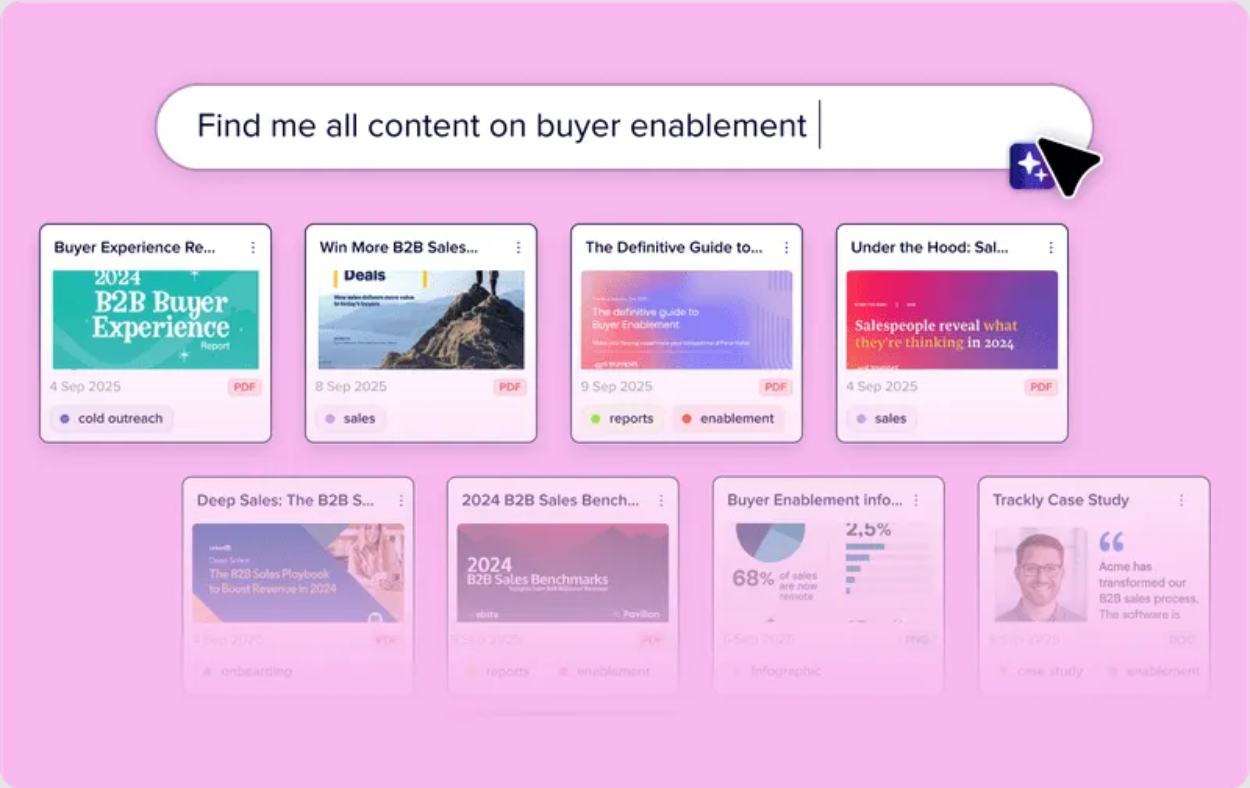
Maestro AI handles content intelligence: SmartSearch finds assets by intent using semantic AI, Auto-Tagging categorizes uploaded PDFs automatically, and Engagement Scoring produces health scores per deal and stakeholder.
Source: trumpet
On governance, trumpet states that no customer data is used for model training, with zero data retention after queries and admin-level controls.
Proposals, E-Signature & Collaboration: trumpet replaces multiple tools with native deal execution features.
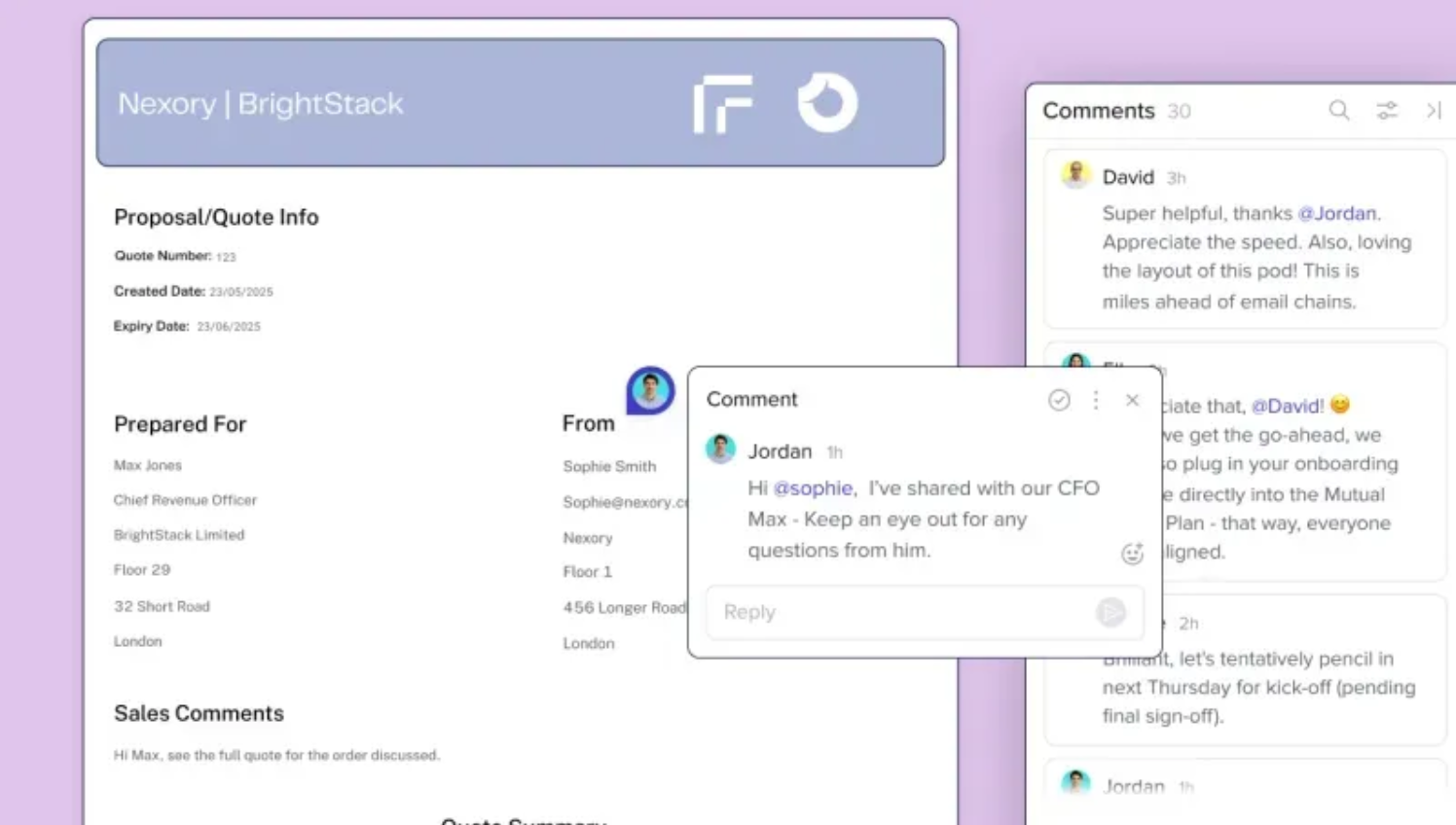
Rather than sending a PDF proposal through email and routing it to DocuSign, trumpet lets reps build proposals natively inside the Pod. A product catalogue can be uploaded once and reused for quotes. CRM integration pulls in buyer details automatically. Discounts, taxes, and margin calculations are handled within the builder.
Source: trumpet
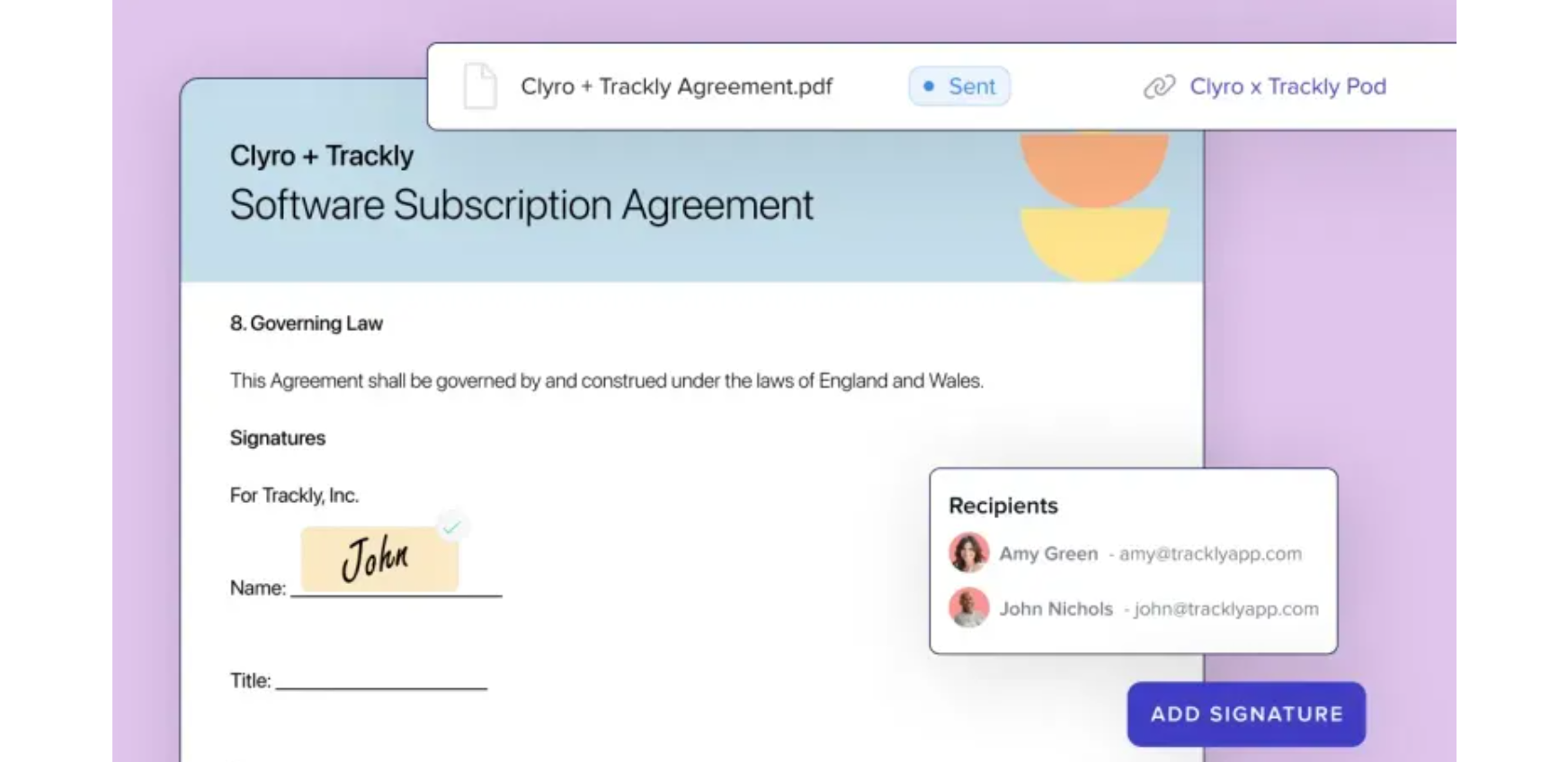
E-signature (trumpetSign) lets buyers sign without leaving the Pod. Signing fields can be assigned to different recipients in a defined sequence. Audit trails record document access, review, and signing for legal compliance. When a document is signed, reps receive alerts via Slack, Teams, and email, and the signed status syncs to the CRM.
Source: trumpet
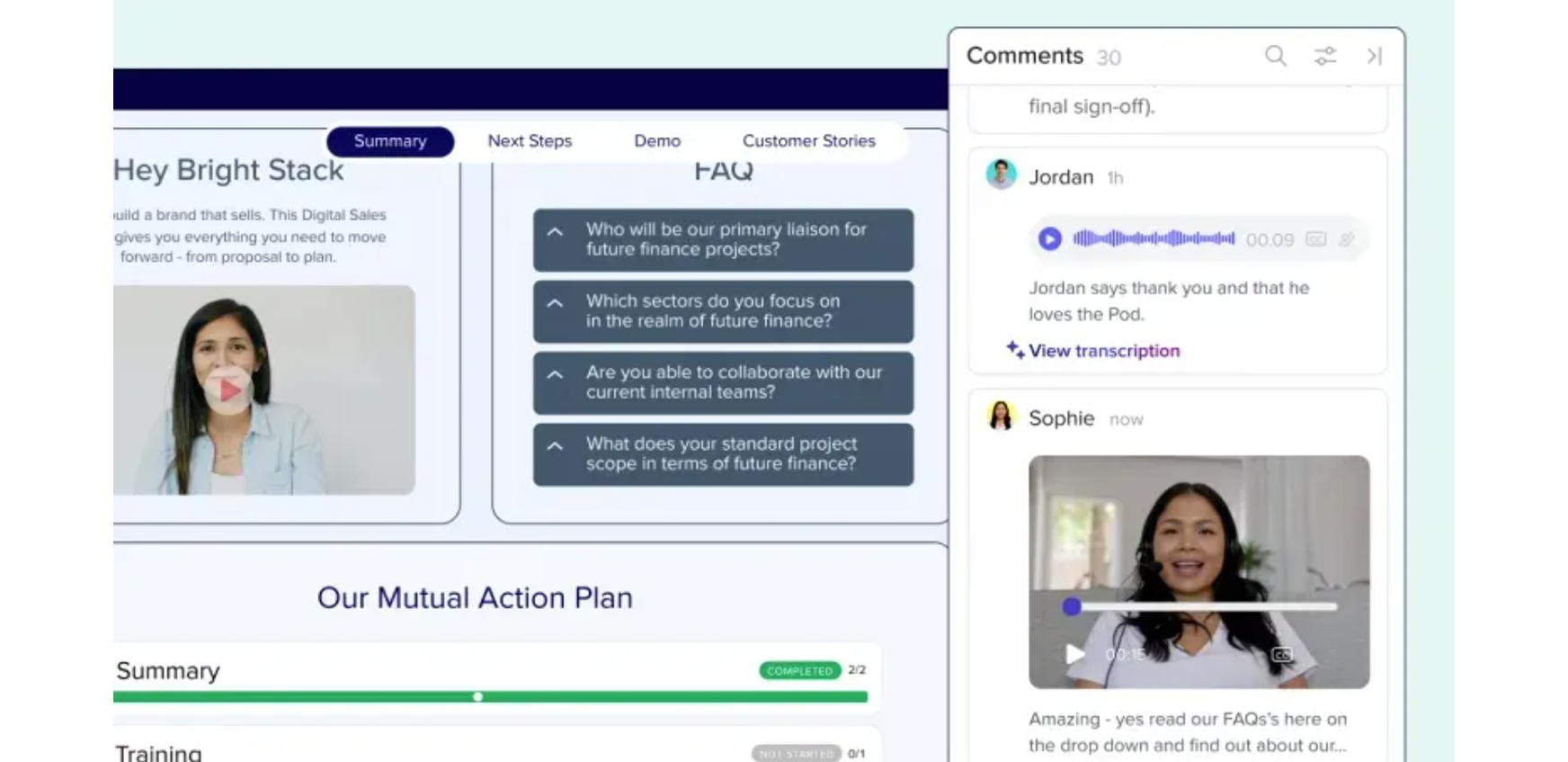
The Collaboration Suite adds threaded live chat, voice and video notes, page-level annotations with @mention notifications, and Huddles (live video calls with screen-sharing launched from inside the Pod). AI summaries and automatic transcripts keep all parties aligned.
Source: trumpet
Pricing: trumpet uses per-seat pricing with feature-gated tiers.
trumpet offers a permanent free plan and three paid tiers:
Free Plan:
10 Pods per account
Unlimited users
Mutual Action Plans and AI Org Charts
40+ integrations
Basic analytics
Pro Plan ($45/user/month):
Unlimited Pods and content uploads
CRM integrations (HubSpot, Salesforce)
AI engagement scoring
Pro-level analytics
Capped at 5 users
Scale Plan ($100/user/month):
Full Trumpet AI suite (Casey, Composer, Maestro)
TrumpetSign (native e-signature)
Proposals & Quotes
Video and screen recording
Content and template analytics
DocuSign, PandaDoc, and Gong integrations
Elite Plan ($160/user/month):
AI content and semantic search
SSO and SCIM
Multi-team workspaces
Full white-labeling
Dedicated customer success team
Annual billing is available at roughly a 17% discount. The free plan is useful for evaluating the product, though the 10-Pod cap means larger teams will hit the limit quickly. The bigger pricing consideration is the feature wall: e-signature, video recording, proposals, and the full AI suite all require the Scale plan at $100/user/month. Teams that need these features (and most will) face a meaningful investment per seat.
Where trumpet Falls Short
trumpet does the digital sales room well. But several limitations surface depending on what your team needs.
No Prospecting or Data Intelligence. trumpet helps you manage deals once you're engaged with a buyer. It does not help you find those buyers. There's no contact database, no company search, no buyer intent signals, and no technographic data. Teams still need separate tools to build target account lists, identify in-market companies, and source verified contact information. trumpet starts after the outreach has already worked.
Pricing Walls. The free and Pro plans serve as entry points, but the features most teams need (e-signature, proposals, video recording, and the AI suite) sit at $100/user/month on Scale. For a 10-person sales team, that's $12,000 per year per rep. The Pro plan's hard cap at 5 users further limits growing teams.
Limited Automation Connectivity. trumpet has no confirmed native Zapier or Make integration, which prevents teams from building automated workflows outside its core integration list. If your CRM isn't HubSpot, Salesforce, Pipedrive, or CloseCRM, connecting trumpet to your stack may be difficult.
Enterprise Governance Is Elite-Only. SSO, SCIM, multi-team workspaces, and white-labeling require the Elite plan at $160/user/month. Large organizations evaluating trumpet against established enablement platforms will find the governance features thin at lower tiers.
Template Design Constraints. The widget-based Pod editor is fast and accessible, but it offers limited flexibility compared to building from scratch. Teams with strict brand guidelines may find that customization beyond the provided widgets requires workarounds.
No Pipeline Intelligence Beyond the Pod. trumpet tracks what happens inside its Pods, which is valuable. But it can't tell you which accounts to prioritize based on external signals, whether a prospect company is researching solutions, or how your pipeline health compares against market patterns. The intelligence stops at the Pod's walls.
These aren't failures. They reflect a platform focused on the buyer-facing deal experience. But for teams whose challenges start earlier (identifying the right accounts, sourcing contacts, detecting buying intent), trumpet solves only part of the problem.
Top trumpet Alternative for Full GTM Intelligence: ZoomInfo
ZoomInfo is a go-to-market platform built on a B2B database of 500M contacts, 100M companies, 135M+ verified phone numbers, and 200M+ verified business emails. Its GTM Context Graph processes 1.5B+ data points daily, combining this data with CRM records, conversation transcripts, and behavioral signals to show not just what happened in your pipeline, but why.
Teams access this intelligence through GTM Workspace for sellers, GTM Studio for marketers and RevOps, and APIs and MCP for third-party tools. Where trumpet manages the buyer-facing deal experience, ZoomInfo covers the territory that comes before and around it.
Today, 35,000+ companies including Adobe, Snowflake, and Thomson Reuters rely on ZoomInfo to find the right accounts, understand when they're in-market, and execute across the full go-to-market workflow.
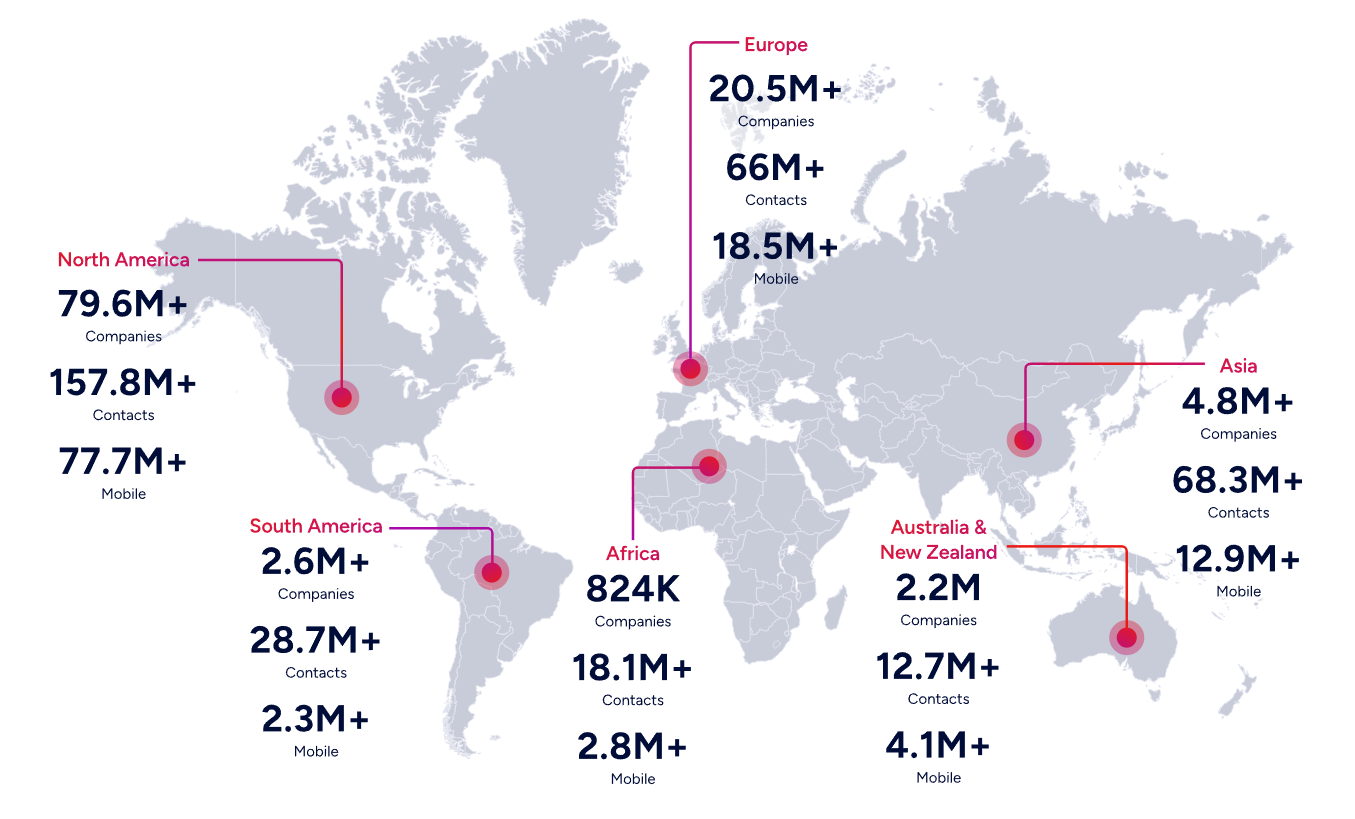
Comprehensive B2B Data: ZoomInfo provides the contact and company intelligence that trumpet doesn't include.
trumpet assumes you already know who to sell to. ZoomInfo starts there. The platform spans 500M contacts, 100M companies, 135M+ verified phone numbers, 120M direct-dial phone numbers, and 200M+ verified business email addresses. A multi-source verification pipeline backed by 300+ human researchers achieves up to 95% accuracy on first-party data.
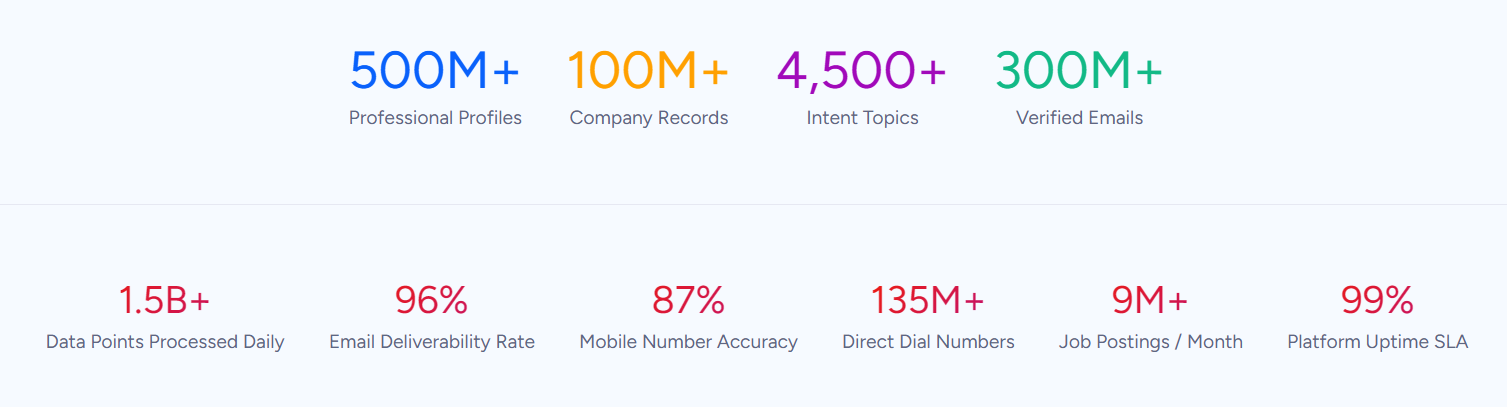
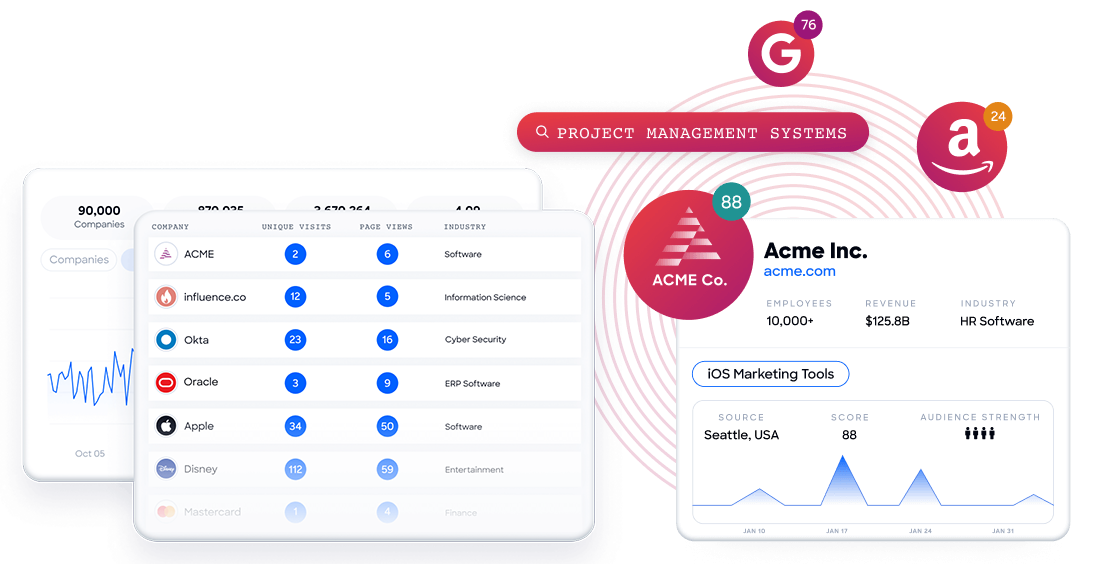
Beyond contact records, ZoomInfo includes buyer intent data that tracks signals from 210 million IP-to-Organization pairings and 6 trillion+ new keyword-to-device pairings sourced monthly. Guided Intent, exclusive to ZoomInfo, identifies topics historically correlated with deal success rather than requiring manual topic selection. Website visitor tracking (WebSights) resolves anonymous traffic to companies, including buying team identification and direct contact info.
The data quality has been externally validated: in a Fortune 500 competitive RFP analyzing 25 million contacts across vendors, the independent consultant concluded that "no other competitor came even close." ZoomInfo holds 133 No. 1 rankings on G2 across Sales Intelligence, Buyer Intent, and Data Quality categories.
ZoomInfo is our one source of truth for account data, and even more so for contact data. There's no other provider in the market that provides you with that level of detail. (Smartsheet)
GTM Context Graph: An intelligence layer that captures why deals move, not just that they moved.
Where trumpet tracks buyer activity inside Pods, ZoomInfo's GTM Context Graph combines a customer's CRM records, conversation transcripts, email threads, and behavioral signals with ZoomInfo's third-party data to find connections between signals and outcomes. Processing 1.5B+ data points daily, it captures not just what happened in a deal, but why it happened.
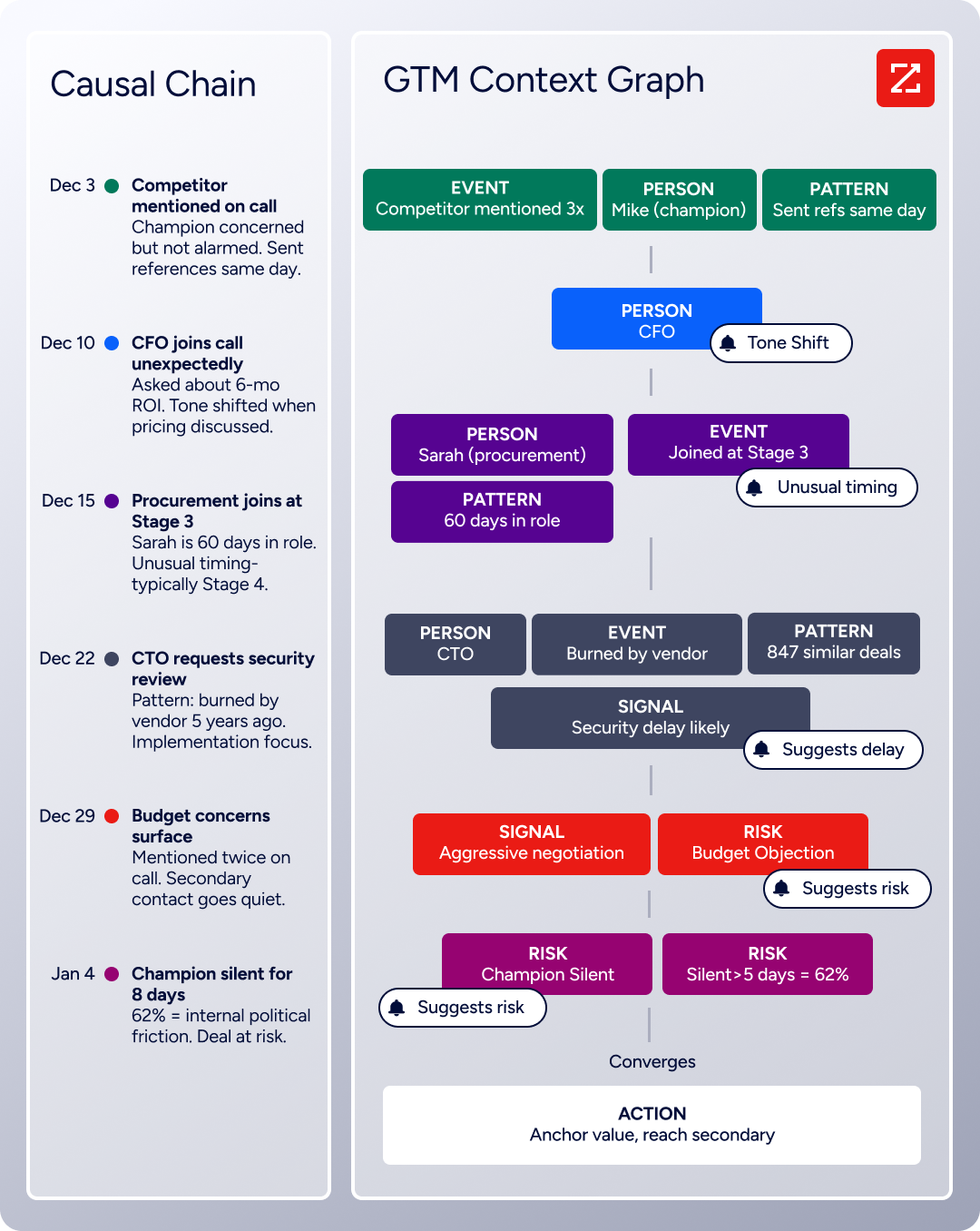
A CRM records that a deal moved from Stage 3 to Stage 4. The GTM Context Graph analyzes conversation intelligence, intent signals, and org chart changes to identify what drove the movement (an executive joined the last call and asked about ROI) and what that pattern predicts about similar deals. This context feeds every AI recommendation, outreach draft, and pipeline forecast.
ZoomInfo built this through two decades of data infrastructure and the acquisition of Chorus (conversation intelligence) and other context capture tools. As CPO Dominik Facher wrote: "The CRM recorded the state change. It has no record of why it happened."
That combination of our internal CRM data, external signals, and AI that's given all that context has helped us craft very specific account- and persona-based messages. And people have responded to them right away. (Seismic)
GTM Workspace: An AI-powered seller workspace that covers prospecting through deal execution.
GTM Workspace is ZoomInfo's front-end for sellers, built on the GTM Context Graph. Where trumpet provides the buyer-facing deal room, GTM Workspace provides the seller-facing command center: a single surface where prioritized accounts, AI-drafted outreach, deal context, and real-time buying signals converge.
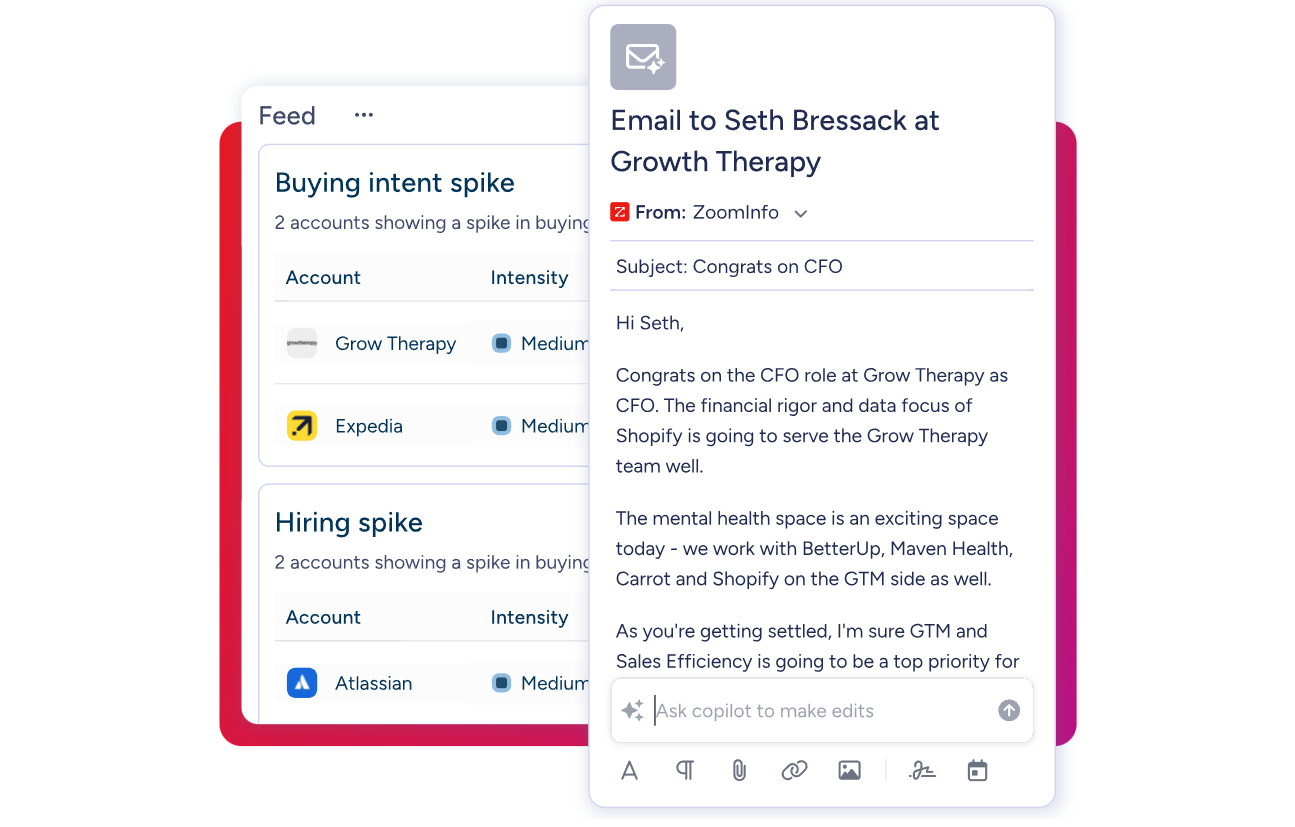
AI agents inside Workspace handle account research, generate follow-up emails, monitor signals, update CRM fields, and surface next best actions. An Action Feed delivers a live stream of in-market buyers matched to target criteria, with pre-drafted actions on every signal. Views combine CRM data with real-time buying signals in dynamic, filterable interfaces.
Seismic's sales team reported 54% productivity gains and 11.5 hours saved per week. Thomson Reuters increased closed-won deals by 40% and achieved 115% average quota attainment each month. Databricks reached prospects 50% faster.
Anything that minimizes our team's need to switch contexts is beneficial. ZoomInfo offers a unified view, eliminating the need to navigate between systems. (Spekit)
Universal Access: Use ZoomInfo's intelligence in any tool, not just ZoomInfo's own products.
ZoomInfo delivers its intelligence through three channels: GTM Workspace for sellers, GTM Studio for marketers, RevOps, and GTM engineers, and APIs and MCP for third-party tools and AI agents. All three draw from the same GTM Context Graph, so the intelligence stays consistent regardless of where teams access it.
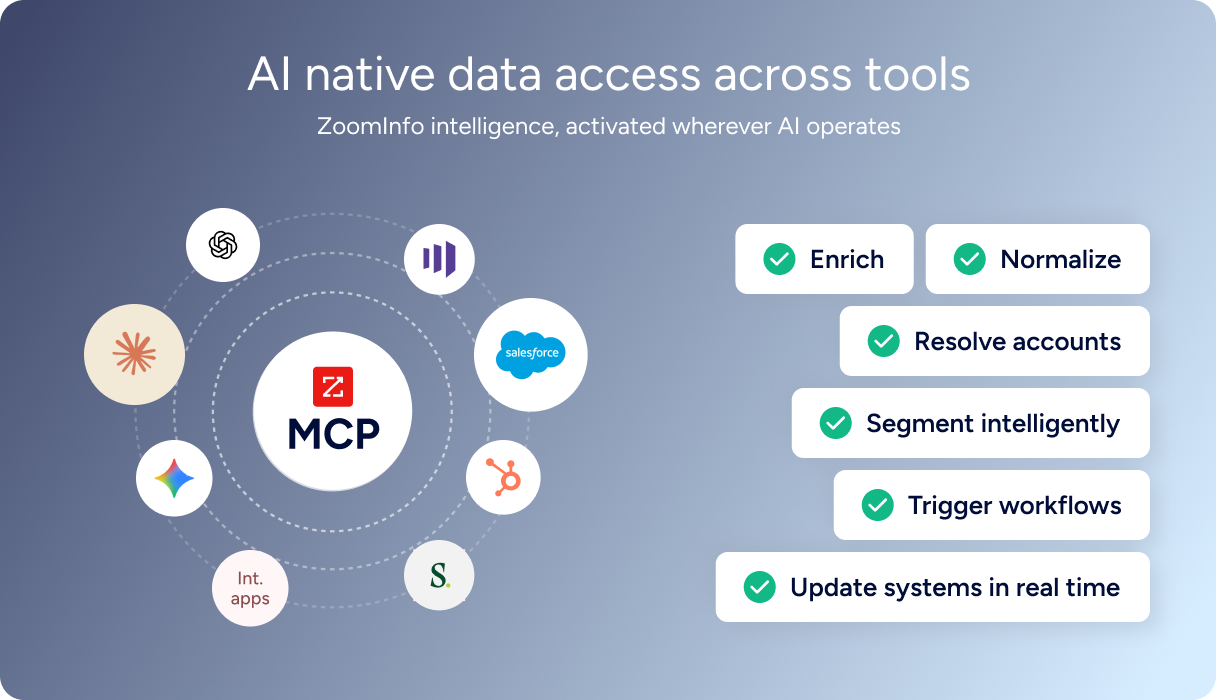
GTM Studio lets RevOps teams and marketers design, enrich, and activate go-to-market plays in natural language without engineering tickets. Expansion plays that used to take 3 weeks now launch in 30 minutes. ZoomInfo has added API access to all relevant plans and supports Claude and ChatGPT through its MCP server, so teams building custom agents or internal tools can use the same data powering ZoomInfo's own products.
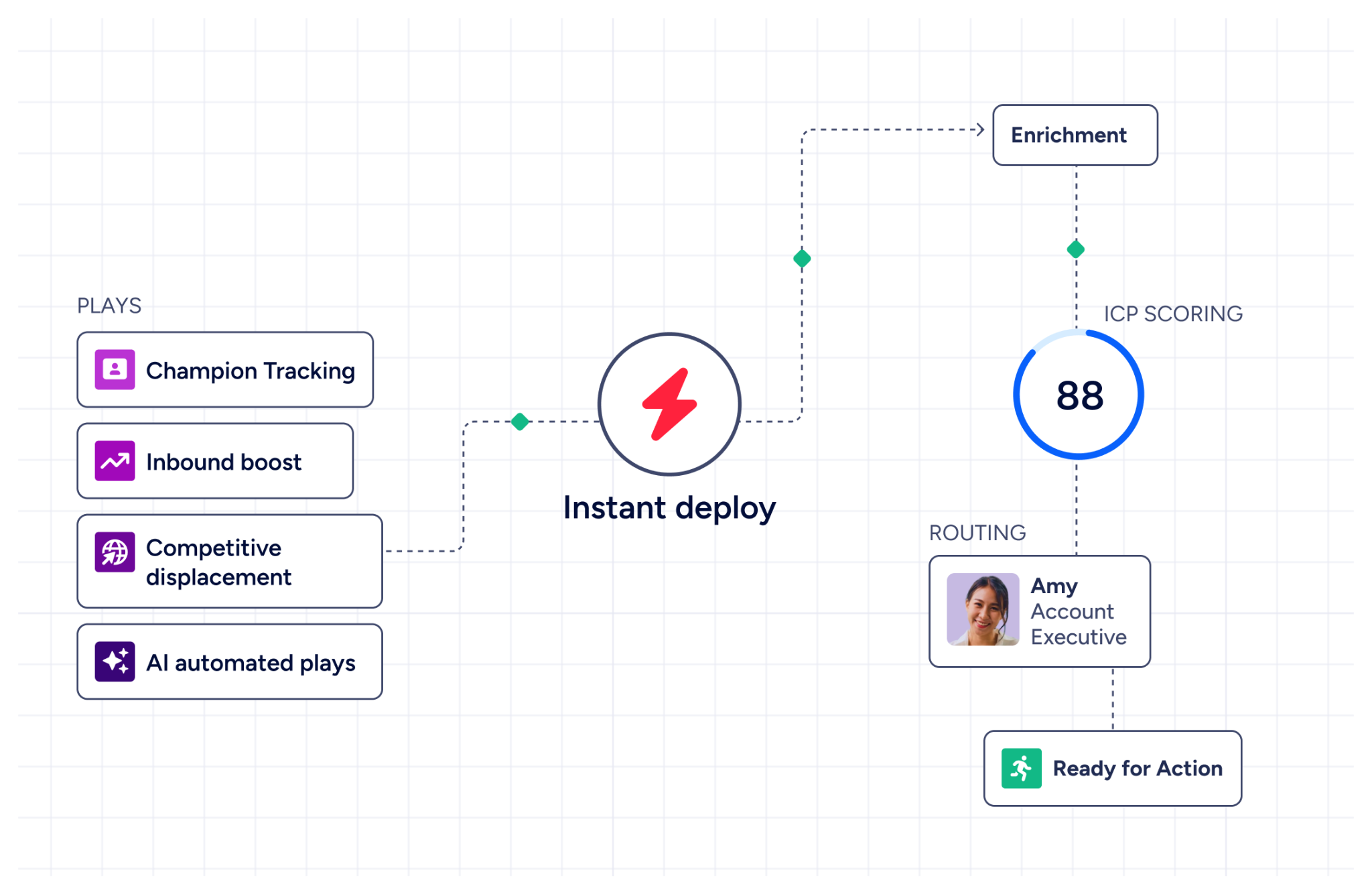
The plug-and-play aspect of the API means I can integrate it very easily into any process and get information at a moment's notice. (BDO Canada)
trumpet or ZoomInfo: Comparison Summary
Aspect | trumpet | ZoomInfo |
|---|---|---|
Primary focus | Digital sales rooms and buyer collaboration | Full GTM intelligence, data, and execution |
Core strength | Buyer-facing deal workspace (Pods) | B2B data + GTM Context Graph |
Contact database | None | 500M contacts, 200M+ verified emails, 135M+ verified phone numbers |
Buyer intent data | Pod engagement signals only | Intent from 210M IP-to-Org pairings + 6T keyword signals monthly |
Prospecting capabilities | Not included | Contact/company search, intent, website visitor identification |
Deal management | Mutual Action Plans, proposals, e-signature | GTM Workspace AI agents, deal intelligence via Chorus |
AI capabilities | Casey (deal coach), Composer (docs), Maestro (content) | GTM Context Graph, AI agents, conversation intelligence |
Buyer-facing workspace | Branded Pods with collaboration tools | Not a buyer-facing workspace |
CRM integrations | HubSpot, Salesforce, Pipedrive, CloseCRM | Salesforce, HubSpot, Dynamics 365, 120+ marketplace integrations |
Marketing tools | Not included | ABM, advertising DSP, FormComplete, audience management |
Free plan | 10 Pods, unlimited users | ZoomInfo Lite (permanent), 10 monthly exports |
Paid pricing | $45 to $160/user/month (published) | Custom-quoted, consumption-based |
Best for | Managing the deal process after initial engagement | Finding, prioritizing, and engaging the right accounts from the start |
Final Verdict
The choice between trumpet and ZoomInfo depends on where your revenue team's challenge lies.
Choose trumpet if your biggest problem is what happens after the first meeting. If deals stall because buyers lose track of follow-up materials, stakeholders can't find the proposal, and email chains bury context, trumpet solves that. It gives every deal a single branded workspace where content, timelines, proposals, and signatures live together. For teams with a working prospecting engine that need to improve their buyer experience and deal execution, trumpet is a focused solution.
Choose ZoomInfo if your challenges start earlier in the funnel, or span the full go-to-market workflow. If you need to find the right accounts, understand which ones are in-market, reach verified decision-makers, and execute across sales, marketing, and operations, ZoomInfo covers that spectrum. The GTM Context Graph connects external intelligence with your internal data to show why deals move or stall, while GTM Workspace and GTM Studio give sellers, marketers, and RevOps teams dedicated workspaces to act on that intelligence.
Get started with ZoomInfo here.
trumpet and ZoomInfo address different parts of the revenue problem. trumpet owns the buyer-facing deal room. ZoomInfo owns the intelligence and data layer that tells you who to put in that room and why. Teams with the budget to solve both may find value in each. But if you have to choose one starting point, the question is simple: do you need a better buyer experience, or do you need better intelligence about who your buyers are?
trumpet FAQ
Does trumpet have a free plan?
Yes. trumpet offers a permanent free plan with unlimited users but a cap of 10 Pods per account. It includes Mutual Action Plans, AI Org Charts, basic analytics, and 40+ integrations. The free tier works for evaluating the product, though the Pod limit means larger teams will need to upgrade quickly. Features like e-signature, video recording, proposals, and the full AI suite require the Scale plan at $100/user/month. ZoomInfo also offers a permanent free tier (ZoomInfo Lite) with access to its B2B database and 10 monthly export credits.
What is a trumpet Pod?
A Pod is a personalized, branded digital workspace created for each deal. It gathers all deal content (decks, demos, proposals, timelines, e-signatures, and chat) under a single shareable link. Buyers access the Pod without logging in. Every interaction inside the Pod is tracked and synced to the seller's CRM. trumpet reports a 28% higher win rate when buyers revisit a Pod 6 to 8 times during the sales cycle.
How much does trumpet cost?
trumpet's published pricing has four tiers: Free ($0, 10 Pods), Pro ($45/user/month, max 5 users), Scale ($100/user/month), and Elite ($160/user/month). Annual billing offers roughly a 17% discount. The Scale plan is the first tier with full feature access, including e-signature, proposals, video recording, and the Trumpet AI suite. SSO, SCIM, and white-labeling are only available on Elite. ZoomInfo uses custom-quoted, consumption-based pricing with no published dollar amounts, though it offers both a permanent free tier and a 7-day free trial for paid features.
Does trumpet integrate with CRM systems?
trumpet offers two-way integrations with HubSpot and Salesforce, with additional connections to Pipedrive, CloseCRM, and Active Campaign. Pod engagement signals (views, downloads, signatures) flow back into CRM activity records. The platform also integrates with Gong, Salesloft, Outreach, DocuSign, PandaDoc, Slack, and Teams. CRM integrations require the Pro plan or above. ZoomInfo integrates with Salesforce, HubSpot, Microsoft Dynamics 365, and over 120 tools through its App Marketplace, plus APIs and MCP for custom connections.
What is trumpet's Mutual Action Plan?
The Mutual Action Plan is a shared, interactive roadmap embedded inside a Pod that aligns buyers and sellers on every step from discovery to contract signing to onboarding. Tasks have assigned owners, due dates, and file attachments. Buyers can complete tasks, add their own action items, and view upcoming milestones. trumpet reports a 26% higher close rate when deals include any MAP and a 92% win rate for deals with 11 to 15 completed MAP steps.
Does trumpet include e-signature capabilities?
Yes, but only on the Scale plan ($100/user/month) and above. TrumpetSign lets buyers sign proposals and contracts inside the Pod without redirecting to a separate e-signature platform. It supports multi-party signing sequences, audit trails, and notifications via Slack, Teams, and CRM when documents are signed. Teams on the Free or Pro plans would still need a separate e-signature tool like DocuSign.
Is trumpet suitable for large enterprise teams?
trumpet serves enterprise customers including Gong, Personio, and Stripe. However, enterprise governance features (SSO, SCIM, multi-team workspaces, and white-labeling) sit exclusively on the Elite tier at $160/user/month. The internal sales enablement module is listed as coming soon, so teams needing rep-facing training and content certification alongside the deal room may need additional tools until that ships.
Does trumpet help with prospecting or lead generation?
No. trumpet focuses on the buyer-facing deal experience, not prospecting. It does not include a contact database, company search, buyer intent signals, or technographic data. Teams need a separate platform for finding and prioritizing target accounts. ZoomInfo covers this with 500M contacts, 100M companies, buyer intent data, and AI-driven account prioritization through GTM Workspace for sellers and GTM Studio for marketing and RevOps plays.
