
Choosing between Userlane and WalkMe for enterprise software adoption comes down to five questions:
Do you need a platform that deploys in two weeks, or are you willing to invest months for deeper capabilities?
Does your organization run browser-based applications only, or do you also need coverage for desktop and mobile?
Do you want analytics that measure adoption outcomes, or a full workflow automation layer on top of your applications?
Does your enterprise run on SAP, or is your software stack more diverse?
Do you want to pay per application with unlimited users, or per user with costs that scale by headcount?
Here's what we recommend:
Userlane is built for regulated industries that need fast deployment and measurable adoption outcomes. Its browser extension deploys in two weeks via group policy, and HEART Analytics tracks five adoption dimensions (Happiness, Engagement, Adoption, Retention, Task Success) so IT and finance leaders can prove software ROI with numbers.
Application-based pricing means unlimited users per licensed application, which makes economic sense for hospitals and manufacturing plants with thousands of infrequent users. The limits: Userlane only works with browser-based applications, guide maintenance after software updates takes manual effort, and pricing isn't published.
WalkMe is the category pioneer, recognized as a Leader in the Forrester Wave for DAPs, Q4 2024, and now an SAP subsidiary. Its DeepUI technology reads application interfaces the way a person would, adapting guidance when UIs change.
WalkMe covers web, desktop, and mobile applications, offers workflow automation that completes tasks on behalf of users, and provides an AI copilot with screen-aware contextual help. The trade-offs matter: enterprise pricing with multi-year contracts, a steep learning curve for administrators, and the SAP acquisition raises questions about long-term neutrality for non-SAP shops.
Both platforms solve the same core problem: making enterprise software usable. But software adoption is only one piece of your technology ROI. For go-to-market teams, the harder challenge isn't getting employees to use the CRM correctly. It's making sure the CRM has the right data in it.
ZoomInfo is a GTM platform that addresses the other half of enterprise software ROI: making sure your sales and marketing tools deliver revenue.
With 500M contacts, 100M companies, 135M+ verified phone numbers, and 200M+ verified business emails, ZoomInfo feeds accurate data into the enterprise applications (Salesforce, HubSpot, Microsoft Dynamics) that platforms like Userlane and WalkMe help employees navigate.
Its GTM Context Graph combines this data with CRM records, conversation intelligence, and behavioral signals to show not just what happened in a deal, but why. That intelligence reaches teams through GTM Workspace for sellers, GTM Studio for marketers and RevOps, or APIs and MCP in any tool.
If your software adoption challenge starts with bad data in the systems employees struggle to use, see how ZoomInfo works.
Userlane vs. WalkMe at a glance
Userlane | WalkMe | ZoomInfo | |
|---|---|---|---|
Primary focus | Software adoption analytics + contextual guidance | Digital adoption platform + workflow automation | B2B data intelligence + GTM execution |
Deployment time | ~2 weeks via browser extension | Weeks to months depending on scope | |
Application coverage | Browser-based only | Web, desktop, and mobile | CRM/MAP/SEP integrations + API/MCP |
AI capabilities | AI Assistant with knowledge base integration | Screen-aware AI copilot (DeepUI-powered) | GTM Context Graph with AI agents |
Analytics | HEART framework (5 adoption dimensions) | Workflow analytics, form analytics, license optimization | GTM intelligence, intent signals, deal analytics |
Pricing model | Per-application (unlimited users) | Per-user/application (custom negotiated) | Consumption-based (custom quoted) |
Content authoring | No-code browser editor | Desktop editor (Electron app) + browser extension | N/A (data platform) |
Security certifications | ISO 27001, GDPR, EU data residency | ISO 27001, SOC 2, FedRAMP Ready, HIPAA | ISO 27001, ISO 27701, SOC 2, GDPR/CCPA |
Best for | Regulated industries needing fast deployment + ROI proof | Large enterprises needing DAP with automation | GTM teams needing accurate B2B data in their CRM |
Deployment speed sets the tone
The fastest way to understand the difference between Userlane and WalkMe is to look at how long each takes to get running.
Userlane deploys as a browser extension pushed through group policy, requiring about two hours of IT setup.
Source: Userlane
No changes to application source code. No vendor cooperation needed. The company claims organizations reach the first measurable impact within 30 days. This speed comes from simplicity: the extension overlays guidance on top of whatever browser-based application employees are using.
WalkMe requires an Electron-based desktop application for content builders, paired with a browser extension for end users.
The setup takes longer because WalkMe does more: it needs to understand application UIs well enough to automate workflows, adapt to changes, and operate across web, desktop, and mobile surfaces.
WalkMe recommends a Center of Excellence approach and dedicated internal champions to scale programs. For large SAP or Workday environments, expect real setup investment before producing production-ready content.
If you're rolling out an ERP to 5,000 employees next quarter, Userlane's two-week deployment is compelling. If you need automation across a complex application portfolio and can invest the time, WalkMe's longer ramp-up delivers capabilities Userlane cannot match.
WalkMe goes deeper on guidance and automation
Both platforms offer interactive walkthroughs. The difference lies in what happens after the walkthrough ends.
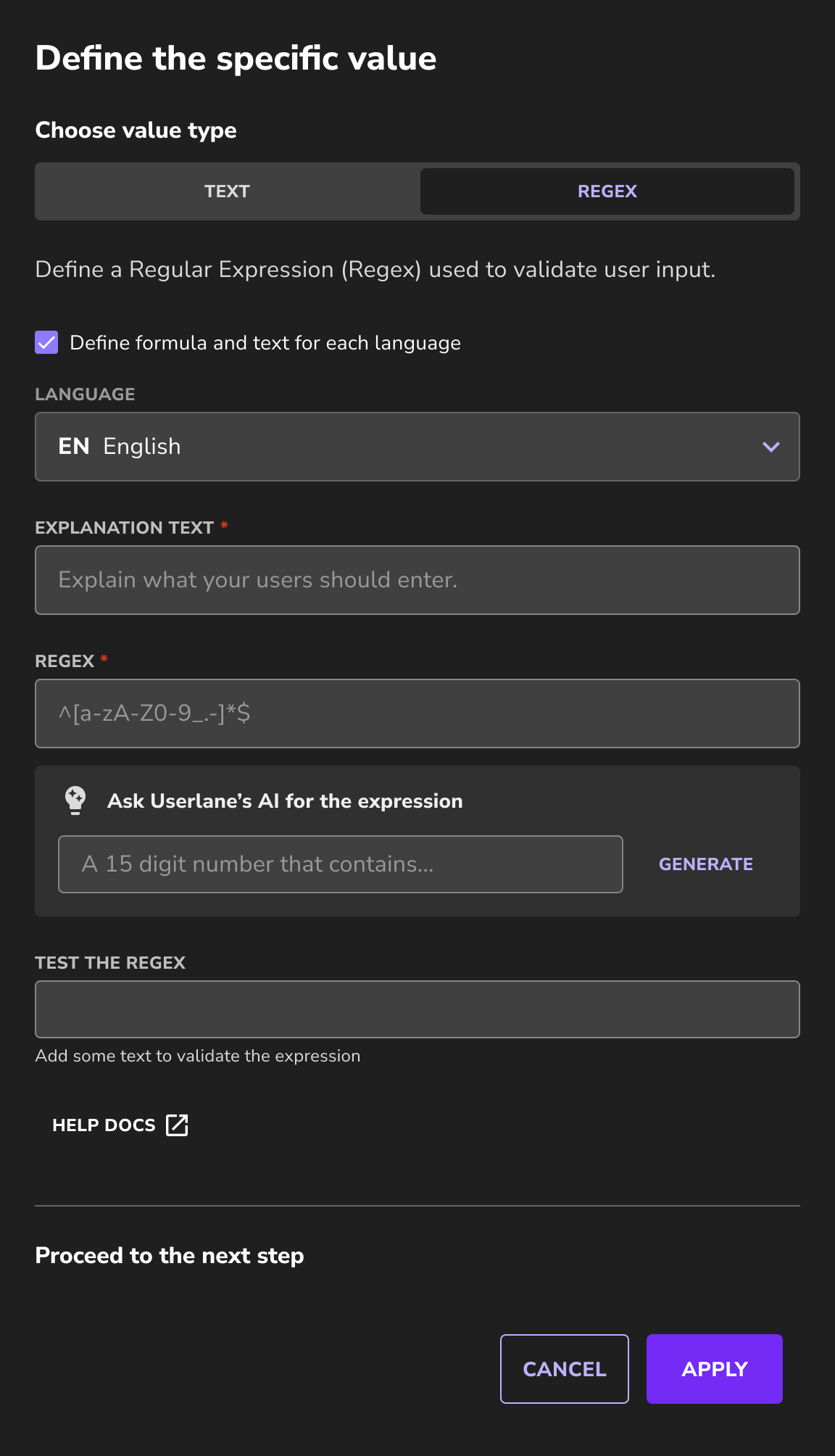
Userlane's Interactive Guidance provides step-by-step walkthroughs recorded in a no-code editor, with step input validation to catch errors at the point of data entry.
Source: Userlane
The Userlane Assistant answers questions using organization-specific content and connected knowledge bases (Confluence, SharePoint, Zendesk, KnowledgeOwl), and can trigger guides from natural language requests. A process automation mode auto-completes routine steps for users.
WalkMe operates at a different level.
Smart Walk-Thrus include conditional branching and error-handling that handle multiple user paths through the same workflow. Workflow Automation clicks buttons, selects menus, and advances screens inside target applications automatically.
WalkMe AI provides seven modules: next best actions, memory (learning from user behavior), automations triggered by natural language, conversational chat, input validation, reading assistance, and writing assistance. Employees can complete tasks by chatting with WalkMe instead of navigating the application themselves.
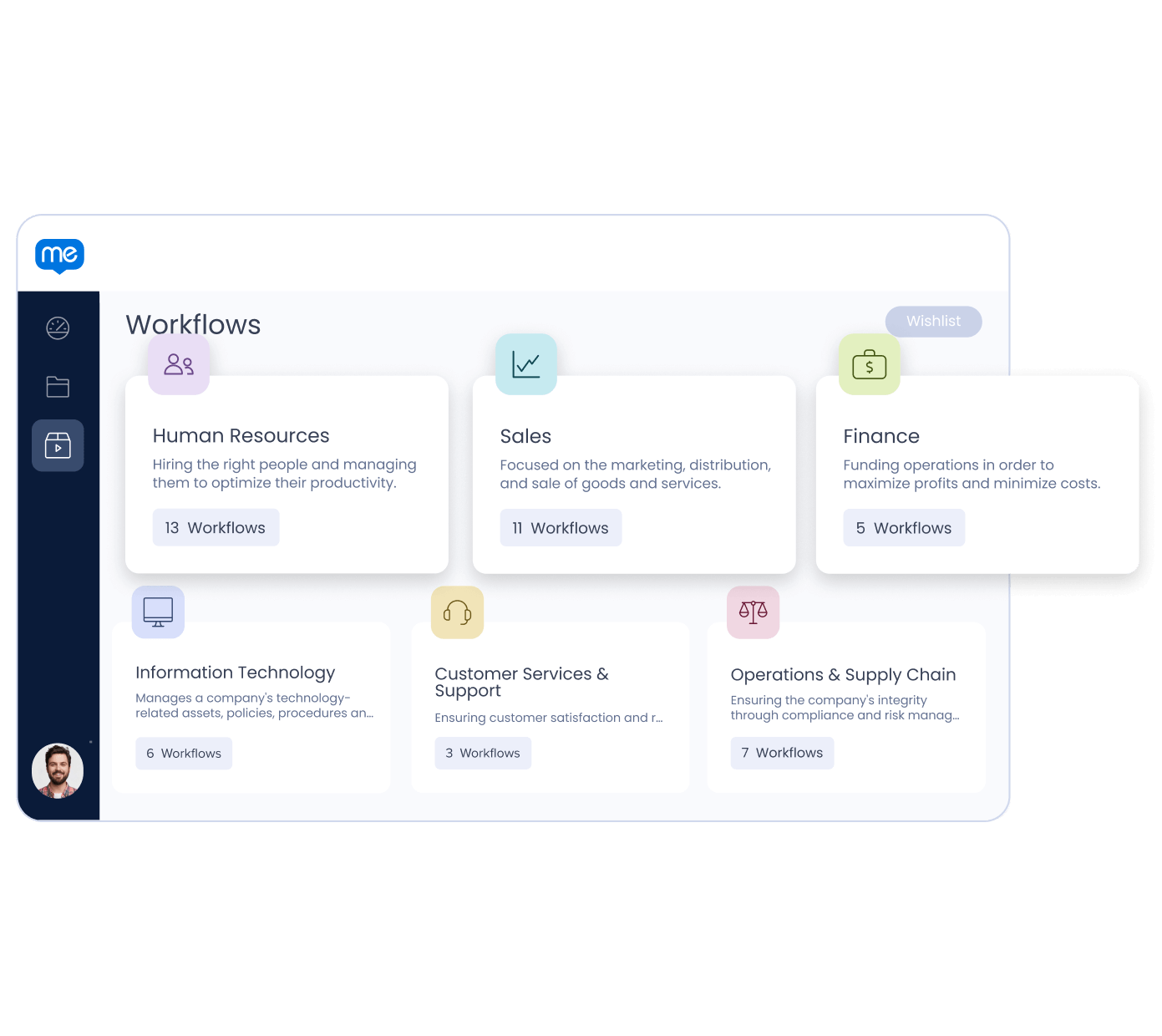
WalkMe also offers pre-built Workflow Accelerators drawn from more than 2,000 enterprise implementations, covering Sales, HR, and IT use cases. These give new customers a running start instead of building from scratch.
Source: WalkMe
If you need to guide employees through a Salesforce opportunity update, Userlane handles it well. If you need to automate the entire update so the rep just confirms the data, WalkMe is the stronger choice.
DeepUI vs. browser extension: Two different bets on maintenance
Every DAP faces the same problem: enterprise applications update constantly, and guidance built on top of those applications breaks when the UI changes.
Userlane handles this with a smart selector algorithm that auto-adapts to UI changes, reducing (but not eliminating) the maintenance load.
G2 reviewers consistently note that guides built on HTML DOM structure can break after software releases, requiring re-recording or adjustment. In SaaS environments with quarterly updates, this creates ongoing work for content teams.
WalkMe's answer is DeepUI, an AI layer that interprets application UIs by their visual meaning and layout rather than DOM paths or element IDs.
When an application updates, DeepUI re-identifies elements by their semantic context.
This is a real architectural distinction. Userlane's approach works when applications change infrequently or when content libraries are small enough to maintain by hand. WalkMe's approach compounds in value as content libraries grow and tracked applications multiply.
For an enterprise managing guidance across 20+ applications with frequent update cycles, DeepUI's automatic adaptation prevents a maintenance burden that can overwhelm a DAP program.
Analytics tell different stories
Both platforms measure adoption. They define "measurement" differently.
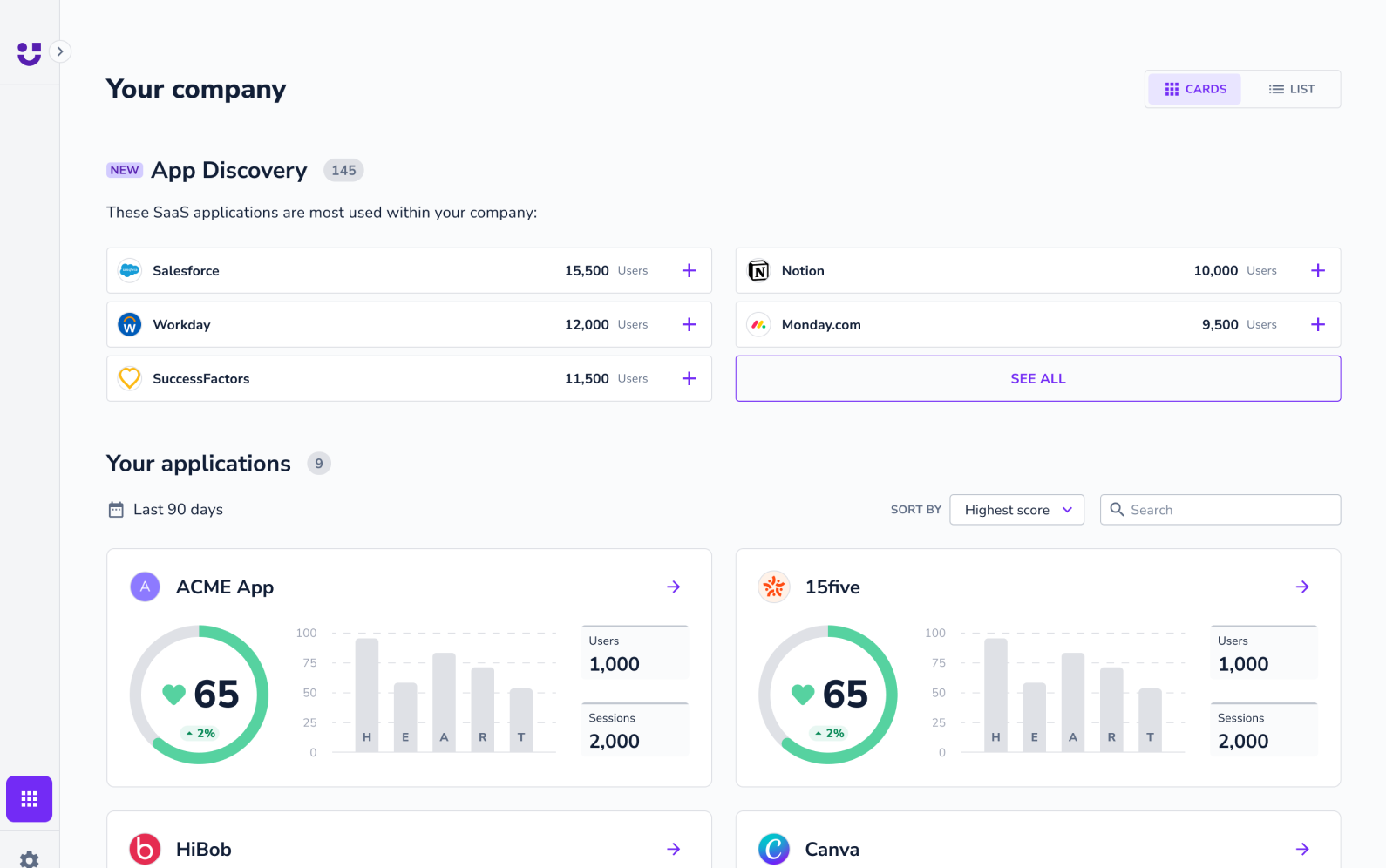
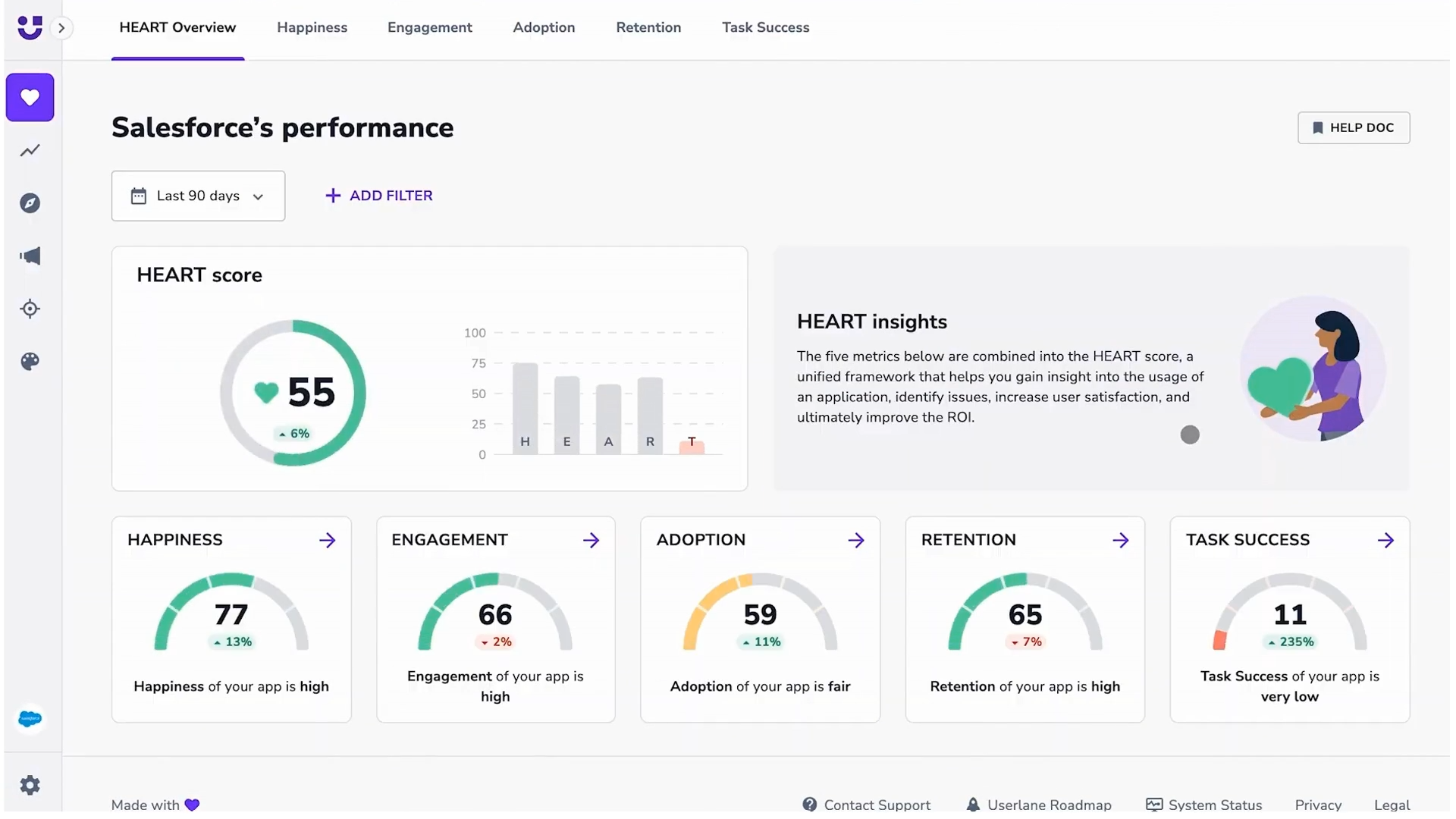
Userlane's HEART Analytics scores five dimensions: Happiness (NPS surveys), Engagement (session data), Adoption (user growth and coverage), Retention (return rates), and Task Success (completion rates).
Source: Userlane
Scores are normalized on a 0-100 scale with AI-generated summaries that interpret trends and recommend actions. The Application Intelligence layer adds portfolio-level visibility: App Discovery identifies every browser-based application employees use (including shadow IT and unauthorized AI tools), and Portfolio Overview calculates potential savings from unused licenses.
WalkMe's analytics suite is broader.
App Discovery & Analytics maps application usage by department and role. WalkMe Insights tracks workflow completion and drop-off at the process level, showing where people get stuck across multi-step and multi-application tasks.
Form Analytics captures field-level interaction data (completion rates, time on field, errors) and uses AI to generate recommendations. Discovery License Optimization overlays financial data on usage patterns to produce savings reports.
Userlane's HEART framework is more structured for proving ROI to a CFO or CIO. The five-dimension scoring gives executives a clear, repeatable methodology. WalkMe's analytics go deeper into process-level behavior but require more interpretation to translate into executive-ready reporting.
If you need to justify your DAP investment at quarterly business reviews, Userlane's approach fits. If you need to diagnose exactly where a 15-step procurement workflow loses employees, WalkMe's granularity is more useful.
Application coverage shapes your options
Userlane works with browser-based enterprise applications.
The browser extension deployment model covers any web-based application (SAP, Salesforce, Microsoft Dynamics, Oracle Cloud, Workday) but cannot reach native mobile apps or thick-client desktop applications. For healthcare systems running native mobile EHR clients or manufacturing environments using desktop-only inspection tools, this is a hard limitation.
WalkMe covers more ground.
Its Omnichannel DAP extends guidance across web, desktop, and mobile surfaces. DeepUI operates at the UI layer regardless of application architecture, so WalkMe works on applications that expose no APIs and have no browser footprint. For enterprises with mixed environments (browser-based CRM, desktop ERP client, mobile field service app), WalkMe provides a single DAP across all surfaces.
This matters most for organizations with large, mixed application portfolios. A financial services firm running everything through a browser can use either platform. A hospital system where nurses use browser-based EHR modules, native mobile charting apps, and desktop medication systems needs WalkMe's broader reach.
The SAP factor
WalkMe's September 2024 acquisition by SAP for approximately $1.5 billion reshaped the competitive landscape.
For SAP customers, the acquisition is good news. WalkMe is embedded natively into SAP applications with a WalkMe Standard tier included in SAP subscriptions. WalkMe Premium is available for customization.
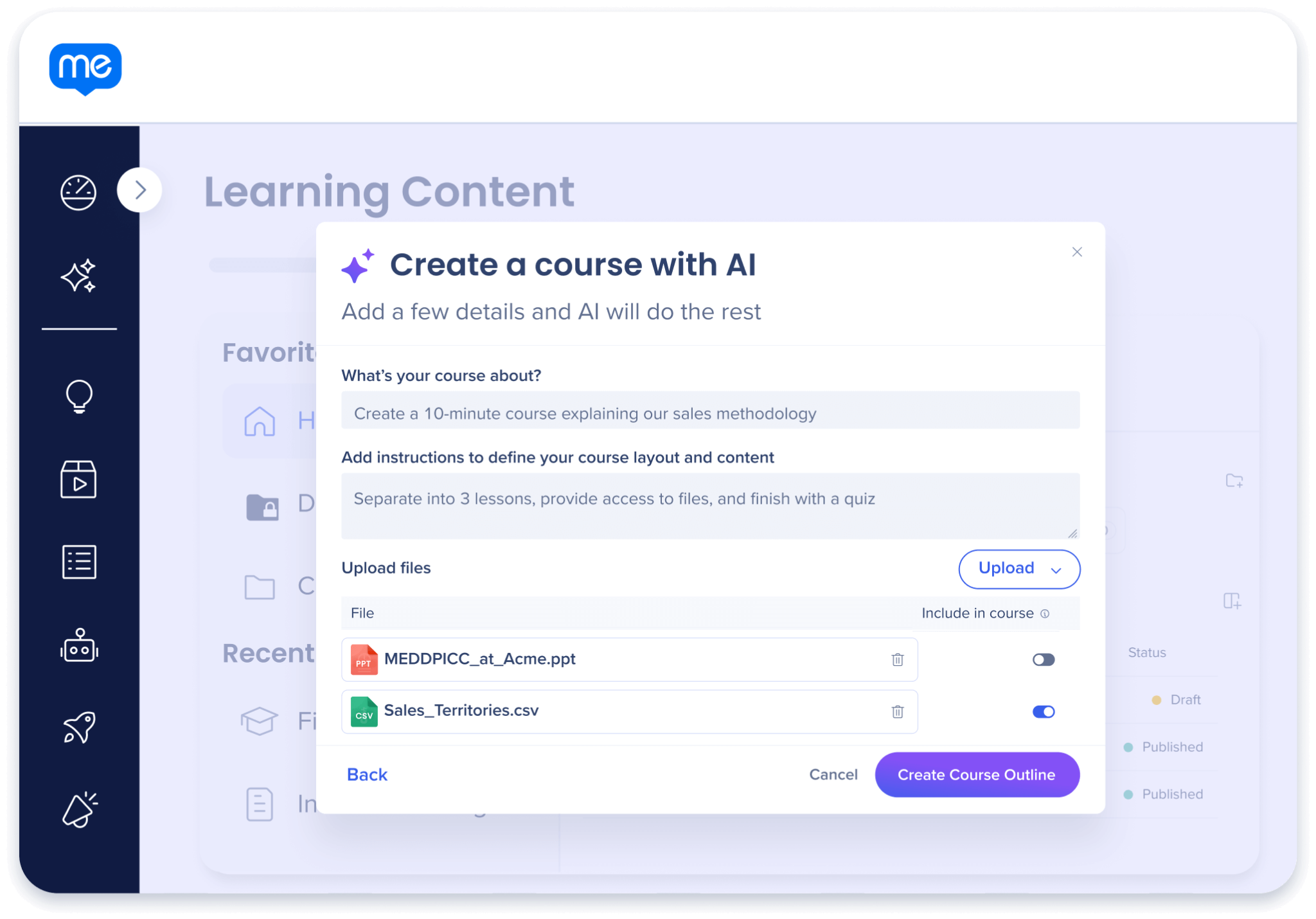
WalkMe Learning Arc is the designated successor to SAP Enable Now (reaching end of maintenance November 30, 2030), creating a built-in migration path. SAP's stated plan: "WalkMe X's AI capabilities will supercharge SAP's copilot Joule with context-aware and proactive help across workflows." (SAP announcement)
Source: WalkMe
For non-SAP customers, the picture is more nuanced. WalkMe still supports Salesforce, Workday, ServiceNow, and Microsoft Dynamics.
The company publicly commits to cross-platform support. But strategic direction will increasingly favor the SAP ecosystem, and enterprises evaluating a 5-year DAP investment should weigh whether a platform owned by their ERP vendor's competitor will receive equal investment for their stack.
Userlane remains independent and vendor-neutral.
Its partnerships with PwC and CereCore for healthcare IT give it enterprise credibility without tying it to a specific vendor. The collaboration with Microsoft on its AI Design program and Userlane Assistant integration within Microsoft 365 Copilot positions it as a Microsoft-ecosystem partner without the ownership constraints WalkMe faces.
Pricing structures reflect different markets
Neither platform publishes pricing, which makes direct comparison difficult. But the structures reveal how each company thinks about its market.
Userlane offers two models: application-based pricing (fixed annual fee per application, unlimited users) and consumption-based pricing (per-user base fee plus per-interaction charges, recommended for 10+ applications).
Three tiers exist: Application Track (single application), Department Track (multiple applications with advanced reporting), and Organization Track (unlimited applications with portfolio analytics and license optimization).
The application-based model is Userlane's structural advantage for large-headcount deployments. A hospital deploying guidance to 10,000 nurses on a single EHR pays the same application fee whether 500 or 10,000 nurses use it. The MSA includes a 90-day non-renewal notice period and a 5% annual price escalation on renewal.
WalkMe uses a subscription license model based on a negotiated number of users and/or target applications, with pricing set per deal.
Contracts are non-cancelable for the full commitment term, fees are non-refundable except for WalkMe's material breach, and the fee obligation doesn't depend on deployment or actual usage. Overages trigger additional subscription purchases within 30 days.
Both platforms require a sales conversation for a quote. Neither offers a meaningful self-serve trial. Userlane's MSA references a "Free Services" period but no standard trial is publicly available. WalkMe has no documented free trial or freemium tier.
Security and compliance side by side
For regulated industries, security certifications are table stakes, not differentiators. Here's where each platform stands:
Userlane holds ISO 27001 (valid through July 2027), operates under a "data frugality" principle (no keystrokes, screen recordings, or personal content captured by default), offers EU and US data residency on Microsoft Azure, provides AES-256 encryption at rest and TLS 1.2/1.3 in transit, and maintains a 99.5% uptime SLA.
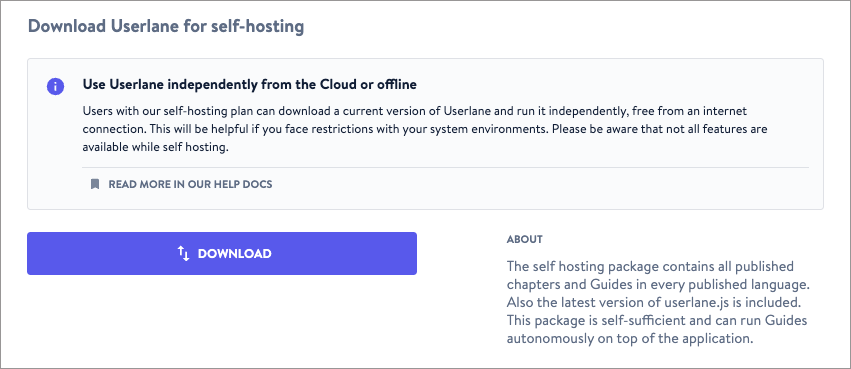
A self-hosting option is available for organizations that cannot send data to external cloud infrastructure.
Source: Userlane
WalkMe holds a broader portfolio: ISO 27001, ISO 27701, ISO 27017, ISO 27018, ISO 27799, SOC 2 Type II, SOC 3, and CSA STAR.
The key differentiator for US government buyers is FedRAMP Ready status, making WalkMe one of very few DAPs qualified for federal deployment. WCAG 2.1 AA compliance covers accessibility requirements.
For healthcare organizations bound by HIPAA, WalkMe's ISO 27799 (security management in health) and GxP Position Paper provide stronger documented coverage. For European enterprises prioritizing data sovereignty, Userlane's EU-only data residency and data frugality design may be more relevant.
Where ZoomInfo fits: Fixing the data problem DAPs can't touch
Userlane and WalkMe help employees use enterprise software correctly. Neither helps when the data inside that software is wrong.
This is where the adoption problem meets the data quality problem. A DAP can guide a sales rep through every step of a Salesforce opportunity update. It can validate that the rep enters a dollar amount in the right field. But it cannot tell the rep whether the contact still works at that company, whether the phone number on file actually rings, or whether the account shows buying signals worth pursuing.
ZoomInfo solves this upstream problem.
Its data platform provides 500M contacts, 100M companies, 135M+ verified phone numbers, and 200M+ verified business emails, verified through a multi-source pipeline backed by 300+ human researchers and reaching up to 95% accuracy on first-party data.
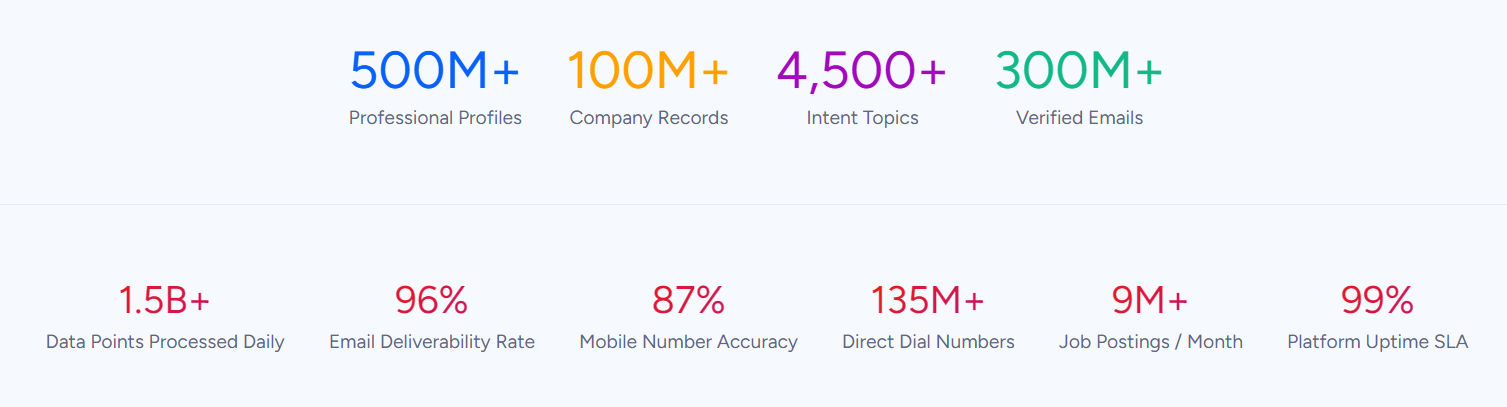
This data flows into Salesforce, HubSpot, and Microsoft Dynamics through native integrations and APIs, keeping the CRM records employees work with accurate and complete.
The GTM Context Graph processes 1.5B+ data points daily, combining ZoomInfo's B2B data with CRM records, conversation intelligence, and behavioral signals.
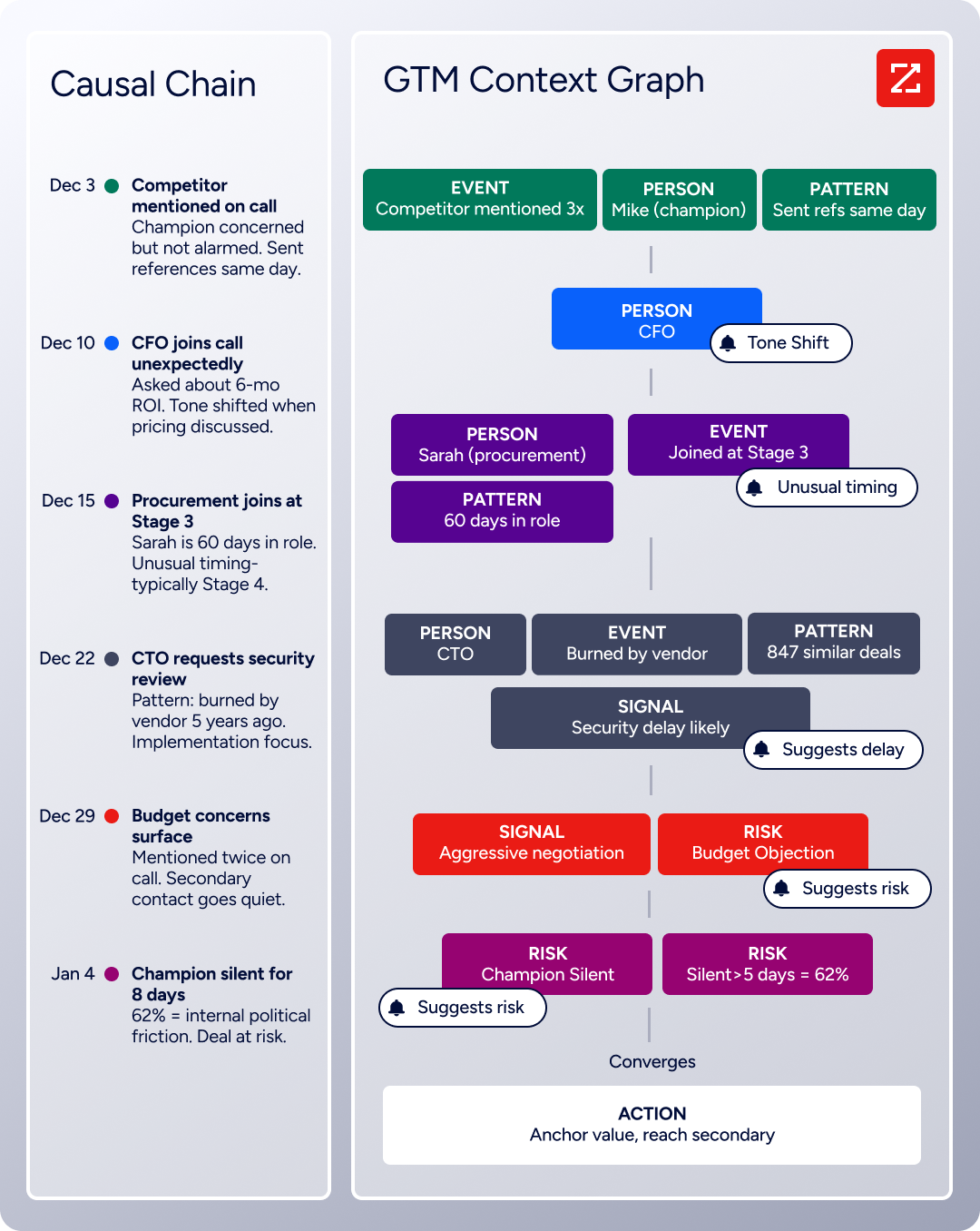
The result: AI that understands why a deal moved forward (the CFO joined the last call and asked about ROI), not just that it moved to Stage 4. That intelligence reaches sellers through GTM Workspace, where AI agents handle account research, outreach drafting, CRM updates, and signal monitoring in one interface.
For enterprise IT leaders evaluating their technology stack's total ROI, the combination is straightforward: a DAP (Userlane or WalkMe) ensures employees follow the right processes inside enterprise applications. ZoomInfo ensures those applications contain the right data. One without the other leaves value on the table.
Seismic's sales team attributed 39% of active pipeline to opportunities identified or influenced by ZoomInfo signals, boosted productivity by 54%, and saved 11.5 hours per week per seller. (Seismic Case Study)
Userlane vs. WalkMe vs. ZoomInfo: Which should you choose?
The choice depends on where your enterprise software ROI problem lives.
Choose Userlane if:
You operate in a regulated industry (healthcare, financial services, manufacturing) and need fast, compliant deployment
Your enterprise applications are entirely browser-based
You need structured ROI measurement (HEART Analytics) to justify software investments to executives
Application-based pricing makes more sense than per-user licensing for your workforce size
You want to be live in weeks, not months
Choose WalkMe if:
You need DAP coverage across web, desktop, and mobile applications
Workflow automation (not just guidance) is critical to reducing manual work
Your application portfolio includes SAP, and you want a DAP embedded in the SAP ecosystem
You can invest in a Center of Excellence to manage a large-scale DAP program
Guide maintenance across frequent application updates is a primary concern, and DeepUI's auto-adaptation matters
Choose ZoomInfo if:
Your software adoption problem starts with bad data in your CRM, marketing automation, or sales tools
Your go-to-market teams need accurate contact data, buyer intent signals, and AI-powered account intelligence
You want a single platform for prospecting, pipeline management, ABM, and data enrichment
You need your B2B intelligence accessible through any tool via API and MCP, not locked in one interface
See how ZoomInfo powers your GTM stack.
Digital adoption platforms and data intelligence platforms solve different problems in the same enterprise technology stack. Userlane and WalkMe ensure employees can use the software. ZoomInfo ensures the software has the intelligence employees need to act on. The organizations getting the most from their technology investments address both sides.
Userlane vs. WalkMe vs. ZoomInfo FAQ
What is the core difference between Userlane and WalkMe?
Userlane focuses on fast deployment and structured adoption analytics for browser-based enterprise applications, with HEART Analytics measuring five adoption dimensions and application-based pricing that includes unlimited users.
WalkMe is a broader platform covering web, desktop, and mobile applications, with workflow automation that completes tasks on behalf of users, DeepUI technology that adapts guidance when applications update, and an AI copilot with screen-aware contextual help.
Which platform deploys faster?
Userlane deploys faster. Its browser extension can be pushed through group policy in about two hours of IT setup, with organizations typically live within two weeks.
WalkMe's deployment involves a desktop editor application, more complex configuration, and a recommended Center of Excellence approach, with timelines ranging from weeks to months depending on scope.
Does WalkMe's SAP acquisition affect non-SAP customers?
WalkMe still supports Salesforce, Workday, ServiceNow, Microsoft Dynamics, and other non-SAP applications. However, strategic direction will increasingly favor the SAP ecosystem.
WalkMe is embedded natively into SAP applications with a standard tier included in SAP subscriptions, and WalkMe Learning Arc is the designated successor to SAP Enable Now. Non-SAP customers should evaluate whether long-term product investment will match their stack.
Which platform handles application updates better?
WalkMe has the stronger approach with its DeepUI technology, which uses AI to interpret application interfaces by visual meaning rather than DOM paths. Guidance adapts automatically when UIs change. Userlane uses a smart selector algorithm to reduce breakage but still requires manual re-recording after some application updates, particularly in SaaS environments with frequent releases.
How does pricing compare between Userlane and WalkMe?
Neither publishes prices. Userlane offers application-based pricing (fixed annual fee per application, unlimited users) and consumption-based pricing for larger portfolios. WalkMe uses a negotiated subscription model based on user counts and target applications.
Userlane's per-application model tends to cost less for large-headcount deployments where many users interact with the same application infrequently. Both require annual contracts.
What does ZoomInfo do differently from Userlane and WalkMe?
ZoomInfo is not a digital adoption platform. It is a GTM platform that provides accurate contact data, company intelligence, and buyer intent signals that feed into the enterprise applications (Salesforce, HubSpot, Dynamics) that Userlane and WalkMe help employees use. Where DAPs fix how employees interact with software, ZoomInfo fixes what data they work with inside that software.
Which platform is best for healthcare organizations?
Both have healthcare credentials, but they approach the industry differently. Userlane has over 20 healthcare organizations and a million clinical professionals on its platform, with pre-built templates for clinical workflows (EHR documentation, shift handovers, medication records) and partnerships with CereCore and Bytes for NHS deployment.
WalkMe holds ISO 27799 (security management in health) and has FedRAMP Ready status for government healthcare agencies. Userlane's faster deployment and application-based pricing may be more practical for hospital systems with large, distributed clinical staff.
Can Userlane or WalkMe work with native mobile applications?
Only WalkMe. Userlane requires a browser extension and works only with web-based applications.
WalkMe's Omnichannel DAP extends guidance across web, desktop, and mobile surfaces using DeepUI. Organizations with employees using native mobile apps for field work, clinical charting, or inspections should factor this limitation into their evaluation.
More WalkMe comparisons:
