
Choosing between Varicent and Everstage for sales compensation management comes down to five questions:
Do you need a platform built for thousands of payees with decades of enterprise complexity, or one designed for speed and usability?
How quickly do you need to go live, weeks or months?
Is your organization comfortable with technical configuration, or does your team need a no-code approach?
Are you replacing spreadsheets, or migrating from a legacy ICM system like Xactly or SAP Commissions?
Do you need territory planning and CPQ on the same platform as your compensation engine?
In short, here's what we recommend:
Varicent is the established choice for large enterprises with complex, global compensation structures. With over 20 years in SPM, Varicent handles thousands of sellers, multi-tier hierarchies, and millions of transactions on a platform that Forrester named a Leader in its Q1 2025 Wave, calling it "the only solution evaluated with an in-depth set of AI capabilities." That power comes with a steep learning curve; reviewers note complex table dynamics and specialized configuration, and implementations take months.
Everstage is the newer alternative for mid-market and enterprise teams that want capability without friction. Founded in 2020 and backed by $45M in funding, Everstage has earned 4.9/5 ratings across G2, Gartner Peer Insights, and Capterra, plus a Forrester Strong Performer designation in Q1 2025. Its 4–6 week implementation timeline is the fastest in the category. But its CPQ and Planning products both launched in 2025, and buyers adopting the full suite are partly betting on the roadmap.
Both platforms solve the same core problem: eliminating spreadsheet chaos, automating complex commission calculations, and giving sellers transparency into their earnings. But the incentive plans they manage can only drive results when sellers have the data to find and close the right deals. That upstream factor (the quality of your sales data) determines whether your SPM investment produces quota attainment or just better-calculated payouts on weak performance.
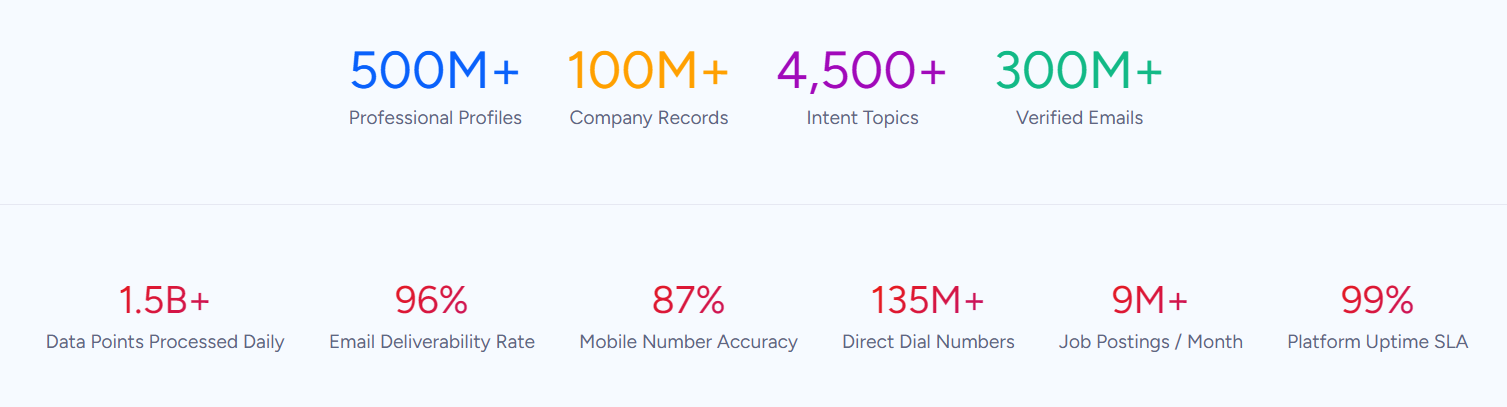
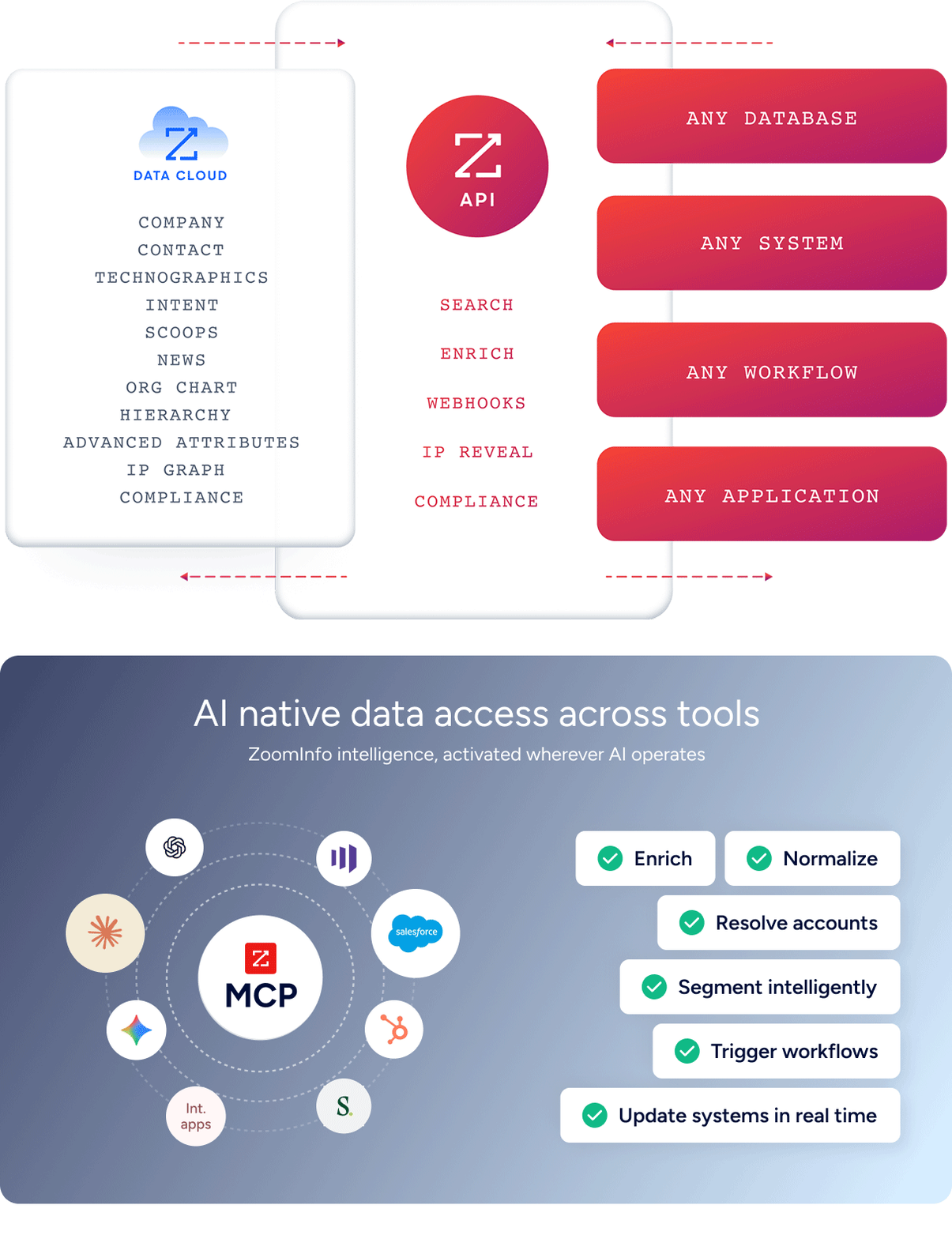
ZoomInfo is an AI GTM platform that powers the pipeline and deal activity your SPM platform compensates. Built on 500M contacts, 100M companies, 135M+ verified phone numbers, and 200M+ verified business emails, ZoomInfo's GTM Context Graph combines this data with your CRM records, conversation transcripts, and behavioral signals to show not just what happened in a deal, but why. Sellers use GTM Workspace, where prioritized accounts, AI-drafted outreach, and deal execution live in one place. Marketers and RevOps teams build and run GTM plays in GTM Studio, or feed the same intelligence into any tool via API and MCP. ZoomInfo isn't a replacement for Varicent or Everstage. It's the data foundation that makes whichever SPM platform you choose deliver quota attainment.
If giving your sellers the data and signals to hit the quotas your SPM platform manages sounds like the missing piece, see how ZoomInfo works.
Varicent vs. Everstage at a glance
Varicent | Everstage | ZoomInfo | |
|---|---|---|---|
Core function | Enterprise SPM/ICM | SPM/ICM + CPQ | AI GTM Intelligence Platform |
Founded | 2005 | 2020 | 2007 |
Analyst recognition | Forrester Leader, Q1 2025 | Forrester Strong Performer, Q1 2025 | Forrester Leader (Intent Data); Gartner Leader (ABM) |
Implementation speed | Months (structured onboarding) | 4–6 weeks | Deploys in weeks |
AI capabilities | Designer, Research, ELT, and Planning assistants | Crystal, Databook, Onboarding, and Commission assistants | GTM Context Graph processing 1.5B+ data points daily |
User reviews | G2: Easiest Setup, Best Support (Mid-Market) | 4.9/5 across G2, Gartner, Capterra; 9.5/10 TrustRadius | Gartner Customers' Choice; G2: 133 No. 1 rankings |
Pricing transparency | No public pricing | No public pricing | Custom-quoted; free tier available |
Free trial | No | No (free POC available) | 7-day trial + permanent free Lite tier |
Key integrations | Salesforce, ServiceNow, Workday, HubSpot | Salesforce, HubSpot, NetSuite, Workday | 172+ marketplace integrations; API and MCP access |
Best for | Large enterprises with complex comp structures | Mid-market to enterprise seeking speed and usability | Powering the pipeline and deal intelligence SPM compensates |
Two philosophies for the same problem
Varicent and Everstage approach incentive compensation from opposite starting points.
Varicent has been building enterprise compensation software since 2005. It survived an IBM investment period (2012–2019), an executive buyback in January 2020 led by founder Marc Altshuller with Great Hill Partners and Spectrum Equity, and a strategic acquisition of Symon.AI that seeded its current AI capabilities. The company now employs 700+ people and counts ServiceNow, Samsung, Capital One, and Cisco among its customers. That history matters: 20 years of handling complex enterprise compensation plans (multi-tier hierarchies, multi-currency payouts, retroactive adjustments, and regulatory audits) produced a calculation engine that Forrester scored highest possible in its Q1 2025 Wave.
Everstage started fresh in 2020. Co-founder Siva Rajamani had scaled Freshworks' GTM engine from $30M to $200M ARR as Head of Global Revenue Operations, and he built Everstage to fix problems he'd lived through: opaque commission processes, spreadsheet dependency, and sellers who couldn't track their own earnings. In five years, Everstage has grown to over 300 customers, earned the #1 spot on G2 in sales compensation, and launched three products (Incentives, CPQ, Planning) on a single platform.
The philosophical difference shapes everything that follows. Varicent optimized for depth and configurability. The platform handles scenarios most ICM tools can't touch, but that power demands technical fluency. Everstage optimized for speed and usability. The platform covers the same core workflows with a no-code approach that RevOps teams can manage without IT support.
Implementation speed separates them sharply
This is where the two platforms diverge most visibly.
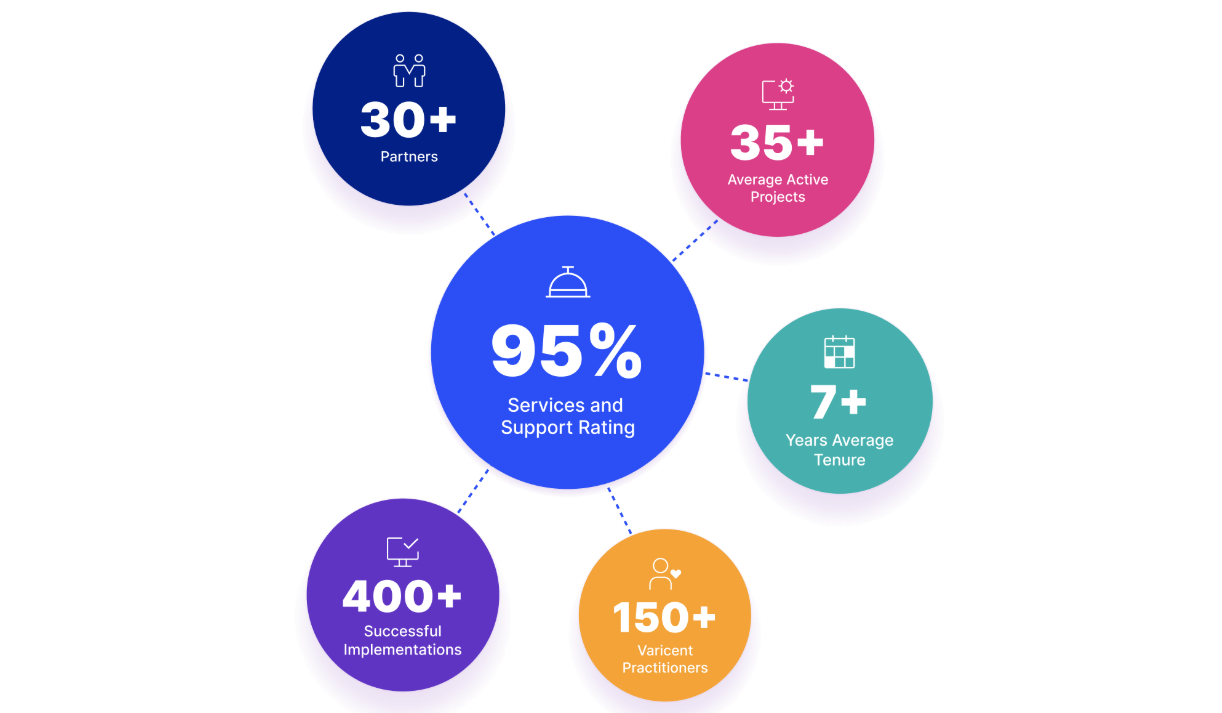
Varicent's implementation follows a structured methodology backed by what the company describes as "hundreds of successful, on-time, and on-budget projects." It offers guided coaching, templates, one-on-one sessions, and training libraries. For large enterprises with complex requirements, this measured approach makes sense. But it requires dedicated resources, months of calendar time, and often professional services from partners like Deloitte, KPMG, Accenture, and Argano.
Source: Varicent
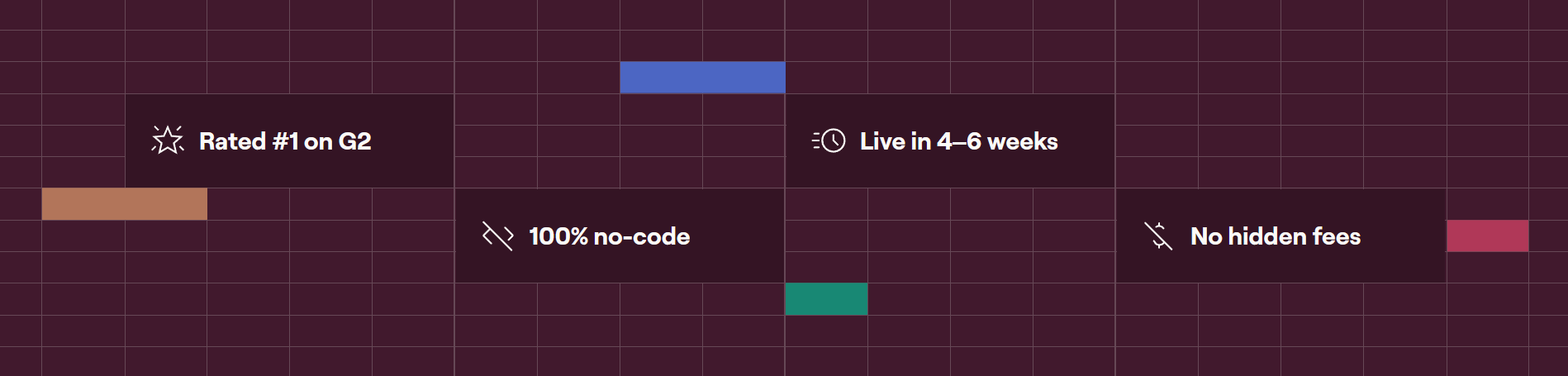
Everstage advertises 4–6 week go-live times and has earned G2's "Fastest Implementation, Enterprise" badge to back the claim. The Diligent case study shows what this looks like: Everstage joined the evaluation late but delivered a proof of concept connected to Diligent's production system in one and a half weeks, a process that took other vendors months.
Source: Everstage
The speed difference isn't just about convenience. Every additional month of implementation is another month running commissions on spreadsheets or a legacy system, with the errors, disputes, and admin burden that come with them.
AI capabilities: both claim native, but the approaches differ
Both platforms call themselves AI-native. Their implementations serve different purposes and carry different levels of maturity.
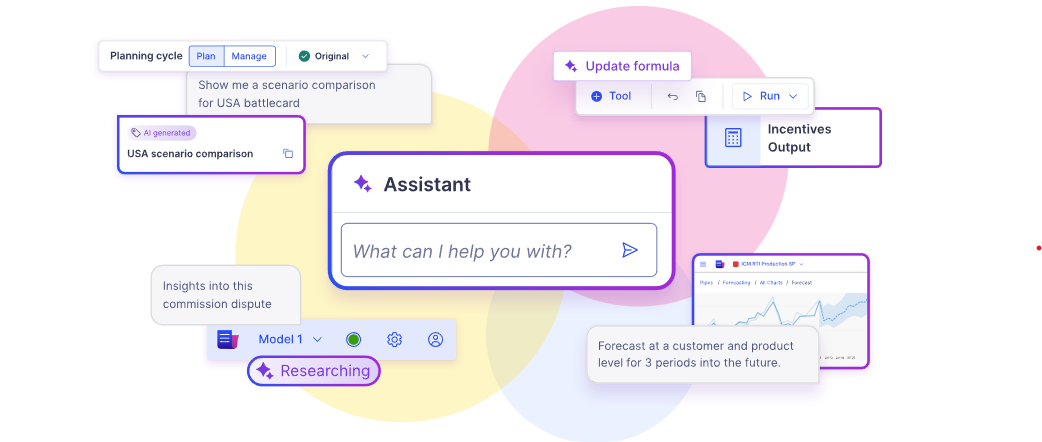
Varicent's AI architecture covers the most ground in the category. At its December 2025 Unlock Innovation Forum, the company unveiled four AI assistants: the ELT Assistant (automating data pipeline construction), the Sales Planning Assistant (scenario modeling and capacity balancing), the Designer Assistant (building and validating incentive plan logic), and the Research Assistant (resolving seller disputes by analyzing full plan logic).
Source: Varicent
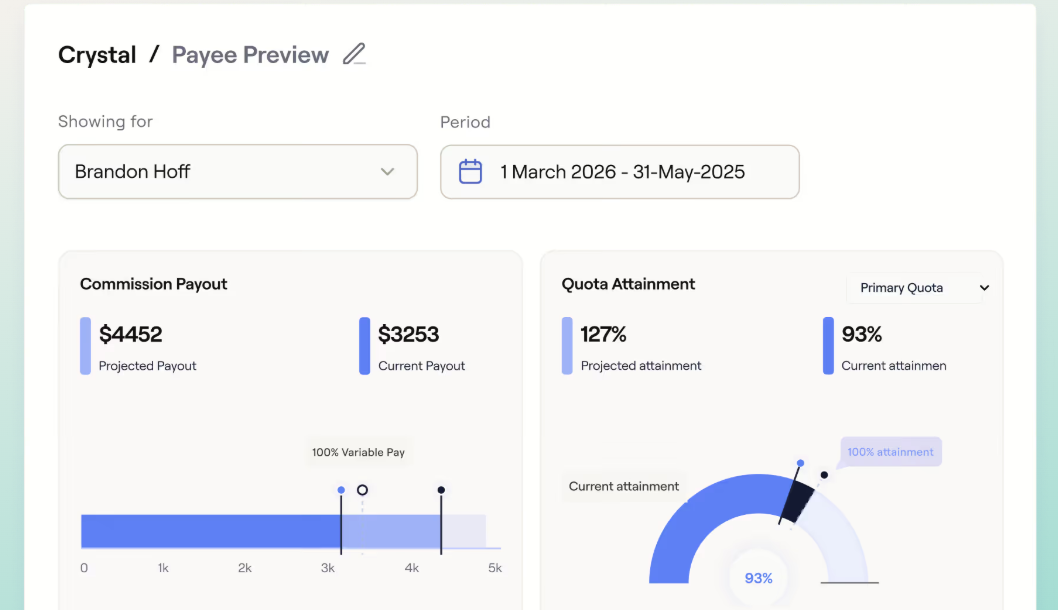
Everstage's AI suite covers a similar range but emphasizes the seller experience. The Crystal AI Agent lets reps query their payout scenarios in natural language and run deal-attribute simulations to see how pipeline changes affect projected commissions. The AI Databook Assistant prepares commission data through natural language prompts. Agent Core, launched August 2025, introduced an AI Agent Creation Studio for RevOps professionals, with agents for data preparation, commission inquiries, onboarding, and admin tasks. Additional agents for territory design, quota setting, and compensation plan creation are on the published roadmap.
Source: Everstage
The two approaches differ most in maturity. Varicent's AI draws on a calculation engine refined over 20 years, with the Symon.AI acquisition providing an analytics and machine learning foundation. Everstage's AI benefits from a modern architecture built without legacy constraints, but its newer products (CPQ launched October 2025, Planning launched June 2025) haven't yet accumulated enough deployment history to validate their AI capabilities across diverse enterprise scenarios.
User experience reflects different design choices
This is where review data tells the clearest story.
Varicent's platform is capable but demands investment to learn. G2 reviewers consistently cite "complex table dynamics" and a specialized development language. TrustRadius reviewers note the software "lacks intuitive usability" and requires coding knowledge for routine plan changes. These aren't failures. They're the natural trade-off of a platform built to handle 6,000 payees across 125 plans. The configurability that makes Varicent's calculation engine strong also makes it harder to learn.
Everstage sits at the opposite end of the usability spectrum. Its 4.9/5 on G2 (2,500+ reviews), Gartner Peer Insights, and Capterra reflects a platform that prioritized accessibility from day one. The Forrester Wave Q1 2025 noted that "customers rave about the overall user experience and live support they receive from Everstage." The no-code plan designer, visual logic builder, and Crystal AI Agent for seller-facing queries reduce the technical expertise required for daily operations.
The practical impact: organizations without dedicated compensation administrators or technical resources will find Everstage easier to adopt. Organizations with specialized teams that need to handle edge cases in compensation logic (multi-tier accelerators across overlapping territories with retroactive adjustments and currency conversion) may find Varicent's configurability worth the steeper curve.
The data feeding your SPM platform matters more than most teams realize
Here's the uncomfortable truth about sales performance management: even a well-designed compensation plan can't fix a pipeline problem.
If your sellers work from incomplete contact data, stale company records, or no visibility into which accounts are actively in-market, they'll miss quota regardless of how well your accelerators and SPIFs are structured. Both Varicent and Everstage can tell you exactly how much you paid your sales team. Neither can tell you whether those sellers had the data they needed to perform.
This is where ZoomInfo fits into the revenue operations stack. As an AI GTM platform, ZoomInfo sits upstream of your SPM platform, providing the 500M contacts, 100M companies, 135M+ verified phone numbers, and 200M+ verified business emails that sellers need to build pipeline. The GTM Context Graph (ZoomInfo's intelligence layer) goes further, combining this third-party intelligence with your CRM records, conversation transcripts, and behavioral signals to show why deals move or stall, not just that they did.
For revenue operations teams evaluating SPM platforms, the question isn't just "Varicent or Everstage?" It's also "What data layer ensures my sellers have the pipeline and deal context to hit quota?"
ZoomInfo integrates with the same CRMs (Salesforce, HubSpot, Microsoft Dynamics) that feed Varicent and Everstage, so data enrichment and signal detection happen inside the systems your SPM platform already connects to. Sellers access intelligence through GTM Workspace, while RevOps teams build targeted plays in GTM Studio. For teams building custom workflows, API and MCP access makes the same intelligence available in any tool.
Seismic's sales team attributed 39% of active pipeline to opportunities identified or influenced by ZoomInfo signals, with sellers becoming 54% more productive. (Seismic Case Study)
The result: sellers with better data produce better performance, which means the compensation plans managed by your SPM platform drive the revenue outcomes they were designed for.
Pricing comparison
Neither Varicent nor Everstage publishes pricing. Both require custom quotes through a sales process.
What the public information reveals:
Varicent charges per-Entitlement, with one entitlement required per payee (each employee whose compensation is tracked in the system). Territory and Quota Planning is billed separately, also per-Entitlement based on "Persons on Quota." Implementation is scoped via Statements of Work, often with partners like Deloitte, KPMG, and Accenture. Optional VIP Support comes in three tiers (Essential, Enhanced, Elite) at additional annual cost. A notable contractual detail: if a customer lets their subscription lapse, Varicent applies a 30% fee increase over the prior rate on rolling 90-day terms until a renewal order is signed.
Everstage also uses per-payee pricing, with implementation and support priced separately from the platform license. The implementation fee is non-cancellable and non-refundable. Custom integrations, data migrations, and onsite work fall outside the standard implementation scope and carry additional fees. Everstage does offer a free proof-of-concept: the company builds out a prospect's most complex compensation plan in-platform before any purchase commitment.
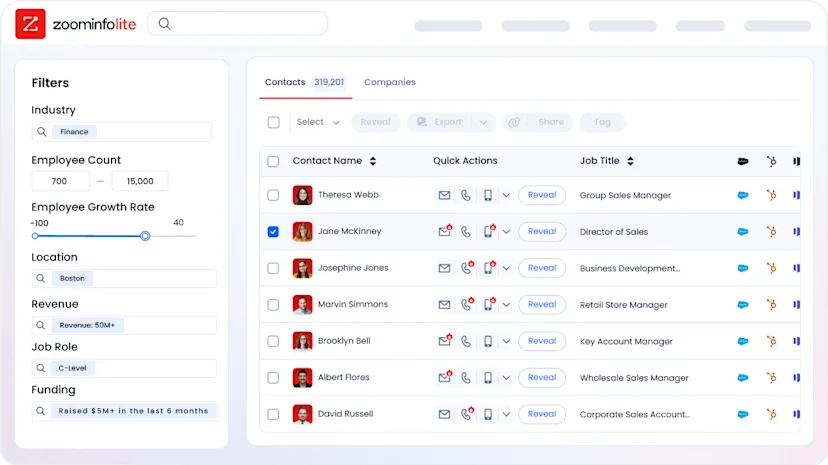
ZoomInfo uses a custom-quoted, consumption-based pricing model. Unlike Varicent and Everstage, ZoomInfo offers a permanent free tier (ZoomInfo Lite) with access to the B2B database, 10 monthly export credits, and website visitor identification, plus a 7-day free trial of the full platform. Paid plans scale based on usage, feature access, and credit volume.
For organizations evaluating total cost of ownership, the calculation isn't just the cost of the SPM platform. It's the cost of the SPM platform plus the cost of poor seller performance caused by incomplete data and missed signals. ZoomInfo addresses the second factor directly.
Varicent vs. Everstage vs. ZoomInfo: Which should you choose?
The choice between Varicent and Everstage depends on your organization's complexity, technical resources, and implementation timeline. The choice to add ZoomInfo depends on whether you want your SPM investment to drive quota attainment.
Choose Varicent if:
You have thousands of payees with complex, multi-tier compensation structures
Your organization has dedicated technical resources to configure and maintain the platform
You need the strongest calculation engine for multi-currency, retroactive, and regulation-heavy plans
Enterprise-scale track record and Forrester Leader status matter to your procurement process
You operate in financial services, insurance, or telecommunications where audit trails and compliance are mandatory
Choose Everstage if:
You need to go live in weeks, not months
Your RevOps team wants to manage compensation plans without coding or IT dependency
User experience and seller adoption are top priorities
You're replacing spreadsheets or migrating from a legacy ICM system and want a faster transition
You value the highest review ratings in the category across G2, Gartner Peer Insights, and Capterra
Add ZoomInfo to either if:
You want your sellers to have access to 500M contacts, 100M companies, 135M+ verified phone numbers, and 200M+ verified business emails to build the pipeline your SPM platform compensates
You need intent signals and buyer intelligence so sellers work the right accounts at the right time
You want AI-powered deal intelligence that shows why deals move or stall, so compensation plans can reflect actual selling patterns
You're building a connected revenue operations stack where data flows from prospecting through compensation without gaps
Palo Alto Networks uses ZoomInfo for territory planning and hierarchy clarity. "Company ID is transformational. It's a really clean approach to hierarchies and gives us a way to clearly communicate territory boundaries to our sellers," said Ashley Thoren Serita, Director of Sales Operations. (Palo Alto Networks Case Study)
Start with ZoomInfo Lite for free, or explore the full platform with a 7-day trial.
Your SPM platform manages the compensation engine. ZoomInfo powers the performance that engine compensates. Together, they close the gap between well-designed incentive plans and actual revenue outcomes.
Varicent vs. Everstage vs. ZoomInfo FAQ
What is the core difference between Varicent and Everstage?
Varicent is a 20-year-old enterprise SPM platform built for configurability and calculation complexity, serving organizations with thousands of payees and multi-tier compensation structures. Everstage is a newer SPM platform founded in 2020, designed for speed and usability, with a no-code approach that lets RevOps teams manage compensation plans without IT dependency. Both offer incentive compensation management, sales planning, and AI-powered analytics, but they differ in implementation speed, learning curve, and design philosophy.
Which platform implements faster?
Everstage is faster, with a 4–6 week go-live timeline backed by G2's "Fastest Implementation, Enterprise" badge. In the Diligent evaluation, Everstage delivered a production-connected proof of concept in one and a half weeks. Varicent implementations require structured onboarding measured in months, often involving system integrator partners like Deloitte or Accenture.
Which platform has stronger AI capabilities?
Both platforms claim AI-native architectures. Varicent was named "the only solution evaluated with an in-depth set of AI capabilities" by Forrester in Q1 2025, with four AI assistants spanning data pipelines, plan design, scenario modeling, and dispute resolution. Everstage launched Agent Core in August 2025 with four AI agents for data preparation, commission inquiries, onboarding, and admin tasks, plus the Crystal AI Agent for seller-facing payout forecasting. Varicent's AI has a longer track record; Everstage's AI benefits from a modern architecture without legacy constraints.
How does ZoomInfo relate to Varicent and Everstage?
ZoomInfo is not an SPM or incentive compensation platform. It is an AI GTM platform that provides the B2B data, intent signals, and deal intelligence that power seller performance. ZoomInfo sits upstream of both Varicent and Everstage in the revenue operations workflow, giving sellers the contacts, company intelligence, and buyer signals they need to build pipeline and close deals. That performance directly determines the quota attainment SPM platforms manage.
Which platform is better for financial services or insurance?
Varicent has deeper specialization in regulated industries. Its financial services page claims 80% reduction in time spent on auditing and compliance, and customers include Capital One, CNA Insurance, Columbia Bank, and Zions Bancorporation. Varicent holds ISO 27001, ISO 27017, ISO 27018, SOC 2 Type II, and SOC 1 Type II certifications, and maintains partnerships with the UK Finance association and Consumer Bankers Association. Everstage holds SOC 2 Type II, ISO 27001, and GDPR compliance and serves SECU (the 2nd largest US credit union), but its regulated-industry track record is shorter.
Does either platform publish pricing?
Neither Varicent nor Everstage publishes pricing. Both use per-payee pricing models and require custom quotes through their sales teams. Both charge separately for implementation services. Varicent includes a contractual 30% price increase if a subscription lapses. Everstage's implementation fees are non-cancellable and non-refundable. ZoomInfo also uses custom pricing but offers a permanent free tier (ZoomInfo Lite) and a 7-day free trial.
Which platform has better user reviews?
Everstage leads in review scores: 4.9/5 on G2 with over 2,500 reviews, 4.9/5 on Gartner Peer Insights, 4.9/5 on Capterra, and 9.5/10 on TrustRadius. It is the only ICM platform to appear on G2's Top 100 Software Honors list. Varicent holds G2 badges including Easiest Setup and Best Support in the Mid-Market segment, with reviewers rating quality of support at 8.8. G2 and TrustRadius reviewers also cite Varicent's steep learning curve and complex configuration requirements as recurring friction points.
Can ZoomInfo data integrate with Varicent or Everstage?
ZoomInfo integrates with the same CRMs that feed both SPM platforms, including Salesforce, HubSpot, and Microsoft Dynamics. ZoomInfo's data enrichment, intent signals, and contact verification flow into these CRM systems, which Varicent and Everstage already connect to for commission data ingestion. ZoomInfo also offers API and MCP access for custom integrations into any workflow, tool, or AI agent.
More Varicent and Everstage comparisons:
