
Choosing between WalkMe and Pendo comes down to five questions:
Are you trying to help employees use internal software, or understand how customers use your own product?
Do you need guidance that works across any enterprise application, or analytics tied to your product's feature adoption?
Is your priority driving adoption of tools like Salesforce and SAP, or measuring engagement in the software you build and sell?
Do you have the budget and admin resources for a full enterprise deployment, or do you need something you can start with a free plan?
Does your team need to act on what users do inside your software, or do you also need to know what's happening outside it, in the broader market?
In short, here's what we recommend:
WalkMe drives employee adoption across enterprise applications. Now a wholly-owned SAP subsidiary, WalkMe sits on top of tools like Salesforce, Workday, and SAP to guide employees through workflows, automate repetitive tasks, and reduce support tickets.
Its patented DeepUI technology adapts guidance automatically when applications update, eliminating the manual maintenance that bogs down most in-app guidance tools.
The tradeoffs: WalkMe is priced for large enterprises only, has no free tier or self-serve option, and the SAP acquisition has raised questions about its long-term independence for non-SAP customers.
Pendo is built for product teams at software companies who need to understand how users interact with their applications and then act on that data. With 14,000+ companies on the platform and recognition as a Forrester Wave Leader for Digital Adoption Platforms (Q4 2024), Pendo combines product analytics, in-app guides, session replay, feedback management, and roadmapping in one platform.
Its no-code instrumentation captures behavioral data retroactively from the day of installation, so teams never lose historical context. Pendo also launched Agent Analytics for measuring AI agent effectiveness, earning a Fast Company 2026 placement among Most Innovative Companies.
The tradeoffs: opaque pricing above the free tier, a roughly one-hour delay on analytics data, and mobile capabilities that lag behind the web experience.
Both platforms help organizations understand and improve how people interact with software. But neither tells you who should be using your software in the first place, which accounts are researching solutions like yours, or how to reach the right decision-makers. For B2B companies, that go-to-market intelligence is the other half of the equation.
ZoomInfo is a B2B go-to-market platform built on a data foundation of 500M contacts, 100M companies, 135M+ verified phone numbers, and 200M+ verified business emails. While WalkMe and Pendo show you what users do inside software, ZoomInfo shows you who's ready to buy it.
Its GTM Context Graph processes 1.5B + data points daily and combines this data with your CRM records, conversation transcripts, and behavioral signals to reveal not just what happened in a deal, but why. Your team accesses that intelligence through GTM Workspace for sellers, GTM Studio for marketers and RevOps, or APIs and MCP in any front-end.
If building a complete picture of your users and your market sounds right, explore how ZoomInfo's go-to-market intelligence complements your product stack.
WalkMe vs. Pendo vs. ZoomInfo at a glance
WalkMe | Pendo | ZoomInfo | |
|---|---|---|---|
Primary focus | Employee digital adoption | Product analytics & in-app guidance | B2B go-to-market intelligence |
Target buyer | IT, HR, Change Management | Product, Customer Success, IT | Sales, Marketing, RevOps |
Core strength | Cross-application workflow guidance | No-code product analytics with retroactive data | B2B data and buyer signals |
AI capabilities | Screen-aware contextual AI (DeepUI) | Agent Analytics, churn prediction (Predict), conversational AI (Leo) | GTM Context Graph, AI seller agents |
Application scope | Any enterprise web/desktop application | Own web/mobile products + third-party SaaS | B2B buyer and account intelligence |
Free tier | None | 500 MAU free plan | ZoomInfo Lite (free, permanent) |
Pricing model | Custom enterprise contracts | MAU-based, custom quotes | Consumption-based, custom quotes |
Compliance | FedRAMP Ready, SOC 2, ISO 27001, GDPR | SOC 2, GDPR, HIPAA | ISO 27001, ISO 27701, SOC 2, TRUSTe GDPR/CCPA |
Best for | Large enterprises driving internal tool adoption | B2B SaaS product teams understanding user behavior | Revenue teams finding and engaging buyers |
Built for different buyers, solving different problems
WalkMe and Pendo both help organizations understand how people use software and guide them toward better outcomes. But they start from different assumptions about who you are and what you're trying to do.
WalkMe assumes you're an enterprise IT leader or change management professional trying to get 35 million users across 42+ countries to use the tools you've already bought. Your problem isn't building software; it's getting employees to adopt Salesforce, SAP, Workday, or ServiceNow without drowning your help desk in tickets.
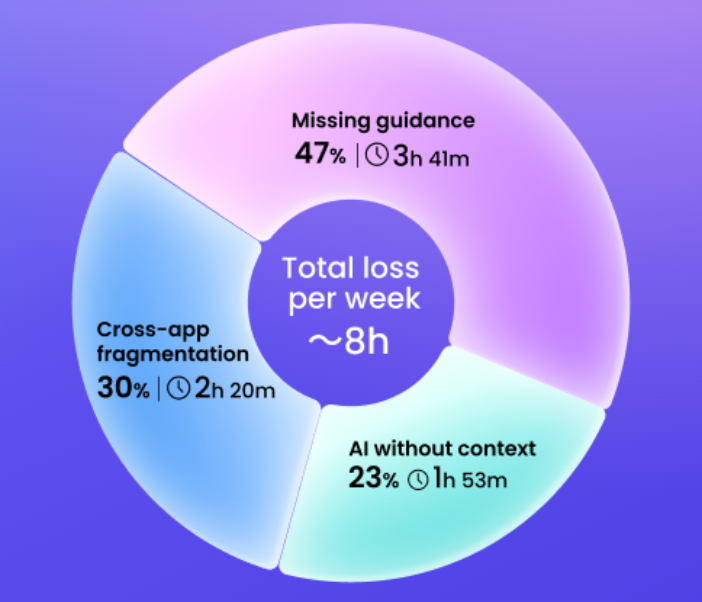
WalkMe's State of Digital Adoption 2026 report frames this as the "guidance gap": enterprises lose an estimated 51 workdays per employee per year to technology friction.
Source: WalkMe
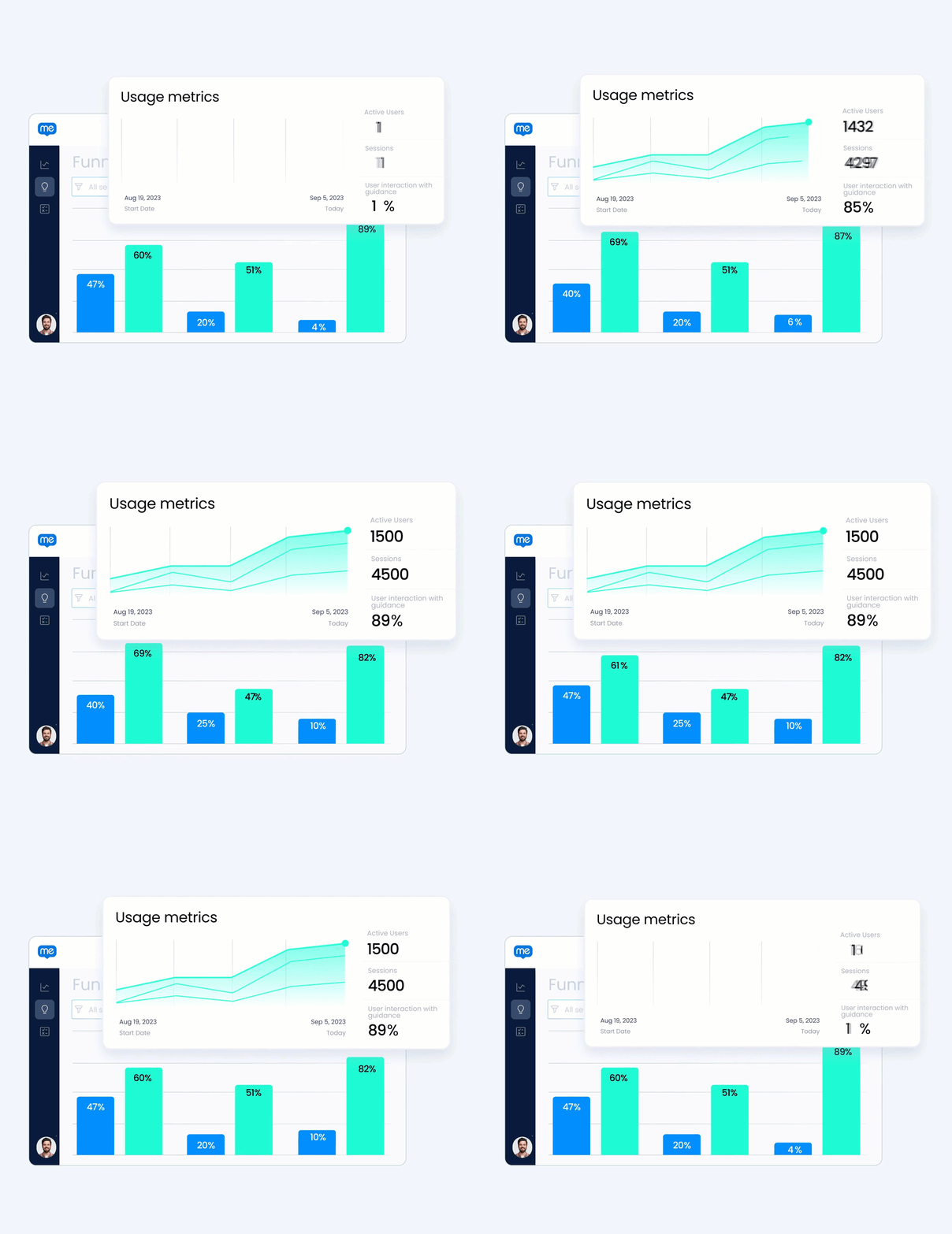
Pendo assumes you're a product manager at a software company trying to learn whether customers use the features you build. Your problem isn't adopting someone else's software; it's making your own software better. Pendo's analytics show which features users adopt, where they drop off, and what they request. Its guides then help you fix those problems without waiting for engineering.
The overlap has grown. Pendo expanded into employee-facing digital adoption through Process Analytics, letting IT teams track how employees use internal SaaS tools. WalkMe deepened its analytics with Workflow Analytics and Form Analytics. But each platform's DNA still reflects its origins: WalkMe works across any application without integration; Pendo goes deep on the products you own.
Source: Pendo
WalkMe wins at enterprise application adoption
WalkMe's defining advantage is its ability to overlay guidance on any web or desktop application without touching that application's code or requiring an integration. This makes it the default choice for enterprise IT teams managing large software portfolios.
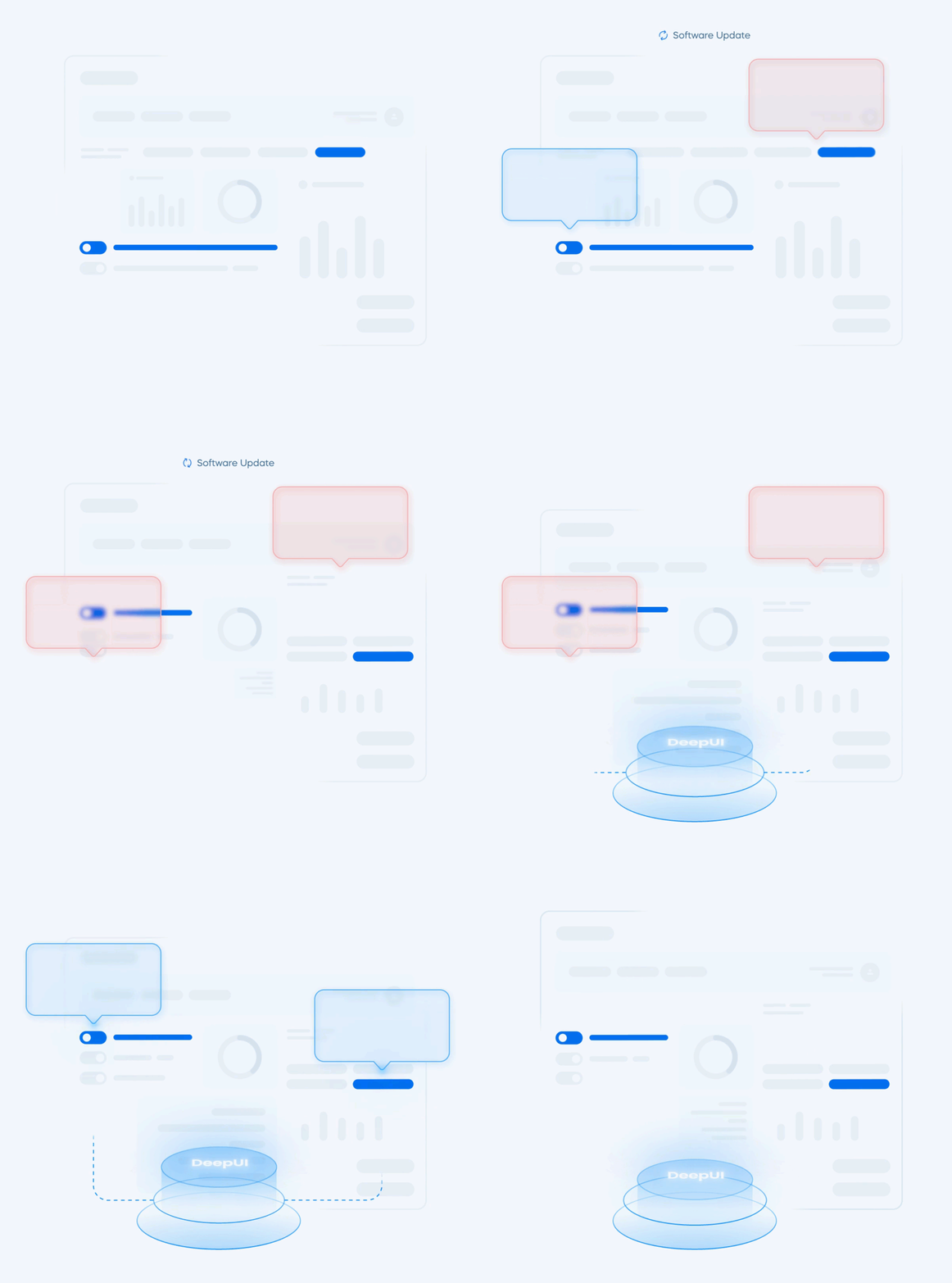
The foundation is DeepUI, WalkMe's AI technology that interprets application UIs by reading visual elements and layout structure rather than relying on brittle element selectors. When Salesforce or SAP pushes an update, DeepUI re-identifies elements by their meaning and adapts guidance automatically.
Source: WalkMe
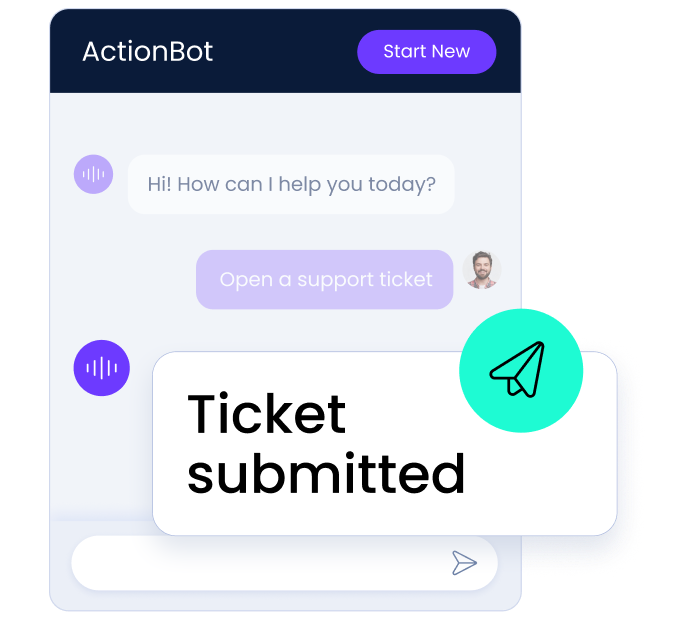
WalkMe's Workflow Automation goes further. Instead of guiding users through steps, WalkMe executes those steps: clicking buttons, selecting menus, and filling forms on the user's behalf. Combined with its Conversational Interface, employees can type a request in natural language and let WalkMe handle the rest, including workflows that span multiple applications.
Source: WalkMe
The catch: WalkMe requires the budget and internal resources to support it. G2 reviewers flag a steep learning curve for advanced configurations, and TrustRadius reviewers cite high pricing with multi-year contracts and no modular packaging. Without a dedicated admin team, the platform's capabilities can go underutilized.
Pendo wins at product analytics for software teams
Where WalkMe asks "are employees using the tools we bought?", Pendo asks "are customers using the features we built?" That distinction shapes everything about the platform.
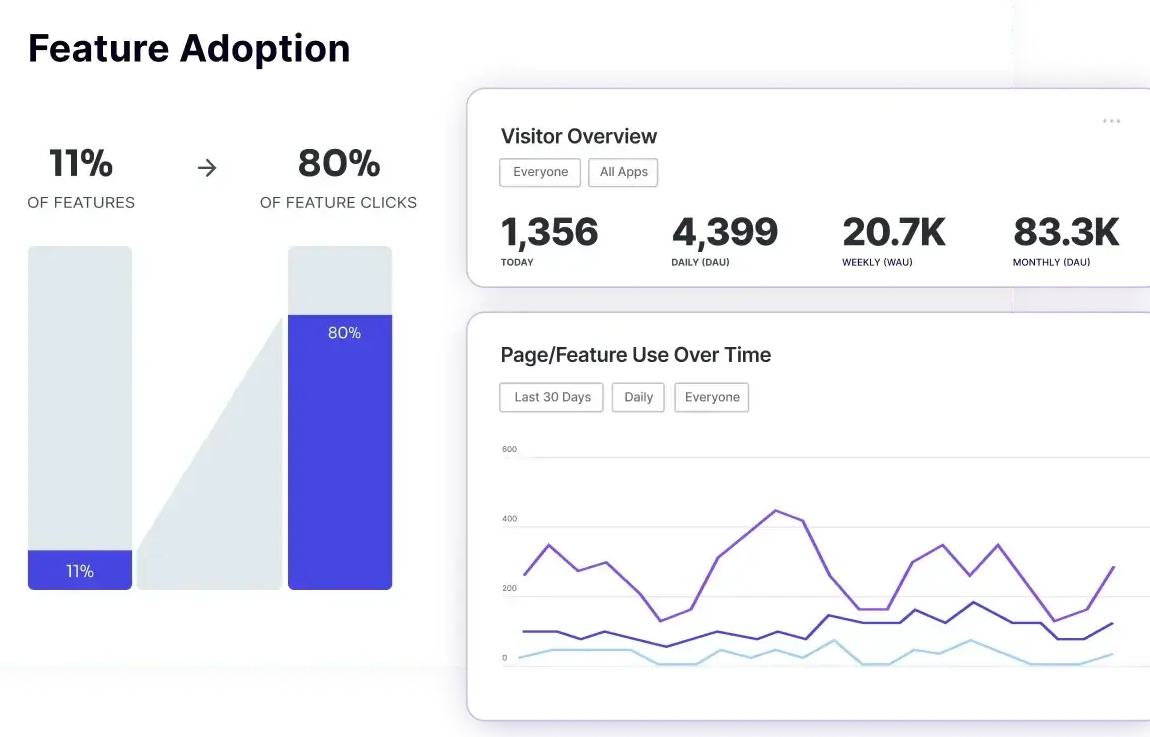
Pendo's strongest differentiator is retroactive analytics. The moment you install Pendo's JavaScript snippet, it starts capturing behavioral data. When you later tag a feature or page, Pendo shows data going back to the installation date, not just from the moment of tagging.
Source: Pendo
The platform connects analytics directly to action. Pendo's In-app Guides let product teams create walkthroughs, tooltips, and banners without engineering support.
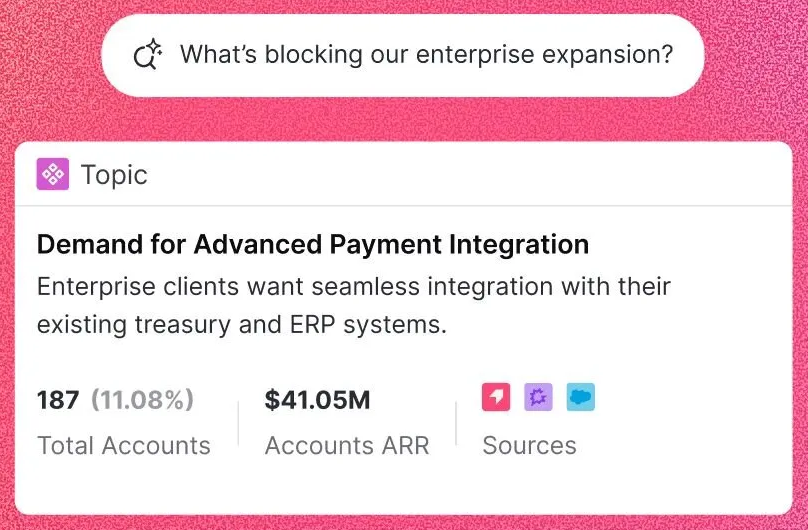
Pendo's Listen suite closes a loop most analytics platforms leave open. It aggregates feedback from in-app surveys, Gong call transcripts, Zendesk tickets, and Salesforce data, then uses AI to categorize themes and surface recurring requests.
Source: Pendo
Those requests connect to the Roadmaps module, where each initiative links to quantified customer evidence: the ARR behind the request and the number of accounts asking for it.
Pendo has also moved early into AI agent measurement. Its Agent Analytics tracks how users interact with AI agents, surfacing metrics like unsupported request patterns, "rage prompting" (the conversational equivalent of rage clicking), and whether agentic workflows save time compared to traditional UI. It tracks 350+ AI agents and 2.5 million prompts per week.
The limitations mirror the platform's breadth. The roughly one-hour delay on analytics data means Pendo can't trigger real-time behavioral interventions. Mobile tracking feels like an add-on to a web-first product. And despite calling itself "no-code," initial setup and advanced segmentation often require dedicated admin resources and sometimes engineering involvement.
For a closer look at Pendo's full capabilities, real-world strengths, and common limitations, see our Pendo review.
In-app guidance works differently in each platform
Both WalkMe and Pendo offer in-app guidance, but the implementation reflects each platform's design philosophy.
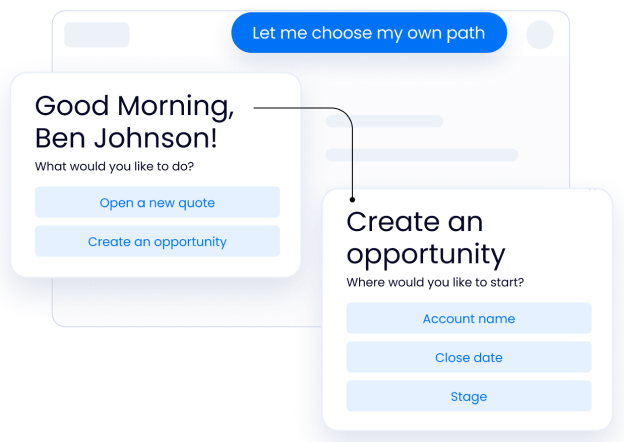
WalkMe's guidance handles complexity. Smart Walk-Thrus support conditional branching and error-handling at every step, so the same guide can handle multiple user paths through an enterprise workflow. WalkMe also includes validation safeguards that intercept data-entry errors at the point of entry, preventing bad data from reaching CRM or ERP systems.
Source: WalkMe
The guidance extends across any application, including third-party SaaS tools the customer doesn't own. For enterprise rollouts, pre-built Workflow Accelerators encode best practices from over 2,000 implementations, giving teams a head start on SAP, Salesforce, or Workday deployments.
Pendo's guidance favors speed and experimentation. The Visual Design Studio opens as an overlay on the live application, letting builders see guides in context. Guide types include lightboxes, tooltips, banners, and (on the Guides Pro tier) embedded guides that flow inline with the application.
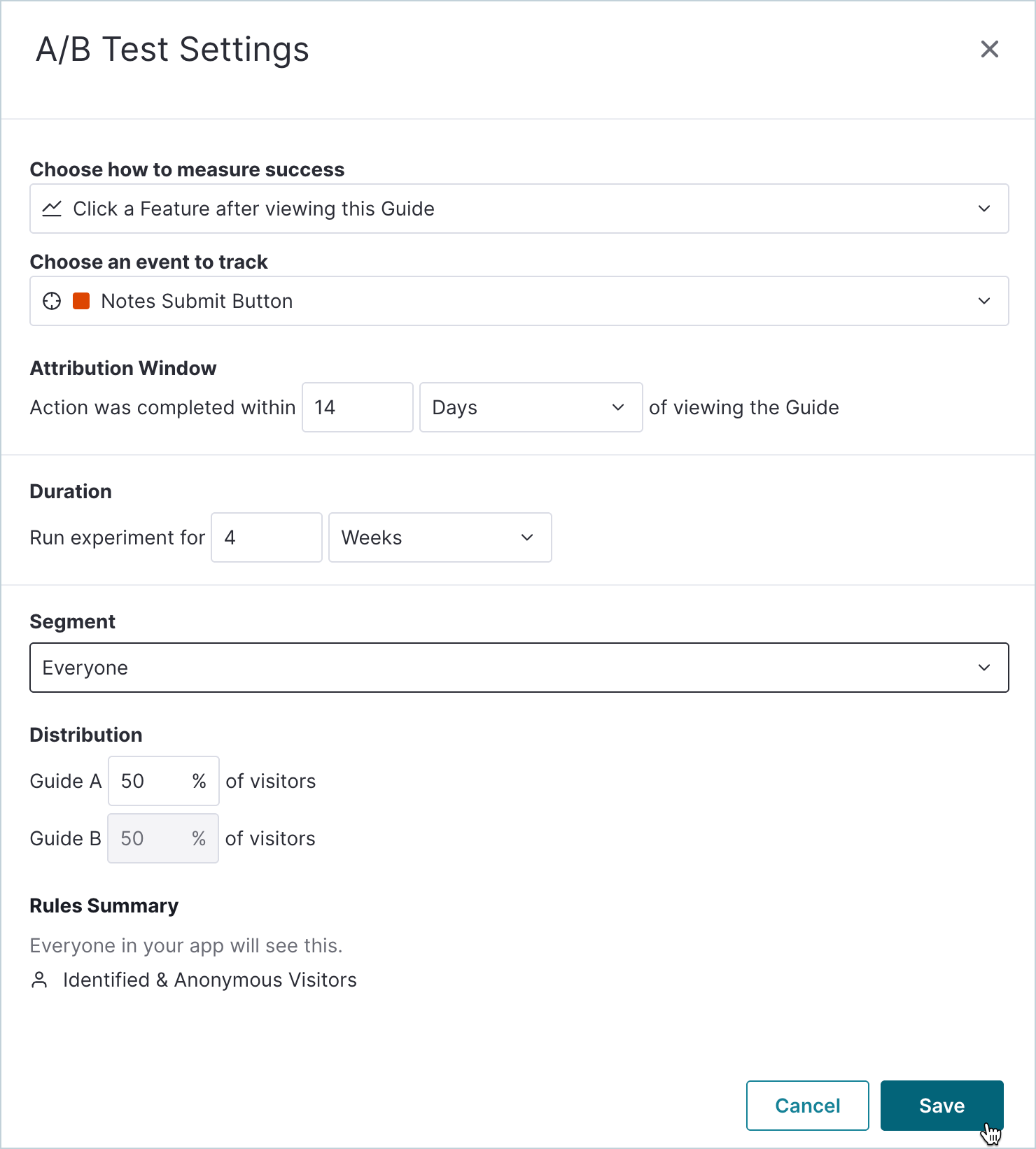
Pendo offers A/B testing on guides, letting teams measure which version drives better engagement or goal completion. The newer conversational AI guide builder lets product managers describe a guide in plain language and iterate through chat.
Source: Pendo
The targeting difference matters. WalkMe targets guides by user role, location, language, or behavioral context, drawing on its cross-application visibility. Pendo targets guides using product analytics data, so a guide can reach "users who have not used Feature X in the past 14 days" without any external data integration.
Pendo also connects guides to its Orchestrate module for multi-channel journeys combining in-app messages with email.
For organizations deploying across an enterprise software portfolio, WalkMe's cross-application guidance and DeepUI resilience are hard to match. For product teams iterating on their own application's onboarding and feature adoption, Pendo's analytics-driven targeting and A/B testing offer faster feedback loops.
Product intelligence has a blind spot: the market
WalkMe and Pendo both tell you what happens inside software. WalkMe reveals whether employees complete workflows correctly. Pendo reveals whether customers adopt the features you build. Both are valuable.
Neither tells you what's happening outside your product. Which companies are researching solutions in your category right now? Who are the decision-makers at your target accounts, and how do you reach them? Which deals in your pipeline are stalling because the economic buyer hasn't engaged, and which are accelerating because the right signals are firing?
For B2B software companies (the core audience for Pendo and an important segment for WalkMe), this gap matters. Product analytics can flag a customer who stopped using a key feature.
But they can't flag the same customer researching a competitor, hiring a VP of Operations who previously used a rival product, or receiving new funding that expands their buying capacity. These are the external signals that drive revenue decisions.
This is the problem ZoomInfo solves.
ZoomInfo provides the go-to-market intelligence layer
ZoomInfo operates at a different layer. While WalkMe and Pendo focus on what users do inside software, ZoomInfo focuses on who your buyers are, when they're ready to engage, and what to say when you reach them.
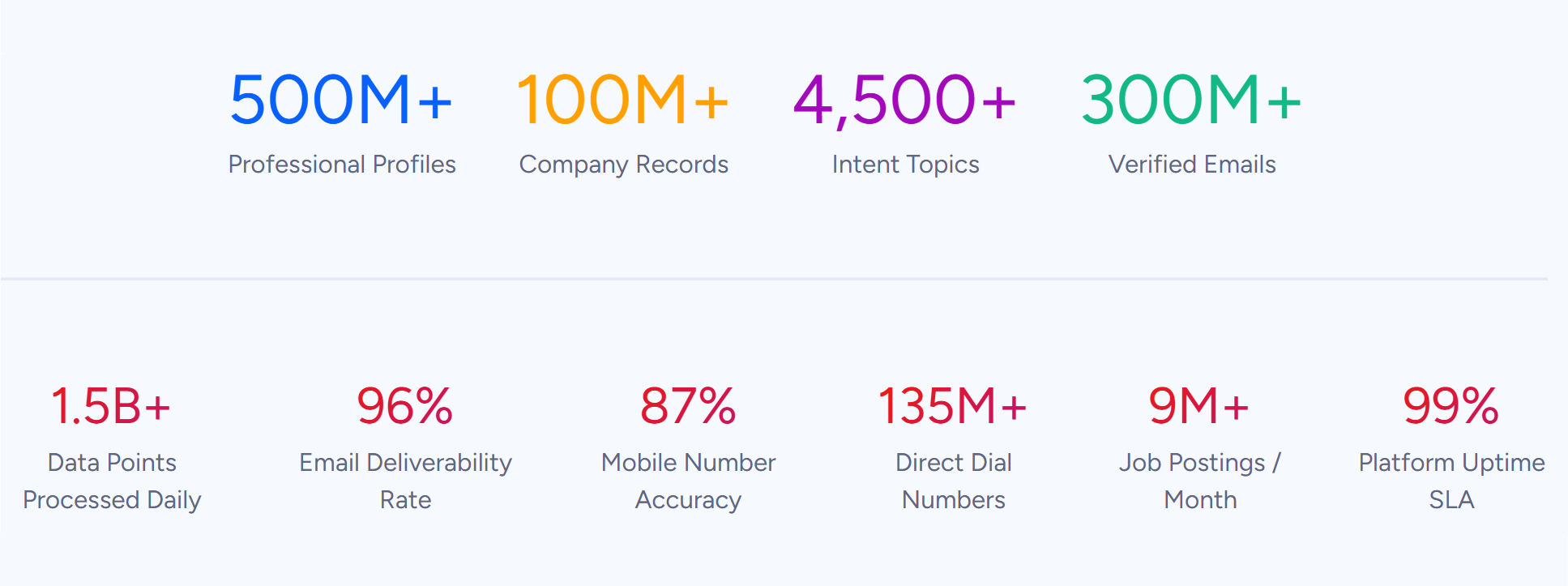
The foundation is data: 500M contacts, 100M companies, 135M+ verified phone numbers, 120M direct-dial phone numbers, and 200M+ verified business email addresses, processed through a verification pipeline backed by 300+ human researchers and reaching up to 95% accuracy on first-party data.
Source: ZoomInfo
In a Fortune 500 competitive RFP analyzing 25 million contacts across vendors, the independent consultant concluded that "no other competitor came even close."
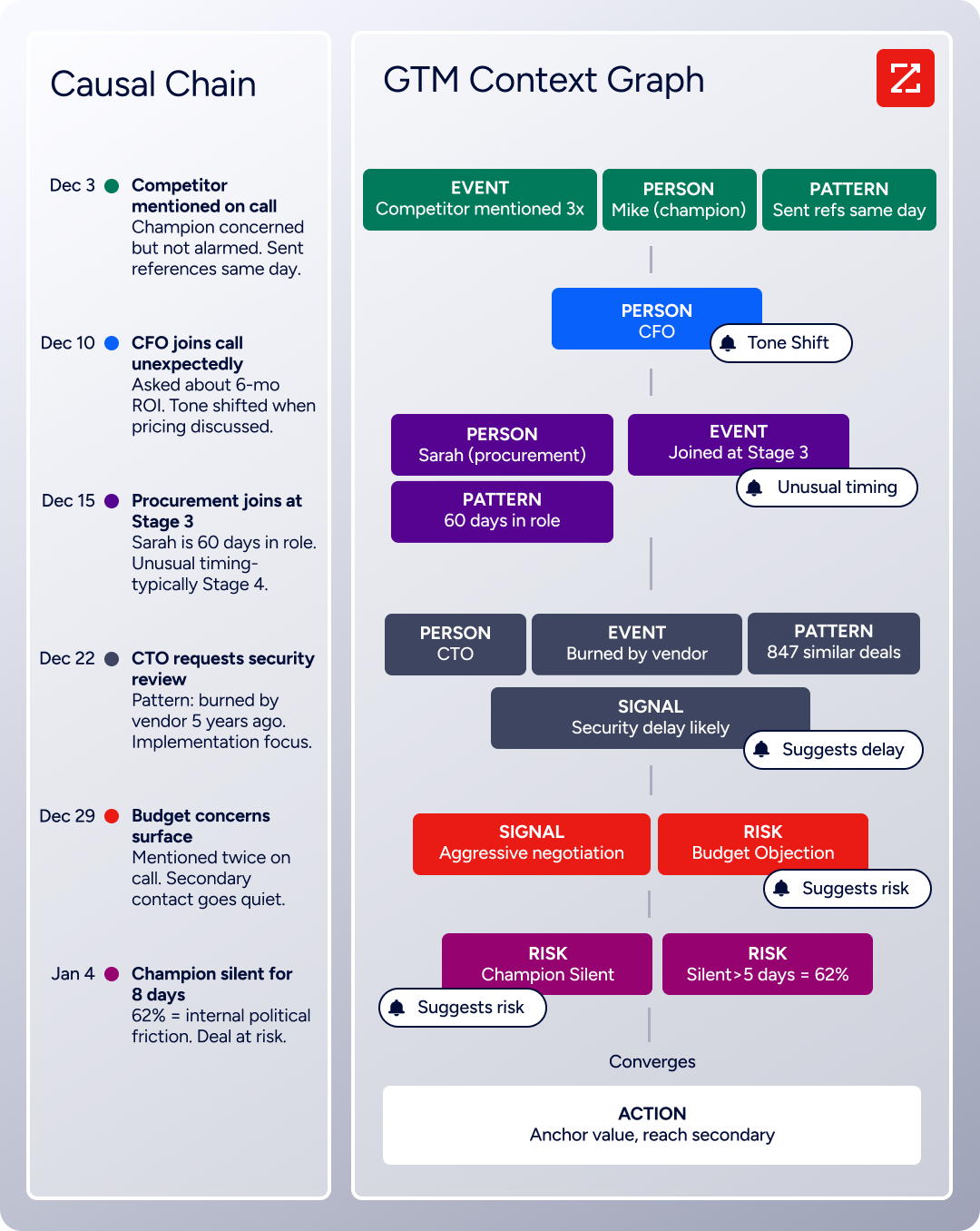
That data becomes intelligence through the GTM Context Graph, which processes 1.5B + data points daily and combines ZoomInfo's third-party data with a customer's CRM records, conversation transcripts, and behavioral signals.
The result: AI that understands not just that a deal moved stages, but why the CFO joining the last call matters, why the champion going quiet for eight days is a risk signal, and which accounts match the patterns behind your actual closed-won deals.
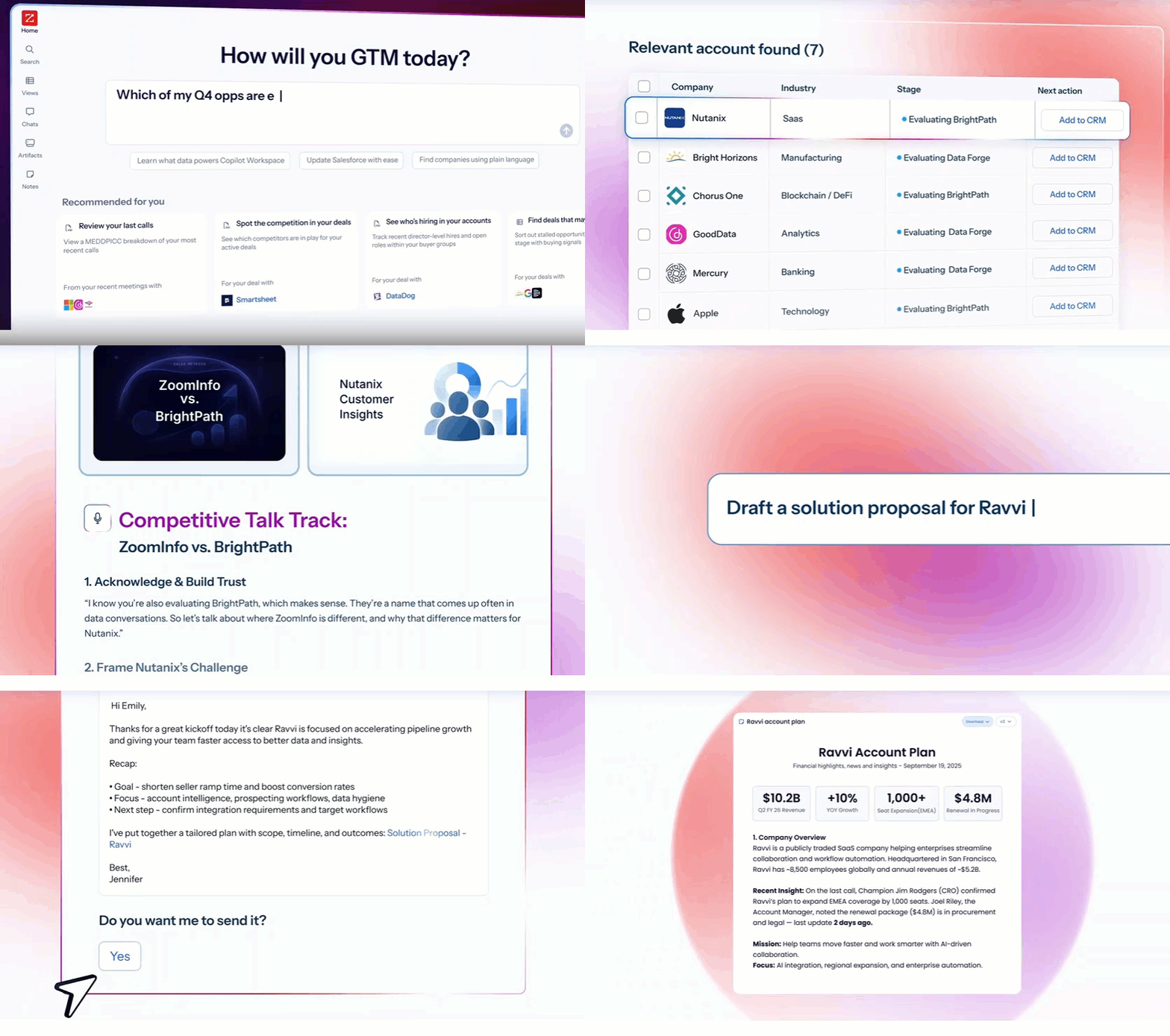
For teams using ZoomInfo's own products, GTM Workspace gives sellers prioritized accounts, AI-drafted outreach, and CRM updates in one place.
Source: ZoomInfo
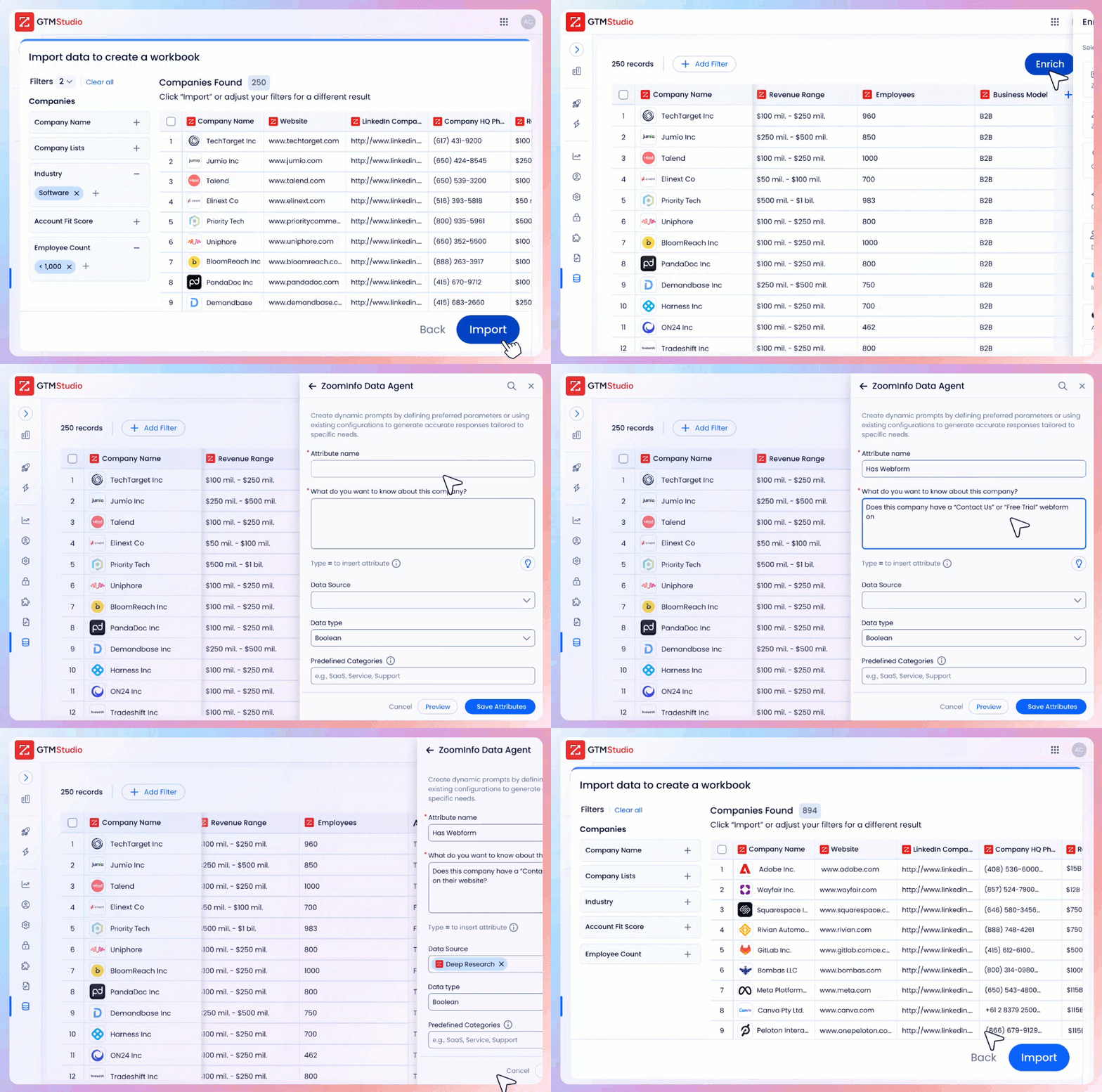
GTM Studio lets marketers and RevOps teams describe audiences in plain language and launch multi-channel plays without engineering tickets. For teams building their own tools, APIs and MCP expose the same intelligence to any AI agent or custom application.
Source: ZoomInfo
The practical value for B2B companies already using WalkMe or Pendo is clear. Pendo can tell you that a customer stopped using a key feature; ZoomInfo's intent data can tell you that same customer is researching competitors.
WalkMe can tell you that employees aren't completing CRM workflows; ZoomInfo can enrich those CRM records with verified contacts, org charts, and technographics so the data those workflows produce is accurate. Neither platform replaces the other. They answer different questions about the same business.
"That combination of our internal CRM data, external signals, and AI that's given all that context has helped us craft very specific account- and persona-based messages. And people have responded to them right away." (Seismic)
AI capabilities take different forms
All three platforms have invested in AI, but each applies it to a different problem.
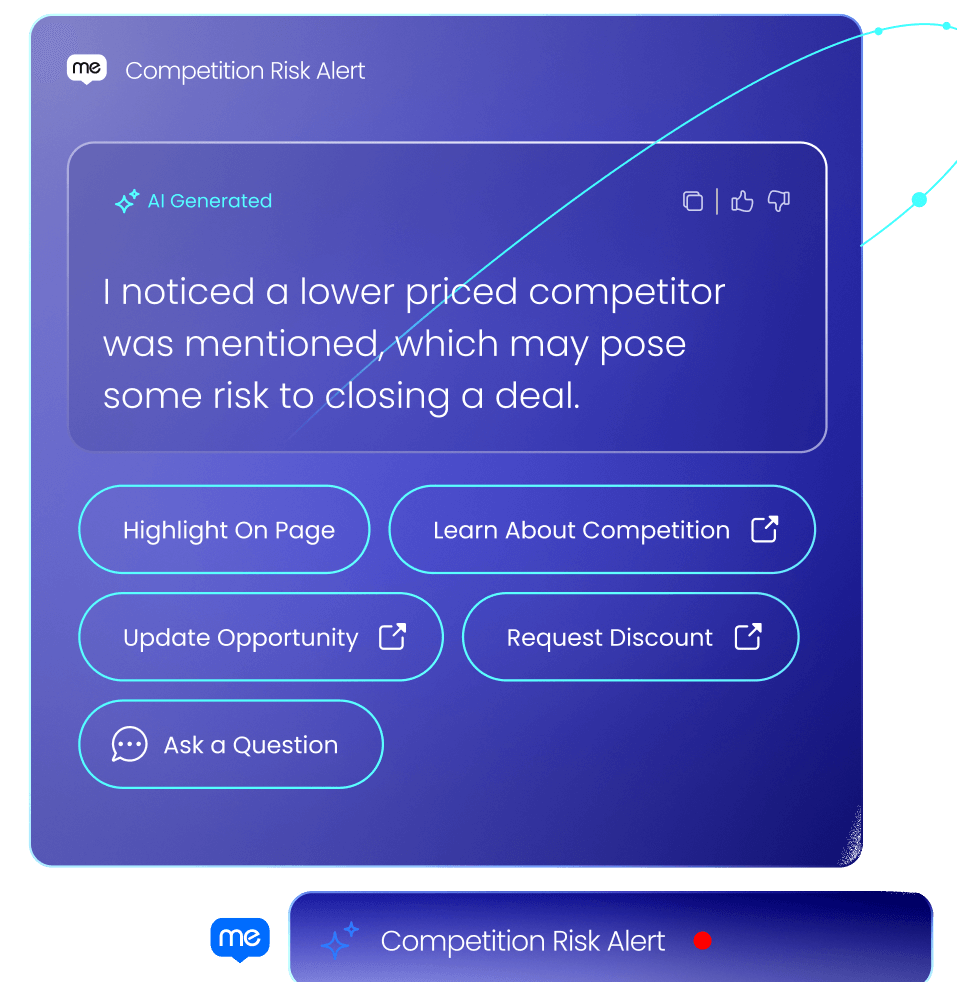
WalkMe AI is contextual and screen-aware. Powered by DeepUI, it reads what's on the user's screen, combines that with business knowledge and user history, and recommends next actions. Its seven modules (next best actions, memory, automations, conversational chat, input validation, reading assistance, and writing assistance) work across any application without integration.
Source: WalkMe
WalkMe processes over 7 billion interactions between people and software every year, giving its AI a large dataset for understanding enterprise software navigation.
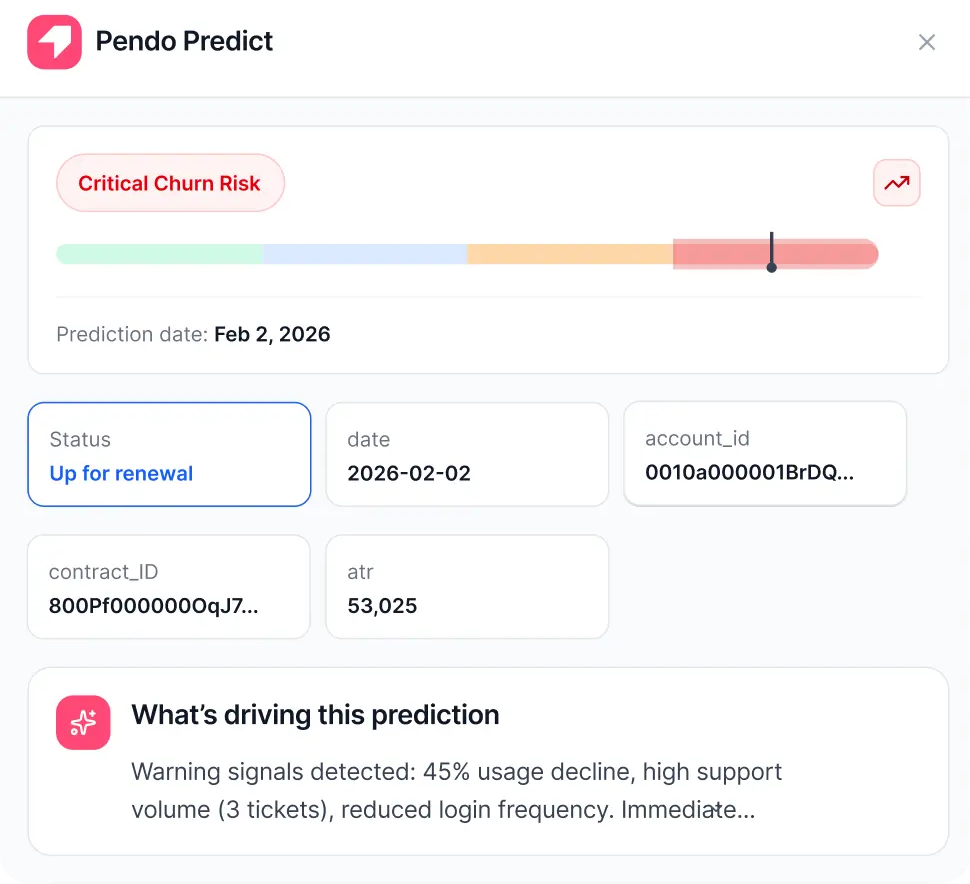
Pendo AI takes multiple forms. Leo lets teams ask questions about analytics in plain language, create guides conversationally, and receive signals pushed to Slack. Predict (built on Pendo's acquisition of Forwrd.ai) builds churn prediction models using product usage data combined with CRM signals, delivering scored predictions with explanations and suggested actions into Salesforce and Slack.
Source: Pendo
Agent Analytics is Pendo's most original AI play: measurement designed for AI agents, tracking prompt success, rage prompting, and whether agentic workflows outperform traditional UI.
ZoomInfo's AI operates through the GTM Context Graph, which reasons across CRM data, conversation intelligence, intent signals, and behavioral data to surface why deals move or stall. Built on Anthropic's Claude, ZoomInfo's AI agents inside GTM Workspace handle account research, outreach generation, CRM updates, and signal monitoring.
Source: ZoomInfo
The AI learns from user interactions, customer responses, and market changes. Seismic attributed 39% of active pipeline to opportunities identified or influenced by ZoomInfo signals, with sellers reporting 54% productivity gains.
"ZoomInfo's not just a contact data company anymore. They've built a full system of execution. GTM Intelligence works the list, writes the outreach, triggers the play, and helps drive predictable growth." (Levanta)
Pricing and accessibility reflect different markets
The pricing approaches reveal who each platform serves.
WalkMe has no published pricing and no self-serve path. The pricing page leads to a demo request form. All terms are negotiated in custom enterprise contracts governed by the Master License and Services Agreement.
TrustRadius reviewers cite high cost, multi-year commitments, and add-ons that make budgeting difficult. Fees are non-refundable and non-cancelable for the full contract term. For SAP customers, a WalkMe Standard tier is included in SAP subscriptions, with WalkMe Premium available for customization.
Pendo offers a permanent free plan capped at 500 monthly active users, including product analytics, in-app guides (Pendo-branded), and NPS. Above the free tier, pricing is custom and MAU-based across three paid plans (Base, Core, Ultimate), with no public rates.
The Core plan adds Session Replay; the Ultimate plan adds Sentiment surveys, Orchestrate, Listen, and Data Sync. AI add-ons (Predict and Agent Analytics) require separate purchase regardless of plan. G2 reviewers flag inflexible licensing and unpredictable cost escalation as companies add MAUs.
For a full breakdown of Pendo's plans and what to expect at each tier, see our Pendo Pricing guide.
ZoomInfo uses a consumption-based pricing model with custom quotes. Plans span Sales (Professional, Advanced, Enterprise), Marketing (Marketing Demand, ABM Lite, ABM Enterprise), and standalone products (Chorus, Chat).
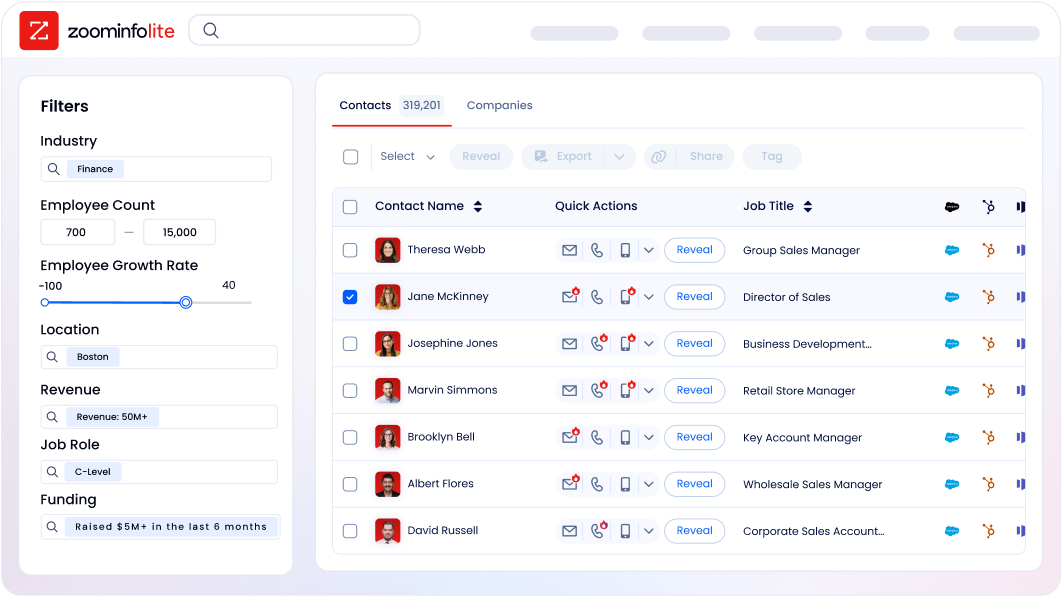
ZoomInfo Lite is a permanent free tier with access to the B2B database, 10 monthly export credits, search filters, a Chrome extension, and WebSights Lite. A 7-day free trial of paid features is available with no credit card required.
Source: ZoomInfo
All three require sales conversations for paid plans. ZoomInfo and Pendo offer free entry points that let teams evaluate before committing. WalkMe does not.
Integration ecosystems serve different workflows
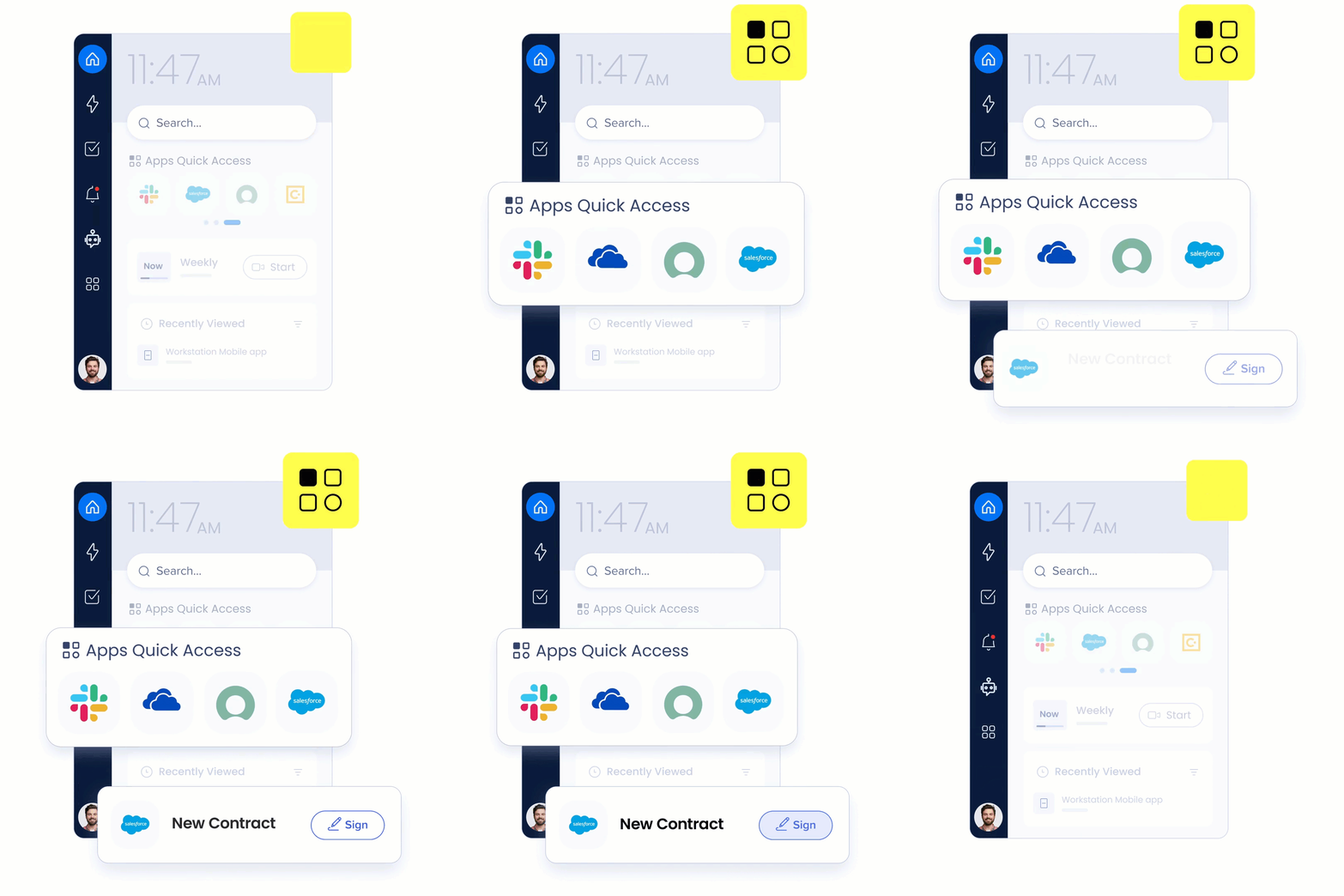
WalkMe works across any web or desktop application through its DeepUI layer, requiring no per-application integration. For deeper automation, the Action Integration Center provides native connections to Salesforce, Jira, ServiceNow, and Slack.
WalkMe has built-in support for SAP, Salesforce, Workday, Microsoft Dynamics 365, and ServiceNow. Its Omnichannel DAP extends across web, desktop, and mobile.
Source: WalkMe
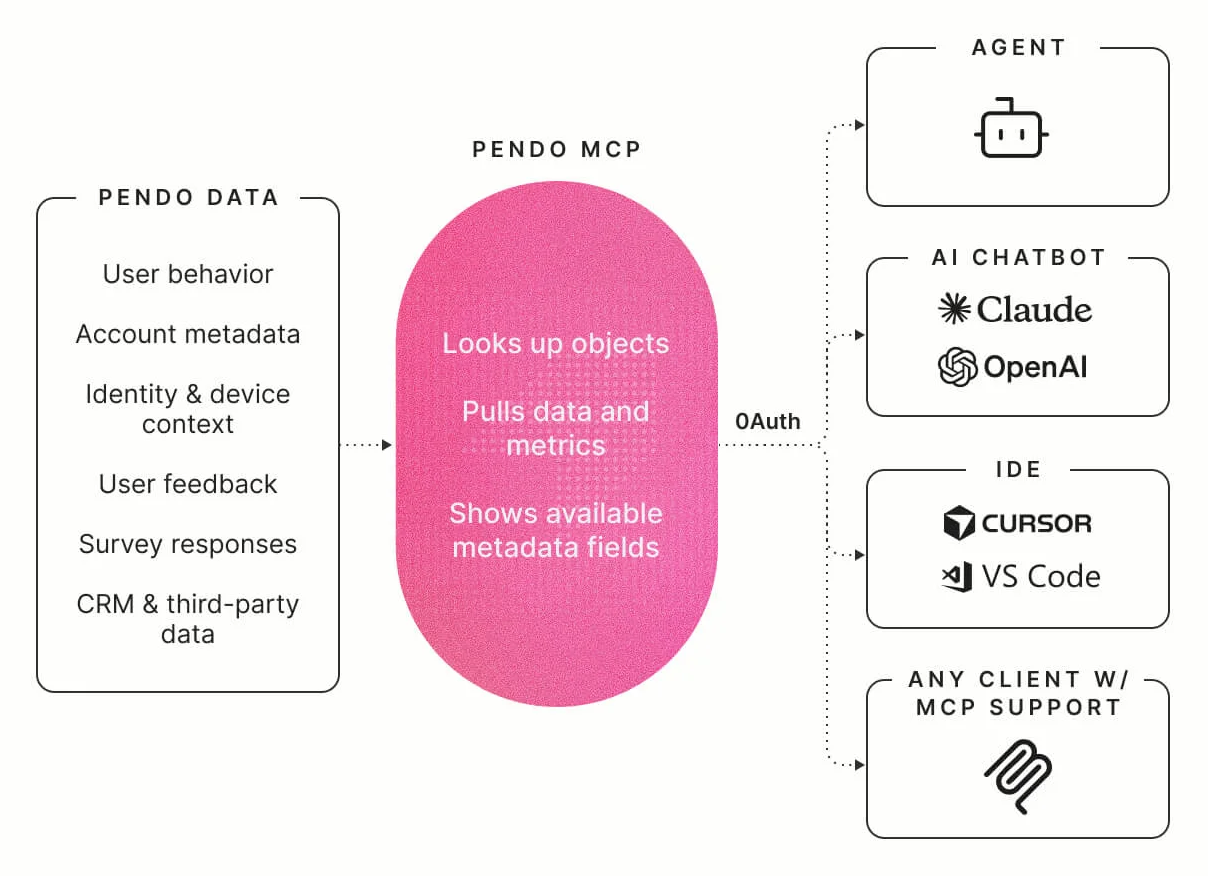
Pendo maintains 51 native integrations spanning CRM (Salesforce, HubSpot), customer success (Zendesk, Gainsight, ChurnZero), collaboration (Jira, Slack, Confluence), BI (Tableau, Looker), and data infrastructure (Snowflake, Segment, BigQuery).
Data Sync exports behavioral data to Snowflake, Amazon S3, Azure, or Google Cloud. The Pendo MCP server connects product data to third-party AI agents, including Intercom's Fin and Planview's Anvi.
Source: Pendo
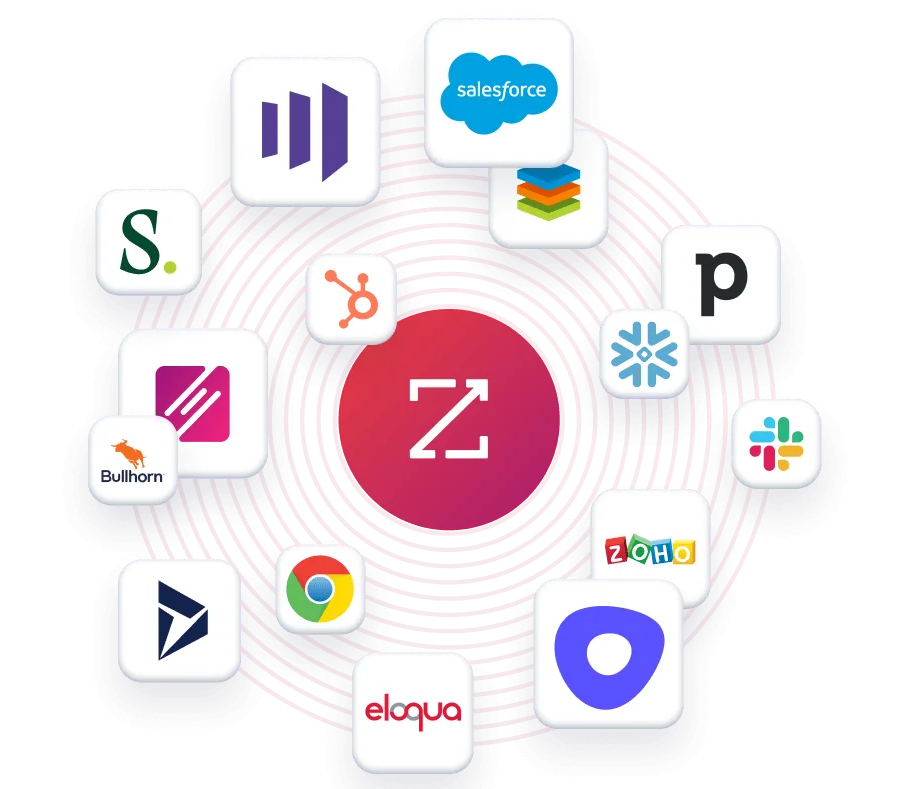
ZoomInfo's App Marketplace lists 172+ integration partners across CRM, marketing automation, sales engagement, data warehousing, and AI platforms. API access is included in all relevant plans, and the ZoomInfo MCP server connects AI models directly to ZoomInfo's B2B data. Cloud Partners deliver data into AWS, Google Cloud, Snowflake, and Databricks.
Source: ZoomInfo
"The plug-and-play aspect of the API means I can integrate it very easily into any process and get information at a moment's notice." (BDO Canada)
WalkMe vs. Pendo vs. ZoomInfo: Which should you choose?
These three platforms solve different problems. The right choice depends on which problem matters most to your organization right now.
Choose WalkMe if:
You're a large enterprise driving adoption of internal tools like SAP, Salesforce, or Workday
You need guidance that works across any application without per-app integrations
Reducing IT support tickets and enforcing data quality in CRM workflows are priorities
You have the budget, admin resources, and internal champions for a full enterprise deployment
You operate in a regulated industry that requires FedRAMP certification
You're in the SAP ecosystem and want native integration
Choose Pendo if:
You're a B2B SaaS company trying to understand how customers use your product
Product managers need self-serve access to feature adoption data without engineering
You want product analytics, in-app guides, feedback, and roadmapping in one platform
You're measuring AI agent effectiveness and need dedicated analytics
You want to start with a free plan and scale as your MAU volume grows
The feedback-to-roadmap loop matters for your product planning process
Add ZoomInfo if:
You're a B2B company that needs to find, reach, and engage the right buyers
You want verified contact data, buyer intent signals, and account intelligence at scale
Your sales team needs AI-powered outreach that reflects what's happening in each deal
You need to enrich CRM data so the workflows WalkMe guides and Pendo tracks rest on accurate information
You want go-to-market intelligence accessible through your own tools via API and MCP
See how ZoomInfo's go-to-market intelligence complements your technology stack with a free trial.
WalkMe and Pendo each make software work better for the people using it. ZoomInfo makes sure the right people know about it. The most effective B2B companies invest in both: understanding product usage and understanding their market. The question isn't which platform to choose. It's which combination your organization needs to grow.
"Without ZoomInfo, it would be extremely difficult (if not impossible) to achieve our business objectives. Without it, we wouldn't be able to understand the market, have the right contact data, and make meaningful connections." (Smartsheet)
WalkMe vs. Pendo vs. ZoomInfo FAQ
What is the core difference between WalkMe, Pendo, and ZoomInfo?
WalkMe is a Digital Adoption Platform for enterprise IT teams driving employee adoption of internal applications like SAP, Salesforce, and Workday. Pendo is a product analytics and digital adoption platform for product teams at software companies who need to understand user behavior and guide customers through their own applications.
ZoomInfo is a B2B go-to-market intelligence platform that provides verified contact data, buyer intent signals, and AI-powered sales execution for revenue teams. The three solve different problems and serve different buyers within the same organization.
Which platform is best for reducing software support tickets?
Both WalkMe and Pendo reduce support ticket volume, but through different mechanisms. WalkMe overlays contextual guidance on any application, including third-party tools, and has documented results like Origin reducing support tickets by 70%.
Pendo deploys in-app help within your own product, with SkuVault reporting a 45% reduction in support tickets and Elsevier seeing a 42.8% drop in first-line queries. WalkMe is the stronger choice for internal tool support; Pendo is stronger for customer-facing product support.
Which platform has the best AI capabilities?
Each platform applies AI differently. WalkMe AI is screen-aware, reading what's on the user's screen through DeepUI and delivering assistance across any application. Pendo AI includes Leo for conversational analytics, Predict for churn modeling, and Agent Analytics for measuring AI agent effectiveness.
ZoomInfo's GTM Context Graph reasons across CRM data, conversation intelligence, and buyer signals to surface why deals move or stall, powering AI agents that handle account research, outreach generation, and signal monitoring.
Do any of these platforms offer a free plan?
Pendo offers a permanent free plan for up to 500 monthly active users, including product analytics, in-app guides, and NPS. ZoomInfo offers ZoomInfo Lite, a permanent free tier with access to its B2B database, 10 monthly export credits, and a Chrome extension, plus a separate 7-day free trial of paid features. WalkMe does not offer a free plan or free trial; all access requires a custom enterprise contract.
Can WalkMe and Pendo be used together?
Yes. WalkMe handles employee-facing applications (driving adoption of Salesforce, SAP, Workday), while Pendo handles customer-facing products (understanding and guiding your own software's users).
An enterprise SaaS company could use Pendo on its own product to track feature adoption and onboard customers, while using WalkMe internally to help employees navigate the tools they use daily. The two platforms serve different use cases with minimal overlap.
Which platform should a B2B SaaS company prioritize first?
For a B2B SaaS company, Pendo typically delivers value fastest because it connects directly to your product's user behavior, giving product teams immediate visibility into feature adoption, churn risk, and user feedback without engineering dependencies.
ZoomInfo is the natural complement, providing the go-to-market intelligence (buyer intent, verified contacts, account insights) that revenue teams need to acquire and expand accounts. WalkMe becomes relevant when the company scales to the point where internal tool adoption across a large employee base becomes a productivity bottleneck.
How do the platforms compare on data privacy and compliance?
WalkMe holds the broadest compliance portfolio: FedRAMP Ready status, SOC 2 Type II, ISO 27001, ISO 27701, and GDPR, making it the strongest option for US federal and regulated deployments. Pendo maintains SOC 2, GDPR, and HIPAA compliance with data residency options in the US, EEA, Japan, and Australia.
ZoomInfo holds ISO 27001, ISO 27701, SOC 2 Type II, and TRUSTe-validated GDPR and CCPA certifications (renewed annually), and is a registered data broker in California and Vermont.
How do WalkMe and Pendo compare on analytics depth?
WalkMe's analytics focus on workflow completion, application usage across the software portfolio, form-field friction, and license utilization. Pendo's analytics focus on feature adoption, user journeys, retention cohorts, and a Product Engagement Score combining adoption, stickiness, and growth into a single metric.
Pendo also offers retroactive analytics from the date of installation and product benchmarking against 6,800+ applications. WalkMe provides broader cross-application visibility; Pendo provides deeper product-specific insight.
See how WalkMe compares to other platforms:
