
If you're comparing WalkMe vs. Whatfix, you've identified a real problem: your enterprise software isn't delivering the value it promised. Employees struggle with complex workflows, data entry errors pile up, and adoption stalls after every update.
Both WalkMe and Whatfix solve the adoption side. But before you choose one, ask whether adoption alone is enough:
Is your bigger problem that employees don't know how to use your CRM, or that the data inside it isn't worth using?
Do you need guidance overlays for SAP-specific applications, or vendor-neutral coverage across a mixed tech stack?
How critical is it that your in-app guidance survives application updates without manual rework?
Do your teams need simulation environments for hands-on training before go-live?
Would your sales reps benefit more from learning to navigate Salesforce, or from having accurate contact data and buying signals already inside it?
In short, here's what we recommend:
WalkMe is the DAP built for large organizations running SAP and other major platforms. Its patented DeepUI technology adapts guidance when applications update, eliminating the manual rework that plagues other DAPs. Since SAP acquired WalkMe in September 2024 for roughly $1.5 billion, the platform is embedded natively into SAP applications, with a WalkMe Standard tier included in SAP subscriptions. However, WalkMe's pricing is opaque and expensive, the learning curve for administrators is steep, and the SAP acquisition raises questions about long-term neutrality for organizations running non-SAP stacks.
Whatfix is the independent DAP for enterprises that want vendor-neutral coverage across web, desktop, mobile, and VDI environments. Its ScreenSense AI technology reads application context and user intent to trigger guidance at the right moment, while three AI Agents handle content creation, user guidance, and behavioral insights. The Mirror product adds simulation-based training that lets employees practice in a replica of the real application. But like WalkMe, pricing is quote-only, setup carries a learning curve, and analytics depth may fall short of what some enterprise teams expect.
Both platforms improve how employees interact with enterprise software. But adoption is only half the story. A sales rep who knows exactly how to navigate Salesforce still underperforms if the accounts and contacts inside it are incomplete, outdated, or missing direct-dial numbers. That's a different problem, and it requires a different solution.
ZoomInfo is a B2B data and GTM platform that ensures your CRM contains verified data before your DAP helps reps use it. With 500M contacts, 100M companies, 135M+ verified phone numbers, and 200M+ verified business email addresses, ZoomInfo populates sales tools with the intelligence reps need: buyer intent signals, org charts, and technographic profiles. Its GTM Context Graph fuses this data with your CRM records and conversation transcripts to reveal not just what's happening in a deal, but why. Teams access that intelligence through the GTM Workspace for sellers, GTM Studio for marketers and RevOps, or APIs and MCP in any front-end. For enterprises investing in CRM adoption through a DAP, ZoomInfo is the complementary layer that makes the adopted software worth using.
If pairing better adoption with better data sounds right, see how ZoomInfo works with your CRM.
WalkMe vs. Whatfix vs. ZoomInfo at a glance
WalkMe | Whatfix | ZoomInfo | |
|---|---|---|---|
Primary function | Digital Adoption Platform (in-app guidance) | Digital Adoption Platform (in-app guidance + simulation) | B2B data and GTM intelligence |
Core problem solved | Employees can't use enterprise software effectively | Employees can't use enterprise software effectively | CRM and sales tools lack accurate data |
AI technology | DeepUI (automatic UI adaptation) | ScreenSense (context and intent detection) | GTM Context Graph (deal reasoning) |
Environment coverage | Web, desktop, mobile | Web, desktop, mobile, VDI/Citrix | CRM integrations (Salesforce, HubSpot, Dynamics) |
Vendor independence | SAP subsidiary | Independent (private, Series E) | Independent (public, NASDAQ: GTM) |
Pricing transparency | Quote-only, no published prices | Quote-only, tiered plans | Quote-only, consumption-based |
Free option | No public free trial | Free trial (sales-assisted) | ZoomInfo Lite (permanent free tier) |
Enterprise customers | ~1,600; 27% of Fortune 500 | 700+; 80+ Fortune 500 | 1,921 customers at $100K+ |
Best for | SAP-centric enterprises needing resilient guidance | Multi-stack enterprises needing vendor-neutral DAP | Sales and marketing teams needing CRM data quality |
The SAP acquisition reshaped the DAP landscape
The biggest event in digital adoption since Gartner created the category in 2019 was SAP's acquisition of WalkMe in September 2024. SAP paid approximately $1.5 billion, and the rationale was explicit: "WalkMe X's AI capabilities will supercharge SAP's copilot Joule with context-aware and proactive help across workflows." (source)
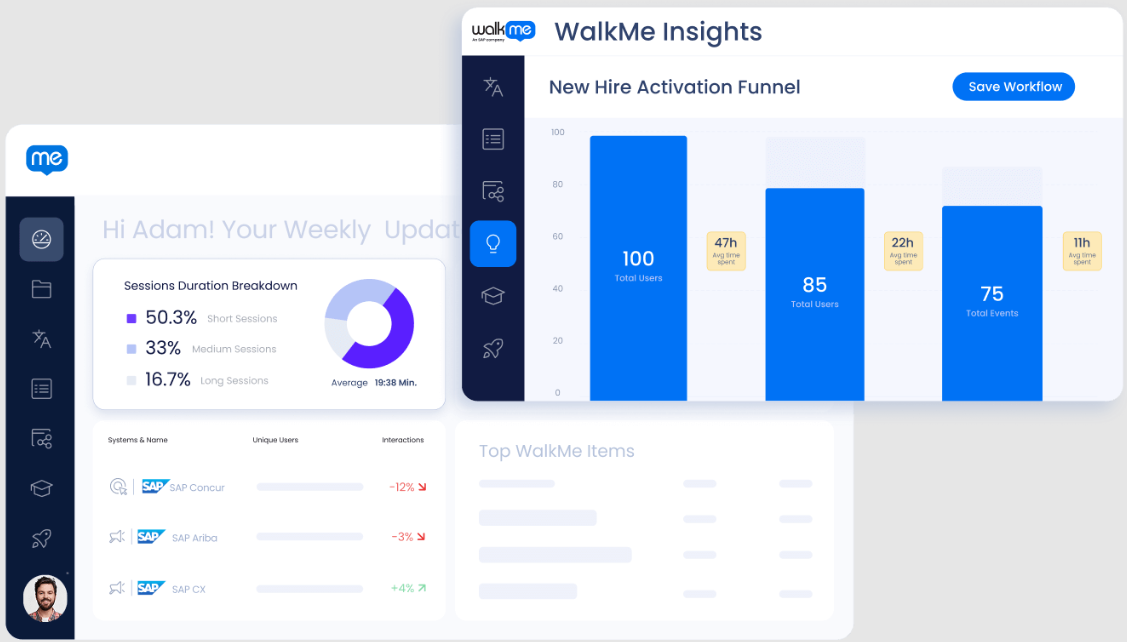
For SAP customers, this is good news. WalkMe is now embedded natively into SAP applications with a Standard tier included in existing SAP subscriptions. SAP's sales force distributes WalkMe across 300,000+ enterprise customers. For organizations already running SAP S/4HANA, SuccessFactors, Concur, or Ariba, WalkMe becomes the default DAP with minimal additional procurement friction.
Source: WalkMe
For non-SAP customers, the calculation shifts. WalkMe still supports Salesforce, Workday, ServiceNow, and Microsoft Dynamics 365, and the company continues to message multi-platform support. But the product roadmap and sales priority will increasingly center on the SAP ecosystem. TrustRadius reviewers flag that support quality has declined post-acquisition, consistent with organizational disruption during a major integration.
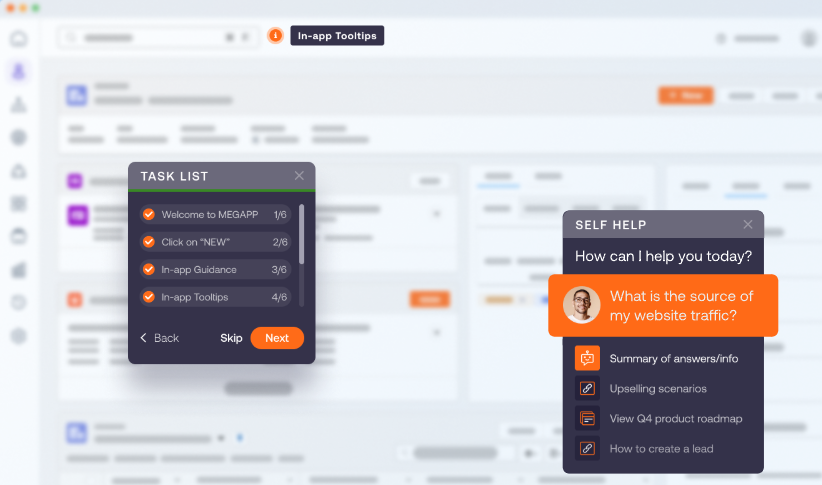
Whatfix moved quickly to capitalize. The company raised a $125 million Series E in September 2024 at a valuation roughly 50% higher than its 2021 Series D, and now markets itself as the independent enterprise DAP for organizations not running SAP-centric stacks.
Source: Whatfix
The practical takeaway: if your enterprise is invested in SAP, WalkMe now has a structural integration advantage no independent vendor can match. If you're running Salesforce, Workday, ServiceNow, or a mixed stack, Whatfix's independence means your DAP vendor's roadmap isn't shaped by a competitor's parent company.
AI technologies take different approaches to the same problem
Both WalkMe and Whatfix built proprietary AI to address the biggest pain point in digital adoption: guidance that breaks when applications update.
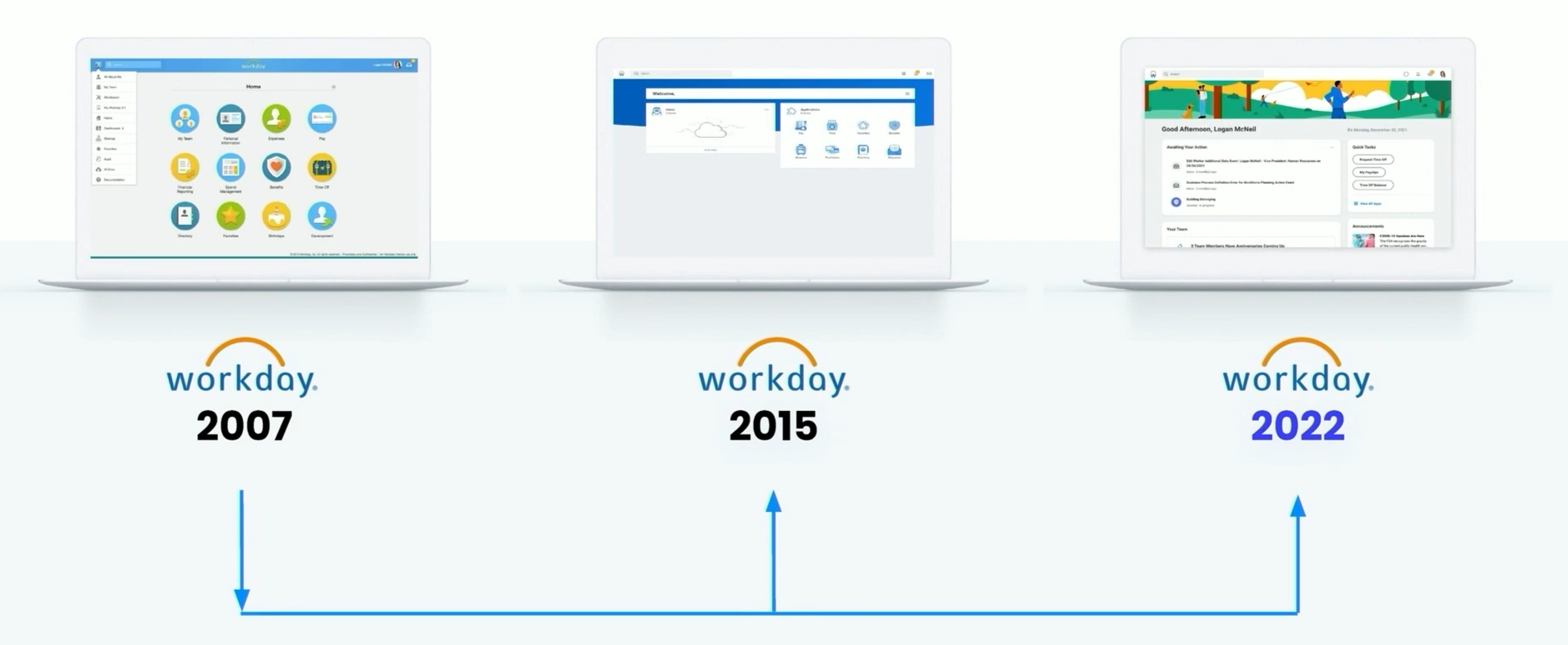
WalkMe's DeepUI interprets application UIs the way a human would, reading visual elements, layout structure, and interaction patterns rather than relying on brittle DOM paths or hardcoded element IDs. When an application updates, DeepUI re-identifies elements by their semantic meaning and visual context.
Source: WalkMe
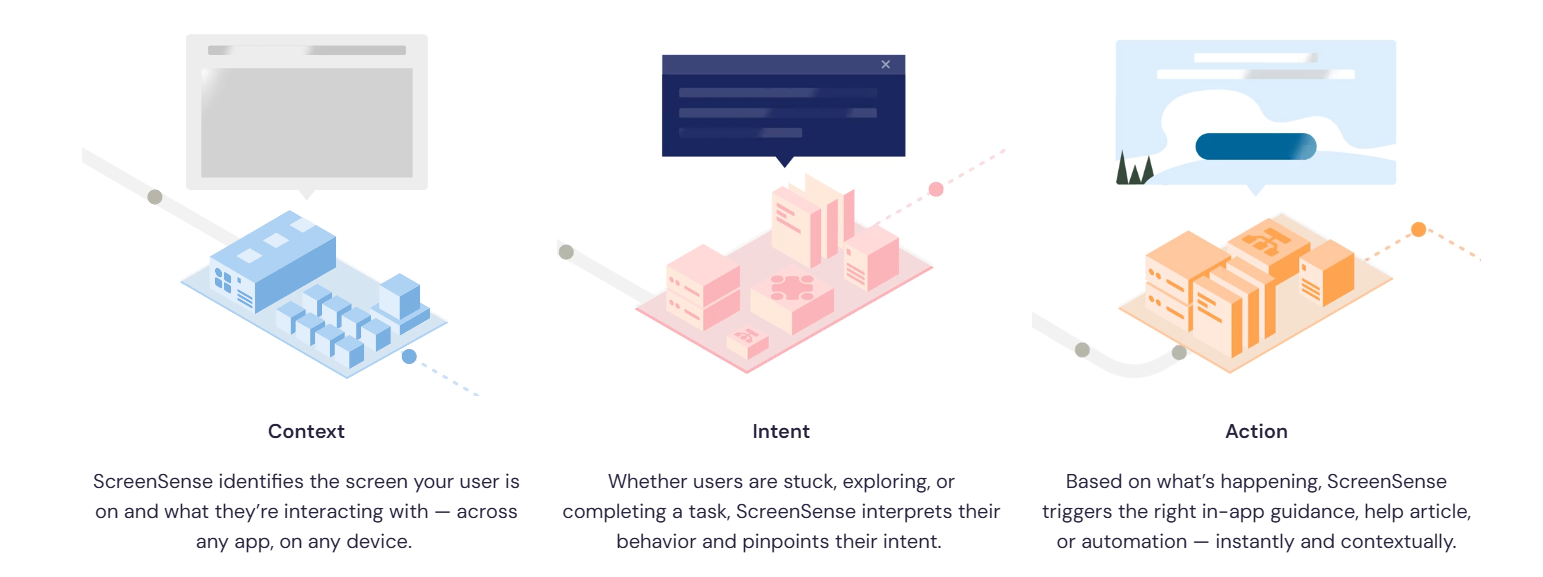
Whatfix's ScreenSense is a patented context-and-intent engine that goes beyond UI element identification. It works on three pillars: detecting which screen a user is on (Context), interpreting whether they are stuck or exploring (Intent), and triggering the right guidance automatically (Action). At the element level, ScreenSense uses LLMs to generate CSS selectors that can identify even weak UI elements. It also adapts to UI changes in position, language, and color.
Source: Whatfix
The difference matters. DeepUI is a maintenance-reduction technology: it keeps existing guidance working after updates. ScreenSense adds an intent layer: it tries to understand why a user needs help and responds accordingly. WalkMe's approach is more proven at scale (years of production use across 35 million users), while Whatfix's is more ambitious in scope (context + intent + action as a single system).
Both platforms layer additional AI on top. WalkMe offers seven AI modules including next-best-action recommendations, writing and reading assistance, and input validation. Whatfix deploys three AI Agents: Authoring (generates content from prompts), Guidance (delivers contextual answers), and Insights (answers analytics questions in natural language).
Content creation and ongoing maintenance diverge
Creating and maintaining in-app guidance at enterprise scale is where most DAP implementations succeed or fail.
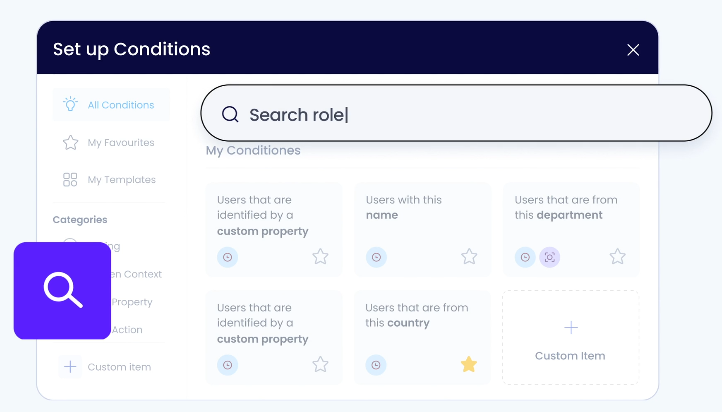
WalkMe's content creation centers on the WalkMe Editor, an Electron-based desktop application paired with a browser extension. Builders point and click on UI elements to define guidance steps, triggers, and conditions. Content types include Smart Walk-Thrus, SmartTips, and ShoutOuts. The system supports branching logic, user conditions, and segmentation rules for multi-path workflows. AI-assisted content building reduces iterative work.
G2 reviewers rate ease of content creation as a top strength but also flag a steep learning curve for advanced configurations. WalkMe recommends a Center of Excellence approach and dedicated internal champions to scale programs.
Source: WalkMe
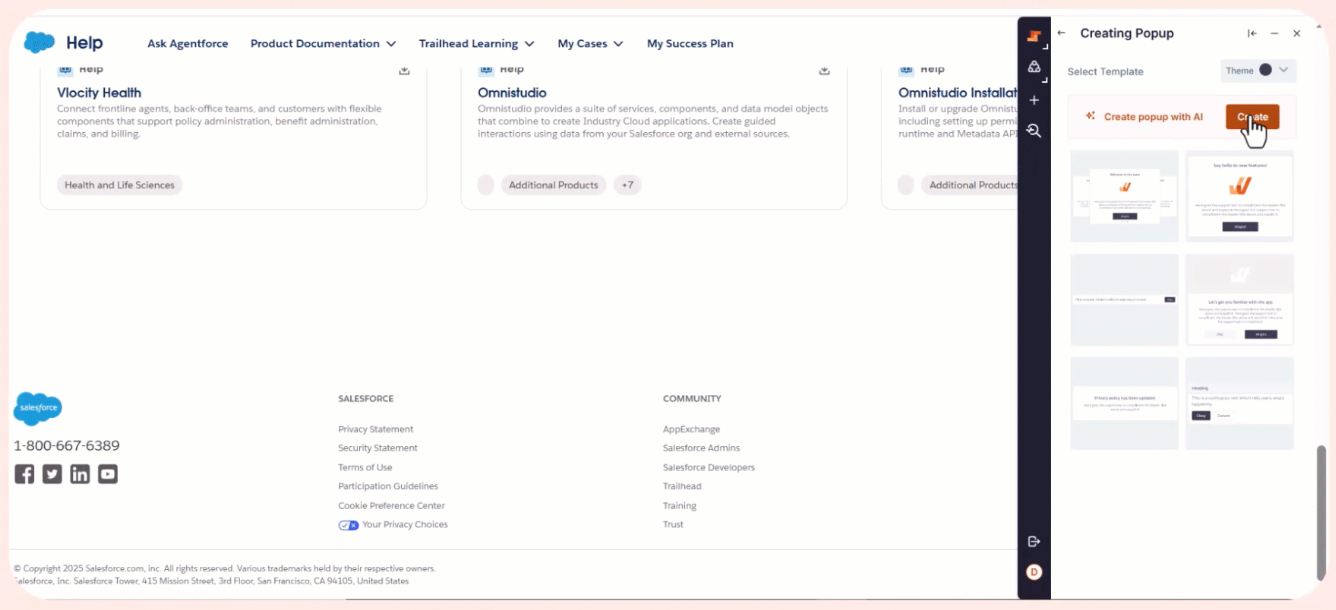
Whatfix's authoring happens in Whatfix Studio, a browser-based no-code editor. A key differentiator: Whatfix generates guidance in multiple output formats simultaneously (interactive walkthroughs, videos, PDFs, slide decks, and how-to articles) from a single authoring session. This matters for organizations that need to feed both an LMS and an in-app guidance system. The Authoring Agent can generate content from natural language prompts and build Flows by recording a single click-through of an application.
Source: Whatfix
On maintenance, both platforms face the same challenge: application updates can break existing guidance. DeepUI gives WalkMe a structural advantage here, adapting guidance when UIs change. Whatfix counters with Auto Testing+, which tests Flows for breakage after updates and sends fix recommendations. However, SoftwareReviews (InfoTech) reviewers note that UI changes still break existing Flows in Whatfix, disrupting onboarding sequences mid-deployment.
Analytics and usage intelligence take different paths
Understanding how employees actually use enterprise software is the foundation for improving adoption. Both platforms invest here, but with different architectures.
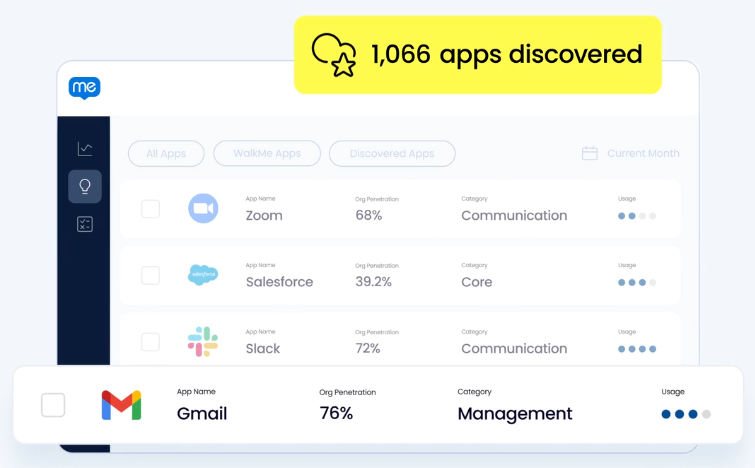
WalkMe's Data pillar includes four sub-products: App Discovery & Analytics, WalkMe Insights (workflow analytics), Form Analytics, and Discovery License Optimization. The system deploys as a browser extension that captures click-by-click behavioral data across all web applications without per-app integrations. This agentless approach discovers shadow IT and unsanctioned AI applications alongside known tools. License Optimization overlays financial data on usage metrics to produce reports showing which licenses to reallocate, eliminate, or expand.
Source: WalkMe
Whatfix's Product Analytics is a separate product within the platform suite. It captures user behavior through AutoCapture, which logs all user interactions without engineering involvement. Analysis tools include Funnels, User Journey maps, Cohorts, Session Replay, and an AI Insights Agent that surfaces patterns via natural-language queries. The Standard Product Analytics plan is free with any DAP Web & Desktop plan, though Premium and Enterprise tiers are separate paid add-ons.
Source: Whatfix
A key architectural difference: WalkMe's analytics are natively integrated with its guidance layer, so insights feed directly into content creation within the same platform. Whatfix achieves a similar loop between Product Analytics and the DAP, letting teams create guidance content directly from the analytics workflow. WalkMe's license optimization feature is a notable distinction, connecting software usage data directly to financial impact.
Training and simulation capabilities
Both platforms address pre-production training, but with different products.
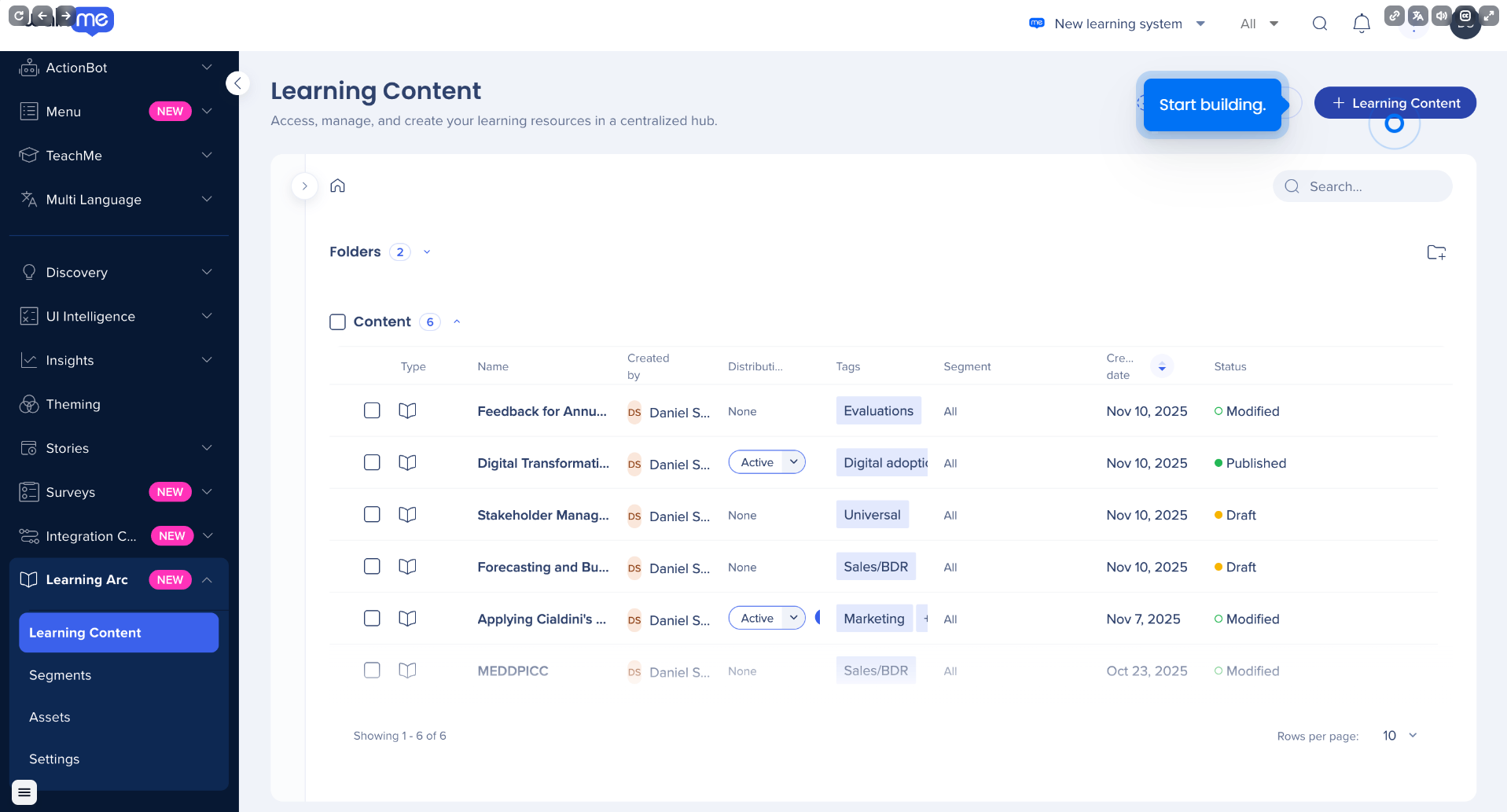
WalkMe launched WalkMe Learning Arc, a digital learning product. Authors can turn prompts into courses and record web sessions to auto-generate interactive simulations. Learning is delivered inside applications, triggered by behavior, role, or task context. Learning Arc is the designated successor to SAP Enable Now, with SAP Enable Now reaching end of maintenance November 30, 2030. This gives Learning Arc a built-in migration customer base across the SAP install base.
Source: WalkMe
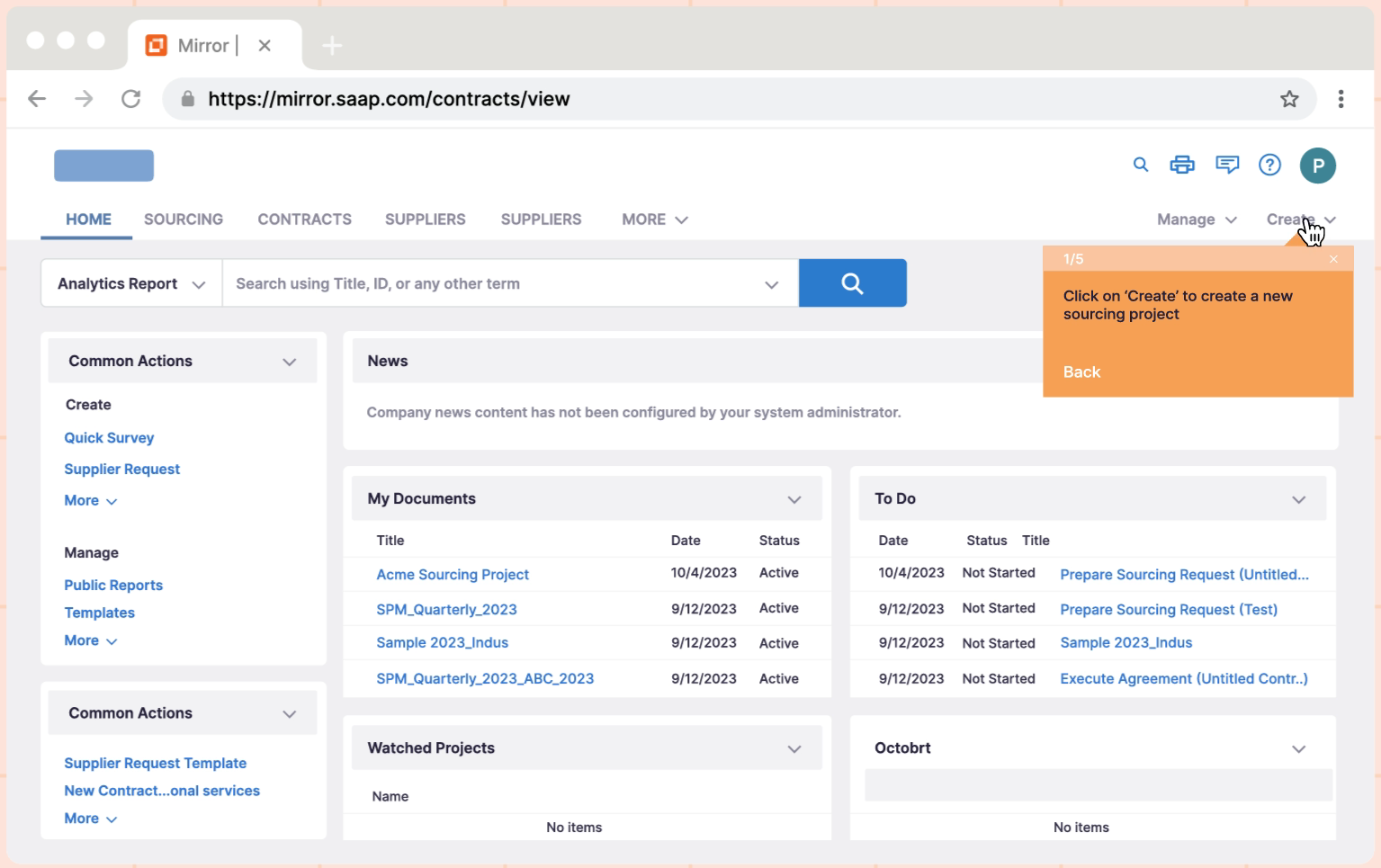
Whatfix offers Mirror, a simulation product that creates an interactive replica of any web application from screen captures. Employees access simulations via a shared web link or LMS integration, without needing to be provisioned into the application. Mirror also supports AI-powered Roleplay, combining simulated environments with conversational AI for scenario-based training. Built-in Assessments track accuracy, completion rates, and time taken.
Source: Whatfix
The practical difference: WalkMe's Learning Arc complements existing LMS infrastructure by delivering learning in the flow of work. Whatfix's Mirror is a standalone sandbox that eliminates the need for separate test environments, particularly valuable for complex ERP or CRM implementations where sandboxes are expensive to maintain.
Adoption solves the "how," but data solves the "what"
Here's the gap neither WalkMe nor Whatfix addresses.
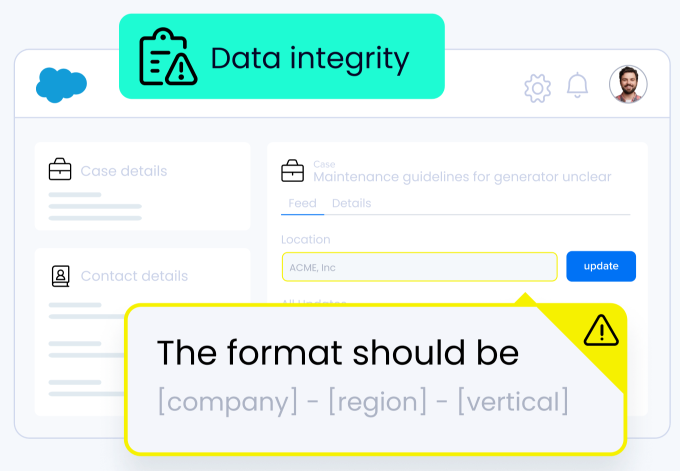
A DAP guides your sales rep through the correct steps to update a deal record in Salesforce. It ensures fields are filled in properly, processes are followed, and data entry errors are caught. Both WalkMe and Whatfix do this well. WalkMe can validate and correct data before submission. Whatfix enforces workflow compliance through in-app alerts and guided flows.
Source: WalkMe
But neither platform can fix the upstream problem: the rep's account list is missing 40% of the buying committee. The contact's phone number is wrong. There's no visibility into whether the account is researching competitors. The CRM data itself is incomplete, not because the rep entered it wrong, but because nobody had the right data to enter.
This is where ZoomInfo enters the picture. While WalkMe and Whatfix optimize how employees interact with enterprise software, ZoomInfo ensures the data inside that software is comprehensive and current.
ZoomInfo's data platform covers 500M contacts, 100M companies, 135M+ verified phone numbers, and 200M+ verified business email addresses, verified through a pipeline backed by 300+ human researchers and reaching up to 95% accuracy on first-party data. In a Fortune 500 competitive RFP analyzing 25 million contacts across vendors, the independent consultant concluded that "no other competitor came even close."
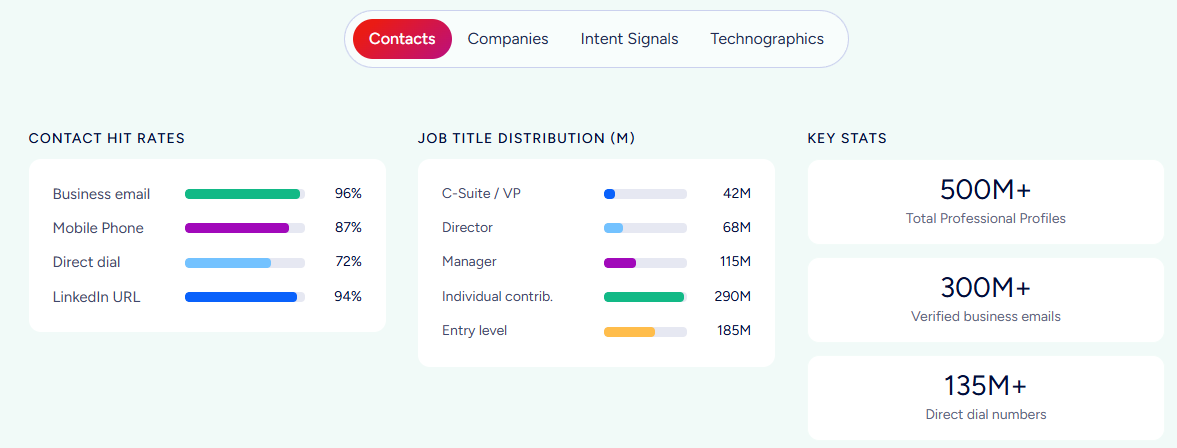
The GTM Context Graph processes 1.5B+ data points daily, fusing ZoomInfo's B2B data with your CRM records, conversation transcripts, and behavioral signals. The result is a layer that captures not just what happened in a deal, but why. Your DAP can guide a rep through the CRM workflow perfectly, but ZoomInfo is what puts actionable intelligence into the fields the rep is looking at.
"That combination of our internal CRM data, external signals, and AI that's given all that context has helped us craft very specific account- and persona-based messages. And people have responded to them right away." (Seismic)
Environment coverage and deployment differ significantly
Where and how a platform deploys matters for enterprises with mixed application estates.
WalkMe deploys across web and desktop applications via its DeepUI technology without requiring source code access. Dedicated support exists for SAP, Salesforce, Workday, Microsoft Dynamics 365, and ServiceNow. Omnichannel DAP extends guidance across web, desktop, and mobile. WalkMe's coverage is broad, but it does not natively support VDI environments.
Whatfix covers web, desktop (Windows/Mac), mobile, and VDI/Citrix environments under a single platform. VDI and offline capability is Enterprise-tier only, but it makes Whatfix one of the few DAPs that can reach employees working in Citrix or Azure Virtual Desktop environments. This matters for healthcare, financial services, and government organizations where VDI is standard.
ZoomInfo operates differently. Rather than overlaying on applications, ZoomInfo feeds data into them. Native integrations include Salesforce, HubSpot, and Microsoft Dynamics 365, with 120+ partner integrations across CRM, marketing automation, sales engagement, and data warehouse categories. For teams building custom tools, APIs and MCP expose the same intelligence to any application or AI agent.
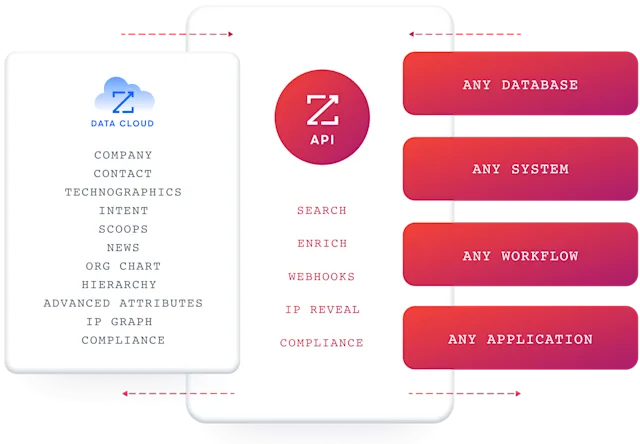
"The plug-and-play aspect of the API means I can integrate it very easily into any process and get information at a moment's notice." (BDO Canada)
Security and compliance certifications
Enterprise buyers in regulated industries compare security postures closely.
WalkMe holds the broadest certification portfolio: ISO 27001:2022, ISO 27701:2019, ISO 27017:2015, ISO 27018:2019, ISO 27799, ISO 27032:2023, SOC 2 Type II, SOC 3 Type II, and CSA STAR. WalkMe achieved FedRAMP Ready status, making it one of very few DAPs qualified for US federal government deployment. WCAG 2.1 AA compliance covers accessibility requirements.
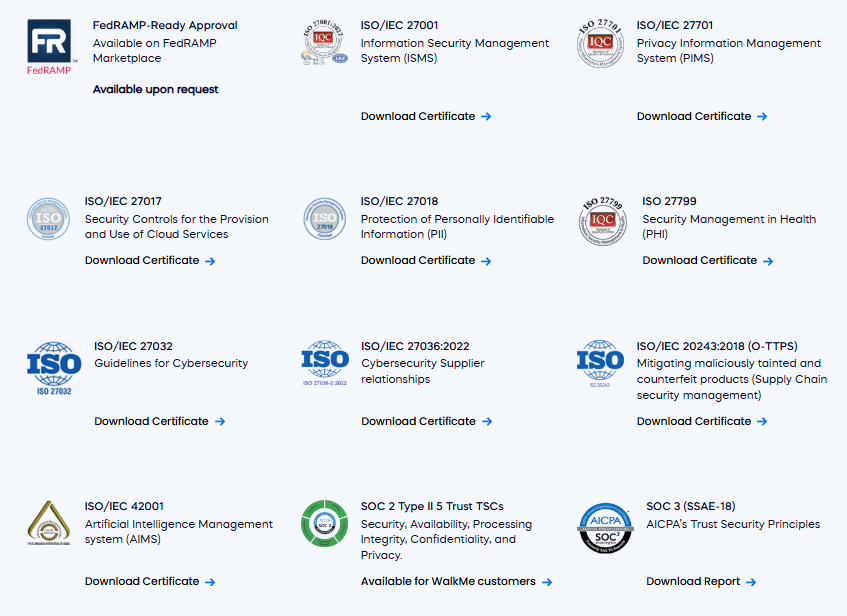
Source: WalkMe
Whatfix holds SOC 2 certification, ISO 27001:2013, and VPAT/Section 508 accessibility certification. Whatfix entered the US federal sector with a US Army PEO-Enterprise deployment covering 1.1 million personnel. Data residency is configurable, and both cloud and self-hosted deployment options are available.
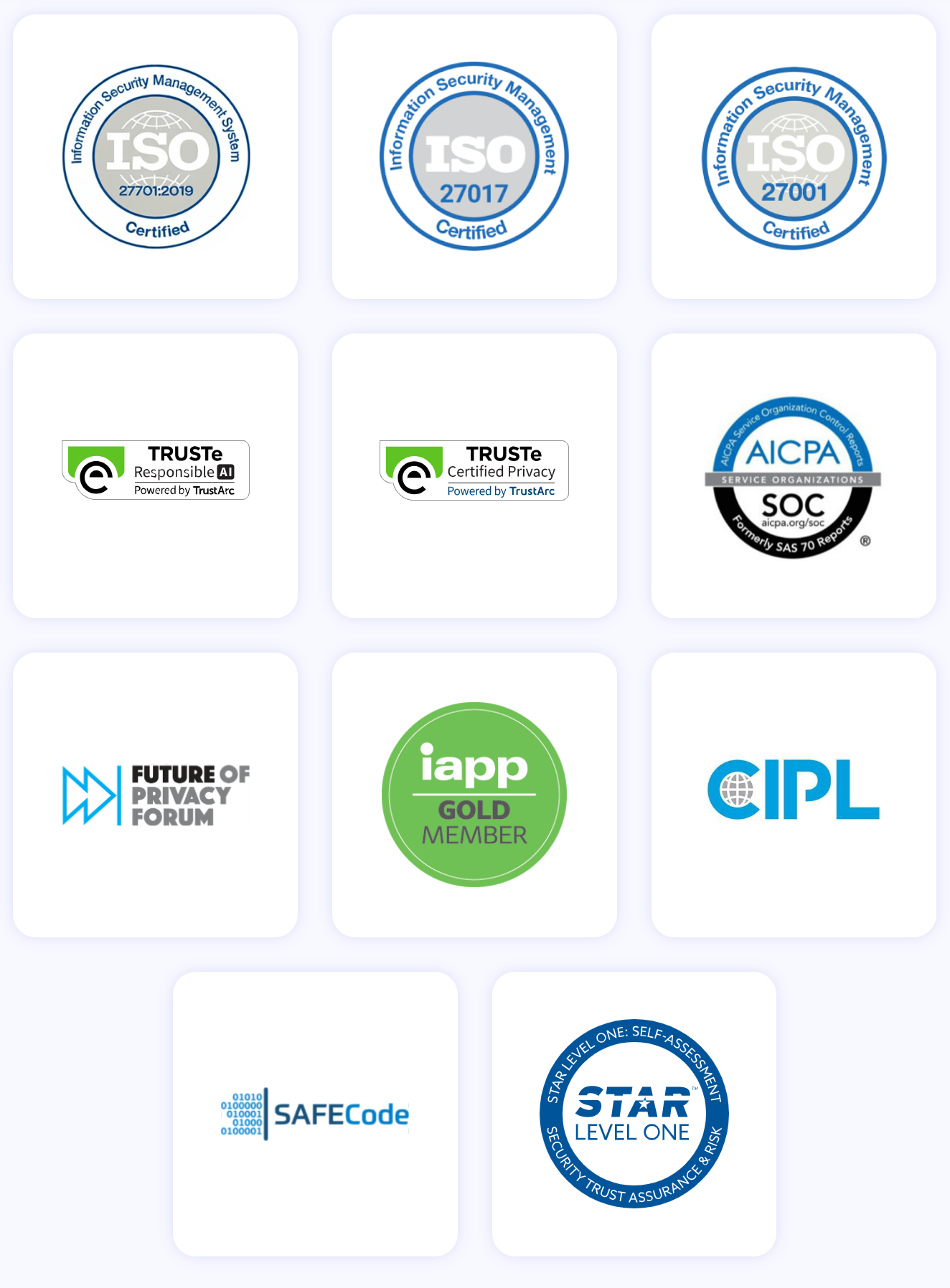
ZoomInfo maintains ISO 27001, ISO 27701, SOC 2 Type II, TRUSTe GDPR, and TRUSTe CCPA certifications, all renewed annually. ZoomInfo is a registered data broker in California and Vermont, reflecting the regulatory requirements specific to B2B data platforms.
WalkMe's FedRAMP Ready status gives it a clear edge for US government deployments. Whatfix's Army deployment signals it's building toward comparable federal certifications. Both platforms offer the baseline certifications (SOC 2, ISO 27001) that enterprise procurement teams require.
Pricing is opaque across the board, but the structures differ
All three platforms require sales conversations for pricing, but the commercial models reflect different priorities.
WalkMe uses a subscription license model based on a negotiated number of users and target applications. Contracts are non-cancelable for the full term, fees are non-refundable except for WalkMe's material breach, and unpaid fees accrue interest at 1.5% per month. Overage fees apply when usage exceeds contracted limits. The pricing page lists no rates, confirming a fully custom model. TrustRadius reviewers consistently cite WalkMe as expensive, with multi-year contracts and add-ons making budgeting difficult.
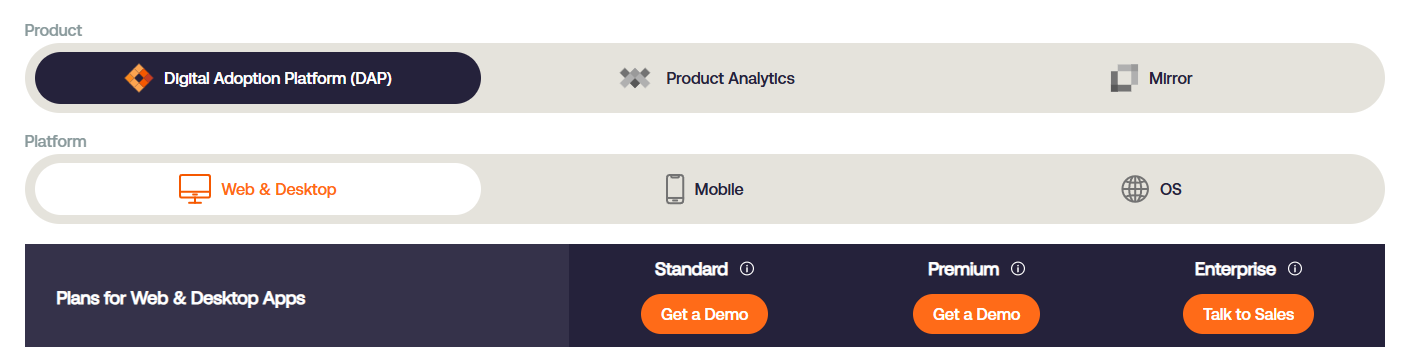
Whatfix uses a hybrid flat-fee plus per-user license model. For employee-facing apps, licenses are based on headcount; for customer-facing apps, they're based on monthly active users. Whatfix publishes three plan tiers (Standard, Premium, Enterprise) with visible feature distinctions, though no dollar amounts appear. A key cost consideration: DAP, Product Analytics, and Mirror are separate products with separate pricing. The Standard plan limits integrations to two and content aggregation to 2,000 articles.
Source: Whatfix
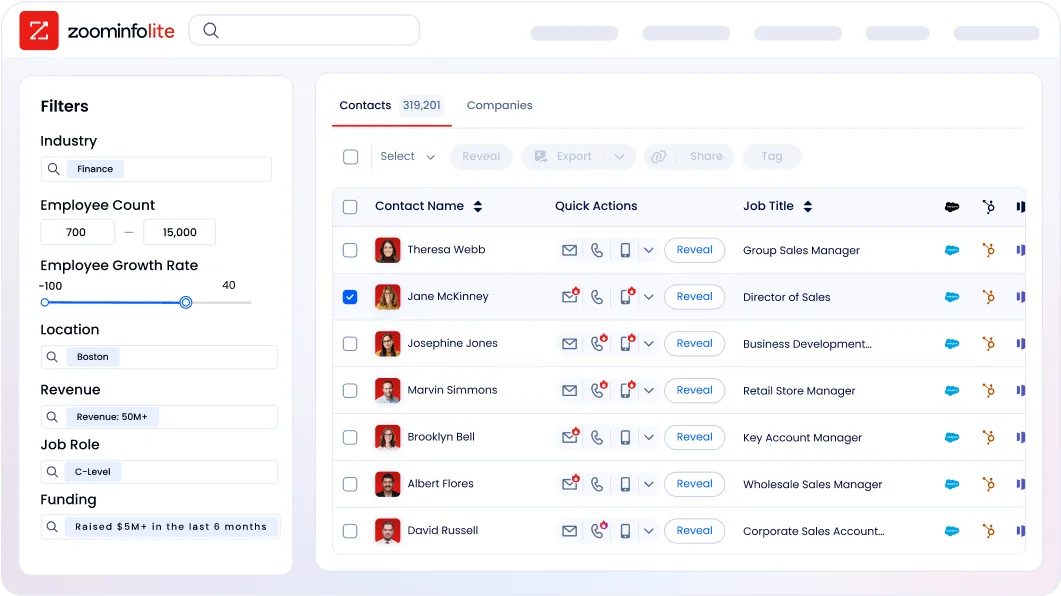
ZoomInfo uses consumption-based pricing where customers pay based on usage (seats, credits, and AI activity). Unlike WalkMe and Whatfix, ZoomInfo offers a permanent free tier: ZoomInfo Lite provides access to 100M+ verified profiles with 10 monthly export credits, a Chrome extension, and basic website visitor identification, at no cost and with no time limit.
WalkMe vs. Whatfix vs. ZoomInfo: Which should you choose?
The choice between WalkMe and Whatfix depends on your technology stack and organizational needs. The choice to add ZoomInfo depends on whether your CRM data problem is as big as your adoption problem.
Choose WalkMe if:
Your enterprise runs primarily on SAP (S/4HANA, SuccessFactors, Concur, Ariba)
You want a DAP natively embedded in your SAP subscriptions
Automatic guidance resilience after application updates is a top priority
You need FedRAMP-certified deployment for US federal environments
You have the budget and internal resources for a dedicated adoption team
Choose Whatfix if:
You run a mixed tech stack (Salesforce, Workday, ServiceNow, custom tools)
Vendor independence matters, and you don't want your DAP tied to SAP's roadmap
You need coverage across VDI/Citrix environments alongside web and desktop
Hands-on simulation training (Mirror) is important for your rollout strategy
Multi-format content output (videos, PDFs, slides from one authoring session) would reduce your training team's workload
Add ZoomInfo alongside either DAP if:
Your CRM suffers from incomplete or outdated contact and company data
Sales reps waste time researching accounts instead of working from verified intelligence
You need buyer intent signals to prioritize which accounts your DAP-trained reps should focus on
You want one platform delivering B2B data, intent signals, and deal intelligence across your GTM stack
Your marketing team needs account-based targeting powered by verified data
See how ZoomInfo's data complements your enterprise software investment with a free trial.
A DAP ensures your team knows how to use the software. ZoomInfo ensures the software has the data worth using. For enterprises investing six or seven figures in CRM and ERP platforms, treating adoption and data quality as separate problems leaves value on the table. The organizations getting the most from their enterprise software are solving both.
"It's not just the data itself. It's more about the right data at the right time to help us reach out with the right message across that full buyer journey." (Redwood Logistics)
WalkMe vs. Whatfix vs. ZoomInfo FAQ
What is the core difference between WalkMe and Whatfix?
Both are Digital Adoption Platforms that overlay on enterprise applications to guide users through workflows. WalkMe is now an SAP subsidiary with native SAP integration and DeepUI technology that adapts guidance when applications update. Whatfix is an independent company offering broader environment coverage (including VDI/Citrix) and a simulation product (Mirror) for hands-on training. WalkMe is strongest for SAP-centric enterprises; Whatfix is strongest for mixed-stack organizations that want vendor neutrality.
How does ZoomInfo relate to WalkMe and Whatfix?
ZoomInfo is not a Digital Adoption Platform. It's a complementary B2B data and GTM intelligence platform. While WalkMe and Whatfix help employees use CRM and enterprise software effectively, ZoomInfo ensures those systems contain accurate, comprehensive data (500M contacts, 135M+ verified phone numbers, and buyer intent signals). Organizations using a DAP alongside ZoomInfo address both adoption and data quality.
Which platform is best for SAP environments?
WalkMe has a clear advantage in SAP. Since SAP acquired WalkMe in September 2024, the platform is embedded natively into SAP applications with a Standard tier included in SAP subscriptions. WalkMe Learning Arc is the designated successor to SAP Enable Now. For organizations invested in SAP, this native integration eliminates the procurement and technical overhead of a third-party DAP.
Which platform has better AI capabilities?
Both DAPs have invested in AI, but with different focuses. WalkMe's DeepUI is proven at scale for automatic guidance maintenance across 35 million users. Its AI also includes writing assistance, input validation, and next-best-action recommendations across seven modules. Whatfix's ScreenSense adds intent detection on top of context awareness, and its three AI Agents (Authoring, Guidance, Insights) handle content creation, user support, and analytics. ZoomInfo's AI operates in a different domain, using a GTM Context Graph that processes 1.5B+ data points daily to reason about deal outcomes and buyer behavior.
Can I use WalkMe or Whatfix with ZoomInfo?
Yes. They serve different functions. ZoomInfo integrates natively with CRMs like Salesforce, HubSpot, and Microsoft Dynamics 365, enriching those systems with verified B2B data. WalkMe or Whatfix then overlays on the same CRM to guide employees through workflows, enforce data quality at the input level, and drive feature adoption. The combination addresses both what data goes into the CRM and how effectively employees use it.
Which DAP is easier to set up and learn?
Both carry a real learning curve for administrators. WalkMe's Editor supports complex branching logic and conditions, which G2 reviewers flag as hard to master initially (34 mentions of steep learning curve). Whatfix's browser-based Studio is built for no-code authoring, but SoftwareReviews scores ease of setup at 8.2 versus a category-leader benchmark of 9.0. Both vendors recommend dedicated internal champions and a Center of Excellence approach for scaling DAP programs.
How do pricing models compare across all three platforms?
All three require sales conversations for pricing, with no published dollar amounts. WalkMe uses subscription licenses based on negotiated user counts and target applications, with non-cancelable multi-year contracts. Whatfix uses a hybrid flat-fee plus per-user model with three tiers (Standard, Premium, Enterprise), and charges separately for DAP, Product Analytics, and Mirror. ZoomInfo uses consumption-based pricing based on seats and credits, but offers a permanent free tier (ZoomInfo Lite) and a 7-day free trial, which neither DAP matches.
What security certifications does each platform hold?
WalkMe has the broadest security portfolio, including FedRAMP Ready status, ISO 27001:2022, ISO 27701, SOC 2 Type II, and CSA STAR. Whatfix holds SOC 2, ISO 27001:2013, and VPAT/Section 508 certification, with a recent US Army deployment signaling federal sector readiness. ZoomInfo maintains ISO 27001, ISO 27701, SOC 2 Type II, and TRUSTe GDPR/CCPA validations. For US federal deployments, WalkMe's FedRAMP Ready status is the key differentiator.
