

Choosing between Whatfix and ProductLed often comes down to five questions:
Are you trying to layer adoption guidance onto existing software, or redesign how users experience your product?
Do you need a technology platform your team deploys and manages, or a consulting engagement that changes your go-to-market motion?
Is your adoption challenge internal (employees struggling with enterprise tools) or external (prospects not converting from free to paid)?
Are you prepared to invest in enterprise software with ongoing licensing, or does a fixed-fee consulting sprint better fit your stage?
Beyond the product experience itself, do you have the data to identify the right accounts before they ever reach your product?
In short, here's what we recommend:
Whatfix is the enterprise digital adoption platform for organizations managing complex, multi-application environments. Its AI-powered guidance, simulations, and usage intelligence sit on top of enterprise software (Salesforce, SAP, Workday, and others) to drive adoption without changing the underlying application.
Whatfix reduces support tickets, accelerates employee onboarding, and proves software ROI at enterprise scale. Its quote-based pricing, technical setup requirements, and enterprise focus make it a heavy lift for smaller SaaS companies focused on customer-facing product growth.
ProductLed is the consulting and education firm for SaaS founders who want to redesign their product experience from the ground up to build a product that sells itself. ProductLed offers structured sprints, an MBA program, and embedded implementation through certified Implementers.
But it serves only SaaS companies past product-market fit, its higher-tier engagements start at $10,000, and outcomes depend on the client's willingness to execute.
Both Whatfix and ProductLed improve what happens after a prospect finds your product. But neither addresses the prior question: how do you find the right prospects? The best onboarding or the most sophisticated in-app guidance produces nothing if the wrong audience reaches your product.
ZoomInfo is an AI-powered go-to-market platform that provides the B2B intelligence both approaches need.
Built on a data foundation of 500M contacts, 100M companies, 135M+ verified phone numbers, and 200M+ verified business email addresses, ZoomInfo's GTM Context Graph combines this data with your CRM records, conversation transcripts, and behavioral signals to show which accounts are in-market and why.
That intelligence flows into the GTM Workspace for sellers, GTM Studio for marketers and RevOps, or any tool via API and MCP. Whether you're guiding users through enterprise software with Whatfix or redesigning your self-serve funnel with ProductLed, ZoomInfo brings the right accounts to your product at the right time.
If feeding your product adoption strategy with qualified, in-market accounts sounds like the missing piece, see how ZoomInfo works.
Whatfix vs. ProductLed vs. ZoomInfo at a glance
Whatfix | ProductLed | ZoomInfo | |
|---|---|---|---|
What it is | Digital adoption platform (software) | PLG consulting and education firm | AI-powered go-to-market platform |
Core approach | Layer in-app guidance onto existing software | Redesign the product experience itself | Identify, enrich, and engage the right accounts |
Primary buyer | L&D, IT, and product teams at large enterprises | SaaS founders and GTM leaders | Sales, marketing, and RevOps teams |
Adoption challenge | Internal (employee) and external (customer) | External (customer conversion and self-serve growth) | Top-of-funnel (finding and prioritizing accounts) |
Delivery model | SaaS platform with ongoing subscription | Fixed-fee consulting sprints and courses | SaaS platform with consumption-based pricing |
Pricing | Quote-based (enterprise) | $497 to $20,000+ per engagement | Custom-quoted; free tier available |
Implementation | Platform deployment + content authoring | 1-week sprint to 12-month engagement | Deploys in weeks |
Best for | Enterprises managing complex software change | SaaS companies building self-serve growth | B2B companies needing go-to-market intelligence |
Technology platform vs. growth methodology: the fundamental difference
Whatfix and ProductLed address overlapping problems from opposite directions. This distinction matters more than any feature comparison.
Whatfix adds a layer.
It takes your existing software and overlays in-app walkthroughs, tooltips, task lists, and self-help widgets on top of it. The underlying application stays the same. Whatfix's value is contextual guidance that helps users navigate software they already use, whether that's a CRM, ERP, or your own SaaS product. Think of it as a GPS for enterprise software: the roads don't change, but users stop getting lost.
ProductLed redesigns the roads.
Instead of adding guidance on top of a product, ProductLed works with SaaS founders to rebuild the onboarding flow, pricing model, and activation experience so the product delivers value without guidance at all.
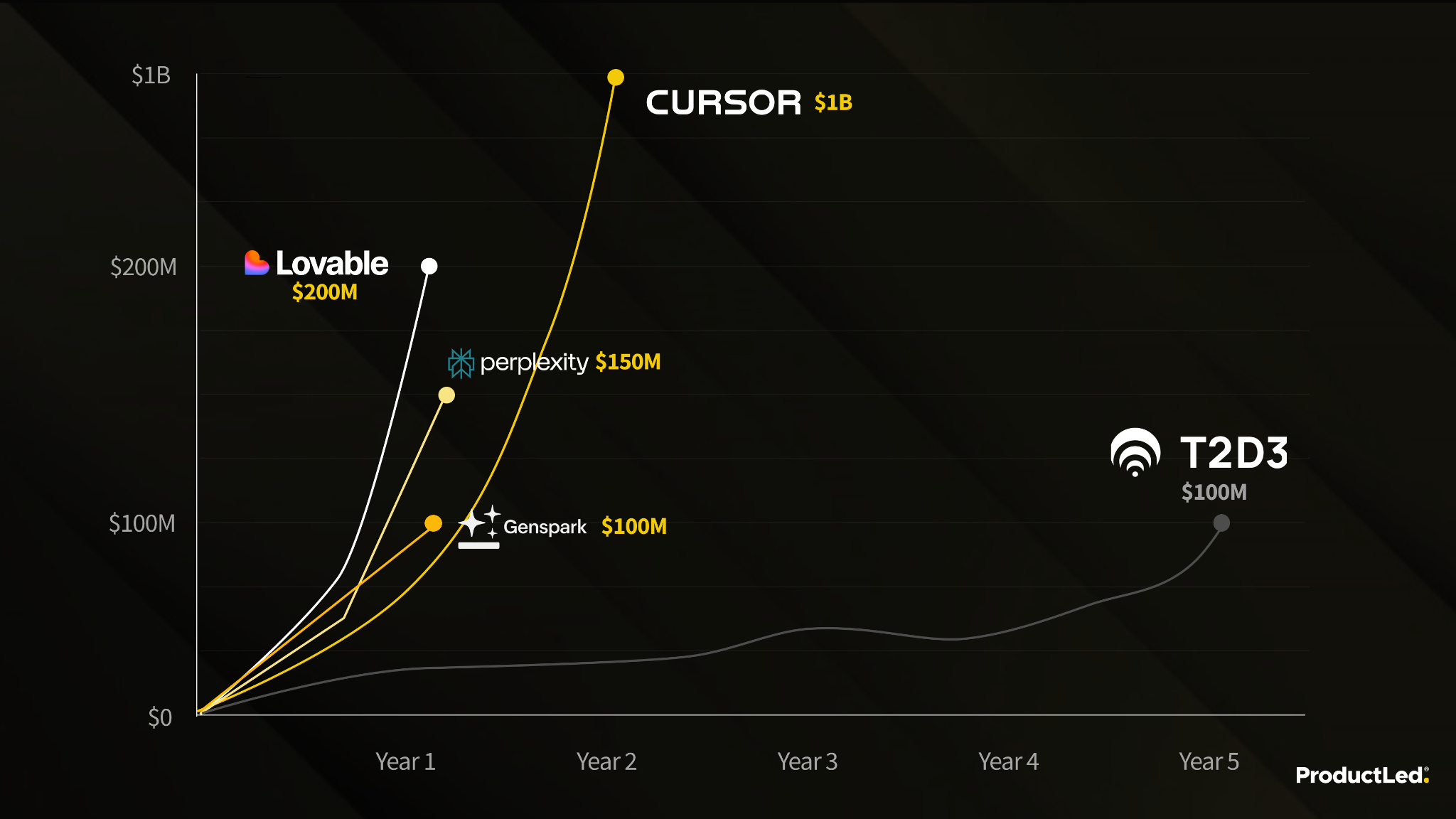
The WARP Framework sets a target: get users to value in 60 seconds, a standard set by companies like Cursor and Gamma. The goal is a product so intuitive that a walkthrough overlay becomes unnecessary.
Source: ProductLed
This difference carries real consequences. Whatfix is a deployment decision. You license the platform, create content, and maintain it alongside application updates. ProductLed is a strategic decision. You hire them to rethink how your product acquires, activates, and monetizes users, then your team executes the redesign.
For an enterprise deploying Salesforce to 10,000 employees, Whatfix makes obvious sense. The application is fixed. The challenge is helping users navigate it. For a SaaS founder whose free trial converts at 2% and wants 10%, ProductLed makes more sense. The challenge isn't navigation. It's the product experience itself.
The confusion arises when a SaaS company with a customer-facing product considers Whatfix for user onboarding. Whatfix can do this (it has product manager solutions and Product Analytics). But adding in-app guidance to a product that fails to deliver value quickly treats symptoms, not causes. ProductLed would argue you should fix the product first, then decide whether guidance layers are still necessary.
Whatfix excels at enterprise software adoption at scale
Where Whatfix separates itself from any consulting methodology is deployment breadth.
The platform covers web, desktop, and mobile environments (including VDI/Citrix) under one platform, so organizations running SAP on desktop alongside Salesforce on web can apply adoption support consistently across their technology stack.
The authoring model is built for scale. Content authors use Whatfix Studio, a no-code browser-based editor that records interactions on a live application to build step-by-step Flows, tooltips, and other in-app elements. Create the content once, and Adoption Everywhere exports it as interactive walkthroughs, videos, PDFs, slide decks, and articles.
For global deployments, auto-translation on Premium plans eliminates manual localization.
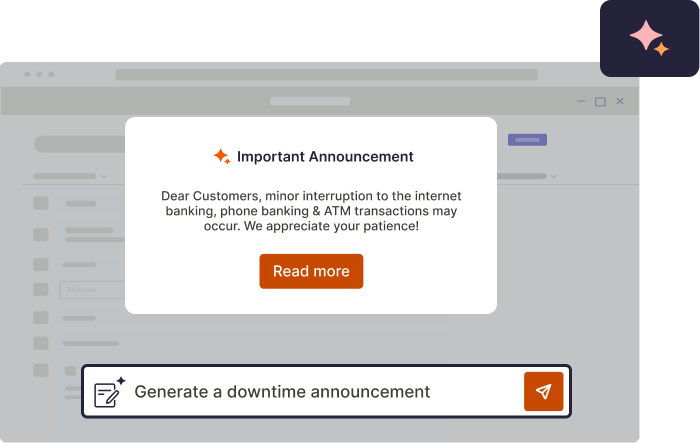
The AI layer adds another dimension. ScreenSense, Whatfix's patented context engine, detects what screen a user is on, interprets whether they're stuck or exploring, and triggers the right guidance.
Three AI Agents sit on top of it: the Authoring Agent generates content from natural-language prompts, the Guidance Agent surfaces contextual answers in the flow of work, and the Insights Agent translates behavioral data into recommendations via natural-language queries.
Source: Whatfix
Analyst recognition reinforces the positioning. Whatfix holds the highest score (5/5) across 15 of 21 criteria in the Forrester Wave Q4 2024, was named Gartner Customers' Choice for DAP for the third consecutive year, and has held the Everest Group PEAK Matrix Leader position for six consecutive years.
The limitations are equally clear. Whatfix is an enterprise tool with enterprise complexity. G2 reviewers and SoftwareReviews flag a steep learning curve, and UI changes in the underlying application can break existing Flows. The pricing opacity (all plans are quote-based with no published pricing) adds friction.
And for SaaS companies whose adoption problem is structural rather than navigational, Whatfix treats the surface while the foundation needs work.
ProductLed excels at strategic product-led transformation
ProductLed doesn't give you a tool. It gives you a methodology, a trained operator, and a deadline.
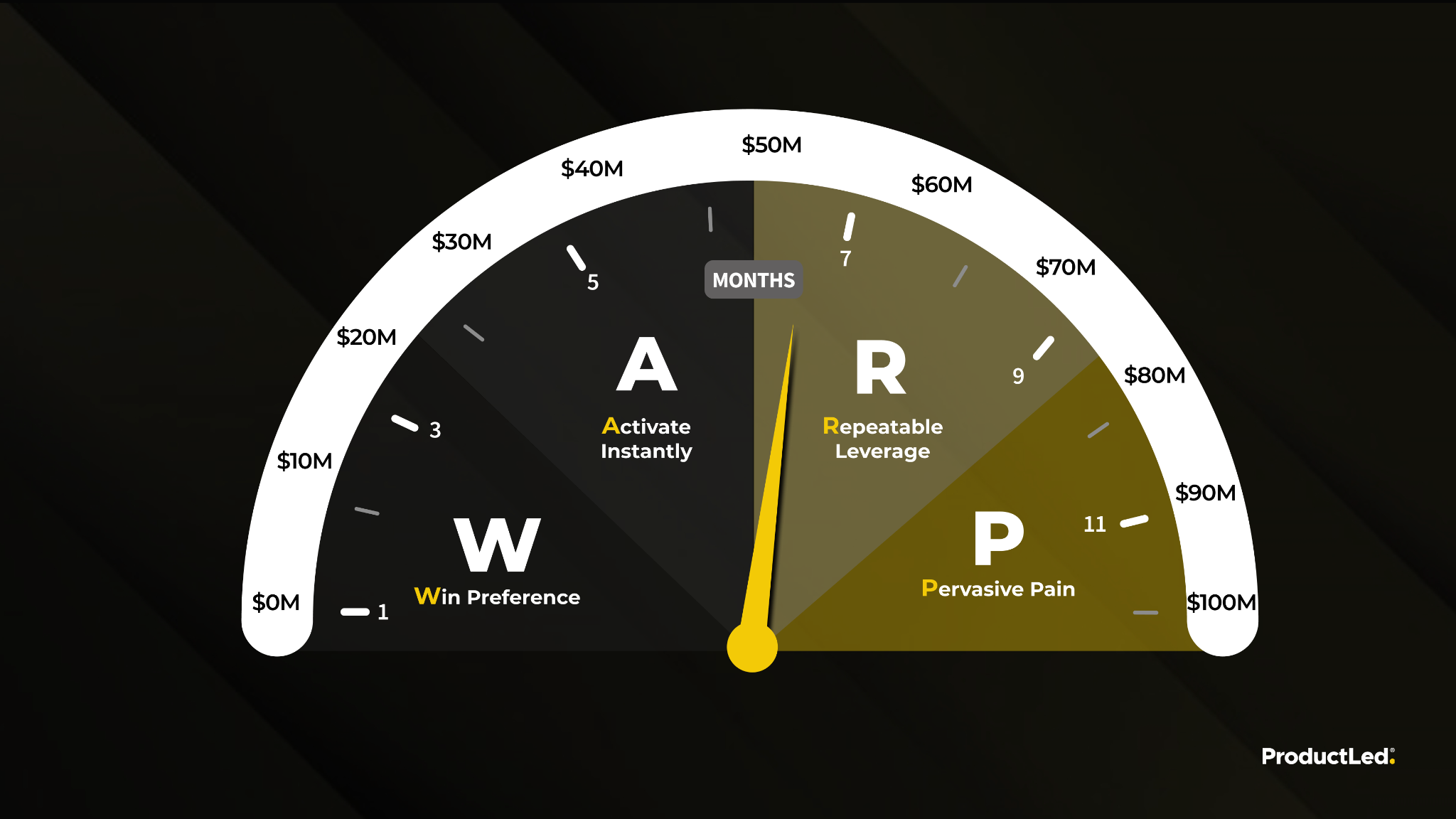
The flagship offering is the WARP Week, a five-day sprint where a SaaS founder works through a structured process to redesign their first-time user experience. The WARP Framework, developed after studying every AI company that reached $100M ARR in under 18 months (Lovable, Cursor, Gamma, Midjourney), sets the benchmark: 60 seconds to value, or you lose.
Source: ProductLed
The sprint process is hands-on. Founders define their product's "first strike" (the earliest moment of real user value), map every step a new user currently takes (typically 40-50 steps where founders estimated "a few"), redesign the path using opinionated defaults, and build a clickable prototype using a Claude AI prototyping project included in the program.
The deliverable isn't a strategy document. It's a working prototype they can demo to their engineering team.
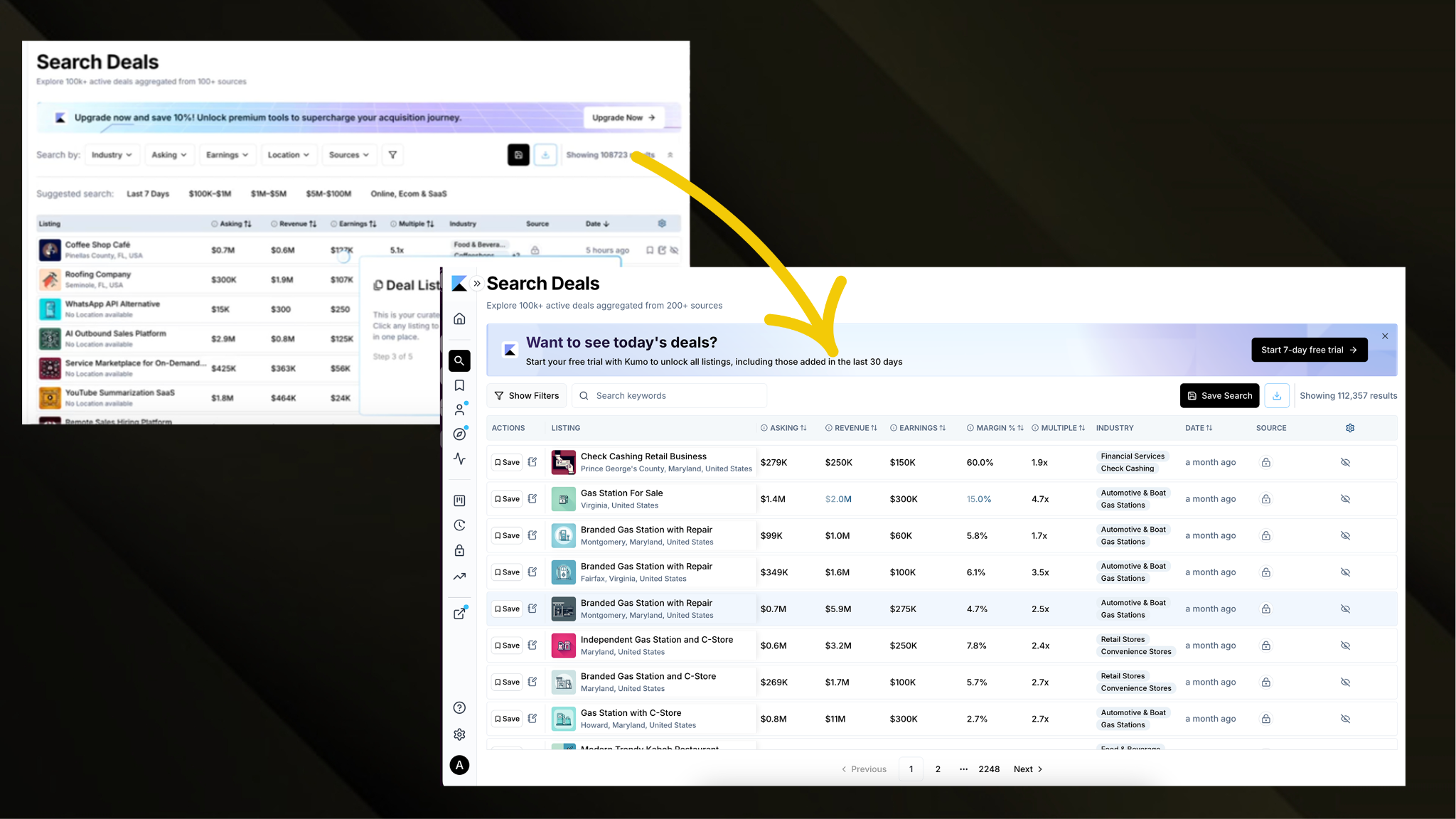
For deeper engagements, Growth Sprints ($10,000 for 2-4 weeks) assign a certified ProductLed Implementer to work on a specific PLG bottleneck: strategy and roadmap, onboarding redesign, or pricing and monetization. The Implementer doesn't just advise. The engagement includes 1:1 sessions, workshops, async 24/7 support, a custom PLG playbook, and production-ready mock-ups.
Source: ProductLed
ProductLed's constraints are structural by design. It serves only SaaS companies past product-market fit.
Finding the right accounts: the problem neither solves
Whatfix optimizes what happens when users are inside your application. ProductLed optimizes what happens when prospects first encounter your product. Neither addresses a prior question: which accounts should encounter your product in the first place?
This gap is measurable.
A SaaS company might invest $10,000 in a ProductLed sprint to double its free-to-paid conversion rate, only to discover that most free signups were never going to buy because they didn't match the ideal customer profile.
An enterprise might deploy Whatfix to guide 50,000 employees through a CRM rollout, then struggle to prove ROI because the sales team still can't identify which accounts to prioritize in that CRM.
This is where ZoomInfo fills a gap in the growth stack.
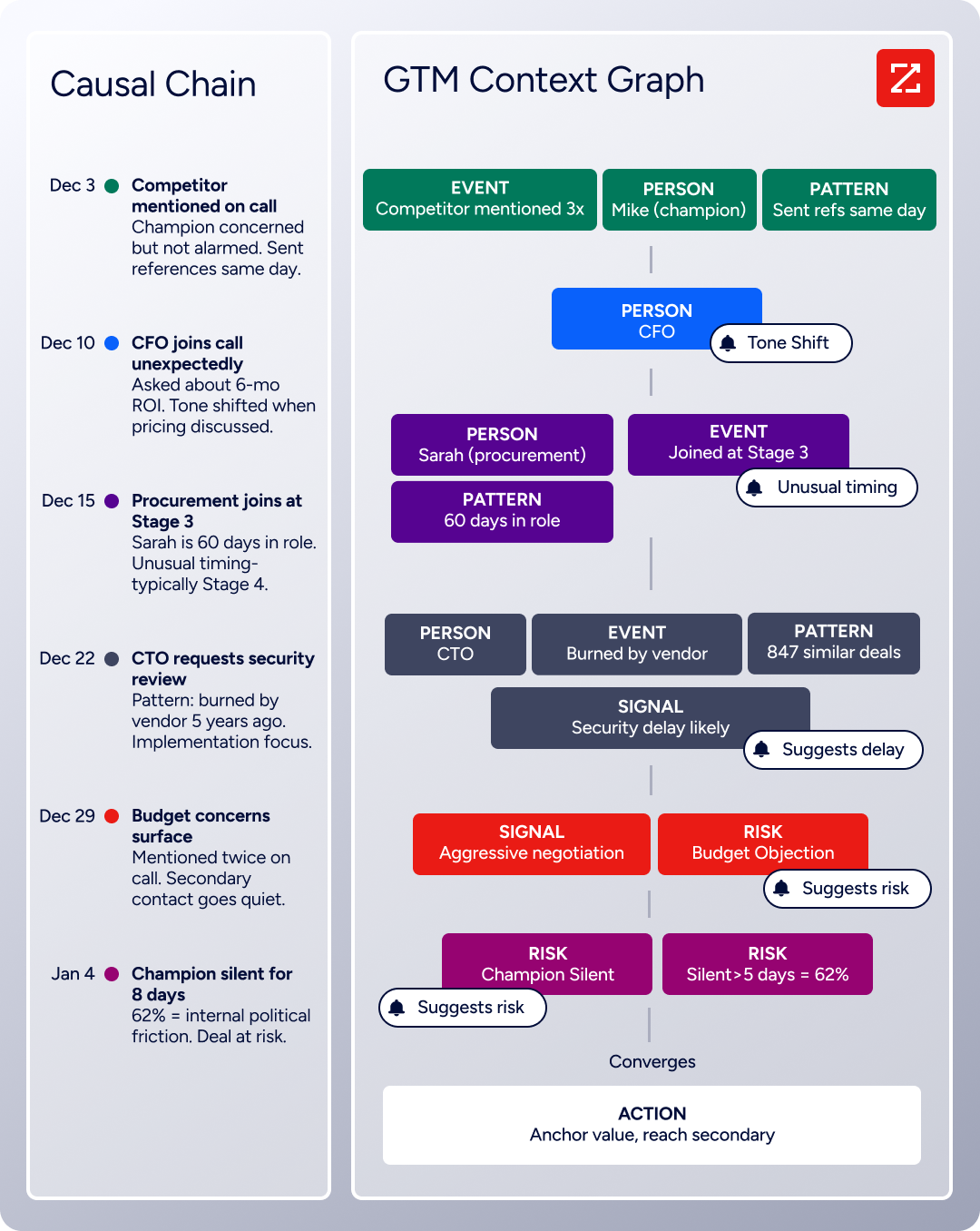
ZoomInfo's GTM Context Graph processes 1.5B+ data points daily, combining the largest B2B dataset with a customer's own CRM records, conversation transcripts, and behavioral signals. The result: an intelligence layer that reveals not just who your buyers are, but which ones are actively in-market and why their deals are moving or stalling.
For SaaS companies running a product-led motion, ZoomInfo's Buyer Intent data tracks signals from 210 million IP-to-Organization pairings and 6 trillion+ keyword-to-device pairings monthly. Guided Intent, exclusive to ZoomInfo, identifies topics historically correlated with deal success rather than requiring manual topic selection.
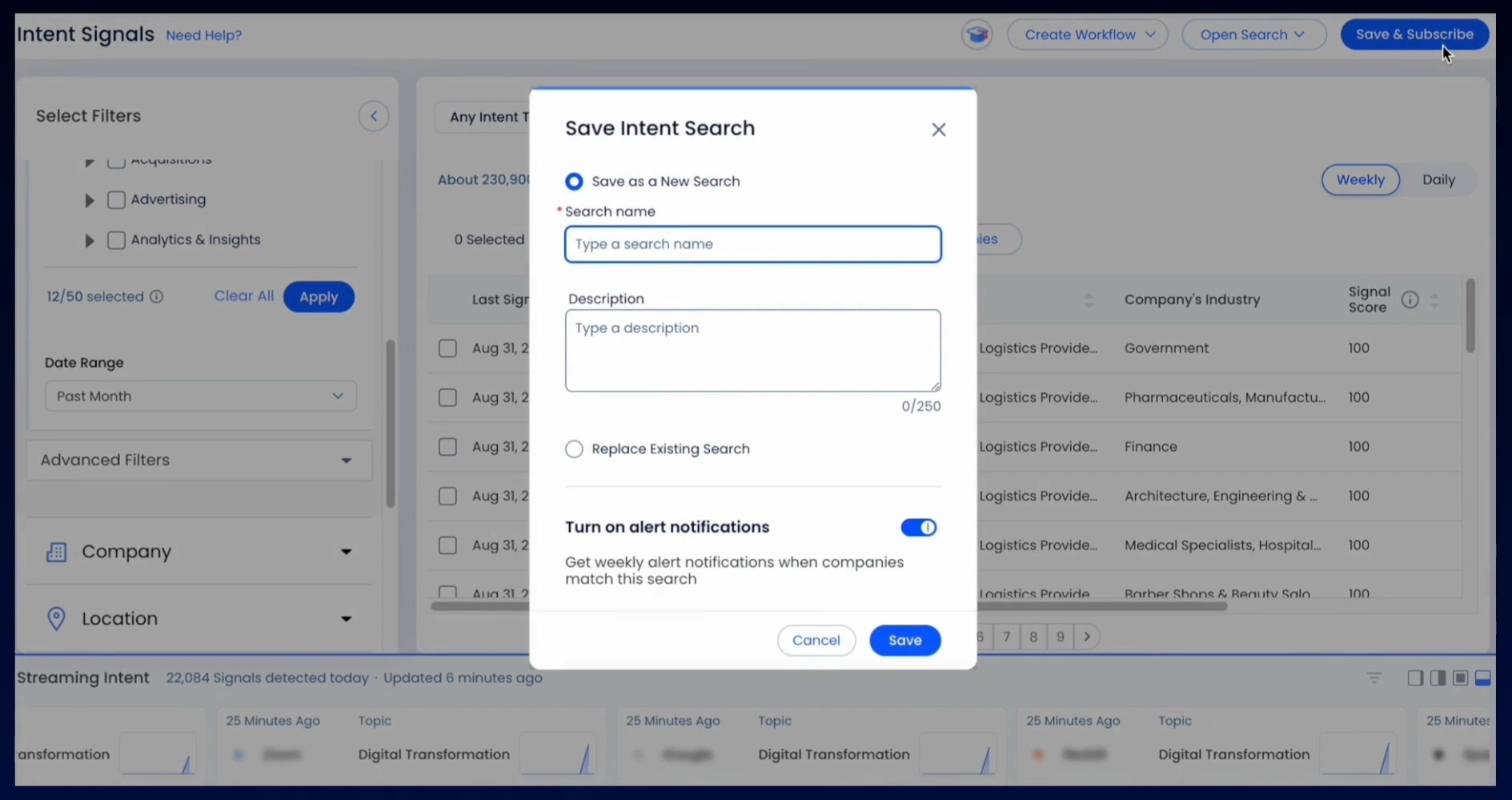
Source: ZoomInfo
That means your PLG motion gets fed with accounts already researching solutions in your space, not random traffic.
For enterprise teams deploying Whatfix, ZoomInfo data enriches the CRM that Whatfix overlays. Sellers using GTM Workspace see prioritized accounts, AI-drafted outreach, and deal execution in one view. Marketers using GTM Studio describe audiences in natural language and launch multi-channel campaigns in minutes. The same intelligence is available via API and MCP inside any third-party tool.
The proof is in customer outcomes. Seismic's sales team attributed 39% of active pipeline to opportunities identified or influenced by ZoomInfo signals, reported 54% productivity gains, and saved 11.5 hours per week per seller.
"That combination of our internal CRM data, external signals, and AI that's given all that context has helped us craft very specific account- and persona-based messages. And people have responded to them right away." (Toby Carrington, CBO, Seismic)
How each approach handles the adoption lifecycle
The adoption lifecycle for any B2B product has three stages: find the right accounts, get them to value, and expand the relationship. Whatfix, ProductLed, and ZoomInfo each own a different stage.
Stage 1: Finding and engaging the right accounts.
Neither Whatfix nor ProductLed operates here. This is ZoomInfo's territory. The platform's Contact & Company Search gives teams access to 300+ company attributes for market segmentation, including department org charts with decision-makers' direct dials and emails. WebSights resolves anonymous website traffic to companies with buying team identification, separating real visitors from bots.
"ZoomInfo is our one source of truth for account data, and even more so for contact data. There's no other provider in the market that provides you with that level of detail." (Thor Sanderson, Senior Manager of Sales Technology Enablement, Smartsheet)
Stage 2: Getting users to value.
This is where Whatfix and ProductLed compete. Whatfix approaches it with technology: overlay in-app guidance, detect where users struggle via Product Analytics, and let users practice risk-free in Mirror simulations.
ProductLed approaches it with strategy: redesign the onboarding experience, set opinionated defaults, eliminate unnecessary steps, and restructure pricing so the path to value is obvious.
The right choice depends on the nature of the friction. If users understand what your product does but struggle with complex workflows, Whatfix's contextual guidance solves the problem faster than a full product redesign. If users never reach value because the product demands too many decisions before delivering an outcome, ProductLed's methodology addresses the root cause.
Stage 3: Expanding the relationship.
ZoomInfo's GTM Context Graph feeds expansion plays by detecting signals like technology changes, funding events, and executive hires at existing accounts.
Whatfix's Product Analytics identifies underused features and surfaces in-app nudges to drive feature adoption.
ProductLed's pricing and packaging work (available through Growth Sprints) optimizes the upgrade path from free to paid.
The strongest growth stacks don't pick one. They combine the right intelligence (ZoomInfo for finding accounts) with the right product experience (ProductLed or Whatfix for delivering value) and let each tool handle its stage.
"ZoomInfo has literally changed the way we go to market." (Jeremy Melius, Sr. Director of Marketing Operations, Impartner)
Pricing reveals different investment models
The cost comparison between Whatfix and ProductLed is less apples-to-oranges and more like comparing a car lease to a driving school.
Whatfix uses a hybrid flat-fee plus per-user license model. No prices are published. The platform sells as three separate products (DAP, Product Analytics, Mirror), each with Standard, Premium, and Enterprise tiers. Mobile and desktop are priced separately.
Product Analytics Standard is free with any DAP plan, but Premium and Enterprise analytics cost extra. The Standard plan caps integrations at two and content aggregation at 2,000 articles. This is an ongoing expense that scales with user count and product breadth.
ProductLed uses fixed-fee, project-based pricing with full transparency:
Program | Price | Duration |
|---|---|---|
$497 | ~1 week | |
$997 | ~1 week | |
$997 | Self-paced, lifetime access | |
$5,000 | 8 weeks | |
$10,000 | 2-4 weeks | |
$20,000 | 3 days | |
Custom | 6-12 months |
ProductLed backs its consulting engagements with an ROI guarantee, conditional on client implementation. The ProductLed MBA includes a 7-day, 100% money-back guarantee.
The investment logic differs.
Whatfix is the infrastructure you maintain. ProductLed is expertise you absorb. A $10,000 Growth Sprint that doubles your free-to-paid conversion rate pays for itself permanently. A Whatfix deployment delivers value continuously but requires ongoing licensing, content creation, and maintenance.
ZoomInfo uses a consumption-based pricing model with custom quotes.
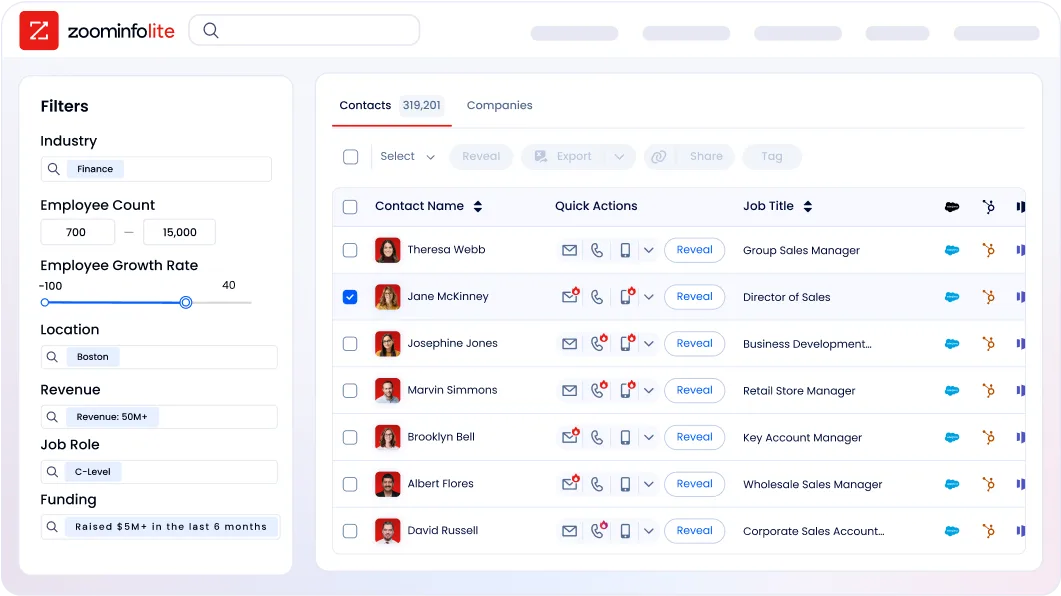
Credits are consumed when exporting data; searching and viewing within the platform is free. Two free entry points exist: ZoomInfo Lite (permanent free tier with 10 monthly export credits and access to 100M+ verified profiles) and a 7-day free trial of the full platform.
Support and resources compared
How each company helps you succeed reveals its operating model.
Whatfix provides 24x5 customer support via Zendesk ticketing, live chat, and email.
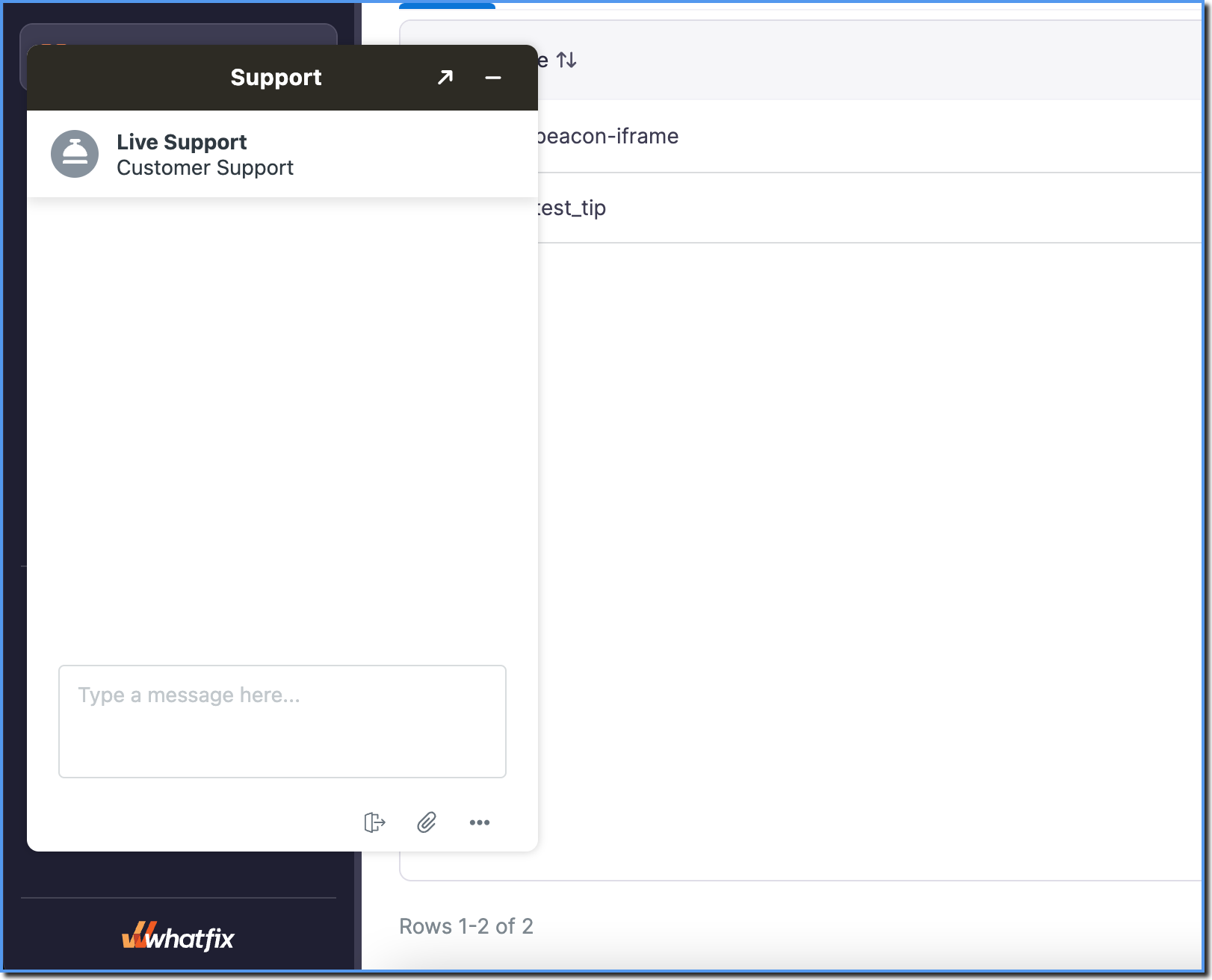
Source: Whatfix
Premium and Enterprise plans include a named Customer Success Manager. Documentation lives at support.whatfix.com with product-specific guides, and Whatfix University offers self-paced training and certification on all plans.
Developer resources include a REST API at developer.whatfix.com and SCORM/xAPI compliance for LMS integration. A 99.5% CSAT score across 700+ customers suggests the support infrastructure works at scale.
ProductLed takes a founder-led support approach.
The MBA includes direct email access to Wes Bush. Growth Sprints come with 1:1 sessions, workshops, and async 24/7 support.
The content library is broad for a consulting firm: three books (Product-Led Growth, Product-Led Onboarding, The Product-Led Playbook), a weekly newsletter to 43,000+ subscribers, the ProductLed 100 Podcast featuring founders like Jason Fried and Nathan Barry, and a Slack community with 21,000+ members.
Free tools include the Val AI Audit Tool (an AI-powered secret shopper that benchmarks your product against 3,247 SaaS products) and eight GPT tools.
ZoomInfo provides support through the Help Center, ZoomInfo University with role-specific learning paths and certifications, and professional services via ZoomInfo Labs.

The Modern GTM Community offers peer-to-peer learning, and direct support is available by phone. Developer documentation at docs.zoominfo.com includes an interactive API reference, OAuth 2.0 guides, and code samples in five languages. ZoomInfo's 90-day onboarding program won Rocketlane's Golden Comet award for Best Customer Onboarding Team of 2024.
Whatfix vs. ProductLed vs. ZoomInfo: Which should you choose?
The choice depends on where your growth is bottlenecked.
Choose Whatfix if:
You're deploying or managing complex enterprise software (Salesforce, SAP, Workday, Oracle)
Your adoption challenge is navigational, not structural (users need guidance, not a different product)
You need to support thousands of internal users across web, desktop, mobile, and VDI environments
You want a technology platform your L&D or product team can manage ongoing
Reducing IT support tickets and accelerating employee onboarding are priority metrics
You operate in a regulated industry where workflow compliance and audit trails matter
Choose ProductLed if:
You run a SaaS company past product-market fit with a low free-to-paid conversion rate
Your product experience is the bottleneck, not navigation
You're a founder (or have founder-level authority) willing to make structural changes
You want a time-bound engagement with a defined deliverable, not an ongoing platform
You're building or relaunching a self-serve motion (free trial, freemium, or reverse trial)
Speed matters: you need a prototype or roadmap in days or weeks, not months
Use ZoomInfo alongside either if:
You need to identify which accounts are actively researching solutions in your space
Your sales and marketing teams lack the data to prioritize the right prospects
You want your adoption investment (Whatfix or ProductLed) to reach the accounts most likely to convert
You need verified contact data, buyer intent signals, and account intelligence in one platform
Your GTM team is tired of stitching together multiple data vendors for a complete account picture
Start with ZoomInfo Lite for free, or request a full platform demo.
Whatfix and ProductLed address different sides of the adoption equation, but neither determines who walks through the door. ZoomInfo closes that gap.
The most effective growth stacks pair product experience work (Whatfix for enterprise adoption, ProductLed for PLG strategy) with go-to-market intelligence that sends the right accounts their way. The product experience converts. The intelligence layer decides who experiences it.
Whatfix vs. ProductLed vs. ZoomInfo FAQ
What is the fundamental difference between Whatfix and ProductLed?
Whatfix is a digital adoption platform (software) that layers in-app guidance, analytics, and simulation training on top of existing applications. ProductLed is a consulting and education firm that works with SaaS founders to redesign their product's onboarding, pricing, and activation experience from the ground up.
Whatfix treats adoption as a navigation problem solved with technology. ProductLed treats it as a product design problem solved with methodology.
Which is better for improving SaaS user onboarding?
It depends on where the friction lives. If users understand your product's value but struggle with complex workflows, Whatfix's in-app guidance, tooltips, and task lists address the problem without changing your product.
If users never reach value because the product demands too many steps before delivering an outcome, ProductLed's methodology addresses the structural cause. ProductLed's clients have seen results like a 332% increase in signup-to-trial conversion at KUMO and doubled free-to-paid conversion at Enzuzo.
How does ZoomInfo relate to Whatfix and ProductLed?
ZoomInfo complements both.
Whatfix and ProductLed optimize what happens after a prospect reaches your product. ZoomInfo identifies and prioritizes the right accounts before they arrive, using buyer intent signals from 210 million IP-to-Organization pairings and a B2B database of 500M contacts and 100M companies. The strongest growth stacks combine product experience optimization with go-to-market intelligence.
What does Whatfix cost compared to ProductLed?
Whatfix uses quote-based enterprise pricing with no published rates. It charges a flat fee plus per-user license fees, with separate pricing for its DAP, Product Analytics, and Mirror products.
ProductLed publishes its pricing openly: WARP Week starts at $497, the ProductLed MBA costs $997 with lifetime access, Growth Sprints are $10,000 for 2-4 weeks, and the Fractional Head of PLG is custom-priced for 6-12 month engagements. Whatfix is an ongoing platform cost; ProductLed is a project-based investment.
Can Whatfix be used for customer-facing SaaS products, not just internal enterprise tools?
Yes. Whatfix offers solutions for product managers and customer-facing applications, including Product Analytics for tracking user behavior and in-app guidance for customer onboarding.
However, Whatfix's core strength and most of its case studies center on internal enterprise software adoption (Salesforce, SAP, Workday). SaaS companies focused on self-serve growth should evaluate whether they need guidance on top of the existing experience or a redesign of the experience itself.
Who is ProductLed not a fit for?
ProductLed serves only SaaS companies past product-market fit. Non-SaaS businesses, pre-PMF startups, and companies unwilling to invest in organizational change are excluded. The firm also targets founders specifically, not product managers, because their data showed that founders drove 80% of successful outcomes (they have the authority to implement changes).
Does ZoomInfo offer a free plan?
Yes. ZoomInfo Lite is a permanent free tier (not a trial) with access to the B2B database, 10 monthly export credits, advanced search filters, the ReachOut Chrome Extension, WebSights Lite (up to 10 website visitor reveals per day), and HubSpot integration. A separate 7-day free trial of the full platform is also available with no credit card required.
Which combination works best for a B2B SaaS company?
For most B2B SaaS companies, the strongest combination is ProductLed (to design a self-serve growth motion that converts) plus ZoomInfo (to identify and engage the right accounts with verified data and intent signals). Companies with complex enterprise products that also sell to large organizations may benefit from adding Whatfix to guide users through sophisticated workflows after they've signed up.
More Whatfix comparisons:
