
If you're comparing Workday vs. Salesforce, you may be asking the wrong question.
These two platforms serve different parts of the enterprise. Workday runs your back office: HR, payroll, financial management, and workforce planning. Salesforce runs your front office: sales pipelines, customer service, marketing campaigns, and commerce. Comparing them is like comparing your accounting department to your sales floor. Both matter. They do different jobs.
But the search "Workday vs. Salesforce" points to a real decision: enterprise buyers must choose where to invest, which platform to implement first, and how their technology stack fits together. The deeper questions are:
Is your most urgent need managing your workforce and finances, or managing your customers and revenue pipeline?
Do you have the budget and resources to implement a large enterprise platform, and which one delivers ROI fastest?
How important is it that your people data and your customer data work together?
Are you looking for a system of record for employees or for customers?
Does your go-to-market team have the intelligence it needs to fill the pipeline that both platforms serve?
Here's what we recommend:
Workday is the platform for organizations whose primary challenge is managing people and money. Its cloud architecture spans HR, payroll across 175+ countries, financial management, and planning on a single data model.
More than 65% of the Fortune 500 run workforce operations on Workday, and it has been a Gartner Magic Quadrant Leader for Cloud HCM Suites for 10 consecutive years. But Workday has no CRM, no sales tools, and no marketing automation. If your challenge is winning customers, Workday won't help.
Salesforce is the platform for organizations whose primary challenge is acquiring and retaining customers. As the #1 CRM by IDC market share, Salesforce covers sales, service, marketing, and commerce across 150,000+ companies worldwide.
Its Agentforce AI platform has closed 29,000 deals and resolves 85% of support requests without human escalation. But Salesforce has no payroll, no HR management, and no financial close capabilities. If your challenge is managing your workforce, Salesforce won't help either.
Most enterprises need both. But even with Workday managing your people and Salesforce managing your customers, neither platform solves a critical gap: knowing which prospects to pursue, when they're ready to buy, and what to say when you reach them. That's where ZoomInfo fits in.
ZoomInfo is a B2B intelligence and GTM platform that feeds verified data into Salesforce and across your go-to-market stack. With 500M contacts, 100M companies, 135M+ verified phone numbers, and 200M+ verified business emails, ZoomInfo provides the prospecting data, buying intent signals, and account intelligence that Salesforce doesn't generate on its own.
Its GTM Context Graph (processing 1.5B+ data points daily) fuses this data with your CRM records, conversation transcripts, and behavioral signals to reveal not just what's happening in your pipeline, but why. Sellers access this intelligence through the GTM Workspace, marketers and RevOps teams through GTM Studio, and developers through APIs and MCP in any front end.
If verified data and AI-driven account intelligence sound like the missing piece for your Salesforce CRM, see how ZoomInfo works with your stack.
Workday vs. Salesforce vs. ZoomInfo at a glance
Workday | Salesforce | ZoomInfo | |
|---|---|---|---|
Primary function | HR, Finance, and Planning | CRM, Sales, Service, and Marketing | B2B data, GTM intelligence, and sales execution |
System of record for | Employees and finances | Customers and revenue | Prospects, accounts, and buying signals |
AI platform | Sana (HR/Finance agents) | Agentforce (CRM/Sales agents) | GTM Context Graph (1.5B+ daily data points, account intelligence agents) |
CRM capabilities | None | Leading | Native Salesforce integration |
HR/Payroll capabilities | Leading | None | N/A |
Data foundation | Internal workforce and financial data | Customer interaction data | 500M contacts, 100M companies, 135M+ verified phone numbers, 200M+ verified emails |
Integration approach | 3,000+ connectors via Pipedream | 9,000+ apps on AppExchange | 172+ marketplace integrations, API and MCP access |
Analyst recognition | Gartner MQ Leader, Cloud HCM (10 years) | Gartner MQ Leader, SFA (19 years) | Gartner MQ Leader, ABM Platforms; Forrester Leader, Intent Data |
Pricing model | Custom-quoted, no public pricing | Per-user tiers starting at $25/user/month | Custom-quoted, consumption-based |
Free option | No free plan or trial | Free CRM for up to 2 users | ZoomInfo Lite (free forever) + 7-day trial |
Best for | Enterprises managing complex HR and finance operations | Revenue teams managing customer relationships and sales pipelines | Go-to-market teams that need verified data and account intelligence to fill and accelerate pipeline |
These platforms solve different problems
Workday and Salesforce are not competitors. They occupy different halves of the enterprise.
Workday answers the question: "How do we manage our people and our money?"
It handles the employee lifecycle from recruiting through retirement, runs payroll across jurisdictions, manages financial close and consolidation, and connects workforce planning to financial forecasts. When your CFO needs 60% faster time to close or your CHRO needs to fill positions across 30 countries, Workday is the platform.
Salesforce answers the question: "How do we find, win, and keep customers?"
It tracks every prospect, manages every deal, routes every support case, and runs every marketing campaign. When your CRO needs pipeline visibility or your VP of Service needs to deflect 46% of support cases with AI agents, Salesforce is the platform.
The overlap is minimal. Salesforce doesn't do payroll. Workday doesn't do pipeline management. They connect through Workday Data Cloud's zero-copy connections to Salesforce, and Salesforce lists Workday as a partner on AgentExchange. Most large enterprises run both.
The real question isn't which one to choose. It's which one to prioritize, and what's missing from either one.
Workday dominates the back office
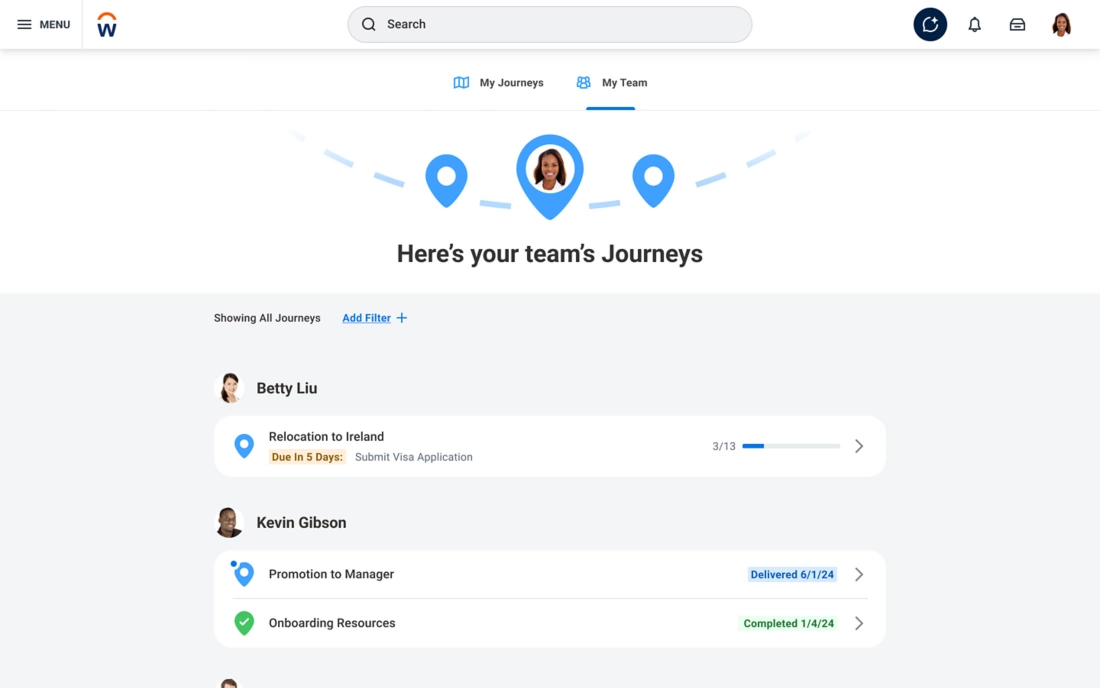
Workday's core strength is its single data model spanning HR and finance.
Where competitors like SAP SuccessFactors assembled their HCM suites through acquisitions (creating visible seams between modules), Workday built everything on one codeline. A compensation change in HR flows into payroll and financial reporting automatically, without integration middleware.
This pays off in several ways. Skills Cloud converts static employee data into dynamic talent maps. Workday Peakon Employee Voice captures real-time employee sentiment and links it to retention risk. Adaptive Planning connects headcount forecasts to financial models, so a hiring plan change instantly updates the budget.
Source: Workday
For global organizations, Workday handles compliance across 175+ countries with localization built into the core system, not bolted on as country-specific modules. Payroll runs natively in the US and extends to 180+ countries through a certified partner network including Deel, CloudPay, and ADP.
The AI layer is sizable. Sana from Workday runs AI agents across HR, Finance, IT, and Legal. The Agent System of Record governs both human employees and AI agents from one place. Workday delivered 1.7 billion AI actions across its platform in FY2026.
Where Workday falls short: no CRM, no sales tools, no marketing automation, no manufacturing or supply chain management. Organizations that need these must integrate separate platforms, which creates the data silos Workday's architecture was designed to eliminate.
Salesforce dominates the front office
Salesforce's advantage is breadth across every customer-facing function.
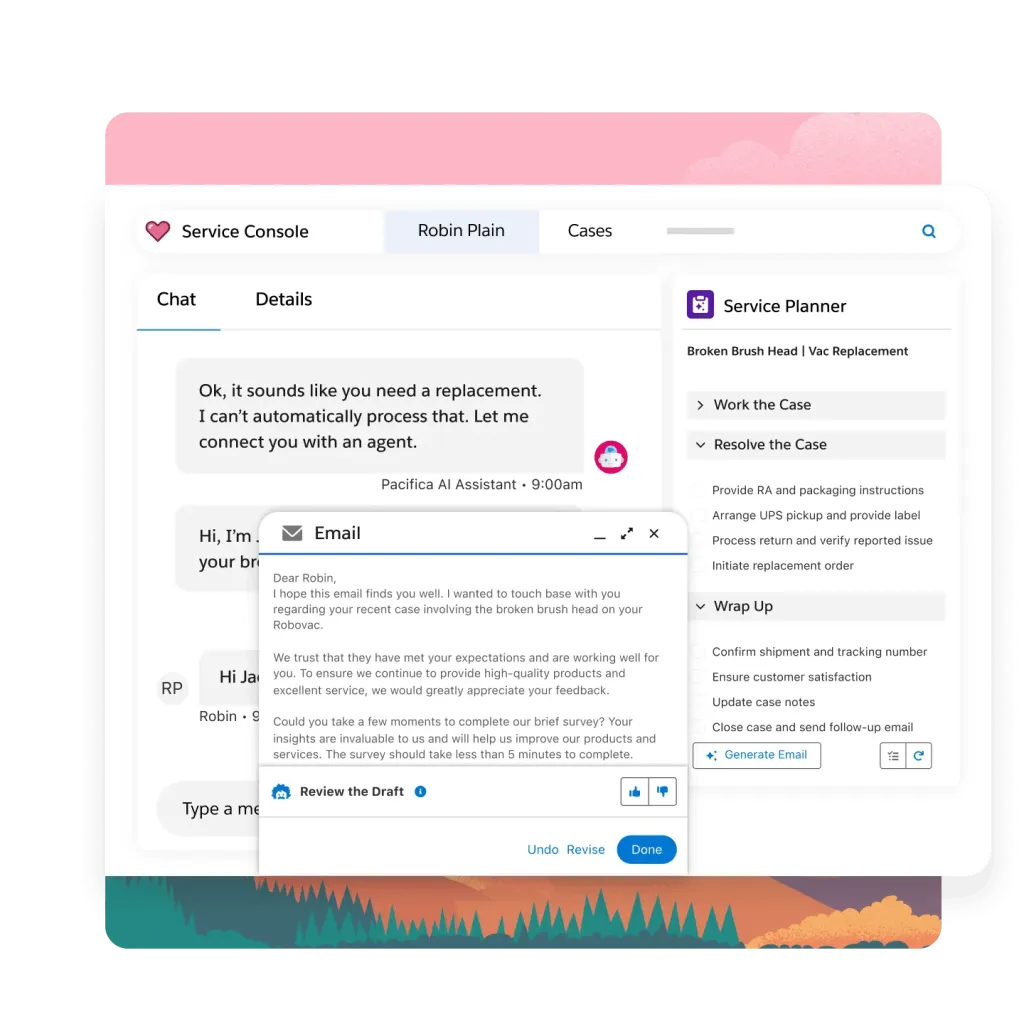
Sales Cloud handles pipeline management, deal acceleration, and AI-powered coaching. Service Cloud covers case management across every channel. Marketing Cloud runs campaigns, personalization, and B2B lead nurturing. Commerce Cloud powers B2C and B2B storefronts serving over two billion shoppers globally.
Source: Salesforce
The structural advantage over point solutions: all these clouds share customer data. A service agent sees the full sales history. A marketer sees which campaigns influenced which deals. A commerce team sees browsing patterns linked to CRM records. This Customer 360 view works without integration because everything runs on one platform.
Salesforce's AI play is Agentforce, which has grown to $800M ARR with 29,000 deals closed. Unlike copilots that require constant prompting, Agentforce agents perceive, plan, and execute on their own. The Atlas Reasoning Engine uses a reason-act-observe-adapt loop that goes beyond fixed response chains.
The ecosystem is large. 9,000+ partner apps on AppExchange, with 14+ million installs and 91% of customers using at least one app. The Trailhead learning platform serves 6+ million learners with 1,500+ badges, making it one of the most thorough developer education programs in enterprise software.
Where Salesforce falls short: no HR, no payroll, no financial management. And while Salesforce manages customer data well once it's in the system, it doesn't generate the verified contact data, direct-dial phone numbers, or buying intent signals that sales teams need to fill the pipeline.
Neither platform tells you who to call next
Here's the gap Workday and Salesforce share: neither helps your go-to-market team identify the right prospects, verify their contact information, or detect when an account is researching solutions.
Workday manages employees. Salesforce manages customers. The prospect sitting between "unknown company" and "new Salesforce opportunity" lives in a blind spot that neither platform addresses.
This is where ZoomInfo changes the equation.
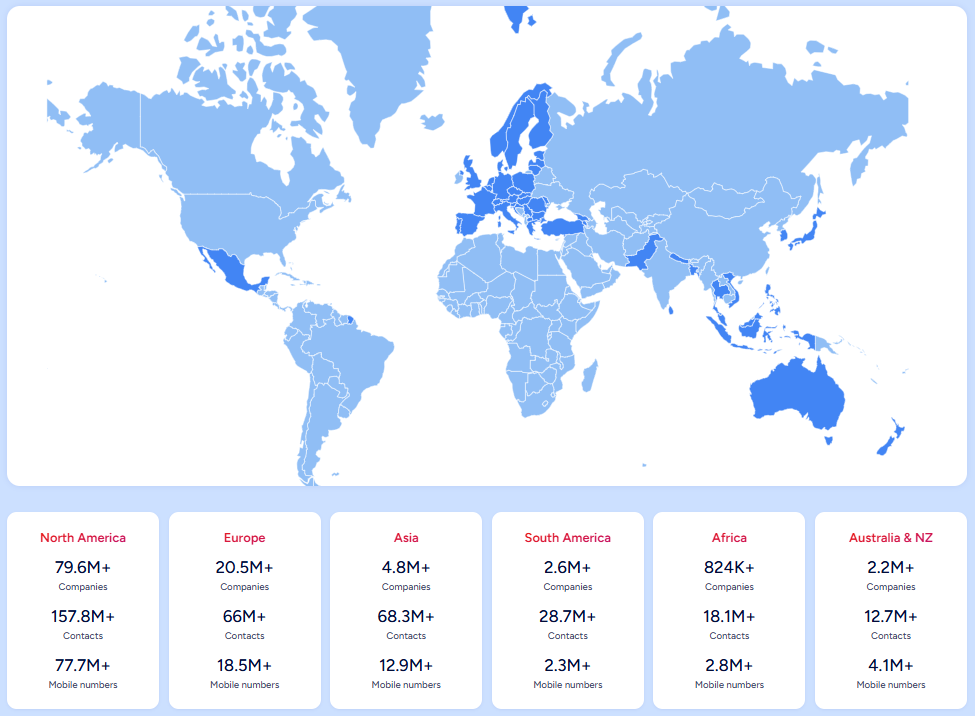
ZoomInfo runs the largest B2B data platform on the market: 500M contacts, 100M companies, 135M+ verified phone numbers, 120M direct-dial phone numbers, and 200M+ verified business email addresses. 300+ human researchers verify this data through multiple sources, reaching up to 95% accuracy on first-party records.
Source: ZoomInfo
Outside analysts confirm the advantage. In a Fortune 500 competitive RFP analyzing 25 million contacts across vendors, an independent consultant concluded that "no other competitor came even close."
ZoomInfo holds 133 No. 1 rankings on G2 across Sales Intelligence, Buyer Intent, Data Quality, and related categories, and is the only vendor in the Customers' Choice quadrant of the 2025 Gartner Voice of the Customer report.
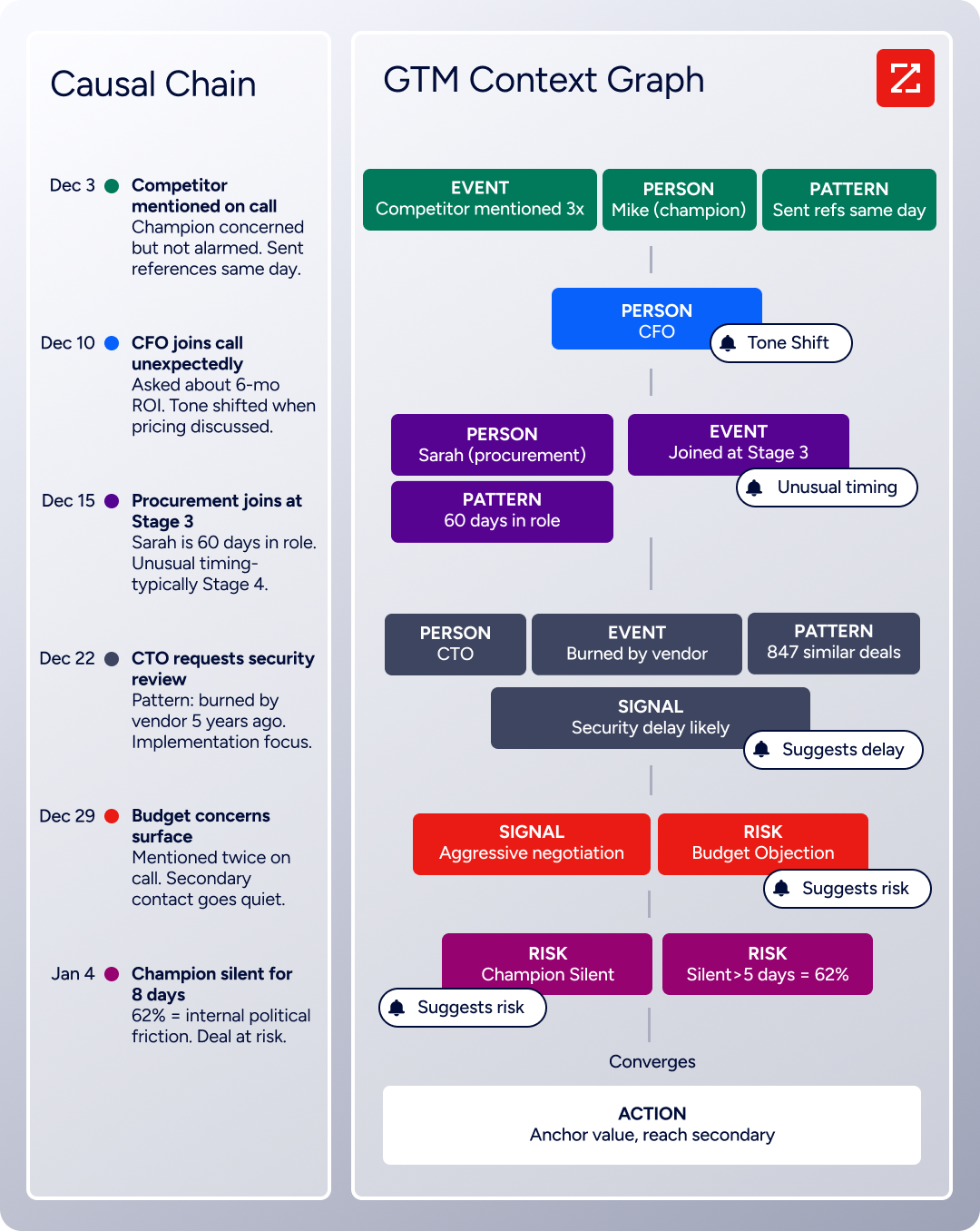
What makes ZoomInfo more than a data provider is the GTM Context Graph. This layer (processing 1.5B+ data points daily) fuses ZoomInfo's B2B data with a customer's CRM records, conversation intelligence from calls and meetings, and behavioral signals. A CRM records that a deal moved stages.
The GTM Context Graph captures why it moved: the CFO joined the last call and asked about six-month ROI, or the VP went quiet for eight days during an internal budget battle. That contextual reasoning feeds every downstream action, from AI-drafted outreach to pipeline forecasting.
Seismic attributed 39% of active pipeline to opportunities identified or influenced by ZoomInfo signals, with 54% productivity gains and 11.5 hours saved per week per seller. (Seismic case study)
How ZoomInfo integrates with Salesforce
ZoomInfo and Salesforce have a native integration.
ZoomInfo is a featured app on the Salesforce AppExchange, and the integration works both ways: ZoomInfo enriches Salesforce records with verified contact data, company intelligence, and buying signals, while Salesforce CRM data feeds back into ZoomInfo's GTM Context Graph to strengthen account intelligence.
For sales teams, Salesforce becomes more useful when ZoomInfo is connected.
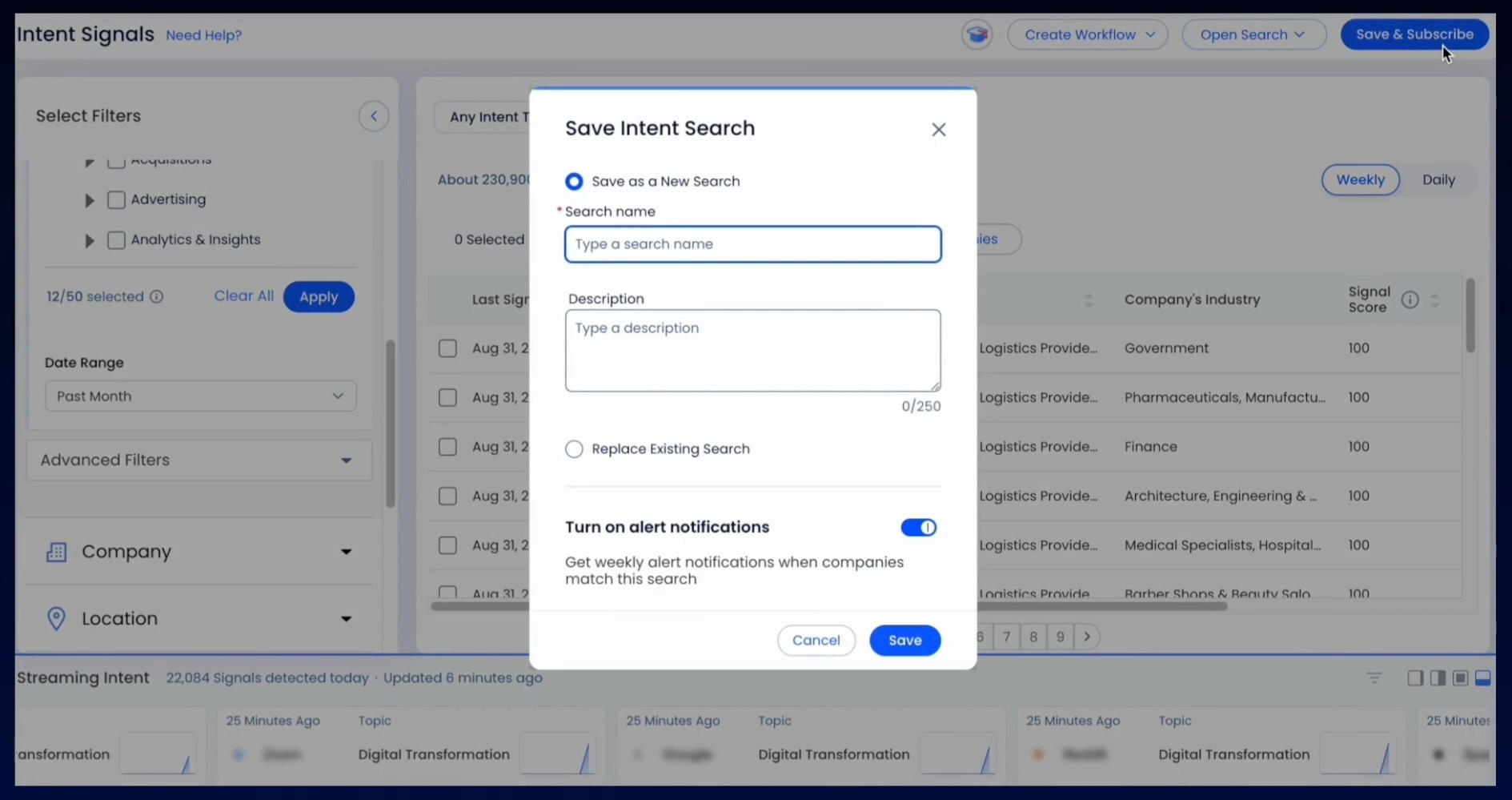
Instead of reps manually researching prospects and entering partial data, ZoomInfo pushes verified emails, direct-dial phone numbers, org charts, technographics, and intent signals into Salesforce records.
Buyer Intent data tracks signals from 210 million IP-to-Organization pairings and 6 trillion+ new keyword-to-device pairings sourced monthly, surfacing which accounts are researching solutions before they fill out a form.
Source: ZoomInfo
For RevOps teams, ZoomInfo's Operations product automates CRM data quality with deduplication, verification, and multi-vendor enrichment. Lead routing runs through round-robin, territory rules, and lead-to-account matching. One customer, Momentive, cut speed-to-lead from 20 minutes to 60 seconds after implementing ZoomInfo's workflow orchestration.
The integration extends beyond the CRM connector. ZoomInfo's MCP server and Enterprise API make the same intelligence available to any AI agent or custom application, so organizations building on Salesforce's platform can embed ZoomInfo data directly into their workflows.
Snowflake uses ZoomInfo for at least one-third of the most critical data features in their Account Propensity Scoring model, feeding over 70 firmographic and technographic data fields. Accounts monitored using ZoomInfo-powered scores showed 90% higher opportunity open rates and 2x higher customer conversion rates. (Snowflake case study)
For a closer look at how Salesforce and ZoomInfo stack up on data quality, AI capabilities, and pricing, see our Salesforce vs. ZoomInfo comparison.
AI strategies reflect different missions
All three platforms have made large AI investments, but each one's AI serves a different purpose.
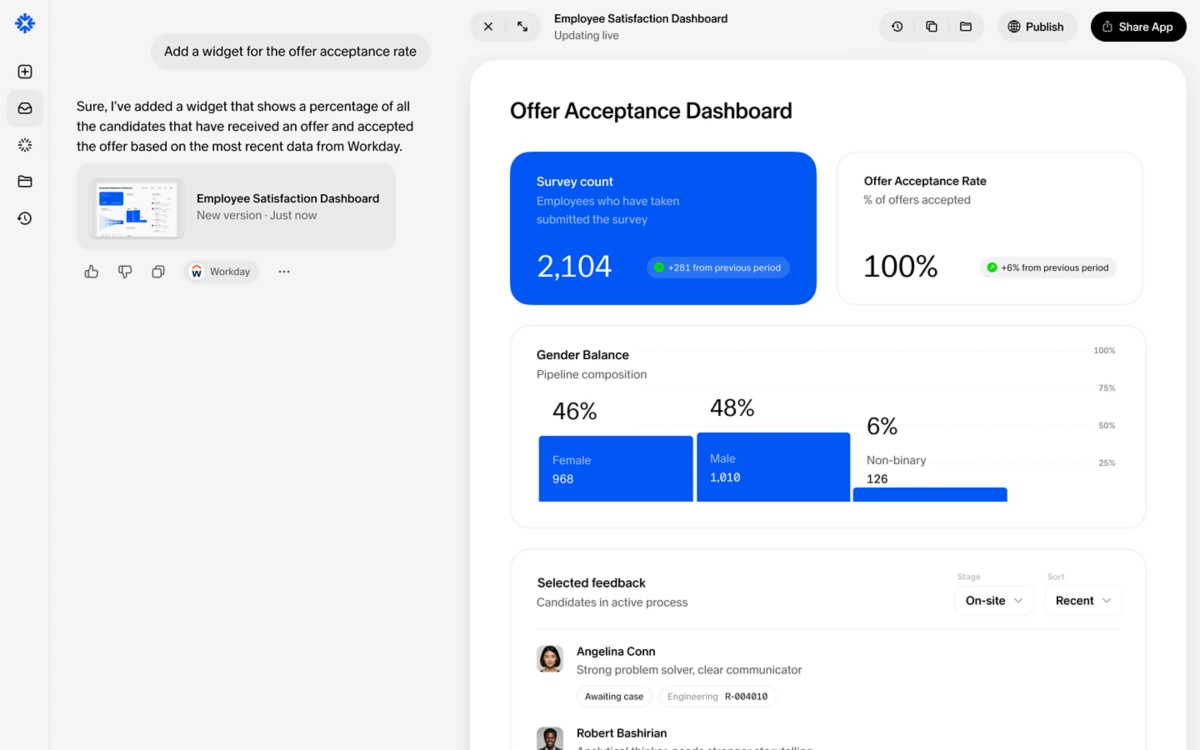
Workday's AI focuses on employees and money.
Sana from Workday runs agents that handle HR self-service, financial close reconciliation, contract review, and workforce planning. The Agent System of Record manages the lifecycle of both human workers and AI agents.
Source: Workday
Salesforce's AI focuses on customers and deals.
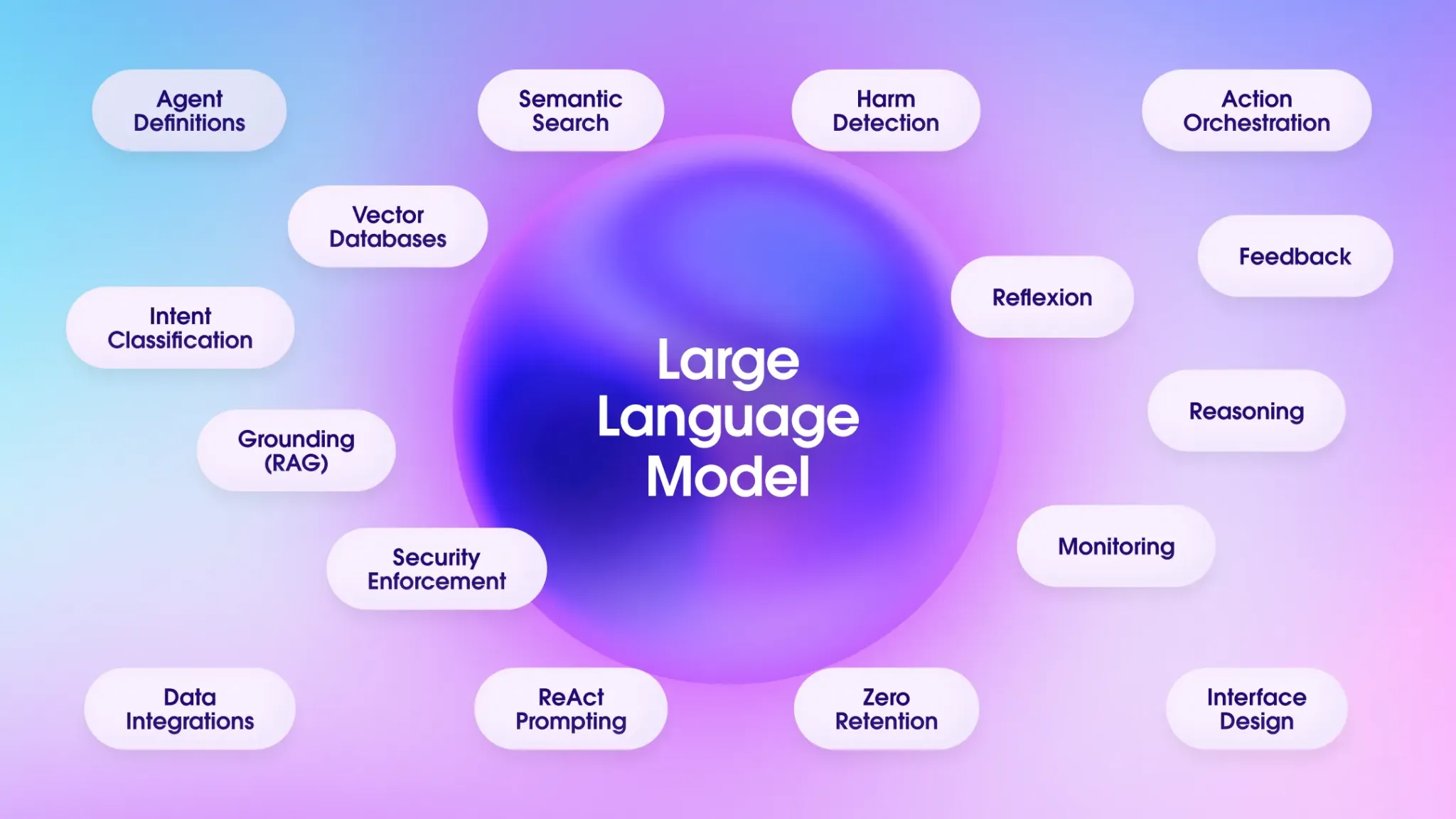
Agentforce deploys autonomous agents across sales, service, marketing, and commerce. The Einstein Trust Layer enforces zero data retention with LLM partners, PII masking, and toxicity detection. Data Cloud has ingested 112 trillion records to ground AI responses in real customer data. Salesforce reports 33% faster meeting prep and a 10% increase in win rates from its own internal deployment.
Source: Salesforce
ZoomInfo's AI focuses on prospects and buying patterns.
The GTM Context Graph reasons across CRM data, conversation intelligence, and third-party signals to identify why deals move or stall. GTM Workspace deploys AI agents that research accounts, generate personalized outreach, monitor signals, and surface next-best actions for sellers.
GTM Studio lets marketers and RevOps teams describe audiences in natural language and launch plays without engineering support.
The distinction matters. Workday's AI makes HR and finance operations more efficient. Salesforce's AI automates customer management. ZoomInfo's AI identifies the right accounts, the right contacts, and the right moment to engage, then gives your team the context to act.
Redwood Logistics achieved a 99% reduction in CPC, a 310% increase in CTR, and saved 20-25 hours per week. "It's not just the data itself. It's more about the right data at the right time to help us reach out with the right message across that full buyer journey," said Chelsea Kenyon, Senior Director of Digital Strategy. (Redwood Logistics case study)
Implementation and total cost of ownership
Enterprise platform investments involve more than license fees. Implementation timelines, partner costs, and ongoing administration shape the true cost.
Workday does not publish pricing.
All contracts are custom-negotiated. Implementation costs typically run 2.5-3x the annual subscription once you factor in partners, training, and change management. Organizations with 20+ required integrations should budget $500,000-$1,000,000 for integration costs alone.
Workday offers three deployment packages: Launch Now (10-16 weeks for US SMBs), Launch Express (10-20+ weeks), and Launch Flex (27+ weeks for global enterprises). Workday sells training separately, and TrustRadius reviewers call it "expensive and not easy to access."
Salesforce publishes list prices, though enterprise deals are typically negotiated.
Sales Cloud tiers range from a Free Suite (max 2 users) to $550/user/month for Agentforce 1. But the sticker price tells only part of the story. Agentforce consumption costs $2 per conversation or $500 per 100,000 Flex Credits. Data Cloud credits run $500 per 100,000. The Premier Success Plan adds 30% of net license fees. And over 70% of implementations are partner-led, adding external costs.
ZoomInfo uses custom-quoted, consumption-based pricing with no published dollar amounts.
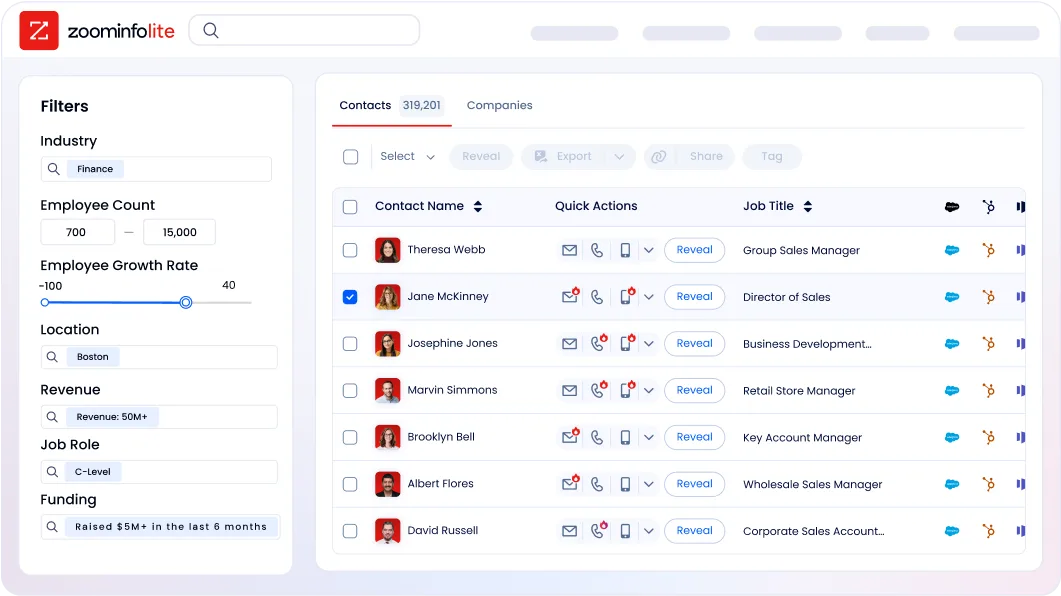
Buyers purchase credits annually in bulk, with 1 credit per exported profile. Three paid tiers exist for both Sales and Marketing plans, each unlocking more capabilities: intent signals, AI features, advanced integrations, and dedicated support.
Unlike Workday and Salesforce, ZoomInfo offers two free entry points: ZoomInfo Lite (permanent free tier with 10 monthly export credits, no credit card required) and a 7-day free trial of the full platform. GTM Workspace "deploys in weeks, not months", making time-to-value faster than either enterprise platform.
Ecosystem and integration approach
How each platform connects to the rest of your stack reveals its architectural philosophy.
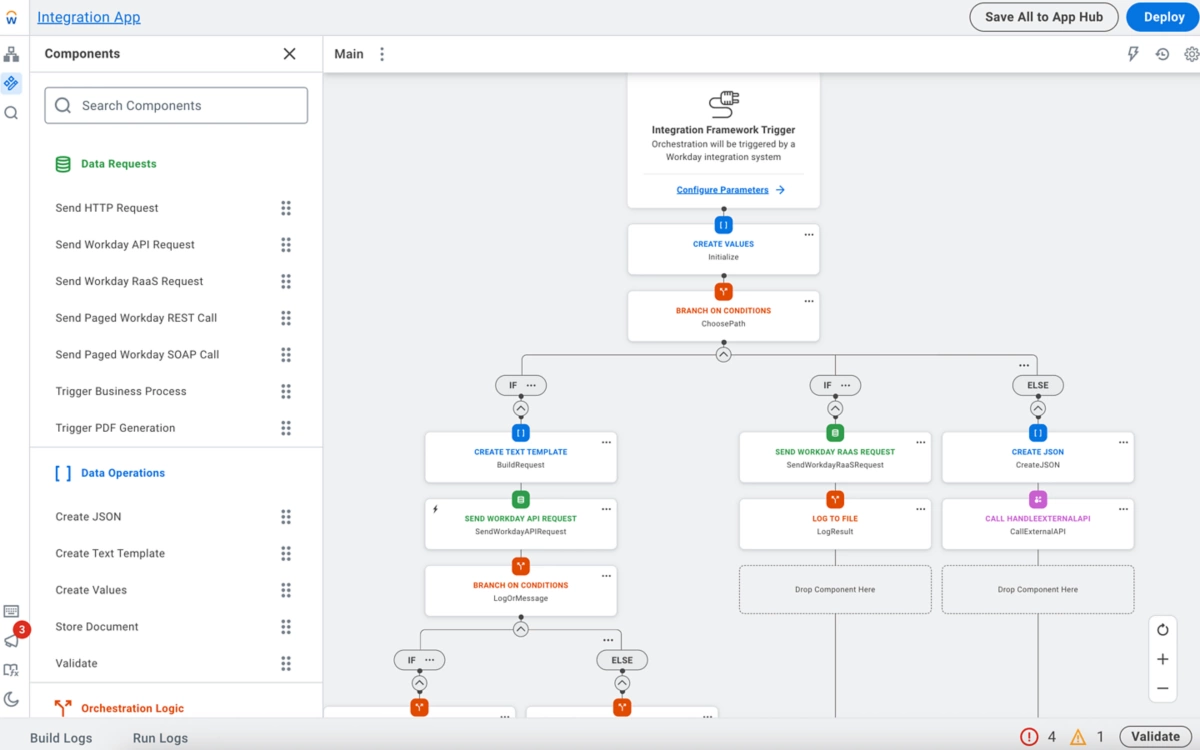
Workday has historically been a closed system, but that's changing.
The Pipedream acquisition added 3,000+ pre-built connectors. Workday Data Cloud provides zero-copy connections to Databricks, Google BigQuery, Salesforce, and Snowflake. Workday Orchestrate offers low-code visual integration building.
Source: Workday
The Workday Marketplace hosts third-party apps. But the API documentation requires login for most content, and Workday publishes no language-specific REST client SDKs, creating friction for developers used to open, API-first platforms.
Salesforce has the largest ecosystem.
AppExchange spans 9,000+ partner apps across every enterprise category. MuleSoft provides integration and API management with hundreds of pre-built connectors. Salesforce offers public APIs (REST, SOAP, Bulk 2.0, GraphQL, Pub/Sub, and Metadata), all documented and versioned. The developer experience is mature and well-supported by Trailhead.
ZoomInfo takes an open approach across three access methods.
The Enterprise API, documented at docs.zoominfo.com, uses a search-then-enrich pattern with OAuth 2.0 authentication and an interactive reference.
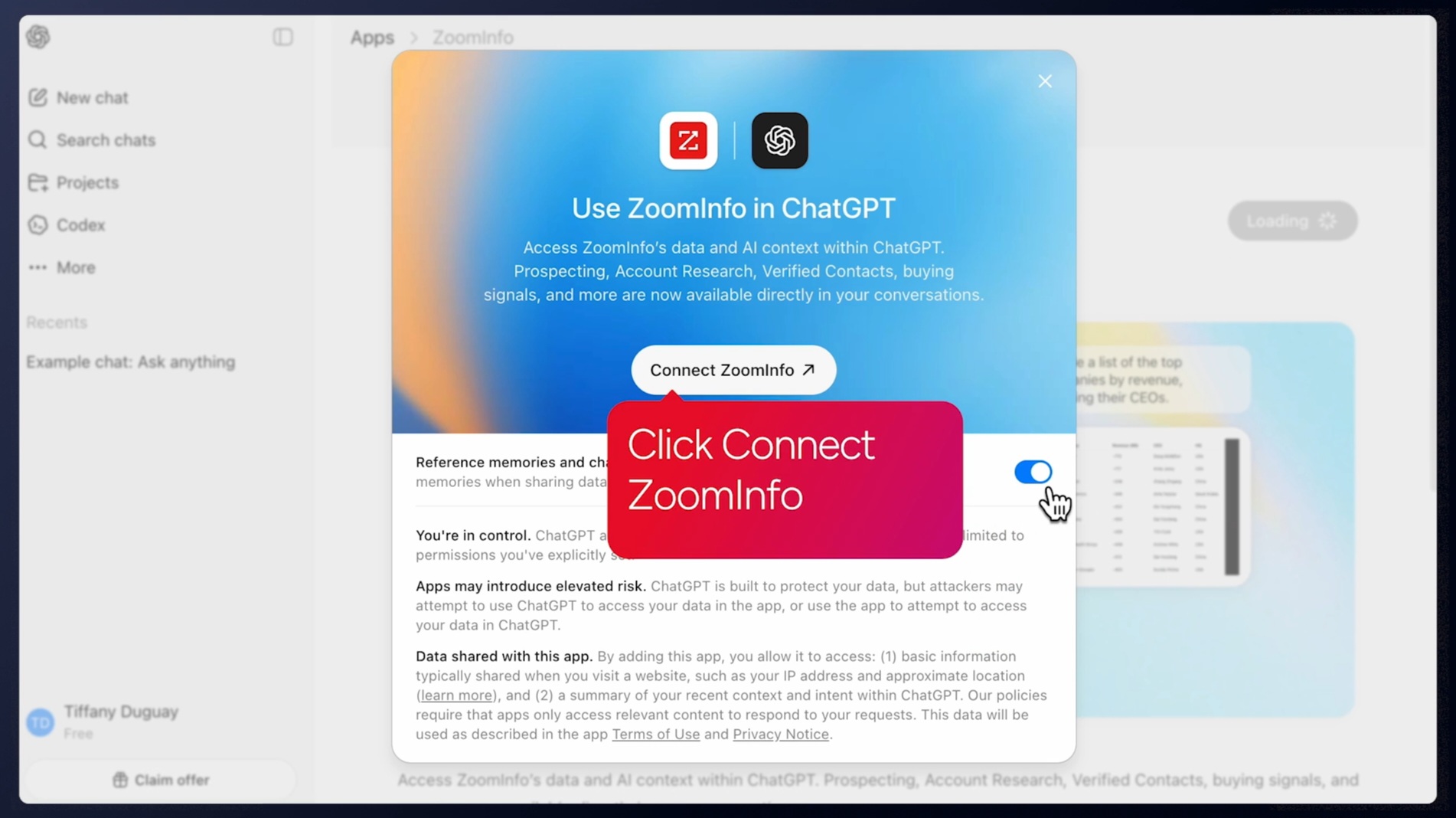
The MCP server at https://mcp.zoominfo.com/mcp connects AI models to ZoomInfo's data with no custom coding, supporting Claude, ChatGPT, and other MCP-compatible tools. The ZoomInfo App Marketplace lists 172+ partner integrations across CRM, marketing automation, sales engagement, data warehouse, and communications categories. API access comes included in all relevant plans.
Source: ZoomInfo
Security and compliance comparison
Enterprise buyers in regulated industries need to evaluate each platform's compliance posture.
Workday holds SOC 1, SOC 2 Type II, ISO 27001/27017/27018/27701, ISO 42001 (AI management), FedRAMP Moderate authorization, HIPAA attestation, and GDPR certification.
The EU Sovereign Cloud addresses European data residency requirements. Workday also holds NIST AI Risk Management Framework attestation and ISO 42001 certification for AI management systems. The Agent Passport tests AI agents against OWASP LLM Top 10, NIST AI RMF, and MITRE ATLAS standards.
Salesforce holds ISO 27001/27017/27018, SOC 1/2/3, FedRAMP (Government Cloud), and HITRUST.
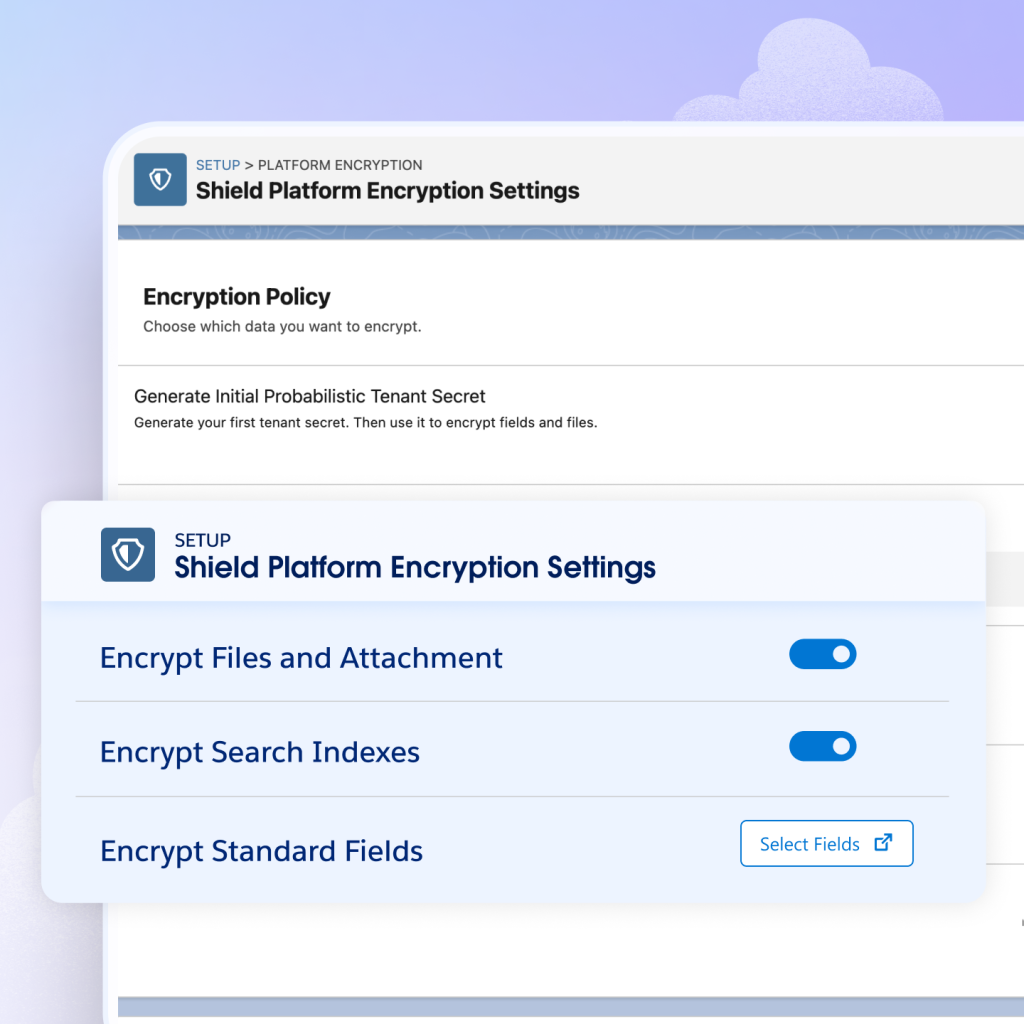
Salesforce Shield provides event monitoring, platform encryption with BYOK, and field audit trail. The Einstein Trust Layer enforces zero data retention with LLM partners, PII masking, and dynamic grounding. Hyperforce enables regional data residency at no additional cost, with Hyperforce EU OZ as a paid add-on for EU-based support.
Source: Salesforce
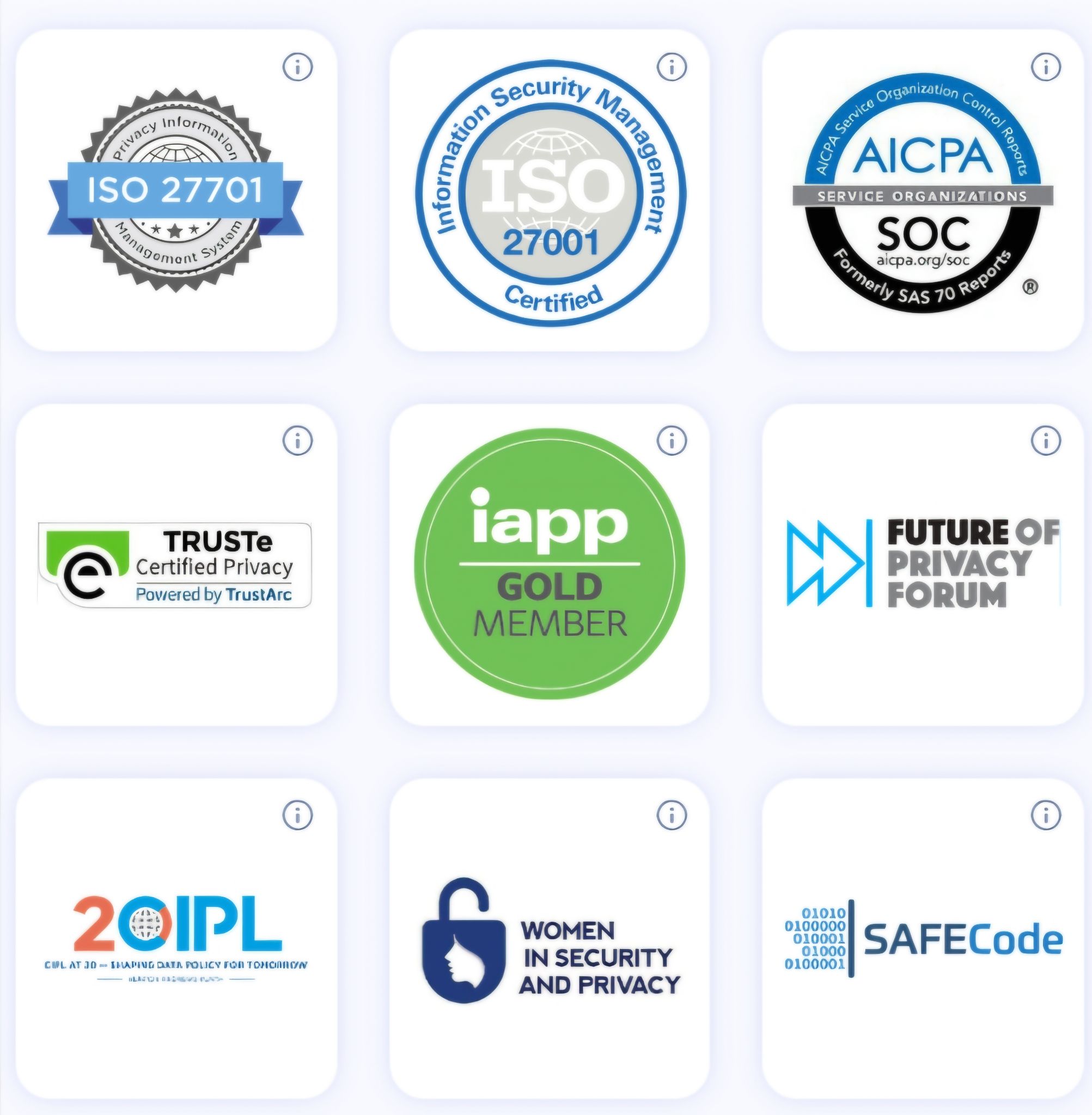
ZoomInfo maintains ISO 27001, ISO 27701, SOC 2 Type II, TRUSTe GDPR, and TRUSTe CCPA certifications, all renewed annually.
Source: ZoomInfo
ZoomInfo is a registered data broker in California and Vermont. A Trust Center at trust.zoominfo.com provides compliance documentation. For a platform handling hundreds of millions of contact records, this certification stack is a baseline for enterprise procurement.
Workday vs. Salesforce vs. ZoomInfo: Which should you choose?
The answer depends on which problem you're solving today.
Choose Workday if:
Your primary challenge is managing a complex workforce across multiple countries
You need unified HR, payroll, and financial management on a single platform
You're replacing fragmented legacy systems (SAP, Oracle PeopleSoft, ADP) with a cloud-native solution
Your organization has 500+ employees and the budget for an enterprise implementation
Workforce planning, talent management, and financial close are your top priorities
Choose Salesforce if:
Your primary challenge is managing customer relationships, sales pipelines, and service operations
You need a CRM that scales from small teams to global enterprise
You want the largest ecosystem of partner apps and integrations in enterprise software
AI-powered sales, service, and marketing automation are strategic priorities
You need a platform that covers the full customer lifecycle from lead to loyalty
Choose ZoomInfo if:
Your go-to-market team needs verified contact data, direct-dial phone numbers, and buying intent signals
You want to enrich your Salesforce CRM with B2B intelligence that keeps records accurate and actionable
You need AI that understands why deals move or stall, not just what stage they're in
Your sellers, marketers, and RevOps teams need a shared intelligence layer accessible in any tool
You want to start fast with a free tier or trial before committing to an enterprise contract
See how ZoomInfo powers go-to-market execution with a free trial.
The pattern among high-performing enterprises is running all three: Workday as the system of record for people and money, Salesforce as the system of record for customers and revenue, and ZoomInfo as the intelligence layer that feeds the pipeline both platforms depend on.
Each solves a different problem. Together, they cover the full enterprise from workforce management through customer acquisition to revenue growth.
Workday vs. Salesforce vs. ZoomInfo FAQ
What is the core difference between Workday, Salesforce, and ZoomInfo?
Workday is an enterprise cloud platform for HR, payroll, financial management, and workforce planning. Salesforce is the leading CRM platform for sales, customer service, marketing, and commerce.
ZoomInfo is a B2B intelligence platform that provides verified contact data, buying intent signals, and account intelligence for go-to-market execution. They serve different functions and are commonly used together.
Are Workday and Salesforce competitors?
No. Workday manages the back office (employees and finances) while Salesforce manages the front office (customers and revenue). They have almost no feature overlap. Most large enterprises run both and connect them through integrations like Workday Data Cloud's zero-copy connection to Salesforce.
How does ZoomInfo work with Salesforce?
ZoomInfo has a native integration with Salesforce. It enriches Salesforce records with verified emails, direct-dial phone numbers, org charts, technographics, and buying intent signals.
ZoomInfo's data also flows back into its GTM Context Graph alongside CRM data for deeper account intelligence. The integration helps sales teams identify the right prospects, verify their contact information, and detect when accounts are researching solutions.
Which platform is most expensive to implement?
Workday typically costs the most, with first-year TCO running 2.5-3x the annual subscription once you factor in partners, training, and change management. Salesforce costs vary, but over 70% of deployments are partner-led, adding significant expense on top of license fees.
ZoomInfo has the lowest implementation overhead, with GTM Workspace deploying in weeks, and two free entry points (ZoomInfo Lite and a 7-day trial) available before any commitment.
Which platform has the strongest AI capabilities?
Each leads in its domain. Workday's Sana platform excels at HR and finance automation, delivering 1.7 billion AI actions in FY2026. Salesforce's Agentforce leads in customer-facing AI, with $800M in ARR and the ability to resolve 85% of support requests without human help.
ZoomInfo's GTM Context Graph processes 1.5B+ data points daily to identify buying patterns and generate account intelligence that neither Workday nor Salesforce provides natively.
Does ZoomInfo integrate with Workday?
ZoomInfo's primary integrations are with CRM platforms like Salesforce, HubSpot, and Microsoft Dynamics. While ZoomInfo and Workday don't have a direct integration, they coexist in enterprise stacks through shared data warehouse connections (both work with Snowflake, Databricks, and Google BigQuery) and through Salesforce as a common link.
Which platform should a growing company prioritize first?
For most B2B companies, a CRM (Salesforce) and a data intelligence layer (ZoomInfo) should come before an enterprise HCM/ERP platform (Workday). Revenue generation depends on a system to manage customer relationships and verified data to fill the pipeline.
Workday becomes essential as the organization grows past several hundred employees and needs unified HR, payroll, and financial management. Companies below 500 employees often find Workday overbuilt for their needs.
Do any of these platforms offer free plans?
Salesforce offers a free CRM for up to 2 users. ZoomInfo offers ZoomInfo Lite, a permanent free tier with access to its B2B database and 10 monthly export credits, plus a 7-day free trial of the full platform. Workday does not offer a free plan or trial of any kind.
