
Choosing between Xactly and CaptivateIQ for sales compensation management comes down to five questions:
Do you need a platform with 20 years of proprietary pay-and-performance benchmarks, or would you rather start with a modern architecture built for speed?
Is your commission structure complex enough to require compliance automation (ASC 606, IFRS 15), or is fast time-to-value more important than compliance tooling on day one?
Are you looking for a full-suite platform covering compensation, territory mapping, forecasting, and AI agents, or a unified planning-to-payout workspace where quota changes automatically flow into commission calculations?
Do you have a dedicated compensation team that can manage a broad product suite, or do you need a no-code interface that lets comp admins build anything without IT support?
How important is it that your compensation platform connects to the deal intelligence and pipeline data your sellers actually use?
In short, here's what we recommend:
Xactly is the established leader for enterprises that need the full scope of sales performance management. Founded in 2005 as the first cloud ICM platform, Xactly spans commission administration (Incent), territory mapping (Plan with AlignStar), incentive design simulation (Design), territory and quota operations (Manage), AI-powered forecasting (Forecast), and autonomous AI agents (Xactly Intelligence). Its most defensible asset is a 20+ year dataset of pay-and-performance benchmarks that no competitor can replicate. The tradeoff: Xactly's breadth creates administrative complexity, and all pricing is quote-based with no public transparency.
CaptivateIQ is the modern challenger for companies that want speed, flexibility, and a unified planning-to-payout workflow. Founded in 2017 and named a Forrester Wave Leader for Sales Performance Management Solutions in Q1 2025, CaptivateIQ built its reputation on a no-code SmartGrid interface that lets compensation teams model anything without engineering support. What separates CaptivateIQ from pure ICM tools is its unified architecture: quota changes in the Planning module automatically sync to commission calculations, eliminating reconciliation work. The tradeoff: initial setup takes significant time because the platform is a blank canvas, and performance can lag with large models.
Both platforms solve the same core problem: turning commission management from a spreadsheet mess into an automated, auditable system. But neither platform can fix what happens upstream. Your commission accuracy is only as good as the deal data, territory intelligence, and pipeline signals flowing into it. Garbage in, garbage out applies to compensation just as much as to everything else in your revenue stack.
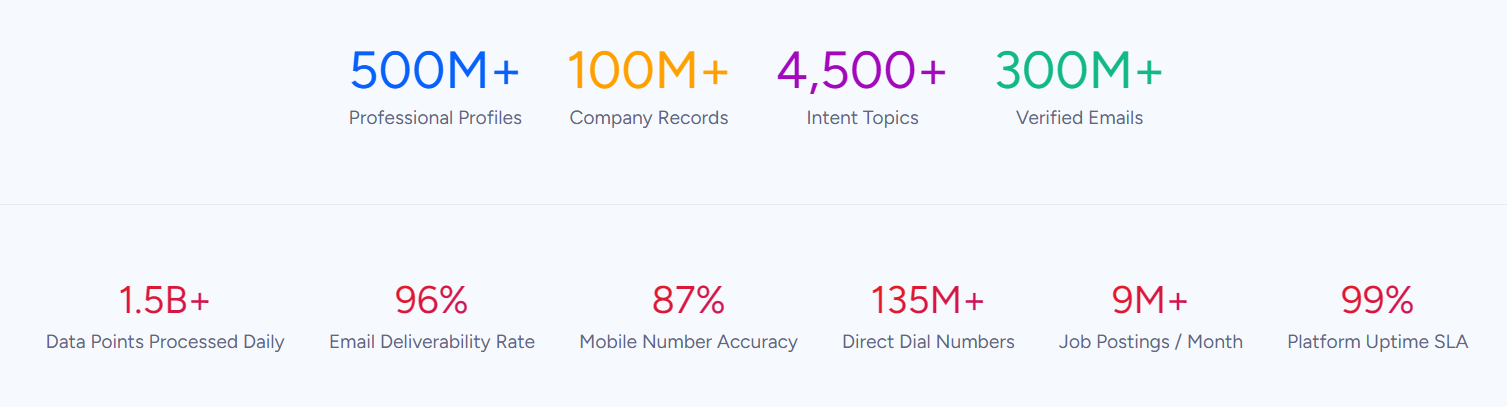
ZoomInfo is a go-to-market platform that provides the upstream data both Xactly and CaptivateIQ depend on. With 500M contacts, 100M companies, 135M+ verified phone numbers, and 200M+ verified business email addresses, ZoomInfo feeds your CRM with enriched deal data that commission platforms calculate against. Its GTM Context Graph processes 1.5B+ data points daily, fusing CRM records, conversation transcripts, and behavioral signals into a layer that captures not just what happened in a deal, but why. That context improves territory planning, sharpens quota setting with real market data, and gives sellers the pipeline visibility that drives deal velocity. Whether your team works in the GTM Workspace for sellers, GTM Studio for marketers and RevOps, or connects through APIs and MCP to any tool, ZoomInfo is the data foundation that makes whichever compensation platform you choose work better.
If building your compensation strategy on verified data and real pipeline intelligence sounds like the missing piece, see how ZoomInfo works with your GTM stack.
Xactly vs. CaptivateIQ at a glance
Xactly | CaptivateIQ | ZoomInfo | |
|---|---|---|---|
Founded | 2005 | 2017 | 2007 |
Core strength | Full SPM suite with 20-year data moat | Unified planning-to-payout with no-code flexibility | B2B data and GTM intelligence |
Primary use case | Commission admin, territory planning, forecasting, comp design | Commission management, sales planning, predictive modeling | Pipeline intelligence, data enrichment, deal context |
Plan configuration | Compensation Configurator with AI assistance | No-code SmartGrid with Guided Plan Builder | N/A (feeds data into comp platforms) |
Territory planning | AlignStar map-based territory design | Rule-based territory and account carving | Firmographics, technographics, org charts for territory intelligence |
AI capabilities | Fleet of Agents, Intelligence Studio, MCP server | CaptivateIQ Agents (Comp Builder, Comp Ops, Rev Planning) | GTM Context Graph, AI-powered account research, GTM Workspace AI agent |
Compliance | ASC 606/IFRS 15 via Commission Expense Accounting | SOX controls, ASC 606 as add-on | ISO 27001, ISO 27701, SOC 2 Type II |
Mobile access | Native Android and iOS apps | No mobile app | Mobile app and Chrome extension |
Pricing | Quote-based, three Incent tiers + add-on modules | Quote-based, per-seat + setup fee | Consumption-based, custom-quoted |
Analyst recognition | ISG Overall Leader (2025), G2 #2 Enterprise Grid | Forrester Wave Leader (Q1 2025), Gartner Customers' Choice (2024) | Gartner MQ Leader (ABM, 2024 & 2025), Forrester Wave Leader (Intent Data, Q1 2025) |
Two decades of data vs. a blank canvas
The most important difference between Xactly and CaptivateIQ isn't a feature. It's a philosophy.
Xactly's advantage is accumulated knowledge. Since 2005, the platform has collected pay-and-performance data from its customer base, building a proprietary dataset spanning 20+ years. When you design a new comp plan in Xactly, you can benchmark it against industry norms for OTE levels, pay mix ratios, and accelerator structures. When you model a territory change, the system draws on historical patterns to predict what happens next. No competitor starting from scratch can match this depth.

Source: Xactly
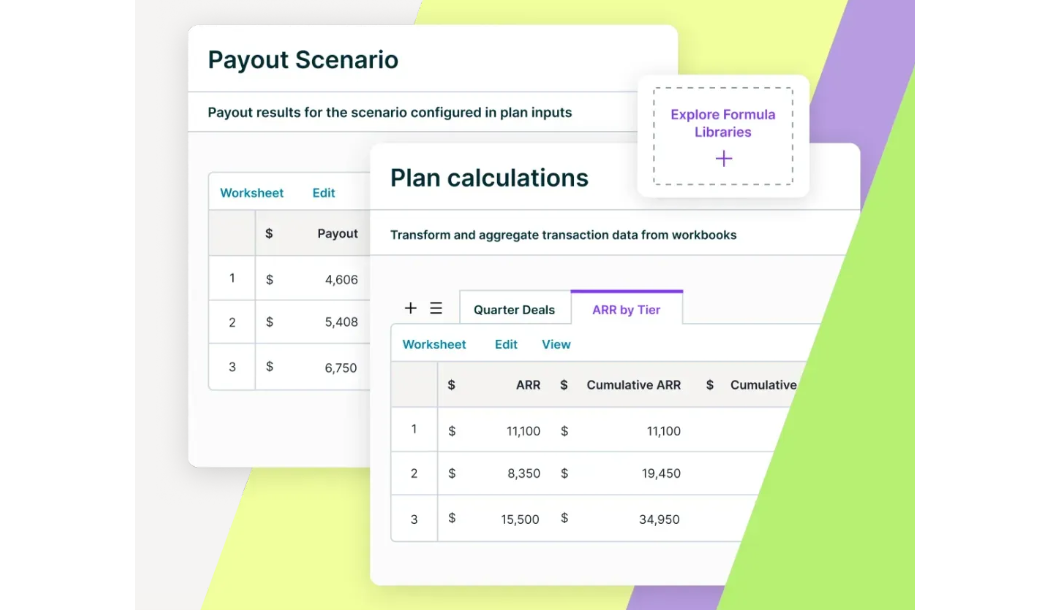
CaptivateIQ's advantage is architectural freedom. Built a decade later, the platform had the luxury of designing for how modern revenue teams actually work. The SmartGrid engine bundles data ingestion, transformation, and calculation into a single no-code layer, so compensation teams can build and iterate without waiting on IT or consultants.
Source: CaptivateIQ
The tradeoff mirrors the decision every buyer faces. Xactly offers guardrails, templates, and benchmarks built from two decades of customer data. CaptivateIQ offers a workspace where your team designs the system from scratch. If your organization values prescriptive guidance backed by historical evidence, Xactly's approach is the clear fit. If your team chafes at rigid structures and wants full control over plan logic, CaptivateIQ's blank canvas is freeing.
But "blank canvas" cuts both ways. G2 reviewers also note that CaptivateIQ's initial setup requires significant time and internal resources, with users describing the need to understand plan structures thoroughly before the system becomes productive. Xactly's learning curve is different: the platform is broad (seven products, AI agents, extensions), so onboarding requires investment in understanding which tools solve which problems. Both demand commitment; they just demand it in different ways.
Commission plan configuration
This is where CaptivateIQ has earned its reputation. The Guided Plan Builder walks administrators through plan setup with a spreadsheet-like interface that handles tiers, accelerators, splits, overlays, draws, and clawbacks without code. Plans can be built for up to 7,000 unique structures simultaneously, and changes don't require IT tickets. Forrester awarded CaptivateIQ the highest possible scores in plan creation and maintenance, plan modeling, and end-user modeling capabilities in their Q1 2025 evaluation.

Source: CaptivateIQ
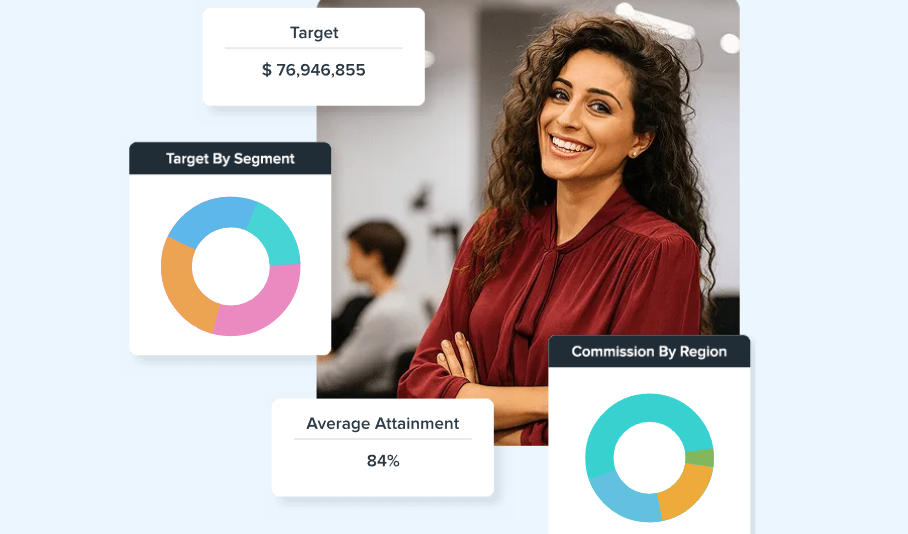
Xactly's Compensation Configurator takes a more structured approach, building plans from reusable rules, quotas, and rate tables. At the Ultimate tier, AI draws on proprietary benchmarking data to suggest plan elements. The configurator handles enterprise complexity (multi-currency, global hierarchies, channel partner commissions), and Xactly reports a 60% reduction in plan creation time compared to manual processes.
Source: Xactly
The practical difference: CaptivateIQ gives comp teams more direct control over plan logic from day one. Xactly provides more prescriptive tooling backed by two decades of what has worked across its customer base. If your comp professionals want full ownership of plan design, CaptivateIQ's flexibility is a genuine advantage. If you want AI-informed guidance and industry benchmarks baked into the design process, Xactly's structured approach reduces guesswork.
Territory and quota planning
Both platforms have expanded beyond pure commission management into sales planning, but their approaches differ.
Xactly's planning capabilities split across two products. Xactly Plan handles strategic territory design and quota allocation, including AlignStar, a map-based territory alignment tool with drag-and-drop interfaces, lasso tools, and an automated Alignment Report Card that grades territory balance. Xactly Manage operationalizes those plans with effective-dated roster changes, automated credit assignments, and dispute resolution workflows.

Source: Xactly
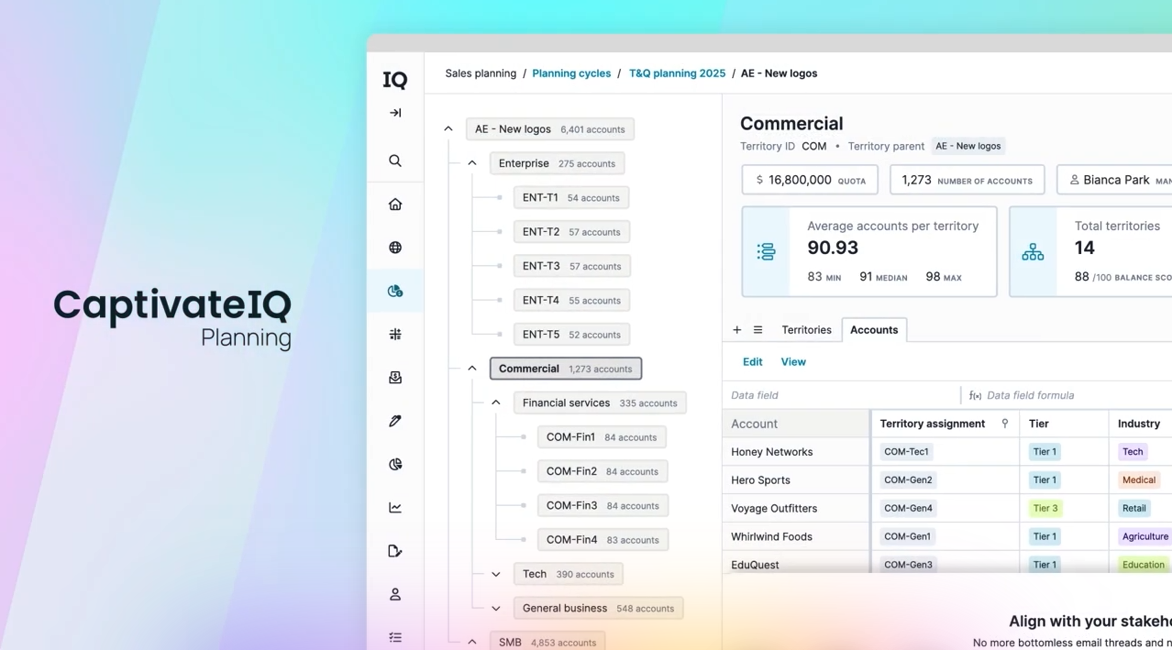
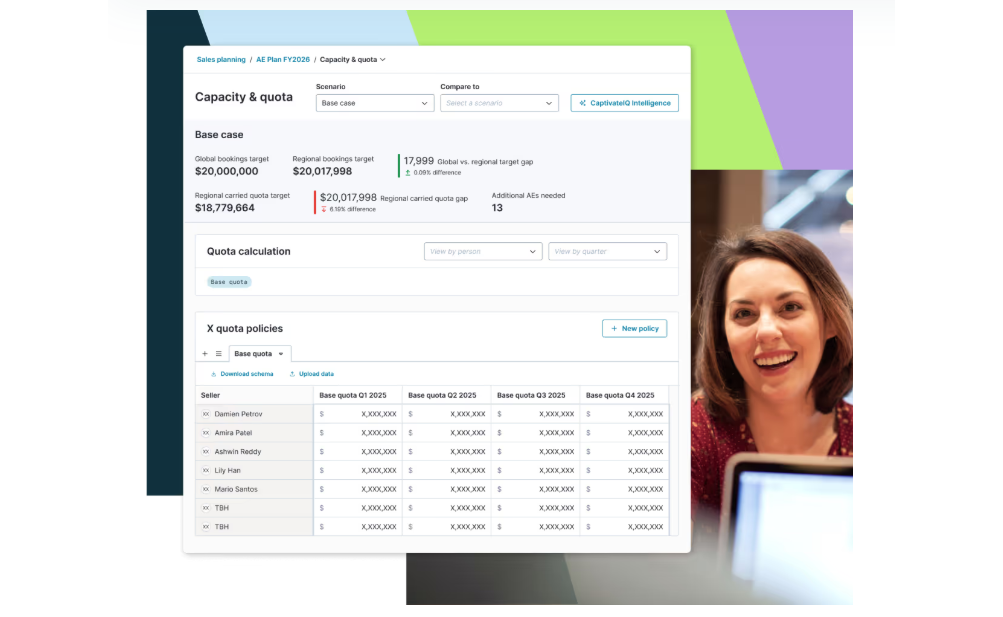
CaptivateIQ Planning takes a unified approach, combining capacity planning, quota setting, and territory carving in a single module that shares a data layer with the Incentives product. When a quota changes in Planning, it automatically syncs to compensation structures in Incentives, eliminating the reconciliation work that frustrates teams using separate planning and ICM tools. The Rev Planning Agent adds a natural-language interface where users describe territory assignment goals and the agent builds the configuration for review.
Source: CaptivateIQ
Xactly wins on geographic territory design depth, thanks to AlignStar's mapping capabilities. CaptivateIQ wins on the closed loop between planning and compensation, where changes automatically propagate without manual reconciliation.
AI agents: the new battleground
Both platforms are betting on agentic AI, and both launched agent portfolios in 2025-2026.
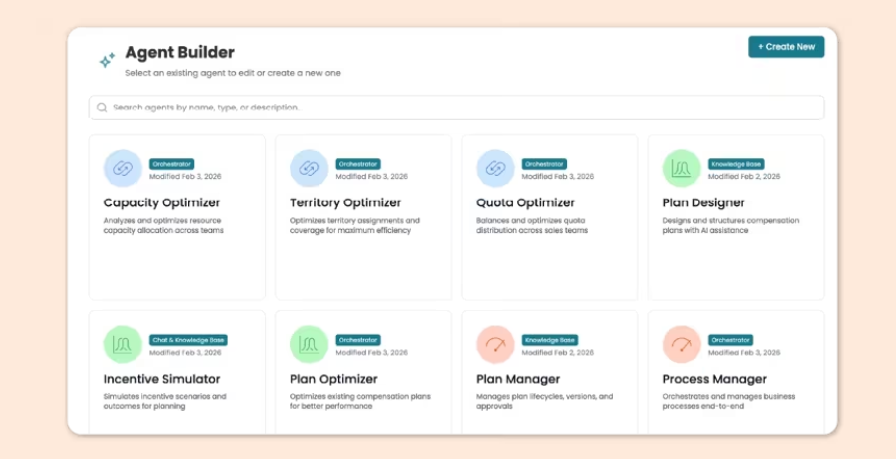
Xactly released its Fleet of Agents in May 2026, organized into four types: Workflow Agents (multi-step process automation), Optimization Agents (recommendations grounded in benchmarks), Builder Agents (build custom agents via natural language or drag-and-drop), and External Agents (connect to Salesforce, ServiceNow, and Workday via MCP). The Intelligence Studio serves as the command center where organizations compose and deploy custom agents. Xactly also launched a Dispute Management Agent co-built with ServiceNow, using Model Context Protocol for agent-to-agent coordination.
Source: Xactly
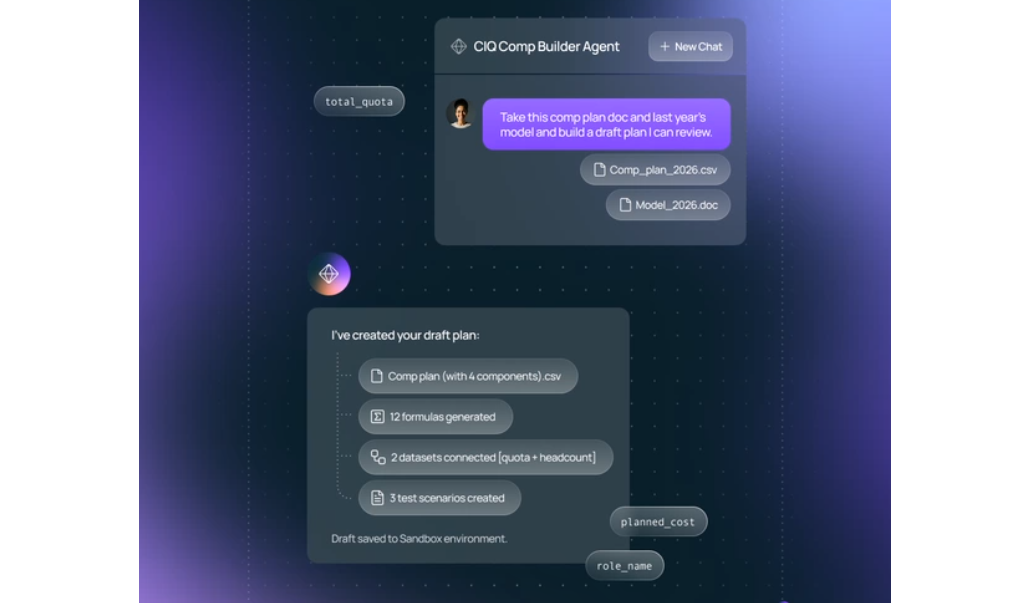
CaptivateIQ launched CaptivateIQ Agents in May 2026 with three named agents: Comp Builder (build plans from natural language), Comp Ops (explain payouts, manage approvals, catch anomalies), and Rev Planning (territory configuration from natural language). These agents operate on live platform data with the same permissions and approvals as the rest of the system.
Source: CaptivateIQ
The key difference: Xactly's agent architecture is more open and composable, with Intelligence Studio letting customers and partners build their own agents, plus cross-platform orchestration with ServiceNow. CaptivateIQ's agents are more tightly integrated with the platform's plan logic and calculation engine, grounding every response in actual business rules. Both are in limited beta with general availability expected later in 2026, so real-world performance remains unproven.
Commission processing and compliance
Both platforms calculate fast and accurately, but they serve different compliance needs.
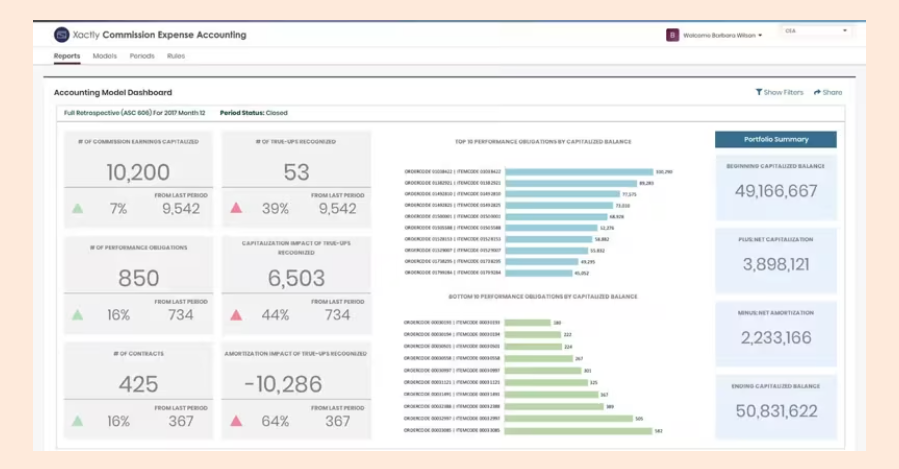
Xactly processes over $7 billion in commissions and bonuses monthly with 99.8% on-time payment accuracy. Its Commission Expense Accounting (CEA) module automates ASC 606 and IFRS 15 compliance, including dynamic true-ups for contract events and full capitalization and amortization schedules. CEA comes bundled in the Plus and Ultimate tiers, not as an add-on. For public companies or those preparing for IPO, this native compliance automation is a real differentiator.
Source: Xactly
CaptivateIQ's SmartGrid engine processes 10M+ source transactions in 12 seconds and powers 6.25 trillion real-time calculations per month. Its compliance story centers on SOX-specific controls: segregation of duties, change control with statement locking, full audit logging, and granular access controls. However, ASC 606 reporting is available only as an add-on, not bundled.
Source: CaptivateIQ
For regulated enterprises that need ASC 606/IFRS 15 compliance out of the box, Xactly's CEA module is more mature. For organizations focused on SOX audit readiness and commission processing speed, CaptivateIQ delivers strong controls without a separate compliance module.
Forecasting and revenue intelligence
This is where Xactly extends beyond CaptivateIQ's current capabilities, and where ZoomInfo enters the conversation.
Xactly Forecast is a dedicated pipeline and revenue forecasting product with AI-powered deal Health Scores that analyze email sentiment, meeting frequency, and historical rep performance. It helps teams land within 5% of targets. Forecast folds compensation data into the pipeline view, something Xactly calls unique: the only tool that combines compensation and pipeline data, showing reps how new deals affect their earnings and giving finance leaders automated commission exposure tracking.

Source: Xactly
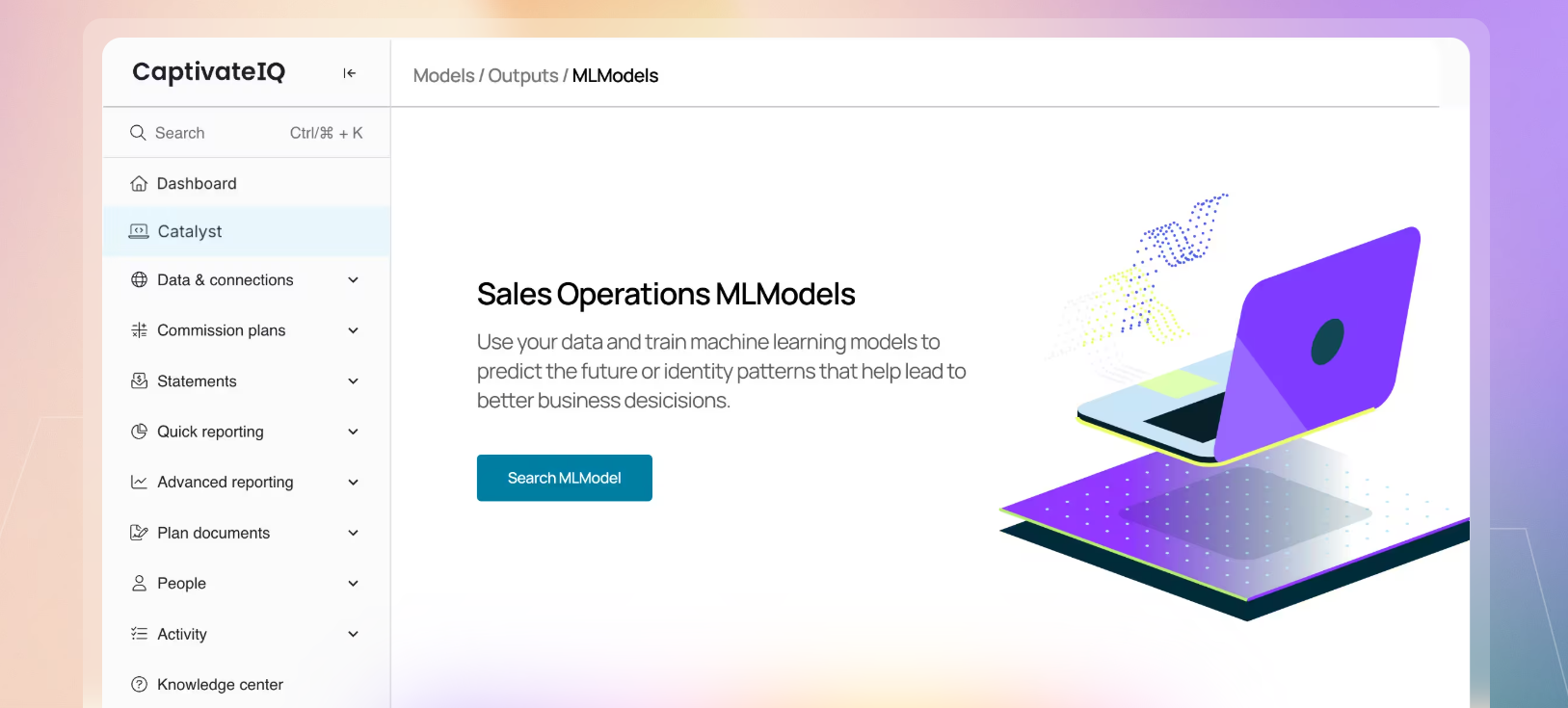
CaptivateIQ's forecasting lives in Catalyst, a predictive ML layer that handles attainment forecasting, payout forecasting, and anomaly detection. Catalyst's models are trained on each customer's historical data, not generic benchmarks. But Catalyst is a planning and modeling tool, not a pipeline management system. It predicts commission costs and spots payout anomalies; it doesn't score deal-level pipeline health the way Xactly Forecast does.
Source: CaptivateIQ
This gap is where ZoomInfo adds value. ZoomInfo's GTM Context Graph processes 1.5B+ data points daily to capture the context behind deal movements. Your CRM records that a deal moved to Stage 4, but the GTM Context Graph captures why: executive sponsorship entered the conversation, the CFO raised specific ROI concerns, intent signals show the account researching your competitor. That context feeds pipeline accuracy, which feeds more accurate commission forecasts in whichever SPM platform you use.
"That combination of our internal CRM data, external signals, and AI that's given all that context has helped us craft very specific account- and persona-based messages. And people have responded to them right away." (Toby Carrington, CBO, Seismic)
Seller experience and transparency
Both platforms recognize that commission disputes and "shadow accounting" (reps maintaining their own spreadsheets to verify payouts) destroy trust and waste selling time. Their solutions differ.
Xactly delivers Customized Incentive Statements with deal-level drill-down, available through native Android and iOS apps. Sellers can check commissions on the go. The platform's AI Assistants let reps ask natural-language questions about earnings and run commission estimates conversationally. Carestream Health reports that reps trust their compensation calculations and have reclaimed time for selling.

Source: Xactly
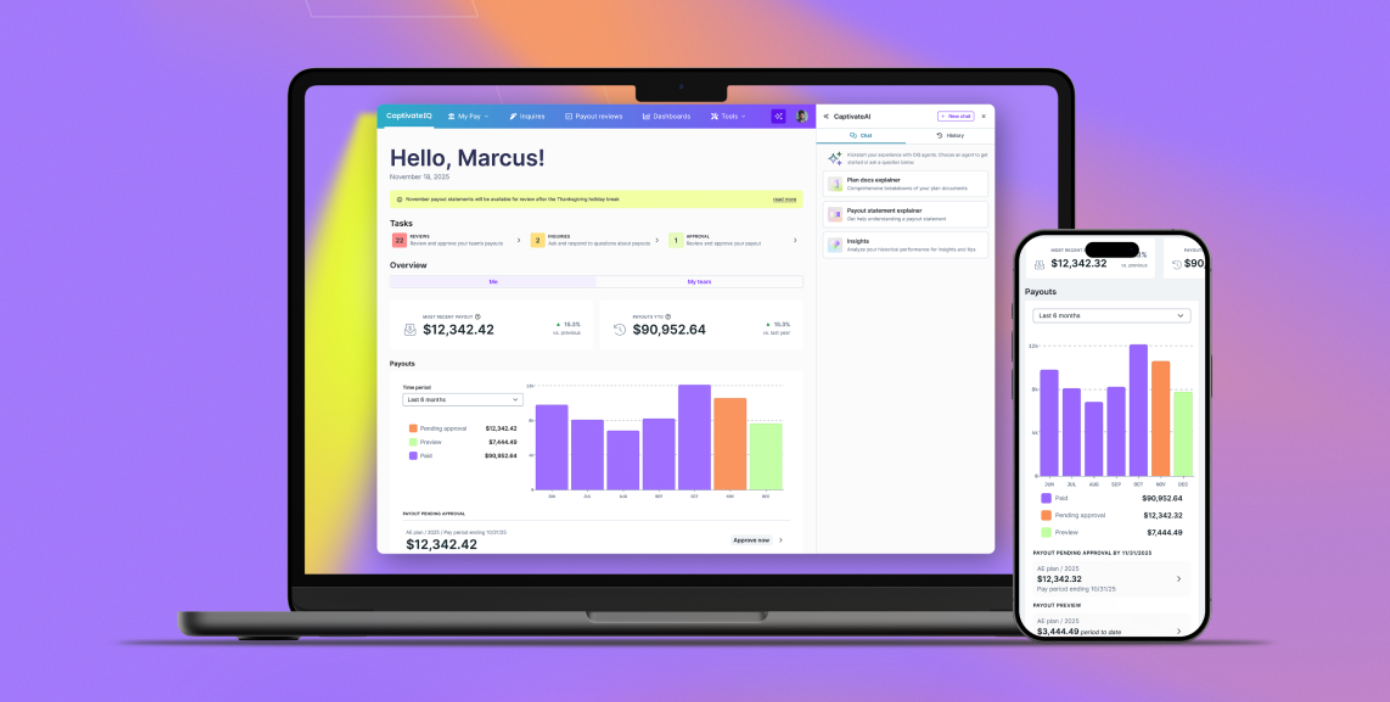
CaptivateIQ pushes transparency further with AI-generated explainable statements that trace every payout back to plan clauses and underlying transactions. The Plan Doc Explainer and Statement Explainer agents answer natural-language questions about quotas, targets, and eligibility rules. The gap: CaptivateIQ has no mobile app, and reviewers note this isn't on the near-term roadmap. Reps checking earnings on mobile are limited to the browser.
Source: CaptivateIQ
For sellers who need on-the-go commission visibility, Xactly's mobile apps are the clear advantage. For organizations where the depth of payout explanations matters more than mobile convenience, CaptivateIQ's AI-generated statement narratives set a higher bar.
Pricing: opacity on both sides
Neither Xactly nor CaptivateIQ publishes pricing, which makes direct comparison impossible without engaging both sales teams.
Xactly structures its pricing across three Incent tiers: Core (scaling automation), Plus (enterprise compliance), and Ultimate (strategic intelligence with AI and benchmarking). The Strategic Planning modules (Plan, Design, Manage, Forecast) are sold separately. All fees are based on named-seat subscriptions, non-cancelable, non-refundable, and auto-renewing with 60 days' notice required for non-renewal. Implementation services cost extra.
CaptivateIQ uses per-seat pricing based on payees, plan complexity, and integrations, plus a one-time setup fee. Three products (Incentives, Planning, Catalyst) are priced separately. Auto-renewal with 30 days' notice for non-renewal. Connector fees may apply, ASC 606 reporting is an add-on, and Premier or Elite Support tiers cost extra.
The honest assessment: enterprise buyers should negotiate both contracts carefully. Neither platform is cheap for organizations with complex compensation structures. Xactly's total cost reflects the breadth of the platform (six products beyond Incent). CaptivateIQ's total cost depends on how many products you need and how many integrations you require.
Where ZoomInfo fits: the intelligence layer underneath
Xactly and CaptivateIQ both solve the problem of calculating and paying commissions accurately. But commission accuracy starts upstream, with the quality of data flowing into your CRM, the precision of your territory assignments, and the reliability of your pipeline forecasts.
This is ZoomInfo's role. As a go-to-market platform, ZoomInfo strengthens the data foundation both compensation platforms depend on:
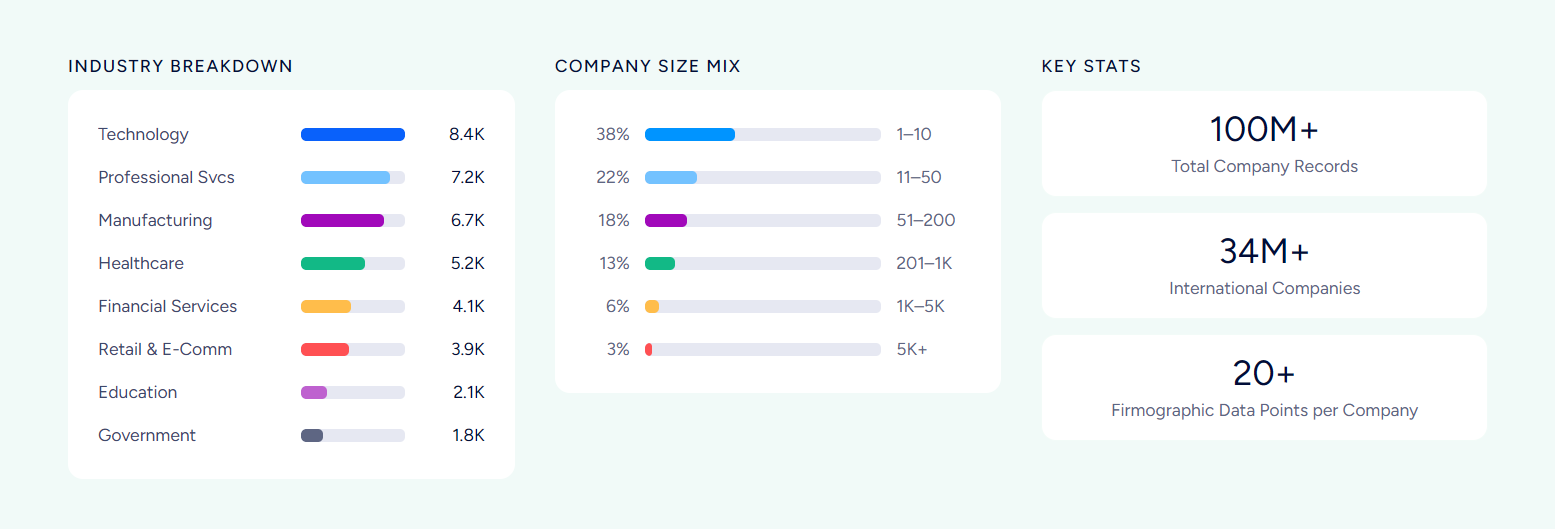
Better territory design starts with better market data. Both Xactly and CaptivateIQ offer territory planning tools, but territory balance depends on accurate firmographic and technographic data for every account. ZoomInfo provides 300+ company attributes including revenue, headcount, tech stack, and corporate hierarchy data across 100M companies, giving territory planners a complete picture of the addressable market instead of stale CRM records.
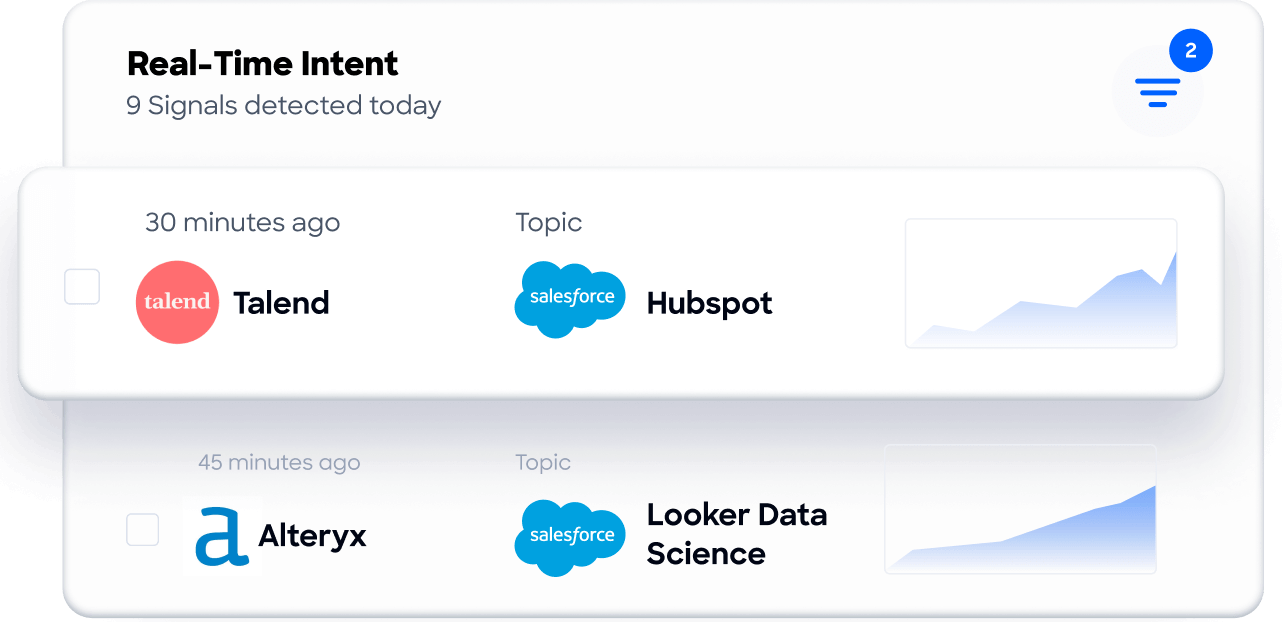
More accurate pipelines mean more accurate commission forecasts. Both Xactly Forecast and CaptivateIQ Catalyst model commission costs based on pipeline data. When that pipeline data is enriched with buyer intent signals and deal context from the GTM Context Graph, forecast accuracy improves and commission accrual projections get closer to reality. Seismic's sales team attributed 39% of active pipeline to opportunities identified or influenced by ZoomInfo signals and reported 54% productivity gains.
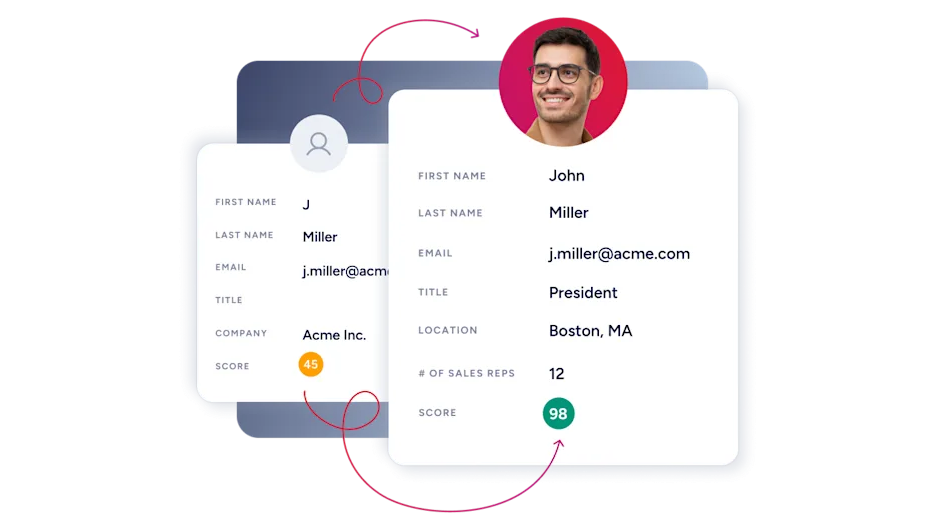
Clean CRM data reduces commission disputes. Many commission disputes stem from bad data: wrong deal attribution, duplicate accounts, misassigned territories. ZoomInfo's data enrichment and deduplication keeps the CRM clean at the point of entry, reducing the downstream errors that create payout disputes.
"ZoomInfo is our one source of truth for account data, and even more so for contact data. There's no other provider in the market that provides you with that level of detail." (Thor Sanderson, Senior Manager of Sales Technology Enablement, Smartsheet)
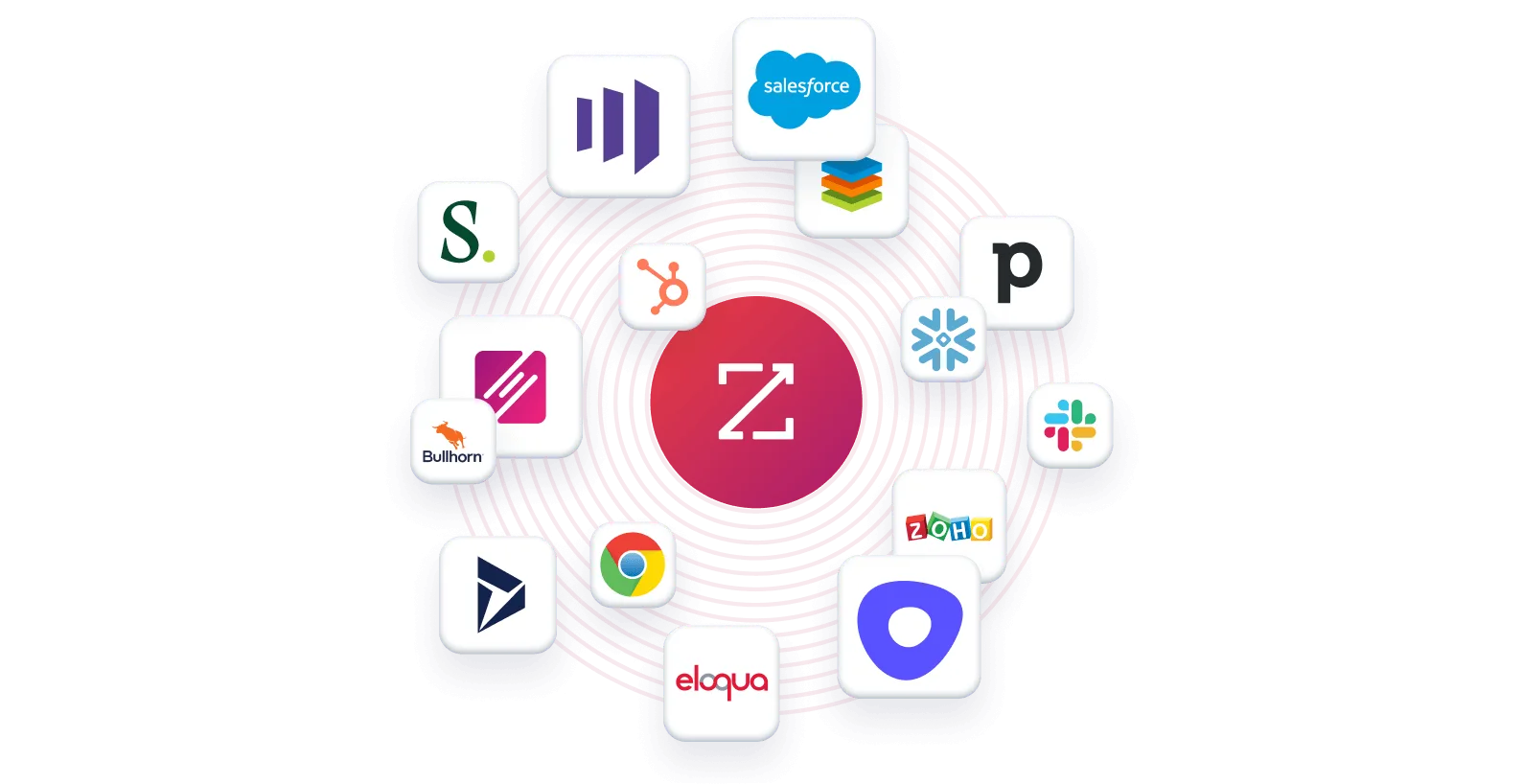
ZoomInfo connects to both Xactly and CaptivateIQ's data ecosystems through CRM integrations (Salesforce, HubSpot, Microsoft Dynamics), data warehouse connections (Snowflake, AWS, Databricks), and the Enterprise API and MCP server for custom integrations.
Xactly vs. CaptivateIQ vs. ZoomInfo: Which should you choose?
These aren't competing choices. You'll likely need a compensation platform and a data intelligence platform. Here's how to decide which compensation platform fits.
Choose Xactly if:
You need the full scope of sales performance management in one vendor (compensation, territory mapping, forecasting, design simulation, AI agents)
Benchmarking against 20 years of pay-and-performance data matters to your plan design process
ASC 606/IFRS 15 compliance automation is a requirement, not a nice-to-have
You have a dedicated comp team that can manage a broad platform and wants mobile access for sellers
Cross-platform AI orchestration (ServiceNow, Salesforce, Workday) is important to your RevOps architecture
Choose CaptivateIQ if:
Your comp team wants full, direct control over plan logic without IT or consultant dependencies
A unified planning-to-payout workflow where quota changes automatically sync to commission calculations is your top priority
Speed matters: faster implementation, faster calculations, faster time to ROI
You're a mid-market or high-growth enterprise that needs to build and iterate on complex plans quickly
Analyst recognition matters: CaptivateIQ holds the Forrester Wave Leader position in ICM and a Gartner Customers' Choice distinction
Use ZoomInfo with either platform if:
You want the deal data, territory intelligence, and pipeline signals flowing into your compensation platform to be accurate and complete
Your territory planning needs real market data (firmographics, technographics, org charts) across 100M companies, not just what's in your CRM
Better pipeline accuracy would improve your commission forecasting and accrual projections
You need clean, deduplicated CRM data to reduce commission disputes at the source
You want your sellers spending time selling instead of verifying their own commissions against bad data
Discover how ZoomInfo's GTM intelligence strengthens your entire revenue stack.
Xactly and CaptivateIQ both represent real advances over the spreadsheet-and-prayer approach to commission management. Xactly brings depth, breadth, and two decades of accumulated intelligence. CaptivateIQ brings speed, flexibility, and a modern architecture for teams that want to move fast. The right choice depends on whether your organization values prescriptive guidance or creative control.
Whichever platform you choose, the quality of your compensation outcomes depends on the quality of your upstream data. ZoomInfo provides that foundation, keeping the deal data, territory intelligence, and pipeline signals your compensation platform runs on accurate, complete, and current.
Xactly vs. CaptivateIQ vs. ZoomInfo FAQ
What is the core difference between Xactly and CaptivateIQ?
Xactly is a full-suite sales performance management platform founded in 2005, offering commission administration, territory mapping, incentive design simulation, forecasting, and AI agents, all backed by 20+ years of proprietary pay-and-performance benchmarking data. CaptivateIQ, founded in 2017, is a unified planning-to-payout platform focused on no-code flexibility and a single architecture where quota changes automatically sync to commission calculations. Xactly offers more breadth and historical intelligence; CaptivateIQ offers more speed and admin self-sufficiency.
Which platform is better for regulatory compliance?
Xactly has the stronger compliance story. Its Commission Expense Accounting module automates ASC 606 and IFRS 15 compliance natively in the Plus and Ultimate tiers. CaptivateIQ provides SOX-specific controls (segregation of duties, statement locking, full audit logging), but its ASC 606 reporting is an add-on rather than bundled. For public companies with external audit requirements, Xactly's compliance tooling is more mature.
How do the AI agent capabilities compare?
Both platforms launched AI agent portfolios in May 2026. Xactly's Fleet of Agents includes four agent types (Workflow, Optimization, Builder, External) with an Intelligence Studio for custom agent creation and cross-platform orchestration via ServiceNow. CaptivateIQ's agents include Comp Builder, Comp Ops, and Rev Planning, tightly integrated with the platform's plan logic. CaptivateIQ earned a perfect score on advanced AI capabilities from Forrester in Q1 2025. Both agent suites are in limited beta with general availability expected later in 2026.
Does either platform publish pricing?
Neither publishes specific prices. Xactly structures pricing across three Incent tiers (Core, Plus, Ultimate) with strategic planning modules sold separately, all quote-based with named-seat subscriptions. CaptivateIQ uses per-seat pricing based on payees, plan complexity, and integrations, plus a one-time setup fee. Both require engaging their sales teams for custom quotes.
How does ZoomInfo relate to Xactly and CaptivateIQ?
ZoomInfo is not a commission management competitor. It is a complementary platform that provides the upstream data and intelligence both compensation platforms depend on. ZoomInfo enriches CRM data with verified contact and company information across 500M contacts and 100M companies, provides buyer intent signals and pipeline intelligence, and keeps territory data accurate through firmographic and technographic coverage. Better upstream data leads to more accurate commission calculations, fewer disputes, and stronger territory and quota planning.
Which platform is faster to implement?
CaptivateIQ positions itself as the fastest to implement among SPM solutions, claiming it can be up and running in weeks. However, G2 reviewers note that complex deployments can take 4-6 months because of the blank-canvas setup process. Xactly implementations vary by scope; a full platform rollout typically requires dedicated project management. Both platforms' timelines depend on the complexity of existing commission structures and the number of integrations required.
Which platform has better territory planning capabilities?
Xactly offers deeper geographic territory design through AlignStar, with map-based interfaces, drag-and-drop territory adjustment, and an automated Alignment Report Card. CaptivateIQ offers rule-based territory and account carving with a tighter connection to its commission engine, where territory changes automatically flow into compensation calculations. If geographic mapping and visual territory design are priorities, Xactly leads. If the closed loop between territory assignments and commission payouts matters most, CaptivateIQ has the structural advantage.
Can I use Xactly or CaptivateIQ with my existing CRM?
Both platforms integrate with major CRMs. Xactly has native connectors for Salesforce, HubSpot, Microsoft Dynamics, NetSuite, Snowflake, and Workday, with its Connect product providing REST APIs and ODBC/JDBC drivers. CaptivateIQ integrates with Salesforce, HubSpot, Microsoft Dynamics CRM, and connects to data warehouses including Snowflake, Amazon Redshift, and Google BigQuery. Xactly offers broader integration depth through its Extend platform and Marketplace; CaptivateIQ's SmartGrid handles data ingestion and transformation without requiring external ETL pipelines.
More Xactly and CaptivateIQ comparisons:
