
Choosing between Xactly and Everstage for sales performance management comes down to five questions:
Do you need a full-suite platform with 20 years of benchmarking data, or a modern system built for today's RevOps workflows?
Is your compensation structure complex enough to justify enterprise tooling, or would a lighter platform serve you better?
Do you need territory mapping with interactive geographic tools, or is no-code quota and territory planning enough?
How important is implementation speed: can you wait months for a phased rollout, or do you need to be live in weeks?
Does your sales team need real-time commission visibility to stay motivated and reduce disputes?
In short, here's what we recommend:
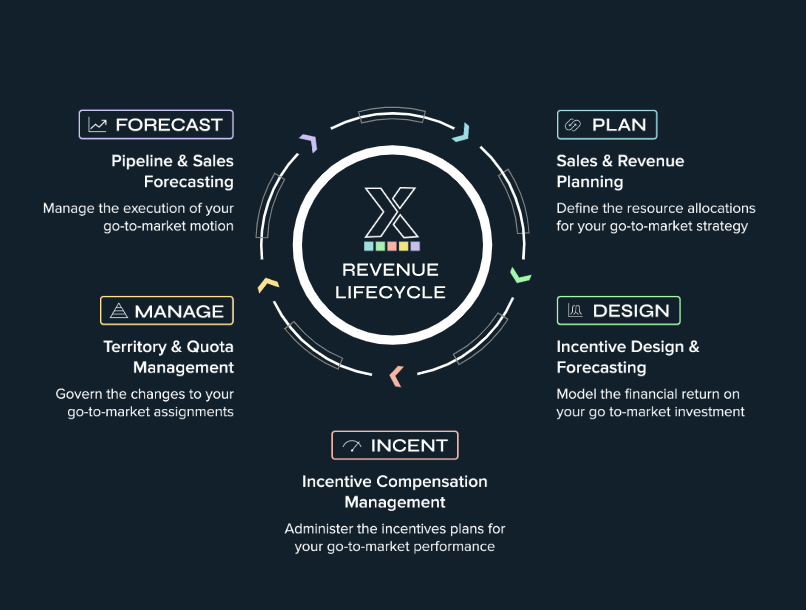
Xactly is the enterprise choice for organizations with complex, multi-role compensation structures that demand audit-ready compliance and benchmarking. Its Intelligent Revenue Platform spans commission administration (Incent), territory and quota planning (Plan), incentive design simulation (Design), and AI-powered forecasting (Forecast), all built on 20+ years of proprietary pay-and-performance data no competitor can replicate. But Xactly's breadth means a steeper learning curve, opaque pricing, and implementation timelines that stretch for months.
Everstage is the modern alternative built for RevOps and Finance teams that want fast time-to-value without sacrificing plan complexity. Rated #1 in sales compensation on G2 with a 4.9/5 across review platforms, Everstage delivers a no-code plan designer, real-time commission transparency through its Crystal AI Agent, and an advertised 4-6 week go-live. It has expanded into CPQ and Sales Planning, though both products launched in 2025 and are still maturing. For organizations that prioritize speed and usability over legacy depth, Everstage delivers.
Both platforms solve the same core problem: eliminating spreadsheet-driven commission chaos. But commissions don't exist in a vacuum. The quality of your compensation data depends on the quality of the pipeline, account, and contact data feeding it. That upstream data layer is where ZoomInfo fits.
ZoomInfo is an AI-powered GTM platform that gives revenue teams the data foundation their sales performance stack depends on. With 500M contacts, 100M companies, 135M+ verified phone numbers, and 200M+ verified business email addresses, ZoomInfo provides the account and contact intelligence that feeds territory planning, quota modeling, and pipeline forecasting. Its GTM Context Graph combines this data with your CRM records, conversation transcripts, and behavioral signals to reveal not just what's happening in your pipeline, but why. Teams access this intelligence through GTM Workspace for sellers, GTM Studio for marketers and RevOps, or APIs and MCP in any front-end.
If your compensation platform calculates commissions accurately but your territory data is stale and your pipeline forecasts rest on incomplete account intelligence, the system underperforms. See how ZoomInfo strengthens your revenue foundation.
Xactly vs. Everstage at a glance
Xactly | Everstage | ZoomInfo | |
|---|---|---|---|
Founded | 2005 | 2020 | 2007 |
Core strength | Enterprise ICM with 20-year data moat | Modern SPM with fast deployment | B2B data and GTM intelligence |
Commission administration | Incent (3 tiers: Core, Plus, Ultimate) | Everstage Incentives | N/A (feeds data into SPM tools) |
Territory & quota planning | Plan + AlignStar (map-based) + Manage (TQM) | Everstage Planning (launched June 2025) | Territory design via account and contact data |
Forecasting | Xactly Forecast (AI-powered) | Not a standalone product | GTM Context Graph powers pipeline intelligence |
CPQ | No native CPQ | Everstage CPQ (launched October 2025) | N/A |
Incentive design | Xactly Design (simulation + benchmarking) | Time Machine (pre-deployment modeling) | N/A |
AI capabilities | Fleet of Agents, Intelligence Studio, MCP server | Agent Core (4 AI agents), Crystal AI Agent | GTM Context Graph, AI agents in Workspace and Studio |
Implementation speed | Months (varies by complexity) | 4-6 weeks (advertised) | Deploys in weeks |
Pricing transparency | Quote-based, no published prices | Quote-based, per-payee | Quote-based, consumption-based |
Key compliance | SOC 2, ASC 606/IFRS 15 | SOC 2 Type II, SOC 1 Type II, ISO 27001, GDPR | ISO 27001, ISO 27701, SOC 2 Type II, GDPR |
Review ratings | G2 #2 Enterprise (Spring 2026) | G2 #1, 4.9/5 across platforms | Gartner Customers' Choice, 133 G2 #1 rankings |
The legacy-vs.-modern divide shapes everything
Xactly and Everstage represent two eras of sales performance management. Understanding their architectural differences explains most of the tradeoffs between them.
Xactly launched in 2005 as one of the first companies to move incentive compensation to the cloud. Over two decades, it expanded through acquisitions: AlignStar for territory mapping (2017), OpsPanda for capacity planning (2018), and TopOpps for AI forecasting (2020-2023).
Source: Xactly
The result is a broad platform covering commission administration, territory design, quota management, forecasting, and incentive simulation. That breadth carries the complexity of multiple acquired architectures stitched together over time. Since 2017, Vista Equity Partners has owned Xactly, giving it financial stability but limiting transparency around revenue and growth metrics.
Everstage was founded in 2020 by Siva Rajamani, who previously led Global Revenue Operations at Freshworks during its growth from $30M to $200M ARR. His founding thesis was specific: commission processes were opaque, spreadsheet-driven, and broken. Everstage built its core ICM product from scratch with a no-code architecture. With $45M in funding and over 300 customers across four continents, it has expanded into CPQ (October 2025) and Sales Planning (June 2025).
Source: Everstage
The practical difference: Xactly offers depth refined over 20 years. Everstage offers speed and modern design built in five. Neither is inherently better. The right choice depends on where your organization sits.
Commission administration: proven scale vs. modern usability
Both platforms automate commission calculations, but they approach the problem differently.
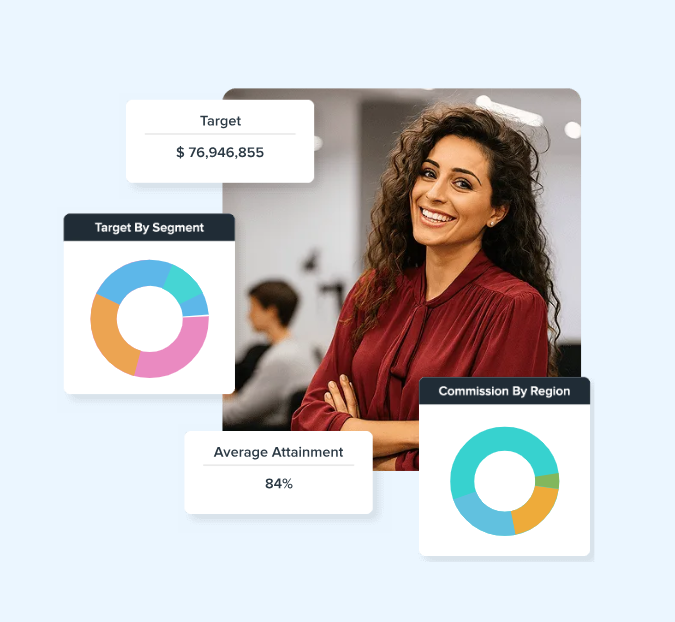
Xactly Incent processes over $7 billion in calculated commissions and bonuses monthly and reports 99.8% on-time commission payment accuracy.
Source: Xactly
The Compensation Configurator supports multi-tier accelerators, split credits, overlapping territories, clawbacks, and draws. Three tiers (Core, Plus, Ultimate) gate access to features like ASC 606 compliance, sandbox environments, AI agents, and industry benchmarking. Incent's calculation engine handles tens of thousands of payees and billions of transactions.
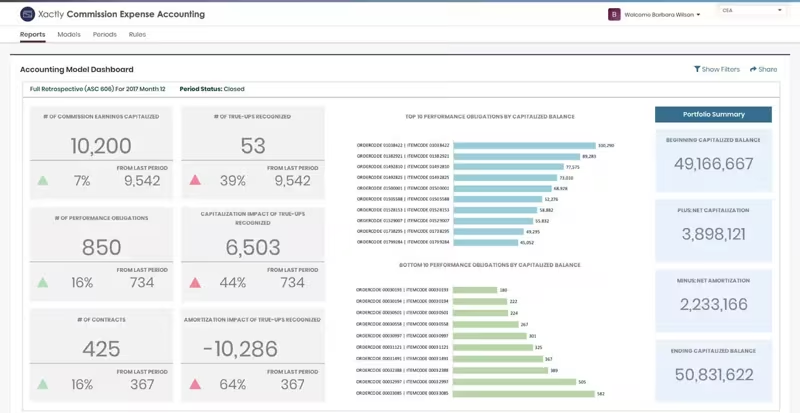
For public companies (or those preparing for IPO), the built-in Commission Expense Accounting module automates ASC 606 and IFRS 15 compliance with dynamic true-ups for contract events.
Source: Xactly
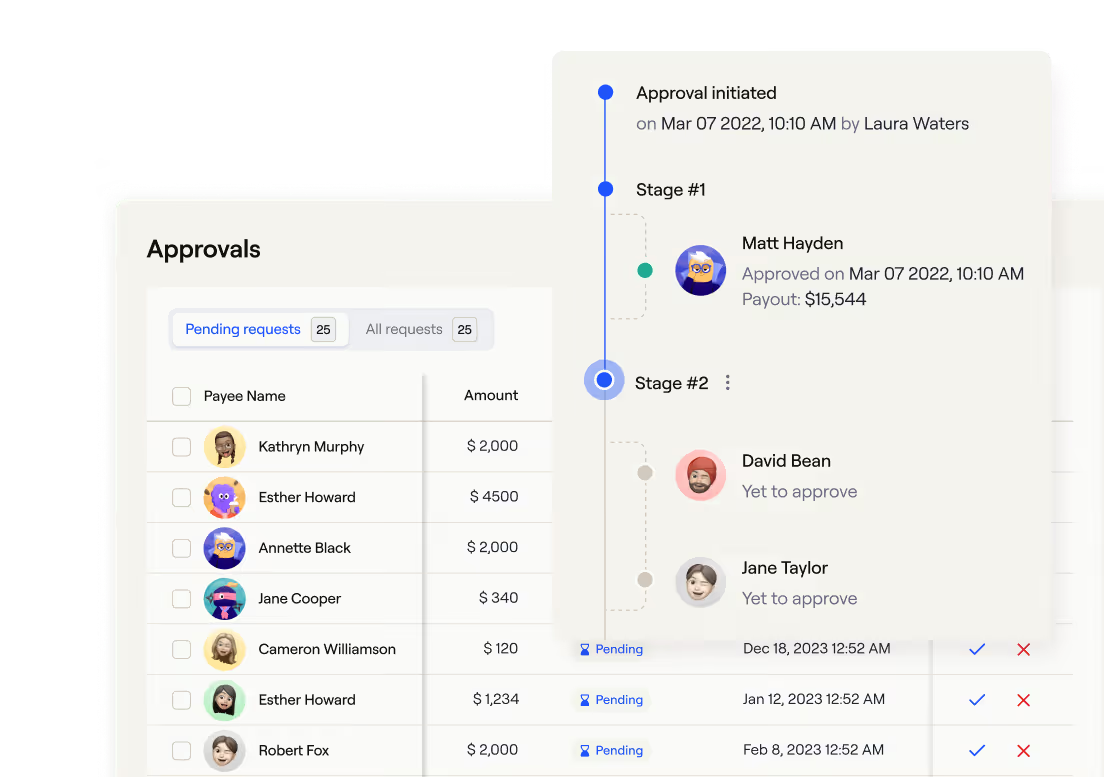
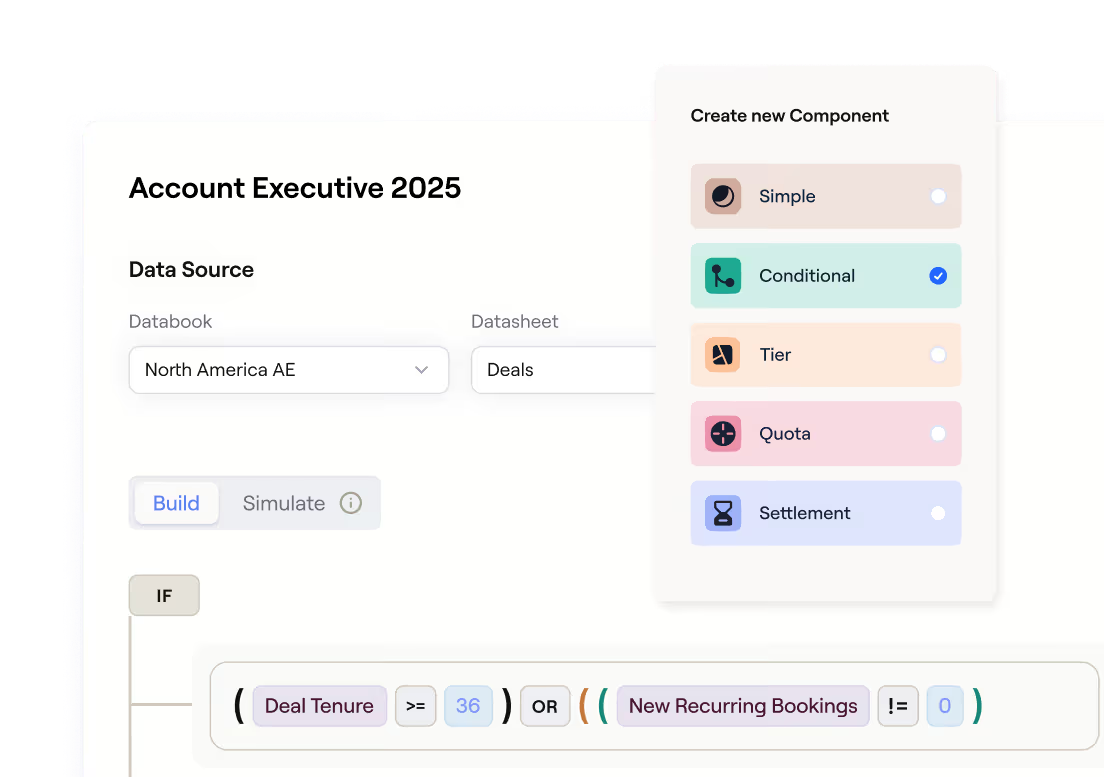
Everstage Incentives handles the same plan complexity (multi-tier accelerators, SPIFs, split credits, draw-against-commission) through a no-code plan designer that lets compensation admins build and modify plans without engineering.
Source: Everstage
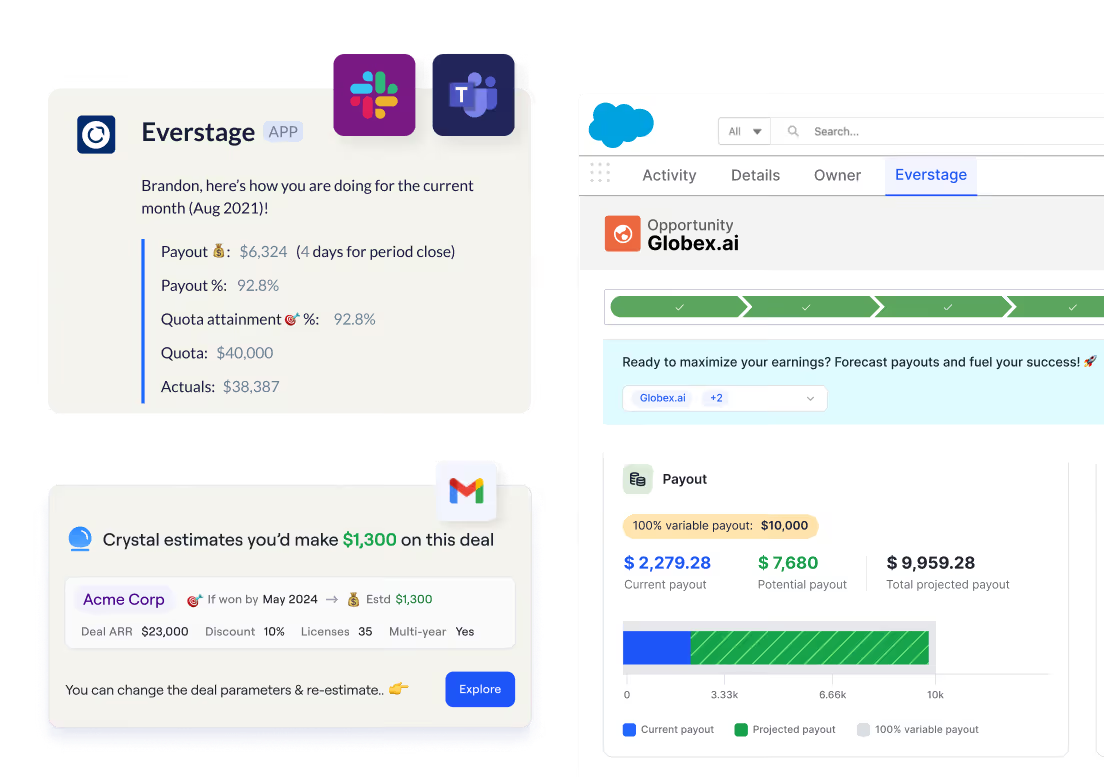
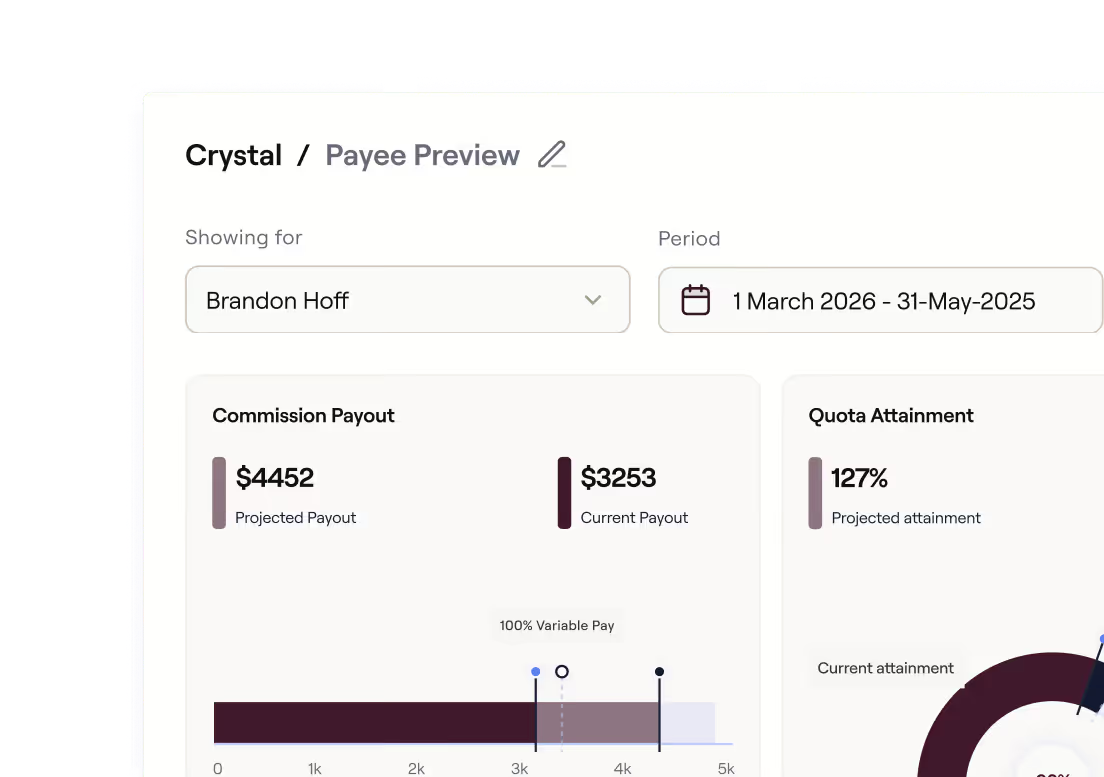
What sets it apart is the payee-facing experience: the Crystal AI Agent lets reps query payout scenarios in natural language, run deal-attribute simulations, and receive recommendations on pipeline prioritization.
The Everstage Connectivity Bundle surfaces commission data inside Slack, Microsoft Teams, Gmail, and Salesforce, so reps never log into a separate tool.
Source: Everstage
Where they diverge most is implementation speed. Xactly's timelines vary by complexity and can stretch for months, consistent with its enterprise positioning. Everstage advertises a 4-6 week go-live and holds G2's "Fastest Implementation (Enterprise)" badge.
Territory and quota planning: geographic depth vs. no-code speed
Territory and quota planning is where Xactly's acquisition strategy pays off and where Everstage's newer product faces its biggest maturity gap.
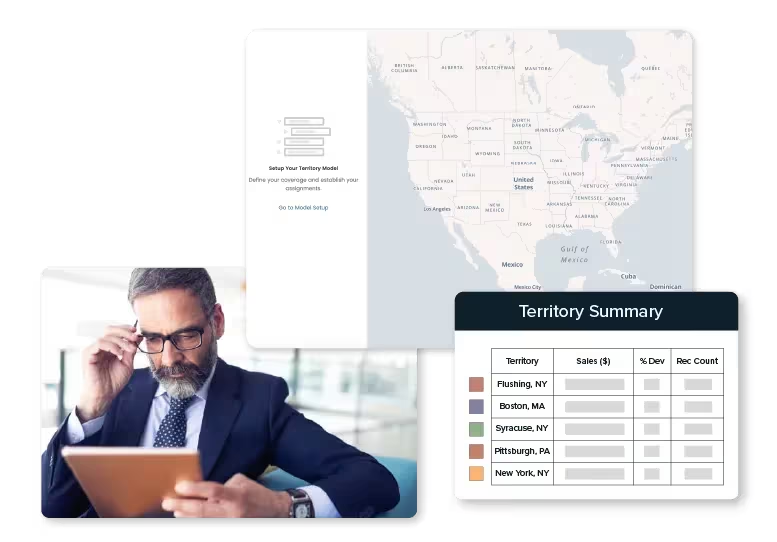
Xactly Plan and its embedded AlignStar territory mapping tool offer interactive, map-based territory design with drag-and-drop geographic assignment, a lasso tool for freeform selection, and an automated Alignment Report Card that grades territory balance against company objectives.
Source: Xactly
The optimizer runs "what-if" scenarios showing how proposed territory changes would affect performance before you commit. Xactly cites that balanced territory design can increase revenue by 15%, boost sales productivity by 20%, and reduce planning time by 75%. Route optimization for field reps minimizes drive time within territories, a feature especially valuable for medical device and manufacturing sales teams.
Xactly Manage adds a separate operational layer for ongoing territory, quota, and people management. Effective-dated roster changes cascade automatically to territory and quota assignments. Credit rules deploy automatically when territories shift. The system flags unassigned territories and imbalanced coverage models.
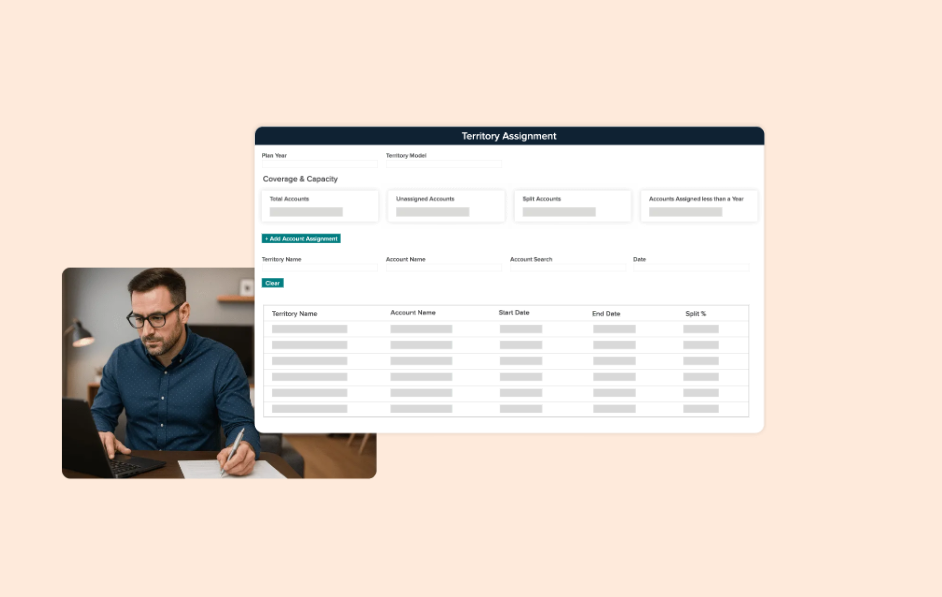
Source: Xactly
Everstage Planning, launched in June 2025, takes a no-code approach. Teams set quotas top-down or bottom-up, model headcount capacity with ramp profiles, and design territories by geography, industry, or custom parameters.
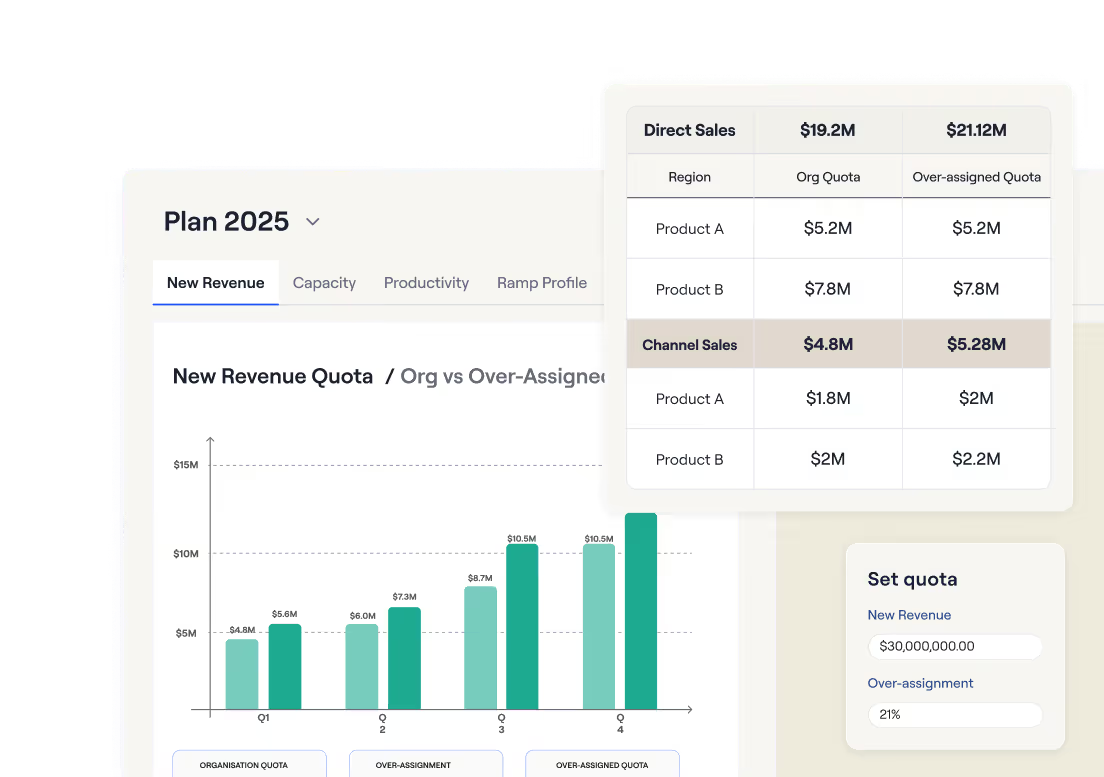
Source: Everstage
A visual US map interface shows account distribution across territories. The key differentiator: finalized quotas automatically push to every payee and sync to compensation plans without manual data entry, eliminating the lag between planning and execution.
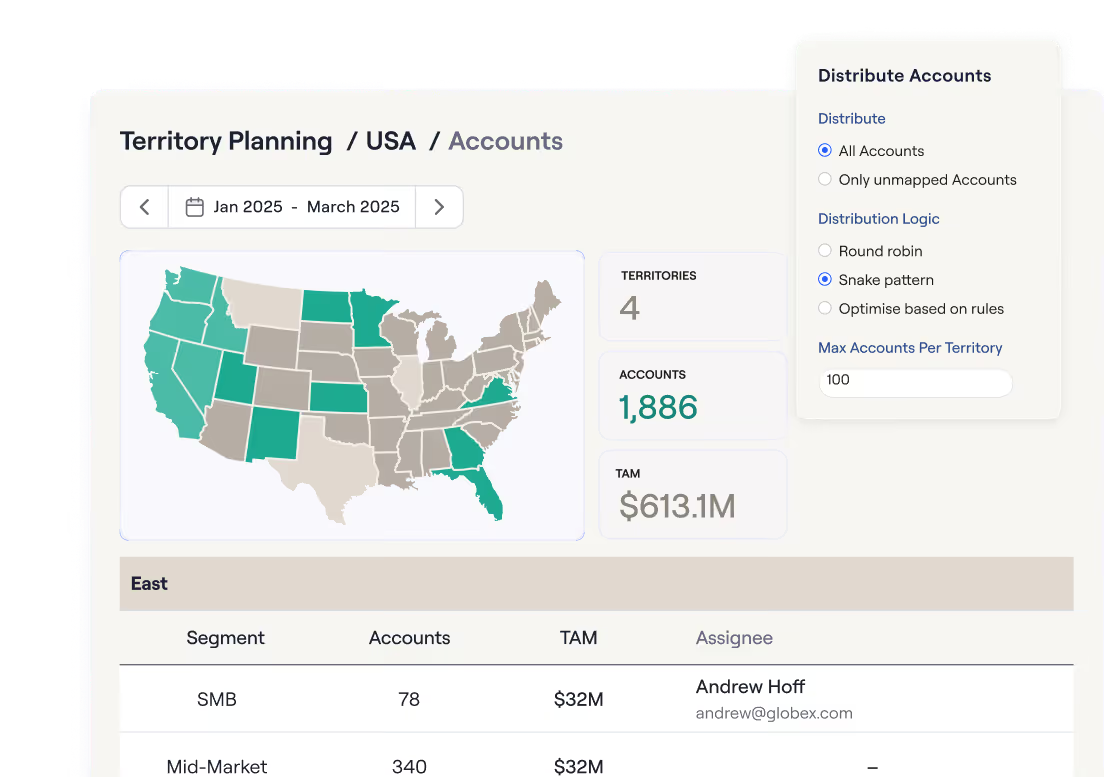
Source: Everstage
The honest assessment: Xactly's planning suite is more mature, with deeper geographic optimization, field-specific features like route planning, and years of enterprise deployment behind it.
Everstage Planning offers a faster, simpler path for teams whose planning needs are less geographically complex but who value the direct connection between planning changes and live compensation plans. Organizations with large field sales teams in complex geographic territories will find Xactly's AlignStar more capable. Organizations that prioritize planning-to-execution speed with simpler geographic needs may prefer Everstage's unified approach.
AI and intelligence: proprietary data vs. agentic architecture
Both platforms are investing in AI, but from different foundations.
Xactly Intelligence operates across three tiers: Insights (predictive ML), Assistants (natural-language chat), and Agents (autonomous workflow execution).
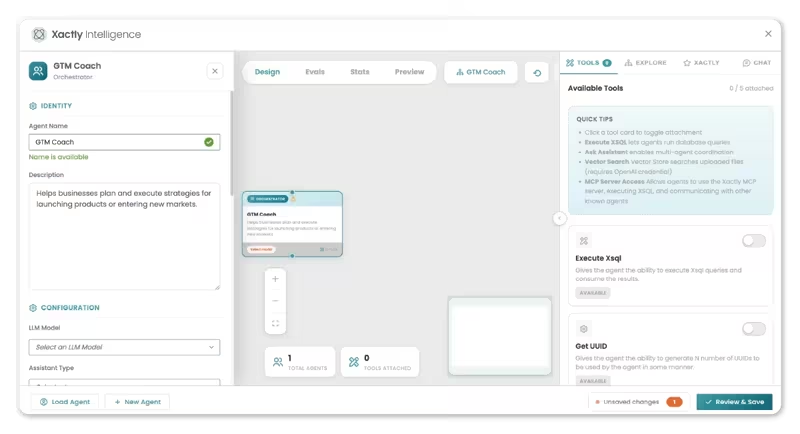
Source: Xactly
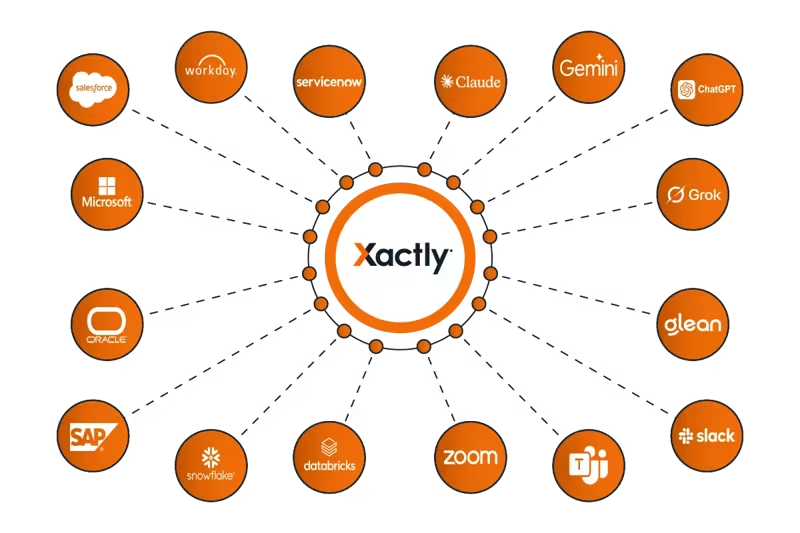
The Fleet of Agents, launched in May 2026, includes four agent types: Workflow (process automation), Optimization (performance-based recommendations), Builder (create custom agents via natural language or drag-and-drop in Intelligence Studio), and External (connect to agents in Salesforce, ServiceNow, and Workday via MCP).
The Dispute Management Agent co-built with ServiceNow investigates and resolves compensation disputes autonomously.
Source: Xactly
What powers Xactly's AI is its proprietary dataset. Every agent and model draws on 20+ years of pay-and-performance data accumulated since 2005. No competitor can replicate this historical depth. For organizations that want to benchmark compensation plans against industry norms, simulate plan changes against empirical patterns, or predict rep attrition from performance signals, this data advantage is real.
Everstage's Agent Core, launched in August 2025, takes a different approach.
Instead of historical depth, Everstage leads with task-specific agents: the Databook Assistant prepares commission data through natural language prompts, the Commission Assistant handles rep-facing payout questions, the Onboarding Assistant manages user lifecycle tasks, and the Admin Assistant supports plan administration.
The Crystal AI Agent enables conversational payout forecasting where reps manipulate deal variables to see projected commission outcomes in real time.
Source: Everstage
Everstage's Time Machine models plans against historical performance data before deployment, but without the cross-company benchmarking depth that Xactly's two-decade dataset enables.
Source: Everstage
The tradeoff: Xactly offers AI grounded in historical depth no competitor can match. Everstage offers AI built for speed and accessibility, with agents that reduce daily operational friction rather than enable strategic benchmarking.
Better comp plans start with better data
Both Xactly and Everstage automate what happens after pipeline data enters the system. Neither platform generates the account intelligence, contact data, or buying signals that make territory planning, quota setting, and pipeline forecasting accurate.
That upstream data layer is where ZoomInfo fits.
Territory planning depends on knowing which accounts exist in each geography, how large they are, what technology they use, and who the decision-makers are. Quota modeling depends on realistic market sizing. Pipeline forecasting depends on signals that reveal whether deals are progressing or stalling. When this data is incomplete or stale, every downstream commission calculation is technically accurate but strategically disconnected from reality.
ZoomInfo's GTM Context Graph combines the industry's largest B2B dataset with your CRM records, conversation transcripts, and behavioral signals to reveal the context behind pipeline movement. CRMs record that a deal changed stage.
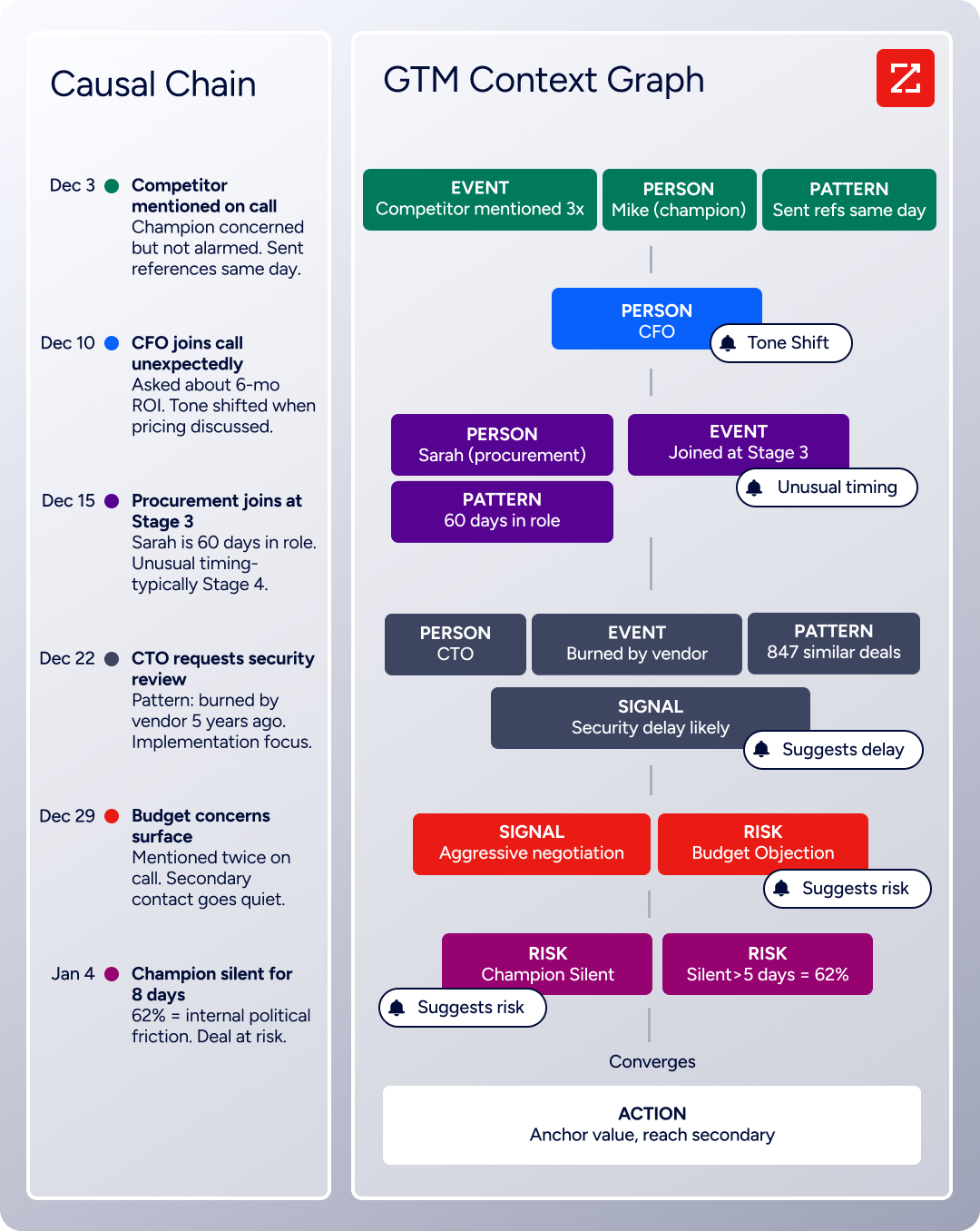
The GTM Context Graph captures why: executive sponsorship entered, a competitor was mentioned, a champion went quiet. That reasoning flows into territory design, quota distribution, and forecast accuracy.
For RevOps teams managing compensation strategy, this means territory assignments built on verified account data rather than stale CRM records, quotas set against realistic market coverage rather than gut estimates, and forecasts weighted by buying evidence rather than stage labels.
Seismic's sales team attributed 39% of active pipeline to opportunities identified or influenced by ZoomInfo signals and boosted productivity by 54%. (Seismic Case Study)
ZoomInfo integrates with both Salesforce and HubSpot, the CRM systems that Xactly and Everstage pull deal data from. Cleaner, more complete CRM data upstream means more accurate commission calculations downstream.
"ZoomInfo is our one source of truth for account data, and even more so for contact data. There's no other provider in the market that provides you with that level of detail." (Thor Sanderson, Senior Manager of Sales Technology Enablement, Smartsheet; Smartsheet Case Study)
Forecasting capabilities: dedicated product vs. platform adjacency
Forecasting is a notable differentiator between the two SPM platforms.
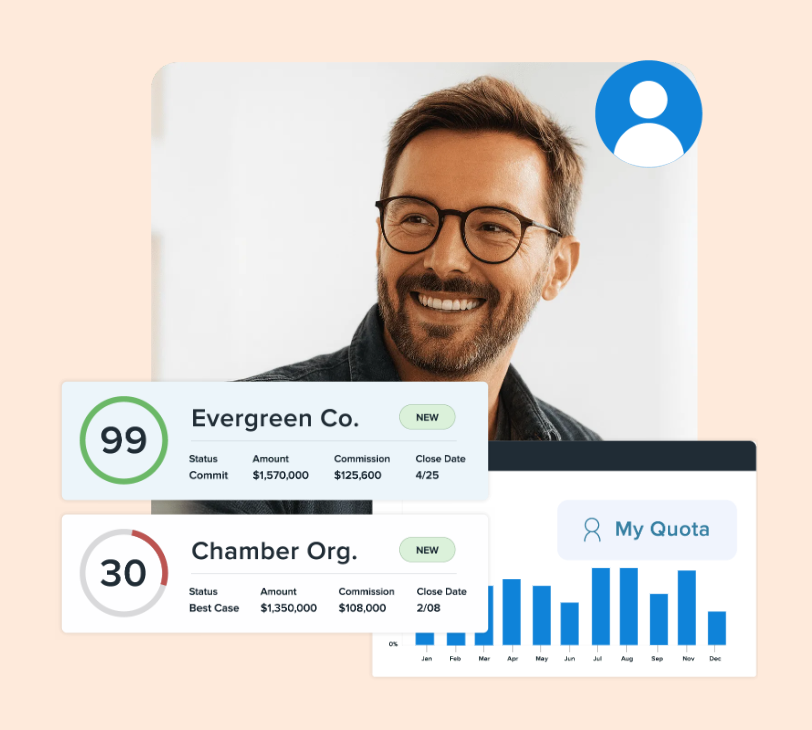
Xactly Forecast is a dedicated product that consolidates CRM and ERP data into a single interactive dashboard with AI-powered deal Health Scores. These scores analyze thousands of data points including email sentiment, meeting frequency, and historical rep performance to flag at-risk revenue.
Source: Xactly
The structural advantage: Xactly is the only tool that combines compensation data with pipeline data, since it owns both the ICM and forecasting products on the same platform. Reps see how new deals affect their earnings, creating a direct link between pipeline execution and compensation outcomes.
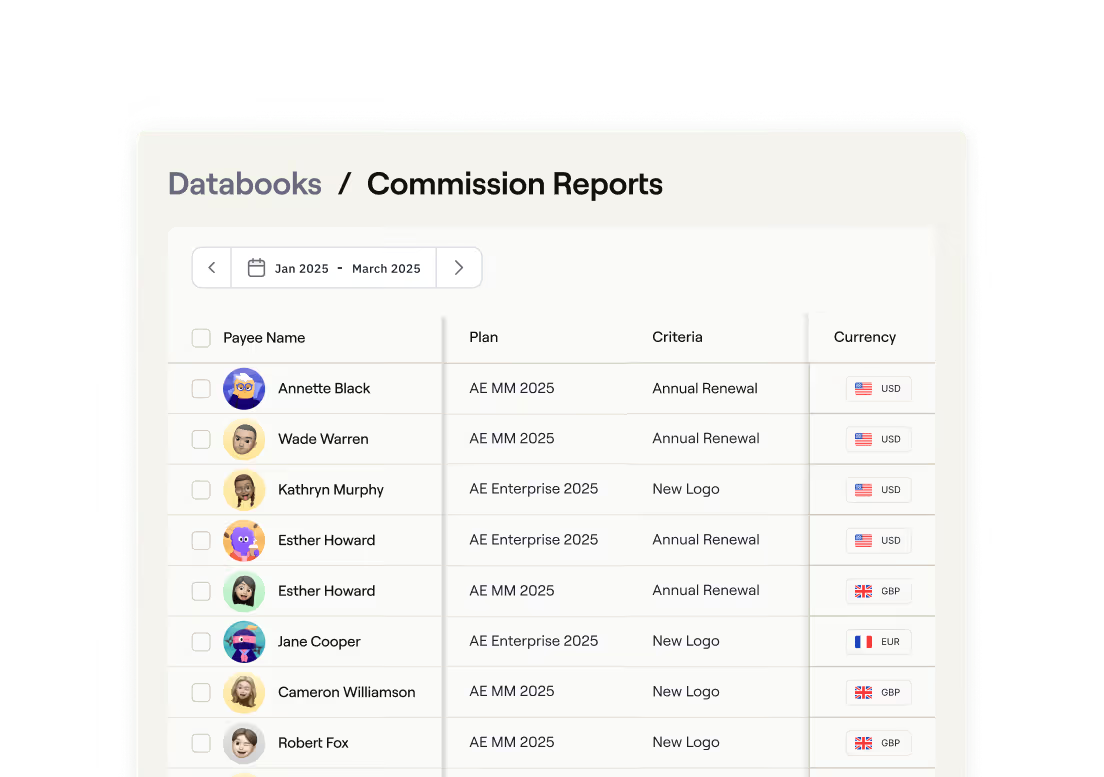
Everstage does not offer a standalone forecasting product. Its forecasting capability lives inside Everstage Incentives through the Crystal AI Agent, which projects commission earnings based on pipeline data.
The Commission Earnings Forecasting capability shows reps how deal changes affect projected payouts. This is useful for individual rep motivation but doesn't provide the organizational forecasting, deal health scoring, and pipeline analytics that Xactly Forecast delivers for sales leaders and CROs.
Source: Everstage
For organizations where pipeline forecasting accuracy is a priority for leadership, Xactly has a clear advantage. For organizations focused on giving individual reps commission forecasting to drive behavior, Everstage's approach works.
Pricing and contract comparison
Neither platform publishes prices, which makes direct comparison difficult. But the structural differences in their pricing models are informative.
Xactly uses a named-seat subscription model based on "Subscribers" (anyone authorized to access the service or whose data is stored for processing). Seat counts cannot be reduced mid-term. All fees are non-cancelable and non-refundable. Contracts auto-renew at Xactly's then-current rates unless either party provides written notice at least 60 days before term end. Xactly may increase fees once per 12-month period. Implementation services are priced separately.
Everstage uses a per-payee pricing model where the headcount metric is the number of people receiving commission payments, not total system users. Implementation fees are required, scoped separately, and are non-cancelable and non-refundable. Ongoing support is also priced separately. Customers cannot downgrade during an active subscription term. Auto-renewal requires 30 days written notice to opt out. Everstage markets "no hidden costs," though implementation, support, and custom integration work are all billed separately from the platform license.
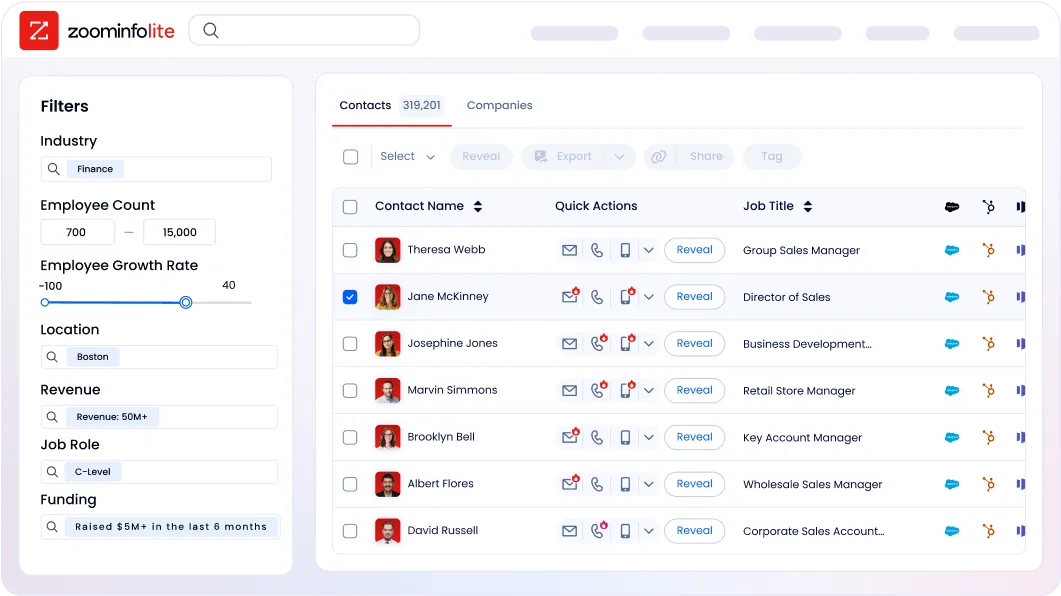
ZoomInfo uses a consumption-based pricing model scaled around data access, API consumption, and AI activity. A permanent free tier (ZoomInfo Lite) provides access to the B2B database with 10 monthly export credits, and a 7-day free trial opens access to core platform features.
The practical takeaway: both SPM platforms require a sales conversation to get pricing. Organizations evaluating total cost should factor in implementation fees, ongoing support costs, and the cost of maintaining multiple disconnected tools in their GTM stack.
Integration ecosystems reflect different maturity levels
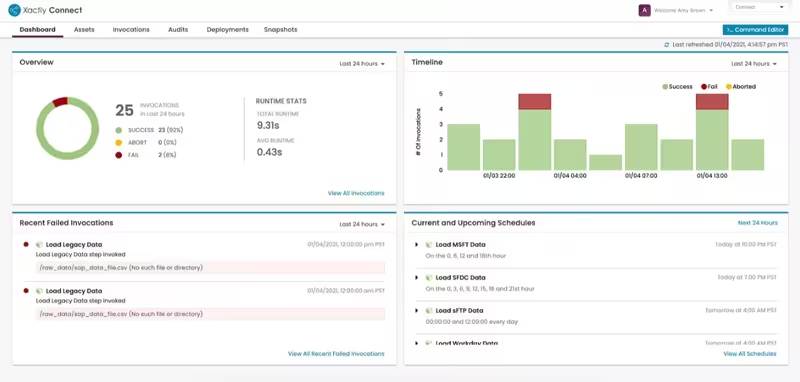
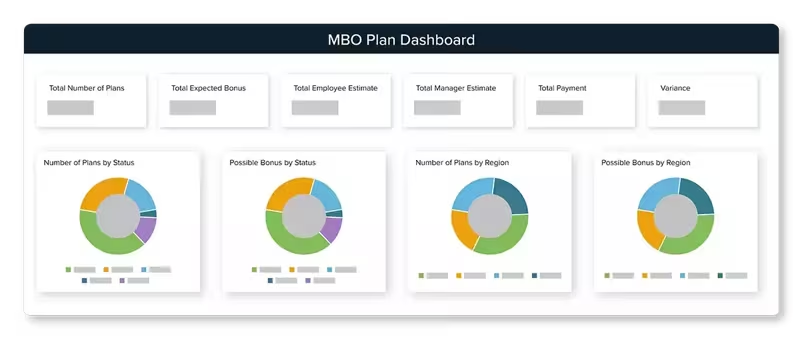
Xactly's integration approach centers on Xactly Connect, an integration product using ANSI SQL. Native connectors exist for Salesforce (80% of Xactly customers use Salesforce), HubSpot, Microsoft Dynamics, NetSuite, Snowflake, and Workday.
Source: Xactly
Xactly Extend, a low-code extensibility framework, enables custom dashboards, process automations, and adjacent SPM workflows. A Marketplace hosts pre-built apps from Xactly and certified partners. The MCP server (Intelligence Connect) connects Xactly to Claude, ChatGPT, Salesforce, and ServiceNow, making Xactly data accessible to any AI model.
Source: Xactly
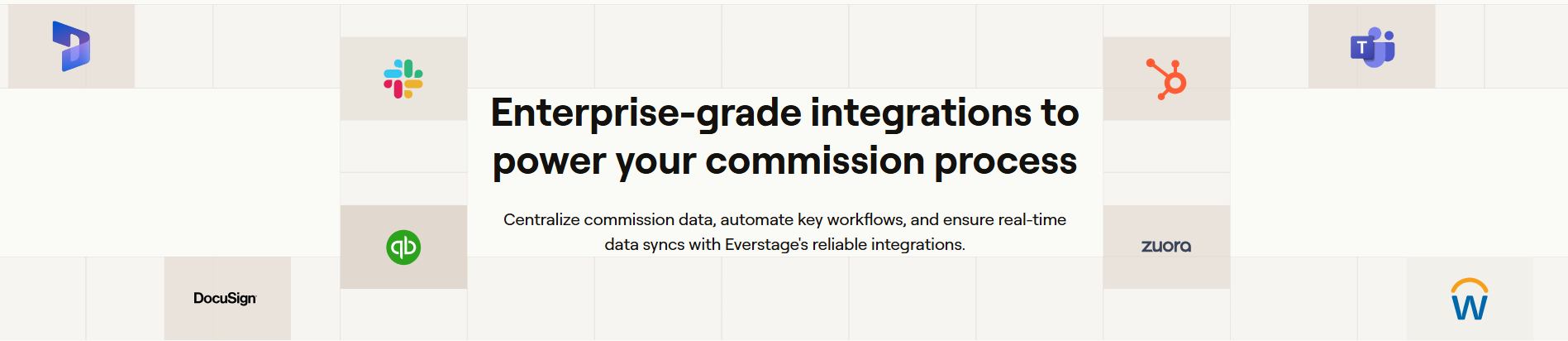
Everstage's integration catalog covers five categories: CRM (Salesforce, HubSpot, Microsoft Dynamics, Zoho, Freshsales, Pipedrive, Close.io, ServiceTitan), Accounting/ERP (NetSuite, Stripe, QuickBooks, Shopify, Sage Intacct, Chargebee, Maxio, Xero), Database (AWS S3, BigQuery, Redshift, SFTP, Snowflake, MySQL), HR (ADP, BambooHR, Ceridian Dayforce, Gusto, HiBob, Personio, Workday), and Collaboration (Slack, Microsoft Teams, DocuSign).
Source: Everstage
The Salesforce integration is especially deep: Everstage calls itself "the first completely configurable commission software on Salesforce". An open API exists but is configured through the implementation team rather than self-serve developer tooling.
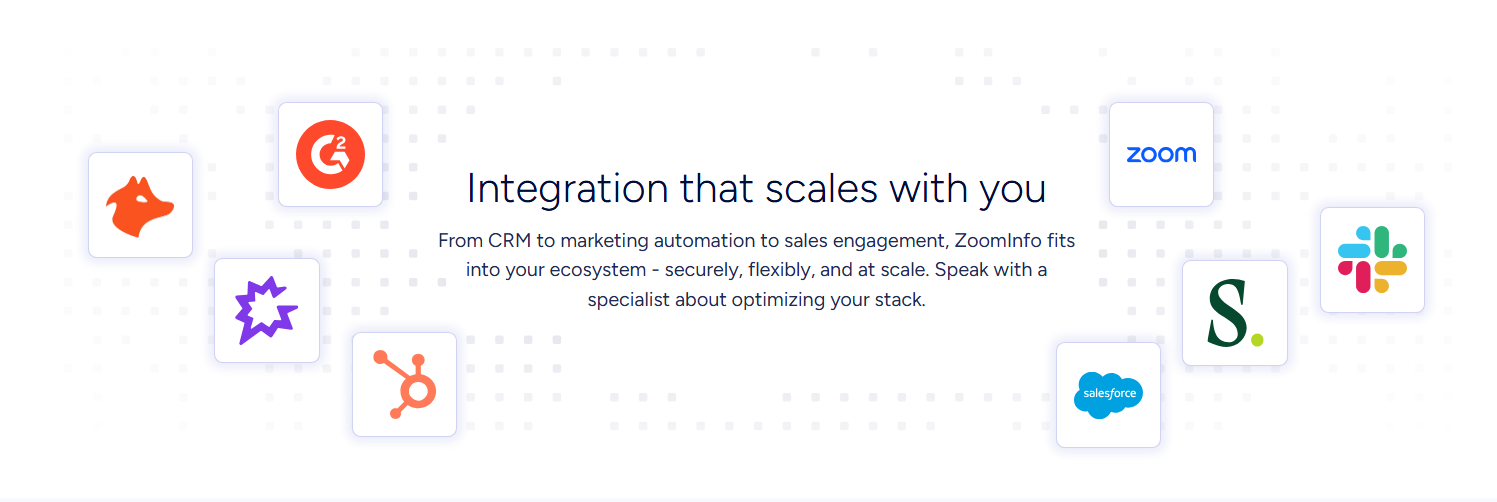
ZoomInfo operates a Marketplace with 172+ integration partners, native CRM integrations with Salesforce, HubSpot, and Microsoft Dynamics, cloud data delivery into AWS, Google Cloud, Snowflake, and Databricks, and an Enterprise API documented at docs.zoominfo.com.
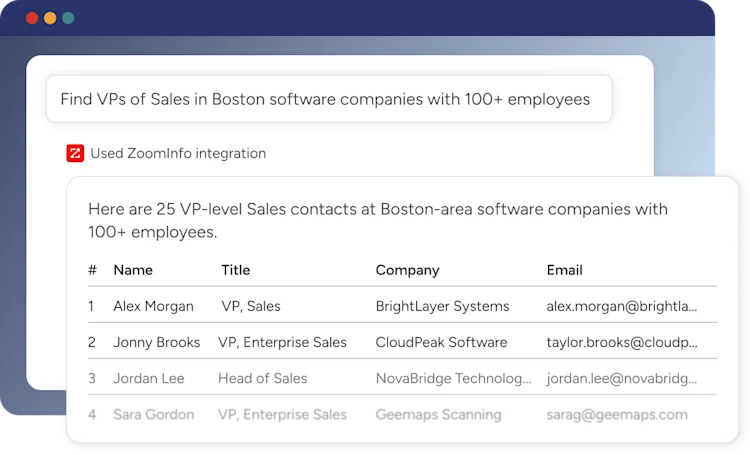
The MCP server connects ZoomInfo data to any MCP-compatible AI client, including Claude and ChatGPT.
Support models: white-glove vs. enterprise tiers
Everstage has earned consistently high marks for support. The Forrester Wave Q1 2025 noted that "customers rave about the overall user experience and live support they receive from Everstage." Support is in-house, includes solutions engineers and dedicated customer success managers, and offers 24x5 multi-channel support. The company also provides quarterly impact analysis and ROI reviews. For a company founded in 2020, this level of engagement is unusual.
Xactly offers multi-channel global customer support with phone lines across North America, Europe, Asia-Pacific, and Japan. Performance benchmarks include a 95.9% customer support satisfaction rate and 99.97% actual SLA uptime.
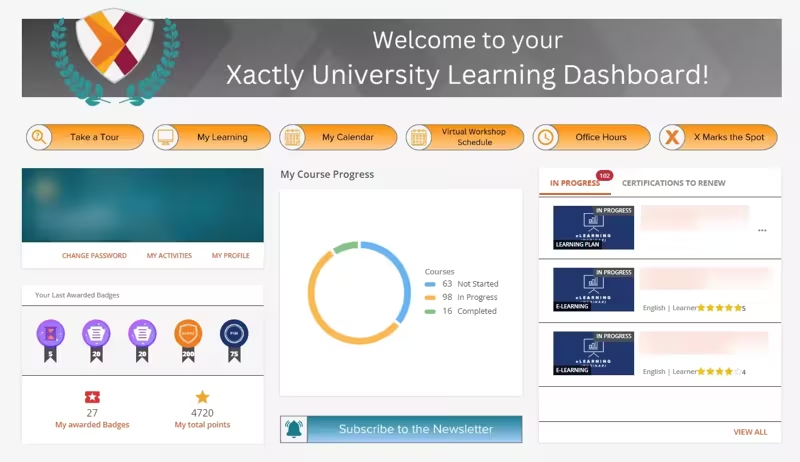
The Xactly Community provides peer forums, product documentation, and formal case submission. Xactly University offers structured training, instructor-led courses, and certifications. A separately purchasable Technical Account Manager service provides dedicated support beyond standard community access.
Source: Xactly
The difference: Everstage delivers high-touch support as part of the standard relationship. Xactly offers broad support infrastructure with premium tiers for organizations that want dedicated attention.
Xactly vs. Everstage vs. ZoomInfo: Which should you choose?
The right choice depends on where your organization sits today and what problems you need to solve first.
Choose Xactly if:
You have complex, multi-role compensation structures across hundreds or thousands of payees
ASC 606/IFRS 15 compliance and audit readiness are non-negotiable
You need dedicated forecasting with AI-powered deal health scoring
Interactive geographic territory mapping matters for field sales teams
You want to benchmark compensation plans against 20 years of industry data
Your organization can absorb a longer implementation cycle
Choose Everstage if:
Implementation speed is a priority and you need to be live in weeks, not months
Your RevOps and Finance teams want to build and modify plans without engineering
Real-time, rep-facing commission transparency is critical for seller motivation
You value modern UX and strong review ratings (4.9/5 across platforms)
You want a unified quote-to-commission workflow and are willing to bet on newer CPQ and Planning products
You're replacing a legacy system and want lower total cost of ownership
Add ZoomInfo to either if:
Your territory planning depends on accurate, verified account and contact data
You need pipeline intelligence that reveals why deals move, not just that they moved
Your quota modeling requires realistic market sizing based on B2B data
You want signals that identify in-market buyers before they engage a competitor
Your CRM data quality directly impacts commission accuracy downstream
See how ZoomInfo strengthens your revenue foundation with a free trial.
Commission platforms calculate payouts. Territory tools assign coverage. Forecasting products predict revenue. But the accuracy of every one of those outputs depends on the quality of the data feeding them. Xactly and Everstage each solve the compensation problem well, from different design philosophies. ZoomInfo solves the data problem that makes both of them more effective.
Xactly vs. Everstage vs. ZoomInfo FAQ
What is the main difference between Xactly and Everstage?
Xactly is a mature enterprise SPM platform founded in 2005, offering commission administration, territory mapping, quota planning, incentive design simulation, and AI-powered forecasting across six integrated products. Its core differentiator is 20+ years of proprietary pay-and-performance data powering AI models and industry benchmarking. Everstage is a modern SPM platform founded in 2020, focused on fast deployment (4-6 weeks), no-code plan design, and real-time rep-facing commission transparency. It has expanded into CPQ and Sales Planning, though both products are still early-stage.
Which platform implements faster?
Everstage advertises a 4-6 week go-live and holds G2's "Fastest Implementation (Enterprise)" badge. In the Diligent case study, Everstage delivered a proof of concept connected to production systems in a week and a half. Xactly's implementation timelines vary by complexity and typically span several months, consistent with its enterprise scope and the configuration required for complex multi-role compensation structures.
Which platform has better user reviews?
Everstage leads with 4.9/5 on G2, Gartner Peer Insights, and Capterra, and 9.5/10 on TrustRadius. It is the only sales commission software in G2's Top 100 Software Honors. Xactly holds G2's #2 Enterprise Grid position for Compensation Management (Spring 2026), the 2026 TrustRadius Buyer's Choice Award, and ISG Research Overall Leader status across three SPM categories.
How does ZoomInfo relate to Xactly and Everstage?
ZoomInfo is not a competitor to either platform. It provides the upstream data foundation both platforms depend on. Territory planning, quota modeling, and pipeline forecasting all rely on accurate account and contact data. ZoomInfo's B2B database and GTM Context Graph feed CRM systems like Salesforce and HubSpot, which in turn feed Xactly and Everstage. Cleaner CRM data means more accurate commission calculations downstream.
Which platform is better for ASC 606 compliance?
Xactly has a clear advantage. Its Commission Expense Accounting module is built for ASC 606 and IFRS 15, including dynamic true-ups for contract events, full capitalization and amortization schedules, and pre-built auditor reporting. Everstage offers automated ASC 606 expense reports with waterfall views and audit trails but does not match Xactly's depth for organizations with complex revenue recognition requirements.
Which platform handles territory planning better?
Xactly's territory planning is more mature. AlignStar provides interactive map-based territory design with drag-and-drop geographic assignment, an automated Alignment Report Card, a "what-if" optimizer, and route optimization for field reps. Everstage Planning offers no-code territory design by geography, industry, or custom parameters with a visual US map interface, but it launched in June 2025 and lacks the depth of Xactly's geographic optimization tools.
Do either platform offer a free trial?
Neither offers a self-serve free trial. Xactly maintains a Trial Subscriptions Services Agreement, indicating trial access through the sales team. Everstage offers a free proof of concept where the company builds out a prospect's compensation plan in-platform before any purchase commitment. ZoomInfo offers both a permanent free tier (ZoomInfo Lite with 10 monthly export credits) and a 7-day free trial with access to core platform features.
Which platform is better for organizations with fewer than 100 payees?
Neither platform is designed for small teams. Both use custom pricing models (Xactly per named seat, Everstage per payee) with required paid implementations, creating cost floors that may not justify the investment for organizations with simple compensation structures and small headcounts. Lighter alternatives like QuotaPath may be more appropriate for teams with straightforward plans.
More Xactly and Everstage comparisons:
