
Wasted spend on untargeted campaigns kills B2B pipeline. Account-based marketing platforms fix that by treating high-value accounts as individual markets. You surround buying committees with targeted campaigns across display ads, email, social, web personalization, and events. The goal: get the right message to the right accounts at the right time.
ZoomInfo is an all-in-one AI GTM Platform that combines verified B2B data, intent signals, and multi-channel orchestration to power account-based programs at scale. Whether you're evaluating an ABM platform head-to-head, exploring account-based marketing services, or deciding between building in-house and working with an agency, this guide covers the top account-based marketing companies and what to look for before you commit. Understanding the core components of an ABM tech stack can also help you evaluate how any platform fits into your existing infrastructure.
What Is an Account-Based Marketing Platform?
An account-based marketing platform uses B2B data, intent signals, and multi-channel orchestration to identify and engage high-value accounts with personalized messaging. Instead of broad campaigns, you target accounts matching your ideal customer profile across display, email, social, and web.
Core capabilities include:
Account Identification: Build target account lists using firmographic, technographic, and intent data to match your ICP through account discovery
Intent Data: Track which accounts are actively researching solutions in your category based on web activity and content consumption
Multi-Channel Activation: Orchestrate campaigns across display advertising, social, email, web personalization, and direct mail
CRM Integration: Sync account data and engagement signals with Salesforce, HubSpot, and marketing automation platforms
Attribution: Measure account-level engagement and connect marketing touchpoints to pipeline and revenue
Some B2B teams access these capabilities through account-based marketing services offered by agencies or managed service providers, while others build in-house programs using dedicated platforms.
Top ABM Platforms Compared
An ABM platform comparison starts with understanding where each tool leads and where it falls short. ZoomInfo is an all-in-one AI GTM Platform whose intelligence layer processes 1.5B+ data points daily, fusing B2B contact data with CRM signals, conversation intelligence, and behavioral data to prioritize accounts and orchestrate campaigns. The best ABM platform for your team depends on your priorities: data quality, predictive analytics, advertising reach, or web personalization. Here's how the top platforms stack up:
Platform | Key Differentiator | Best For | Pricing Model |
|---|---|---|---|
ZoomInfo Marketing | 500M+ contacts with an intelligence layer processing 1.5B+ data points daily for multi-channel orchestration | Teams that need verified B2B data and integrated outreach | Free to start; consumption credits |
Demandbase | Account Intelligence platform unifying sales and marketing workflows | Organizations prioritizing revenue team alignment | Quote-based |
6sense | Predictive AI and intent analytics for identifying in-market accounts | Enterprise teams focused on intent-driven pipeline generation | Free tier; quote-based |
DemandScience | Managed demand-gen services with IONIC Identity Graph and switchability scoring | B2B marketers running managed multi-channel ABM campaigns | Quote-based |
AdRoll ABM | Buyer-insights engine over 2.6B digital identities with native DSP execution | Mid-market teams focused on account-based advertising | Quote-based |
Madison Logic | Intent data from proprietary B2B publisher network for content syndication | Demand gen teams leveraging content marketing | Quote-based |
Foundry ABM | Orchestration platform with human-verified intent from owned editorial network | Teams running complex ABM plays across channels | Quote-based |
Mutiny | Generative AI agent for personalized customer-facing assets | Marketing teams scaling personalized sales and marketing materials | Free tier; from $50/seat/mo |
Influ2 | Person-based advertising targeting specific decision-makers | Enterprise ABM teams with defined buying committees | Quote-based |
Clearbit | Data enrichment and visitor identification (HubSpot) | HubSpot users needing enhanced firmographic data | Bundled with HubSpot |
List of The Best ABM Platforms
1. ZoomInfo Marketing
Overview
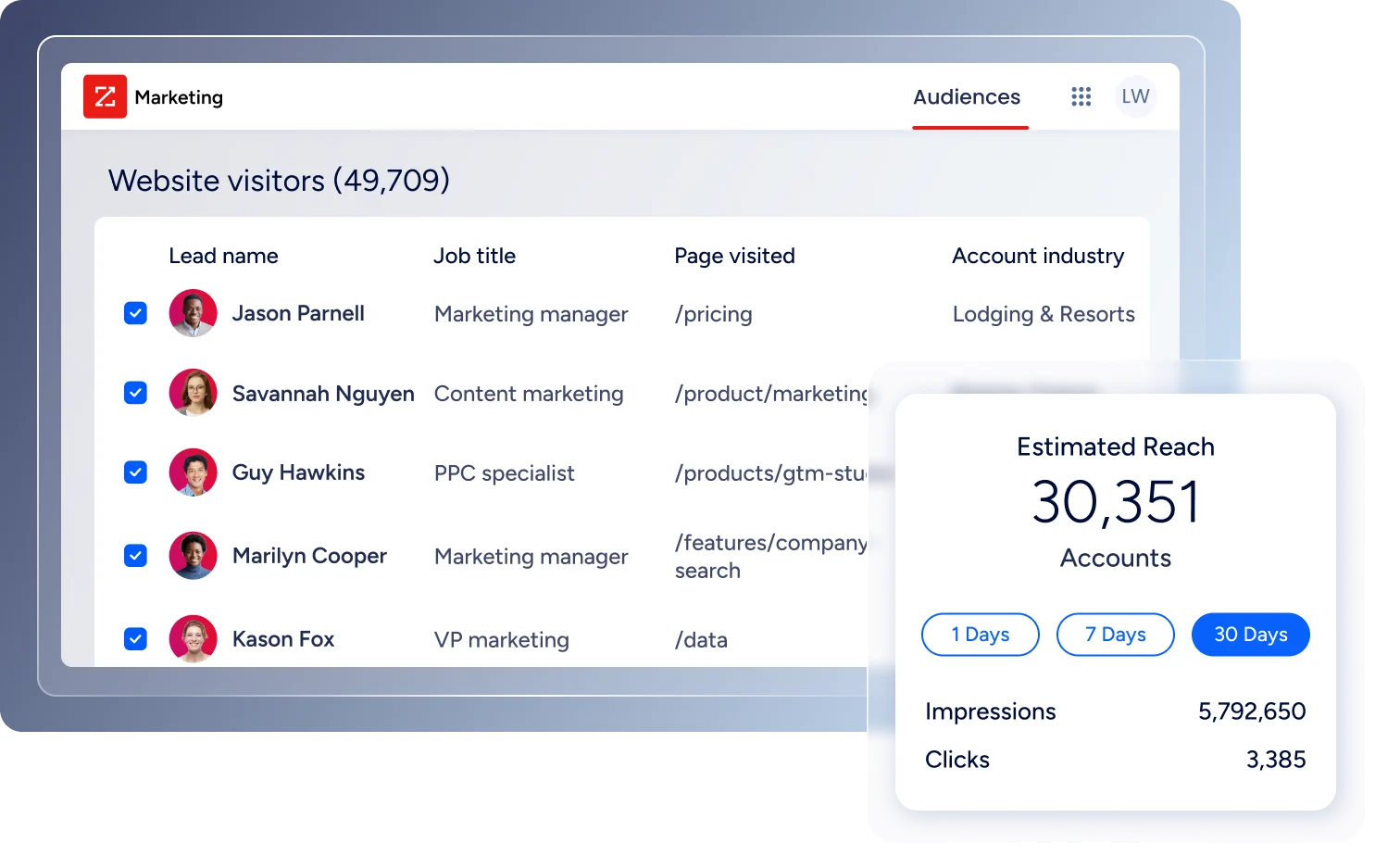
ZoomInfo is an all-in-one AI GTM Platform. ZoomInfo Marketing combines 500M+ contacts and 100M+ company profiles with the GTM Context Graph, an intelligence layer that processes 1.5B+ data points daily by fusing B2B data with CRM signals, conversation intelligence from Chorus, and behavioral data. The result: marketers identify in-market accounts, build precise audiences, and launch multi-channel campaigns from a single platform.
Smartsheet increased MQLs 84% after deploying ZoomInfo Marketing, alongside a 40%+ form fill increase, 26% opportunity rate increase, and 59% win rate increase. ZoomInfo earned Gartner Customers' Choice recognition for Account-Based Marketing Platforms in 2025 and was named a Forrester Wave Leader for Intent Data Providers Q1 2025 with the highest scores across 8 criteria.
Customer Results
Redwood Logistics (paid campaign precision): Redwood Logistics cut CPC 99% using ZoomInfo's account-targeting capabilities for display campaigns
Safety Services (ABM pipeline impact): Safety Services drove 200% more MQLs after building account-based campaigns on ZoomInfo's verified data
CreditXpert (intent-driven targeting): CreditXpert improved CTR 50% over programmatic benchmarks by layering intent signals on top of firmographic targeting
Key Features
300+ firmographic and technographic filters for precise targeting
In-market predictive scoring prioritizing high-intent accounts
Company and person-level intent to reach a new level of personalization
Multi-channel campaigns across display, social, email, and SMS
Automated data enrichment and account monitoring
GTM Workspace with AI agents for guided selling
Native integrations with Salesforce, HubSpot, Marketo, and Outreach
Pricing
Free to start with consumption credits based on usage.
Pros
Enterprise-grade verified data: 500M+ contacts and 100M+ company profiles
Cross-signal reasoning layer processing 1.5B+ data points daily across CRM, intent, conversation intelligence, and behavioral signals
Multi-channel orchestration with a native demand-side platform
Gartner Customers' Choice ABM 2025 and Forrester Wave Leader Intent Data Q1 2025
Cons
Full platform value requires multi-module adoption
Consumption-credit model needs usage planning
Enterprise-scale feature set has a learning curve for small teams
Start free with GTM AI or request a demo to see ZoomInfo Marketing in action.
2. Demandbase
Overview
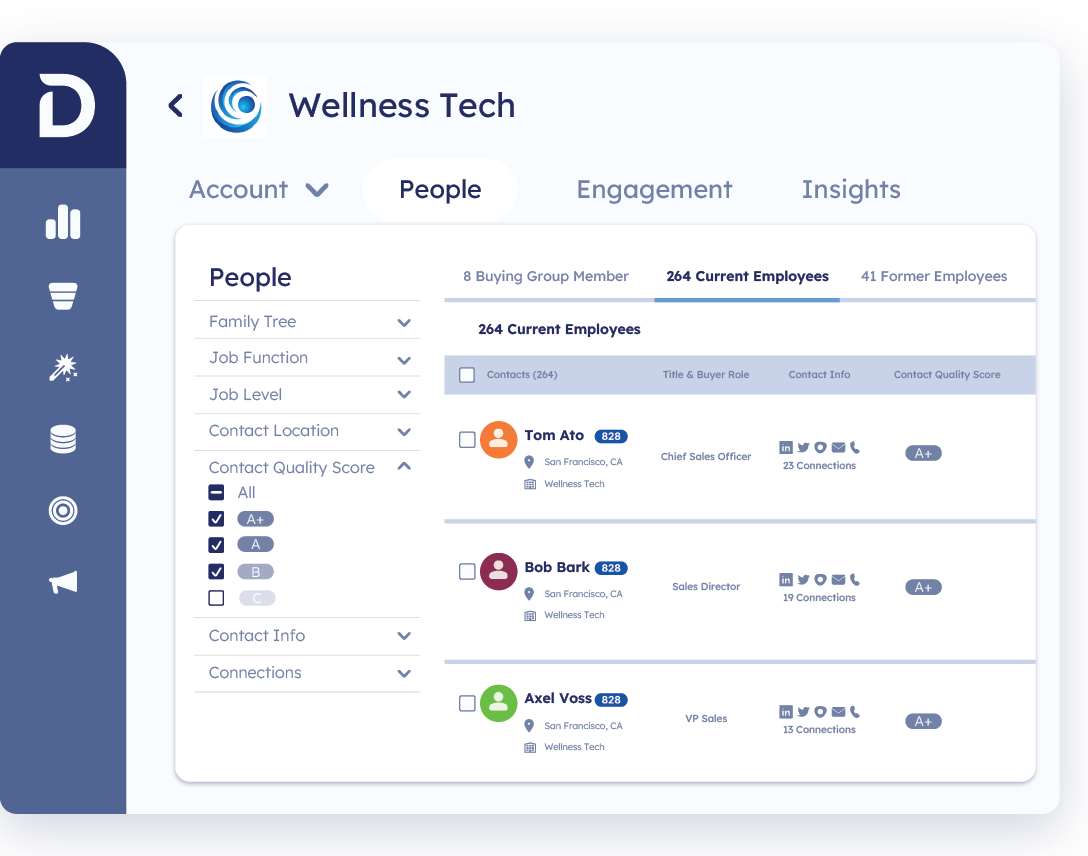
Demandbase is an Account-Based Experience (ABX) platform built around Demandbase One. The unified platform spans ABM advertising, account intelligence, sales intelligence, and data, giving go-to-market teams a single surface for identifying opportunities and coordinating engagement. Demandbase holds a G2 rating of 4.4/5 from 1,934 reviews.
Key Features
Account Intelligence unifying first- and third-party data
Audience segmentation using firmographics, intent, and engagement
Native ABM advertising with programmatic media buying
Cross-channel orchestration and campaign management
Revenue attribution connecting marketing to pipeline
Pricing
Quote-based; no public dollar amounts. Flexible packaging model.
Pros
Most established ABM-platform competitor by tenure
Native ad-buying platform more developed than most ABM tools
Unified sales and marketing surface in Demandbase One
Cons
Pricing fully quote-based with no self-serve entry
No conversation intelligence equivalent to Chorus
No documented MCP/agent ecosystem for developer access
How Demandbase compares against ZoomInfo
Demandbase's tenure as the original ABM platform and its native programmatic ad-buying layer give it the deepest ABM advertising execution among all-in-one competitors.
ZoomInfo's edge is 500M+ verified contacts vs. Demandbase's smaller proprietary data foundation, conversation intelligence via Chorus that Demandbase lacks entirely, and free-to-start consumption-credit pricing vs. Demandbase's fully gated quote-based model.
See the Demandbase vs. ZoomInfo comparison for the full head-to-head.
3. 6sense
Overview
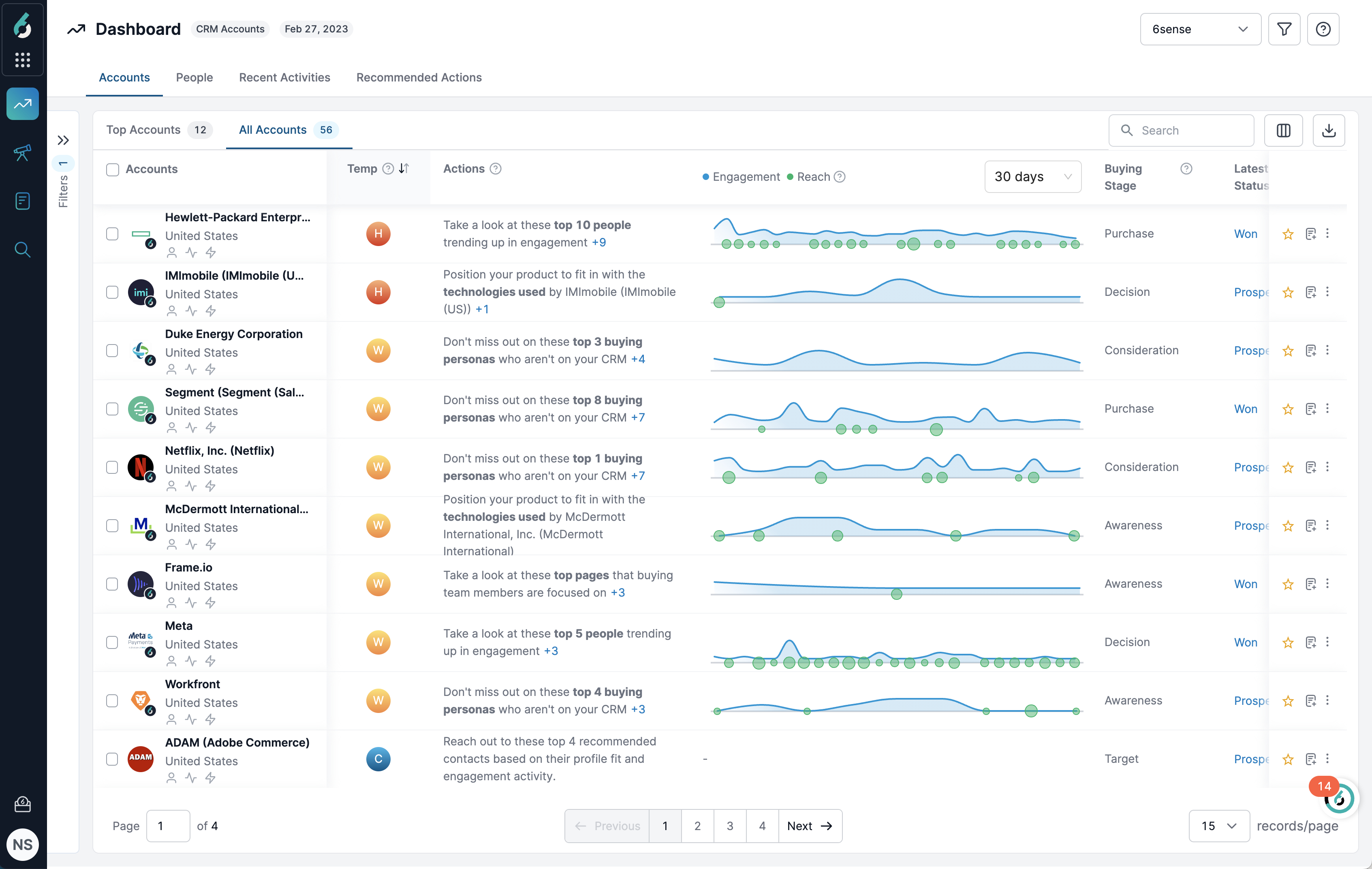
6sense uses predictive AI and intent analytics to identify accounts showing buying signals before they enter your funnel. The 6sense ABM Platform centers on in-market account identification via predictive AI with anonymous buyer-journey identification, scoring accounts across buying stages from Awareness through Purchase. 6sense holds a G2 rating of 4.4/5 from 1,028 reviews and earned Forrester Wave Leader recognition for Revenue Marketing Platforms B2B Q1 2026.
Key Features
Predictive AI model scoring accounts by buying stage (Awareness, Consideration, Decision, Purchase)
Multi-channel campaign orchestration (display, LinkedIn, email)
Anonymous buyer-journey identification
Account-level analytics and pipeline attribution
Native Salesforce, HubSpot, and Marketo integrations
Pricing
Free Sales Intelligence tier with 50 data credits/month; paid ABM bundles are quote-based.
Pros
Predictive buying-stage model names where accounts sit in the funnel
Native ABM advertising as a first-class channel
Forrester Wave Leader recognition for Revenue Marketing Platforms
Cons
No conversation intelligence equivalent to Chorus
Pricing fully quote-based on paid tiers
No documented MCP/agent ecosystem for developer access
How 6sense compares against ZoomInfo
6sense's predictive buying-stage model and native ABM advertising layer give enterprise teams a strong intent-to-ad pipeline, backed by Forrester Wave Leader recognition for Revenue Marketing Platforms.
ZoomInfo's edge is 500M+ verified contacts and 100M+ company profiles vs. 6sense's smaller proprietary data foundation, conversation intelligence via Chorus that 6sense lacks entirely, and a cross-signal reasoning layer processing 1.5B+ data points daily across CRM, intent, conversation intelligence, and behavioral signals.
See the 6sense vs. ZoomInfo comparison for the full head-to-head.
4. Terminus (now DemandScience)

Overview
DemandScience (formerly Terminus) is a managed demand-generation services vendor. Terminus was absorbed into DemandScience, and the combined platform now operates as a services-led demand-gen vendor rather than a pure self-serve ABM platform. The DemandScience IONIC Identity Graph + Intent Data product provides 247M+ verified global contacts across 100+ countries, paired with the Winnable Account System for switchability scoring that layers technographic and IT-spend context on top of intent signals.
Key Features
IONIC Identity Graph with 247M+ verified global contacts
Multi-source buyer intent data
Winnable Account System (HG Insights + GTM Fabric) for switchability scoring
Labs managed services team for end-to-end campaign execution
Content syndication with guaranteed CPL and lead-replacement guarantee
Pricing
Quote-based; DemandScience positions itself as a managed-services engagement.
Pros
Managed-services execution removes platform learning curve
Winnable Account System layers technographic and IT-spend context on top of intent
Guaranteed CPL on content syndication programs
Cons
No self-serve platform (every program is a services engagement)
247M contacts vs. ZoomInfo's 500M+
Positioned as complementary to ZoomInfo rather than a standalone replacement
How DemandScience compares against ZoomInfo
DemandScience's managed-services model removes the platform learning curve entirely and its Winnable Account System adds switchability scoring that goes beyond standard intent signals.
ZoomInfo's edge is 500M+ contacts vs. DemandScience's 247M (broader data foundation for account identification and outreach), a self-serve platform with AI agents vs. DemandScience's services-only model (teams own their data and execution), and conversation intelligence that DemandScience lacks.
Talk to our team for a head-to-head DemandScience vs. ZoomInfo walkthrough.
5. RollWorks (now AdRoll ABM)
Overview
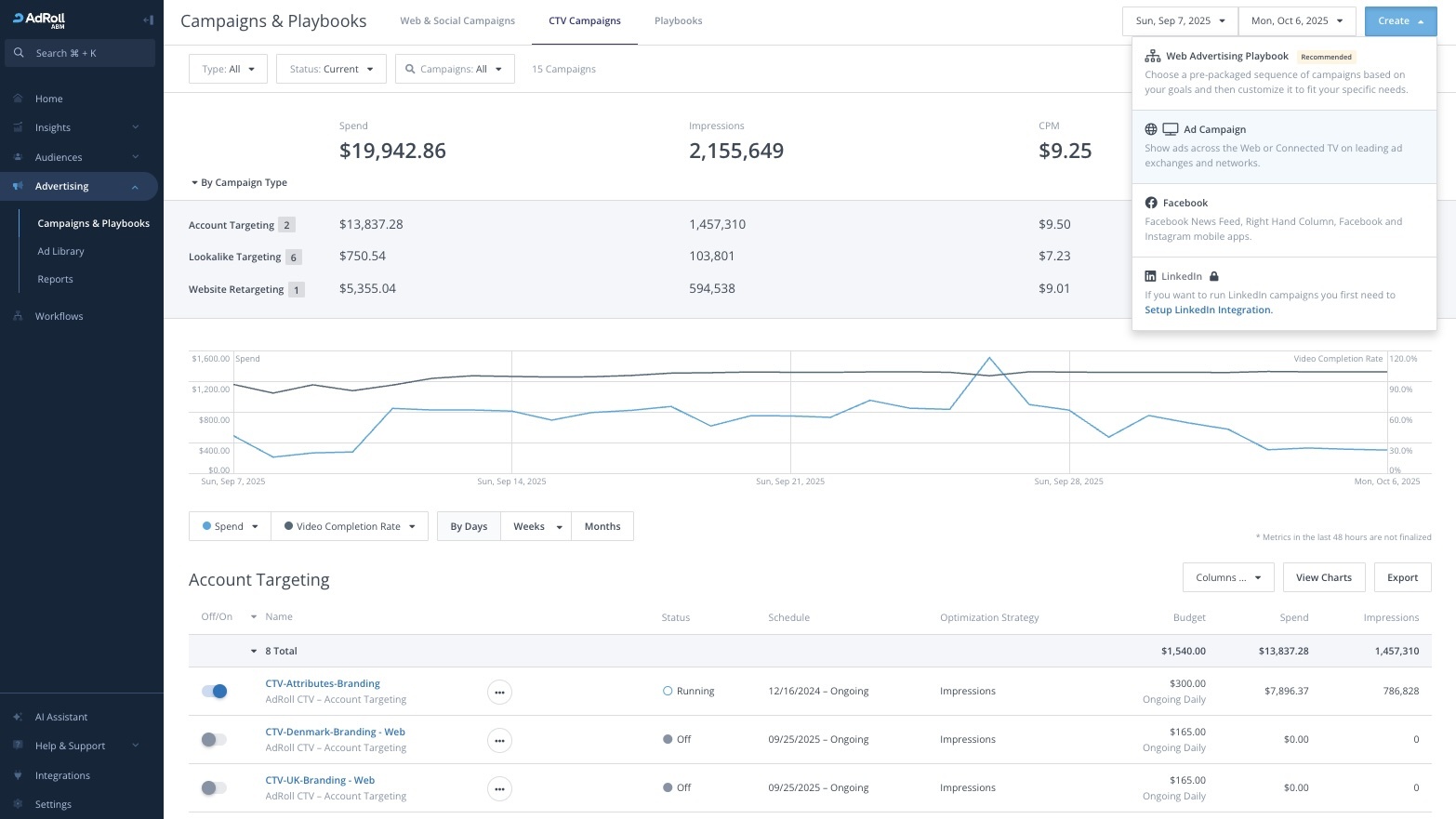
AdRoll ABM (formerly RollWorks) is an account-based advertising platform built for B2B marketers running account-based ad campaigns. RollWorks was officially rebranded under the unified AdRoll brand in August 2025. The platform's buyer-insights engine covers 2.6B digital identities and 92M contacts, with predictive account scoring using firmographic, technographic, job-title, and search-keyword signals plus partner intent from G2 and Bombora.
Key Features
Buyer-insights engine over 2.6B digital identities and 92M contacts
InIQ AI buyer-insight and BidIQ AI bid-optimization engines
Multi-touch cross-channel ad activation (display, native, video, mobile, social, CTV)
Predictive intent targeting with G2 and Bombora partner signals
Closed-won attribution and revenue-impact reporting
Pricing
Quote-based; no public list prices.
Pros
Native ABM intelligence and DSP execution in one application
Native CTV and DOOH execution without third-party routing
30-day onboarding via one-click HubSpot/Salesforce integration
Cons
92M contacts vs. ZoomInfo's 500M+, conceding contact-data depth
No conversation intelligence or call recording
Pricing gated behind demo
How AdRoll ABM compares against ZoomInfo
AdRoll ABM's owned DSP infrastructure (BidIQ) and native CTV/DOOH execution give it the strongest ad-buying layer among mid-market ABM platforms.
ZoomInfo's edge is 500M+ contacts vs. AdRoll ABM's 92M (broader data foundation for account identification), cross-signal reasoning across CRM, intent, conversation intelligence, and behavioral data that AdRoll ABM lacks, and free-to-start consumption-credit pricing vs. AdRoll ABM's fully gated model.
Talk to our team for a head-to-head AdRoll ABM vs. ZoomInfo walkthrough.
6. Madison Logic
Overview
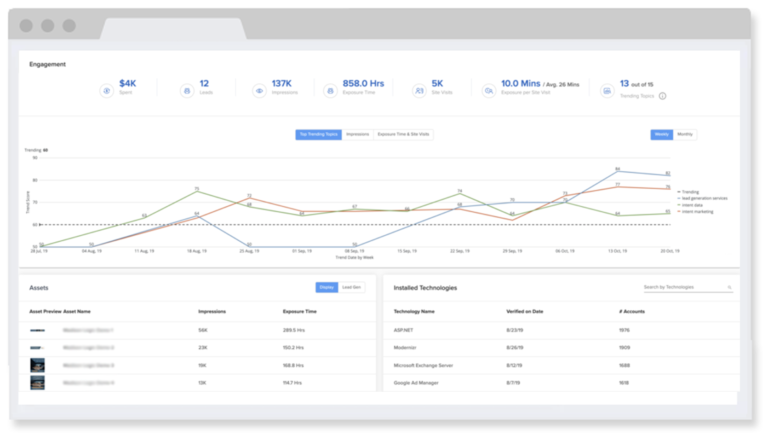
Madison Logic is a media-buying-led ABM platform that combines intent data with content syndication and multi-channel advertising. ML Insights, its intelligence layer, captures 500M+ monthly proprietary engagement signals and draws on a 485M+ professional network for buying-group identification. Madison Logic and ZoomInfo announced a strategic partnership in August 2025.
Key Features
ML Insights with 500M+ monthly proprietary engagement signals
ABM content syndication with guaranteed CPL and lead-replacement guarantee
Multi-channel ABM media activation (display, CTV, audio, LinkedIn)
3-step proprietary lead verification (client params, 6-point check, manual review)
Buying-group-targeted content distribution
Pricing
Quote-based; third-party estimates put mid-market contracts at $120K–$250K/year and enterprise at $400K–$800K+/year.
Pros
Proprietary publisher network feeding content-engagement intent signals (not just web-research signals)
20 years of ABM-specific data and AI development
Buying-group identification baked into the intent layer
Cons
Does not sell raw contact data or direct dials
Media-buying-led model means higher price floor than platform-only tools
Partner and competitor relationship with ZoomInfo creates positioning ambiguity
How Madison Logic compares against ZoomInfo
Madison Logic's proprietary publisher network and 20 years of ABM-specific data give it deep content-engagement intent signals, and its managed content syndication with guaranteed CPL offers a unique commercial model.
ZoomInfo's edge is 500M+ verified contacts with direct dials and verified emails (Madison Logic sells no raw contact data), a self-serve platform with AI agents vs. Madison Logic's media-buying services model at $120K–$250K/year minimum, and conversation intelligence and CRM hygiene capabilities that Madison Logic lacks entirely.
Talk to our team for a head-to-head Madison Logic vs. ZoomInfo walkthrough.
7. Foundry ABM
Overview
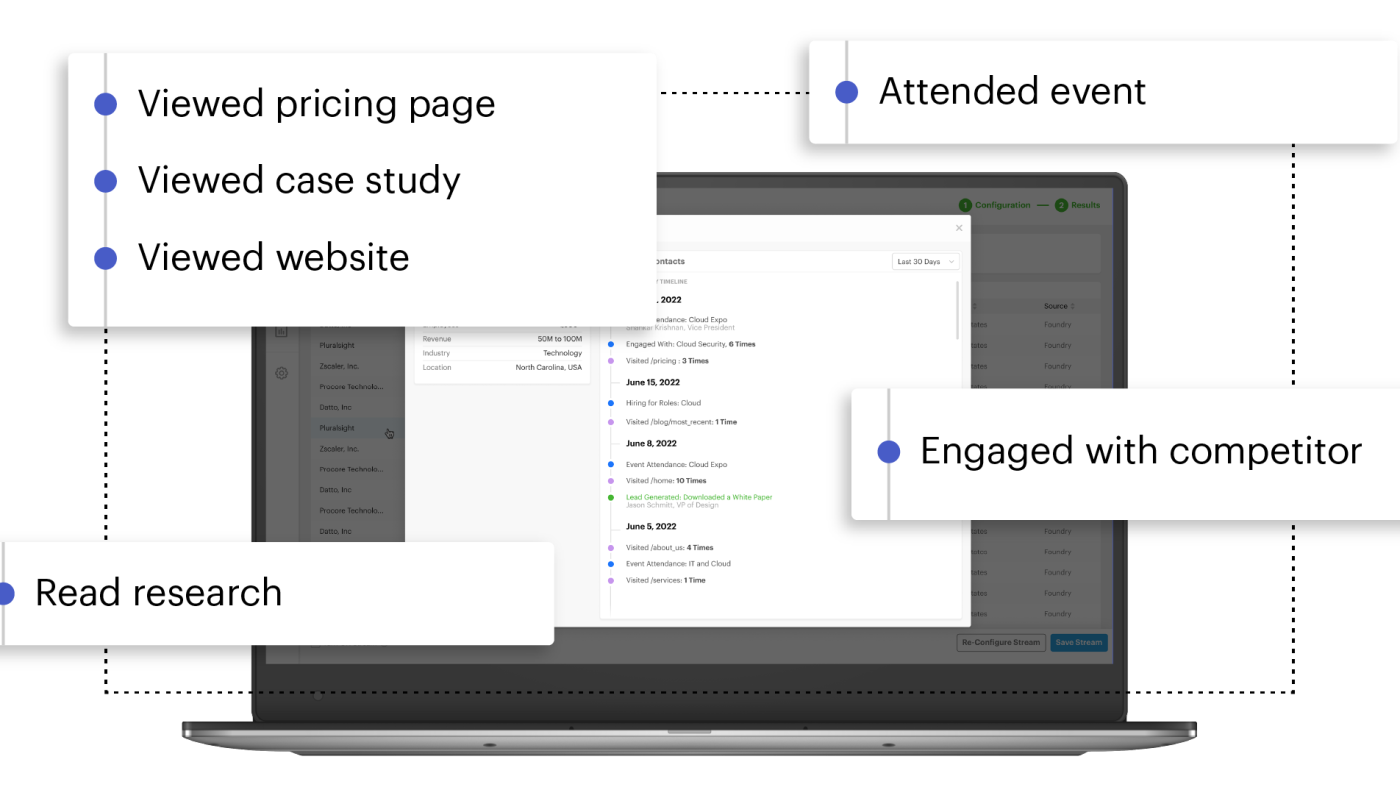
Foundry ABM is a Triblio-powered account-based orchestration platform sold by Foundry (formerly IDG Communications). The Foundry ABM Platform provides cross-channel orchestration with AI-driven account scoring fed by proprietary human-verified intent data from Foundry's owned editorial network, including CIO, CSO, Computerworld, InfoWorld, and Network World.
Key Features
Cross-channel orchestration (display, social, website personalization, 1:1 Smart Pages)
AI-driven account scoring on human-verified intent
Sales Acceleration module surfacing best contacts and topics inside CRM
Foundry Intent with 80M+ intent signals captured per week
Integrations with Salesforce, HubSpot, SugarCRM, and Marketo
Pricing
Quote-based; all deals go through sales.
Pros
Closed-loop bundle: intent feeds ABM orchestration feeds ads on owned editorial inventory
1:1 Smart Pages for per-account landing experiences
Human-verified proprietary intent data from owned publisher network
Cons
No B2B contact database underneath (no prospecting data)
No conversation intelligence or AI agent layer
Pricing fully gated; tech-media bias (strongest for B2B tech vendors targeting IT decision makers)
How Foundry ABM compares against ZoomInfo
Foundry ABM's owned editorial network (CIO, Computerworld, InfoWorld) gives it proprietary, human-verified intent signals from IT decision makers that no other ABM platform can replicate.
ZoomInfo's edge is 500M+ contacts with verified direct dials (Foundry ABM has no prospecting database), 1.5B+ daily data points fused across CRM, intent, conversation intelligence, and behavioral signals (Foundry's intent is editorial-network-only), and free-to-start consumption-credit pricing vs. Foundry's fully gated quote-based model.
Talk to our team for a head-to-head Foundry ABM vs. ZoomInfo walkthrough.
8. Mutiny
Overview
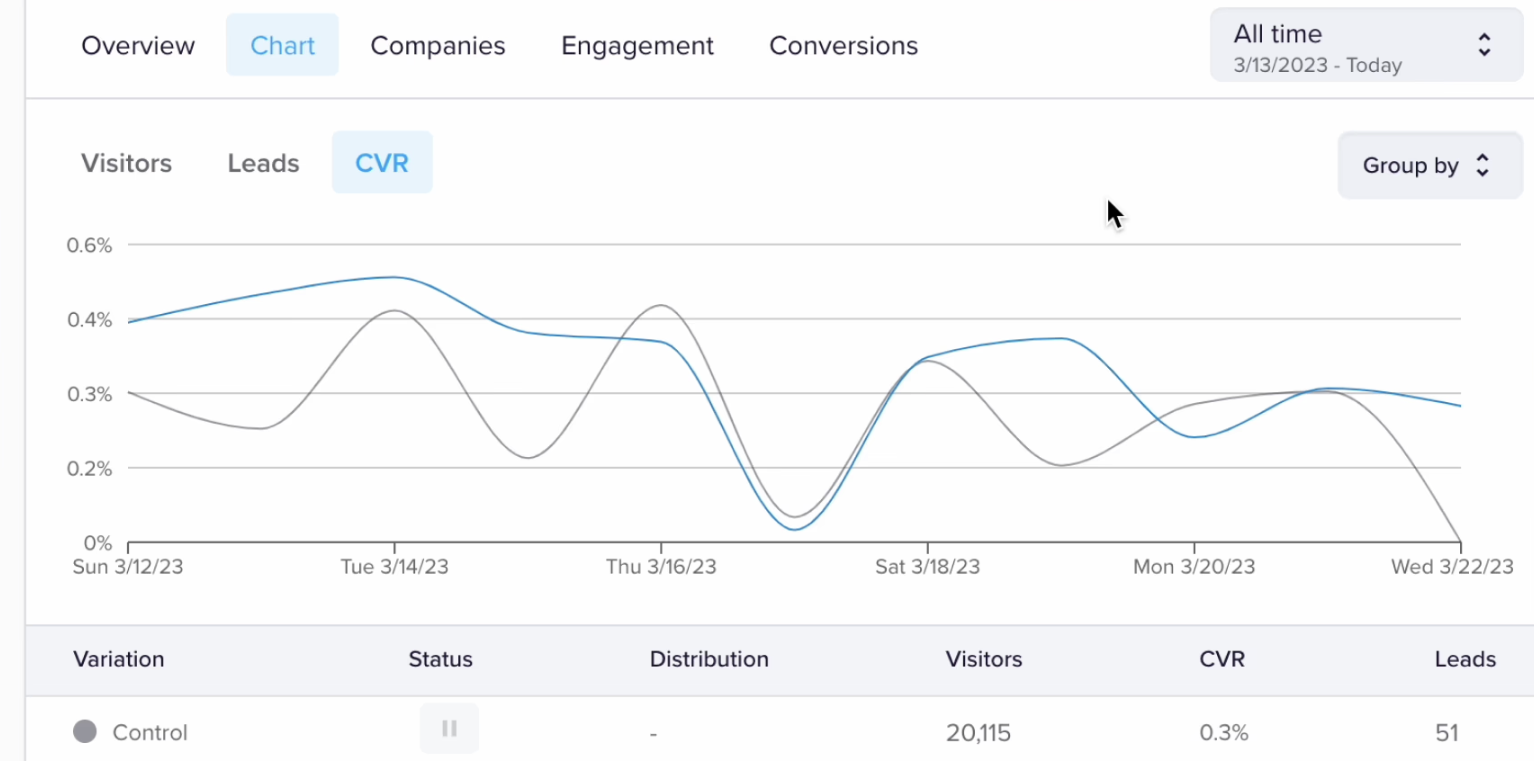
Mutiny is an AI agent that creates personalized, on-brand customer-facing assets for ABM campaigns. The Mutiny AI Agent is a generative AI agent that ingests brand identity, CRM data, and call transcripts to produce 1:1 landing pages, executive business cases, deal rooms, and meeting recaps. Mutiny is a ZoomInfo Marketplace partner (WebSights data flows in).
Key Features
Generative AI agent for on-brand asset creation (landing pages, business cases, deal rooms, meeting recaps)
Brand auto-extraction from website URL (colors, fonts, logos)
CRM and call-transcript ingestion for personalization
Visitor analytics on generated assets
Credit-based usage model (1 credit = 1 AI interaction)
Pricing
Free tier (5 daily credits); Business at $50/seat/month; Enterprise custom.
Pros
Replaces the design/PMM/web bottleneck for ABM landing pages (customer-cited 4.5x asset-creation speedup)
Reps self-serve per-account assets without queueing creative
Free tier available for evaluation
Cons
No B2B contact database or intent data (consumes CRM data rather than sourcing it)
ABM surface is asset-creation only (no media activation or intent-driven targeting)
Narrow scope vs. end-to-end ABM platforms
How Mutiny compares against ZoomInfo
Mutiny's agent-first architecture purpose-built for asset creation lets lean ABM teams produce polished 1:1 landing pages and deal rooms at 4.5x the speed of traditional design workflows.
ZoomInfo's edge is 500M+ contacts with verified data (Mutiny has no B2B database and depends on the customer's CRM for all contact data), end-to-end ABM orchestration covering data, intent, advertising, and engagement vs. Mutiny's asset-creation-only surface, and conversation intelligence via Chorus that Mutiny cannot replicate (it ingests transcripts but does not record or score calls).
Talk to our team for a head-to-head Mutiny vs. ZoomInfo walkthrough.
9. Influ2
Overview
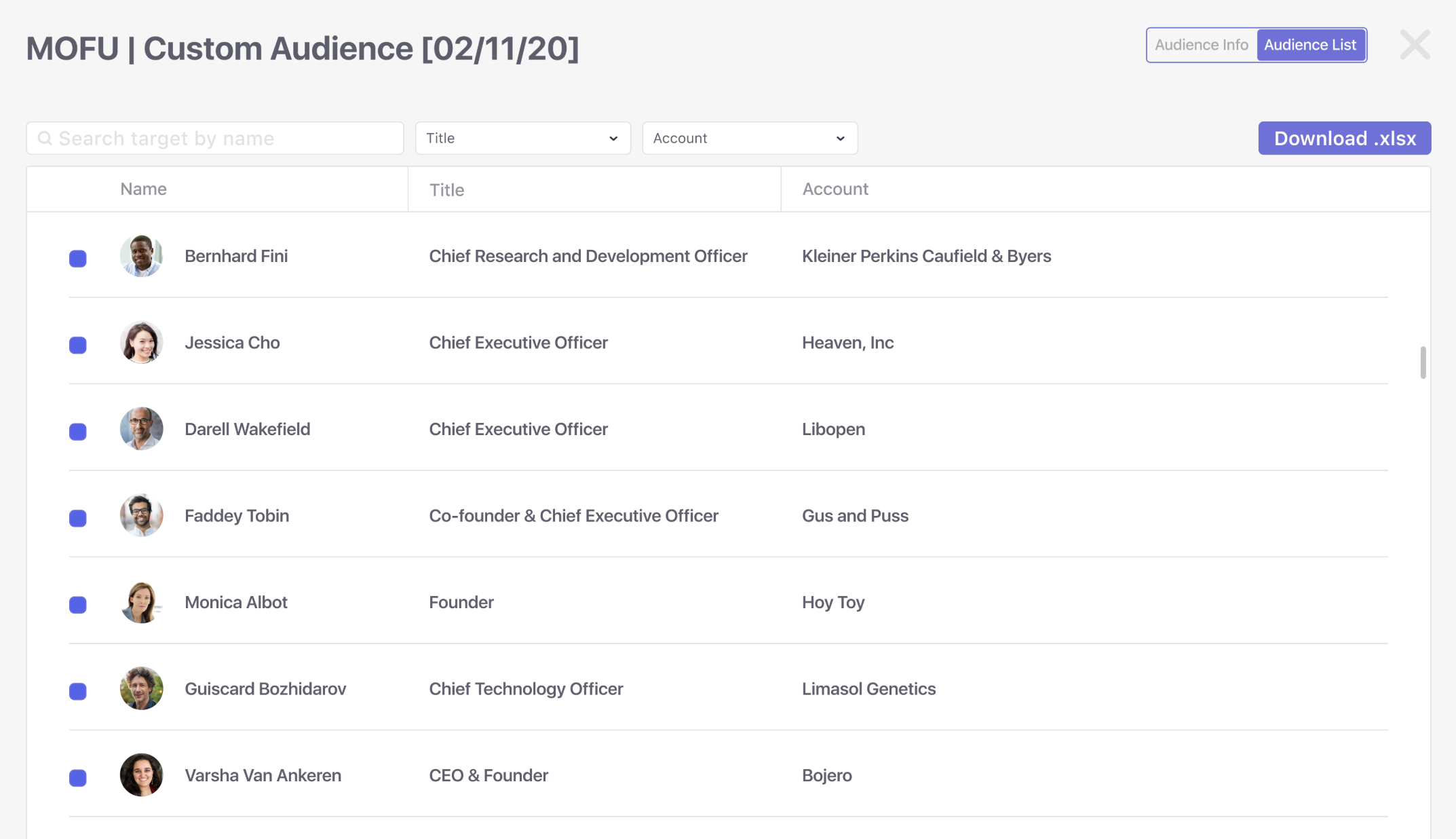
Influ2 is a contact-level (person-based) ABM advertising platform. Influ2 Contact-Level Ads targets named individuals from CRM with display and social ads across LinkedIn, Facebook, Instagram, Google, Bing, and Amazon, then attributes engagement back to specific people and pipeline.
Key Features
Contact-level ad targeting synced from CRM (Salesforce, HubSpot)
Cross-channel ad distribution across 6 major networks
Real-time sales alerts on contact ad engagement
Per-contact engagement tracking without form fills
Form-less revenue attribution to pipeline created, progressed, and won
Contact-level intent identifying named buyers researching topics
Pricing
Quote-based; no public tier table.
Pros
Person-level targeting and reporting as core differentiator (vs. account-level ABM)
Form-less attribution tied to named individuals
Cross-channel routing across six major ad networks
Cons
Audience source is the customer's CRM (Influ2 sells no underlying B2B database)
No phone, email, or technographic data assets
Contact-level website visitor identification still in Beta
How Influ2 compares against ZoomInfo
Influ2's person-level ad targeting and form-less attribution give enterprise ABM teams granular visibility into which individual decision-makers engaged with ads and how that engagement maps to pipeline.
ZoomInfo's edge is 500M+ contacts with verified direct dials and emails (Influ2 has no B2B database and depends entirely on the customer's CRM for contact data), end-to-end ABM orchestration covering data, intent, advertising, engagement, and conversation intelligence vs. Influ2's advertising-only surface, and 1.5B+ daily data points fused across signal types for account prioritization (Influ2's intent is bounded to buyers in CRM target lists).
Talk to our team for a head-to-head Influ2 vs. ZoomInfo walkthrough.
10. Clearbit
Overview
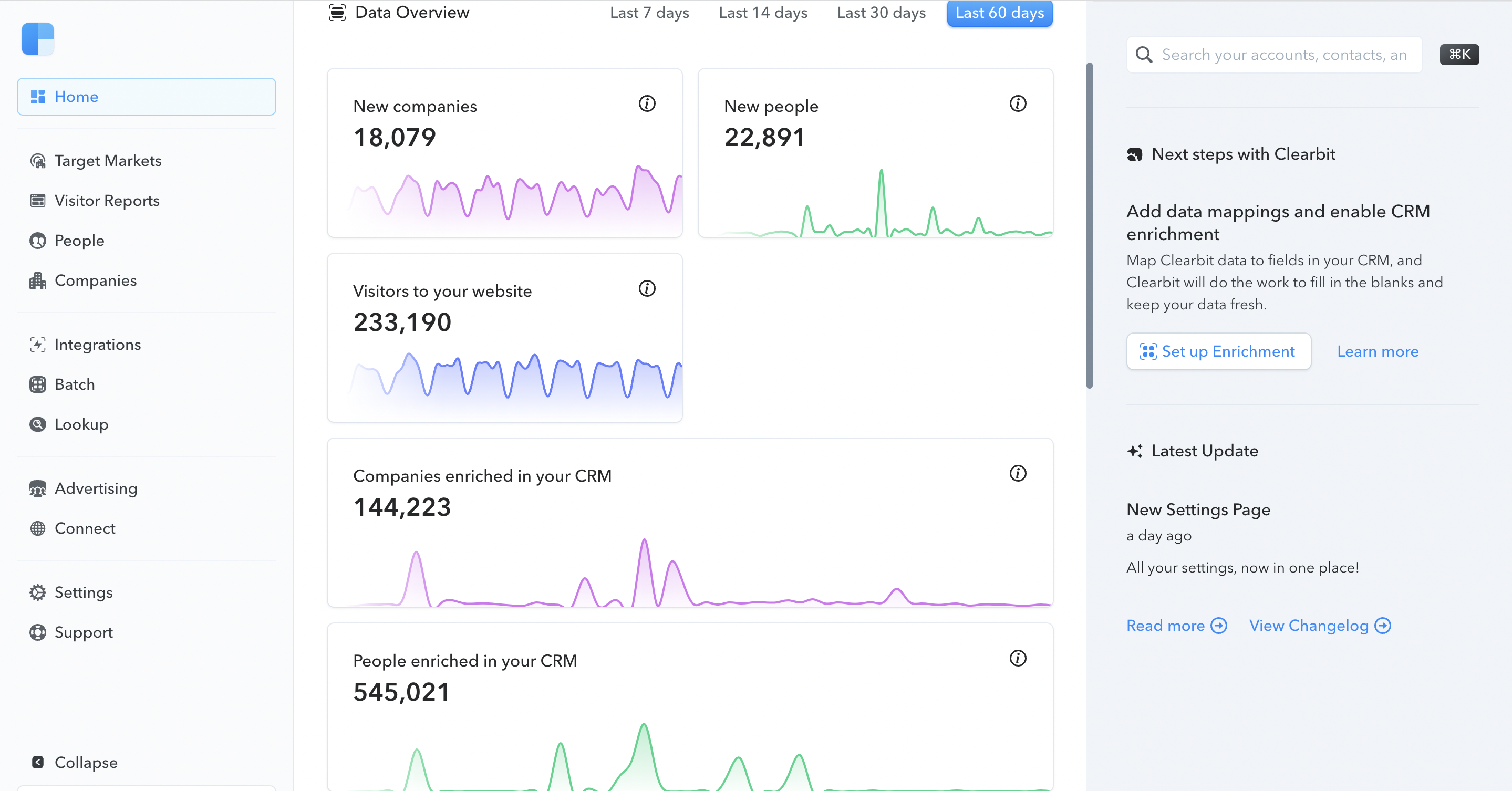
Clearbit enriches contact and company records with firmographic, technographic, and role data. Clearbit was acquired by HubSpot in November 2023 and is transitioning to HubSpot Breeze Intelligence inside HubSpot's platform. Standalone Clearbit free tools are being sunset (Free Platform sunset April 2025; Logo API sunset December 2025). Clearbit holds a G2 rating of 4.4/5 from 632 reviews.
Key Features
Company and contact enrichment via HubSpot Credits
Website visitor identification (Reveal)
Form shortening with progressive profiling
Lead scoring and routing automation
Native HubSpot CRM integration
Pricing
Bundled inside HubSpot tiers; standalone Clearbit pricing being phased out in favor of HubSpot Credits model.
Pros
Bundled inside HubSpot (no separate vendor for HubSpot customers)
Tight native CRM integration
Strong API-first developer adoption pre-acquisition
Cons
HubSpot-bound commercial path (not available standalone for non-HubSpot customers)
Smaller dataset than ZoomInfo's 500M+ contacts
Standalone free tools being sunset through 2025
How Clearbit compares against ZoomInfo
Clearbit's integration inside HubSpot means HubSpot customers get B2B data enrichment without adding a separate vendor, and the Breeze Credits model unifies pricing across HubSpot's AI features.
ZoomInfo's edge is 500M+ contacts vs. Clearbit's historically narrower coverage (broader data foundation for account identification), platform-agnostic compatibility (works with Salesforce, HubSpot, Marketo, Outreach) vs. Clearbit's HubSpot-only commercial path, and 210M IP-to-organization pairings for WebSights vs. Clearbit Reveal's smaller IP-to-organization dataset.
Talk to our team for a head-to-head Clearbit vs. ZoomInfo walkthrough.
How to Choose an ABM Platform
Selecting the right ABM platform is a buying decision that directly affects pipeline velocity and marketing ROI. Before comparing feature lists, map each vendor against the five criteria below to find the platform that fits your team's maturity, stack, and growth targets.
Data Quality and Coverage
Your ABM platform is only as good as its data. Audience data goes stale before campaigns launch: you build a target account list in Q1, spend weeks getting it approved and loaded, and by the time ads are live half the contacts have changed roles. Evaluate platforms on these criteria:
Accuracy: Continuous record updates, verified contact details, duplicate removal
Refresh frequency: How often data gets updated and what verification methods are used. This is a critical evaluation criterion because stale lists waste budget against a snapshot, not reality.
Segmentation depth: Hundreds of filters from company size and industry to tech stack and buying signals
Sales and Marketing Alignment
ABM fails when sales and marketing work from different playbooks. Choose platforms that create shared visibility into account engagement, unify workflows between teams, and trigger handoffs at the right time.
Multi-Channel Orchestration
Buying committees don't live in one channel. Your ABM platform should coordinate campaigns across display ads, social media, email, web personalization, and direct mail.
Look for platforms that trigger actions based on engagement signals:
Pricing page visits: Launch retargeting campaigns
Content downloads: Alert sales for immediate follow-up
Email engagement: Trigger next-step nurture sequences
Measurement and Attribution
ABM programs need to prove pipeline impact. Look for these capabilities:
Multi-touch attribution: Complete journey visibility from first touch to close
Pipeline dashboards: Campaigns generating qualified opportunities
Revenue reporting: Marketing activity connected to closed deals
Implementation and Support
Complex platforms sit unused. Evaluate these factors before committing:
Time to launch: How long until your team is running campaigns?
Integration depth: Which integrations are native vs. requiring custom work?
Free-tier availability: Can your team evaluate the platform before a full contract commitment? Vendors offering free or low-cost entry points reduce risk during evaluation.
Support resources: What professional services and customer success resources come with the platform? Some vendors offer managed services or agency-style onboarding support that can accelerate time to value.
Types of ABM Platforms
ABM platforms fall into four categories. Most teams need capabilities from multiple categories, either through an all-in-one platform or by connecting specialized tools.
All-in-One ABM Platforms
All-in-one platforms like ZoomInfo (an all-in-one AI GTM Platform), 6sense, and Demandbase combine data, intent signals, advertising, and orchestration in a single system. These platforms handle account identification, scoring, campaign execution, and measurement, giving teams unified workflows and reporting without managing multiple vendors.
Intent Data Platforms
Intent data platforms track which accounts are researching solutions in your category by monitoring web activity, content consumption, and search behavior. Some platforms source intent from their own publisher networks while others aggregate signals from multiple sources. Intent data helps teams prioritize outreach when accounts are actively evaluating solutions. Complementary intent sources feed signals into ABM platforms for enhanced account prioritization.
Web Personalization Platforms
Web personalization platforms identify visitors and customize website experiences based on account attributes. They use visitor identification and first-party data to recognize target accounts, then serve personalized content, CTAs, and offers. Integration with CRM and marketing automation connects website activity to broader ABM programs.
Advertising Platforms
Advertising platforms focus on programmatic display, social, and video campaigns targeted at specific accounts. They connect to major ad networks to serve ads to decision-makers, with some offering person-based targeting that reaches individual buying committee members. Performance analytics show which accounts engaged and which channels drove the most pipeline.
ABM Platform vs. Account-Based Marketing Agency
When building an ABM program, B2B teams typically face a foundational question: invest in a platform and run campaigns in-house, or partner with an account-based marketing agency to manage execution on your behalf?
Both approaches have merit, but they suit different stages of growth, budget structures, and internal capabilities.
Working with a B2B account-based marketing agency can make sense if your team lacks dedicated ABM expertise, needs to move quickly, or wants to test the strategy before committing to a full technology investment. Agencies bring pre-built playbooks, existing media relationships, and hands-on execution, all useful when internal bandwidth is limited.
However, agencies also come with trade-offs. You're paying a premium for account-based marketing services that don't scale with your business the way a platform does. Your data and learnings may not be fully portable when the engagement ends, and you often have less visibility into the underlying targeting logic and performance drivers.
A dedicated ABM platform gives your team direct access to account intelligence, intent data, and campaign controls. Over time, this builds institutional knowledge and a proprietary data asset, capabilities that external providers can't replicate for you. Most mature ABM programs that started with agency support eventually migrate to a platform model as their in-house competency grows.
If you're evaluating account-based marketing companies and services to help you get started, consider whether an all-in-one AI GTM Platform with strong onboarding support and professional services might give you the best of both worlds: expert guidance during ramp-up and full ownership of your program long-term. ZoomInfo is free to start with consumption credits based on usage, so teams can evaluate before committing to a full contract.
Build Your ABM Stack with ZoomInfo
ZoomInfo earned Gartner Customers' Choice recognition for Account-Based Marketing Platforms in 2025 and was named a Forrester Wave Leader for Intent Data Providers Q1 2025 with the highest scores across 8 criteria. Among the top account-based marketing companies, that combination of analyst validation and customer outcomes sets ZoomInfo apart.
Start with your biggest problem:
Data gaps: Fix accuracy and coverage first
Alignment issues: Prioritize platforms with shared workflows
Attribution blind spots: Focus on measurement capabilities
Most successful ABM programs combine an all-in-one platform with specialized tools. ZoomInfo provides the data foundation and intent signals, which you can layer with web personalization or advertising automation as needed. Teams building their own AI-driven stack can also connect that same data foundation directly to their agents and AI tools through GTM AI, the agent-native context graph, which pipes ZoomInfo's B2B intelligence into any agent via MCP or one API without requiring a new interface.
ZoomInfo is free to start with consumption credits based on usage. Request a demo to see how ZoomInfo Marketing helps teams identify high-value accounts, coordinate campaigns, and drive measurable pipeline growth.
Frequently Asked Questions About ABM Platforms
What is an account-based marketing platform?
An ABM platform combines B2B data, intent signals, and multi-channel orchestration to help teams target and engage high-value accounts with personalized campaigns across display, email, social, and web.
How much do ABM platforms cost?
Entry-level tools vary widely in cost and capability. ZoomInfo is free to start with consumption credits based on usage. Mutiny offers a free tier starting at $50/seat/month on paid plans. Other enterprise platforms like 6sense and Demandbase typically require custom quotes based on database access, account volume, and channel requirements.
What's the difference between ABM platforms and marketing automation?
Marketing automation focuses on lead-level campaigns and nurture workflows. ABM platforms prioritize account-level targeting, buying committee engagement, and coordinated plays across sales and marketing teams.
Do I need an ABM platform if I have a CRM?
CRMs manage relationships but don't provide intent data, account scoring, or multi-channel orchestration. ABM platforms like ZoomInfo Marketing layer on top of your CRM to identify in-market accounts and coordinate targeted campaigns.
Do I need an account-based marketing agency, or can I run ABM in-house?
Modern platforms are designed for in-house teams and include onboarding support, professional services, and pre-built playbooks. Agencies can help teams get started quickly, but a dedicated platform gives better data ownership, greater control over targeting, and lower cost per campaign at scale.
How long does it take to see results from an ABM platform?
Most teams see initial results within 60 to 90 days after launch, with full pipeline impact materializing in 3 to 6 months as targeted accounts move through buying cycles. Smartsheet increased MQLs 84% after deploying ZoomInfo Marketing, demonstrating the kind of measurable outcomes teams can expect within that window.