
6sense processes over one trillion buying signals daily through its Signalverse data engine and serves revenue teams at companies like SAP, Cisco, Okta, and Zendesk. Its predictive buying stage model, intent data network, and AI orchestration give B2B marketing and sales teams visibility into anonymous buyer research that traditional CRM and marketing tools miss.
But account-level intelligence only generates revenue when it reaches the tools and people that act on it.
6sense identifies which accounts are in-market and predicts where they sit in the buying cycle. On its own, it cannot verify whether the direct dial for the VP of Operations still rings, push buying stage changes into the CRM fields where reps build their daily call lists, or route intent signals into the sales engagement platform where cadences run.
The right integrations close those gaps. They feed verified contact data into your 6sense-identified accounts, push predictive scores into the systems your team already uses, automate cross-channel campaigns from buying stage changes, and connect intent signals to ad spend, data warehouses, and team communication tools so your revenue engine operates from a complete picture.
This guide covers the strongest integration for each of the jobs 6sense users most commonly need done:
Enrich in-market accounts with verified B2B contact data and buyer intelligence
Push predictive scores and buying stage signals into your CRM for workflow automation
Trigger marketing automation and campaign enrollment from buying stage changes
Execute intent-driven outreach cadences the moment accounts enter a buying stage
Target LinkedIn ad spend at accounts 6sense classifies as actively evaluating your category
Join Signalverse data with first-party revenue data for custom attribution modeling
Route account buying signals to individual sellers in real time
Each section walks through how the integration connects with 6sense, what data flows between the platforms, pricing, and who benefits most.
Best 6sense Integrations at a Glance | |
|---|---|
Best 6sense Integration for B2B Data Enrichment and Verified Contact Intelligence Enriches 6sense-identified in-market accounts with verified direct dials, business emails, company intelligence, and technographic data, turning account-level buying signals into outreach to the right contacts. | |
Best 6sense Integration for Closing the Signal-to-CRM Loop Pushes predictive buying stage, intent scores, and segment membership into Salesforce custom fields via a native AppExchange package, making 6sense intelligence usable inside the CRM views, reports, and workflow rules enterprise revenue teams already use. | |
Best 6sense Integration for Marketing Automation and Mid-Market CRM Activation Syncs buying stage data into HubSpot contact and company properties to trigger workflow enrollment, enriches form submissions with Smart Form Fill, and activates AI Email Agents from HubSpot CRM contact records for intent-driven outreach. | |
Best 6sense Integration for Intent-Driven Sales Engagement Embeds 6sense buying stage, temperature scores, and intent keywords inside Salesloft Account and Person pages, with automated cadence enrollment via Intelligent Workflows when accounts cross buying stage thresholds. | |
Best 6sense Integration for Buying-Stage-Targeted B2B Advertising Uses 6sense predictive buying stage as a targeting input for LinkedIn Sponsored Content (a capability unavailable in LinkedIn's native Campaign Manager), with daily segment syncs that keep campaign audiences current as accounts move through stages. | |
Best 6sense Integration for Enterprise Data Warehouse Analytics Delivers Signalverse data (intent signals, predictive scores, firmographics, technographics) into Snowflake tables via Data Packs and Segment-Filtered Exports, enabling SQL-based attribution modeling against first-party revenue data. | |
Best 6sense Integration for Real-Time Seller Signal Delivery Routes account temperature changes, buying stage movements, and website visitor alerts to individual sellers via a native Slack app, scoped to each rep's territory so signals arrive in the communication tool they already monitor. |
What Is 6sense?
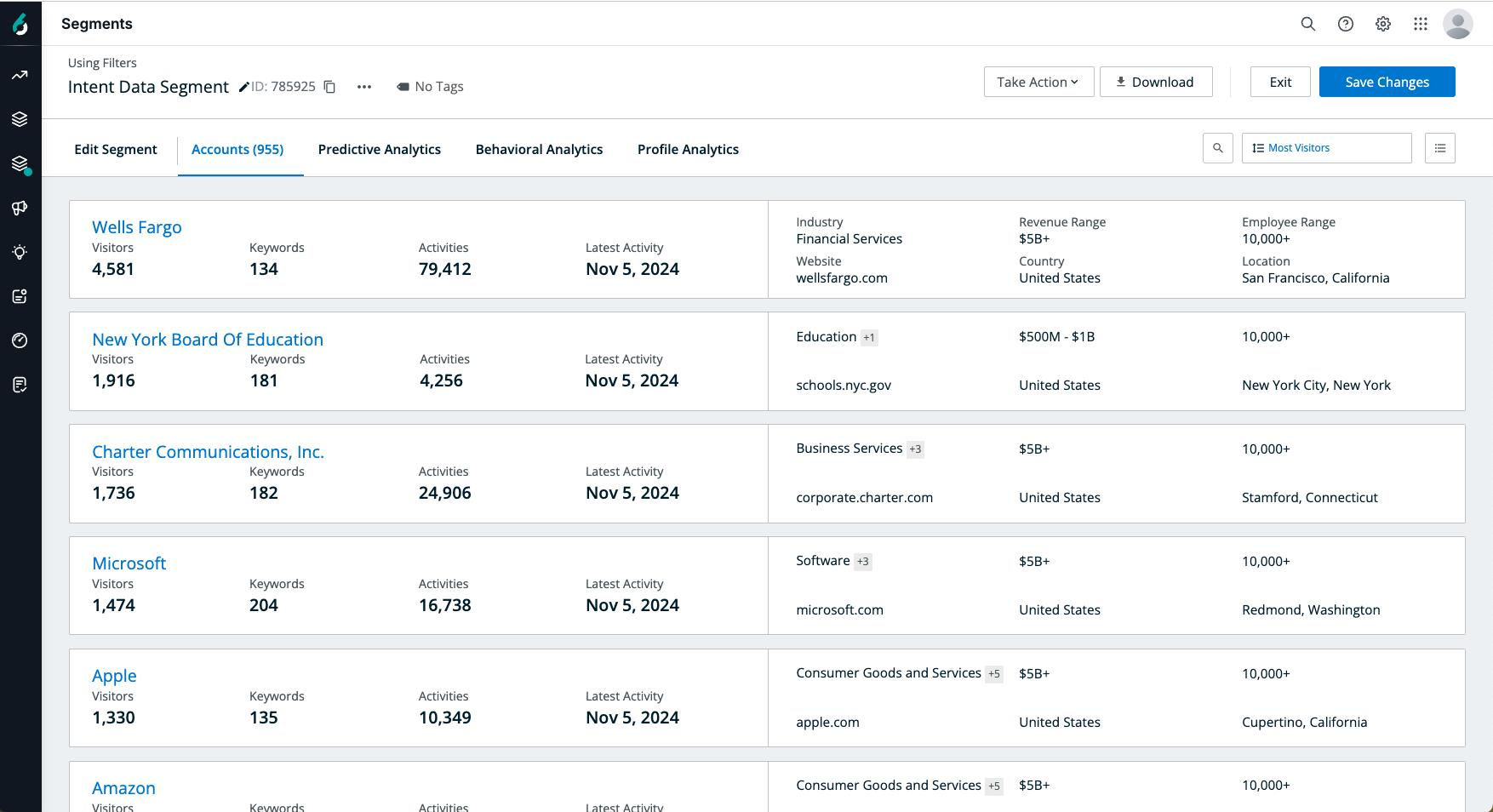
6sense is a B2B revenue intelligence platform that uses AI and predictive analytics to identify anonymous buyer research activity and surface accounts that are in-market before they self-identify through form fills or outbound responses.
Source: 6sense
The company positions itself as an agent-powered platform built to solve the Dark Funnel problem: only 3% of visitors self-identify, leaving 97% of buyer research invisible to traditional tools. 6sense has surpassed $250M in annual revenue and has been named a Gartner MQ Leader for ABM Platforms for five consecutive years.
6sense's integration ecosystem is a defining strength of the platform.
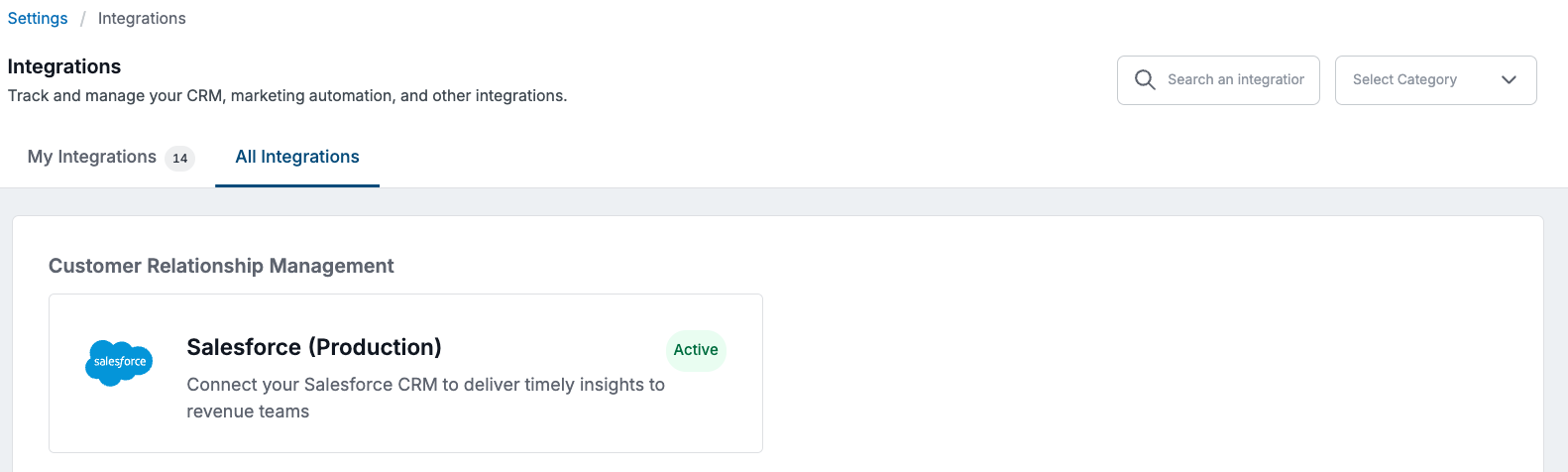
The foundation is the Signalverse, which processes over one trillion signals daily across 415M+ profiles, 75M+ companies, and 30,000+ technographics, tracking intent in over 40 languages. On top of this data engine, 6sense provides native CRM integrations (Salesforce, HubSpot, Microsoft Dynamics), MAP connectors (Marketo, Eloqua, Pardot), sales engagement connections (Salesloft, Outreach, Gong Engage), a built-in B2B DSP for display and video advertising, and a suite of REST APIs for programmatic access to company identification, enrichment, and scoring data.
Source: 6sense
Data warehouse delivery to Snowflake and AWS S3 is available via Data Pwacks, and third-party intent partners including Bombora, G2, TrustRadius, TechTarget, PeerSpot, Gartner Digital Markets, and SourceForge feed signals into the platform's predictive models.
The integration categories available to 6sense users include:
B2B data enrichment and contact intelligence: verified contact databases, firmographic and technographic data, buyer intent signals
CRM: Salesforce, HubSpot, Microsoft Dynamics for bidirectional data sync and predictive score delivery
Marketing automation: Marketo, Eloqua, Pardot, HubSpot for campaign enrollment and audience activation
Sales engagement: Salesloft, Outreach, Gong Engage for intent-driven cadence execution
Advertising: LinkedIn, Meta, Google Ads, The Trade Desk for account-based ad targeting
Data warehousing: Snowflake, AWS S3 for analytics and custom model development
Team communication: Slack for real-time sales alerts
With that ecosystem as context, here are the seven integrations we selected as the best options for extending 6sense across the categories that matter most to revenue teams.
1. ZoomInfo: Best 6sense Integration for B2B Data Enrichment and Verified Contact Intelligence
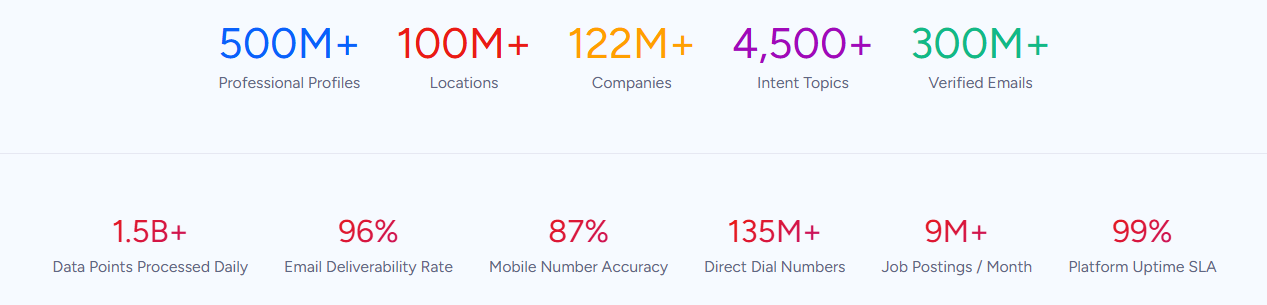
ZoomInfo is a B2B data and go-to-market platform built on a large verified data foundation: 500M contacts, 100M companies, 135M+ verified phone numbers, and 200M+ verified business email addresses. It integrates with 6sense through a native marketplace connection, combining ZoomInfo's verified contact data, company intelligence, and buyer intent signals with 6sense's predictive scoring and buying stage classification.
Connecting the two platforms unlocks:
Verified contacts at every 6sense-identified account, so your team can reach the buying committee with direct dials and emails that connect, not a 30% bounce rate that damages sender reputation
A second intelligence layer on top of 6sense's Signalverse, with ZoomInfo's own intent data processing 210 million IP-to-Organization pairings and 6 trillion+ keyword-to-device pairings monthly
Technographic and company intelligence covering 30,000+ technologies across 200+ categories and 300+ company attributes for scoring, routing, and segmentation
Org charts that map decision-makers, champions, and influencers across the buying committee at accounts 6sense flags as in-market
How ZoomInfo Integrates with 6sense
ZoomInfo and 6sense connect through a native integration on the ZoomInfo App Marketplace, letting mutual customers combine 6sense's account-based intent data and predictive scoring with ZoomInfo's verified contact enrichment.
The integration lets teams use both platforms together: 6sense identifies which accounts are researching your category and predicts their buying stage, while ZoomInfo provides the verified contact data, company intelligence, and additional signal layers needed to act on those predictions. The combined intelligence exceeds what either platform delivers alone: 6sense knows the account is ready; ZoomInfo ensures you can reach the right people there.
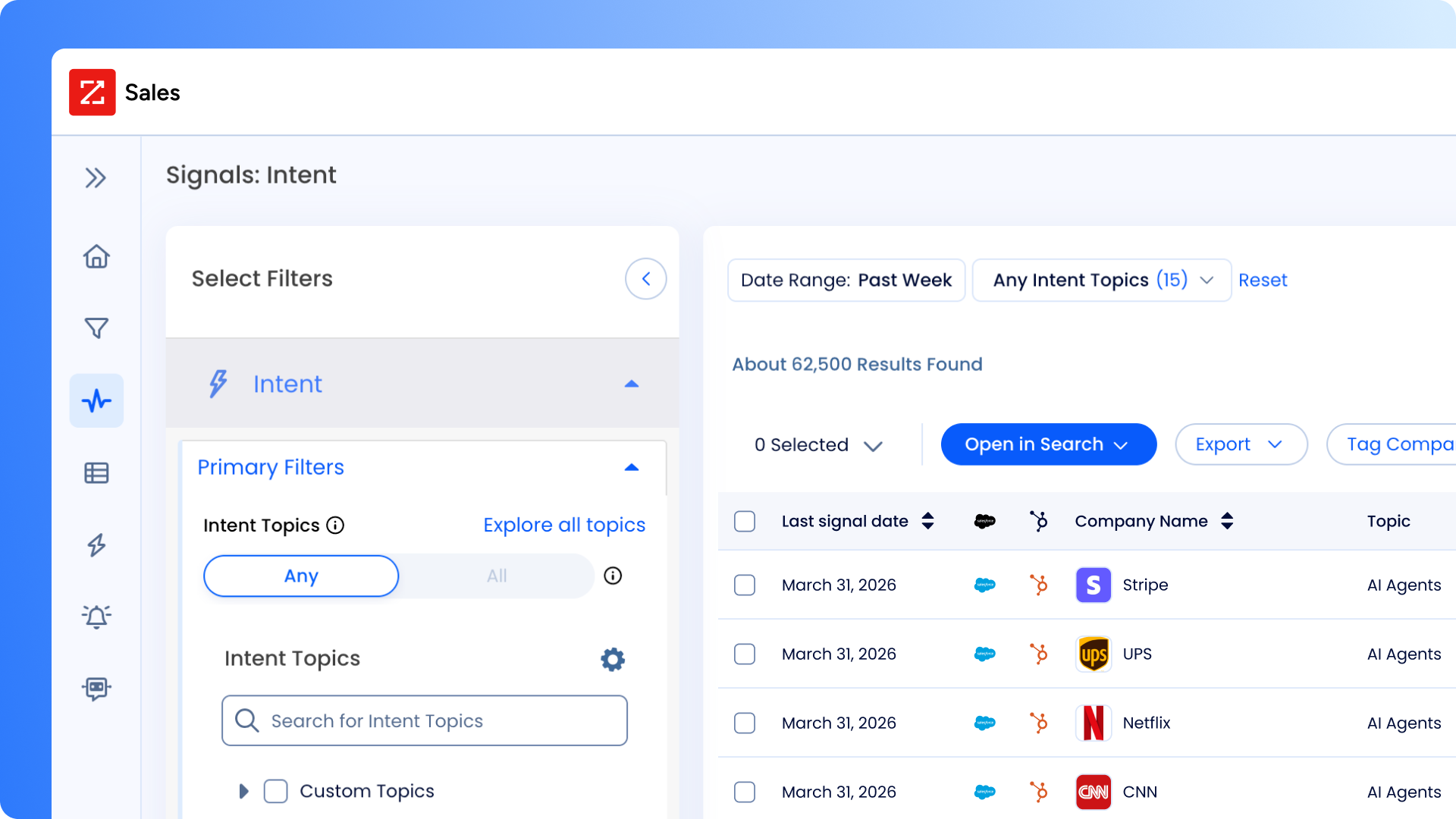
Verified Contact Data: Turn Account-Level Signals into Outreach
6sense excels at identifying which accounts are in-market and predicting their buying stage. What it cannot do on its own is guarantee that the phone number for the Director of IT still works or that the email for the CFO will land in an inbox.
ZoomInfo closes that gap with verified business emails, direct-dial phone numbers, titles, departments, and seniority data for 500M contacts, plus company data spanning 100M companies. The data flows through a verification pipeline backed by 300+ human researchers, reaching up to 95% accuracy on first-party data. In a Fortune 500 competitive RFP analyzing 25 million contacts across vendors, the independent consultant concluded that "no other competitor came even close."
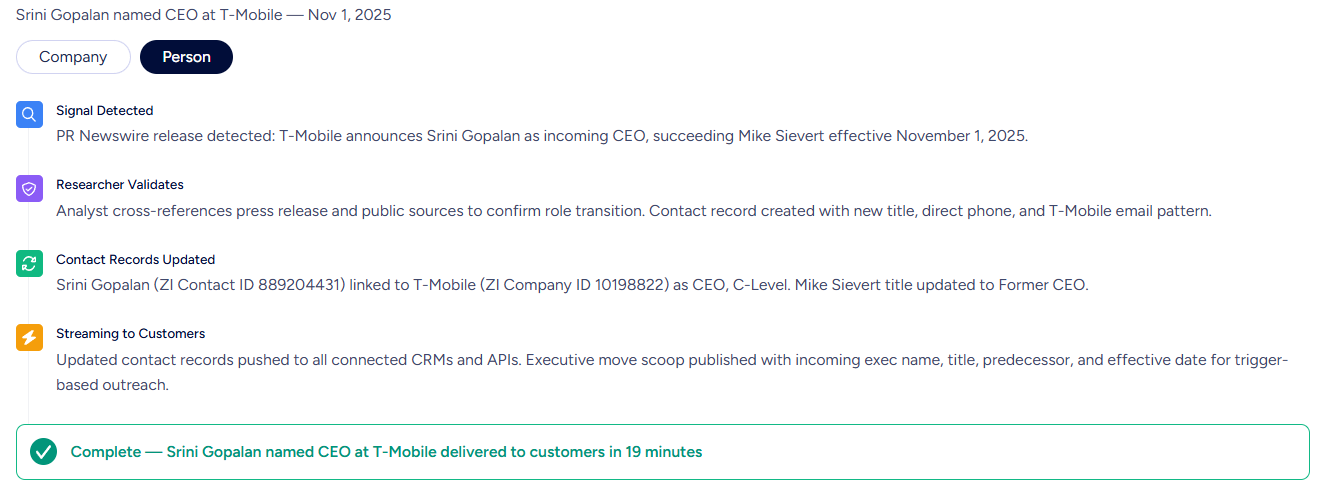
ZoomInfo in action: 6sense classifies a target account as Decision stage with Hot New temperature. Your team opens ZoomInfo and finds the full buying committee: the VP of Revenue Operations (verified direct dial), the Director of Marketing (verified business email), and three other stakeholders in the department, each with current titles, seniority, and department data. Your SDR multi-threads the account within minutes of the signal, while competitors are still searching for the right contact on LinkedIn.
Buyer Intent Data: Layer a Second Intelligence Source on 6sense's Predictive Engine
ZoomInfo's Buyer Intent tracks signals from 210 million IP-to-Organization pairings and 6 trillion+ new keyword-to-device pairings monthly, revealing which companies are researching topics relevant to your product. Layering ZoomInfo's intent signals on top of 6sense's Signalverse creates a dual-source model where both platforms contribute independent signal streams.
Guided Intent, exclusive to ZoomInfo, identifies the research topics historically correlated with deal success in your business. The signals are calibrated to your actual win patterns rather than generic keyword thresholds. When an account shows high intent in both 6sense and ZoomInfo simultaneously, the convergence produces a stronger buying signal than either platform alone.
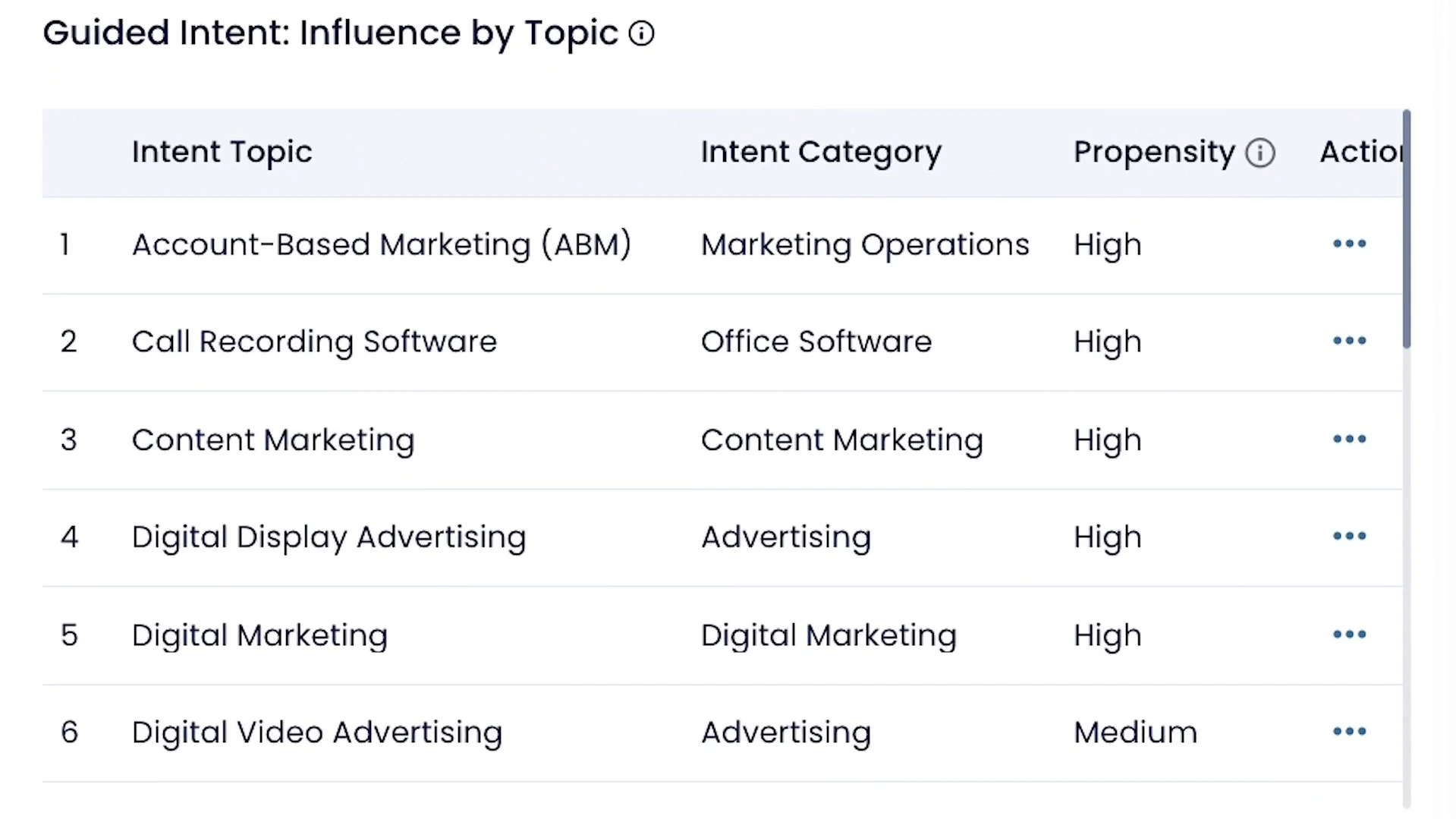
ZoomInfo in action: A target account shows Decision-stage activity in 6sense based on Signalverse keyword research. ZoomInfo's Guided Intent independently detects the same account researching "ABM platform migration" and "revenue intelligence alternatives" for two consecutive weeks. The dual confirmation raises confidence that outreach should happen now, not next quarter, and your team's message references the specific research topics both platforms identified.
Technographic Intelligence: Score and Filter 6sense Accounts by Technology Stack
ZoomInfo profiles the tech stack of 30+ million companies, tracking 30,000+ technologies across 200+ categories from 20+ source types. This data updates continuously, with nearly 90% refreshed within three months.
For teams using 6sense to identify in-market accounts, ZoomInfo's technographic data adds a scoring and filtering layer that the Signalverse alone cannot provide. An account that 6sense classifies as Purchase stage becomes more actionable when ZoomInfo confirms it runs a competitor's product and uses complementary tools in your ecosystem.
Beyond contact and signal data, the enrichment feeding your workflows connects to a wider intelligence layer: the GTM Context Graph processes 1.5B+ data points daily and fuses ZoomInfo's B2B data with CRM records, conversations, and behavioral signals, while APIs and MCP expose the same intelligence to any tool or AI agent.
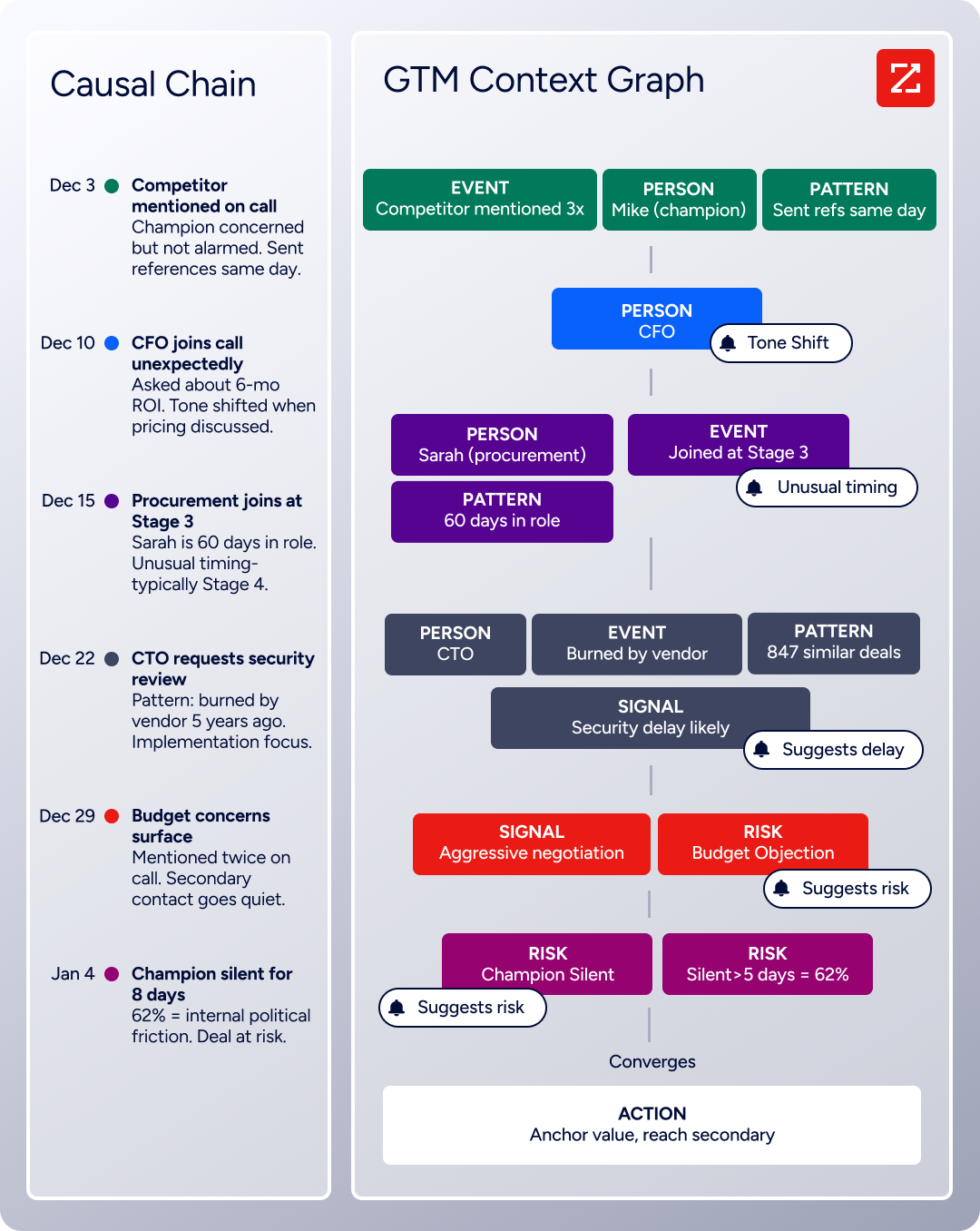
Seismic's sales team attributed 39% of active pipeline to opportunities identified or influenced by ZoomInfo signals, reporting 54% productivity gains and saving 11.5 hours per week per seller. (Seismic Case Study)
ZoomInfo Pricing
ZoomInfo uses a consumption-based pricing model with custom quotes based on usage, users, credit volume, and features.
It is organized into Sales, Marketing, and standalone product lines, each in Professional, Advanced, and Enterprise tiers. Advanced adds intent signals, website visitor tracking, and technographic insights; Enterprise adds real-time buyer intent, AI-generated account summaries, and advanced workflows.
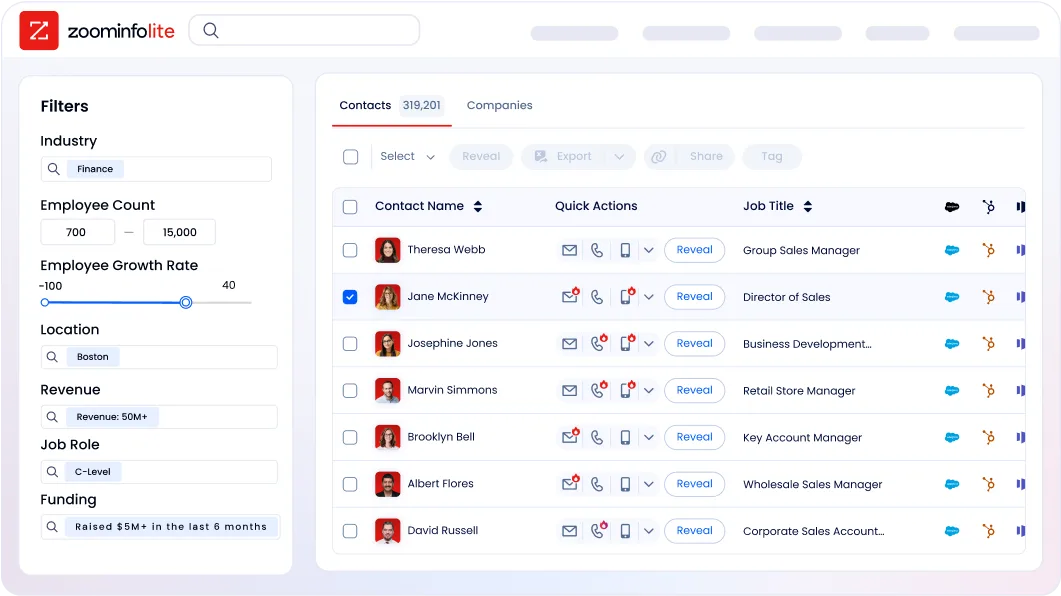
ZoomInfo Lite is a permanent free tier (no credit card, no time limit) with 10 monthly export credits, searches, the Chrome extension, and CRM integrations, making it a practical way to evaluate data quality before committing. A separate 7-day free trial covers paid features including intent data and AI capabilities.
Who Should Use the ZoomInfo Integration?
Revenue teams using 6sense for account prioritization whose outreach depends on accurate contact data: 6sense identifies which accounts are in-market, but verified direct dials and emails are the difference between a connected call and a voicemail tree
Revenue operations teams that need company intelligence, technographic, and intent data layered on top of 6sense's buying stage predictions for scoring, routing, and segmentation with more dimensions than 6sense provides alone
Organizations running account-based programs through 6sense that need to identify and reach the full buying committee at in-market accounts, not just the one contact who filled out a form
2. Salesforce: Best 6sense Integration for Closing the Signal-to-CRM Loop
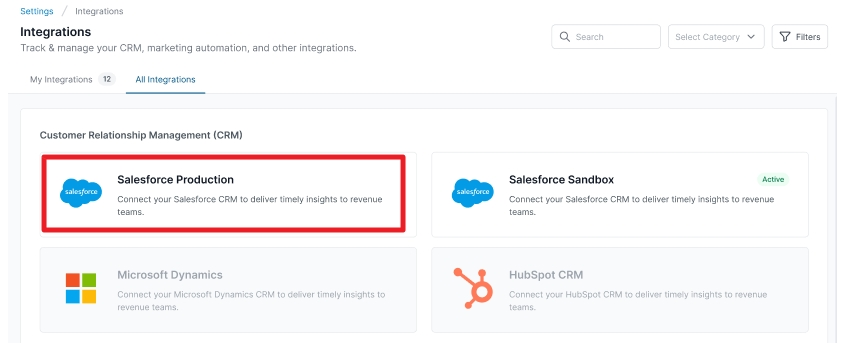
Salesforce is the world's #1 CRM by IDC revenue market share. It integrates with 6sense through a native bidirectional connector using Salesforce API v44.0 and a managed AppExchange package. The integration pushes predictive buying intelligence into Salesforce custom fields where enterprise sales reps already spend their day. 6sense maintains the connector as a first-party integration.
Source: 6sense
Key integration capabilities include:
Nightly bidirectional sync keeping 6sense dynamic segments updated from Salesforce account, contact, lead, and opportunity records
Predictive scores, buying stage, and temperature written to native Salesforce custom fields on Account and Lead objects
A managed AppExchange package handling outbound sync from 6sense, writing segment memberships and 6QA status to configurable custom fields
Native lead-to-account matching using domain, company name, and corporate hierarchy data
How Salesforce Integrates with 6sense
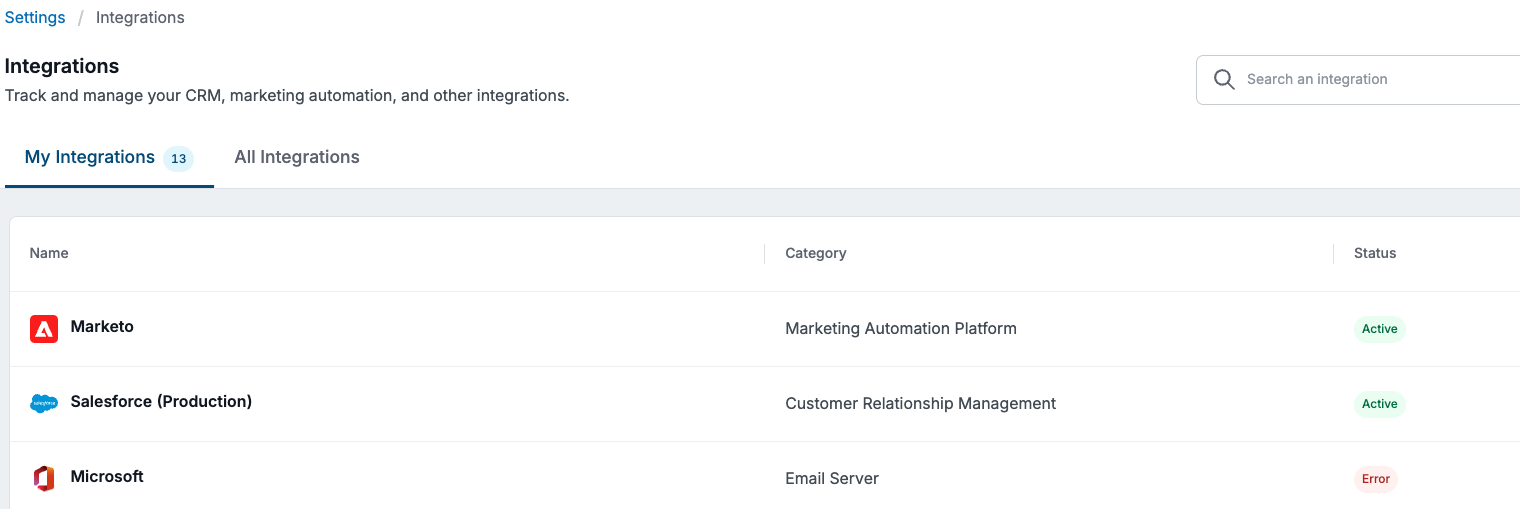
The integration connects through a native bidirectional connector paired with a managed AppExchange package (the 6sense SFDC App). No middleware or iPaaS tools are required. The sync cadence is nightly, and sandbox support is available for testing field mapping and workflow logic before going live.
Source: 6sense
1. Nightly Bidirectional Sync.
The nightly data exchange keeps both platforms aligned. Inbound to 6sense, Salesforce account, contact, lead, and opportunity records flow in to keep dynamic segments current, so exclusion lists, ownership assignments, and account tier classifications reflect the true CRM state. Outbound from 6sense, segment memberships and 6QA (6sense Qualified Account) status write back to Salesforce records. An account marked closed-lost in Salesforce on Monday exits active 6sense campaigns by the next morning's sync.
2. Predictive Scores Written to CRM Fields.
6sense pushes its AI-generated scores (predictive buying stages, including profile fit, temperature, and intent keyword activity) into custom Salesforce fields on Account and Lead objects. Reps see whether an account is in Decision or Purchase stage, whether its temperature is Hot New, and which intent keywords are trending, all inside their existing Salesforce views and dashboards. Salesforce workflow rules and process builder flows can fire from these field changes (for example, creating a rep task when an account enters Decision stage).
3. Lead-to-Account Matching.
6sense's native lead-to-account matching automatically associates inbound Salesforce leads with their parent Account using domain, company name, and corporate hierarchy data. When a contact from an account that 6sense has been tracking anonymously submits a form, the lead connects to the Account record, and all the accumulated 6sense context (buying stage, temperature, intent keywords) becomes visible to the assigned rep.
4. Predictive Sandbox Configuration.
6sense offers a dedicated sandbox configuration for Salesforce, allowing RevOps teams to export predictive scores to a Salesforce sandbox and validate field mapping and workflow triggers before deploying to production.
Salesforce Pricing
Salesforce uses per-user annual contracts. Key tiers for the 6sense integration:
Enterprise: $175/user/month (billed annually), with custom workflow automation and 100,000+ daily API requests; the minimum recommended tier for building automation rules that fire from 6sense score changes
Unlimited: $350/user/month (billed annually), with full AI suite and higher API allocations
Agentforce 1: $550/user/month (billed annually), with unmetered Agentforce and advanced automation
All tiers include API access, so the 6sense integration works at any paid Salesforce edition.
Who Should Use the Salesforce Integration?
Enterprise sales teams whose reps live in Salesforce and need 6sense's predictive scores, buying stage, and temperature data inside existing CRM views, reports, and dashboards without logging into a separate platform
Revenue operations teams that want native Salesforce automation triggered by 6sense scoring changes, such as creating tasks when accounts enter Decision stage or routing alerts when temperature shifts to Hot
Organizations with inbound lead flow that need 6sense's lead-to-account matching to connect form-fill leads with their parent Account record and its accumulated intent history
3. HubSpot: Best 6sense Integration for Marketing Automation and Mid-Market CRM Activation
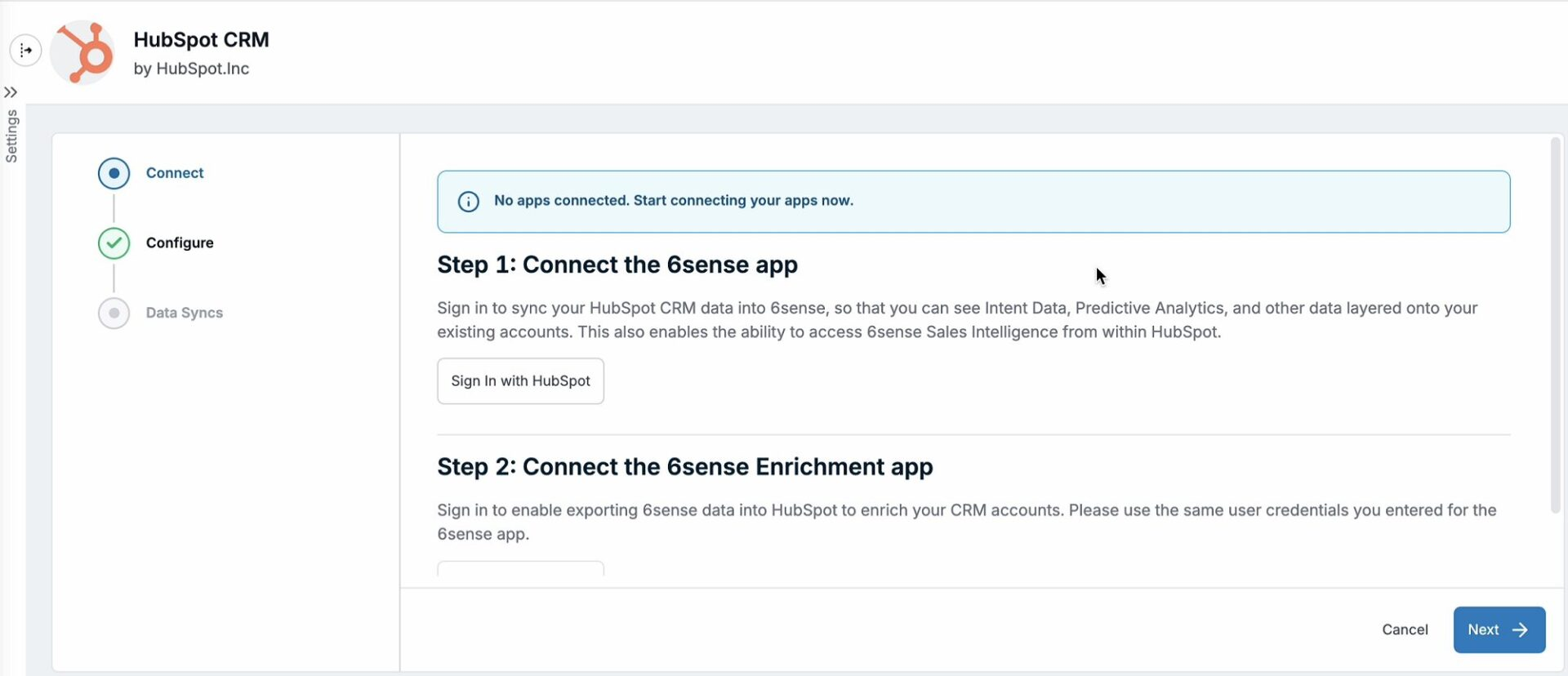
HubSpot is a marketing automation and CRM platform that integrates with 6sense to bridge intent-driven account intelligence with contact-level campaign execution. The integration connects through HubSpot's v3 API as a native bidirectional connector, with 6sense designated as a HubSpot Essential App for Marketers.
Source: 6sense
Key integration capabilities include:
6sense buying stage and intent scores synced to HubSpot contact and company properties, triggering Marketing Hub workflow enrollment and lifecycle stage updates
Smart Form Fill integration with HubSpot forms to auto-append enriched firmographic data at submission
AI Email Agents sourcing contacts from HubSpot CRM for intent-triggered outreach
Intelligent Workflows using HubSpot static lists and CRM campaigns as native action nodes
How HubSpot Integrates with 6sense
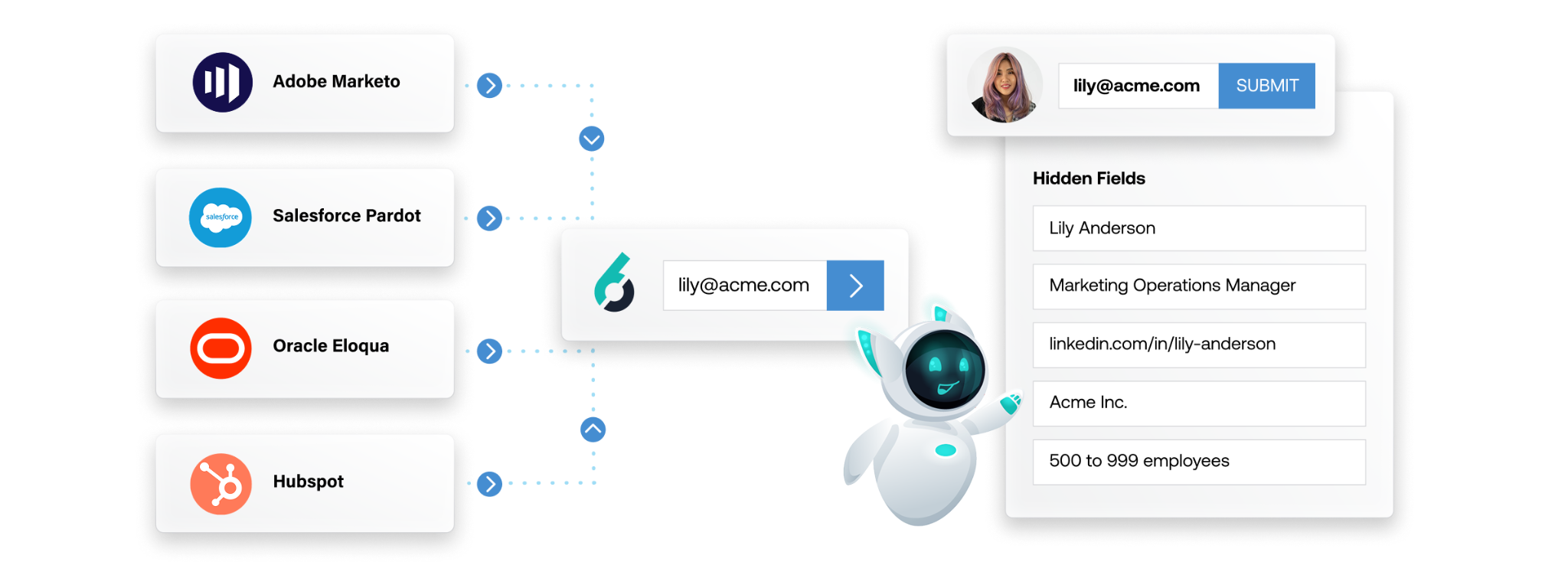
Setup uses OAuth authentication, with standard field mapping handled through point-and-click configuration. Enrichment cadence (real-time, on-demand, daily, or weekly) is configured inside 6sense's Data Workflow canvas.
Source: 6sense
1. Intent Signal and Buying Stage Sync to HubSpot Properties.
6sense pushes predictive buying stage classification and intent score (0 to 100) into HubSpot custom contact and company properties. These fields serve as enrollment triggers in Marketing Hub Workflows, filter criteria for audience segments, and routing logic for Sales Hub rep queues. An account advancing from Consideration to Decision stage can simultaneously enroll contacts in a fast-track email sequence, update the lifecycle stage, and trigger a rep notification, all without human intervention.
2. Smart Form Fill for Real-Time Enrichment.
6sense Smart Form Fill reduces visible form fields while automatically appending enriched data (company name, industry, employee count, revenue range, technographic stack) to the HubSpot contact record at submission. Records arrive pre-enriched and immediately qualify for the correct workflow branch rather than entering a data-deficient holding segment.
3. AI Email Agent Enrollment from HubSpot CRM.
AI Email Agents source contact records from HubSpot CRM and enroll them into intent-triggered campaigns powered by the Signalverse. Agents write, send, follow up, read replies, handle out-of-office responses, and route qualified conversations back into HubSpot-managed rep queues. The 6sense Inbox supports up to 10,000 emails/day per inbox with no warm-up required.
4. Intelligent Workflows with HubSpot Action Nodes.
Intelligent Workflows treat HubSpot as a native action destination alongside LinkedIn, Meta, and 6sense display advertising. A single workflow triggered by a buying stage threshold can simultaneously fire a display ad campaign, add contacts to a HubSpot nurture list, update a CRM property, and trigger a rep alert.
HubSpot Pricing
HubSpot uses a per-seat, per-Hub model. Intent-triggered campaign automation requires Marketing Hub Professional or Enterprise for multi-branch workflow access:
Marketing Hub Professional: $800/month (annual), 3 Core Seats included, 2,000 marketing contacts, full workflow automation; $3,000 one-time onboarding fee
Marketing Hub Enterprise: $3,600/month (annual), 5 Core Seats included, 10,000 marketing contacts, predictive lead scoring and custom event triggers; $7,000 one-time onboarding fee
Who Should Use the HubSpot Integration?
Mid-market teams that use HubSpot as both MAP and CRM and want buying stage changes to trigger workflow enrollment automatically, without manual list exports between platforms
Teams relying on HubSpot forms for inbound capture that need enriched firmographic data appended at submission so records immediately qualify for the correct nurture segments
SDR programs that need AI-driven outreach at scale using HubSpot CRM contacts as the source, with qualified conversations routed back to HubSpot-managed rep workflows
4. Salesloft: Best 6sense Integration for Intent-Driven Sales Engagement
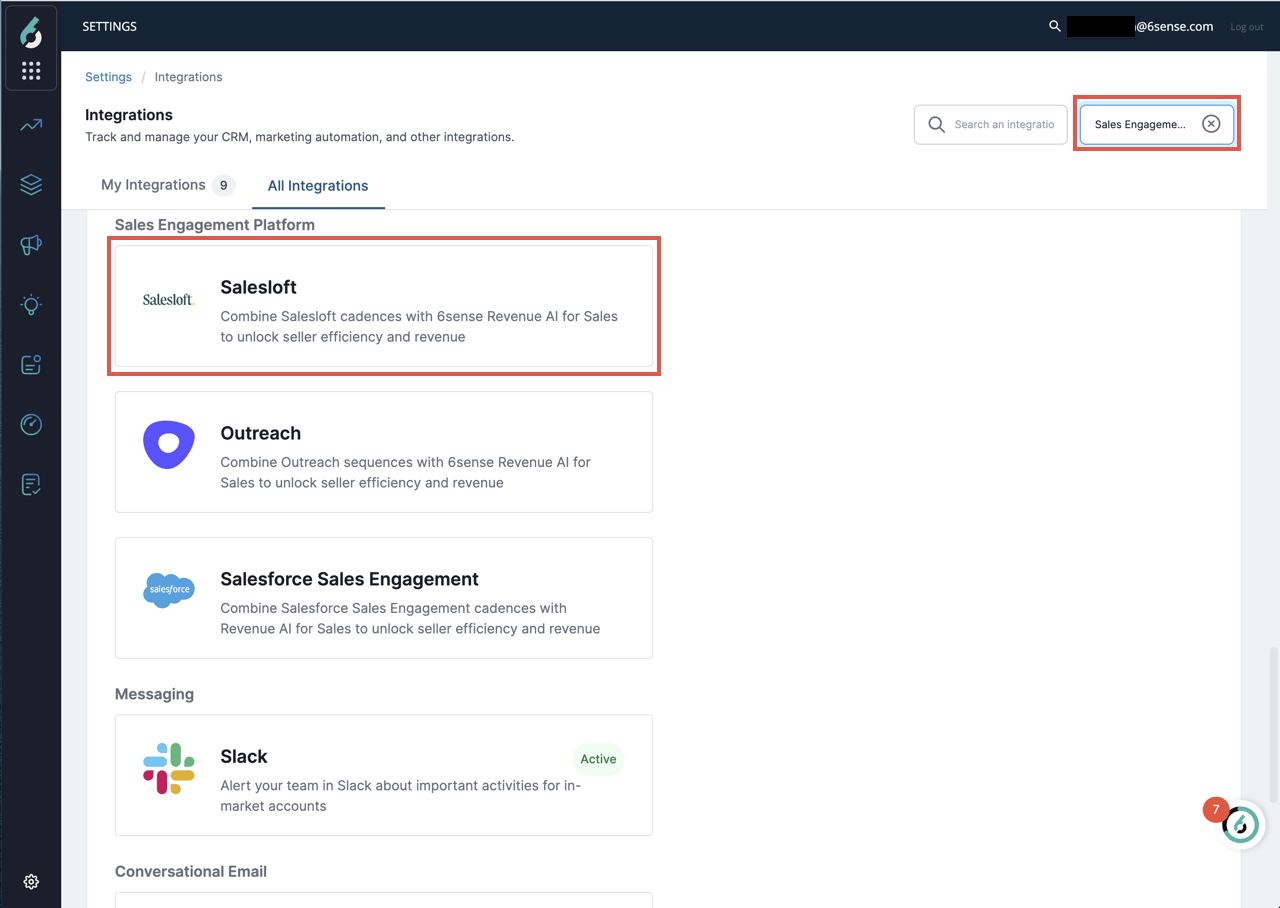
Salesloft is a revenue orchestration platform that integrates with 6sense through a native integration embedding 6sense Sales Intelligence inside the Salesloft interface. The connector surfaces predictive scores, buying stage, and intent keywords on Salesloft Account and Person pages, and supports automated cadence enrollment via Intelligent Workflows.
Source: 6sense
Key integration capabilities include:
6sense buying stage, profile fit, temperature score, and intent keywords embedded on Salesloft Account and Person pages via the 6sense SI extension
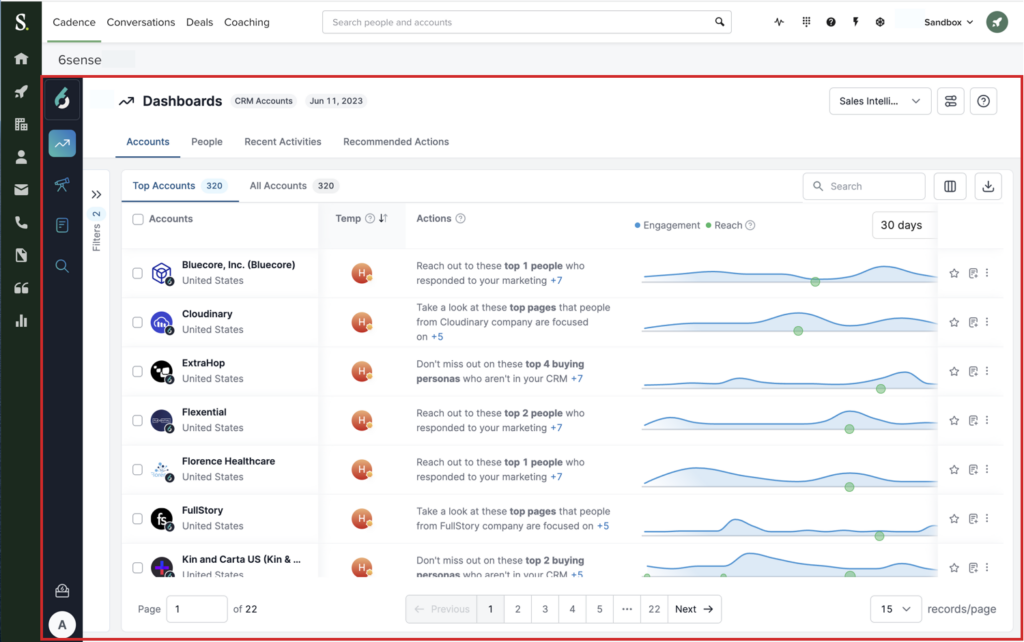
Four embedded dashboards (Hot Accounts, Trending People, Recent Activities, Recommended Actions) surfacing 6sense's highest-priority accounts inside Salesloft
Direct contact export from 6sense to Salesloft cadences with tag assignment at the point of export
Automated cadence enrollment triggered by Intelligent Workflows when accounts cross buying stage thresholds
How Salesloft Integrates with 6sense
The integration operates through three mechanisms: the 6sense SI extension for embedded intelligence, a 6sense-side export pathway for cadence enrollment, and Intelligent Workflows for automated enrollment. The connector is actively maintained with documented capability updates in 2026.
Source: 6sense
1. Intent Data and Scores Embedded Inside Salesloft.
The 6sense SI extension surfaces 6sense buying stage, profile fit score, temperature, and intent keywords on Salesloft Account and Person pages. Reps working through Cadence task queues can tell the difference between an account in Decision stage with Hot New temperature and a Warm account with no recent keyword research, without switching tools. The extension covers both Account and Person pages, enabling persona-specific prioritization within buying committees.
2. Four Embedded Prioritization Dashboards.
Hot Accounts, Trending People, Recent Activities, and Recommended Actions dashboards replicate 6sense's core prioritization views inside Salesloft. Hot Accounts surfaces accounts with the strongest buying signals. Trending People identifies contacts with elevated engagement. Recent Activities shows a chronological signal feed. Recommended Actions translates signals into next-step suggestions. A rep opening Salesloft each morning can organize outreach around accounts that are in-market.
3. Automated Cadence Enrollment via Intelligent Workflows.
Intelligent Workflows include a Salesloft cadence enrollment action node that fires when accounts cross buying stage thresholds. When an account moves from Consideration to Decision, the corresponding contacts enroll in the appropriate cadence without a rep manually reviewing alerts and copying contacts between platforms. This removes the delay between 6sense identifying an in-market account and outreach beginning.
Salesloft Pricing
Salesloft operates on a quote-only, seat-licensed model with two tiers:
Advanced: Covers pipeline generation, seller coaching, conversation intelligence, and customer lifecycle sequences; quote-only pricing
Elite: Adds multi-team management, sandbox environments, enterprise governance, and custom roles; quote-only pricing
The 6sense integration carries no separate Salesloft-side activation fee, but requires active subscriptions on both platforms.
Who Should Use the Salesloft Integration?
SDR and AE teams that live inside Salesloft and want 6sense signals surfaced in the same interface where they run cadences and log calls
Teams that need automated signal-to-outreach handoff, using Intelligent Workflows to trigger cadence enrollment when accounts cross buying stage thresholds
High-volume outreach teams where prioritization decisions need to happen in real time against live intent signals rather than static lists
5. LinkedIn: Best 6sense Integration for Buying-Stage-Targeted B2B Advertising
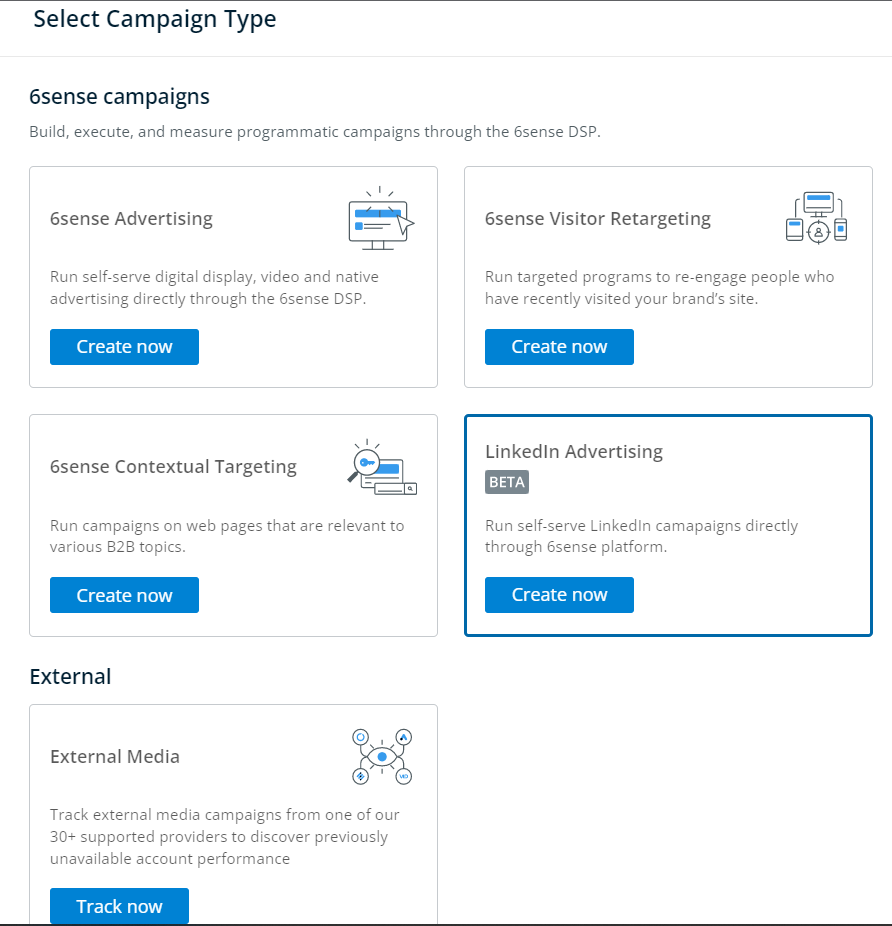
LinkedIn is a professional networking platform with over 1 billion members in 200+ countries. It integrates with 6sense through 6sense Campaigns for LinkedIn, a native integration managed from within the 6sense platform. The integration adds a targeting capability that does not exist in LinkedIn's native Campaign Manager: using 6sense's predictive buying stage as an audience criterion.
Source: 6sense
Key integration capabilities include:
Buying stage as a LinkedIn targeting input, restricting ad spend to accounts 6sense classifies as actively evaluating solutions
Daily segment syncs keeping LinkedIn campaign audiences current as accounts move through 6sense buying stages
Full LinkedIn ad format support (Sponsored Content, Sponsored Messaging, Text Ads, Dynamic Ads) managed from within 6sense
Account-level attribution connecting LinkedIn ad spend to 6sense buying stage advancement
How LinkedIn Integrates with 6sense
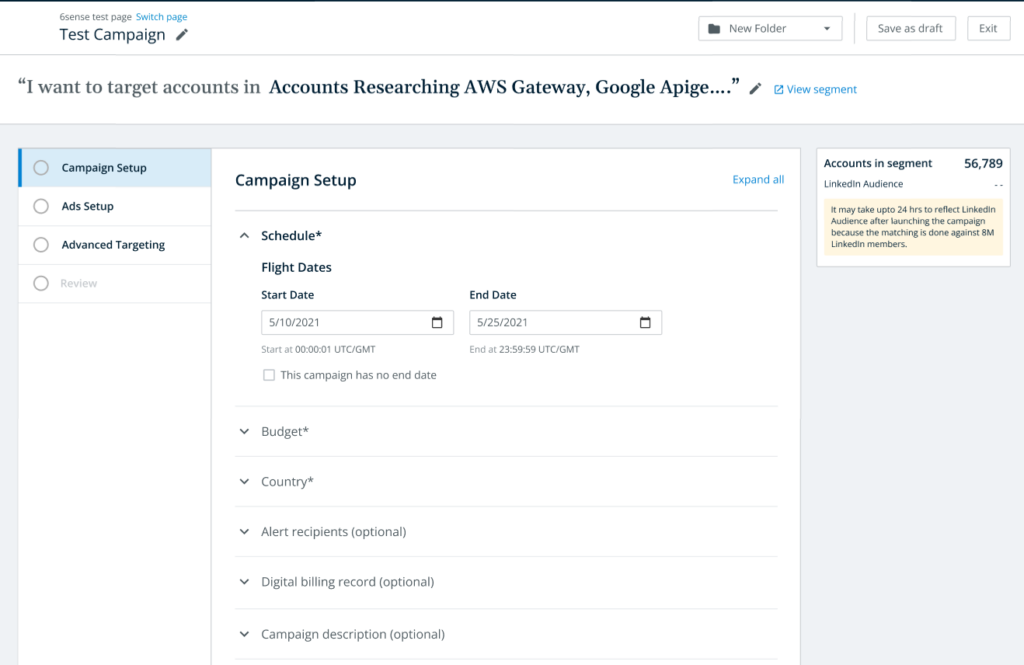
6sense pushes account segments into LinkedIn Campaign Manager as matched audiences. Marketers configure and launch LinkedIn campaigns from within 6sense, and billing routes through 6sense's invoicing infrastructure. The API version supported is LinkedIn API v202501.
Source: 6sense
1. Buying Stage as a Targeting Input.
LinkedIn Campaign Manager's native targeting covers firmographic criteria: company size, industry, job function, seniority. These criteria describe who a buyer is, not where an account is in its evaluation cycle. 6sense Campaigns for LinkedIn lets 6sense's buying stage classification function as the primary audience criterion. A segment of Decision or Purchase stage accounts (scoring 70 to 100 on 6sense's intent model) can be pushed to LinkedIn, restricting spend to accounts with the highest opportunity open rates. This targeting capability is unavailable to LinkedIn without a 6sense connection.
2. Daily Segment Syncs.
Segments refresh daily. As accounts move through 6sense's predictive buying stages, they flow automatically into or out of the active LinkedIn campaign audience. An account that moved from Consideration to Decision on Monday enters the LinkedIn audience by Tuesday morning. An account that dropped back to Awareness or closed as an opportunity exits without marketer intervention. This eliminates the manual CSV export and re-upload cycle that makes traditional ABM campaign audiences stale within days.
3. Account-Level Attribution.
Campaigns managed through 6sense return account-level impression and click metrics alongside buying stage data. This makes it possible to analyze whether accounts exposed to LinkedIn campaigns advance through predictive stages at higher rates than comparable unexposed accounts, connecting ad spend to the buying behavior ABM programs are designed to influence.
A minimum of 300 matching profiles per segment is required before an audience can run.
LinkedIn Advertising Pricing
LinkedIn advertising uses an auction-based pricing model with no subscription fee for Campaign Manager. When campaigns are managed through 6sense, a 15% Ad Services Fee applies to total LinkedIn campaign spend. Additional 6sense advertising minimums apply:
Minimum campaign budget: $100
Minimum campaign duration: 7 days
Monthly invoicing through 6sense with 30-day payment terms
Who Should Use the LinkedIn Integration?
B2B marketing teams running account-based programs that want to restrict LinkedIn ad spend to accounts 6sense classifies as Decision or Purchase stage, eliminating wasted impressions on accounts not actively evaluating
Teams already using 6sense buying stages to direct sales outreach that want LinkedIn advertising timed to the same in-market signals, so advertising and selling move in sync
Organizations currently rebuilding LinkedIn audiences manually with CSV exports and uploads; the daily automated syncs eliminate that overhead entirely
6. Snowflake: Best 6sense Integration for Enterprise Data Warehouse Analytics
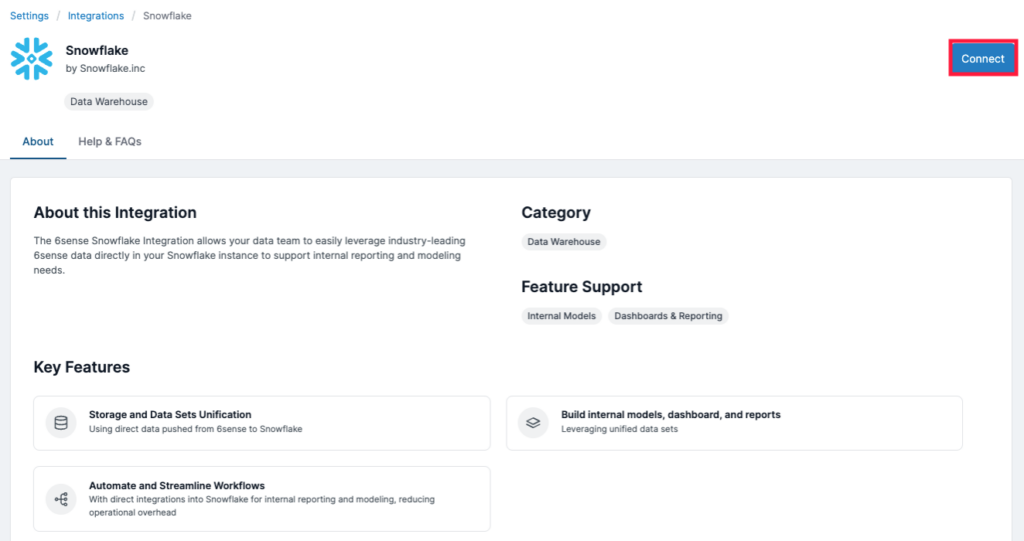
Snowflake is a cloud-native data platform that integrates with 6sense to deliver predictive scores, intent signals, and Signalverse intelligence into a data warehouse. The integration uses Data Packs delivered via an internal 6sense-managed named stage and Segment-Filtered Exports for dynamic data delivery. This is a native integration using Snowflake JDBC v1.0.
Source: 6sense
Key integration capabilities include:
Structured Data Pack exports (Keyword Intent, Web Intent, Predictive scores, Firmographics, Technographics, Advertising Media) delivered to Snowflake tables
Segment-Filtered Export as a live destination for dynamic, event-driven data delivery
SQL-based joining of 6sense signals with CRM opportunity data, product usage logs, and revenue records
Custom propensity model development using internal signals unavailable inside 6sense
How Snowflake Integrates with 6sense
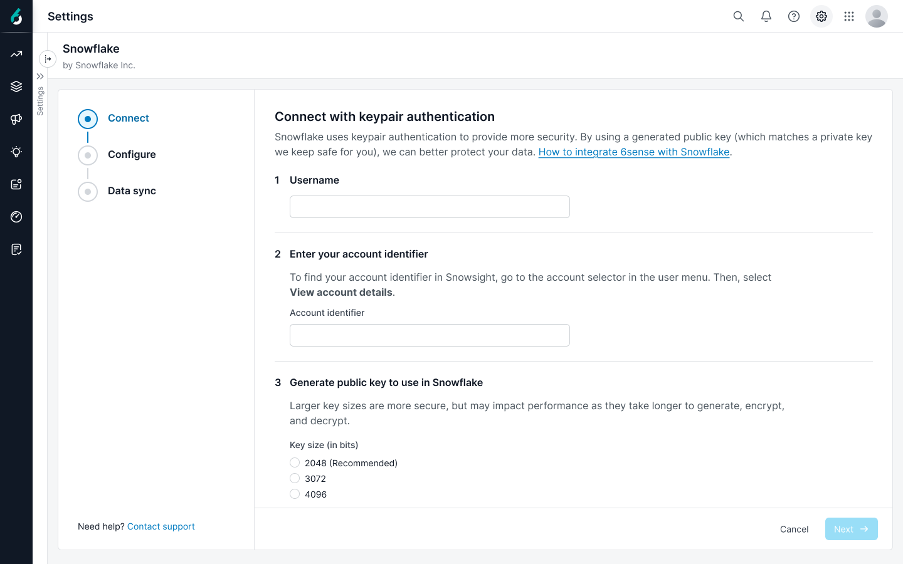
Setup requires 6sense Professional Services engagement (typically 15 to 30 hours) to configure the named stage and delivery cadence. Data Pack deployments require an active ABM or Intent Platform subscription.
Source: 6sense
1. Data Packs via Named Stage.
Data Packs are structured CSV exports loaded into Snowflake via an internal named stage, then ingested into designated tables using standard Snowflake COPY INTO commands. Available packs cover Keyword Intent, Web Intent, Predictive scores, Firmographics, Technographics, and Advertising Media data. Keyword Intent and Web Intent are bundled together for new purchases. Data teams can write SQL queries, build dbt models, and join 6sense data across any other table in the warehouse.
2. Segment-Filtered Export for Dynamic Delivery.
While Data Packs provide scheduled snapshots, Segment-Filtered Export adds a dynamic layer: accounts crossing scoring thresholds (entering Decision stage, achieving 6QA status, matching an intent keyword cluster) flow automatically into Snowflake tables. Together, Data Packs and SFE provide both the full historical record and near-real-time account qualification signals in the same warehouse.
3. SQL-Based Attribution and Custom Propensity Models.
The real value emerges when analytics teams join intent signals and buying stage history against CRM opportunity data using standard SQL. A revenue operations analyst can determine whether accounts reaching 6sense's Decision stage before an opportunity opens have shorter close cycles than accounts where the opportunity opened first. Data science teams can build custom propensity models incorporating internal signals (product usage, support ticket volume, renewal timing) that extend 6sense's native scoring, and feed those scores back into CRM fields that 6sense's Intelligent Workflows reference.
Snowflake Pricing
Snowflake uses consumption-based pricing across four editions:
Standard: Entry-level, per-second compute billing, Time Travel up to 1 day
Enterprise: Multi-cluster warehouses, 90-day Time Travel, Dynamic Data Masking; recommended for teams running concurrent analytics workloads
Business Critical: HIPAA/PCI DSS compliance, PrivateLink, customer-managed encryption
Enterprise+: Custom pricing for the most demanding governance requirements
A 30-day free trial ($400 in credits, no credit card) is available at signup.snowflake.com. Note that 6sense's side of the integration still requires an active platform subscription with Data Pack add-on and Professional Services hours.
Who Should Use the Snowflake Integration?
Analytics teams that already use Snowflake as their primary warehouse and want to join 6sense signals against CRM data, product usage logs, or revenue records without building a custom ETL pipeline
Revenue operations teams that need attribution models connecting 6sense buying stage and intent signals to pipeline outcomes, a use case that requires SQL access beyond 6sense's native reporting
Data science teams building custom propensity models that incorporate both 6sense's predictive data and internal behavioral signals unavailable inside the platform
7. Slack: Best 6sense Integration for Real-Time Seller Signal Delivery
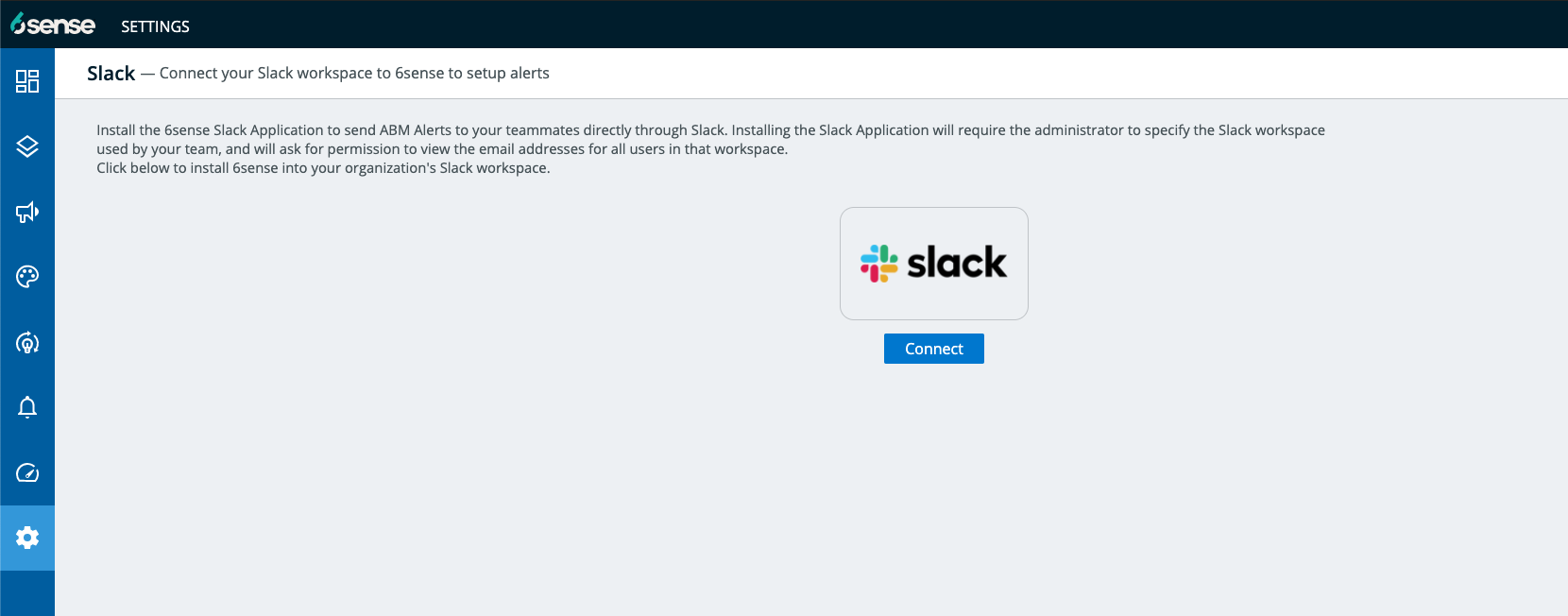
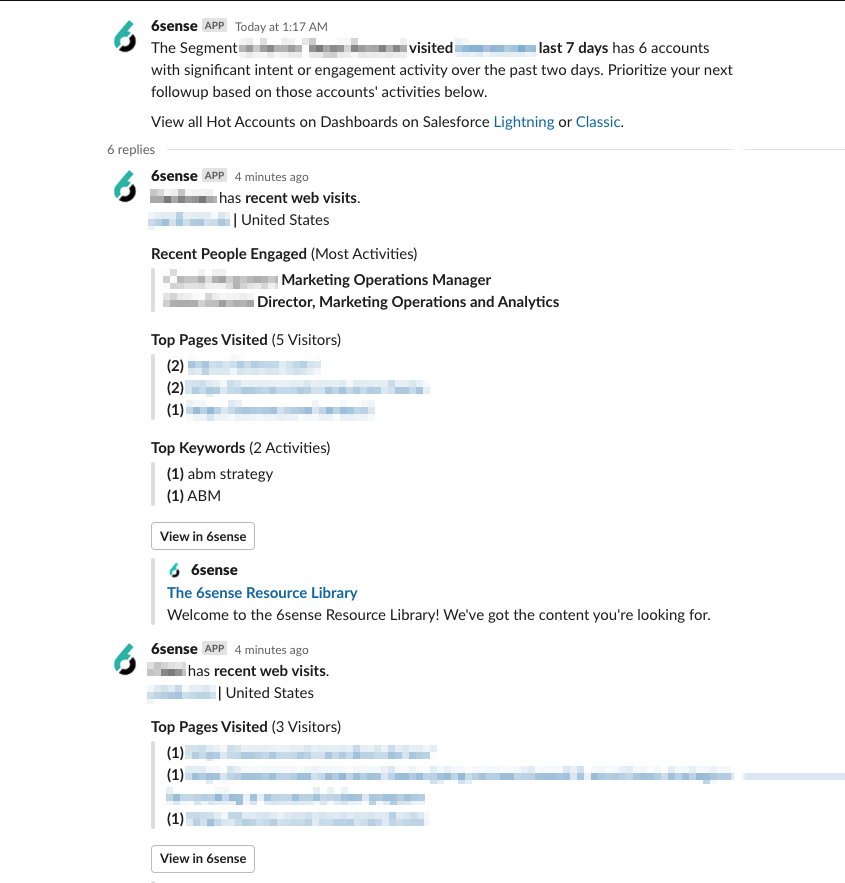
Slack is a team communication platform that integrates with 6sense through a dedicated native Slack app to deliver account intelligence alerts to individual sellers. The integration pushes buying stage changes, temperature score movements, and website visitor activity into the communication tool reps already monitor throughout their workday.
Source: 6sense
Key integration capabilities include:
Account temperature and buying stage alerts pushed to individual Slack users via the 6sense Slack app
Intent keyword activity and engagement data embedded in each notification for in-context triage
Configurable daily or weekly alert cadence with territory filtering by country, state, or city
Real-time website visitor alerts when named target accounts browse the company website
How Slack Integrates with 6sense
Setup requires a Slack workspace administrator to install the 6sense Slack app, after which individual users configure alert preferences for territory scope and delivery cadence. The integration is one-directional: 6sense pushes signals to Slack. The value is speed, getting buying signals to reps while those signals are still tactically useful.
Source: 6sense
1. Per-Rep Account Temperature and Buying Stage Alerts.
6sense routes account temperature scores (Hot New, Hot, Warm, Cold) to individual Slack users, with each notification embedding the predictive buying stage and specific intent keywords driving the signal. Each rep receives only alerts relevant to their own book of business, scoped to their territory. Per-user delivery preserves signal-to-noise ratio instead of flooding a shared channel that reps learn to ignore.
2. Configurable Cadence and Territory Filters.
Reps configure alert delivery on a daily or weekly cadence, and territory-based geographic filters scope the feed by country, state, or city. A rep covering West Coast enterprise accounts sees only alerts for that geography. The daily cadence pairs naturally with a structured morning sales motion: scan yesterday's signals, build the outreach priority list accordingly.
3. Real-Time Website Visitor Alerts.
When a named target account visits the company website, 6sense fires an immediate Slack notification. The mechanism is 6sense's WebTag 2.0, which matches anonymous visitors to known accounts using the 6sense Company Graph (analyzing IP addresses against 75M+ companies). For accounts already classified as Hot or in the Purchase stage, a same-session website visit compounds the signal strength and raises the urgency for immediate outreach.
Slack Pricing
Slack uses per-seat pricing with a Fair Billing Policy that credits inactive users:
Free: $0 (90-day message history, 10-app limit; sufficient for small teams evaluating the integration)
Pro: $7.25/user/month (annual); unlimited history and apps; the baseline tier for operationalizing 6sense alerts
Business+: $15/user/month (annual); SAML SSO, SCIM provisioning, 24/7 priority support
Enterprise+: Custom pricing; Enterprise Grid, DLP, data residency
Meaningful alert content requires a paid 6sense Sales Intelligence subscription with predictive scoring. The Free SI tier (50 credits/month, no intent data or predictive stages) does not generate the signals that make this integration valuable.
Who Should Use the Slack Integration?
Sales teams that live in Slack and want 6sense alerts in the tool they already monitor, rather than requiring a separate platform login
Reps with defined geographic or account-based territories who need individually scoped signal feeds rather than a shared team firehose
Teams that need real-time notification when Hot or Decision-stage accounts are browsing the company website, enabling outreach while the prospect is engaged
Final Verdict
The best 6sense integrations move account-level intelligence into the tools and workflows where your revenue team operates:
ZoomInfo: verified B2B contact data, buyer intent, and technographic intelligence for 6sense-identified in-market accounts; the highest-impact integration on this list if your outreach depends on data quality
Salesforce: predictive scores and buying stage pushed into CRM fields with native automation triggers
HubSpot: buying stage data driving marketing workflow enrollment, form enrichment, and AI Email Agent activation
Salesloft: intent signals embedded in the cadence platform with automated stage-triggered enrollment
LinkedIn: ad spend restricted to accounts 6sense classifies as actively evaluating, with daily audience syncs
Snowflake: Signalverse data joined with first-party revenue data for custom attribution and propensity modeling
Slack: per-rep signal delivery in the communication tool your team already uses
These integrations compound: you might run ZoomInfo for contact enrichment and intent layering, Salesforce for CRM score delivery, Salesloft for cadence execution, LinkedIn for advertising air cover, and Slack for real-time alerts simultaneously on the same 6sense instance, each extending the value of the others.
If you connect just one, start with the data layer everything else depends on. 6sense identifies which accounts are in-market; ZoomInfo provides the verified contacts you need to reach them. ZoomInfo Lite is a permanent free tier, so you can evaluate the data quality alongside your 6sense signals before committing to a subscription.
Frequently Asked Questions
How many integrations does 6sense support?
6sense maintains native integrations across CRM (Salesforce, HubSpot, Microsoft Dynamics), marketing automation (Marketo, Eloqua, Pardot, HubSpot), sales engagement (Salesloft, Outreach, Gong Engage), advertising (LinkedIn, Meta, Google Ads, The Trade Desk), data warehousing (Snowflake, AWS S3), and team communication (Slack). The platform also integrates with six third-party intent data providers (Bombora, G2, TrustRadius, TechTarget, PeerSpot, Gartner Digital Markets) and offers REST APIs for custom integrations.
Does 6sense offer a free plan?
6sense provides a Free Sales Intelligence tier that includes 50 credits per month, company and people search, sales alerts, list builder, and a Chrome Extension. The free plan does not include intent data, predictive scoring, technographics, AI account summaries, CRM integration, or workflow automation. Moving from the free tier to paid plans requires a direct sales conversation, as 6sense does not publish pricing for any paid tier.
How does 6sense's predictive buying stage model work?
6sense's Predictive AI classifies accounts into five buying stages: Target (0 to 19 intent score, little to no research activity), Awareness (20 to 49, early-stage activity), Consideration (50 to 69, significant above-baseline activity), Decision (70 to 85, high digital research activity), and Purchase (86 to 100, bottom-of-funnel with the highest opportunity open rates). The model trains uniquely for each customer using their historical won/lost opportunity data, calibrating predictions to what actual purchasing behavior looks like for that company's ICP.
Can I connect 6sense to tools that are not in its native integration list?
6sense offers a suite of REST APIs covering Company Identification, People Enrichment, Company Firmographics, Lead Scoring, People Search, and Segments. These APIs enable custom integrations with any system that can make HTTP requests. The global rate limit is 100 requests per minute across all APIs, with separate credit pools for Company Identification and Enrichment operations. API access requires an active 6sense Platform or Sales Intelligence subscription.
How does 6sense's advertising compare to standalone B2B ad platforms?
6sense's built-in B2B DSP is included with platform subscriptions rather than priced as a standalone tool. Its primary differentiator is using predictive buying stage as a targeting input, a capability unavailable in native LinkedIn Campaign Manager, Google Ads, or Meta Business Manager. Supported formats include banner, animated HTML5, dynamic HTML5, native, video, and Connected TV ads. LinkedIn campaigns managed through 6sense carry a 15% Ad Services Fee on total spend.
How long does it take to implement 6sense integrations?
Implementation timelines vary by integration type. CRM connections (Salesforce, HubSpot) require admin-level permissions, custom field configuration, and predictive model training; the onboarding process spans role-specific setup tracks for administrators, marketing, and sales teams. Data warehouse integrations (Snowflake) require 6sense Professional Services engagement, typically 15 to 30 hours. Sales engagement (Salesloft, Outreach) and Slack integrations deploy faster, requiring OAuth authorization and alert configuration. 6sense provides a dedicated CSM for every customer to support implementation.
What is the best way to enrich 6sense-identified accounts with verified contact data?
Integrating a dedicated B2B data platform provides the most thorough contact enrichment for accounts 6sense identifies as in-market. ZoomInfo's native integration with 6sense combines ZoomInfo's verified database of 500 million contacts, 135 million verified phone numbers, and 200 million verified business email addresses with 6sense's predictive buying stage classification. When 6sense classifies an account as Decision or Purchase stage, ZoomInfo provides the verified direct dials, business emails, and org chart data needed to reach the buying committee. The data flows through a verification pipeline backed by 300+ human researchers, so the contact information your reps use to act on 6sense signals actually connects.
