
ActiveCampaign is a marketing automation platform that combines email marketing, SMS, WhatsApp, CRM, and AI-powered campaign orchestration under one subscription. It targets small and mid-market teams that want advanced automation without enterprise pricing or headcount.
This breakdown covers every feature, how it works, who it serves, and which plan unlocks it.
ActiveCampaign's feature set fits if:
You run behavior-triggered email sequences (welcome series, abandoned cart recovery, lead nurture) and need a visual builder with branching logic that responds to engagement signals
You want AI that builds campaigns from a plain-language prompt, not just generates copy for a template you still have to wire together
You need email, SMS, and WhatsApp coordinated from a single automation builder using shared contact data
You manage a sales pipeline alongside marketing and want deal records enriched with each contact's full behavioral history (emails opened, pages visited, forms submitted)
You sell online (SaaS, ecommerce, courses, services) and need abandoned cart recovery, post-purchase flows, and lead scoring without stitching together three separate tools
You operate a franchise or multi-location brand and need centralized campaign control with local personalization
You'll reach the edges of its capabilities if:
You need a B2B contact and company database to build prospecting lists before your campaigns have anyone to send to
You want intent signals showing which companies are researching your category across the web, not just who opened your last email
You need to identify the specific person visiting your website (not just track anonymous page views) and route them into outreach automatically
You require conversation intelligence that records, transcribes, and coaches from sales calls
You run account-based marketing with display advertising, audience management, and multi-channel orchestration beyond email and SMS
For those needs, the reference point is ZoomInfo: a go-to-market platform built on 500M contacts, 100M companies, 135M+ verified phone numbers, and 200M+ verified business emails. ZoomInfo's GTM Context Graph combines B2B data with CRM records, conversation intelligence, and behavioral signals, accessible through APIs, MCP, GTM Workspace, and GTM Studio.
After the feature breakdown, this article covers where ActiveCampaign stops and how ZoomInfo fills those gaps.
ActiveCampaign Platform Overview
ActiveCampaign calls itself the autonomous marketing platform, built around a May 2025 intelligence layer called Active Intelligence that moves the product from task automation to goal-directed AI. The platform serves 180,000+ businesses across 170+ countries, processed 109 billion emails in 2025 with an average open rate of 40.4%. Named verticals include SaaS, ecommerce, franchise, healthcare, education, travel, and agencies.
The platform is organized around these capability areas:
Module | What it does | Plan |
|---|---|---|
Campaign creation, AI content, deliverability infrastructure, A/B testing | All plans | |
Visual workflow builder, cross-channel orchestration, predictive sending | All plans (5-action cap on Starter) | |
AI agents for campaigns, automations, segments, content, goals, insights | All plans (with limits) | |
Pipelines, deal/lead scoring, sales routing, 1:1 email, win probability | All plans (advanced features on Pro+) | |
Two-way SMS, automated messaging, AI content generation | Add-on credits | |
Broadcast, Flows builder, shared inbox, 1:1 chat | Separate WhatsApp plans | |
Email designer, landing pages, AI Brand Kit, image generation | Landing pages on Plus+ | |
Powered by Postmark: order confirmations, password resets, receipts | Add-on | |
Campaign performance, business goals tracking, attribution, BotSense | Attribution on Pro+; custom reports on Enterprise |
Pricing is contact-based: the monthly cost scales with the number of contacts stored, and ActiveCampaign charges once per unique contact regardless of how many automations or segments that contact appears in. Four plan tiers (Starter, Plus, Professional, Enterprise) gate features progressively, with Starter at $149/month for 10,000 contacts and Enterprise requiring a custom quote. A 14-day free trial needs no credit card, and a 30-day money-back guarantee covers first-time paid subscribers. Here is the full tour.
ActiveCampaign's Marketing Automation Engine
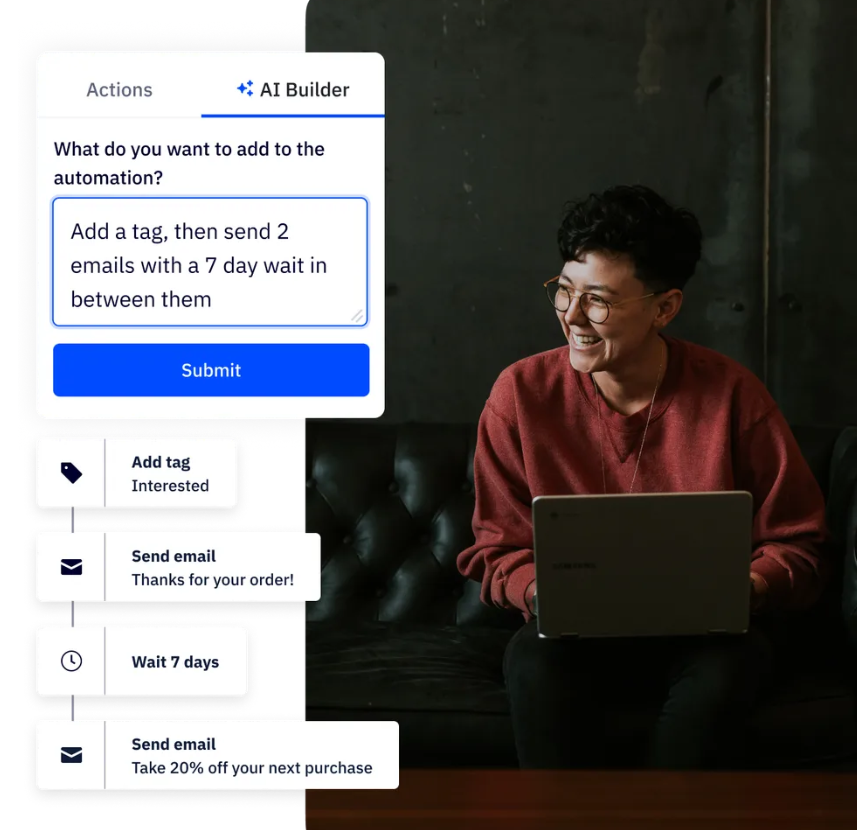
Marketing automation is the platform's core and the feature most buyers evaluate first. ActiveCampaign's automation builder is a visual, drag-and-drop canvas where you set a trigger, add touchpoints across channels, schedule timing, and configure conditional branching that routes contacts based on behavior, preferences, and engagement.
Source: ActiveCampaign
The builder supports unlimited automation actions on Plus plans and above (Starter caps at 5 actions per automation). Triggers fire on form submissions, tag additions, site visits, email engagement, deal stage changes, date conditions, or custom events. Automations branch using if/else conditions, split actions, wait steps, and goal nodes. You can nest automations inside each other, and on Professional plans and above, connected automations let separate workflows hand contacts between each other based on shared conditions.
The AI layer sits on top of the manual builder.
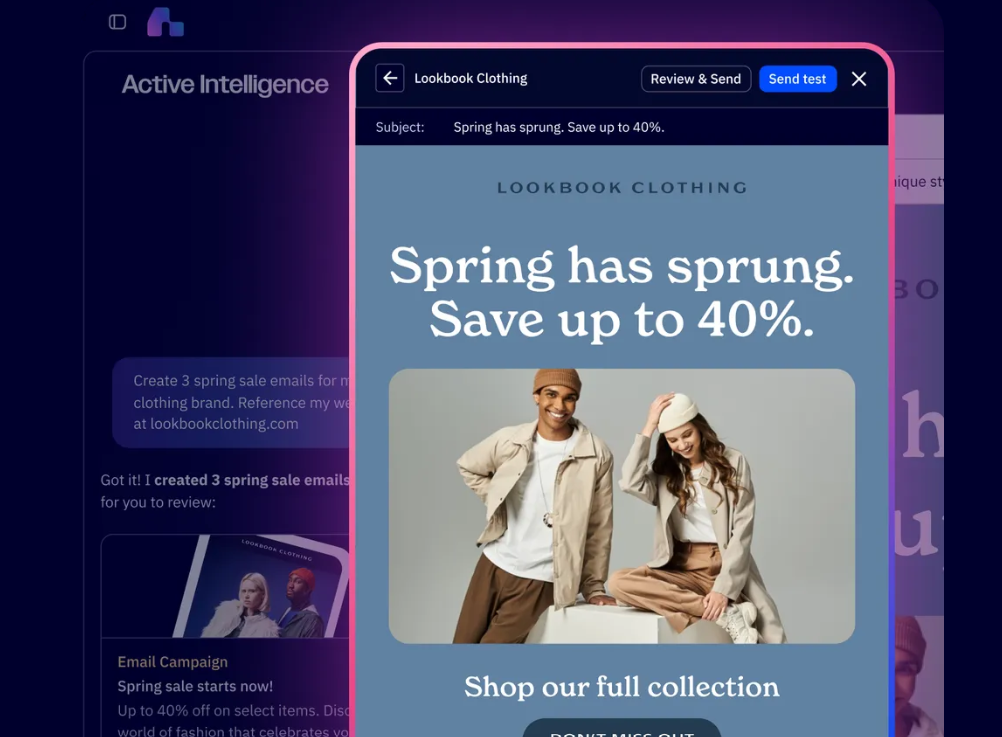
The AI Campaign Builder takes a plain-language prompt and generates a configured automation (wait periods, branching paths, action steps) without manual setup, described as building campaigns 3x faster. AI-Suggested Actions recommend complete marketing sequences based on billions of anonymized data points from similar businesses, and AI-Suggested Automations surface workflow ideas you haven't built yet.

Source: ActiveCampaign
Predictive Sending analyzes historical engagement data per recipient and delivers each email when that person is most likely to open it, rather than sending to all contacts at the same time. This requires Professional or above.
Cross-channel orchestration is built in: the same automation that triggers an email can trigger an SMS, a WhatsApp message, a web push notification (Plus+), or an action in a connected app through 1,000+ integrations. Site and event tracking monitors how contacts interact with your website and surfaces optimization opportunities.
A prebuilt automation recipe library provides ready-to-deploy templates for common workflows (welcome series, cart recovery, re-engagement), and free migration services move contacts, templates, segments, and campaigns from competing platforms.
Source: ActiveCampaign
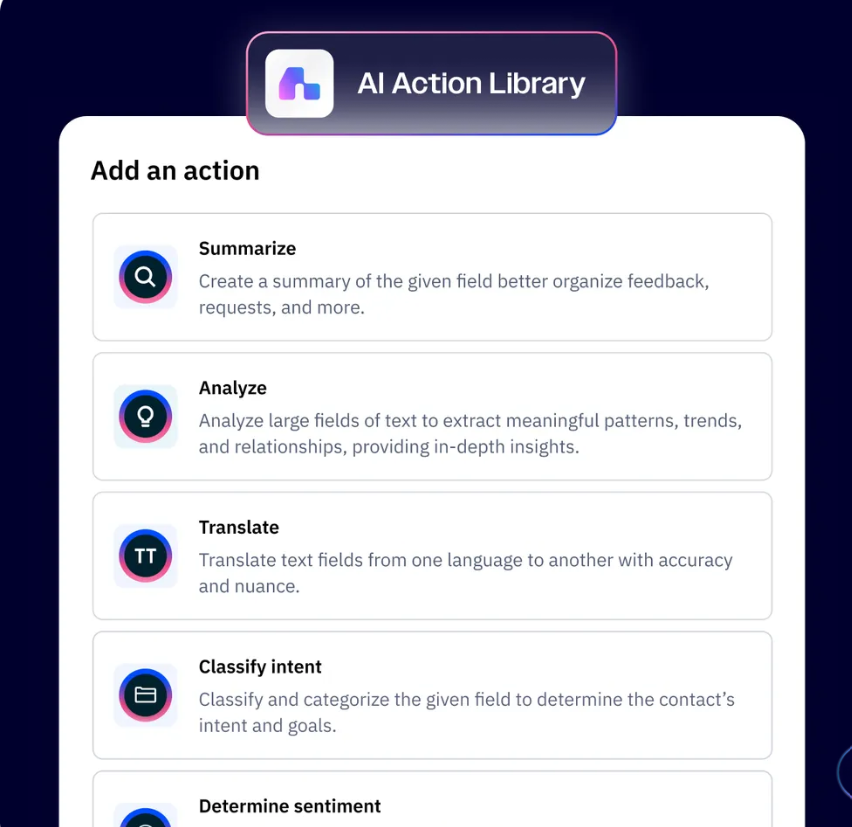
The automation builder also includes an AI Actions Library: pre-built AI tasks (sentiment analysis, personalization, content selection) you can add to any automation step without custom code.
ActiveCampaign's Email Marketing and Deliverability
Email is the platform's highest-volume channel, and deliverability is where ActiveCampaign invests the most infrastructure. EmailToolTester named it the Best Email Marketing Tool of 2025, and 93% of surveyed customers report better deliverability rates than their previous platform.
Campaign creation starts with the drag-and-drop Email Designer, a library of 250+ templates, or the AI Campaign Builder that generates a complete campaign (subject lines, preheaders, body content, CTAs, images) from a single prompt.
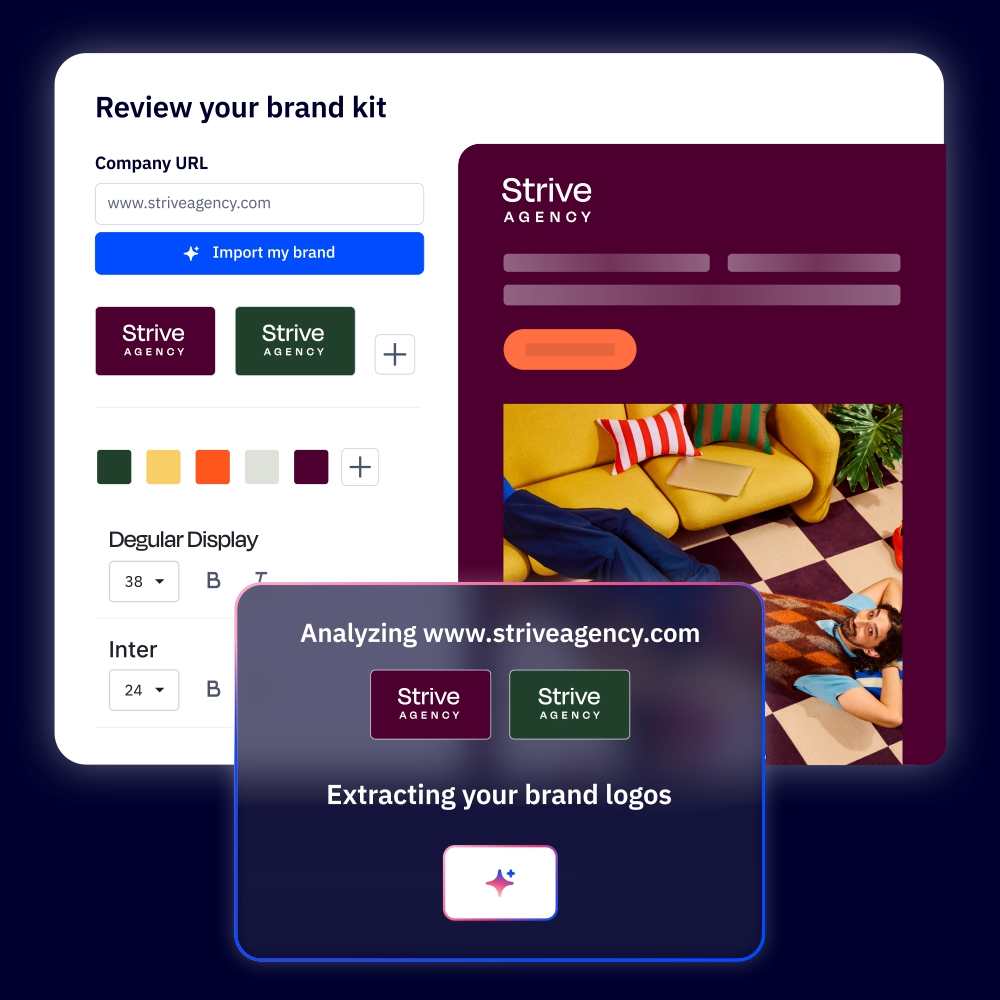
The AI Brand Kit imports logos, fonts, and colors from a website URL, so every campaign matches brand guidelines without manual asset upload.
Source: ActiveCampaign
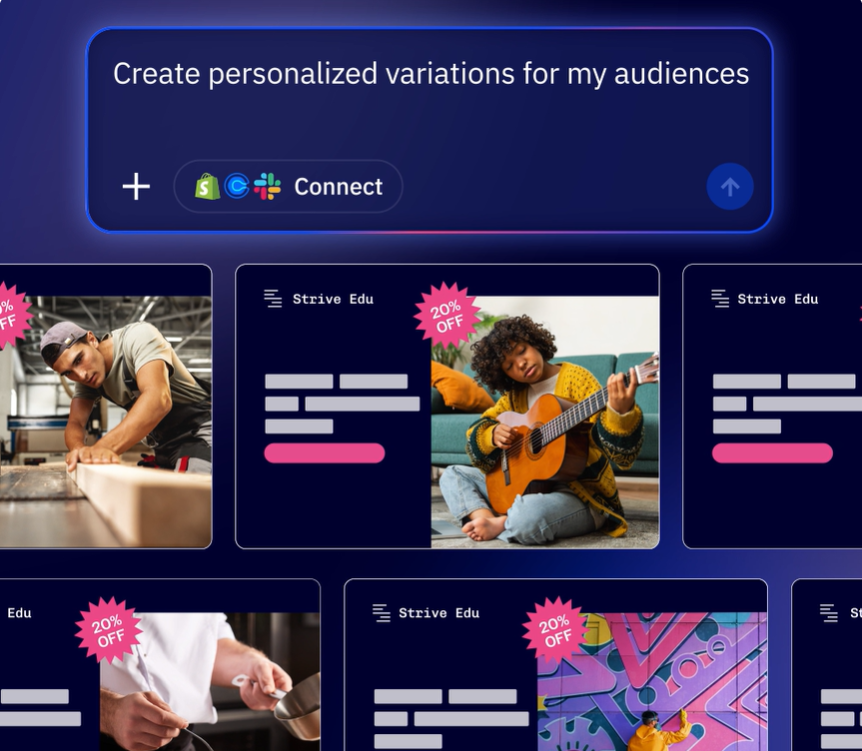
Personalization goes deeper than merge tags.
Dynamic content blocks change per recipient based on tags, purchase history, or device type. Conditional content uses code-based logic to show or hide elements for specific segments. Predictive content uses NLP to select the best content variant for each contact based on engagement data, moving from rule-based personalization to data-driven selection. AI Translations handle context-aware translation while preserving brand voice and cultural nuances.
Source: ActiveCampaign
On the infrastructure side, ActiveCampaign routes emails through a private network rather than the public internet where possible, cutting average send time by 10x. The platform reports 99.88% email deliverability internally; EmailToolTester independently reports 94%. Authentication includes DKIM and DMARC, with dedicated IP management and pre-warmed dedicated IPs for high-volume senders. A free DMARC testing tool checks domain configurations. Campaign preview renders emails across browsers, inboxes, and devices before sending, and Apple MPP filtering strips inflated open metrics from Apple Mail Privacy Protection so reporting reflects genuine engagement.
Each plan carries a monthly email send limit tied to contact count: 10x on Starter, 12x on Professional, 15x on Enterprise. Exceeding the limit costs $0.005 per email over the cap, and if overage reaches 3x the plan limit, sending suspends until the next billing cycle. A/B testing supports up to five variants, and automation-level A/B testing is available on Professional and above.
Active Intelligence: ActiveCampaign's AI Layer
Active Intelligence is ActiveCampaign's AI system, launched May 2025. The company calls it the fastest-growing feature in the platform's history and positions it as the difference between automation (executing tasks you build) and autonomous marketing (building what you need from a stated goal). AI users report saving 13+ hours per week.
The system works in three phases:
Imagine: A Goals Agent listens to a stated business objective, maps it to proven strategies, and determines subject lines, channel mix, and campaign structure.
Activate: AI agents build complete campaigns (personalized content, segmented lists, cross-channel automations) ready to deploy with a single click.
Validate: The Goals Agent shows real-time performance insights, engagement metrics, and goal-aware recommendations to track progress.
Source: ActiveCampaign
The agent ecosystem covers creation, execution, and analysis. The AI Campaign Builder generates complete email campaigns from prompts. AI-Suggested Segments analyze audience data and create segments in seconds. The AI Content Generator produces email sequences, subject lines, SMS campaigns, and landing page copy. The AI Image Generator creates visuals matched to brand voice and campaign goals. AI Campaign Follow Up responds to new leads automatically. Business Goals tracking sets marketing objectives and provides automated progress tracking with next-step recommendations.
Several agents remain in beta as of early 2026: the Campaigns Agent, Automations Agent, Personalization Agent, Forms Agent, and Goals Agent. Their capabilities are accessible but not yet at general release quality.
An Active Intelligence sidebar appears throughout the platform, aware of the context of whatever you're working on (building an automation, reviewing a report, editing a campaign) and surfacing relevant recommendations without requiring a context switch.
Source: ActiveCampaign
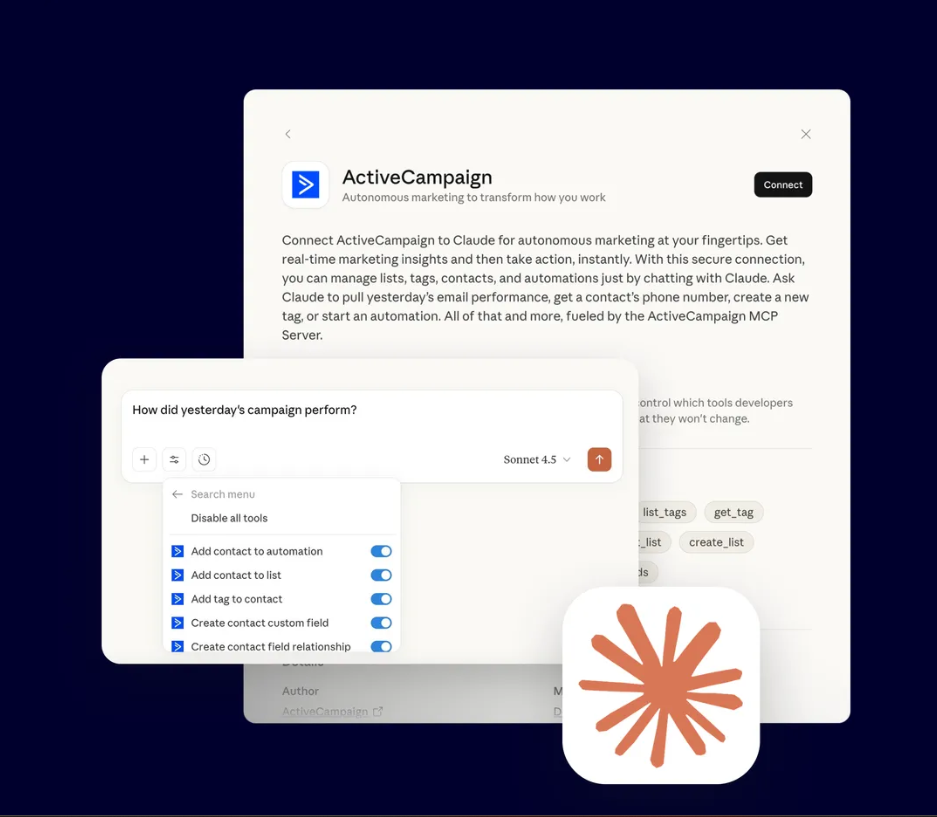
Active Intelligence also connects to external AI tools via MCP (Model Context Protocol). ActiveCampaign became the first marketing platform in Claude's official connector directory in November 2025, with connectors also available for ChatGPT. Through MCP, external AI assistants can read email stats, update contacts, trigger automations, and manage tags through natural-language prompts. Setup requires only entering a Remote MCP URL from ActiveCampaign's Developer settings.
ActiveCampaign's Sales CRM and Deal Management
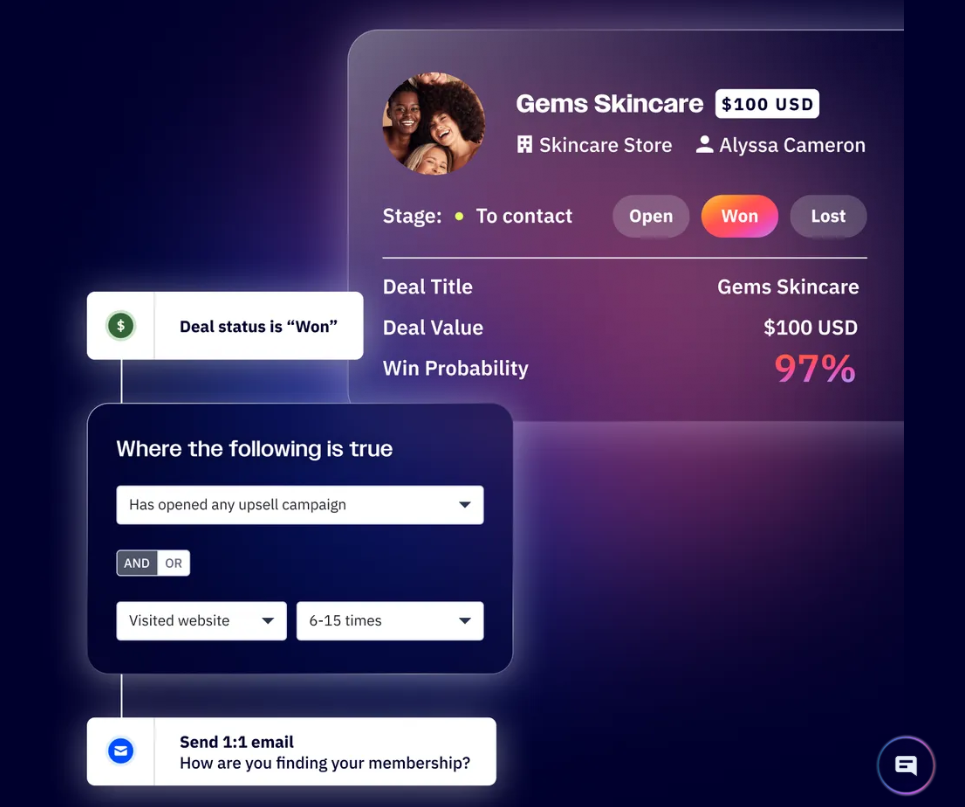
ActiveCampaign's Sales CRM is embedded inside the marketing automation platform, not bolted alongside it. The result: deal records carry each contact's full behavioral history (emails opened, pages visited, forms submitted, automations triggered) without any integration setup.
Source: ActiveCampaign
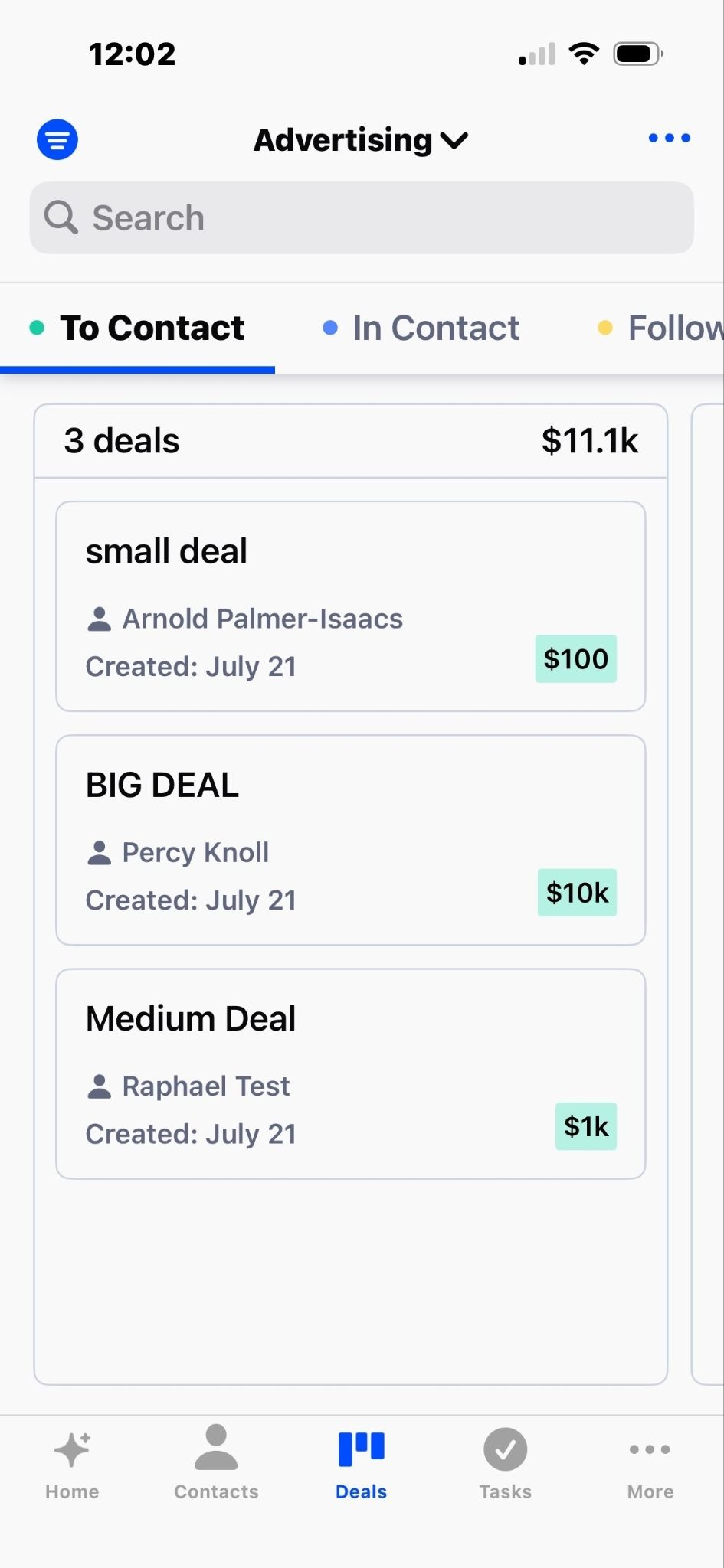
The CRM is built around Deals inside customizable Pipelines with configurable stages. Reps drag deals between stages on a Kanban-style board. Each deal record holds value, owner, custom fields, attached files, and the contact's full engagement history.
ActiveCampaign offers two independent scoring systems. Contact-level lead scoring evaluates the person (engagement, demographics, behavioral signals). Deal-level scoring evaluates the deal itself (quality, stage velocity, activity recency), available with the Pipelines add-on on Plus and above. Both can be static (applied once) or dynamic (updated via automations triggered by behaviors like email replies or stage changes), so scores reflect current engagement rather than a snapshot at deal creation.
Sales routing assigns incoming deals automatically based on round-robin rotation, rep expertise, lead score thresholds, geographic location, deal value, product interest, or any custom field. 1:1 emails are individual, tracked emails sent from a deal or contact record, appearing as personal messages from the rep with open, reply, and click tracking. Reps connect Gmail or Outlook, and Chrome and Outlook extensions let them view contact details, create deals, and manage the pipeline from their inbox.
A mobile app extends CRM access to contacts, tasks, and deal records on the go.
Source: ActiveCampaign
Active Intelligence surfaces win probability scores and "next best actions" at the deal level, guiding rep prioritization without manual pipeline reviews.
The CRM works best as a marketing companion for teams that have outgrown spreadsheets. It handles pipeline tracking, automated task creation, and sales routing well. Deal forecasting, territory management, and complex custom workflows sit outside its scope; teams needing those typically pair ActiveCampaign with a dedicated CRM like Salesforce or HubSpot.
ActiveCampaign's SMS and WhatsApp Marketing
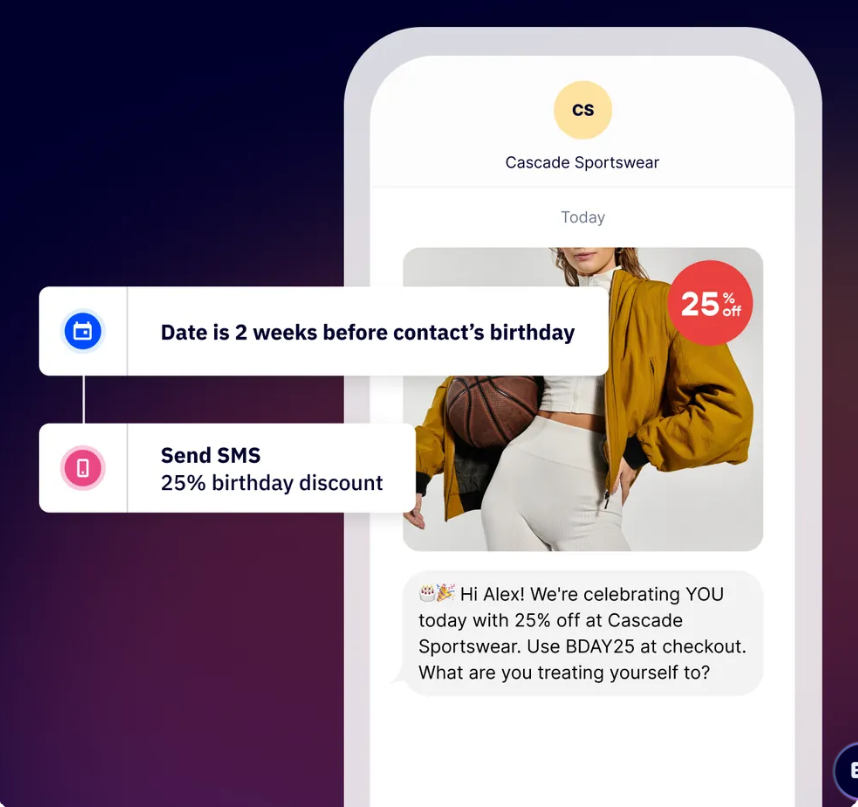
SMS and WhatsApp extend ActiveCampaign beyond the inbox into higher-immediacy channels. SMS carries a 98% open rate with 90% of messages read within 3 minutes. WhatsApp addresses two-way conversational engagement in markets where it dominates (Latin America, Europe, Southeast Asia).
Source: ActiveCampaign
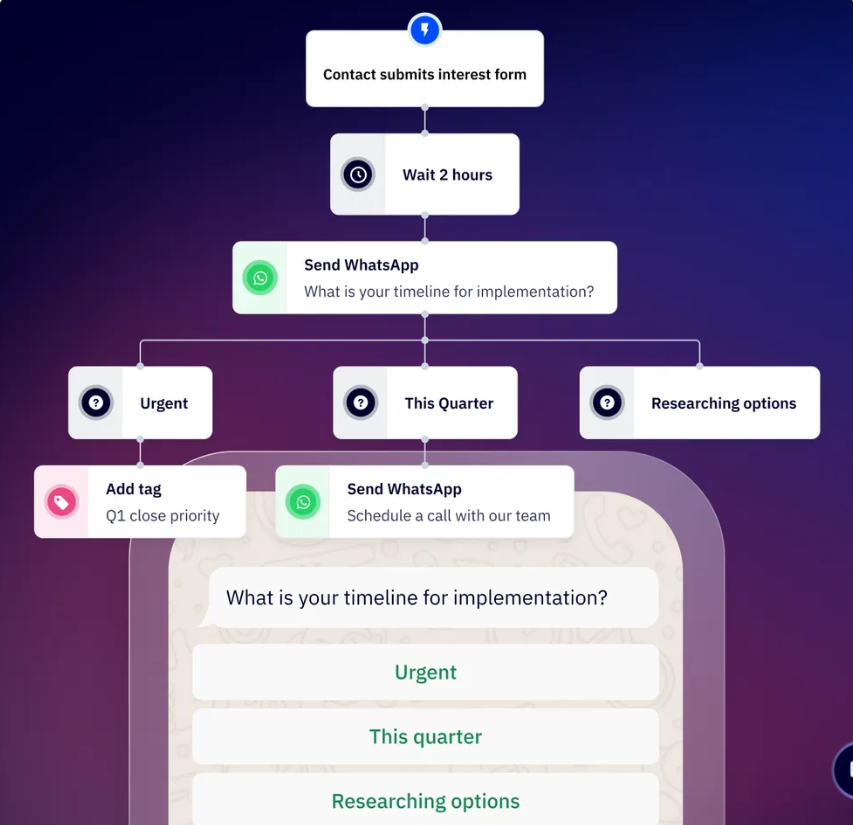
Both channels sit inside the existing automation builder. The same workflow that triggers an email can trigger an SMS or WhatsApp message, using shared contact data for segmentation and personalization.
SMS requires registering a dedicated 10DLC long code through an in-app process. Replies open into a two-way SMS inbox. Active Intelligence can plan and execute SMS campaigns, generate on-brand content, suggest personalized replies, and summarize text conversations. SMS automations reach 180+ countries with GDPR-compliant consent management. SMS credits are purchased separately from the email plan.
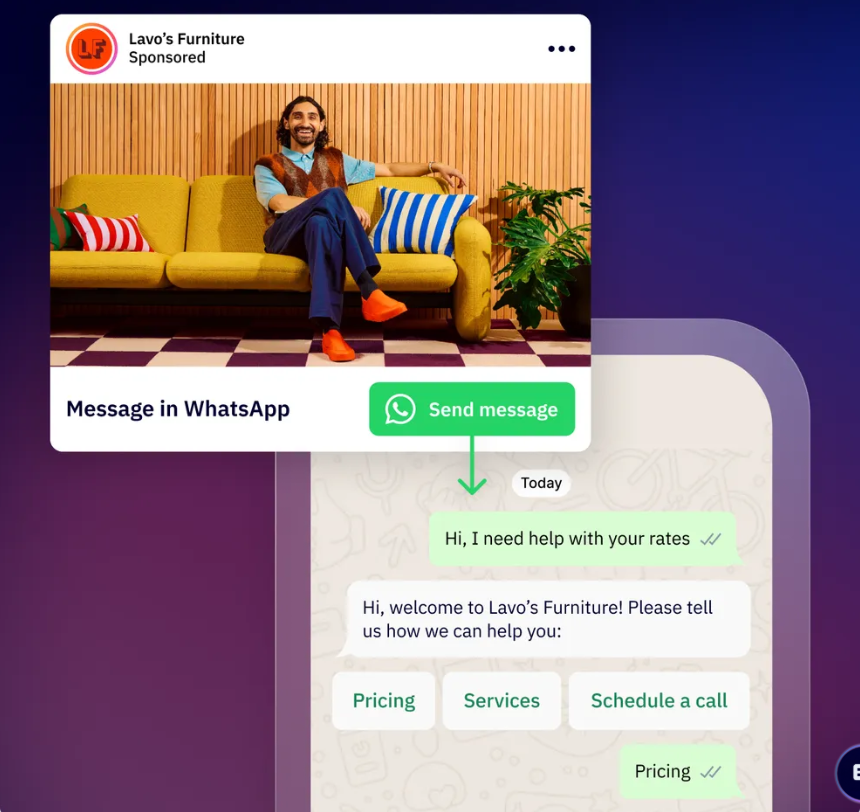
WhatsApp runs through the WhatsApp Business API, with ActiveCampaign operating as a Meta Business Partner.
Source: ActiveCampaign
The Flows builder is a no-code tool that profiles customers, qualifies leads, onboards users, or runs any conversation-based workflow, reportedly saving 5 hours per week on average. A shared inbox handles live agent responses with routing and assignment. Broadcast messaging, 1:1 chat, data capture synced to CRM records, and cross-channel integration with email automations are all native.
Source: ActiveCampaign
WhatsApp is priced through separate plans (Core, Advanced, Premium) that can be bundled with Plus, Pro, or Enterprise email plans. WhatsApp credits are non-refundable and expire monthly with no rollover.
ActiveCampaign's Content Creation and Landing Pages
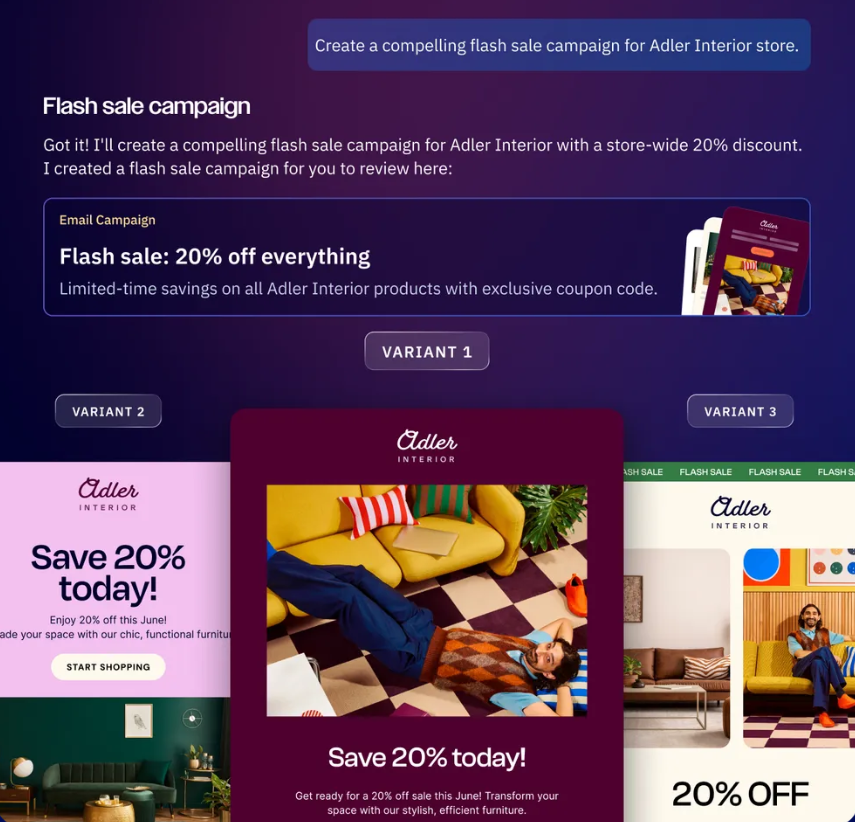
The content layer bundles the Email Designer, 250+ templates, AI content and image generation, the AI Brand Kit, and a landing page builder.
Source: ActiveCampaign
The AI Brand Kit extracts logos, fonts, colors, and visual elements from a website URL, removing the manual brand setup step. This is useful for agencies managing multiple client brands or businesses migrating from another platform.
The AI Content Generator produces email sequences, subject lines, social media posts, SMS campaigns, and landing page copy. The AI Image Generator creates visuals matched to the campaign's message and brand voice. Both sit inside the drag-and-drop Email Designer, so you can prompt AI for content and images while building a campaign without switching tools.
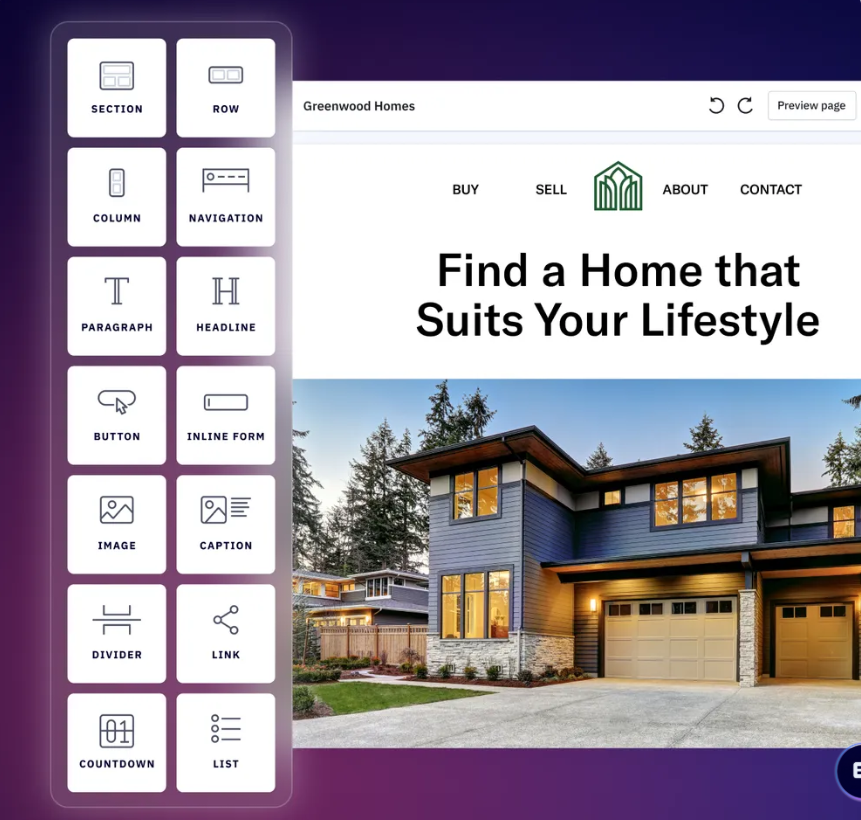
The landing page builder (available on Plus and above) creates pages without coding, using drag-and-drop templates. Captured visitor data feeds directly into automation workflows and CRM contact records, so a form fill can trigger a nurture sequence automatically.
Personalized landing pages serve different experiences based on traffic source, customer segment, or user behavior.
Source: ActiveCampaign
The landing page and form builders are a recurring friction point in user reviews. Capterra's pros/cons summary lists "limited page and form customization" as a top con, with users wanting finer design controls compared to standalone tools like Unbounce or Typeform. Teams that need pixel-level control or advanced multi-step form logic typically integrate a dedicated page builder alongside ActiveCampaign.
ActiveCampaign's Transactional Email (Postmark)
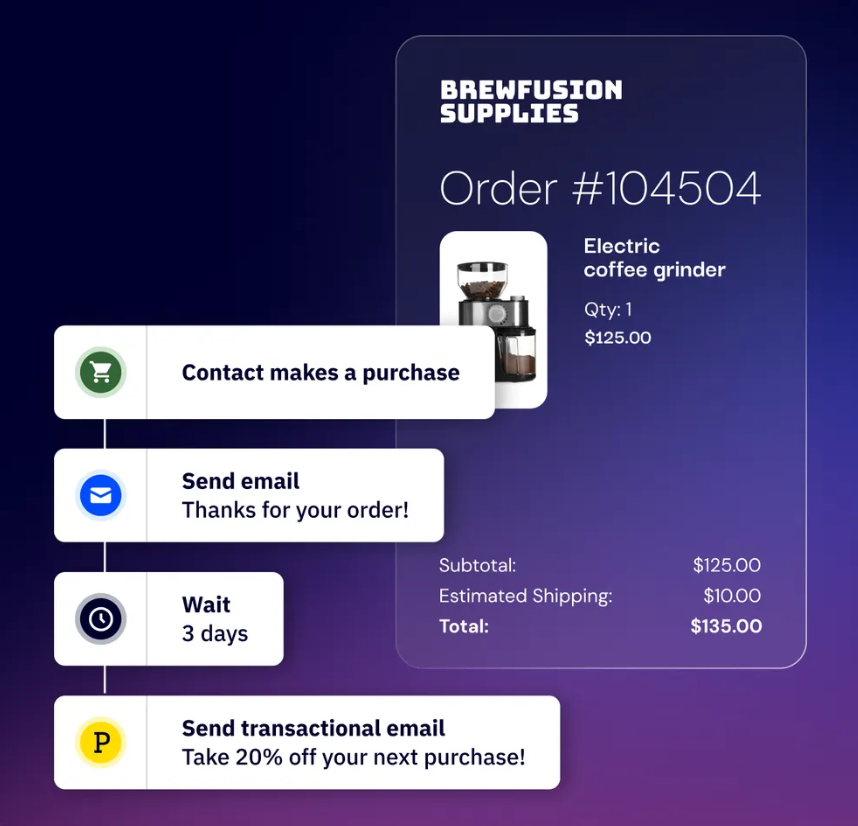
Transactional Email is powered by Postmark, a transactional email service ActiveCampaign acquired. It handles time-critical messages that marketing platforms typically skip: password resets, order confirmations, receipts, shipping notifications, and payment reminders.
Source: ActiveCampaign
Postmark was built for transactional email, and its Message Streams architecture physically separates transactional and bulk mail, protecting time-critical deliverability from the reputation effects of marketing volume. Postmark publishes live Time to Inbox metrics publicly and treats even a 30-second delay to a major ISP as a serious incident.
Two paths serve different teams. Marketers use events and data from 950+ integrations to personalize and automate transactional emails through a no-code builder. Developers integrate via Postmark's REST API or globally distributed SMTP service, with webhooks that send tracking events back to other products and platforms, and an activity feed with 45-day default retention of delivery events, opens, clicks, and bounces. Transactional Email is available as an add-on to any paid plan.
ActiveCampaign's Analytics, Reporting, and Business Goals
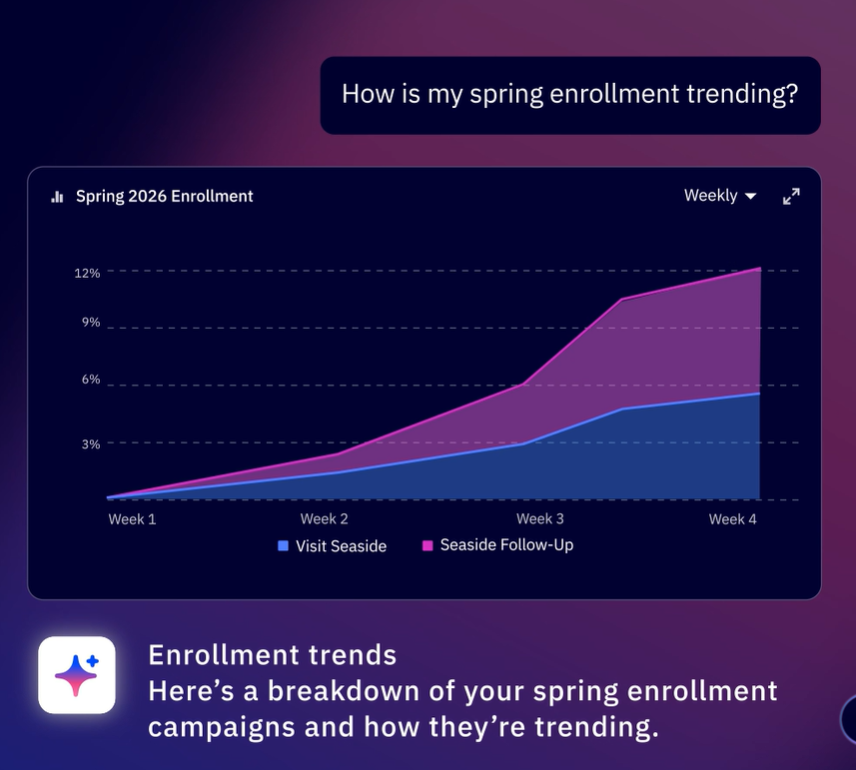
Analytics & Reporting covers campaign-level performance, automation reports, sales pipeline health, and revenue attribution.
Source: ActiveCampaign
The standout feature is the Business Goals framework. Rather than presenting raw metrics, Business Goals maps campaigns, automations, and forms to defined business outcomes, tracks progress in real time, and surfaces AI-generated recommendations when campaigns fall off track.
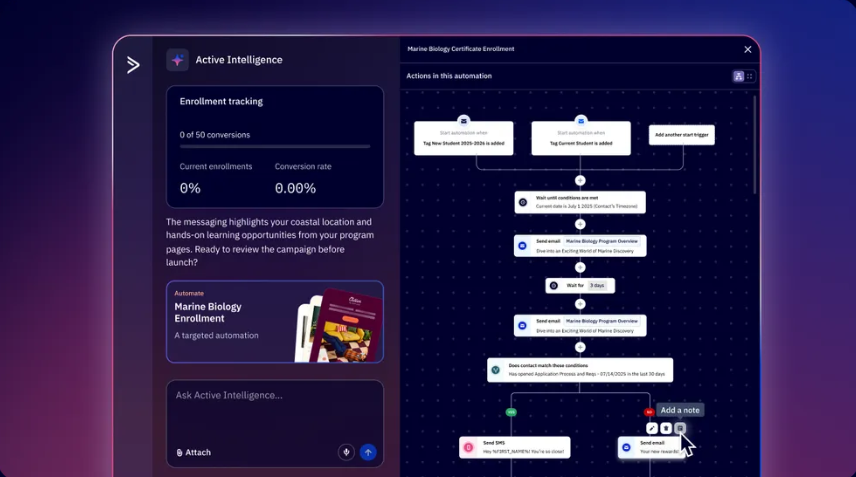
Source: ActiveCampaign
Active Intelligence conversational analytics let you type a natural-language question ("Which automations drove the most conversions last month?") and receive a summary with visualizations and next steps, skipping the traditional dashboard-and-filter approach.
BotSense is a click fraud and bot activity filter that strips unreliable engagement signals from security scanners, so metrics reflect human engagement rather than automated traffic.
Reporting depth scales with plan tier:
Starter and Plus: Campaign performance reports, automation reports, contact performance
Professional: Advanced segmentation, advanced reporting, revenue and conversion attribution, custom event tracking, up to five-variant split testing, automation A/B testing
Enterprise: Custom reports, unlimited inbox preview, premium segmentation and reporting
Sales pipeline reports and Win Probability (AI-driven deal outcome prediction) sit alongside marketing analytics because the CRM lives in the same platform, giving teams a single view across marketing activity and sales data.
ActiveCampaign's Integrations and Technical Infrastructure
ActiveCampaign's apps marketplace lists 1,000+ integrations, filterable by use case, compatible features, plan compatibility, app type, and data sync direction.
Key native integrations include:
CRM and Sales: Salesforce (Pro/Enterprise), Microsoft Dynamics 365 (Pro/Enterprise), Pipedrive, Freshsales, Zoho
Ecommerce: Shopify, WooCommerce, Square, Stripe
Advertising: Google Ads, LinkedIn Ads, Facebook/Instagram Custom Audiences
AI: Claude (via MCP), ChatGPT
For developers, a REST API (v3) returns JSON and covers Contacts, Deals, Campaigns, Automations, Lists, Tags, Segments, SMS, WhatsApp Templates, and Webhooks. A GraphQL API scoped to eCommerce handles orders, products, and recurring payments. Rate limits sit at 5 requests per second per account. API access comes with all paid plans (no separate developer signup), and free developer sandbox accounts are available for building and testing integrations.
The webhook system delivers real-time POST notifications for contact events, campaign activity, deal changes, SMS events, and account updates, with at-least-once delivery guarantees and source-scoping (public, admin, API, or system triggers).
App Studio provides a self-serve portal for third-party developers building published CX Apps on the platform, supporting OAuth2, Custom Objects, and bidirectional workflow triggers.
ActiveCampaign's Franchise and Multi-Location Management
ActiveCampaign HQ is a centralized hub for enterprise and franchise organizations where corporate teams set templates, campaigns, and brand guidelines while individual locations personalize content for local markets.
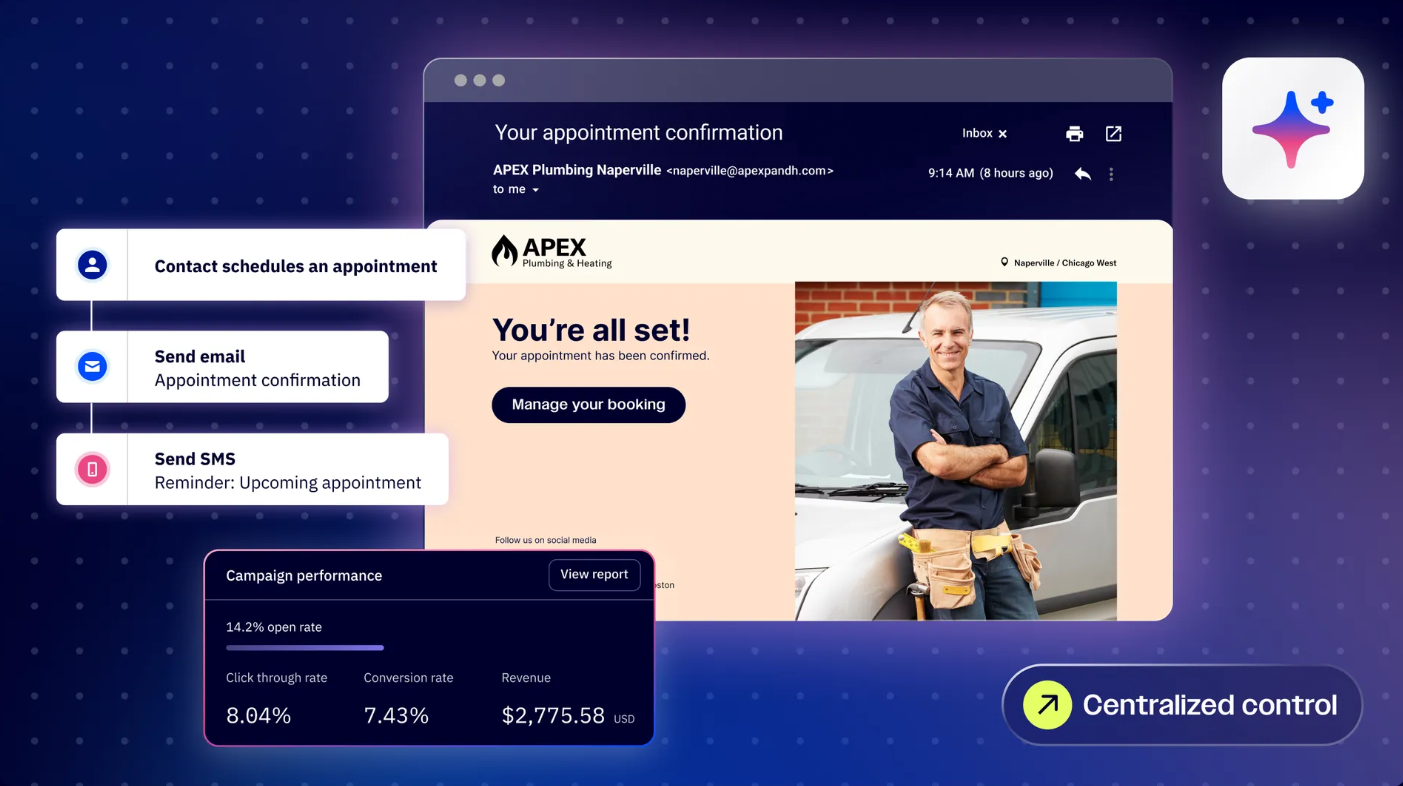
Source: ActiveCampaign
This solves a specific problem: franchise and multi-location brands need brand consistency across hundreds of locations while allowing each location to customize messaging for its audience. HQ provides the guardrails (approved templates, brand assets, campaign structures) while individual locations adapt content within those boundaries. HQ is priced as a separate subscription from the standard email plans.
Where ActiveCampaign Stops: The Gaps
ActiveCampaign centers on the marketing automation workflow: capturing leads, nurturing them through email, SMS, and WhatsApp, managing lightweight deal pipelines, and measuring campaign performance. That focus shapes its strengths, but it also means the platform depends on external tools for several capabilities a growing go-to-market team needs.
No B2B contact or company database. ActiveCampaign does not include a prospecting database. It manages contacts you already have (from forms, imports, integrations) but does not help you find new contacts, companies, direct dials, or verified business emails. A team using ActiveCampaign for outbound needs a separate data source to populate the contact list before any automation can fire.
No buyer intent signals. ActiveCampaign tracks engagement with your own campaigns (opens, clicks, form submissions, site visits) but does not monitor which companies are researching topics related to your product across the broader web. Engagement signals tell you who responded to your outreach; intent signals tell you who is in-market before you reach out.
No website visitor identification at the contact level. ActiveCampaign includes site tracking that monitors how known contacts interact with your website, but it does not identify unknown visitors by person or company. If a prospect visits your pricing page without filling out a form, ActiveCampaign captures the page view only after that person is already in your contact database.
No conversation intelligence. ActiveCampaign has no call recording, transcription, or conversation analysis. The CRM supports 1:1 email and task management, but once a sales call ends, there is no AI analysis of what was discussed, no objection detection, and no coaching scorecards. Teams that advance leads from email to phone selling need a separate tool to capture call context.
No account-based marketing or display advertising. ActiveCampaign covers email, SMS, WhatsApp, and can sync audiences to ad platforms (Google Ads, Facebook Custom Audiences), but it does not include a demand-side platform for display advertising, account-level audience management, or multi-channel ABM orchestration. Marketing teams running coordinated display, email, and direct-mail campaigns across target accounts need a separate platform.
Limited CRM depth for complex sales operations. The CRM handles pipeline tracking and automated lead routing well, but it does not include deal forecasting, territory management, buying group mapping, or the deal intelligence (AI risk detection, methodology extraction from conversations) that enterprise sales teams require. ActiveCampaign's own documentation positions the CRM for quick implementation ("hours to a few days"), not as a Salesforce replacement.
How ZoomInfo Covers the Gaps
These gaps share a common thread: ActiveCampaign excels at orchestrating engagement with contacts you already have, but depends on external tools for the intelligence, data, and signals that determine who to engage first. ZoomInfo supplies those layers.
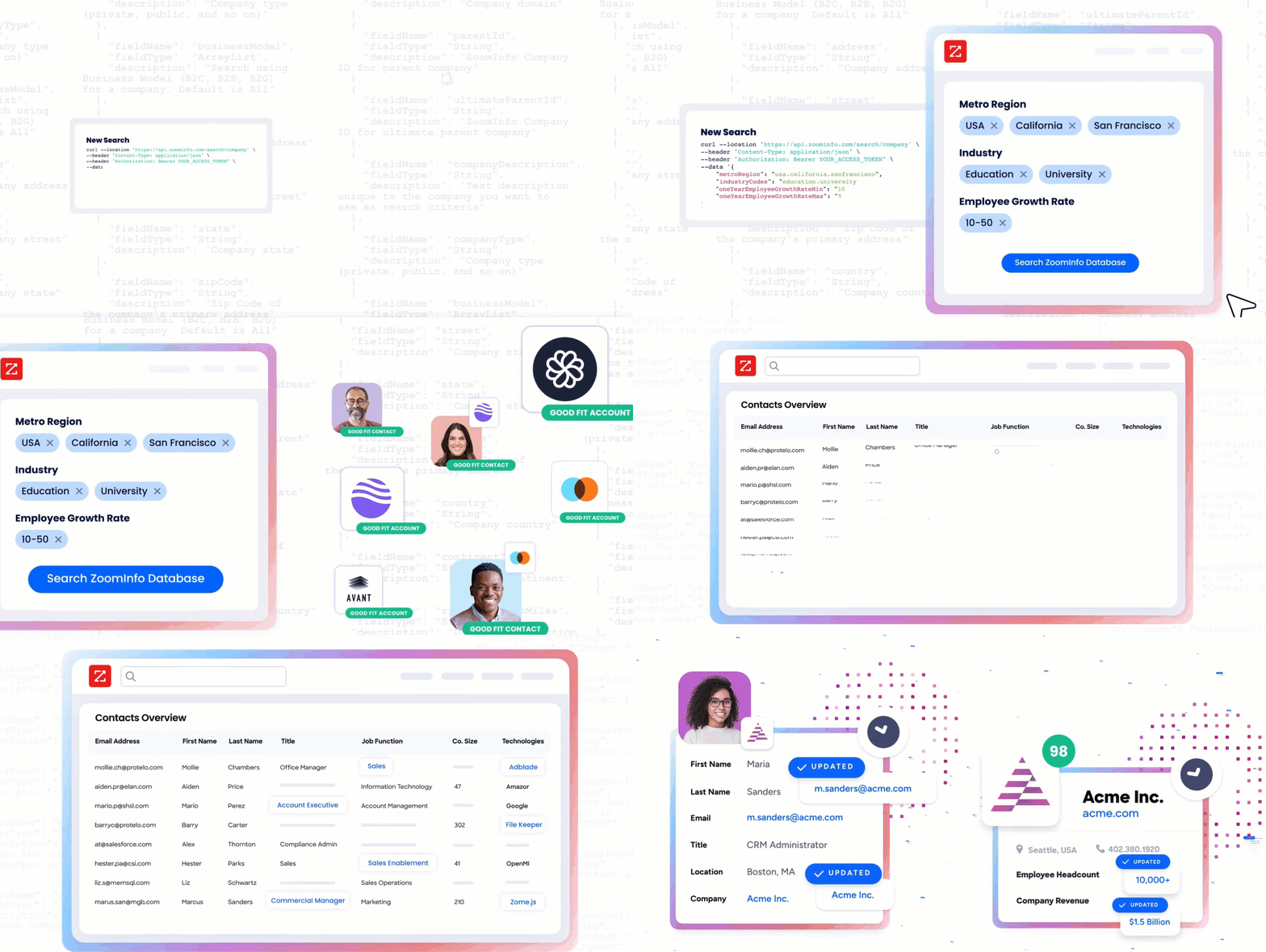
ZoomInfo's B2B Data Platform: The contact and company database ActiveCampaign does not include
ZoomInfo operates a B2B data platform of 500M contacts, 100M companies, 135M+ verified phone numbers, 120M direct-dial phone numbers, and 200M+ verified business email addresses. The data flows through a verification pipeline backed by 300+ human researchers and automated ML scanning 28 million site domains daily, reaching up to 95% accuracy on first-party data.
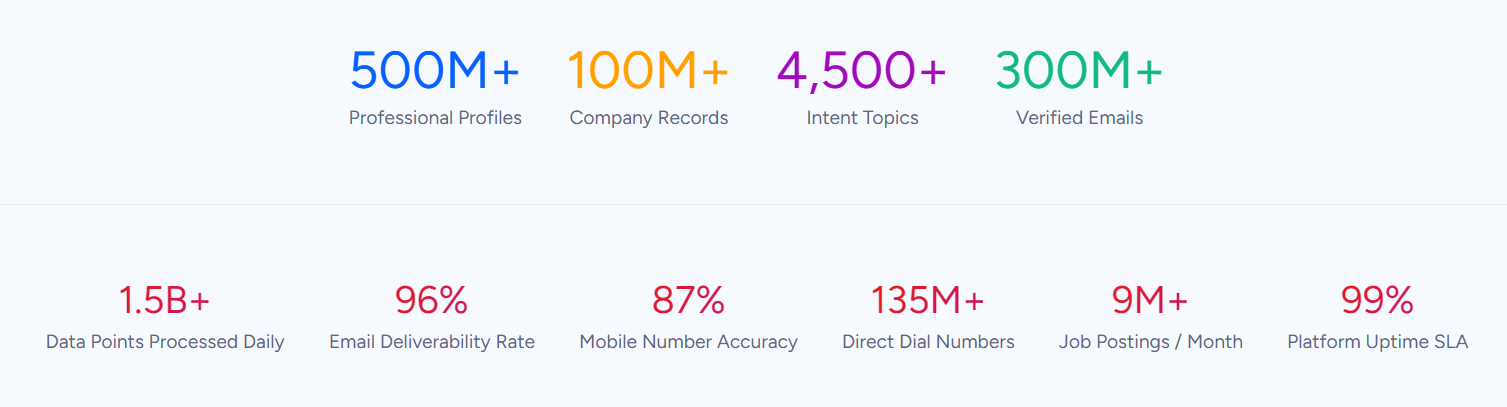
For a team using ActiveCampaign, this fills the most fundamental gap. ActiveCampaign's automations, email sequences, and SMS campaigns need contacts to send to. ZoomInfo provides department org charts with decision-makers' direct dials and emails, 300+ company attributes for segmentation, contact tracking with job-change alerts, and technographic profiles covering 30,000+ technologies across 200+ categories for 30+ million companies. Global coverage extends to 34M+ company profiles outside North America, 200M+ professional profiles outside NA, and 45M+ mobile numbers outside NA.
In a Fortune 500 competitive RFP analyzing 25 million contacts across vendors, an independent consultant concluded that "no other competitor came even close." External validation includes: Forrester Wave Leader for Intent Data Providers (Q1 2025), Gartner MQ Leader for ABM Platforms for the second consecutive year, and the only Customers' Choice vendor in the Gartner Voice of the Customer quadrant with a 4.7/5.0 rating.
ZoomInfo Intent and WebSights: Signals that reveal who is in-market before any campaign sends
ZoomInfo Intent tracks signals from 210 million IP-to-Organization pairings and 6 trillion+ new keyword-to-device pairings sourced monthly.
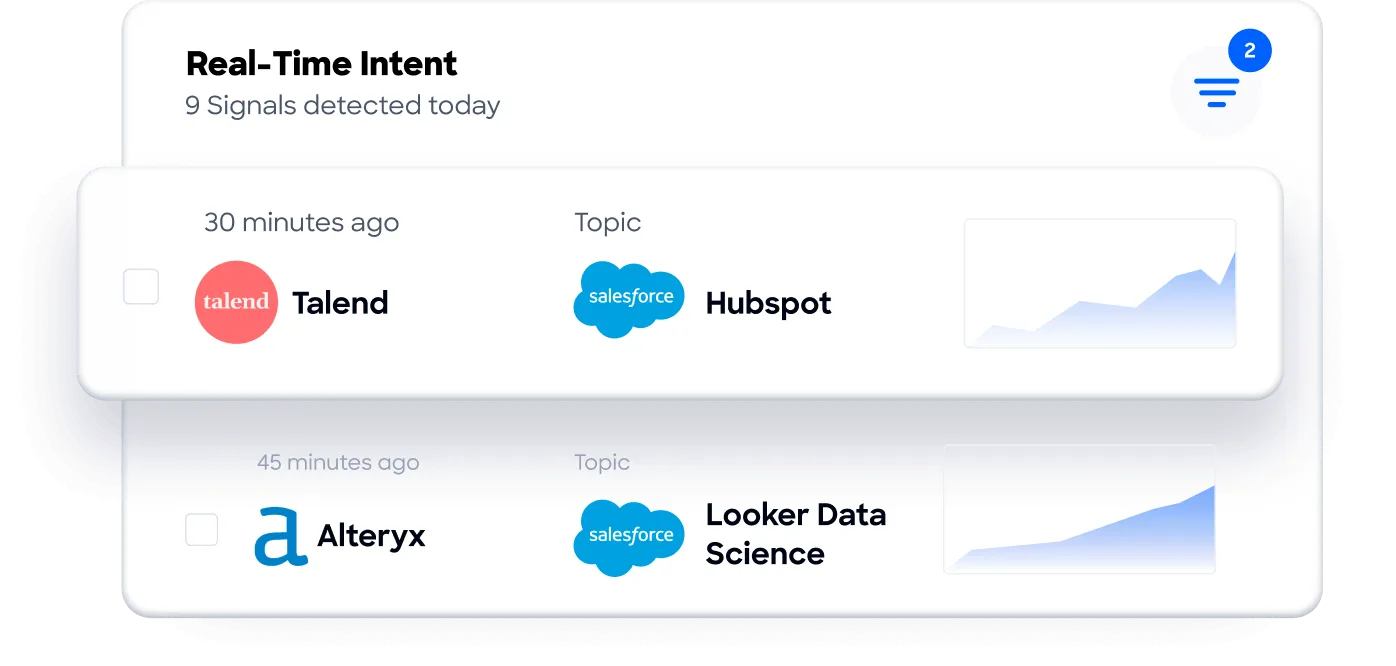
Where ActiveCampaign's analytics tell you who engaged with your campaigns, ZoomInfo's intent data reveals which companies are researching topics related to your product across the web, before you have contacted them.
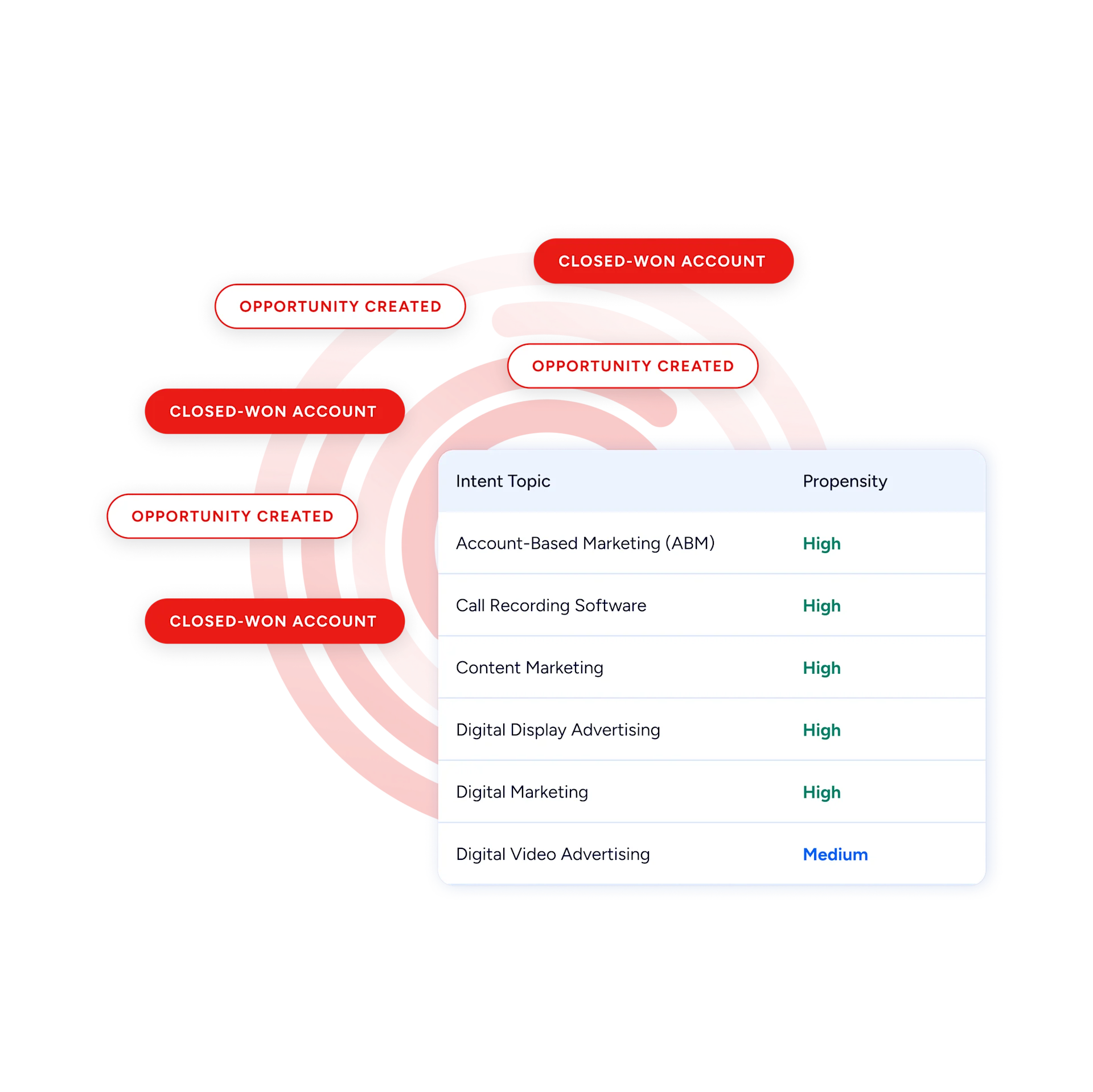
Guided Intent, exclusive to ZoomInfo, identifies topics historically correlated with deal success rather than requiring manual topic selection.
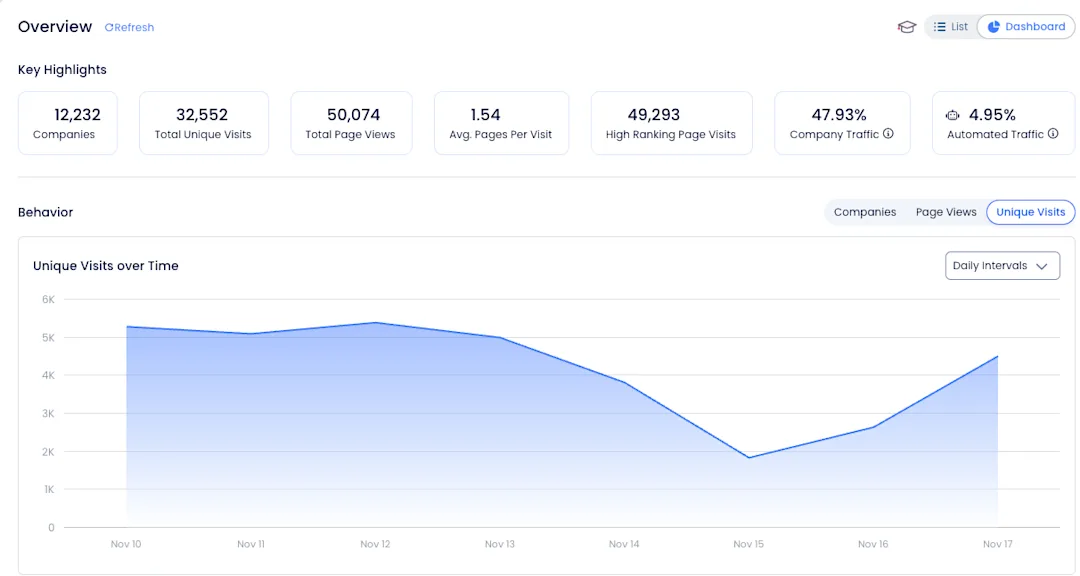
On the website side, WebSights resolves anonymous website traffic to companies with Automatic Traffic Filtering that distinguishes real visitors from bots.
ZoomInfo Marketing goes further with contact-level site visitor identification, identifying who visited (not just which company) and triggering personalized outreach. Where ActiveCampaign's site tracking works only for contacts already in your database, ZoomInfo identifies visitors who have never filled out a form.
ZoomInfo's GTM Context Graph and Chorus: Intelligence from conversations and deals
ActiveCampaign captures what happens in email, SMS, and WhatsApp (opens, clicks, replies, form fills). ZoomInfo's GTM Context Graph captures why deals move or stall by processing 1.5B+ data points daily, combining B2B data with CRM records, conversation intelligence from Chorus, email interactions, and behavioral signals into a single intelligence layer.
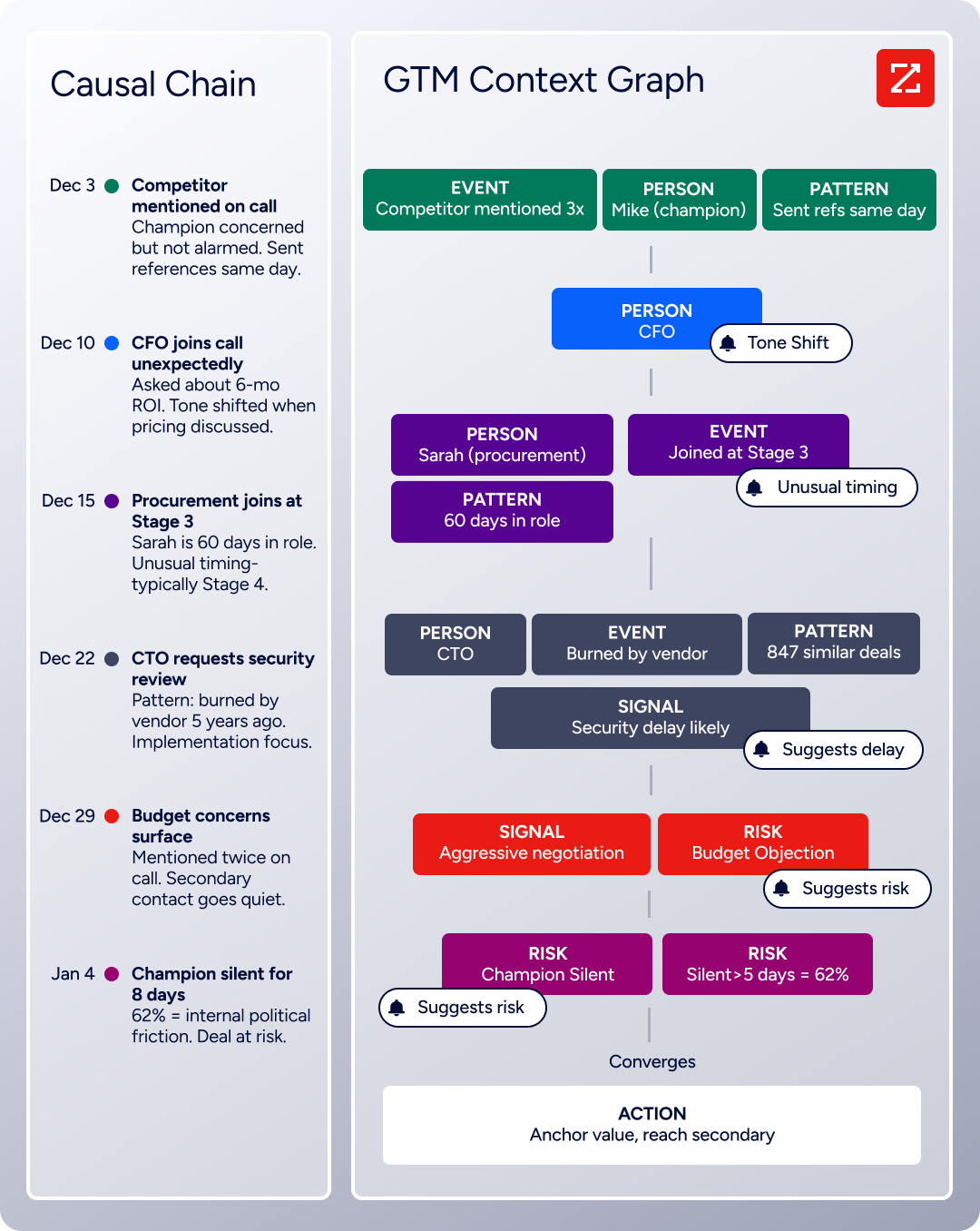
Chorus, backed by 14 technology patents, records and transcribes sales calls, surfaces AI-generated insights (talk ratios, sentiment, objection detection), syncs deal intelligence to the CRM, and provides coaching scorecards and clip sharing.
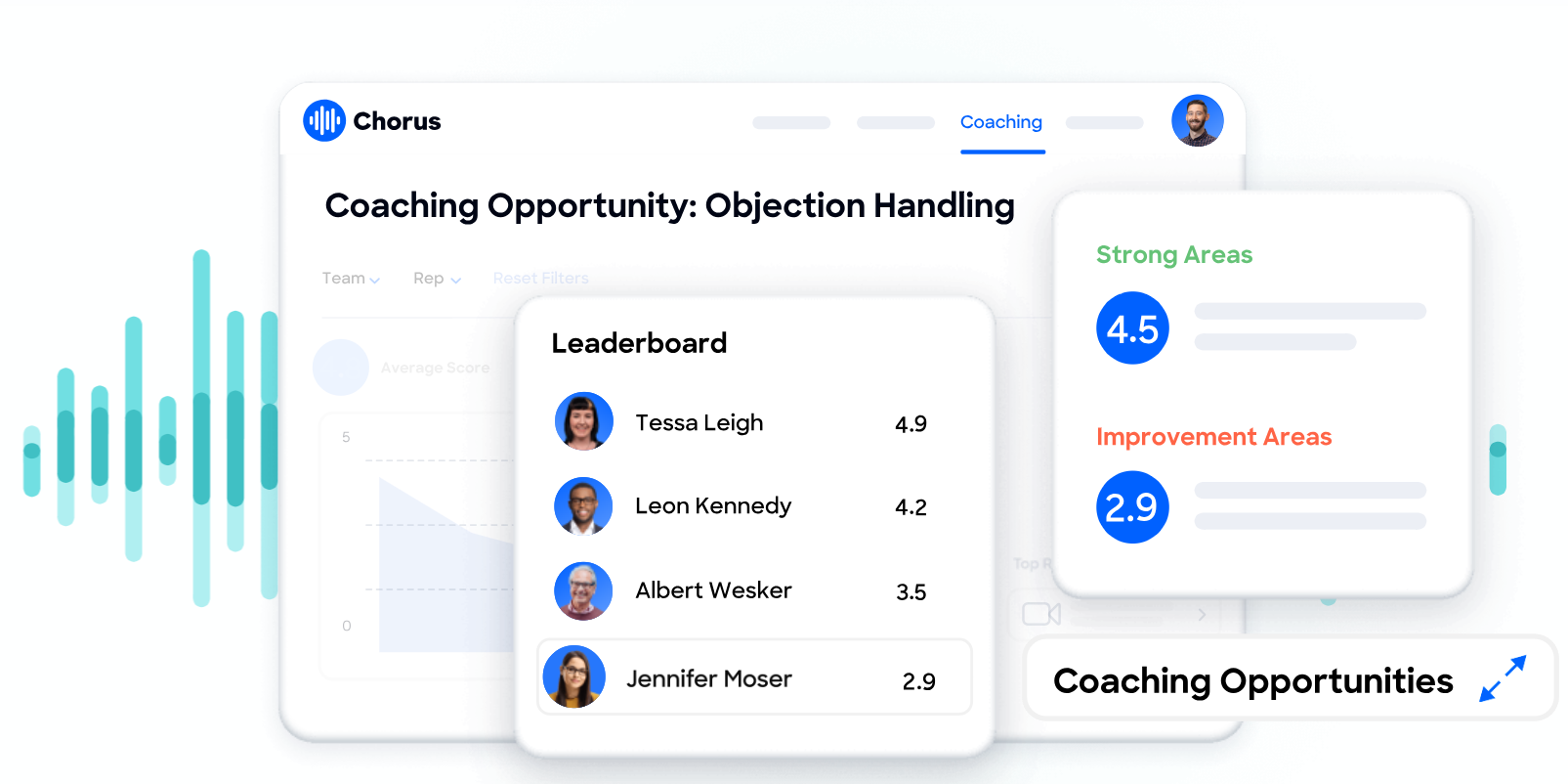
It fills the conversation intelligence gap ActiveCampaign's CRM leaves open: when a lead moves from email nurture to a phone call, Chorus captures that conversation's context and feeds it back into the GTM Context Graph.
GTM Workspace is the seller's front end to this intelligence. It provides a complete Book of Business view across CRM, ZoomInfo data, conversation history, and market intelligence, with AI agents that automate account research, outreach, CRM updates, and signal monitoring.
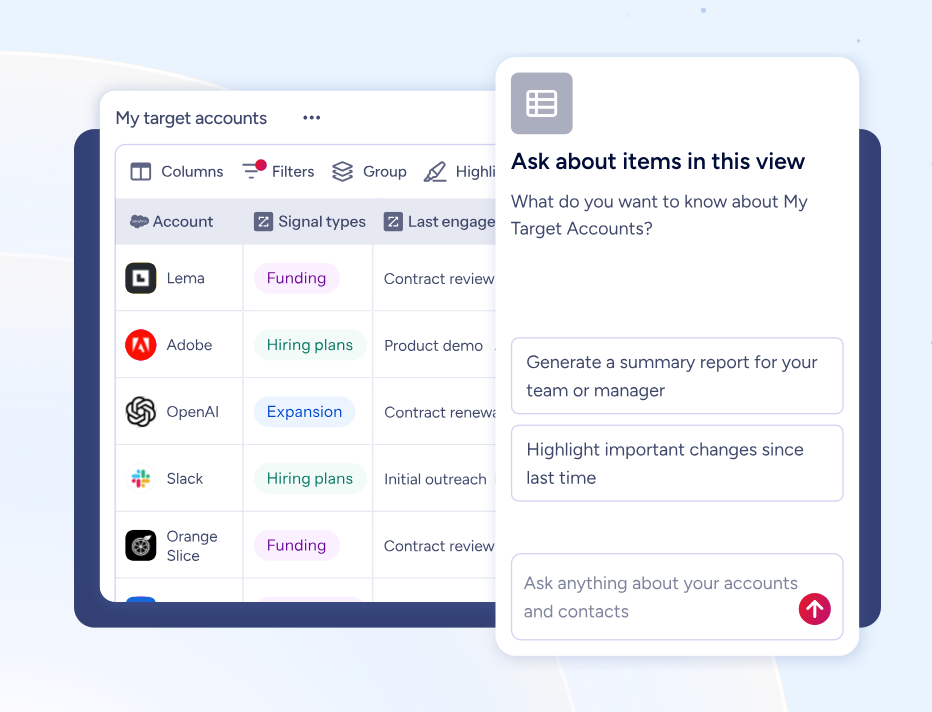
An Action Feed streams in-market buyers matched to target criteria with pre-drafted actions on every signal.
Seismic's sales team attributed 39% of active pipeline to opportunities identified or influenced by ZoomInfo signals, boosted productivity by 54%, and saved 11.5 hours per week per seller. (Seismic Case Study)
ZoomInfo GTM Studio and Marketing: ABM and multi-channel orchestration
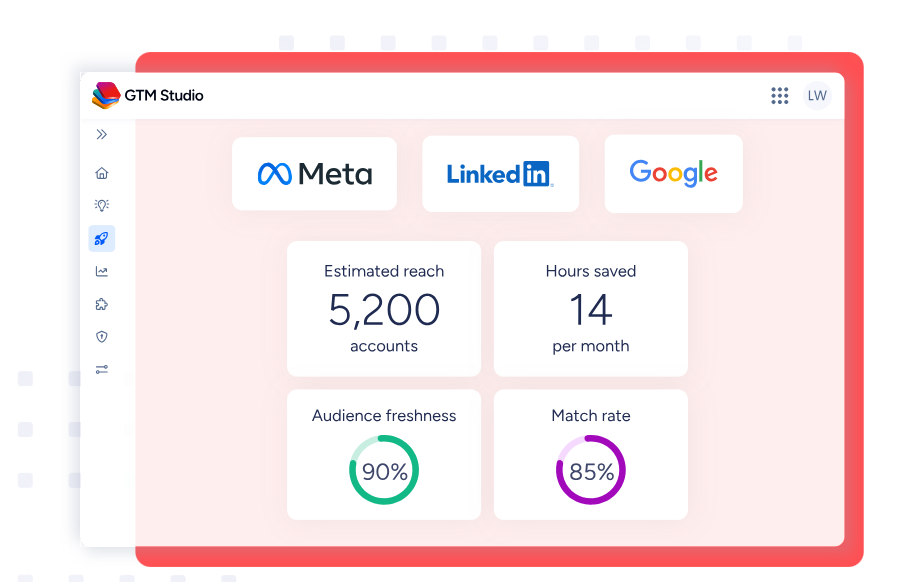
ZoomInfo’s GTM Studio addresses the marketing orchestration gap directly. Marketers, RevOps teams, and GTM engineers can build audiences using natural language, enrich with first- and third-party data, define triggers, and activate plays across channels (email, calls, display ads, direct mail, LinkedIn, Meta, Connected TV) without engineering support.
Pre-built GTM plays cover inbound acceleration, champion tracking, competitive displacement, and ICP targeting. Expansion plays that used to take 3 weeks now launch in 30 minutes.
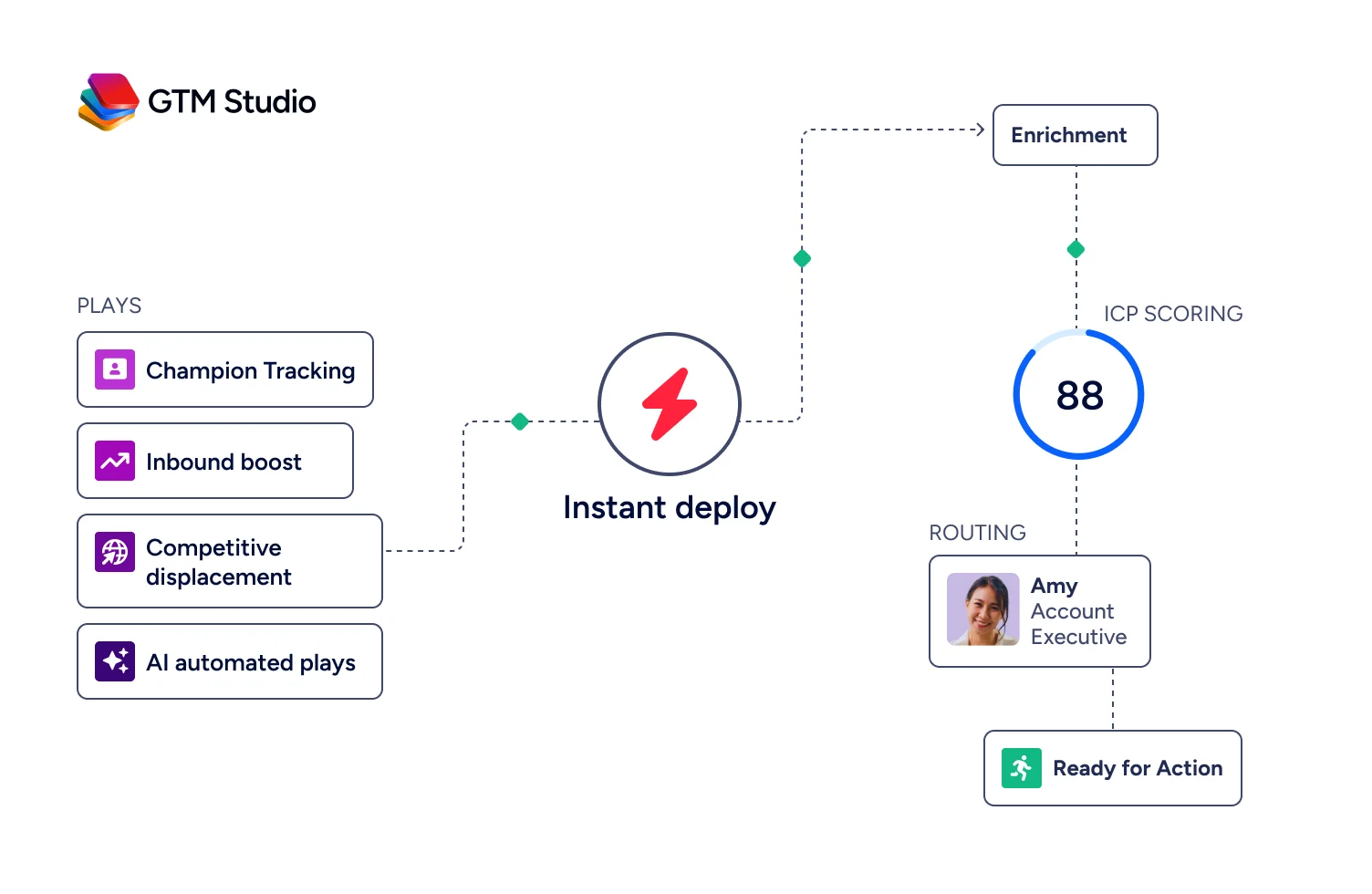
ZoomInfo Marketing includes a native Demand-Side Platform that deploys display ads based on 300+ company attributes, FormComplete (which reduces forms to a single field while appending data automatically), and Account Fit Scoring (predictive AI scoring 0-100 based on company attribute patterns). This is the ABM and display advertising layer ActiveCampaign does not have.
ZoomInfo APIs and MCP: Data access for ActiveCampaign and any other tool
ZoomInfo delivers its intelligence through APIs and MCP, so the same data and GTM Context Graph powering ZoomInfo's own products is accessible inside any third-party tool or custom AI agent. The MCP server connects AI models directly to ZoomInfo's B2B data as a native tool, currently supporting Claude and ChatGPT.
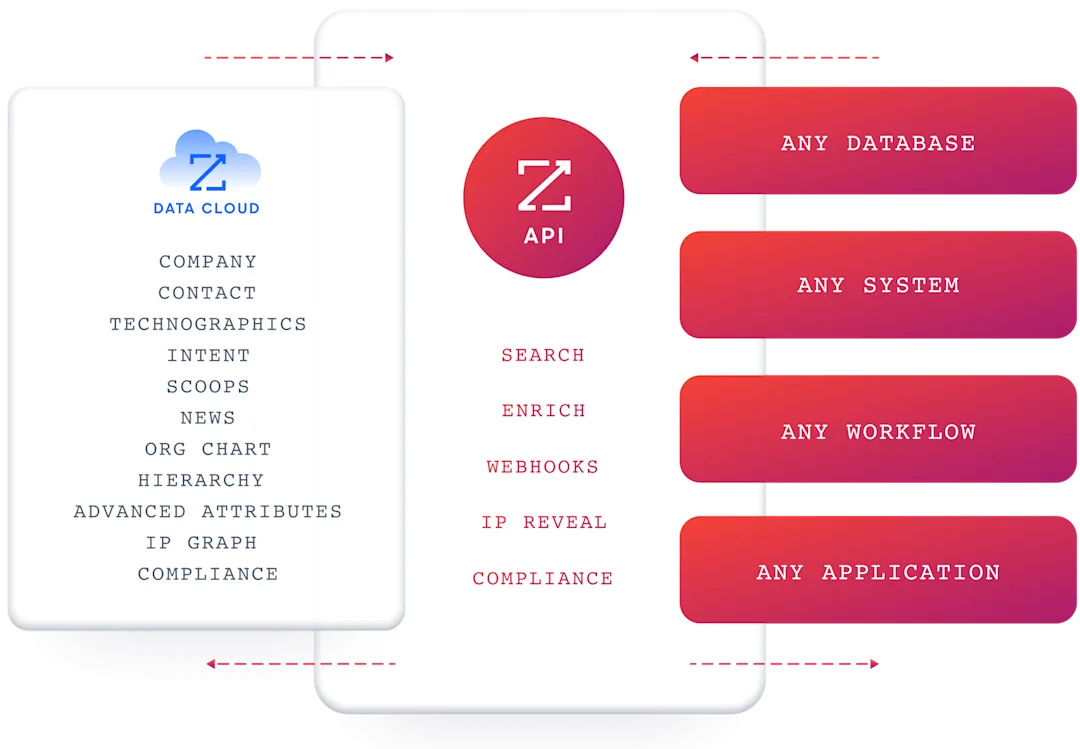
API access comes with all relevant plans, and the Enterprise API covers Search, Enrich, Copilot (AI intelligence), Marketing (audience management), and Engagements endpoints. For teams pairing ZoomInfo with ActiveCampaign, verified contacts and intent signals can flow into ActiveCampaign's automations through native integrations or API-driven workflows.
ZoomInfo's Free Entry Points: Evaluate the platform before any commitment
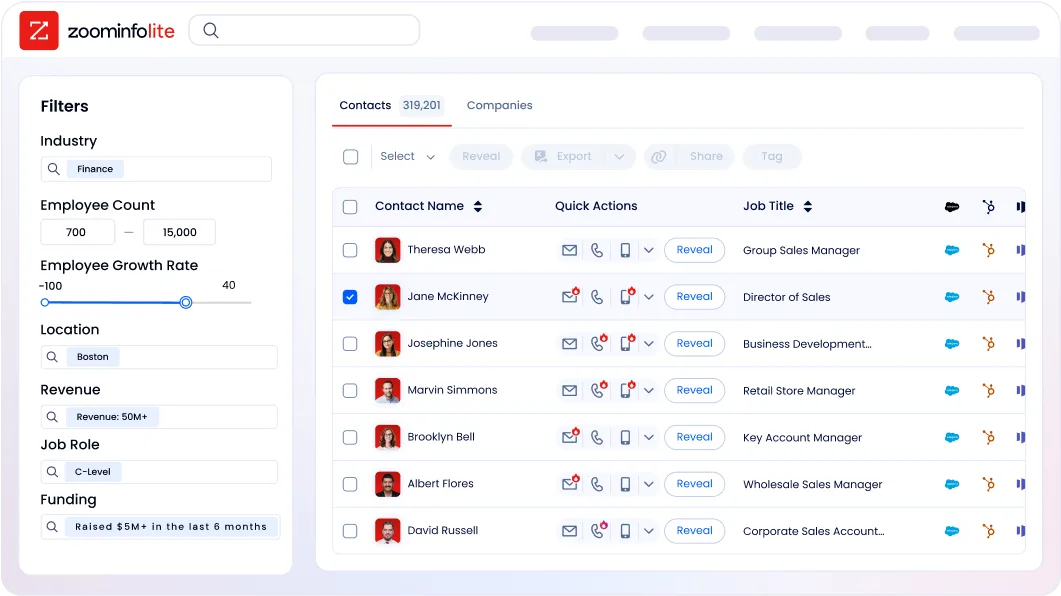
ZoomInfo Lite is a permanent free tier with access to ZoomInfo's B2B database, 10 monthly export credits, individual and company searches, a Chrome extension, and WebSights Lite with up to 10 website visitor reveals per day. A separate 7-day free trial provides broader access with no credit card required.
Final Summary
ActiveCampaign is a thorough toolkit for marketing automation: a visual builder with unlimited actions and branching logic, AI agents that build campaigns from plain-language goals, email, SMS, and WhatsApp orchestration under one roof, a built-in CRM with dual scoring systems, and deliverability infrastructure that earns high inbox placement rates. It fits growth-stage SMBs and mid-market teams that need to automate lead nurture, abandoned cart recovery, cross-channel campaigns, and lightweight deal management without assembling a stack of separate tools.
It is lighter on the layer before the campaign: no B2B contact database, no proprietary intent signals, no website visitor identification for unknown traffic, no conversation intelligence, and no account-based marketing or display advertising.
If your bottleneck is upstream of the automation (knowing who to reach, which companies are in-market, and what happened on the sales call that should shape the next touchpoint), that is the ground ZoomInfo covers. Its 500M-contact, 100M-company database supplies the verified emails and direct dials ActiveCampaign's campaigns need. ZoomInfo Intent surfaces accounts researching your category from 6 trillion+ keyword-to-device pairings monthly, so your automations trigger for accounts already in-market, not just contacts who happened to open an email. Chorus captures and analyzes every sales conversation, closing the gap between ActiveCampaign's email analytics and what happened on the call. And GTM Studio gives marketing teams the multi-channel orchestration, display advertising, and ABM capabilities ActiveCampaign does not include. ZoomInfo's APIs and MCP let the two platforms work together: ZoomInfo identifies and qualifies the buyer, ActiveCampaign orchestrates the engagement.
Start with ZoomInfo Lite for free, or request a demo to see verified contacts and live intent signals flow into your marketing automation.
FAQ
Does ActiveCampaign include a B2B contact database for prospecting?
No. ActiveCampaign manages contacts you import or capture through forms, integrations, and website tracking, but it does not include a database of contacts, companies, phone numbers, or verified business emails for prospecting. Teams running outbound campaigns need a separate data source to populate their contact lists before ActiveCampaign's automations can fire. ZoomInfo's database of 500M contacts, 100M companies, and 120M direct dials is one source that feeds contacts into ActiveCampaign for execution.
Which ActiveCampaign plan includes predictive sending and revenue attribution?
Predictive Sending (per-recipient send-time optimization) and revenue attribution both require the Professional plan or above. Starter limits automations to 5 actions and excludes landing pages, conditional content, and advanced segmentation. Plus unlocks unlimited automation actions, landing pages, and AI content generation but not predictive sending or attribution. Enterprise adds custom reporting, SSO, HIPAA support, and a dedicated account team.
Can ActiveCampaign record and analyze sales calls?
No. The Sales CRM supports email tracking, task management, and deal pipeline visualization, but it has no call recording, transcription, or conversation intelligence. When a lead moves from email to a phone conversation, ActiveCampaign does not capture or analyze what was discussed. Teams that need call-level insights pair ActiveCampaign with a separate conversation intelligence tool.
How does ActiveCampaign's pricing scale with contact growth?
ActiveCampaign charges once per unique contact regardless of how many automations, tags, or segments that contact appears in. Pricing increases as your contact count grows, with the calculator on the pricing page showing costs at each band. Starter caps at 25,000 contacts; Plus, Professional, and Enterprise support higher volumes. If contacts exceed your plan limit and auto-upgrade is enabled, fees increase immediately on a pro-rated basis. Email send overage fees of $0.005 per email apply if you exceed the monthly send limit (10x to 15x your contact count, depending on plan).
Does ActiveCampaign offer website visitor identification?
ActiveCampaign includes site tracking that monitors how known contacts interact with your website (pages visited, time on site, specific URLs). This data feeds into automations and lead scoring. It does not identify anonymous visitors, meaning it cannot tell you who visits your site unless that person is already in your contact database. ZoomInfo's WebSights resolves anonymous website traffic to companies, and ZoomInfo Marketing identifies specific contacts visiting your site, triggering outreach to visitors who have never filled out a form.
What AI features are available on all ActiveCampaign plans?
Active Intelligence (with limits) is available across all plans, including the AI Campaign Builder, AI-Suggested Actions, AI-Suggested Segments, and the Active Intelligence sidebar. AI content generation requires Plus or above. Predictive Sending requires Professional or above. Several agents (Campaigns, Automations, Personalization, Forms, Goals) remain in beta as of early 2026. The MCP connectors for Claude and ChatGPT are available on all plans through the Developer settings.
Does ActiveCampaign support account-based marketing?
ActiveCampaign can sync audiences to ad platforms (Google Ads, Facebook Custom Audiences, LinkedIn Ads) and includes lead scoring based on behavioral and firmographic signals. It does not include display advertising, a demand-side platform, account-level scoring and orchestration, or multi-channel ABM campaign management (coordinated display, email, direct mail, and social plays targeting specific accounts). ZoomInfo's GTM Studio and Marketing products provide this, with a native DSP, account fit scoring, cross-channel orchestration, and pre-built ABM plays.
Does ActiveCampaign include buyer intent data?
ActiveCampaign tracks engagement with your own campaigns and website (opens, clicks, form submissions, site visits) but does not monitor third-party intent signals showing which companies are researching specific topics across the broader web. The platform's lead scoring uses first-party behavioral data, not external buying signals. ZoomInfo Intent tracks signals from 210 million IP-to-Organization pairings and 6 trillion+ keyword-to-device pairings sourced monthly, identifying in-market accounts before any outreach begins, with Guided Intent identifying topics historically correlated with deal success.
