

Choosing between Acuity Scheduling and Calendly comes down to a question most comparisons skip: are you scheduling appointments that ARE your revenue, or meetings that lead to revenue?
That distinction shapes which tool fits, which features matter, and whether scheduling alone is enough to grow your business. Here are the real questions:
Are you a service business where each booked appointment generates direct revenue, or a B2B team where meetings advance deals through a pipeline?
Do you need built-in payment collection, packages, and subscriptions at the point of booking?
Is your primary challenge reducing no-shows for booked clients, or identifying which prospects are worth meeting?
Does your team need CRM-driven lead routing and round-robin distribution?
Would knowing which companies are actively researching solutions like yours change how you prioritize your calendar?
In short, here's what we recommend:
Acuity Scheduling is the scheduling platform for service businesses that monetize appointments directly. Hair stylists, wellness practitioners, fitness instructors, and consultants use it to let clients self-book, collect payment at scheduling, and manage packages, subscriptions, and gift certificates from a branded booking page.
Acuity reports that 75% of businesses on the platform reduced no-shows through deposits, automated reminders, and cancellation policies. With 280,000+ businesses and 15 million appointments booked monthly, the model works. The limitation: no CRM integration depth, no lead routing, and no B2B team scheduling, because Acuity was never designed for that world.
Calendly is the scheduling automation platform for B2B teams. Sales reps share scheduling links that eliminate email back-and-forth. Routing Forms qualify inbound leads and match them to the right rep via real-time Salesforce or HubSpot lookup. Round-robin and collective scheduling coordinate multi-person meetings without manual work.
While Calendly recently added payment collection and an AI Notetaker, it lacks the revenue tools (packages, subscriptions, gift certificates, POS) that service businesses depend on.
Both platforms solve the mechanics of scheduling. But for B2B revenue teams, booking meetings is only half the challenge. Knowing who to schedule with, when they're ready to buy, and what to say when you get there determines whether those meetings produce pipeline.
ZoomInfo is a B2B intelligence and GTM platform that provides the data behind every B2B meeting that matters. With 500M contacts, 100M companies, 135M+ verified phone numbers, and 200M+ verified business emails, ZoomInfo identifies the right prospects before you send a scheduling link.
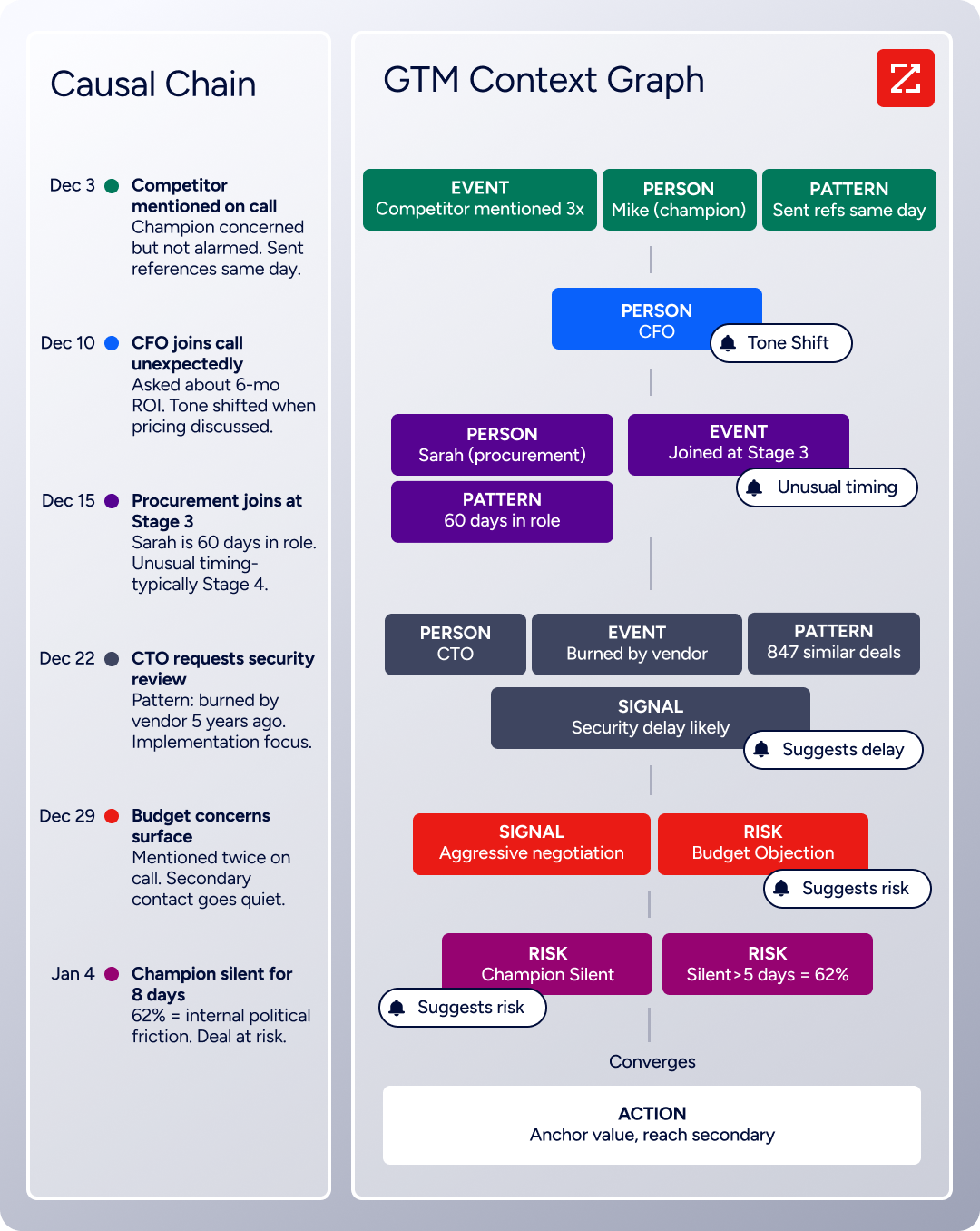
Its GTM Context Graph combines your CRM data, conversation transcripts, and behavioral signals with ZoomInfo's B2B intelligence, revealing not just what's happening in your pipeline but why deals move or stall. For B2B teams using Calendly, ZoomInfo isn't a scheduling alternative. It's the intelligence layer that determines who fills those calendar slots and whether those meetings turn into revenue.
If intelligence-driven prospecting sounds like the missing piece in your scheduling workflow, see how ZoomInfo works.
Acuity Scheduling vs. Calendly at a glance
Acuity Scheduling | Calendly | ZoomInfo | |
|---|---|---|---|
Primary function | Client appointment booking with payments | B2B meeting scheduling and routing | B2B intelligence and GTM execution |
Target user | Service businesses (beauty, wellness, fitness, coaching) | Sales, recruiting, and customer success teams | Revenue teams (sales, marketing, RevOps) |
Scheduling approach | Branded booking pages with 24/7 self-service | Shareable links with CRM-driven routing | AI-prioritized prospect targeting and outreach |
Payment collection | Stripe, Square, PayPal (deposits, packages, subscriptions, POS) | Stripe, PayPal (meeting fees, packages, payment links) | N/A (revenue intelligence, not payment processing) |
CRM integration | Basic (Zoho CRM native; Salesforce via Zapier) | Native Salesforce, HubSpot; Microsoft Dynamics (Enterprise) | Native Salesforce, HubSpot, Dynamics with full enrichment |
AI features | None | Notetaker (meeting recaps), AI assistant (beta) | GTM Context Graph, AI agents, buyer intent signals |
No-show reduction | Deposits, SMS/email reminders, cancellation policies | Email/SMS reminders, prepayment option | Intent signals identify who's ready to engage |
Security | HIPAA BAA (Premium plan), GDPR | SOC 2 Type 2, ISO 27001, GDPR, CCPA | ISO 27001, SOC 2 Type II, ISO 27701, GDPR |
Starting price | $16/month (annual) | $10/seat/month (annual) | Custom (ZoomInfo Lite free tier available) |
Free plan | 7-day trial only | Yes (1 event type, 1 calendar) | ZoomInfo Lite (permanent, 10 credits/month) |
Best for | Service businesses monetizing appointments | B2B teams scheduling external meetings | Revenue teams needing intelligence behind every meeting |
Two different scheduling problems
Acuity Scheduling and Calendly both eliminate scheduling friction, but they serve different businesses with different needs.
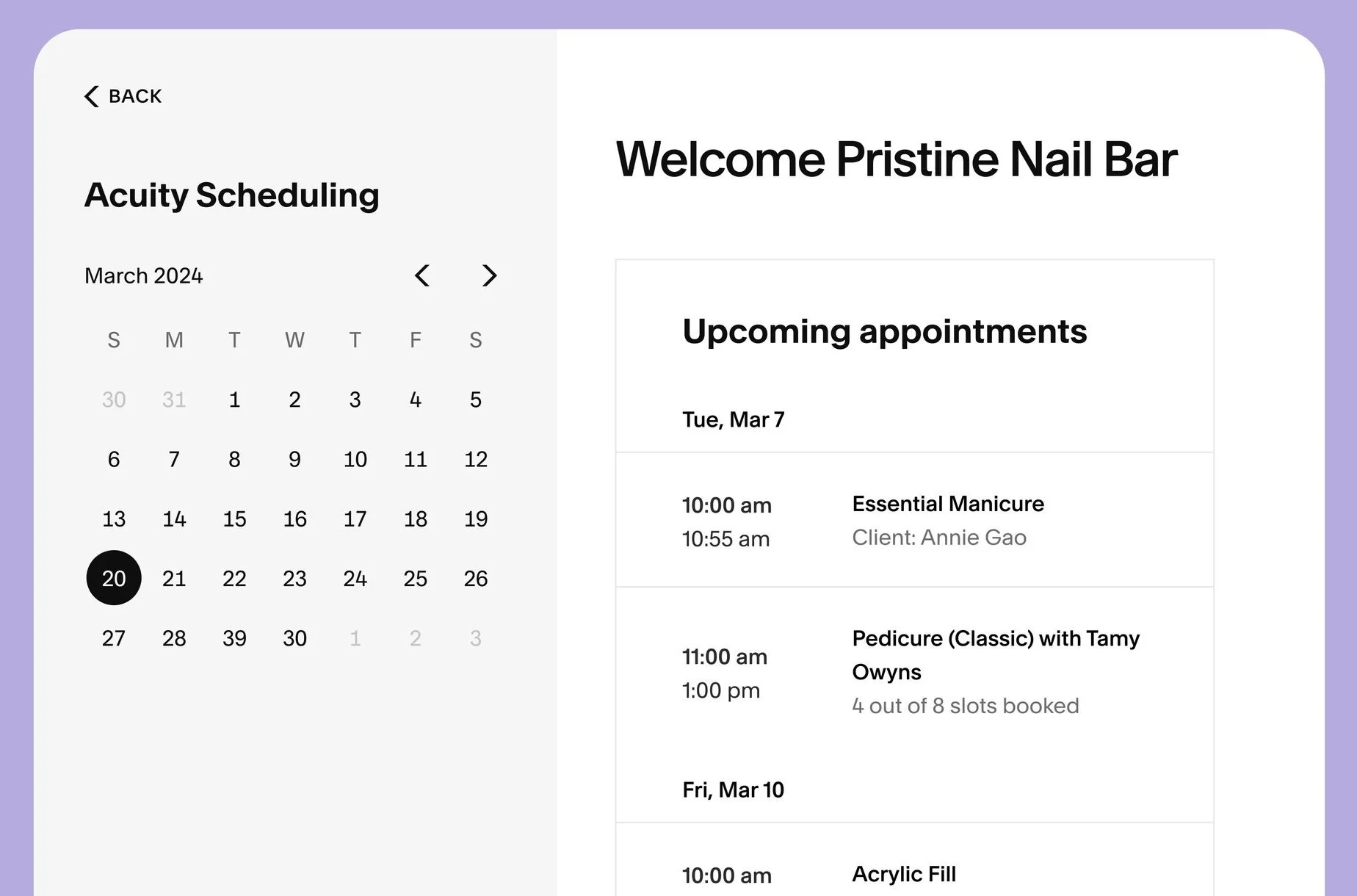
Acuity is built for the massage therapist, the hair stylist, the personal trainer, the tutor. Any business where the appointment IS the product. When a client books a 60-minute massage, that's $120 in revenue. When they no-show, that's $120 lost.
Source: Acuity Scheduling
Acuity treats every appointment as a financial transaction, which is why payment collection, deposit enforcement, packages, and cancellation policies are core features, not add-ons.
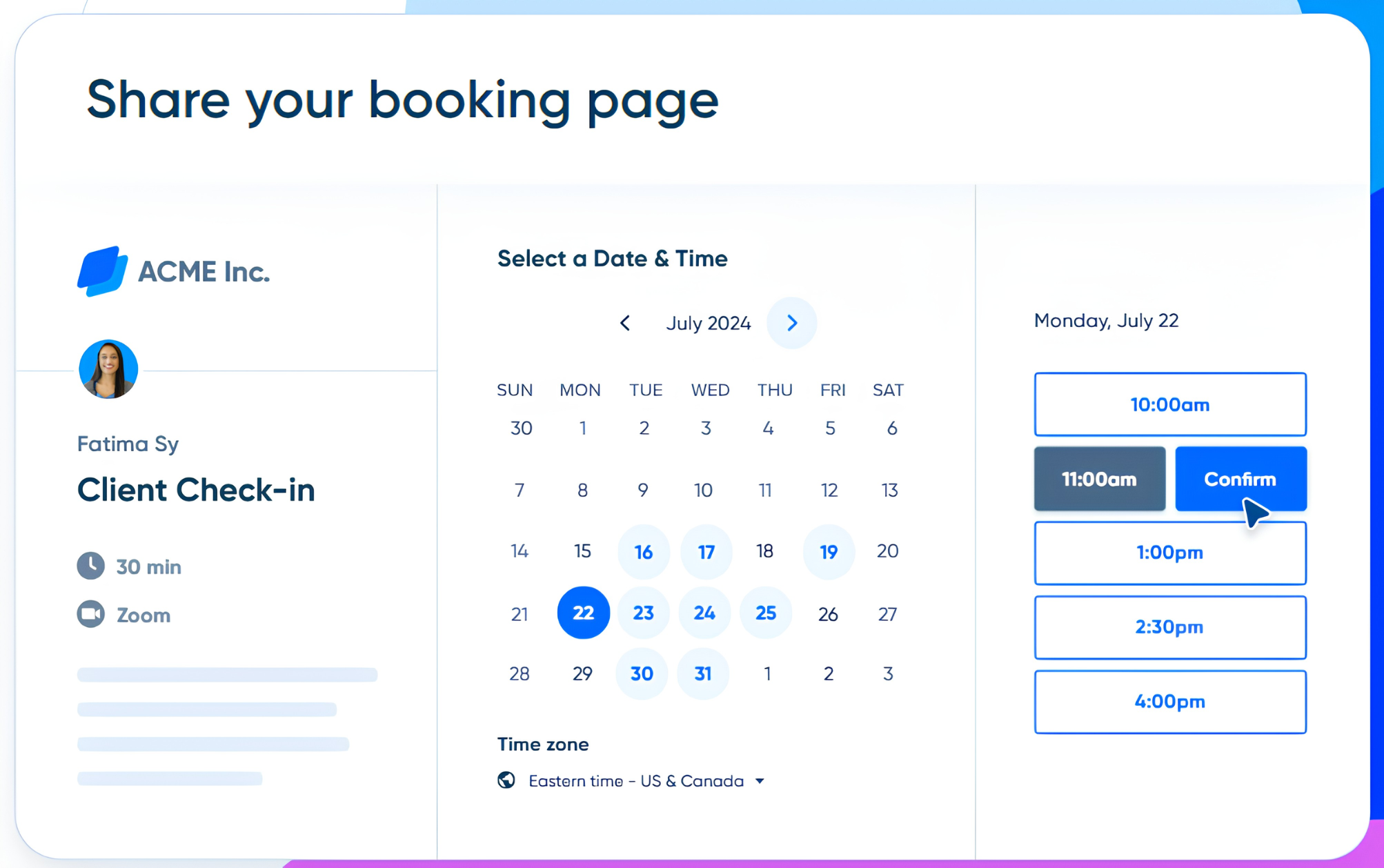
Calendly is built for the sales rep, the recruiter, the customer success manager. The meeting itself isn't the product; it's the step that moves a deal or relationship forward.
Source: Calendly
When a prospect books a demo, the value isn't the 30-minute call. It's the pipeline opportunity that call represents. Calendly treats every meeting as a coordination problem, which is why CRM routing, round-robin distribution, and team scheduling are core features.
This distinction explains most of the feature differences between the two platforms and should guide your decision immediately.
Acuity excels at turning appointments into revenue
For service businesses, Acuity Scheduling offers a revenue toolkit that Calendly can't match.
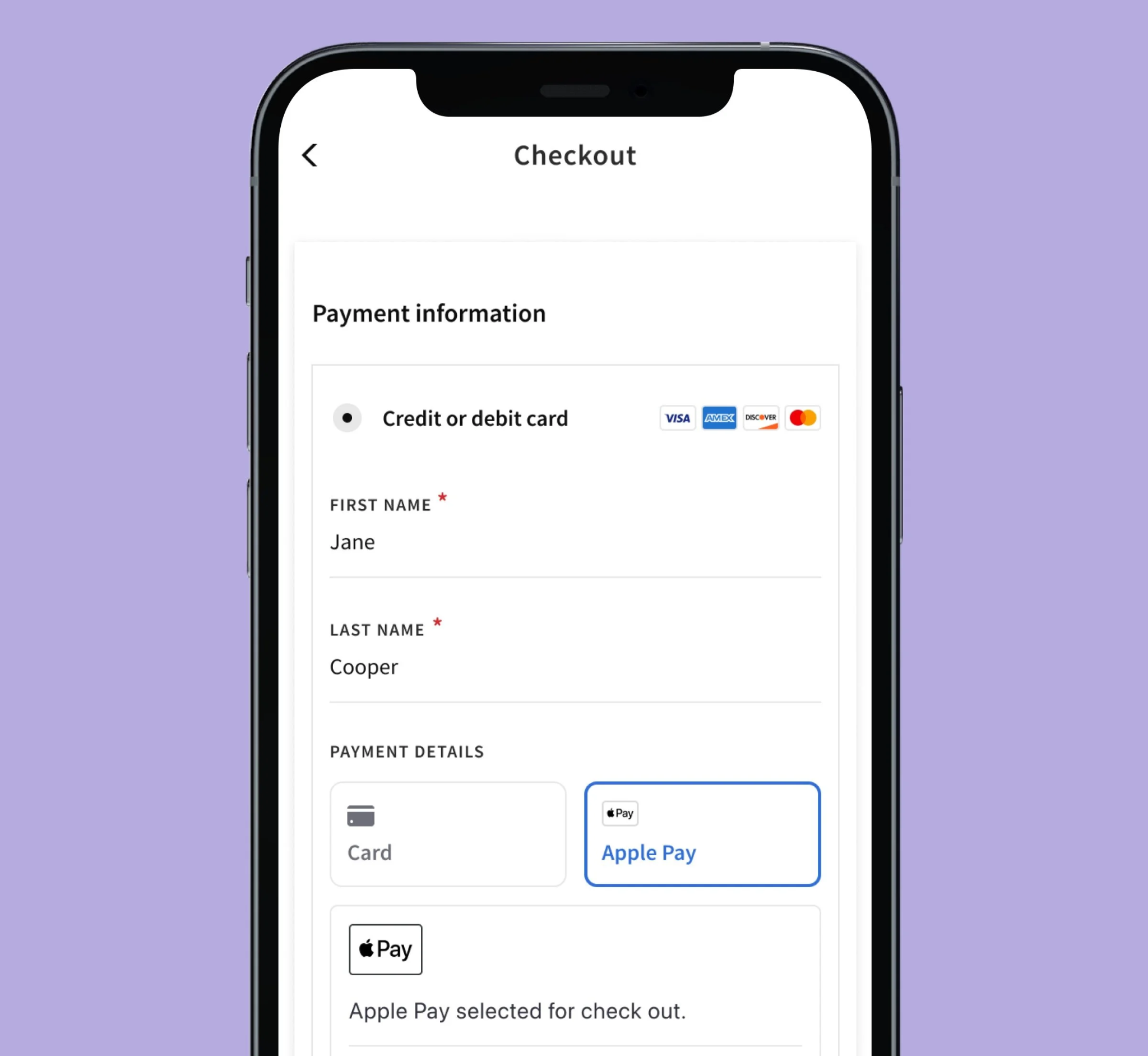
Payment depth. Acuity integrates with Stripe, Square, and PayPal and lets you configure payment rules per service type. Require a 50% deposit for a 90-minute session. Charge in full for a one-time consultation. Store a card on file for no-show fees.
Each service gets its own payment logic, not a blanket policy across all appointment types. Acuity also supports tap-to-pay from the mobile app via Stripe (no card reader hardware needed) and charges no additional platform fees on transactions.
Source: Acuity Scheduling
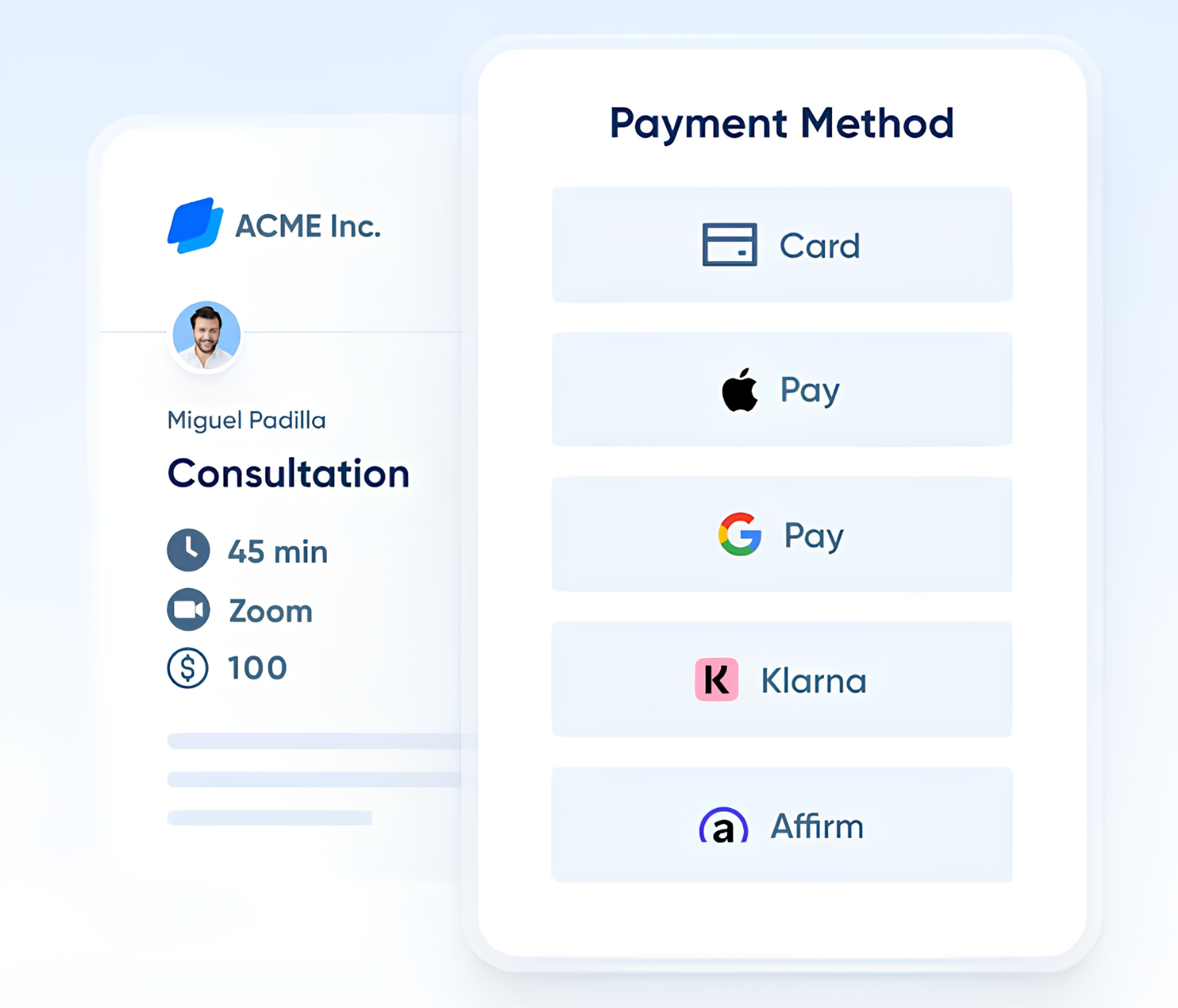
Calendly offers payment collection via Stripe and PayPal starting on the Standard plan, including meeting packages and standalone payment links. Checkout supports Apple Pay, Google Pay, and buy-now-pay-later options through Stripe.
Source: Calendly
For a consultant or coach charging per session, Calendly's payment features may be sufficient. But Calendly has no POS system, no gift certificates, no tipping, no subscription billing, and no per-service payment configuration.
Client retention tools. Acuity lets you sell appointment packages (buy 5 sessions, save 15%), create recurring memberships with automated billing, issue digital gift certificates from the booking page, and configure coupon codes. All of these live inside the same booking flow. Clients don't leave the scheduler to purchase, and Acuity tracks remaining package sessions automatically.
Calendly's recently launched meeting packages let service providers bundle pre-paid sessions with automatic redemption tracking. But Calendly has no gift certificate system, no subscription billing, and no coupon infrastructure.
No-show prevention. Acuity reports that 75% of businesses on the platform reduced no-shows using a three-part system: automated email and SMS reminders, upfront deposits and prepayments, and enforced cancellation policies. For a $200/hour therapist, a single prevented no-show pays for months of Acuity's subscription.
Calendly offers email and SMS reminders and supports prepayment to reduce no-shows. But Calendly's reminders help busy professionals remember their calls; they don't protect per-appointment revenue with deposit enforcement and penalty policies.
Client management. Acuity maintains centralized client profiles with appointment history, intake form responses, and private staff notes. Returning clients can log in and manage their own bookings. Custom intake forms collect health histories, preferences, or consent waivers before appointments, assigned per service type.
Calendly's Contacts feature builds profiles automatically from scheduled meetings, with Gmail sync and Notetaker-generated recaps providing relationship context. For B2B users, this gives useful meeting history. But it lacks the per-service intake forms, appointment history tracking, and client self-service portal that service businesses need.
Calendly excels at B2B meeting orchestration
For B2B revenue teams, Calendly offers coordination and routing capabilities that Acuity was never designed to handle.
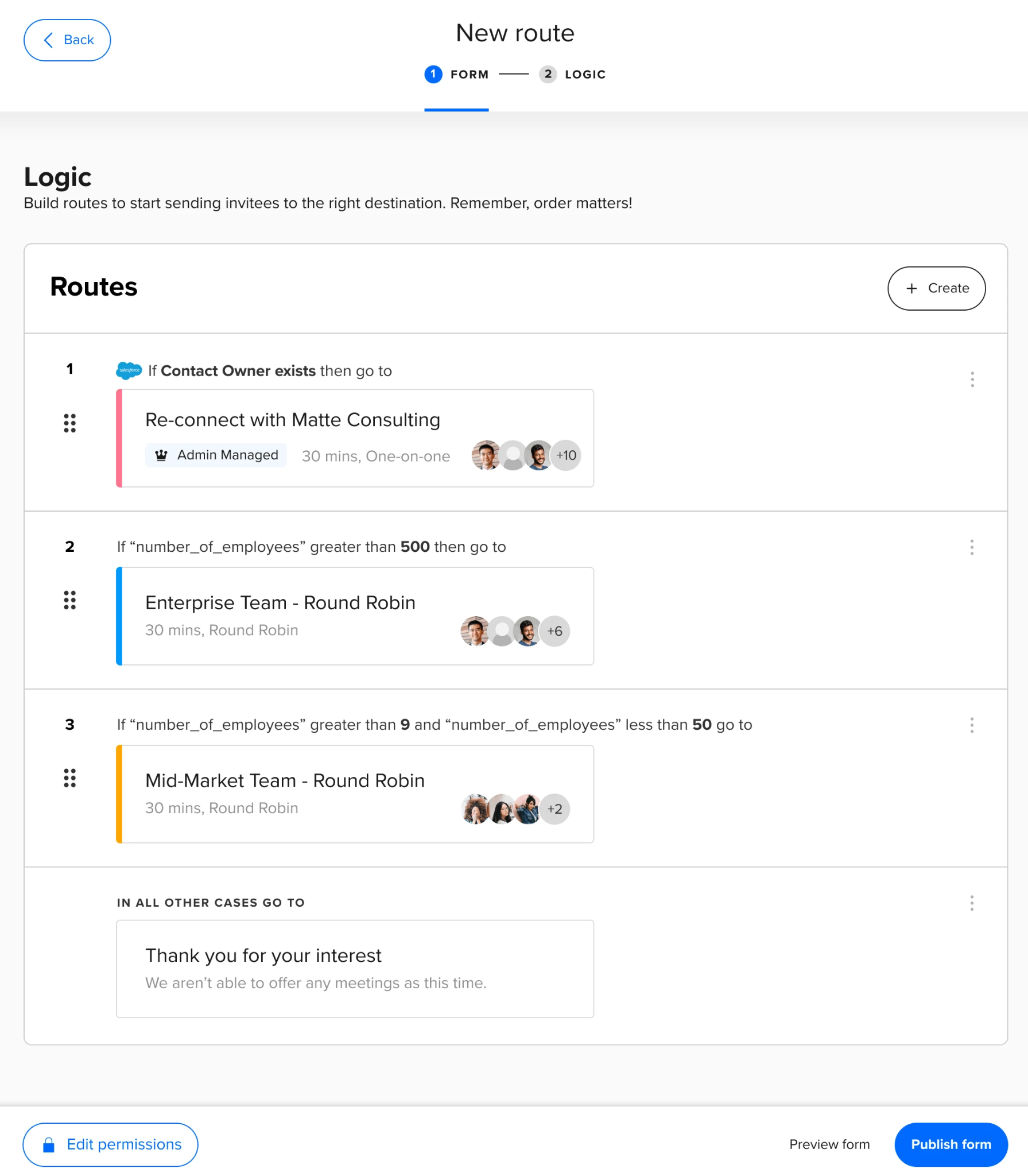
CRM-native routing. Calendly's Routing Forms qualify inbound leads before they reach a booking page. The forms perform real-time Salesforce and HubSpot lookup, matching the visitor to their assigned account owner and routing them to that rep's calendar.
Source: Calendly
Hidden field routing using Clearbit or ZoomInfo enrichment data lets you route by company attributes without requiring the visitor to answer qualification questions. Enterprise customers get Salesforce lookup with field-level filtering based on standard or custom fields, so routing logic can distinguish a renewal-stage customer from a new inbound lead.
Acuity has no equivalent. Its CRM connections are limited to Zoho CRM natively and Salesforce only through Zapier. For a solo consultant, this is fine. For a 50-person sales team with territory assignments and CRM-based account ownership, Acuity doesn't work.
Team scheduling. Calendly supports four meeting formats: One-on-One, Group, Collective (multiple hosts required), and Round Robin (distributed across a team). Managed Events let admins create locked templates that all reps use, keeping branding and workflows consistent across the organization.
Acuity handles multi-staff scheduling well, with individual calendars per staff member, permission controls, and service assignment per practitioner. But it has no round-robin distribution, no collective scheduling, and no admin-controlled team templates. Acuity's team features serve a salon or studio managing multiple stylists or therapists, not a sales organization routing leads.
Enterprise security and compliance. Calendly holds SOC 2 Type 2, ISO 27001, GDPR, CCPA, and CSA STAR certifications. Enterprise features include SAML SSO, SCIM provisioning, audit logs, domain control, and a data deletion API. For enterprise procurement teams running vendor security assessments, Calendly's Whistic security profile provides the documentation they need.
Acuity offers HIPAA compliance with a BAA on the Premium plan and Enterprise SSO via Okta/MedPlum with a 99.9% uptime SLA. Its compliance focus is healthcare-oriented (therapists, medical spas, health coaches), not enterprise IT-oriented.
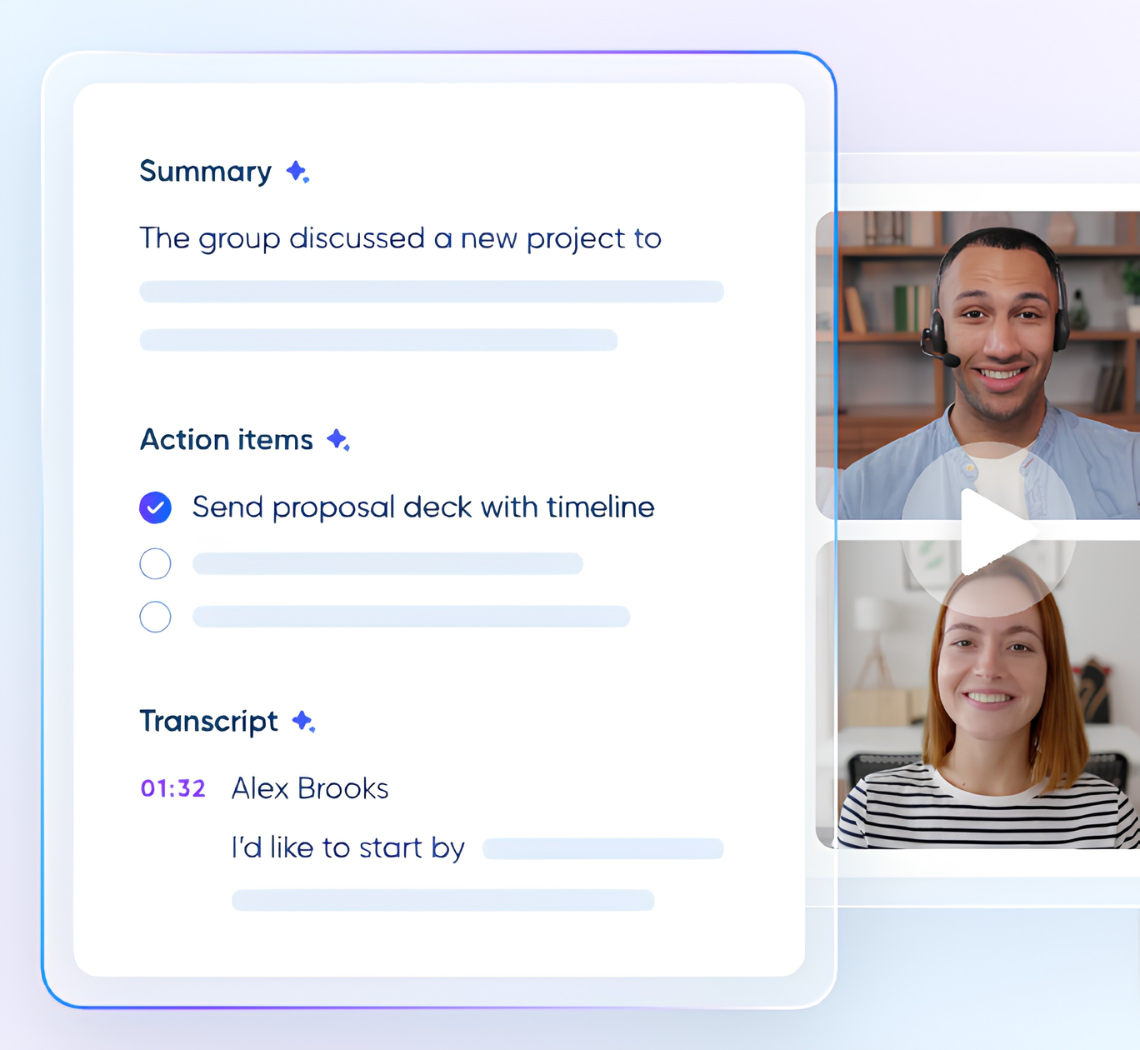
AI and post-meeting intelligence. Calendly's Notetaker records meetings, generates transcripts, and produces AI summaries with action items. It works across Zoom, Google Meet, and Microsoft Teams, even for meetings not scheduled through Calendly.
Source: Calendly
For sales teams, the post-meeting recap and CRM push capabilities eliminate manual note-taking and follow-up drafting. Notetaker is included in all paid plans with unlimited recaps.
Acuity has no AI features. It focuses on pre-appointment automation (reminders, intake forms), not post-appointment intelligence.
The intelligence gap scheduling tools don't fill
Both Acuity and Calendly solve the mechanics of scheduling. Neither solves the harder problem for B2B teams: knowing who to schedule with.
A Calendly link is only as valuable as the prospect it reaches. Send it to someone who's not in-market, and you get a polite 30-minute call that goes nowhere. Send it to a prospect actively evaluating solutions, at the right company, in the right role, at the right moment, and that same 30-minute call becomes a pipeline.
This is the gap ZoomInfo fills.
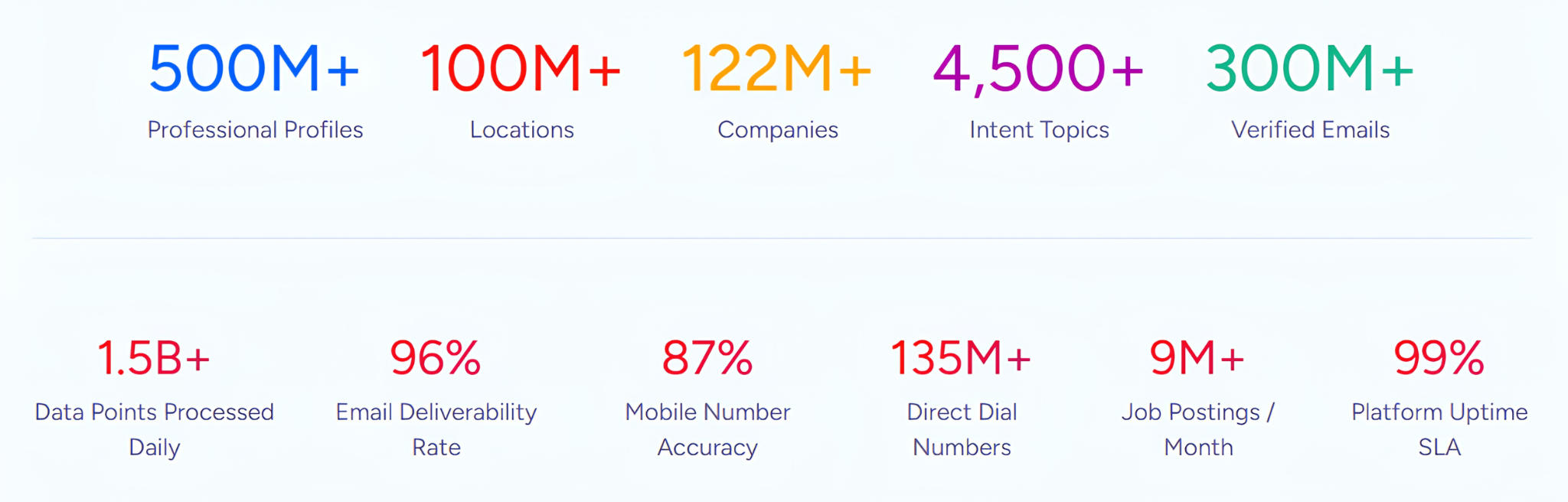
ZoomInfo runs the largest B2B data platform in the industry: 500M contacts, 100M companies, 135M+ verified phone numbers, and 200M+ verified business emails, verified through a multi-source pipeline backed by 300+ human researchers achieving up to 95% accuracy on first-party data.
Source: ZoomInfo Data
But raw data isn't the value. The GTM Context Graph combines this data with your CRM records, conversation transcripts, and behavioral signals to identify which accounts are ready to engage, and why.
Source: ZoomInfo
For B2B teams, that changes scheduling from a coordination exercise into a prioritization engine. Instead of sending scheduling links to a broad list and hoping for takers, you send them to the accounts showing active buying signals, with outreach personalized to the specific concerns driving their research.
Seismic attributed 39% of active pipeline to opportunities identified or influenced by ZoomInfo signals, with their sales team boosting productivity by 54%. (Seismic)
How ZoomInfo changes the B2B scheduling equation
ZoomInfo isn't a scheduling tool. It's the intelligence layer that makes your scheduling tool produce pipeline instead of polite conversations.
Find the right people to meet. ZoomInfo's Contact & Company Search covers 300+ company attributes for market segmentation. Department org charts show decision-makers with verified direct dials and emails.
For sales teams using Calendly, this means the scheduling link goes to the VP of Engineering at a company that matches your ICP, with a verified direct-dial phone number and email address that actually lands.
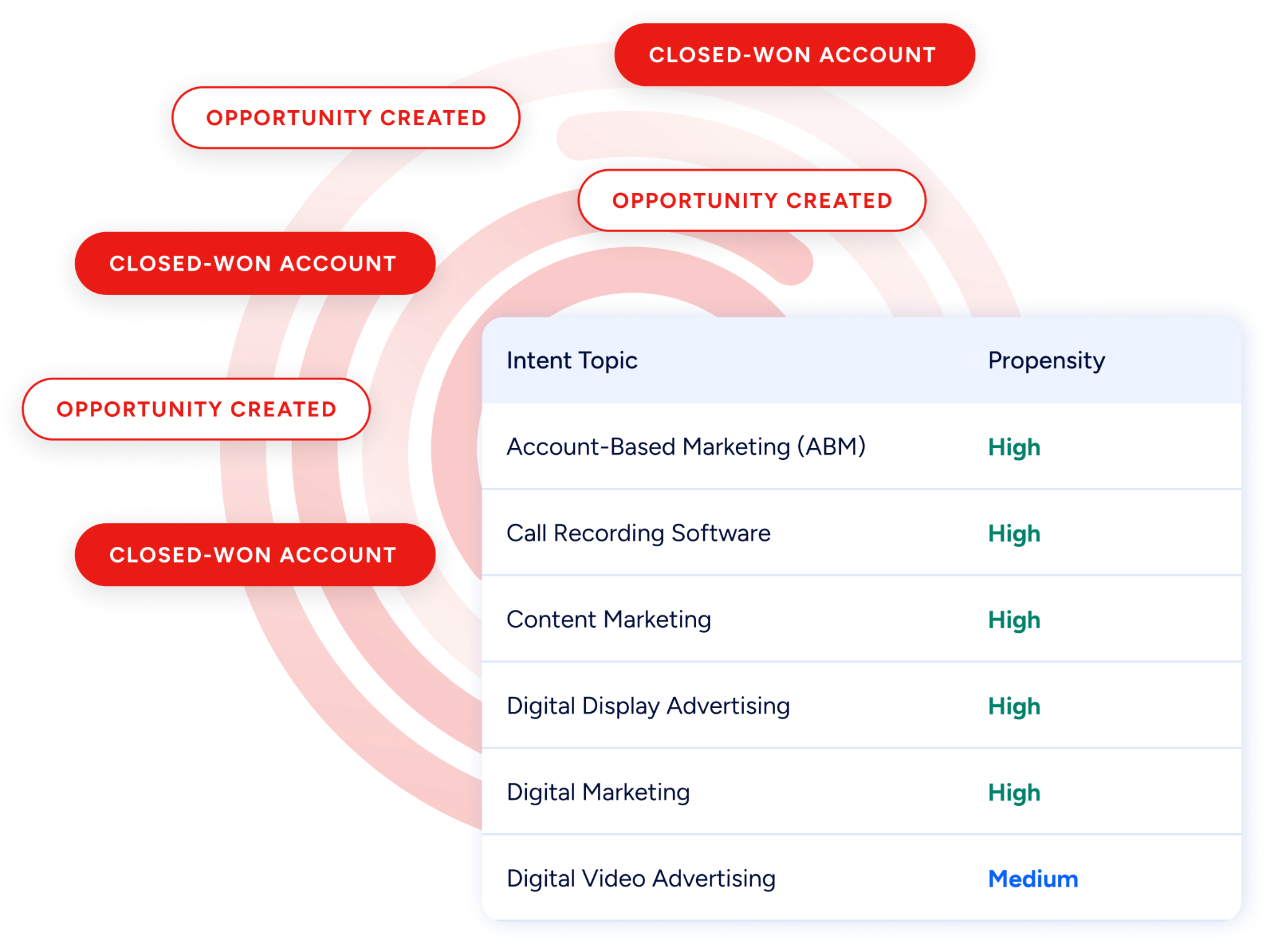
Know when they're ready. ZoomInfo Intent tracks signals from 210 million IP-to-Organization pairings and 6 trillion+ keyword-to-device pairings sourced monthly to identify when companies are researching solutions in your category.
Source: ZoomInfo
Guided Intent, exclusive to ZoomInfo, identifies which topics correlate with your actual closed-won deals rather than generic keyword matches. When an account spikes on relevant intent topics, that's the moment to send the scheduling link.
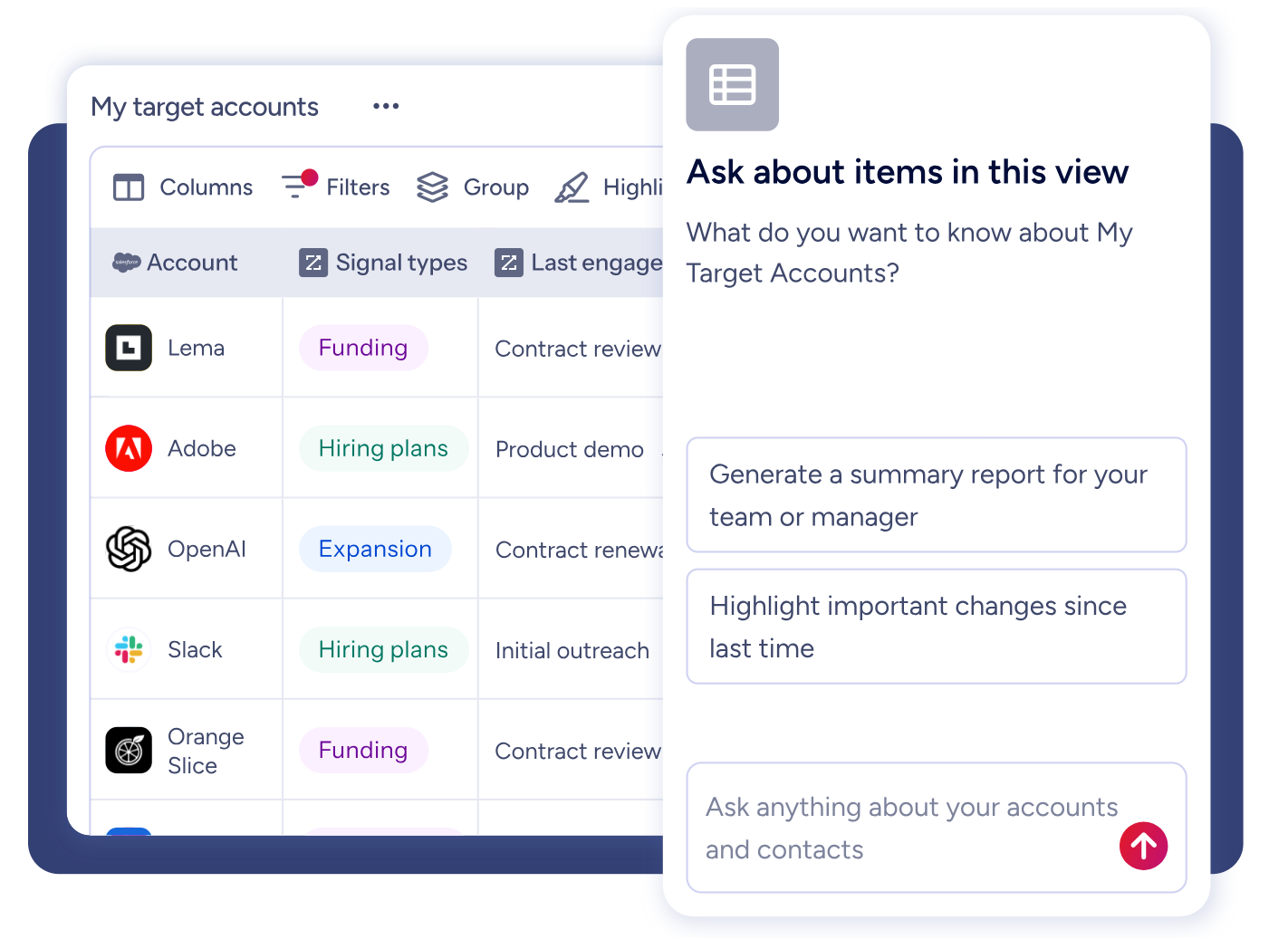
AI-drafted outreach that earns the meeting. GTM Workspace gives sellers AI-generated emails built from full account context: CRM history, company news, intent signals, and stakeholder roles. The outreach addresses the prospect's specific situation rather than offering generic scheduling availability.
Source: ZoomInfo
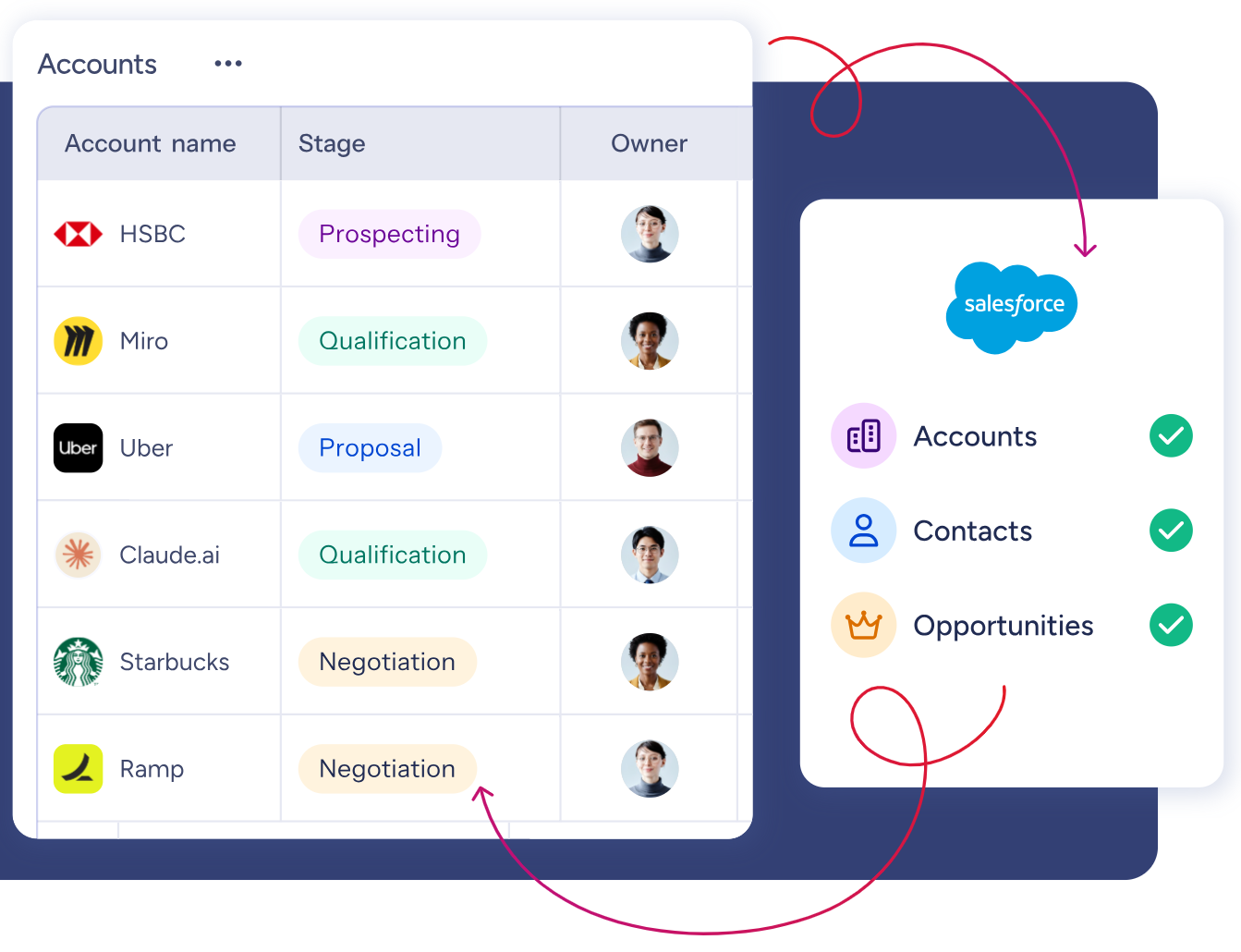
CRM enrichment powers smarter routing. ZoomInfo's native CRM integrations with Salesforce, HubSpot, and Microsoft Dynamics enrich CRM records with verified contact data, company attributes, and intent signals.
Source: ZoomInfo
For teams using Calendly's Routing Forms with CRM lookup, ZoomInfo-enriched CRM data means more accurate matching and routing. The same enrichment feeds Calendly's hidden field routing when paired with ZoomInfo's company attribute data.
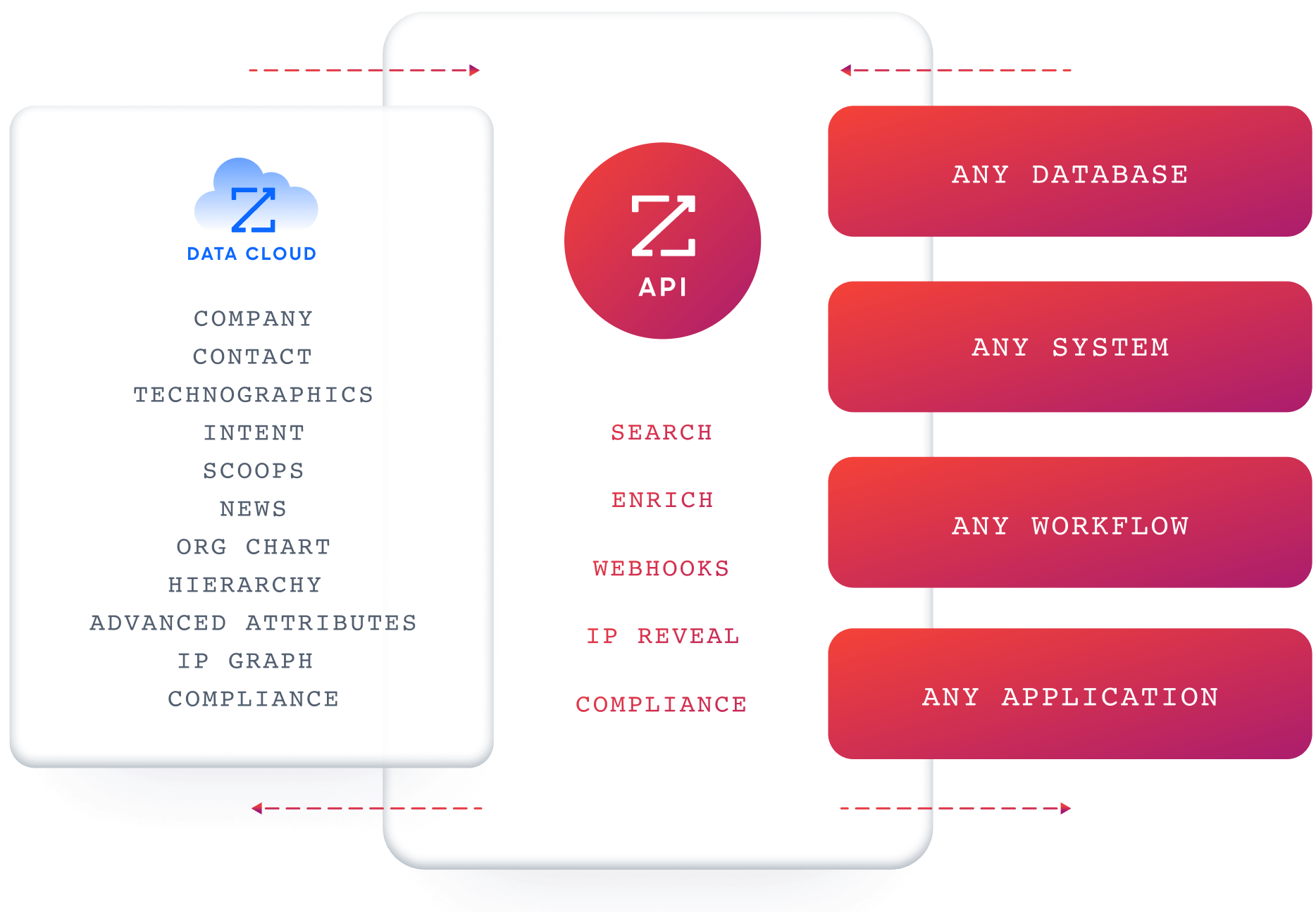
Multiple access points. ZoomInfo delivers intelligence through APIs and MCP for custom workflows, GTM Workspace for sellers, and GTM Studio for marketers and RevOps. The intelligence isn't locked into one interface. It reaches wherever your team works, including AI agents built on Claude or ChatGPT through the ZoomInfo MCP server.
Source: ZoomInfo
Vensure used ZoomInfo's B2B data to eliminate manual prospect research, letting their revenue team reach more clients faster without time-consuming digging. (Vensure)
Pricing reflects different business models
The pricing structures tell you who each platform was built for.
Acuity Scheduling uses flat-fee pricing with no per-seat charges:
Starter: $16/month (annual), 1 calendar, email reminders, basic payments
Standard: $27/month (annual), up to 6 calendars, SMS reminders, packages, subscriptions, video conferencing
Premium: $49/month (annual), up to 36 calendars, HIPAA BAA, custom API/CSS, white-labeling
Enterprise: custom pricing, unlimited calendars, SSO, dedicated account manager
Acuity charges no setup fees, no cancellation fees, and no support fees. Payment processing fees are set by Stripe, Square, or PayPal, not by Acuity. For a solo practitioner, $16/month covers the essentials. For a multi-location wellness business, $49/month handles 36 staff calendars with HIPAA compliance. Pricing scales with business size, not headcount.
Calendly uses per-seat pricing:
Free: always free, 1 event type, 1 calendar
Standard: $10/seat/month (annual), unlimited event types, 6 calendars, reminders, payments, HubSpot/Zapier
Teams: $16/seat/month (annual), round-robin, Salesforce, routing forms, managed events
Enterprise: starts at $15,000/year, Salesforce lookup routing, Dynamics 365, SCIM, dedicated support
For a 5-person sales team on the Teams plan, that's $80/month. For a 50-person team, it's $800/month. Each renewal may include a CPI + 3% price increase, a real consideration for multi-year budgets. The free plan is useful for individuals but limited to one event type, making it more of a starting point than a working tool.
ZoomInfo uses custom, consumption-based pricing with no publicly listed prices. Pricing scales around data access, API consumption, and AI activity. ZoomInfo Lite is a permanent free tier with access to the B2B database, 10 monthly export credits, website visitor identification, and HubSpot integration.
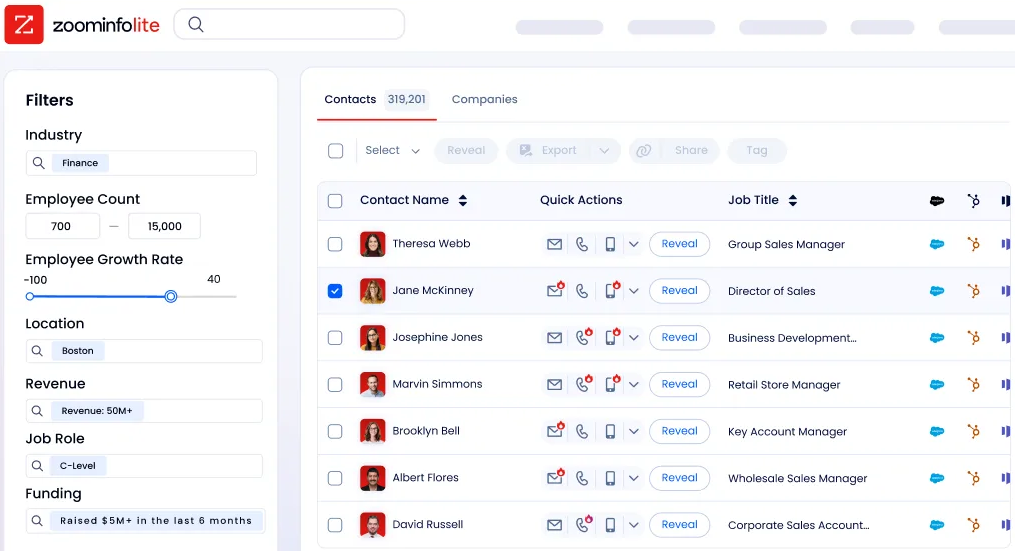
A separate 7-day free trial provides broader access. ZoomInfo is an enterprise investment, priced accordingly, but teams evaluating it can start with Lite at no cost to test the data quality.
The pricing comparison highlights a key point: Acuity and Calendly price scheduling. ZoomInfo prices intelligence. For B2B teams, the question isn't which scheduling tool costs less. It's whether the intelligence that fills those scheduled meetings with qualified prospects justifies its own investment.
Integration ecosystems shape the workflow
Each platform's integrations reveal who it's built for and how it fits into a larger stack.
Acuity Scheduling integrates with the tools service businesses use: Google Calendar, Outlook, and iCloud for calendar sync, Zoom, Google Meet, and GoToMeeting for virtual appointments, Mailchimp, ActiveCampaign, and ConvertKit for email marketing, and Stripe, Square, and PayPal for payments.
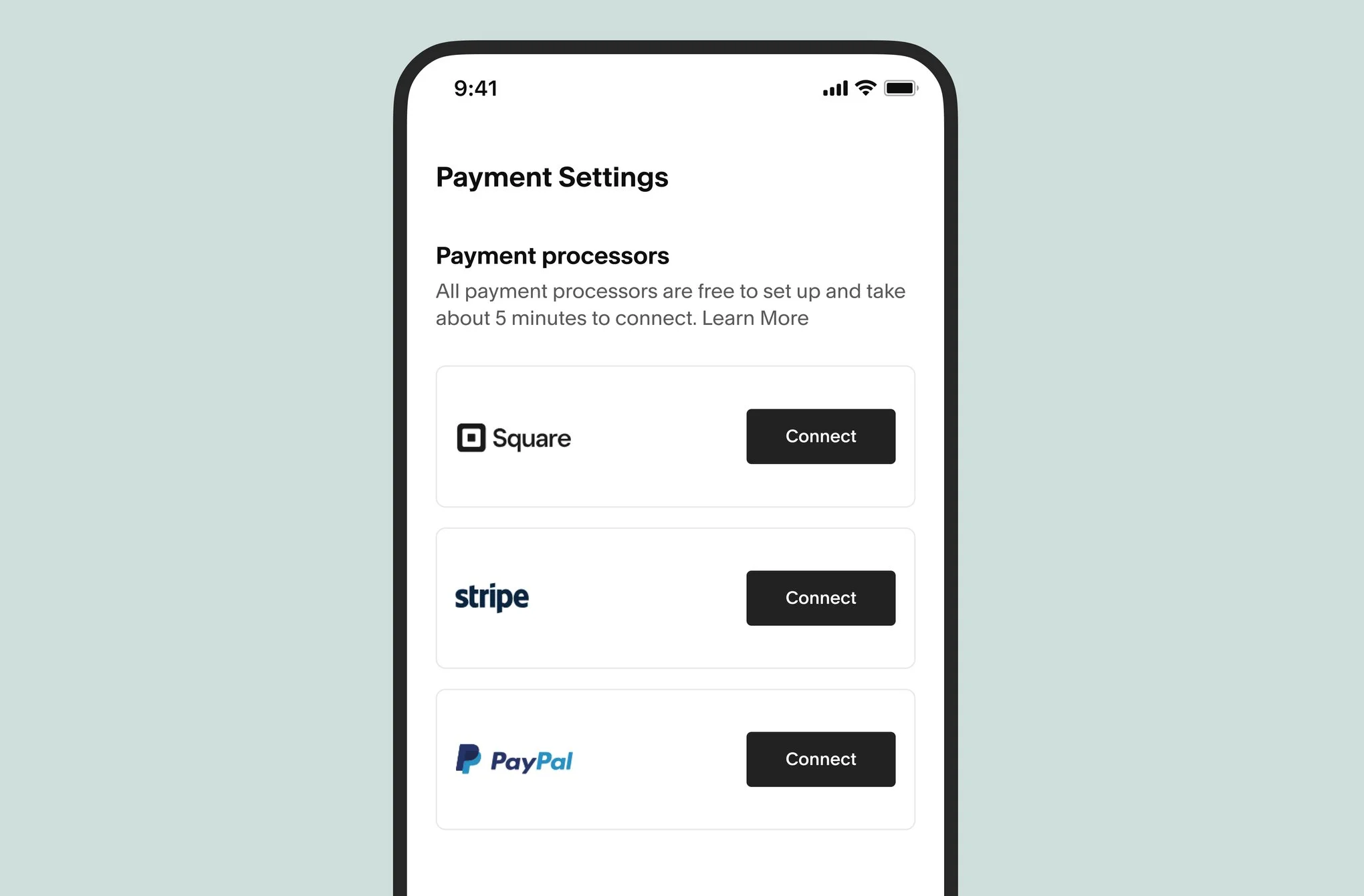
Source: Acuity Scheduling
Acuity also connects to the Airbnb Services marketplace and ClassPass for demand-side distribution. Zapier extends the reach to additional apps. The ecosystem serves solo operators and small businesses managing clients, not enterprise software stacks.
Calendly integrates with the tools B2B revenue teams live in: Salesforce and HubSpot for CRM sync and routing, Marketo and Pardot for marketing form integration, Gong for revenue intelligence, and Greenhouse for ATS workflows. The LinkedIn integration embeds scheduling within LinkedIn messaging.
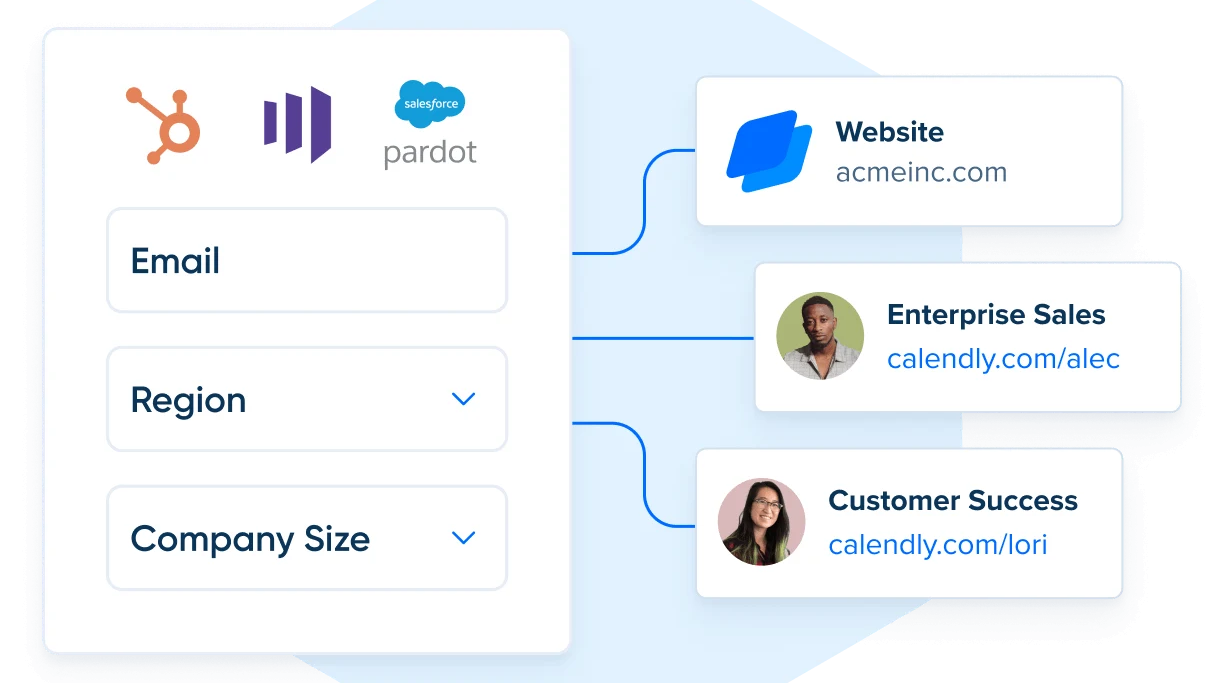
Source: Calendly
100+ integrations span CRM, marketing automation, video conferencing, analytics, and AI assistants. Calendly also offers a Scheduling API for building scheduling into custom applications and an MCP Server for AI agent integration.
ZoomInfo integrates across the full go-to-market stack: Salesforce, HubSpot, and Microsoft Dynamics for CRM enrichment, Salesloft for sales engagement, and cloud data platforms including AWS, Snowflake, Google Cloud, and Databricks for data warehouse delivery.
The ZoomInfo Marketplace lists 172+ integration partners across CRM, marketing automation, sales engagement, communications, and AI categories. APIs and MCP provide programmatic access for custom applications and AI agents.
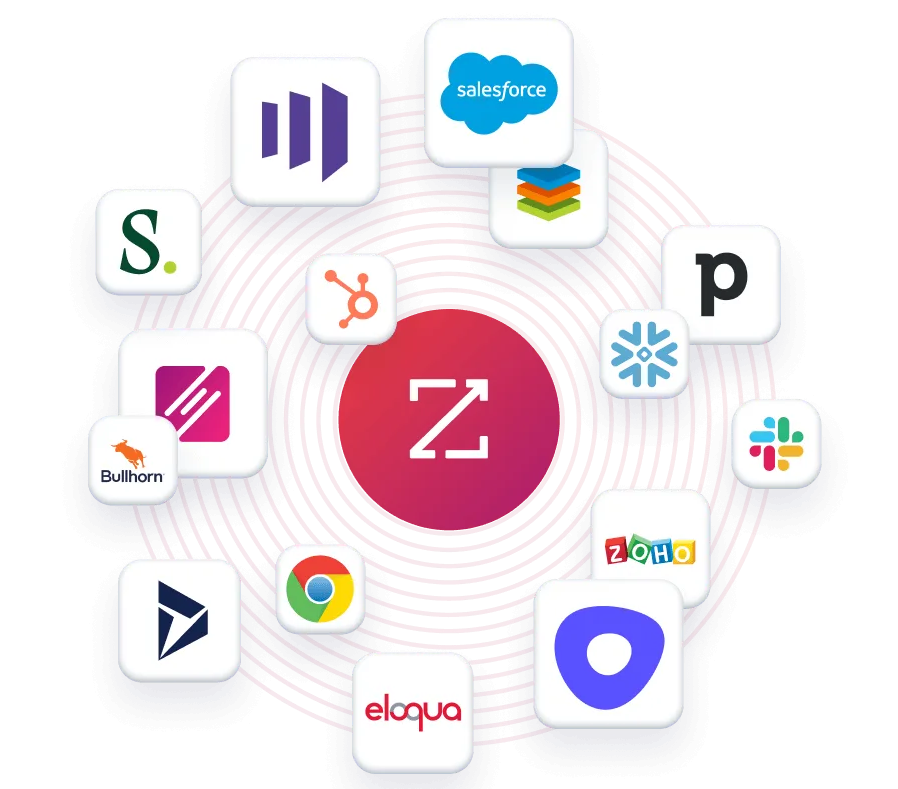
Source: ZoomInfo
For B2B teams, the most effective workflow isn't choosing one tool over the others. It's ZoomInfo enriching your CRM data, which feeds Calendly's routing forms, which schedules the meeting with the right rep, which ZoomInfo's intelligence prepared them for. No single platform delivers that workflow alone.
BDO Canada reduced time spent on internal data dashboard updates by 87% by integrating ZoomInfo's API into their internal systems. (BDO Canada)
Acuity Scheduling vs. Calendly vs. ZoomInfo: Which should you choose?
The right choice depends on what kind of business you run and which problem matters most.
Choose Acuity Scheduling if:
You're a service business where appointments generate direct revenue
You need built-in payment collection, packages, subscriptions, and gift certificates
No-show reduction with deposits and cancellation policies is critical to your bottom line
Your clients need to self-book, reschedule, and manage their own appointments
HIPAA compliance is a requirement for your practice
You want flat-fee pricing with no per-seat charges
Choose Calendly if:
You're a B2B team scheduling external meetings with prospects, candidates, or clients
CRM-driven lead routing and round-robin distribution matter to your sales process
You need enterprise security certifications (SOC 2, ISO 27001) for procurement
Team scheduling coordination across multiple reps is a daily requirement
Post-meeting AI recaps and follow-up automation would save your team hours
You want a free tier for individuals with paid upgrades as the team grows
Add ZoomInfo if:
You're a B2B revenue team and need to know WHO to schedule meetings with, not just HOW
Your pipeline depends on reaching the right prospects at the right moment
You want AI-drafted outreach that earns meetings instead of generic scheduling links
CRM enrichment and buyer intent signals would improve your lead routing
You need your scheduling tool to produce pipeline, not just fill calendars
Explore ZoomInfo Lite for free, or request a demo to see the full platform.
Scheduling tools solve how meetings get booked. For service businesses, Acuity solves that problem and adds the commerce layer that turns appointments into recurring revenue. For B2B teams, Calendly solves that problem and adds the routing and coordination that make team selling work.
But for revenue teams where every meeting needs to count, ZoomInfo provides the intelligence that determines whether a scheduled meeting becomes a pipeline or just a calendar entry.
The most effective B2B scheduling stack isn't one tool. It's the right scheduling tool powered by the right intelligence.
Redwood Logistics saved 20-25 hours per week on targeting and outreach using ZoomInfo's data, reaching prospects with the right message at the right point in the buyer journey. (Redwood Logistics)
Acuity Scheduling vs. Calendly vs. ZoomInfo FAQ
What is the core difference between Acuity Scheduling and Calendly?
Acuity Scheduling is built for service businesses that monetize appointments directly, with built-in payment collection, packages, subscriptions, gift certificates, and no-show reduction through deposits and cancellation policies.
Calendly is built for B2B teams, with CRM-driven lead routing, round-robin distribution, team scheduling, and enterprise security certifications. Acuity treats each appointment as a revenue event. Calendly treats each meeting as a pipeline step.
Where does ZoomInfo fit in a scheduling workflow?
ZoomInfo is not a scheduling tool. It's the B2B intelligence platform that tells revenue teams who to schedule meetings with and when prospects are ready to engage.
ZoomInfo's database of 500M contacts and 100M companies, combined with buyer intent signals and CRM enrichment, identifies qualified prospects before a scheduling link is ever sent. For B2B teams using Calendly, ZoomInfo enriches the CRM data that powers routing forms and provides the context that turns scheduled meetings into pipeline.
Which platform is cheapest?
Acuity Scheduling starts at $16/month with no per-seat charges, making it the most affordable option for solo practitioners and small teams. Calendly offers a permanent free plan (limited to one event type) with paid plans starting at $10/seat/month.
ZoomInfo uses custom consumption-based pricing with no published rates, but offers ZoomInfo Lite as a permanent free tier with 10 monthly export credits and access to the B2B database.
Can Acuity Scheduling handle B2B sales team scheduling?
Not effectively. Acuity has no round-robin meeting distribution, no native Salesforce or HubSpot CRM integration (Salesforce requires Zapier), no lead routing forms, and no admin-controlled team templates. Its multi-staff features are designed for a salon or studio managing multiple practitioners' calendars, not a sales organization routing inbound leads to territory-assigned reps.
Does Calendly work for service businesses that collect payment at booking?
Calendly offers payment collection via Stripe and PayPal on the Standard plan and above, including meeting packages for bundling pre-paid sessions. However, it lacks the depth of Acuity's revenue toolkit: no POS system, no gift certificates, no subscription billing, no tipping, no per-service payment configuration, and no client self-service portal for managing bookings and packages.
For a coach or consultant charging per session, Calendly's payment features may be sufficient. For a salon, fitness studio, or wellness practice with diverse pricing models, Acuity is the stronger fit.
How do Acuity and Calendly handle no-shows differently?
Acuity takes a revenue-protection approach: deposits at booking, card-on-file charges for no-shows, enforceable cancellation policies, and dual-channel email and SMS reminders. Acuity reports that 75% of businesses on the platform reduced no-shows using this combination.
Calendly takes a coordination approach: email and SMS reminders, optional prepayment, and cancellation policy text on booking pages. Both reduce no-shows, but Acuity's financial enforcement through deposits and no-show fees protects businesses where each missed appointment is direct lost revenue.
What security certifications does each platform hold?
Calendly holds SOC 2 Type 2, ISO 27001, GDPR, CCPA, and CSA STAR certifications, with enterprise features including SAML SSO, SCIM provisioning, and audit logs.
ZoomInfo holds ISO 27001, SOC 2 Type II, ISO 27701, and TRUSTe GDPR and CCPA certifications. Acuity offers HIPAA compliance with a BAA on the Premium plan and Enterprise SSO, but does not publish SOC 2 or ISO certifications separately from its parent company Squarespace. For enterprise B2B procurement, Calendly and ZoomInfo have broader security certification coverage.
Can ZoomInfo and Calendly work together?
Yes, through shared CRM infrastructure. ZoomInfo enriches Salesforce and HubSpot records with verified contact data, company attributes, and intent signals. Calendly's Routing Forms pull from those same CRM records to match inbound leads to the right rep.
ZoomInfo identifies and prioritizes accounts; Calendly books the meeting. The combination works well for inbound conversion: ZoomInfo-enriched CRM data feeds Calendly's hidden field routing, enabling company-attribute-driven routing without requiring the visitor to answer additional qualification questions.
