
If you're comparing Adobe Campaign and HubSpot, you're weighing two different approaches to marketing.
Adobe Campaign is an enterprise campaign execution engine built for organizations sending tens of millions of messages per month across email, SMS, push, and direct mail. HubSpot is a customer platform that bundles marketing, sales, service, and CRM into a single system designed for growing companies.
The comparison raises questions most reviews skip:
Are you running high-volume B2C campaigns that need high throughput, or building a B2B engine that connects marketing to sales?
Do you have the technical team and budget for a platform that requires implementation partners and months of setup, or do you need something your marketing team can start using this week?
Is your priority orchestrating messages across channels, or understanding who your buyers are and when they're ready to engage?
Do you already have a CRM and sales tools, or do you need everything in one place?
How important is knowing not just that a prospect visited your site, but who they are, what they're researching, and which accounts match your win patterns?
In short, here's what we recommend:
Adobe Campaign is built for large enterprises that need to coordinate large-scale marketing communications across multiple channels. Its Snowflake-backed architecture handles 20 million operations per hour and 1 million transactional messages per hour, making it one of the few platforms that can serve enterprise batch volumes. For organizations already using Adobe Experience Cloud, Campaign's native integration with Real-Time CDP, Journey Optimizer, and Experience Manager creates a connected marketing ecosystem. However, Campaign is exclusively a Managed Cloud Service with no self-serve option, no published pricing, and implementation timelines that can stretch 6 to 18 months.
HubSpot is the accessible choice for companies that want marketing automation, CRM, sales tools, and customer service in one platform. With 288,706 customers across 135+ countries, a free tier, and a stated 90-day path to value, HubSpot lowers the barrier that keeps many teams from adopting marketing software. Its Breeze AI layer adds AI agents for prospecting, customer service, and content creation inside the platform. The tradeoff: pricing complexity grows as you add seats and hubs (per-seat, per-hub, per-contact billing), and HubSpot's marketing automation doesn't match the throughput of dedicated enterprise campaign engines.
Both platforms handle marketing execution well. But execution is only half the equation. Knowing which companies to target, when they're in-market, and who on the buying committee to reach is the intelligence gap that separates effective campaigns from waste.
ZoomInfo is a GTM platform that provides the B2B intelligence neither Adobe Campaign nor HubSpot offers. With 500M contacts, 100M companies, 135M+ verified phone numbers, and 200M+ verified business email addresses, ZoomInfo gives marketing and sales teams the data to identify and reach their buyers. Its GTM Context Graph combines this data with your CRM records, conversation transcripts, and behavioral signals to reveal not just what's happening in your pipeline, but why. Teams access this intelligence through GTM Workspace for sellers, GTM Studio for marketers and RevOps, or APIs and MCP inside any tool, including HubSpot and Adobe Campaign.
If building your GTM strategy on verified buyer intelligence sounds like the missing piece, see how ZoomInfo works with a free trial.
Adobe Campaign vs. HubSpot vs. ZoomInfo at a glance
Adobe Campaign | HubSpot | ZoomInfo | |
|---|---|---|---|
Primary function | Enterprise cross-channel campaign execution | CRM + marketing + sales platform | B2B intelligence + GTM execution |
Best for | Large B2C enterprises with high-volume campaigns | Growing B2B/B2C companies wanting one platform | B2B teams needing buyer intelligence and GTM orchestration |
Starting price | Custom enterprise pricing (no published rates) | Free tier; Marketing Hub Pro from $800/mo (annual) | Custom-quoted; free Lite tier available |
Implementation time | 6–18 months | ~90 days | Weeks |
Free option | None | Free CRM and marketing tools | ZoomInfo Lite (permanent free tier) |
B2B data coverage | Not a data platform | CRM data + AI enrichment | 500M contacts, 100M companies, 135M+ verified phones |
AI capabilities | Content generation, send-time optimization | Breeze AI agents across all hubs | GTM Context Graph, AI-drafted outreach, intent signals |
Marketing automation | Visual workflow engine for multi-channel campaigns | Workflow builder with behavioral triggers | GTM Studio plays, ABM orchestration, multi-channel activation |
Integration ecosystem | Adobe Experience Cloud suite | 2,000+ app marketplace | 120+ integrations, APIs, MCP for any tool |
Learning curve | Steep; dual interface (client console + Web UI) | Low to moderate | Moderate; structured 90-day onboarding |
Three platforms, three different problems
Adobe Campaign, HubSpot, and ZoomInfo solve different problems in a marketing organization.
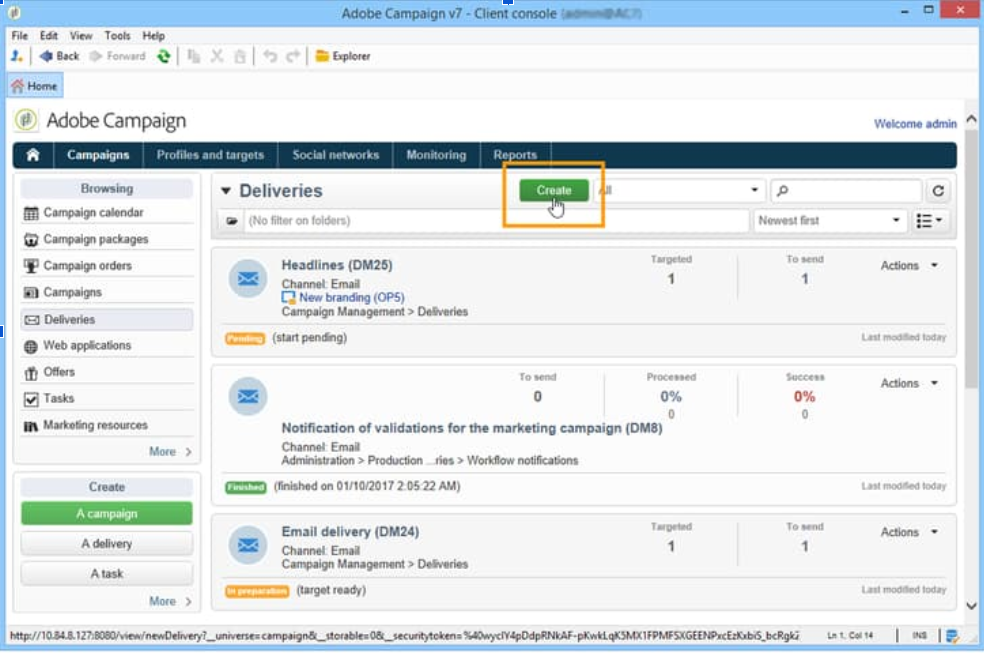
Adobe Campaign is a campaign execution engine. It takes audiences you've defined and delivers messages at scale across email, SMS, push notifications, direct mail, and offline channels. The visual workflow engine coordinates multi-step, multi-wave journeys.
Source: Adobe
The Snowflake-backed FFDA architecture can query and segment millions of profiles in minutes. If you're a telecommunications company sending 50 million emails per week across six languages and four channels, Adobe Campaign was built for you.
What Adobe Campaign does not do: tell you who to target. It has no B2B contact database, no buyer intent signals, no prospecting tools. Adobe's own documentation positions Campaign as distinct from Marketo Engage for B2B use cases. Campaign is a B2C outbound platform that assumes you already have the audience data.
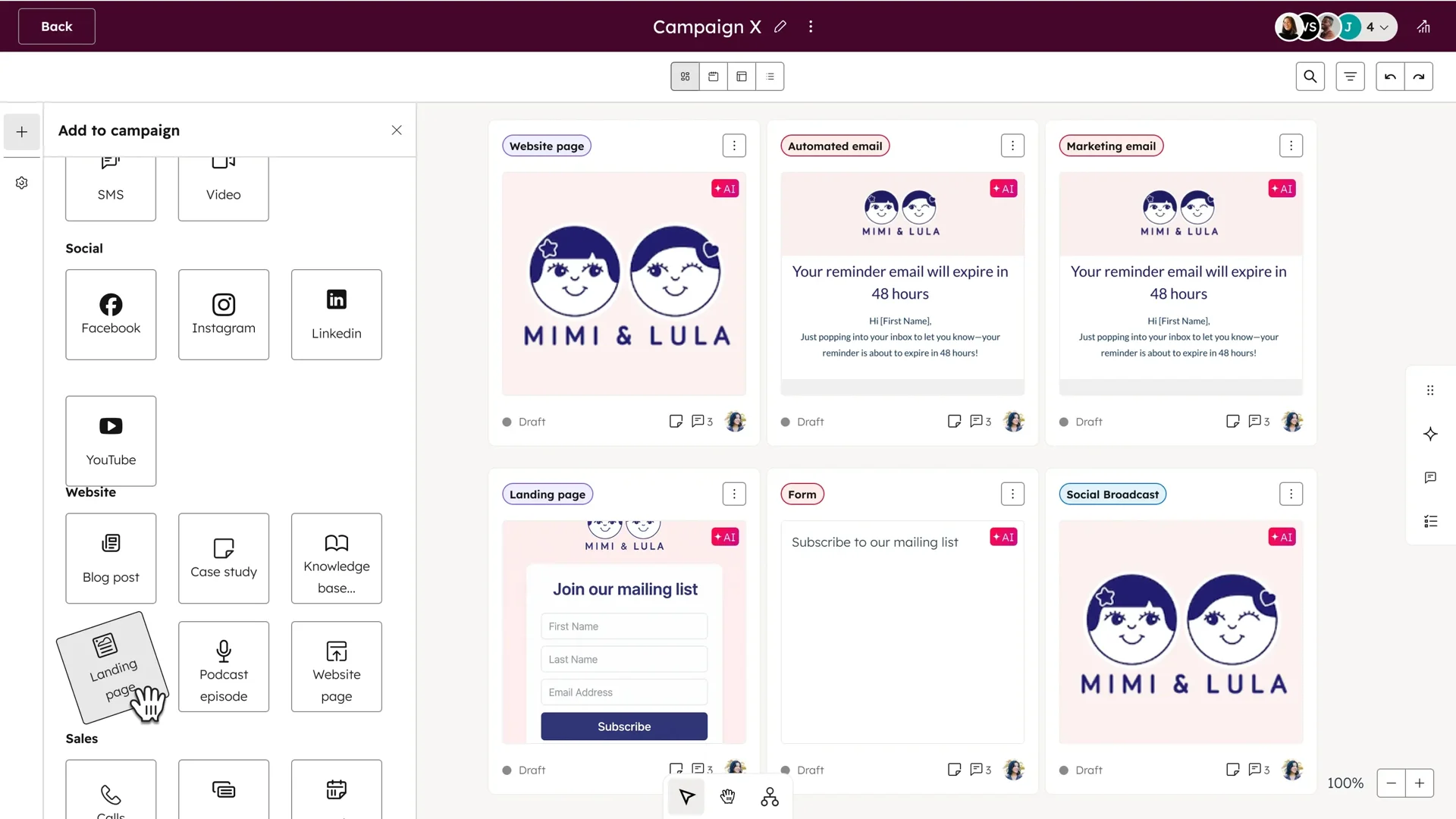
HubSpot is a customer platform. It handles marketing automation, CRM, sales pipeline management, customer service, content creation, and commerce in a single system sharing one data layer.
Source: HubSpot
For a B2B company that needs landing pages, email nurture sequences, a sales pipeline, and customer support ticketing without managing five separate vendors, HubSpot consolidates the stack.
What HubSpot does less well: it captures and manages the data you generate (form fills, email opens, deal stages), but it doesn't tell you which companies outside your database are researching your category right now. HubSpot's Smart CRM enriches records from conversations and web data, but it was not built as a B2B data platform with hundreds of millions of verified contacts.
ZoomInfo is the intelligence foundation. It provides the B2B data, buyer intent signals, and account intelligence that power your go-to-market motion, regardless of which execution platform you use.
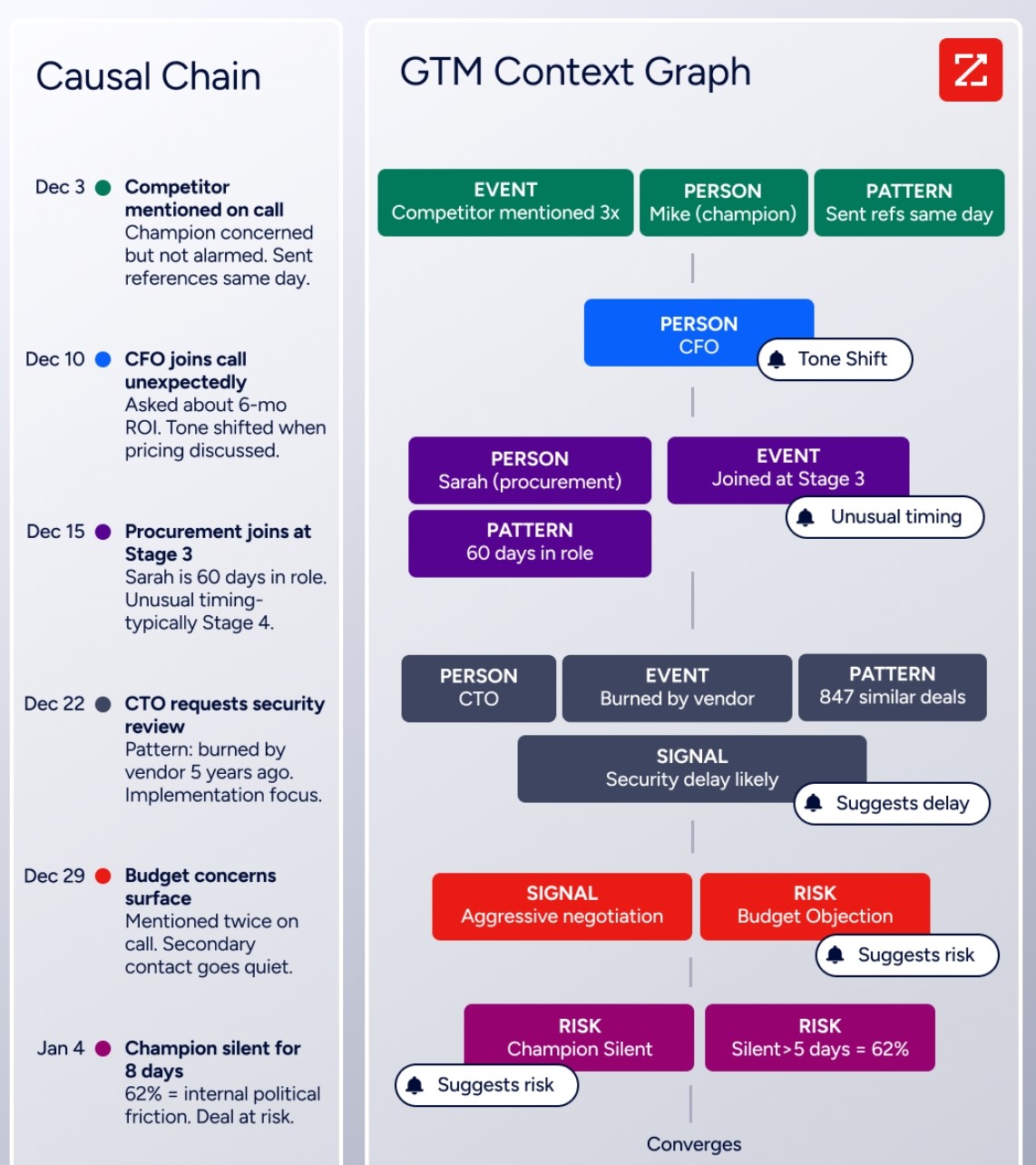
ZoomInfo's GTM Context Graph processes 1.5B+ data points daily, combining third-party intelligence with your CRM data, conversation transcripts, and engagement signals to identify who your buyers are, when they're in-market, and why deals are moving or stalling.
Marketing automation: execution at different scales
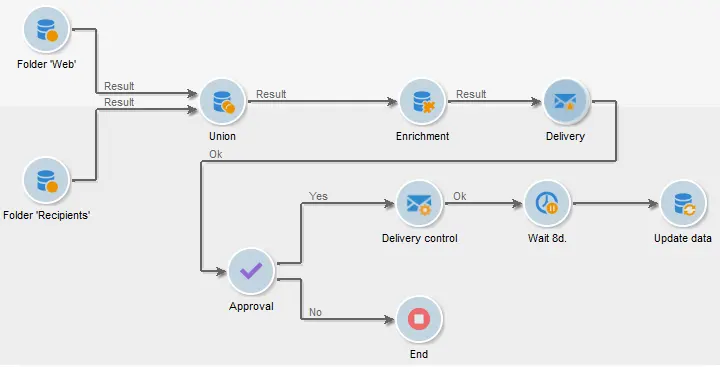
Adobe Campaign's marketing automation is built for volume and complexity. The visual workflow engine supports three workflow types (targeting, campaign, and technical), with drag-and-drop activities for audience queries, set operations, scheduling, branching logic, and multi-channel delivery.
Source: Adobe
Campaigns follow a Plan, Program, Campaign hierarchy that maps to annual planning cycles with budget tracking and approval flows. The Distributed Marketing add-on lets global brands publish campaign templates that local teams can activate with regional customizations.
This depth has a cost. Campaign v8 still requires a Windows-only client console for most advanced configurations, though a browser-based Web UI became available with v8.6. G2 reviewers note the steep learning curve and the operational investment the platform demands day-to-day.
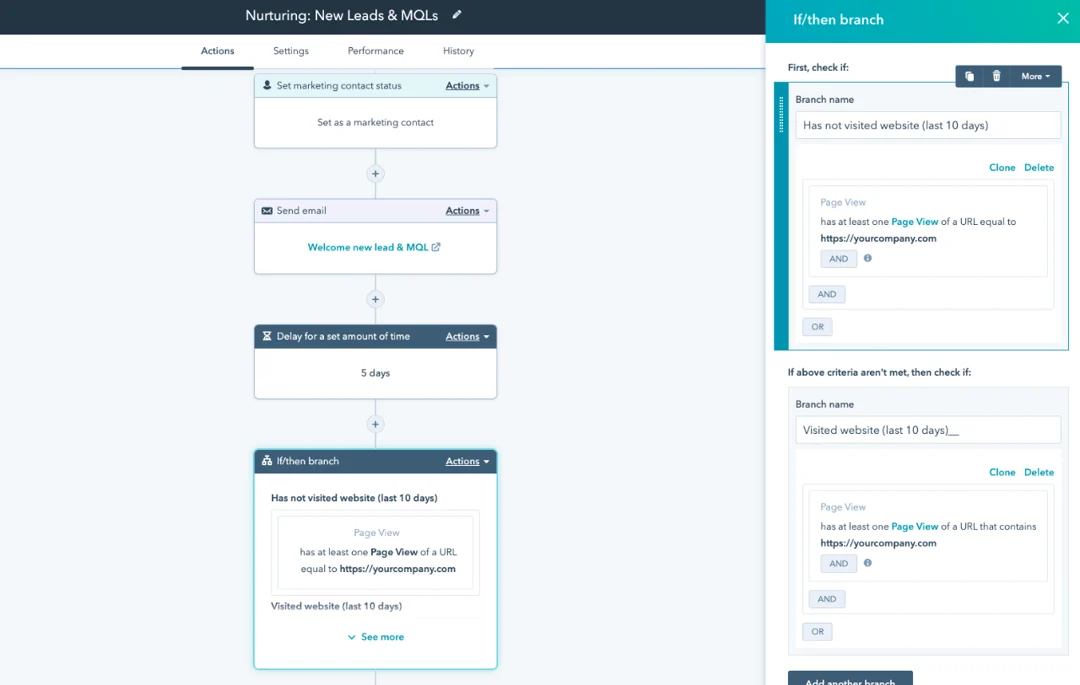
HubSpot's Marketing Hub starts from the opposite direction: make it accessible first, then add capability. The visual workflow builder supports multi-step, branching nurture sequences triggered by contact behavior, lifecycle stage, and form fills.
Source: HubSpot
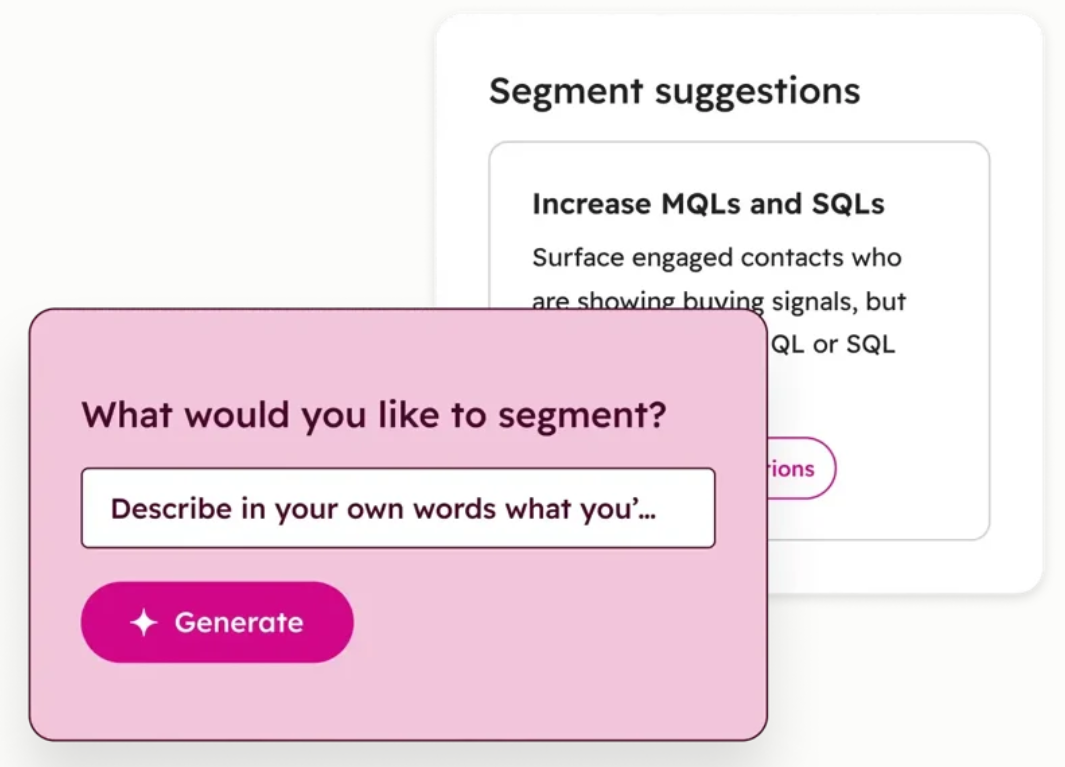
Audience segments update in real time based on CRM properties and behavioral signals. The drag-and-drop email editor, landing page builder, and social media tools connect to the same Smart CRM, so every interaction feeds the contact record automatically.
Source: HubSpot
HubSpot's automation works well for B2B nurture campaigns and inbound marketing. Where it falls short is throughput for enterprises sending millions of transactional messages per hour. HubSpot was not designed to compete with dedicated campaign engines at that scale.
ZoomInfo's GTM Studio takes a different approach. Instead of starting with a message and finding an audience, GTM Studio starts with intelligence and builds the play around it.
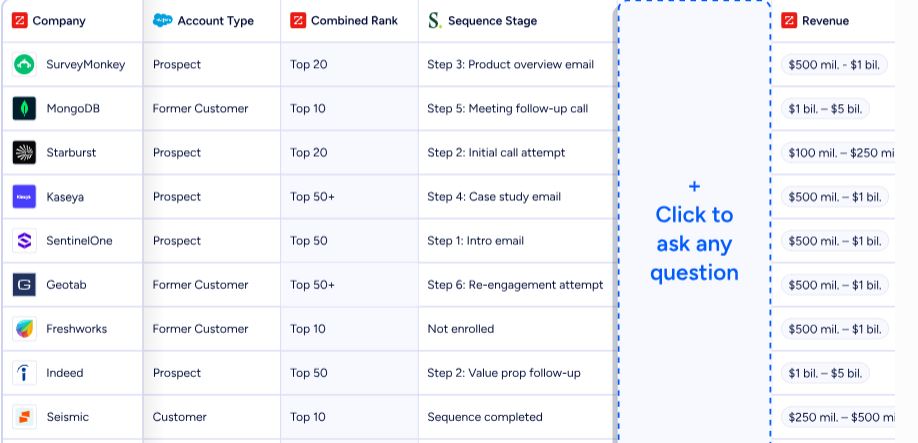
Marketers describe audiences in natural language, launch pre-built GTM plays (inbound acceleration, champion tracking, competitive displacement), and activate across email, calls, ads, and direct mail, all triggered by buyer behavior detected through ZoomInfo's signals. Expansion plays that used to take three weeks now launch in 30 minutes, without technical support.
Redwood Logistics saw a 99% reduction in CPC and a 310% increase in CTR using ZoomInfo's targeting. "It's not just the data itself. It's more about the right data at the right time to help us reach out with the right message across that full buyer journey," said Chelsea Kenyon, Senior Director of Digital Strategy. (Redwood Logistics)
The B2B intelligence gap neither platform fills
This is where the comparison shifts from a feature checklist to a strategic question.
Adobe Campaign has no B2B contact database. No buyer intent signals. No technographic data showing what software your prospects use. No org chart data revealing who sits on a buying committee. Campaign can send a personalized email to millions of people, but it cannot tell you which of those people are researching your product category right now.
For B2B teams, Campaign requires a separate data source to populate its audience lists.
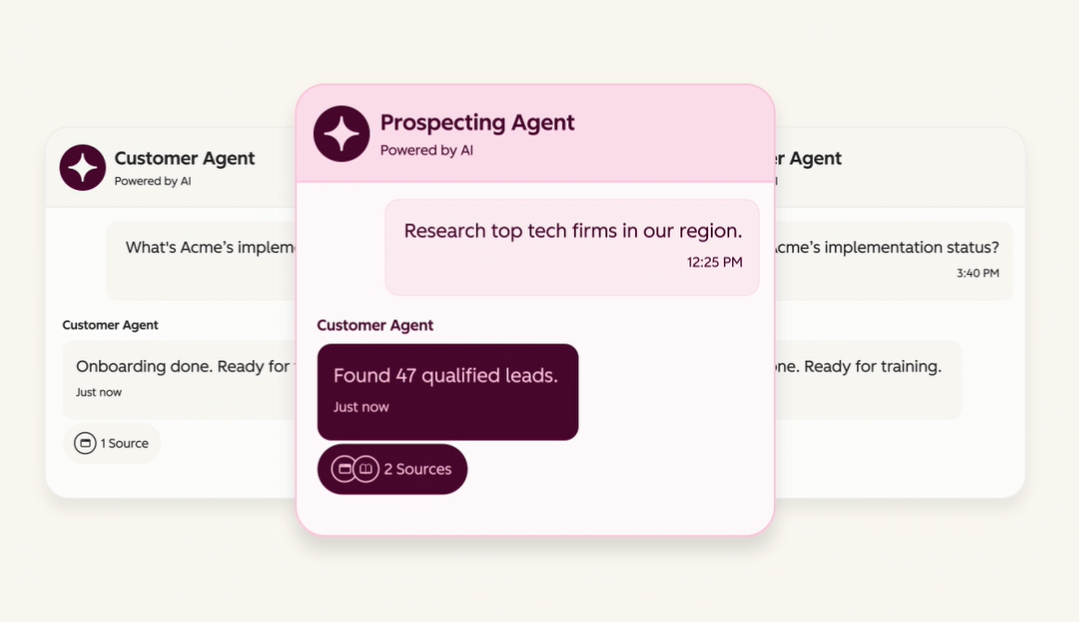
HubSpot's Smart CRM captures data from your own marketing and sales activities: form submissions, email engagement, deal movements, support tickets. Breeze AI enriches records using email threads, call recordings, and web data.
Source: HubSpot
This helps manage known contacts, but it doesn't solve the prospecting problem: identifying companies outside your database that match your ideal customer profile and show buying signals this week.
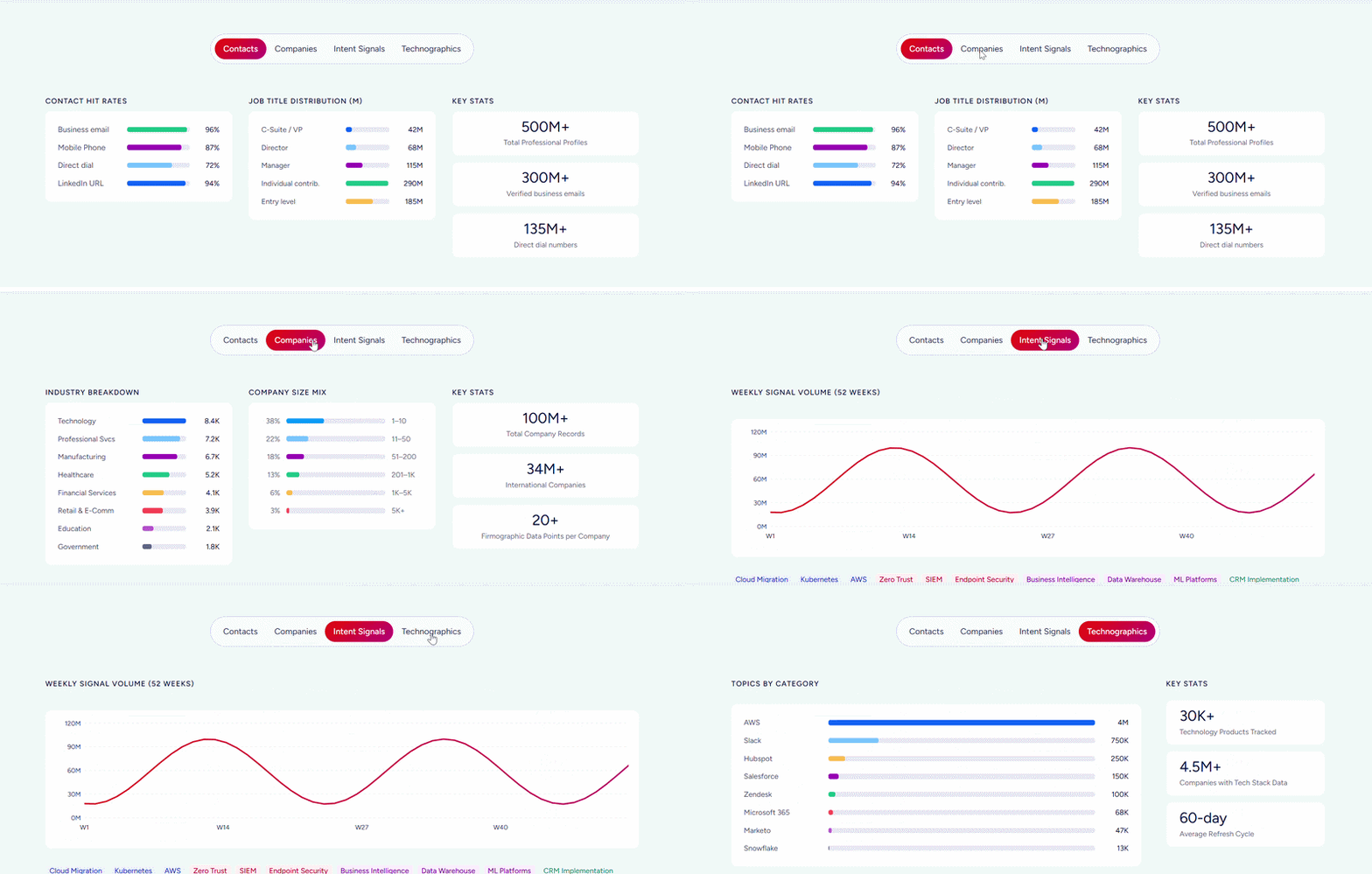
ZoomInfo was built to solve this problem. The platform provides 500M contacts, 100M companies, 135M+ verified phone numbers, 120M direct-dial phone numbers, and 200M+ verified business email addresses, verified through a multi-source pipeline backed by 300+ human researchers with up to 95% accuracy on first-party data.
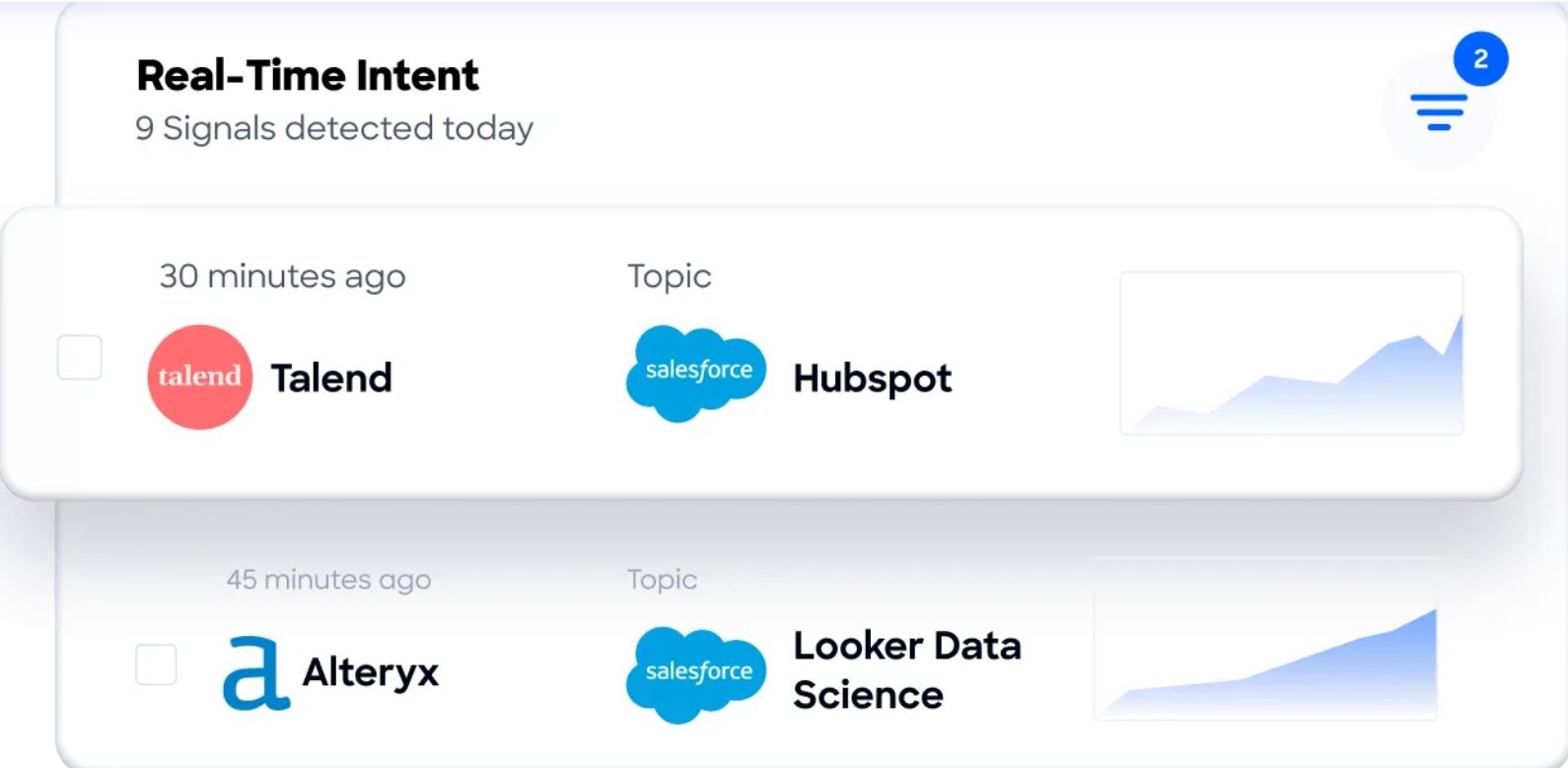
Buyer Intent data tracks signals from 210 million IP-to-Organization pairings and 6 trillion+ new keyword-to-device pairings sourced monthly.
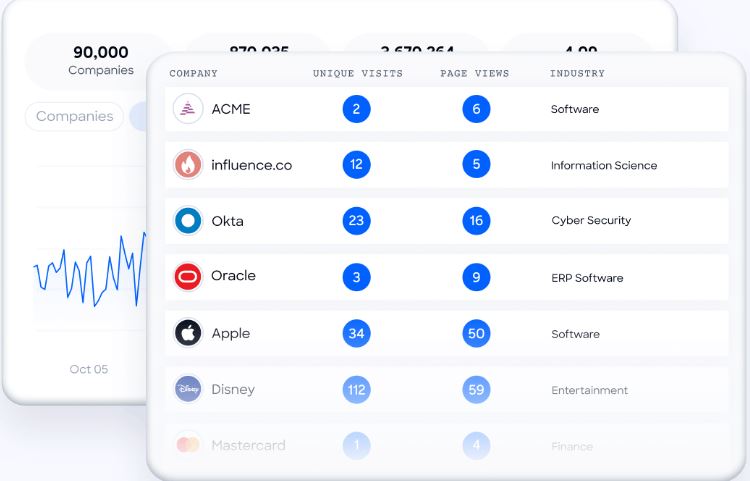
WebSights resolves anonymous website traffic to companies, including buying team identification and direct contact information.
The data quality claim is not self-reported. In a Fortune 500 competitive RFP analyzing 25 million contacts across vendors, an independent consultant concluded that "no other competitor came even close."
ZoomInfo was named a Leader in the Forrester Wave for Intent Data Providers (Q1 2025), receiving the highest scores across eight criteria, and earned 133 No. 1 rankings on G2 Summer 2025 across Sales Intelligence, Buyer Intent, Data Quality, and Account Data Management.
For B2B teams, this intelligence changes the math on campaign effectiveness. Instead of emailing a static list and hoping for engagement, you target companies researching your category, reach verified decision-makers with direct dials, and time outreach to buying signals.
"ZoomInfo gives us the information we need to execute. We don't have to go through and spend our time digging. It's already there, so we can be three steps ahead," said William Kenimer, Vice President of Revenue Operations at Vensure. (Vensure)
AI capabilities take three different directions
All three platforms have invested in AI, but each applies it to a different problem.
Adobe Campaign's AI Assistant, powered by Microsoft Azure OpenAI and Adobe Firefly, focuses on content production. It generates marketing content from a marketer's prompt, with brand alignment scoring and support for 12 languages.
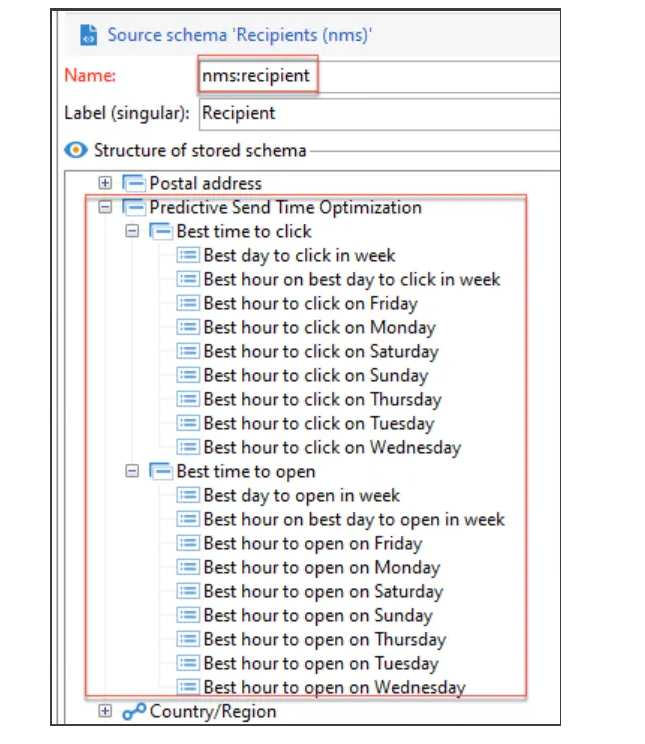
Predictive Send-Time Optimization computes the best send time per profile across all seven days, and Predictive Engagement Scoring estimates each recipient's probability of opening, clicking, or unsubscribing.
Source: Adobe
A caveat: both predictive features require consulting engagement with Adobe Managed Cloud Services and at least one month of historical data. They are not included out of the box.
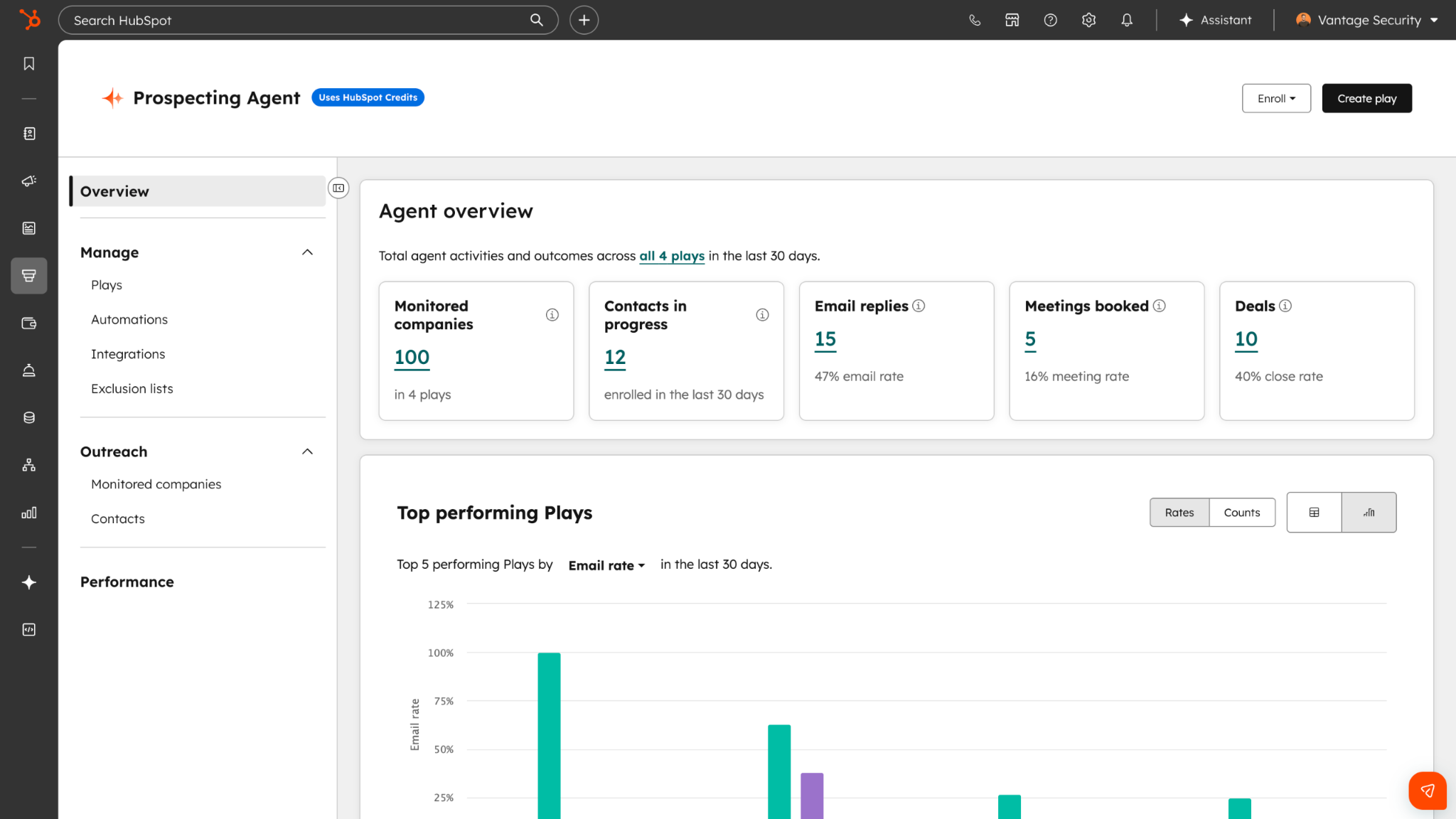
HubSpot's Breeze AI runs across the entire platform. The Customer Agent resolves over 50% of customer conversations autonomously. The Prospecting Agent monitors buying signals and drafts personalized outreach using HubSpot's customer history.
Source: HubSpot
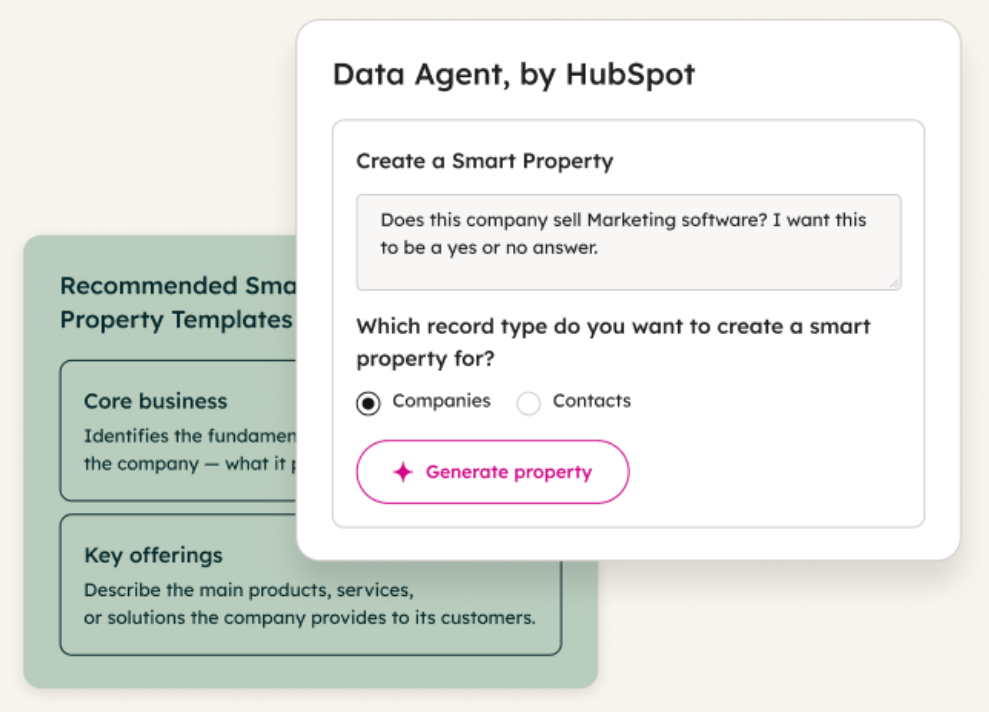
The Data Agent answers natural-language questions about CRM data. Breeze draws on the platform's shared data layer, so AI outputs reflect each business's actual customer interactions.
Source: HubSpot
Several features (AI-Powered Segmentation, Personalization, Marketing Studio) remain in Beta as of the Fall 2025 Spotlight.
ZoomInfo's AI focuses on understanding buyer behavior. The GTM Context Graph doesn't just generate content or automate tasks. It captures the connections between signals and outcomes across your pipeline.
As ZoomInfo's CPO Dominik Facher wrote: "The CRM recorded the state change. It has no record of why it happened." The GTM Context Graph captures that context (executive sponsorship entering at a critical stage, a champion going quiet due to internal friction) and makes it available for AI-generated outreach, deal prioritization, and forecasting.
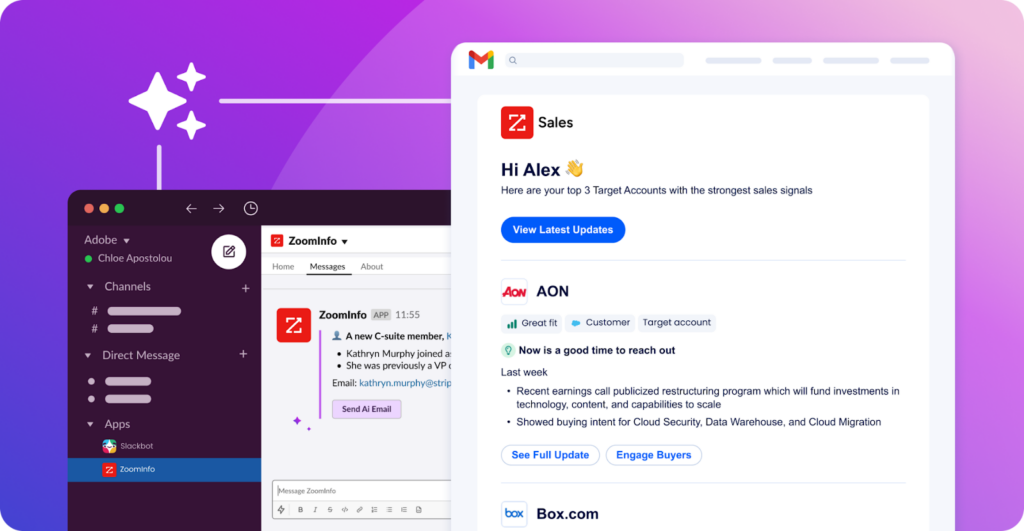
The AI agents inside GTM Workspace draft emails that address concerns identified in previous conversations, prioritize accounts based on win patterns, and generate account briefs in 10 seconds.
Seismic attributed 39% of active pipeline to opportunities identified or influenced by ZoomInfo signals, with the sales team reporting 54% productivity gains and 11.5 hours saved per week per seller. "That combination of our internal CRM data, external signals, and AI that's given all that context has helped us craft very specific account- and persona-based messages. And people have responded to them right away," said Toby Carrington, Chief Business Officer. (Seismic)
Pricing reflects who each platform serves
Adobe Campaign does not publish pricing. Adobe sells it exclusively as an enterprise Managed Cloud Service under negotiated contracts, with no public price list, no self-serve sign-up, and no free trial. The platform comes in four packages (P1 through P4), with the top-tier P4 Enterprise deployment on Snowflake supporting 20M operations/hour.
Additional costs include implementation consulting, support packages, deliverability packages, and mid-sourcing infrastructure. G2 reviewers flag cost as a barrier. Expect a high six-figure annual commitment at minimum, plus implementation fees.
HubSpot uses a hybrid pricing model combining per-seat, per-contact, and flat-fee dimensions. Marketing Hub ranges from free (limited features, 2,000 email sends/month with HubSpot branding) to Enterprise at $3,600/month with 10,000 marketing contacts and 5 Core Seats included. Mandatory onboarding fees add $3,000 to $7,000 for Marketing Hub alone.
A pricing quirk worth watching: when you subscribe to multiple Hubs at different tiers, all Core Seats bill at the rate of the highest tier. What looks like a modular, pay-for-what-you-need model can escalate quickly as your team grows across departments.
ZoomInfo uses consumption-based pricing that scales with data access, API consumption, and AI activity. No public prices are listed for paid tiers. ZoomInfo offers two free entry points: ZoomInfo Lite (permanent free tier with 10 monthly export credits, access to the B2B database, and WebSights Lite) and a 7-day free trial of paid features.
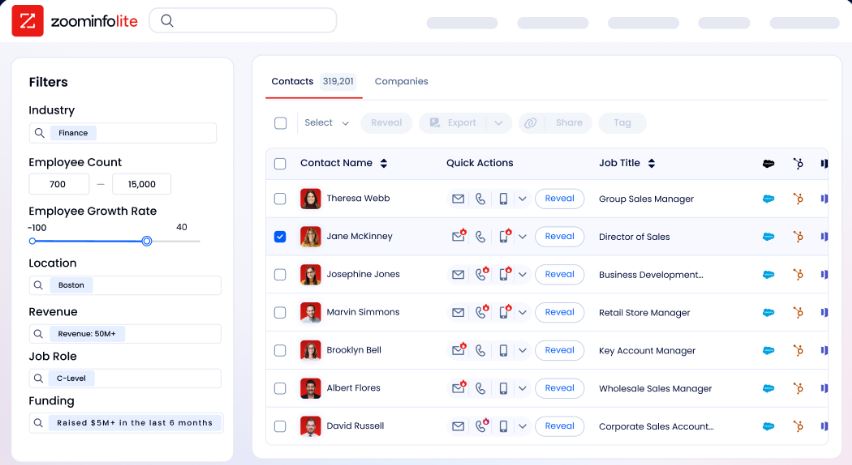
The pricing question for B2B teams: Adobe Campaign and HubSpot charge you to send and manage messages. ZoomInfo charges you for knowing who to send them to. For many organizations, the intelligence layer determines whether the campaign investment pays off.
Implementation speed and learning curve
Adobe Campaign demands the largest upfront investment. Migration from Campaign Classic v7 to v8 takes 6 to 18 months, and automated migration is confirmed as "not yet available" by Adobe. New deployments involve Adobe consulting teams that assess marketing plans, data requirements, and messaging volume before recommending a package.
The API documentation requires familiarity with JavaScript, SOAP, and Adobe Campaign's data model. G2 reviewers describe the platform as operationally demanding, with some reporting they cannot handle daily operations without raising support tickets.
HubSpot positions speed as a differentiator. The platform claims customers achieve value within 90 days, and enterprise customers like MedicAlert have reported implementation costs "10X less than Salesforce." The free CRM serves as a frictionless onboarding ramp. HubSpot Academy offers all courses and certifications free, with over 200,000 professionals certified.
For most marketing teams, the learning curve ranges from minimal (Starter) to moderate (Enterprise with custom objects and programmable automation).
ZoomInfo falls between the two. GTM Workspace "deploys in weeks, not months". ZoomInfo redesigned its onboarding into a 30-to-90-day program spanning planning, technical setup, education, and adoption, producing a 25% improvement in customer satisfaction scores and winning Rocketlane's Golden Comet award for Best Customer Onboarding Team of 2024.
ZoomInfo University provides role-specific learning paths and product certifications. The platform's breadth (data, intelligence, Chorus, GTM Studio, GTM Workspace, APIs) requires investment, but each component can be adopted incrementally.

Integration ecosystems serve different strategies
Adobe Campaign integrates deeply within the Adobe ecosystem. Native connections to Adobe Analytics, Experience Manager, Journey Optimizer, Target, Workfront, and Adobe Experience Platform create a coupled marketing stack. Outside Adobe, Campaign offers bidirectional CRM connectors for Salesforce and Microsoft Dynamics 365 and Federated Data Access to external databases including Snowflake, BigQuery, Redshift, and Databricks.
The API layer uses SOAP/JavaScript as the primary interface, with REST APIs available on demand only for non-FFDA environments. Outside the Adobe family, integration options narrow.
HubSpot has the broadest integration marketplace of the three, with over 2,000 apps and 2.5 million active installs. The REST API covers the full CRM data model with standardized endpoints for 30+ object types. Data Sync connects to 100+ business apps with bidirectional, real-time sync. Programmable Automation lets developers run custom JavaScript or Python inside HubSpot's workflow engine. HubSpot assumes you'll connect many tools and makes those connections easy.
ZoomInfo takes an infrastructure approach to integration. The Enterprise API spans four areas (Data API, Copilot API, Marketing API, Platform API) with OAuth 2.0 authentication and documented rate limits. The MCP server connects AI models directly to ZoomInfo's data, supporting Claude and ChatGPT.
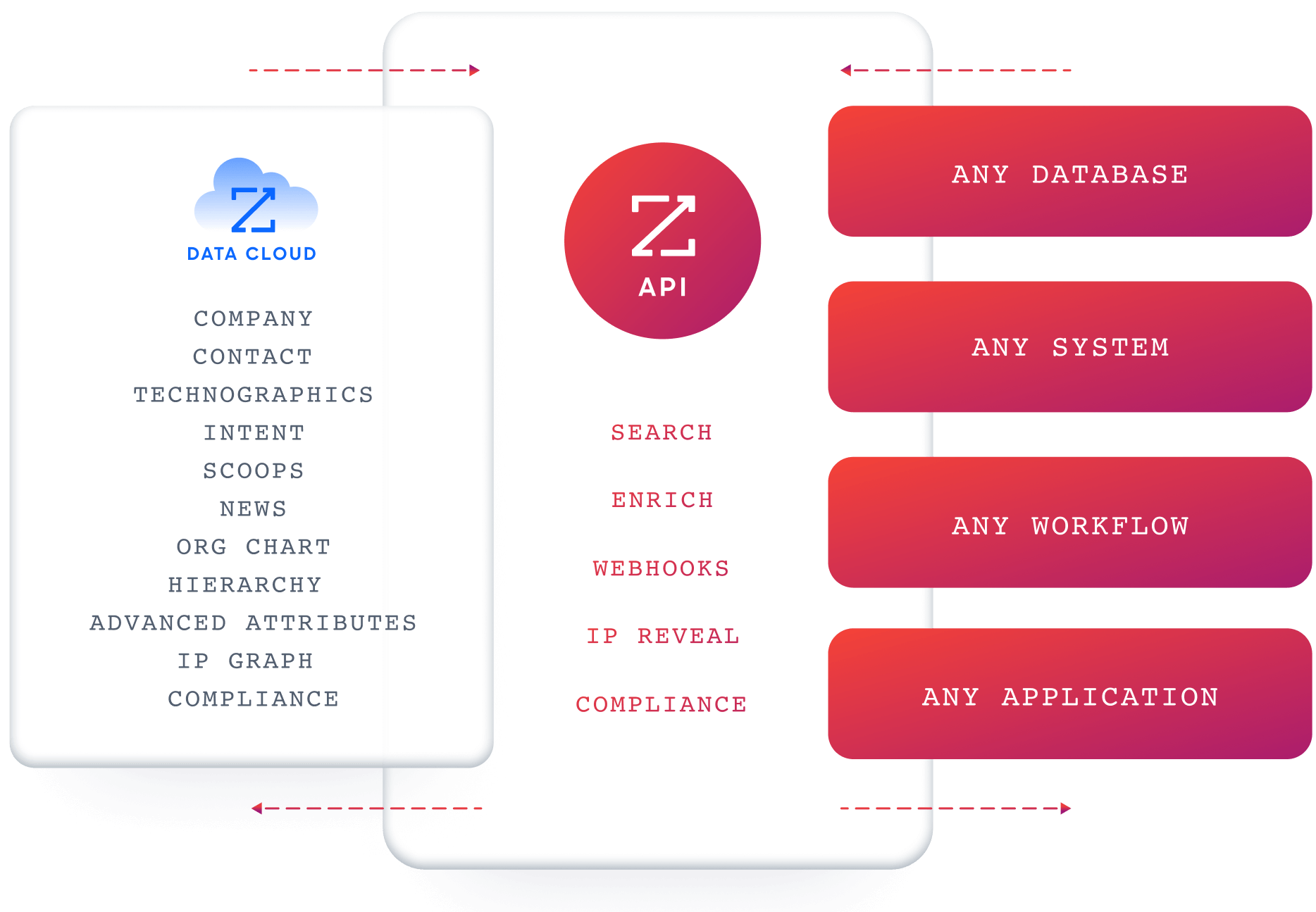
The App Marketplace lists 120 partner integrations across CRM, marketing automation, sales engagement, and data warehouses, with connectors for Salesforce, HubSpot, Microsoft Dynamics 365, and Snowflake. API access is included in all relevant plans, not locked behind enterprise tiers.
The integration story matters because it determines how these tools work together. ZoomInfo integrates with both HubSpot (via native integration) and Adobe Campaign (via APIs and data feeds), so adding ZoomInfo doesn't require replacing your existing marketing stack.
"The plug-and-play aspect of the API means I can integrate it very easily into any process and get information at a moment's notice," said Jerry Wilson, Senior Marketing Intelligence Analyst at BDO Canada, which saw an 87% reduction in time spent on internal data dashboard updates through ZoomInfo's API. (BDO Canada)
Adobe Campaign vs. HubSpot vs. ZoomInfo: Which should you choose?
The right choice depends on what problem you're solving.
Choose Adobe Campaign if:
You're a large enterprise sending tens of millions of messages per month across email, SMS, push, and direct mail
You're already invested in the Adobe Experience Cloud ecosystem
You have dedicated marketing operations and technical teams to manage the platform
Your use case is B2C campaign execution at scale
Implementation timelines of 6+ months and enterprise budgets are acceptable
Choose HubSpot if:
You want marketing, CRM, sales, and service in one platform
Ease of use and fast time to value are priorities
You're a growing B2B company that needs to start quickly and scale gradually
You want a free entry point to evaluate before committing
Your team doesn't have dedicated MarTech engineers
Choose ZoomInfo if:
You need verified B2B buyer intelligence to power your GTM strategy
Knowing which accounts are in-market before they contact you is critical
You want AI-driven prospecting, outreach, and pipeline intelligence built on a comprehensive B2B dataset
You need to enrich your CRM and marketing platform with accurate contact data, intent signals, and technographics
You want one intelligence layer that works across your tech stack, whether you use Adobe Campaign, HubSpot, Salesforce, or custom tools
See how ZoomInfo's intelligence layer fits your GTM stack with a free trial.
Adobe Campaign and HubSpot each excel at what they were built for: Campaign at enterprise-scale message delivery, HubSpot at accessible marketing and sales. But for B2B teams, the execution platform is only as effective as the intelligence feeding it.
ZoomInfo provides the data, buyer signals, and account intelligence that help campaigns reach the right people at the right time, regardless of which platform sends the message.
Adobe Campaign vs. HubSpot vs. ZoomInfo FAQ
What is the fundamental difference between Adobe Campaign, HubSpot, and ZoomInfo?
Adobe Campaign is an enterprise cross-channel campaign execution engine built for high-volume B2C marketing across email, SMS, push, and direct mail. HubSpot is a customer platform combining marketing automation, CRM, sales, and service tools for growing companies.
ZoomInfo is a B2B intelligence platform that provides verified contact data, buyer intent signals, and GTM orchestration to help teams identify and reach their buyers.
Which platform is best for B2B marketing?
HubSpot is the strongest B2B marketing execution platform of the three, with native CRM integration, inbound marketing tools, and sales pipeline management designed for B2B workflows. Adobe Campaign is designed for B2C campaign execution and lacks native B2B features like lead scoring and account-based marketing.
ZoomInfo is the strongest B2B intelligence platform, providing the contact data, intent signals, and account insights that power effective B2B campaigns on whichever execution platform you choose. For a dedicated head-to-head breakdown of how HubSpot and ZoomInfo stack up as standalone platforms, see our HubSpot vs. ZoomInfo comparison.
Can ZoomInfo work alongside Adobe Campaign or HubSpot?
Yes. ZoomInfo integrates with HubSpot via a native integration and connects to Adobe Campaign through APIs and data feeds. ZoomInfo enriches whichever marketing platform you use with verified contact data, buyer intent signals, and account intelligence. API access is included in all relevant ZoomInfo plans.
How do the pricing models compare?
Adobe Campaign requires a negotiated enterprise contract with no published pricing and no free tier. HubSpot offers a free tier with paid Marketing Hub plans starting at $800 per month (annual billing) for Professional, plus mandatory onboarding fees of $3,000 to $7,000. ZoomInfo uses consumption-based pricing with a permanent free Lite tier (10 monthly export credits) and a 7-day free trial of paid features.
Which platform has the best AI capabilities?
Each platform applies AI to a different problem. Adobe Campaign's AI Assistant generates marketing content and optimizes send times per profile, though its predictive features require separate consulting engagement. HubSpot's Breeze AI includes agents for customer service, sales prospecting, and content creation across the platform.
ZoomInfo's GTM Context Graph provides intelligence about why deals move or stall, buyer intent detection across 210 million IP-to-Organization pairings, and AI-drafted outreach based on full account context including conversation intelligence.
Which platform is easiest to implement?
HubSpot is the fastest to deploy, with a stated 90-day path to value and a free tier that requires no setup. ZoomInfo deploys in weeks with a structured 90-day onboarding program. Adobe Campaign has the longest implementation timeline (typically 6 to 18 months), requiring Adobe consulting teams and implementation partners.
Do I need all three platforms?
Not necessarily. Most B2B teams benefit from a marketing execution platform (HubSpot for growing companies, Adobe Campaign for enterprises with large B2C volumes) combined with a B2B intelligence layer (ZoomInfo).
Using all three would apply mainly to large enterprises running high-volume B2C campaigns on Adobe Campaign while also running B2B go-to-market motions powered by ZoomInfo data and managing broader marketing and sales workflows in HubSpot.
Which platform provides the most comprehensive contact data for prospecting?
ZoomInfo provides the largest B2B contact database: 500 million contacts, 100 million companies, 135 million verified phone numbers, and 200 million verified business email addresses, backed by 300+ human researchers and up to 95% accuracy on first-party data.
In a Fortune 500 competitive evaluation analyzing 25 million contacts, an independent consultant concluded that no other vendor came close. Neither Adobe Campaign nor HubSpot is a contact data provider; they manage contacts you already have or capture through your own marketing activities.
