
Choosing between Affinity and HubSpot for your CRM often comes down to five questions:
Are you managing relationship-driven deals in private capital, or running a broader B2B sales and marketing operation?
Do you need a CRM that automatically maps your network from email and calendar activity, or one that manages the full customer lifecycle from lead to renewal?
Is the quality of your contact and company data a bottleneck, or is workflow automation your bigger gap?
Are you willing to pay a premium for specialization, or do you need a platform that covers marketing, sales, and service in one place?
Does your team need to discover new accounts and buyers, or primarily manage relationships you already have?
In short, here's what we recommend:
Affinity is built for dealmakers in private capital. Venture capital firms, private equity teams, and investment banks use it to capture relationship data from emails and calendars automatically, score connection strength with AI, and surface warm introduction paths across the firm's network. Affinity claims to save over 200 hours per employee per year by eliminating manual CRM data entry. Over 3,000 relationship-driven organizations use it, including more than half of the top VC firms. But that focus comes with trade-offs: limited analytics, no marketing automation, and pricing that starts at $2,000 per user per year.
HubSpot is the generalist's platform, connecting marketing, sales, service, content, and commerce in a single system. Its Smart CRM gives all teams a shared database, with Breeze AI agents handling tasks from prospecting to customer support. HubSpot's 288,706 customers across 135+ countries reflect its broad appeal, and a free tier makes it accessible to startups. But that breadth means HubSpot lacks the relationship intelligence that private capital firms need, and costs scale quickly when you mix hubs and tiers across departments.
Both platforms solve CRM from different angles: Affinity maps your existing network, HubSpot manages your customer lifecycle. But neither starts with the question that increasingly determines whether deals happen at all: do you have the right data on the right accounts at the right time?
ZoomInfo is an AI go-to-market platform built on a B2B dataset of 500M contacts, 100M companies, 135M+ verified phone numbers, and 200M+ verified business email addresses. Where Affinity mines your existing relationships and HubSpot manages your existing pipeline, ZoomInfo identifies who you should be talking to and why they're ready to buy. Its GTM Context Graph combines third-party data with your CRM records, conversation transcripts, and behavioral signals. Teams access this intelligence through GTM Workspace for sellers, GTM Studio for marketers and RevOps, or APIs and MCP in any front-end, including HubSpot and Salesforce.
If B2B data is the missing layer in your go-to-market stack, see how ZoomInfo works.
Affinity vs. HubSpot vs. ZoomInfo at a glance
Affinity | HubSpot | ZoomInfo | |
|---|---|---|---|
Core approach | Relationship intelligence CRM for private capital | Unified CRM and customer platform | AI go-to-market platform built on B2B data |
Data source | Your email and calendar activity | Your customer interactions across the platform | 500M contacts, 100M companies, plus your CRM and conversation data |
AI focus | Relationship scoring, meeting transcription, deal analysis | Breeze agents for marketing, sales, and service automation | GTM Context Graph: why deals move, who to target, what to say |
Marketing capabilities | None | Full marketing automation | Account-based marketing, intent-driven advertising, audience targeting |
Integrations | Gmail, Outlook, Salesforce, Slack | 2,000+ app marketplace | 120+ native integrations, plus API and MCP access for any tool |
Free option | 1-week trial | Permanent free CRM | ZoomInfo Lite (permanent) + 7-day full trial |
Starting price | $2,000/user/year | Free; paid from $15/seat/month | Custom-quoted, consumption-based |
Best for | VC, PE, and investment banking firms | Scaling B2B companies across industries | B2B teams that need data-driven prospecting and account insights |
Affinity owns relationship intelligence for private capital
Affinity does one thing no general-purpose CRM can match: it turns your firm's email and calendar activity into a structured map of professional relationships, scored and searchable across the entire team.
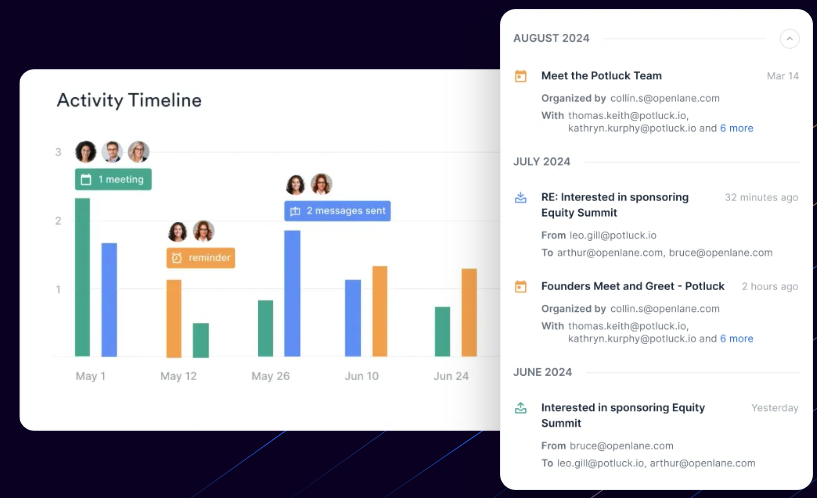
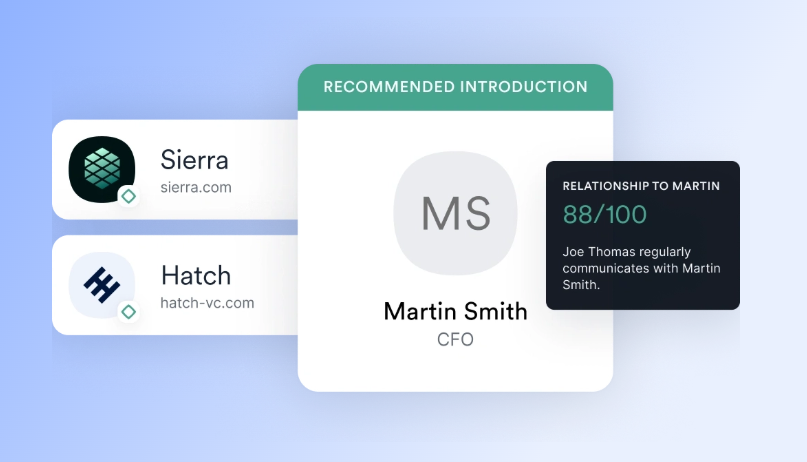
The platform automatically captures every email, calendar event, and meeting without anyone entering data manually. From that activity stream, Affinity's AI assigns relationship strength scores based on recency and frequency of interactions, then surfaces introduction paths that team members might not know exist. When a partner at your firm has a strong connection to a target company's CFO through shared work history, Affinity shows that path and quantifies its strength.
Source: Affinity
For private capital firms, this solves a real problem. Deal sourcing depends on who you know, and most firms have no systematic way to see their collective network. Affinity's data model, built around Persons, Companies, and Opportunities, reflects how investment teams think about their work: tracking deals through pipeline stages while seeing every relationship touchpoint.
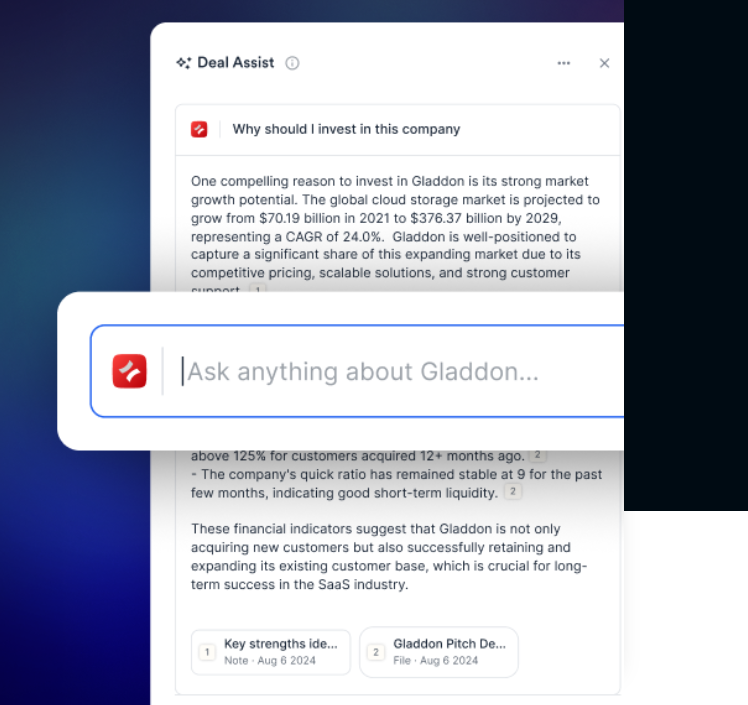
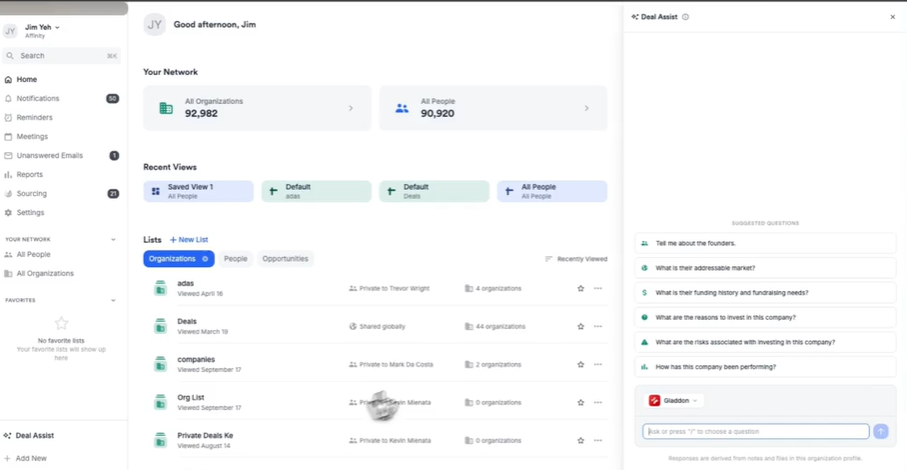
The platform enriches records from 40+ data sources covering funding history, firmographics, and headcount growth. Deal Assist uses conversational AI to analyze PDFs, notes, and meeting transcripts for deal research. Affinity Notetaker joins calls on Zoom, Google Meet, and Microsoft Teams automatically, transcribing and summarizing conversations into the CRM.
Source: Affinity
But Affinity's strength is also its boundary. There are no marketing automation tools, no email campaign builder, no service desk, no content management. Analytics lag behind competitors, with users describing dashboards as limited to aggregates without raw data exports. The mobile app cannot create opportunities or edit lists. And at $2,000-$2,700 per user per year, plus potential onboarding costs of $5,000-$25,000, it's priced for firms whose relationship-driven deal flow justifies the cost.
HubSpot covers the full customer lifecycle
HubSpot takes the opposite approach: instead of going deep on one workflow, it connects every customer-facing function in a single platform.
Marketing Hub handles lead generation, email automation, social media management, and multi-touch attribution. Sales Hub manages pipelines, sequences, and AI-powered prospecting. Service Hub runs help desk operations with AI agents that resolve over 50% of conversations autonomously. Content Hub powers websites, blogs, and AI-assisted content creation. Commerce Hub handles quoting, invoicing, and payment collection. All six hubs share one Smart CRM database, so a marketing-qualified lead flows into a sales pipeline that connects to a support ticket without manual handoffs.
The 2,000+ app marketplace with 2.5 million active installs means most tools in a company's stack already connect natively.
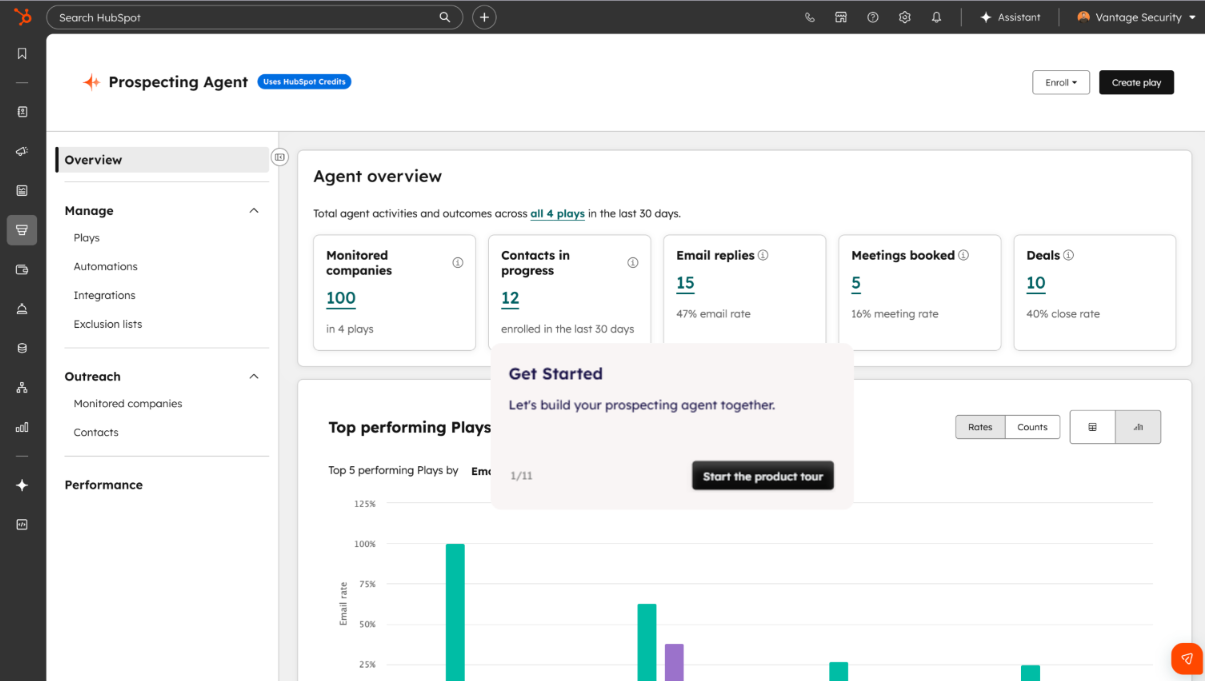
HubSpot's Breeze AI layer adds automation across the platform. The Prospecting Agent monitors buying signals and drafts personalized outreach. The Customer Agent handles support inquiries across chat, email, WhatsApp, and phone. The Data Agent answers natural-language questions about your CRM data.
Source: HubSpot
The trade-off is pricing complexity. HubSpot charges per seat, per hub, with mandatory onboarding fees at Professional ($1,500-$3,000) and Enterprise ($3,500-$7,000) tiers. When you subscribe to multiple hubs at different tiers, all Core Seats are billed at the highest tier rate, a cost that surprises teams mixing, say, Marketing Hub Enterprise with Sales Hub Professional. And while HubSpot markets enterprise capabilities, it acknowledges the perception that it's easier but shallower than Salesforce for customized workflows.
ZoomInfo starts with the data most CRMs lack
Affinity tells you who you already know. HubSpot manages the customers you already have. ZoomInfo answers a different question: who should you be targeting, and why are they ready to buy right now?
The platform's foundation is a B2B dataset spanning 500M contacts, 100M companies, 135M+ verified phone numbers, 120M direct-dial phone numbers, and 200M+ verified business email addresses.

Source: ZoomInfo
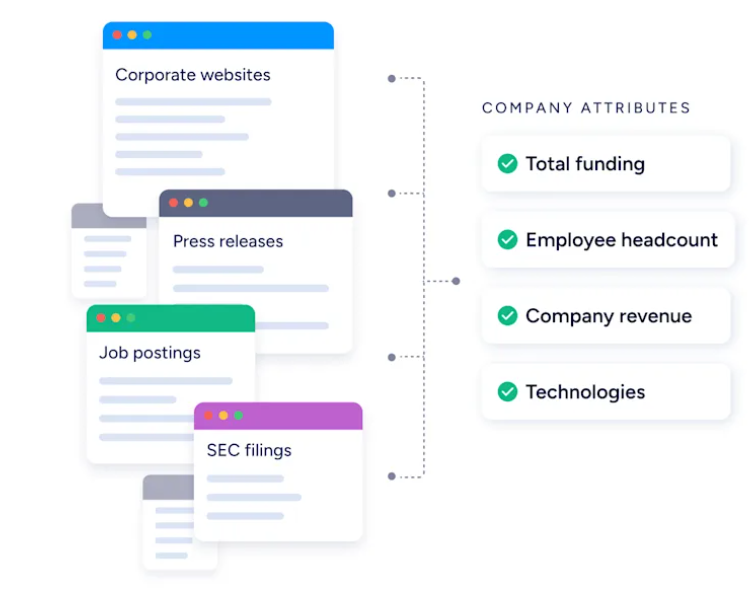
ZoomInfo verifies this data through a multi-source pipeline backed by 300+ human researchers and automated ML scanning of 28 million site domains daily, with up to 95% accuracy on first-party data. In a Fortune 500 competitive RFP analyzing 25 million contacts across vendors, the independent consultant concluded that "no other competitor came even close."
Source: ZoomInfo
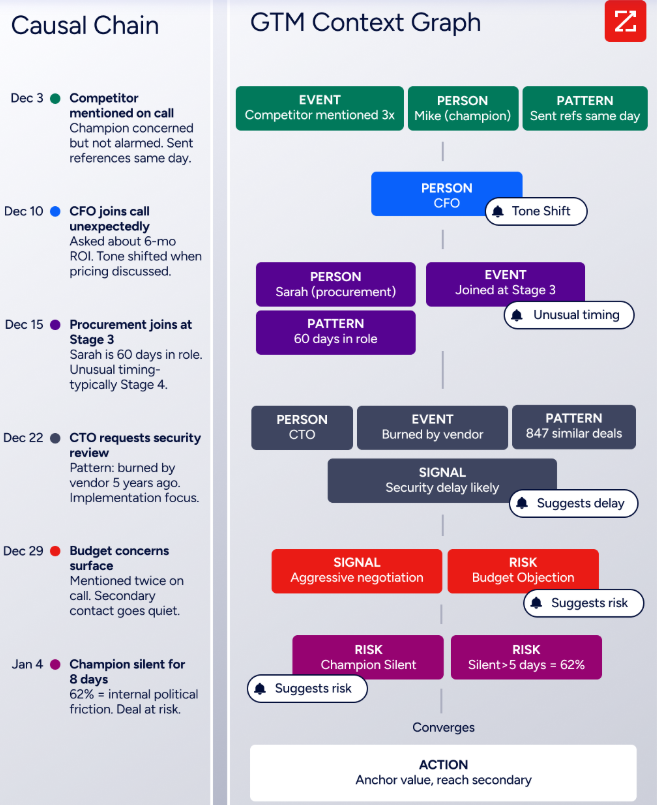
But data alone is a starting point. ZoomInfo's GTM Context Graph, which processes 1.5B+ data points daily, combines this third-party data with a customer's CRM records, conversation transcripts, and behavioral signals. The result: ZoomInfo captures not just what happened in a deal, but why it happened, and which accounts match the patterns behind your closed-won deals.

Source: ZoomInfo
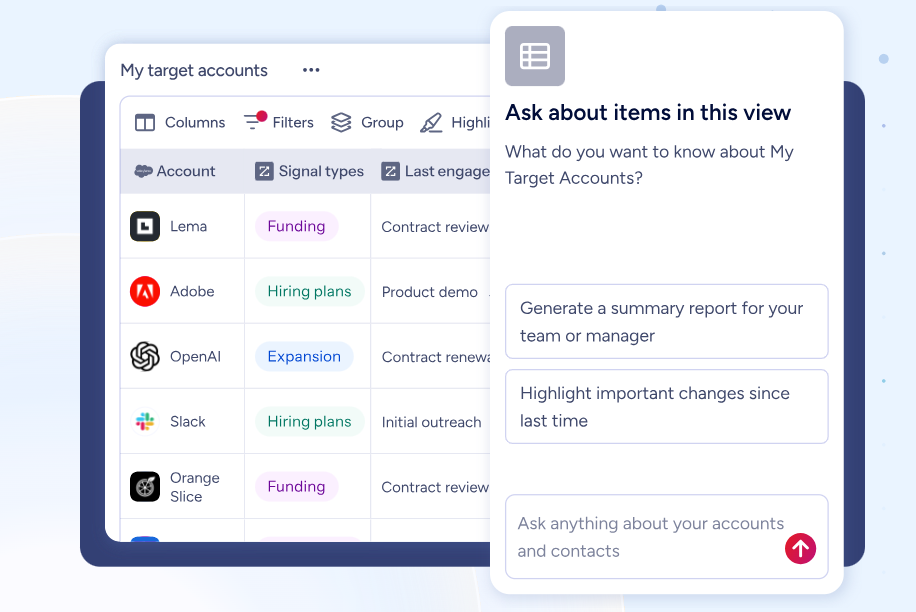
For sales teams, GTM Workspace surfaces prioritized accounts with AI-drafted outreach that addresses specific concerns from the data. For marketers and RevOps, GTM Studio lets teams describe audiences in natural language and launch multi-channel campaigns without engineering support. For teams that build their own tools, APIs and MCP expose the same data to any AI agent or application.
Source: ZoomInfo
Seismic's sales team attributed 39% of active pipeline to opportunities identified or influenced by ZoomInfo signals, boosted productivity by 54%, and saved 11.5 hours per week. (Seismic Case Study)
Data quality determines everything downstream
This is where the choice matters most.
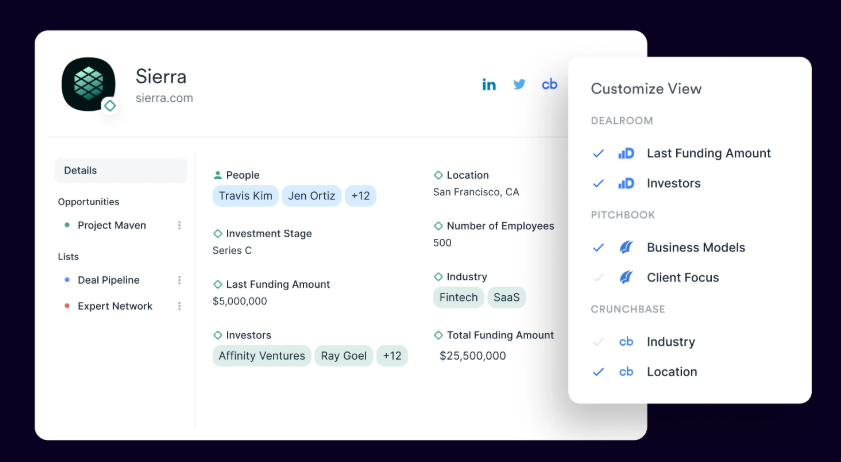
Affinity builds its data from your firm's communication activity, enriched by 40+ external sources covering funding history, firmographics, and growth indicators. This works well for mapping existing relationships but doesn't help you discover new accounts or contacts outside your network. If your firm hasn't interacted with a company, Affinity has little to say about it.
Source: Affinity
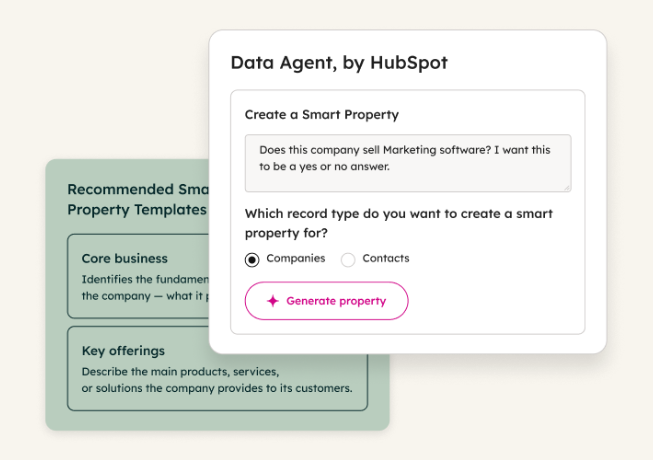
HubSpot enriches records using signals from inside the platform (emails, call recordings, form submissions) combined with external web data and its own proprietary dataset. The Data Agent can answer qualitative questions about contacts and companies. But HubSpot is a system of record, not a data discovery platform. The quality of your HubSpot CRM depends on what you put into it and what third-party enrichment tools you connect.
Source: HubSpot
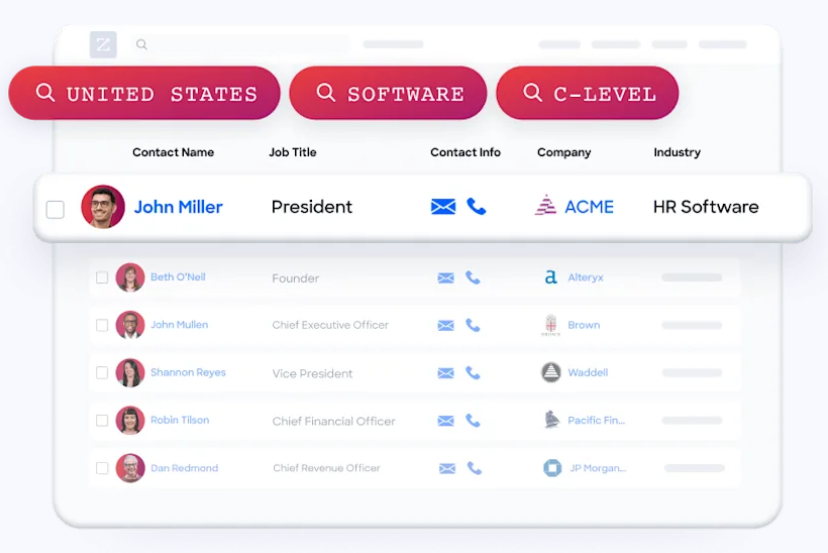
ZoomInfo operates the data infrastructure itself. The dataset covers 300+ company attributes for market segmentation, technographics across 30,000+ technologies at 30+ million companies, buyer intent signals from 210 million IP-to-Organization pairings, and department-level org charts with verified direct dials and emails. When a rep needs to reach the VP of Finance at a target account, ZoomInfo provides the direct number. When marketing needs to know which accounts are researching a competitor, ZoomInfo's intent data shows them.
Source: ZoomInfo
The practical difference: Affinity helps you use the network you have. HubSpot helps you manage the pipeline you've built. ZoomInfo helps you find the accounts and contacts you're missing.
Snowflake uses ZoomInfo for at least one-third of the most critical data features in their Account Propensity Scoring model, feeding over 70 firmographic and technographic data fields. Accounts monitored using ZoomInfo-powered scores showed 90% higher opportunity open rates and 2x higher customer conversion rates. (Snowflake Case Study)
AI capabilities serve different goals
All three platforms invest in AI, but each applies it to a different problem.
Affinity's AI focuses on relationship analysis. Relationship strength scoring quantifies every connection in the firm's network using recency and frequency of interactions.
Source: Affinity
Industry Insights generates AI-powered company lists showing competitors and market adjacencies for any target company. Deal Assist uses conversational AI to analyze deal documents and meeting transcripts. These tools fit a specific workflow, and they work well within that scope.
Source: Affinity
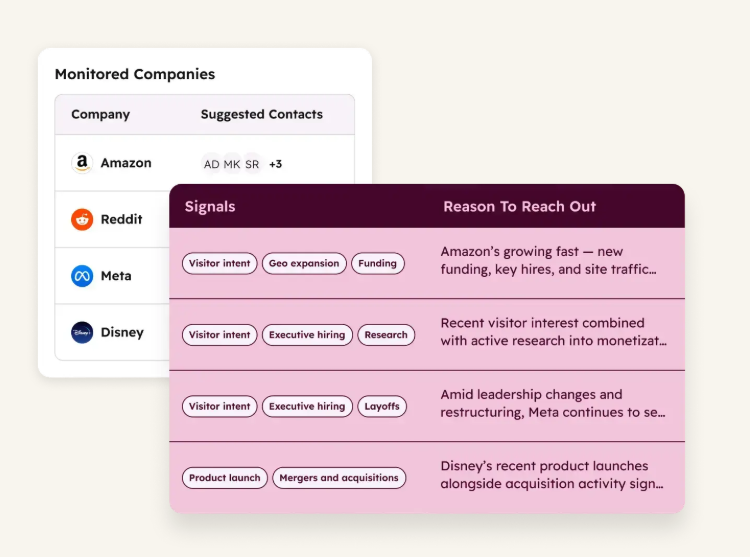
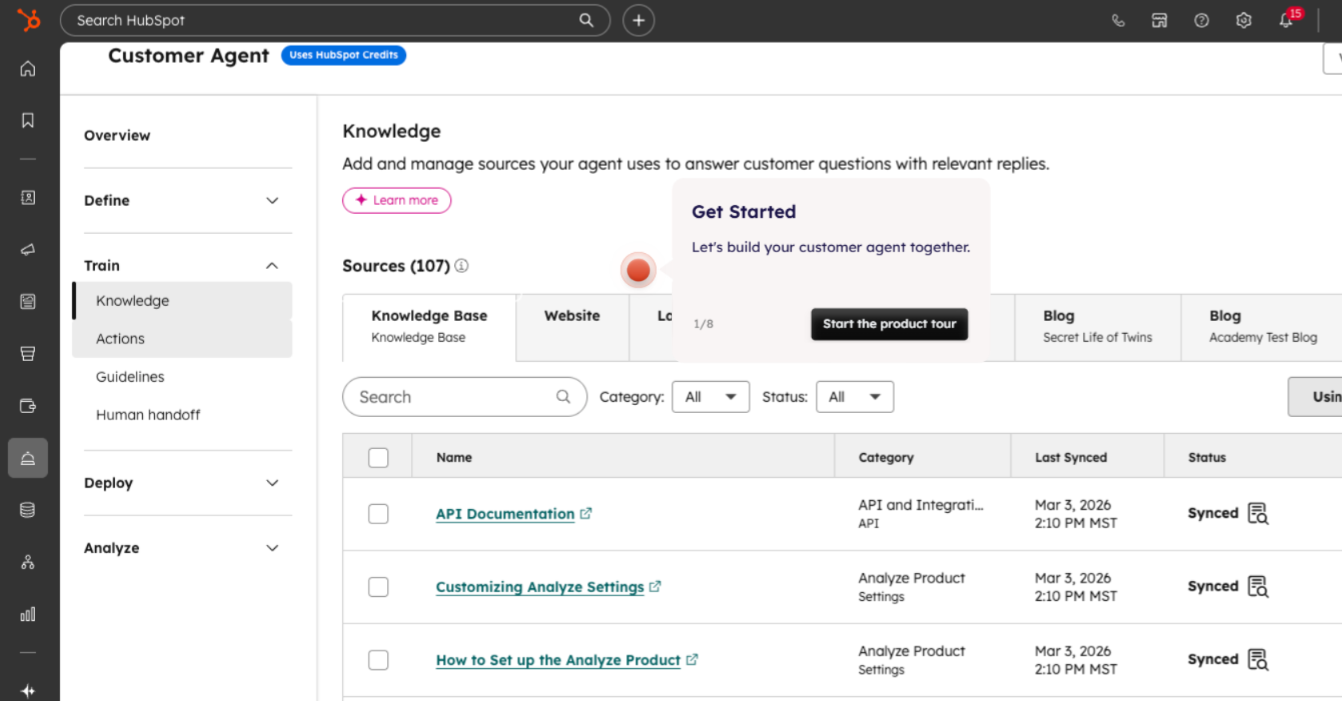
HubSpot's Breeze AI spans the entire customer platform. The Prospecting Agent monitors buying signals and drafts outreach using the complete HubSpot customer history.
Source: HubSpot
The Customer Agent resolves support inquiries across channels. The Data Agent answers natural-language questions about CRM data. Breeze agents have full access to the unified CRM, which gives them context that standalone AI tools lack.
Source: HubSpot
ZoomInfo's GTM Context Graph operates at a different scale. Where Affinity's AI analyzes your firm's communication patterns and HubSpot's AI draws on your platform interactions, ZoomInfo processes 1.5B+ data points daily from both its third-party dataset and your first-party CRM and conversation data. The difference shows in the output: instead of flagging that a deal stage changed, the GTM Context Graph identifies why it happened, connecting executive involvement on a call to a pattern behind closed-won deals in your segment, alongside third-party signals showing the company is hiring and researching competitors.
Source: ZoomInfo
Integration approaches reveal platform philosophy
Affinity integrates with the tools private capital firms use: Gmail, Outlook, Salesforce, Slack, Microsoft Teams, and Zoom.
Source: Affinity
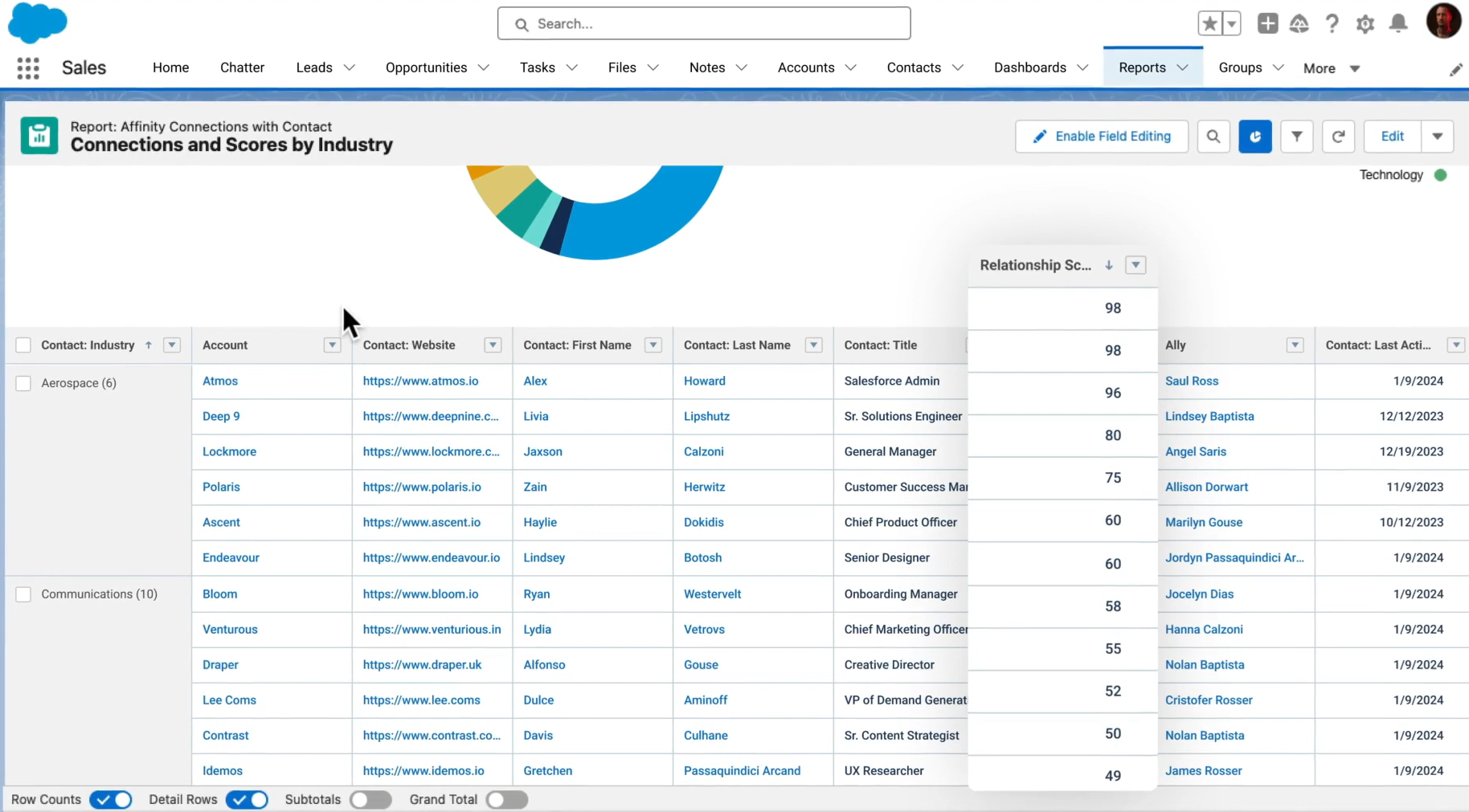
The Affinity for Salesforce product layers relationship intelligence into existing Salesforce implementations. API access is available, with 100,000 monthly calls on Advanced tier and unlimited on Enterprise. The ecosystem is focused rather than broad, reflecting Affinity's specialized audience.
Source: Affinity
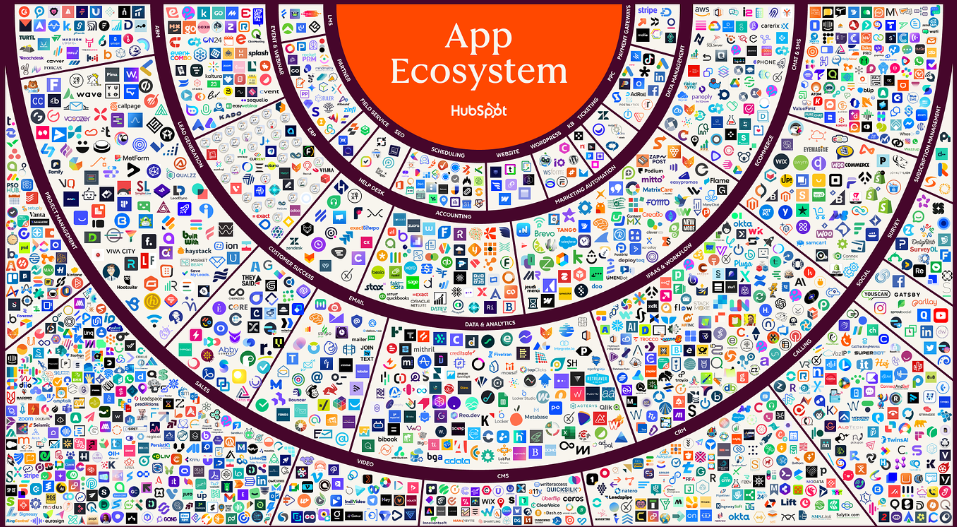
HubSpot has the largest integration ecosystem of the three, with over 2,000 apps and 2.5 million active installs. The platform's REST API covers the full CRM data model, and the developer platform supports custom apps, UI extensions, and CMS development. The breadth means most tools a company already uses will have a native connector.
Source: HubSpot
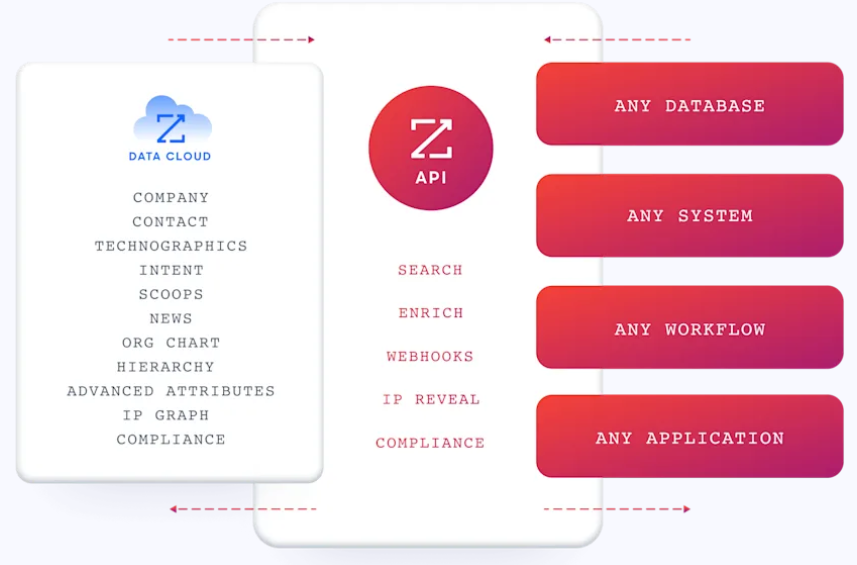
ZoomInfo takes a different approach: rather than building the largest marketplace, it ensures its data reaches every tool through programmatic access. The Enterprise API provides structured access to ZoomInfo's data and GTM Context Graph via four API surfaces (Data, Copilot, Marketing, and Platform).
Source: ZoomInfo
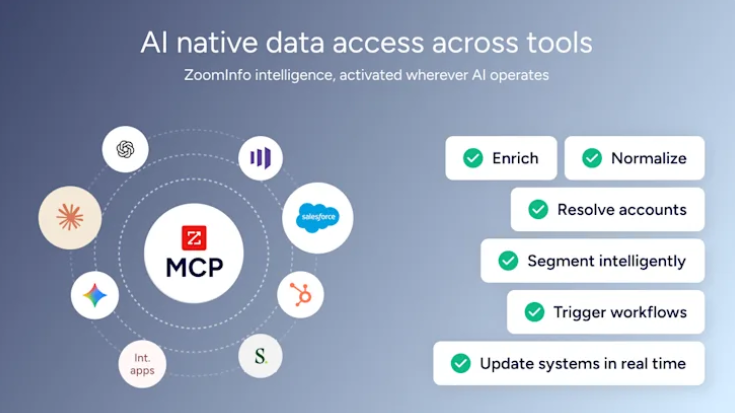
The MCP server connects AI models to ZoomInfo's B2B data as a native tool, currently supporting Claude and ChatGPT. API access is included in all relevant plans, and ZoomInfo integrates with Salesforce, HubSpot, Microsoft Dynamics, Snowflake, and 120+ other tools.
Source: ZoomInfo
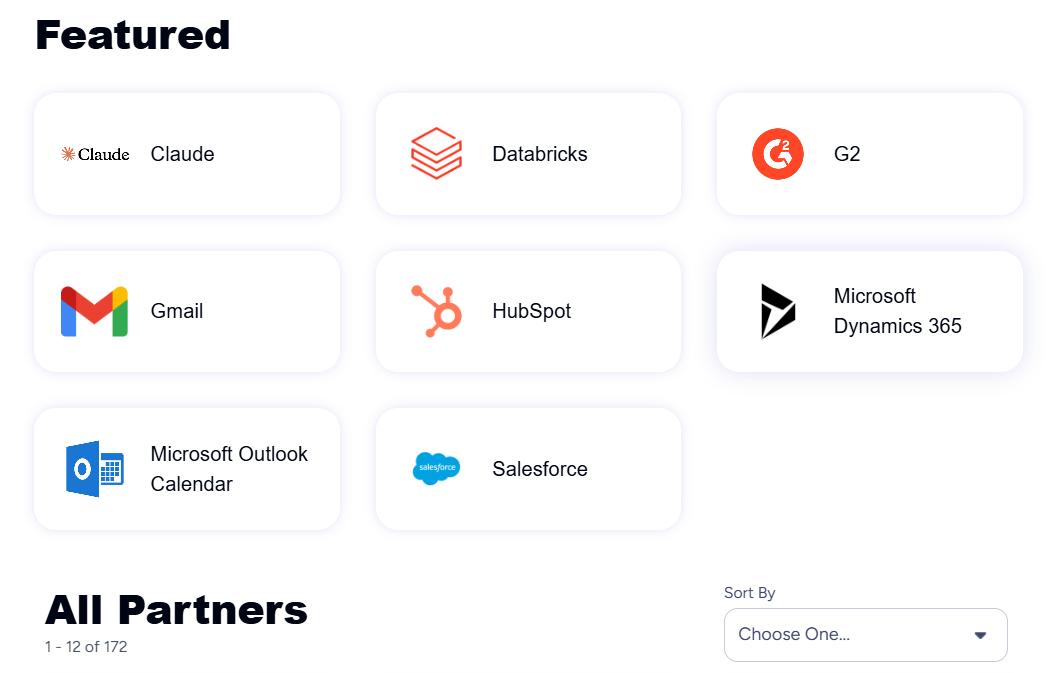
The App Marketplace covers CRM, marketing automation, sales engagement, and data warehouse categories.
Source: ZoomInfo
This means ZoomInfo can complement either Affinity or HubSpot. A private capital firm using Affinity for relationship tracking can use ZoomInfo for data enrichment and market discovery. A scaling company using HubSpot for CRM can use ZoomInfo to fuel its pipeline with verified contacts and intent signals.
"The plug-and-play aspect of the API means I can integrate it into any process and get information at a moment's notice." (Jerry Wilson, Senior Marketing Intelligence Analyst, BDO Canada. BDO Canada Case Study)
Pricing reflects different markets and models
Affinity charges per user per year across four tiers. Essential starts at $2,000/user/year, Scale at $2,300, and Advanced (the most popular tier) at $2,700. Enterprise pricing requires a sales conversation. All tiers are billed annually. Beyond subscription fees, expect onboarding costs of $5,000-$25,000 and data migration costs of $3,000-$15,000 depending on complexity. Multi-year commitments can reduce annual pricing by 10-20%. There's a 1-week free trial but no permanent free plan.
HubSpot uses a hybrid model combining seat-based pricing, contact-based pricing (for Marketing Hub), and flat-fee tiers. A free CRM serves as the entry point. Starter plans begin at $15-$20/seat/month. Professional tiers jump to $90-$100/seat/month for Sales and Service, or $800-$890/month flat for Marketing (including 3 Core Seats). Enterprise tiers reach $150/seat/month for Sales and Service, or $3,600/month for Marketing. Mandatory onboarding fees ($1,500-$7,000 depending on hub and tier) add friction. When you mix hubs, all Core Seats are billed at the highest tier rate, so total costs can climb faster than expected.
ZoomInfo uses custom-quoted, consumption-based pricing with no publicly listed prices. Costs scale around enterprise license agreements, data access, API consumption, and AI activity.
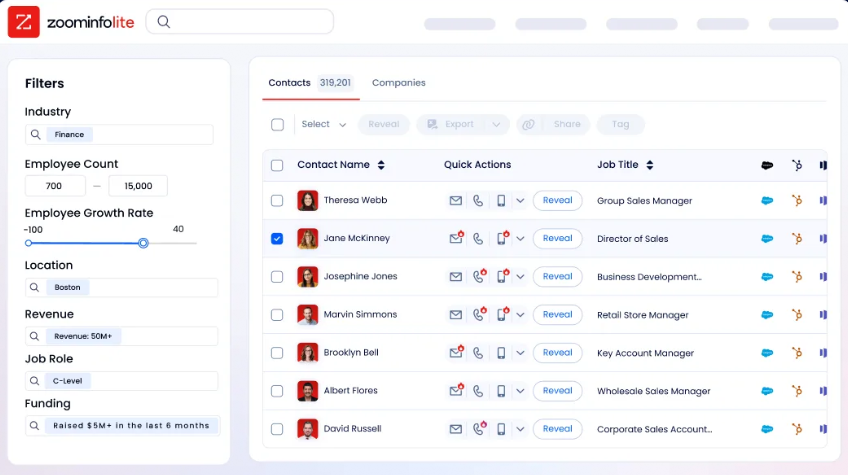
ZoomInfo Lite offers a permanent free tier with access to the B2B database and 10 monthly export credits. A 7-day free trial provides broader access to core platform features. Annual contracts are standard, with multi-year commitments offering discounts.
Source: ZoomInfo
Direct price comparison is difficult because each platform charges for different units of value. Affinity charges for relationship intelligence per user. HubSpot charges for platform access per seat and hub. ZoomInfo charges for data consumption and intelligence access. The right comparison is total cost of ownership relative to the revenue impact each platform enables.
Security and compliance for enterprise buyers
All three platforms hold standard security certifications, though the specifics vary.
Affinity holds SOC 2 Type 2, ISO 27001, ISO 27017, ISO 27018, ISO 27701, and complies with GDPR, CCPA, and DORA. Data is encrypted at rest and in transit, with daily encrypted backups retained for 30 days across multiple AWS availability zones. For AI features, Affinity prohibits using customer data for model training, and its AI subprocessor Anthropic maintains 30-day data retention.

Source: Affinity
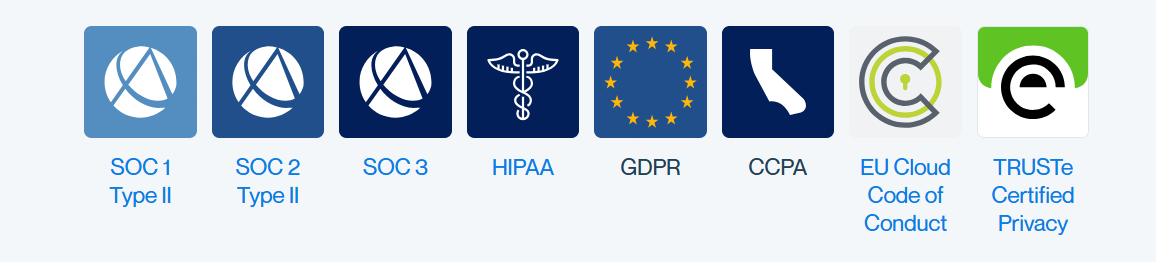
HubSpot maintains SOC 2 Type II, SOC 3, HIPAA attestation, and complies with GDPR and CCPA. Encryption uses AES-256 at rest and TLS 1.2/1.3 in transit. Organizations requiring EU data localization can use the EU Data Center. The platform supports SSO, 2FA, passkeys, and IP allowlisting. HubSpot publishes AI model cards detailing how each AI system interacts with customer data.
Source: HubSpot
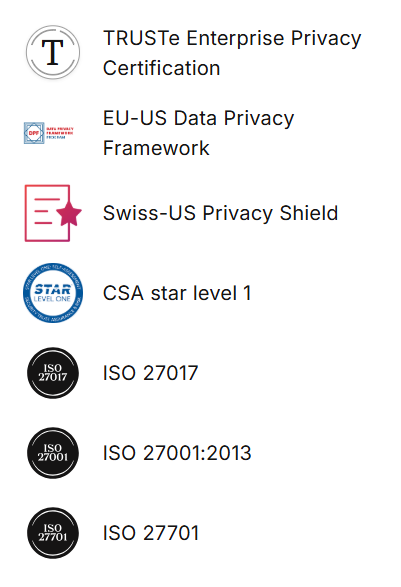
ZoomInfo holds ISO 27001, ISO 27701, SOC 2 Type II, TRUSTe GDPR and CCPA certifications, all renewed annually. The company is a registered data broker in California and Vermont. A dedicated Trust Center provides transparency into data practices. For organizations in regulated industries, ZoomInfo builds compliance into the data layer.
Source: ZoomInfo
Affinity vs. HubSpot vs. ZoomInfo: Which should you choose?
The choice depends on what your business needs from its go-to-market stack.
Choose Affinity if:
You're a venture capital, private equity, or investment banking firm
Relationship-driven deal sourcing is your primary workflow
You need your CRM to automatically map and score your firm's professional network
Your team values zero-data-entry CRM adoption over breadth of features
You can invest $2,000+/user/year for specialized private capital tooling
Choose HubSpot if:
You're a scaling B2B company that needs marketing, sales, and service in one platform
You want a free CRM to start with and room to grow into paid tiers
Platform consolidation and shared customer data matter more than specialization
Your team includes marketers, sales reps, and support agents who all need shared context
You value a large integration ecosystem and educational resources
Choose ZoomInfo if:
Verified B2B data is the foundation your team needs
You want to discover new accounts and buyers, not just manage existing ones
Intent signals and buying behavior should drive your targeting and prioritization
You need intelligence that works inside your existing tools via API and MCP, or through ZoomInfo's own GTM Workspace and GTM Studio
Data-driven prospecting and account insights are central to your revenue strategy
See how ZoomInfo's data intelligence powers your go-to-market.
The right answer may not be one platform. Affinity serves a specific market where relationship intelligence drives deal flow. HubSpot serves a broad market where running customer operations in one place creates efficiency. ZoomInfo provides the data layer that either platform benefits from, whether integrated directly or used alongside as the source of truth for who to target and when.
For private capital firms, Affinity plus ZoomInfo data enrichment covers both relationship management and market discovery. For scaling B2B companies, HubSpot plus ZoomInfo intent signals and contact data fills the pipeline that HubSpot then manages through the customer lifecycle. The question isn't just which CRM to use. It's whether you have the data foundation to make any CRM effective. For a focused look at how HubSpot and ZoomInfo stack up head-to-head, see our HubSpot vs ZoomInfo comparison.
Affinity vs. HubSpot vs. ZoomInfo FAQ
What is the core difference between Affinity, HubSpot, and ZoomInfo?
Affinity is a relationship intelligence CRM designed for private capital firms (venture capital, private equity, investment banking). It captures relationship data from email and calendar activity to map and score professional networks. HubSpot is a unified customer platform combining marketing, sales, service, content, and commerce hubs in a single system for scaling B2B companies. ZoomInfo is an AI go-to-market platform built on a large B2B dataset, providing data intelligence, buyer intent signals, and account insights that help teams identify and engage the right accounts.
Which platform is best for a venture capital or private equity firm?
Affinity is designed for this market. Its relationship intelligence features (automated activity capture from email and calendar, AI-powered relationship scoring, warm introduction pathfinding) are built for how investment professionals source and manage deals. Over half of the top VC firms use Affinity. ZoomInfo can complement Affinity by providing broader market data and company intelligence beyond a firm's existing network.
Which platform is cheapest to get started with?
HubSpot has the most accessible entry point with a permanent free CRM that includes unlimited contacts, basic sales tools, and email tracking. ZoomInfo Lite offers a permanent free tier with access to the B2B database and 10 monthly export credits. Affinity offers only a 1-week free trial with no permanent free plan, and paid plans start at $2,000 per user per year.
Can ZoomInfo work alongside Affinity or HubSpot?
Yes. ZoomInfo integrates directly with both HubSpot and Salesforce (which Affinity also connects to). ZoomInfo's API and MCP access allow its data and intelligence to feed into virtually any tool. A common pattern is using ZoomInfo for data enrichment, intent signals, and account discovery while using Affinity or HubSpot as the CRM for managing relationships and customer operations.
Which platform has the best AI capabilities?
Each platform's AI serves a different purpose. Affinity's AI focuses on relationship scoring, meeting transcription, and deal document analysis for private capital workflows. HubSpot's Breeze AI spans marketing, sales, and service automation, including autonomous agents for prospecting and customer support. ZoomInfo's GTM Context Graph processes 1.5 billion data points daily, combining third-party data with first-party CRM and conversation data to identify why deals move and which accounts match win patterns.
How do the platforms compare on data quality and coverage?
ZoomInfo has the broadest coverage of the three, with 500 million contacts, 100 million companies, and 135 million verified phone numbers, verified through a multi-source pipeline with 300+ human researchers. Affinity enriches records from 40+ sources but primarily relies on your firm's own email and calendar activity to build its relationship database. HubSpot enriches records from platform interactions and its own proprietary dataset but is primarily a system of record rather than a data discovery platform.
Which platform is best for companies that need both marketing and sales tools?
HubSpot is the best fit for teams needing unified marketing and sales capabilities, with dedicated hubs for each function sharing a single CRM database. ZoomInfo provides account-based marketing through GTM Studio alongside sales intelligence through GTM Workspace, with a focus on data-driven targeting. Affinity has no marketing automation capabilities and is designed exclusively for relationship-driven deal management.
What are the main limitations of each platform?
Affinity's analytics are limited compared to broader CRM platforms, its mobile app lacks key features, and it has no marketing or service tools. HubSpot's pricing grows complex when mixing hubs and tiers, mandatory onboarding fees add upfront cost, and its CRM customization depth is younger than established enterprise platforms. ZoomInfo does not publish prices, requiring a sales conversation for paid plans, and its breadth requires onboarding investment to use effectively.
