
Choosing between Agile CRM and Pipedrive for your sales team comes down to five questions:
Do you need an all-in-one CRM with built-in marketing and support, or a sales pipeline tool that does one thing well?
Is your priority keeping costs low across a small team, or getting a polished experience you won't outgrow?
How important is data quality: knowing who to call, when to call them, and whether their number works?
Are you building your first sales process, or refining one that already generates revenue?
Do you need to manage post-sale support inside the same tool, or is pipeline management enough?
In short, here's what we recommend:
Agile CRM bundles sales, marketing automation, and a help desk into one platform starting at $8.99/user/month, with a free plan for up to 10 users. Small teams that want CRM, email campaigns, and support ticketing without paying for three separate tools get a lot from Agile CRM. The tradeoff: its interface hasn't had a visual update in years, users report slow loading times and inconsistent automation behavior, and support quality varies by plan tier.
Pipedrive was built for salespeople who need a clean, visual pipeline they can use every day. It pioneered the kanban-style pipeline view that's now an industry standard, and its activity-based selling philosophy keeps reps focused on the next action rather than data entry. With 500+ marketplace integrations, AI features like deal scoring and email generation, and certifications including ISO 27001 and SOC 2 Type 2, Pipedrive is the more mature, more reliable choice for teams that prioritize sales execution. It doesn't include marketing automation or a help desk natively, and pricing starts higher than Agile CRM.
Both platforms help you manage contacts and deals. But neither solves the problem that determines whether your outreach works: do you have accurate data on the right people at the right companies, at the right time?
ZoomInfo is a B2B data and GTM platform built on 500M contacts, 100M companies, 135M+ verified phone numbers, and 200M+ verified business emails. Where Agile CRM and Pipedrive organize the contacts you already have, ZoomInfo tells you which accounts are in-market, who the decision-makers are, and how to reach them with verified direct dials and emails. Its GTM Context Graph processes 1.5B+ data points daily, unifying this data with your CRM records, conversation transcripts, and behavioral signals to reveal not just what's happening in a deal, but why. Your team accesses that intelligence through GTM Workspace for sellers, GTM Studio for marketers and RevOps, or APIs and MCP in any third-party tool, including the CRM you already use.
If the real bottleneck in your sales process isn't pipeline management but finding and reaching the right buyers, see how ZoomInfo works.
Agile CRM vs. Pipedrive vs. ZoomInfo at a glance
Agile CRM | Pipedrive | ZoomInfo | |
|---|---|---|---|
Primary function | All-in-one CRM + marketing + help desk | Sales pipeline management | B2B data, intelligence, and GTM execution |
Contact database | Stores your contacts | Stores your contacts | 500M contacts with verified emails and direct dials |
Pipeline management | Basic drag-and-drop | Kanban pipeline with deal rotting alerts | AI-prioritized account feed in GTM Workspace |
Marketing automation | Included at all paid tiers | Add-on (Campaigns) | Multi-channel orchestration via GTM Studio |
Buyer intent signals | Not available | Not available | 210M IP-to-Organization pairings, 6T+ keyword signals monthly |
AI capabilities | None prominently marketed | AI email writer, AI Sales Assistant, deal scoring | GTM Context Graph, AI agents, AI-drafted outreach |
Help desk / support | Built-in ticketing and knowledge base | Not included | Not a help desk tool |
Security certifications | Not publicly documented | ISO 27001, ISO 27701, SOC 2 Type II, TRUSTe GDPR/CCPA | |
Integrations | 60+ native integrations + Zapier | 500+ marketplace apps + open API | 120+ marketplace partners + API + MCP for AI agents |
Starting price | Free tier (ZoomInfo Lite); paid plans custom-quoted | ||
Best for | Small teams on a budget needing everything in one tool | Sales teams that want a clean, reliable pipeline | Teams that need accurate buyer data and signals to fill their pipeline |
Agile CRM packs features into a small price tag
Agile CRM's pitch is simple: get CRM, marketing automation, and a help desk for the price most competitors charge for CRM alone. The free plan supports up to 10 users with 1,000 contacts, and the Starter plan at $8.99/user/month includes lead scoring, email tracking, two-way email sync, and basic marketing automation with up to five campaigns.
For a five-person startup that needs to manage contacts, send drip campaigns, and handle support tickets without stitching together three subscriptions, the math works. The Regular plan at $29.99/user/month unlocks unlimited marketing automation campaigns, SMS outreach, and social tools. Even the Enterprise tier tops out at $47.99/user/month, still less than many competitors charge for CRM alone.
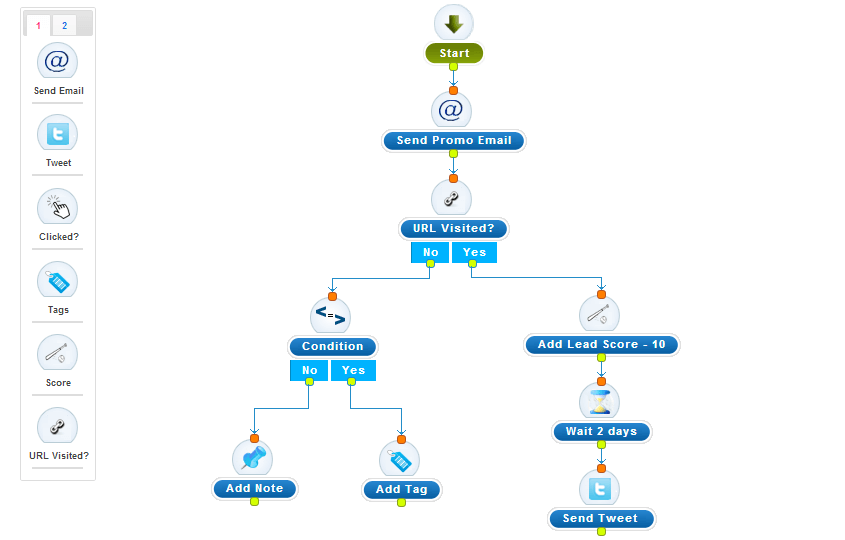
The marketing automation stands out at this price. The visual campaign builder supports multi-step workflows with email, SMS, and social nodes, conditional logic, and behavior-based triggers. Lead scoring assigns points automatically based on email engagement, web activity, and tags. For SMBs migrating off spreadsheets and Mailchimp, this is a real upgrade without a matching jump in cost.
But affordability comes with compromises that matter more as your business grows.
Source: Agile CRM
Pipedrive wins on daily usability and reliability
Pipedrive was founded by salespeople frustrated with CRMs built for managers rather than reps. That founding insight shows in every interaction with the product.
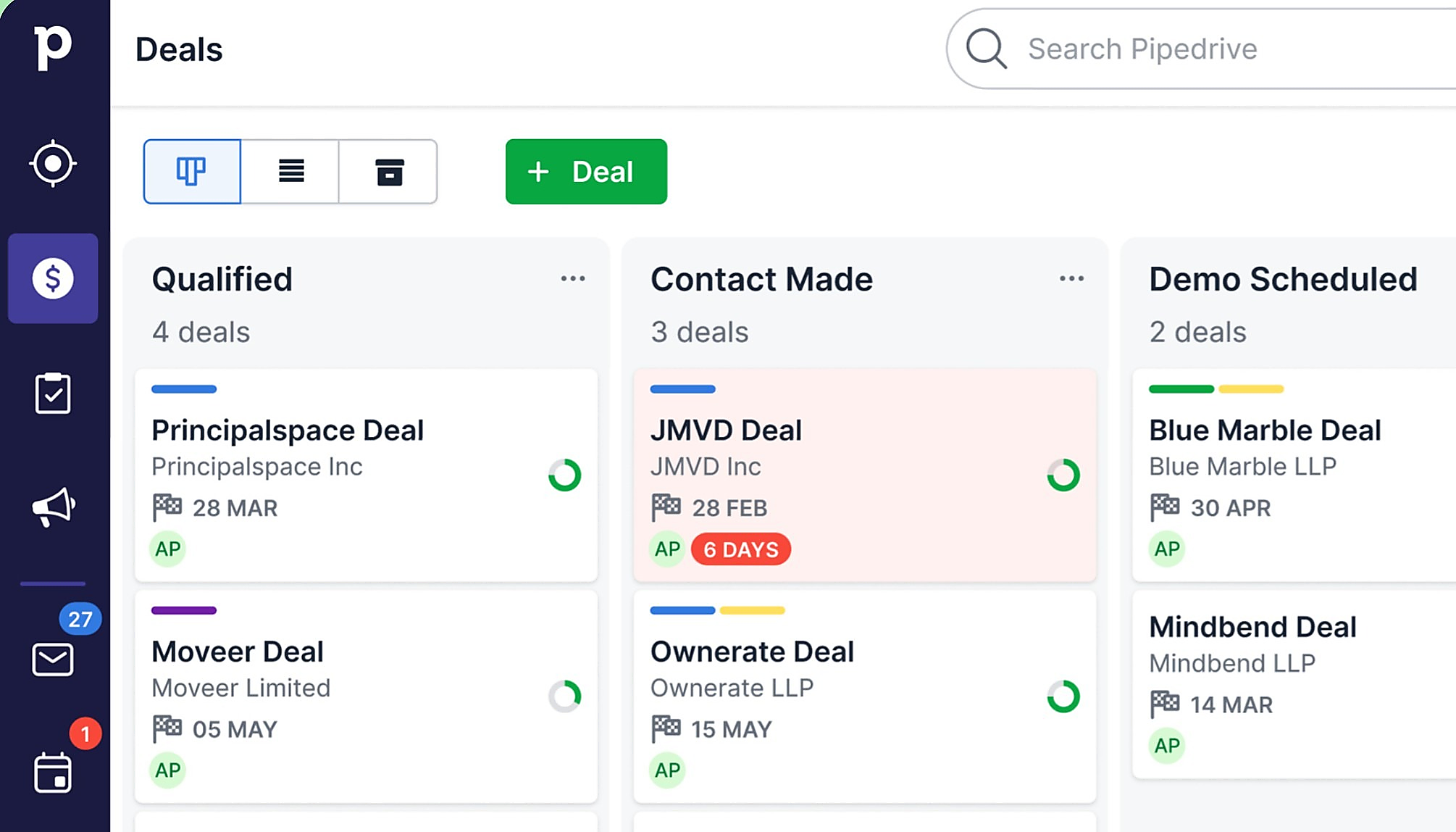
The pipeline view works. Colored cues flag deals going cold before you forget about them. You can create multiple pipelines with custom stages for different product lines or sales motions. Every deal card carries activities (calls, emails, meetings) with scheduled follow-ups visible in a built-in calendar. The interface is fast, consistent, and designed so a salesperson can configure it without IT help.
Source: Pipedrive
Pipedrive's AI features are maturing quickly. The AI Sales Assistant surfaces win probability predictions and deal activity reminders. The AI email writer generates personalized drafts with configurable tone and length. AI-generated reports let managers type a natural-language request instead of building filters manually. The company's new CPTO, Joe Futty, previously led Booking.com's AI initiatives, signaling continued investment in AI.
The mobile apps for iOS and Android support offline activity scheduling, in-app calling with automatic call logging, a "Nearby" feature showing geographically close clients, and a business card scanner. For field sales teams, this is a real productivity tool, not a stripped-down companion app.
Where Agile CRM falls short for growing teams
Agile CRM's breadth of features comes with uneven execution that becomes harder to ignore as your team scales.
The interface is the most common complaint. Reviewers describe it as visually dated, with a look that hasn't changed in years. Slow loading times affect daily productivity, and that matters when your sales team lives in the CRM eight hours a day.
More concerning are the reliability issues with marketing automation. Users describe automation workflows failing or behaving inconsistently. For a platform that sells on marketing automation, unreliable workflows undermine the core promise. Some users report that up to 30% of emails sent through the platform don't reach recipients, which can damage sender reputation and make drip campaigns counterproductive.
Customer support quality is inconsistent. Some users describe fast, helpful responses; others report slow follow-up and unresolved issues, especially on lower-tier plans. The setup process lacks the guided onboarding that modern competitors provide, leaving users to figure out configuration on their own.
The company's trajectory raises questions about long-term investment. With roughly 124 employees as of late 2024 and no disclosed funding, Agile CRM operates at a scale that limits how quickly it can modernize. No AI features are prominently marketed, no public roadmap is available, and the platform doesn't appear in analyst reports like Gartner or Forrester.
None of this makes Agile CRM a bad product for its intended audience. A solo operator or micro-team on a tight budget can get real value from the feature set. But teams that plan to grow should weigh the low entry price against the cost of eventually migrating to a more reliable platform.
Where Pipedrive falls short beyond sales
Pipedrive is a pre-sale tool. It has no native help desk, no ticketing system, and no customer service module. If your business needs to manage post-sale support in the same platform as sales, Pipedrive requires third-party integrations to cover that gap.
Marketing automation is an add-on, not a core module. The Campaigns add-on adds email marketing with CRM segmentation, but it doesn't match dedicated marketing automation platforms. Teams that need multi-channel campaign orchestration (email, SMS, social, web pop-ups) in a single builder won't find it natively in Pipedrive.
Expert onboarding requires spending more than $1,000/month to qualify for a dedicated Customer Success Manager. Smaller teams get Knowledge Base access, Academy courses, and chatbot guidance, but not hands-on implementation help.
And while Pipedrive's data management is clean and well-organized, it only manages data you already have. It doesn't tell you which companies you should target, who the decision-makers are, or whether those accounts are researching solutions like yours. That's a different problem, and it's the one ZoomInfo solves.
ZoomInfo solves the data problem that CRMs can't
A CRM organizes your pipeline. It doesn't fill it with the right accounts.
The difference matters most when your sales team's biggest challenge isn't managing existing deals but finding new ones worth pursuing. Agile CRM and Pipedrive both assume you already know who to target and how to reach them. ZoomInfo starts earlier in the process, providing the intelligence that makes targeting precise and outreach effective.
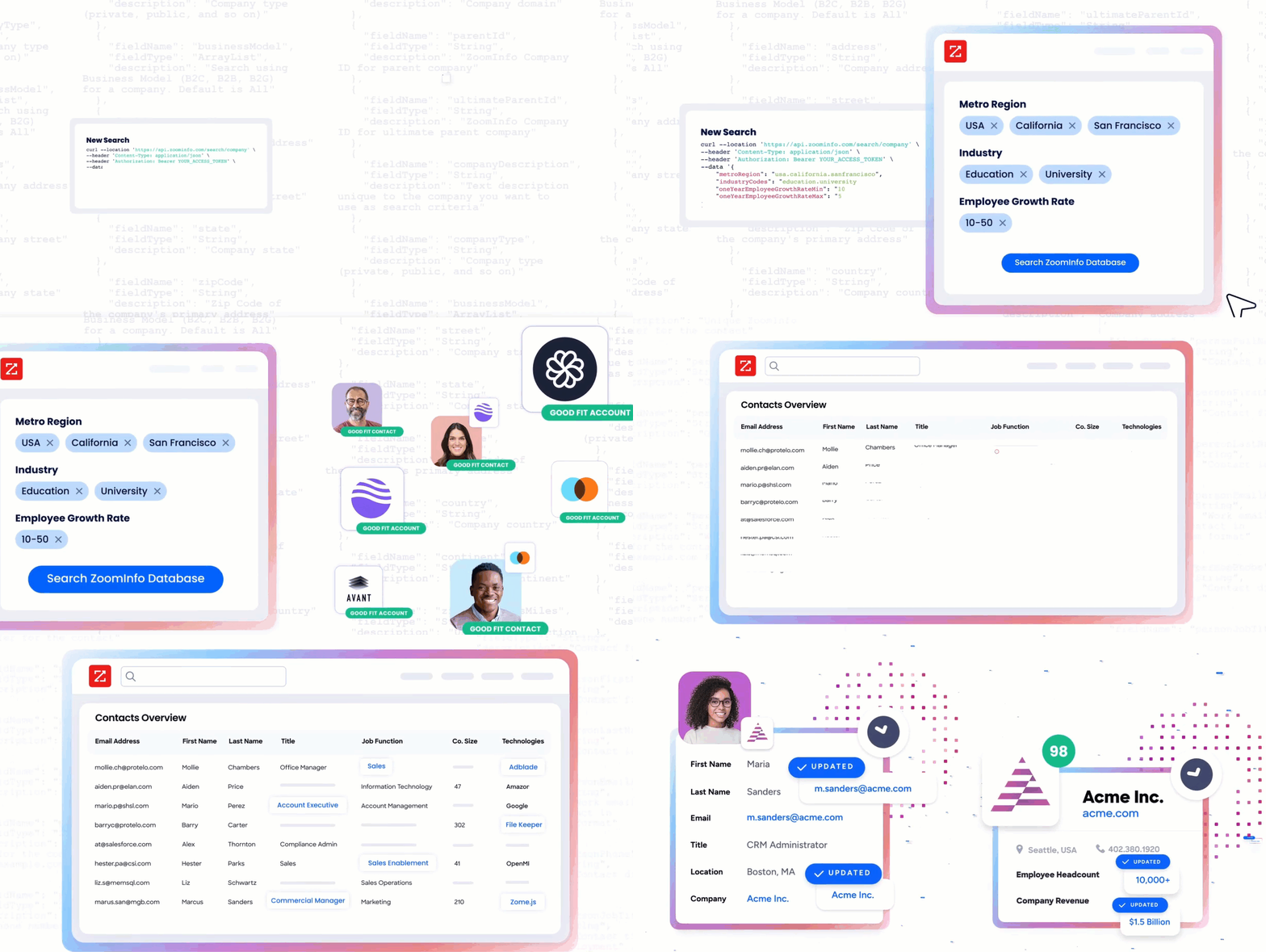
ZoomInfo's data covers 500M contacts across 100M companies, with 135M+ verified phone numbers and 200M+ verified business email addresses. This isn't a static directory. A multi-source verification process backed by 300+ human researchers continuously updates records, with first-party data reaching up to 95% accuracy.
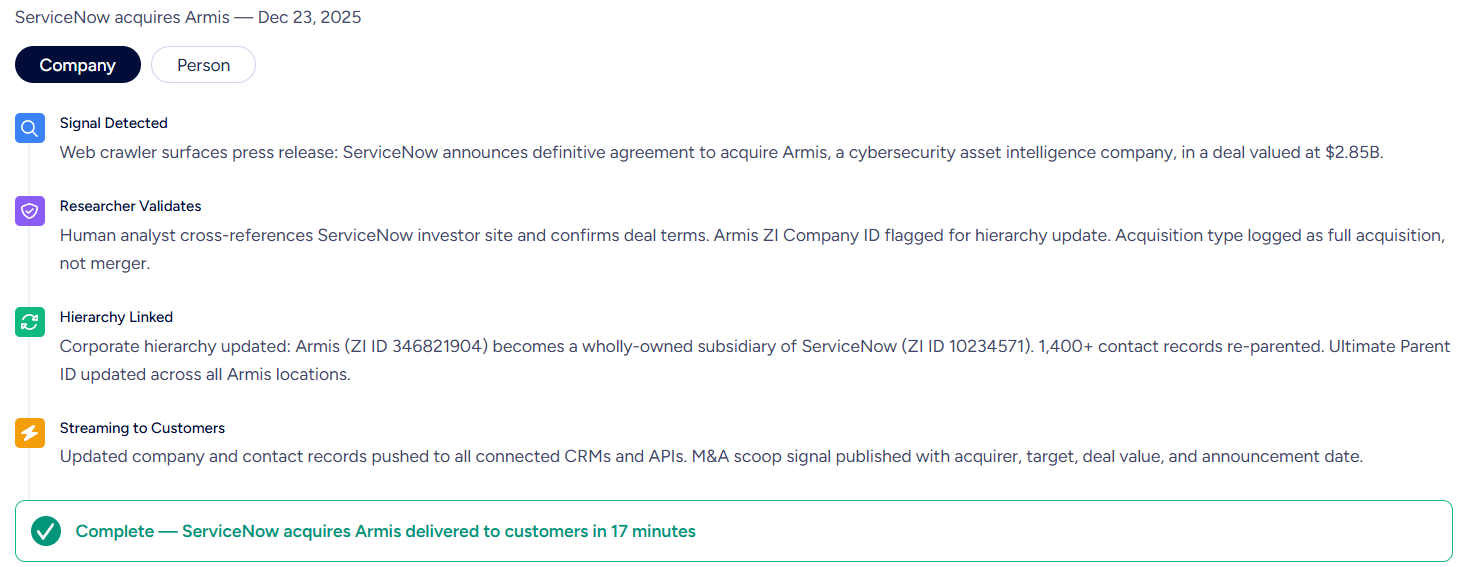
In a Fortune 500 competitive RFP analyzing 25 million contacts across vendors, the independent consultant concluded that "no other competitor came even close."
For sales teams using Agile CRM or Pipedrive, the practical impact is immediate. Instead of manually researching prospects and hoping phone numbers are current, reps get verified direct dials and business emails for the decision-makers they need to reach. Instead of guessing which accounts might be interested, buyer intent data reveals which companies are researching relevant topics right now.
"ZoomInfo gives us the information we need to execute. We don't have to go through and spend our time digging. It's already there, so we can be three steps ahead." — William Kenimer, Vice President of Revenue Operations, Vensure (Vensure case study)
Intelligence separates data from context
Both Agile CRM and Pipedrive record what happened: a deal moved stages, an email was sent, a call was logged. Neither captures why.
The GTM Context Graph (ZoomInfo's intelligence layer) unifies ZoomInfo's B2B data with your CRM records, conversation transcripts from Chorus (ZoomInfo's conversation intelligence platform), email interactions, and behavioral signals. When a CFO joins a call and asks about six-month ROI, the GTM Context Graph captures that: executive sponsorship entering at this stage, combined with ROI-focused questions, matches the pattern behind closed-won deals in your segment. That reasoning flows into AI-drafted follow-ups, deal prioritization, and forecast accuracy.
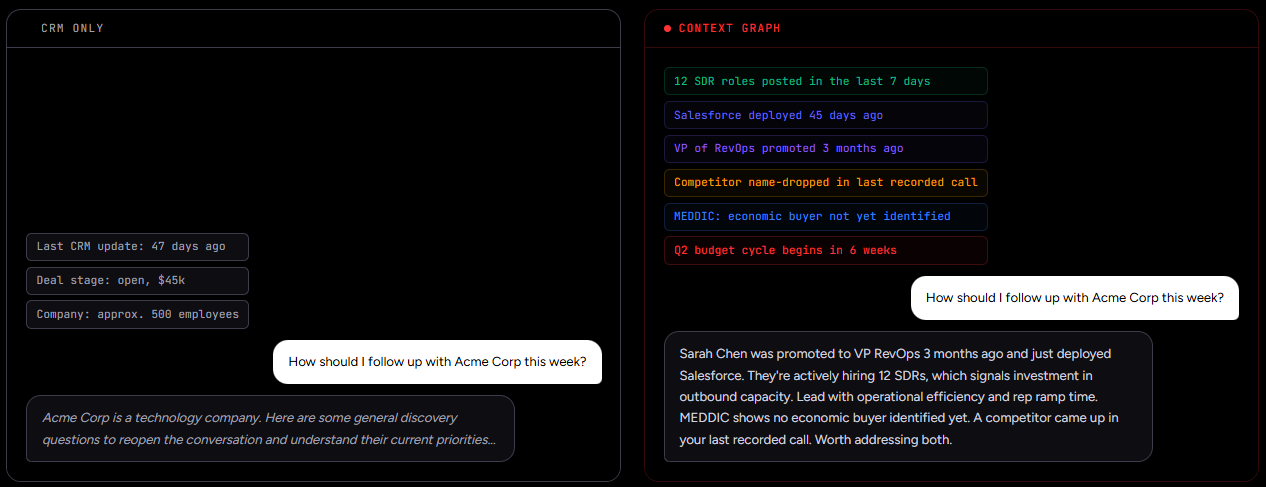
This differs from Pipedrive's AI Sales Assistant, which analyzes activity within Pipedrive's own data. Pipedrive's AI can tell you a deal is at risk based on activity patterns. ZoomInfo's intelligence can tell you why it's at risk (the champion went quiet because a competitor's funding round triggered internal evaluation) and then recommend the action that worked in similar situations across your deal history.
For teams at Agile CRM's scale, this level of intelligence is likely beyond current needs. But for growing sales organizations where the cost of pursuing the wrong accounts or missing buying signals compounds every quarter, it's the difference between working harder and working on the right opportunities.
"That combination of our internal CRM data, external signals, and AI that's given all that context has helped us craft very specific account- and persona-based messages. And people have responded to them right away." — Toby Carrington, Chief Business Officer, Seismic (Seismic case study)
Pricing comparison: what you actually pay
Agile CRM is the cheapest option by a wide margin:
Plan | Annual billing (per user/month) | Contacts |
|---|---|---|
Free | $0 | |
Starter | 10,000 | |
Regular | 50,000 | |
Enterprise | Unlimited |
Note that Agile CRM's telephony requires a Twilio account with its own per-minute costs, and SMS campaigns require Plivo or Twilio gateway fees.
Pipedrive costs more but delivers a more polished, reliable experience:
Pipedrive offers four plans (Lite, Growth, Premium, and Ultimate) starting at $14/month per seat, with annual billing saving up to 42%. Key add-ons are priced per company, not per seat: Campaigns for email marketing and LeadBooster ($32.50/company/month) for chatbot, live chat, web forms, and a prospector database of 400M+ profiles. Premium and Ultimate plans include LeadBooster, Projects, and Smart Docs at no extra cost.
ZoomInfo uses consumption-based pricing:
ZoomInfo uses custom-quoted, consumption-based pricing that scales with seats, credits, and features. No published dollar amounts for paid tiers. However, ZoomInfo Lite provides permanent free access with 10 monthly export credits, searches, the ReachOut Chrome Extension, and WebSights Lite (up to 10 website visitor reveals per day). A 7-day free trial of the full platform is also available.
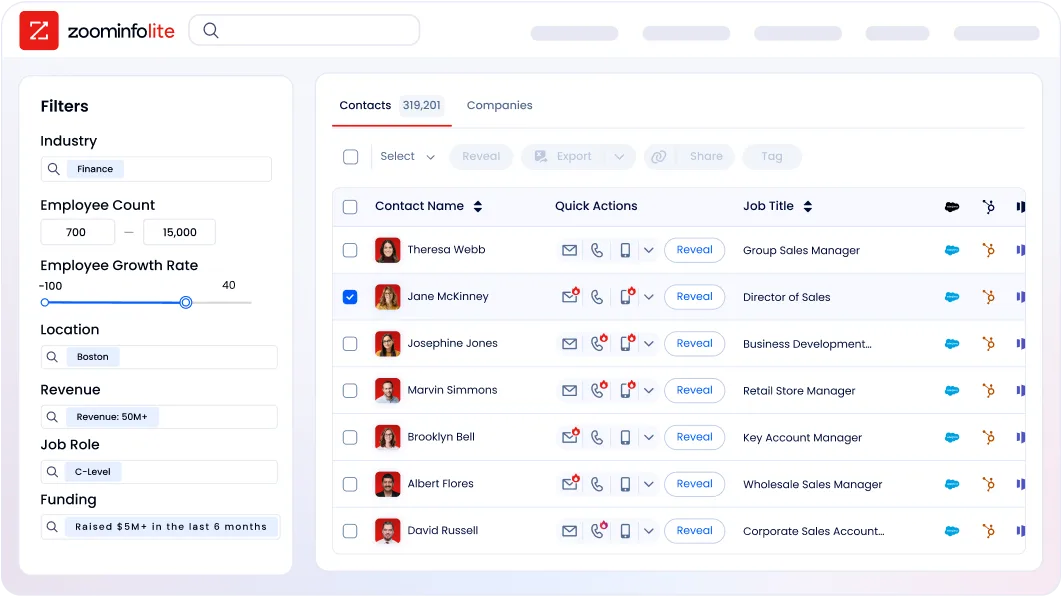
The comparison isn't apples-to-apples. Agile CRM and Pipedrive charge for managing contacts you already have. ZoomInfo charges for access to contacts and intelligence you don't have yet. A team paying $30/user/month for Agile CRM's Regular plan while spending 10 hours per week manually researching prospects might find that ZoomInfo eliminates that research time entirely.
Integration ecosystems reflect different strategies
Agile CRM maintains 60+ native integrations with connections to Gmail, Shopify, Stripe, QuickBooks, WordPress, and Twilio. Zapier support extends the reach to thousands of additional apps. The REST API is available on all plans including free, with official SDKs for Java, Python, PHP, Node.js, .NET, and Ruby. For small teams with straightforward integration needs, this covers the basics.
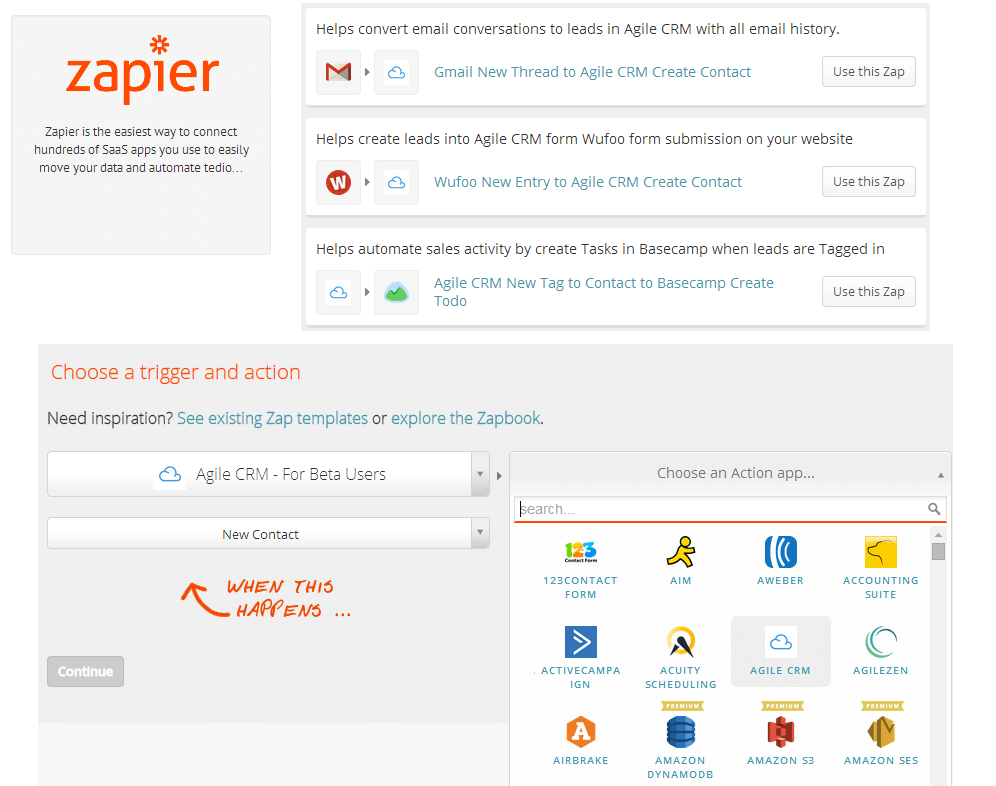
Source: Agile CRM
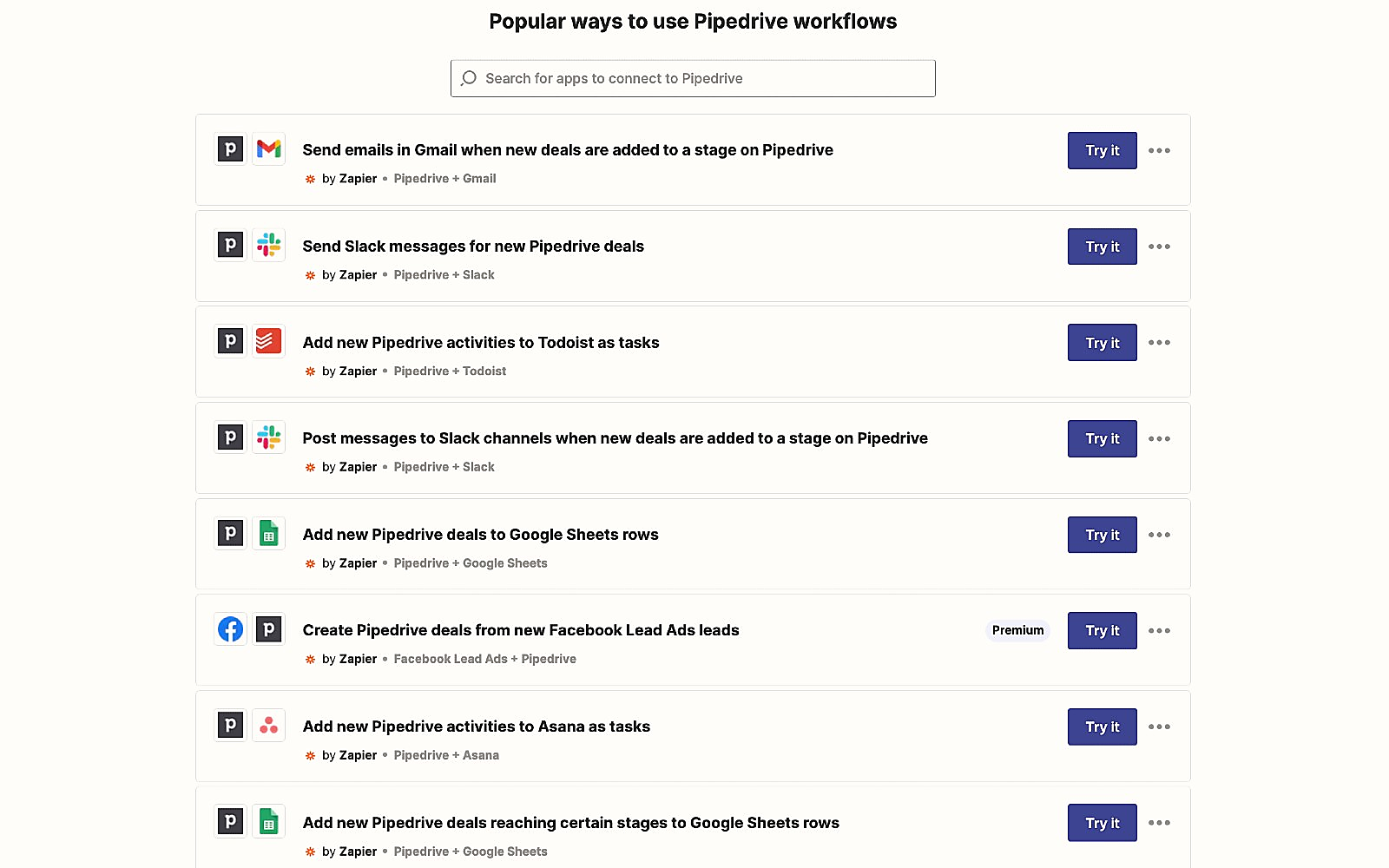
Pipedrive has the broadest ecosystem of the three, with 500+ marketplace integrations organized by revenue cycle stage. The API is mature, with v2 endpoints, OAuth 2.0 support, and a free developer sandbox account. The Marketplace includes Zapier, Slack, Google Meet, Microsoft Teams, PandaDoc, DocuSign, and dedicated connectors for accounting, calling, and project management tools. App Extensions let developers embed custom UI directly inside Pipedrive. A Pipedrive MCP server is available in beta for AI assistant integrations.
Source: Pipedrive
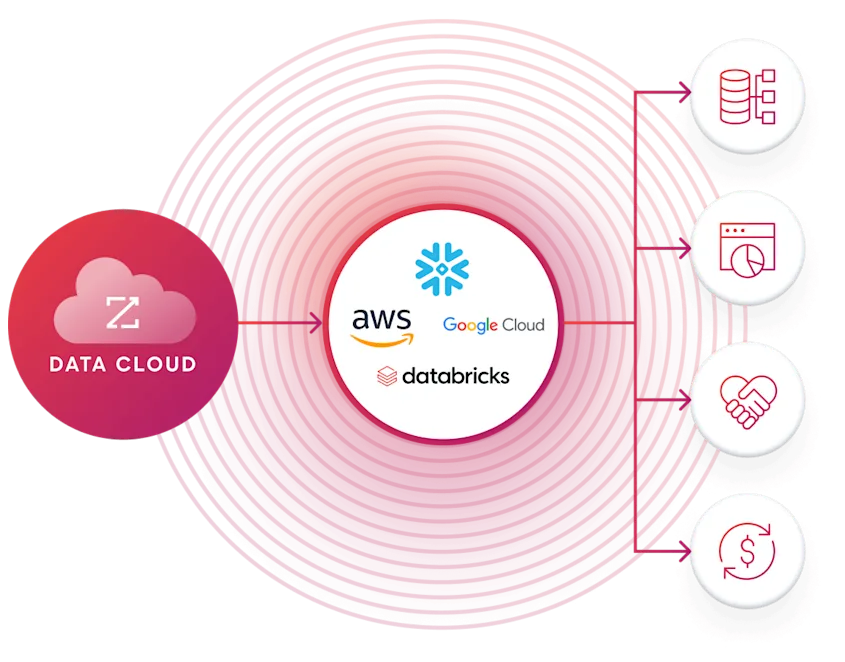
ZoomInfo integrates differently because it serves a different function. Rather than being the system of record, ZoomInfo pushes intelligence into whatever system you use. The App Marketplace lists 120+ partners, including native integrations with Salesforce, HubSpot, Microsoft Dynamics 365, and data delivery into AWS, Google Cloud, Snowflake, and Databricks. The Enterprise API and MCP server let any AI agent or custom application consume ZoomInfo data. This means ZoomInfo works alongside either Agile CRM or Pipedrive rather than replacing them.
"The plug-and-play aspect of the API means I can integrate it very easily into any process and get information at a moment's notice." — Jerry Wilson, Senior Marketing Intelligence Analyst, BDO Canada (BDO Canada case study)
Security and compliance matter as you scale
Agile CRM does not publicly advertise specific security certifications. The API uses HTTPS, confirming TLS encryption for data in transit, but no SOC 2, ISO 27001, GDPR compliance statements, or data residency options were found in accessible sources. Teams in regulated industries should verify compliance directly with Agile CRM before committing.
Pipedrive holds ISO/IEC 27001:2022, ISO/IEC 27701:2019, SOC 2 Type 2, and SOC 3 certifications. It complies with GDPR, the EU-US Data Privacy Framework, DORA, and the EU Data Act. Data is hosted on AWS with separate databases per customer, daily backups going back three months, and a Security Center dashboard for access controls. For SMBs with compliance requirements, Pipedrive's security stack is credible.
ZoomInfo carries the broadest certification stack: ISO 27001, ISO 27701, SOC 2 Type II, and TRUSTe GDPR and CCPA certifications, all renewed annually. It's a registered data broker in California and Vermont, with a dedicated Trust Center. Given that ZoomInfo handles B2B contact data at scale, this compliance infrastructure is essential for enterprise buyers.
Agile CRM vs. Pipedrive vs. ZoomInfo: Which should you choose?
The right choice depends on where your sales process needs the most help.
Choose Agile CRM if:
You're a small team (under 10 people) that needs CRM, email marketing, and support in one tool
Budget is your primary constraint and you need the lowest cost per user
You want built-in marketing automation without paying for a separate platform
Your sales process is straightforward and you don't need advanced pipeline analytics
You're comfortable with a platform that trades polish for feature density
Choose Pipedrive if:
Your sales team needs a clean, visual pipeline they'll use every day
You want reliable, well-maintained software backed by serious investment
Sales pipeline management is your primary need, with marketing handled separately
AI-assisted email writing, deal scoring, and reporting would save your team time
You value a mature integration ecosystem with 500+ apps
Choose ZoomInfo if:
Your biggest bottleneck is finding the right accounts and reaching the right people
You need verified contact data (direct dials, business emails) at scale, not just a place to store contacts
Buyer intent signals would change how you prioritize outreach
You want AI that understands deal context, not just deal status
You're ready to invest in intelligence that powers your GTM motion, regardless of which CRM you use
Try ZoomInfo Lite for free, or request a demo of the full platform.
These tools aren't mutually exclusive. Agile CRM and Pipedrive manage your sales process. ZoomInfo fills that process with the right accounts, the right contacts, and the right timing. For teams serious about revenue growth, a strong CRM paired with a strong intelligence platform produces better results than either alone.
Agile CRM vs. Pipedrive vs. ZoomInfo FAQ
What is the core difference between Agile CRM, Pipedrive, and ZoomInfo?
Agile CRM is an all-in-one platform that bundles sales CRM, marketing automation, and a help desk at a low price point for small teams that want everything under one roof. Pipedrive is a dedicated sales pipeline tool built for salespeople, with a kanban view and growing AI capabilities. ZoomInfo is a B2B data and GTM platform that provides verified contact data on 500M contacts, buyer intent signals, and AI-powered deal intelligence. Agile CRM and Pipedrive organize your existing pipeline. ZoomInfo helps you find the right accounts and contacts to put into it.
Which platform is cheapest for a small sales team?
Agile CRM is the most affordable, with a free plan for up to 10 users and paid plans starting at $8.99/user/month. Pipedrive starts at $14/month per seat with no free plan, only a 14-day trial. ZoomInfo Lite is free with 10 monthly export credits, but the full platform is custom-quoted with consumption-based pricing. For a team of five on a tight budget, Agile CRM costs the least. For a team willing to pay more for reliability and a better daily experience, Pipedrive offers strong value.
Can I use ZoomInfo with Agile CRM or Pipedrive?
Yes. ZoomInfo integrates with most CRMs and sales tools. Pipedrive is listed in ZoomInfo's marketplace with native integration options. Agile CRM can connect to ZoomInfo through Zapier or the ZoomInfo API. The combination gives you accurate contact data and buyer signals from ZoomInfo, managed through whichever CRM fits your workflow.
Which platform has the best marketing automation?
Agile CRM includes the deepest native marketing automation at its price point, with a visual campaign builder supporting email, SMS, and social media nodes at all paid tiers. Pipedrive offers email marketing through its Campaigns add-on, but it doesn't match dedicated marketing tools. ZoomInfo provides multi-channel orchestration through GTM Studio, including display advertising, email sequences, and signal-triggered campaigns, though this targets a different scale and audience than Agile CRM's built-in tools.
Which platform has the best pipeline management?
Pipedrive leads on pipeline management. Its kanban-style board, deal rotting alerts, activity-based selling philosophy, and multiple custom pipelines make it the most focused pipeline tool of the three. Agile CRM offers a basic drag-and-drop pipeline that covers essential needs. ZoomInfo's GTM Workspace provides an AI-prioritized account feed rather than a traditional pipeline view, designed for teams that want the system to surface what to work on next.
Does Agile CRM or Pipedrive include a help desk?
Agile CRM includes a built-in help desk with ticketing, SLA management, a knowledge base, and canned responses. Pipedrive does not include any customer service or ticketing features. ZoomInfo is not a help desk tool. If post-sale support management is a requirement within your CRM, Agile CRM is the only option among the three that provides it natively.
How do the platforms compare on data accuracy and quality?
Agile CRM and Pipedrive store and manage whatever contact data you import, but neither verifies or enriches it independently. ZoomInfo maintains the largest verified B2B contact database in the industry, with a multi-source verification process backed by 300+ human researchers and up to 95% accuracy on first-party data. In a Fortune 500 competitive evaluation of 25 million contacts, the independent consultant concluded that no other provider came close to ZoomInfo's data quality.
Which platform offers buyer intent signals?
Only ZoomInfo provides buyer intent data. ZoomInfo Intent tracks signals from 210 million IP-to-Organization pairings and over 6 trillion keyword-to-device pairings monthly, revealing which companies are researching topics relevant to your business. Guided Intent (exclusive to ZoomInfo) identifies topics historically correlated with deal success rather than requiring manual topic selection. Neither Agile CRM nor Pipedrive offers intent signal tracking.
