
Choosing between AlphaSense and Tegus used to be straightforward. Then AlphaSense acquired Tegus for $930 million in July 2024, merging them into one platform. So why is this comparison still worth reading?
Because the two products haven't fully merged. Tegus's expert transcript library, expert call services, and Canalyst financial models still operate as distinct products within AlphaSense.
Many teams are evaluating whether they need one piece or the full platform. And for corporate strategy teams who also need to act on what they learn (find the right contacts, prioritize accounts, execute outreach), neither platform covers go-to-market execution.
Here are the real questions to answer:
Do you need AI-powered search across financial documents, or access to proprietary expert interviews, or both?
Is your primary use case investment research, corporate strategy, or sales and marketing execution?
Are you conducting due diligence on specific companies, or building pipeline against target accounts?
Do you need qualitative insights from industry experts, quantitative financial models, or verified B2B contact data?
How much do you value proprietary content that can't be found on the open web?
In short, here's what we recommend:
AlphaSense is a market intelligence platform built for enterprises that need to synthesize insights across 500 million+ premium business documents, including SEC filings, earnings transcripts, broker research from 1,500+ global partners, and news from thousands of publications.
Its Generative Search and Deep Research compress weeks of analysis into minutes, with every insight traceable to its source document. AlphaSense now includes Tegus's expert content, making it the broadest single platform for market intelligence.
The trade-off is enterprise pricing that requires custom quotes, a learning curve that comes with the platform's breadth, and a focus on research rather than acting on what you find.
Tegus (now part of AlphaSense) contributes the largest proprietary expert transcript library with 260,000+ investor-led interviews covering 27,000+ companies, plus 4,000+ Canalyst financial models. For investment professionals who need firsthand perspectives from former executives, customers, and competitors, Tegus provides qualitative depth that documents alone can't deliver.
Its expert call services, including AI-led interviews that run 24/7, let teams scale primary research without scaling headcount. Since the acquisition, Tegus content is accessed through the AlphaSense platform, though pricing and packaging still distinguish the two.
Both platforms help teams understand markets and companies. But understanding is only half the equation. When your corporate development team identifies an acquisition target through AlphaSense research, or your strategy team spots a competitive threat through Tegus expert calls, someone still needs to find the right people at those companies, reach them, and start a conversation. That's a different kind of intelligence.
ZoomInfo is a GTM platform that picks up where research platforms leave off. Built on a B2B dataset of 500M contacts, 100M companies, 135M+ verified phone numbers, and 200M+ verified business emails, ZoomInfo's GTM Context Graph combines this data with your CRM records, conversation transcripts, and behavioral signals to reveal not just who to contact, but why and when.
Whether your team works through GTM Workspace for sales execution, GTM Studio for marketing and RevOps, or the API and MCP for custom integrations, ZoomInfo turns market insights into pipeline.
If turning research intelligence into revenue is the goal, see how ZoomInfo completes the picture.
AlphaSense vs. Tegus vs. ZoomInfo at a glance
AlphaSense | Tegus (by AlphaSense) | ZoomInfo | |
|---|---|---|---|
Primary function | Market intelligence and document search | Expert transcripts, expert calls, and financial models | B2B contact data, intent signals, and GTM execution |
Content library | 500M+ premium documents (filings, broker research, news, transcripts) | 260,000+ proprietary expert interview transcripts | 500M contacts, 100M companies, verified phone numbers and emails |
AI capabilities | Generative Search, Deep Research, multi-agent architecture | AI-led expert interviews, AI transcript summarization | GTM Context Graph, AI-drafted outreach, predictive scoring |
Target user | Investment analysts, corporate strategy, competitive intelligence | Hedge funds, PE firms, asset managers, VC | Sales, marketing, RevOps, corporate development |
Compliance | SOC 2 Type II, ISO 27001, GDPR | Multi-layer MNPI compliance, 75+ compliance professionals | ISO 27001, ISO 27701, SOC 2 Type II, GDPR/CCPA |
Free trial | Yes (no credit card required) | Sales-led trial request | 7-day free trial + permanent free tier (ZoomInfo Lite) |
Pricing model | Annual subscription, custom quotes | Annual subscription via AlphaSense, custom quotes | Consumption-based, custom quotes |
Best for | Enterprise market research and competitive intelligence | Investment research and expert-driven due diligence | Sales prospecting, pipeline generation, and GTM execution |
AlphaSense and Tegus are now one platform
The first thing to understand is that AlphaSense and Tegus are no longer separate companies. AlphaSense completed the acquisition on July 8, 2024, and the Tegus homepage now states plainly: "Tegus is now part of AlphaSense."
Source: AlphaSense
But the products haven't collapsed into one. Tegus's expert transcript library, expert call services, and Canalyst financial models operate as named product pillars within AlphaSense. This matters for buyers because the features carry different price tags.
AlphaSense's base Market Intelligence tier includes Tegus expert transcripts alongside broker research, filings, and news. But Expert Call Services and Canalyst financial models are separate add-ons with their own pricing.
The combined entity earned recognition as a Leader in the inaugural Gartner Magic Quadrant for Competitive and Market Intelligence Platforms, positioned highest on Ability to Execute. The platform now serves 7,000+ enterprises across hedge funds, PE firms, asset managers, investment banks, corporations, and consulting firms.
For teams evaluating the "AlphaSense vs. Tegus" question today, the real decision isn't which platform to choose. It's which components of the combined platform you need and what you're willing to pay for.
AlphaSense excels at synthesizing documents at scale
AlphaSense was founded in 2011 by Jack Kokko, a former investment banker who spent his early career hitting Ctrl+F on thousands of PDFs. The platform he built addresses that problem directly: how do you find and synthesize insights across a massive library of premium business content?
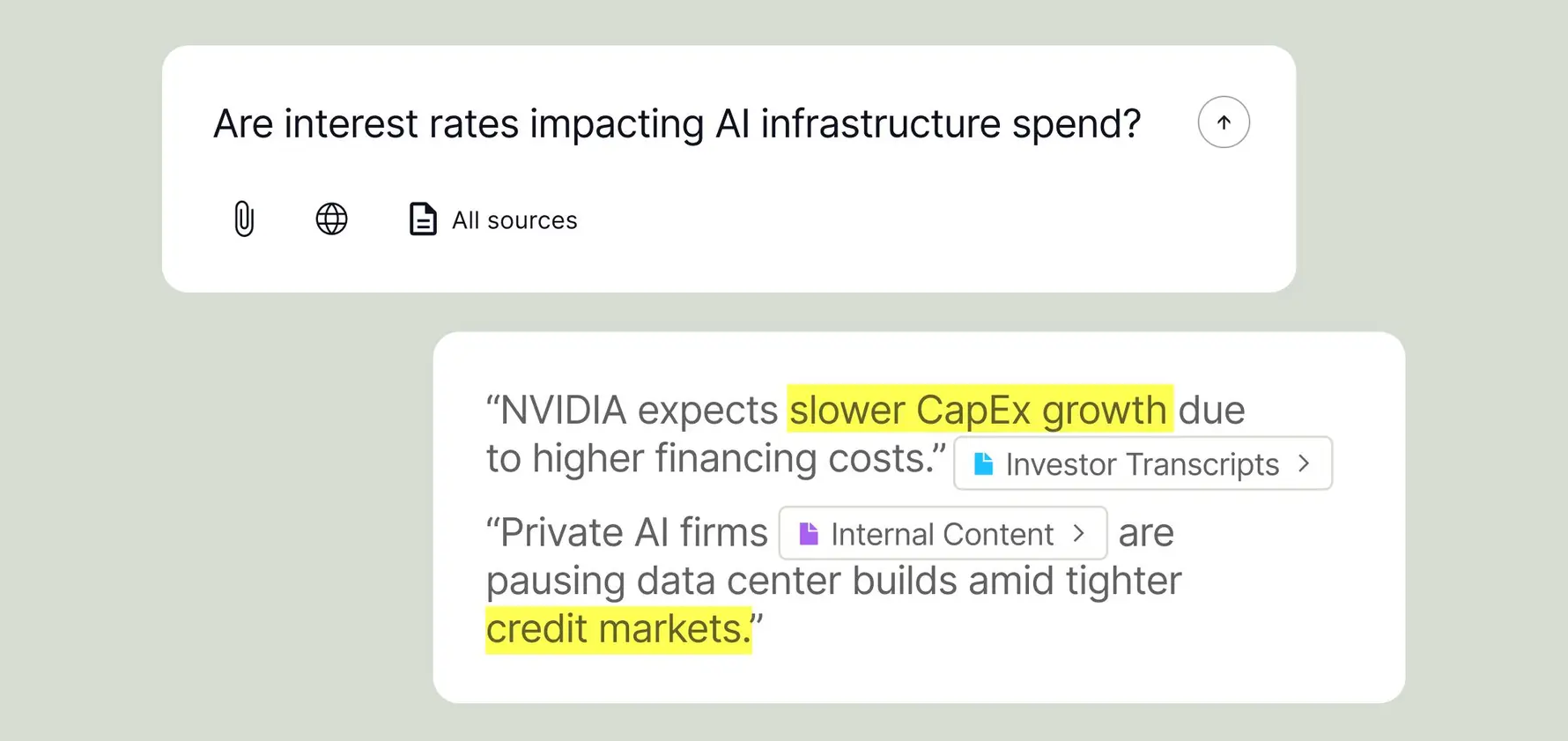
The answer is AI search built for financial and business documents. AlphaSense's Generative Search uses a multi-agent architecture to reason across qualitative insights, structured financial data, and internal knowledge simultaneously.
Source: AlphaSense
When you ask a complex question (What are the key risks to Tesla's margin expansion over the next 12 months?), the system creates a research plan, breaks it into sub-tasks, searches across its document library, and delivers a structured, cited answer.
For deeper analysis, Deep Research autonomously runs 50 to 100 searches, parses thousands of results, and produces reports with 100+ source citations in 5 to 30 minutes. The feature is available without limits for all AlphaSense users.
What separates this from ChatGPT or Perplexity: AlphaSense searches premium, paywalled content unavailable on the open web, including equity research from Goldman Sachs (for which AlphaSense holds exclusive aftermarket distribution rights), 260,000+ expert transcripts, regulatory filings from 68,000+ companies worldwide, and news from 3,700 global newspapers and 5,000 trade publications.
Every AI-generated insight includes sentence-level citations linking back to the exact source text.
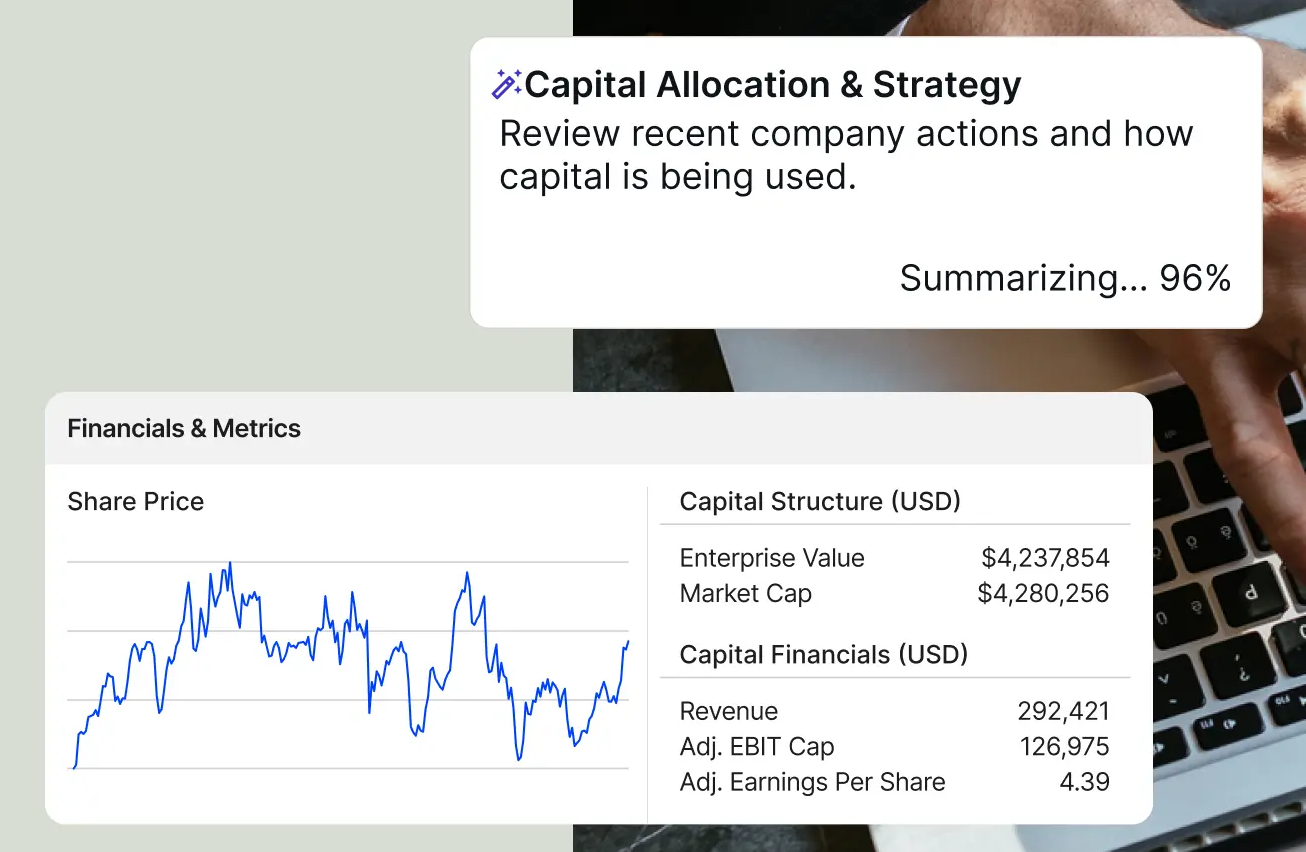
The platform also launched Financial Data in October 2025, adding standardized financials on 18,000+ public companies, 950,000+ M&A deals, and 685,000 private funding rounds.
Source: AlphaSense
This lets users blend quantitative data with qualitative research in a single query, asking questions like "What are the 10 largest SaaS M&A deals in the past five years?" and getting a ranked list with deal values, multiples, and rationale summaries with clickable citations.
For organizations with scattered internal knowledge, Enterprise Intelligence connects AlphaSense to internal repositories (SharePoint, Google Drive, Box, Dropbox) so users can search proprietary memos and presentations alongside external market intelligence in a single query. Internal content never leaves the customer's network, and LLMs are never trained on client data.
Tegus provides the expert perspective that documents miss
Financial filings tell you what happened. Broker research tells you what analysts think will happen. Expert interviews tell you what the people closest to the business actually see on the ground.
That's the gap Tegus was built to fill. Founded in October 2015 by identical twin brothers Thomas and Michael Elnick, Tegus changed the economics of the traditional expert network model. Where incumbents like GLG and AlphaSights charged roughly 200% markups on expert calls, Tegus adopted a subscription model with expert calls passed through at cost, saving clients up to 70% compared to traditional networks.
The core asset is the transcript library. Every expert call conducted through the platform is recorded, compliance-reviewed, and added to a shared library that now holds 260,000+ transcripts covering 27,000+ public and private companies, growing by 8,000 new transcripts monthly.
This creates a compounding advantage: new subscribers get instant access to thousands of prior conversations, and every call adds to the corpus for everyone.
The transcripts aren't generic analyst reports. They capture questions and follow-up threads from actual buy-side and sell-side investors conducting real due diligence.
An analyst evaluating a SaaS company can read how a former VP of Sales described win rates against competitors, how a customer explained their decision to renew (or churn), and how a channel partner characterized demand trends. This investor-led framing makes the content directly relevant to research-driven decisions.
Tegus also offers live expert calls when the library doesn't answer a specific question. Experts are sourced, vetted, and must be at least six months removed from any prior role at the company they discuss.
The compliance operation is substantial: multi-layered AI and human review with 75+ dedicated compliance professionals and an investment of over $100 million annually in compliance processes.
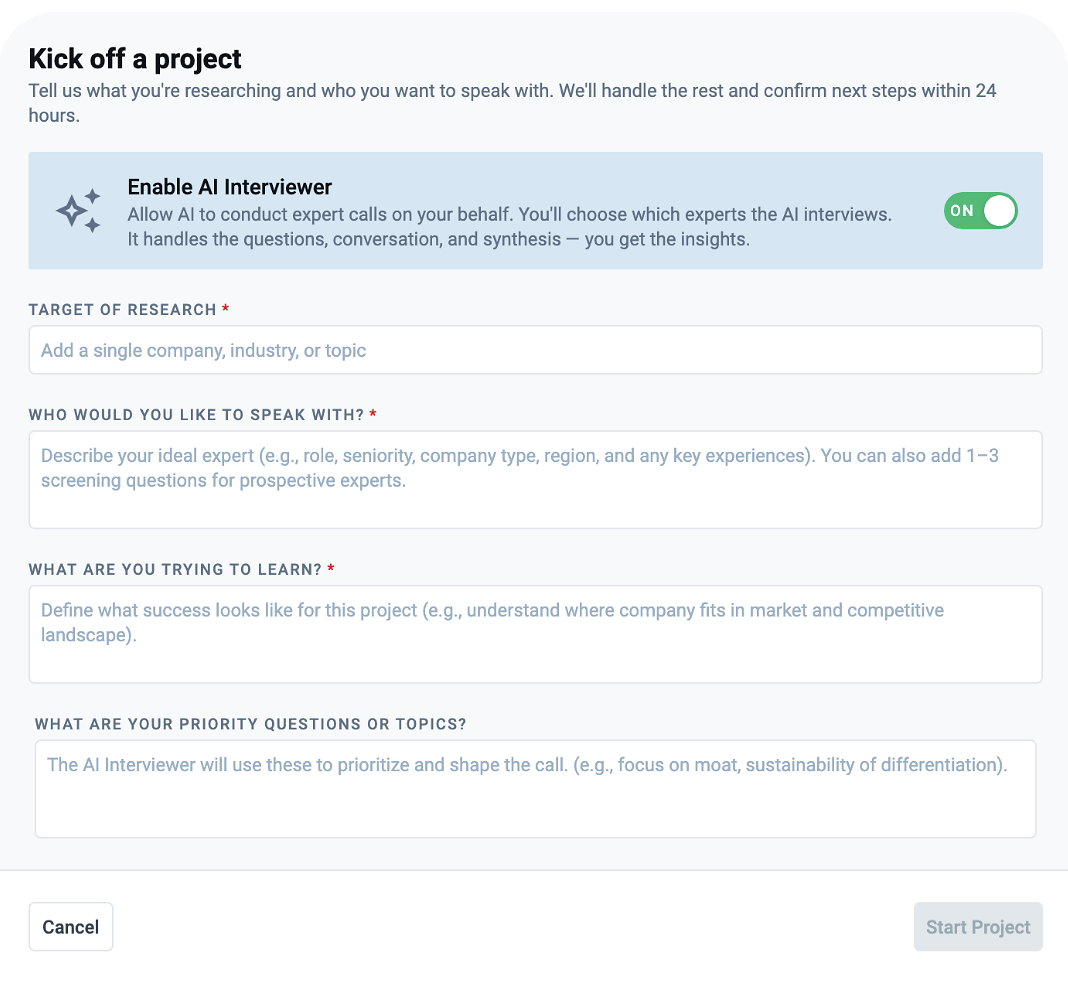
The newest capability is AI-Led Expert Calls, where an AI interviewer conducts calls with vetted experts 24/7, delivering compliance-reviewed transcripts within roughly 24 hours. This lets teams scale primary research without scheduling constraints or additional headcount.
Source: Tegus
The Canalyst financial models add another layer: 4,000+ pre-built Excel workbooks with 10 years of historical data and 5 years of linked forward-looking forecasts, built by a 100+ person research team working directly from primary filings.
Unlike data terminals that normalize financials algorithmically, Canalyst models are fully unlocked and update automatically on earnings day while preserving analyst customizations.
Both platforms stop at understanding. ZoomInfo starts at action.
AlphaSense and Tegus help teams understand markets, companies, and competitive dynamics. But for many enterprise teams, understanding is the starting point, not the destination.
Consider a corporate development team using AlphaSense's Deep Research to identify acquisition targets in healthcare IT. The research surfaces five promising companies with strong competitive positions and reasonable valuations.
Now what? Someone needs to identify the decision-makers at those companies, find their verified contact information, map their organizational structure, and initiate outreach. None of that lives in AlphaSense.
Or consider a strategy team that reads Tegus expert transcripts revealing that a competitor is losing share in the mid-market segment. That's a signal to go after those accounts. But going after them requires knowing which specific companies are in play, who the buyers are, what technologies they use, and whether they're researching alternatives.
ZoomInfo fills that gap with a different kind of intelligence. Where AlphaSense provides research intelligence (what's happening in markets and why) and Tegus provides expert intelligence (what practitioners see on the ground), ZoomInfo provides go-to-market intelligence: who to contact, when to engage, and what to say.
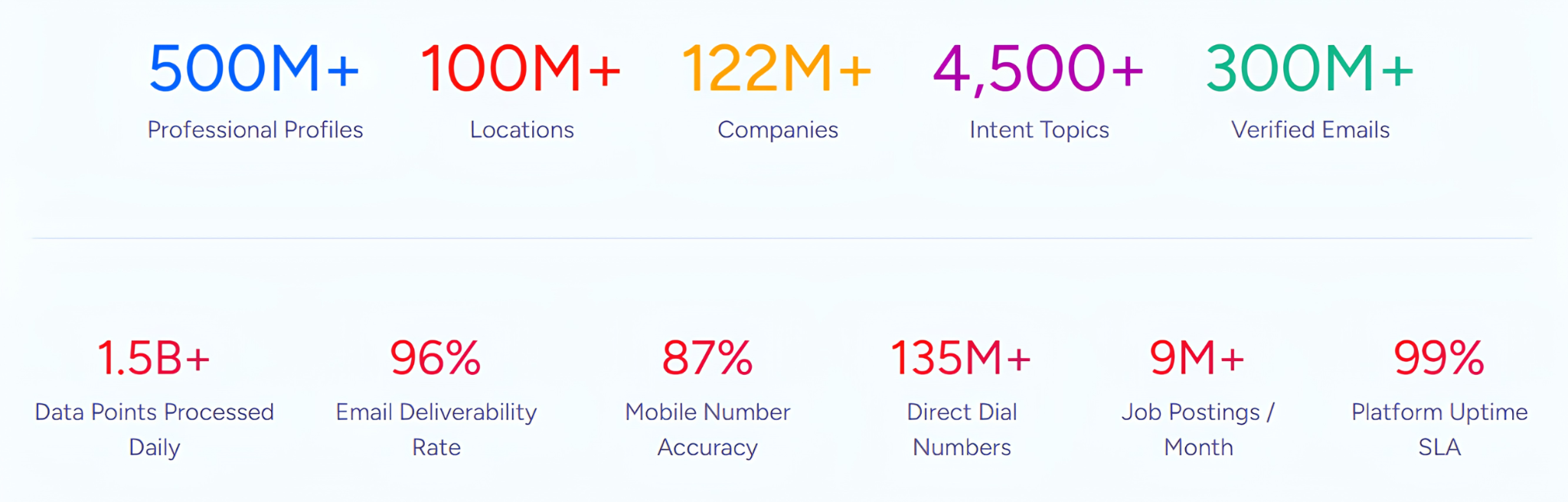
The data foundation is large: 500M contacts, 100M companies, 135M+ verified phone numbers, 120M direct-dial phone numbers, and 200M+ verified business email addresses, maintained through a verification pipeline backed by 300+ human researchers and achieving up to 95% accuracy on first-party data.
Source: ZoomInfo
In a Fortune 500 competitive RFP analyzing 25 million contacts across vendors, the independent consultant concluded that "no other competitor came even close."
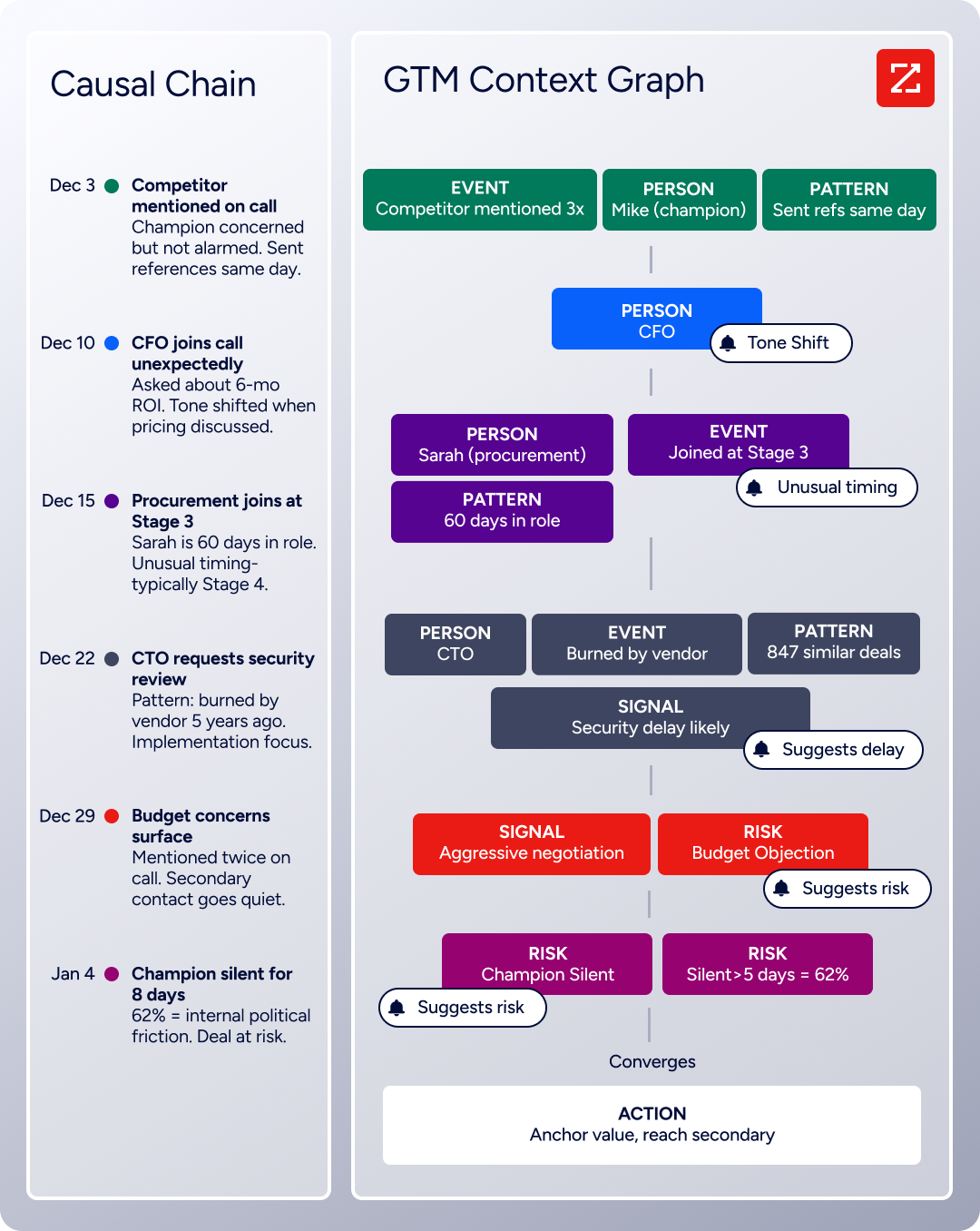
But the data alone isn't what makes ZoomInfo distinct. The GTM Context Graph processes 1.5B + data points daily, combining ZoomInfo's B2B data with a customer's CRM records, conversation transcripts, and behavioral signals into a single intelligence layer. A CRM records that a deal moved from stage 3 to 4.
Source: ZoomInfo
The GTM Context Graph captures why it moved: the CFO joined the last call and asked about six-month ROI, signaling executive sponsorship that historically correlates with closed-won deals in that segment.
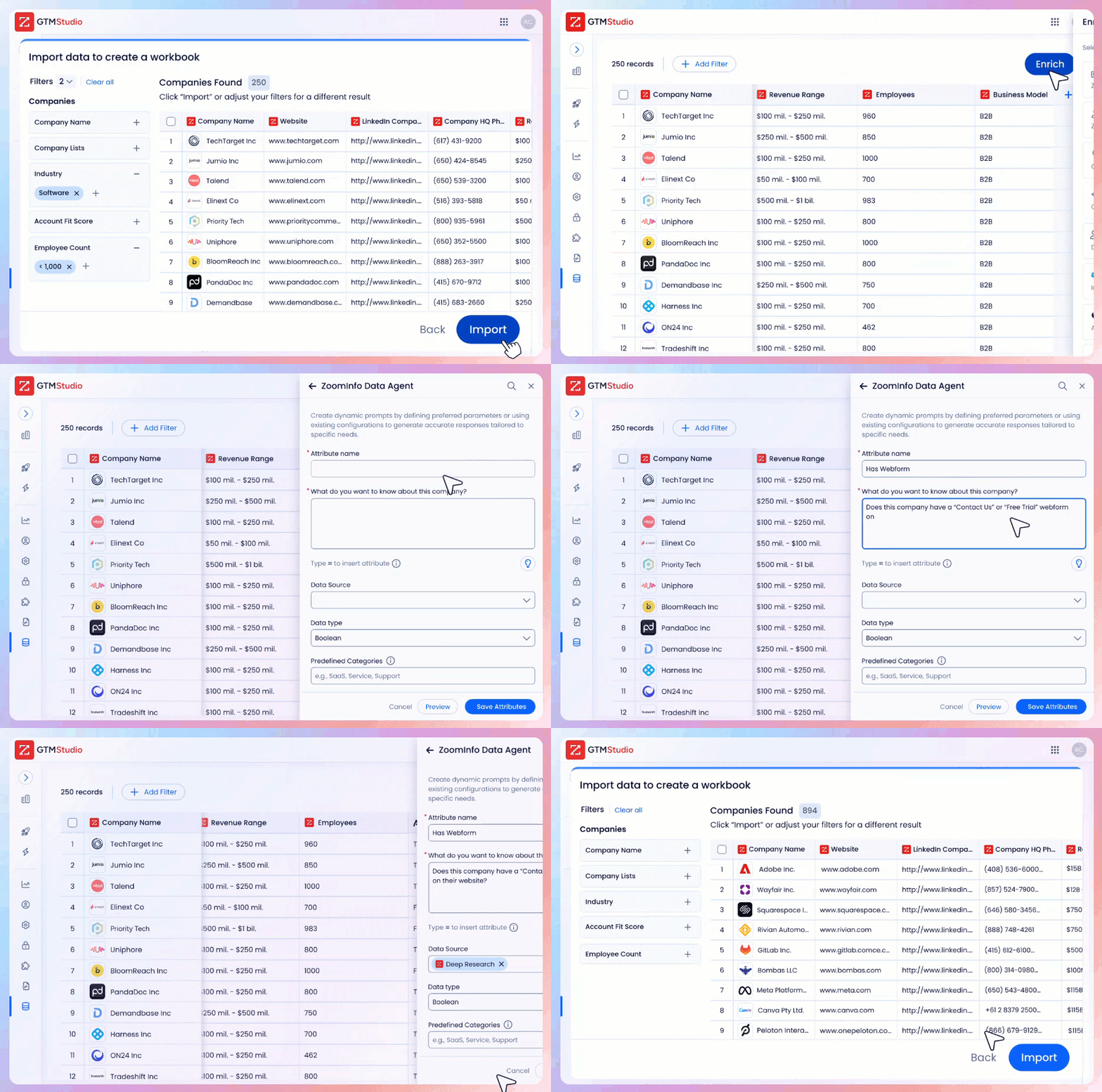
That intelligence flows through three channels. GTM Workspace gives sellers prioritized accounts, AI-drafted outreach, and deal execution tools. GTM Studio lets marketers and RevOps teams define audiences in natural language and launch multi-channel plays. APIs and MCP expose the same intelligence to any custom agent or third-party tool, including Claude and ChatGPT.
Source: ZoomInfo
Seismic's sales team attributed 39% of active pipeline to opportunities identified or influenced by ZoomInfo signals, with their CBO noting: "That combination of our internal CRM data, external signals, and AI that's given all that context has helped us craft very specific account- and persona-based messages. And people have responded to them right away." (Seismic case study)
Content libraries serve different needs
The three platforms collect and organize different types of information.
AlphaSense aggregates published content: SEC and global regulatory filings, earnings call transcripts, equity research from 1,500+ broker partners, news from 3,700 global newspapers and 5,000 trade publications, and regulatory content from 700+ sources, plus the Tegus expert transcript library.
The library totals 500 million+ premium documents and includes exclusive content like Goldman Sachs aftermarket equity research and IDC technology market research. This breadth lets a single search return insights from a company's 10-K filing, the broker research reacting to it, the expert transcript discussing its implications, and the news coverage surrounding it.
Tegus focuses on proprietary primary research: 260,000+ expert interview transcripts, 4,000+ Canalyst financial models, and AI-led channel check interviews covering 350+ tickers.
The content is proprietary because it's generated through the platform: every subscriber call becomes a library asset. This creates qualitative depth on specific companies and sectors (particularly TMT and healthcare) that can't be replicated by crawling public sources.
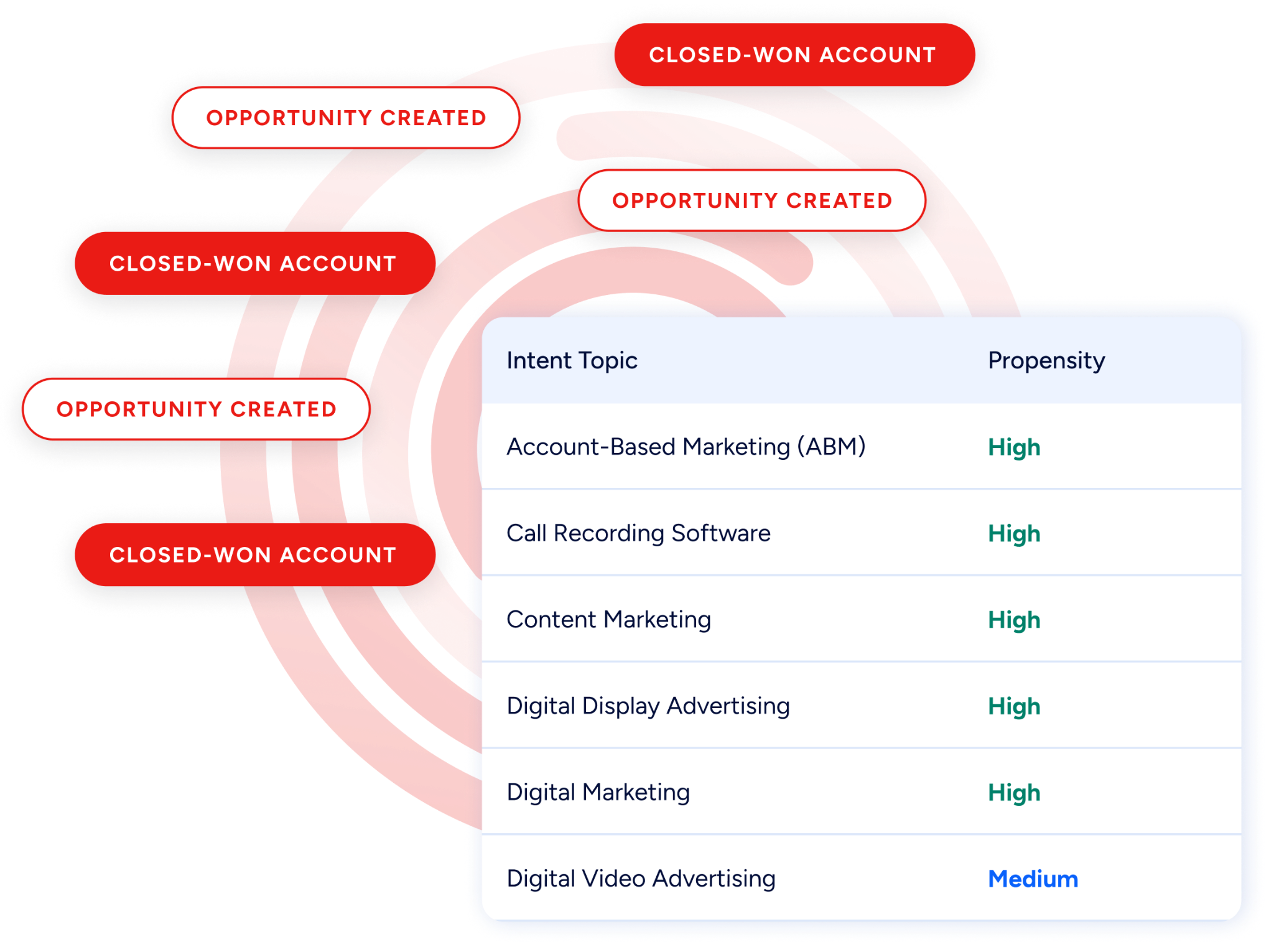
ZoomInfo maintains a living database of B2B identity and behavioral data: 500M contact profiles, 100M company profiles, technographic data on 30+ million companies tracking 30,000+ technologies, buyer intent signals from 210 million IP-to-Organization pairings, and org charts with verified direct-dial phone numbers and business emails.
Source: ZoomInfo
This isn't research content to be read. It's data to be used: enriching CRM records, identifying buying committees, triggering outreach workflows, and building advertising audiences.
The difference matters because these content types serve different stages of the decision cycle. AlphaSense and Tegus help you decide what to do (which markets to enter, which companies to acquire, which investment theses to pursue). ZoomInfo helps you do it (who to call, what signal to act on, which account to prioritize).
AI capabilities reflect different missions
All three platforms invest heavily in AI, but their implementations reflect different goals.
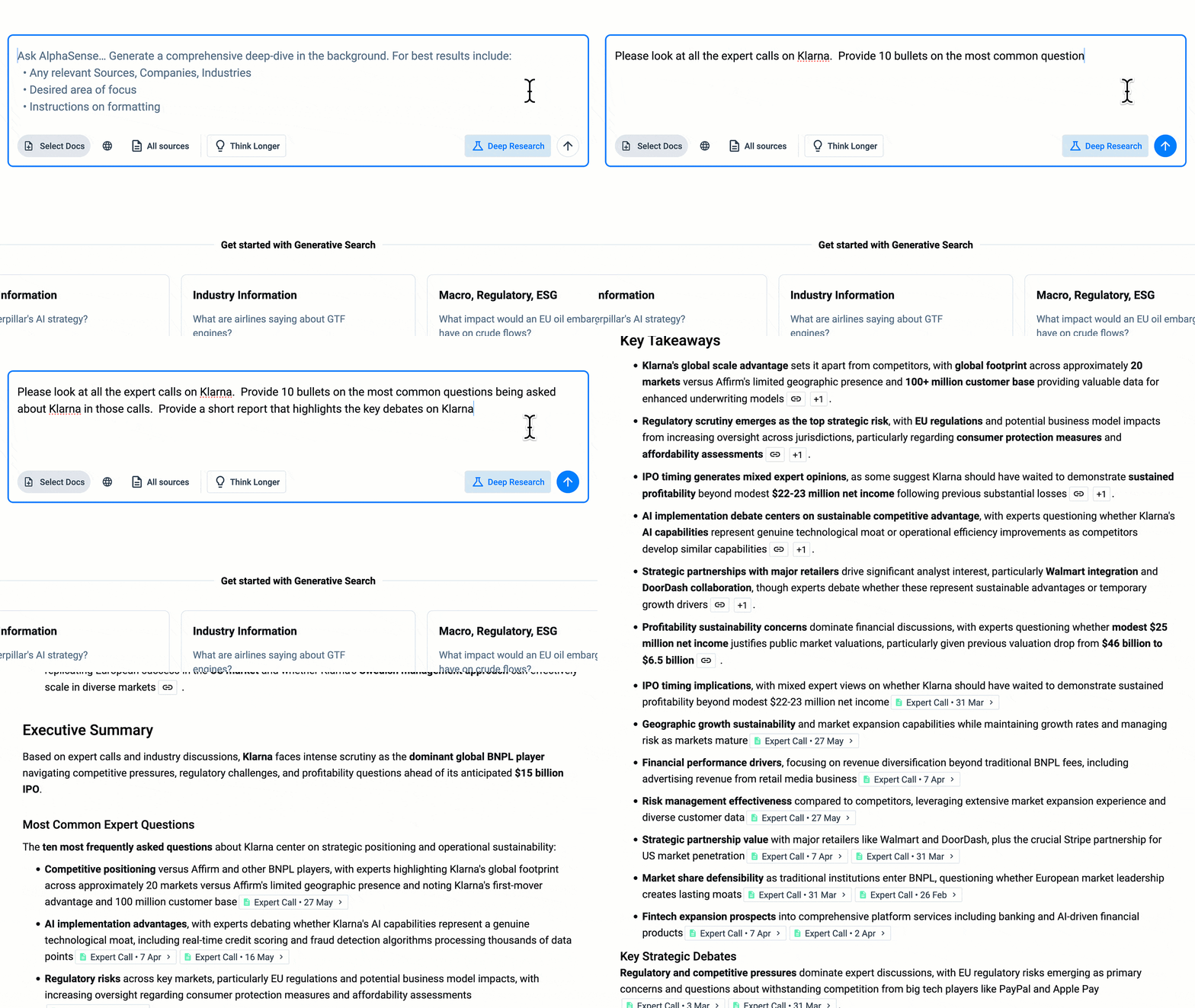
AlphaSense's AI synthesizes research. Generative Search coordinates multiple specialized agents to gather and synthesize information from the 500M+ document library. Deep Research autonomously plans, searches, reasons, and reports, compressing what might take a team of analysts days into a 5-to-30-minute automated workflow.
Source: AlphaSense
The partnership with Cerebras Systems delivers insights up to 10x faster. Every output includes inline citations traceable to exact source sentences.
Tegus's AI scales expert research. The AI Agent Interviewer autonomously conducts expert conversations, asking context-rich questions informed by AlphaSense's full content library and adapting during the conversation.
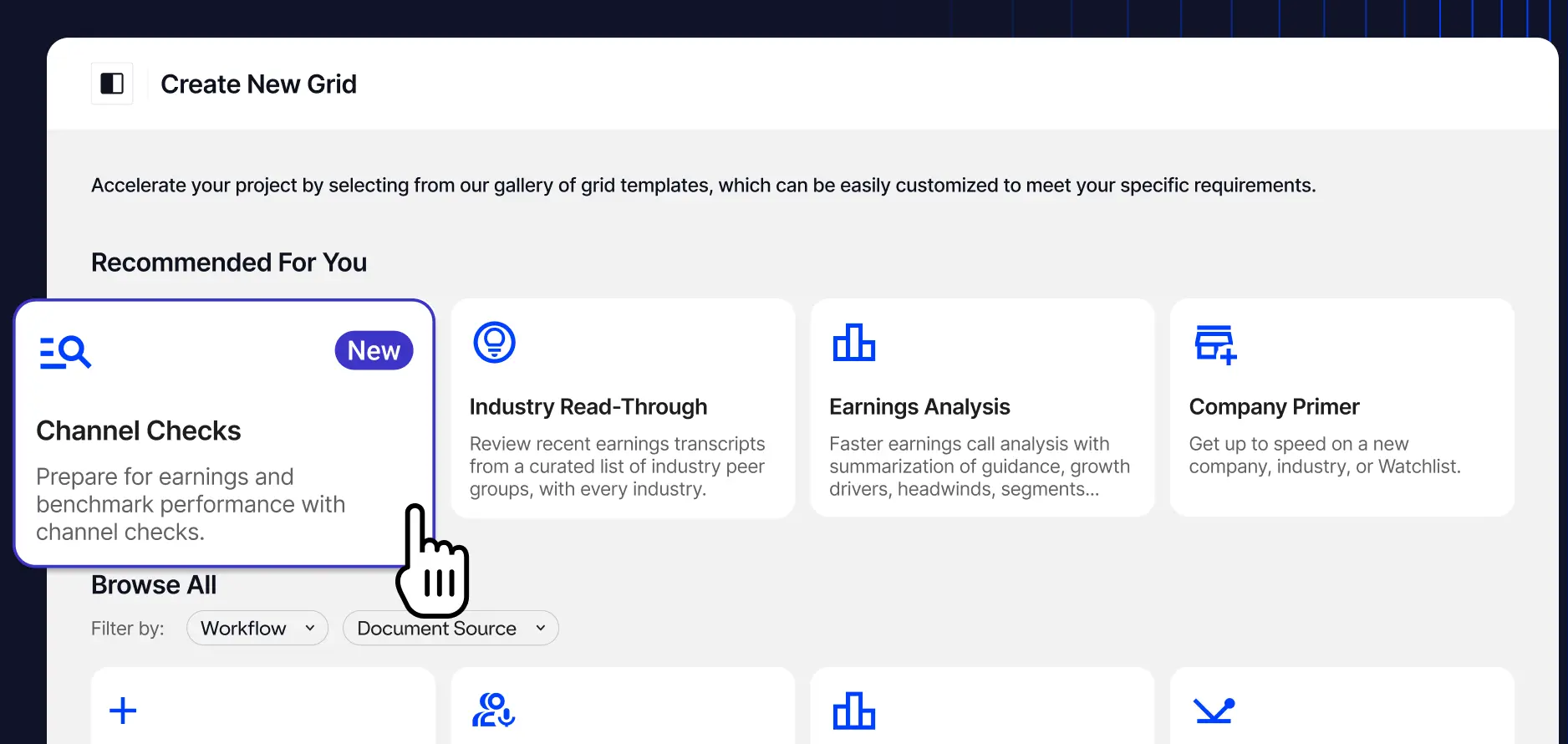
Channel Checks use AI-led interviews to surface pricing movements and demand trends across 350+ tickers weeks before traditional reports reflect them. AI also generates transcript summaries, top investor questions, and topic tags to help users navigate the library faster.
Source: Tegus
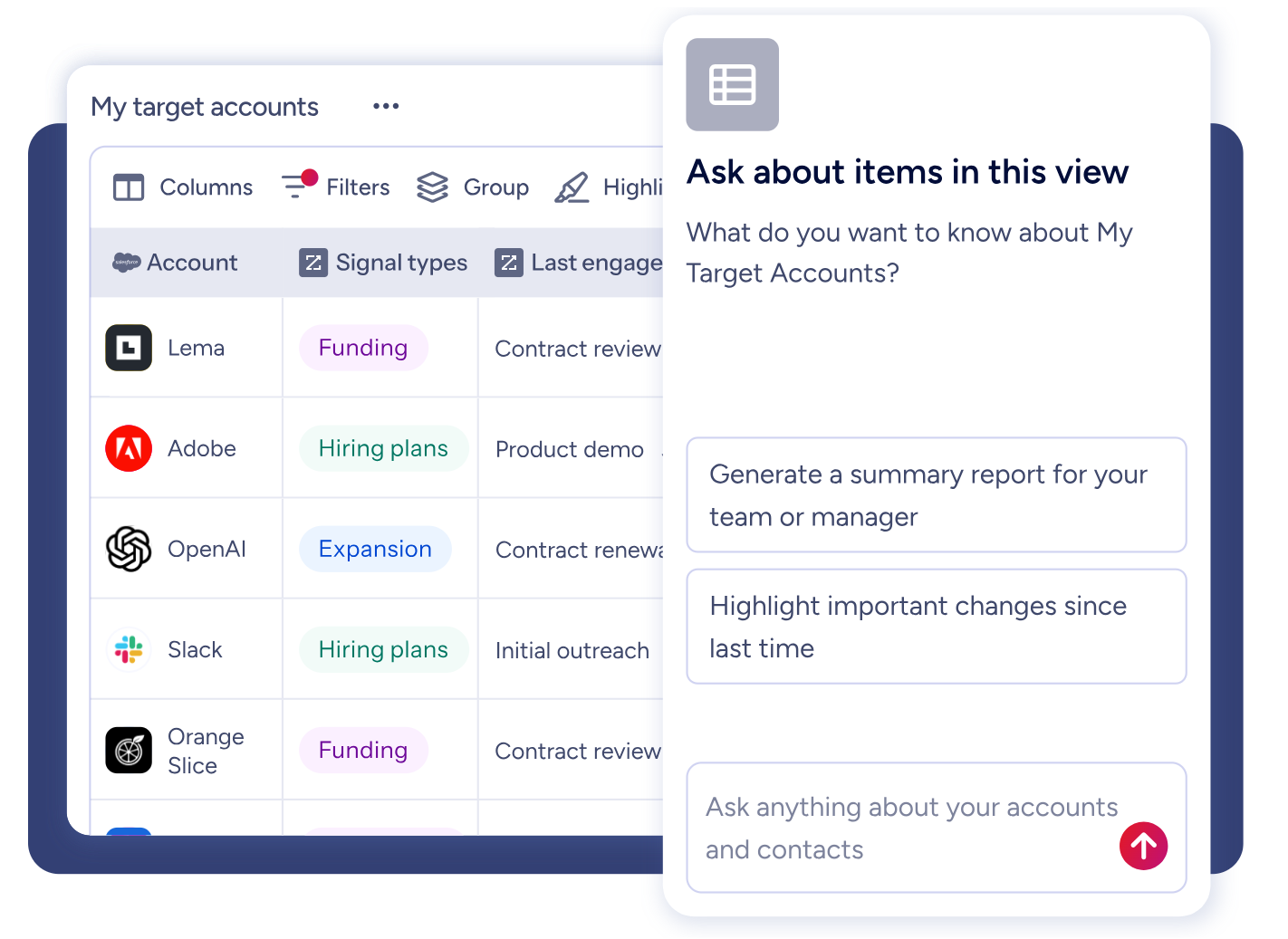
ZoomInfo's AI drives go-to-market execution. The GTM Context Graph reasons across CRM data, conversation transcripts, intent signals, and ZoomInfo's B2B data to identify patterns behind closed-won deals and surface next best actions. AI agents in GTM Workspace handle account research, outreach drafting, CRM updates, and signal monitoring.
Source: ZoomInfo
Guided Intent, exclusive to ZoomInfo, identifies topics historically correlated with deal success rather than requiring manual topic selection. GTM Workspace users report booking nearly 60% more meetings per week and being first to engage with an account in over half of cases.
Levanta's CEO noted: "ZoomInfo's not just a contact data company anymore. They've built a full system of execution. GTM Intelligence actually works the list, writes the outreach, triggers the play, and helps drive predictable growth." (Levanta case study)
Pricing approaches differ significantly
None of the three platforms publish specific prices, but their pricing structures reflect their target markets.
AlphaSense operates on annual subscriptions with two tiers: Market Intelligence (the base, including the full content library and AI workflows) and Enterprise Intelligence (adding AI search on internal content, private cloud hosting options, and custom IT support). Expert Call Services and Canalyst Financial Models are separate add-ons.
Fees are paid annually in advance, and contracts auto-renew with increases of at least 5% or CPI, whichever is greater. Cancellation requires 90 days' written notice. AlphaSense offers a free trial with no credit card required but no permanent free plan.
Tegus pricing now runs entirely through AlphaSense's subscription model. Expert calls are priced at the expert's hourly rate plus a flat $75 transcription fee, with no markups, no credits, and no minimum call commitments.
This transparent per-call pricing contrasts with traditional expert networks, though the platform subscription itself requires a custom quote. Industry commentary indicates that pricing moved upmarket following the acquisition.
ZoomInfo uses a consumption-based pricing model scaled around seats, credits (1 credit = 1 contact or company export), and AI activity. The pricing page shows three product lines (Sales, Marketing, and Chorus) each with tiered plans, but specific prices require custom quotes.
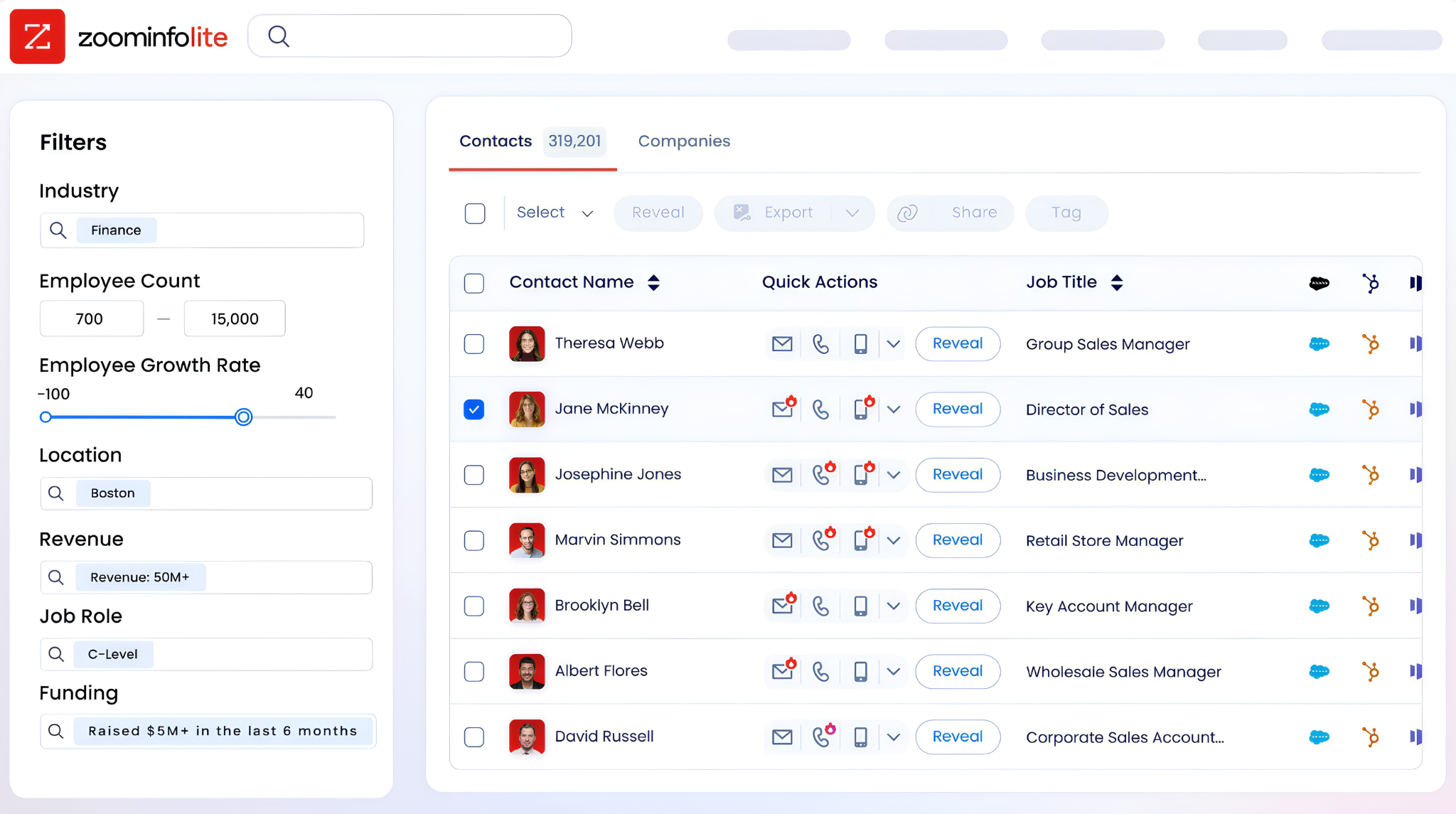
ZoomInfo stands out on accessibility: ZoomInfo Lite is a permanent free tier with access to the B2B database, 10 monthly export credits, and basic features, plus a separate 7-day free trial of the full platform. API access is included in all relevant plans.
Source: ZoomInfo
For enterprise buyers, the key pricing distinction is what you're paying for. AlphaSense and Tegus charge for access to premium content and AI research tools. ZoomInfo charges for access to verified contact data, signals, and GTM execution capabilities. Many organizations use both: a market intelligence platform for research and a GTM platform for execution.
Integration and API access
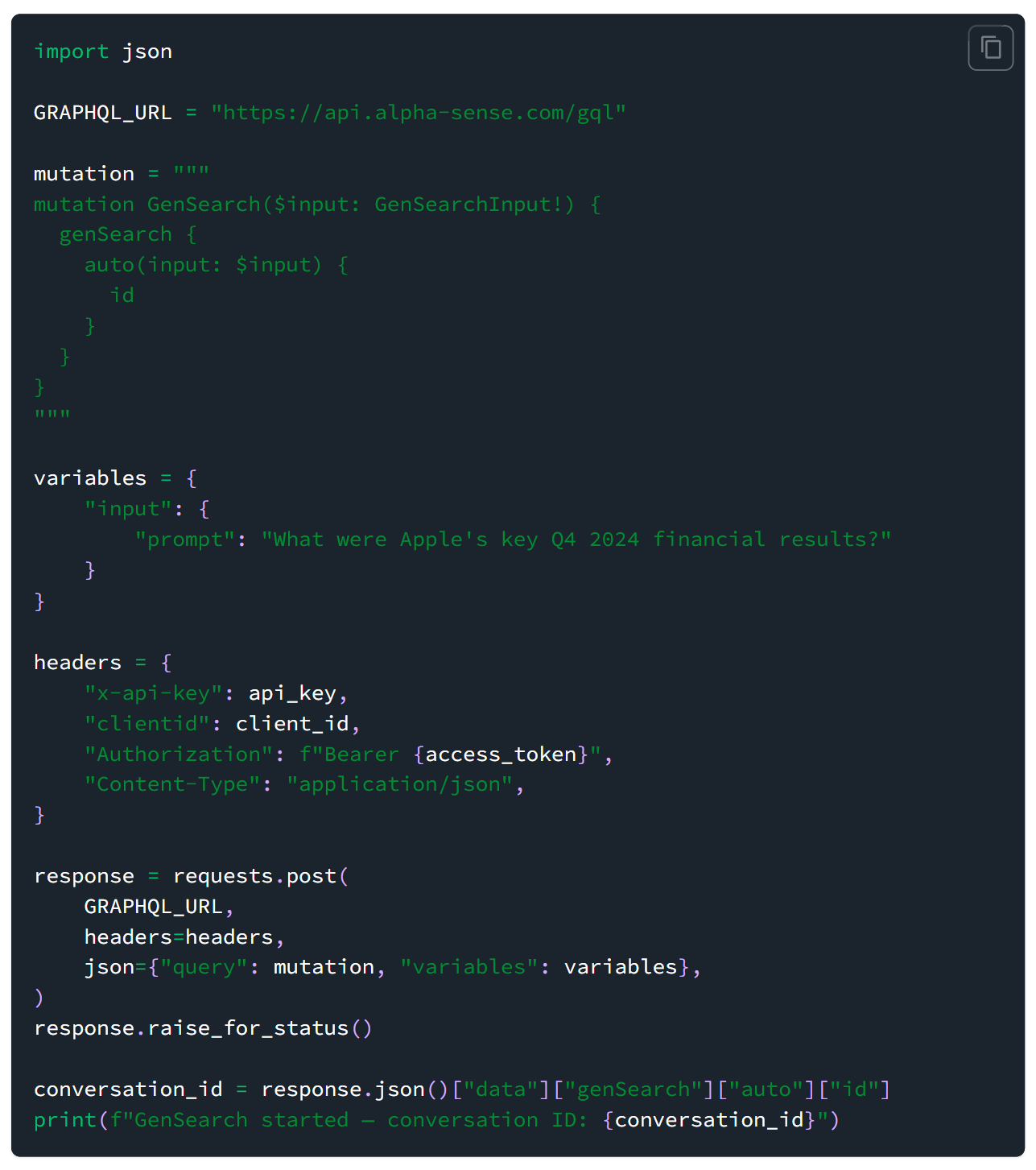
AlphaSense exposes a GraphQL API with four GenSearch modes (Fast, Auto, Think Longer, Deep Research) consuming 10 to 100 credits per request. Enterprise Intelligence customers can ingest internal documents through native connectors for SharePoint, Google Drive, Box, Dropbox, and Amazon S3.
Source: AlphaSense
An MCP server reference implementation is available for AI assistant integration. No iPaaS integrations (Zapier, Make) are documented. API access requires an enterprise subscription with credentials provisioned by the account team.
Tegus has no standalone API. All programmatic access routes through AlphaSense's API, where Tegus expert transcripts are part of the unified document corpus. The AlphaSense Developer Portal provides code examples in Python, JavaScript, and cURL, plus a GraphQL Explorer for interactive testing.
ZoomInfo offers a broader integration surface. The REST API covers Search, Enrich, AI intelligence, Marketing (audience management), and Platform (engagement data) endpoints. The MCP server at mcp.zoominfo.com connects AI models directly to ZoomInfo's data with no custom coding.
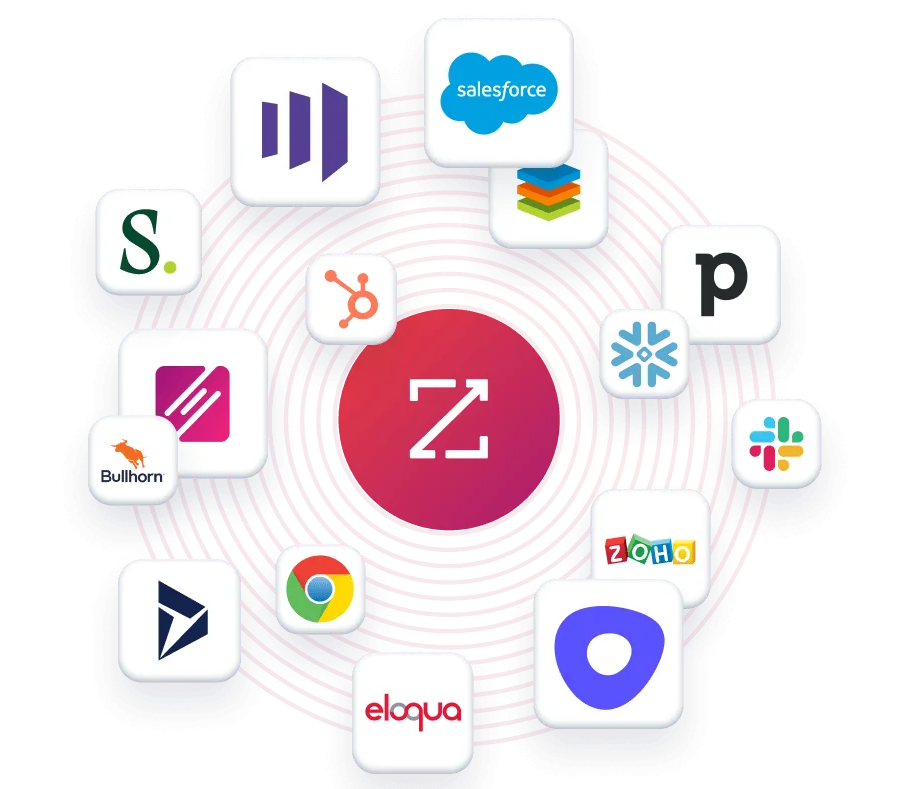
The App Marketplace lists 172+ integration partners across CRM, marketing automation, sales engagement, data warehouses, and communications. Native integrations include Salesforce, HubSpot, Microsoft Dynamics 365, Snowflake, Databricks, and AWS. ZoomInfo data is also available as Cloud Data Cubes for direct ingestion into cloud data platforms.
Source: ZoomInfo
The integration philosophies mirror each platform's purpose. AlphaSense and Tegus integrate with research workflows (internal document repositories and financial tools). ZoomInfo integrates with execution workflows (CRMs, marketing platforms, sales engagement tools, and AI agents).
Security and compliance serve different regulatory contexts
All three platforms maintain enterprise-grade security, but their compliance priorities reflect their user bases.
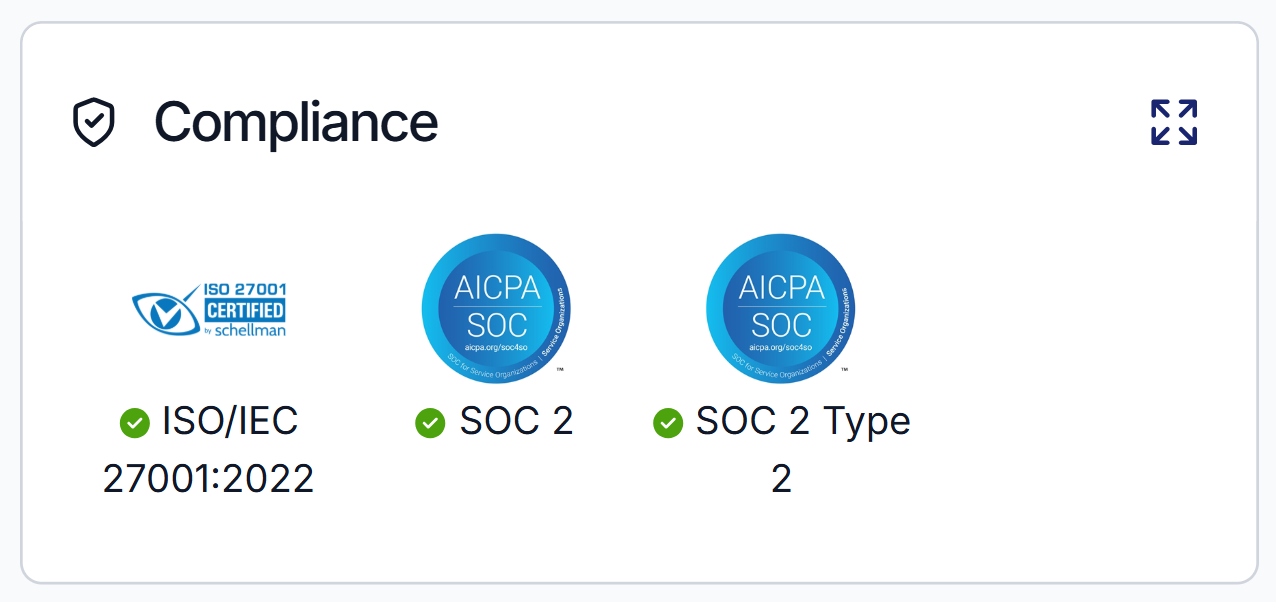
AlphaSense holds SOC 2 Type II and ISO 27001:2022 certifications, complies with GDPR, and encrypts data with AES-256 at rest and HTTPS in transit. Infrastructure runs on AWS with 24/7 staffed data centers. For AI features, AlphaSense never trains LLMs on customer data and uses LLM vendors with zero data retention policies, accessed through AWS Bedrock via private link.
Source: AlphaSense
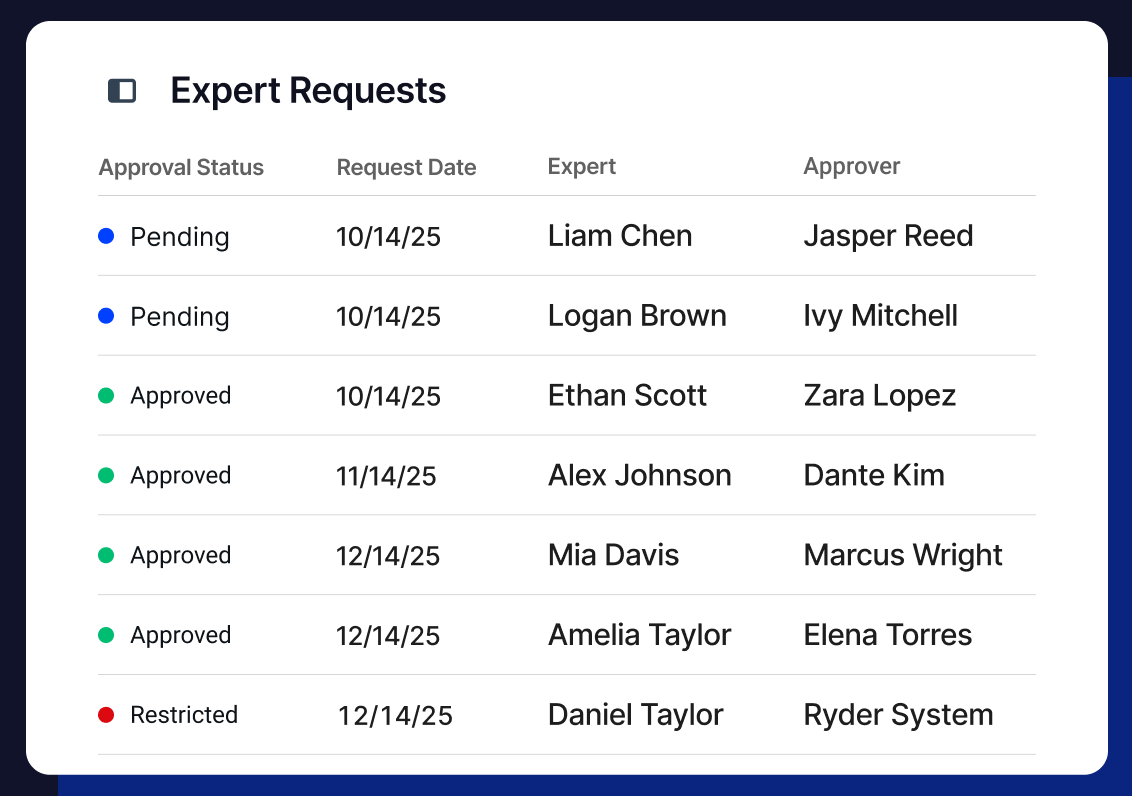
Tegus adds a compliance layer specific to investment research: the MNPI (Material Non-Public Information) compliance framework.
Expert transcripts pass through multi-layered AI and human review before publication, expert identities are anonymized, and experts must be at least six months removed from the target company. This framework is trusted by 90% of top asset management firms, a critical requirement for hedge funds and PE firms operating under strict expert-network policies.
Source: Tegus
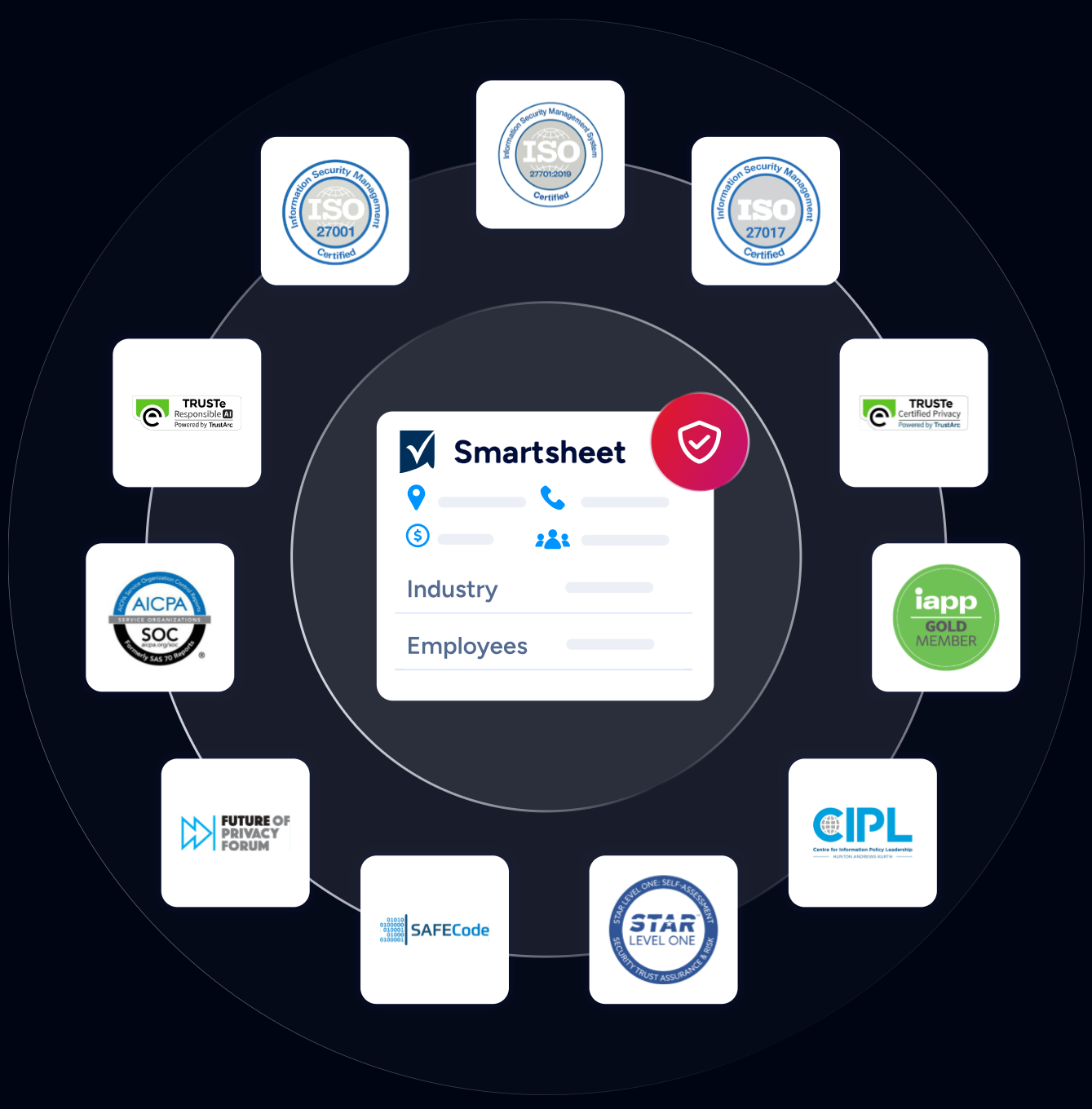
ZoomInfo carries ISO 27001, ISO 27701 (privacy management), SOC 2 Type II, TRUSTe GDPR, and TRUSTe CCPA certifications, all renewed annually.
Source: ZoomInfo
As a B2B data provider, ZoomInfo is a registered data broker in California and Vermont and maintains a dedicated Trust Center covering data privacy, opt-out mechanisms, and collection practices. The ISO 27701 certification addresses privacy information management, reflecting the regulatory scrutiny that comes with maintaining a database of 500M+ professional contacts.
AlphaSense vs. Tegus vs. ZoomInfo: Which should you choose?
These platforms don't compete with each other. They serve different stages of the intelligence-to-action cycle.
Choose AlphaSense if:
You need to synthesize insights across thousands of financial documents, broker reports, and regulatory filings
AI-powered research that compresses weeks of analysis into minutes would transform your team's output
You value premium, paywalled content unavailable through general search engines
Your primary use case is market intelligence, competitive analysis, or corporate strategy research
You want expert transcripts, financial data, and document search in a single platform
Choose Tegus (via AlphaSense) if:
You need firsthand expert perspectives from former executives, customers, and competitors
Investment due diligence, thesis validation, and channel checks drive your research workflow
Pre-built, analyst-quality financial models would save your team significant time each quarter
You want to scale primary research through AI-led expert interviews that run 24/7
Private company coverage is a priority for PE, VC, or corporate development work
Choose ZoomInfo if:
You need verified contact data, direct dials, and business emails to reach decision-makers
Your team needs to move from market intelligence to pipeline generation and outreach
Intent signals and buyer behavior data would help you prioritize accounts
You want AI that drafts outreach, updates CRM, and surfaces next best actions for sellers
You need data accessible across CRM, marketing automation, or custom AI agents via API and MCP
See ZoomInfo in action with a free trial, or start with the permanent ZoomInfo Lite tier.
The most effective enterprise teams don't choose between research intelligence and go-to-market intelligence. They use both. AlphaSense (with Tegus) tells you what's happening in your market and why.
ZoomInfo tells you who to reach, when to engage, and helps you execute. Together, they close the loop between insight and action, so the intelligence your research team surfaces translates into pipeline, deals, and revenue.
Smartsheet's Senior Manager of Sales Technology Enablement described ZoomInfo's role in their workflow: "ZoomInfo is our one source of truth for account data, and even more so for contact data. There's no other provider in the market that provides you with that level of detail... Without ZoomInfo, it would be extremely difficult, if not impossible, to achieve our business objectives." (Smartsheet case study)
AlphaSense vs. Tegus vs. ZoomInfo FAQ
What happened to Tegus as a standalone product?
AlphaSense acquired Tegus for approximately $930 million in July 2024. Tegus now operates as a named product division within AlphaSense rather than as an independent company. Its expert transcript library, expert call services, and Canalyst financial models are accessed through the AlphaSense platform, though they carry separate pricing as add-ons to the base subscription.
Can AlphaSense and ZoomInfo be used together?
Yes, and many enterprise teams do exactly this. AlphaSense provides research intelligence (market trends, competitive dynamics, expert perspectives, financial analysis), while ZoomInfo provides go-to-market intelligence (verified contacts, buyer intent signals, account prioritization, and outreach automation).
A corporate strategy team might use AlphaSense to identify acquisition targets, then use ZoomInfo to find and contact decision-makers at those companies.
Which platform has better AI capabilities?
Each platform's AI serves a different purpose. AlphaSense's Generative Search and Deep Research synthesize insights across 500 million premium documents with sentence-level citations. Tegus's AI Agent Interviewer autonomously conducts expert calls 24/7.
ZoomInfo's GTM Context Graph reasons across CRM data, conversation transcripts, and intent signals to identify deal patterns and surface recommended actions for sellers. The "best" AI depends on whether you need research synthesis, expert-scale primary research, or go-to-market execution.
How do the pricing models compare?
All three require custom quotes for enterprise pricing. AlphaSense charges annual subscriptions with Expert Calls and Canalyst models as separate add-ons, and contract renewals increase by at least 5% annually. Tegus expert calls are priced at the expert's hourly rate plus a $75 transcription fee with no markups.
ZoomInfo uses consumption-based pricing scaled around seats and credits, with a permanent free tier (ZoomInfo Lite) and a 7-day free trial available.
Which platform is best for investment research?
AlphaSense with the Tegus add-ons is the strongest combination for investment research. AlphaSense provides AI-powered search across broker research, regulatory filings, and earnings transcripts. Tegus contributes 260,000+ proprietary expert interview transcripts and 4,000+ Canalyst financial models.
Together, they cover both the published document universe and the qualitative expert insights that investment professionals need for thesis validation and due diligence.
Which platform provides verified contact data for sales prospecting?
Only ZoomInfo. AlphaSense and Tegus are research platforms. They help you understand companies and markets but don't provide contact information like direct-dial phone numbers, verified business emails, or organizational charts for sales outreach. ZoomInfo's database of 500M contacts with 135M+ verified phone numbers and 200M+ verified business emails is built for go-to-market execution.
Does Tegus cover private companies?
Yes. The Tegus expert transcript library covers both public and private companies across 27,000+ companies. This private market coverage is a key reason private equity and venture capital firms use Tegus, as private companies typically lack the public filing and broker research coverage available for public companies.
ZoomInfo also covers private companies, but from a B2B contact and company intelligence perspective rather than expert research.
What is ZoomInfo's GTM Context Graph, and why does it matter?
The GTM Context Graph is ZoomInfo's intelligence layer that processes 1.5 billion data points daily, combining ZoomInfo's B2B data with a customer's CRM records, conversation transcripts, and behavioral signals. It captures not just what happened in a deal, but why.
For example, it can identify that executive sponsorship entering at a specific stage, combined with ROI-focused questions, matches the pattern behind closed-won deals in your segment. This contextual reasoning powers AI-driven prioritization, outreach, and forecasting across GTM Workspace, GTM Studio, and any tool connected via API or MCP.
