
Choosing between Appian and Salesforce for your enterprise comes down to five questions:
Do you need a platform to orchestrate complex, multi-system business processes, or one built for managing customer relationships and sales pipelines?
Is your primary challenge building custom enterprise applications fast, or deploying pre-built CRM capabilities across your organization?
How important are compliance certifications like FedRAMP High and DISA IL5 to your procurement process?
Do you want a platform that prescribes best practices for sales and service, or one that lets you model any process from scratch?
Does your enterprise platform have access to the verified B2B data it needs to produce revenue?
In short, here's what we recommend:
Appian is the process orchestration platform for large enterprises and government agencies that need to automate compliance-heavy workflows spanning multiple systems. It combines low-code development, RPA, intelligent document processing, and AI agents in a single platform, and holds Leader positions in both the 2025 Gartner MQ for BOAT and Enterprise LCAP.
Its Data Fabric connects siloed systems without data migration, and the Appian Guarantee commits to delivering a first application in 8 weeks. But Appian has no pre-built CRM, no marketing automation, and no sales pipeline management. It's a platform for building custom solutions, not a turnkey business application.
Salesforce is the world's #1 CRM, serving over 150,000 companies with pre-built applications for sales, service, marketing, commerce, and analytics. With $41.5 billion in annual revenue and Gartner MQ Leader positions across six product categories, Salesforce covers more ground for customer-facing teams than any competitor.
Its Agentforce AI agents can resolve support cases, draft sales emails, and coach reps autonomously. But that breadth creates complexity: pricing involves multiple clouds, credit types, and add-on layers, and implementation typically requires partners.
Both platforms are enterprise-grade. Both offer AI capabilities and workflow automation. But neither includes the verified B2B contact data, company intelligence, and buying signals that power the sales and marketing processes running on them. That data layer matters regardless of which platform you choose.
ZoomInfo is a B2B data and GTM platform built on 500M contacts, 100M companies, 135M+ verified phone numbers, and 200M+ verified business email addresses. Its GTM Context Graph processes 1.5B + data points daily, combining this data with your CRM records, conversation transcripts, and behavioral signals to reveal not just what happened in a deal, but why.
Your team can act on that intelligence through the GTM Workspace for sellers, GTM Studio for marketers and RevOps, or the Enterprise API and MCP server in any front-end. ZoomInfo integrates natively with Salesforce and can feed any platform (including Appian), making it the data layer that powers whichever enterprise stack you choose.
If enriching your enterprise platform with verified B2B intelligence sounds like the missing piece, see how ZoomInfo works with your stack.
Appian vs. Salesforce vs. ZoomInfo at a glance
Appian | Salesforce | ZoomInfo | |
|---|---|---|---|
Core purpose | Process orchestration and custom app development | CRM and customer engagement | B2B data intelligence and GTM execution |
Primary strength | Workflow automation across systems | Pre-built sales, service, and marketing apps | Verified B2B contact and company data |
AI capabilities | AI Agents inside governed process workflows | Agentforce autonomous agents across CRM | GTM Context Graph (1.5B+ data points/day) |
Low-code development | SAIL framework built for process modeling | Lightning Platform, Flow, App Builder | Not applicable (data and intelligence layer) |
Data architecture | Data Fabric (virtual, no migration) | Data Cloud (unified customer profiles) | 500M contacts, 100M companies, verified phones and emails |
CRM included | No | Yes (market leader) | Enriches any CRM |
Pricing transparency | No public pricing | Published tiers ($25–$550/user/month) | Custom-quoted, consumption-based |
Compliance certifications | FedRAMP High, DISA IL2-5, HIPAA, SOC1/2/3 | ISO 27001, SOC1/2/3, FedRAMP (Gov Cloud) | ISO 27001, ISO 27701, SOC 2 Type II, GDPR, CCPA |
Best for | Regulated industries, government, complex processes | Customer-facing teams across all industries | Sales, marketing, and RevOps teams needing verified data |
These platforms solve fundamentally different problems
Appian and Salesforce start from opposite ends of the enterprise.
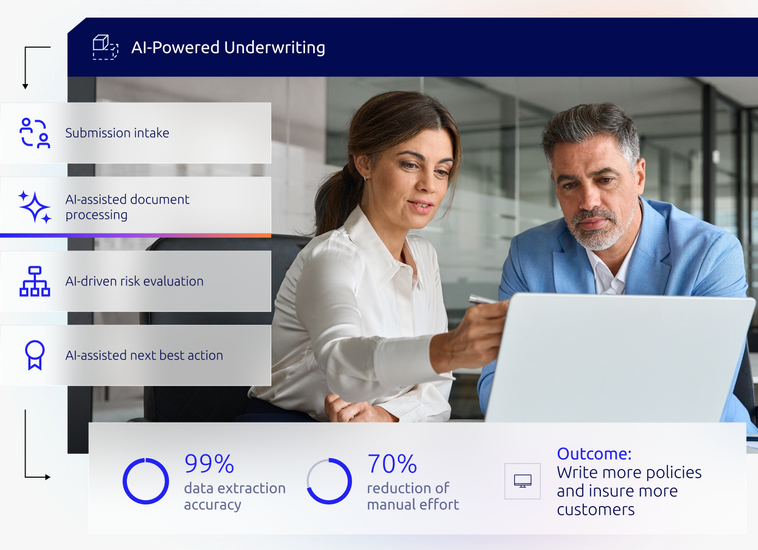
Appian starts from a blank canvas. It gives enterprises the tools to model, build, and automate any business process, no matter how complex or cross-functional. Need to orchestrate a claims adjudication workflow that spans five legacy systems, requires document extraction, human review, and regulatory compliance logging? Appian was built for that.
Source: Appian
But Appian doesn't include a CRM. It doesn't ship with sales pipeline management, marketing automation, or pre-built customer service modules. If you need those, you build them on Appian or integrate with a platform that has them.
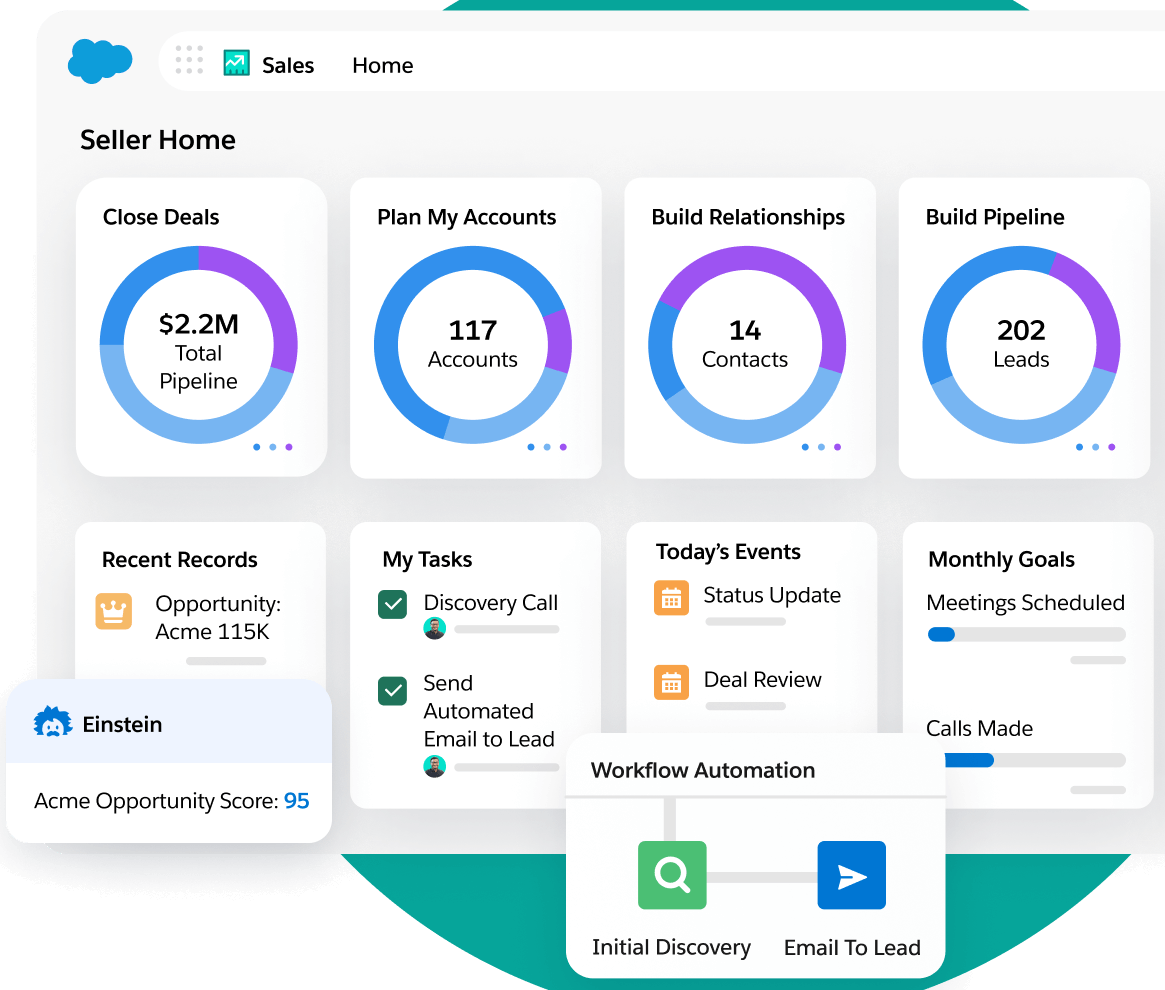
Salesforce starts from the opposite direction. It ships with what customer-facing organizations need: Sales Cloud for pipeline management, Service Cloud for case resolution, Marketing Cloud for campaign orchestration, and Commerce Cloud for digital storefronts.
Source: Salesforce
You configure, customize, and extend, but you don't build from scratch. Salesforce has held the #1 CRM market share position for over a decade because its pre-built applications cover what most businesses need on day one.
The trade-off? Salesforce is prescriptive. When your process fits its model, deployment is fast. When it doesn't, you're either adapting your process to Salesforce or building custom solutions on the Salesforce Platform, which works but lacks the process modeling depth that defines Appian.
The organizations where this comparison matters most are large enterprises that need both: complex process orchestration and customer relationship management. Many end up running both platforms, with Appian handling back-office process automation and Salesforce managing front-office customer engagement.
Low-code development: process modeler vs. application platform
Both Appian and Salesforce offer low-code development, but they approach it from opposite directions.
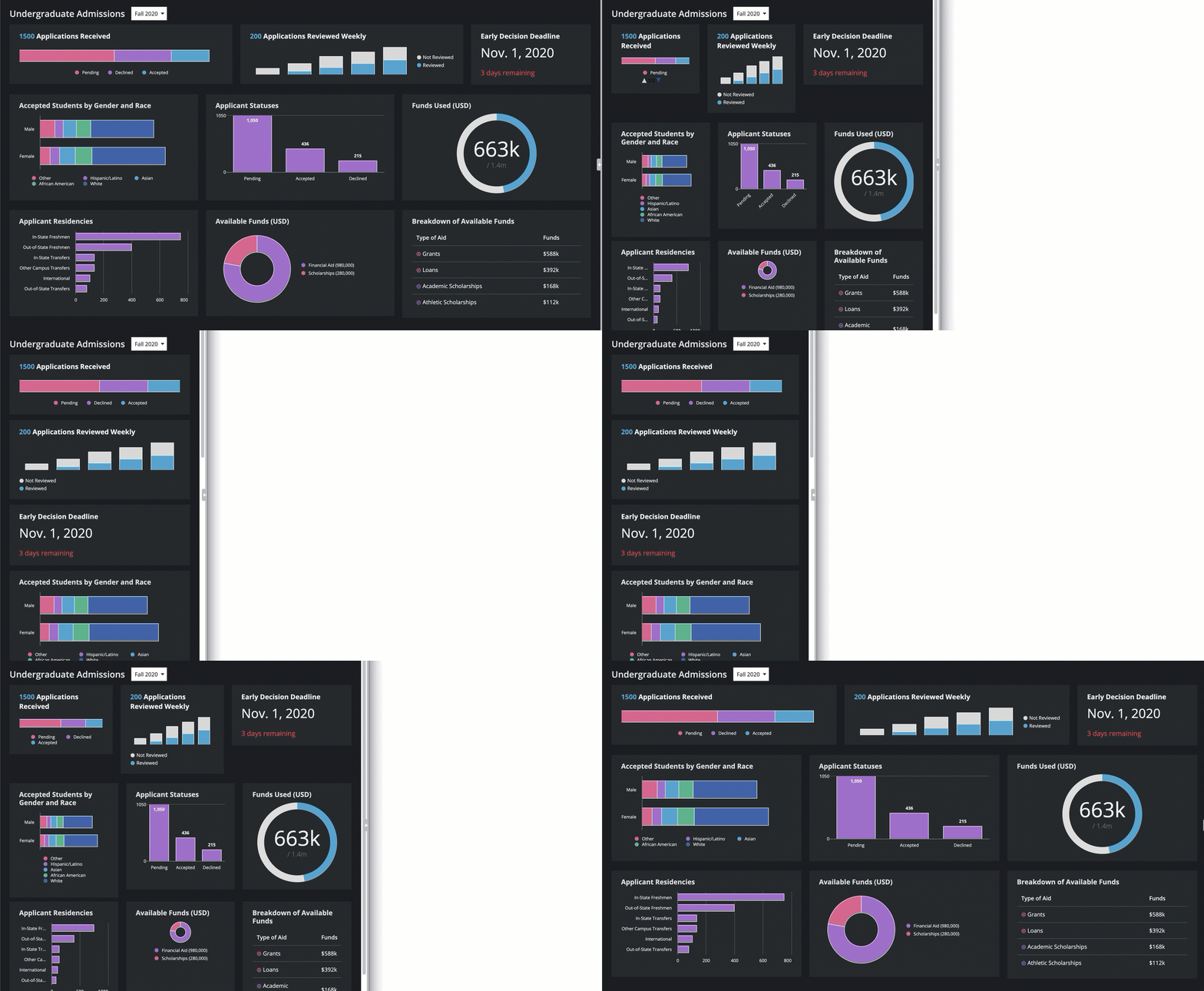
Appian's low-code environment centers on BPMN-aligned process models, visual workflow diagrams that serve as the running application. The SAIL framework produces responsive web and native mobile experiences from a single interface definition without separate builds.
Source: Appian
Developers work with 360+ pre-built smart services, record types for data modeling, and AI-assisted development via Composer that generates application plans from requirements. Gartner ranked Appian #1 for Business Workflow Automation with Integration use case in its 2023 Critical Capabilities for Low-Code report.
The ceiling appears when you need pixel-perfect UIs or advanced front-end behaviors. G2 and TrustRadius reviewers consistently flag the SAIL framework's limited flexibility in UI design. And despite the "low-code" label, getting the most from Appian requires developers who know its proprietary design patterns.
Salesforce's low-code tools include Flow for workflow automation, App Builder for drag-and-drop application assembly, Lightning Web Components for custom UIs, and Agentforce Vibes for AI-assisted coding.
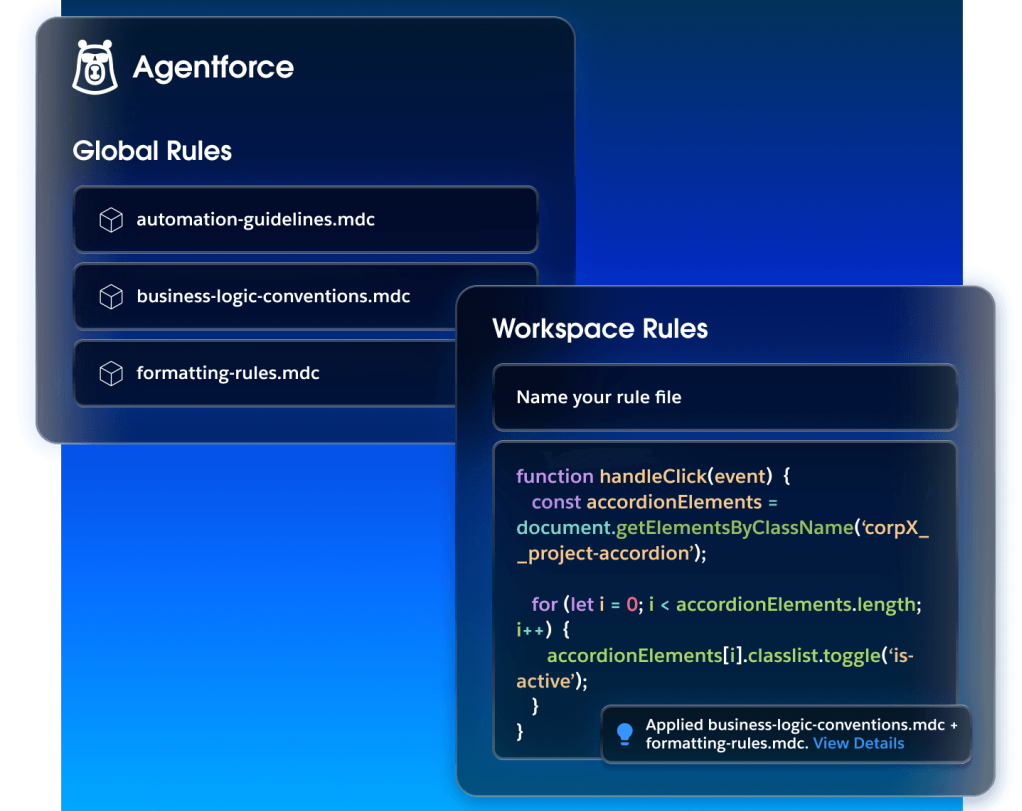
Source: Salesforce
The Salesforce Platform is a 2025 Gartner MQ Leader for Enterprise LCAP, and the AppExchange marketplace offers many capabilities as installable packages rather than custom builds, with 9,000+ apps and 14+ million installs.
But Salesforce's low-code is optimized for extending its CRM, not for building arbitrary enterprise applications. Flow handles CRM-adjacent automation well but lacks the process modeling depth of a dedicated BPM engine. Building a complex multi-system orchestration on the Salesforce Platform is possible, but it works against the grain of the platform's design.
AI strategies reflect each platform's identity
Both platforms have invested heavily in AI, but their approaches mirror their core philosophies.
Appian's AI operates inside governed process boundaries. AI Agents built in Agent Studio inherit process-level controls: role-based access, SLAs, human escalation triggers, and complete audit trails. The focus is on AI that's accountable and explainable, operating within defined workflows rather than autonomously across the enterprise.
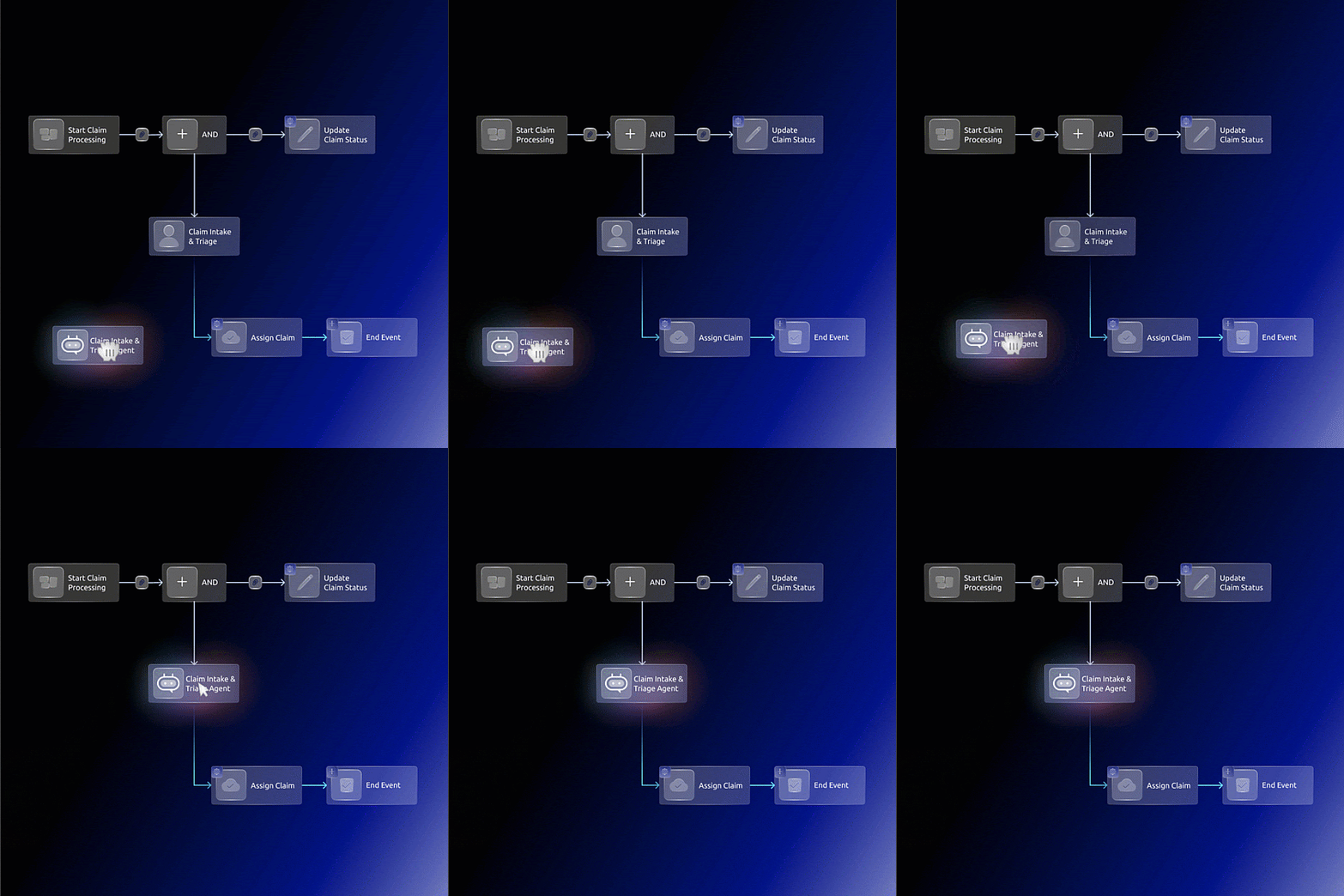
Source: Appian
Private AI architecture keeps data within Appian's compliance boundary and never trains shared models.
For regulated industries where AI governance is a procurement requirement (healthcare, financial services, defense), this controlled approach solves a real problem.
Salesforce's AI aims for autonomy. Agentforce agents can perceive, plan, and execute without constant human intervention, powered by the Atlas Reasoning Engine, which loops through reason, act, observe, and adapt.
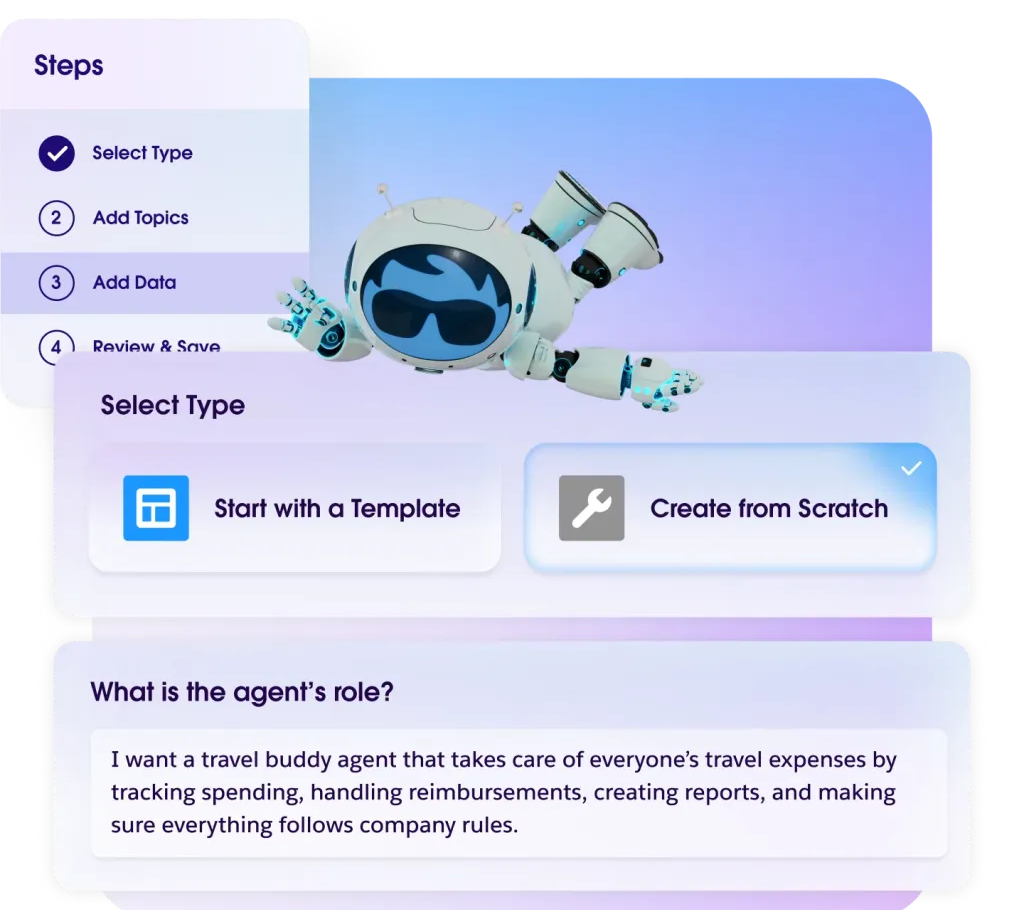
Source: Salesforce
The scope is broader: pre-built agents for sales, service, marketing, commerce, IT, and field service operate across channels including web, email, SMS, Slack, and WhatsApp. Salesforce reports Agentforce resolves 85% of support requests without human escalation.
Salesforce's approach trades some of Appian's process-level control for greater autonomy and breadth. The Einstein Trust Layer provides guardrails (zero data retention with LLM partners, PII masking, toxicity detection), but the agents operate across the CRM rather than within defined process flows.
What neither platform's AI addresses is the quality of the data feeding it. An AI agent drafting a sales email is only as good as the contact data behind it. An AI agent prioritizing accounts is only as good as the company and intent signals informing its decisions.
The data intelligence layer both platforms need
Enterprise platforms automate workflows and manage relationships. But workflows and relationships run on data, and the quality of that data determines whether AI agents draft relevant emails or generic ones, whether process automation routes cases to the right team or the wrong one, and whether pipeline forecasts reflect reality or wishful thinking.
This is where ZoomInfo provides something neither Appian nor Salesforce includes natively: a continuously verified B2B data layer.
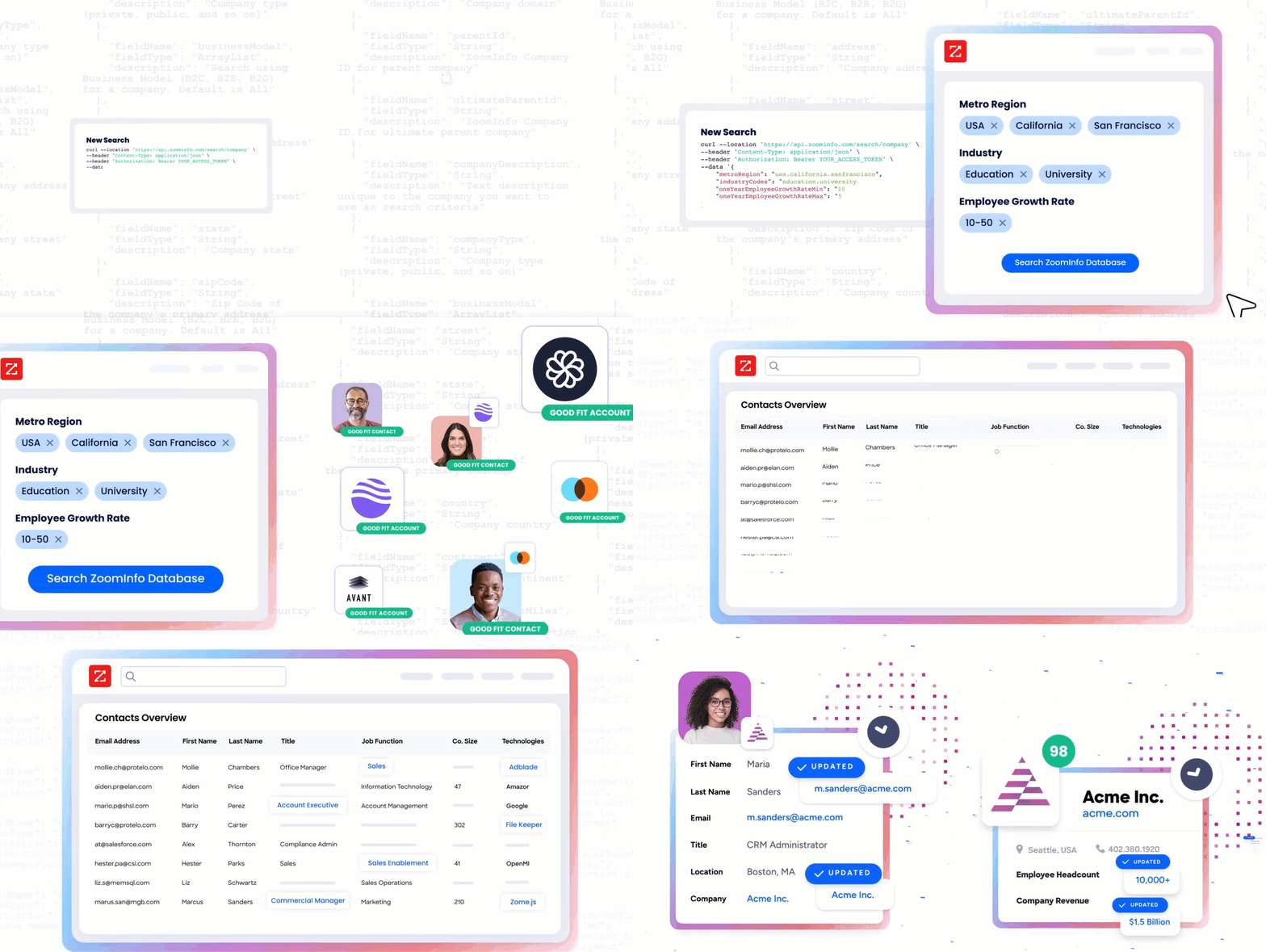
ZoomInfo's GTM Context Graph processes 1.5B + data points daily, combining third-party B2B intelligence with your CRM records, conversation transcripts, and behavioral signals. The result isn't a static database. It's a layer that captures why deals move or stall, which accounts match your win patterns, and which contacts are the actual decision-makers.
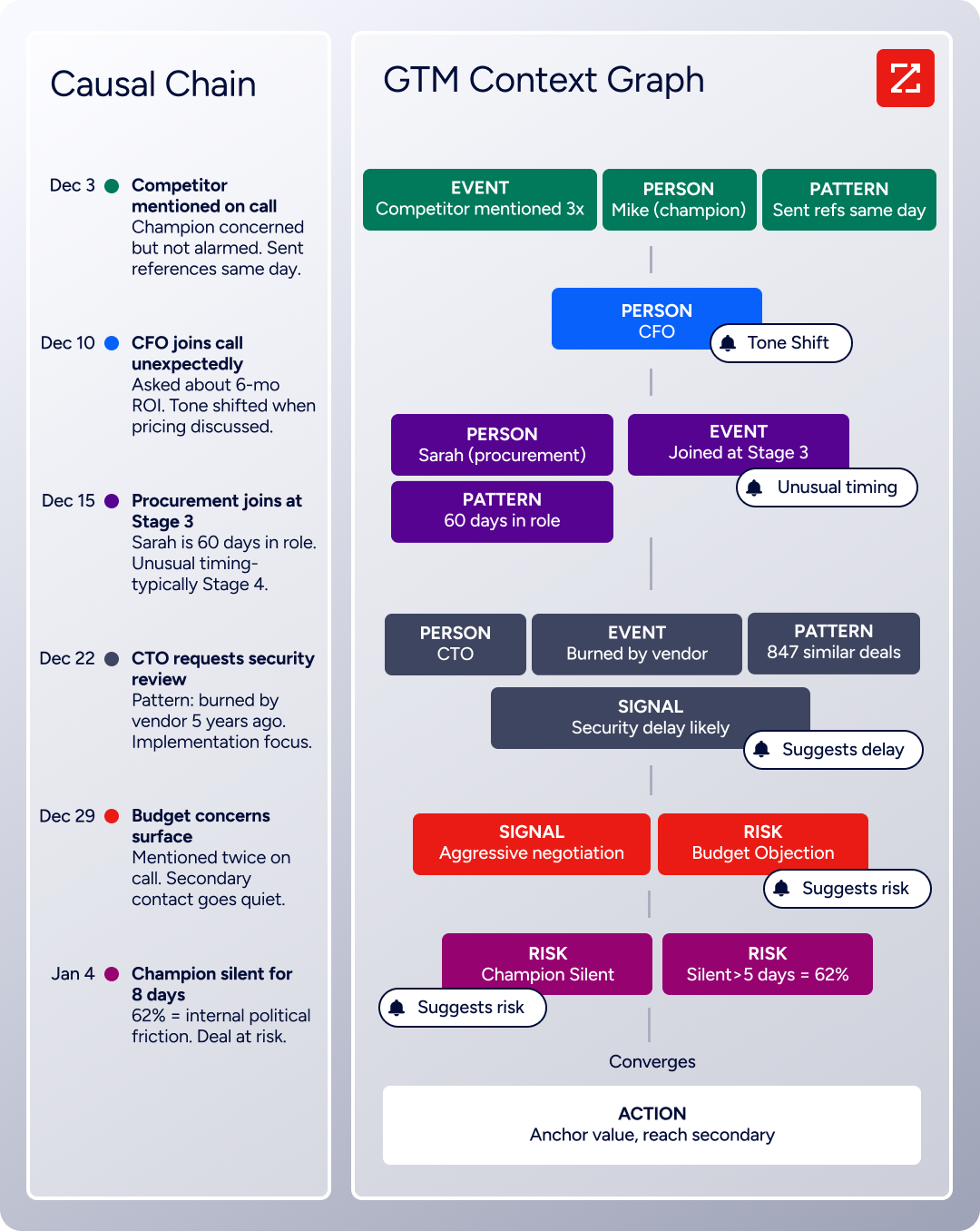
Source: ZoomInfo
For Salesforce users, the integration is direct. ZoomInfo is a featured native integration that enriches CRM records with verified contacts, company data, and buying signals. Salesforce's own research indicates 90% of CRM data is incomplete. ZoomInfo closes that gap with up to 95% accuracy on first-party data, 120M direct-dial phone numbers, and 200M+ verified business email addresses.
For a closer look at how Salesforce and ZoomInfo stack up against each other, see our Salesforce vs. ZoomInfo comparison.
For Appian users, ZoomInfo's Enterprise API and MCP server deliver the same intelligence into any application built on the Appian platform. Appian's API Integration framework supports REST APIs with OAuth 2.0 authentication, matching what ZoomInfo's API uses.
Source: ZoomInfo
When a process on either platform needs to identify the right person to contact, verify their current role, or assess whether their company is actively in-market, that intelligence has to come from somewhere. ZoomInfo provides it at a scale and verification level that internal data teams can't match.
In a Fortune 500 competitive RFP analyzing 25 million contacts across vendors, the independent consultant concluded that "no other competitor came even close." (ZoomInfo Q4 2025 Earnings Call)
Data architecture: virtual federation vs. unified profiles
How each platform handles enterprise data reveals its architectural priorities.
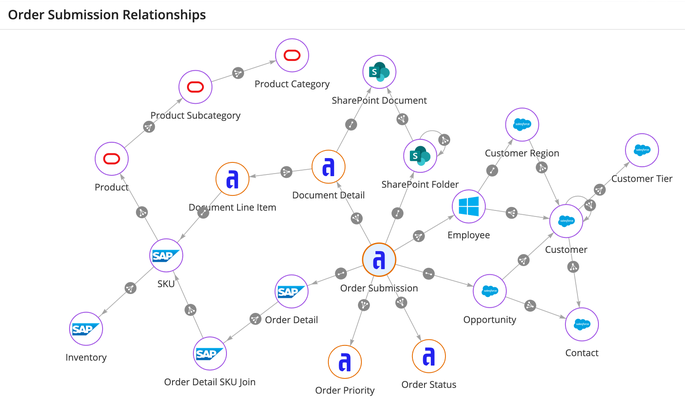
Appian's Data Fabric virtualizes data across disparate systems without migration. It connects directly to source databases (MySQL, Oracle, SQL Server, PostgreSQL, and more) and presents a unified data model to applications. Row-level security propagates automatically.
Source: Appian
For enterprises with dozens of legacy systems that can't be migrated, this virtual approach reduces risk. The Premium tier removes row limits entirely.
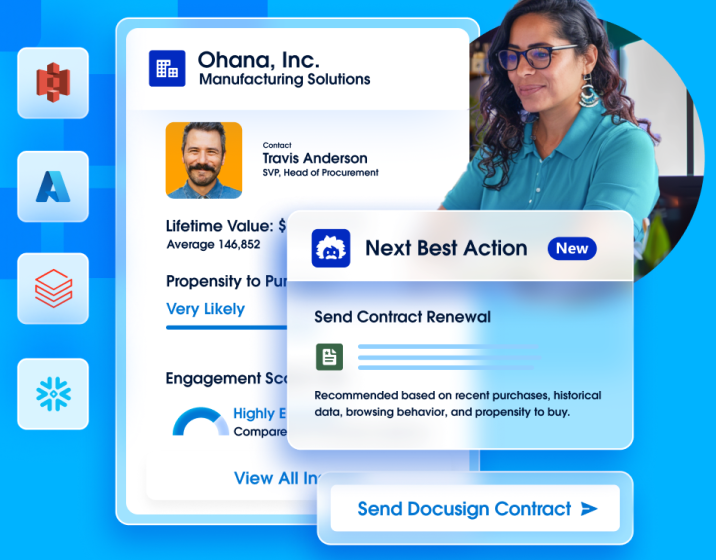
Salesforce's Data Cloud takes a different approach: it ingests and harmonizes data from multiple sources into unified customer profiles. 200+ pre-built connectors bring in data from Salesforce clouds, databases, and third-party apps.
Source: Salesforce
A zero-copy architecture allows direct connections to Snowflake, Databricks, Google BigQuery, and AWS without duplication. Data Cloud ingested 112 trillion records in FY26 and is named a Gartner MQ Leader for Customer Data Platforms.
Both approaches solve data fragmentation, just differently. Appian's Data Fabric is optimized for operational processes (reading and writing across systems in real time). Salesforce's Data Cloud is optimized for customer intelligence (building unified profiles that power AI agents and personalization).
But both depend on having quality data in the first place.
ZoomInfo's value sits upstream: enriching the records that flow through Appian's Data Fabric or land in Salesforce's Data Cloud with 300+ company attributes, verified contact information, and real-time buying signals. The architecture matters, but only if the data flowing through it is accurate and complete.
Snowflake uses ZoomInfo for at least one-third of the most critical data features in their Account Propensity Scoring model. Accounts tracked with ZoomInfo-powered scores showed 90% higher opportunity open rates and 2x higher customer conversion rates. (Snowflake Case Study)
Pricing and total cost of ownership
Appian does not publish pricing. The per-user, per-month, per-app model across three tiers (Standard, Advanced, Premium) requires engaging Appian's sales team for any quote. Reviewers across G2, Capterra, and TrustRadius cite cost as the most frequent concern, describing Appian as expensive relative to other SaaS options.
Additional cost layers include RPA bot licenses (5 on Standard, 25 on Advanced, unlimited on Premium), IDP page volumes (50,000/month on Premium only), AI action tokens (200K–1M/month by tier), tiered Success Plans, and implementation services.
Salesforce publishes its tier structure, making initial comparison easier. Sales Cloud and Service Cloud range from a free suite (2 users max) through Starter ($25/user/month) to Agentforce 1 ($550/user/month). But published prices are just the starting point. Agentforce consumption costs extra at $2 per conversation or $0.10 per action via Flex Credits. Data Cloud credits cost $500 per 100,000.
Premier Success Plans add 30% of net license fees. Marketing Cloud starts at $1,500/org/month. And over 70% of implementations are partner-led, adding another cost dimension. A 6% price increase on Enterprise and Unlimited tiers took effect in August 2025.
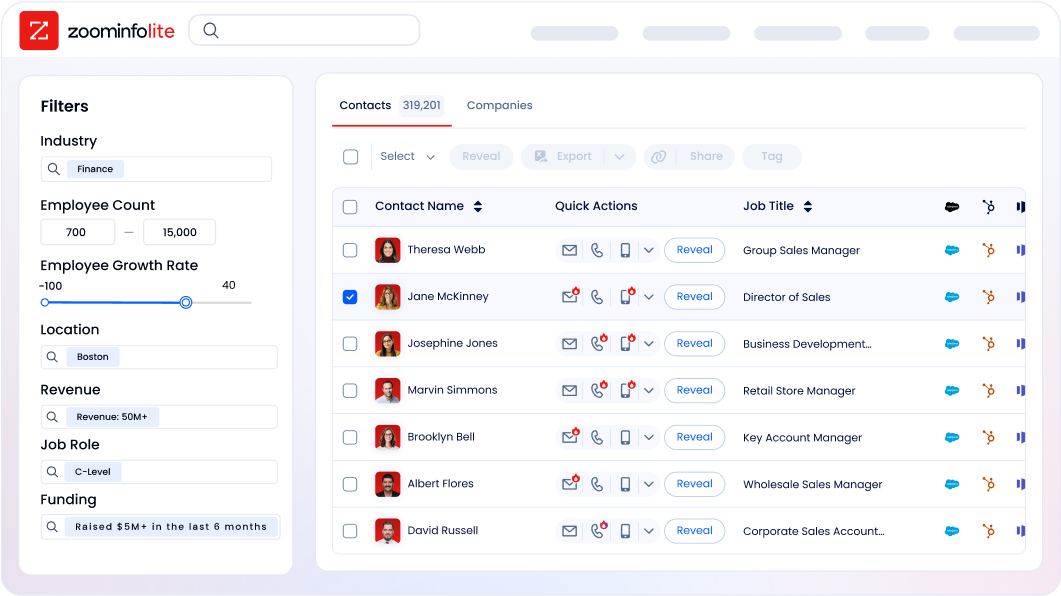
ZoomInfo uses custom-quoted, consumption-based pricing scaled around data access, API consumption, and AI activity. A permanent free tier, ZoomInfo Lite, provides access to the B2B database with 10 monthly export credits and no time limits. Paid tiers (Professional, Advanced, Enterprise) are quoted by sales. API access is included in all relevant plans.
Source: ZoomInfo
For budgeting purposes: Appian and Salesforce are both large enterprise investments with costs that compound as you add modules, users, and consumption. The real question is total cost of ownership across the full stack, including the data intelligence layer.
Security and compliance: where Appian has an edge
Both platforms carry enterprise security certifications, but Appian's compliance portfolio runs deeper in regulated and government sectors.
Appian holds SOC1/2/3, FedRAMP Moderate and High, DISA Impact Levels IL2/IL4/IL5, HIPAA, HITRUST, PCI-DSS, FDA 21 CFR Part 11, and ISO 27001/27017/27018. The platform supports four deployment models: cloud, self-managed, hybrid, and on-premises, giving organizations with data residency or air-gapped requirements full control over data placement.
Appian Edge serves disconnected, denied, intermittent, and limited (DDIL) environments for military and field operations. The 99.95% uptime SLA spans three AWS Availability Zones with no single points of failure.
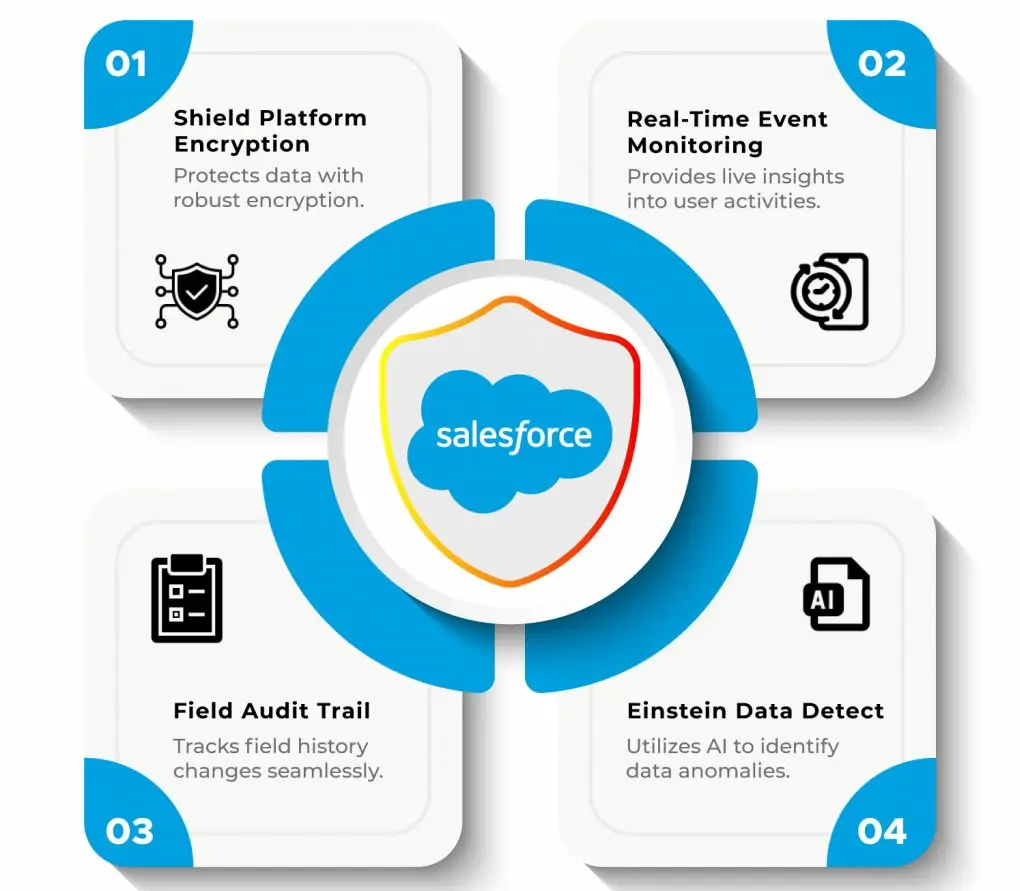
Salesforce holds ISO 27001/27017/27018, SOC1/2/3, and FedRAMP through its Government Cloud. Salesforce Shield adds event monitoring, platform encryption with BYOK, and field audit trail as a premium add-on. Hyperforce enables deployment on public cloud infrastructure with regional data residency. The Einstein Trust Layer provides zero data retention with LLM partners for AI operations.
Source: Salesforce
For defense agencies, intelligence organizations, and other environments requiring IL4/IL5 or air-gapped deployments, Appian's compliance portfolio is broader.
For commercial enterprises, both platforms meet standard security requirements. Salesforce's larger customer base provides battle-tested reliability, while Appian's narrower focus allows deeper specialization in compliance-heavy environments.
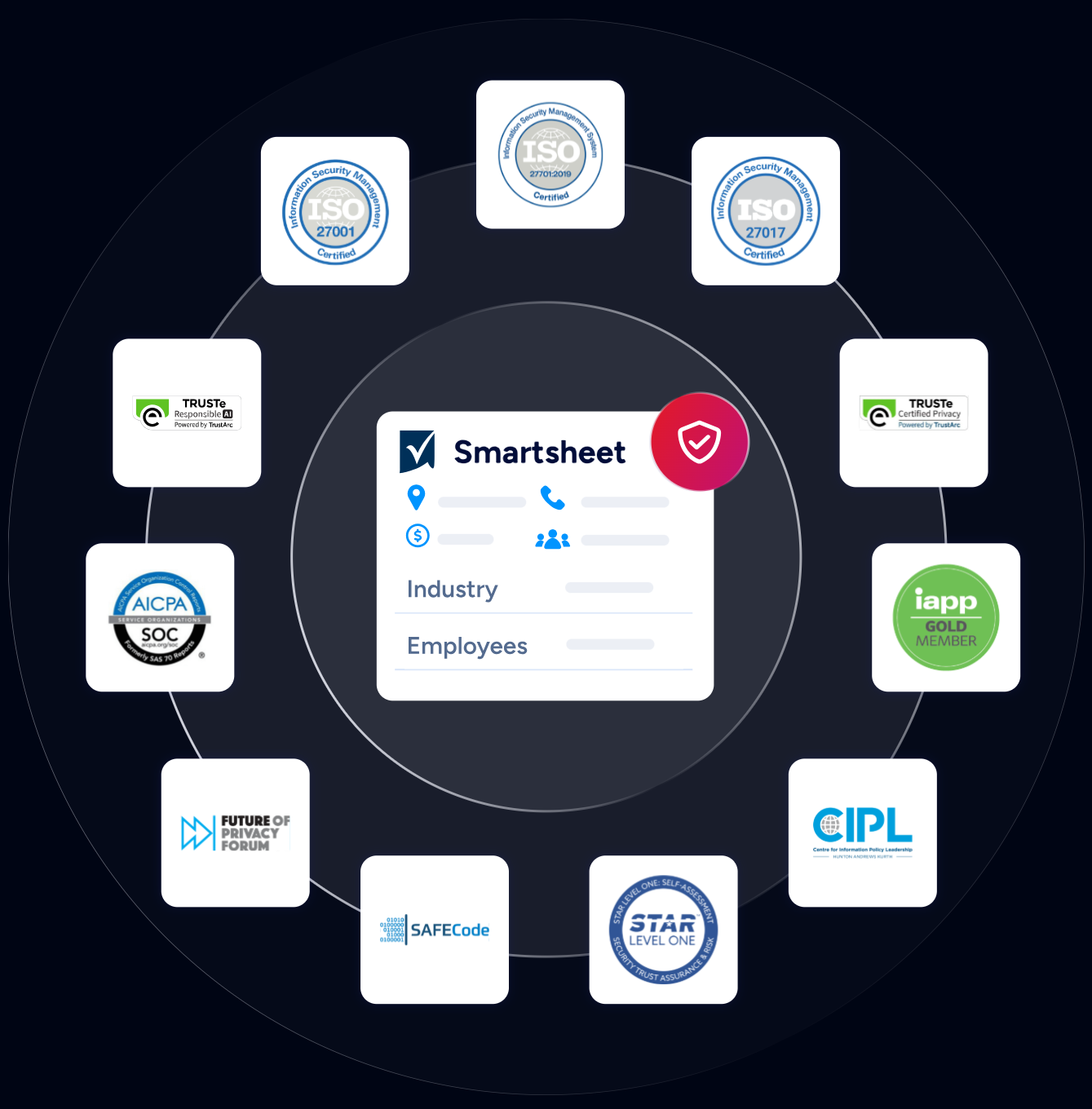
ZoomInfo maintains ISO 27001, ISO 27701, SOC 2 Type II, TRUSTe GDPR and CCPA certifications, all renewed annually. As a registered data broker in California and Vermont, ZoomInfo operates under heightened regulatory scrutiny that validates its data handling practices.
Source: ZoomInfo
Integration ecosystems comparison
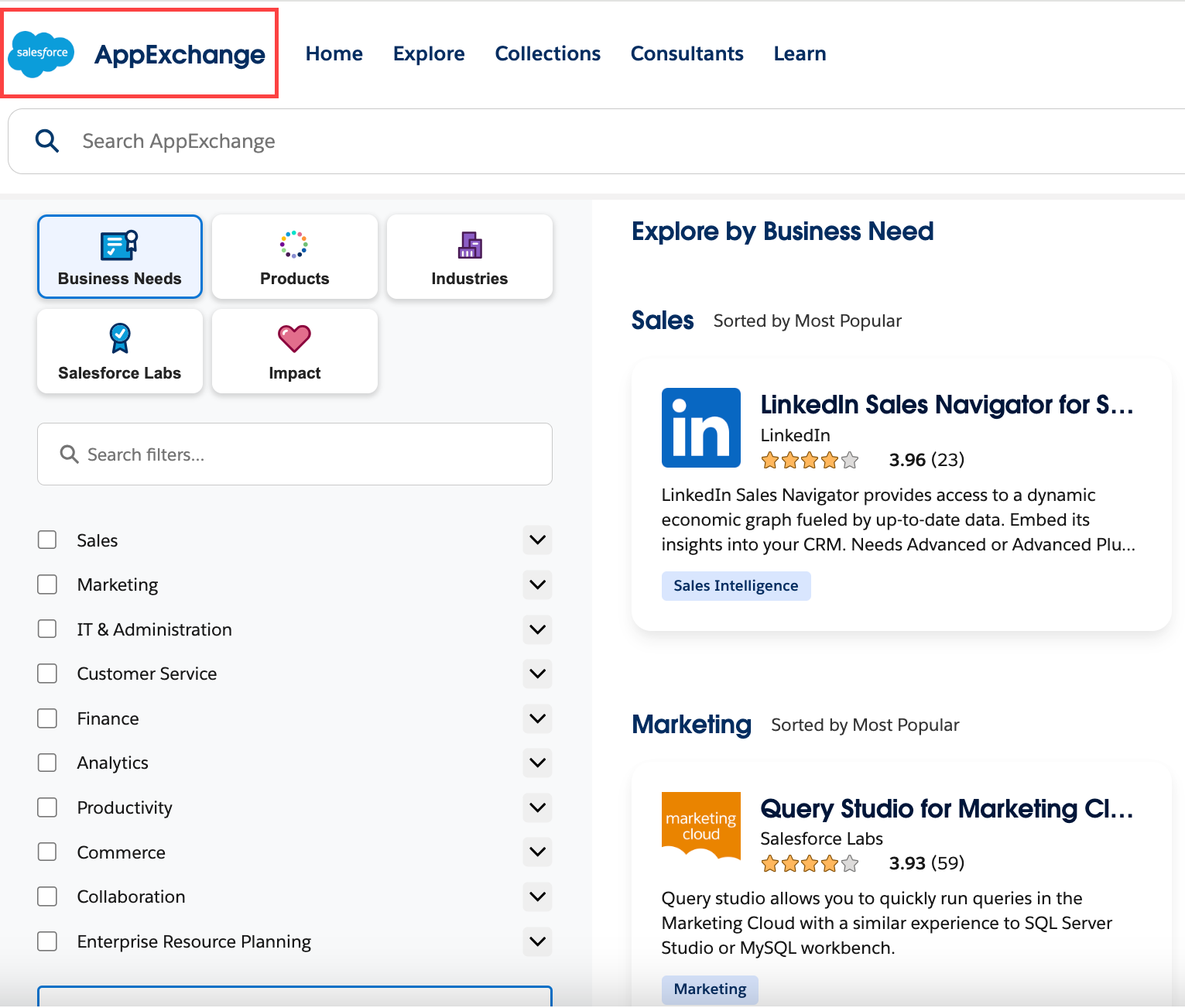
Salesforce's integration ecosystem is large and mature. AppExchange hosts 9,000+ partner apps with 14+ million installs, and 91% of customers use at least one AppExchange app. MuleSoft provides API management with hundreds of pre-built connectors.
Source: Salesforce
The REST, SOAP, Bulk, GraphQL, and Pub/Sub APIs give developers multiple integration paths. The ecosystem creates a gravitational pull: the more you build on Salesforce, the more value the integrations deliver.
Appian's integration approach is architecturally flexible but smaller in scale. The platform supports REST, SOAP, JDBC, OpenAPI, JMS, and Apache Kafka connectivity. The AppMarket offers connectors built by Appian and partners, and the Integration SDK enables custom connector development.
Source: Appian
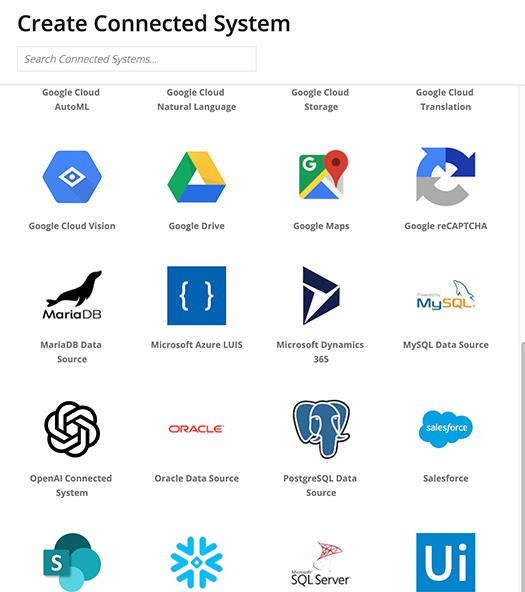
Pre-built connected systems exist for Salesforce, Google, Microsoft, DocuSign, and AWS. But the ecosystem is a fraction of Salesforce's, reflecting the difference between a platform serving 150,000+ customers and one serving a more specialized market.
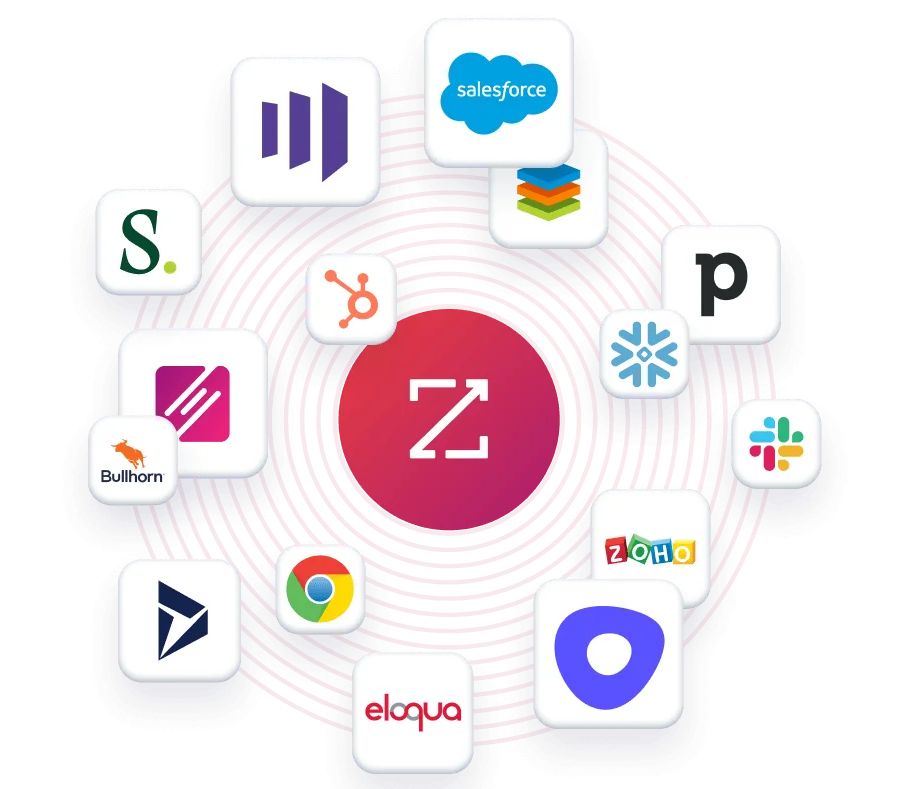
ZoomInfo integrates across both ecosystems. The ZoomInfo Marketplace lists 172+ integrations including featured connectors for Salesforce, HubSpot, and Microsoft Dynamics 365. The MCP server exposes ZoomInfo data to any MCP-compatible AI client.
Source: ZoomInfo
For Appian users, ZoomInfo's REST API connects through Appian's generic HTTP Connected System without a custom connector. The intelligence is platform-agnostic by design.
"The plug-and-play aspect of the API means I can integrate it into any process and get information at a moment's notice," said Jerry Wilson, Senior Marketing Intelligence Analyst at BDO Canada, noting an 87% reduction in time spent on internal data dashboard updates. (BDO Canada Case Study)
Appian vs. Salesforce vs. ZoomInfo: Which should you choose?
These three platforms aren't alternatives to each other. They're complementary layers of an enterprise technology stack, and the right combination depends on where your organization's needs are greatest.
Choose Appian if:
You need to orchestrate complex, multi-system business processes that don't fit pre-built templates
Your industry demands FedRAMP High, DISA IL4/IL5, or air-gapped deployment options
You're consolidating multiple automation tools (BPM, RPA, IDP) into a single governed platform
Building custom enterprise applications matters more than pre-built CRM functionality
You're in financial services, insurance, defense, life sciences, or government where process compliance is a core requirement
Choose Salesforce if:
Managing customer relationships across sales, service, marketing, and commerce is your primary challenge
You want pre-built applications for customer-facing teams with room to customize
You need the broadest integration ecosystem and partner network in enterprise software
AI agents that operate autonomously across channels are part of your strategy
Your team needs a platform with extensive training resources and a large talent pool
Add ZoomInfo to either platform if:
Your CRM or process platform needs verified B2B contact data, company intelligence, and buying signals
You want insights that reveal why deals move, not just that they moved
Incomplete data is hurting your sales team's productivity and pipeline accuracy
You need a data layer that works across your entire tech stack, not just one platform
You're building custom AI agents or workflows that require programmatic access to B2B data
Start with ZoomInfo Lite for free, or see how the API powers your stack.
Seismic's sales team attributed 39% of active pipeline to opportunities identified or influenced by ZoomInfo signals, with sales productivity increasing by 54%. "It's bringing data together faster than anyone could. It's both a time saving and a quality improvement," said Toby Carrington, Chief Business Officer. (Seismic Case Study)
Appian and Salesforce are both strong enterprise platforms, but they're built for different jobs. Appian excels at process orchestration: modeling, automating, and governing workflows across systems. Salesforce excels at customer engagement: managing every interaction from first touch through renewal. Many large enterprises run both.
What compounds the value of either platform is the quality of data flowing through it. ZoomInfo provides that foundation: verified contacts, enriched company profiles, and buying signals that make every workflow smarter and every customer interaction better informed.
Appian vs. Salesforce vs. ZoomInfo FAQ
What is the core difference between Appian and Salesforce?
Appian is a process orchestration and low-code platform designed for building custom enterprise workflows, particularly in regulated industries. It has no pre-built CRM. Salesforce is the leading CRM platform with pre-built applications for sales, service, marketing, and commerce.
They overlap in low-code development and workflow automation, but their primary purposes differ. Appian builds custom solutions from scratch; Salesforce provides ready-made applications you configure and extend.
Can Appian replace Salesforce, or vice versa?
Not directly. Appian doesn't include CRM, sales pipeline management, or marketing automation, so you'd have to build all of that from scratch. Salesforce includes these but lacks Appian's depth in process modeling, native RPA, intelligent document processing, and deployment options like air-gapped environments.
Many large enterprises run both platforms side by side, with Appian for back-office process automation and Salesforce for front-office customer engagement.
How does pricing compare between Appian and Salesforce?
Neither is cheap at enterprise scale. Appian doesn't publish pricing at all, requiring direct engagement with sales. Reviewers consistently cite cost as the top concern.
Salesforce publishes tier structures starting at $25/user/month, but total cost escalates quickly with add-ons including Agentforce consumption, Data Cloud credits, Premier Success Plans (30% of license fees), and partner-led implementation. Both platforms carry significant total cost of ownership beyond headline prices.
Where does ZoomInfo fit in the Appian vs. Salesforce comparison?
ZoomInfo is not an alternative to either platform. It's the B2B data layer that makes both platforms more effective. ZoomInfo provides verified contact data, company intelligence, and buying signals that enrich CRM records in Salesforce and power data-driven workflows in Appian.
It integrates directly with Salesforce and connects to Appian via REST API. Regardless of which enterprise platform you choose, ZoomInfo provides the data foundation they both need.
Which platform has stronger AI capabilities?
Both have invested heavily, with different philosophies. Appian's AI agents operate within governed process boundaries with full audit trails and human-in-the-loop controls, and its Private AI architecture ensures data never leaves the compliance boundary.
Salesforce's Agentforce agents are designed for autonomous operation across CRM channels, powered by the Atlas Reasoning Engine, with the Einstein Trust Layer providing guardrails. Appian's approach suits compliance-heavy environments; Salesforce's suits organizations that prioritize AI autonomy and breadth across customer-facing functions.
Which platform is better for government and defense agencies?
Appian has a stronger compliance portfolio for government use cases, holding FedRAMP High, DISA IL2 through IL5, and offering on-premises and air-gapped deployment through Appian Edge.
The U.S. government sector contributed 33.4% of Appian's total revenue in Q1 2025. Salesforce offers FedRAMP through its Government Cloud and has growing public sector deployments, but doesn't match Appian's breadth in defense and intelligence community certifications.
Which platform is easier to implement?
Appian offers an 8-week delivery guarantee for a first application. Salesforce implementation timelines range from weeks for simple Sales Cloud to 3–12 months for enterprise multi-cloud deployments, with over 70% of implementations led by partners.
Both platforms require specialized skills. Appian's proprietary design patterns have a learning curve, while Salesforce's breadth can overwhelm teams without dedicated administrators.
Do I need both Appian and Salesforce, or can I choose one?
If your primary need is CRM and customer-facing engagement, Salesforce alone may suffice. If your primary need is complex process orchestration and custom application development for back-office operations, Appian may be the right choice.
If you need both customer engagement and process automation across legacy systems, running both platforms is a common enterprise pattern. Adding ZoomInfo enriches the data layer across either or both.
