
If you're comparing Applied Epic and HubSpot, you're likely asking a more basic question than "which is better." These two platforms solve different problems for different parts of your business. The real question is what your agency actually needs.
Before choosing, consider:
Do you need a system built for insurance operations, or a general-purpose CRM that works across industries?
Is managing P&C and Benefits policy lifecycles, carrier connectivity, and trust accounting a core requirement?
Are you trying to improve how you manage policies, or how you find and nurture new clients?
Do you want your sales pipeline tied to your policy data, or a marketing engine that extends beyond insurance workflows?
How confident are you that the contact data behind your outreach is accurate, verified, and current?
In short, here's what we recommend:
Applied Epic is the insurance industry's most widely used agency management system, built for mid-size and enterprise independent agencies that need one platform for both P&C and Benefits. With 339,000+ daily users and adoption by 7 of the top 10 U.S. insurance agencies, Applied Epic handles the operational core of an insurance business: policy lifecycle management, carrier connectivity through Ivans' 334 million annual transactions, AI-powered commission reconciliation, and insurance-native accounting. Its marketing and prospecting tools are limited, pricing is opaque, and the learning curve is steep.
HubSpot is a general-purpose CRM and customer platform serving 288,706 customers across 135+ countries. Its strength is connecting marketing, sales, and service in one system with AI automation through its Breeze platform. HubSpot excels at lead generation, email marketing, pipeline management, and content creation. For insurance agencies, it powers client acquisition. But HubSpot knows nothing about insurance operations: no policy management, no carrier downloads, no commission tracking, no certificates of insurance.
Both platforms do their jobs well. Applied Epic runs the insurance business. HubSpot runs the marketing and sales engine. But neither answers the question that drives agency growth: which businesses should you target, and when are they ready to buy? That's a data problem.
ZoomInfo is an AI-powered go-to-market platform that gives insurance agencies the prospecting intelligence neither Applied Epic nor HubSpot provides. Built on a B2B dataset of 500M contacts and 100M companies (135M+ verified phone numbers, 200M+ verified business email addresses), ZoomInfo helps agencies identify businesses that need coverage, find decision-makers with direct-dial numbers, and spot buying signals showing when a company is shopping for insurance. The GTM Context Graph processes 1.5B+ data points daily, connecting this data with your CRM records and conversation history to show not just who to call, but why they're likely to buy now. Your team reaches that intelligence through GTM Workspace for sellers, GTM Studio for marketers, or APIs and MCP in any front-end, with native integrations into Salesforce, HubSpot, and Microsoft Dynamics.
If a data-driven prospecting engine sounds like the missing piece for your agency, see how ZoomInfo works with a free trial.
Applied Epic vs. HubSpot vs. ZoomInfo at a glance
Applied Epic | HubSpot | ZoomInfo | |
|---|---|---|---|
Core function | Insurance agency management system | CRM and marketing platform | B2B data and GTM intelligence |
Built for | Mid-to-enterprise insurance agencies | Scaling companies across industries | B2B sales, marketing, and RevOps teams |
Policy management | Full lifecycle (P&C and Benefits) | None | N/A |
Carrier connectivity | Native via Ivans (334M transactions/year) | None | N/A |
CRM / pipeline | Built-in opportunity management | Full-featured, AI-powered | GTM Workspace with AI agents |
Marketing automation | Basic (add-on required) | Advanced, multi-channel | ABM, intent-driven campaigns |
B2B contact data | Insurance industry contacts only | CRM-dependent (what you put in) | 500M contacts, 200M+ verified emails |
Intent signals | None | Limited | Buyer intent from 210M+ IP pairings |
Pricing | Custom-quoted, enterprise only | Free tier; Starter from $15/seat/mo | Custom-quoted; free Lite tier available |
Learning curve | Steep | Moderate | Moderate |
These platforms solve fundamentally different problems
The comparison between Applied Epic and HubSpot is less about which is better and more about which job you're hiring the platform to do.
Applied Epic manages the operational backbone of an insurance agency. When a producer writes a new policy, Epic tracks the coverage details, generates certificates, downloads policy data from carriers, processes commissions, and maintains the accounting trail. CSRs use it to service existing clients, accountants use it to reconcile carrier statements, and managers use it to track the agency's book of business.
HubSpot manages client acquisition. Marketing teams build landing pages and email campaigns to attract prospects, producers track their sales pipeline, and service teams handle incoming inquiries across email, chat, and phone.
Most insurance agencies need both capabilities. The question is whether to get them from one platform (accepting compromises) or two specialized tools (accepting integration complexity). And regardless of which path you choose, neither platform tells you which businesses in your territory need insurance, who the decision-makers are, or when they're shopping for coverage.
Applied Epic owns insurance operations
No general-purpose CRM can replicate what Applied Epic does for insurance agencies. The platform was built over 40 years for the insurance transaction lifecycle.
The carrier connectivity alone justifies the specialization. Through Ivans, Applied Epic automates the exchange of policy data, claims information, and commission statements with carriers.
The accounting module shows where insurance-specific design matters. Applied Epic's General Ledger understands insurance constructs: direct bill commissions, agency bill payables, producer splits, and carrier statement workflows. Agencies running generic accounting alongside their AMS re-key transactions into a system that doesn't understand these concepts. Applied Recon, the AI-powered commission reconciliation tool, covers 90%+ of certified carriers across P&C and Benefits and saves an estimated 8+ hours per week per agency.
For agencies managing both P&C and Benefits, Applied Epic is the only AMS that manages both in one system. The 2026 Benefits Hub release closed a long-standing gap with AI-powered plan pre-fill, centralized renewals, and Benefits-specific workflows.
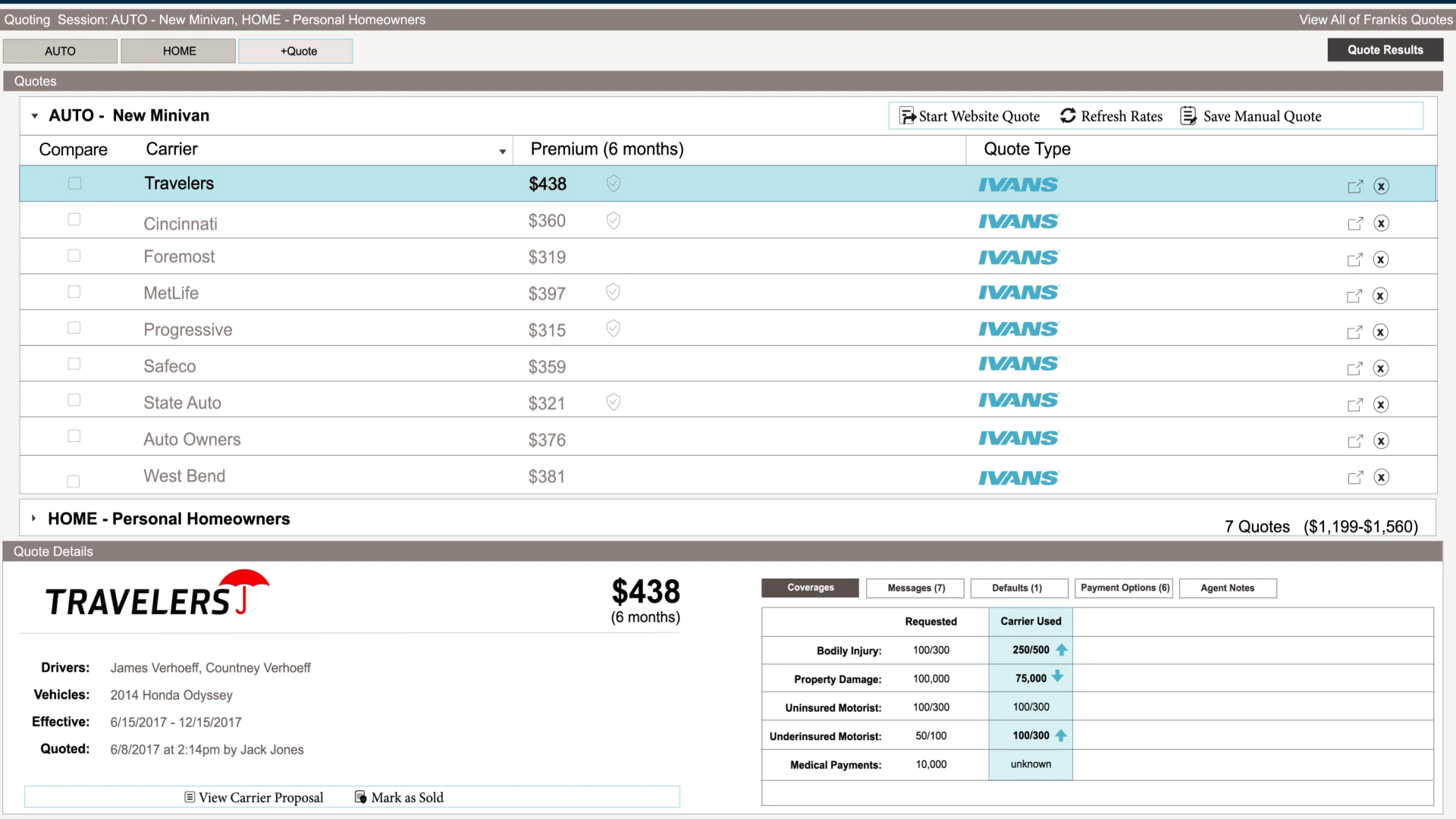
Applied Epic also handles quoting and market access through embedded comparative rating. Epic Quotes covers 525+ personal lines insurers, and Epic Quotes Commercial Lines queries 35+ markets at once, all from within the AMS.
Source: Applied Systems
HubSpot has no equivalent to any of this. It cannot generate a certificate of insurance, download a policy from a carrier, reconcile a commission statement, or manage a Benefits renewal. These functions are non-negotiable for running an insurance agency.
HubSpot leads in marketing and client acquisition
Where Applied Epic's client-facing capabilities end, HubSpot's begin.
Applied Epic includes built-in opportunity management and sales automation. Producers can create opportunity records, track pipeline stages, and get probability-weighted forecasts. Renewals become open opportunities based on configurable criteria. These tools work for tracking existing business and renewal pipeline.
But for attracting new clients, Applied Epic's tools are thin. The base marketing module is cumbersome. Campaign automation requires a separate Applied Marketing Automation license. There's no blog builder, no landing page creator, no social media management, and no content marketing toolkit.
HubSpot fills this gap with depth no AMS matches.
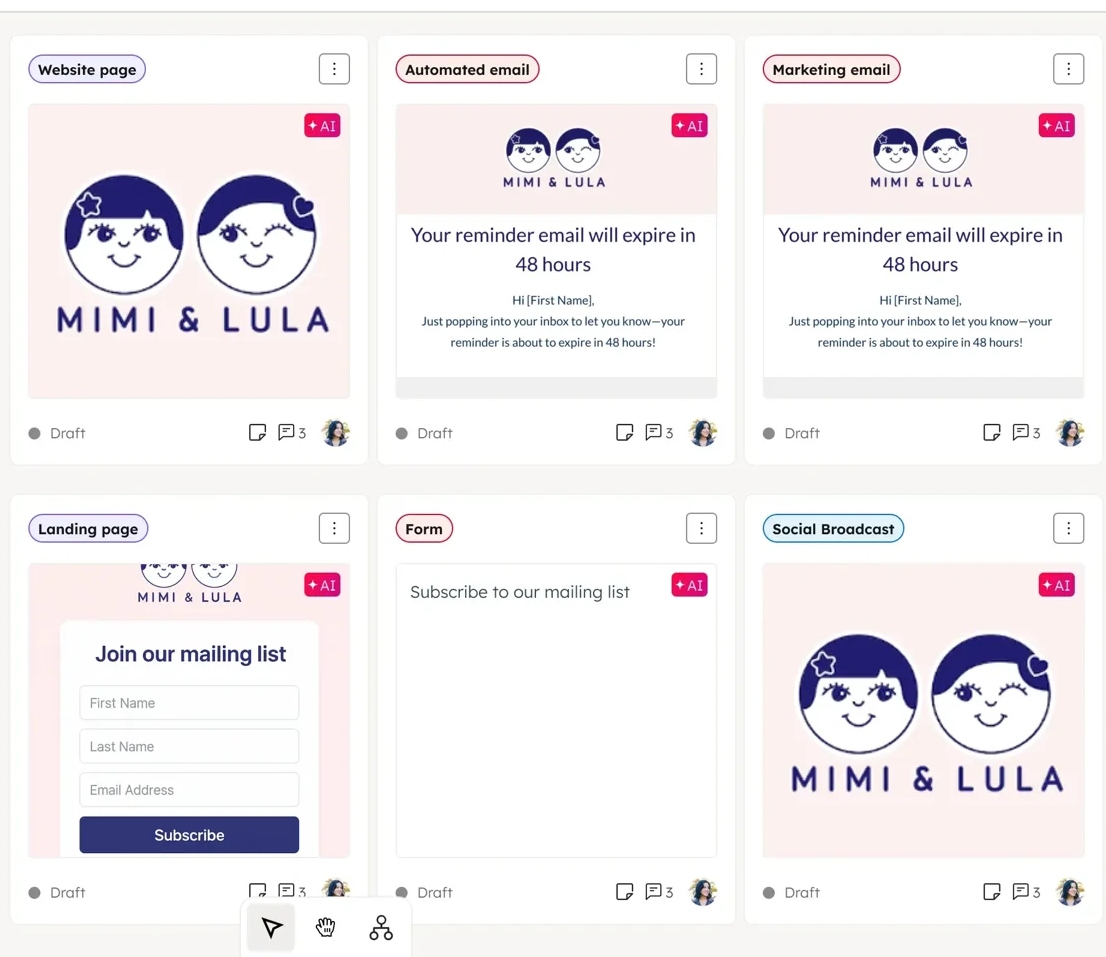
Marketing Hub provides email automation, landing pages, social media scheduling, SEO tools, and multi-touch attribution. Sales Hub adds AI-powered prospecting through the Breeze Prospecting Agent, which monitors buying signals and drafts personalized outreach. Content Hub lets agencies publish blog content, create videos, and manage their website without developer support.
Source: HubSpot
HubSpot's AI is worth noting.
The Breeze Customer Agent resolves over 50% of customer conversations on its own, handling routine policyholder inquiries about coverage or billing. The Breeze Prospecting Agent researches prospects, personalizes outreach, and monitors buying signals using the full HubSpot customer history.
For insurance agencies that want to grow beyond referrals and renewals, HubSpot provides the marketing infrastructure to build an inbound acquisition engine.
The prospecting intelligence gap neither platform fills
Applied Epic knows everything about your existing clients and their policies. HubSpot can nurture leads through marketing campaigns and track them through your pipeline. But neither platform answers the first question in any prospecting conversation: who should we be targeting?
Insurance agencies typically build prospect lists through referrals, networking, purchased lists of varying quality, and manual research. A producer might spend hours on LinkedIn identifying business owners in their territory, then cross-reference public records for company details, then search for direct contact information. Much of this work produces incomplete or outdated data.
ZoomInfo fills this gap.
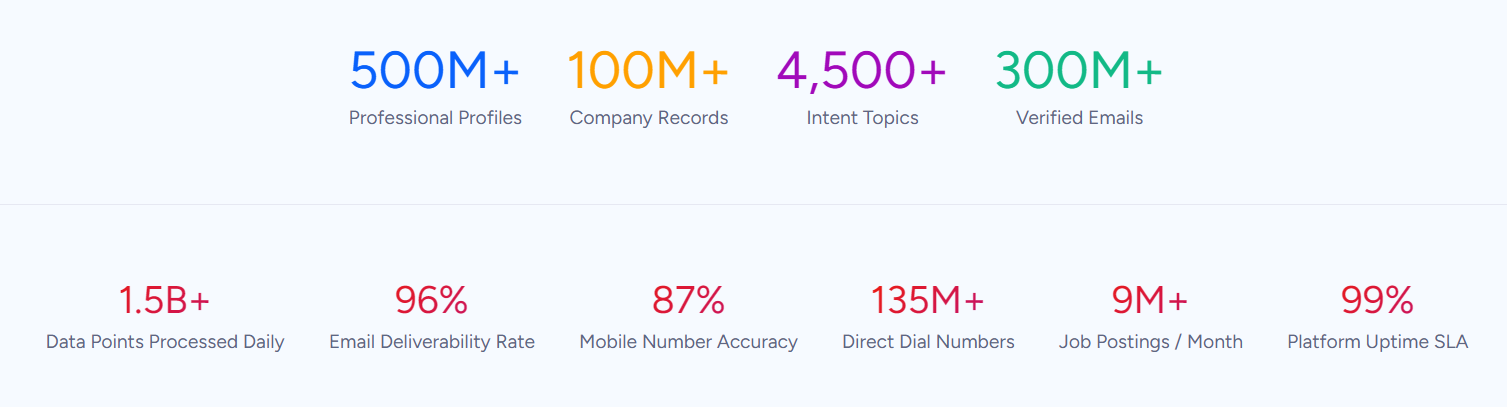
With 500M contacts and 100M companies (verified by 300+ human researchers, achieving up to 95% accuracy on first-party data), ZoomInfo gives insurance agencies the prospecting intelligence to identify and reach businesses systematically.
Source: ZoomInfo
For an insurance producer, the value is direct.
ZoomInfo's Contact & Company Search filters across 300+ company attributes: industry, headcount, revenue, location, and technology stack. A commercial lines producer can build a list of manufacturing companies with 50-200 employees in their territory, see the decision-makers responsible for risk management, and get 120M direct-dial phone numbers that ring.
The intelligence goes deeper than contact data.
ZoomInfo Intent tracks signals from 210 million IP-to-Organization pairings to identify companies researching topics related to insurance coverage. Guided Intent, exclusive to ZoomInfo, identifies topics historically correlated with deal success rather than requiring manual topic selection. For an agency, this means knowing which businesses in your territory are shopping for insurance before they call a competitor.
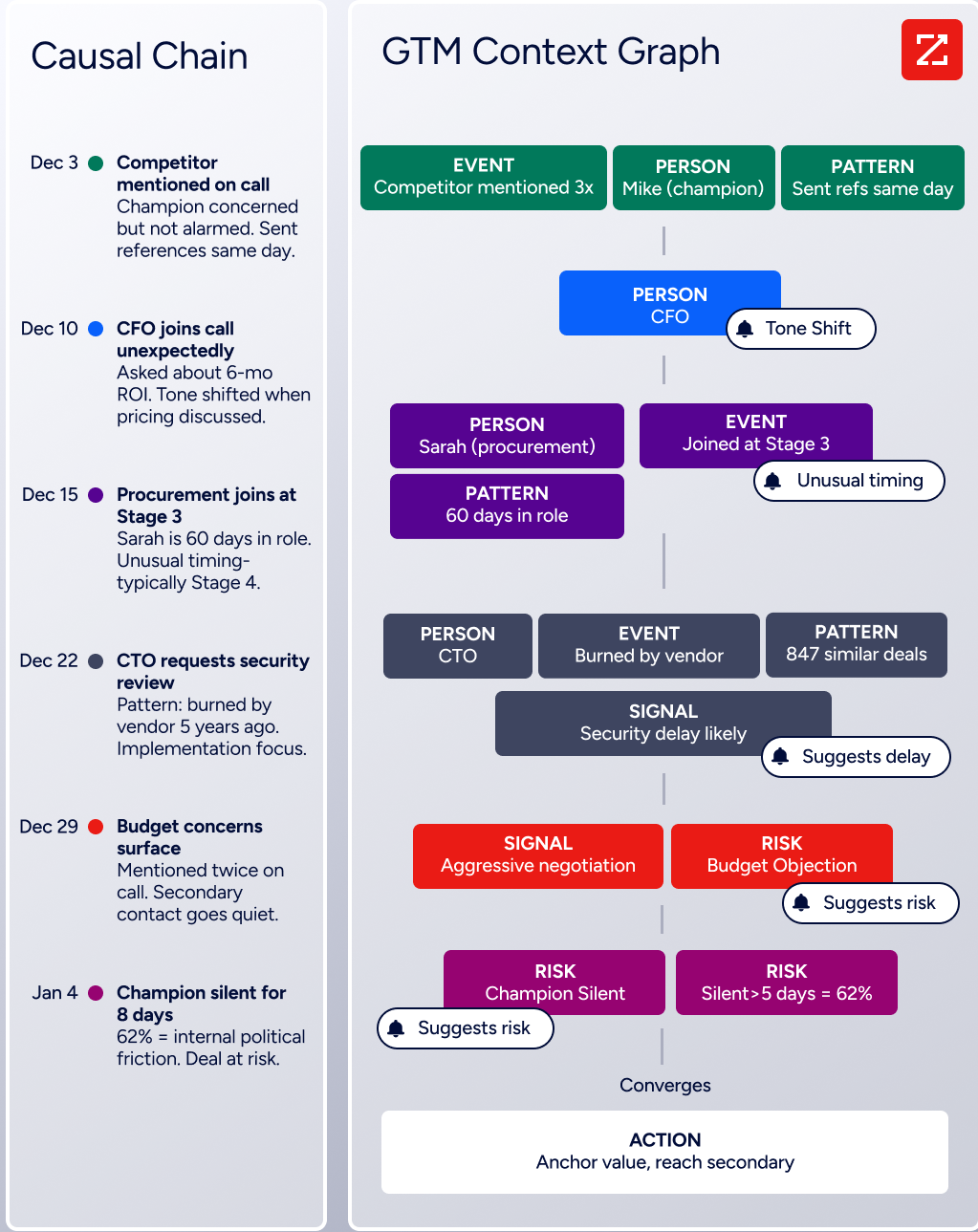
ZoomInfo's GTM Context Graph takes this further.
It connects contact data, intent signals, CRM records, and conversation history to capture not just what happened, but why. When a producer sees that a prospect's CFO joined the last call and asked about claims experience, the system recognizes that executive sponsorship at this stage correlates with closed-won deals.
Source: ZoomInfo
"ZoomInfo gives us the information we need to execute. It's already there, so we can be three steps ahead." (Vensure)
Integration determines how well these platforms work together
Many insurance agencies will use more than one of these platforms. How they connect matters.
Applied Epic's integrations center on the insurance industry.
10+ Certified Integrations and 100+ custom and pre-built integrations serve 100,000+ users. Certified partners include DocuSign for eSignature, Employee Navigator for benefits administration, Lightspeed Voice for VoIP with AI transcription, and Canopy Connect for insurance data intake.
The platform also offers Applied Epic for Salesforce, a bidirectional sync connecting policy data with Salesforce CRM. However, Applied Epic does not connect to iPaaS platforms like Zapier or Make, and API access requires a separate SDK-API License.
HubSpot's integration ecosystem is broader.
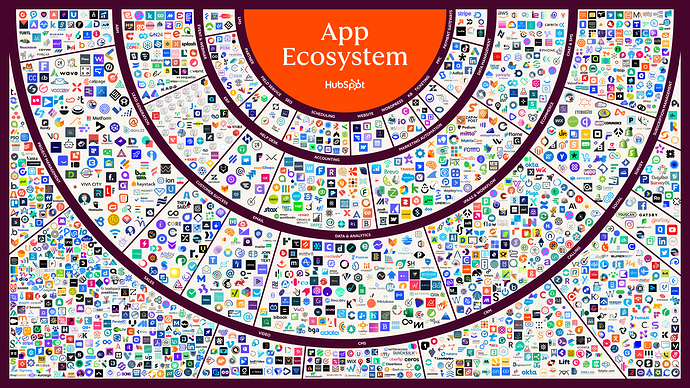
The HubSpot App Marketplace offers over 2,000 integrations with 2.5 million active installs. It connects to virtually every tool a modern business uses: Salesforce, Slack, Zoom, Google Workspace, Shopify, and hundreds more. The platform supports Zapier natively and offers official SDKs in six languages (PHP, Java, Ruby, Go, TypeScript, Python). API access is included in all subscription plans with no additional fee.
Source: HubSpot
ZoomInfo integrates natively with both ecosystems.
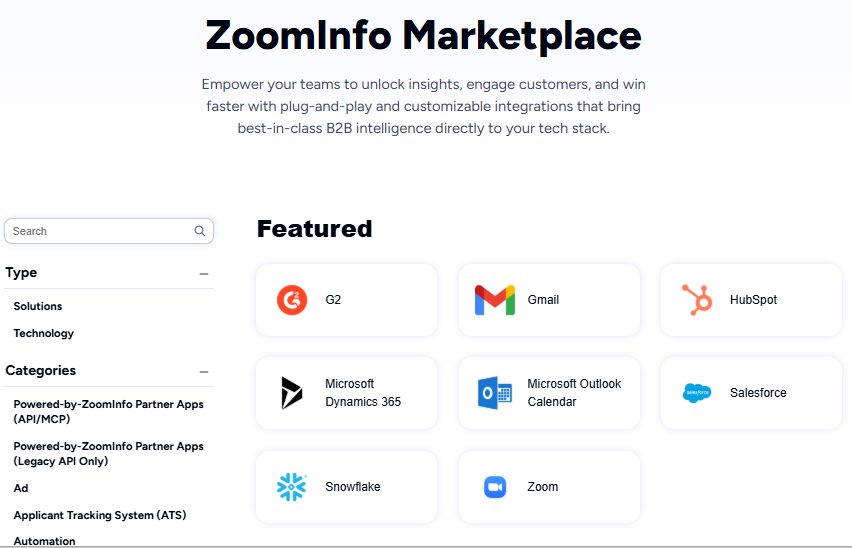
It connects to Salesforce, HubSpot, and Microsoft Dynamics for CRM enrichment and lead routing. The ZoomInfo App Marketplace lists 172+ integration partners across CRM, marketing automation, sales engagement, data warehouse, and communications categories.
For teams building custom workflows, API access comes with all relevant plans, and the ZoomInfo MCP server connects AI models to ZoomInfo's B2B data with no custom coding.
Source: ZoomInfo
The practical result: an insurance agency could use Applied Epic for policy management and carrier connectivity, HubSpot for marketing and lead nurture, and ZoomInfo to power the prospecting data feeding both systems. ZoomInfo enriches contacts in HubSpot automatically, and HubSpot's pipeline data flows into Applied Epic via Salesforce or direct integration.
For a direct side-by-side look at how HubSpot and ZoomInfo compare as standalone platforms, see our HubSpot vs. ZoomInfo comparison.
"The plug-and-play aspect of the API means I can integrate it very easily into any process and get information at a moment's notice." (BDO Canada)
Pricing reflects each platform's market
Applied Epic publishes no pricing on its website.
Every product page routes buyers to a Sales Inquiry form. The platform targets mid-size and enterprise agencies, and the cost structure (custom-quoted enterprise licensing plus implementation, training, and add-on modules) puts it out of reach for agencies with fewer than roughly 10 users.
The add-on catalog (Applied Pay, Applied Recon, Applied CSR24, Applied Mobile, Epic Quotes, Applied Benefits Designer, and more) means total cost can grow well beyond the core AMS license.
HubSpot offers the most transparent pricing of the three.
A permanent free CRM tier provides unlimited contacts, basic email integration, and contact management for up to 2 users. The Starter Customer Platform bundles all Hubs at $15/seat/month (annual billing). Professional tiers jump: Marketing Hub Professional is $800/month (annual) with a $3,000 mandatory onboarding fee. Enterprise tiers reach $3,600/month for Marketing Hub alone.
When subscribing to multiple Hubs at different tiers, HubSpot bills all Core Seats at the rate of the highest tier, which can raise costs for mixed deployments.
ZoomInfo uses custom-quoted, consumption-based pricing. It publishes no dollar amounts for paid tiers.
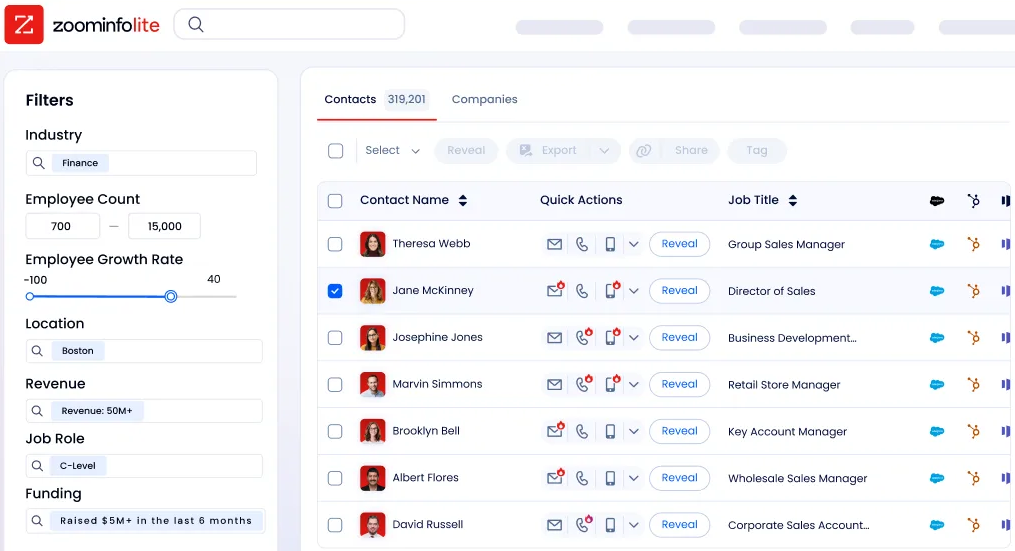
But it offers ZoomInfo Lite, a permanent free tier with access to 100M+ verified profiles, 10 monthly export credits, individual and company searches, a Chrome extension, and HubSpot integration. It also offers a 7-day free trial of the full platform, no credit card required.
Source: ZoomInfo
For insurance agencies evaluating total cost, the question is not which platform costs least but which combination delivers the best return.
Applied Epic is a sunk cost for most mid-to-large agencies because nothing replaces its insurance-specific functions. HubSpot's value depends on how aggressively the agency pursues new client acquisition through marketing. ZoomInfo's value depends on how much time producers waste on manual prospect research and how many deals are lost to outreach that reaches the wrong person or arrives too late.
AI capabilities take different forms in each platform
All three platforms have invested in AI, but their approaches reflect their core missions.
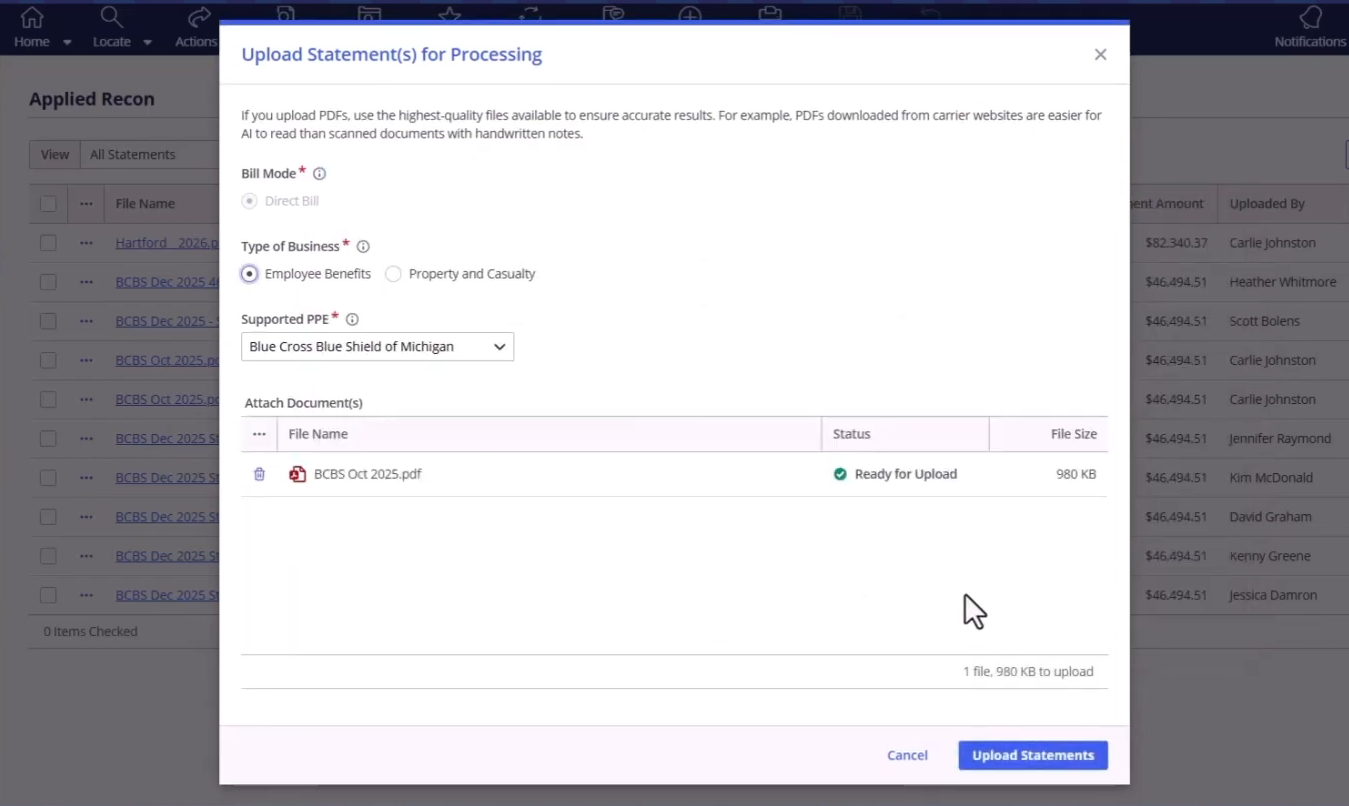
Applied Epic's AI centers on "vertical AI" trained on insurance workflows. Applied Recon uses AI to process commission statements in any format (PDF, CSV, scanned images) and match them to policies using six matching signals. Personal Lines Renewal Insights compares renewal premiums and identifies change drivers automatically.
Applied Book Builder analyzes thousands of public sources to build risk profiles and surface coverage gaps before renewal conversations.
Source: Applied Systems
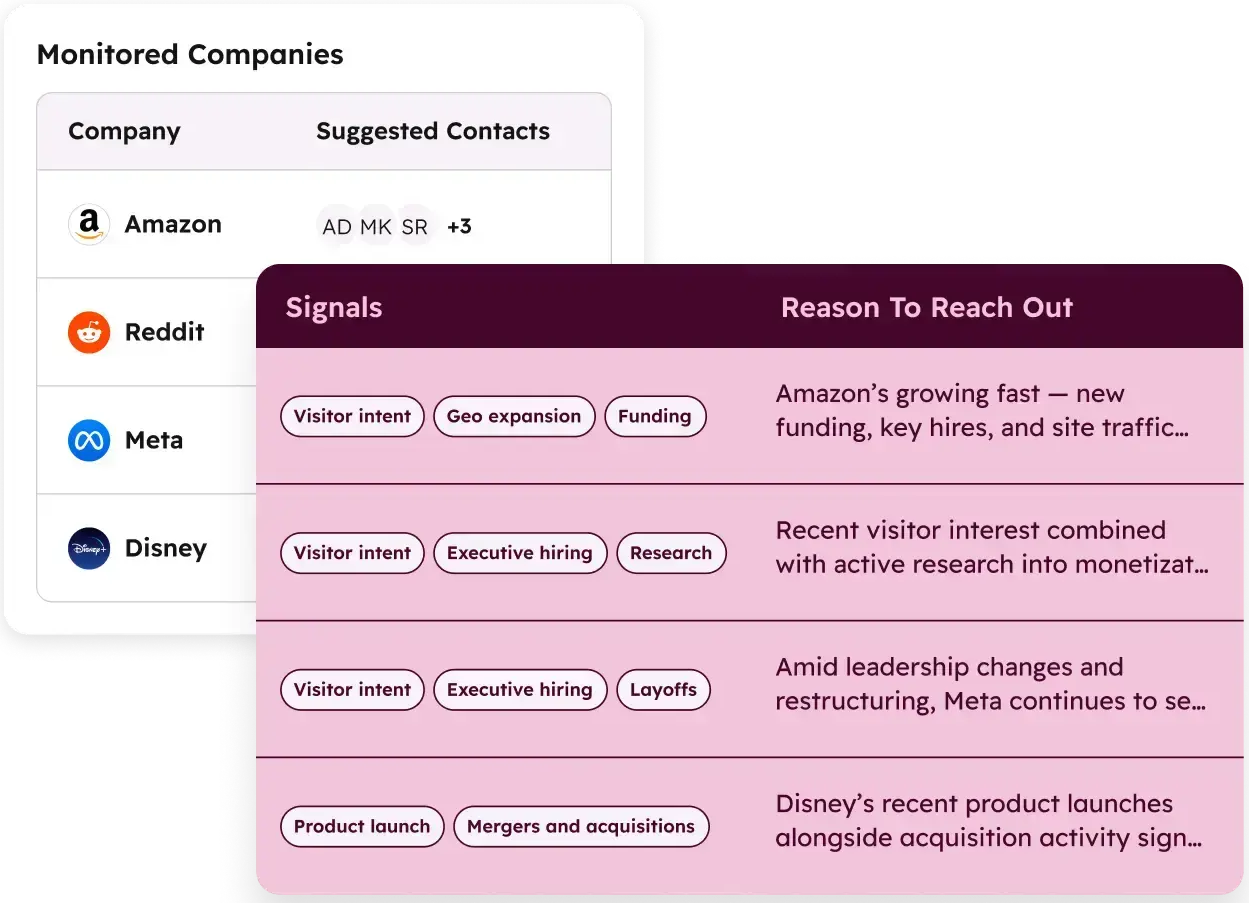
HubSpot's AI layer, Breeze, runs across the entire platform.
The Customer Agent handles support inquiries across chat, email, WhatsApp, and voice. The Prospecting Agent monitors enrolled prospects for buying signals and drafts personalized outreach. The Data Agent answers natural-language questions about customer data. All of it runs on HubSpot's CRM data, so outputs reflect your business context rather than generic patterns.
Source: HubSpot
ZoomInfo's AI operates on a different dataset.
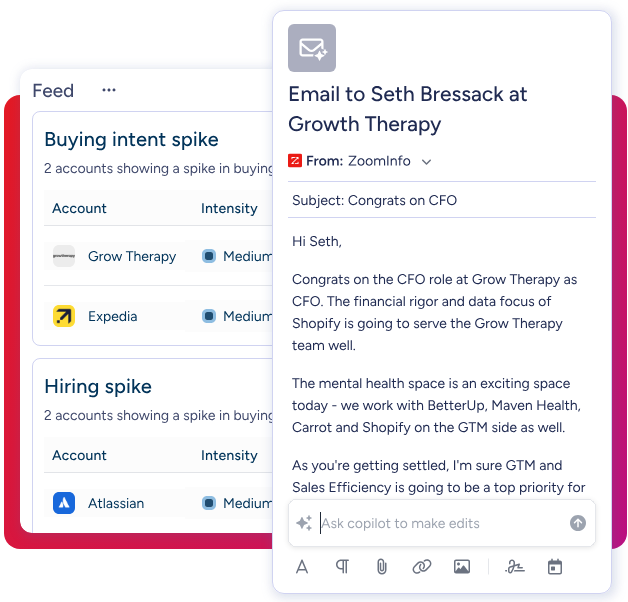
While Applied Epic's AI knows your policies and HubSpot's AI knows your CRM history, ZoomInfo's GTM Context Graph processes 1.5B+ data points daily and connects your internal data with the industry's largest B2B dataset.
The AI in GTM Workspace identifies which accounts match your win patterns, drafts outreach addressing the concerns your prospects have, and prioritizes your day around the signals most likely to convert. In GTM Studio, marketers describe audiences in natural language and launch multi-channel campaigns that get smarter as prospects respond.
Source: ZoomInfo
"That combination of our internal CRM data, external signals, and AI that's given all that context has helped us craft very specific account- and persona-based messages. And people have responded to them right away." (Seismic)
Support and onboarding differ significantly
Applied Epic provides 24/7 support from seven centers across North America, the UK, and Ireland, with a 97% satisfaction rate and 18-second average chat wait time. Applied University offers more than 3,000 instructor-led courses. The platform is deep enough that onboarding takes real investment, but the support infrastructure matches.
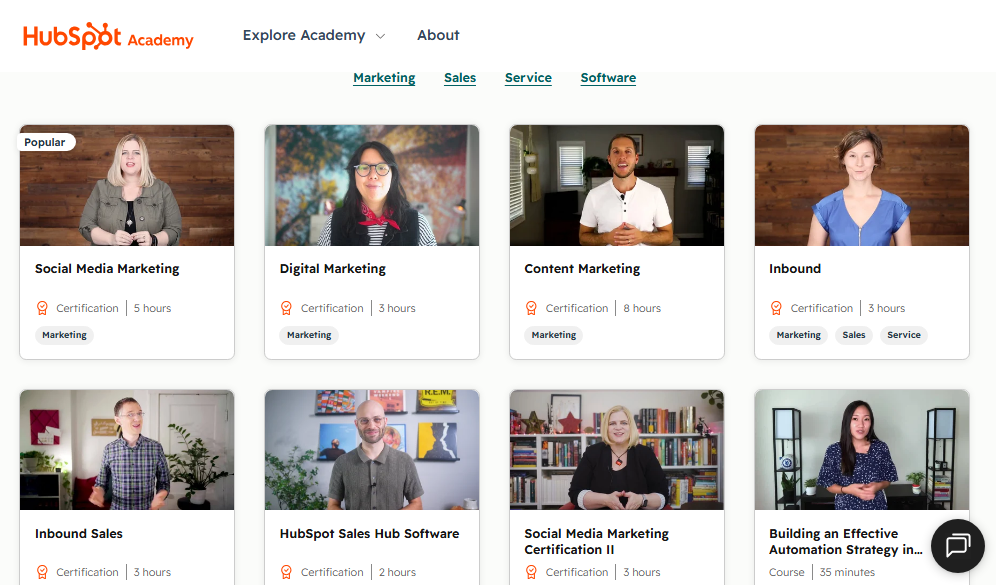
HubSpot tiers its support by plan. Free users get community support only. Starter adds email and chat. Professional and Enterprise add phone support. HubSpot Academy has certified over 200,000 professionals, and all courses are free. Most teams can start using basic features right away, though mastering automation takes time.
Source: HubSpot
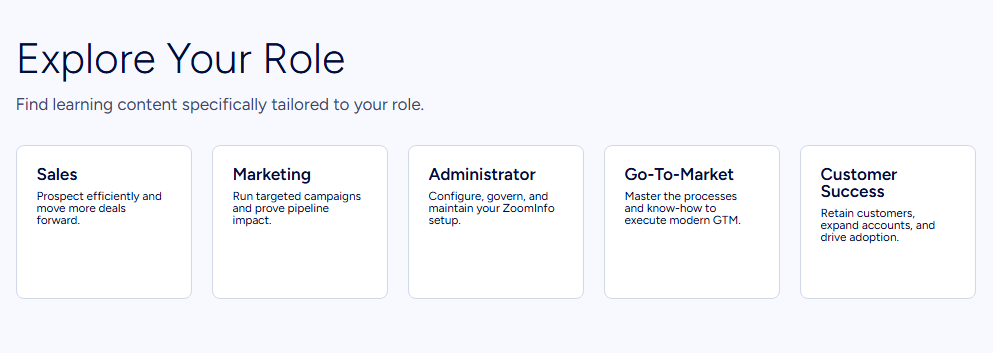
ZoomInfo redesigned its onboarding from 30 to 90 days across planning, implementation, education, and adoption phases, improving customer satisfaction scores by 25%. ZoomInfo University provides role-specific learning paths, certifications, and live webinars. You can reach support by phone (+1 866-904-9666) or through the Help Center.
Source: ZoomInfo
Applied Epic vs. HubSpot vs. ZoomInfo: Which should you choose?
The right answer depends on what your agency needs most right now.
Choose Applied Epic if:
You need a full insurance agency management system for P&C, Benefits, or both
Carrier connectivity, policy downloads, and commission reconciliation are daily requirements
You're a mid-size or enterprise agency that needs one system across multiple locations
You've grown through acquisition and need to standardize on a single platform
Insurance-specific accounting and compliance are non-negotiable
Choose HubSpot if:
Your primary goal is improving marketing, lead generation, and sales pipeline management
You want a CRM your team can start using immediately without months of training
Content marketing, email automation, and social media management matter to your growth strategy
You need a platform with broad third-party integrations and a large app ecosystem
Budget flexibility matters, and you want to start free and scale as you grow
Choose ZoomInfo if:
You need accurate, verified B2B contact data to power your prospecting
Your producers spend too much time researching prospects and not enough time selling
You want intent signals that show when businesses in your territory are shopping for insurance
You need an intelligence layer that works inside your existing CRM (HubSpot, Salesforce, or Dynamics)
You want AI that understands not just your pipeline but the market signals around every deal
See ZoomInfo's data in action with a free trial.
The reality for most growing insurance agencies is that these platforms are not competing alternatives. Applied Epic handles insurance operations. HubSpot handles marketing and client engagement. ZoomInfo provides the data and intelligence that make both platforms more effective. The agencies growing fastest have stopped asking "which one?" and started asking "how do these work together?"
"It's not just the data itself. It's more about the right data at the right time to help us reach out with the right message across that full buyer journey." (Redwood Logistics)
Applied Epic vs. HubSpot vs. ZoomInfo FAQ
What is the core difference between Applied Epic, HubSpot, and ZoomInfo?
Applied Epic is an insurance agency management system built for managing P&C and Benefits policy lifecycles, carrier connectivity, commission accounting, and certificate generation.
HubSpot is a general-purpose CRM and marketing platform for lead generation, sales pipeline management, and customer service across any industry.
ZoomInfo is an AI-powered go-to-market platform providing verified contact data for 500M contacts and 100M companies, buyer intent signals, and AI-powered prospecting tools. They serve different functions, and many organizations use two or all three together.
Can HubSpot replace Applied Epic for an insurance agency?
No. HubSpot has no insurance-specific functionality. It cannot manage policies, download data from carriers via Ivans, reconcile commission statements, generate certificates of insurance, or handle insurance-native accounting.
Any agency writing and servicing policies needs an insurance AMS like Applied Epic. HubSpot can complement Applied Epic by handling marketing, lead nurture, and client acquisition, but it cannot replace the operational core.
Does Applied Epic have CRM and sales features?
Yes. Applied Epic includes built-in opportunity management with probability-weighted pipeline tracking, renewal automation, and 50+ reports covering book-of-business health and upcoming renewals.
For agencies using Salesforce, Applied Epic for Salesforce provides bidirectional data sync. These features handle insurance sales workflows (renewals, cross-sell, new business) but lack the marketing automation, content management, and multi-channel engagement of a platform like HubSpot.
How does ZoomInfo work with Applied Epic and HubSpot?
ZoomInfo integrates natively with HubSpot for CRM enrichment, contact data sync, and lead routing. It also connects with Salesforce and Microsoft Dynamics, which can bridge to Applied Epic through Applied Epic for Salesforce. ZoomInfo's API and MCP access allow custom integrations with virtually any system.
In practice, ZoomInfo feeds verified prospect data and intent signals into your CRM, HubSpot nurtures those leads through marketing campaigns, and Applied Epic manages the policies once the business is written.
Which platform is most affordable for a small insurance agency?
HubSpot offers the lowest entry point with a permanent free CRM tier and Starter plans starting at $15 per seat per month. ZoomInfo Lite provides permanent free access to 100M+ verified profiles with 10 monthly export credits.
Applied Epic does not publish pricing and targets mid-size to enterprise agencies, making it the most expensive and least accessible for small agencies. Agencies with fewer than 10 users may find Applied Epic's cost prohibitive.
Which platform has the best AI capabilities?
Each platform's AI excels in its own domain.
Applied Epic's vertical AI handles insurance workflows: commission reconciliation, renewal insights, and coverage gap detection. HubSpot's Breeze AI spans marketing, sales, and service with agents that handle customer inquiries, draft prospecting emails, and answer data questions. ZoomInfo's AI operates on the industry's largest B2B dataset and the GTM Context Graph, showing which accounts match your win patterns and when prospects are ready to buy.
The strongest AI strategy for an insurance agency combines all three: Applied Epic for insurance operations, HubSpot for engagement automation, and ZoomInfo for prospecting and account intelligence.
Do any of these platforms offer a free trial?
HubSpot offers a permanent free tier with CRM, basic marketing tools, and up to 2 users, with no time limit. ZoomInfo provides both a permanent free tier (ZoomInfo Lite with 10 monthly export credits) and a 7-day full-platform free trial with no credit card required. Applied Epic does not advertise a free trial or free tier. Prospective customers must submit a sales inquiry form or call directly.
Which platform is best for insurance agency prospecting?
ZoomInfo is the strongest choice for prospecting. It provides verified direct-dial phone numbers and business emails for decision-makers, company attributes and technographics across 100M companies, and buyer intent signals that identify when businesses are researching insurance-related topics.
Applied Epic's sales tools focus on managing existing pipelines and renewals rather than outbound prospecting. HubSpot provides marketing and outreach tools but depends on whatever contact data you import. ZoomInfo provides the data itself.
More HubSpot comparisons worth a look:
