

Artisan has grown fast in the AI sales agent market. Its flagship product, an AI BDR named Ava, promises to automate outbound prospecting from lead discovery through email outreach in a single platform. For sales teams tired of juggling separate tools for contact data, email sequences, and deliverability, the pitch is appealing. But the reality is more complicated than the promise.
To write this Artisan review, we analyzed it closely. We believe it's the right choice if:
You want an AI agent that handles outbound email prospecting with minimal human involvement
You want to consolidate lead discovery, email writing, and deliverability into one platform
You run high-volume outbound campaigns targeting broad B2B audiences
You value fast campaign setup over control of every message
You're comfortable with AI-generated outreach and willing to spend 2-3 weeks training the system
However, Artisan might not be the best choice if:
You need verified data across your entire go-to-market motion, not just outbound email
You need intelligence that connects sales, marketing, and operations teams
You want full control over your outreach with the ability to edit threads mid-sequence
You need multi-channel execution beyond email and LinkedIn
You serve niche, vertical markets where database coverage matters
In this case, you should consider ZoomInfo: a B2B data and intelligence platform with 500M contacts, 100M companies, 135M+ verified phone numbers, and 200M+ verified business emails. ZoomInfo's GTM Context Graph, which processes 1.5B+ data points daily, fuses this data with your CRM records, conversation transcripts, and behavioral signals to show not just what's happening in your accounts, but why. That intelligence powers sellers through GTM Workspace, marketers and RevOps through GTM Studio, and any custom tool through APIs and MCP.
We've included a detailed look at ZoomInfo later in this review as the broader alternative for teams that need go-to-market intelligence across every function, not just outbound email. If you're ready to explore that approach, you can start with ZoomInfo's free trial here.
What is Artisan?
Artisan is an AI-powered outbound sales platform founded in July 2023 by Jaspar Carmichael-Jack, Sam Stallings, and Dr. Rupert Dodkins. Headquartered in San Francisco, the company joined Y Combinator's Winter 2024 cohort and has raised a total of $46.1M, including a $25M Series A led by Glade Brook Capital in April 2025.
Source: Artisan
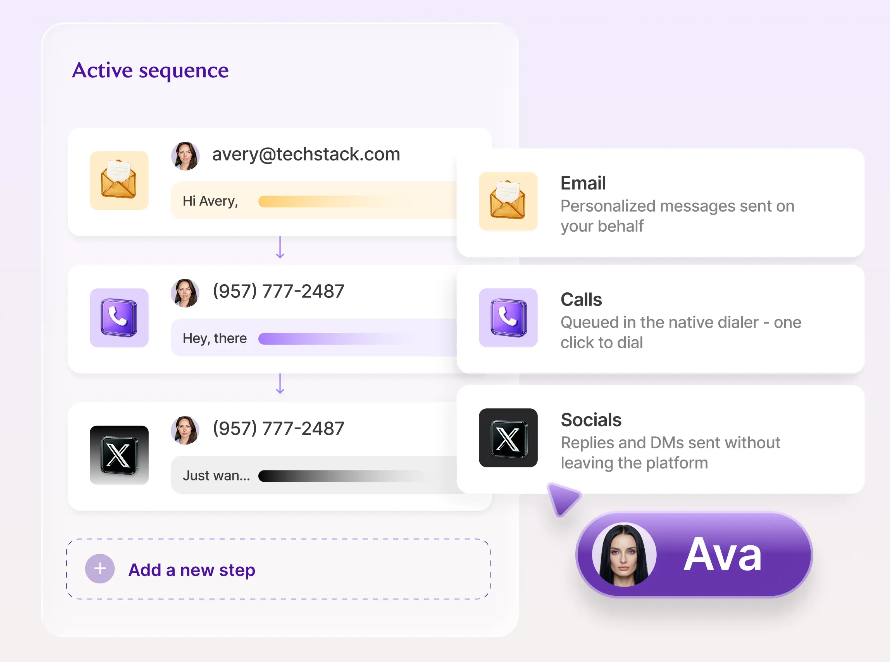
The company builds what it calls "Artisans" (AI agents designed to handle repetitive sales work). Its main product is Ava, an AI BDR that automates lead discovery, prospect research, email writing, and deliverability management. Artisan positions itself as replacing multiple point tools with one platform.
As of April 2025, Artisan serves 250 companies including SaaStr, CookUnity, and SumUp, with $5M+ in ARR. The platform covers over 300M B2B contacts across 200+ countries and writes emails in 40+ languages.
The ideal Artisan customer is a startup or mid-market sales team looking to scale outbound email without adding headcount, particularly one targeting broad B2B audiences where Artisan's database has strong coverage.
Artisan Pros & Cons
Pros | Cons |
|---|---|
Consolidates lead discovery, email, and deliverability in one platform | AI-generated emails often lack personalization depth |
300M+ B2B contacts with built-in email validation | Cannot reply to incoming emails (only suggests responses) |
Automated email warmup and dynamic sending limits | Limited to email and LinkedIn (no phone, SMS, or direct mail) |
Personalization Waterfall draws from multiple data sources | No ability to edit threads or intervene mid-sequence |
Intent signal monitoring (job postings, funding rounds) | Struggles with niche, vertical ICP targeting |
Dedicated account manager for all customers | Requires 2-3 weeks of training before reliable autonomous output |
Supports 40+ languages for international outreach | No public pricing; custom quotes only |
Artisan Review: How it Works & Key Features
Ava (AI BDR): Artisan's autonomous sales agent handles outbound prospecting from lead discovery through email delivery.
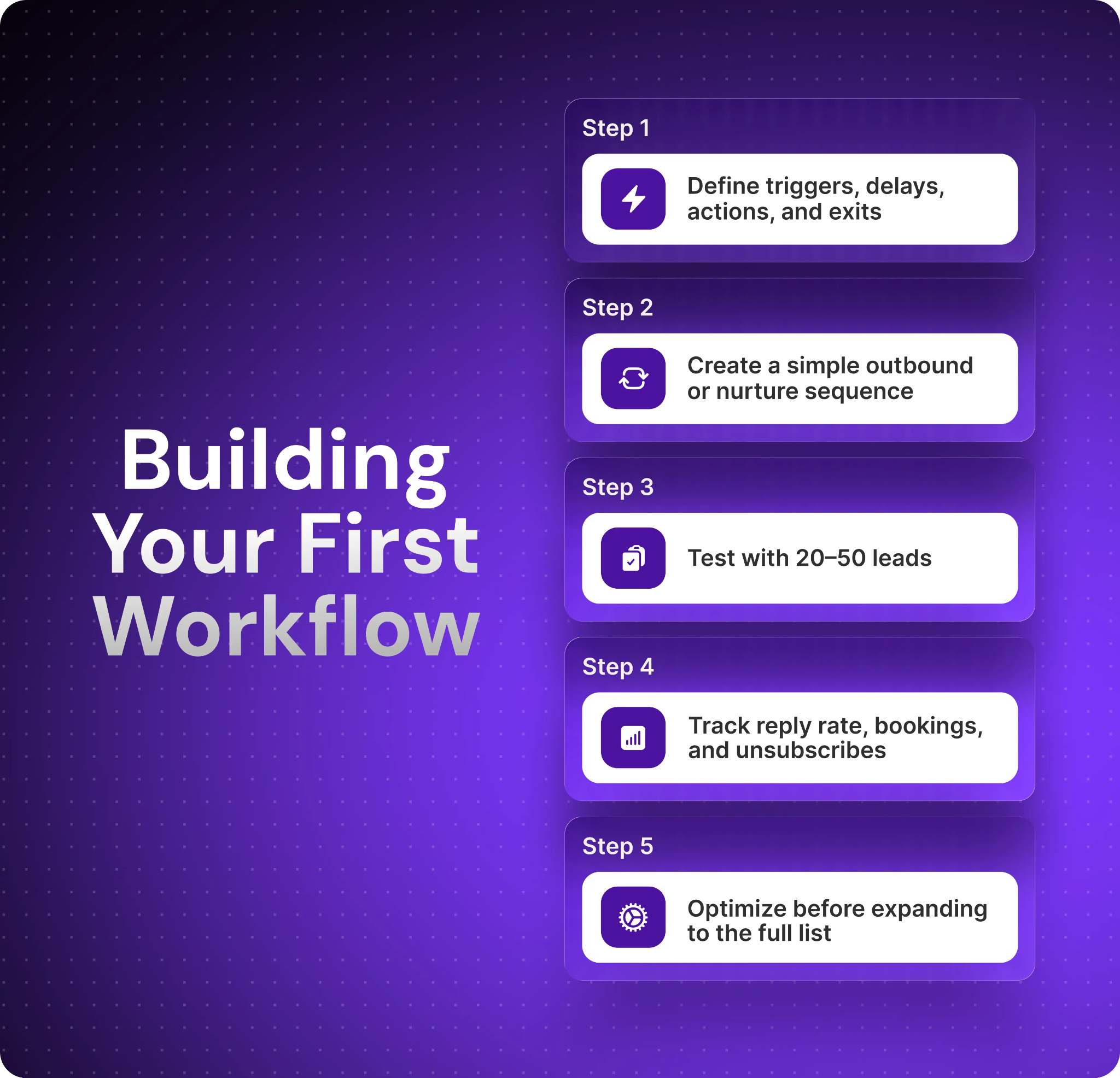
Ava is the core of Artisan's platform. She follows a six-step workflow: campaign setup, lead discovery, prospect research, message generation, multi-channel outreach, and lead qualification with handoff.
Source: Artisan
Users configure Ava through two sections. The Pitch Section covers your website URL, product description, key features, and proof points. The Outreach Section lets you select language, tone, sign-offs, calls to action, and personalization sources.
Ava runs in two modes: Copilot Mode (generates emails for review before sending) and Autopilot Mode (sends on her own). In both modes, Ava will not reply to incoming emails. She can only suggest replies, which means your team takes over once a prospect responds.
For message generation, Artisan uses the Personalization Waterfall, which scrapes dozens of data sources for relevant insights on each prospect. The system weighs factors like relevance and timeliness, and can reference job changes, funding rounds, social posts, news, and more. Ava also A/B tests messaging, tone, calls to action, and subject lines to improve over time.
B2B Data & Lead Discovery: Access to 300M+ contacts with built-in validation and enrichment.
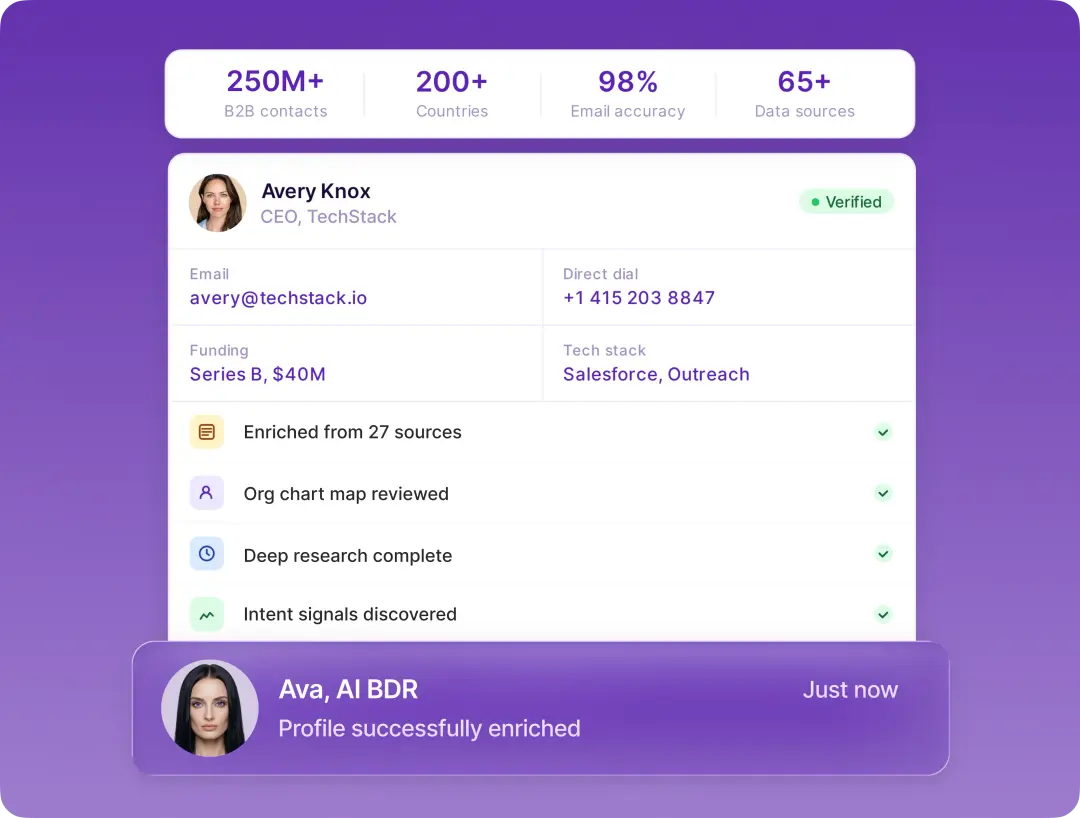
Artisan's lead discovery covers over 300 million B2B contacts across more than 200 countries. The platform combines third-party data providers with proprietary collection tools and spans demographic, firmographic, technographic, intent, and personal interest data.
Source: Artisan
Beyond standard B2B contacts, Artisan includes specialized databases for over 13 million e-commerce stores with 60+ filters and over 200 million local Google businesses. All contacts go through bounce-testing and validation before campaigns use them.
Ava's Data Miner adds a research layer, pulling from CrunchBase, BuiltWith, Twitter, social posts, hiring news, fundraising announcements, press releases, and website scraping to build richer prospect profiles. The platform also offers Custom Playbooks that automate the kinds of manual research your reps already do.
The key limitation: users with specific, vertical ICPs report thin database coverage. One user found only 3-7 C-level contacts matching their niche criteria.
Email Deliverability: Automated warmup, health monitoring, and dynamic send management.
Artisan claims to be the only AI SDR that automates email deliverability management. The system works on three levels: monitoring, improvement, and optimization.
For monitoring, the platform checks DNS settings daily to verify SPF, DKIM, DMARC, R-DNS, A & MX records. Each mailbox gets a health score, and the system runs placement tests to confirm emails land in primary inboxes.
For improvement, Ava adjusts send limits for each mailbox based on its health score and placement results. When mailbox health drops, Ava reduces the number of leads contacted from that address. The email warmup system sends emails to bots that engage positively to build sender reputation, supporting over 30 languages.
For optimization, the system validates all email addresses before sending, avoids links and spam-trigger words, and writes unique emails to prevent spam filtering.
Website Visitor Tracking (Watchtower): Identifies anonymous visitors and triggers automated outreach.
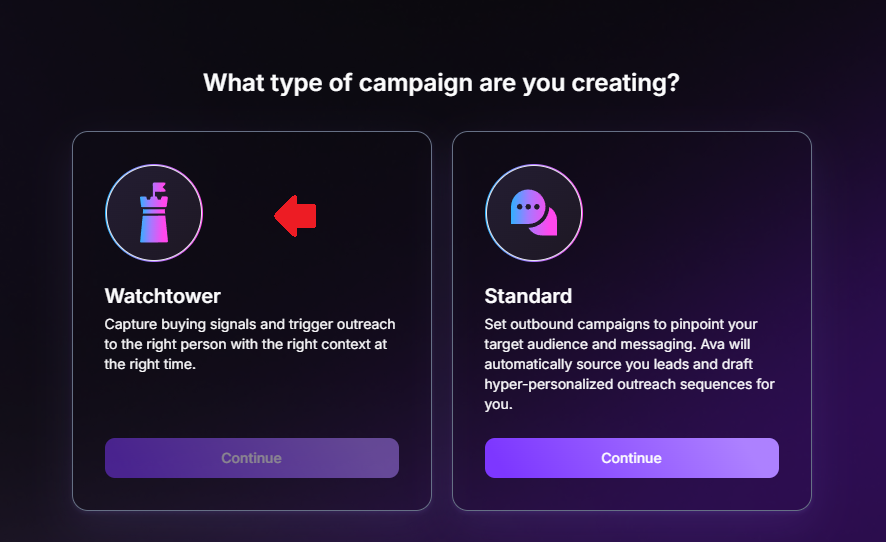
Artisan's Watchtower identifies anonymous website visitors in real time using a JavaScript snippet in website headers. The system combines first-party and third-party cookies, device identifiers, and IP addresses to match visitors with known individuals and companies.
Source: Artisan
Identified visitors get profiles with company name, decision-makers, social activity, technographics, and funding rounds. Ava, trained on your ideal customer profile, scores, segments, and surfaces the best leads.
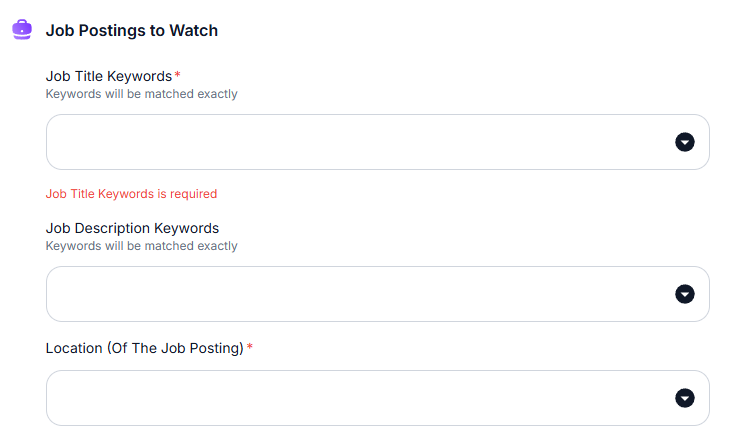
Watchtower also includes specialized intent triggers. The Job Posting Trigger finds companies with recent openings matching specified keywords, and the Fundraise Trigger flags companies announcing funding rounds. With autopilot mode enabled, Artisan reaches out to qualified visitors with personalized sequences.
Source: Artisan
Where Artisan Falls Short
Artisan delivers a focused outbound email experience, but several limitations show up with regular use. These reflect a platform built for autonomous email prospecting, not go-to-market execution.
Email Quality Concerns: Multiple reviews report that Ava's emails feel like "AI slop" (machine-generated, overly formal, and thin on real personalization). Several users reported sending 1,000-1,400+ emails and getting zero replies.
The most successful users report spending 2-3 weeks training Ava before going fully autonomous, but the out-of-the-box quality demands patience. Artisan's CEO has acknowledged early problems with "extremely bad hallucinations", though the company says it has reduced them to roughly one in 10,000 emails.
No Reply Handling: Ava's biggest functional gap is her inability to reply to incoming emails. She can only suggest responses, so your team must take over every conversation once a prospect writes back. For a platform that markets itself as an autonomous AI employee, this handoff breaks the workflow at the moment momentum matters most.
Limited Control and Flexibility: Users cannot edit threads, re-segment, or intervene mid-sequence. Once a campaign is running, options for course correction are few. Teams that want to adjust messaging based on early signals will find this frustrating.
Narrow Channel Coverage: Artisan's outreach is limited to email and LinkedIn. There is no support for phone calls, SMS, direct mail, or coordinated multi-channel sequences. For teams whose prospects respond better to calls or mixed approaches, this limits what Artisan can do.
Vertical Targeting Weakness: Ava struggles with specific, vertical ICPs. The 300M+ contact database covers common B2B roles and industries well, but teams targeting niche markets often find the data too thin. Even users who booked meetings reported that leads were poorly qualified, lacking budget, authority, or genuine need.
Outbound-Only Scope: Artisan focuses on outbound email prospecting and nothing else. It offers no conversation analysis, no marketing orchestration, no operations automation, no CRM enrichment at scale. Teams using Artisan still need separate tools for everything before and after the email sequence.
These limitations aren't failures. They reflect a young platform that chose depth in autonomous outbound email over breadth across go-to-market. But they leave clear gaps for teams that need verified data, contextual intelligence, and execution across every revenue function.
Top Artisan Alternative for Complete GTM Intelligence: ZoomInfo
ZoomInfo fills the gaps Artisan leaves open by providing go-to-market infrastructure across the full revenue cycle. Where Artisan automates one piece of sales (outbound email), ZoomInfo covers account identification, deal intelligence, and execution across every channel and team.
Founded in 2007 by Henry Schuck, ZoomInfo is publicly traded (NASDAQ: GTM) and serves 35,000+ companies, with $1.25 billion in annual revenue.
The Most Comprehensive B2B Data: ZoomInfo's data foundation spans 500M contacts and 100M companies, verified at scale.
ZoomInfo runs the largest B2B data platform available: 500M contacts, 100M companies, 135M+ verified phone numbers, 120M direct dials, and 200M+ verified business emails.
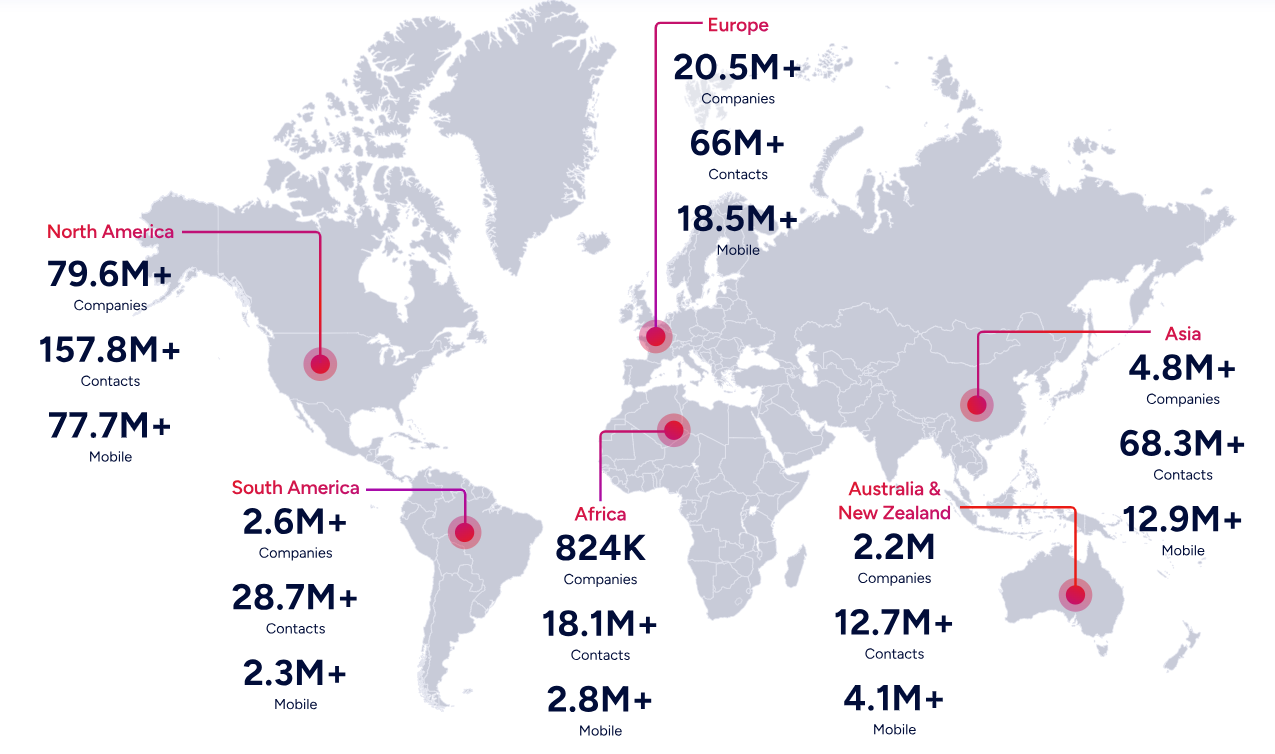
The data covers three dimensions: identity (who buyers are and how to reach them), company context (firmographics, org charts, technographics), and signals (intent data and behavioral indicators showing when a company is actively in-market).
Verification matters here. ZoomInfo's data flows through a multi-source pipeline backed by 300+ human researchers, reaching up to 95% accuracy on first-party data. The platform monitors continuously for changes like job moves, funding events, and technology adoption.
External validation confirms this. In a Fortune 500 competitive RFP analyzing 25 million contacts across vendors, the independent consultant concluded that "no other competitor came even close."
ZoomInfo has been named a Leader in the Forrester Wave for Intent Data Providers, a Leader in the Gartner Magic Quadrant for ABM Platforms for two consecutive years, and earned 133 No. 1 rankings on G2 in Summer 2025.
For sales reps, this means the phone number actually rings, the email actually lands, and the org chart shows who else is involved in the decision.
For teams targeting vertical or niche markets where Artisan's database falls short, ZoomInfo's nine vertical datasets (covering franchise ownership, restaurant operations, commercial fleet intelligence, and more) provide the specificity that broad, shallow databases cannot.
Vensure scaled prospecting with ZoomInfo's data: "ZoomInfo gives us the information we need to execute. It's already there, so we can be three steps ahead." (Vensure Case Study)
The GTM Context Graph: Intelligence that captures why deals move, not just what happened.
Raw data, however large, only shows you the current state. ZoomInfo's GTM Context Graph turns that data into intelligence by merging ZoomInfo's B2B data with a customer's CRM records, conversation transcripts, email threads, and behavioral signals. Processing 1.5B+ data points daily, it captures not just what happened in a deal, but why.
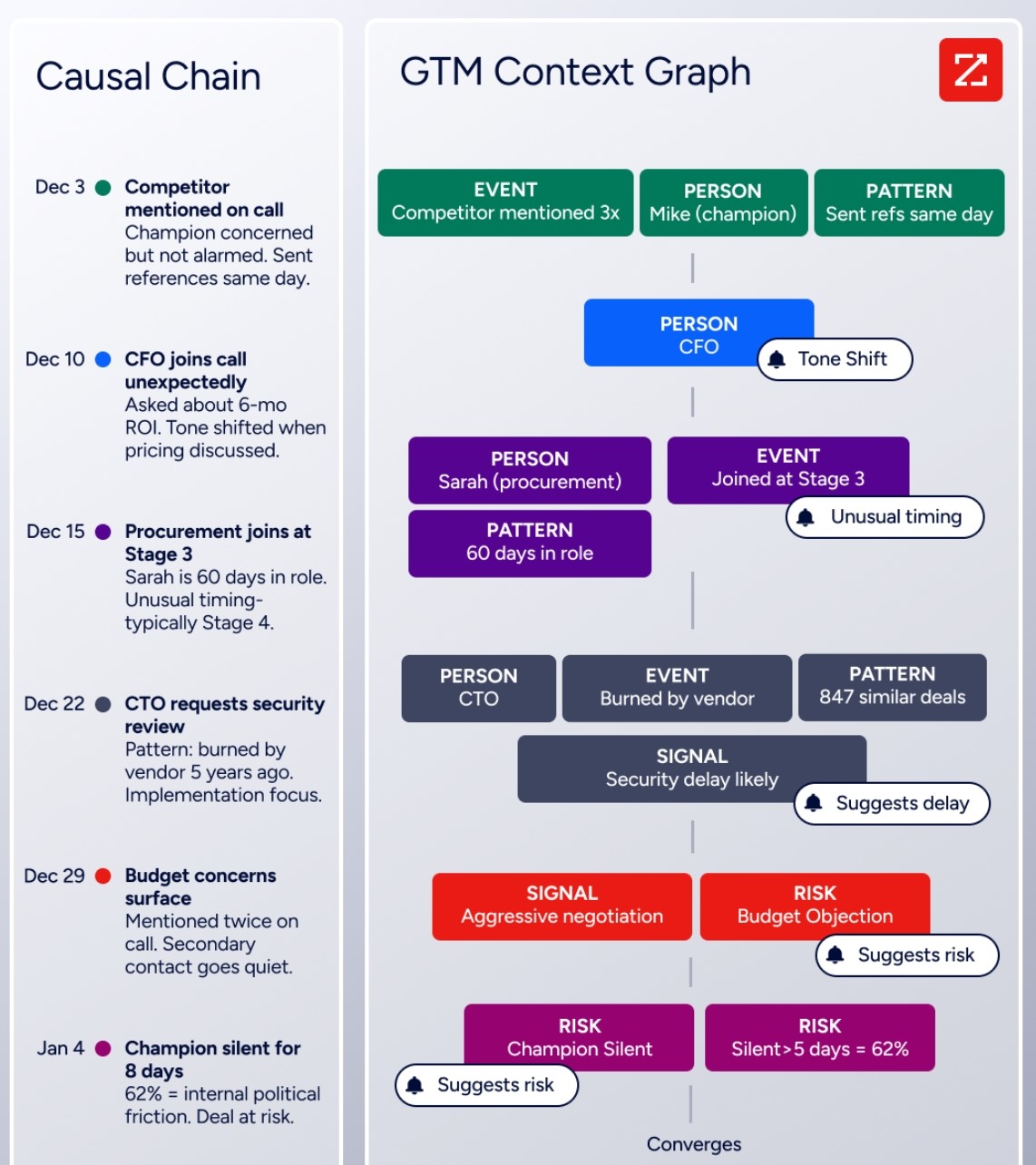
A CRM records that a deal moved stages. Conversation intelligence transcribes what the VP of Finance said on the last call. Intent platforms log a spike in research activity.
The GTM Context Graph reasons across all three: it identifies that executive sponsorship entering at this stage, combined with ROI-focused questions, matches patterns behind closed-won deals in your segment, and connects that to third-party signals showing the company is hiring new VPs and researching competitors.
This layer exists because ZoomInfo spent 20 years building the data infrastructure required, including acquiring Chorus for conversation capture and intelligence.
As ZoomInfo's CPO Dominik Facher wrote: "The CRM recorded the state change. It has no record of why it happened." The GTM Context Graph makes that decision context machine-readable, so every follow-up, play, and forecast rests on buying evidence rather than guesswork.
Seismic attributed 39% of active pipeline to ZoomInfo-identified opportunities, with sales teams 54% more productive: "That combination of our internal CRM data, external signals, and AI has helped us craft very specific account-based messages." (Seismic Case Study)
Universal Access: Use ZoomInfo's intelligence in any tool, any workflow, any AI agent.
Intelligence locked inside one application limits its value. ZoomInfo delivers its data and GTM Context Graph through three channels, so every team and tool draws from the same source.
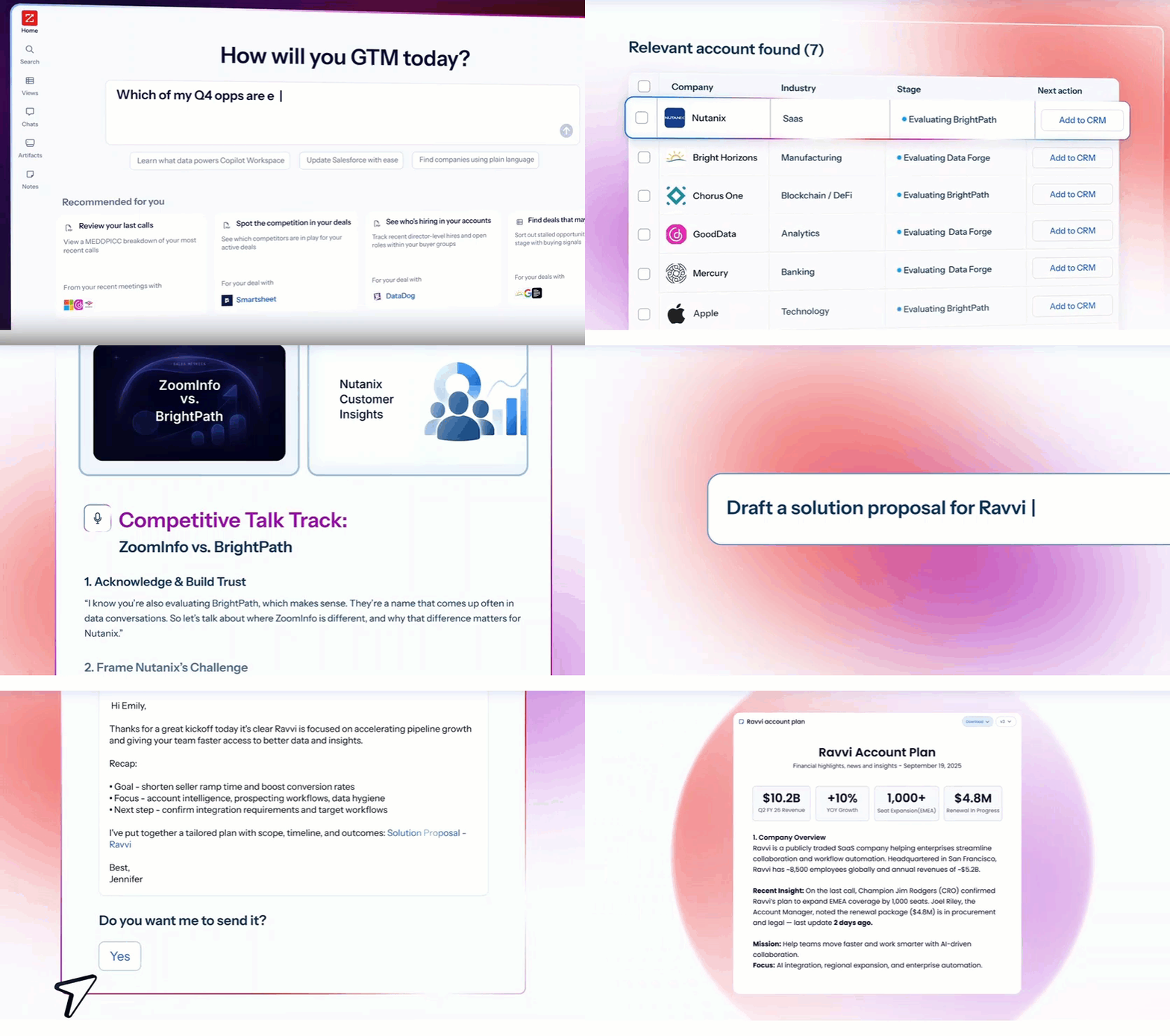
GTM Workspace is the seller's front end. AI agents built on Anthropic's Claude handle account research, generate follow-ups, monitor signals, draft outreach, and update CRM fields. Sellers see a complete Book of Business view combining CRM data, ZoomInfo intelligence, conversation history, and market signals in one place.
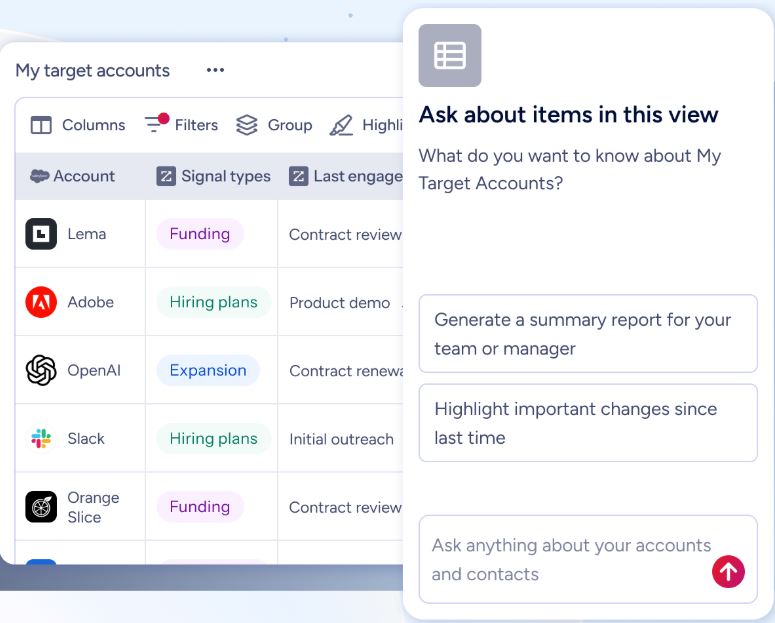
Unlike Artisan's autonomous but opaque approach, GTM Workspace gives sellers full visibility into and control over AI-generated actions.
GTM Studio is the marketer and RevOps front end. Teams build audiences with natural language, enrich with first- and third-party data, define triggers, and activate plays across channels, all without engineering support. Expansion plays that used to take three weeks now launch in 30 minutes.
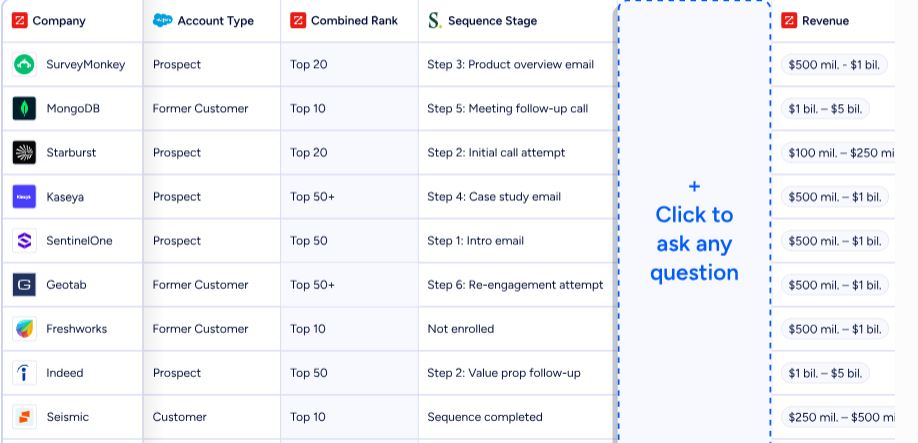
APIs and MCP expose the same intelligence to any custom agent, internal tool, or partner platform. API access is included in all relevant plans, and ZoomInfo MCP is listed in the Claude directory, making it accessible to any MCP-compatible AI assistant.
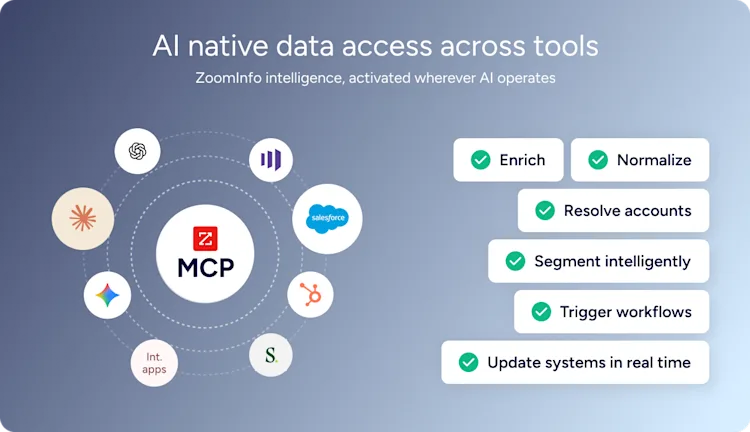
The key point: all three channels draw from one GTM Context Graph. A buying signal a marketer detects in GTM Studio is immediately available to a seller in GTM Workspace or a custom agent via API. Nothing is siloed.
BDO Canada's Senior Marketing Intelligence Analyst, Jerry Wilson, on ZoomInfo's API: "The plug-and-play aspect of the API means I can integrate it very easily into any process and get information at a moment's notice," achieving an 87% reduction in time spent on data dashboard updates. (BDO Canada Case Study)
Pricing: Custom-quoted tiers with a permanent free option.
ZoomInfo uses a custom-quoted, seat-and-credit-based subscription across three product lines (Sales, Marketing, and Operations), each with multiple tiers. Costs depend on seats, credit volume, features, and contract length.
Unlike Artisan's quote-only model with no free entry point, ZoomInfo offers two ways to try the platform first.
ZoomInfo Lite is a permanent free tier (not a trial) with access to ZoomInfo's B2B database, 10 monthly export credits, search filters, a Chrome extension, and WebSights Lite for up to 10 website visitor reveals per day. No credit card or annual commitment required. A separate 7-day free trial gives access to paid features for deeper evaluation.
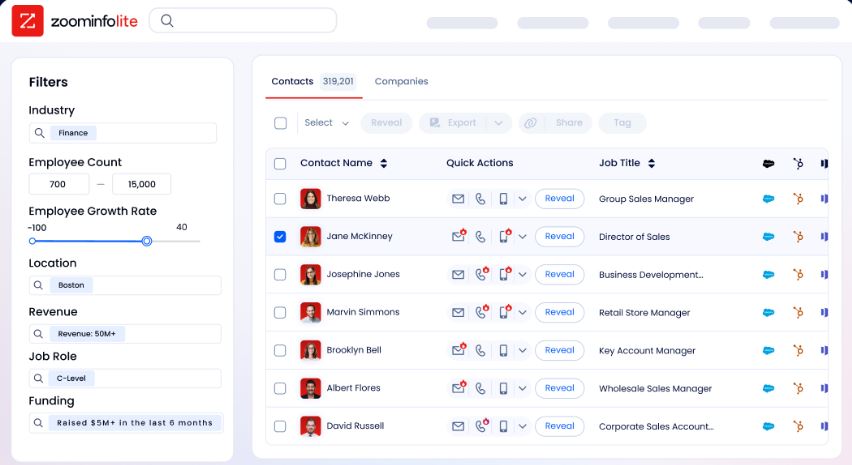
ZoomInfo's credit system charges 1 credit per export of a professional or company profile; searching and viewing data within the platform costs nothing.
Note: ZoomInfo is transitioning toward a consumption-based pricing model.
Artisan or ZoomInfo: Comparison Summary
Artisan | ZoomInfo | |
|---|---|---|
Primary focus | AI-powered outbound email automation | AI GTM platform |
Target users | Sales teams running outbound email campaigns | Sales, marketing, RevOps, and operations teams |
B2B contact database | 300M+ contacts across 200+ countries | 500M contacts, 100M companies across 200+ countries |
Verified phone numbers | Not specified | 135M+ verified phone numbers, 120M direct dials |
Verified email addresses | Built-in bounce-testing | 200M+ verified business emails, up to 95% accuracy |
Data verification | Automated validation | 300+ human researchers + AI/ML pipeline |
AI capabilities | Autonomous AI BDR (email writing, sending) | GTM Context Graph, AI agents across Workspace and Studio |
Outreach channels | Email and LinkedIn | Email, phone, ads, direct mail, LinkedIn, and more |
Reply handling | Suggests replies only; human takeover required | Full conversation intelligence via Chorus |
Intent signals | Job postings, funding rounds, website visitors | 210M IP-to-Organization pairings, Guided Intent, 6T+ keyword pairings |
Marketing capabilities | None | ABM, display ads, audience management, form optimization |
CRM integrations | HubSpot, Salesforce | Salesforce, HubSpot, Dynamics 365, 120+ marketplace integrations |
API/MCP access | Not publicly documented | Enterprise API + MCP server, included in all relevant plans |
Free tier | No free plan or trial advertised | Permanent free tier (ZoomInfo Lite) + 7-day free trial |
Compliance | SOC 2 Type 2 | ISO 27001, ISO 27701, SOC 2 Type II, TRUSTe GDPR/CCPA |
Best for | Autonomous outbound email at scale | Go-to-market intelligence and execution |
Final Verdict
The choice between Artisan and ZoomInfo comes down to whether you need an automated email sender or a go-to-market intelligence platform.
Choose Artisan if you have one specific need: scaling outbound email with minimal human involvement. It works best for sales teams targeting broad B2B audiences who will invest 2-3 weeks training the AI, want campaign setup in hours rather than days, and accept an autonomous agent handling lead discovery through email delivery.
If outbound email is your primary channel and consolidation matters more than breadth, Artisan delivers that.
Choose ZoomInfo if your revenue team needs more than automated emails. ZoomInfo fits when you need verified data your reps can actually reach prospects with, intelligence that explains why deals move (not just that they moved), and execution spanning sales, marketing, and operations.
Its data, the GTM Context Graph, and access through GTM Workspace, GTM Studio, and APIs make it the platform for teams building their entire go-to-market motion on one intelligence layer, not just automating one channel.
Get started with ZoomInfo here.
Artisan offers a focused vision of autonomous outbound sales. ZoomInfo provides the verified data, contextual intelligence, and cross-functional execution that effective revenue teams build on. The question isn't which platform sends more emails; it's whether your go-to-market strategy needs an AI email agent or an intelligence platform.
Artisan FAQ
How much does Artisan cost?
Artisan does not publicly list pricing. According to its pricing page, the platform prices based on outreach volume, with costs split between BDR and AE seats. All modules show "Request Pricing," indicating a custom-quote model. Purchases are non-refundable, and contracts auto-renew unless either party gives written notice at least 30 days before expiration.
ZoomInfo also uses custom-quoted pricing but offers a permanent free tier (ZoomInfo Lite) and a 7-day free trial, giving prospects two ways to evaluate before committing.
Can Artisan's AI reply to prospect emails?
No. Ava cannot reply to incoming emails in either Copilot or Autopilot mode. She can only suggest responses, requiring a human to take over once a prospect replies. This is one of Artisan's most significant gaps for teams expecting full-cycle automation.
ZoomInfo's GTM Workspace provides AI-drafted outreach and full conversation context through Chorus, giving sellers visibility into every interaction.
What channels does Artisan support?
Artisan supports email and LinkedIn. There is no support for phone calls, SMS, direct mail, or coordinated multi-channel sequences. ZoomInfo supports email, phone (with 120M direct-dial numbers), display ads, direct mail, LinkedIn, and more, orchestrated through GTM Studio and executed through GTM Workspace or integrated sales engagement tools.
How accurate is Artisan's B2B data?
Artisan provides access to over 300 million B2B contacts with built-in bounce-testing and validation. However, multiple users report thin coverage for niche and vertical markets, with one user finding only 3-7 C-level contacts matching their criteria from the entire database.
ZoomInfo covers 500M contacts and 100M companies, verified through a multi-source pipeline with 300+ human researchers and up to 95% accuracy on first-party data, confirmed by independent Fortune 500 competitive evaluations.
How long does it take to set up Artisan?
Onboarding takes about 2-3 weeks and includes a kickoff call with a dedicated Customer Success Manager, a pre-onboarding form covering your ideal customer profile and positioning, mailbox warmup, and messaging refinement. Users can start direct message campaigns immediately while email warmup runs in the background. The most successful users spend the full 2-3 weeks training and refining Ava's output before letting her run autonomously.
Does Artisan integrate with CRMs?
Yes. Artisan integrates natively with HubSpot and Salesforce, automatically exporting activity and prospect data. The HubSpot integration includes custom field mapping, sentiment-based lead status assignment, and domain-level deal protection. The Salesforce integration exports leads with email-based duplicate detection. Artisan also connects to Slack for real-time updates.
ZoomInfo offers 120+ partner integrations through its App Marketplace, plus Enterprise API and MCP access for custom integrations into any tool or AI agent.
Is Artisan suitable for niche or vertical markets?
Artisan's database works best for broad B2B audiences targeting common roles and industries. Multiple reviews note that Ava struggles with specific, vertical ICPs where database coverage thins out. Organizations in specialized industries may not find enough contacts matching their criteria.
ZoomInfo provides deeper coverage through 500M contacts, nine vertical-specific datasets, and 30,000+ technologies tracked across 200+ categories.
What security certifications does Artisan have?
Artisan holds SOC 2 Type 2 certification with a Trust Center that provides access to security documentation, including penetration test reports and security policies. No additional compliance frameworks (GDPR, CCPA, ISO) are mentioned in publicly accessible materials.
ZoomInfo holds ISO 27001, ISO 27701, SOC 2 Type II, and TRUSTe GDPR and CCPA validations, all renewed annually, and is a registered data broker in California and Vermont.
Researching Artisan? These comparisons and alternatives help you decide:
