
Choosing between Bigin and HubSpot for your CRM often comes down to these questions:
Do you need a simple pipeline tool or a full marketing, sales, and service platform?
Are you a small team managing dozens of deals or a growing company managing thousands?
Is your priority getting started in minutes or having every marketing, sales, and service capability in one system?
How much are you willing to spend per user per month on CRM?
Do you have verified B2B contact data and buying signals feeding your pipeline?
In short, here's what we recommend:
Bigin is the CRM for small businesses that want to stop managing customers in spreadsheets and start managing them in a real pipeline. Built by Zoho as a simpler CRM option, Bigin gets you up and running in 30 minutes with paid plans starting at $7/user/month. Its Team Pipelines let you manage sales, onboarding, support, and delivery in a single account, which is unusual for a CRM at this price.
But Bigin has intentional limits: 50 automation rules on its top standard plan, no native marketing automation, and reporting that requires a separate Zoho Analytics subscription to go beyond the basics.
HubSpot is the full customer platform for growing companies. Marketing automation, sales pipeline management, customer service, content creation, data operations, and commerce all connect through a Smart CRM that shares data across every team. With 288,706 customers and $3.13 billion in annual revenue, HubSpot has the ecosystem and features to grow with you.
The trade-off: pricing that escalates quickly, mandatory onboarding fees at Professional and Enterprise tiers, and a learning curve that steepens at higher tiers.
Both platforms handle customer relationship management well. But here's the problem neither solves: finding the right B2B accounts to pursue, knowing when they're researching solutions like yours, and reaching decision-makers with verified contact information. Your CRM manages your pipeline. What's filling it?
ZoomInfo is a B2B intelligence and go-to-market platform that helps your sales reps enter every call knowing why a deal is moving, who's championing it, and what's likely to happen next. Your marketers can describe audiences in plain language and target accounts that match your best customers.
That depth comes from the GTM Context Graph, an intelligence layer built on a large B2B dataset: 500M contacts, 100M companies, 135M+ verified phone numbers, and 200M+ verified business emails, combined with your CRM records, conversation transcripts, and behavioral signals.
ZoomInfo integrates directly with HubSpot and the broader Zoho ecosystem, delivering intelligence through the GTM Workspace for sellers, GTM Studio for marketers and RevOps, or APIs and MCP in any front-end.
If you want verified contacts and buying signals feeding your CRM pipeline, see how ZoomInfo works with a free trial.
Bigin vs. HubSpot vs. ZoomInfo at a glance
Bigin | HubSpot | ZoomInfo | |
|---|---|---|---|
Primary function | CRM for small businesses | Full customer platform (CRM + marketing + sales + service) | B2B data intelligence and go-to-market execution |
Starting price | Free (1 user); $7/user/month (Express) | Free (2 users); $15/seat/month (Starter, annual) | Free (ZoomInfo Lite); custom pricing for paid plans |
Pipeline management | Visual pipelines with Team Pipelines for multi-process operations | Deal pipelines with AI-powered forecasting and guided selling | GTM Workspace with AI-prioritized accounts and signal-driven actions |
Marketing capabilities | None native (integrates with Zoho Campaigns or Mailchimp) | Full marketing automation, email, social, ads, content | Account-based marketing, buyer intent, cross-channel advertising |
AI features | Zia Agents (Reply Assistant, CrossSell Genie, Churn Analyzer) | Breeze AI (Customer Agent, Prospecting Agent, Data Agent) | GTM Context Graph with AI agents for research, outreach, and deal intelligence |
Contact database | Your own contacts only | Your own contacts + AI data enrichment | 500M contacts, 200M+ verified emails, 135M+ verified phones |
Buying signals | None | Website activity and email engagement | Intent data, website visitor identification, job changes, funding events |
Integrations | Zoho ecosystem + Zapier + key third-party apps | 2,000+ App Marketplace integrations | 120+ integrations + APIs + MCP for any tool |
Setup time | 30 minutes | Days to weeks (depending on tier) | Weeks (with guided onboarding) |
Best for | Teams of 1-20 replacing spreadsheets | Growing companies (20-2,000+) needing a unified platform | B2B teams that need verified contacts, buying signals, and account intelligence |
Two CRMs, two different philosophies
Bigin and HubSpot aren't competing for the same buyer. They serve different stages of business growth with different design philosophies.
Bigin was built for the business that has never used a CRM. 65% of Bigin customers had never used CRM software before signing up. Zoho designed it as the exit ramp from spreadsheets: give small businesses a real pipeline tool without the configuration overhead, training requirements, or pricing that make enterprise CRMs impractical for a 5-person team.
Zoho's internal data showed that despite 600+ CRM vendors in the market, most small businesses were still stuck with spreadsheets. Not because they didn't need CRM, but because existing products were built for larger organizations.
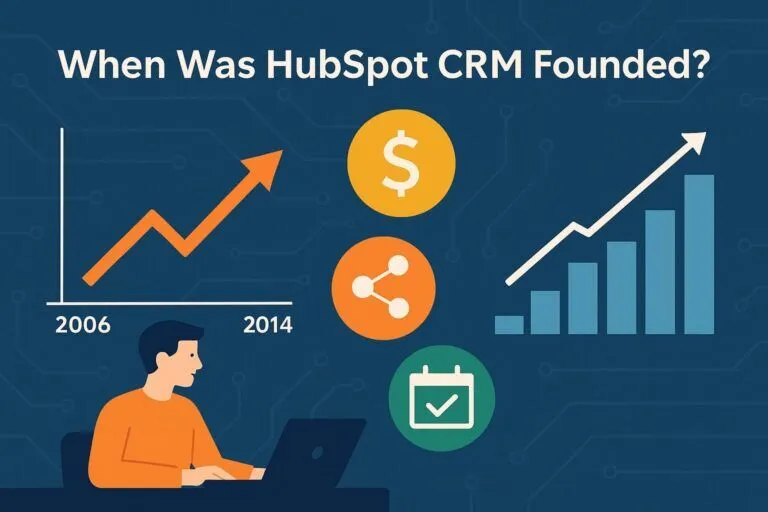
HubSpot was built for the growing company that needs marketing, sales, and service teams working from shared data. The platform started as a marketing automation tool in 2006, added a free CRM in 2014, and has since expanded into eight connected products sharing a single data layer.
Source: HubSpot
Where Bigin assumes you know your customers and need to organize them, HubSpot assumes you need to attract, convert, close, and retain customers across multiple channels, and that every team touching the customer should see the same record.
The practical difference shows up immediately. In Bigin, you create a pipeline, add your contacts, and start tracking deals. In HubSpot, you're configuring marketing workflows, sales sequences, service tickets, and content strategies that all feed into the same contact record. One is a focused tool. The other is an operating system.
Bigin wins on speed, simplicity, and cost
Bigin's strength is making CRM adoption painless. The 30-minute setup promise is central to the product.
The pricing reinforces that accessibility. Bigin's Express plan at $7/user/month includes built-in telephony, workflow automations, WhatsApp integration, email tracking, mass emails, and multiple pipelines. At HubSpot, marketing automation starts at Professional tier ($800/month on annual billing), and sales sequences require at least a Starter subscription.
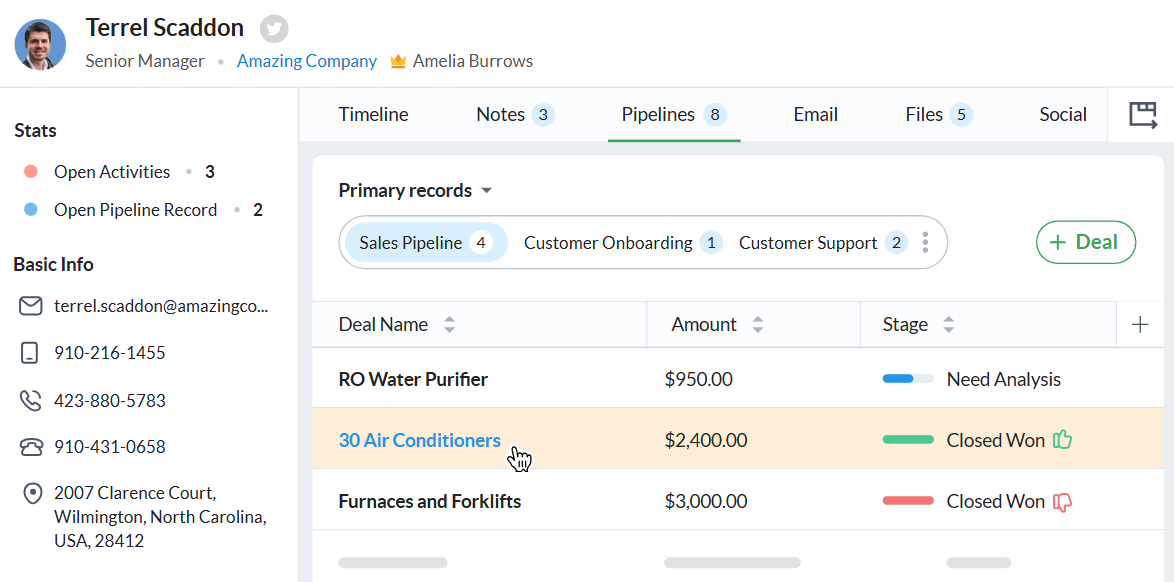
Team Pipelines is Bigin's structural differentiator. Where most entry-level CRMs limit you to a sales pipeline, Bigin lets you run sales, customer onboarding, support, order fulfillment, and other workflows as distinct pipelines within a single account.
Source: Bigin
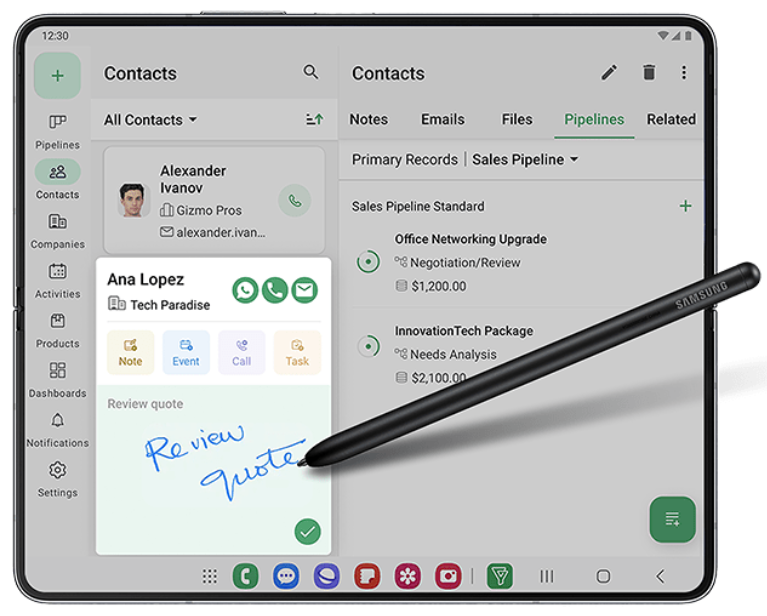
The mobile experience is a genuine differentiator too. Bigin was designed mobile-first from the outset, with platform-specific features for Samsung (Flex Mode, S Pen, Galaxy AI) and Apple (watchOS app, Liquid Glass design, Apple Pencil support). For field-based businesses managing pipelines from a phone, this matters.
Source: Bigin
But Bigin's simplicity has clear limits. 30 workflow automations on Express and 50 on Premier cap what you can automate. There's no native marketing automation, and mass emails are limited to 300/day on Express and 1,000/day on Premier. Custom dashboards cover standard visualization, but advanced analytics requires a separate Zoho Analytics subscription.
And Bigin is designed to be outgrown: the product explicitly promotes upgrading to Zoho CRM when a business hits its ceiling.
HubSpot wins on platform depth and scale
HubSpot's advantage is that everything connects. A lead captured through a Marketing Hub form gets scored by Sales Hub, nurtured through automated email sequences, handed to a rep when engagement signals spike, quoted through Commerce Hub, and supported through Service Hub. All on the same contact record, with no manual data transfers between tools.
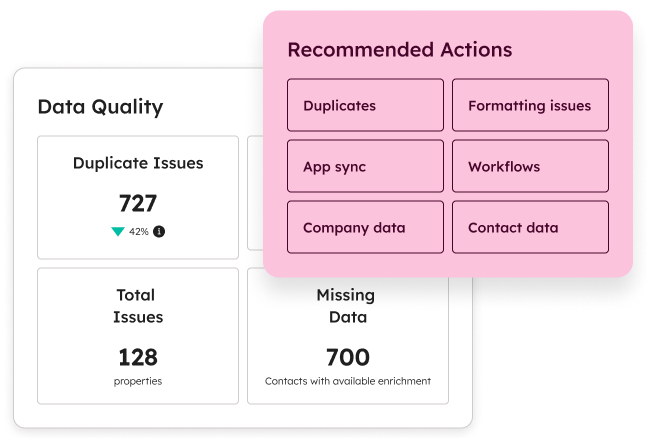
The Smart CRM is the connective layer. It enriches records automatically from emails, calls, and web activity. It supports up to 15 million contacts (expandable to 50 million), with custom objects, field-level permissions, and sandbox environments. For a growing company, the CRM grows with you instead of forcing a migration.
Source: HubSpot
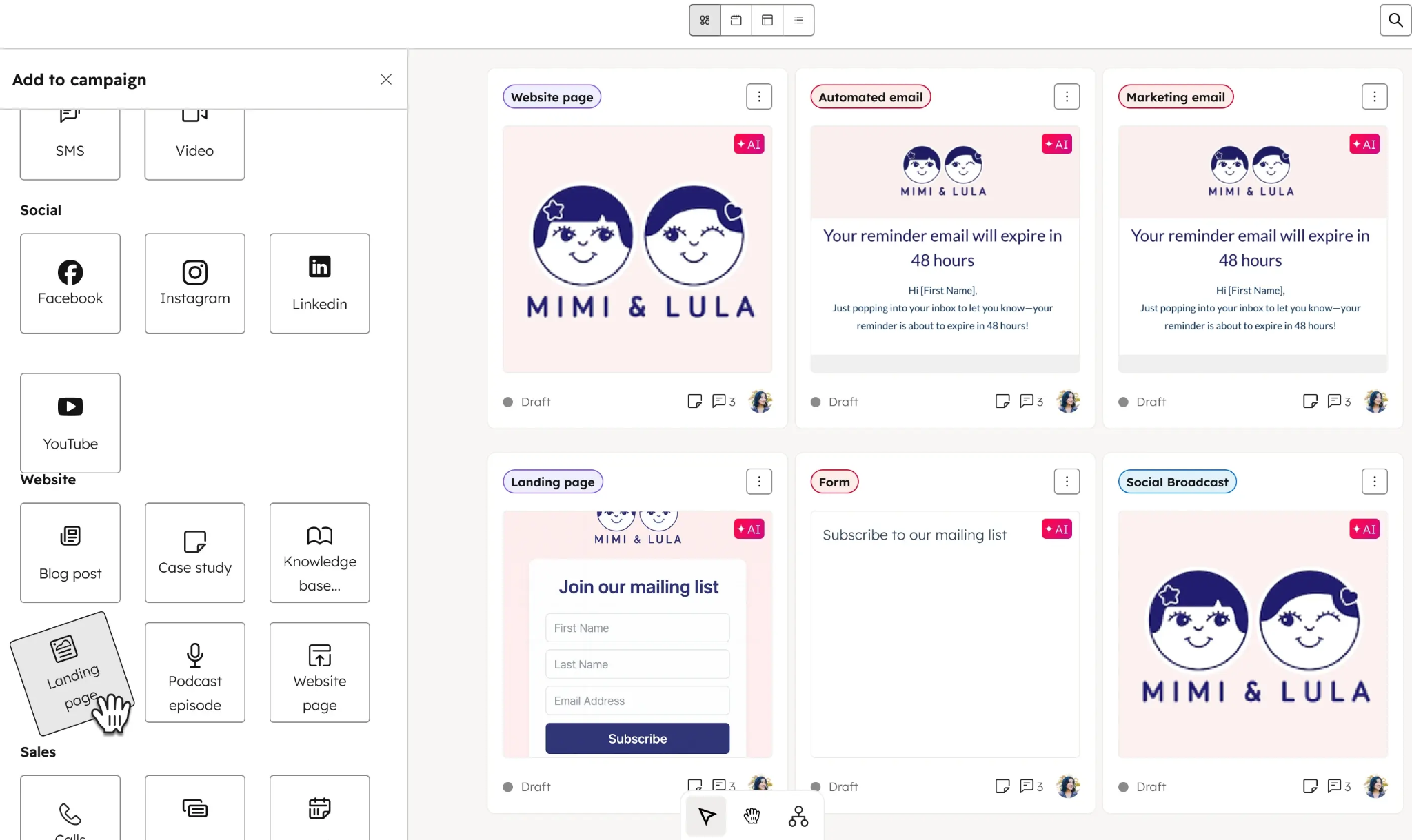
Marketing Hub is where HubSpot separates from Bigin entirely. Marketing automation workflows with visual branching, audience segmentation based on behavioral and firmographic signals, multi-touch attribution reporting, and AI-powered content creation are capabilities Bigin doesn't attempt. For companies where marketing generates a significant share of pipeline, this gap matters.
Source: HubSpot
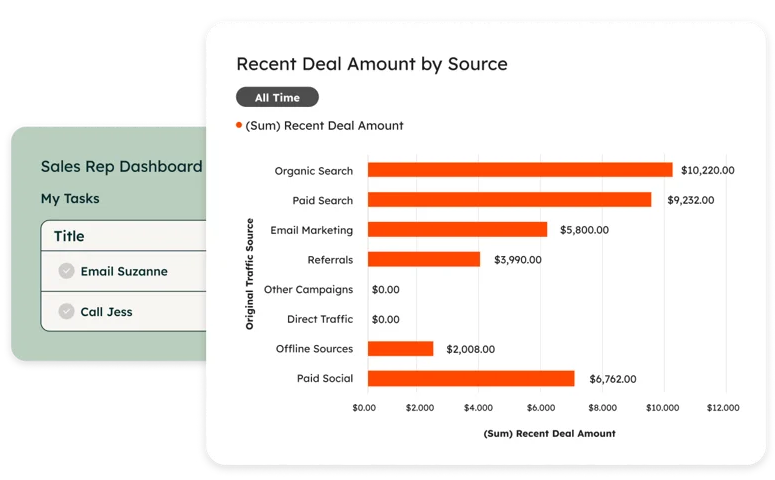
Sales Hub adds AI-guided selling, conversation intelligence with call recording and coaching, predictive lead scoring, and CPQ software for generating branded quotes. Service Hub includes a Breeze Customer Agent that reportedly resolves over 50% of customer conversations on its own.
Source: HubSpot
The ecosystem extends to over 2,000 app integrations with 2.5 million active installs, a Solutions Partner Program for implementation support, and HubSpot Academy with over 200,000 certified professionals.
The cost of this depth: pricing that requires careful planning. Sales Hub Professional runs $90/seat/month (annual) with a $1,500 mandatory onboarding fee. Marketing Hub Professional starts at $800/month (annual) with a $3,000 onboarding fee. If you subscribe to multiple Hubs at different tiers, all Core Seats are billed at the rate of the highest tier, a hidden cost that catches teams off guard.
The intelligence gap both CRMs leave open
Here's what most CRM comparisons miss: the CRM manages your pipeline, but it doesn't tell you who should be in that pipeline or when they're ready to buy.
Bigin assumes you already have your contacts. You import them from spreadsheets, capture them from web forms, or enter them manually. The CRM organizes what you bring to it. HubSpot goes further with content marketing, SEO tools, and inbound lead capture, but its contact database is still built from people who find you.
For B2B companies selling to other businesses, this creates a gap. Your addressable market includes companies and decision-makers who haven't visited your website, filled out your forms, or responded to your emails. Some of them may be researching solutions like yours right now, but neither CRM surfaces them.
That gap is where pipeline stalls. Reps spend hours manually researching accounts, building prospect lists from incomplete data, and reaching out to contacts whose email addresses bounce or whose phone numbers go to the wrong department. The CRM is clean and organized. The problem is upstream: the data feeding it isn't comprehensive or timely enough.
ZoomInfo provides the intelligence layer
ZoomInfo approaches the go-to-market problem from a different direction than either CRM. Instead of managing relationships you've already built, ZoomInfo identifies the relationships you should be building and provides the verified data to reach them.
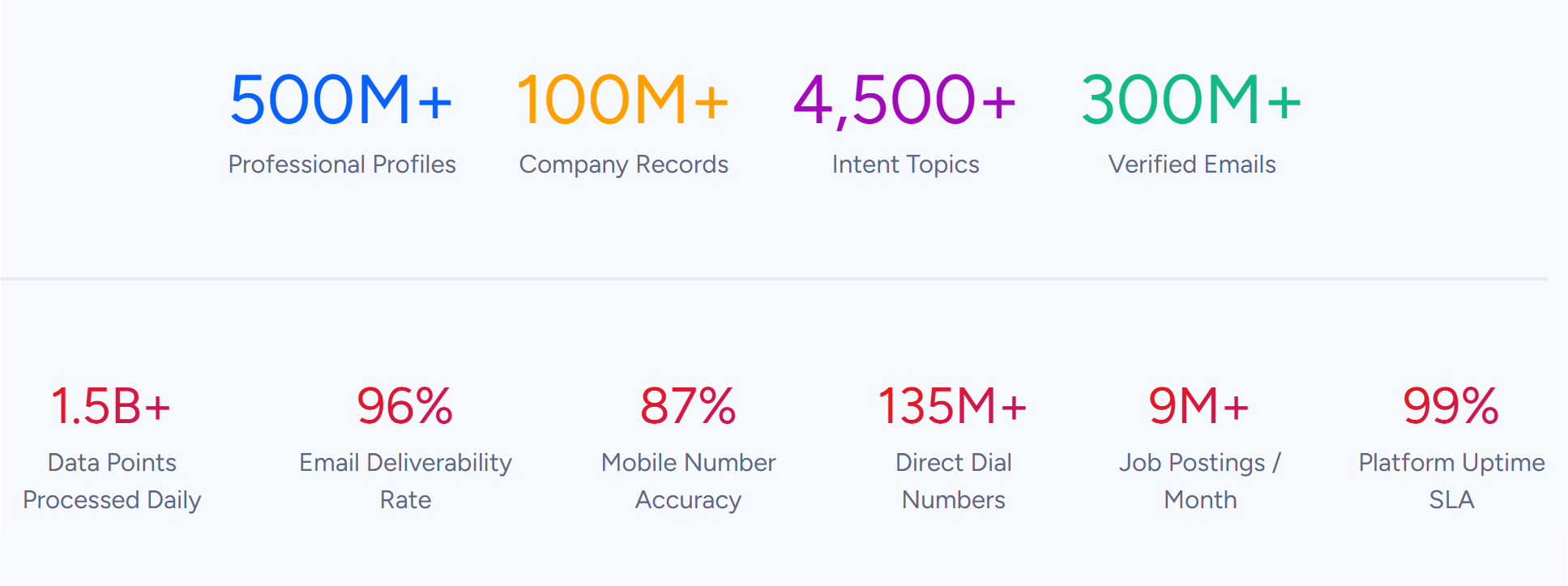
The foundation is a large B2B data platform: 500M contacts, 100M companies, 135M+ verified phone numbers, 120M direct dials, and 200M+ verified business email addresses.
Source: ZoomInfo
ZoomInfo verifies this data through a multi-source pipeline that includes automated ML scanning of 28 million site domains daily, third-party partner data covering 95 million businesses, and an in-house Data Training Lab of 300+ human researchers. First-party data reaches up to 95% accuracy.
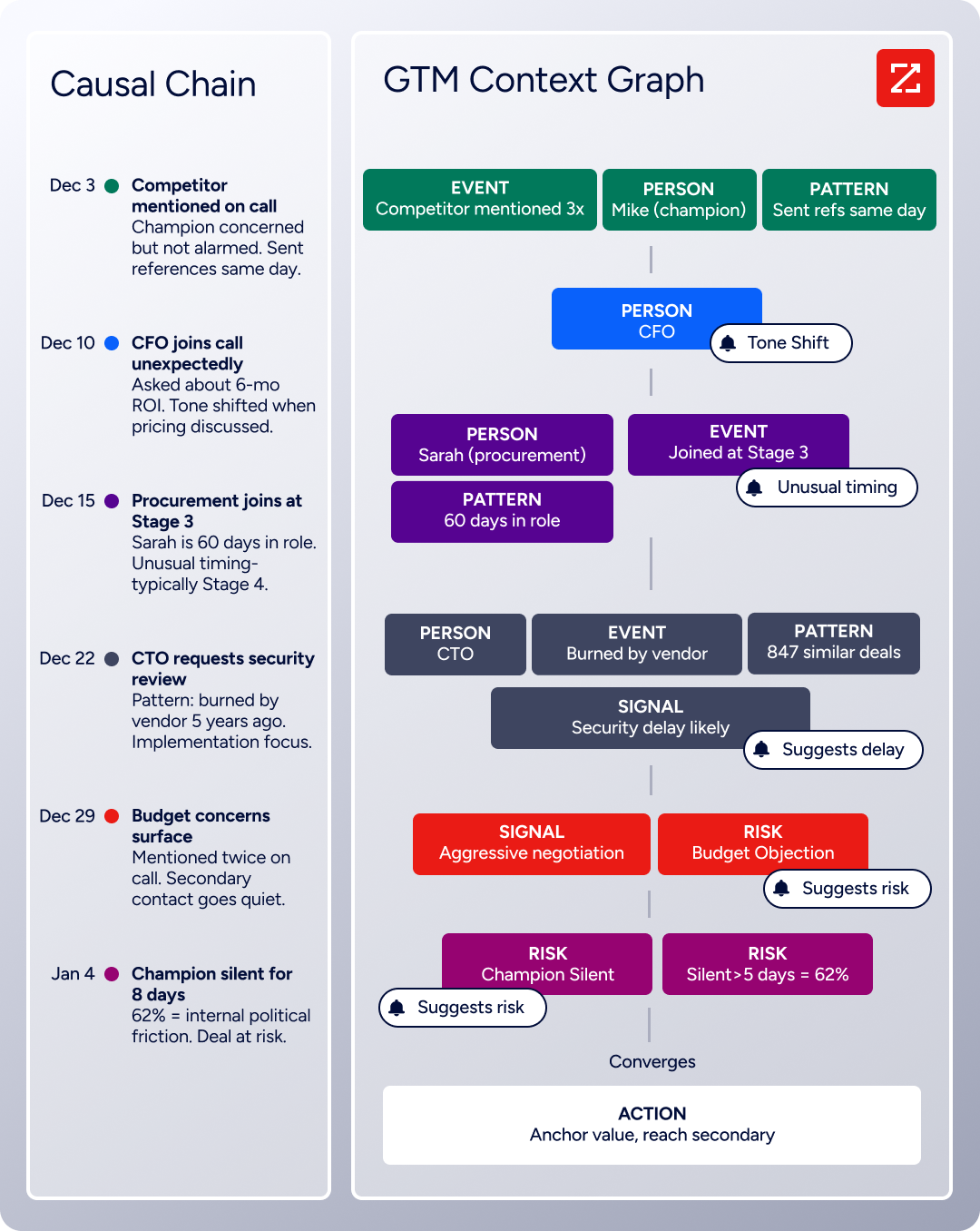
But data alone is a phonebook. What makes ZoomInfo different is the GTM Context Graph, which processes 1.5B + data points daily and fuses ZoomInfo's third-party intelligence with your CRM records, conversation transcripts, and behavioral signals.
Source: ZoomInfo
The result is an intelligence layer that reveals not just who your prospects are, but why they're likely to buy now. A CRM records that a deal moved stages. The GTM Context Graph captures what drove that movement (executive sponsorship, competitive research, hiring patterns, funding events) so your team acts on context, not guesswork.
Buyer Intent data tracks signals from 210 million IP-to-Organization pairings and 6 trillion+ keyword-to-device pairings sourced monthly.

Source: ZoomInfo
WebSights identifies the companies behind anonymous website traffic, including buying team contacts and direct contact information. Technographics track the tech stack of 30+ million companies across 30,000+ technologies. These signals flow directly into your CRM through native integrations.

Source: ZoomInfo
External reviewers have validated the quality of this data. In a Fortune 500 competitive RFP analyzing 25 million contacts across vendors, the independent consultant concluded that "no other competitor came even close."
ZoomInfo has been named a Leader in the Forrester Wave for Intent Data Providers B2B (Q1 2025) and a Leader in the Gartner Magic Quadrant for ABM Platforms for the second consecutive year (2025).
Seismic's sales team attributed 39% of active pipeline to opportunities identified or influenced by ZoomInfo signals, boosted productivity by 54%, and saved 11.5 hours per week per seller. Chief Business Officer Toby Carrington said: "That combination of our internal CRM data, external signals, and AI that's given all that context has helped us craft very specific account- and persona-based messages." (Seismic Case Study)
Pricing reveals different target markets
The pricing structures tell you who each product is built for.
Bigin keeps it simple. The free plan covers a single user with 500 records, enough for a solopreneur to evaluate. Express at $7/user/month (annual) unlocks 50,000 records, email and WhatsApp integration, and 30 automations. Premier at $12/user/month adds lookup and formula fields, stage transition rules, and multi-currency support.
Bigin 360 at $18/user/month (annual) is the highest tier, with 1 million records, 100 automations, and 15 team pipelines. A 10-person team on Bigin 360 pays $180/month. No forced contracts, cancel anytime, with a 30-day money-back guarantee on monthly plans and 45 days on annual.
HubSpot's free tier is useful (unlimited contacts up to 1M records, basic pipeline, email tracking) but capped at 2 users with HubSpot branding on customer-facing tools. The Starter Customer Platform at $7/seat/month (annual) bundles starter editions of all Hubs.
But the real HubSpot begins at Professional tier: Sales Hub Professional at $90/seat/month (annual) with a $1,500 onboarding fee, Marketing Hub Professional at $800/month (annual) with a $3,000 onboarding fee.
A team needing professional-grade marketing and sales tools faces a first-year cost that can exceed $15,000 before adding extra seats. And paid subscriptions can only be canceled at the end of the commitment term, not mid-contract.
The cost gap between the two is enormous at the entry level and narrows as you account for total platform capability. A small team that just needs pipeline management would be overspending on HubSpot Professional. A growing company with marketing, sales, and service needs would quickly outgrow Bigin and need to migrate anyway.
ZoomInfo uses consumption-based pricing with no published prices. Costs depend on usage patterns, seat count, credit volume, and feature access. ZoomInfo is a separate investment from your CRM, priced for B2B companies where better data directly translates to more pipeline.
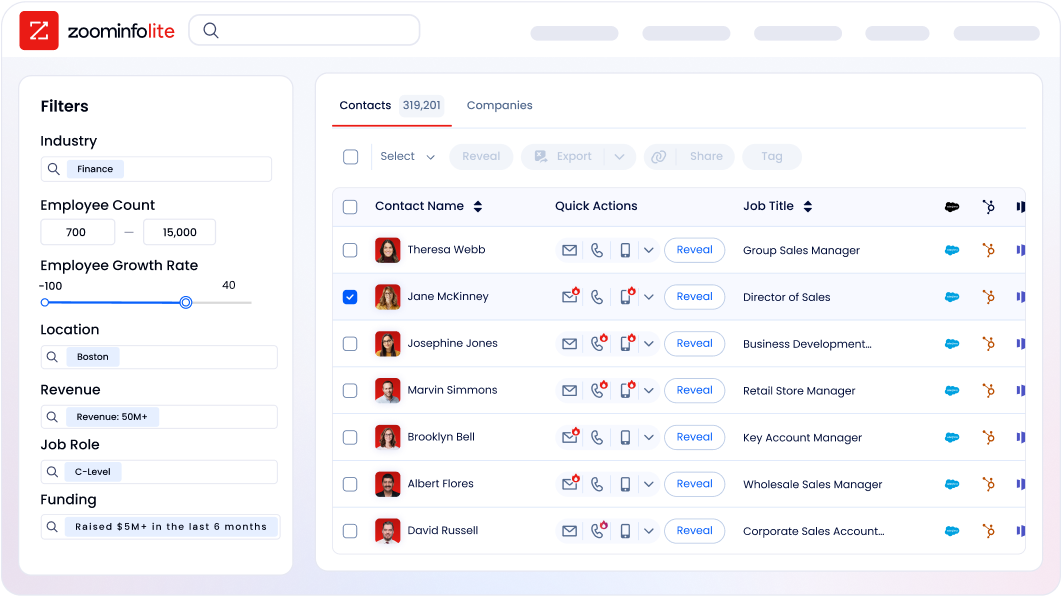
The free ZoomInfo Lite tier provides access to the B2B database with 10 monthly export credits and features like the ReachOut Chrome Extension and WebSights Lite. A 7-day free trial with broader access is also available.
Source: ZoomInfo
Vensure's Vice President of Revenue Operations William Kenimer described the impact: "ZoomInfo gives us the information we need to execute. We don't have to go through and spend our time digging. It's already there, so we can be three steps ahead." (Vensure Case Study)
AI capabilities compared
All three platforms have invested in AI, but toward different goals.
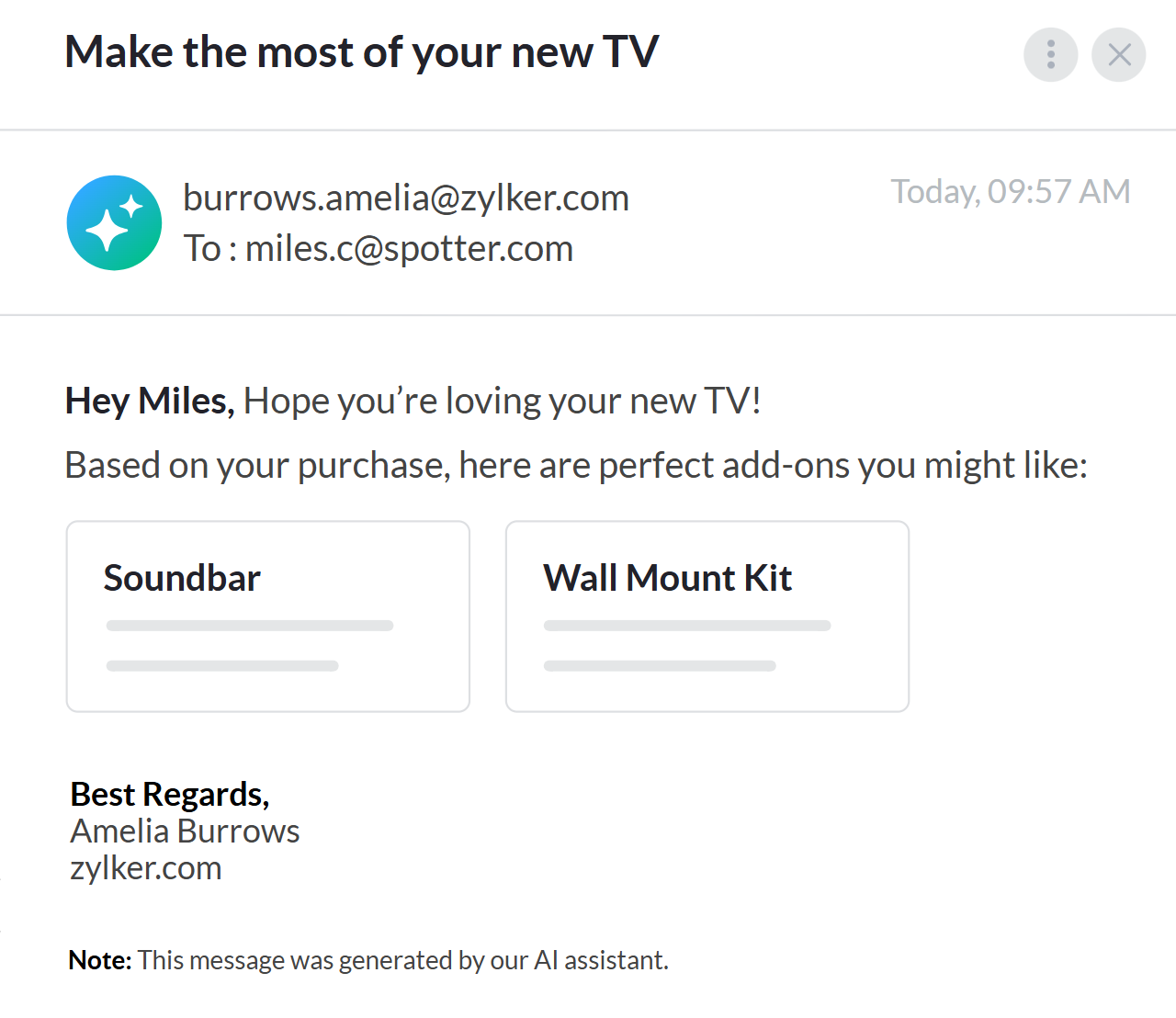
Bigin's AI layer, branded Zia Agents, is designed for the small team that can't afford dedicated sales operations staff. The Reply Assistant monitors inboxes and drafts responses. The CrossSell Genie analyzes product catalogs to identify upsell opportunities on closed deals. The Churn Analyzer examines lost deals to surface loss patterns.
Source: Bigin
These agents are in Early Access and require Premier or Bigin 360 plans with limited monthly AI credits (1,000 on Premier, 3,000 on Bigin 360). The emphasis is on AI that's simple to deploy: no coding required, activated in three steps.
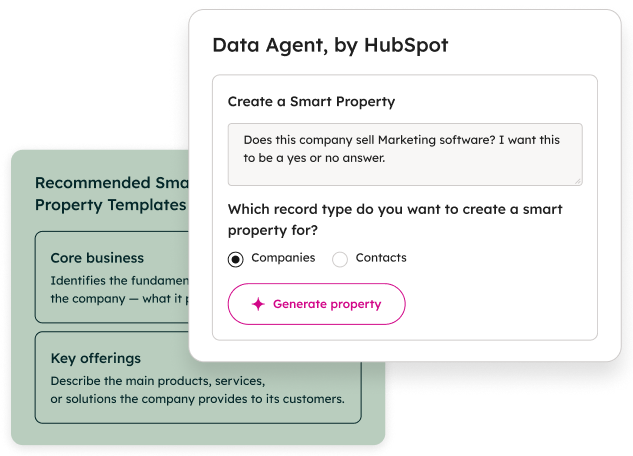
HubSpot's AI layer, Breeze, is broader. The Customer Agent handles support inquiries across chat, email, WhatsApp, and voice. The Prospecting Agent monitors buying signals and drafts personalized outreach using the complete HubSpot customer history. The Data Agent answers natural-language questions about CRM data.
Source: Hubspot
These agents run on HubSpot Credits, with Professional plans including 3,000 credits/month and Enterprise including 5,000. The advantage is that Breeze draws on the full HubSpot data layer (marketing engagement, sales conversations, service interactions) for context.
ZoomInfo's AI operates on a different data foundation entirely. Where Bigin and HubSpot AI work with data already in your CRM, ZoomInfo's GTM Context Graph reasons across your internal CRM data combined with ZoomInfo's external intelligence: 500M contacts, intent signals, technographics, and company data.
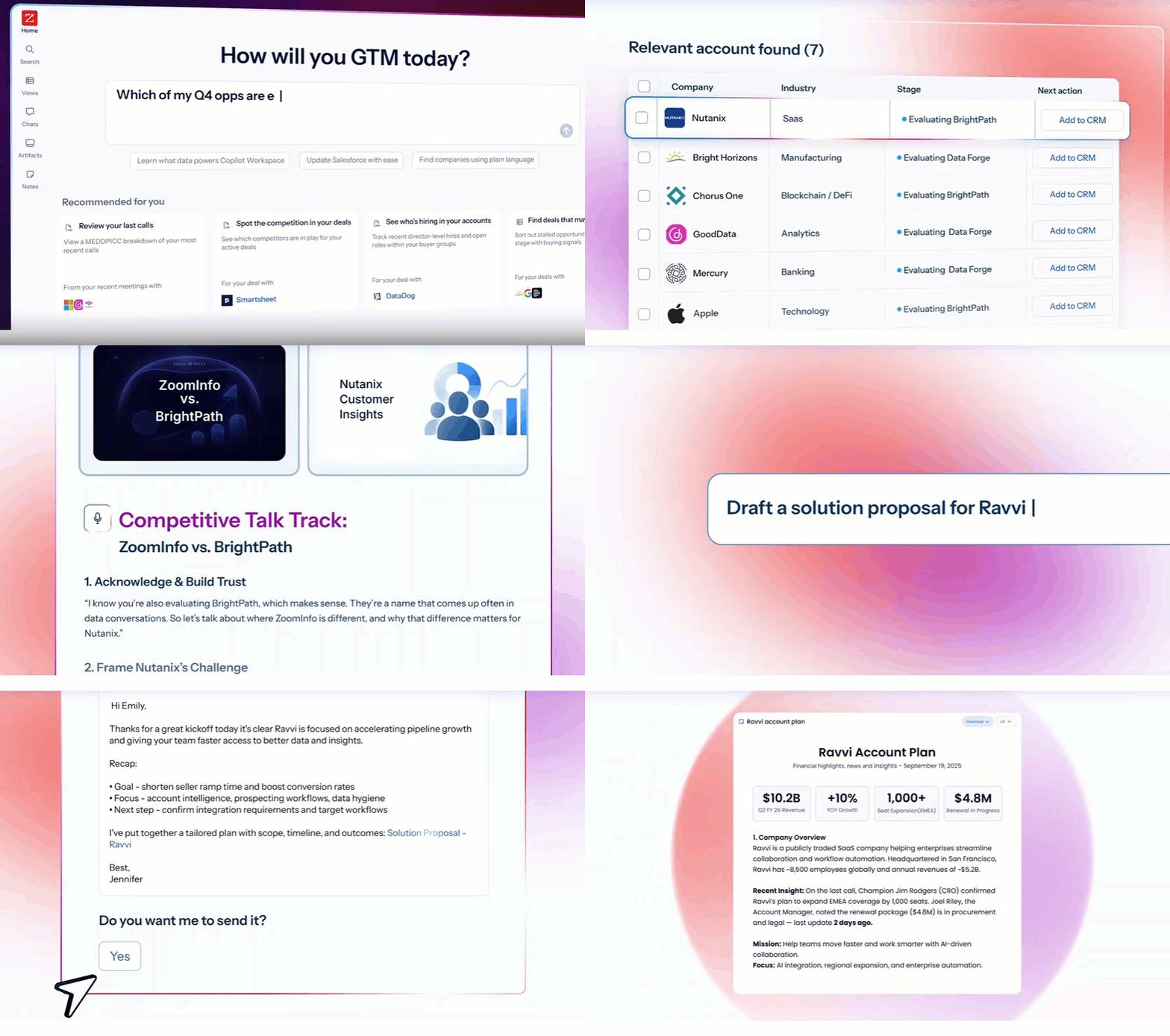
The GTM Workspace uses AI agents built on Anthropic's Claude to research accounts, draft outreach, monitor signals, and update CRM fields. GTM Workspace users report boosting pipelines by 23%, booking nearly 60% more meetings per week, and being first to engage with an account in over half of cases.
Source: ZoomInfo
The key distinction: Bigin and HubSpot AI help you work with your existing data more efficiently. ZoomInfo AI surfaces data and context you didn't have, then makes it actionable.
Integration and ecosystem fit
How each platform connects to your broader tech stack matters because no tool operates alone.
Bigin integrates natively with 15+ Zoho apps including Zoho Books, Zoho Desk, Zoho Campaigns, Zoho Analytics, and Zoho Sign. Third-party connections include Google Workspace, Microsoft 365, WhatsApp Business, Zapier (2,000+ apps), Mailchimp, Zoom, QuickBooks Online, and Shopify. Bigin's API is accessible even on the free plan, which is unusual at this price point.
For businesses already using Zoho products, Bigin fits naturally as the CRM complement. The single-click migration path to Zoho CRM ensures continuity when you outgrow it.
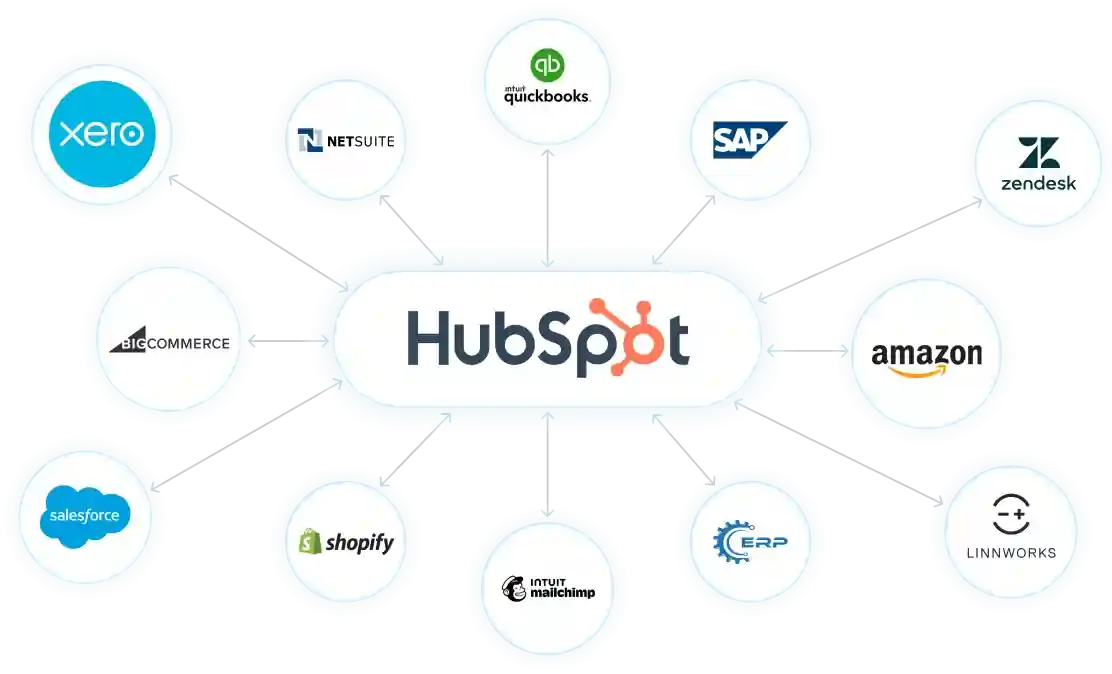
HubSpot's App Marketplace is one of its strongest assets. Over 2,000 integrations with 2.5 million active installs cover virtually every category. The developer platform supports custom apps, UI extensions, and webhook-driven automation. For companies building a multi-tool stack, HubSpot is likely to connect with whatever else you use.
Source: Hubspot
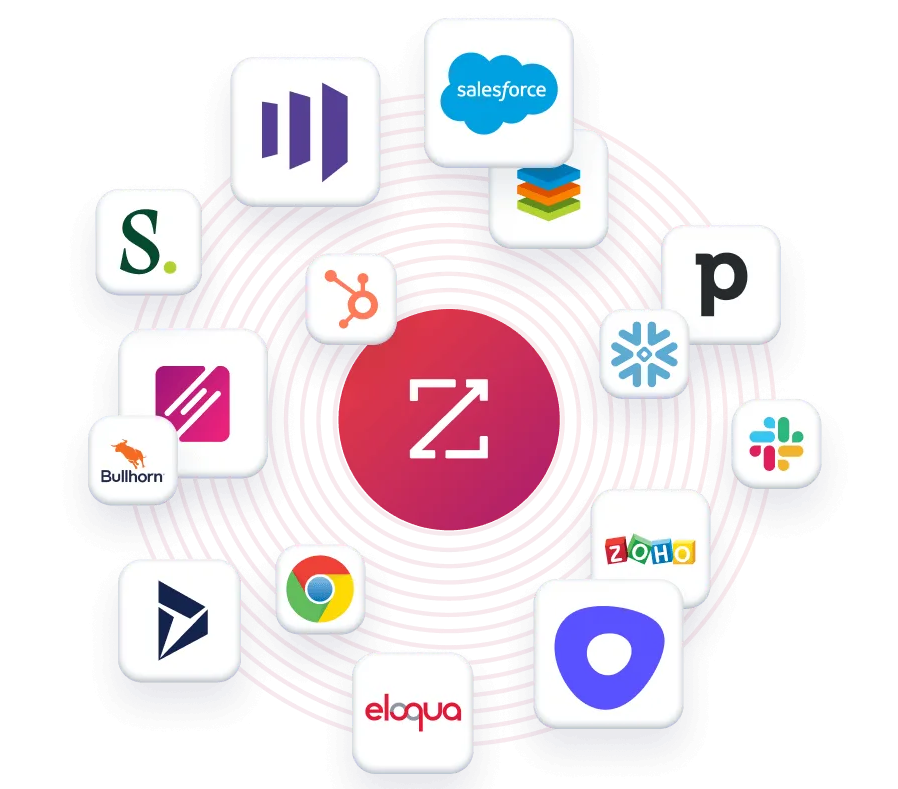
ZoomInfo integrates with 120+ partner applications across CRM, marketing automation, sales engagement, data warehouses, and more. Featured integrations include Salesforce, HubSpot, Microsoft Dynamics 365, Snowflake, and Salesloft. Cloud Partners deliver data directly into AWS, Google Cloud, Snowflake, and Databricks.
Source: ZoomInfo
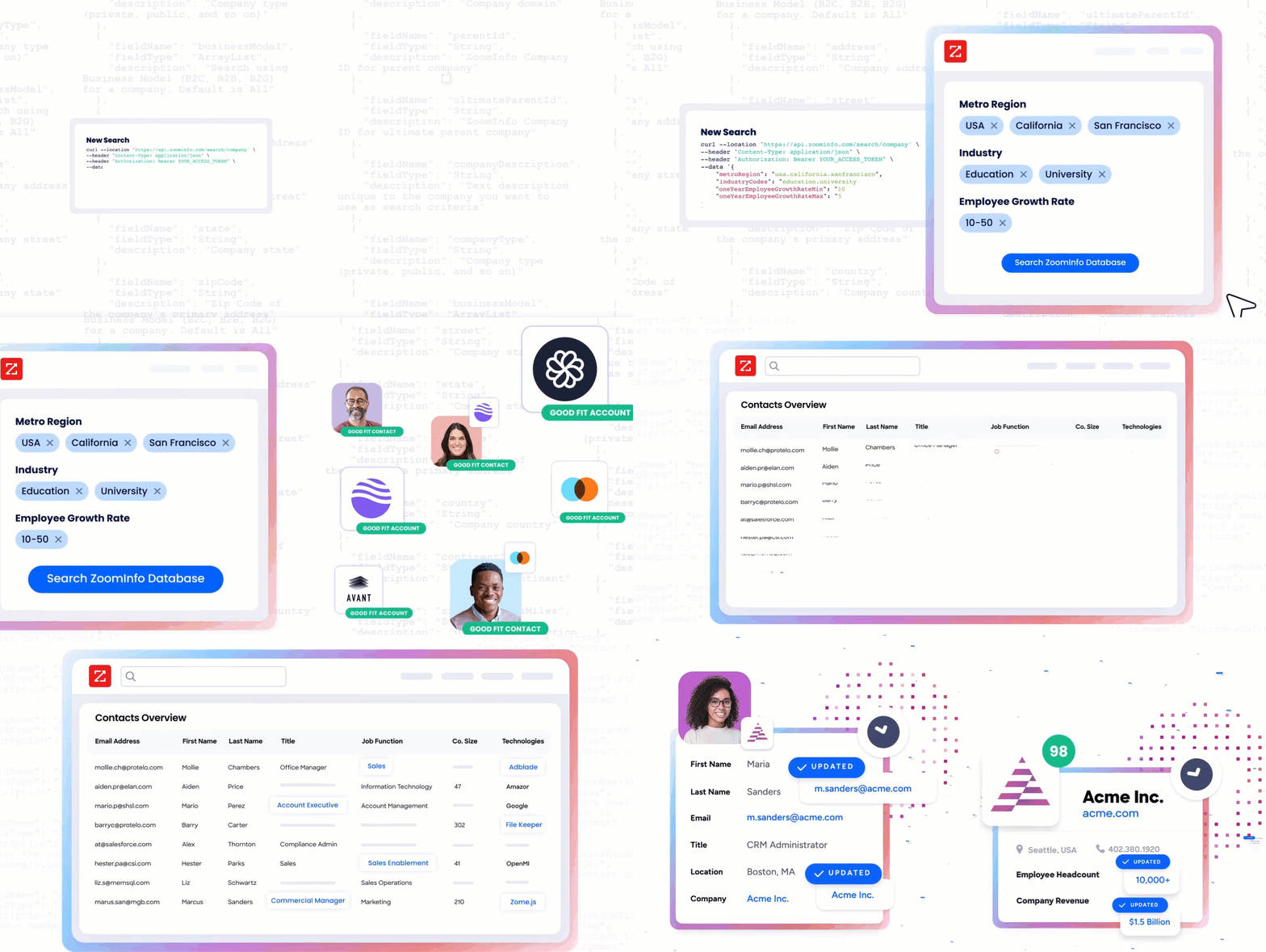
The Enterprise API and MCP server expose ZoomInfo's intelligence to any custom application or AI agent, including Claude and ChatGPT. API Access is included in all relevant plans, so the same data works wherever your team works.
Source: ZoomInfo
The integration story matters because ZoomInfo is designed to complement your CRM, not replace it. ZoomInfo data flows into HubSpot through a direct native integration. It flows into the Zoho ecosystem through Zapier, Zoho Flow, or API connections. Either way, your CRM gets enriched with verified contacts, intent signals, and account intelligence without manual data entry.
Smartsheet's Senior Manager of Sales Technology Enablement Thor Sanderson captured this: "ZoomInfo is our one source of truth for account data, and even more so for contact data. There's no other provider in the market that provides you with that level of detail." (Smartsheet Case Study)
Scalability paths differ
Bigin, HubSpot, and ZoomInfo each handle growth differently, and understanding the trajectory matters before you commit.
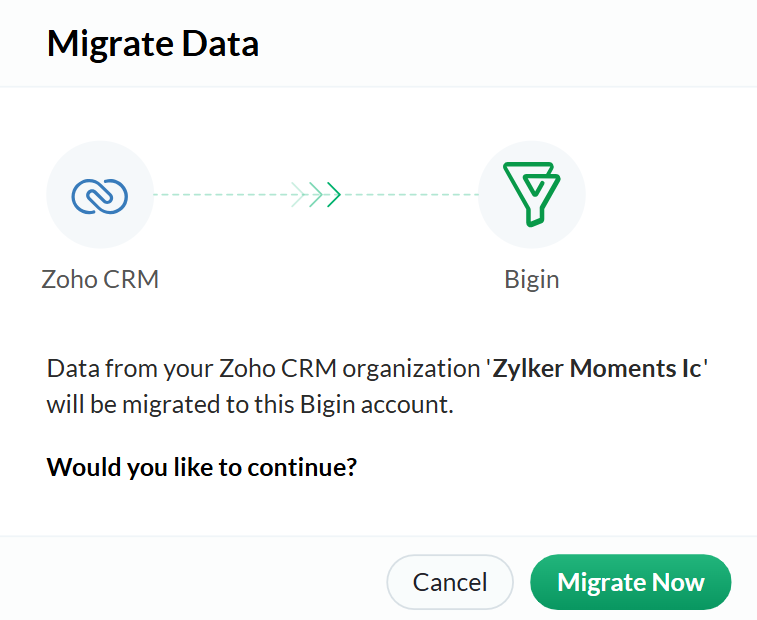
Bigin is transparent about its ceiling. The product explicitly positions itself as something you outgrow, with a single-click migration path to Zoho CRM when you need more. Bigin 360 caps at 1 million records, 15 pipelines, and 100 automations.
Source: Bigin
This is a design decision, not a failure. Bigin serves the first stage of the CRM journey, and when you outgrow it, you migrate within the Zoho ecosystem rather than starting over.
HubSpot scales from a free CRM to enterprise deployments serving companies like eBay, DoorDash, and Reddit. The platform supports up to 50 million contacts with custom objects, sandbox environments, and SSO. Costs scale accordingly (enterprise tiers can run well into six figures annually), but you're unlikely to outgrow the platform itself.
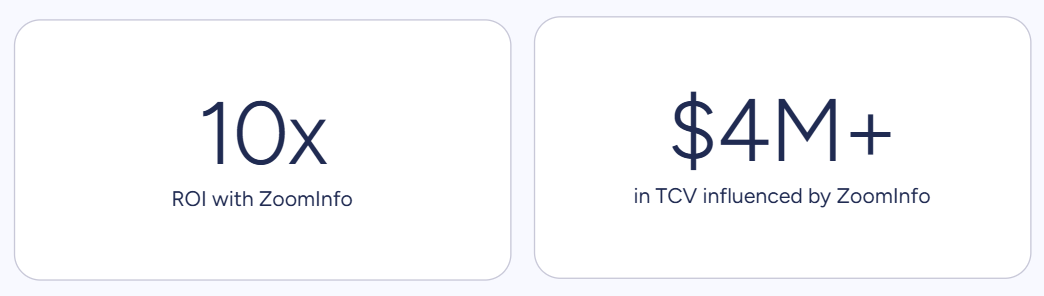
ZoomInfo scales with your go-to-market ambitions. 35,000+ companies use the platform, from high-growth startups to enterprises like Adobe, Snowflake, and PayPal. The data layer, intelligence layer, and delivery methods (workspace, studio, APIs, MCP) all expand as your usage grows.
Every CRM sync, every recorded call, and every intent signal strengthens the GTM Context Graph's understanding of your market. For B2B companies, the intelligence investment compounds over time.
Levanta CEO Ian Brodie: "They've built a full system of execution that works the list, writes the outreach, triggers the play, and helps drive predictable growth." (Levanta Case Study)
Source: ZoomInfo
Bigin vs. HubSpot vs. ZoomInfo: Which should you choose?
The right choice depends on your team size, growth stage, and how you acquire customers.
Choose Bigin if:
You're a small team (1-20 people) replacing spreadsheets with a real CRM
You need to get up and running in minutes, not weeks
Budget is under $20/user/month for CRM
You want pipeline management, telephony, and WhatsApp in one affordable tool
Your team is mobile-first and needs a CRM that works as well on a phone as on a desktop
You're comfortable migrating to Zoho CRM when you outgrow Bigin's limits
Choose HubSpot if:
You need marketing automation, sales, and customer service on a single platform
Your company is scaling and needs a CRM that grows from startup to enterprise
Content marketing and inbound lead generation are central to your strategy
You can invest in Professional or Enterprise tiers and onboarding fees
You want access to 2,000+ app integrations and a large partner ecosystem
Add ZoomInfo to either CRM if:
You sell B2B and need verified contact data, direct dials, and business emails
You want to know which accounts are researching solutions like yours
Your reps spend too much time manually researching prospects and building lists
You need buying signals, intent data, and account intelligence flowing into your CRM
You want AI that reasons across your CRM data and external market intelligence
See ZoomInfo's B2B data in action with a free trial.
The CRM question (Bigin vs. HubSpot) and the intelligence question (how you feed your pipeline) are separate decisions that compound when combined. A small B2B team might pair Bigin's affordable CRM with ZoomInfo's intelligence layer and outperform a larger team running HubSpot on incomplete data.
A growing company might use HubSpot's full platform alongside ZoomInfo's GTM Context Graph and close the gap between marketing activity and revenue. For a focused look at how HubSpot and ZoomInfo compare on data quality, go-to-market capabilities, and pricing, see our HubSpot vs. ZoomInfo comparison.
The CRM manages your pipeline. ZoomInfo fills it with the right accounts at the right time. Both decisions matter.
Bigin vs. HubSpot vs. ZoomInfo FAQ
What is the core difference between Bigin, HubSpot, and ZoomInfo?
Bigin is a simple, affordable CRM built for small businesses replacing spreadsheets, with pipeline management, built-in telephony, and WhatsApp integration starting at $7/user/month. HubSpot is a full customer platform spanning marketing, sales, service, content, and commerce, designed for growing companies that need everything connected through a shared CRM.
ZoomInfo is a B2B data intelligence and go-to-market platform. It does not replace either CRM. Instead, it provides the intelligence layer of verified contacts, buying signals, and account context that makes either CRM more effective.
Can ZoomInfo replace Bigin or HubSpot?
No. ZoomInfo is designed to complement CRMs, not replace them. ZoomInfo provides the upstream intelligence (who to contact, when to engage, and what context matters) while your CRM manages the pipeline, deals, and ongoing customer relationships. ZoomInfo integrates directly with HubSpot and the broader Zoho ecosystem so enriched data flows into your existing workflows.
Which platform is cheapest for a small team?
Bigin is the most affordable CRM option, with a permanent free plan for one user (500 records) and paid plans starting at $7/user/month. A 10-person team on Bigin 360 pays $180/month. HubSpot offers a free CRM capped at 2 users, with the Starter Customer Platform at $7/seat/month (annual). At Professional tier, HubSpot costs significantly more: Sales Hub Professional runs $90/seat/month plus a $1,500 onboarding fee.
ZoomInfo offers a permanent free tier (ZoomInfo Lite) with 10 monthly export credits, with paid plans custom-quoted based on usage.
Does HubSpot have its own B2B contact database like ZoomInfo?
HubSpot enriches CRM records using AI and conversational data, but it does not maintain an independent B2B contact and company database comparable to ZoomInfo's 500M contacts and 200M+ verified business emails. HubSpot's Smart CRM enriches records you already have.
ZoomInfo identifies contacts and companies you don't have yet, verified through a multi-source pipeline that includes 300+ human researchers and reaches up to 95% accuracy on first-party data.
Which platform has the best marketing capabilities?
HubSpot has the most comprehensive marketing suite, including email automation, landing pages, social media management, content creation, and multi-touch attribution. Bigin has no native marketing automation and integrates with Zoho Campaigns or Mailchimp for email campaigns.
ZoomInfo offers account-based marketing with a native advertising platform, buyer intent data, and multi-channel orchestration through GTM Studio, focused on B2B demand generation and ABM rather than general marketing automation.
How does AI compare across the three platforms?
Bigin's Zia Agents handle CRM-specific tasks like email replies, cross-sell identification, and churn analysis using data within your Bigin account (1,000 to 3,000 monthly AI credits depending on plan). HubSpot's Breeze AI spans marketing, sales, and service with agents for customer support, prospecting, and data queries, drawing on the full HubSpot data layer (3,000 to 5,000 monthly credits depending on tier).
ZoomInfo's AI operates on the GTM Context Graph, which fuses your CRM data with external intelligence across 500M contacts, intent signals, and conversation transcripts, surfacing insights neither Bigin nor HubSpot can access on their own.
Is Bigin only for very small businesses?
Bigin is designed for teams of roughly 1-20 people, though case studies include companies with up to 40 staff. Its highest tier (Bigin 360) supports 1 million records, 15 pipelines, and 100 automations. Beyond that ceiling, Bigin offers a single-click migration to Zoho CRM. HubSpot, by contrast, scales from startup to enterprise without requiring a platform migration.
Can I use all three platforms together?
Yes. A B2B company can use Bigin or HubSpot as its CRM and layer ZoomInfo on top for intelligence. ZoomInfo data flows into HubSpot through a direct native integration, and into the Zoho ecosystem through Zapier, Zoho Flow, or API connections. The combination gives you pipeline management from your CRM plus verified contacts, buying signals, and account intelligence from ZoomInfo in one workflow.
More on Bigin and HubSpot:
