
Choosing between Bigtincan and Highspot for revenue enablement comes down to five questions:
Do you need offline access and mobile capabilities for field sales teams, or does your team sell from a desk?
Is your organization in a regulated industry (life sciences, financial services) where compliance controls over sales content are non-negotiable?
Do you prefer a platform assembled from acquisitions, or one built from a single codebase?
How important is it that your enablement platform connects to a B2B intelligence layer that identifies which accounts to target and when?
Are you prepared for the changes that come with platforms in active merger transitions?
In short, here's what we recommend:
Bigtincan serves large, distributed field sales organizations that need offline content access, compliance-controlled materials, and AR/VR selling tools. Its GenieAI suite covers AI-powered roleplay, voice coaching that scores how buyers perceive a rep's tone, and more. The recent merger with Showpad under Vector Capital created what the combined entity calls "the first AI-native revenue effectiveness platform designed for field-selling organizations." Bigtincan's strengths show where reps work in clinical settings, on factory floors, or in retail environments without reliable internet. The tradeoff: enterprise-only pricing with no published tiers, slow content migration during onboarding, and the uncertainty of a PE-backed merger still integrating.
Highspot is an enablement platform built from a single codebase rather than assembled through acquisitions. Its Nexus AI engine powers adaptive learning paths and Deal Intelligence that analyzes CRM data, buyer engagement, and meeting insights to recommend next actions on every deal. Highspot's platform introduces role-based AI agents that guide sales, marketing, and enablement teams. The pending merger with Seismic values the combined entity at over $6 billion. The tradeoff: limited customization, a learning curve for administrators, and the same lack of published pricing.
Both platforms equip reps with content, training, and engagement tools. But neither addresses the question that comes first: which accounts should your team pursue, and when? Without accurate buyer data and real-time signals, even a good enablement program arms reps for conversations they shouldn't be having, or misses the ones they should.
ZoomInfo is a GTM platform that provides the intelligence layer both enablement platforms lack. Built on 500M contacts, 100M companies, 135M+ verified phone numbers, and 200M+ verified business emails, ZoomInfo's GTM Context Graph combines this third-party data with your CRM records, conversation transcripts, and behavioral signals to reveal not just what happened in a deal, but why. That intelligence flows into GTM Workspace for sellers, GTM Studio for marketers and RevOps, or through APIs and MCP into any platform your team already uses, including Bigtincan or Highspot.
If adding intelligence to your enablement stack sounds like the missing piece, see how ZoomInfo works with a free trial.
Bigtincan vs. Highspot vs. ZoomInfo at a glance
Bigtincan | Highspot | ZoomInfo | |
|---|---|---|---|
Primary focus | Revenue enablement for field sales | GTM enablement platform | B2B data and GTM intelligence |
AI engine | GenieAI (SearchAI, CoachingAI, RolePlayAI, AuthoringAI, MeetingsAI) | Nexus (agentic platform, Deal Intelligence, adaptive learning) | GTM Context Graph (1.5B+ data points daily) |
Platform architecture | Assembled through acquisitions, merged with Showpad | Built from single codebase | Data + intelligence platform |
Offline access | Full offline mode across devices | Limited | N/A (cloud-based intelligence) |
Content management | Centralized library with AR/VR capabilities | AI governance with AutoDocs | N/A |
Sales training | CoachingAI, RolePlayAI, AuthoringAI | Adaptive learning, AI Role Play, Skill Coaching | N/A |
Buyer data and signals | Not included | Not included | 500M contacts, intent data, buyer signals |
Free trial | No | No | Yes (7-day trial + permanent free tier) |
Merger status | Merged with Showpad (Oct 2025) | Pending merger with Seismic (Feb 2026) | Public company (NASDAQ: GTM) |
Pricing | Enterprise-only, quote-based | Enterprise-only, three tiers (quote-based) | Consumption-based with free tier |
Platform origins shape what you get
How each platform was built determines what it feels like to use.
Bigtincan grew through acquisition.
The 2021 Brainshark deal added sales readiness and coaching. ClearSlide (2020) brought sales engagement. Zunos (2018) contributed mobile micro-learning. The Showpad merger in October 2025 combined two of the category's largest players under Vector Capital. The result is a platform with broad capability across content, readiness, and engagement, but one where different modules reflect different design origins.
G2 reviewers rate Bigtincan Content at 4.4/5 across 241 reviews. The most consistent complaint: tedious content migration during onboarding.
Highspot took the opposite approach.
Three former Microsoft executives built the platform from a single codebase, natively integrating content management, training, coaching, and buyer engagement in one system. Learn one part of Highspot, and the patterns carry to every other.
Gartner Peer Insights users call it user-friendly and intuitive, and the platform earned a 4.6/5 average rating as a Gartner Customers' Choice. Still, some users find the interface challenging, particularly around page design and reporting, and administrators face a steeper learning curve than end users.
Both platforms are in the middle of major mergers. Bigtincan's combination with Showpad is complete but still integrating products and teams. Highspot's announced merger with Seismic would create a combined entity valued at over $6 billion. For buyers, the practical question is whether the platform you evaluate today will look the same in 18 months.
AI takes different forms in each platform
Bigtincan and Highspot have both invested in AI, but their approaches differ.
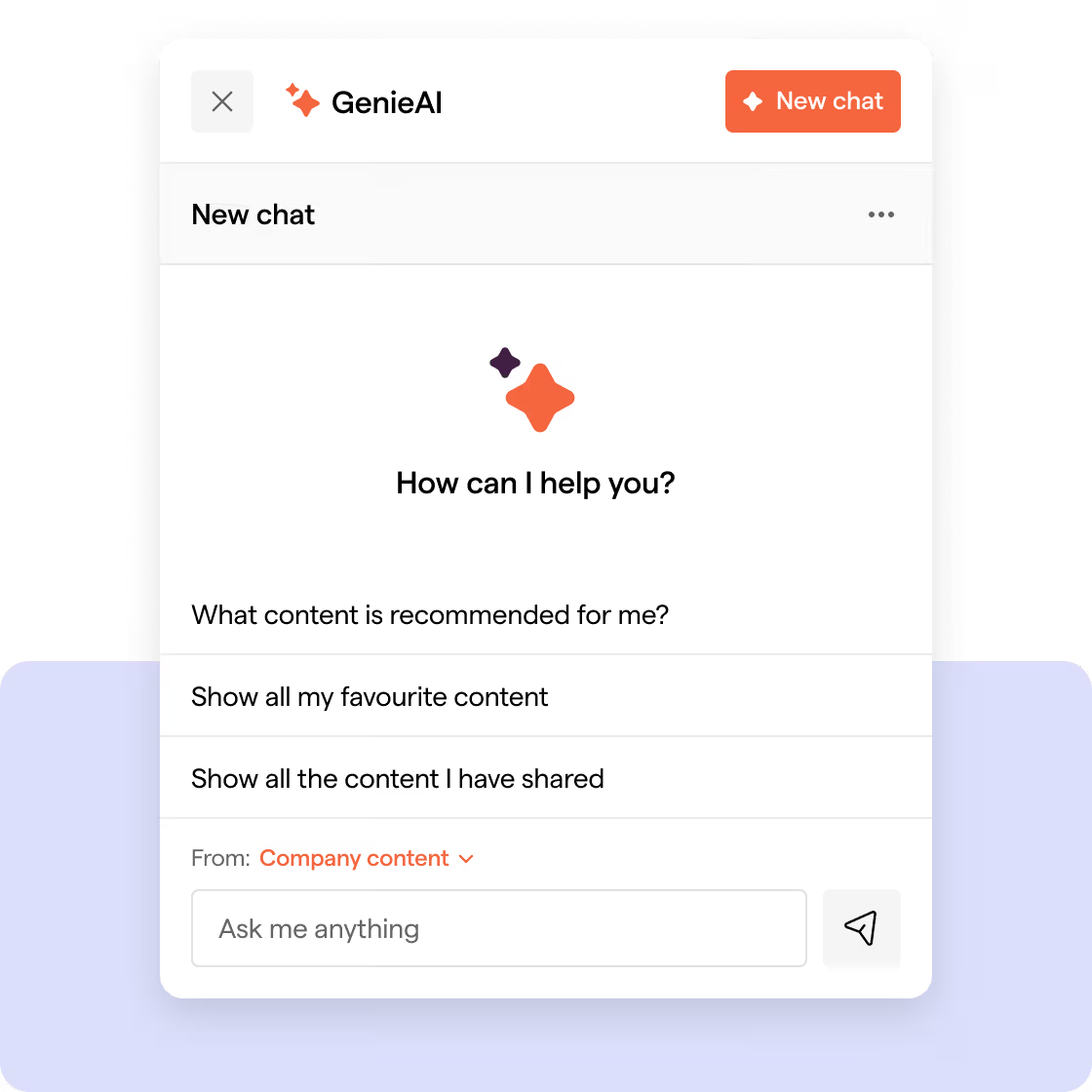
Bigtincan's GenieAI is a suite of specialized modules: SearchAI for semantic content discovery, CoachingAI for pitch scoring, RolePlayAI for simulated buyer conversations, AuthoringAI for content creation and translation, and MeetingsAI for call summaries.
Source: Bigtincan
What separates GenieAI is its depth in specific areas.
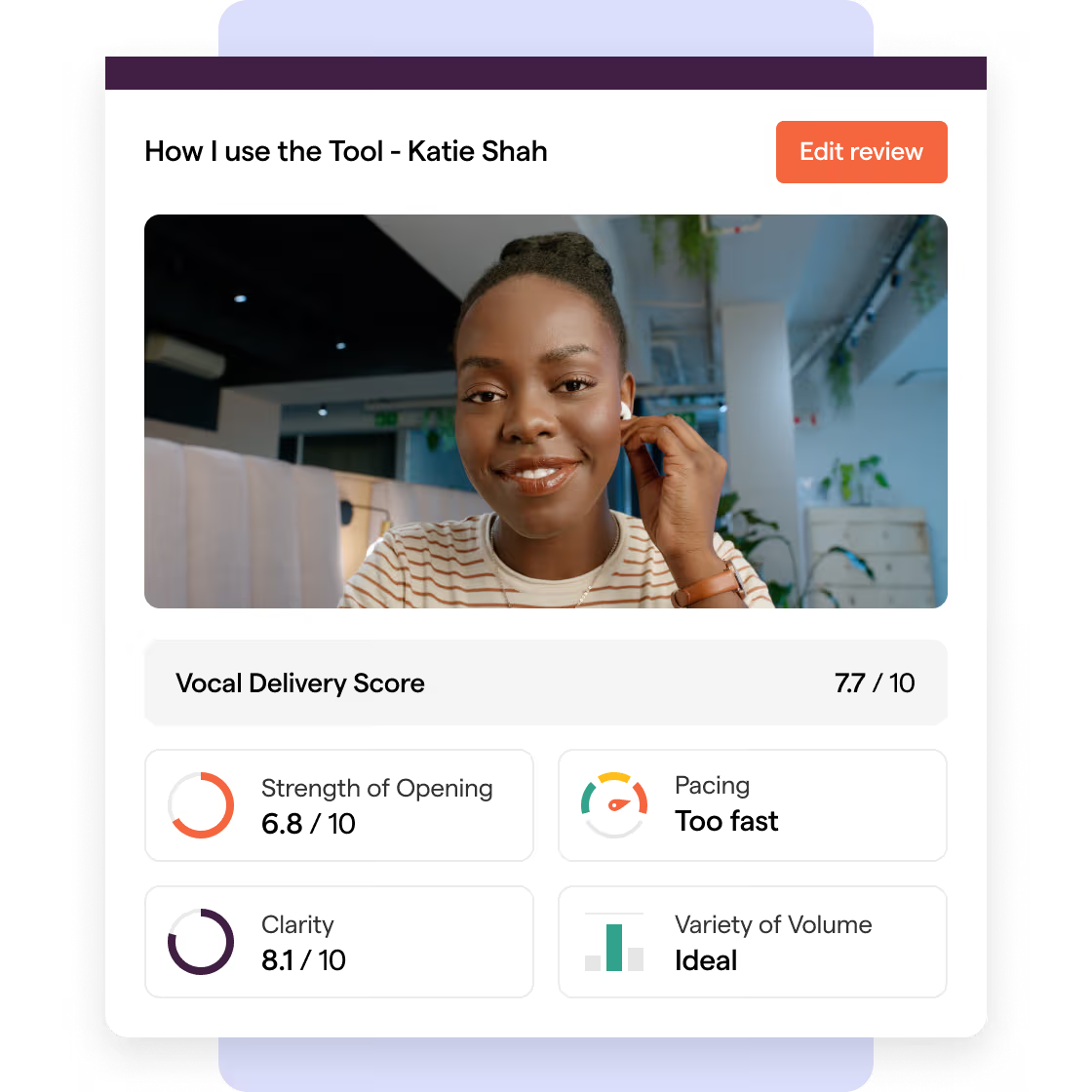
CoachingAI evaluates not just pace and filler words but how buyers perceive a rep's voice, scoring across 20 emotional "vibes" (confident, boring, arrogant, and so on) with at least 90% accuracy validated by an independent Towson University study.
Source: Bigtincan
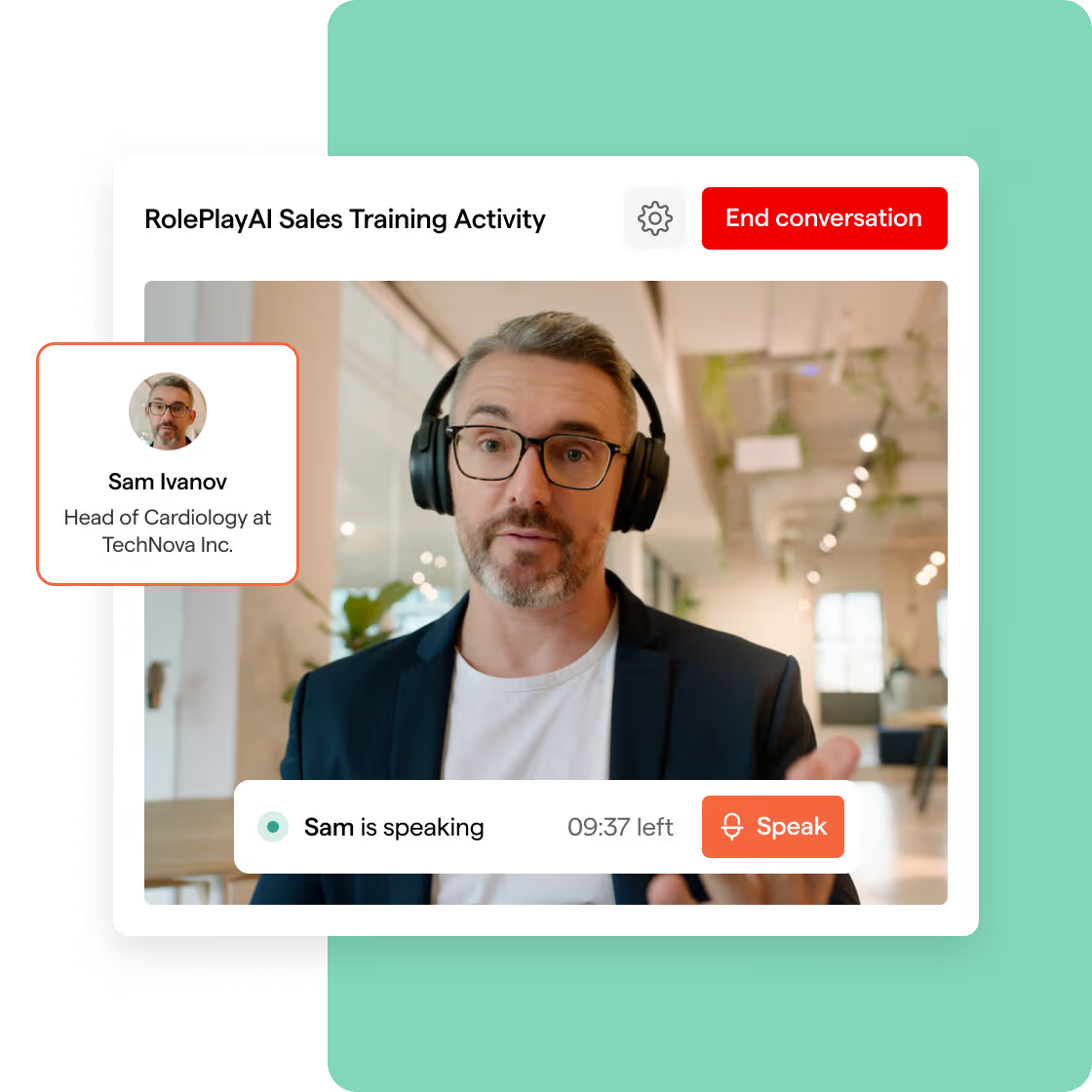
RolePlayAI lets reps practice with configurable AI buyer personas that never repeat responses, removing the bottleneck of needing a manager for every practice session.
Source: Bigtincan
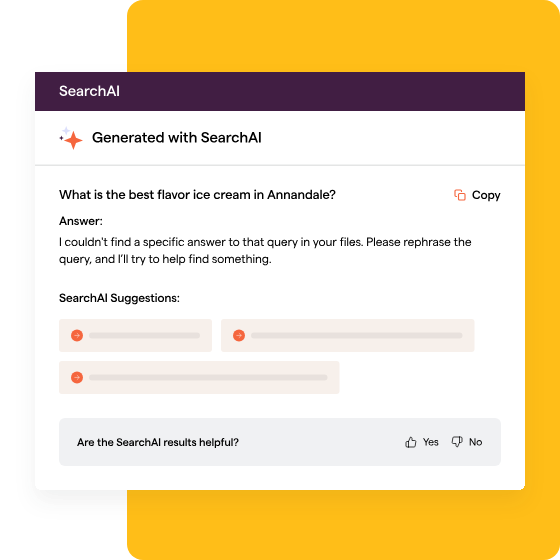
A key design choice: GenieAI's SearchAI and Genie Assistant only return answers from the organization's approved content. They cannot pull from the open internet. For life sciences and financial services teams where off-label claims trigger regulatory consequences, this constraint is a feature.
Source: Bigtincan
Highspot's Nexus takes a different approach.
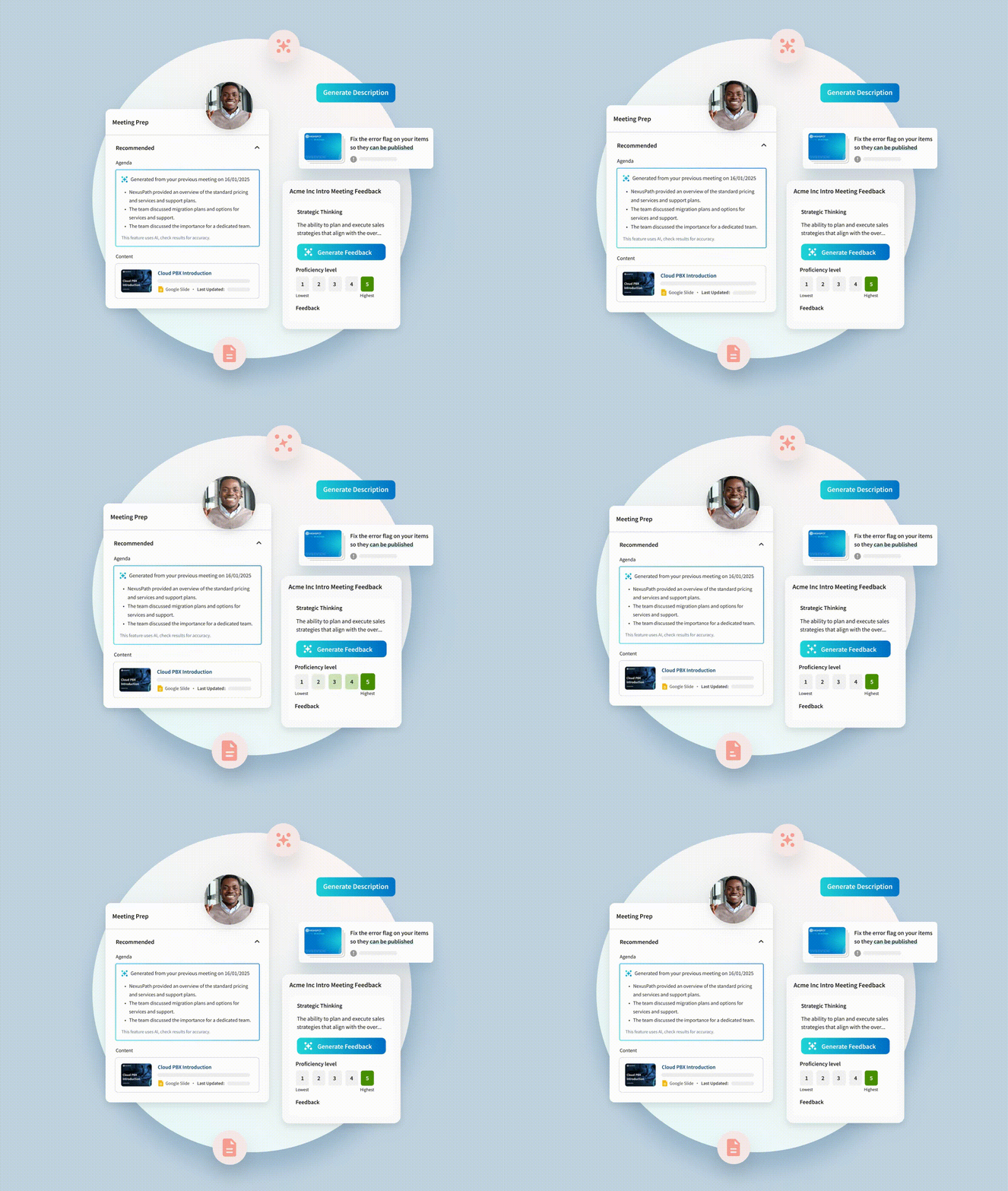
Rather than separate modules, Nexus is a single AI engine that processes signals across content, training, coaching, and deal outcomes together.
Source: Highspot
The result is agentic AI: role-based agents that deliver insights and next actions through multi-turn conversations.
The Deal Agent analyzes CRM data, buyer engagement, and meeting insights to recommend the next step on every deal. AI Role Play simulates scenarios mapped to the organization's skill framework, and Adaptive Learning personalizes training paths based on each rep's skill level rather than delivering the same curriculum to everyone.

Source: Highspot
Both platforms deliver capable AI within the enablement workflow. Neither, however, brings external buyer intelligence into the equation. The AI helps reps practice, find content, and engage buyers. It does not tell reps which accounts are researching solutions, which contacts are the decision-makers, or when a company's behavior signals readiness to buy.
The intelligence gap both platforms share
This is where the comparison changes shape.
Bigtincan and Highspot both assume you already know who to sell to. They help your team sell better, but they don't help your team sell to the right people at the right time. That gap matters because a polished pitch, delivered with good content, to the wrong buyer at the wrong moment, is still wasted effort.
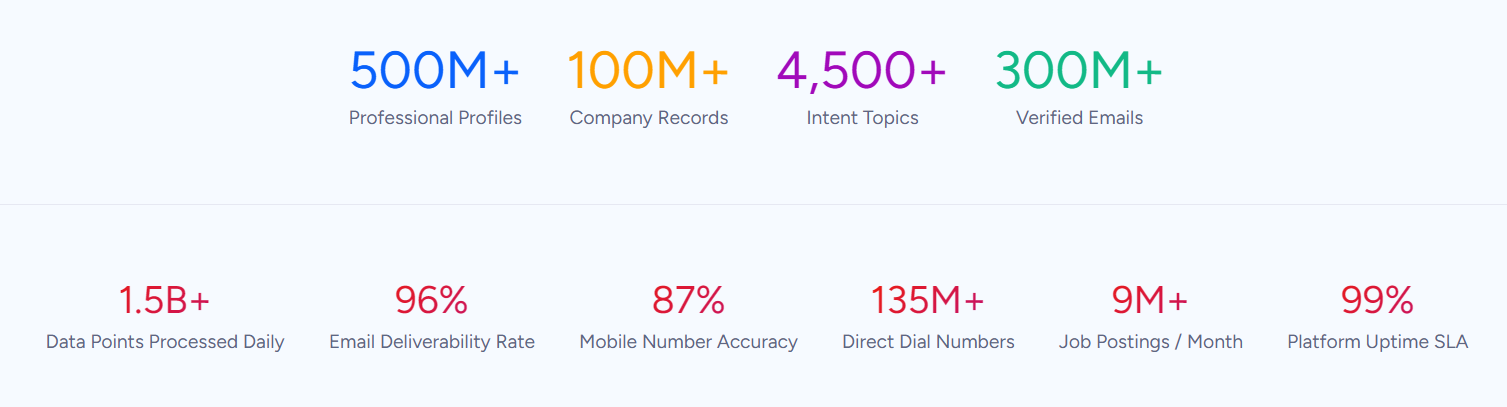
ZoomInfo fills this gap with B2B data covering 500M contacts, 100M companies, 135M+ verified phone numbers, and 200M+ verified business emails. But data alone is not the differentiator.
ZoomInfo's GTM Context Graph combines that third-party data with your CRM records, conversation intelligence, and behavioral signals into a layer that captures why deals move or stall, not just that they did. It processes 1.5B+ data points daily to surface connections between signals and outcomes that no single system can see alone.
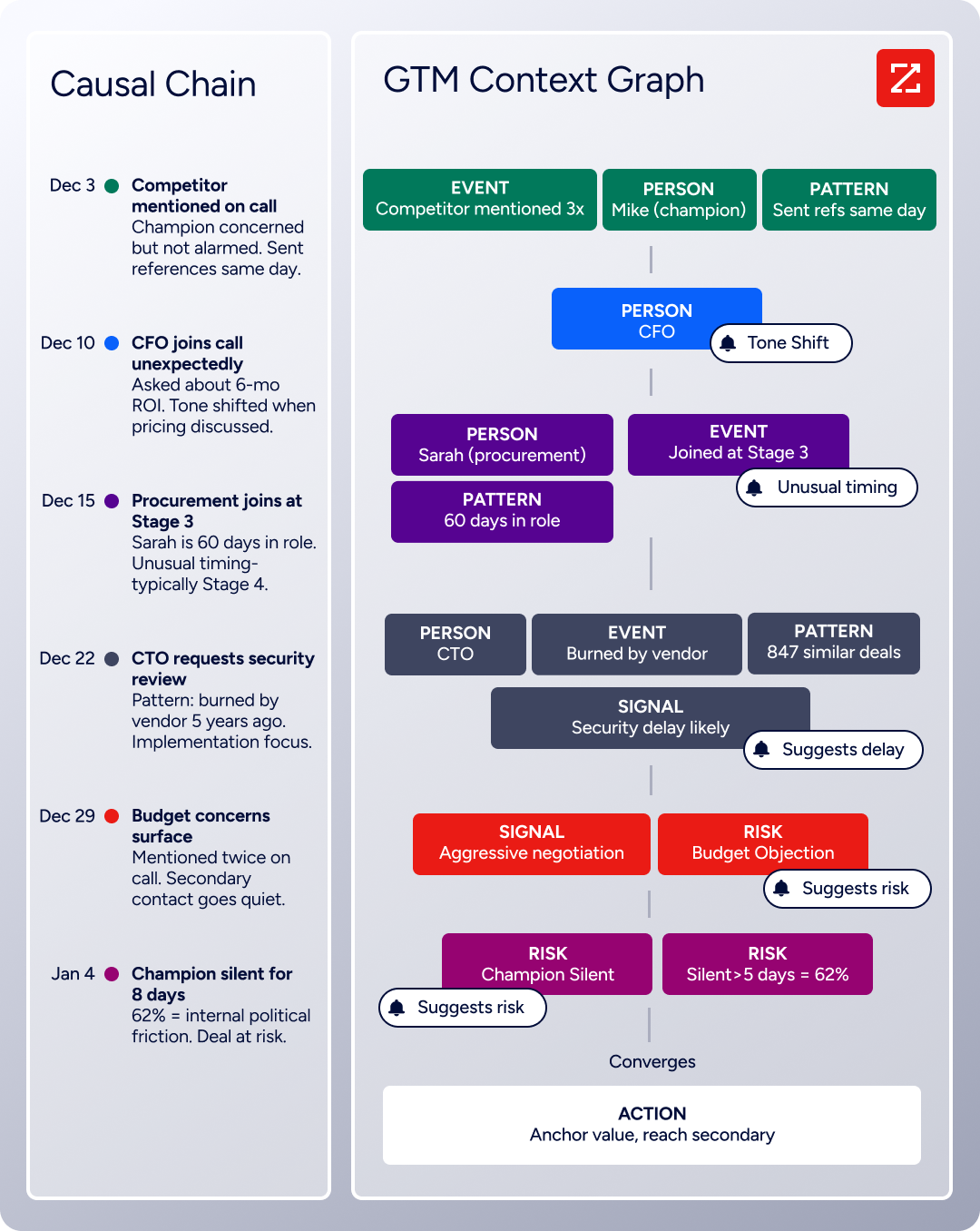
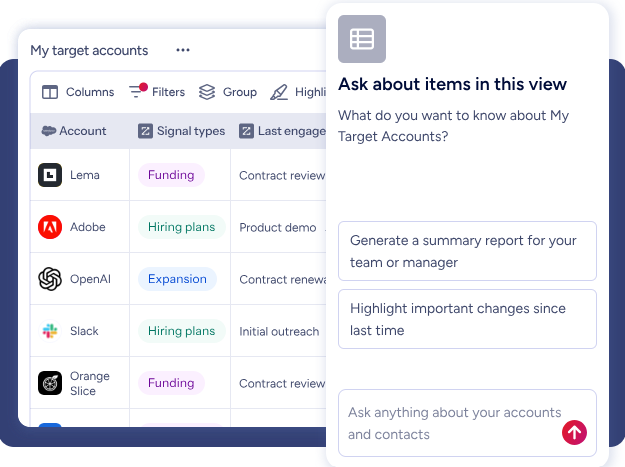
In practice, a rep opening GTM Workspace sees prioritized accounts with AI-drafted outreach that addresses the specific concern the intelligence layer identified as the buying signal.
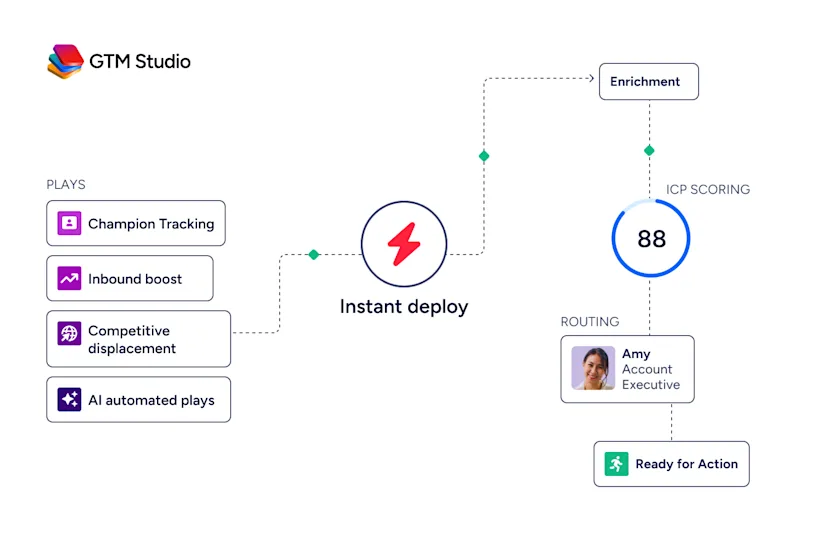
A marketer in GTM Studio describes an audience in plain language and launches a play targeting accounts that match proven win patterns, with no engineering ticket required. Through APIs and MCP, that same intelligence flows into whatever enablement platform your team uses.
The data quality is externally validated. In a Fortune 500 competitive RFP analyzing 25 million contacts across vendors, the independent consultant concluded that "no other competitor came even close."
Seismic's sales team boosted productivity by 54%, saved 11.5 hours per week, and attributed 39% of active pipeline to opportunities identified or influenced by ZoomInfo signals. (Seismic Case Study)
Neither Bigtincan nor Highspot can replicate this intelligence layer because neither company collects or verifies B2B contact and company data at scale. This is not a shortcoming in their design. It is a different problem. The strongest enablement stack combines what these platforms do well (equipping reps) with what ZoomInfo does well (identifying and prioritizing the right opportunities).
Content management approaches differ in key ways
Both platforms solve the same core problem: reps waste time searching for the right content, and marketing teams lack visibility into what content drives deals. The solutions diverge in specifics.
Bigtincan centralizes content in a single repository with offline access on any device. Where it stands apart is immersive content.

Source: Bigtincan
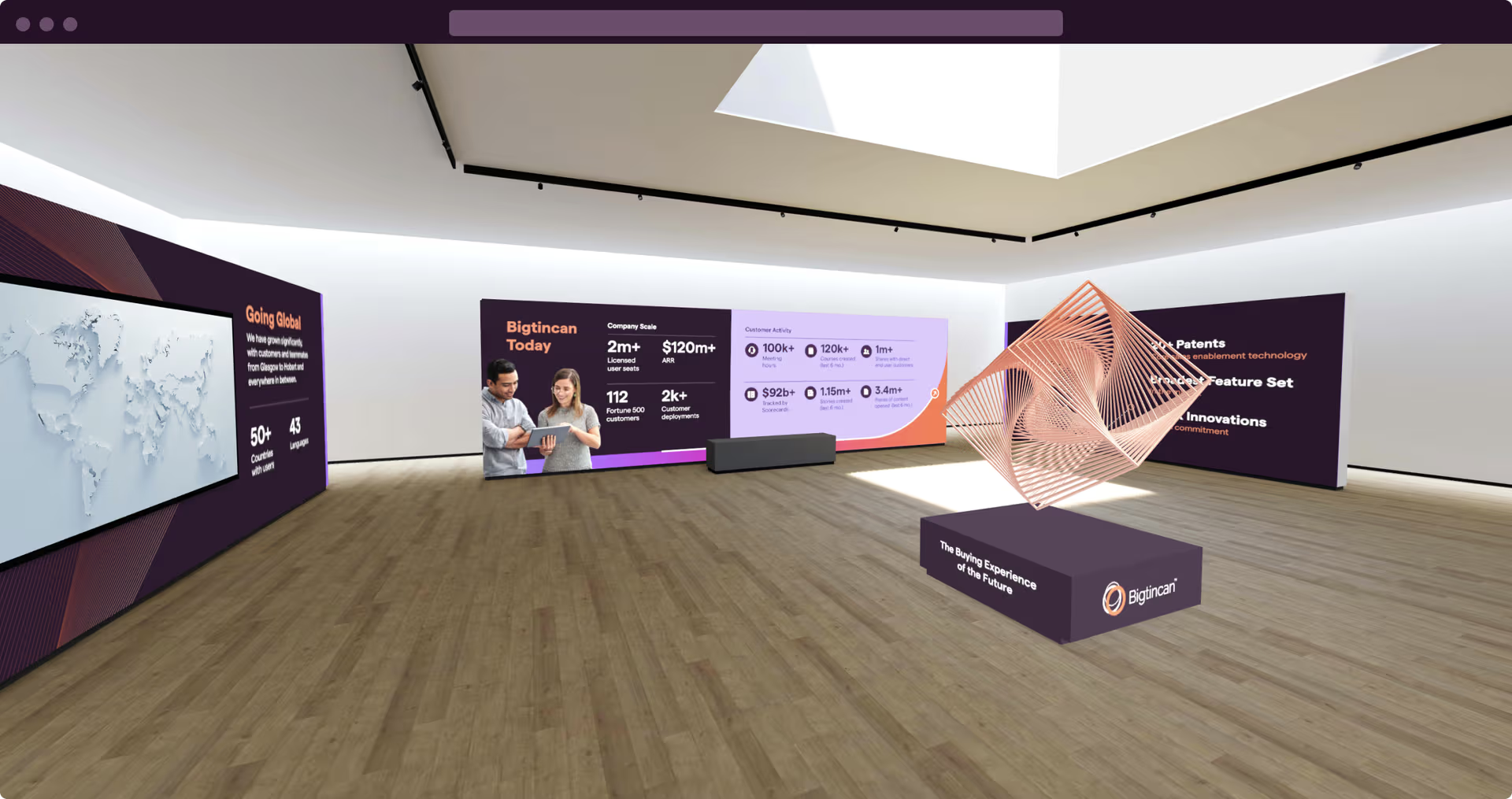
The Interactive Experiences feature lets sellers present 3D product models that buyers can rotate and examine on a phone or tablet, overlay digital elements onto physical materials, and host virtual showrooms. For manufacturers demonstrating heavy machinery or medtech companies presenting devices that can't be brought to a clinical setting, this capability is hard to find elsewhere.
Source: Bigtincan
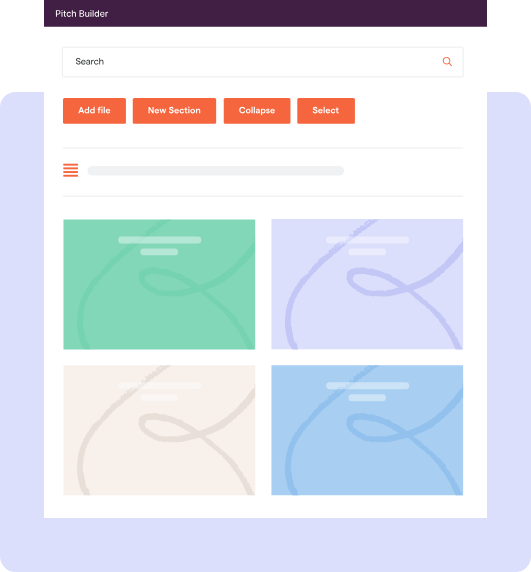
Version control automatically updates content across all users and devices to prevent outdated materials from circulating. The Pitch Builder compiles multiple files into a single customized PDF or presentation for buyer delivery.
Source: Bigtincan
Highspot emphasizes AI governance at scale.
Its content management system replaces keyword search with contextual AI that understands deal stage, buyer persona, and geography.

Source: Highspot
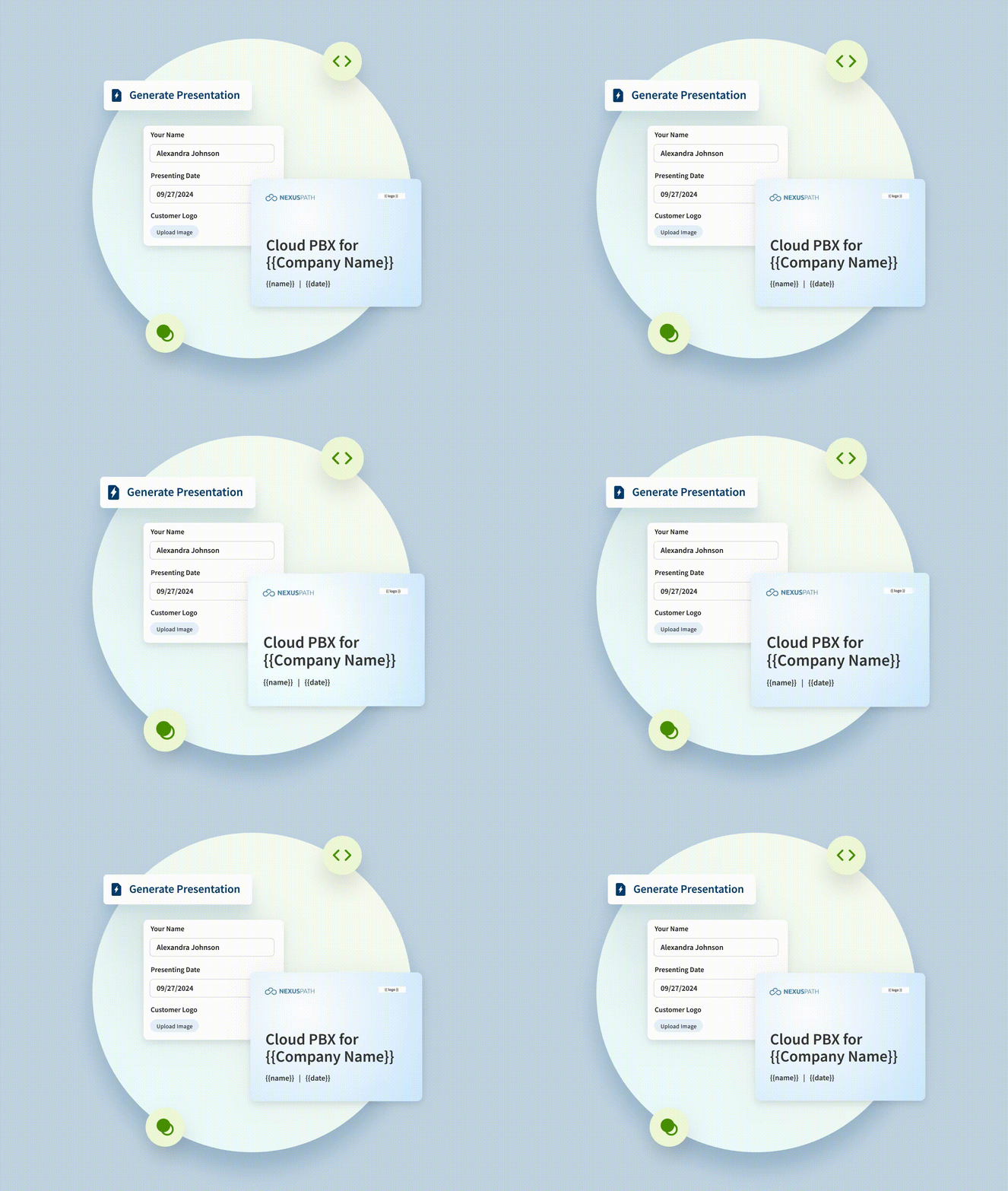
AutoDocs generates proposals and presentations from templates populated with CRM data, keeping brand consistency without slowing reps down. AI agents automatically categorize uploaded assets, monitor compliance, and archive outdated content without human intervention.
Source: Highspot
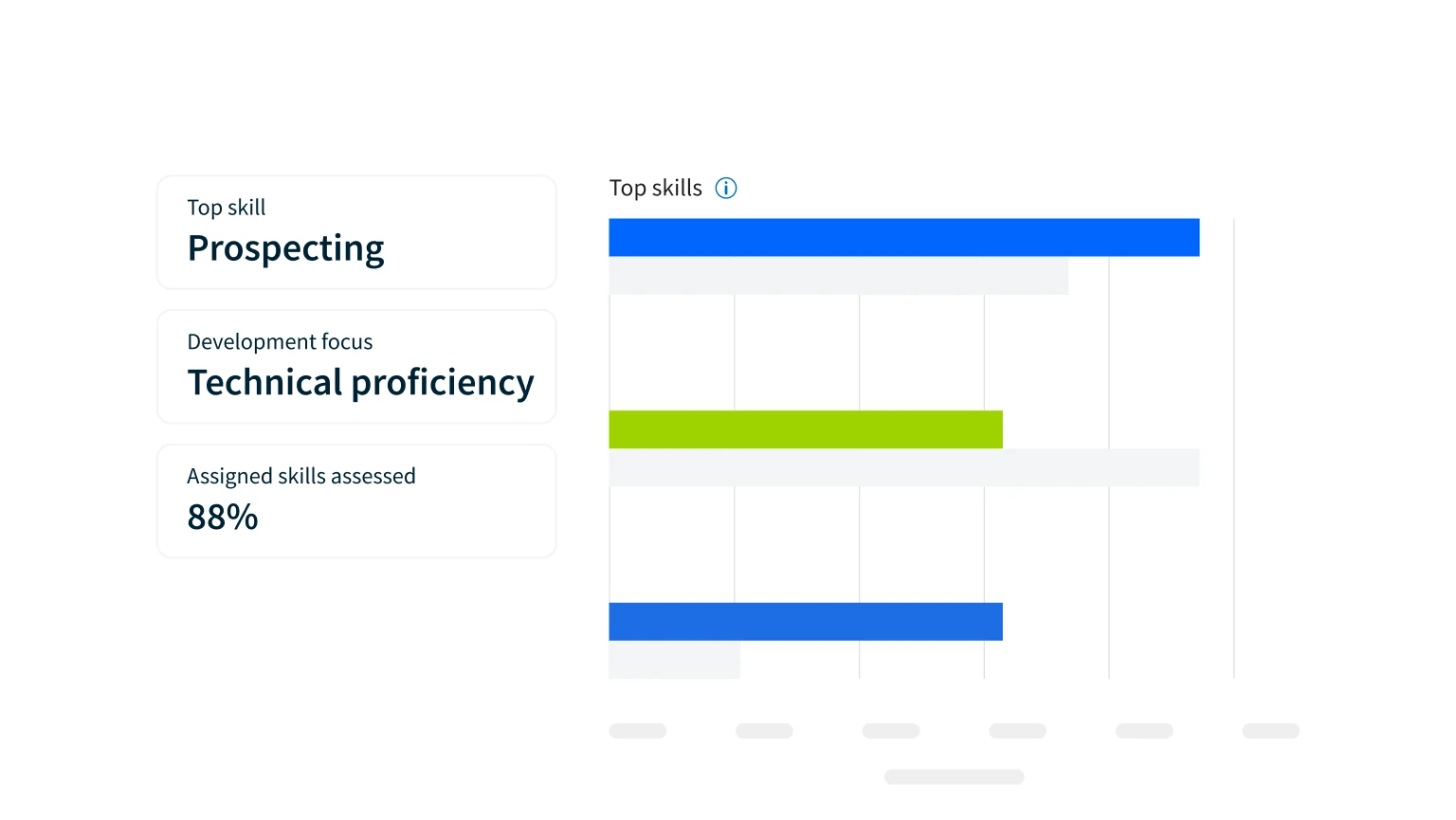
Content Scorecard users see an 18% increase in internal content views and a 40% increase in time reps spend viewing content.
Source: Highspot
Both platforms integrate with repositories like SharePoint, Google Drive, and Salesforce. Both track content usage against deal outcomes. The choice depends on whether your team needs Bigtincan's offline and immersive capabilities or Highspot's AI governance and document automation.
Training and coaching follow different philosophies
Sales readiness is where both platforms compete directly and where the feature overlap runs deepest.
Bigtincan's Readiness pillar combines microlearning authoring, AI-scored coaching, and gamification in one training environment.
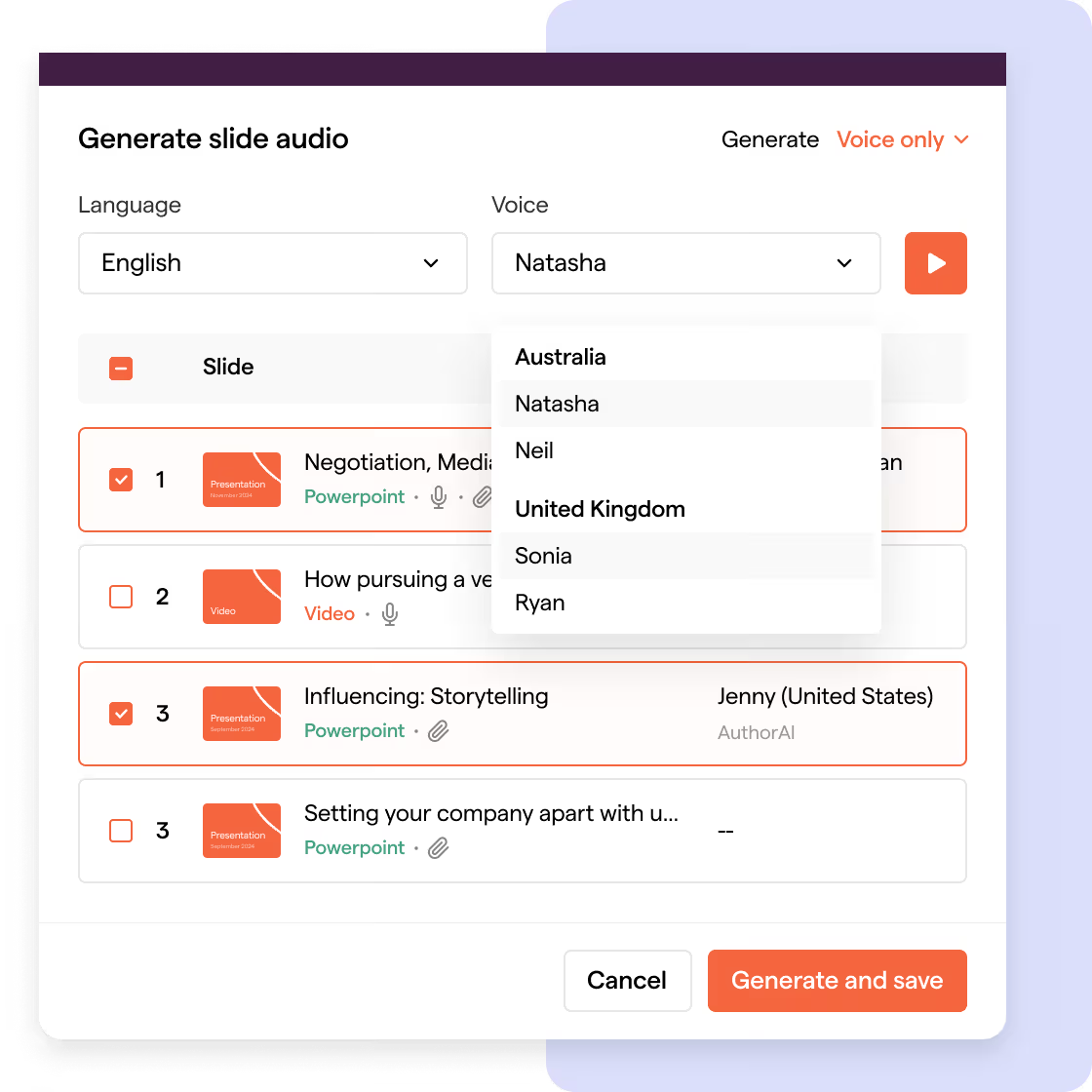
AuthoringAI cuts content creation time by 3-5x through AI-generated narration, voice cloning from a single recording, and automatic translation into over 30 languages. For global organizations that need training materials in dozens of languages without studio production costs, this solves a real problem.
Source: Bigtincan
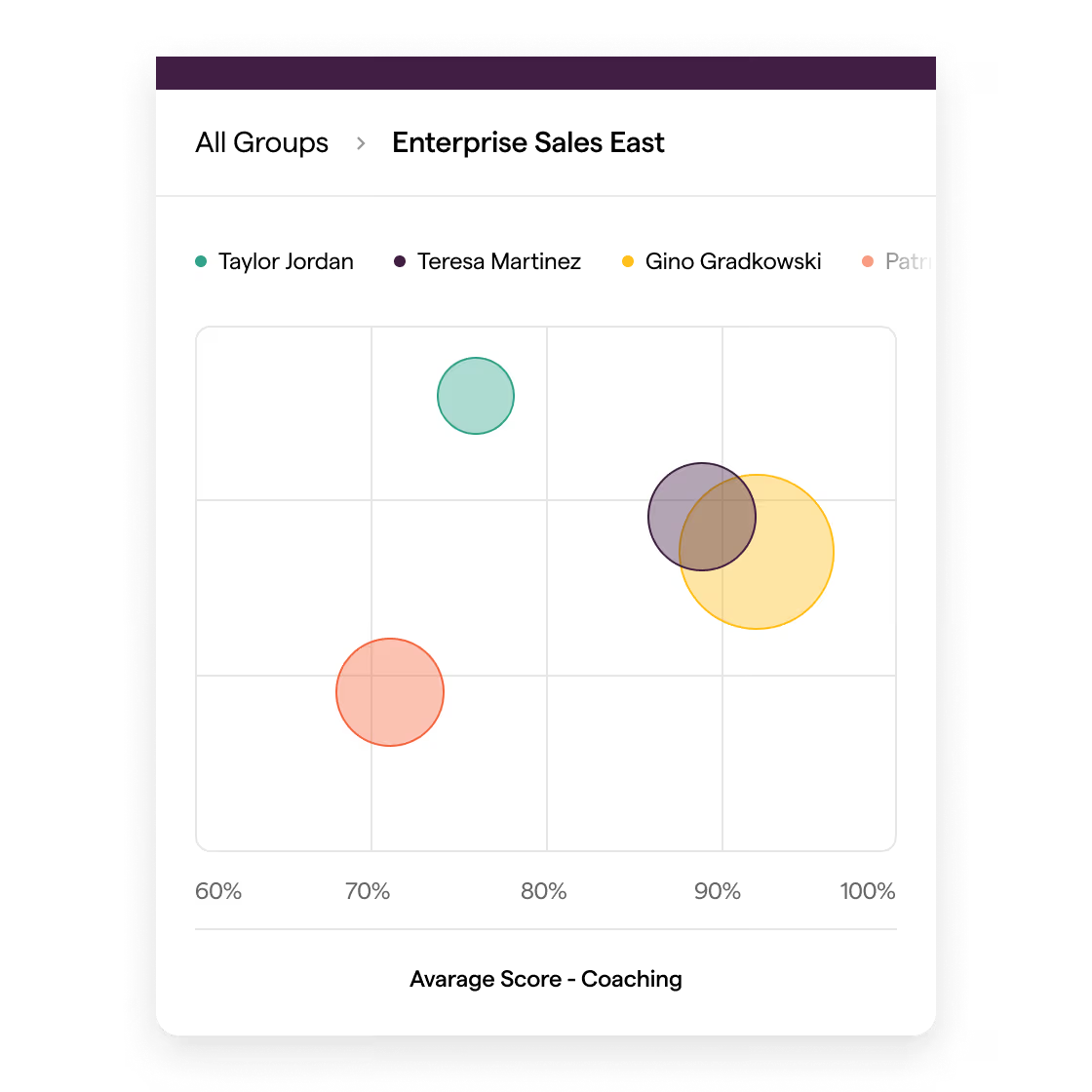
The CRM Scorecard integration ties coaching scores to bookings data, giving enablement leaders a concrete way to prove training drives revenue.
Source: Bigtincan
Highspot's training is built around Adaptive Learning, which tailors each learning experience to skill proficiency and knowledge gaps.
Reps who demonstrate competence can test out of mastered content and focus only on skills that need development.

Source: Highspot
For coaching, both platforms offer AI roleplay with scoring. Bigtincan differentiates with emotional perception analysis, scoring how buyers perceive a rep's voice across 20 vibes with independently validated accuracy. Highspot differentiates with 360-degree assessments that blend self-reviews, manager reviews, practice sessions, real buyer interactions, and buyer surveys into a single view of each rep's development needs.
Neither platform, however, can tell you whether reps are targeting the right accounts. A rep who scores perfectly on coaching but pursues the wrong buyers will still miss quota. ZoomInfo's GTM Workspace users report 23% more pipeline, nearly 60% more meetings per week, and being first to engage with an account in over half of cases, because the intelligence layer directs effort toward accounts actually in-market.
Buyer engagement comes down to Digital Sales Rooms
Both platforms offer Digital Sales Rooms (DSRs) as the primary buyer engagement mechanism. The implementations differ in what surrounds them.
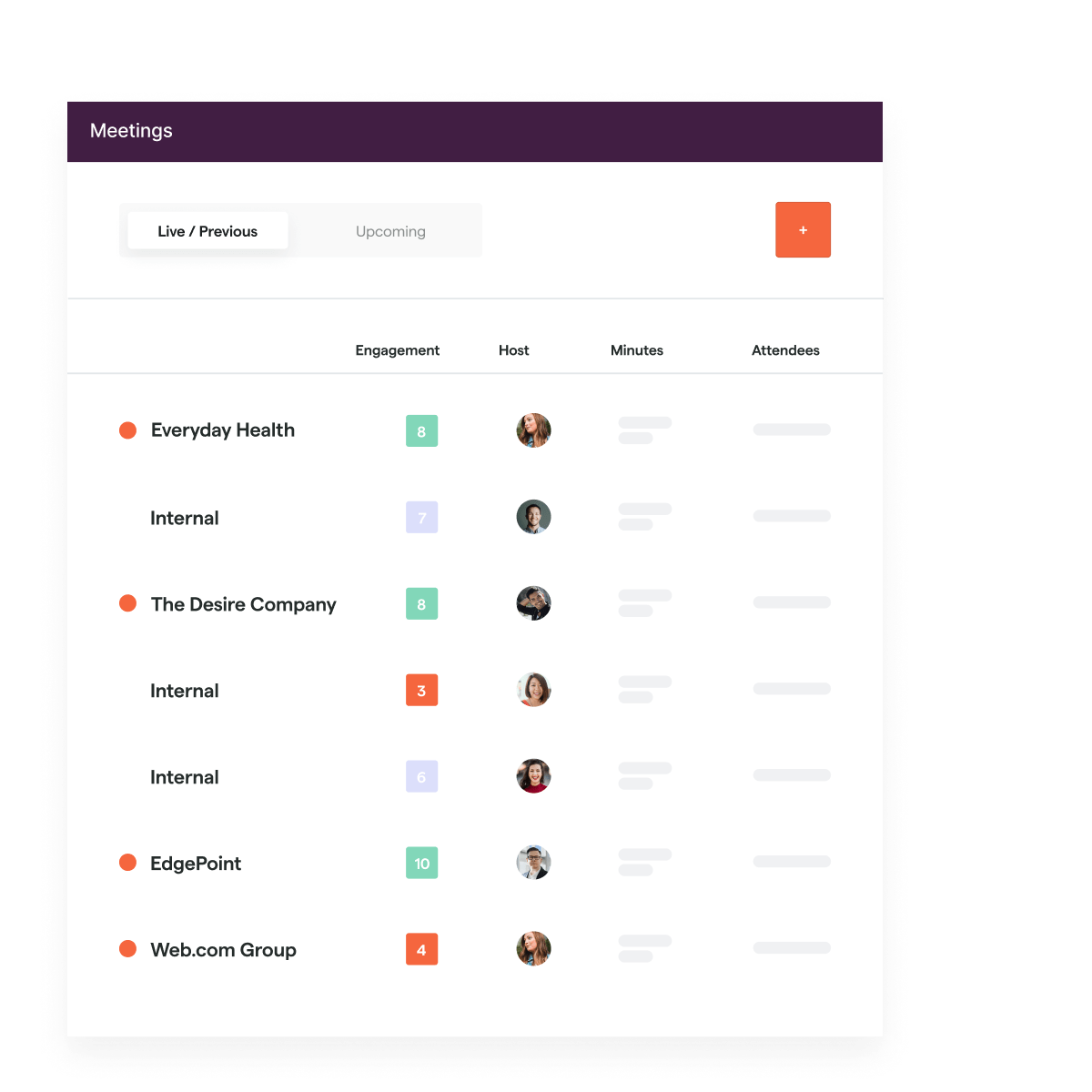
Bigtincan includes its own video conferencing platform built for sales, where sellers control what buyers see on screen and the system tracks buyer attention at the individual participant level, recording when each person was active or multi-tasking.
MeetingsAI captures automated notes and logs them to CRM. The DSR supports buyer-facing SearchAI, letting buyers ask natural language questions of the shared content and get answers immediately. When buyers share the room with colleagues, those new contacts are automatically captured, helping sellers discover previously unknown stakeholders.
Source: Bigtincan
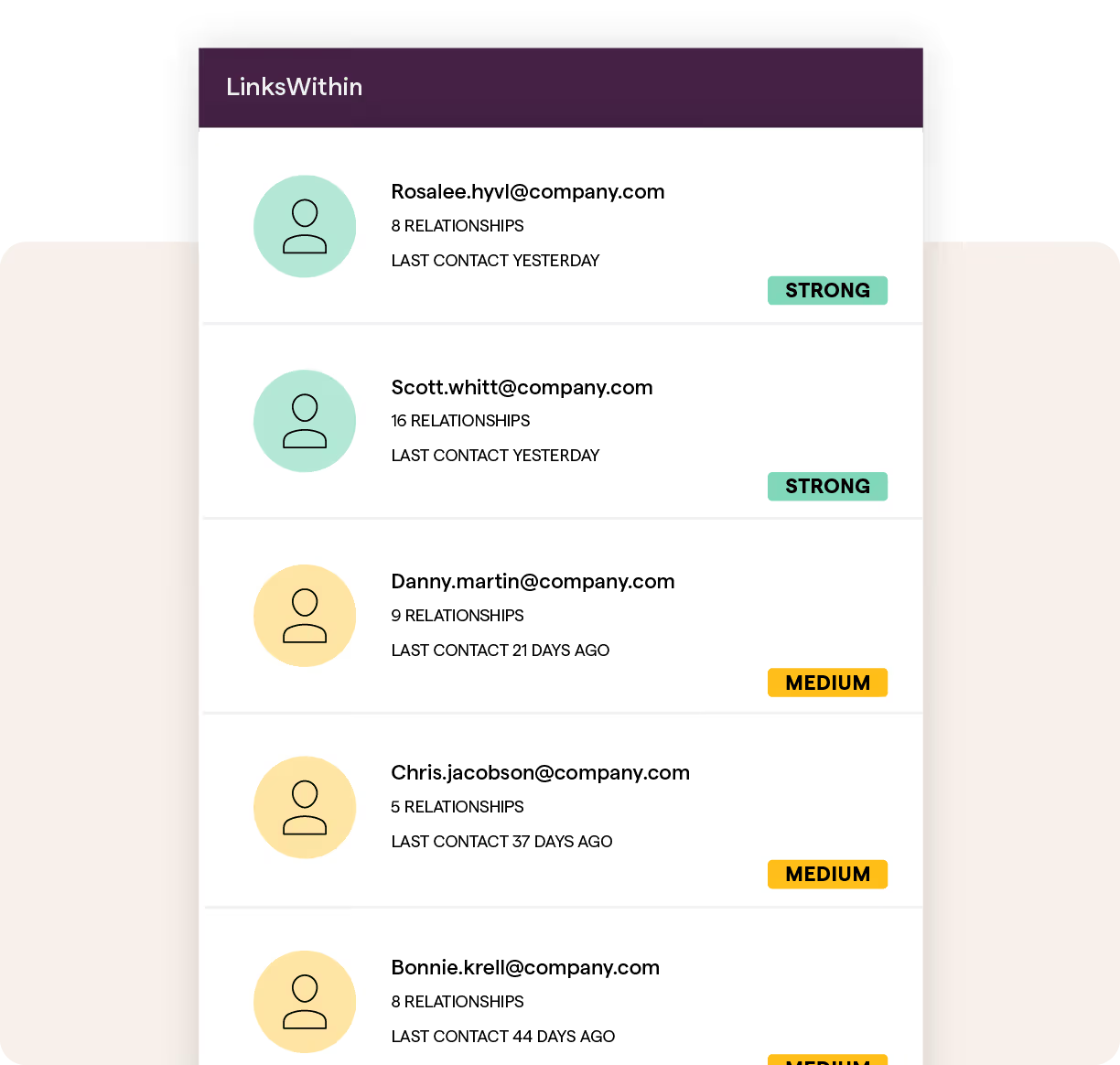
Relationship Intelligence via LinksWithin maps which colleagues already have a connection to a target prospect, enabling warm introductions.
Source: Bigtincan
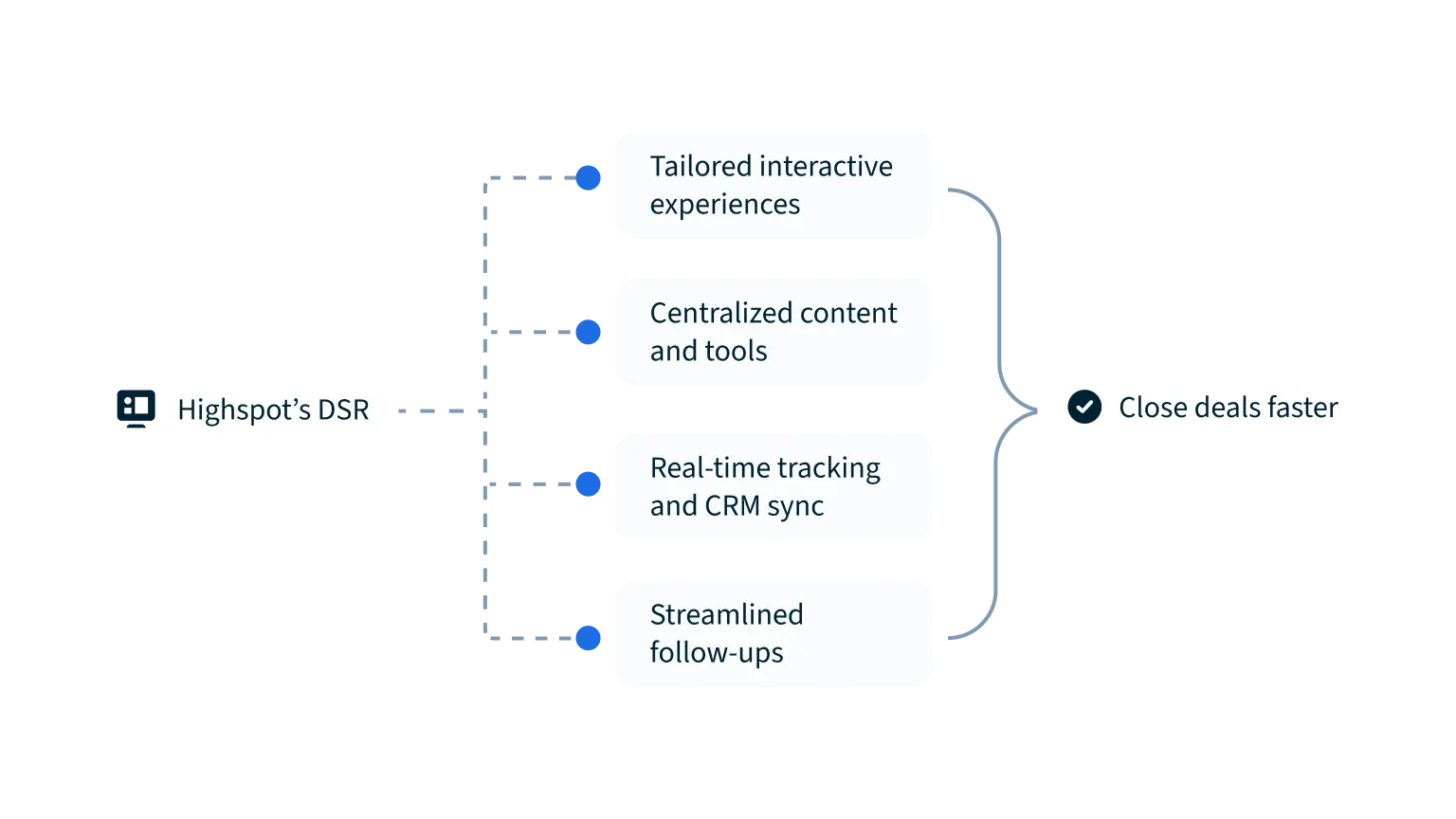
Highspot focuses buyer engagement on structured deal execution.
DSRs are created from marketing-approved templates and include embedded Mutual Action Plans that align buyers and sellers on roles, milestones, and timelines.
Source: Highspot
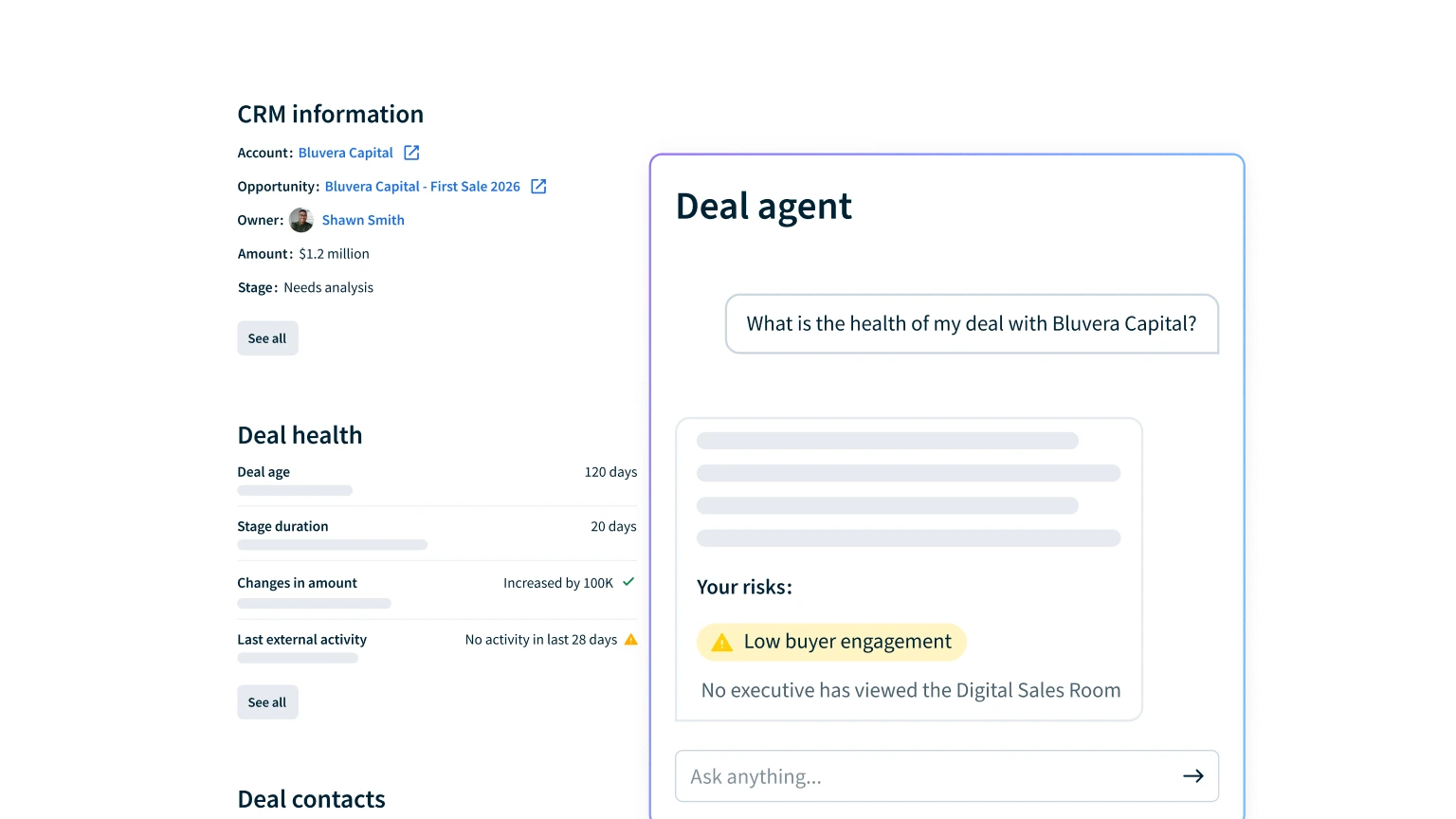
The Deal Agent analyzes CRM data, buyer engagement, and meeting insights to surface risk and recommend next actions. Highspot reports that personalized Digital Rooms hold attention as much as 7x longer than generic pages.
Source: Highspot
Bigtincan's advantage: teams that need a complete in-meeting experience with attention tracking and built-in video conferencing. Highspot's advantage: teams that prioritize structured deal processes with AI-driven next actions.
Both approaches work better when sellers know which deals to prioritize and which stakeholders to engage first. ZoomInfo's buyer intent data tracks signals from 210 million IP-to-Organization pairings to identify accounts in-market, while its contact database provides verified direct dials and emails for the decision-makers involved.
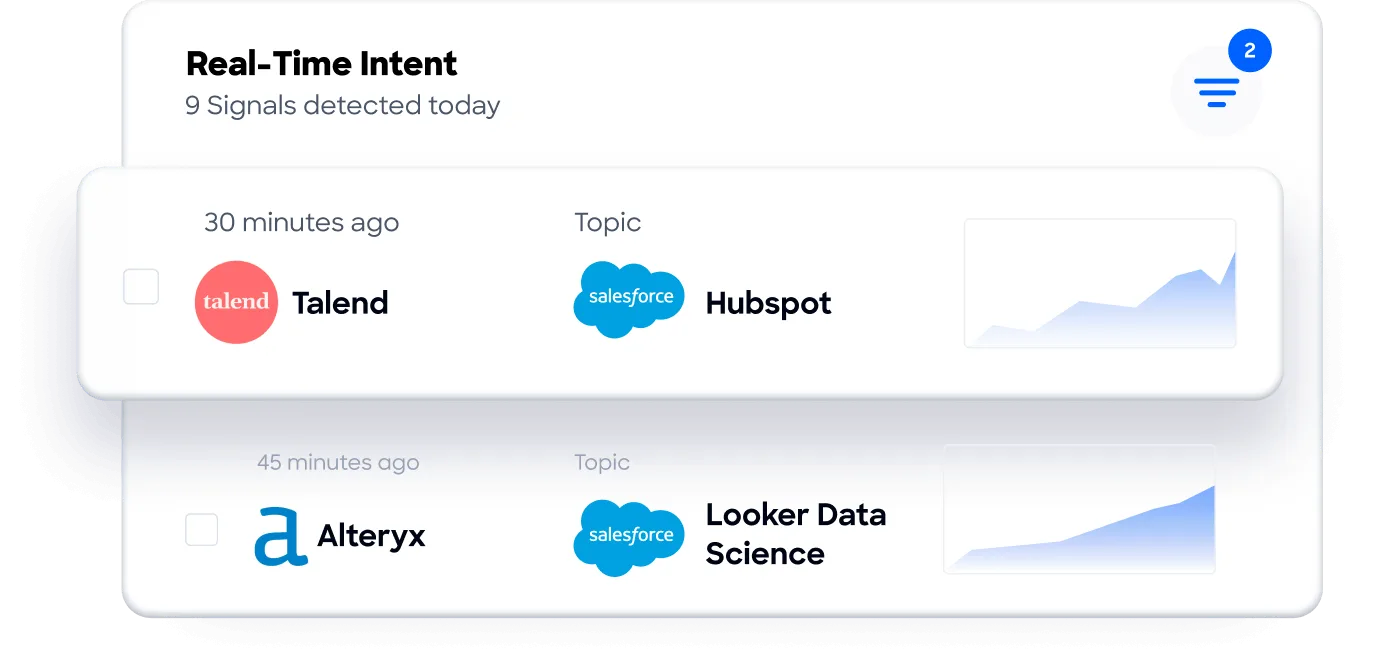
"It's not just the data itself. It's more about the right data at the right time to help us reach out with the right message across that full buyer journey." (Redwood Logistics, via ZoomInfo)
Pricing is opaque on both sides
Neither Bigtincan nor Highspot publishes pricing, which makes direct cost comparison difficult.
Bigtincan offers two platform editions (Essential and Elite) plus three standalone modules (Readiness, Content, Engagement) for teams that want to start smaller. All pricing is negotiated through sales. Third-party data suggests median enterprise contract values around $219,000/year. The EULA discloses that renewal fees increase by the greater of 5% or CPI, and additional costs include implementation services, training (billed on a time-and-materials basis), and tiered support packages (Bronze through Platinum).
Highspot structures pricing in three tiers: "Equip and Engage" (content and plays), "Train and Practice" (adds learning and coaching), and "Coach and Reinforce" (adds conversation intelligence, deal intelligence, and enterprise integrations). Enterprise capabilities like advanced content management, document autogeneration, and 24/7 support are add-ons to any tier. CRM integrations are included at no extra charge.
ZoomInfo offers something neither enablement platform does: a free entry point. ZoomInfo Lite provides permanent free access to the B2B database with 10 monthly export credits, and a 7-day free trial gives access to the full platform with no credit card required. Paid plans use consumption-based pricing with custom quotes based on seats, credits, and feature tiers.
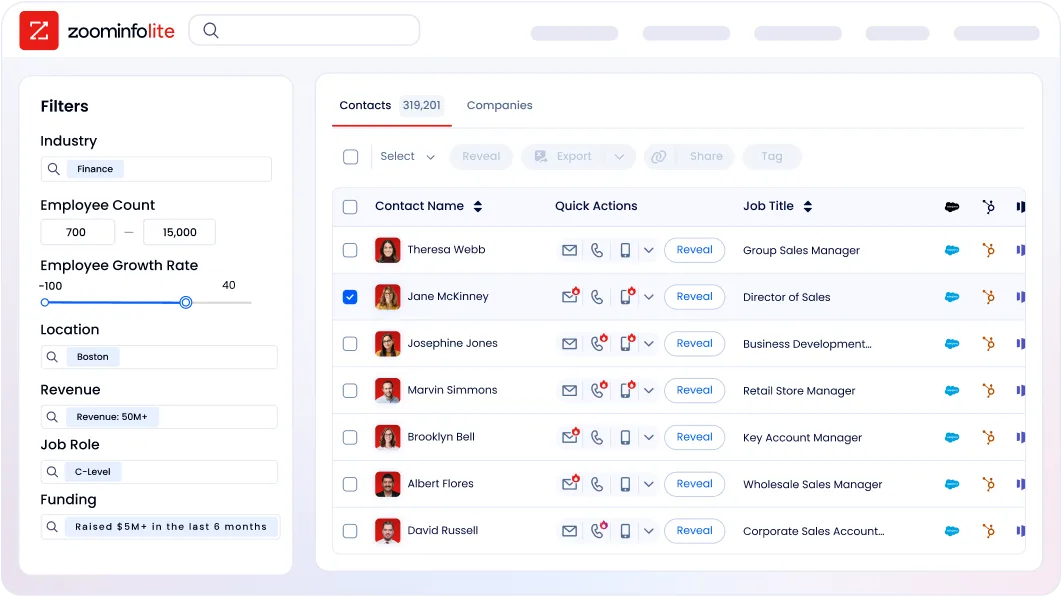
For teams already investing in Bigtincan or Highspot, ZoomInfo's intelligence layer is a separate budget line, but one that can improve the ROI of the enablement investment by directing it toward the right accounts.
Bigtincan vs. Highspot vs. ZoomInfo: Which should you choose?
The answer depends on what gap in your GTM stack you need to fill.
Choose Bigtincan if:
Your sales team operates in the field, in clinical settings, or in environments without reliable internet
You need AR/VR capabilities for complex product demonstrations
You're in a regulated industry (life sciences, financial services) requiring strict compliance controls over sales content
You want AI voice coaching that evaluates how buyers perceive your reps' tone
You need training content translated into 30+ languages without studio production
Your organization has a dedicated enablement team and budget for enterprise-tier contracts
Choose Highspot if:
You want a platform built from a single codebase rather than assembled through acquisitions
Agentic AI with Deal Intelligence and adaptive learning appeals to your enablement strategy
You need structured deal execution with Mutual Action Plans embedded in Digital Sales Rooms
You value a platform with high user experience ratings and adoption rates
Your team spans multiple GTM roles (sales, marketing, enablement, revenue operations)
Sales play execution and measurement are central to how your organization operates
Add ZoomInfo to either if:
You want accurate, verified B2B data so your reps target the right accounts
Your team needs buyer intent signals to know when accounts are researching solutions
You want AI-driven account prioritization and outreach based on real buyer behavior
You need your enablement investment connected to a data and intelligence layer
You want a free tier to evaluate before committing budget
You're building custom workflows or AI agents that need programmatic access to B2B intelligence
Start with ZoomInfo's free trial and see how intelligence changes your enablement ROI.
The most effective revenue teams don't choose between enablement and intelligence. They use both. Bigtincan or Highspot equips your reps with the content, training, and engagement tools they need. ZoomInfo ensures those tools are pointed at the right opportunities. Together, they close the gap between having a good enablement program and having one that consistently hits revenue targets.
"ZoomInfo gives us the information we need to execute. We don't have to go through and spend our time digging. It's already there, so we can be three steps ahead." (Vensure, via ZoomInfo)
Bigtincan vs. Highspot vs. ZoomInfo FAQ
What is the core difference between Bigtincan, Highspot, and ZoomInfo?
Bigtincan and Highspot are revenue enablement platforms that help sales teams manage content, train reps, and engage buyers. Bigtincan is built for enterprise field sales with offline, mobile, and AR/VR capabilities assembled through multiple acquisitions. Highspot is built from a single codebase with agentic AI and Deal Intelligence. ZoomInfo is a GTM intelligence platform that provides B2B data, buyer intent signals, and AI-driven account prioritization. It complements either enablement platform by identifying which accounts to pursue and when.
Which platform is better for regulated industries like life sciences?
Bigtincan has the deepest specialization in life sciences, with Veeva Vault integration, compliant content creation, remote e-detailing for physicians, and guided selling with offline access. Highspot also serves healthcare and life sciences with enterprise security and compliance controls. ZoomInfo adds a verified data layer with compliance certifications (ISO 27001, ISO 27701, SOC 2 Type II, GDPR, CCPA) that supports outreach in regulated environments.
How do the AI capabilities compare across the three platforms?
Bigtincan's GenieAI suite includes six specialized modules covering search, coaching, roleplay, authoring, meetings, and a general assistant. Its voice coaching evaluates how buyers perceive a rep's tone across 20 emotional vibes with independently validated accuracy. Highspot's Nexus engine powers an agentic platform where AI agents deliver role-specific guidance, deal coaching, and adaptive learning. ZoomInfo's GTM Context Graph processes 1.5B+ data points daily to combine B2B data with CRM, conversation, and behavioral signals into an intelligence layer that captures why deals move or stall.
Do any of these platforms offer a free trial or free tier?
Bigtincan and Highspot both require contacting their sales teams for demos. Neither offers a self-serve free trial or free plan. ZoomInfo offers both a permanent free tier (ZoomInfo Lite, with 10 monthly export credits) and a 7-day free trial of the full platform with no credit card required.
How are Bigtincan and Highspot affected by their pending mergers?
Bigtincan completed its merger with Showpad in October 2025 under Vector Capital's ownership. The combined entity operates under the Bigtincan brand with a new CEO. Product integration is ongoing. Highspot announced its intent to merge with Seismic in February 2026, with the combined entity expected to operate as Seismic and valued at over $6 billion. Both mergers bring typical consolidation considerations: product roadmap changes, team restructuring, and platform continuity questions that enterprise buyers should factor into their evaluation.
Can ZoomInfo integrate with Bigtincan or Highspot?
ZoomInfo integrates with the CRM platforms (Salesforce, Microsoft Dynamics, HubSpot) that both Bigtincan and Highspot connect to, creating a shared data layer across the stack. ZoomInfo's APIs and MCP server allow its intelligence to flow into any application. Both enablement platforms pull data from CRM records that ZoomInfo enriches, so the integration is indirect but effective: ZoomInfo keeps your CRM data accurate and surfaces buyer signals, and your enablement platform uses that enriched CRM data to guide reps.
Which platform has better content management?
Both are strong in different areas. Bigtincan differentiates with full offline access across devices, AR/VR interactive experiences for complex product demonstrations, and AI content search locked to approved materials only. Highspot differentiates with AI governance that automatically categorizes assets, enforces compliance, and archives outdated content at scale, plus AutoDocs that generates custom documents from CRM data. The choice depends on whether your team needs offline and immersive capabilities (Bigtincan) or automated governance and document generation (Highspot).
Which platform has the best analytics and performance measurement?
Each platform measures different things. Bigtincan tracks content engagement, coaching scores, and readiness progress, with CRM Scorecards that correlate training activity to bookings. Highspot connects content, training, coaching, and deal outcomes through unified scorecards and Deal Intelligence for real-time deal health views. ZoomInfo provides analytics on buyer intent, account engagement, and pipeline attribution. The strongest analytics setup uses ZoomInfo for targeting intelligence alongside Bigtincan or Highspot for enablement performance measurement.
