
If you're comparing Blue Yonder vs. Salesforce, you may be asking the wrong question.
These two platforms solve different problems. Blue Yonder manages supply chains: demand planning, warehouse operations, transportation, and fulfillment. Salesforce manages customer relationships: sales pipelines, service tickets, marketing campaigns, and commerce. Comparing them is like comparing your factory floor to your sales floor. Both matter, but they do different jobs.
That said, there are real reasons you might evaluate both. Enterprise buyers in retail, manufacturing, and consumer goods often need capabilities on both sides. And the question that ties them together is one most comparisons miss:
Is your primary challenge getting products to customers efficiently, or finding and winning those customers in the first place?
Do you need to optimize warehouses, routes, and inventory, or sales pipelines, campaigns, and service operations?
Are you looking for a platform that manages physical supply chain execution, or one that manages every customer touchpoint?
Where do your biggest data gaps sit: in supply chain visibility, or in understanding who your buyers are and what they need?
Does your go-to-market team have the data it needs to find the right accounts, at the right time, with the right message?
Here's what we recommend:
Blue Yonder is the platform for enterprise supply chain leaders who need AI-driven planning, warehouse management, and transportation management on a single data cloud. With 14 consecutive years as a Gartner Magic Quadrant Leader for WMS and 12 consecutive years for Supply Chain Planning, Blue Yonder covers complex, multi-site supply chains better than most competitors.
The trade-off: it requires heavy implementation investment, has no self-serve entry point, and targets only large enterprises with $1 billion+ in revenue.
Salesforce is the platform for organizations that need to manage every stage of the customer relationship, from first contact through post-sale service. As the #1 CRM by IDC market share with 150,000+ customers, Salesforce covers sales, service, marketing, commerce, analytics, and collaboration on a unified platform.
Its Agentforce AI agents handle customer interactions autonomously. The trade-off: pricing is complex, the learning curve is steep, and multi-cloud deployments take months to implement.
Both platforms do their jobs well. But neither solves the challenge that cuts across both: giving your go-to-market team the B2B intelligence to identify, reach, and convert the right buyers. That's where ZoomInfo comes in.
ZoomInfo is a B2B go-to-market platform built on a verified data foundation of 500M contacts and 100M companies, 135M+ verified phone numbers, and 200M+ verified business email addresses.
Its GTM Context Graph processes 1.5B+ data points daily, combining this data with your CRM records, conversation transcripts, and behavioral signals to show not just what happened in your pipeline, but why deals move or stall and what to do next.
Your team can access that intelligence through GTM Workspace for sellers, GTM Studio for marketers and RevOps, or through APIs and MCP in any other front-end. ZoomInfo integrates directly with Salesforce and complements any enterprise stack.
If your team needs verified B2B intelligence for go-to-market execution, see how ZoomInfo works.
Blue Yonder vs. Salesforce vs. ZoomInfo at a glance
Blue Yonder | Salesforce | ZoomInfo | |
|---|---|---|---|
Core function | Supply chain management | CRM & customer engagement | B2B go-to-market intelligence |
Primary buyer | Chief Supply Chain Officers, VP Operations | CIOs, sales/marketing/service leaders | Sales, marketing, and RevOps leaders |
AI focus | Supply chain planning, warehouse optimization, demand forecasting | Autonomous customer-facing agents (Agentforce) | GTM Context Graph for buyer intelligence and outreach |
Pricing model | Enterprise-negotiated SaaS | Per-user tiered subscriptions | Consumption-based, custom-quoted |
Free tier | None | ||
Implementation | 12-24 months typical | Weeks to 12 months depending on scope | |
Best for | Large enterprise supply chains | Customer-facing teams across all industries | Revenue teams needing buyer intelligence |
These platforms solve fundamentally different problems
The confusion between Blue Yonder and Salesforce usually comes from the fact that both are large enterprise platforms with AI capabilities and overlapping industry coverage. But the problems they solve sit on opposite sides of the business.
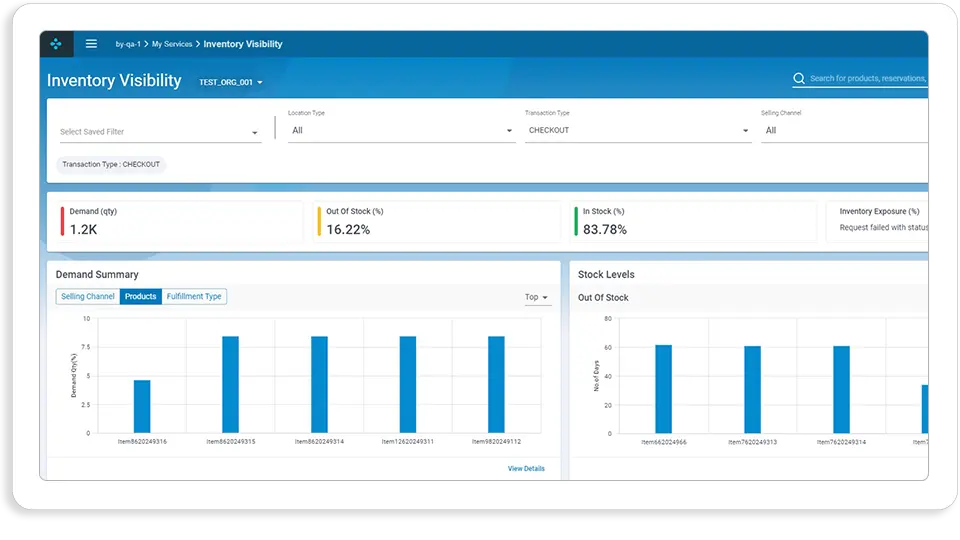
Blue Yonder answers operational questions: How much inventory should we hold in each warehouse? Which carrier should ship this load? When should we schedule production runs? How do we fulfill an order from the best location?
Source: Blue Yonder
The platform orchestrates physical goods moving through supply chains, using AI to forecast demand, optimize routes, and direct warehouse workers and robots.
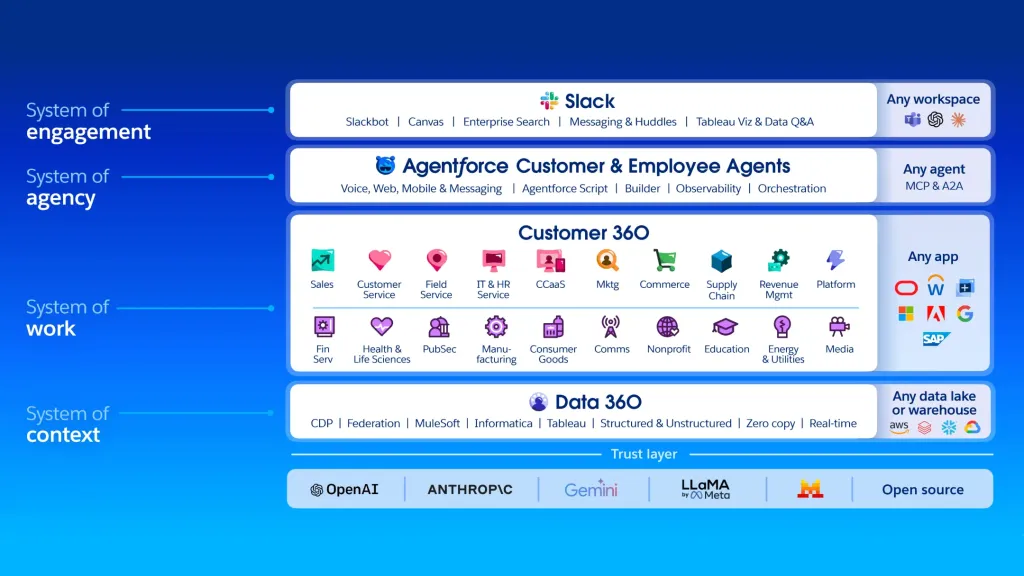
Salesforce answers customer-facing questions: Which leads should we prioritize? How do we resolve this service case faster? What campaign will drive the most pipeline? How do we personalize the shopping experience?
Source: Salesforce
The platform manages every digital interaction between a company and its customers, using AI agents to automate conversations, score opportunities, and predict churn.
The distinction matters because buying one doesn't reduce your need for the other. A retailer that deploys Blue Yonder for warehouse management and demand planning still needs a CRM for its sales team, a marketing platform for customer campaigns, and a service system for support tickets.
A company running Salesforce for its entire customer lifecycle still needs supply chain software to move products where they need to go.
Where they genuinely overlap is order management.
Blue Yonder's Order Management & Commerce routes orders to the best fulfillment node based on inventory availability, cost, and delivery speed. Salesforce's Commerce Cloud handles storefronts, order routing, and omnichannel inventory.
For retailers and manufacturers evaluating both, order management is the one area where a direct comparison holds, and the decision often comes down to whether your complexity is primarily on the fulfillment side (Blue Yonder) or the customer engagement side (Salesforce).
ZoomInfo adds the intelligence layer that powers go-to-market
Blue Yonder tells you what to do with your supply chain. Salesforce tells you what to do with your customers. ZoomInfo tells you who your customers should be, when to reach them, and what to say.
ZoomInfo's GTM Context Graph processes 1.5B+ data points daily, combining ZoomInfo's B2B dataset with a customer's CRM records, conversation transcripts from Chorus, intent signals, and behavioral data.
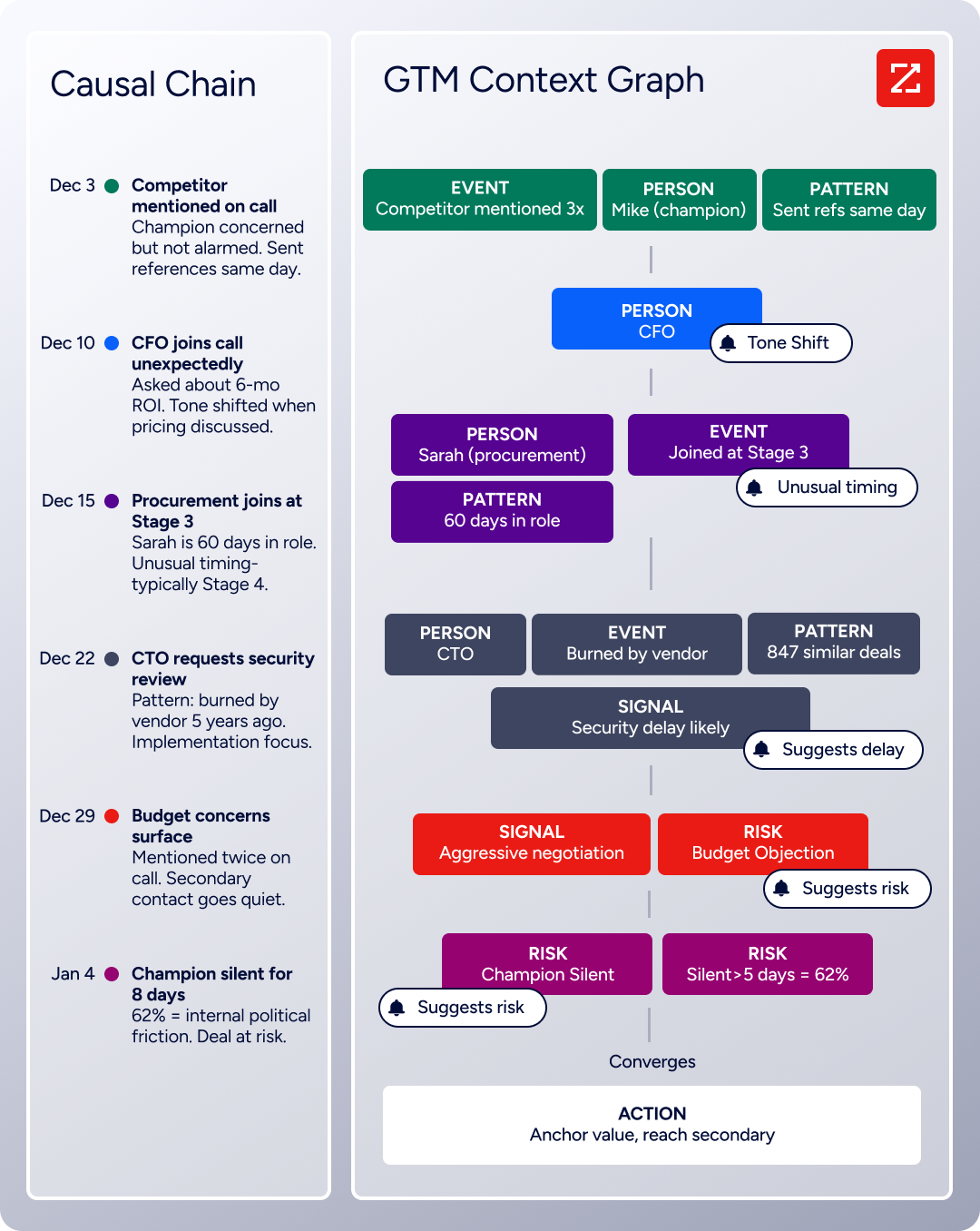
The result is an intelligence layer that captures not just that a deal moved stages, but why: the executive sponsor who joined the call, the competitive mention that signaled urgency, the hiring pattern that predicted budget expansion.
That matters because Salesforce records states, not reasons. It knows a deal is in Stage 3. It doesn't know that the CFO's question on the last call is the signal that predicts closed-won in your segment. ZoomInfo's GTM Context Graph closes that gap by reasoning across both first-party CRM data and third-party intelligence at scale.
For a closer look at how these two platforms stack up on their own, see our Salesforce vs. ZoomInfo comparison.
For companies using Salesforce, ZoomInfo integrates through a native Salesforce integration, enriching CRM records with verified contact data, buyer intent signals, technographics, and org chart intelligence.
Sales reps see prioritized accounts, AI-drafted outreach, and deal context inside GTM Workspace. Marketers and RevOps teams build audiences, launch multi-channel plays, and measure pipeline impact in GTM Studio. Developers and AI agents access the same intelligence through APIs and MCP.
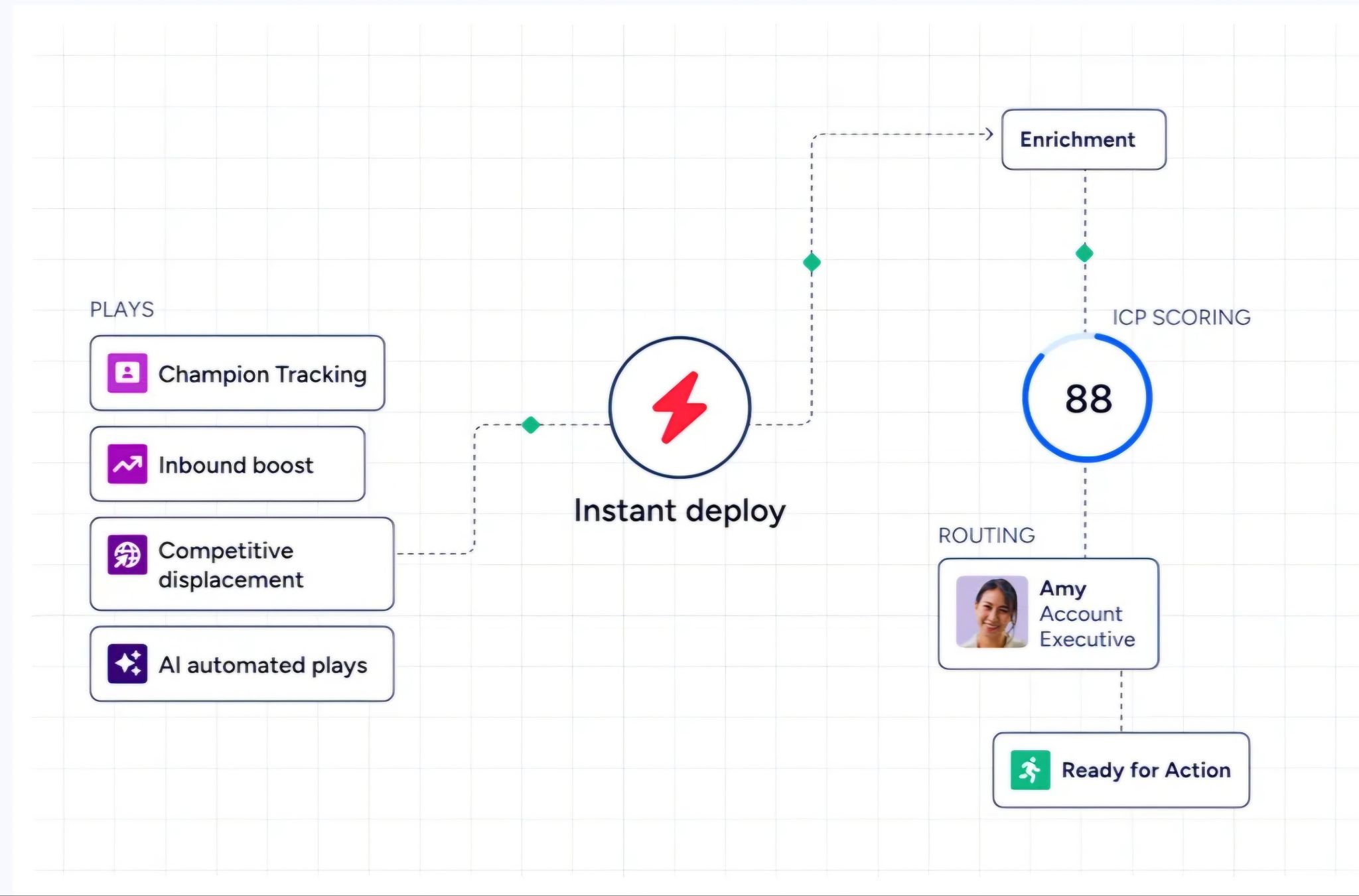
Source: ZoomInfo
For companies using Blue Yonder, ZoomInfo fills a complementary role: helping your sales and marketing teams find buyers for the products your supply chain delivers. Whether you sell supply chain software, manufacturing components, or consumer goods through B2B channels, ZoomInfo provides the buyer intelligence that supply chain platforms don't cover.
Seismic's sales team attributed 39% of active pipeline to opportunities identified or influenced by ZoomInfo signals, while boosting productivity by 54% and saving 11.5 hours per week per seller. (Seismic Case Study)
Blue Yonder dominates supply chain depth
Blue Yonder's strength is how much supply chain ground it covers on a single platform.
The company is one of only two vendors recognized as a Gartner Magic Quadrant Leader simultaneously in Supply Chain Planning, WMS, and TMS.
That triple-category recognition reflects a platform covering the full supply chain lifecycle: demand forecasting with ML models processing hundreds of external signals, warehouse execution sending 3.5 million daily tasks to workers and robots, and transportation management processing 45 million monthly shipments.
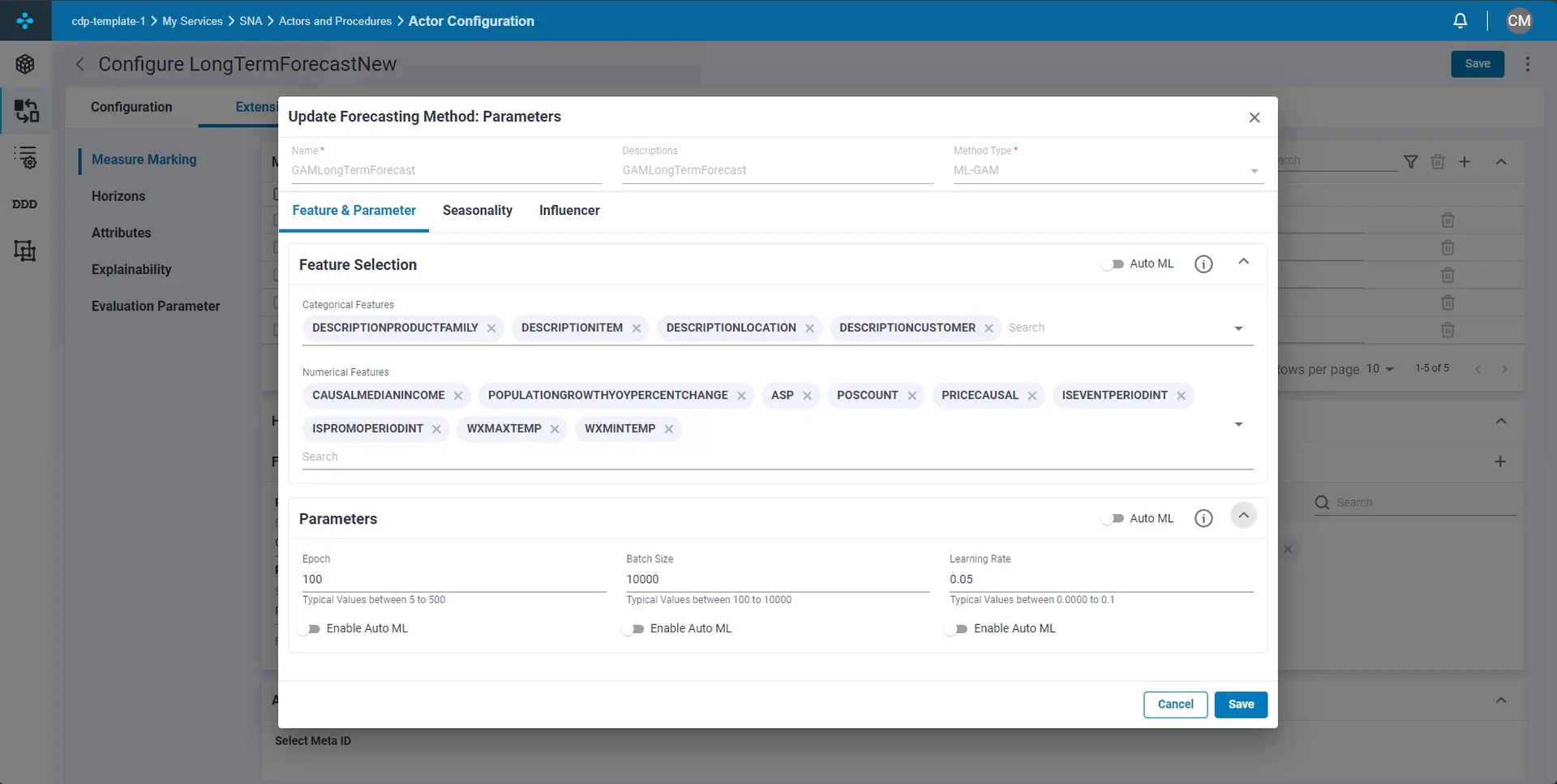
Source: Blue Yonder
The unified data architecture gives it a structural edge. All modules share a common AI data cloud built on Snowflake, so a demand signal change automatically propagates to inventory targets, supply plans, production schedules, and transportation routes. Competitors who bolt together separate planning and execution tools can't match the speed of that closed-loop optimization.
Blue Yonder's "Cognitive Solutions" point toward its AI direction: autonomous agents that detect supply chain events, reason about them, and act at machine speed. The company runs 20 billion ML predictions per day and holds over 900 patents. For companies where supply chain performance drives competitive advantage, that depth of domain-specific AI is hard to replicate.
The limitations are equally clear.
Blue Yonder is built for large enterprises. Implementation timelines of 12 to 24 months are common. Pricing is unpublished, and contracts are individually negotiated. There is no free tier, no self-serve option, and no credible offering below the enterprise segment.
Organizations with poor data quality will also struggle: reviewers note that the platform still tries to forecast from unclean data, producing unreliable outputs.
Salesforce dominates the customer relationship
Where Blue Yonder manages the movement of goods, Salesforce manages the movement of customers through every stage of the relationship.
Salesforce has held the #1 CRM market share position by IDC revenue for over a decade and carries Gartner MQ Leader positions across six product categories, including 19 consecutive years in Sales Force Automation.
The platform spans Sales Cloud, Service Cloud, Marketing Cloud, Commerce Cloud, Data Cloud, Tableau analytics, Slack collaboration, and MuleSoft integration, all sharing unified customer data.
The current strategic focus is Agentforce, Salesforce's autonomous AI agent platform.
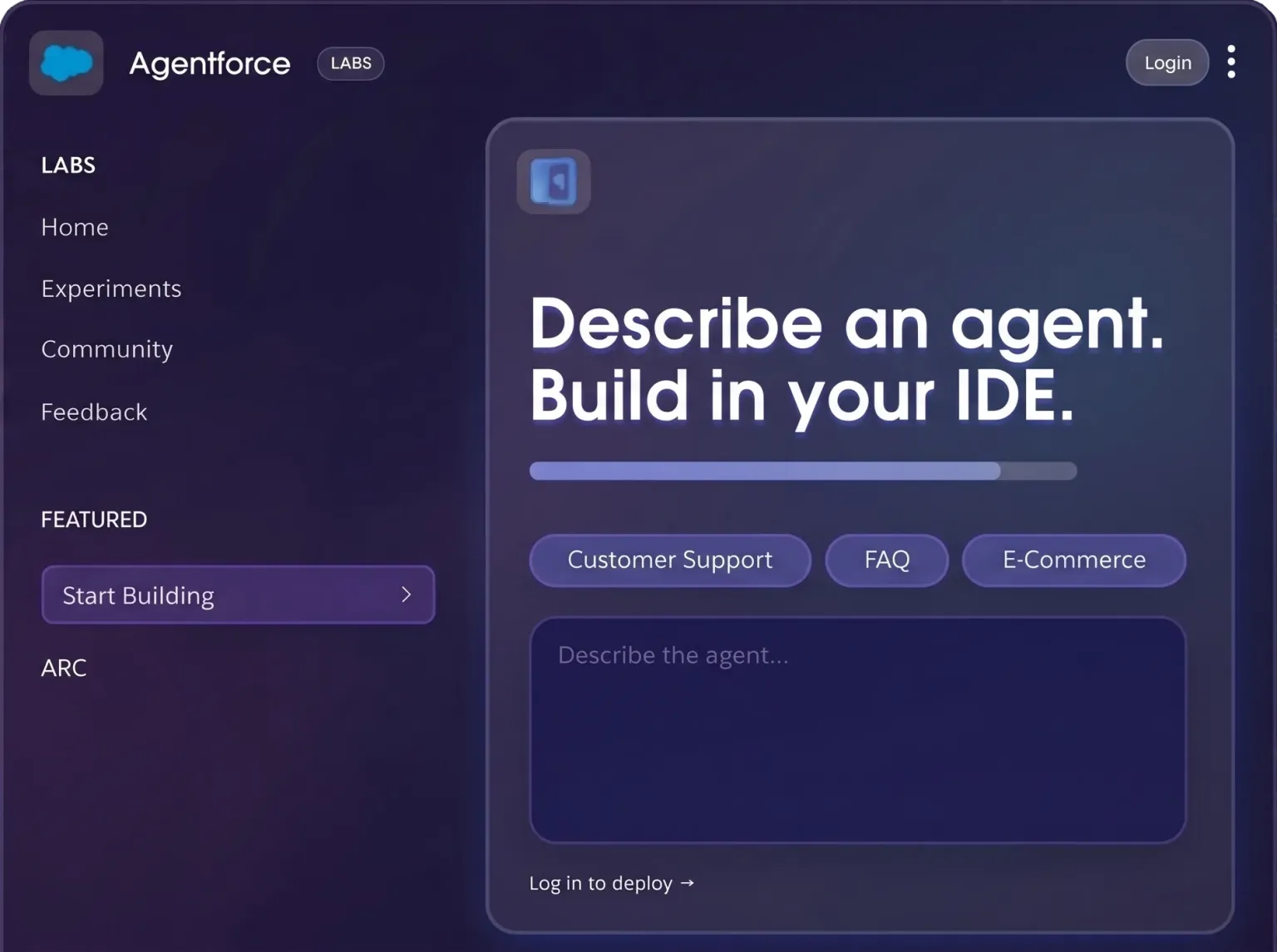
Source: Salesforce
Agentforce agents handle customer interactions across channels without constant human oversight.
The ecosystem adds another structural edge. 9,000+ partner apps with 14+ million installs on AppExchange, a 20-million-member Trailblazer Community, and 17 industry-specific clouds. No other CRM offers that breadth of pre-built solutions.
Salesforce's weaknesses are well-documented. Pricing is complex. A June 2025 restructuring raised Enterprise/Unlimited list prices by about 6%, and Salesforce itself acknowledged its pricing model "needed to be easier to understand".
The full platform requires dedicated administration and heavy implementation investment, with over 70% of deployments led by partners. And while free and Starter tiers exist, the platform's value compounds with organizational complexity, meaning mid-market and enterprise organizations willing to invest in the ecosystem get the most from it.
AI strategies point in opposite directions
Both Blue Yonder and Salesforce are investing heavily in AI, but their approaches reflect their different missions.
Blue Yonder's AI focuses on physical operations.
Its Cognitive Solutions use predictive AI to forecast demand, generative AI to create actionable alerts, and agentic AI to monitor supply chain signals and respond to disruptions autonomously.
The Supply Chain Knowledge Graph, built with RelationalAI on Snowflake, maps relationships between suppliers, SKUs, markets, and plants so the system can optimize across the full network. The outputs are operational: reorder this SKU, reroute this shipment, rebalance this warehouse workforce.
Salesforce's AI focuses on customer interactions.
Agentforce uses the Atlas Reasoning Engine to read customer context, determine the best response, and act autonomously across sales, service, marketing, and commerce.
The Einstein Trust Layer enforces zero data retention with LLM partners, PII masking, and toxicity detection. The outputs are customer-facing: draft this email, resolve this support case, personalize this shopping experience, coach this sales rep.
Neither platform's AI addresses the upstream problem that determines whether those operational and customer-facing systems have the right targets in the first place: knowing who your best buyers are, when they're in-market, and what will get them to engage.
Pricing structures reveal different market tiers
The cost models reflect each platform's target buyer and competitive position.
Blue Yonder does not publish pricing.
All contracts are individually negotiated through direct sales engagement. The platform ships as SaaS on Azure, with modules licensed separately across Supply Chain Planning, WMS, TMS, Order Management, Retail Planning, and more.
Beyond subscription fees, expect additional costs: professional services from 1,500+ supply chain experts, a Platform Expansion Pack for enterprises outgrowing standard limits, White Glove premium support, training through a dedicated education portal, and system integrator fees. Multi-year contracts (3-5 years) are standard.
Salesforce publishes a per-user tier structure, though the full cost picture is more complex than list prices suggest.
Sales Cloud and Service Cloud range from $25/user/month (Starter Suite) to $550/user/month (Agentforce 1 edition). Marketing Cloud starts at $1,500/org/month. Agentforce consumption adds either $2 per conversation or $500 per 100,000 Flex Credits. Data Cloud, Tableau, MuleSoft, and various add-ons each carry separate pricing. The Premier Success Plan costs 30% of net license fees on top.
ZoomInfo uses consumption-based pricing with no publicly listed prices.
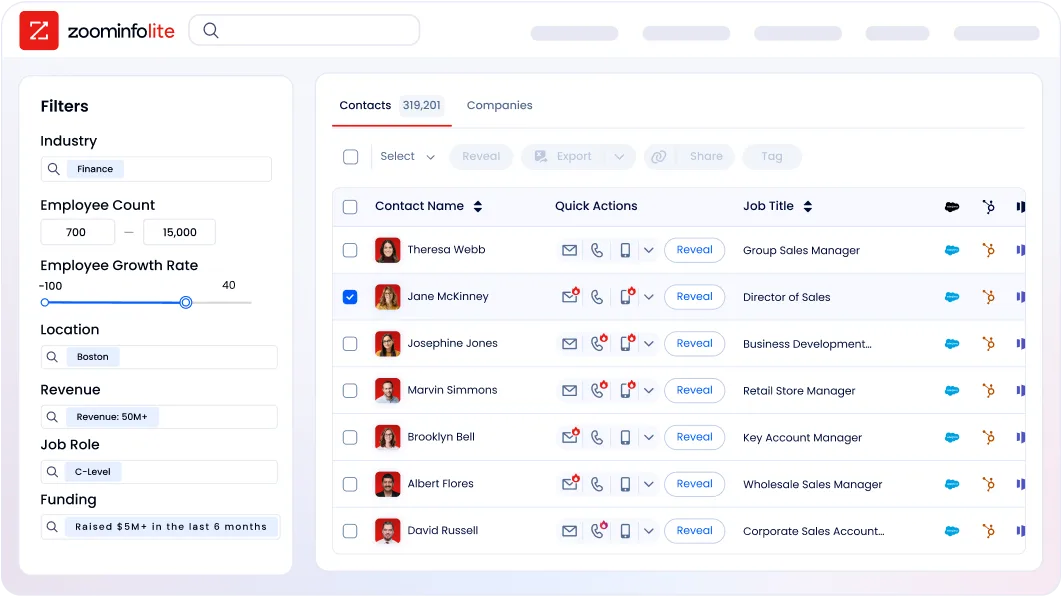
Pricing scales around enterprise license agreements, seat counts, monthly credit volume, and feature tiers. ZoomInfo offers something neither Blue Yonder nor Salesforce provides: a permanent free tier. ZoomInfo Lite gives access to ZoomInfo's B2B database with 10 monthly export credits, plus a 7-day free trial for the full platform.
Integration ecosystems reflect different worlds
Each platform's integration strategy shows where it fits in the enterprise technology stack.
Blue Yonder integrates primarily with ERP systems, warehouse automation vendors, and supply chain partners.
Its Blue Yonder Connect integration platform (powered by MuleSoft) supports 200+ certified connectors including SAP, Oracle EBS, Salesforce, Workday, and NetSuite. The Blue Yonder Network connects 150,000+ trading partners for carrier, supplier, and logistics collaboration. The platform exposes 1,000+ APIs, but integration is enterprise-tier only. There are no Zapier or Make connections.
Salesforce has the broadest integration ecosystem in enterprise software.
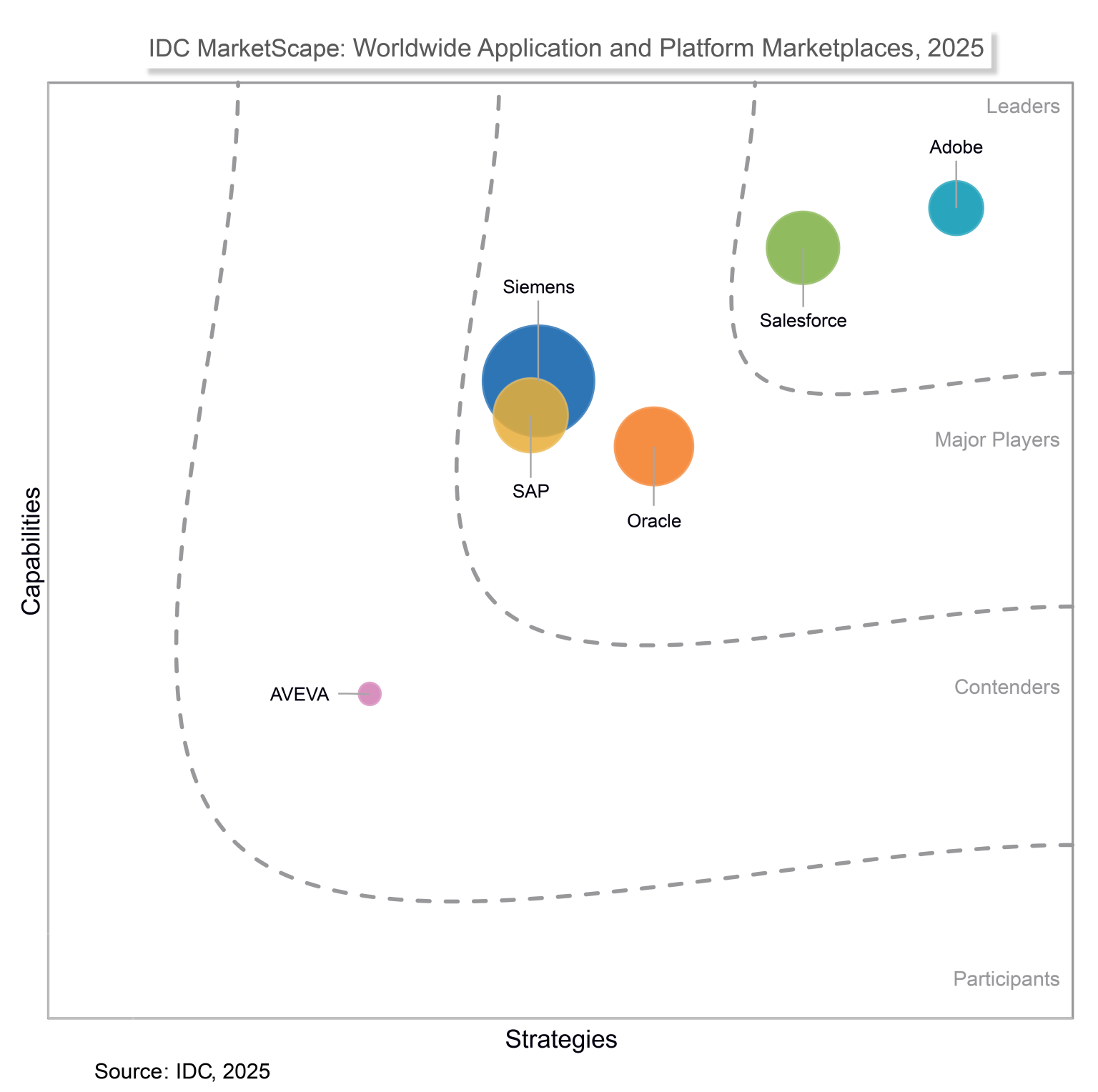
AppExchange hosts 9,000+ partner apps with 14+ million installs. MuleSoft's Anypoint Platform provides hundreds of pre-built connectors for enterprise integrations. Native connections to Google Workspace, Microsoft Outlook and Teams, and Slack are built in.
Source: Salesforce
REST, SOAP, Bulk, GraphQL, Pub/Sub, and Streaming APIs cover virtually any integration pattern. External iPaaS tools like Zapier, Make, and Workato connect through the REST API as well.
ZoomInfo runs a Marketplace with 172+ integration partners, with native integrations into Salesforce, HubSpot, Microsoft Dynamics 365, and cloud data platforms including Snowflake, AWS, Google Cloud, and Databricks.
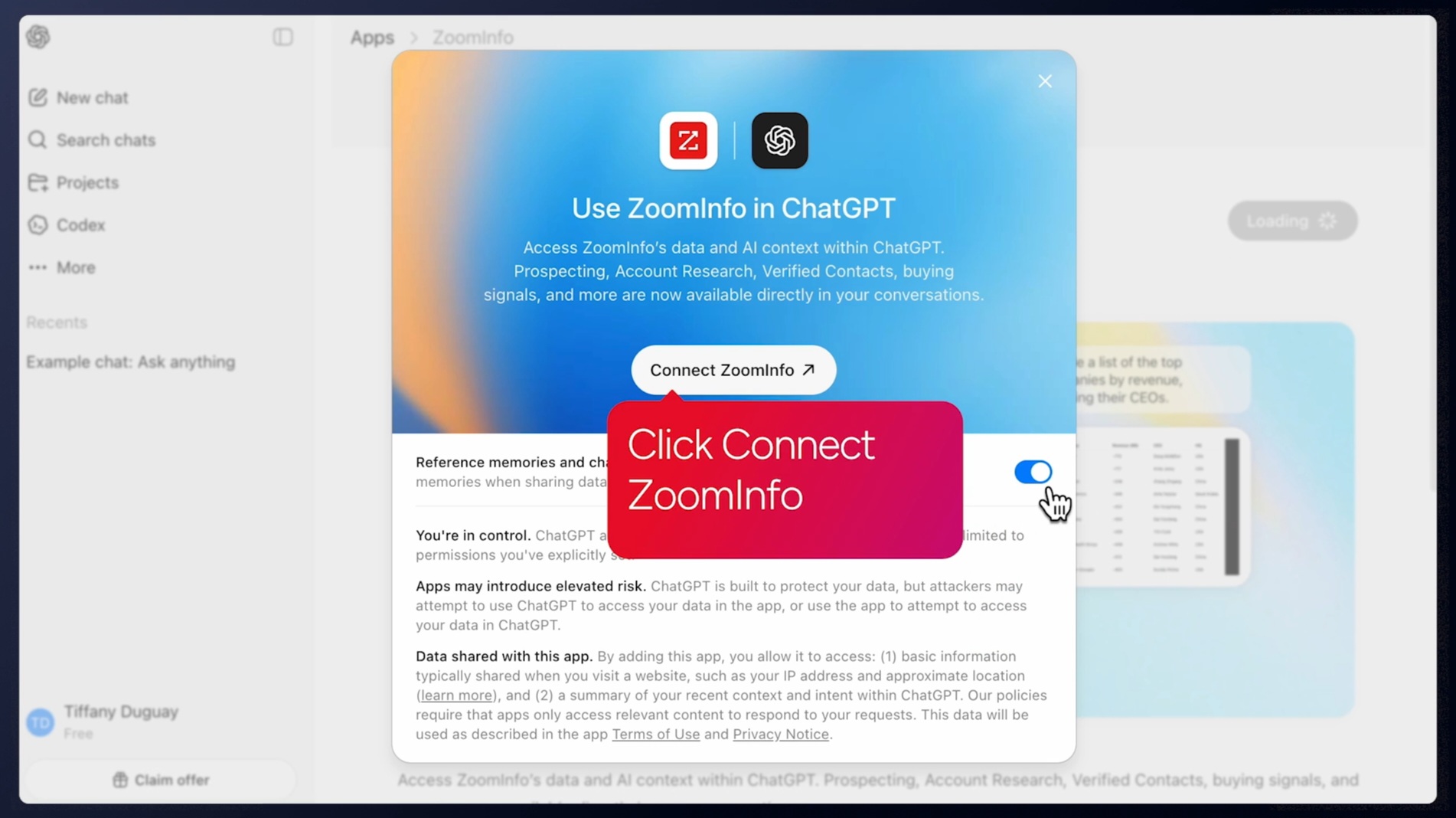
The ZoomInfo MCP server connects AI models directly to ZoomInfo's B2B data, currently supporting Claude and ChatGPT. For Salesforce users, ZoomInfo's native CRM integration enriches records, automates lead routing, and feeds intelligence into the Salesforce workflow.
Source: ZoomInfo
BDO Canada's Senior Marketing Intelligence Analyst noted: "The plug-and-play aspect of the API means I can integrate it very easily into any process and get information at a moment's notice," achieving an 87% reduction in time spent on internal data dashboard updates. (BDO Canada Case Study)
Data foundations reveal different priorities
The data each platform works with determines what it can and cannot do.
Blue Yonder operates on supply chain data: demand signals, inventory levels, warehouse capacity, transportation routes, labor schedules, and trading partner information.
Its common AI data cloud ingests roughly one terabyte of supply chain data per week. The data is operational and internal, flowing between a company's own facilities, systems, and supply chain partners. It does not include buyer intelligence, contact data, or go-to-market signals.
Salesforce operates on customer data: accounts, contacts, opportunities, cases, campaigns, and transactions.
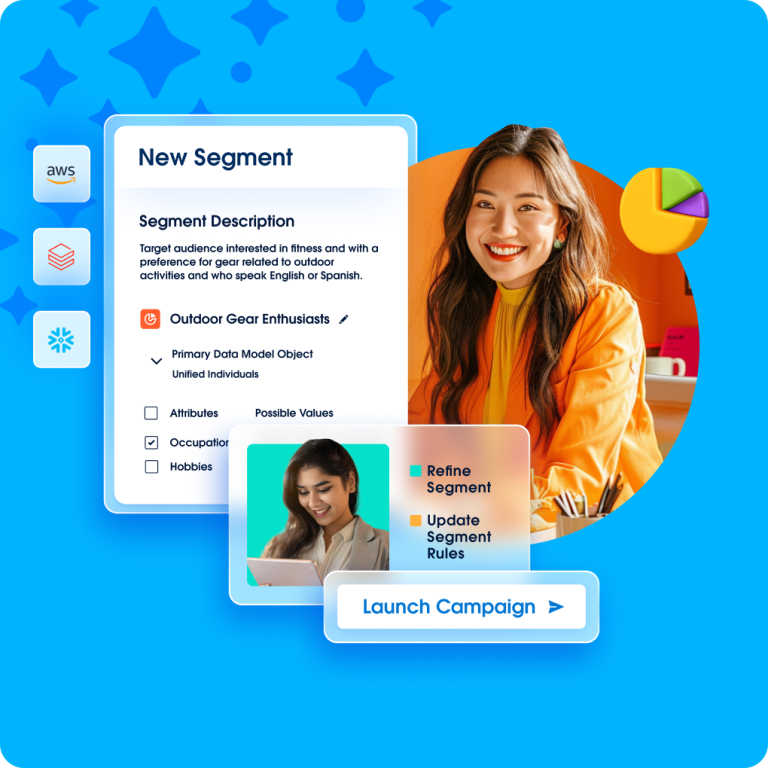
Data Cloud (Data 360) ingested 112 trillion records in FY26 and unifies customer profiles across sources with identity resolution and zero-copy connections to Snowflake, Databricks, and BigQuery. The data is relational and customer-centric, but its quality depends entirely on what the organization puts in. As Marc Benioff acknowledged at Dreamforce 2025: "You have got to get your data right."
Source: Salesforce
ZoomInfo operates on B2B intelligence data: verified contacts, company attributes, org charts, technographics, buyer intent signals, and behavioral data.
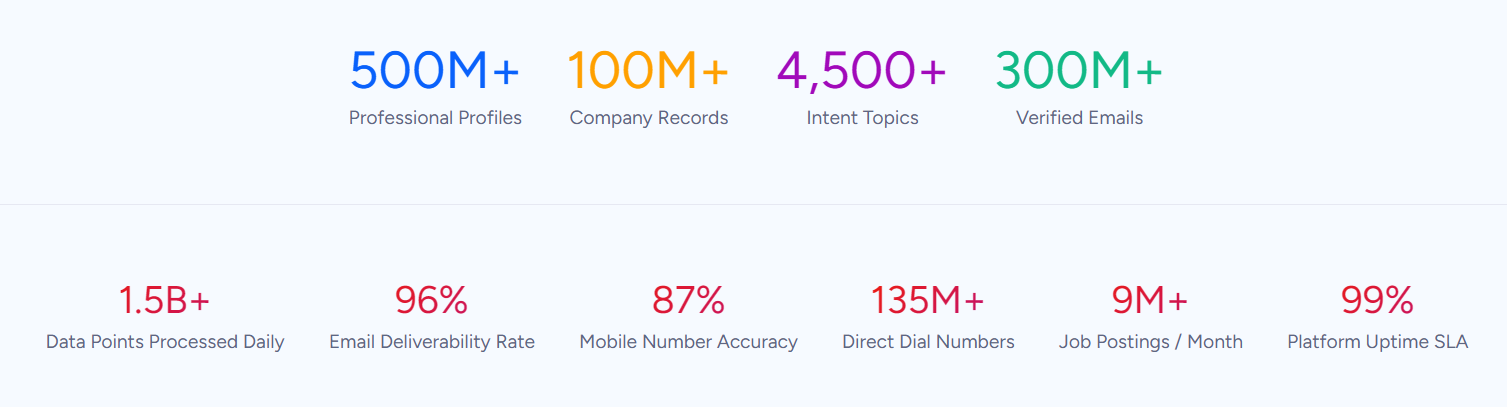
The dataset spans 500M contacts and 100M companies, verified through a proprietary collection system backed by 300+ human researchers with up to 95% accuracy on first-party data. In a Fortune 500 competitive RFP analyzing 25 million contacts across vendors, the independent consultant concluded that "no other competitor came even close."
This distinction matters for Salesforce users in particular. A CRM is only as good as the data inside it. Forbes estimates that 91% of CRM data is incomplete. ZoomInfo solves this by enriching Salesforce records with verified contacts, company intelligence, and real-time buying signals, giving Salesforce's AI agents the accurate data they need to work.
Snowflake uses ZoomInfo for at least one-third of the most critical data features in its Account Propensity Scoring model, feeding over 70 firmographic and technographic data fields. Accounts monitored using ZoomInfo-powered scores showed 90% higher opportunity open rates and 2x higher customer conversion rates. (Snowflake Case Study)
Support and learning curves match each platform's audience
Blue Yonder requires heavy organizational investment to deploy and learn.
The platform covers planning, execution, warehousing, transportation, workforce, and order management for complex enterprise supply chains. G2 reviewers note that initial setup requires "extensive involvement from IT professionals."
Support is tiered, with a customer portal at success.blueyonder.com and White Glove Support as a premium add-on. The annual ICON conference and User Groups offer peer community resources, and a dedicated training portal handles ongoing education.
Salesforce has the most developed learning ecosystem in enterprise software.
Trailhead provides 1,500+ badges and 6+ million learners for free. The Trailblazer Community spans 20 million members across 1,300+ local groups in 90 countries. Three support tiers range from free Standard support to Signature support with 24/7 coverage and 15-minute response times for critical issues.
However, Premier Success costs 30% of net license fees, and meaningful configuration requires dedicated, trained administrators.
ZoomInfo pairs platform depth with accessibility.
Its redesigned onboarding spans 30 to 90 days, producing a 25% satisfaction improvement and winning Rocketlane's Golden Comet award for Best Customer Onboarding Team of 2024.
ZoomInfo University provides role-specific learning paths, certifications, and live webinars. Support is available through the Help Center, ZoomInfo Labs professional services, and direct phone support.

Blue Yonder vs. Salesforce vs. ZoomInfo: Which should you choose?
The choice comes down to which problem matters most to your business right now.
Choose Blue Yonder if:
Supply chain performance is your primary competitive differentiator
You operate complex, multi-site distribution networks with high SKU counts
You need AI-driven demand planning, warehouse management, and transportation optimization on a single platform
Your organization has $1 billion+ in revenue and the IT bandwidth for a 12-24 month implementation
You want a platform backed by 14 consecutive years of Gartner WMS Leader recognition
Choose Salesforce if:
Managing customer relationships across sales, service, marketing, and commerce is your priority
You need a unified platform where every team shares the same customer data
Autonomous AI agents for customer interactions align with your strategy
You want the deepest CRM ecosystem with 9,000+ partner apps and industry-specific solutions
Your organization can invest in the administration, implementation, and training the platform requires
Choose ZoomInfo if:
Your go-to-market team needs verified buyer intelligence to find and reach the right accounts
You want AI that reasons about why deals move, not just what stage they're in
You need to enrich your CRM with accurate contact data, intent signals, and company intelligence
Your sellers, marketers, and RevOps teams need a shared intelligence layer across their workflows
You want to power AI agents and custom tools with B2B data through APIs and MCP
See how ZoomInfo's intelligence powers go-to-market execution with a free trial.
The reality for most enterprises in retail, manufacturing, and consumer goods is that these platforms address different parts of the business. Blue Yonder manages what happens after the order. Salesforce manages the customer relationship that generates the order. ZoomInfo provides the intelligence that helps you find the customer in the first place.
The strongest go-to-market teams don't choose between customer data and buyer intelligence. They use Salesforce for CRM and combine it with ZoomInfo's verified B2B data and GTM Context Graph to make sure every rep, campaign, and AI agent works with accurate, complete, and timely intelligence.
Smartsheet's Senior Manager of Sales Technology Enablement: "ZoomInfo is our one source of truth for account data, and even more so for contact data. There's no other provider in the market that provides you with that level of detail." (Smartsheet Case Study)
Blue Yonder vs. Salesforce vs. ZoomInfo FAQ
What is the fundamental difference between Blue Yonder, Salesforce, and ZoomInfo?
Blue Yonder is an enterprise supply chain management platform covering demand planning, warehouse management, transportation management, and order fulfillment.
Salesforce is a CRM and customer engagement platform covering sales, service, marketing, commerce, and analytics.
ZoomInfo is a B2B go-to-market intelligence platform providing verified contact data, buyer intent signals, and AI-driven sales and marketing execution. They solve different problems and are often used together rather than as alternatives.
Can Blue Yonder and Salesforce work together?
Yes. Blue Yonder's integration platform supports Salesforce as a named connector through its MuleSoft-powered Blue Yonder Connect layer. Companies in retail, manufacturing, and consumer goods commonly use Blue Yonder for supply chain operations and Salesforce for customer-facing operations.
The order management capabilities of both platforms can overlap, so the integration architecture depends on which platform handles fulfillment logic versus customer experience.
Which platform is best for a mid-sized company?
Salesforce is the most accessible, with tiers starting at $25/user/month and a free CRM for up to 2 users. ZoomInfo offers a permanent free tier (ZoomInfo Lite) and paid plans that scale with usage. Blue Yonder is not designed for mid-sized companies. Its pricing, implementation timelines, and operational complexity target enterprises with $1 billion or more in annual revenue and multi-site supply chain operations.
How does ZoomInfo integrate with Salesforce?
ZoomInfo has a native Salesforce integration that enriches CRM records with verified contact data, company attributes, org charts, technographics, and buyer intent signals.
Sales reps can access ZoomInfo intelligence inside Salesforce through the integration, and ZoomInfo's GTM Workspace and GTM Studio connect bidirectionally with Salesforce data. ZoomInfo also provides APIs and an MCP server for custom integrations.
Which platform has the strongest AI capabilities?
Each platform leads in its domain. Blue Yonder's AI runs 20 billion ML predictions per day for supply chain optimization, including demand forecasting, warehouse resource orchestration, and autonomous transportation management.
Salesforce's Agentforce has closed 29,000 deals and delivered 2.4 billion Agentic Work Units, with autonomous agents resolving customer cases and accelerating sales cycles.
ZoomInfo's GTM Context Graph processes 1.5 billion data points daily to reveal why deals move or stall, powering AI-drafted outreach and prioritized account recommendations.
What does Blue Yonder cost compared to Salesforce?
Blue Yonder does not publish pricing. All contracts are enterprise-negotiated, with additional costs for professional services, training, premium support, and system integrator fees.
Salesforce publishes tiered pricing starting at $25/user/month for Sales Cloud Starter Suite, scaling to $550/user/month for the Agentforce 1 edition. Marketing Cloud starts at $1,500/org/month.
Both platforms require total investment well beyond list prices when you account for implementation, add-ons, and ongoing support.
Do any of these platforms offer a free tier?
Salesforce offers a free CRM for up to 2 users with basic lead and account management.
ZoomInfo offers ZoomInfo Lite, a permanent free tier with access to the B2B database, 10 monthly export credits, and website visitor identification.
Blue Yonder has no free tier or self-serve option. Access requires a formal sales engagement and signed contract.
Which platform should I choose if I need both supply chain and customer management?
Most enterprises in this situation use both Blue Yonder and Salesforce, each handling its domain. Blue Yonder manages supply chain planning and execution, while Salesforce manages customer relationships and commerce.
Adding ZoomInfo provides the B2B intelligence layer that helps go-to-market teams find and engage the right buyers. The three platforms complement each other rather than compete for the same budget.
