

Bluecore built its reputation on a single architectural bet: product catalog data belongs at the center of retail marketing, not bolted on as an afterthought. The platform combines shopper identity, behavioral signals, and live catalog data into one system, then uses that combination to personalize email, SMS, site experiences, and paid media for each shopper. For mid-to-enterprise retail brands with large catalogs, it offers something most ESPs and CDPs cannot: automated triggers that fire based on what's happening in the catalog (price drops, new arrivals, back-in-stock) and what's happening in the shopper's behavior.
To write this Bluecore review, we analyzed it extensively. We believe it's the right choice if:
You're a mid-to-enterprise retail or DTC brand with a large product catalog
You want to consolidate your CDP and ESP into one platform
You need predictive AI models trained on retail data
You want always-on triggered campaigns that fire on both shopper behavior and catalog changes
You have a dedicated marketing team ready for a managed enterprise platform
However, Bluecore might not be the best choice if:
You operate outside retail and ecommerce
You need transparent, self-serve pricing before committing
You're a smaller brand without the budget for enterprise contracts
You need mature SMS capabilities today, not a feature still catching up
You want extensive design templates and a polished reporting interface
While Bluecore covers the consumer marketing side of retail, many of the same brands also generate revenue through B2B channels: wholesale partnerships, corporate accounts, and distribution networks.
For that side of the business, ZoomInfo is a B2B go-to-market platform built on a comprehensive data foundation (500M contacts, 100M companies, 135M+ verified phone numbers, and 200M+ verified business emails), with a GTM Context Graph that captures not just what happened in a deal, but why.
We've included an overview of ZoomInfo at the end of this review for retail brands that also need B2B go-to-market capabilities. If you're ready to explore ZoomInfo's platform, you can start with ZoomInfo Lite for free here.
What is Bluecore?
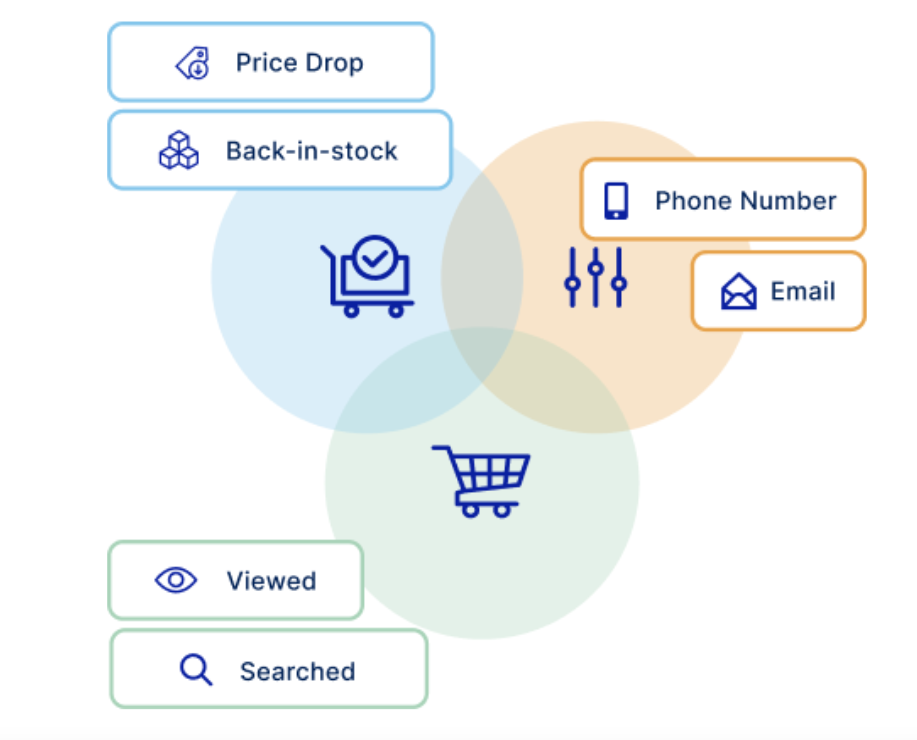
Bluecore is a retail marketing platform founded in 2013 by Fayez Mohamood, Max Bennett, and Mahmoud Arram. The founding insight came from Mohamood's prior venture, TriggerMail: behavioral email triggers alone couldn't generate compelling retail experiences.
Source: Bluecore
Product catalog data was the missing ingredient. Knowing a shopper browsed a category meant little without knowing which products were back in stock, on sale, or newly available.
Today, Bluecore positions itself as a platform that "orchestrates 1:1 retail personalization" across every channel by unifying shopper identity, behavioral signals, and product catalog data.
The company pitches directly to retailers: "Consolidate your CDP and ESP" and deploy an AI Shopping Agent, fast. This framing signals Bluecore's intent to replace the two-vendor architecture (separate CDP plus separate ESP) common among enterprise retailers.
The platform serves major retail brands including Wayfair, Gap, J.Crew, Lenovo, Neiman Marcus, Sephora, Bloomingdale's, The North Face, and Ralph Lauren.
The company raised approximately $263M in total funding and reached a $1B valuation at its Series E in August 2021. As of May 2026, Bluecore operates as part of Insider One following its acquisition, continuing under its own brand.
Bluecore Pros & Cons
Pros | Cons |
|---|---|
- Unified shopper, behavior, and product data in one platform | - No public pricing or self-serve signup |
- 20+ predictive AI models trained across 400+ retail brands | - Steep learning curve for advanced features |
- Merchandising triggers (price drop, back-in-stock, new arrivals) | - SMS capabilities still catching up to competitors |
- Claims 90% faster campaign launch vs. other providers | - Limited template variety and confusing draft publishing flow |
- Strong customer retention outcomes for retail brands | - Reporting feels limited relative to the data depth |
- Transparent ID Network for first-party identification | - Exclusively retail-focused (no B2B or non-retail use) |
- Dedicated customer success managers with retail expertise | - Support response times can lag during active campaigns |
Bluecore Review: How it Works & Key Features
Customer Data & Predictive AI: Bluecore combines shopper identity, behavior, and product catalog into a single data layer with retail-trained models.
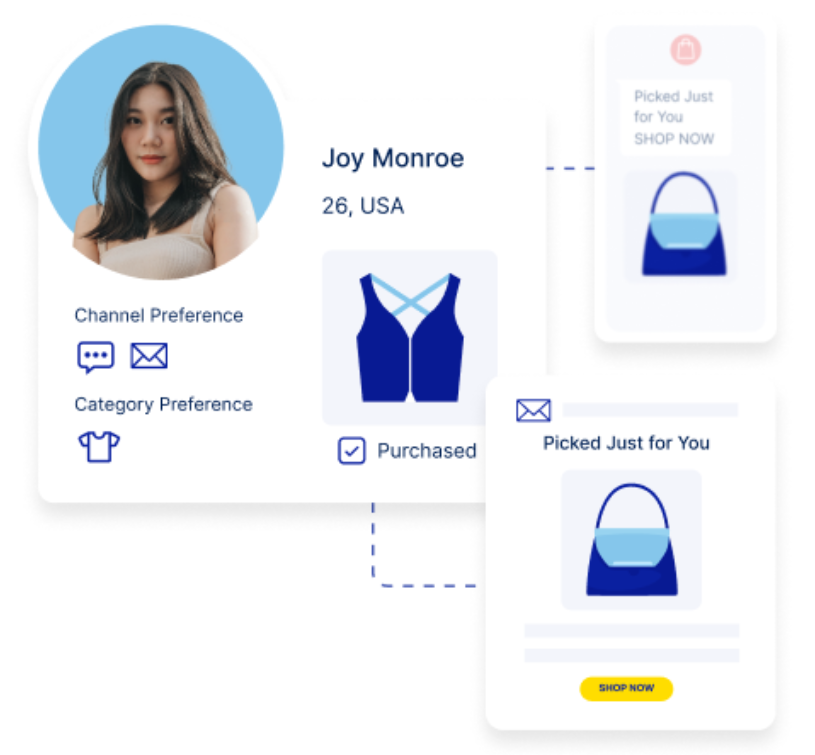
Bluecore's foundation is its patented Shopper and Product Match technology, which combines shopper behavior with changing product catalog data to generate individual-level recommendations. The platform tracks site behavior (browse, search, cart actions, cross-device sessions) before a shopper is identified, building a behavioral record from the first anonymous visit.
Source: Bluecore
The moment a shopper provides any identifier (an email address, a phone number, or opens a message on a new device), all prior anonymous behavior links to one profile.
This matters because fewer than 10% of retail site visitors are typically identified. Bluecore's Transparent ID Network processes over 10 billion daily events across 900 million deterministic IDs from 5,000+ brands and publishers, boosting customer identification rates by an average of 42%.
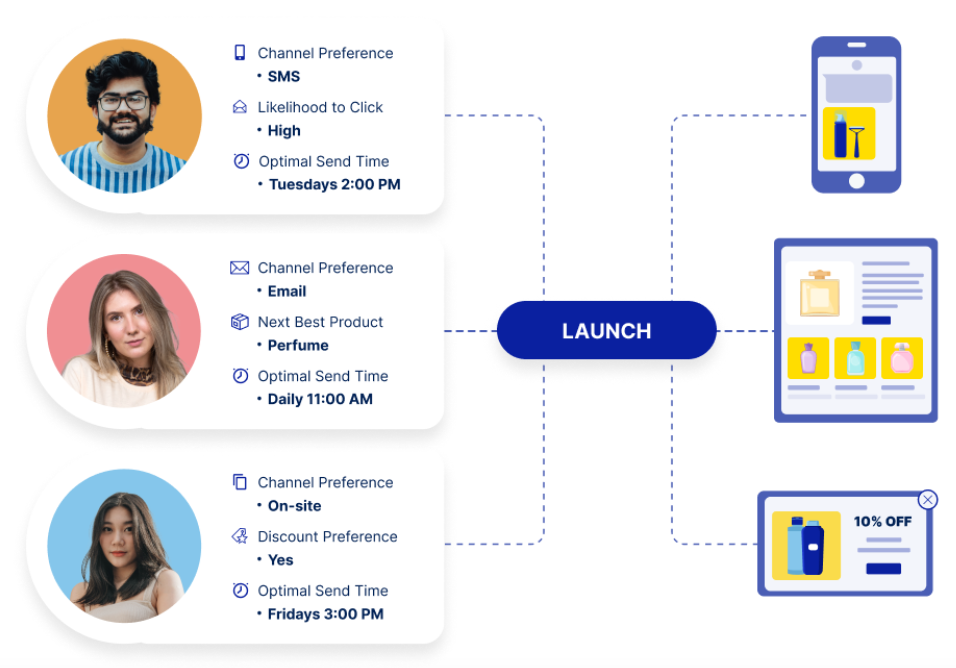
On top of this data layer sit more than 20 predictive models covering category affinity, discount affinity, next-best purchase, at-risk buyer prediction, lifecycle stage, and channel preference. These models train on data from 400+ retail brands, 5+ billion shoppers, and 300 billion behaviors. They're accessible through a point-and-click audience builder without data science resources.
Source: Bluecore
The platform ingests data from in-store POS systems, loyalty platforms, and existing tech stacks (including CDPs like Amperity and data warehouses like Snowflake), and supports unlimited database size.
Campaign Execution: Bluecore's email and mobile channels combine triggered automation with individual-level personalization at scale.
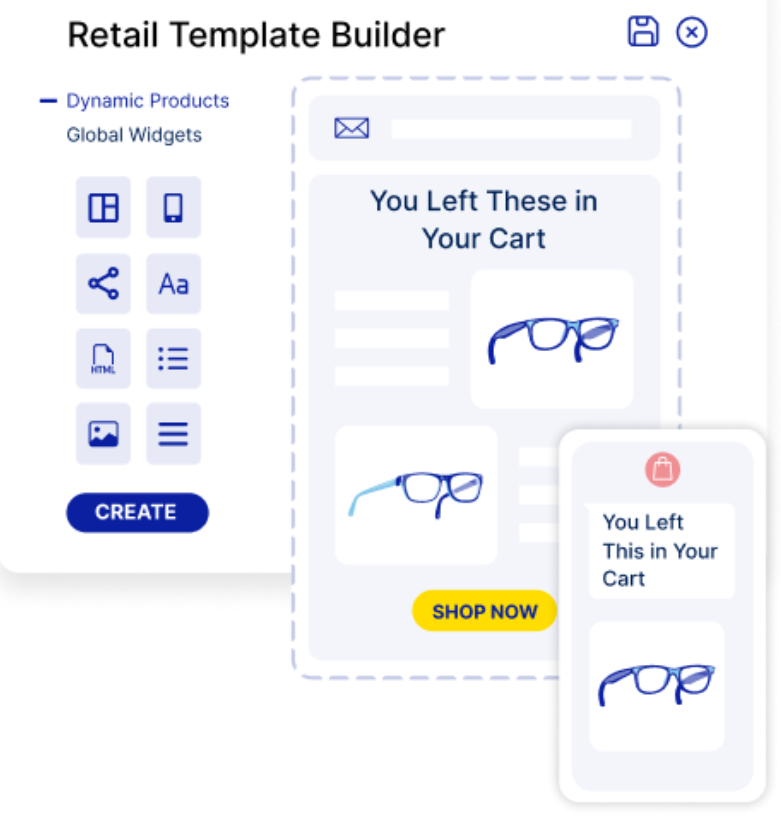
Bluecore's campaign execution layer, branded Bluecore Communicate, handles both email and SMS/MMS from the same audience builder, trigger library, and frequency-capping logic.
Source: Bluecore
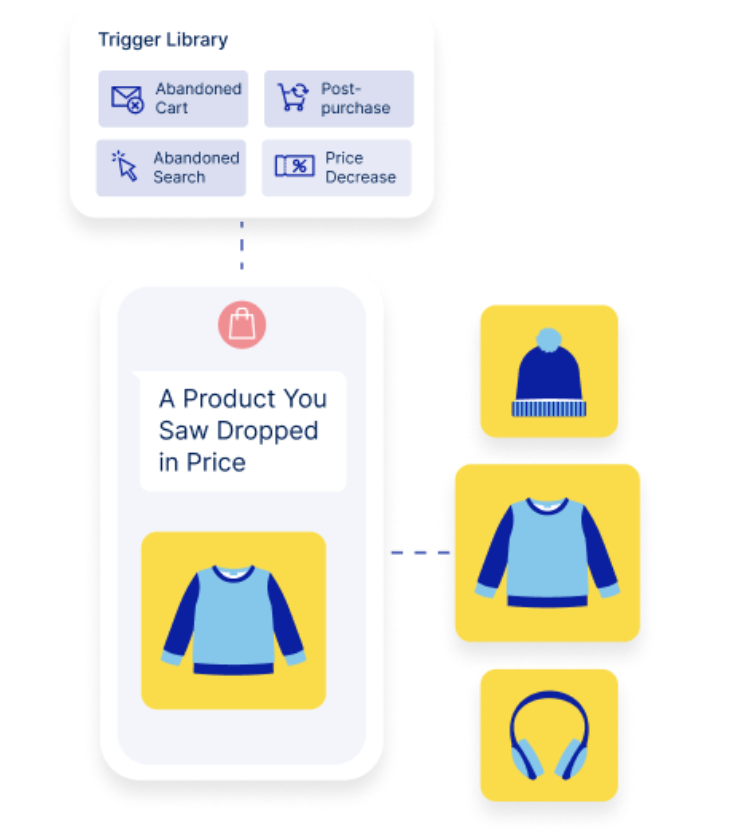
The trigger library includes seven core pre-configured triggers: Abandoned Cart, Abandoned Product, Abandoned Search, Post Purchase, and merchandising triggers (New Arrivals, Price Decrease).
Source: Bluecore
The merchandising triggers set Bluecore apart. Most email platforms fire triggers based on shopper behavior (cart abandonment, browse abandonment). Bluecore adds triggers that fire based on product catalog events: a shopper who viewed a product 28 days ago automatically receives a price-drop email when that product's price falls more than 10%, without the marketer building a separate campaign.
Rather than hard-coding product recommendations into templates, marketers configure recommendation rules (Best Sellers, New Arrivals, Co-recommendations, Interaction History, Dynamic Products from Catalog), and the platform resolves which products appear in each recipient's message at send time.
Bluecore's patented Smart Campaign with Autopilot personalizes product, offer, and content recommendations for 100% of the list, even for shoppers with sparse behavioral history.
Additional capabilities include Send Time Optimization (individual-level send time calculation with automatic test/control groups), Auto-Prioritizer (resolves conflicts when a shopper qualifies for multiple campaigns at once), native A/B testing with holdout groups, and channel-level frequency capping. The platform handles ADA, GDPR, CCPA, TCPA, CASL, and SHAFT compliance at the platform level.
For SMS/MMS, Bluecore supports contact cards, A/B testing, adjustable send times, transactional API campaigns, coupons, and Tap-to-Join list growth campaigns. That said, SMS has been a persistent weak spot noted by reviewers, and the platform's own FY25 roadmap acknowledges SMS as an active investment area.
On-Site Personalization & Paid Media: Bluecore extends the same data layer to website experiences and advertising audiences.
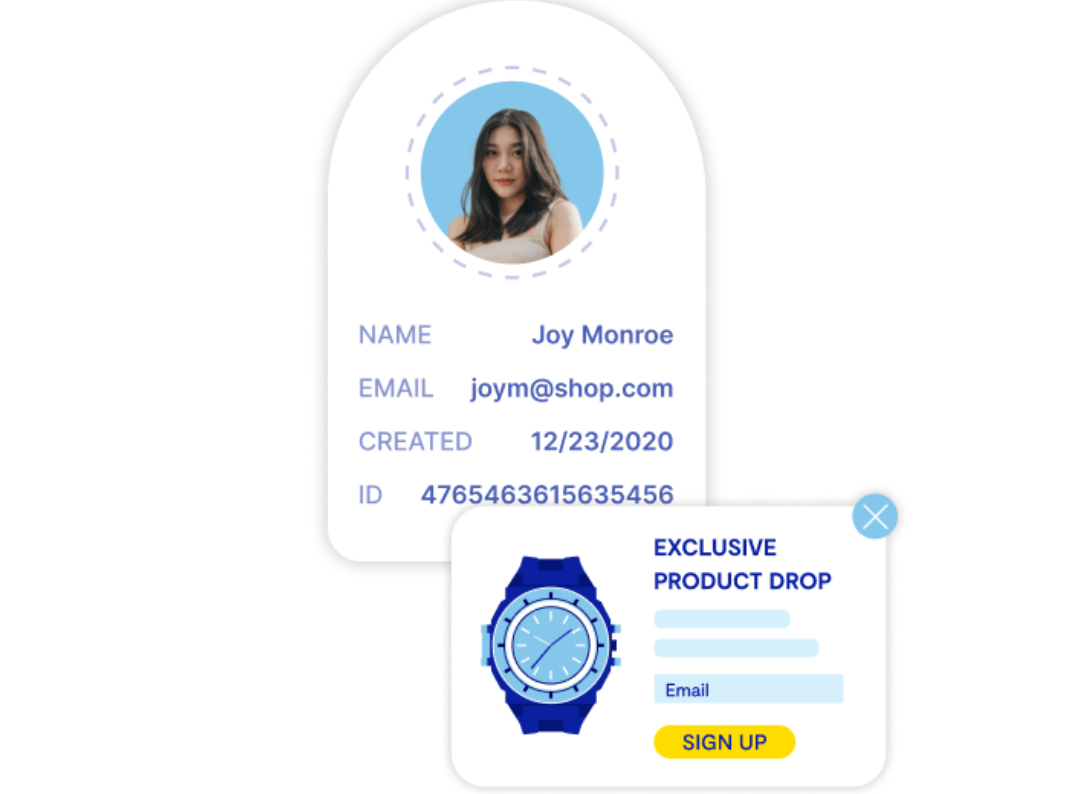
Bluecore Site brings the platform's personalization to the retailer's website. Pre-built campaign types include exit intent, price drop, back-in-stock, and "while you wait" (for out-of-stock items), launchable without IT involvement. The same predictive models powering email are available for on-site campaigns, and email, mobile, and site campaigns are coordinated in one platform for consistent shopper journeys.
Source: Bluecore
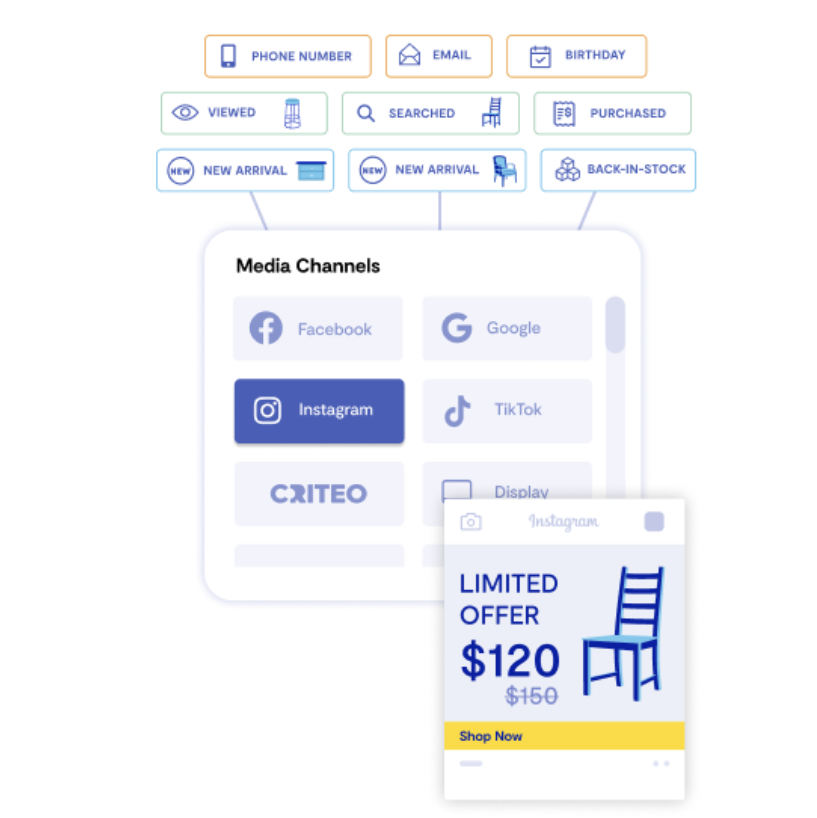
Bluecore Advertise syncs predictive audiences to ad platforms including Facebook, Instagram, Google Ads, Pinterest, TikTok, The Trade Desk, and Criteo. Audiences sync and update in real time: when a shopper purchases, they're removed from acquisition audiences immediately, not at the next scheduled batch export.
Source: Bluecore
The audience builder requires no engineering or data team involvement. Hammacher Schlemmer's VP of Marketing noted: "Bringing the intelligence from Bluecore to Facebook" has allowed them to spend social budgets more efficiently and acquire new names outside their typical customer base.
AI Agents: Marketing Agent and alby add conversational intelligence for both marketers and shoppers.
Bluecore has made two AI bets in the past two years.
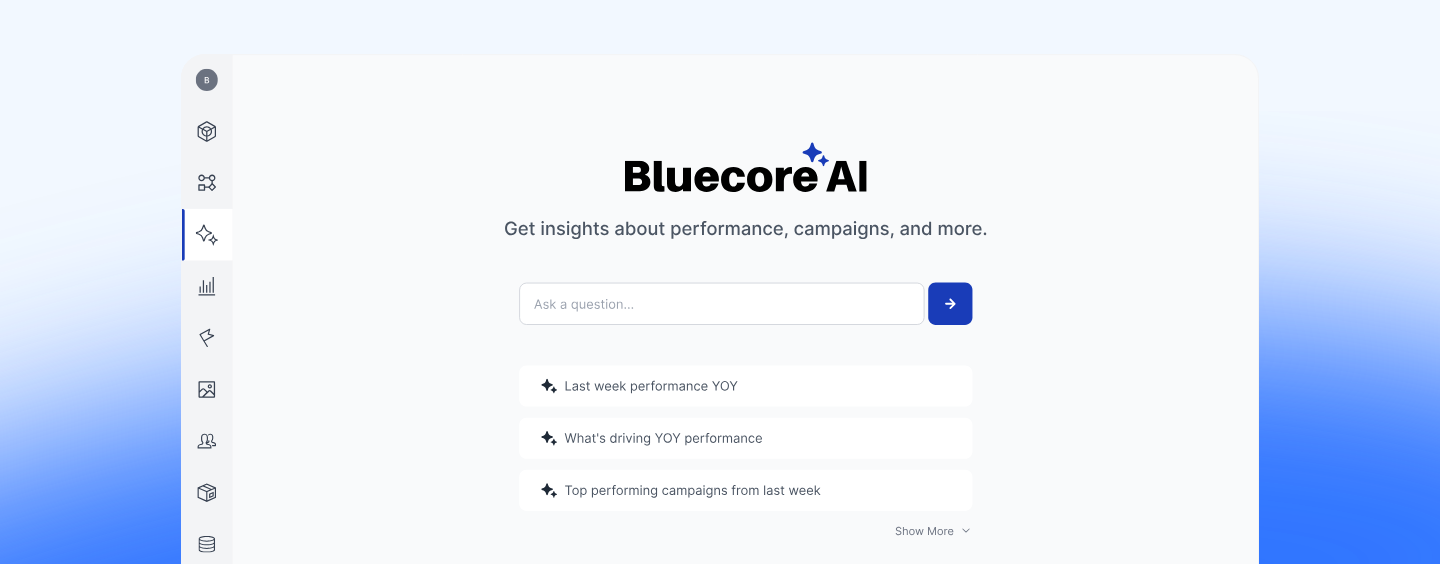
Marketing Agent is an AI analyst and operator built into the platform. It addresses what Bluecore calls the "80/20 problem": marketing teams spend roughly 80% of their time pulling reports, assembling spreadsheets, and switching between dashboards, and only 20% on strategy.
Source: Bluecore
Marketers can ask natural-language questions such as "Why did my revenue dip yesterday?" and receive structured analyses in seconds. The agent also generates automated Weekly Business Reviews, converting work that typically takes 5+ people roughly 6 hours each into minutes. When a diagnosis is delivered, the agent can move from explanation into campaign execution across email and mobile.
alby is a conversational AI shopping assistant that Bluecore acquired in November 2024. Built for ecommerce, it handles both sales and support in a single conversation: answering product questions, recommending items, comparing options, summarizing reviews, and managing order tracking and returns.
Source: Bluecore
alby's Experiences feature embeds the agent across the site journey, not just as a chat widget. It also collects zero-party data during conversations that feeds back into Bluecore's personalization engine.
Pricing & Contracts: Bluecore operates on enterprise contracts with no public pricing.
Bluecore does not publish pricing. The pricing page returns a 404, and the only entry points are "Talk to Us" and "Request a demo". There is no free trial, no free plan, and no self-serve signup.
The pricing model is usage-based with a negotiated minimum commitment. Per the company's Service Descriptions (v7.0), customers purchase a minimum spend commitment consumed through per-unit fees across email sends, clicks, and SMS/MMS sends. Contracts are invoiced annually in advance, and all payment obligations are non-cancellable.
The platform is modular. The core includes the audience builder, campaign builder, visual template editor, analytics dashboards, A/B testing, product recommendations, and predictive models.
But Bluecore Communicate (email/SMS sends), Bluecore Site (onsite personalization), Bluecore Advertise (paid media sync), audience exports, and alby are all separately purchased modules. Additional costs include implementation fees, professional services add-ons, and mobile carrier surcharges on SMS/MMS sends.
Support comes in three levels: self-service enablement, collaborative guidance, or fully managed partnership. Every customer gets a dedicated Customer Success Manager.
Where Bluecore Falls Short
Bluecore delivers real value for enterprise retail marketers, but several limitations show up with sustained use. These reflect a platform built for a specific market, not broad accessibility.
No Self-Serve Entry Point: Bluecore offers no free trial, no free plan, and no public pricing. Every evaluation requires direct enterprise sales engagement. For marketing teams used to testing platforms before committing budget, this creates a high barrier. The contrast is sharp with platforms like Klaviyo or Mailchimp that let teams start immediately.
Steep Learning Curve: G2 reviewers flag a difficult learning curve, particularly for complex segmentation rules and the full trigger/workflow builder. The platform supports Jinja templating language for advanced personalization, which implies a real technical onboarding bar. Bluecore's fully managed service tier exists partly because some teams prefer to skip the learning curve entirely.
Reporting Doesn't Match Data Depth: The platform holds granular per-shopper data, but reviewer feedback consistently notes that reporting and analytics feel limited relative to that richness. Marketing Agent's conversational diagnostics appear to be Bluecore's direct response to this gap.
SMS Still Maturing: Despite being a multi-channel platform, Bluecore's SMS capabilities have lagged behind email. TrustRadius reviewers noted the platform "would not be particularly appropriate for building something in SMS."
SMS enhancements (Audience Builder integration, contact cards, full SMS reporting) are FY25 investments, meaning they were previously limited. Competitors like Klaviyo have had SMS parity with email for longer.
Limited Template Library: G2 users find the template library limited and the draft publishing flow confusing, creating friction in campaign production compared to platforms with richer template options.
Retail Only: Bluecore is designed for retail and DTC brands. Non-retail verticals (B2B SaaS, financial services, healthcare, media) will find the platform poorly suited. This is a deliberate design choice, not a shortcoming, but it means the same retail brands that benefit from Bluecore's consumer marketing often need separate tools for any B2B operations they run.
If these limitations are dealbreakers for your team, it's worth weighing the top Bluecore alternatives for retail marketers alongside it.
For Retail Brands With B2B Growth Needs: ZoomInfo
Bluecore solves the consumer marketing problem for retail brands. But many of the companies it serves (Lenovo, Gap, Wayfair, Neiman Marcus) also operate B2B revenue streams: wholesale partnerships, corporate gifting programs, distribution networks, and B2B sales divisions.
For that side of the business, a consumer marketing platform has nothing to offer. B2B buyers aren't browsing product pages and abandoning carts. They make purchasing decisions through committees, vendor evaluations, and relationship-driven sales cycles.
ZoomInfo is a B2B go-to-market platform built on a comprehensive data foundation: 500M contacts, 100M companies, 135M+ verified phone numbers, and 200M+ verified business emails. Its GTM Context Graph (which processes 1.5B+ data points daily) fuses this data with your CRM records, conversation transcripts, and behavioral signals to reveal not just what happened in a deal, but why.
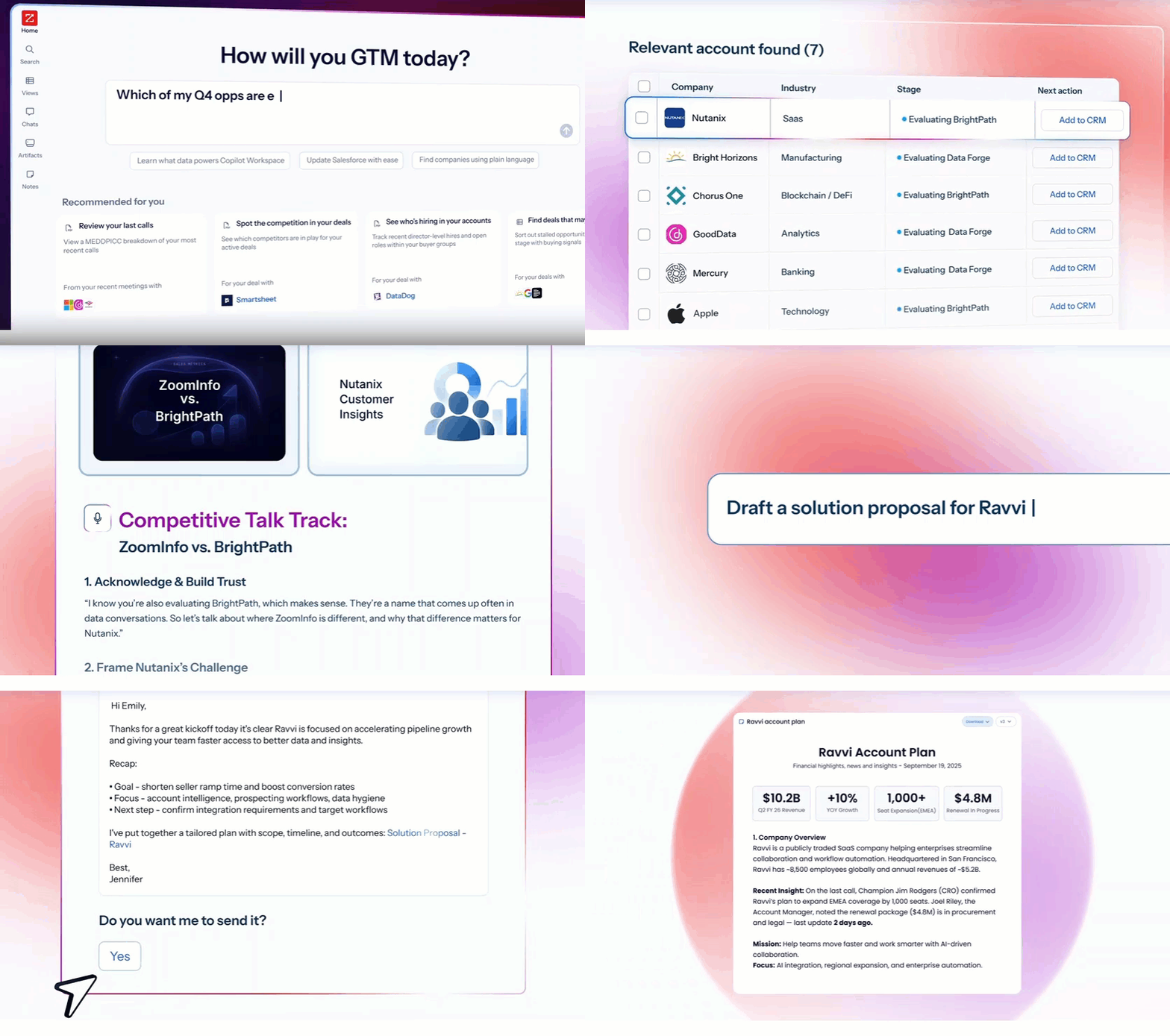
Teams access this intelligence through GTM Workspace for sellers, GTM Studio for marketers and RevOps, or APIs and MCP in any front-end. ZoomInfo serves a different purpose than Bluecore, but addresses a real need for retail brands expanding into B2B channels.
B2B Data: ZoomInfo provides verified contact and company intelligence that drives go-to-market execution.
ZoomInfo's data platform spans three dimensions: identity data (who buyers are and how to reach them), company context (100M companies with company attributes, org charts, and technographics), and dynamic signals revealing when accounts are actively in-market. The data is verified through a multi-source pipeline backed by 300+ human researchers and achieves 95% accuracy on first-party data.
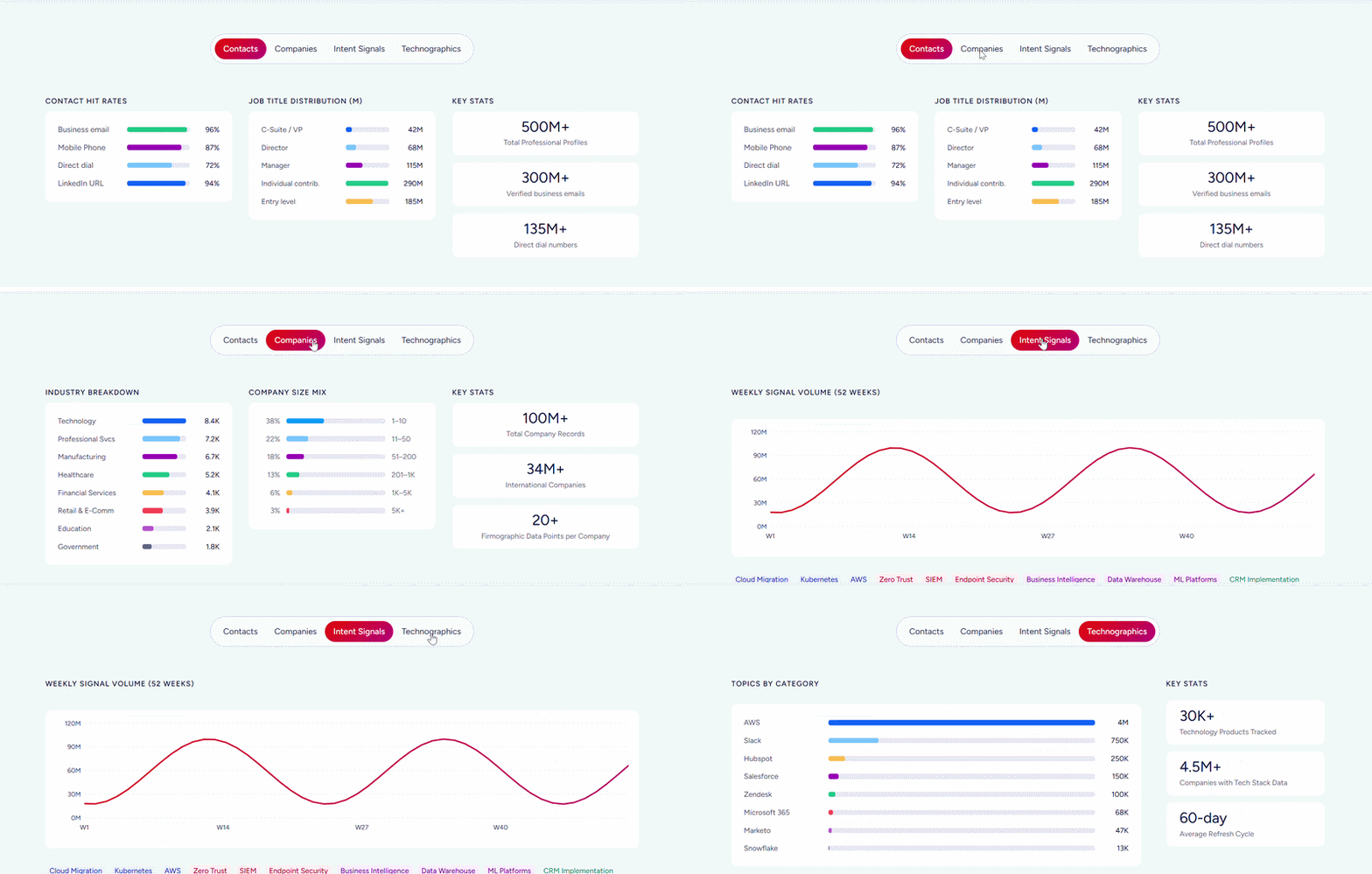
For a retail brand building a wholesale program, this means access to verified decision-makers at potential retail partners, corporate buyers, and distribution companies, with direct-dial phone numbers and business email addresses that work.
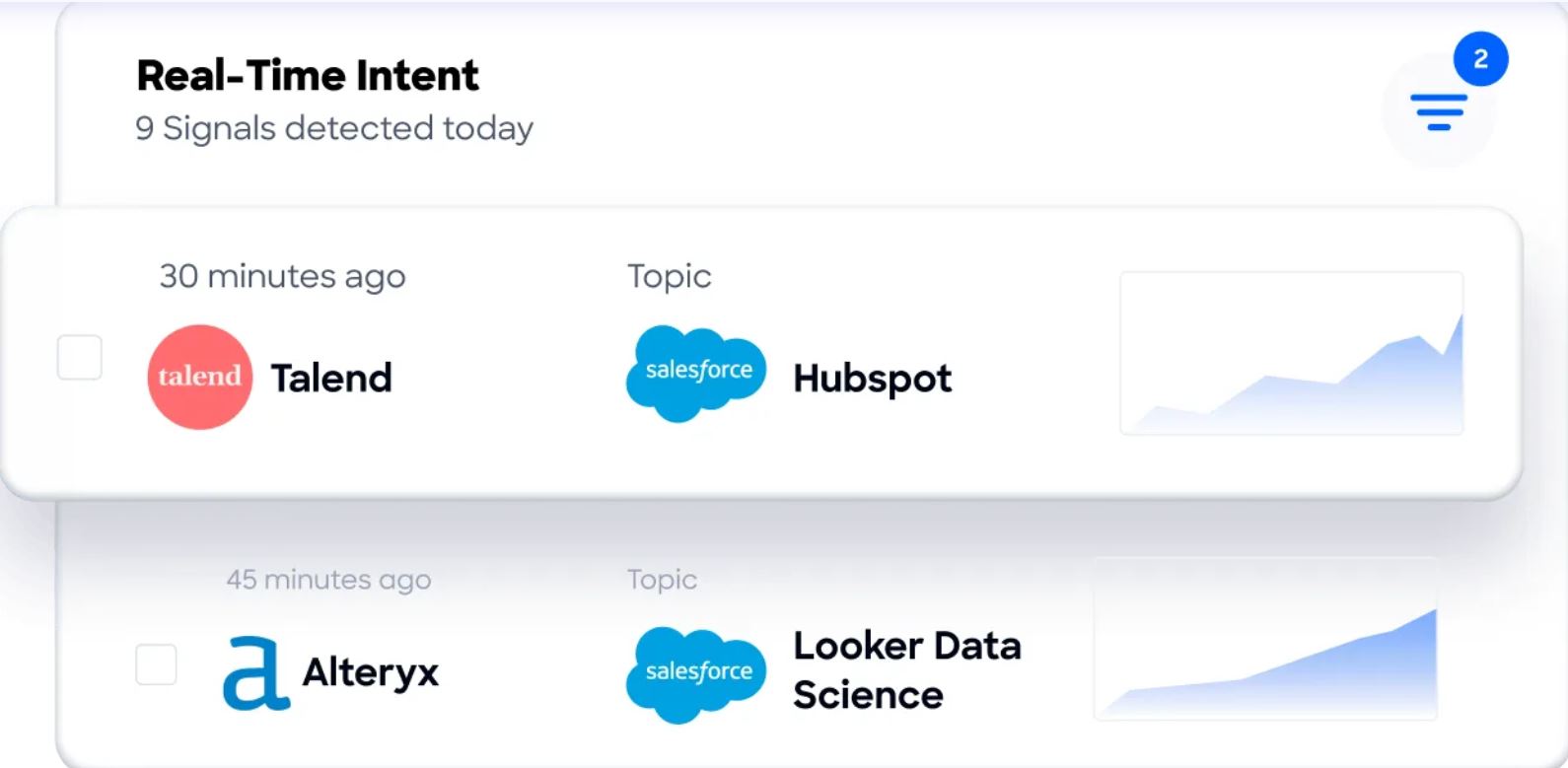
Buyer Intent data tracks signals from 210 million IP-to-Organization pairings to identify companies actively researching your category.
The data quality is externally validated: in a Fortune 500 competitive RFP analyzing 25 million contacts across vendors, the independent consultant concluded that "no other competitor came even close." ZoomInfo was named a Leader in the Gartner Magic Quadrant for ABM Platforms (2024 and 2025) and a Leader in the Forrester Wave for Intent Data Providers B2B (Q1 2025).
SpringDB used ZoomInfo's enriched data to achieve 2x to 3x increases in campaign conversions across channels, a 300% increase in database usability, and 30-50% uplift in average deal size. (SpringDB)
AI-Powered GTM Intelligence: ZoomInfo's GTM Context Graph captures not just what happened in a deal, but why.
Where Bluecore's predictive AI trains on retail shopper data, ZoomInfo's GTM Context Graph is built for B2B deal intelligence. It fuses ZoomInfo's third-party data with a customer's CRM records, conversation transcripts from Chorus (ZoomInfo's conversation intelligence product), email interactions, and behavioral signals into a single layer that processes 1.5B+ data points daily.
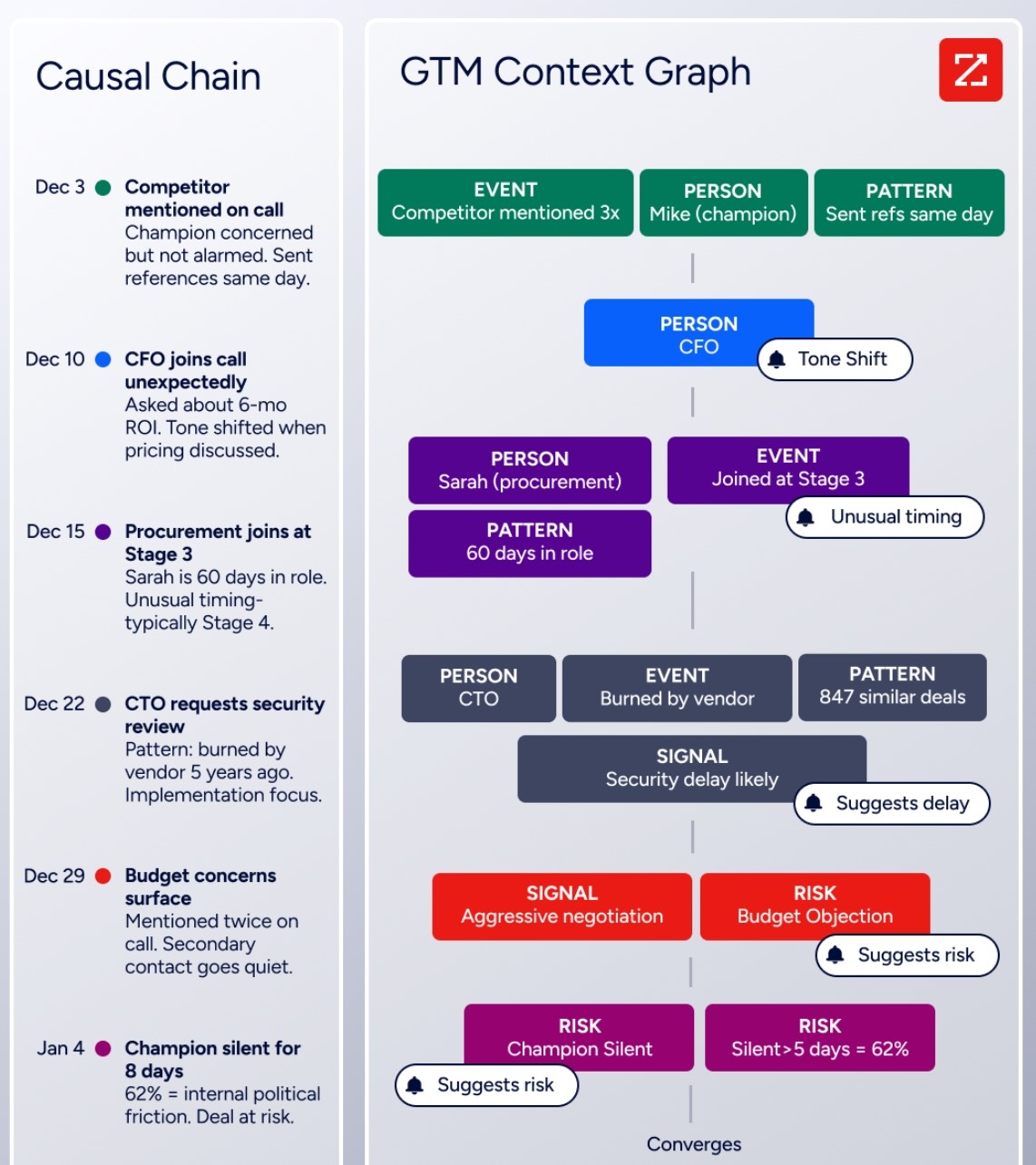
A CRM records that a deal moved stages. The GTM Context Graph draws on call transcripts, engagement patterns, and third-party signals to understand why it moved: executive sponsorship entering at a particular stage, combined with ROI-focused questions, matching patterns behind closed-won deals in your segment.
That intelligence flows into every downstream action, from AI-drafted follow-up emails to account prioritization.
For retail brands running B2B operations, this means the wholesale team can identify which potential retail partners show buying signals, understand decision-making dynamics within target accounts, and act on intelligence that static contact databases cannot provide.
Seismic attributed 39% of active pipeline to opportunities identified or influenced by ZoomInfo signals, reported 54% productivity gains, and saved 11.5 hours per week per seller. (Seismic)
Access Options: Use ZoomInfo's intelligence in any tool through APIs, MCP, or dedicated workspaces.
ZoomInfo delivers its intelligence in three ways. GTM Workspace gives sellers a single view where prioritized accounts, AI-drafted outreach, and deal execution converge.
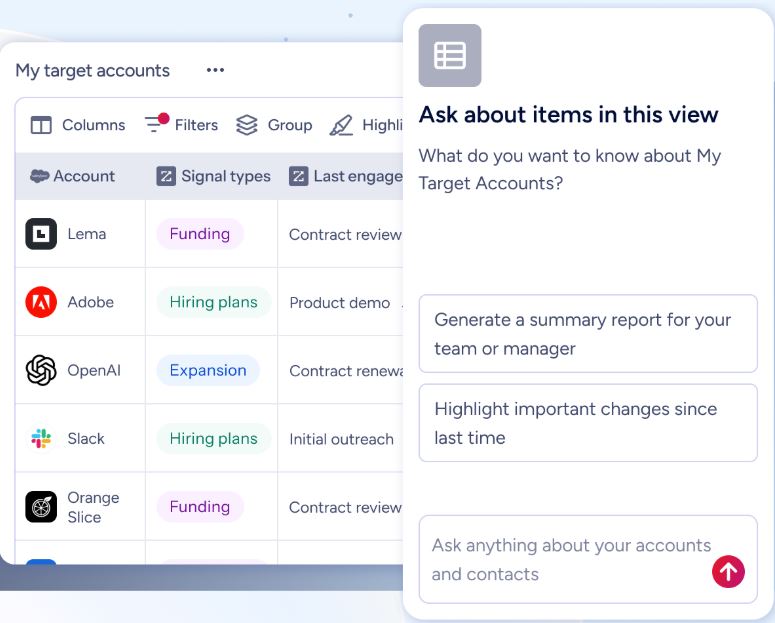
GTM Studio gives marketers and RevOps a builder environment where audience definition, campaign orchestration, and pipeline measurement happen in natural language.
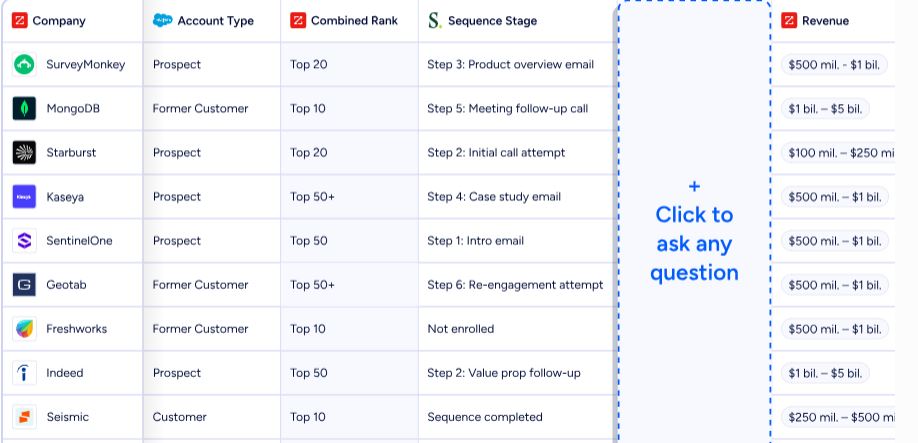
And APIs and MCP expose the same intelligence to any custom agent, internal tool, or partner platform.
All three draw from one GTM Context Graph: the same data, the same intelligence, the same model. Where you work doesn't limit what intelligence you can access.
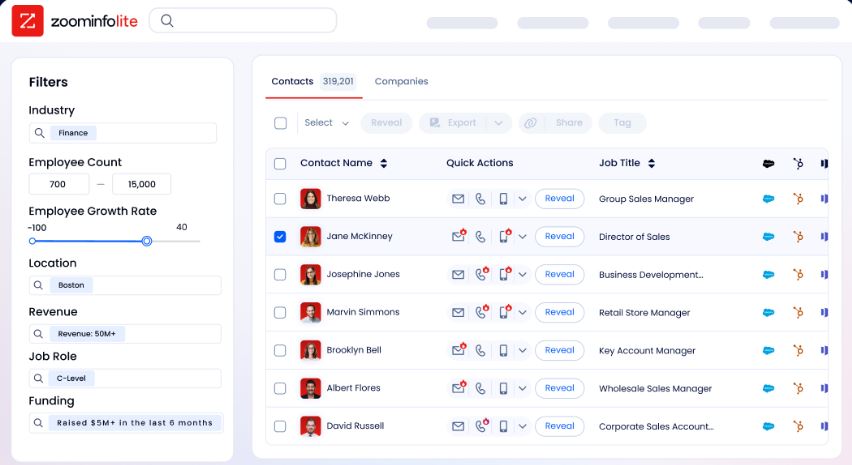
ZoomInfo also offers ZoomInfo Lite, a permanent free tier (no credit card, no time limits) with access to ZoomInfo's B2B database, 10 monthly export credits, the Chrome extension, and website visitor identification. This gives retail brands a way to evaluate B2B intelligence before committing to a paid plan.
BDO Canada's Senior Marketing Intelligence Analyst noted: "The plug-and-play aspect of the API means I can integrate it very easily into any process and get information at a moment's notice," achieving an 87% reduction in time spent on internal data dashboard updates. (BDO Canada)
Bluecore and ZoomInfo: Summary
Aspect | Bluecore | ZoomInfo |
|---|---|---|
Primary focus | B2C retail marketing personalization | B2B go-to-market intelligence |
Target audience | Retail/DTC marketing teams | B2B sales, marketing, and RevOps teams |
Data type | Shopper behavior + product catalog | Business contacts + company intelligence |
AI models | 20+ retail-specific predictive models | GTM Context Graph intelligence layer |
Channels | Email, SMS, site, paid media | Multi-channel sales outreach, ABM, advertising |
Identity focus | Anonymous shopper-to-known resolution | B2B company and contact identification |
Free entry point | None (enterprise contracts only) | ZoomInfo Lite (free, permanent) + 7-day trial |
Pricing model | Usage-based, negotiated minimum commitment | Consumption-based, custom-quoted |
Best for | Consumer marketing and retention at scale | B2B prospecting, pipeline, and partnerships |
Final Verdict
Bluecore and ZoomInfo serve different sides of the same business. One handles consumers. The other handles business buyers. Neither replaces the other.
Choose Bluecore if your primary challenge is consumer marketing at scale. The platform combines shopper identity, behavioral signals, and product catalog data into one system to produce personalization that generic ESPs cannot match. Its merchandising triggers (price drops, new arrivals, back-in-stock) automate campaigns that would otherwise require constant manual attention.
The predictive models, trained across 400+ retail brands, deliver individual-level recommendations without a data science team. For mid-to-enterprise retail brands with large catalogs and dedicated marketing teams, Bluecore is built for the job.
Choose ZoomInfo if your retail brand also generates revenue through B2B channels, or if you're evaluating platforms for a B2B business entirely.
With a comprehensive B2B data foundation, an intelligence layer that reveals why deals move or stall, and access through APIs, MCP, or dedicated workspaces, ZoomInfo gives B2B revenue teams what they need to identify the right accounts, reach the right buyers, and close deals faster. The permanent free tier makes it easy to start.
Get started with ZoomInfo Lite for free here.
For retail brands operating in both worlds, the decision is not either/or. Bluecore handles personalized consumer marketing. ZoomInfo handles B2B intelligence. Together, they cover both sides of a retail brand's revenue.
Bluecore FAQ
What types of businesses is Bluecore designed for?
Bluecore is designed for retail and direct-to-consumer brands. The platform's predictive models, trigger library, and data architecture are built around the intersection of shopper behavior and product catalog data. Non-retail businesses (B2B SaaS, financial services, healthcare, media) will find the platform poorly suited to their needs.
Does Bluecore offer a free trial or free plan?
No. Bluecore offers no free trial, no free plan, and no self-serve signup. The only way to evaluate the platform is through a demo request and direct engagement with the enterprise sales team. All contracts are negotiated privately with annual invoicing and non-cancellable payment obligations.
How does Bluecore's pricing work?
Bluecore uses a usage-based pricing model with a negotiated minimum spend commitment. Customers pay per-unit fees across email sends, clicks, and SMS/MMS sends. The core platform includes the audience builder, campaign builder, analytics, and predictive models, but individual channels (email, SMS, site personalization, paid media) and features (alby AI assistant) are separately purchased modules.
Additional costs include implementation fees, professional services, and carrier surcharges for mobile messaging.
What makes Bluecore different from a standard ESP?
Bluecore's defining difference is its architecture. Standard ESPs work with contact lists and behavioral triggers. Bluecore adds the product catalog as a co-equal data input, enabling merchandising triggers that fire based on catalog events (price drops, new arrivals, back-in-stock) rather than only shopper actions.
Its predictive models train on data from over 400 retail brands, and its Transparent ID Network processes over 10 billion daily shopper events to boost identification rates.
How does Bluecore handle SMS marketing?
Bluecore supports SMS and MMS through its Communicate channel, sharing the same audience builder, trigger library, and frequency-capping logic as email. SMS features include contact cards, adjustable send times, A/B testing, and Tap-to-Join list growth campaigns.
However, SMS has historically lagged behind email, and the platform's own FY25 roadmap lists SMS enhancements as an active investment area.
What AI features does Bluecore offer?
Bluecore offers two AI products. Marketing Agent is a built-in AI analyst and operator that lets marketers ask natural-language questions about performance, generates automated Weekly Business Reviews, and can move from diagnosis to campaign execution.
alby is a conversational AI shopping assistant that handles both sales and support across site, email, SMS, and mobile app, with over 20 million consumer conversations to date.
Who acquired Bluecore?
Insider One acquired Bluecore on May 13, 2026. Bluecore's Transparent ID Network (900 million deterministic IDs from 5,000+ brands and publishers) is being positioned as data infrastructure powering Insider One's broader platform. Bluecore continues to operate under its own brand as a distinct unit within Insider One.
Can ZoomInfo and Bluecore work together?
Bluecore and ZoomInfo serve different functions and different audiences. Bluecore handles consumer marketing for retail brands (email, SMS, site personalization, paid media). ZoomInfo provides B2B go-to-market intelligence (contact data, company intelligence, intent signals, deal intelligence).
Retail brands with B2B revenue streams (wholesale, corporate sales, or distribution partnerships) may benefit from using both platforms to cover both sides of their business. ZoomInfo offers a permanent free tier called ZoomInfo Lite for teams that want to explore B2B intelligence capabilities.
More Bluecore alternatives and breakdowns:
