
Choosing between Bluecore vs. Maestra for your retail marketing often comes down to these five questions:
Do you need a platform built for enterprise retail, or one that covers the DTC mid-market with loyalty and recommendations included?
Is a shared identity network across hundreds of brands more valuable to you than a dedicated customer success manager who builds your campaigns?
Are you willing to commit to an enterprise contract with no public pricing, or do you want month-to-month flexibility?
Do you need product catalog intelligence powering every email and trigger, or do you prefer 14 recommendation algorithms with manual business-rule overrides?
Does your brand also sell through wholesale, retail partnerships, or corporate accounts, and if so, how are you sourcing those B2B buyers?
In short, here's what we recommend:
Bluecore is the retail marketing platform built around one insight: behavioral data alone cannot produce a compelling shopper experience. Product catalog data is the missing ingredient. Its patented Shopper and Product Match technology merges shopper identity, behavioral signals, and live product catalog data so a price drop or restock automatically reaches every shopper who browsed that item. Bluecore's 20+ predictive AI models train across 400+ retail brands, 5+ billion shoppers, and 300 billion behaviors, and its Transparent ID Network processes over 10 billion daily events. The trade-offs: no public pricing, enterprise-only contracts that are explicitly non-cancellable, no native loyalty program, and a steep learning curve for advanced features.
Maestra is the all-in-one platform for mid-market DTC brands that have outgrown email-only tools but don't want to assemble a five-vendor stack. One subscription replaces your separate ESP, SMS platform, loyalty app, recommendation engine, and on-site personalization tool, with a dedicated Customer Success Manager included at no extra cost. Billing is month-to-month with no long-term commitment, and doesn't start until the account is fully live. The trade-offs: Maestra has just over 30 employees, is approaching $5M ARR, and the high-touch service model (each CSM handles up to 15 clients) is capacity-constrained by design.
Both platforms solve the consumer marketing challenge for retail and DTC brands. But many of the brands evaluating them also generate revenue through wholesale accounts, retail partnerships, corporate sales, and dealer networks. That B2B revenue channel runs on a different set of data and intelligence, and neither Bluecore nor Maestra was designed to address it.
ZoomInfo is an AI-powered go-to-market platform that covers the B2B side of your business. Built on a B2B dataset of 500M contacts, 100M companies, 135M+ verified phone numbers, and 200M+ verified business email addresses, ZoomInfo helps retail and DTC brands identify new wholesale buyers, find retail distribution partners, and prospect corporate accounts. Its GTM Context Graph combines this data with your CRM records, conversation transcripts, and behavioral signals to reveal which accounts are actively in-market. Your team accesses this intelligence through the GTM Workspace for sellers, GTM Studio for marketers and RevOps, or APIs and MCP in any front-end.
If your brand sells both direct-to-consumer and through B2B channels, see how ZoomInfo can power the revenue side that your consumer marketing platform doesn't touch.
Bluecore vs. Maestra at a glance
Bluecore | Maestra | ZoomInfo | |
|---|---|---|---|
Core focus | Enterprise retail marketing (CDP + ESP) | All-in-one DTC marketing personalization | B2B intelligence and go-to-market |
Target buyer | Enterprise and upper-mid-market retailers | Mid-market DTC ecommerce brands | B2B sales, marketing, and RevOps teams |
CDP included | Yes, retail-native with product catalog fusion | Yes, real-time with omnichannel identity resolution | Yes, B2B contact and company intelligence |
Email & SMS | Email strong; SMS historically underdeveloped | Email, SMS, MMS, RCS, WhatsApp, push | Email outreach and sequencing for B2B |
On-site personalization | Yes, with anonymous-to-known resolution | Yes, with 14 AI recommendation engines | Website visitor de-anonymization (B2B) |
Loyalty & referrals | Not included | Built-in loyalty, referrals, gift cards | Not applicable |
AI capabilities | Marketing Agent + alby AI Shopping Assistant | AI assistant, AI segments, AI scenarios | GTM Context Graph with AI agents |
Service model | Dedicated CSM; enterprise support tiers | Dedicated CSM (15 clients max per CSM) | Tiered support; dedicated CSM on Enterprise |
Pricing transparency | No public pricing; enterprise contracts | Published slider; month-to-month available | Consumption-based pricing; custom-quoted |
Free trial | None | Trial period (length undisclosed) | 7-day free trial + permanent free tier |
Best for | Enterprise retailers with large catalogs | DTC brands consolidating 3-5 marketing tools | Brands with B2B sales channels |
The CDP architectures reflect different design philosophies
The biggest difference between Bluecore and Maestra isn't features. It's what each platform treats as the fundamental unit of customer intelligence.
Bluecore was built on the insight that behavioral data alone could not produce a compelling shopper experience. Its CDP treats the product catalog as a co-equal data input alongside shopper behavior. The patented Shopper and Product Match technology merges real-time shopper identity, behavioral signals, and live catalog data. When a product's price drops or comes back in stock, Bluecore connects that catalog event to every shopper who viewed, carted, or browsed that item, then fires the appropriate trigger. Most marketing platforms treat catalog changes as a separate workflow. Bluecore treats them as first-class marketing events.
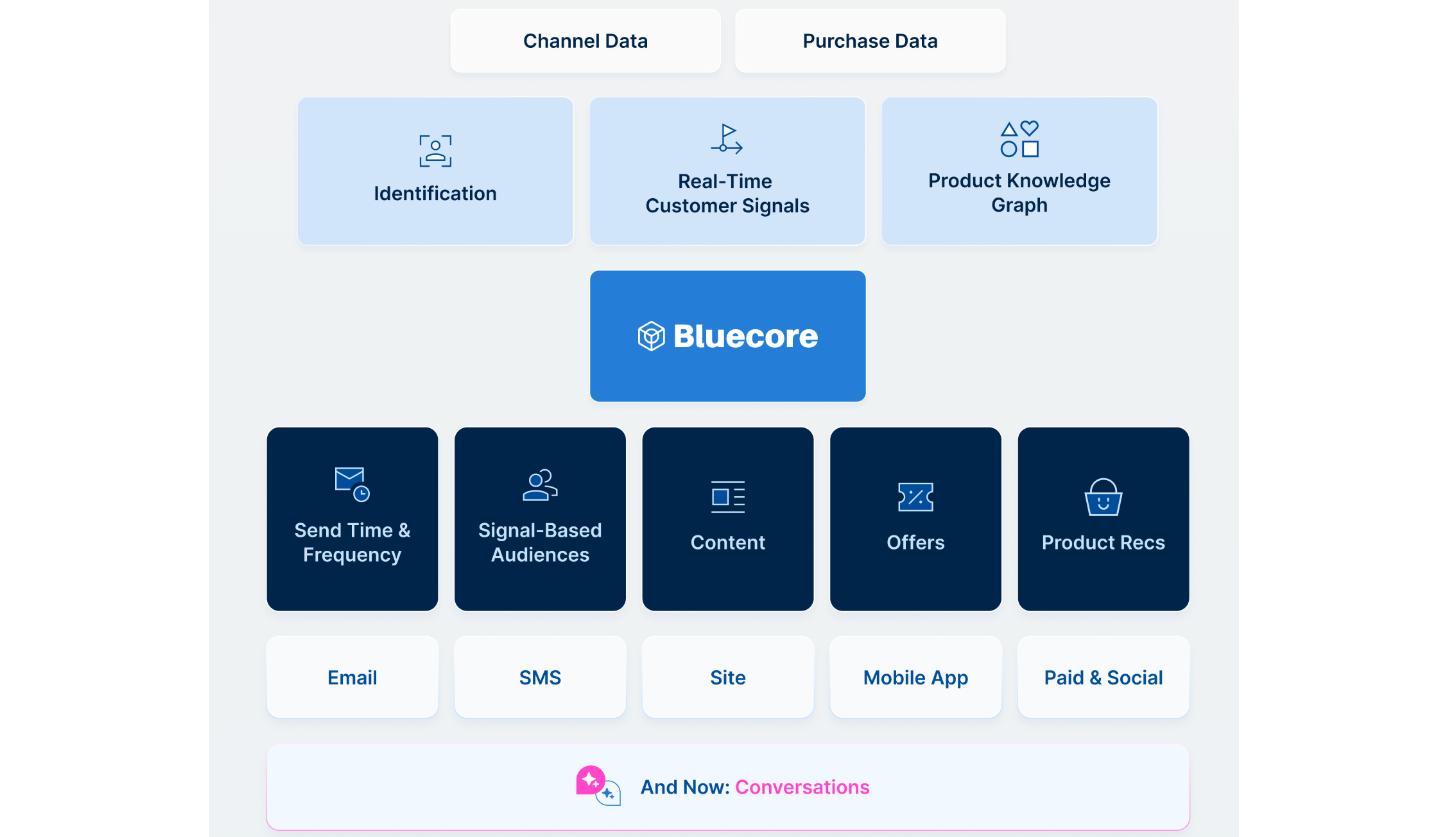
Source: Bluecore
The scale matters. Bluecore's predictive models train across 400+ retail brands, 5+ billion shoppers, and 300 billion behaviors. A new customer doesn't start cold. They inherit cross-brand intelligence on category affinity, discount sensitivity, and purchase likelihood from day one. The Transparent ID Network adds over 900 million deterministic IDs from 5,000+ brands and publishers.
Maestra's CDP takes a different approach. Rather than anchoring on the product catalog, it anchors on the customer profile across every channel. Maestra unifies customer data into operational segments in real time, covering online behavior, offline POS transactions, wholesale partner data, rental interactions, and mobile app activity. The CDP processes up to 2 million requests per minute at under 300ms, with automatic data cleaning, deduplication, and identity resolution.
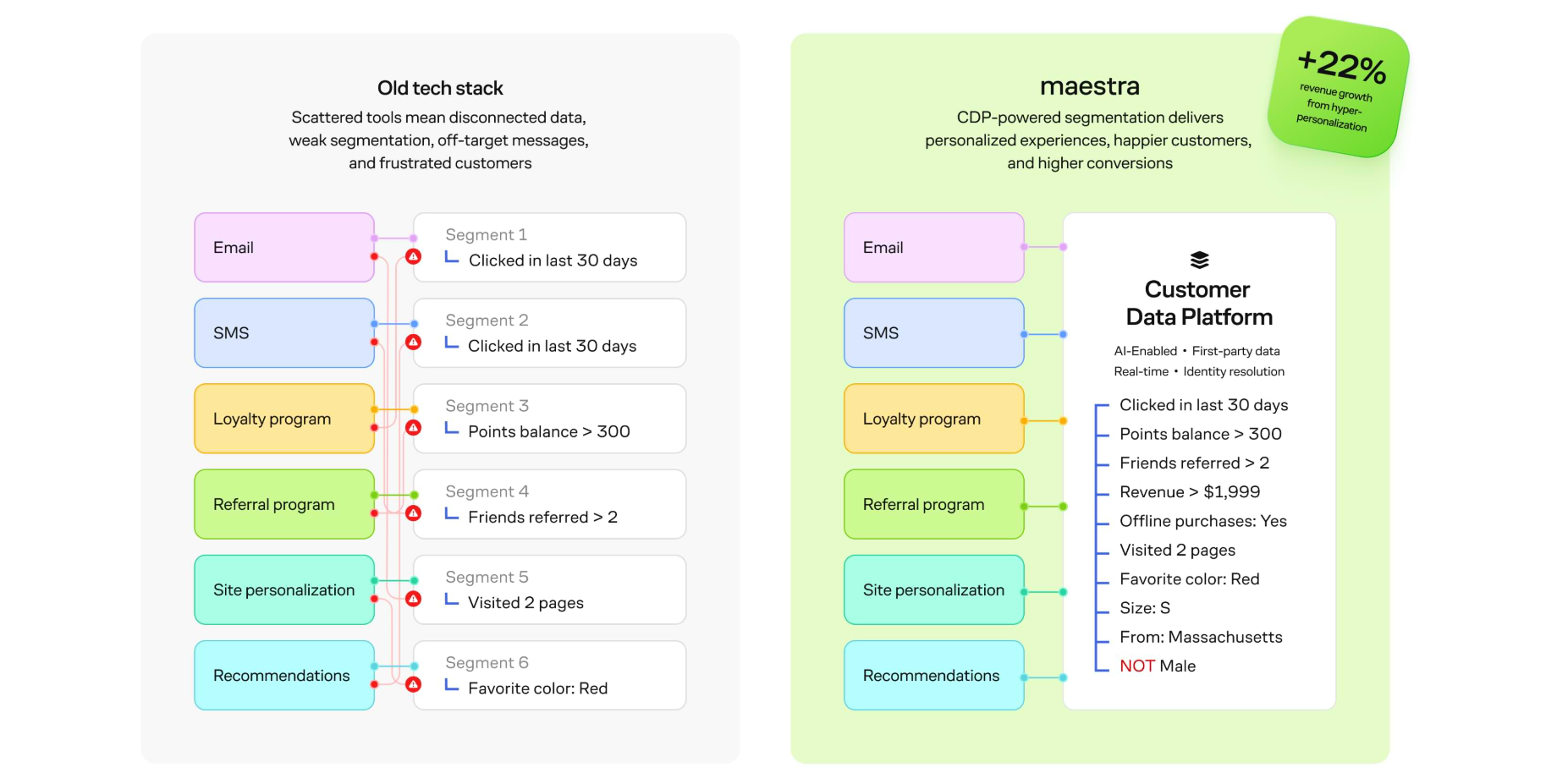
Source: Maestra
Where Maestra's approach pays off is breadth. It natively supports RFM segmentation (assigning customers to one of 13 lifecycle segments automatically), computed fields that calculate derived attributes like most-purchased product or preferred delivery method, and multi-brand management where each brand maintains independent segmentation while sharing the underlying data model.
The practical difference: Bluecore's CDP goes deeper in the intersection of shoppers and products. Maestra's CDP goes wider across touchpoints and business models. If your main challenge is connecting product catalog intelligence to shopper behavior at scale, Bluecore's architecture was designed for that. If your main challenge is unifying customer data across DTC, retail, wholesale, and partner channels, Maestra covers more ground.
Email and messaging capabilities diverge on channel coverage
Email is the core revenue channel for both platforms, but they approach messaging beyond email differently.
Bluecore's email engine is built on the same shopper-behavior-product data layer as its CDP, meaning every email is assembled at send time from live data rather than static templates. The trigger library includes seven pre-configured behavioral and merchandising triggers: Abandoned Cart, Abandoned Product, Abandoned Search, Post Purchase, New Arrivals, and Price Decrease. Each trigger fires with automatic suppression rules that prevent over-messaging without manual setup. The Send Time Optimization layer calculates the best send time for each recipient based on historical open timing.
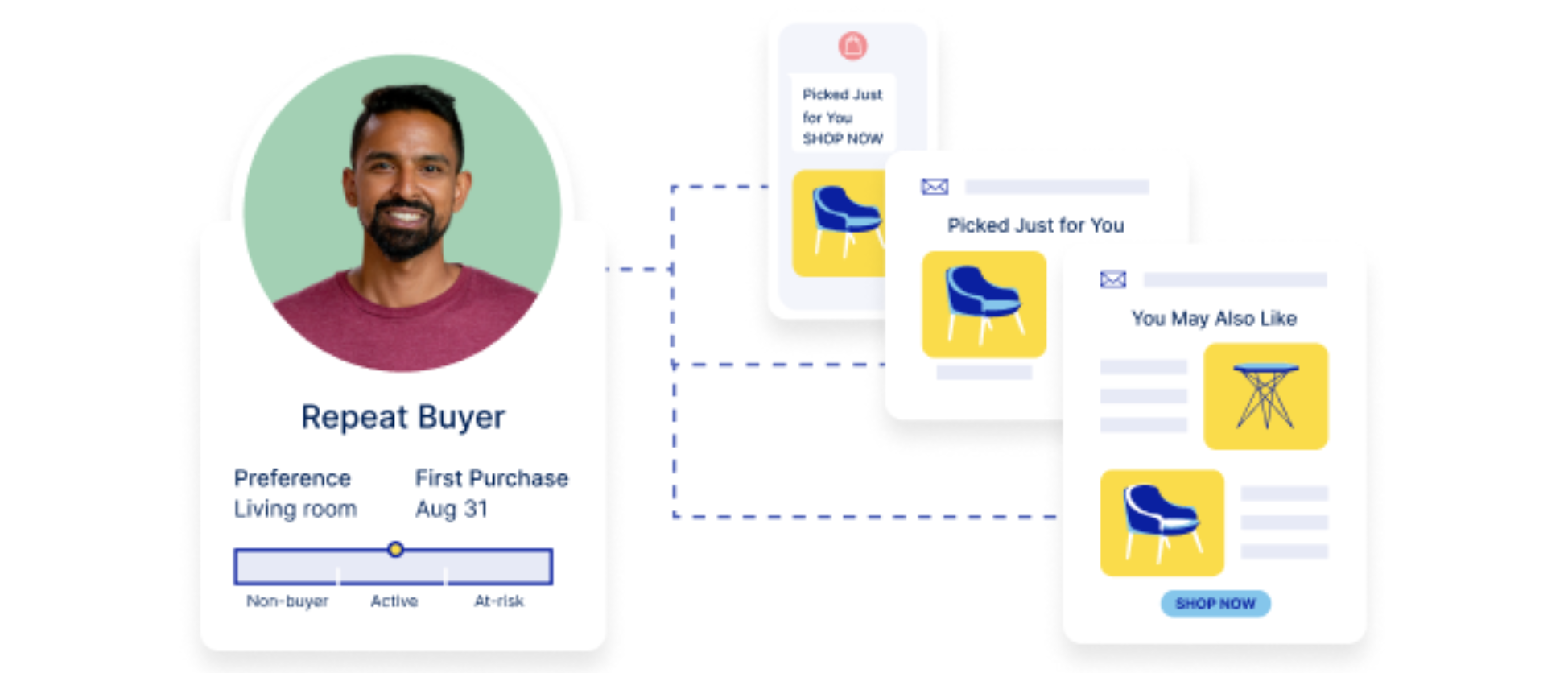
Source: Bluecore
What sets Bluecore's email apart is merchandising triggers. Most email platforms fire based on shopper actions (you abandoned a cart, so here's a reminder). Bluecore also fires based on product catalog events: a product's price drops more than 10%, or a previously out-of-stock item returns. A shopper who browsed a jacket 28 days ago automatically receives a price-drop email when that jacket goes on sale, without anyone building a separate campaign.
SMS is where Bluecore has lagged. TrustRadius reviewers noted the platform would not be appropriate for building SMS programs. SMS capabilities are expanding with SMS in Audience Builder, contact cards, and full SMS reporting as FY25 priorities, but competitors have had SMS parity with email for longer.
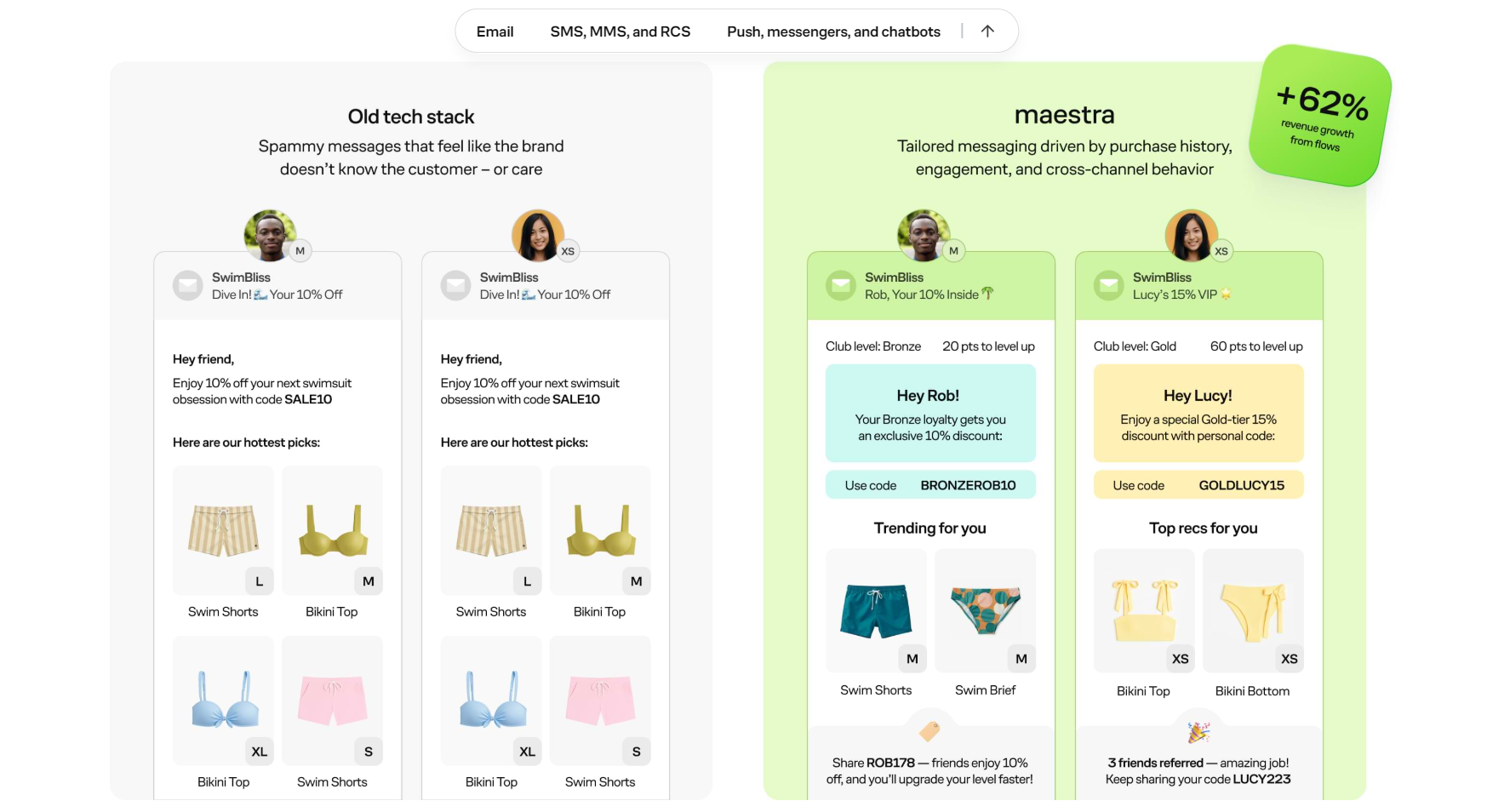
Maestra covers more ground. The channel roster includes email, SMS, MMS, RCS, WhatsApp, Viber, mobile push, web push, and chatbot integrations, all managed from a single campaign interface. RCS and WhatsApp were added in 2025. The visual flow builder supports node-based automation sequences with conditional branching, time delays, promo code distribution, and loyalty point awards across all channels.
Source: Maestra
Maestra's Smart Send frequency capping stands out. It enforces a unified daily limit across email, SMS, Viber, mobile push, and web push simultaneously, with configurable channel sub-limits. Most platforms cap frequency per channel. Maestra caps across channels, preventing the common scenario where a customer receives an email, an SMS, and a push notification about the same promotion within an hour.
A smaller but notable difference: Maestra includes Bot Click Filtering at the infrastructure level, discarding bot-generated click events before they reach reporting or trigger automated flow steps. Clean click data matters when you're deciding which flows to scale.
For brands that run primarily on email with some SMS, Bluecore's email intelligence may be the better fit. For brands that need to orchestrate across five or more messaging channels, Maestra's breadth is hard to match.
On-site personalization and product recommendations
Both platforms personalize the website experience, but the scope and approach differ.
Bluecore Site focuses on converting visitors who leave without purchasing. It tracks anonymous behavior across multiple devices from the moment a shopper lands, building a behavioral profile before the shopper is ever identified. The moment any identifier is captured (email submission, message open on a new device, phone number), all past anonymous behavior is linked to a unified profile. Pre-built campaign types include exit intent, price drop, back-in-stock, and "while you wait" for out-of-stock items.

Source: Bluecore
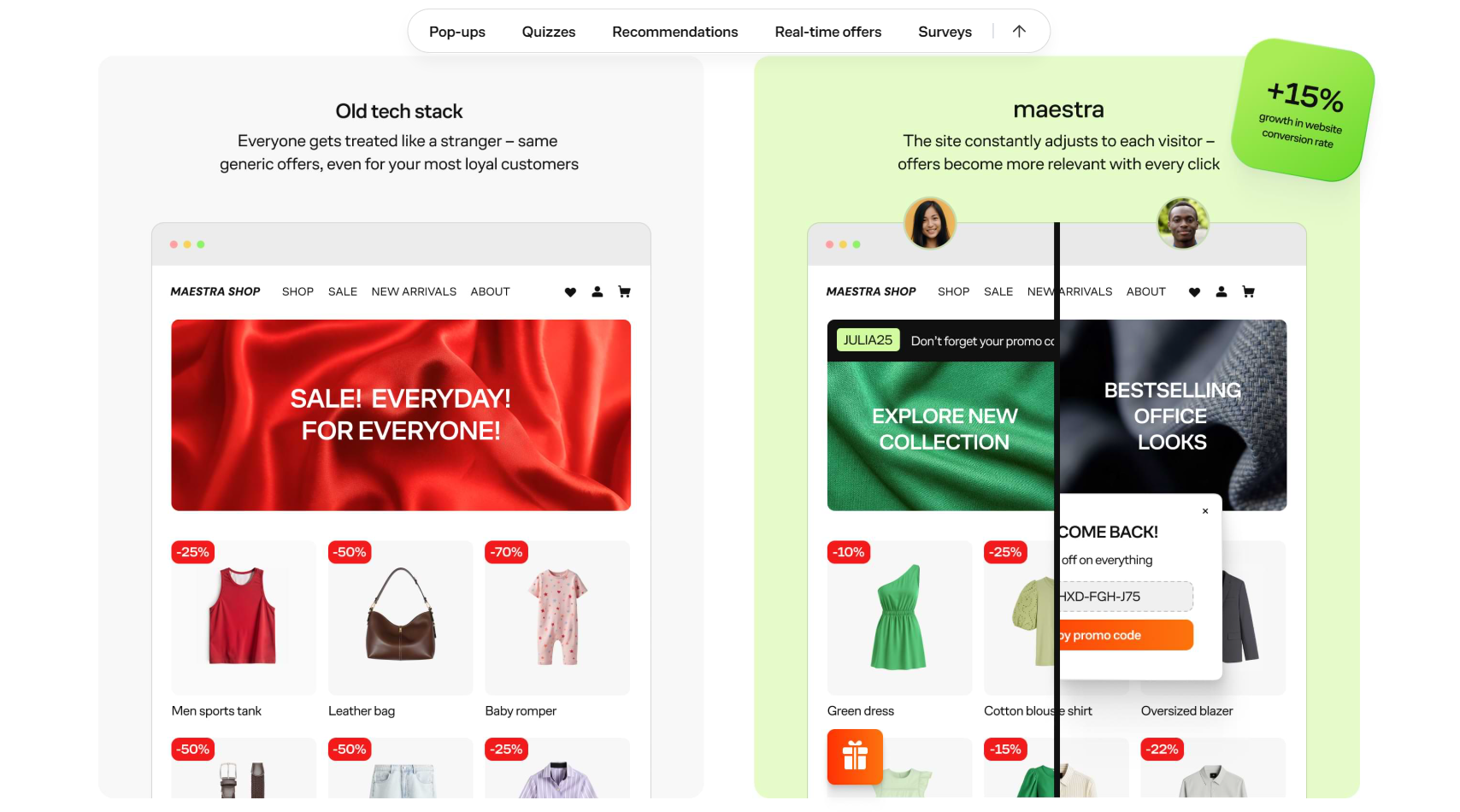
Maestra's Site & App Personalization module casts a wider net. Beyond pop-ups and exit-intent overlays, it includes product-picking quizzes, gamified lead capture (spin-to-win), surveys, voting polls, stories, banners, bars, and embedded content blocks. The platform reports a 6.7% subscriber conversion rate via no-code lead forms. Enlightened Equipment grew lead capture from 0.37% to 6.1% using targeted pop-ups.
Source: Maestra
Where Maestra pulls ahead is product recommendations. The module includes 14 recommendation engines, from Bestsellers and Recently Viewed to Personalized Post-Purchase Picks and Events-Based Recommendations that work in real time for anonymous visitors. Merchants can layer business rules on top of the AI to filter by color, price, category, or any custom product attribute. Defense Mechanisms uses this to surface gear compatibility: "Viewing a plate carrier? You're shown the right cummerbund."
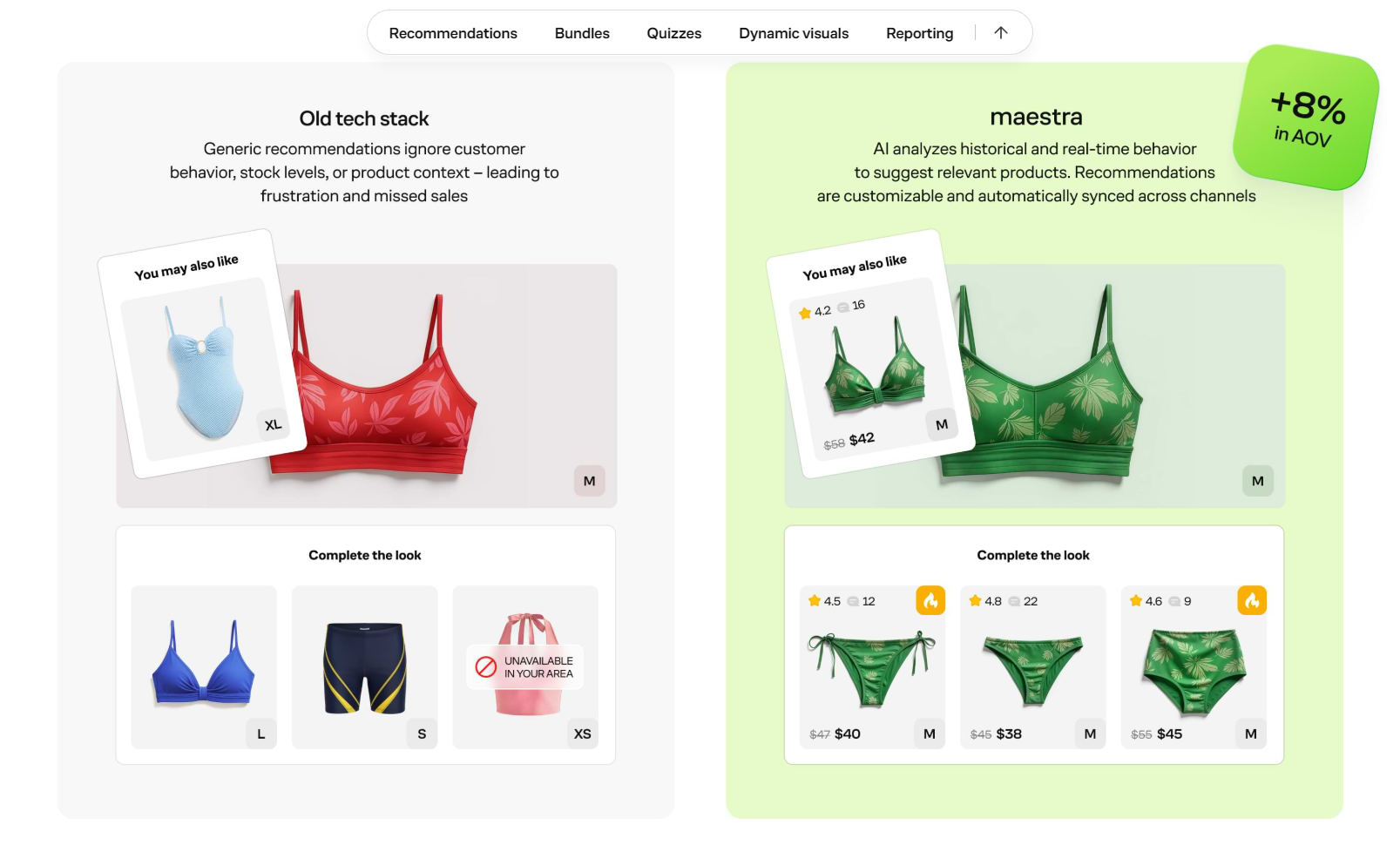
Maestra also extends recommendations into mobile apps via in-app messages that can reach users who have disabled push notifications, and generates dynamic product visuals that automatically update product images with real-time pricing for paid media campaigns.
Bluecore's on-site personalization draws from the same cross-brand predictive intelligence that powers its email, giving it an advantage in shopper-to-product matching at the enterprise level. But Maestra's broader toolkit (quizzes, gamification, in-app messaging, dynamic product visuals) and the 14-algorithm recommendation engine give DTC brands more options.
AI capabilities point in different directions
Both platforms invest in AI, but with distinct visions of what AI should do for a retail marketer.
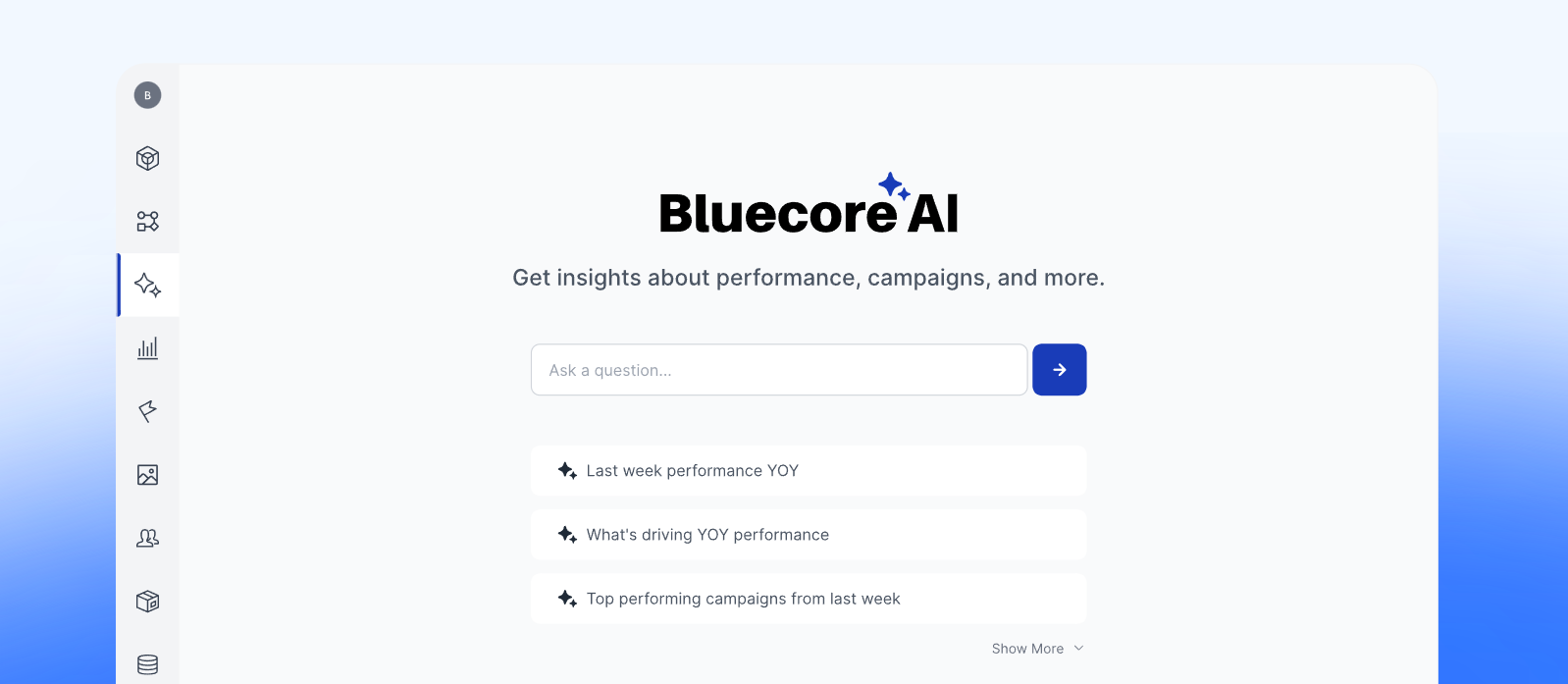
Bluecore's AI strategy runs on two tracks. The Marketing Agent is an AI analyst built into the platform that addresses what Bluecore calls the "80/20 problem": marketing teams spend roughly 80% of their time pulling reports and assembling spreadsheets, and only 20% on strategy. Marketing Agent lets marketers ask plain-language questions like "Why did my revenue dip yesterday?" and receive a structured diagnostic in seconds. It compresses what used to take 5+ people roughly 6 hours into minutes of automated analysis, then moves directly from diagnosis to campaign execution.
Source: Bluecore
The second track is alby, the conversational AI shopping assistant Bluecore acquired in November 2024. Alby is shopper-facing: it answers product questions, recommends items, compares options, and handles post-purchase support like order tracking and returns. What makes alby different from generic chatbots is that it's built for ecommerce with actions for product search, comparisons, and review summaries. Every conversation also generates zero-party data that feeds back into Bluecore's personalization engine.
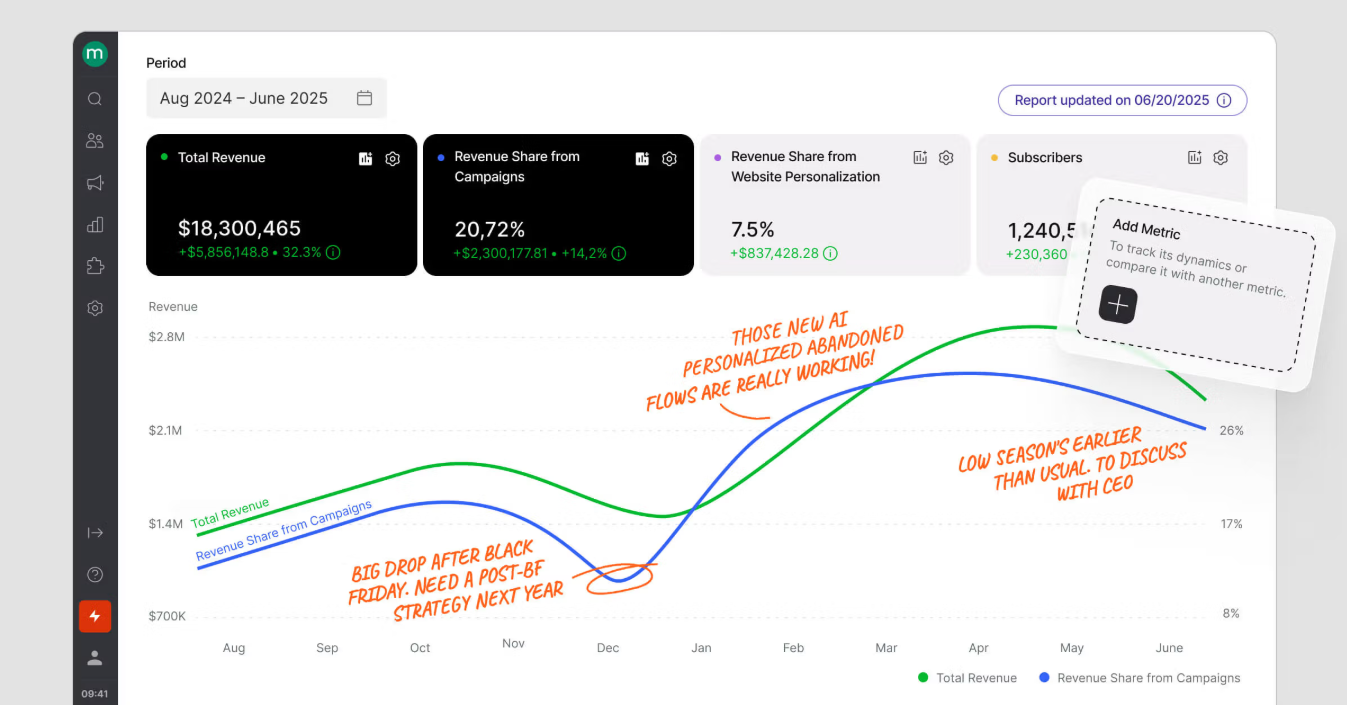
Maestra's AI is less visible as a standalone product but more embedded in daily operations. The platform shipped an AI agent for marketing automation in Q1 2026, along with AI segments and AI scenarios that automate audience creation and campaign logic. The AI Assistant embedded in the Revenue & Drivers report runs monthly against all project metrics, surfacing trend analysis, cross-metric correlations, and prioritized action recommendations. It processes only anonymized data and never shares customer information with external services.
Source: Maestra
The difference in philosophy: Bluecore treats AI as a new product layer (agent for marketers plus agent for shoppers), while Maestra treats AI as an accelerant for the existing platform (smarter segments, automated scenarios, embedded analysis). For enterprise retailers with high traffic and complex catalogs, Bluecore's shopper-facing AI creates a new conversion channel. For DTC brands that need their existing campaigns to run smarter without adding headcount, Maestra's embedded approach reduces the operational load.
Service and pricing models reveal who each platform is built for
The clearest signal about a platform's target customer isn't the feature list. It's the commercial model.
Bluecore does not publish pricing. The pricing page returns a 404, and the only entry points are "Talk to Us" and "Request a demo." Pricing is usage-based with a negotiated minimum commitment, structured around message volume. Contracts are invoiced annually in advance, and all payment obligations are non-cancellable. No free trial or free plan exists. The platform sells exclusively through direct enterprise contracts.
Support tiers range from "Let me fly" (upfront training plus self-service enablement) to "Give me the works" (fully managed partnership), and every customer gets a dedicated Customer Success Manager. The CS team is composed of former retail marketing executives, which adds real value during onboarding and strategy sessions.
Maestra publishes a pricing slider on its website. The subscription scales with the number of active customer profiles. Billing is month-to-month with no long-term commitment required, and doesn't start until the account is fully live. Migration and implementation are included at no extra cost.
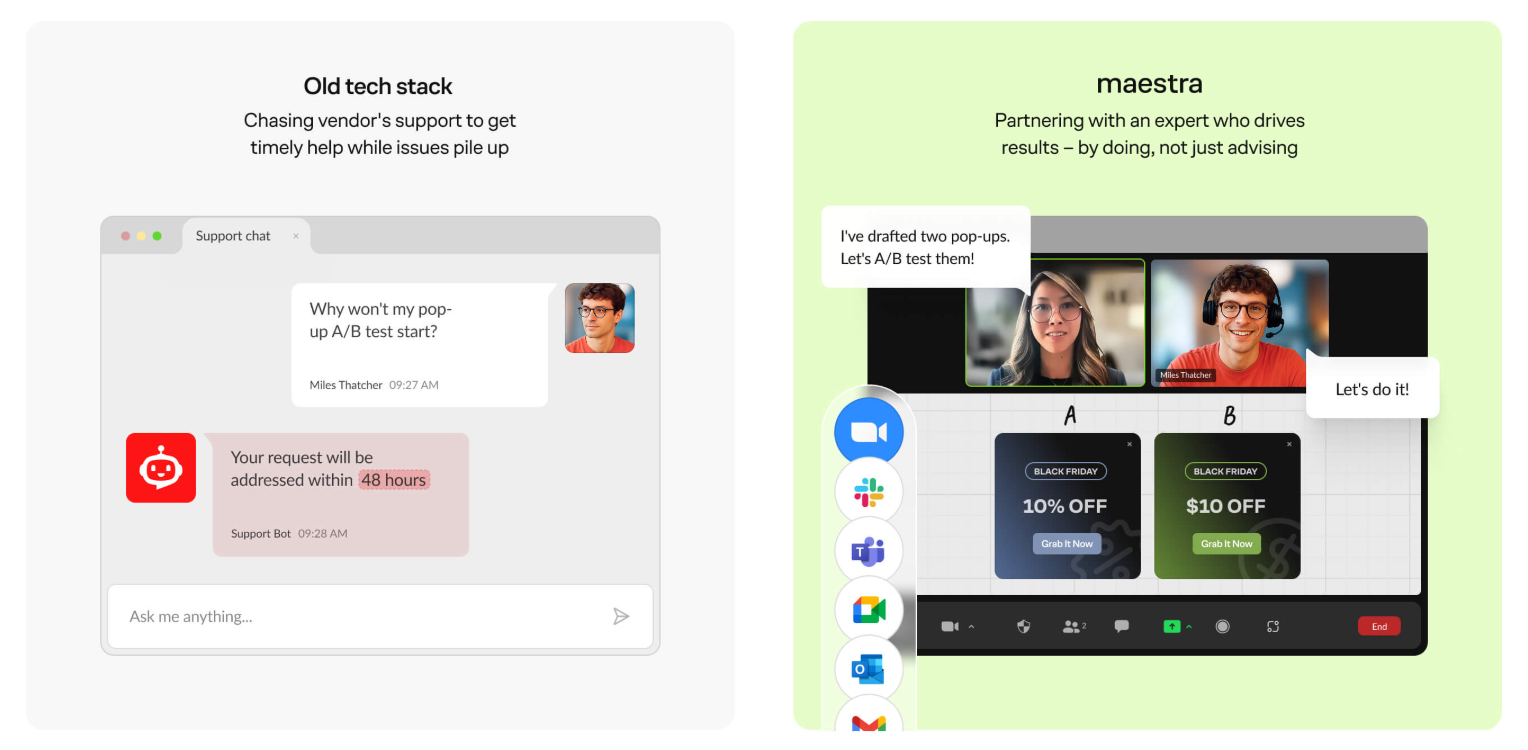
The service model is where Maestra makes its strongest case. Every subscription includes a dedicated CSM who handles migration, strategy, campaign building, and ongoing testing. Each CSM manages up to 15 clients compared to 60+ at competing platforms, with 5-minute response times via shared Slack channel and 4 strategic meetings per month.
Source: Maestra
The pricing scope also differs. Bluecore charges separately for each module (Communicate, Site, Advertise, alby) and for each paid media integration. Maestra includes every module in a single subscription: CDP, email, SMS, site personalization, product recommendations, loyalty, referrals, and analytics. Up to 3 brands are included; the 4th and beyond costs $650/month per brand. Email sends are unlimited up to 10x the active profile count per month.
For enterprise retailers with dedicated procurement teams and annual budgets, Bluecore's model is standard. For mid-market DTC brands that want to know exactly what they're paying before signing, Maestra's transparency and month-to-month flexibility reduce the commitment risk.
Paid media and audience activation
Both platforms extend their customer intelligence into paid advertising, but with different levels of depth.
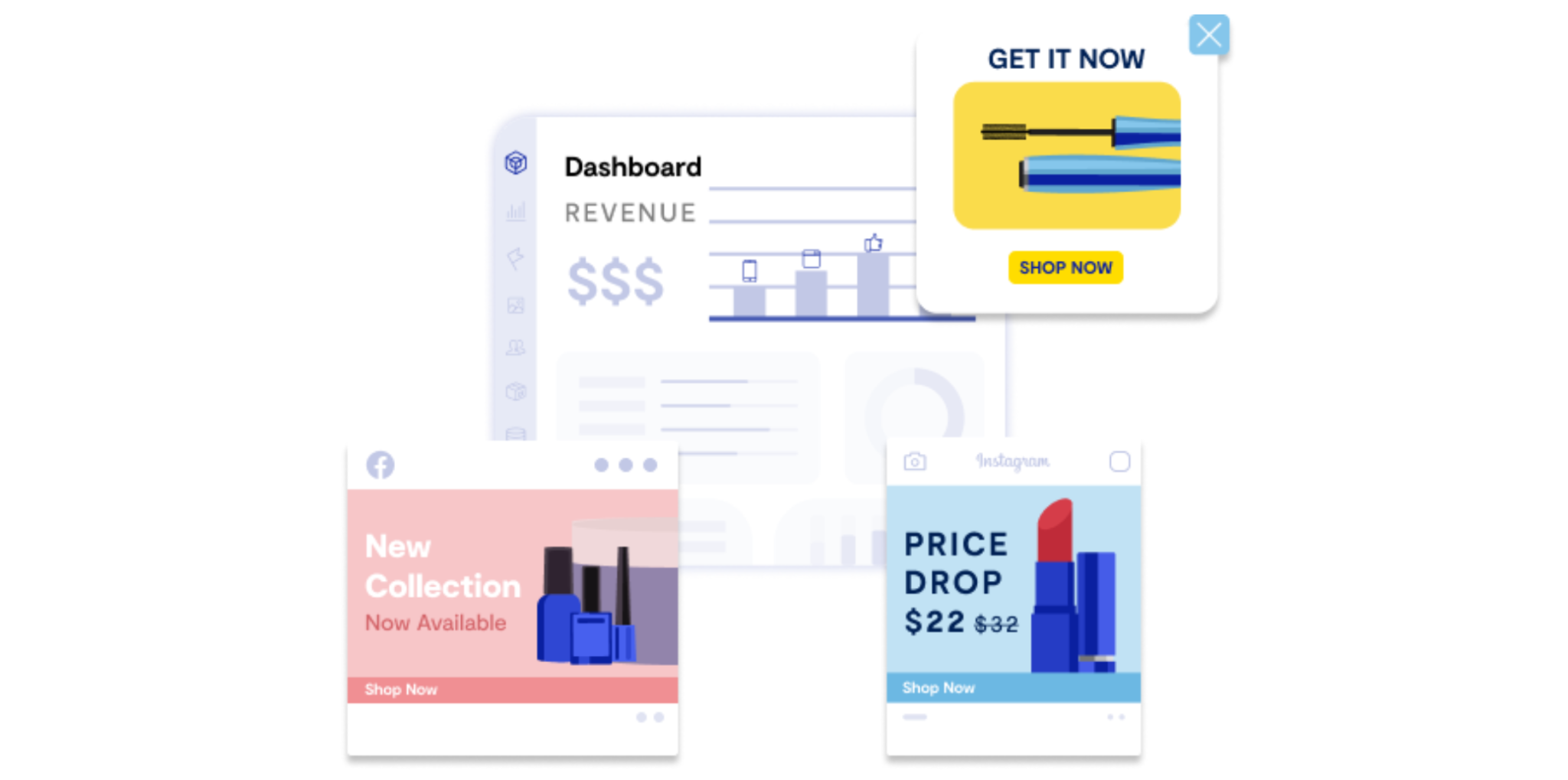
Bluecore Advertise pushes predictive audiences into ad platforms with continuous sync. When a shopper purchases at 2 PM, they are removed from an acquisition audience immediately, not at the next scheduled batch export. Native connections include Facebook, Instagram, Google Ads, Pinterest, TikTok, The Trade Desk, and Criteo, with Pinterest and Snapchat added as recent integrations. Audiences are scored by Bluecore's retail-specific predictive models for next-best purchase likelihood, at-risk status, and category affinity.
Source: Bluecore
Maestra's ad optimization works through customer segment syncing with ad platforms for retargeting and lookalike audiences. The platform also generates dynamic product visuals with real-time price and promotion updates for ad creative.
Source: Maestra
Bluecore's paid media module is more mature, with more integrations and continuous audience sync across more platforms. Maestra covers the core use case (segment sync plus dynamic creative) but doesn't yet match Bluecore's breadth of ad platform integrations or the speed of its audience refresh.
Loyalty, promotions, and product bundling
This is where Maestra's all-in-one approach creates the widest gap between the two platforms.
Bluecore does not include a loyalty module. It offers persistent couponing that ensures a shopper receives one valid coupon across all touchpoints, but there's no points system, no tiered rewards, no referral engine, and no gift card management. Retailers using Bluecore need a separate vendor (Yotpo, Smile.io, or similar) for loyalty, with the integration overhead that entails.
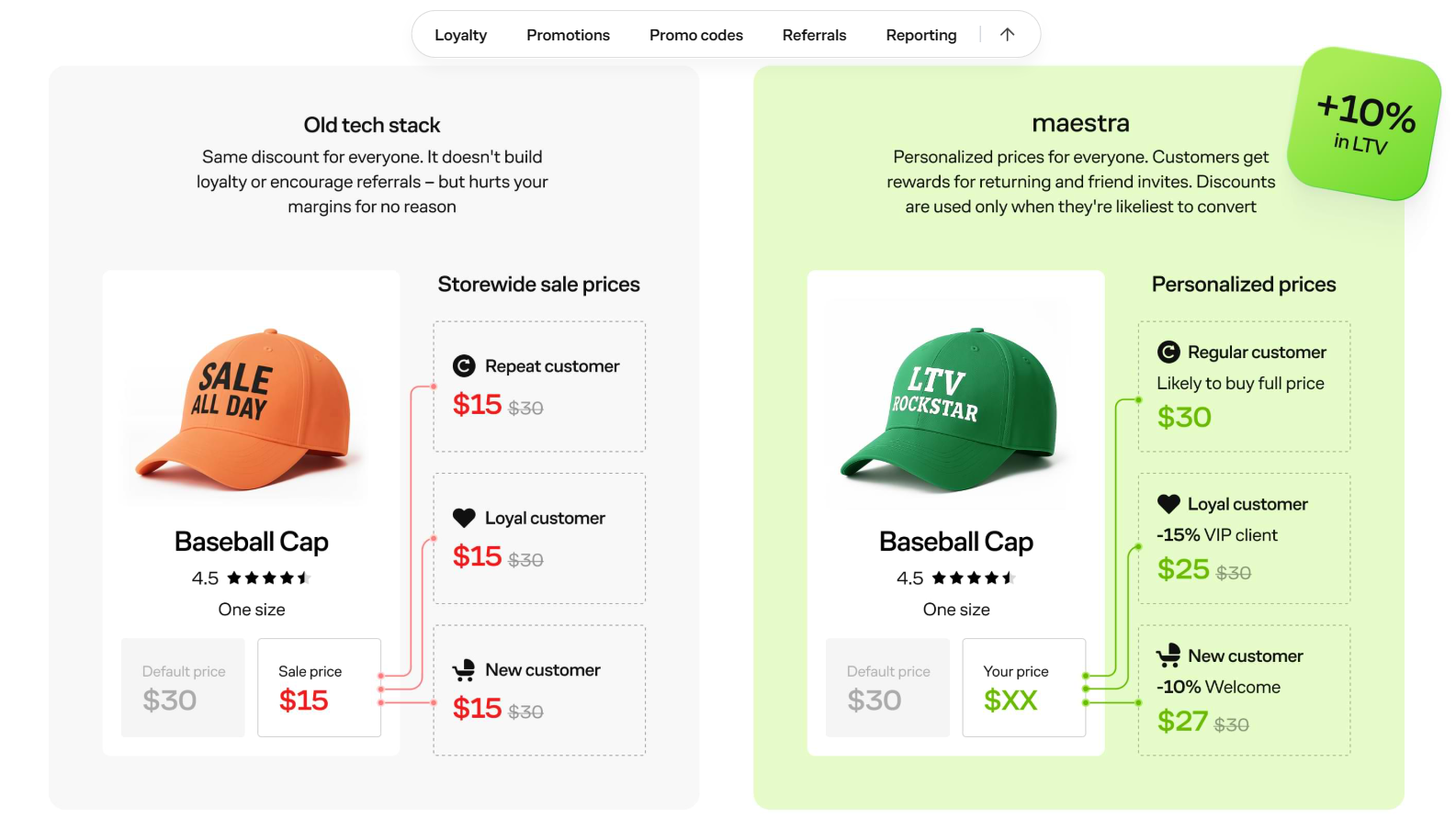
Maestra's Price Personalization module includes multi-tier loyalty programs based on spending, earned points, or purchase count, with gamified earning challenges, a referral system, a promo code engine with fraud protection, gift card management, and POS processing for omnichannel brands. The in-session upsell bar calculates in real time how much more a shopper needs to spend to reach the next reward tier or free-shipping threshold.
Source: Maestra
Because the loyalty program sits on the same data layer as email, SMS, and site personalization, a tier upgrade or points balance change triggers the correct communication immediately. Standalone loyalty platforms need to sync data to an ESP before a loyalty-aware email can send, introducing delay and potential data inconsistencies.
For brands where loyalty is a central growth lever, Maestra's native integration eliminates the gap between "customer earned a reward" and "customer knows about it." For brands focused on acquisition and email-driven retention, Bluecore's catalog-intelligent triggers may matter more than a built-in loyalty program.
The B2B revenue channel neither platform addresses
Both Bluecore and Maestra are consumer marketing platforms. They help retail and DTC brands find, convert, and retain individual shoppers. But many of the brands that use them don't sell exclusively to consumers.
Gap, Ralph Lauren, and J.Crew sell wholesale to department stores. Fender sells through music retailers. Furniture brands supply hospitality and commercial buyers. Sporting goods companies run dealer networks. Consumer electronics brands have corporate sales divisions. For the consumer-facing side, Bluecore or Maestra handles the personalization, triggers, and retention marketing. But neither platform was designed to help you find a new wholesale buyer in the Southeast, identify which corporate accounts are researching your product category, or build a targeted list of retail partners to pitch.
That's a different problem, and it requires a different tool.
ZoomInfo is an AI-powered go-to-market platform built on a large B2B dataset: 500M contacts, 100M companies, 135M+ verified phone numbers, and 200M+ verified business email addresses. For retail brands with B2B revenue channels, ZoomInfo provides three capabilities that consumer marketing platforms cannot match.
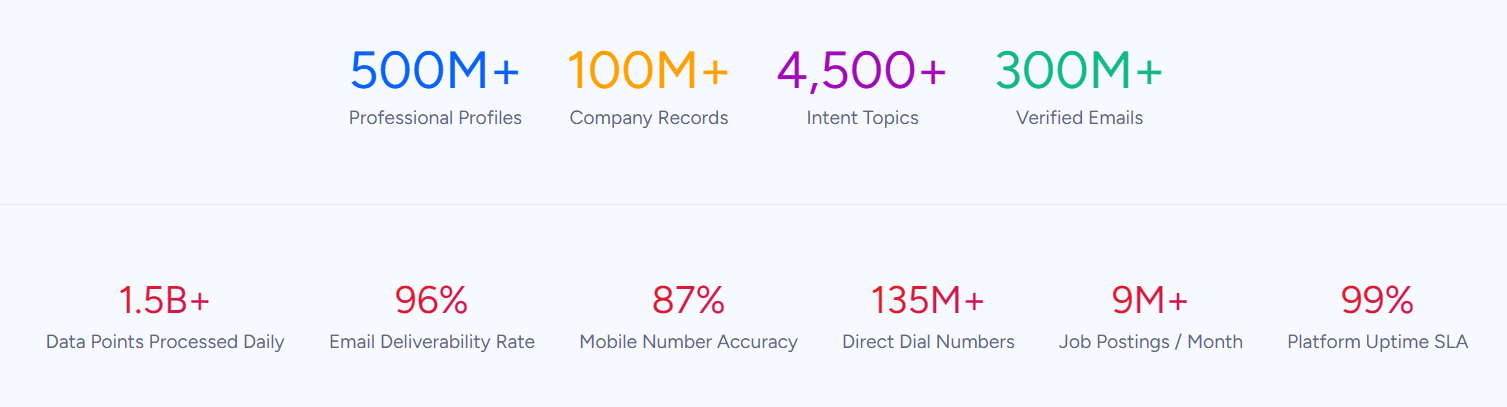
First, it identifies who to target. ZoomInfo's database covers 300+ company attributes for market segmentation, including department org charts with decision-makers' direct dials and emails. A sporting goods brand looking for new retail partners can filter by industry, company size, geography, and technographics to build a prospect list in minutes.
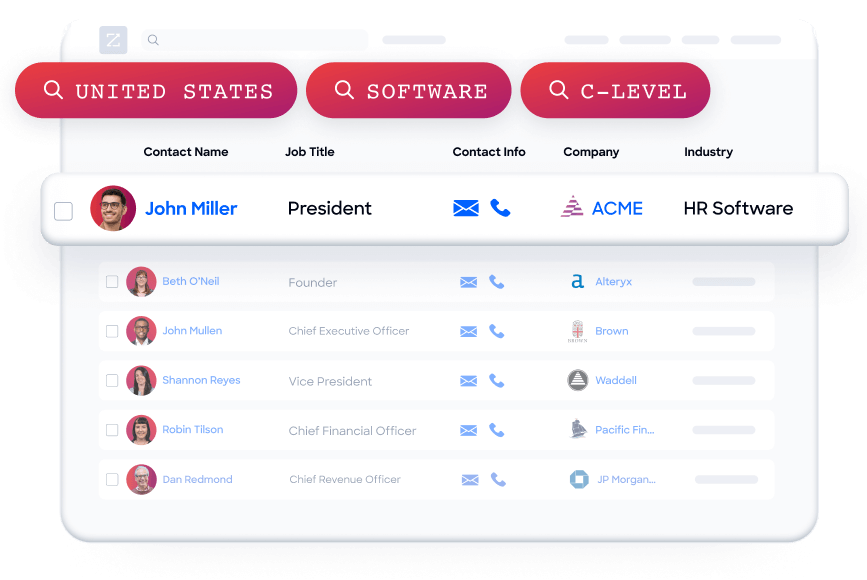
Second, it reveals when to engage. ZoomInfo's buyer intent data tracks signals from 210 million IP-to-Organization pairings, showing when companies are actively researching your product category. A furniture manufacturer can see which hospitality chains are researching commercial furnishings before the RFP drops.
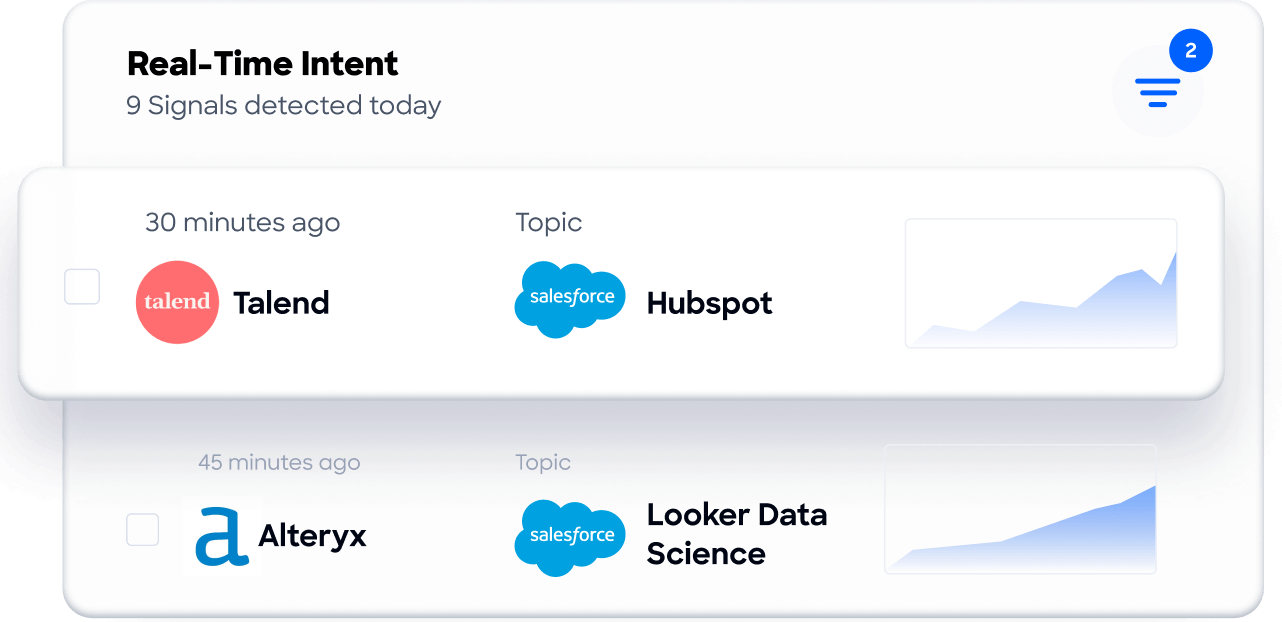
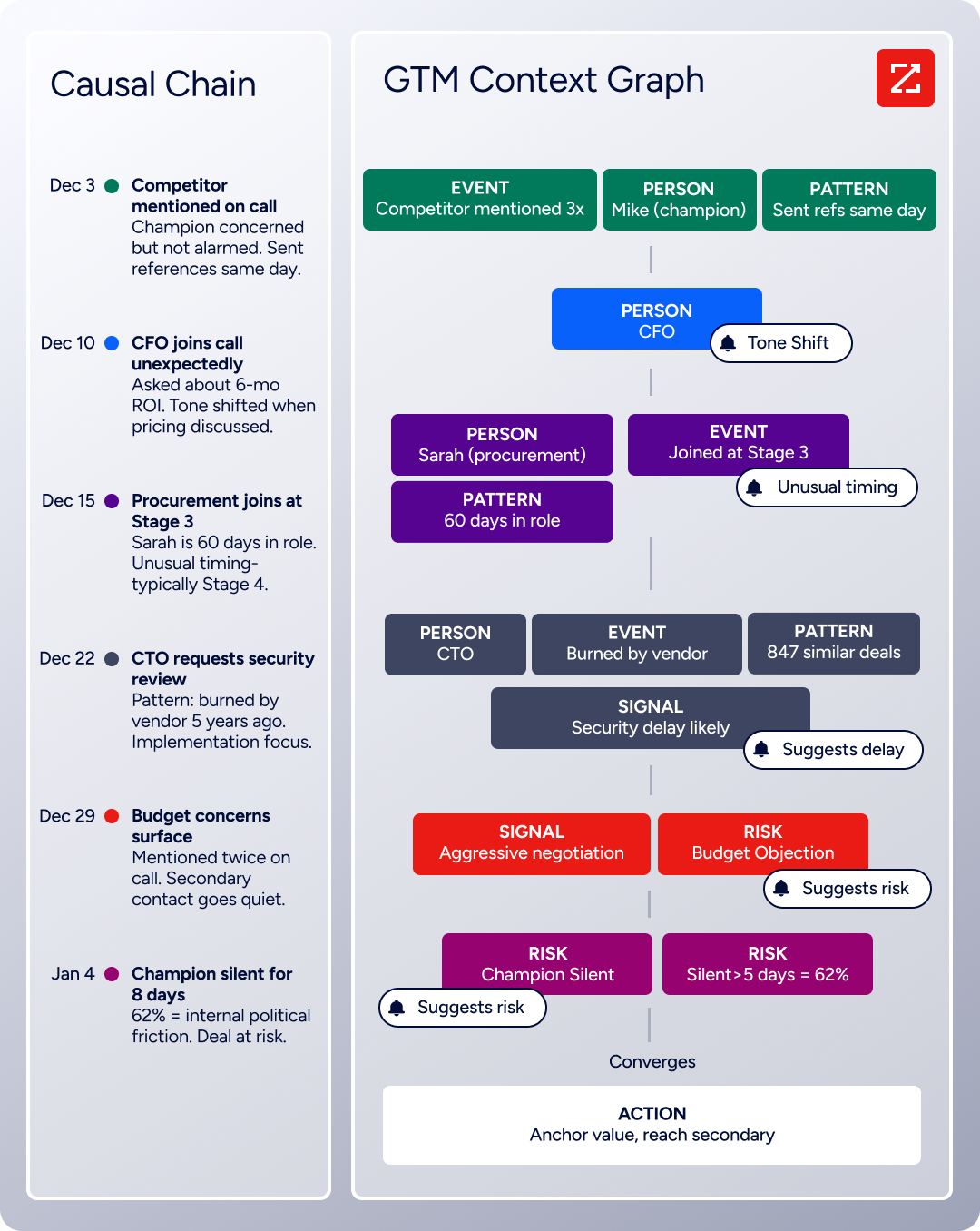
Third, it connects intelligence to action. The GTM Context Graph processes 1.5B+ data points daily, combining ZoomInfo's B2B data with CRM records, conversation transcripts, and behavioral signals to reveal not just what happened in a deal, but why. Sellers work from GTM Workspace, where AI agents draft outreach, monitor signals, and update CRM without context-switching. Marketers build and launch targeted B2B plays from GTM Studio. And for teams that build their own tools, APIs and MCP deliver the same intelligence into any application.
"It's not just the data itself. It's more about the right data at the right time to help us reach out with the right message across that full buyer journey." (Chelsea Kenyon, Senior Director of Digital Strategy, Redwood Logistics)
ZoomInfo isn't a replacement for Bluecore or Maestra. It solves a different problem for a different audience within the same organization. But for brands generating meaningful revenue through B2B channels, the consumer marketing platform handles one half of the business, and ZoomInfo handles the other.
"You'll get 10x the value if you think of ZoomInfo as a full platform and not just a tool for one team." (John Kotsuros, Founder and CEO of SpringDB)
Bluecore vs. Maestra vs. ZoomInfo: Which should you choose?
The right choice depends on what kind of business you're running and where your growth bottlenecks sit.
Choose Bluecore if:
You're an enterprise retailer with a large product catalog and high site traffic
Cross-brand shopper identification is critical to your strategy
You need product catalog intelligence woven into every trigger and email
You want an AI shopping assistant (alby) as a new conversion channel
Your team can commit to an enterprise contract and annual billing
You have dedicated marketing operations staff to manage the platform
Choose Maestra if:
You're a mid-market DTC brand looking to consolidate 3-5 marketing tools into one
A dedicated CSM who builds your campaigns and tests your flows is essential
You need loyalty, referrals, and product recommendations included in one subscription
Month-to-month flexibility and transparent pricing matter to your procurement process
Your brand operates across multiple channels including SMS, WhatsApp, RCS, and push
You want to migrate quickly with a CSM handling the implementation
Add ZoomInfo if:
Your brand also sells through wholesale, retail partnerships, or corporate accounts
You need verified B2B contact data to prospect new distribution channels
Intent signals showing which retailers are actively researching your category would accelerate your B2B pipeline
Your B2B sales team is manually researching buyers instead of using a data platform
You want one AI-powered platform for all B2B go-to-market instead of stitching together point solutions
Start with a free ZoomInfo trial and discover the B2B intelligence layer your consumer marketing platform doesn't provide.
Bluecore and Maestra both excel at consumer marketing, but for different profiles of retailer. Bluecore's identification network and product catalog intelligence serve large retailers with complex catalogs and high traffic. Maestra's all-in-one consolidation and high-touch service model serve DTC brands that need more capability without more headcount.
For brands operating on both sides (consumer marketing and B2B sales), ZoomInfo adds the intelligence layer that neither consumer platform was designed to provide. The strongest go-to-market operation isn't the one with the most tools. It's the one where each tool covers its part of the revenue picture without gaps.
Bluecore vs. Maestra vs. ZoomInfo FAQ
What is the core difference between Bluecore and Maestra?
Bluecore is a retail-native marketing platform built around the fusion of shopper identity, behavioral signals, and product catalog data, with predictive AI models trained across 400+ retail brands. Maestra is an all-in-one DTC marketing platform that combines a CDP, email, SMS, site personalization, product recommendations, loyalty, and referrals in a single subscription with a dedicated Customer Success Manager included. Bluecore targets enterprise and upper-mid-market retailers with complex catalogs. Maestra targets mid-market DTC brands that want to replace a multi-vendor stack with one platform.
How does ZoomInfo relate to Bluecore and Maestra?
ZoomInfo solves a different problem. While Bluecore and Maestra handle consumer-facing marketing (email, SMS, site personalization, product recommendations), ZoomInfo is a B2B intelligence and go-to-market platform with 500M contacts and 100M companies. For retail and DTC brands that also sell through wholesale, retail partnerships, or corporate accounts, ZoomInfo provides the data and intelligence to prospect and close B2B deals. It complements whichever consumer marketing platform you choose rather than competing with either.
Which platform has better email marketing capabilities?
Bluecore's email engine is distinguished by merchandising triggers that fire based on product catalog events (price drops, back-in-stock, new arrivals) rather than just shopper behavior, plus Send Time Optimization calculated per individual recipient. Maestra's email capabilities are part of a broader channel mix that includes SMS, MMS, RCS, WhatsApp, mobile push, and web push, all orchestrated from a single flow builder with cross-channel frequency capping. If your revenue runs primarily through email, Bluecore's email intelligence is hard to match. If you need to orchestrate across five or more channels, Maestra's breadth gives you more coverage.
How does pricing compare between Bluecore and Maestra?
Bluecore does not publish pricing. All contracts are negotiated directly, invoiced annually, and non-cancellable. Maestra publishes a pricing slider on its website with an example price of $4,979 per month, offers month-to-month billing with no long-term commitment, and includes all modules (CDP, email, SMS, loyalty, recommendations, analytics, and dedicated CSM) in a single subscription. Third-party estimates place Maestra's entry pricing at roughly $2,990 per month.
Does either platform include a loyalty program?
Maestra includes a full loyalty, referral, and gift card system in every subscription at no extra cost. It supports multi-tier programs based on spending, earned points, or purchase count, with gamified earning challenges and an in-session upsell bar that shows customers how much more they need to spend to unlock the next reward. Enlightened Equipment achieved a +38.7% AOV increase from the upsell bar alone. Bluecore does not include a native loyalty program. Retailers using Bluecore typically pair it with a separate loyalty vendor.
Which platform is easier to implement and learn?
Maestra's implementation is handled by its dedicated CSM, who manages migration, integration, flow setup, and template creation. Typical migration timelines run 2 to 4 weeks for growing brands. Billing does not start until the account is fully live. Bluecore provides a dedicated implementation team (Project Manager, Forward Deployed Engineer, Deliverability Team), but G2 reviewers flag a difficult learning curve for advanced features, particularly complex segmentation rules and the full trigger and workflow builder. Both platforms offer training resources: Bluecore through Bluecore Explore and a Communicate certification program, Maestra through its CSM-led onboarding and help center.
Can I use ZoomInfo alongside Bluecore or Maestra?
Yes. ZoomInfo operates independently from consumer marketing platforms. It serves B2B teams (sales, marketing, RevOps) focused on prospecting, pipeline generation, and account intelligence, while Bluecore or Maestra serves the consumer marketing team. There is no integration conflict because the platforms address different audiences (B2B buyers vs. individual consumers) and different workflows (prospecting and deal management vs. email campaigns and on-site personalization).
Which platform has stronger AI capabilities?
Bluecore offers two AI products: Marketing Agent (an AI analyst that automates performance diagnostics and campaign execution for marketers) and alby (a shopper-facing conversational AI that handles product questions, recommendations, and post-purchase support, with over 20 million conversations to date). Maestra embeds AI throughout its platform with AI-assisted segmentation, automated scenarios, and a monthly AI analysis that surfaces trends and recommends actions. ZoomInfo's GTM Context Graph processes 1.5 billion data points daily and powers AI agents in GTM Workspace that automate account research, outreach drafting, and signal monitoring for B2B teams. Each platform's AI serves a different user: Bluecore's serves retail marketers and shoppers, Maestra's serves DTC marketing operators, and ZoomInfo's serves B2B sales and RevOps teams.
Related breakdowns to help you choose:
