

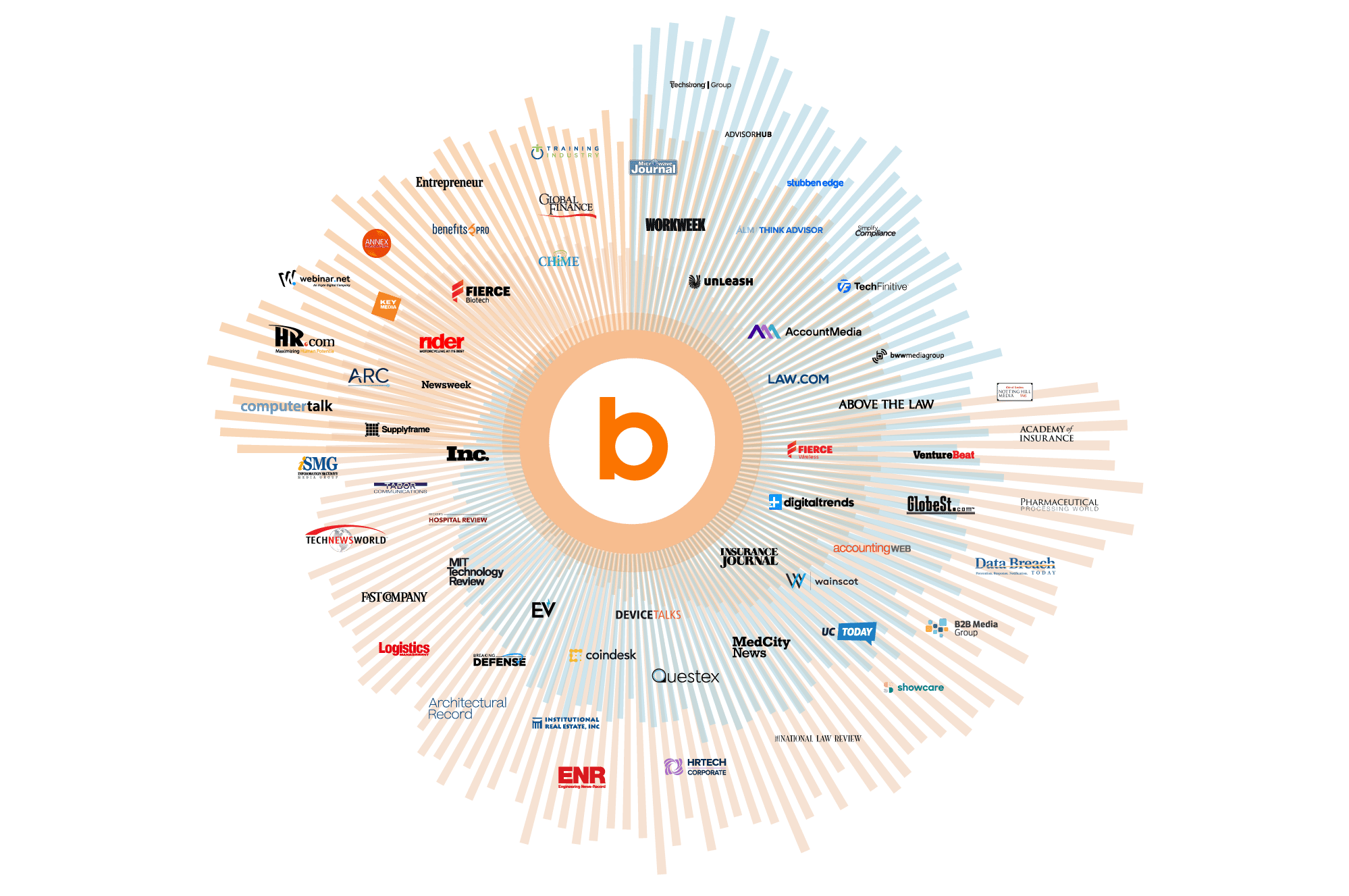
Bombora pioneered B2B intent data. Its Data Co-op, built over more than a decade across 5,500+ B2B media sites, delivers account-level signals that tell sales and marketing teams which companies are researching relevant topics. For organizations that need a clean intent data feed to plug into their existing tech stack, Bombora remains a strong choice.
But as B2B go-to-market strategies grow more sophisticated, many teams find that raw intent signals are only one piece of the puzzle. They need more than a data feed. They need platforms that combine intent with contact data, predictive intelligence, campaign execution, or specialized signal sources that Bombora's account-level, web-publisher model doesn't cover.
That's where this guide comes in. Whether you're looking to:
Access a large B2B data platform paired with AI intelligence that reveals not just what's happening, but why
Run ABM campaigns with predictive buying stage models and multi-source intent aggregation
Execute account-based marketing with native advertising and website personalization
Combine affordable intent data with built-in outreach tools on a small-team budget
Get prospect-level purchase intent from enterprise technology media properties
Convert anonymous website visitors into pipeline with first-party behavioral data
Capture signals from communities, open-source repos, and product usage that traditional intent providers miss
We'll explore alternatives that excel in these areas.
Some teams might use these tools alongside Bombora to fill coverage gaps. Others might replace Bombora entirely with a platform that better fits their go-to-market motion. This isn't about finding "better" intent data. It's about finding the right tool for your needs as your revenue operations mature.
Here are the Bombora alternatives worth considering.
The Best Bombora Alternatives | |
|---|---|
ZoomInfoBest Alternative for Comprehensive B2B Data and AI-Powered GTM IntelligenceWe chose ZoomInfo because it combines a large B2B data platform (500M contacts, 100M companies) with intent signals, a GTM Context Graph that reveals why deals move, and execution tools for every team. It's the most complete upgrade from a data-only intent provider. | |
6senseBest Alternative for Enterprise ABM Execution with Predictive Buying Stage IntelligenceWe chose 6sense because it aggregates multi-source intent (including Bombora's own data), applies predictive AI buying stage models, and provides campaign execution, all in one enterprise platform. | |
DemandbaseBest Alternative for Self-Contained ABM with Native B2B AdvertisingWe chose Demandbase because it bundles proprietary intent data, a B2B DSP designed for account-based advertising, and website personalization into one platform, eliminating separate intent data contracts. | |
ApolloBest Alternative for Small Teams Needing Affordable Intent Data with Built-In OutreachWe chose Apollo because it bundles intent data, a 270M+ contact database, email sequencing, and a dialer into one subscription starting at $49/month, making intent-driven prospecting accessible without enterprise budgets. | |
TechTarget Priority EngineBest Alternative for Prospect-Level IT Buyer IntentWe chose TechTarget because it delivers named individual contacts researching technology solutions from 220+ owned editorial properties, providing person-level intent that Bombora's account-level model cannot match. | |
Leadfeeder (by Dealfront)Best Alternative for First-Party Website Intent Without Enterprise PricingWe chose Leadfeeder because it converts anonymous website traffic into named company accounts with behavioral context and contact details, with a permanent free plan that identifies up to 100 companies per month. | |
Common RoomBest Alternative for Signal-Based Selling Across Community and Product ChannelsWe chose Common Room because it captures buying signals from Slack, GitHub, Discord, product usage, and social media that Bombora's web-publisher model misses entirely, with person-level identification. |
What is Bombora?

Source: Bombora
Bombora is a B2B intent data provider that calls itself "a data company, not a platform". Built around its Data Co-op of 200+ publishers and brands across 5,500+ B2B media sites, Bombora tracks content consumption to surface which companies are researching topics relevant to your business.
Its key features include:
Company Surge® intent data that measures when a company's research activity on specific topics spikes above its historical baseline, covering 20,100+ B2B taxonomy topics
Data Co-op exclusivity with 86% exclusive data shared only with Bombora for deriving intent, drawn from a proprietary JavaScript tag on publisher pages
Identity and Enrichment tools that decode anonymous website traffic using deterministic, IP-to-company, and AI-powered probabilistic modeling
Digital Audiences with 600+ off-the-shelf B2B segments and custom segments from 6,350 attributes
B2beacon™ campaign measurement for account-level and persona-level advertising analytics
100+ platform integrations including Salesforce, HubSpot, 6sense, Apollo, LinkedIn, and Marketo
Bombora's strength is its independence: because it's not a platform, it integrates with virtually every major CRM, MAP, and ABM tool, letting customers choose their own execution layer.
However, Bombora's data-only positioning means customers must bring their own execution layer. It offers no native outreach, no contact-level data, no campaign orchestration, and no self-serve or free entry point. For teams that need more than raw intent signals (or that need intent combined with contact data, predictive intelligence, or campaign execution), alternatives may fit better.
Looking for an AI-powered GTM platform that combines B2B data with intent signals and execution tools? Learn more about ZoomInfo and see how the GTM Context Graph can support your revenue operations.
How We Curated Our List of Bombora Alternatives
After evaluating Bombora and researching the B2B intent data market, we found that Bombora's data-infrastructure positioning doesn't work for every team and use case, specifically:
Enterprise revenue teams that need contact data, predictive intelligence, and execution in one platform, not just a data feed
Large ABM programs that need predictive buying stage models and multi-channel campaign execution built on intent signals
Growing marketing teams that want ABM execution with advertising and personalization without managing separate vendor contracts
Small sales teams that need intent data bundled with contact databases and outreach tools at an accessible price
Technology vendors that need prospect-level intent from specialized editorial properties, not just account-level topic surges
Marketing teams that need to convert their own website traffic into pipeline with first-party behavioral data
Software companies with product-led or community-led motions where buying signals happen outside traditional publisher websites
Each tool on this list leads in one of these use cases.
❗DISCLAIMER: We aren't covering every intent data tool on the market. Our focus is on highlighting alternatives that address Bombora's limitations for specific team sizes, industries, and go-to-market motions. |
|---|
1. ZoomInfo — Best Alternative for Comprehensive B2B Data and AI-Powered GTM Intelligence

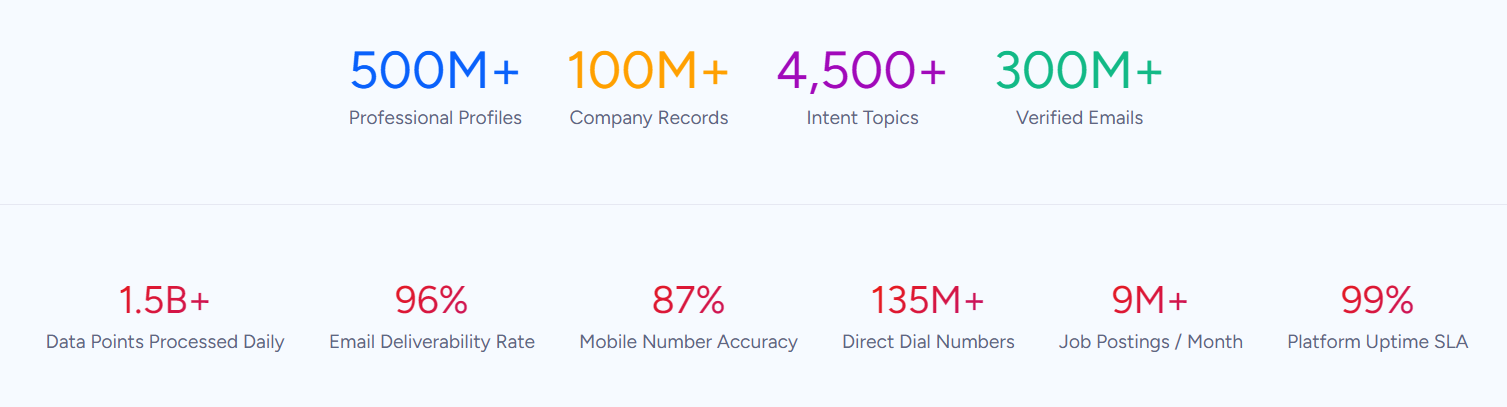
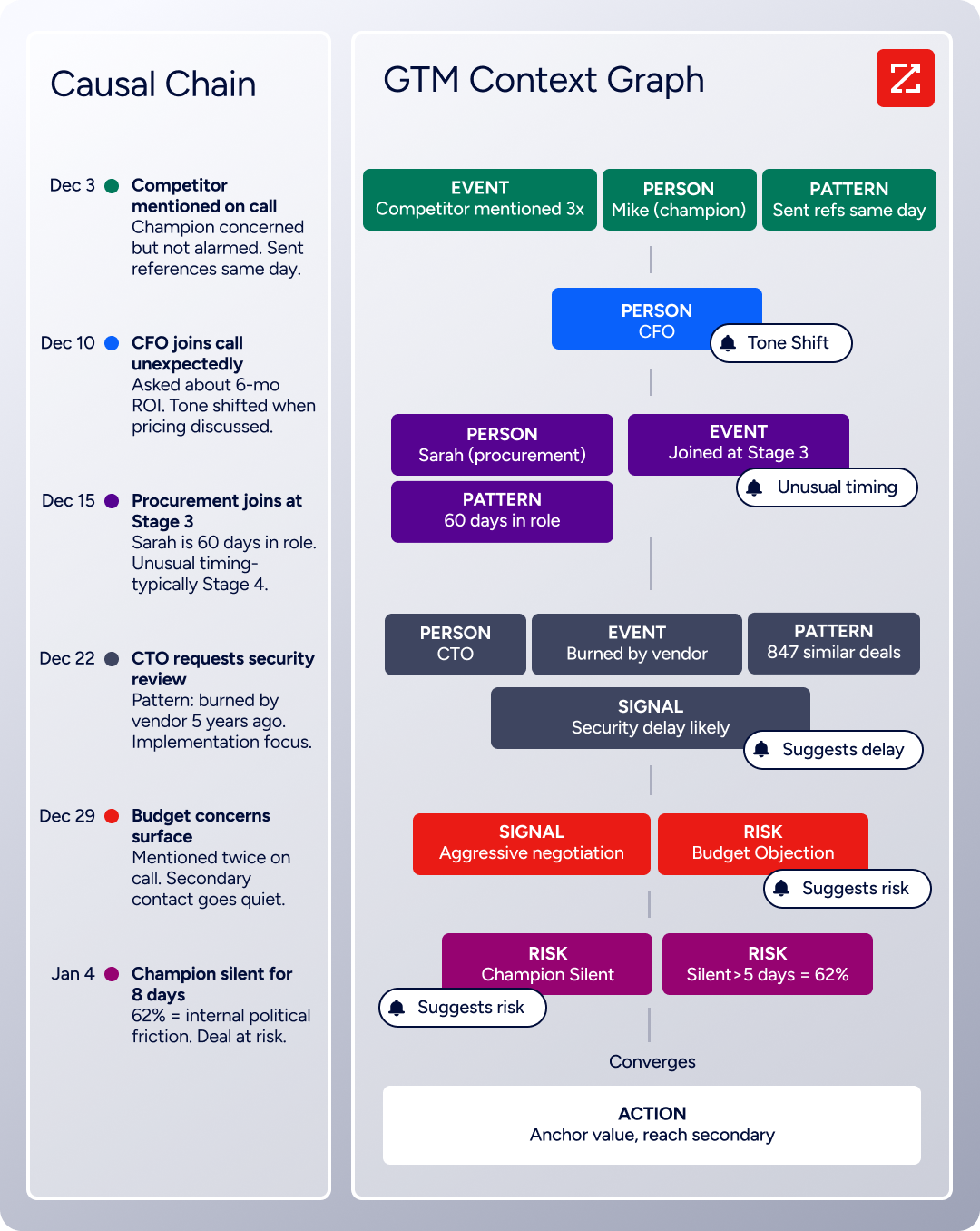
ZoomInfo is an AI-powered go-to-market platform built on a large B2B dataset: 500M contacts, 100M companies, 135M+ verified phone numbers, 120M direct-dial phone numbers, and 200M+ verified business email addresses. That data foundation fuels ZoomInfo's GTM Context Graph, an intelligence layer that unifies your CRM records, conversation transcripts, and behavioral signals with the 1.5B+ data points ZoomInfo processes daily, capturing not just what happened, but why deals move or stall. Its key features include:
A large B2B data platform covering identity data, company context, and dynamic signals, verified by 300+ human researchers and reaching up to 95% accuracy on first-party data
The GTM Context Graph that fuses ZoomInfo's B2B data with your CRM records, conversation intelligence, and behavioral signals into one intelligence layer, capturing not just what happened but why outcomes happened
Buyer Intent data tracking signals from 210 million IP-to-Organization pairings and 6 trillion+ new keyword-to-device pairings sourced monthly, including exclusive Guided Intent that identifies topics historically correlated with deal success
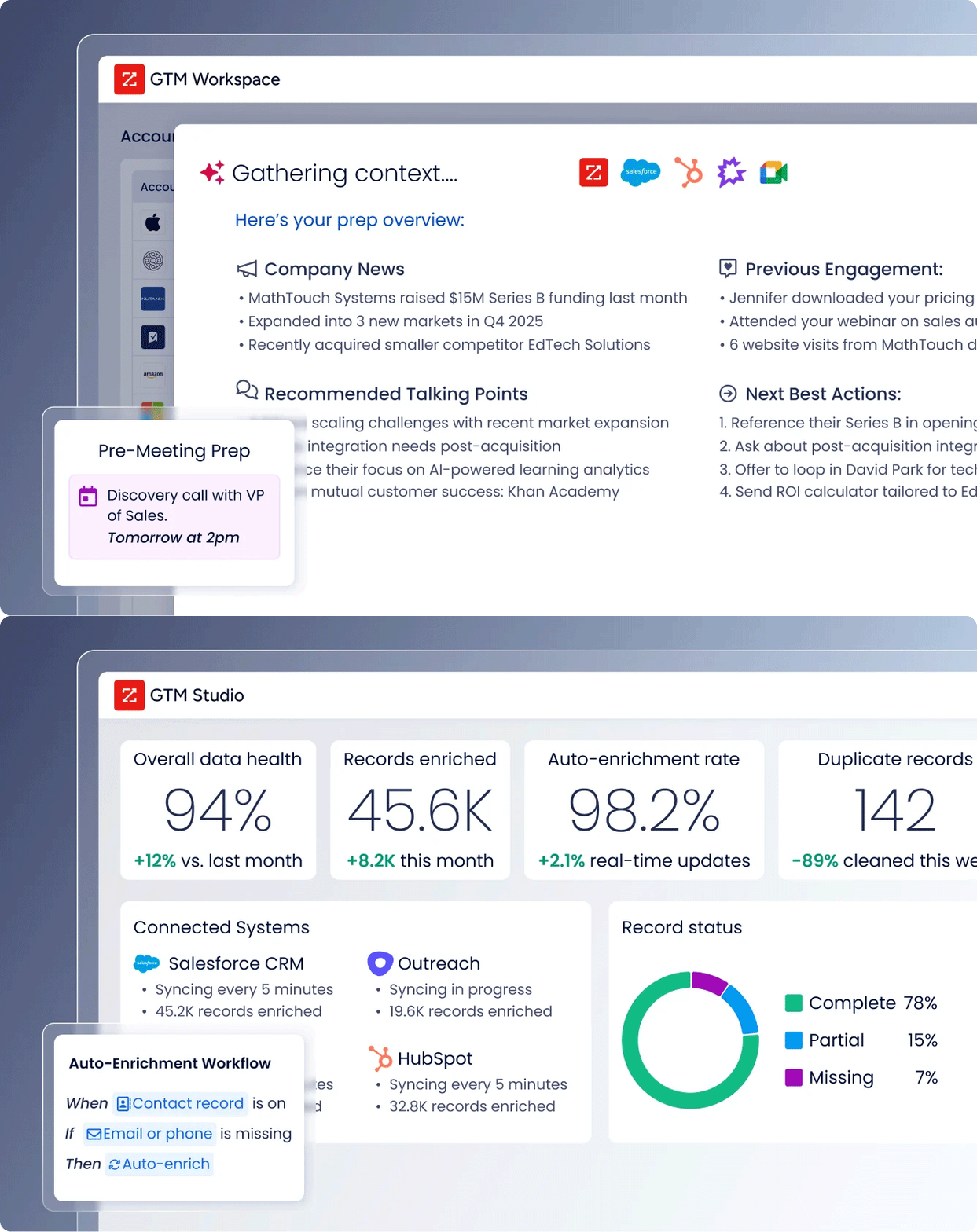
Multiple access methods through APIs and MCP for any tool or AI agent, GTM Workspace for sellers, and GTM Studio for marketers and RevOps
Where Bombora sells intent data as infrastructure that customers activate through other platforms, ZoomInfo delivers the complete intelligence and execution layer. Intent signals are one component of a platform that also provides contacts, company intelligence, conversation insights, predictive scoring, and native tools to act on those signals immediately.
Why Choose ZoomInfo Over Bombora for GTM Intelligence
Bombora delivers account-level intent signals. ZoomInfo provides the context, data, and execution capability that turns those signals into revenue. Here's where ZoomInfo steps up.
Comprehensive Data Foundation: Know Who to Contact, Not Just Which Company Is Researching
Bombora's Company Surge® tells you a company is researching a topic. It doesn't tell you who to call. It provides no direct-dial phone numbers, verified emails, org charts, or job titles. With Bombora, you need a separate contract with a contact data provider just to act on the signals you received.
ZoomInfo closes this gap. When an account surges on a relevant intent topic, ZoomInfo surfaces the buying committee members at that account: verified business emails, direct-dial phone numbers, org chart context, seniority levels, and department assignments. The data foundation spans 500M contacts across 100M companies with 300+ company attributes for market segmentation.

In a Fortune 500 competitive RFP analyzing 25 million contacts across vendors, the independent consultant concluded that "no other competitor came even close." As CEO Henry Schuck put it: "AI development tools have lowered the cost of building software, but they don't erode our advantage at the data layer."
⚡ZoomInfo in Action: When a target account surges on "sales intelligence software," a Bombora customer sees the company name and a surge score. A ZoomInfo user sees the same intent signal plus the VP of Sales Operations' direct dial, the CRO's verified email, three other buying committee members' contact details, the company's current tech stack, recent funding rounds, and hiring patterns that suggest expansion. The rep can start personalized outreach within minutes, not after a separate tool search.
"ZoomInfo gives us the information we need to execute. We don't have to go through and spend our time digging. It's already there, so we can be three steps ahead." (Vensure)
GTM Context Graph: Understand Why Deals Move, Not Just That Research Is Happening
Bombora's Company Surge® measures relative research intensity: a score of 60+ means a company is consuming more content on a topic than its historical baseline. This helps with prioritization, but it tells you nothing about what the research means (purchase likelihood, deal stage, or the reason behind the activity). A surge to 75 could mean early browsing, competitive intelligence gathering, or bottom-of-funnel vendor evaluation. Bombora's methodology doesn't distinguish between these scenarios.
ZoomInfo's GTM Context Graph solves this by fusing intent signals with CRM records, conversation intelligence from Chorus (every call, meeting, and email), engagement history, and behavioral signals into one intelligence layer. The result: AI that captures not just what happened, but why it happened. A CRM records that a deal moved from Stage 3 to Stage 4. Bombora might show a topic surge at the same account. The GTM Context Graph connects both to reveal that executive sponsorship entered the deal after the CFO joined a call asking about six-month ROI, the account is simultaneously researching a competitor, and the signal combination matches the pattern behind closed-won deals in your segment.

This intelligence drives every downstream action: follow-up emails address concerns raised on calls, plays target accounts whose signal combinations match actual win patterns, and forecasts reflect buying evidence rather than stage labels.
⚡ZoomInfo in Action: Your team notices an account surging on "marketing automation." With Bombora alone, you know the company is researching. With ZoomInfo's GTM Context Graph, you learn the VP of Marketing mentioned switching platforms on a recorded call last week, the CFO is asking about implementation timelines, and three similar accounts with this signal combination closed within 45 days. Your seller gets an AI-drafted email that references the specific concern the VP raised, sent through GTM Workspace with one click.
Seismic attributed 39% of active pipeline to opportunities identified or influenced by ZoomInfo signals, with their sales team boosting productivity by 54%. (Seismic)
Universal Access: Use Intelligence in Any Tool, Not Just Through Partner Integrations
Bombora integrates with 100+ partner platforms, but the experience depends on how each partner surfaces the data. Intent scores in HubSpot look and behave differently from intent scores in 6sense, and the customer experience varies by integration. Bombora itself provides no native way to act on its data.
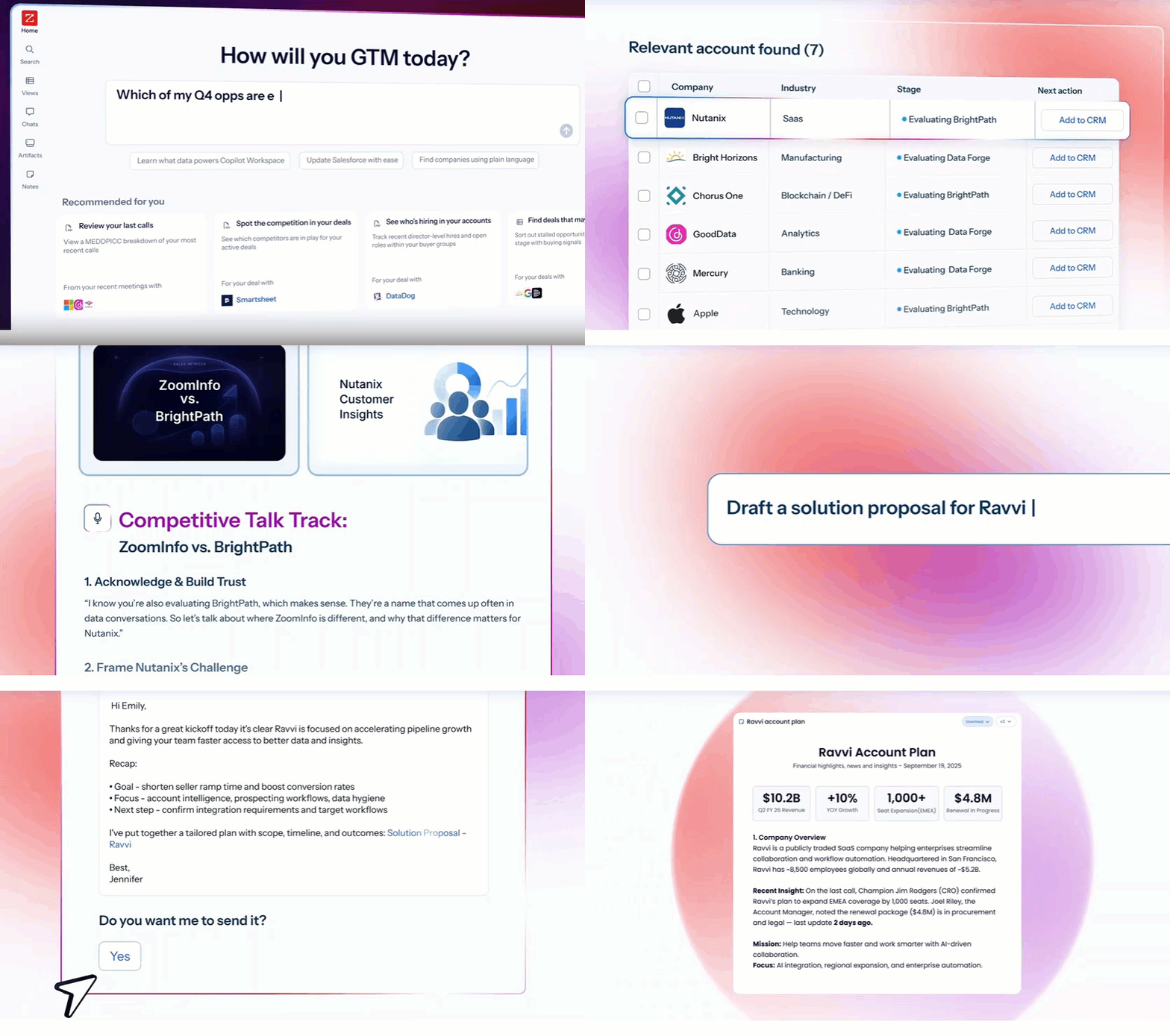
ZoomInfo offers three access methods, all drawing from one GTM Context Graph. GTM Workspace gives sellers a single surface where prioritized accounts, AI-drafted outreach, and deal execution converge. GTM Studio gives marketers and RevOps a builder environment for audience definition, campaign orchestration, and pipeline measurement in natural language. And APIs and MCP expose the same intelligence to any custom agent, internal tool, or partner platform.

The key point: all three draw from one GTM Context Graph. Same data, same intelligence, whether accessed through ZoomInfo's native products or a customer's custom AI agent built on Claude or ChatGPT. Nothing degrades by surface.
⚡ZoomInfo in Action: A marketer in GTM Studio describes an audience in plain language ("mid-market SaaS companies showing intent on sales intelligence and hiring VP-level sales roles"), launches a multi-channel play targeting those accounts, and watches pipeline impact in real time. A seller in GTM Workspace sees those same accounts in a prioritized feed with AI-drafted outreach already personalized. An engineer plugs the same intelligence into a custom internal app via MCP. One intelligence layer powers every motion.
"The plug-and-play aspect of the API means I can integrate it very easily into any process and get information at a moment's notice," achieving an 87% reduction in time spent on data dashboard updates. (BDO Canada)
🏅 NOTE: We looked at other B2B intelligence platforms and found that while competitors like 6sense and Demandbase offer strong intent and ABM capabilities, no other platform matches ZoomInfo's combination of data scale (500M contacts, 100M companies), the GTM Context Graph's ability to reveal why deals move, and access through APIs, MCP, and native experiences. ZoomInfo was named a Gartner MQ Leader for ABM Platforms for the second consecutive year, received 133 No. 1 rankings on G2, and was recognized as the only Customers' Choice vendor by Gartner Voice of the Customer.
ZoomInfo Pricing
ZoomInfo uses a custom-quoted subscription model based on seats and credits. Pricing depends on the number of users, monthly credit volume, features, and contract length. The platform is organized into three product lines:
Sales plans with Professional, Advanced, and Enterprise tiers, scaling from contact and company data to AI-driven account prioritization and advanced signals
Marketing plans with Marketing Demand, ABM Lite, and ABM Enterprise tiers, scaling from audience targeting to enterprise ABM with AI insights
Additional products including Chorus (conversation intelligence) and Chat (data-powered website chat)
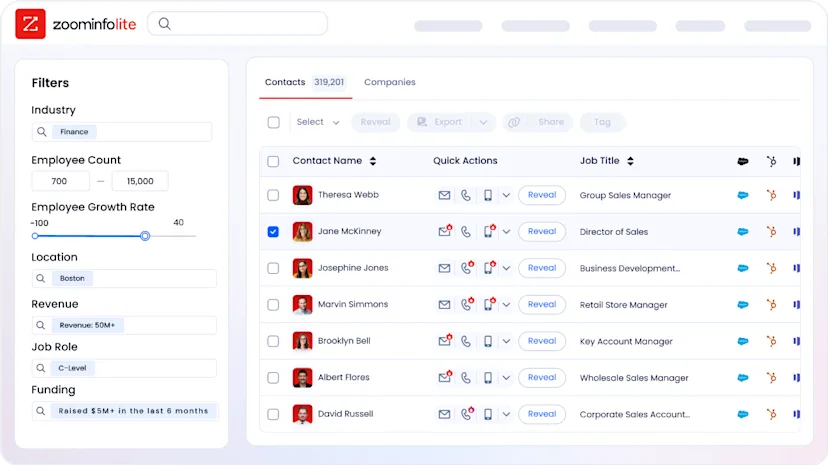
ZoomInfo Lite is a permanent free tier (not a trial) with access to the B2B database, 10 monthly export credits, individual and company searches, a Chrome Extension, and WebSights Lite for up to 10 website visitor reveals per day. A 7-day free trial is also available with no credit card required. API access is included in all relevant plans.
Who Should Use ZoomInfo?
Choose ZoomInfo if:
You need B2B data and intent signals in one subscription, eliminating the need to stitch together Bombora for intent, a separate vendor for contacts, and another for company intelligence.
Your revenue team needs AI that understands why deals move (not just that research is happening), powered by the GTM Context Graph that fuses your CRM data, conversation intelligence, and third-party signals.
You want intent data accessible in any tool, whether through ZoomInfo's native GTM Workspace and GTM Studio or via APIs and MCP in your own AI agents and custom applications.
Want to see how ZoomInfo's GTM Context Graph can strengthen your go-to-market execution? Start your free trial or request a demo to see the platform in action.
2. 6sense — Best Alternative for Enterprise ABM Execution with Predictive Buying Stage Intelligence

Source: 6sense
6sense is an enterprise revenue intelligence platform that combines multi-source intent aggregation, predictive AI buying stage models, and ABM campaign execution in one system. Unlike Bombora's data-only model, 6sense captures intent signals and also executes campaigns, orchestrates workflows, and automates outreach based on those signals. Its key features include:
Multi-source intent synthesis pulling signals from Bombora's own Data Co-op, G2, TrustRadius, TechTarget, PeerSpot, Gartner Digital Markets, and SourceForge, plus its own B2B Network crawling engine tracking keyword research in over 40 languages
Predictive AI buying stages classifying accounts into five stages (Target, Awareness, Consideration, Decision, Purchase) using models trained on each customer's data
Intelligent Workflows for multi-channel orchestration across display ads, LinkedIn, Google Ads, Meta, Marketo, Eloqua, Salesforce, HubSpot, Salesloft, and Outreach
RevvyAI as a conversational AI command center for setting up signals, building audiences, and launching campaigns through natural language
Why Choose 6sense Over Bombora for Enterprise ABM Execution?
6sense stands out in the following areas:
Full-Stack ABM Execution vs. Data-Only Model. Bombora delivers intent signals that customers must activate through separate tools. 6sense includes a native advertising DSP, AI Email Agents, and Intelligent Workflows that turn signals into campaigns without leaving the platform.
Predictive Buying Stage Intelligence vs. Relative Surge Scores. Bombora's Company Surge® measures that something changed; 6sense predicts what that change means. By analyzing over 500 billion signals monthly and training models on your specific CRM data, 6sense classifies accounts by likelihood to purchase within 90 days, not just by relative research intensity.
Multi-Source Intent Aggregation. Bombora's Co-op covers web publisher behavior. 6sense synthesizes Bombora's data with G2 comparison page visits, TrustRadius review activity, TechTarget editorial engagement, and its own web crawling engine, creating nearly 10x the intent coverage of any single source.
Source: 6sense
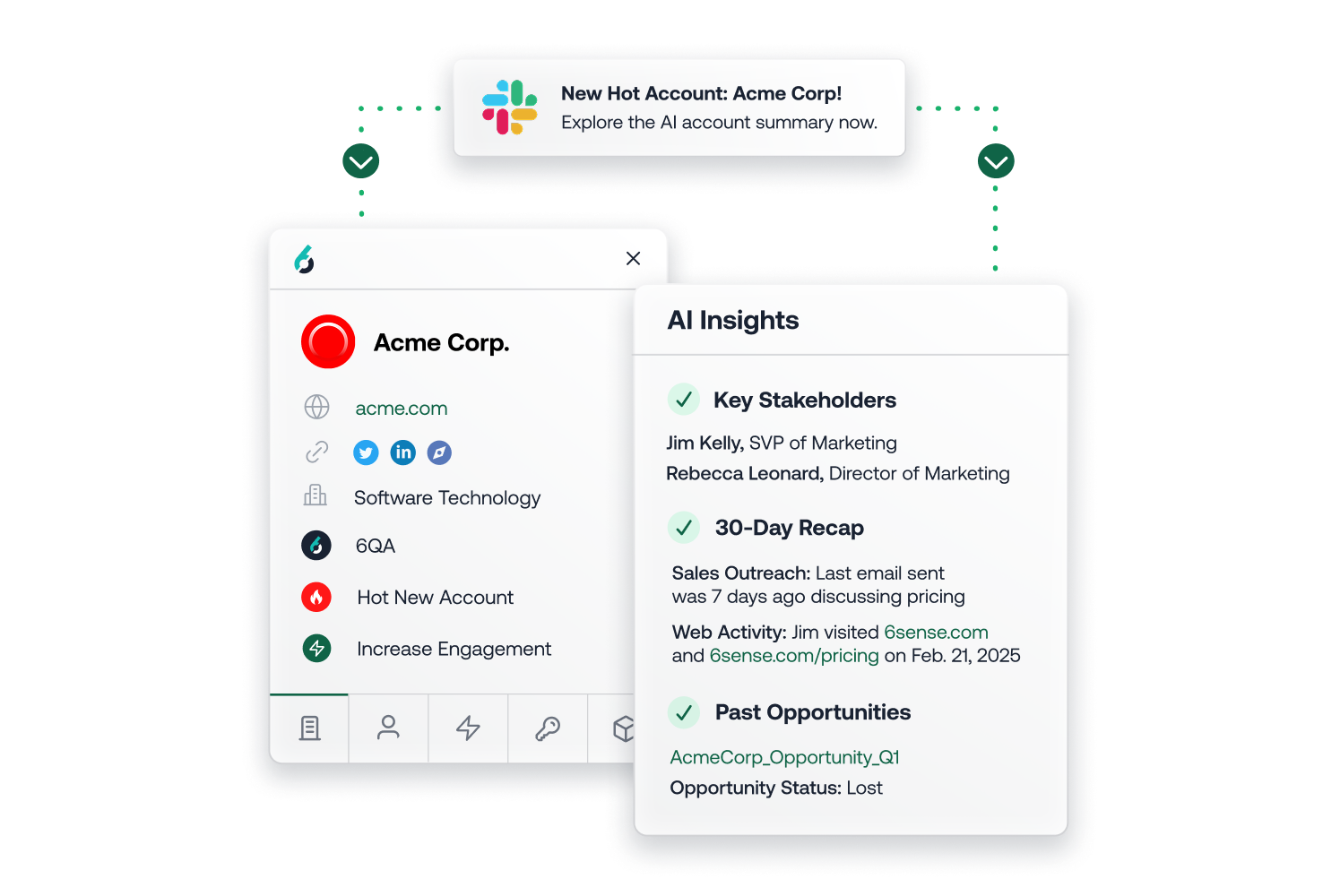
🏅 NOTE: We also evaluated Demandbase and TechTarget for this archetype. Demandbase excels at account-based advertising with its native B2B DSP, and TechTarget is strong for vendor-specific intent from owned technology media properties. 6sense offers the most complete enterprise-grade alternative for large ABM programs with dedicated RevOps teams, combining multi-source intent, predictive AI, and full-stack execution. It has been named a Gartner MQ Leader for ABM Platforms for five consecutive years.
6sense Pricing
6sense operates on a custom-quote model with no published prices for paid tiers. The platform offers a Free Sales Intelligence plan with 50 credits per month for contact unlocks, company search, and a Chrome Extension. Paid tiers include Sales Intelligence (single license model) and ABM Intelligence (Revenue Marketing + Predictive Modeling) requiring direct sales contact. Advertising capabilities have no contractual minimum spend but carry 15-18% variable data/service fees.
Who Should Use 6sense?
Choose 6sense if:
Your ABM program has outgrown Bombora's data-only model and you need integrated execution across advertising, email, and sales engagement with 5-10 hours saved per week on manual coordination.
You need buying stage predictions calibrated to your specific win patterns, not generic surge scores that don't distinguish between early exploration and purchase readiness.
You want Bombora's Co-op signals plus G2, TrustRadius, and Gartner intent in a single view rather than managing multiple data contracts.
3. Demandbase — Best Alternative for Self-Contained ABM with Native B2B Advertising
Source: Demandbase
Demandbase is a pipeline AI platform that integrates proprietary intent data, a B2B advertising DSP designed for account-based campaigns, and website personalization into a single system. Unlike Bombora's data-only approach, Demandbase delivers the full ABM execution stack with intent data included at no extra charge. Its key features include:
Included intent data processing over 2 trillion intent signals per month at no additional cost
Piper, a B2B-specific DSP, with AdsIQ bidding logic that targets accounts rather than individuals
Website personalization with no-code editing based on firmographics, intent, and journey stage
Agentbase AI that orchestrates in-market account identification and multi-channel plays
Why Choose Demandbase Over Bombora for Self-Contained ABM?
Demandbase stands out in the following areas:
Intent Data Included, Not a Separate Line Item. Bombora customers pay for intent data separately, then pay again for tools to act on it. Demandbase includes intent at no extra charge in the platform subscription. When an account surges, you can launch display ads, personalize their website experience, and trigger email nurtures from the same system that surfaced the signal.
Native B2B Advertising DSP. Bombora offers Digital Audiences activated through third-party DSPs built for consumer advertising. Demandbase's Piper DSP is designed for B2B, with account-level frequency capping that prevents large accounts from consuming disproportionate budget and intent-based bidding that adjusts spend per impression. It also supports B2B-specific connected TV advertising.
Real-Time Website Personalization. Bombora tells you which companies are researching; it cannot change what those companies see on your website. Demandbase's personalization engine works with Account Identification (having classified over 3.7 billion IPs) to swap hero images, rewrite headlines, and change CTAs for surging accounts at the moment they arrive.
Source: Demandbase
🏅 NOTE: We also evaluated 6sense and Terminus (now DemandScience) for this archetype. 6sense offers predictive scoring and multi-source intent but relies on third-party ad tech rather than a native B2B DSP. Terminus focuses on advertising without full go-to-market orchestration. Demandbase offers the most self-contained ABM execution for teams needing included intent data, native advertising, and website personalization in one platform.
Demandbase Pricing
Demandbase does not publish specific dollar amounts. The pricing page confirms a hybrid platform-plus-user fee model. Demandbase One (the flagship platform) spans Marketing, Sales, Advertising, and Data in a single subscription. Custom predictive models are included at no extra charge. Standalone Advertising and Data products are also available for teams not ready for the full suite.
Who Should Use Demandbase?
Choose Demandbase if:
You want to run account-based marketing and advertising without managing separate contracts for intent data, a DSP, and a personalization engine.
Your marketing team needs a B2B DSP that optimizes for accounts and buying committees rather than individual users.
You want website personalization that adapts based on intent signals without engineering support or a separate tool.
4. Apollo — Best Alternative for Small Teams Needing Affordable Intent Data with Built-In Outreach
Source: Apollo
Apollo is a sales intelligence and engagement platform that bundles a 270M+ contact database, topic-level buying intent from over 1,600 topics, email sequencing, and a dialer into one subscription starting at $49 per user per month. Its key features include:
Contact database with included intent data across 270M+ contacts and 70M companies, with Buying Intent available on all plans including free
Built-in multichannel outreach with sequences, Power Dialer, and Parallel Dialer connecting to 100+ prospects per hour
Workflow automation with a visual drag-and-drop builder for signal-triggered plays
Email deliverability tools including built-in warm-up and domain authentication
Why Choose Apollo Over Bombora for Small-Team Intent-Driven Prospecting?
Apollo stands out in the following areas:
Immediate Action Without Integration Work. Bombora requires a separate contact database, CRM integration, and engagement platform to act on intent signals. Apollo collapses this into one: see an account surging, pull up decision-makers from the 270M+ database, and add them to a targeted sequence within minutes. For small teams, consolidating intent, contacts, and outreach into one platform can cut total tooling costs significantly compared to assembling a multi-vendor stack.
Transparent, Accessible Pricing. Bombora has no public pricing, no free trial, and no self-serve sign-up. Apollo starts at $49/user/month with a free-forever Starter plan. A five-person team on Apollo Professional pays $4,740/year compared to an estimated $30,000-$50,000 for a comparable Bombora-based stack.
Contact-Level Data and Intent in One Database. Bombora's Company Surge® is account-level only. Apollo embeds intent data directly into contact search: filter by "VP of Sales at companies surging on sales intelligence" and get individual contacts with verified emails and phone numbers in a single query.
Source: Apollo
🏅 NOTE: We also evaluated Lusha and Cognism for this archetype. Both offer strong contact databases, but neither bundles intent data, email sequencing, and calling into one subscription at Apollo's price point. Apollo is the most accessible all-in-one alternative for teams under 20 people who need to act on intent signals without enterprise budgets.
Apollo Pricing
Apollo uses a per-seat plus credit model:
Free (Starter): $0 forever, 75 credits/month, 2 active sequences, Buying Intent included
Basic: $49/seat/month (annual), 2,500 credits/month, multiple seats
Professional: $79/seat/month (annual), 4,000 credits/month, unlimited sequences, data enrichment
Organization: $119/seat/month (annual, minimum 3 seats), 72,000 credits/year, SSO, advanced API
Who Should Use Apollo?
Choose Apollo if:
Your team has fewer than 20 salespeople and needs contact data, intent signals, and outreach tools in one subscription without enterprise budgets.
You want transparent, self-serve pricing with a free tier to validate value before committing.
You lack dedicated RevOps resources to manage a multi-tool stack of Bombora plus a contact database plus an engagement platform.
5. TechTarget Priority Engine — Best Alternative for Prospect-Level IT Buyer Intent
Source: TechTarget
TechTarget Priority Engine surfaces named individual contacts researching enterprise technology solutions across an owned network of 220+ technology-specific properties. Unlike Bombora's account-level model, Priority Engine delivers person-level intent showing which individual is researching which technologies. Its key features include:
Prospect-Level Intent data with named contacts matched to their personal research activity
First-party data from 220+ owned technology media sites produced by 750+ in-house editors and analysts
IntentMail AI generating personalized outreach emails in approximately 45 seconds
Content syndication via the Always-On Buying Groups module
Why Choose TechTarget Over Bombora for IT Buyer Intent?
TechTarget stands out in the following areas:
Person-Level Intent vs. Account-Level Aggregation. Bombora tells you Company X is researching "CRM software." TechTarget tells you Sarah Johnson, VP of Sales Operations at Company X, downloaded a Salesforce migration whitepaper and researched three competitive vendors this week.
Owned Editorial Network vs. Third-Party Co-op. TechTarget controls the full stack: content creation by 750+ journalists, publication on owned properties, and data collection. For technology vendors, signals from buyers reading technical content on TechTarget's cybersecurity publication carry more purchase-intent weight than general B2B topic surges.
Technology Market Specialization. TechTarget covers 240+ B2B technology markets with weekly refresh, while Bombora's 20,100+ topics span all B2B categories. For enterprise IT vendors, TechTarget's concentrated signal density in technology sub-markets provides more actionable intelligence.
Source: TechTarget
🏅 NOTE: We also evaluated Clearbit (now part of HubSpot) and G2 for this archetype. Clearbit excels at real-time firmographic enrichment, and G2 provides intent from software review activity. TechTarget offers the most granular prospect-level intent from owned technology media for vendors selling to enterprise IT buyers. It was named a Leader and Customer Favorite in The Forrester Wave: Intent Data Providers For B2B, Q1 2025.
TechTarget Priority Engine Pricing
TechTarget does not publish pricing. All terms are negotiated directly with seat-based licensing and export cap metering. Contracts are non-cancellable for the subscription term. Optional add-ons include Intent Insights Services (expert GTM guidance) and the Omdia Technology Decision-Maker Insights Service.
Who Should Use TechTarget Priority Engine?
Choose TechTarget if:
You sell enterprise technology solutions (infrastructure, cloud, cybersecurity, networking) to IT buyers and need person-level intent signals from technology-specific editorial content.
You want to reference the exact whitepapers and vendor comparisons prospects consumed, not just know their company is researching a general topic.
You run both demand generation and ABM programs and want to bundle content syndication with intent data in a single vendor.
6. Leadfeeder (by Dealfront) — Best Alternative for First-Party Website Intent Without Enterprise Pricing
Source: Leadfeeder
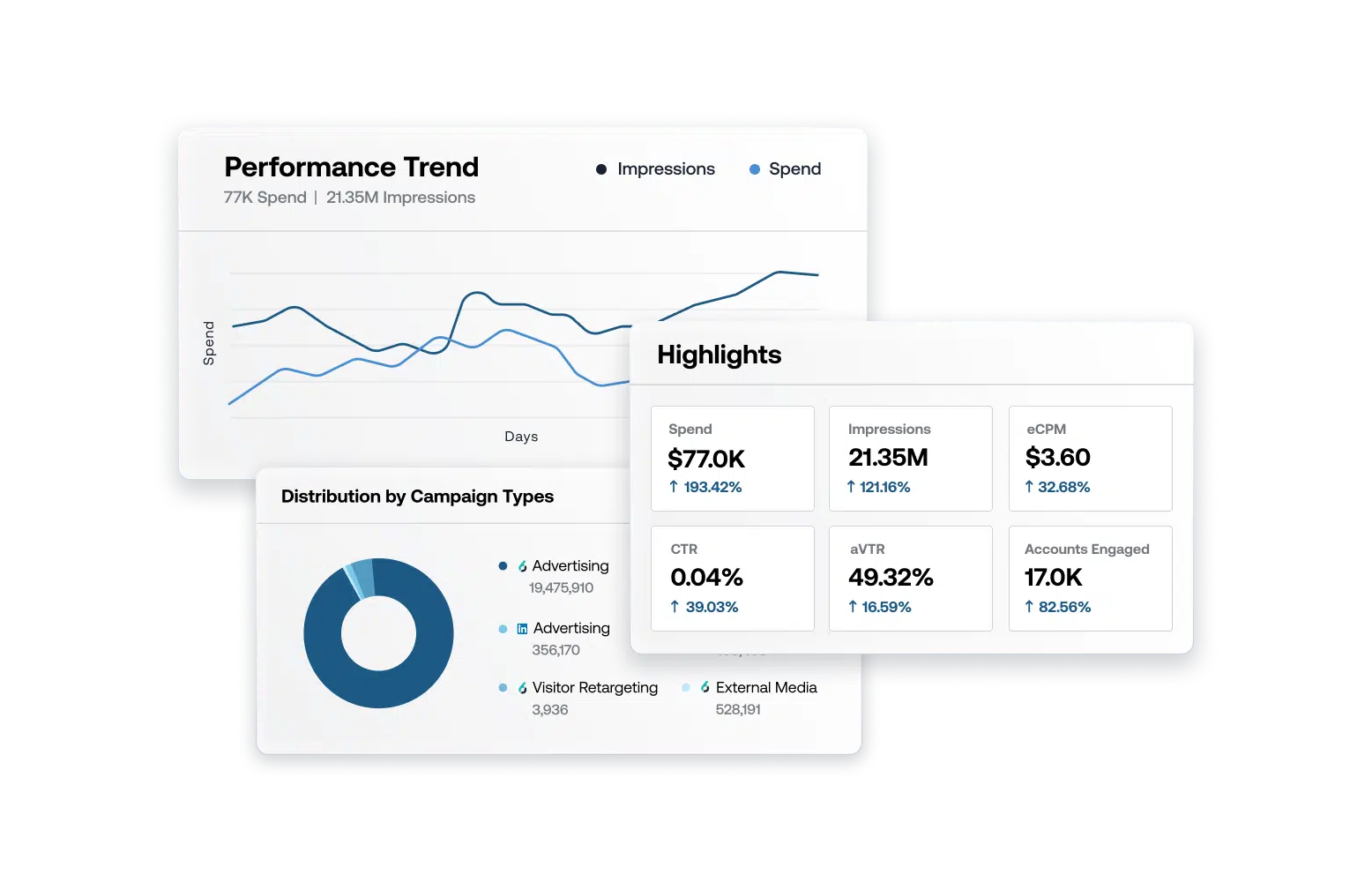
Leadfeeder converts anonymous website traffic into named company accounts with behavioral context and decision-maker contact details. Unlike Bombora's third-party intent model, Leadfeeder captures first-party behavioral signals directly from your own website. Its key features include:
A permanent free plan identifying up to 100 companies per month with no credit card required
Website visitor identification with up to 45% of traffic resolved through a proprietary database rebuilt daily
A 400M+ contact database for decision-maker discovery with verified emails, phone numbers, and LinkedIn profiles
Custom Feeds with 50+ behavioral and firmographic filters for segmentation and lead scoring
Why Choose Leadfeeder Over Bombora for First-Party Website Intent?
Leadfeeder stands out in the following areas:
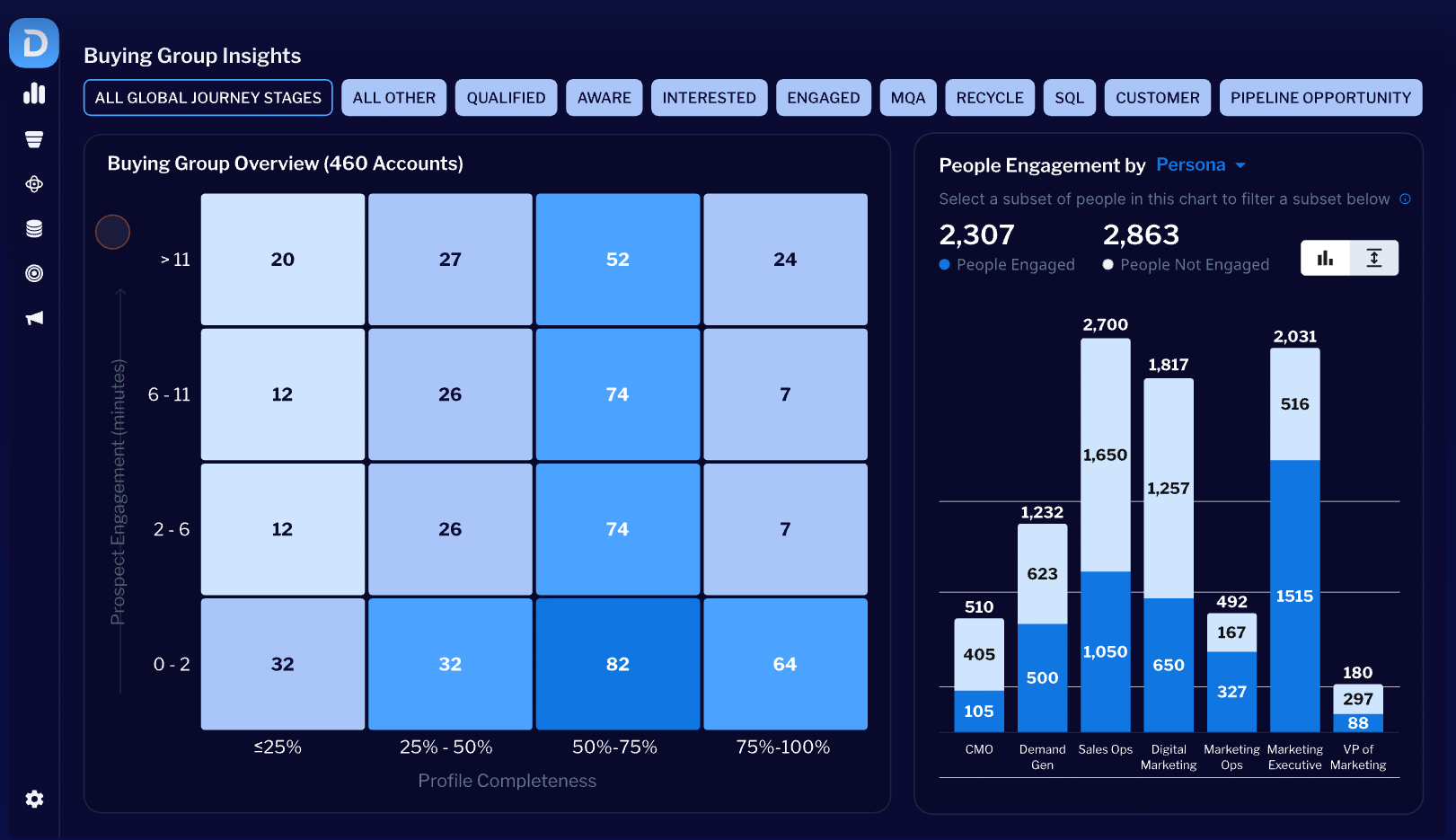
First-Party Website Behavior vs. Third-Party Content Consumption. Bombora tells you a company is researching your category somewhere on the web. Leadfeeder tells you that same company visited your pricing page three times, downloaded your ROI calculator, and returned after clicking a LinkedIn ad.
Zero-Cost Entry Point. Bombora has no free plan, no self-serve tier, and no general trial. Leadfeeder's permanent free plan identifies up to 100 companies monthly with no time limit, and paid plans start at approximately €99/month with transparent, published pricing.
Standalone Actionability. Bombora is a data feed requiring CRM, MAP, or ABM platform integration to act on signals. Leadfeeder is a complete application: identify visitors, view behavioral details, reveal decision-maker contacts, and initiate outreach from the dashboard without connecting a CRM.
Source: Leadfeeder
🏅 NOTE: We also evaluated Clearbit Reveal (now part of HubSpot) and Albacross for this archetype. Clearbit Reveal is now HubSpot-only, limiting accessibility. Albacross provides comparable tracking but lacks Leadfeeder's 400M+ contact database. Leadfeeder offers the most accessible free entry point to first-party intent data with standalone value and no mandatory infrastructure.
Leadfeeder Pricing
Leadfeeder uses usage-based tiers scaling with companies identified per month:
Lite (Free Forever): €0/month, up to 100 companies, 7-day history, 20 contacts shown
Web Visitors (Paid): Starting at €99/month (annual), unlimited history, lead scoring, CRM integrations
Platform Tier: Starting at €399/month (annual), adds access to the 60M+ company and 400M+ contact global database with AI enrichment
A 14-day free trial of full paid functionality is available, downgrading to the permanent free plan if not purchased.
Who Should Use Leadfeeder?
Choose Leadfeeder if:
Your primary challenge is converting existing website traffic into pipeline rather than generating awareness in accounts that don't know you yet.
You need a zero-cost or low-cost intent solution that delivers value immediately without enterprise budgets or procurement cycles.
Your team lacks the CRM or ABM infrastructure to activate Bombora's data feeds and wants a standalone tool that works out of the box.
7. Common Room — Best Alternative for Signal-Based Selling Across Community and Product Channels
Source: Common Room
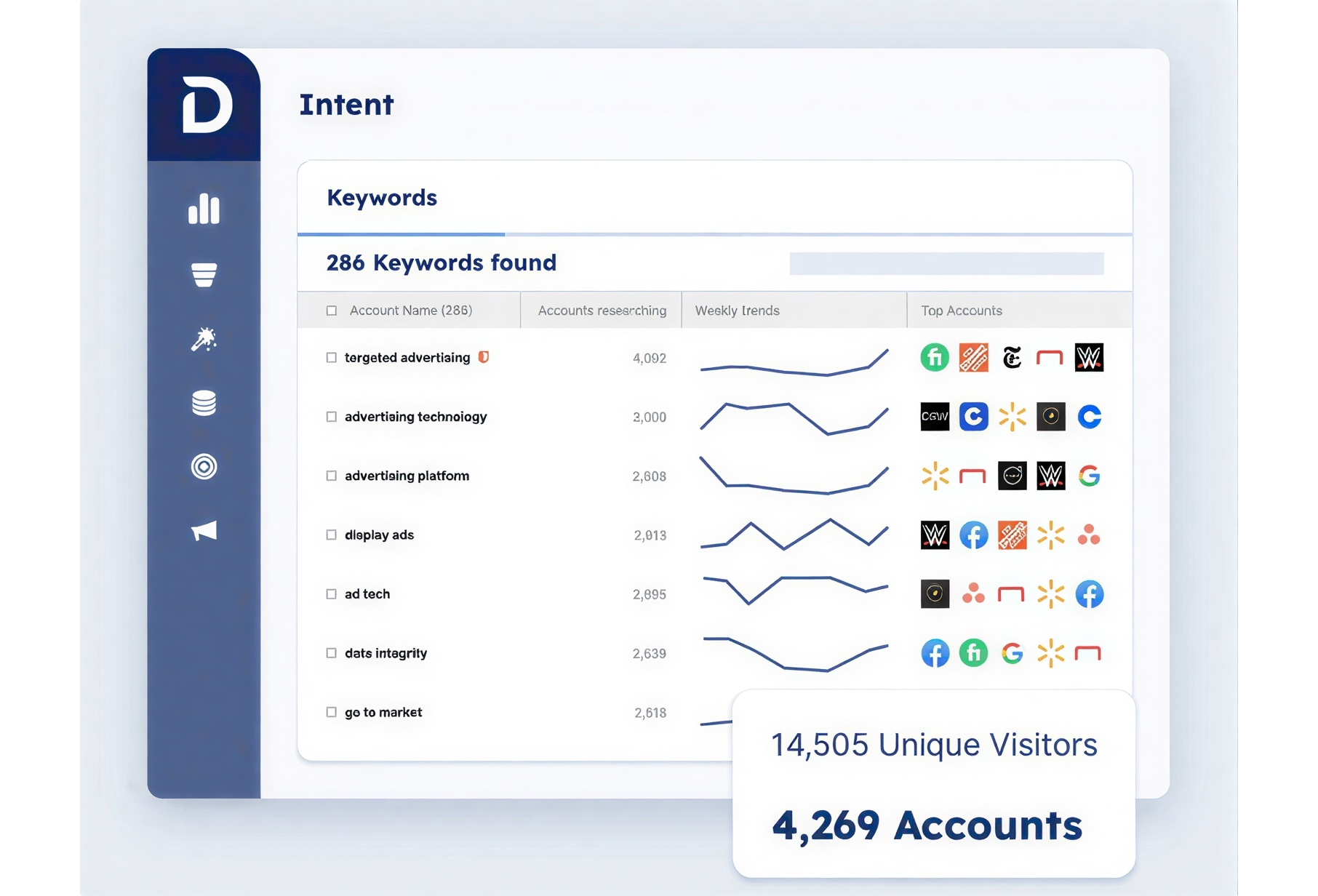
Common Room aggregates buying signals from sources Bombora cannot see (Slack, Discord, GitHub, Stack Overflow, product usage, social media) and resolves them to individual people rather than just companies. Its key features include:
50+ signal sources spanning community, product usage, social, and web channels
Person360 identity resolution with 30-50% higher match rates than competitors
RoomieAI agents for autonomous research, prospect briefs, and personalized outreach
Custom signal scoring and automated workflows triggering plays based on multi-channel signal combinations
Why Choose Common Room Over Bombora for Signal-Based Selling?
Common Room stands out in the following areas:
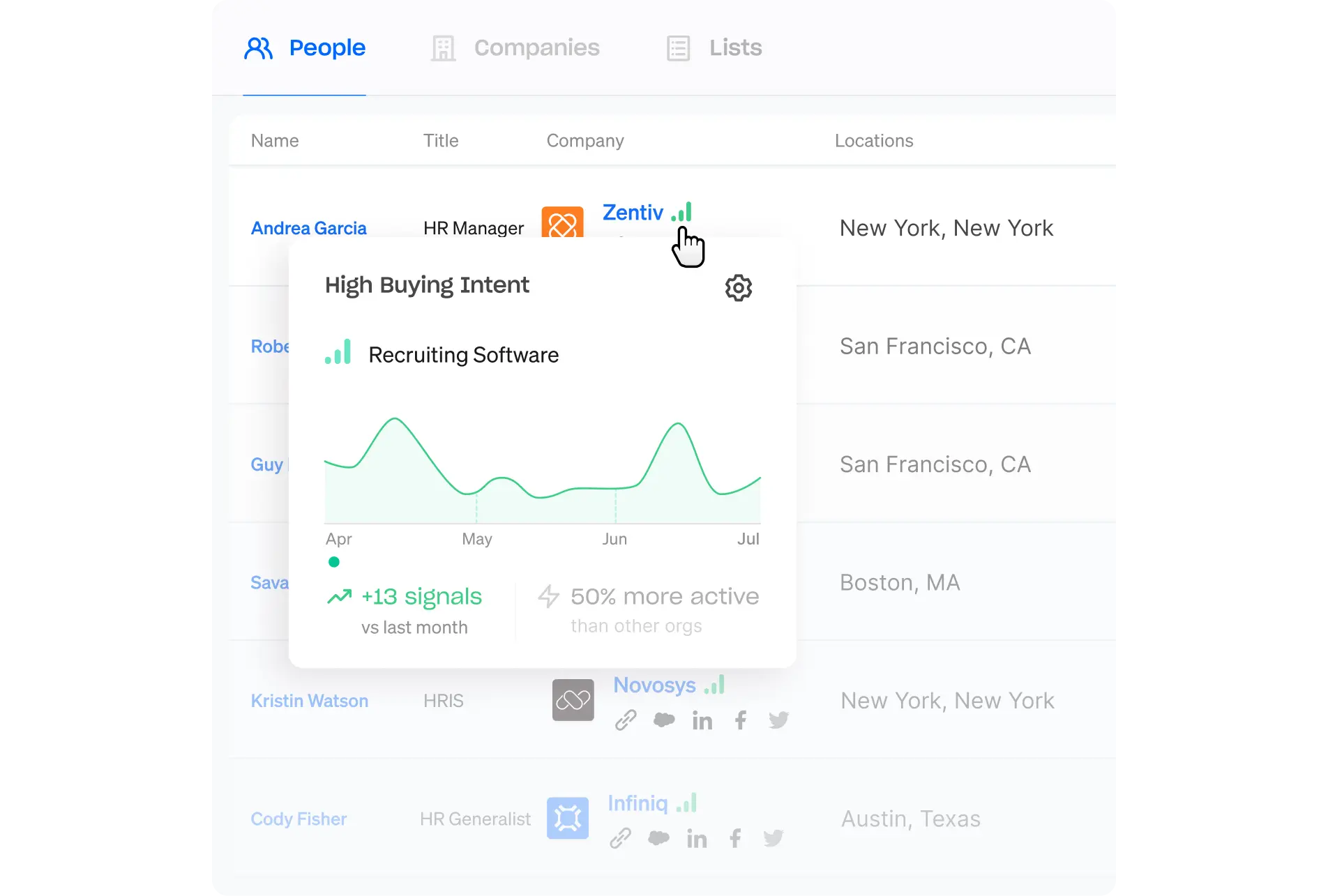
Person-Level Signal Resolution. Bombora collects company-level behavioral data and builds business profiles, not profiles of individuals. Common Room's Person360 matches every signal to a specific individual with verified contact information.
Dark Funnel Signal Coverage. Bombora tracks content consumption across publisher websites. Common Room captures signals from Slack, GitHub, Stack Overflow, Reddit discussions, product trial activity, and social engagement that traditional intent providers miss entirely.
Built-in Execution Layer. Bombora provides a data feed with no native workflow or outreach capability. Common Room's Actions layer with Workflows and RoomieAI Spark delivers signal-to-outreach automation.
Source: Common Room
🏅 NOTE: We also evaluated Koala and Warmly for this archetype. Koala excels at website visitor identification for PLG companies, and Warmly offers real-time Slack-based engagement. Common Room provides the broadest signal aggregation across community, product, social, and web channels with person-level identification, making it the strongest choice for software companies with developer-led or community-led motions.
Common Room Pricing
Common Room uses an annual subscription model:
Starter: $1,700/month (annual), 35,000 contacts, 2 seats, 240K IP enrichments/year, 6 Bombora Company Surge Topics included
Team: Custom pricing, 100,000 contacts, 5 seats, product activity signals included, 12 Bombora Topics
Enterprise: Custom pricing, 200,000 contacts, 10 seats, 25 Bombora Topics, SAML/SCIM, dedicated success manager
Who Should Use Common Room?
Choose Common Room if:
Your buyers research and evaluate in communities, open-source repos, and product trials, not just on publisher websites.
You need person-level signal resolution rather than account-level intent scores that require separate identity resolution.
You run product-led or community-led growth motions where web intent captures only a fraction of actual buyer research activity.
The Final Verdict
Bombora remains the standard for account-level intent data feeds, but teams with different go-to-market motions, budgets, and execution needs often require more specialized or complete solutions. Based on our research, here are the best alternatives:
ZoomInfo for B2B data combined with AI-powered GTM intelligence, intent signals, and access through native experiences and APIs
6sense for enterprise ABM programs needing predictive buying stage intelligence, multi-source intent synthesis, and campaign execution
Demandbase for self-contained ABM execution with included intent data, a native B2B advertising DSP, and website personalization
Apollo for small-to-midsize teams needing affordable, all-in-one intent data, contact database, and outreach tools
TechTarget Priority Engine for technology vendors needing prospect-level intent from specialized editorial properties
Leadfeeder for teams needing first-party website visitor identification with a free entry point and standalone value
Common Room for software companies needing signal intelligence across communities, product usage, and social channels with person-level identification
You don't have to choose between Bombora and these alternatives exclusively. Many organizations use Bombora alongside complementary tools to widen their signal coverage. Consider your go-to-market motion, team size, and execution needs when deciding which solution fits best.
Want to see how a B2B data platform can support your entire go-to-market strategy? Start your free ZoomInfo trial or request a demo to see the GTM Context Graph in action.
Bombora Alternatives FAQ
Why do businesses look for Bombora alternatives?
Bombora excels as a pure intent data provider, but its data-only positioning means customers need separate tools for contact data, campaign execution, and workflow automation. Teams also look for alternatives when they need person-level intent rather than account-level signals, first-party website data rather than third-party publisher data, or self-serve pricing rather than enterprise-only contracts.
What is the best overall Bombora alternative?
There is no single best alternative because Bombora serves different use cases for different teams. ZoomInfo is the most complete upgrade for teams needing B2B data, intent signals, and AI intelligence in one platform. 6sense is the strongest choice for enterprise ABM execution. Apollo is the best option for small teams needing affordable intent data with built-in outreach.
Is there a free alternative to Bombora?
Yes. Leadfeeder offers a permanent free plan identifying up to 100 companies per month from your website traffic. Apollo provides a free-forever Starter plan with buying intent data across 1,600+ topics. ZoomInfo Lite is a permanent free tier with access to its B2B database, 10 monthly export credits, and WebSights Lite. 6sense offers a free Sales Intelligence plan with 50 credits per month.
Which Bombora alternative is best for small businesses?
Apollo is the most accessible option for small businesses, starting at $49 per user per month with intent data, a 270M+ contact database, email sequencing, and calling included. Leadfeeder's free plan and transparent pricing starting at approximately €99/month also work for smaller teams.
Can I use Bombora alongside these alternatives?
Yes. Several alternatives integrate Bombora's data directly. 6sense includes Bombora Co-op data as one of its intent sources. Common Room includes Bombora Company Surge Topics on all plans. Many teams use Bombora for broad market intent alongside a tool like Leadfeeder for first-party website signals or Common Room for community and product usage signals.
Which alternative provides person-level intent data instead of account-level?
TechTarget Priority Engine delivers named individual contacts with the specific technologies and vendors each person is researching, directly from 220+ owned technology media properties. Common Room provides person-level signal resolution from community, product, and social channels. Bombora's Company Surge is account-level only.
How does ZoomInfo compare to Bombora for intent data?
ZoomInfo tracks intent signals from 210 million IP-to-Organization pairings and 6 trillion+ new keyword-to-device pairings sourced monthly, including exclusive Guided Intent that identifies topics historically correlated with deal success. The key difference: ZoomInfo pairs intent with 500M contacts, 100M companies, and the GTM Context Graph intelligence layer, so teams get both the "who is researching" signal and the contacts, company context, and AI intelligence needed to act on it immediately.
Which Bombora alternative is best for technology companies?
TechTarget Priority Engine is designed for B2B technology vendors, with 220+ owned technology editorial properties and 240+ B2B technology market segments. Common Room is ideal for software companies with developer-led or community-led growth motions, capturing signals from GitHub, Stack Overflow, and product usage that web-publisher intent data misses.
