
Brandwatch is a social intelligence and management suite that tracks what consumers say about brands across social media, news, broadcast, forums, and search, then turns that data into publishing, engagement, influencer campaigns, and executive reporting from one platform.
If you are evaluating Brandwatch or already using part of the suite, the question is not whether it does social listening (it does). The question is what each module covers, how the pieces connect, and where the platform's capabilities end. This breakdown maps every feature, how it works, who it serves, and which plan unlocks it.
Brandwatch's feature set has you covered if:
You need social listening and consumer research drawing from a 1.7 trillion-conversation archive dating back to 2010
You manage social publishing, engagement, and community management across multiple channels, regions, or brands from one workspace
You run influencer campaigns from creator discovery through payment processing and need a single platform for the full lifecycle
You want AI-powered trend detection, sentiment analysis, and automated insight summaries built into your monitoring workflows
You need competitive benchmarking against a library of 300,000+ social channels with customizable engagement formulas
You want to monitor how generative AI engines like ChatGPT and Gemini characterize your brand across thousands of prompts worldwide
You'll reach the edges of its capabilities if:
You need a verified B2B contact and company database to fuel outbound sales or account-based marketing alongside your social intelligence
You want buyer intent signals showing which companies are actively researching your product category before you engage them
You need to identify the specific people visiting your website, not just monitor what they say on social channels
You want to connect social intelligence insights directly to sales execution with AI-drafted outreach, pipeline management, and CRM automation
For those needs, the reference point is ZoomInfo: an AI GTM platform built on 500M contacts, 100M companies, 135M+ verified phone numbers, and 200M+ verified business email addresses, a GTM Context Graph that fuses B2B data with CRM records, conversation intelligence, and behavioral signals, and access through APIs, MCP, GTM Workspace, and GTM Studio.
Where Brandwatch maps the conversation landscape, ZoomInfo maps the buyer landscape. The two address different sides of the same enterprise marketing and revenue function.
After the feature breakdown, this article covers where Brandwatch stops and how ZoomInfo fills those gaps.
Brandwatch Platform Overview
Brandwatch calls itself "the most intelligent social suite", built on what it describes as "pioneering AI and the deepest analytics on the market". The platform targets enterprise marketing and insights teams, PR and communications departments, social media managers, agencies, and market researchers across financial services, pharma and healthcare, retail, CPG, technology, and media and entertainment.
It earned a Leader position in the IDC MarketScape for Social Marketing Software for Large Enterprises (2024) and a Strong Performer ranking in the Forrester Wave for Social Suites, Q4 2024, where it received the highest possible scores in social listening, privacy and security, and customer service.
The current suite is organized around five modules plus a cross-cutting AI layer:
Module | What It Does | Access |
|---|---|---|
Social listening, consumer research, and market analysis across a 1.7 trillion-conversation archive | Core product; standard to enterprise plans | |
Publishing, engagement, measurement, competitive benchmarking, and advertising across social channels | Separate product (formerly Falcon.io); standard to enterprise plans | |
Creator discovery, campaign management, content approval, and payment processing | Separate product (formerly Paladin); standard to enterprise plans | |
Search analytics across Google, Amazon, TikTok, Baidu, and GenAI engine monitoring | Added via Trajaan acquisition (December 2025) | |
Managed analyst services, custom briefings, and consultancy | Professional services layer | |
Cross-suite AI engine powering sentiment analysis, trend detection, query writing, and content generation | Embedded across all modules |
Brandwatch does not publish pricing for any of its solutions. All plans require contacting sales, and fees are invoiced annually in advance, non-cancellable, and non-refundable. The suite is composed of separately purchased products, each with standard and enterprise tiers. With that structure in place, here is the full tour.
Brandwatch Consumer Intelligence: Social Listening and Market Research
Consumer Intelligence is the foundation the rest of the suite sits on, and the product that built Brandwatch's reputation. It addresses the gap between what brands assume consumers think and what consumers actually say, drawing from the world's largest archive of online conversation rather than structured surveys or focus groups.
Source: Brandwatch
The scale of the underlying data separates Consumer Intelligence from lighter listening tools: 1.7 trillion historical conversations archived back to 2010, with 501 million new conversations added every day.
Source coverage spans over 100 million unique sites with official firehose access to X/Twitter (complete historical access), Reddit (from 2011), and Tumblr, plus Facebook, Instagram, LinkedIn, Threads, Bluesky, TikTok, YouTube, review sites, forums, blogs, news, and broadcast TV and radio across nearly 3,000 channels in 15+ languages.
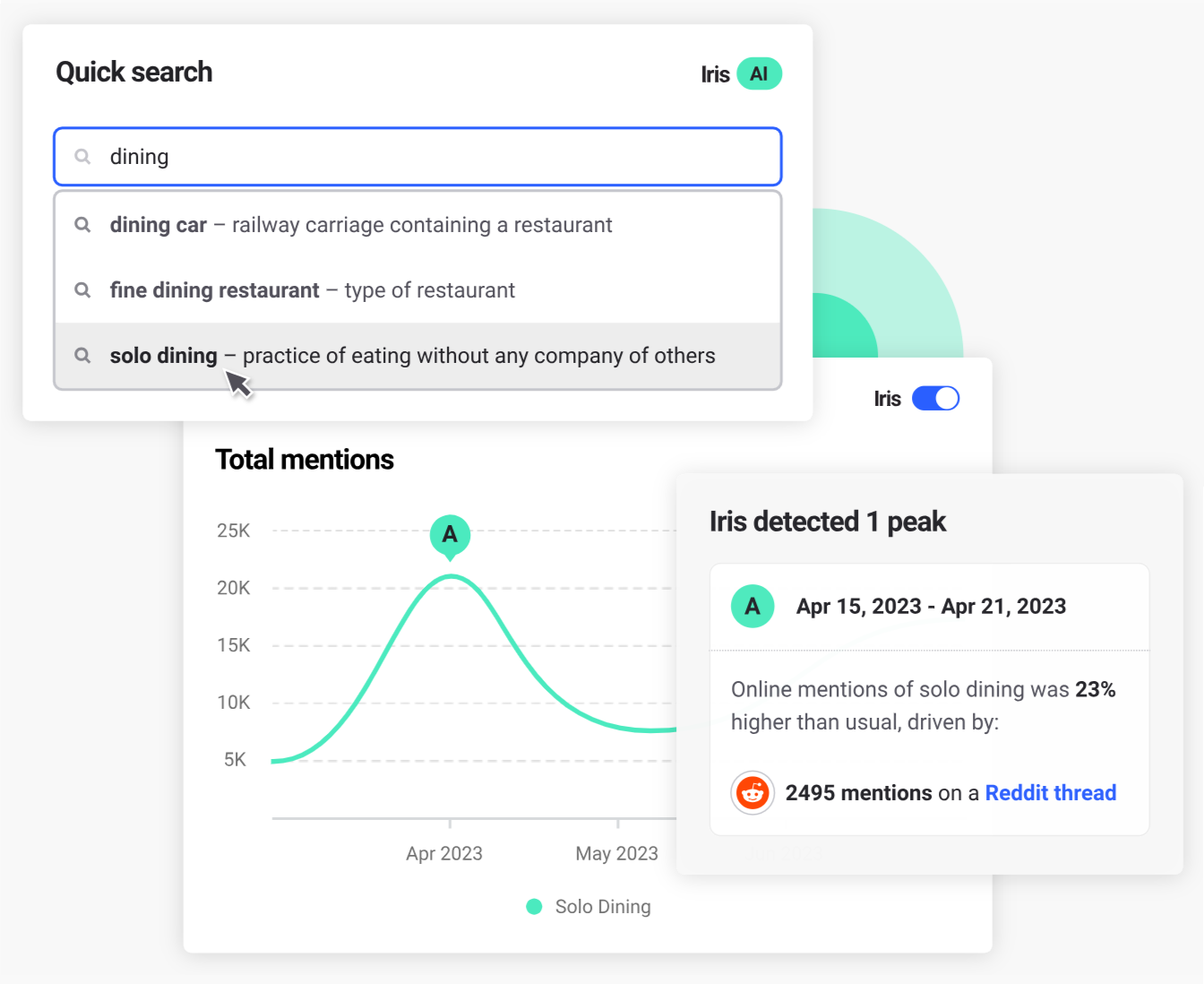
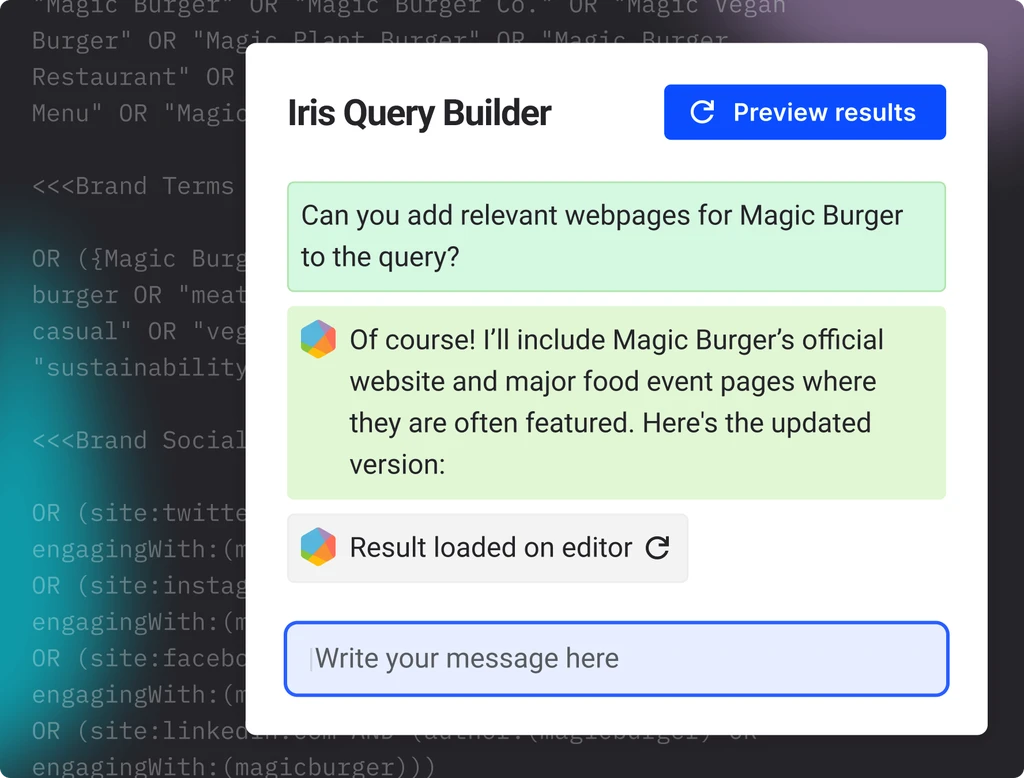
The workflow starts with query building. Users construct Boolean search queries to define which conversations to capture, and Iris AI's Query Writer suggests keywords and subreddit recommendations to build searches faster.
For users who prefer not to write Boolean strings, Ask Iris Quick Search accepts natural language and returns relevant metrics and conversations instantly. The platform also supports importing custom data (support tickets, call logs, survey responses) via the Data Upload API to enrich social data with proprietary sources.
Source: Brandwatch
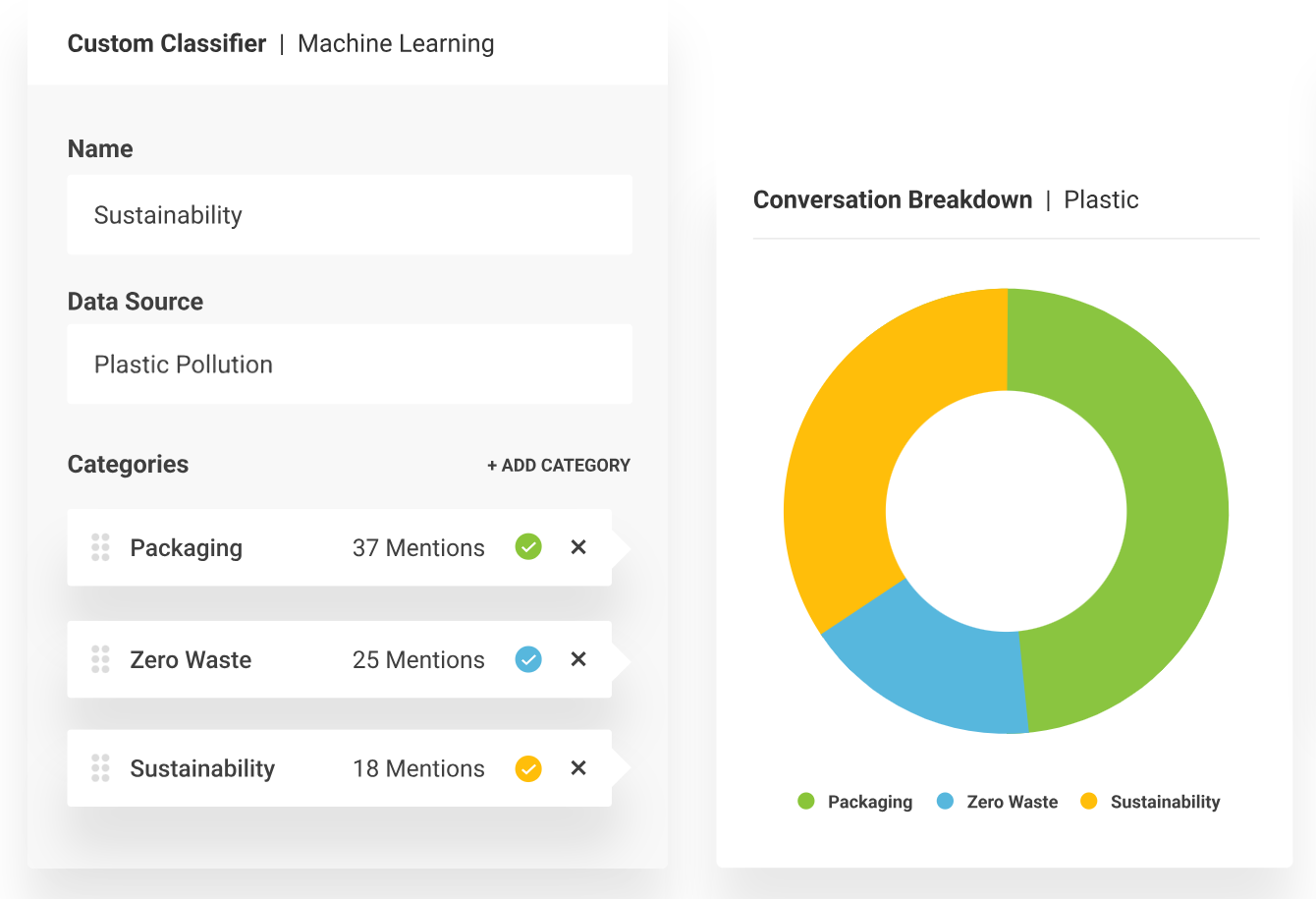
Once data is collected, segmentation separates signal from noise through two mechanisms. Rules apply keyword-based logic to classify data into categories automatically.
Custom Classifiers take a machine learning approach: users drag and drop representative posts into categories, and the platform trains a model to recognize similar content at scale, handling distinctions like purchase intent versus post-purchase sentiment that keywords alone miss. Brandwatch claims over 50,000 ways to segment data using the combined approach.
Analysis surfaces inside customizable dashboards built from 50+ visualization types. Iris AI enriches every mention with sentiment classification in 44 languages, emotion detection, demographic inference (gender, interests, profession, location), entity extraction, and image analysis.
The image analysis detects objects, actions, scenes, and logos within images, capturing visual brand mentions that text-only listening misses. A proprietary Impact Score identifies the most influential voices within any conversation dataset, and Iris detects conversation spikes, identifies the themes driving anomalies, and summarizes insights as plain-language narratives.
Distribution keeps insights flowing to the people who need them. Findings move through automated PDF and HTML email reports, PowerPoint exports, customizable dashboards shared via link, and real-time Signals alerts.
The Vizia add-on enables enterprise reporting command centers that connect Brandwatch data alongside Facebook, Google, and Salesforce data for centralized dashboard distribution. Export formats include CSV, Excel, JPG, PNG, PDF, and HTML.
Brandwatch Social Media Management: Publishing, Engagement, and Measurement
Social Media Management is the execution layer, built from the former Falcon.io suite merged into Brandwatch in May 2022. Where Consumer Intelligence tells you what consumers are saying, SMM gives you the tools to respond: publishing content, engaging with audiences, measuring performance, and benchmarking against competitors across every major social channel.
The suite is organized into seven interconnected modules. Publish centers on a unified content calendar displaying all organic and paid content in one interface across Facebook, Instagram, X/Twitter, LinkedIn, TikTok, YouTube, Pinterest, and Threads.
Source: Brandwatch
The platform supports platform-specific post types including text, image/GIF, video, link, carousel, YouTube Shorts, Pinterest pins, LinkedIn document posts, LinkedIn polls, and Facebook dark posts. Content moves through configurable approval workflows using approval templates before going live, and a Content Pool serves as a shared digital asset library with per-user access permissions.
A Quick Publish mobile app supports on-the-go Instagram publishing, and Employee Advocacy tools extend reach through staff networks. Teams can share Publish content with external stakeholders without requiring platform access, and organic posts can be boosted as ads directly from the calendar.
Engage is the cross-channel social inbox, covering Facebook, X/Twitter, Instagram DMs, LinkedIn DMs, TikTok, WhatsApp, YouTube, Threads, and Google Reviews. Automated rules handle repetitive labeling and routing, while customer profile cards surface historical interaction data and profiles can be merged to unify contact records across channels.
WhatsApp message templates and Google Reviews coverage extend community management beyond channels that competing SMM platforms typically support. The module includes service target tracking with configurable business hours so managers can measure response time against SLAs.
Measure provides customizable analytics dashboards covering channel metrics, content metrics, paid data, demographics, and geographics. Prebuilt dashboard templates span Facebook, Instagram, LinkedIn, X/Twitter, TikTok, YouTube, Pinterest, customer engagement, influencer performance, and Instagram Stories/DMs.
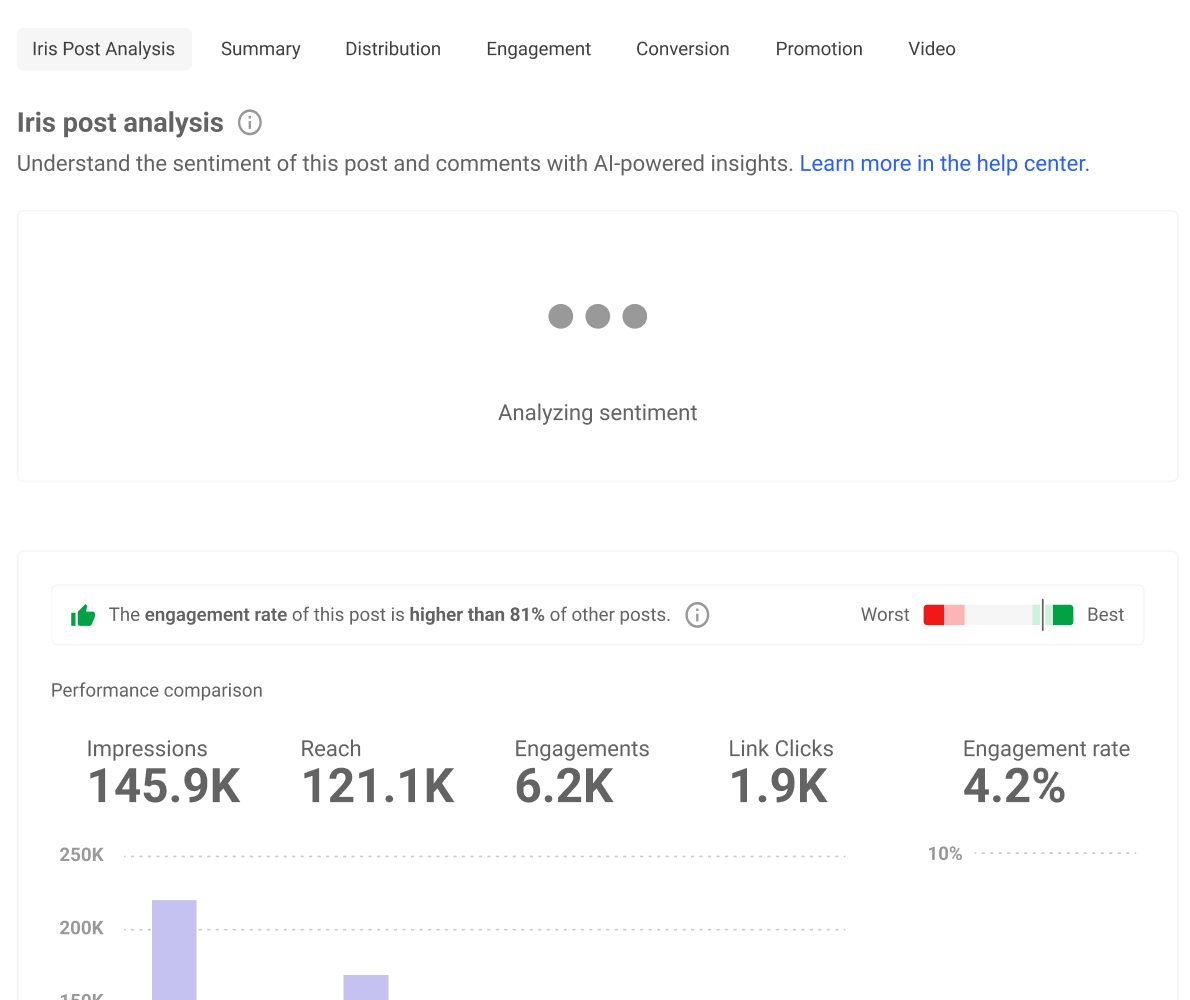
Iris Post Analysis applies AI to surface content intelligence across owned posts, and teams can share dashboards externally with clients or stakeholders who lack platform access.
Source: Brandwatch
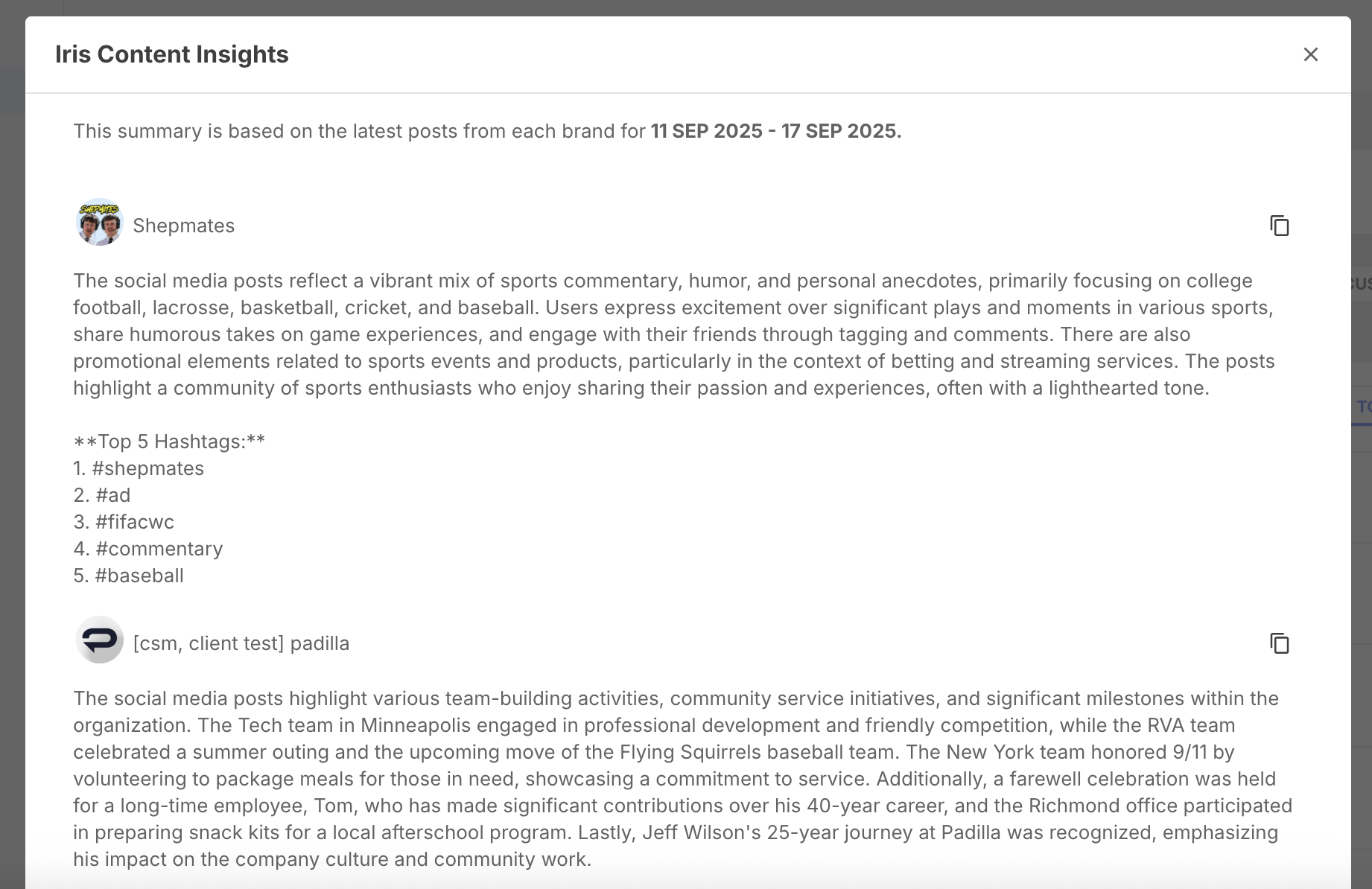
Benchmark compares brand performance against a library of over 300,000 competitor channels with customizable engagement formulas. Iris Content Insights in Benchmark applies AI analysis to competitor content strategies, surfacing what topics, formats, and posting patterns drive the highest engagement for other brands.
The remaining modules (Advertise, Audience, and Listen) round out the suite with paid ad management, audience intelligence, and social listening that feeds trend data back into the publishing and engagement workflows.
As Forrester noted in its 2024 evaluation: "Brandwatch's roots in social listening shine, as it surfaces intelligence and insight throughout the platform." The SMM suite is not a standalone scheduler with analytics bolted on; the listening heritage runs through every module.
Brandwatch Influencer Marketing: Discovery Through Payment
Brandwatch Influence covers the full influencer campaign lifecycle, from finding creators to paying them, in a single environment. The product originated as Paladin (an agency-focused influencer platform), was acquired and integrated into the Brandwatch suite in 2022, and is accessible via a dedicated portal at home.influence.brandwatch.com.
Source: Brandwatch
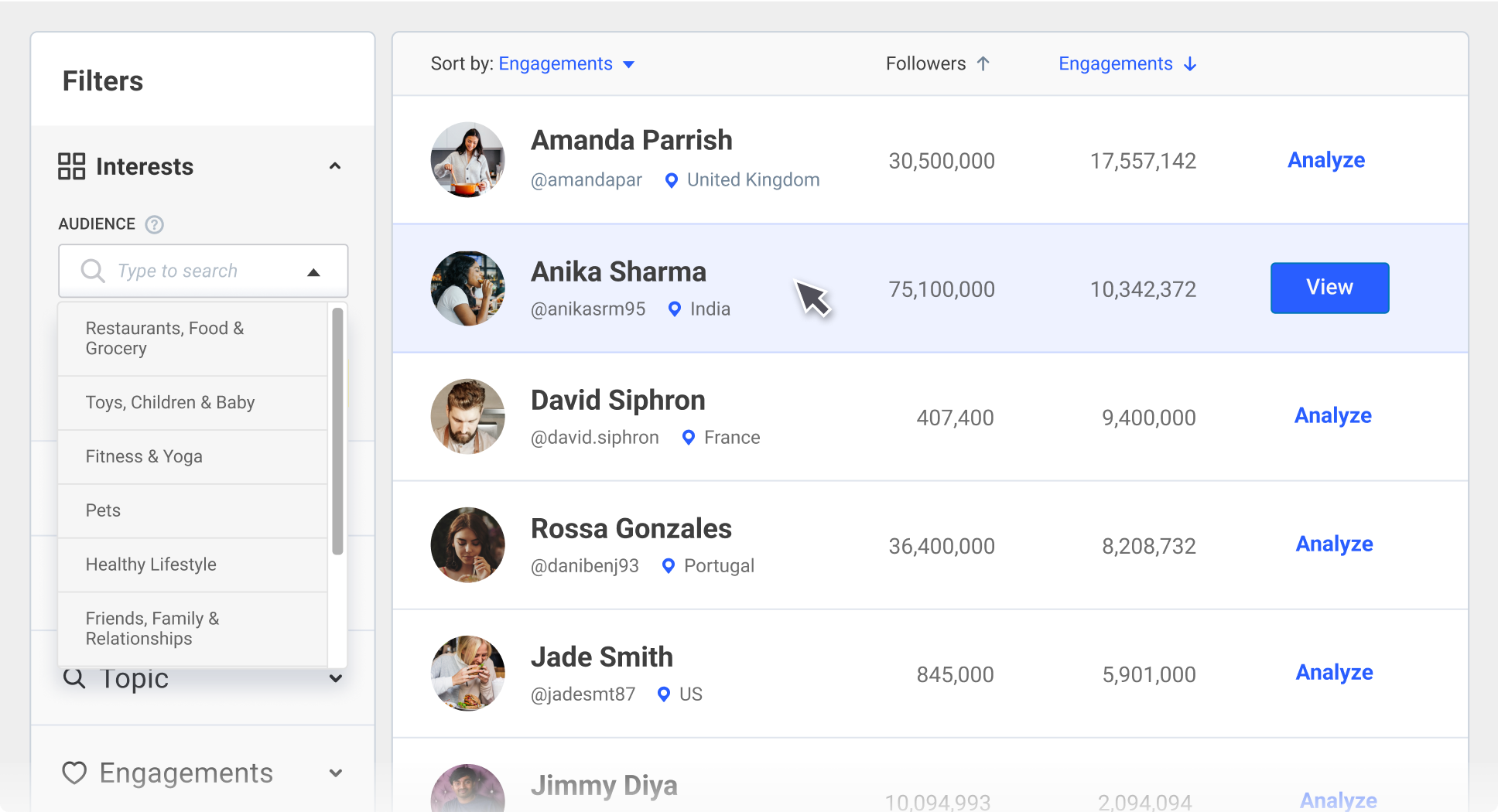
Discover searches a database of 65 million+ global creators across TikTok, YouTube, Instagram, X/Twitter, Facebook, and Twitch.
Filters cover interests, brand affinities, prior brand work, credibility score, location, age, gender, cost per post, follower ranges, and audience demographics, and the platform supports creating per-influencer reports and comparing multiple influencers side by side. A native TikTok Creator Marketplace (TTCM) API integration pulls verified first-party TikTok data rather than relying on scraped estimates.
Once creators are identified, the Influencer CRM stores contact details, payment information, signed contracts, post rates (with separate talent rate and client rate per platform and post type), talent manager assignments, custom fields, and full campaign history per influencer. The platform tracks email correspondence automatically with each creator.
Campaign Management tracks influencers through an eight-stage pipeline: Proposal, Approved, Reached Out, Accepted Offer, Contract Sent, In Campaign, Posts Fulfilled, Paid. Brands or agency clients can review and approve or reject proposed influencers via a shared campaign link without requiring platform access.
The platform automatically ingests campaign posts using defined keywords and hashtags for real-time tracking, and reports show daily and cumulative performance statistics, audience composition, progress toward goals, and total payments made.
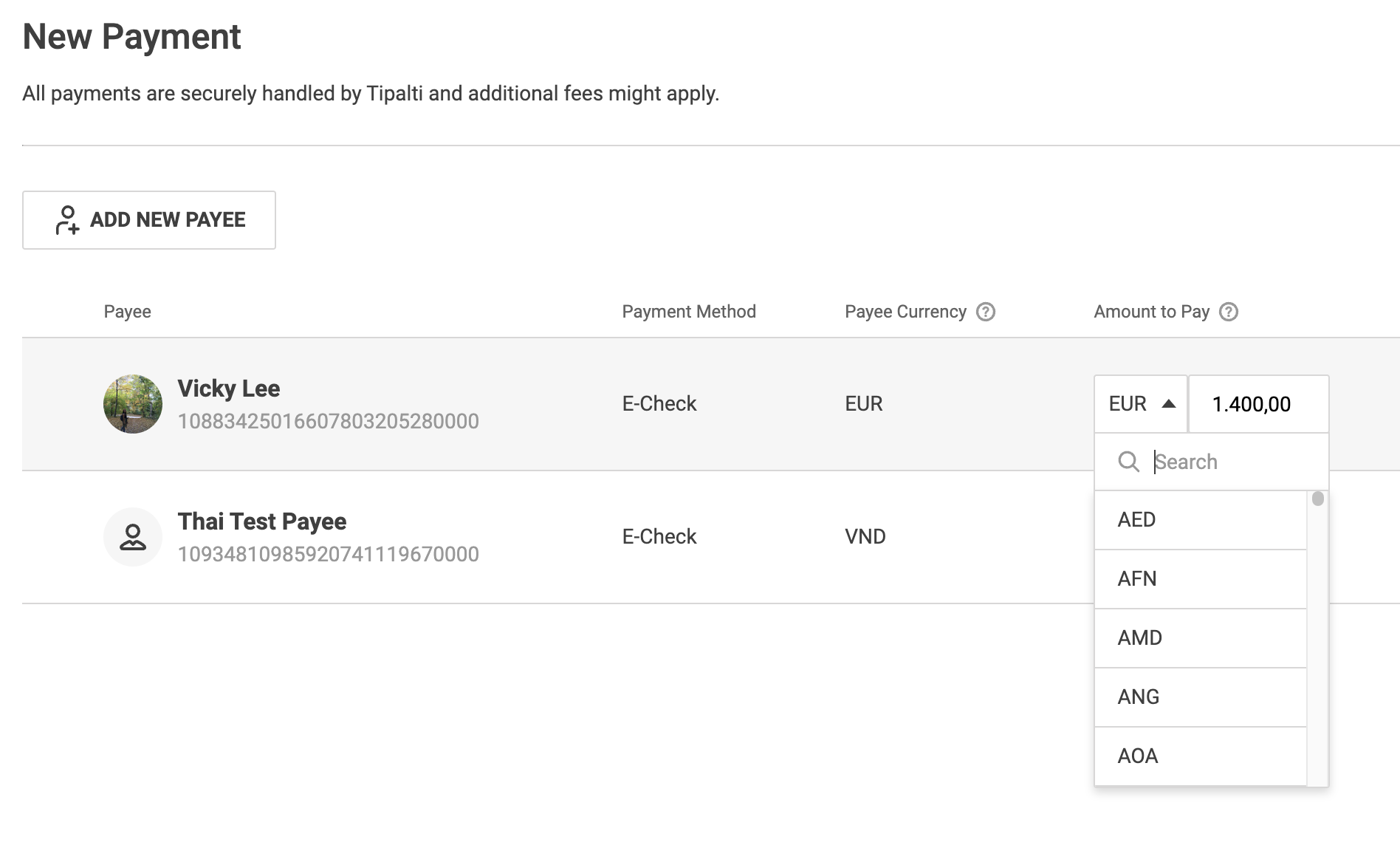
The platform closes the loop with integrated payment processing. Tipalti-powered payments support 120+ currencies via PayPal, check, ACH, and wire transfer, eliminating the need for a separate accounts payable workflow.
Source: Brandwatch
White-labeled, mobile-friendly dashboards for creators show their assignments, post requirements, submitted content, and payment history. Additional integrations include Shopify for e-commerce analytics and Bitly for link tracking.
The Paladin heritage shows in features built for agency workflows: client fields on campaigns, white-labeled creator-facing dashboards, shareable client proposal links with in-link approval, and separate talent rate versus client rate tracking are standard.
Brandwatch Search Intelligence: Demand Signals Beyond Social
Search Intelligence, powered by Trajaan, is the newest addition to the Brandwatch suite, introduced after Cision acquired Trajaan in December 2025. It fills a blind spot in social listening: much of consumer intent is expressed privately through search queries, not publicly on social media.
Source: Brandwatch
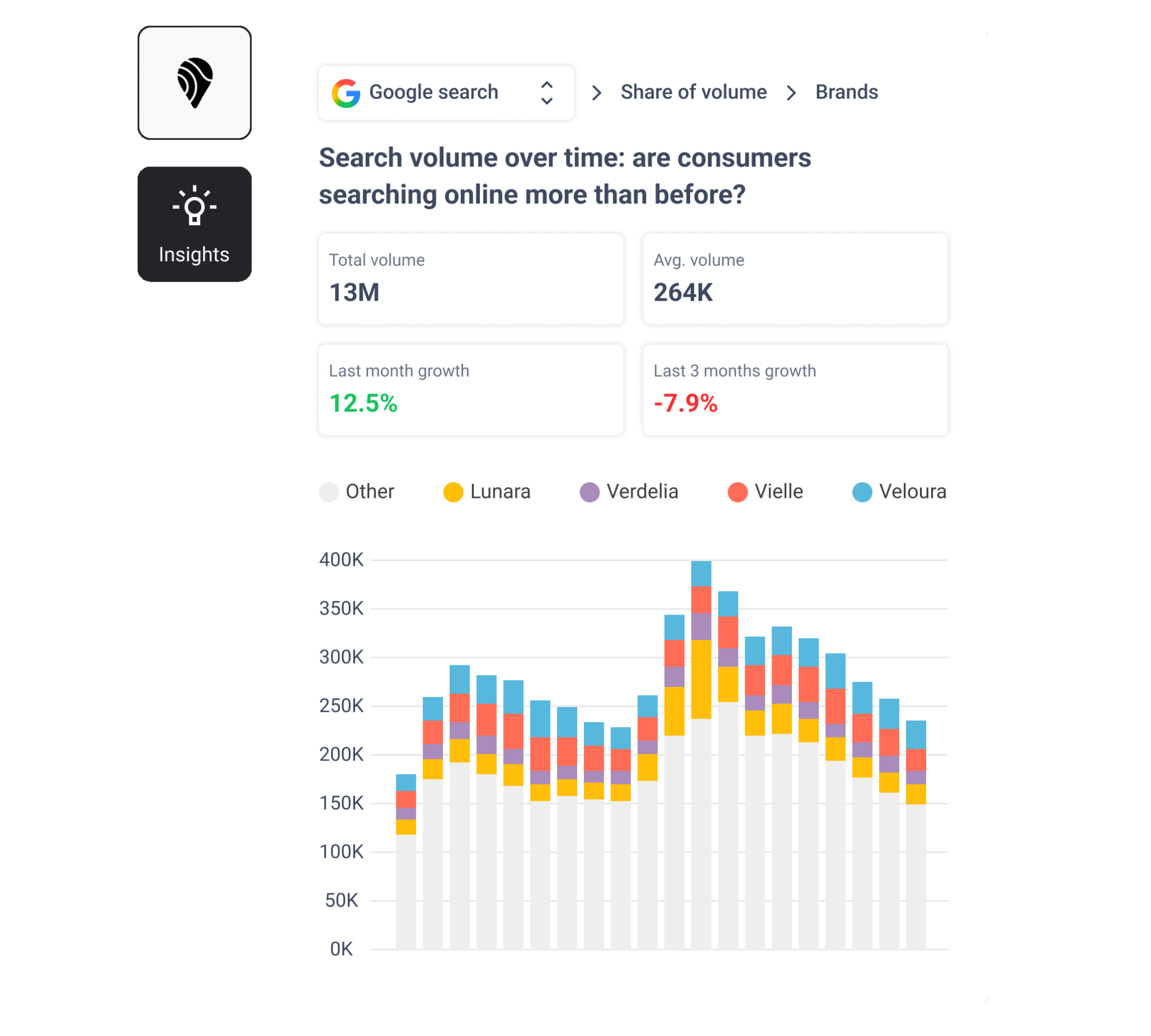
The module monitors search behavior across multiple surfaces: Google, Amazon, TikTok, Baidu, and generative AI engines including ChatGPT, covering more than 150 countries with city-level granularity.
Rather than tracking keyword rankings for a brand's own content (the job of SEO tools), Search Intelligence captures category-wide search demand: what questions consumers ask across an entire market, regardless of which brand ranks for them.
The GenAI monitoring capability stands out. Trajaan submits thousands of prompts across leading LLMs worldwide and records which brands are cited, in what context, and with what sentiment. It then reveals which media domains and pages LLMs trust and recommends where brands should build presence to improve LLM visibility.
For brand protection, the module detects emerging complaints through negative searches and high-risk LLM narratives before issues surface in social or traditional media.
Paired with Consumer Intelligence, Search Intelligence creates what Brandwatch frames as a combined early-warning system tracking risk across search, social, and traditional media simultaneously. Share of volume metrics let brands benchmark their search presence against competitors across different search environments.
Brandwatch Iris AI: The Cross-Suite Intelligence Layer
Iris AI is not a standalone product but a layer embedded across the entire suite. It compresses the gap between the volume of data Brandwatch collects and the speed at which human analysts can process it.
Brandwatch traces its AI work to 2008, with GPT-powered capabilities added from 2020 onward, combining large language models with 17+ years of proprietary AI development built for marketing and communications data.
Iris operates in several modes across the suite. Ask Iris accepts natural language questions and responds with charts, summaries, and insights generated in real time from the underlying data, replacing manual query building for common research questions.
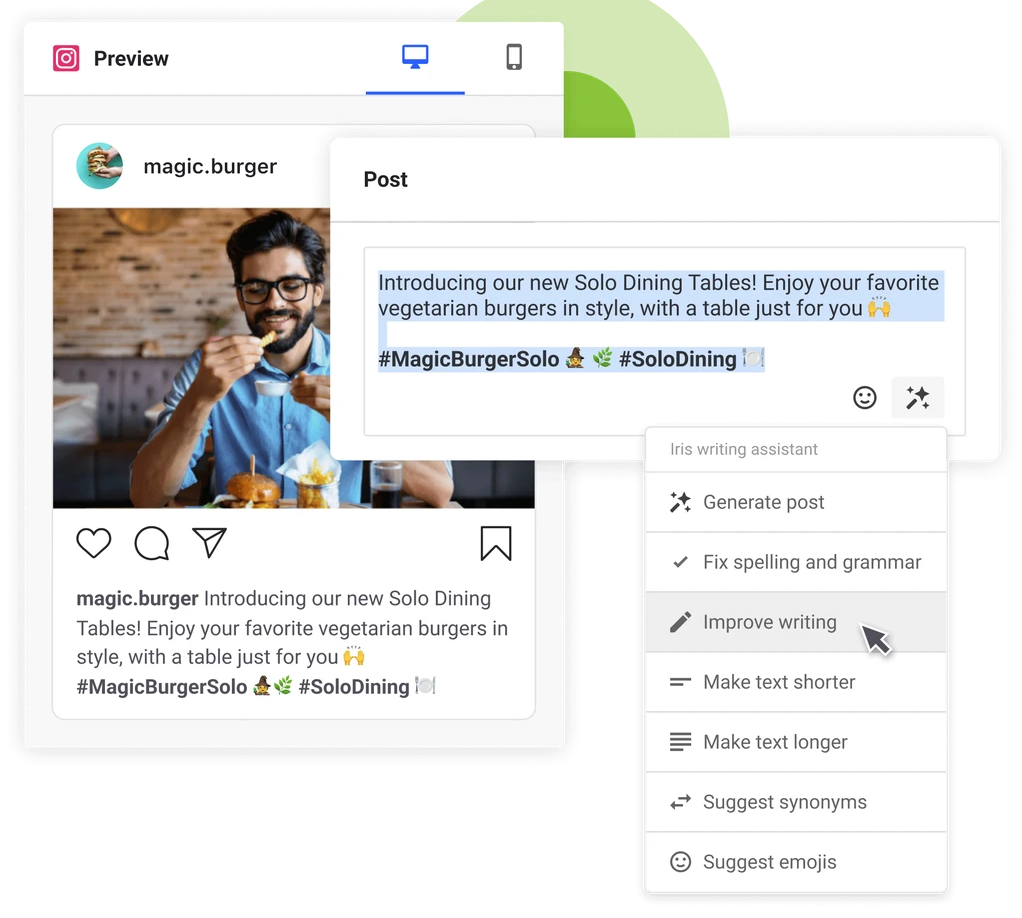
Iris AI Query Writer constructs Boolean search queries from scratch with keyword, hashtag, and subreddit recommendations. Dashboard Summaries summarize monitoring data automatically, translating raw metrics into narrative explanations of spikes, trends, and anomalies. Iris Writing Assistant generates social posts, ads, and customer replies, creating on-brand content from scratch.
Source: Brandwatch
In the Measure module, Iris Post Analysis surfaces performance intelligence across owned content. In Benchmark, Iris Content Insights analyzes competitor content strategies. In Influence, AI-powered influencer summaries speed up creator evaluation. Recent expansions include 70,000+ podcasts with transcript analysis and multi-language content support.
Source: Brandwatch
Iris AI operates under Cision and Brandwatch's published AI Code of Ethics, codifying principles around privacy, transparency, explainability, fairness, and human oversight. Brandwatch positions Iris as "never a black box".
Brandwatch Media Intelligence and Insights: The Analyst Services Layer
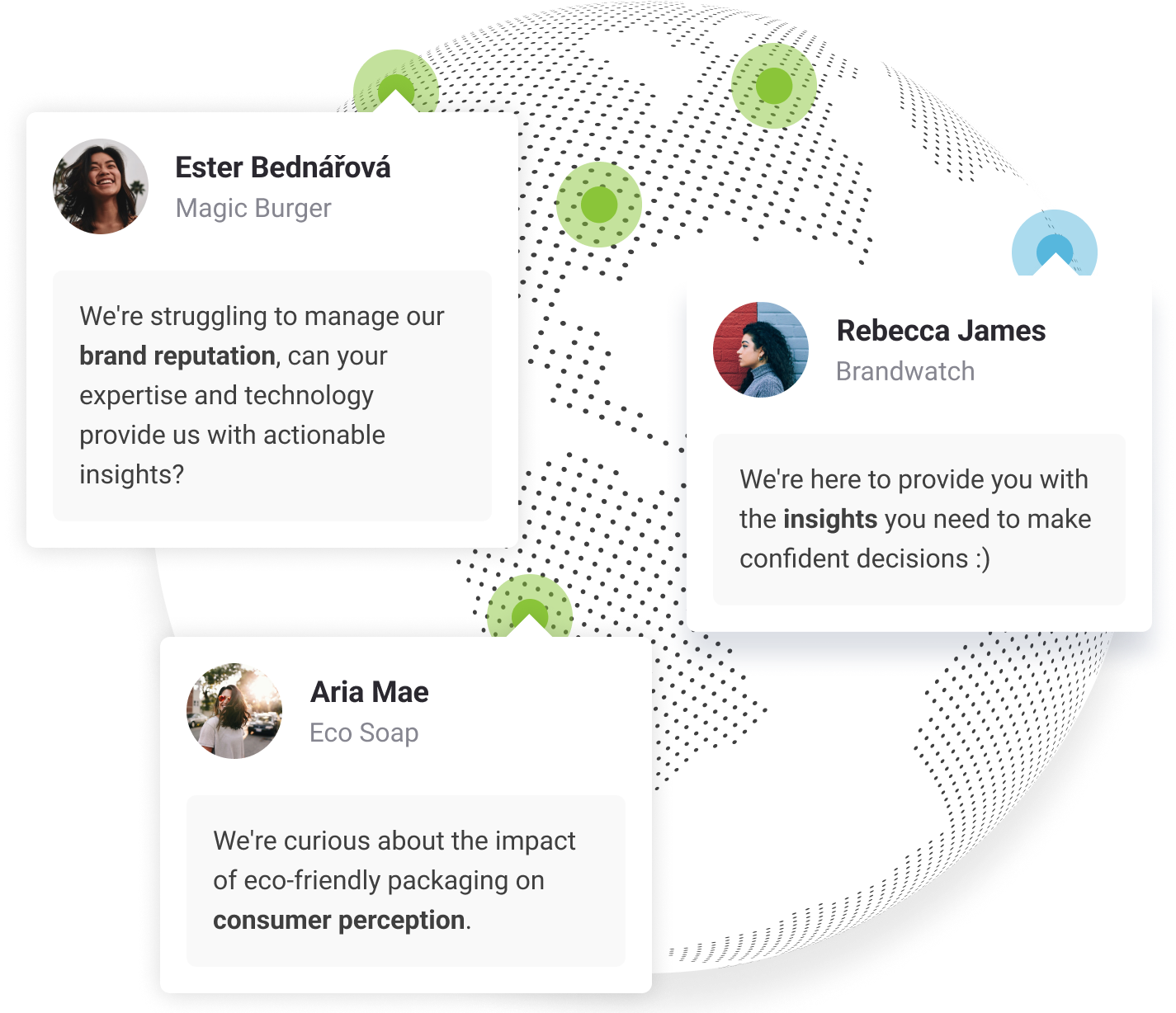
Media Intelligence & Insights is a managed-services product that pairs Brandwatch's data infrastructure with a dedicated team of human analysts, consultants, and subject-matter experts. Where every other module is self-serve software, this one delivers staffed expertise positioned as an extension of your team.
Source: Brandwatch
The service operates through five tracks. Expert onboarding configures the platform to match a client's brand priorities, audiences, and channels. Technical implementation handles data capture, segmentation, visualization, and workflow automation. Custom briefings, produced by news analysts working in 24/7/365 shifts, deliver curated media intelligence with mobile-friendly emails and a searchable, secure archive.
Custom insight reports apply human judgment through manual coding within the platform to surface meaning that automated scoring alone cannot deliver. Ongoing consultancy sessions provide best-practice guidance for teams at any stage of their intelligence maturity.
The underlying dataset spans Brandwatch's social intelligence combined with Cision's traditional media infrastructure: over 100 million media and digital sources monitored across 196 countries in 69 languages. Teams work across 24 countries spanning the Americas, EMEA, and APAC, enabling local-language interpretation rather than machine-translated monitoring.
Brandwatch Integrations, APIs, and Technical Infrastructure
Brandwatch exposes two distinct API environments. The Consumer Research API at developers.brandwatch.com covers social listening data (mentions, queries, analytics), the Data Upload API for importing custom data, and the Analysis API for aggregated statistics. Authentication uses OAuth 2.0 with a one-year bearer token. The default rate limit is 30 API requests per 10-minute rolling window.
The Social Media Management API environment is documented at falconio.docs.apiary.io and exposes twelve distinct API products covering publishing, engagement, measurement, benchmarking, content, campaigns, and team management. SMM API access is not enabled by default and must be requested through an Account Manager.
No official SDKs exist for either environment, though Brandwatch maintains an unofficial Python client library on GitHub.
Seventeen native integrations cover CRM (Salesforce Sales Cloud, Salesforce Service Cloud, HubSpot), customer service (Zendesk, ServiceNow), cloud storage (Dropbox, Box, OneDrive, Google Drive), e-commerce (Shopify), digital asset management (Bynder), URL management (Bitly), payments (Tipalti), and content intelligence (Trajaan, Neurons, StoryStream, Sociuu).
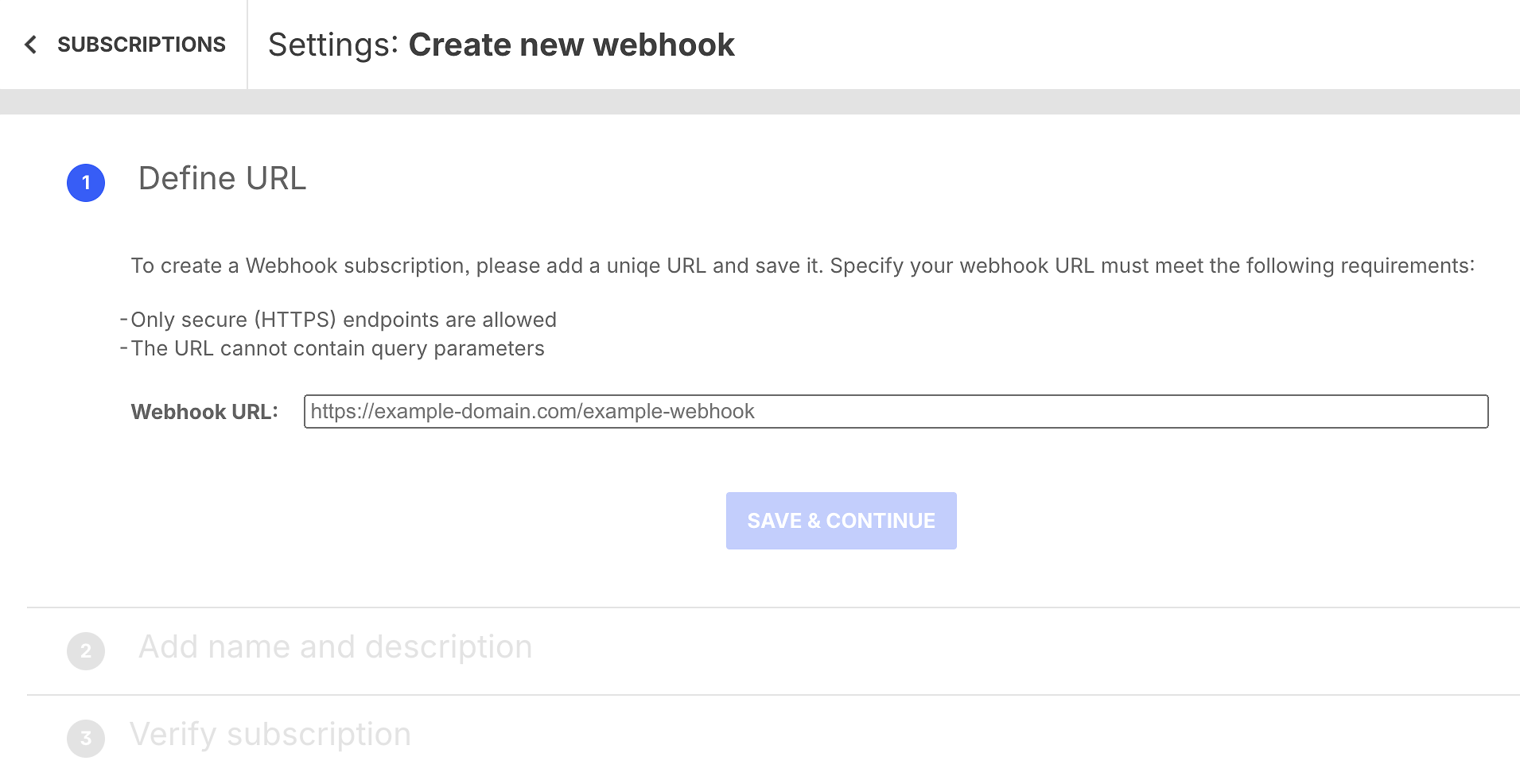
Brandwatch does not have an official Zapier integration; a community-built connector exists on Make but is not officially supported. Webhooks are available on the SMM product only, covering four publish-related topics.
Source: Brandwatch
The platform is certified to ISO/IEC 27001:2022 with annual third-party audits. All data in transit is encrypted over HTTPS using TLS 1.2 and 1.3, with customer-uploaded data and backups at rest encrypted via SSE-S3 and AES-256.
Brandwatch commits to data breach notification within 36 hours, faster than the 72-hour GDPR maximum. Infrastructure runs on AWS (US and EU regions) and GCP Europe, with SSO support across the suite via SAML 2.0 and OpenID Connect.
Where Brandwatch Stops: The Gaps
Brandwatch is built to understand and manage the conversation landscape: what consumers say, where they say it, and how brands can respond. That focus makes it a strong toolkit for social intelligence and content execution, but it also means the platform defers to external tools for several capabilities enterprise marketing and revenue teams need.
No B2B contact or company database. Brandwatch monitors what people say publicly but does not identify or provide verified contact information for business buyers. It does not include direct-dial phone numbers, verified business email addresses, company firmographics, org charts, or technographic profiles.
A marketing team using Brandwatch to discover that procurement leaders are discussing a pain point has no way to reach those individuals from within the platform.
No buyer intent signals tied to specific companies. Brandwatch's Consumer Intelligence tracks conversation volume and sentiment, and Search Intelligence monitors search queries, but neither identifies which specific companies are actively researching a product category with the granularity sales and marketing teams need to prioritize outreach.
The signals show what topics are trending, not which accounts are in a buying cycle.
No website visitor identification. Brandwatch does not include a pixel or visitor tracking capability that identifies the companies or individuals visiting your website. Social listening captures what people say on external platforms; it does not tell you who is on your site right now.
No sales execution or CRM automation. The Engage module handles inbound social conversations, but Brandwatch does not offer outbound sales sequencing, AI-drafted email outreach, pipeline management, deal intelligence, or CRM enrichment. The platform stops at social engagement; moving from insight to revenue action requires a separate system.
No self-serve pricing or free entry. Brandwatch does not offer a publicly advertised free trial, free plan, or transparent pricing for any of its products. All plans require contacting sales, and the platform operates three distinct login portals (Consumer Intelligence, Social Media Management, Influence), reflecting its acquisition history.
How ZoomInfo Covers the Gaps
The gaps above share a common thread: Brandwatch maps the conversation landscape with depth, but the buyer landscape (who to reach, when they are in-market, and how to engage them) sits outside its scope. ZoomInfo is an AI GTM platform that maps that buyer landscape, built on a data foundation and intelligence graph that moves social intelligence insights from qualitative to actionable.
ZoomInfo's B2B Data Platform: The contact and company database Brandwatch does not include
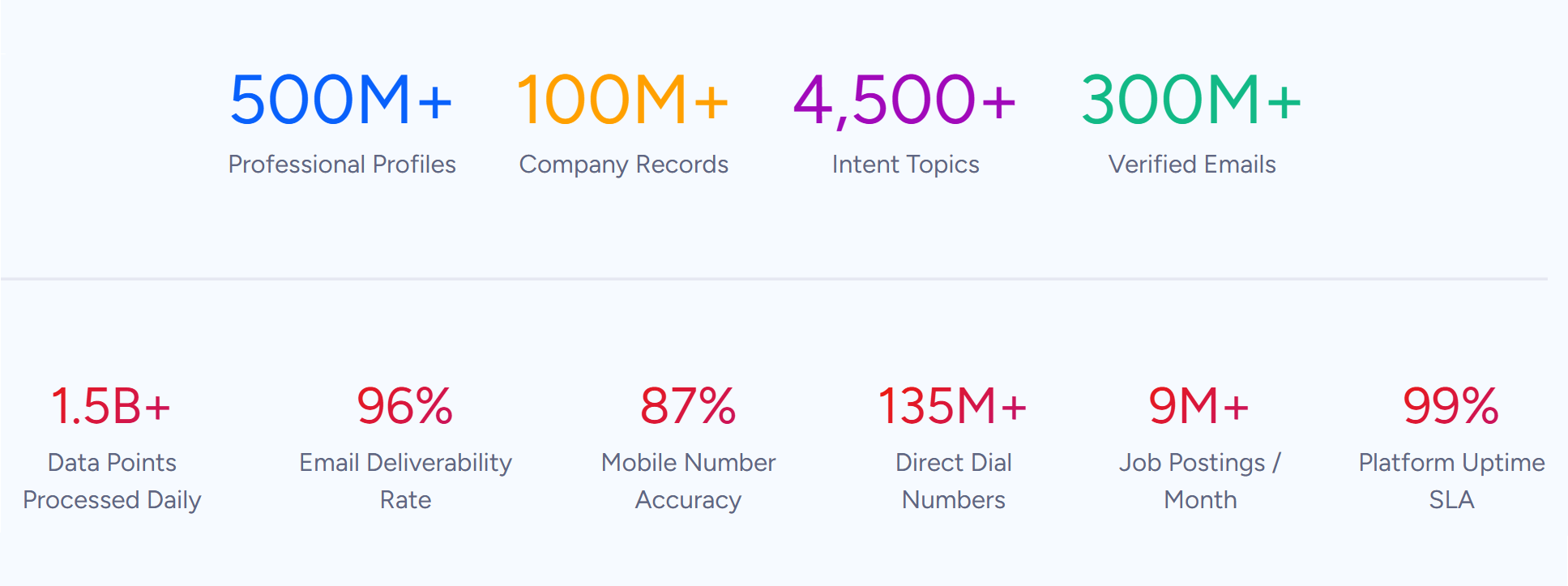
ZoomInfo operates the largest B2B data platform in the industry: 500M contacts, 100M companies, 135M+ verified phone numbers, 120M direct-dial phone numbers, and 200M+ verified business email addresses.
Source: ZoomInfo
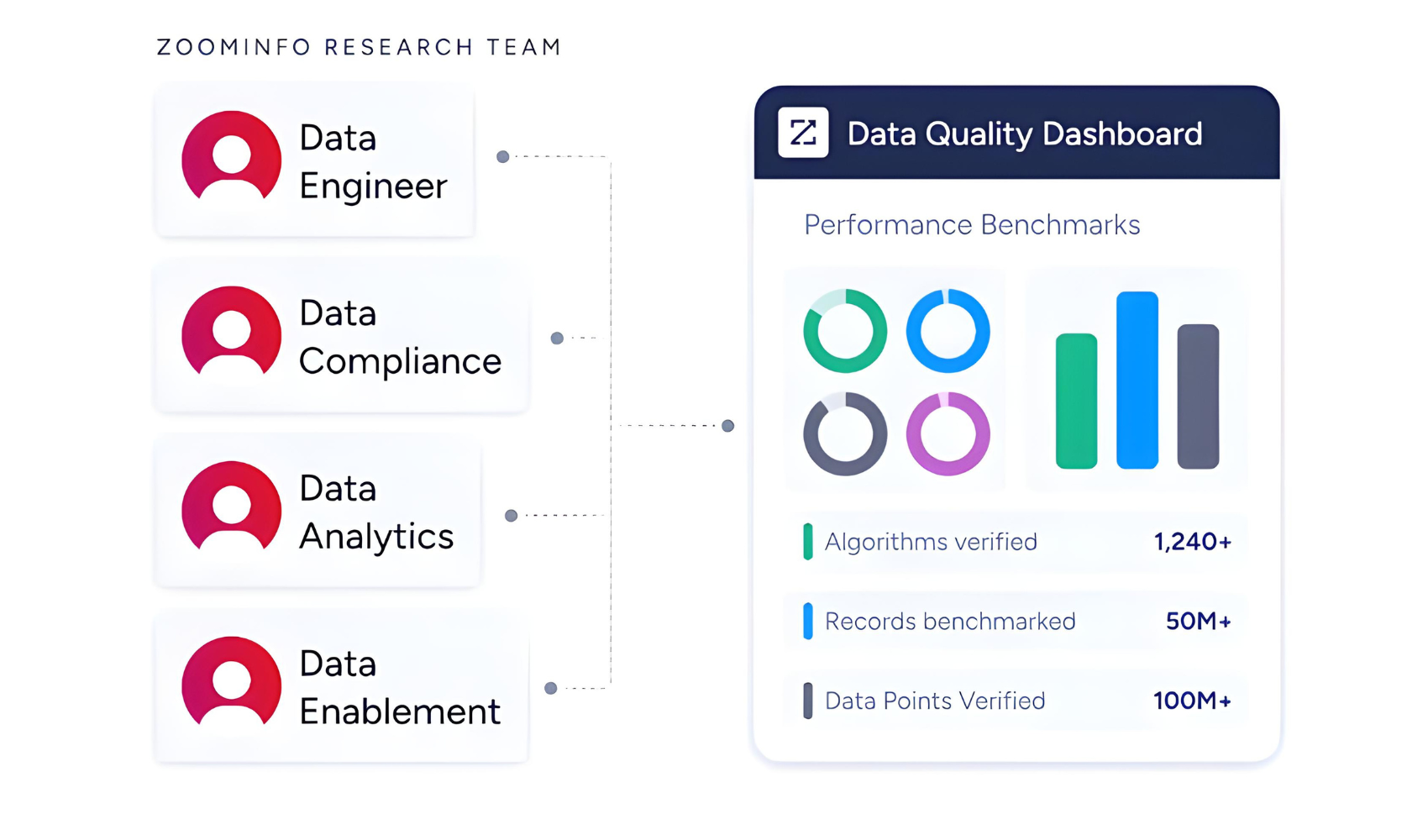
The data flows through a proprietary verification pipeline backed by 300+ human researchers and automated ML scanning of 28 million site domains daily, reaching up to 95% accuracy on first-party data.
Source: ZoomInfo
For a team using Brandwatch to discover that decision-makers in a specific vertical are discussing a competitive pain point, ZoomInfo provides the missing step: department org charts with decision-makers' direct dials and emails, 300+ company attributes for segmentation, contact tracking with job-change alerts, and technographic profiles covering 30,000+ technologies across 200+ categories for 30+ million companies.
Global coverage extends to 34M+ company profiles outside North America, 200M+ professional profiles outside NA, and 45M+ mobile numbers outside NA.
In a Fortune 500 competitive RFP analyzing 25 million contacts across vendors, an independent consultant concluded that "no other competitor came even close."
The data quality advantage is externally validated: Leader in the Forrester Wave for Intent Data Providers, Q1 2025, Leader in the Gartner Magic Quadrant for ABM Platforms for the second consecutive year, and the only vendor positioned in the Gartner Voice of the Customer Customers' Choice quadrant with a 4.7/5.0 average rating.
ZoomInfo Intent and WebSights: Buyer signals that identify which companies are in-market
Brandwatch's Consumer Intelligence shows that conversation volume around a topic is spiking. ZoomInfo Intent shows which specific companies are doing the researching.
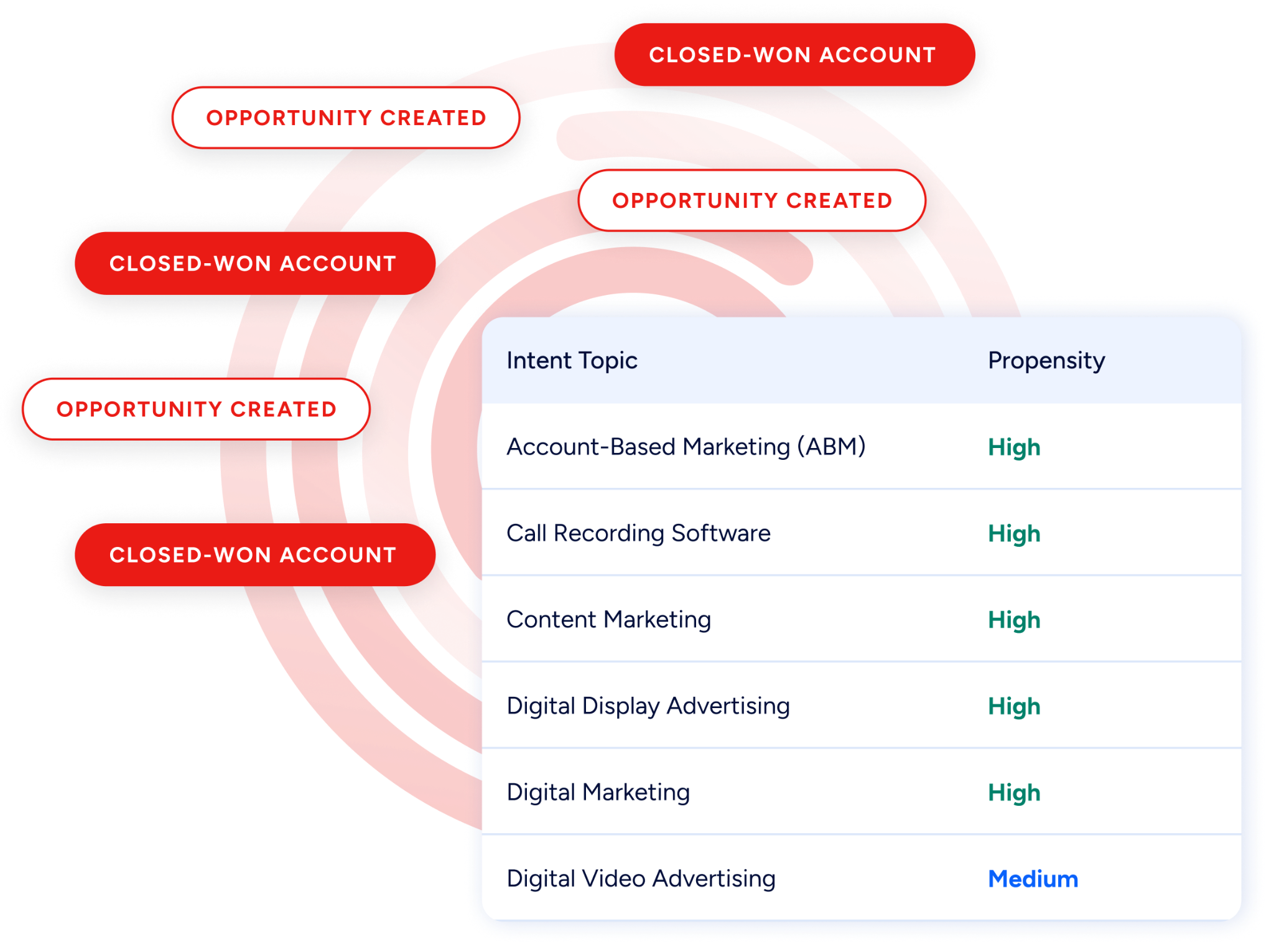
ZoomInfo Intent tracks signals from 210 million IP-to-Organization pairings and 6 trillion+ new keyword-to-device pairings sourced monthly, revealing which companies are actively researching topics related to your product before you have contacted them. Guided Intent, exclusive to ZoomInfo, identifies topics historically correlated with deal success rather than requiring manual topic selection.
Source: ZoomInfo
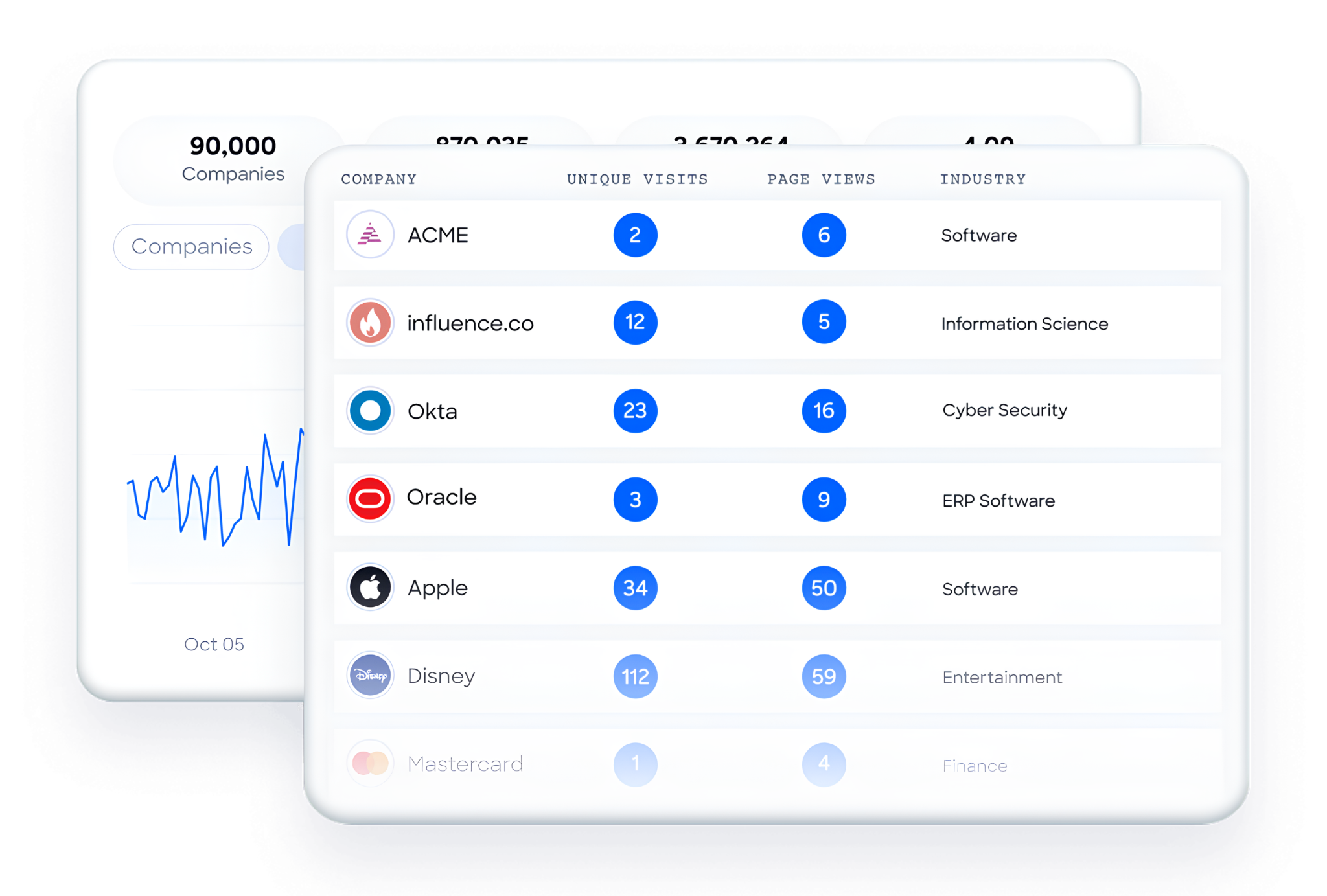
On the website side, WebSights resolves anonymous website traffic to companies with Automatic Traffic Filtering that distinguishes real visitors from bots. ZoomInfo Marketing goes further with contact-level site visitor identification, identifying who specifically visited (not just which company) and triggering personalized outreach.
Source: ZoomInfo
Where Brandwatch has no website visitor capability, ZoomInfo identifies the companies and people on your site and connects them to verified contact data and intent signals in one workflow.
ZoomInfo's GTM Context Graph: Intelligence that connects social signals to deal outcomes
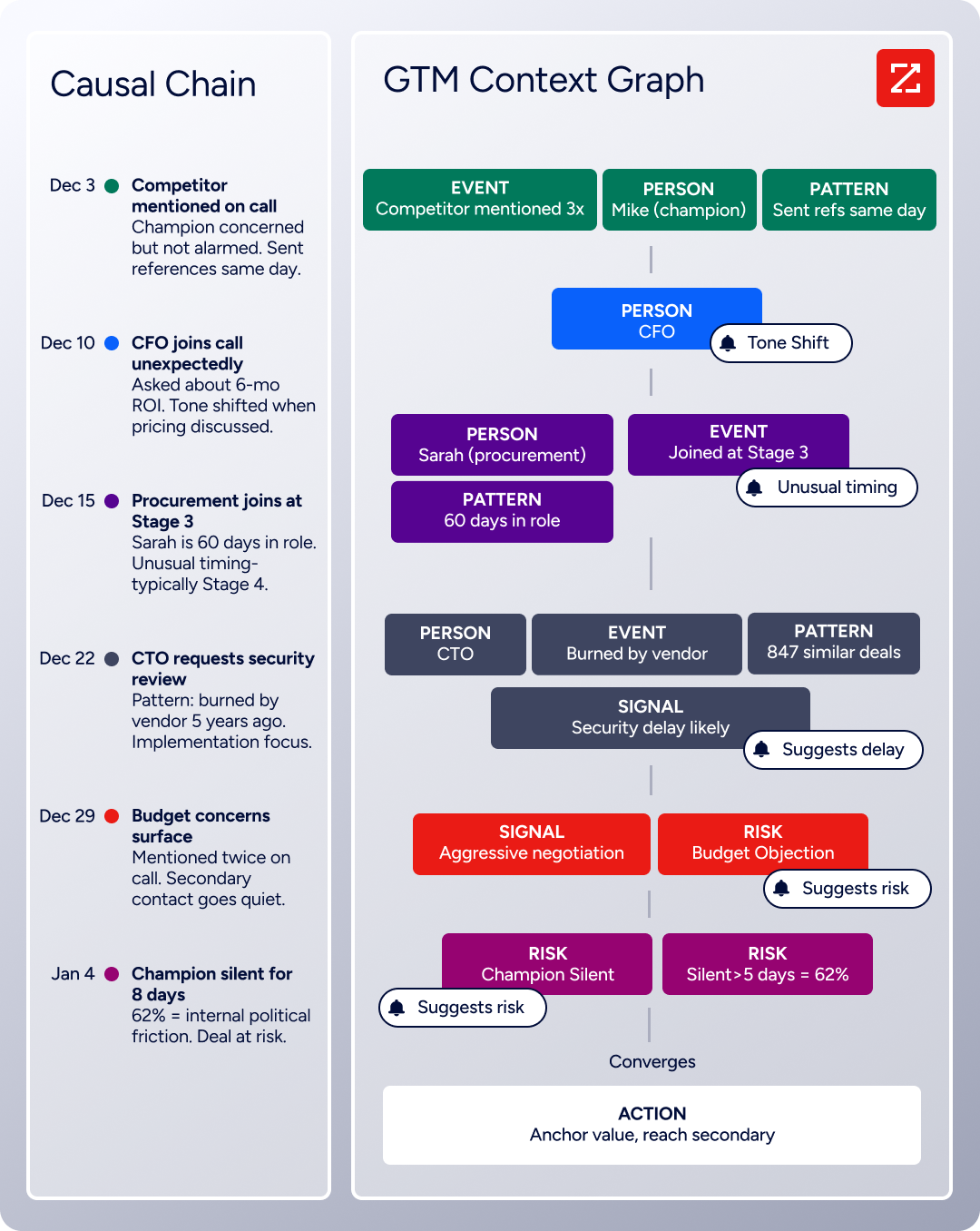
Brandwatch captures what the market is saying. ZoomInfo's GTM Context Graph captures why deals move or stall, processing 1.5B+ data points daily by fusing ZoomInfo's B2B data with a customer's CRM records, conversation intelligence from Chorus (backed by 14 technology patents), email interactions, and behavioral signals into a single intelligence layer.
Source: ZoomInfo
The GTM Context Graph connects a social sentiment shift to a specific deal risk, or a competitive mention on a sales call to the intent signal that preceded it.
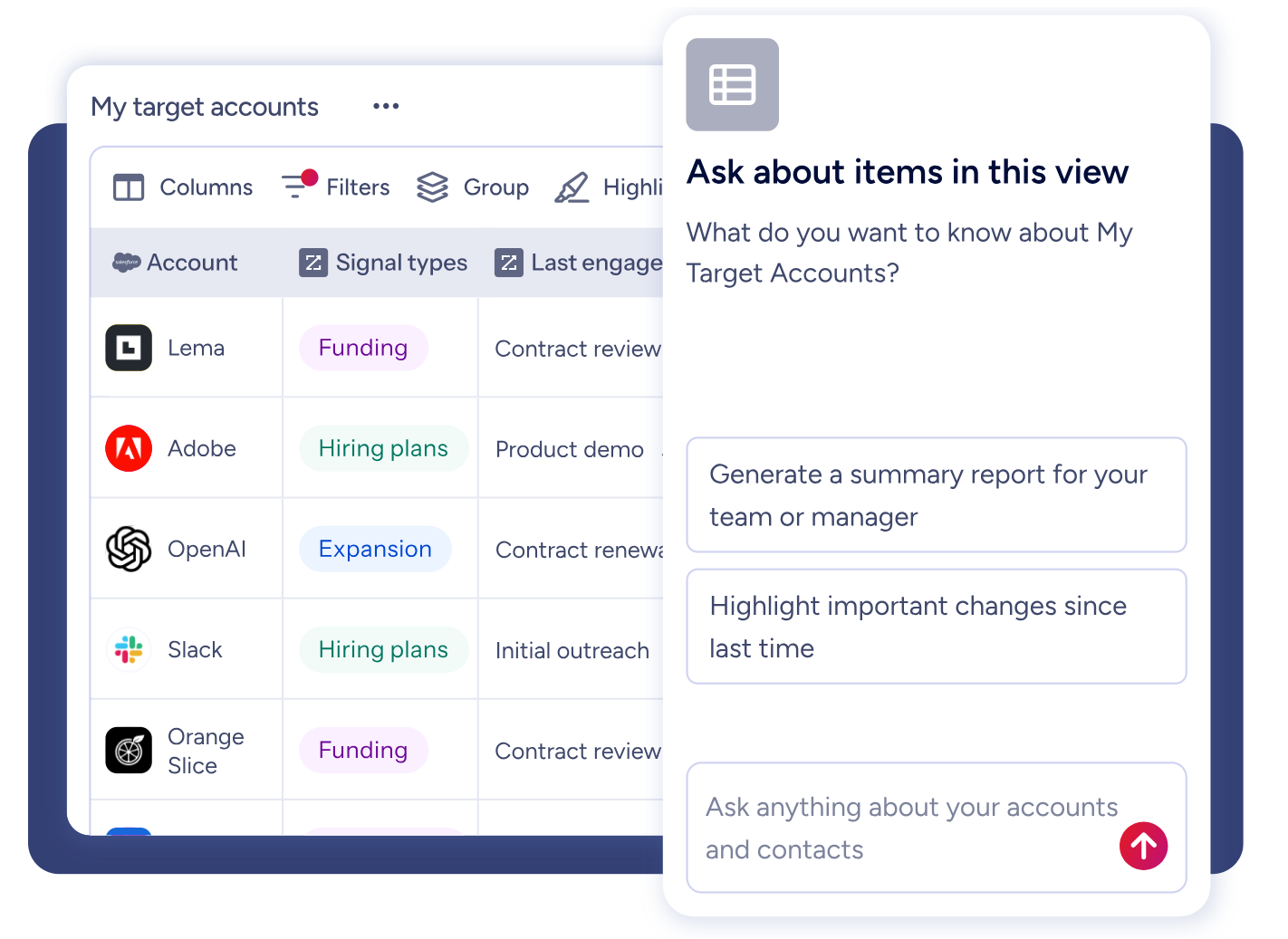
GTM Workspace, the seller's front-end to the GTM Context Graph, provides a complete Book of Business view across CRM, ZoomInfo data, conversation history, and market intelligence, with AI agents automating account research, outreach, CRM updates, and signal monitoring. An Action Feed streams in-market buyers matched to target criteria with pre-drafted actions on every signal.
Source: ZoomInfo
Seismic's sales team attributed 39% of active pipeline to opportunities identified or influenced by ZoomInfo signals, boosted productivity by 54%, and saved 11.5 hours per week per seller. (Seismic Case Study)
ZoomInfo GTM Studio: Marketing orchestration that turns intelligence into campaigns
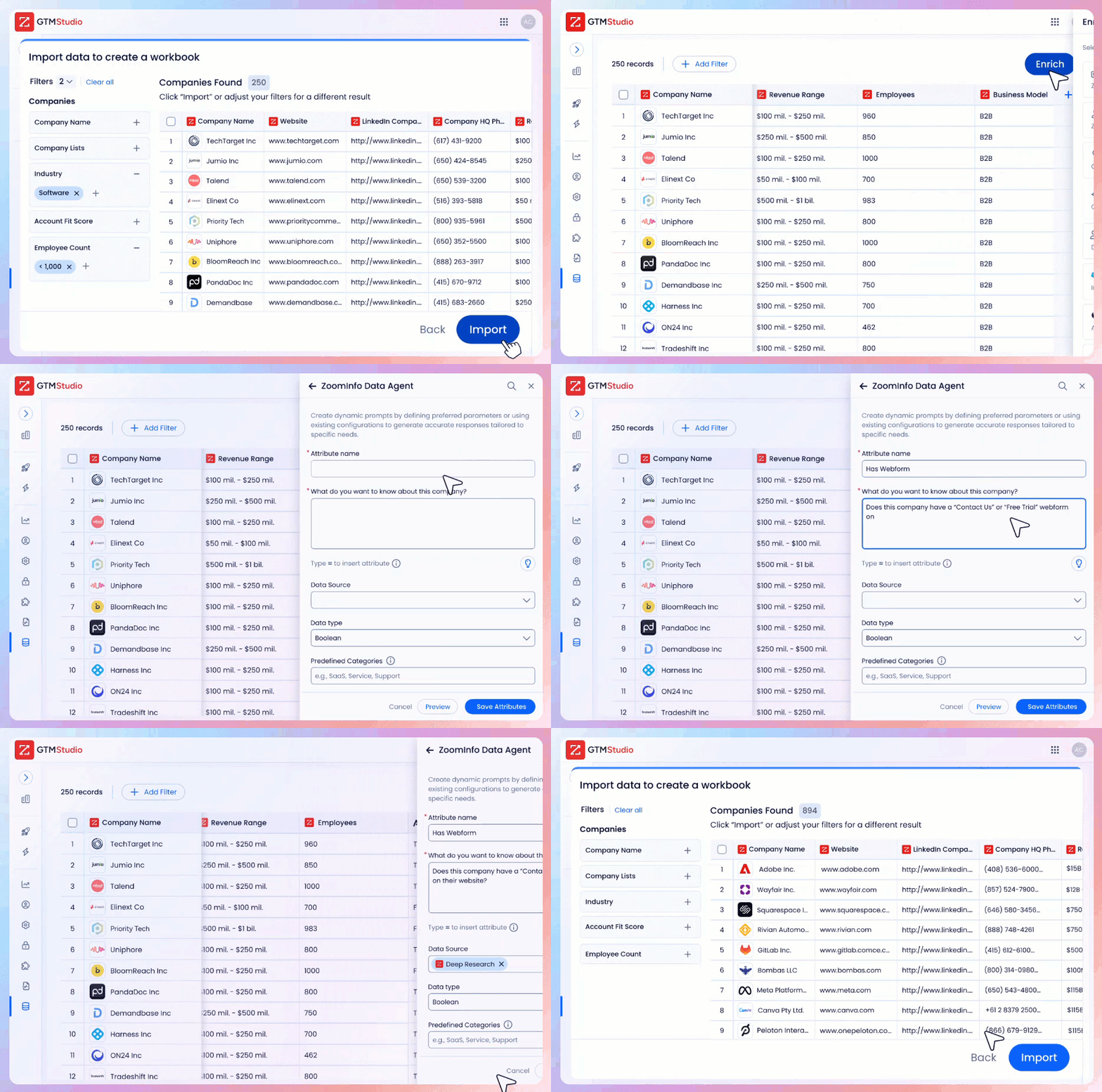
ZoomInfo’s GTM Studio addresses the execution gap directly. Marketers, RevOps teams, and GTM engineers can build audiences using natural language, enrich with first- and third-party data, define triggers, and activate plays across channels (email, calls, display ads, direct mail, LinkedIn, Meta, Connected TV) without engineering support.
Source: ZoomInfo
Pre-built GTM plays cover inbound acceleration, champion tracking, competitive displacement, and ICP targeting. Expansion plays that used to take 3 weeks now launch in 30 minutes.
ZoomInfo Marketing includes a native Demand-Side Platform that deploys display ads based on 300+ company attributes, FormComplete (reducing forms to a single field while auto-appending data), and Account Fit Scoring (predictive AI scoring 0-100 based on company attribute patterns).
ZoomInfo's Free Entry Points: A way into the platform before any commitment
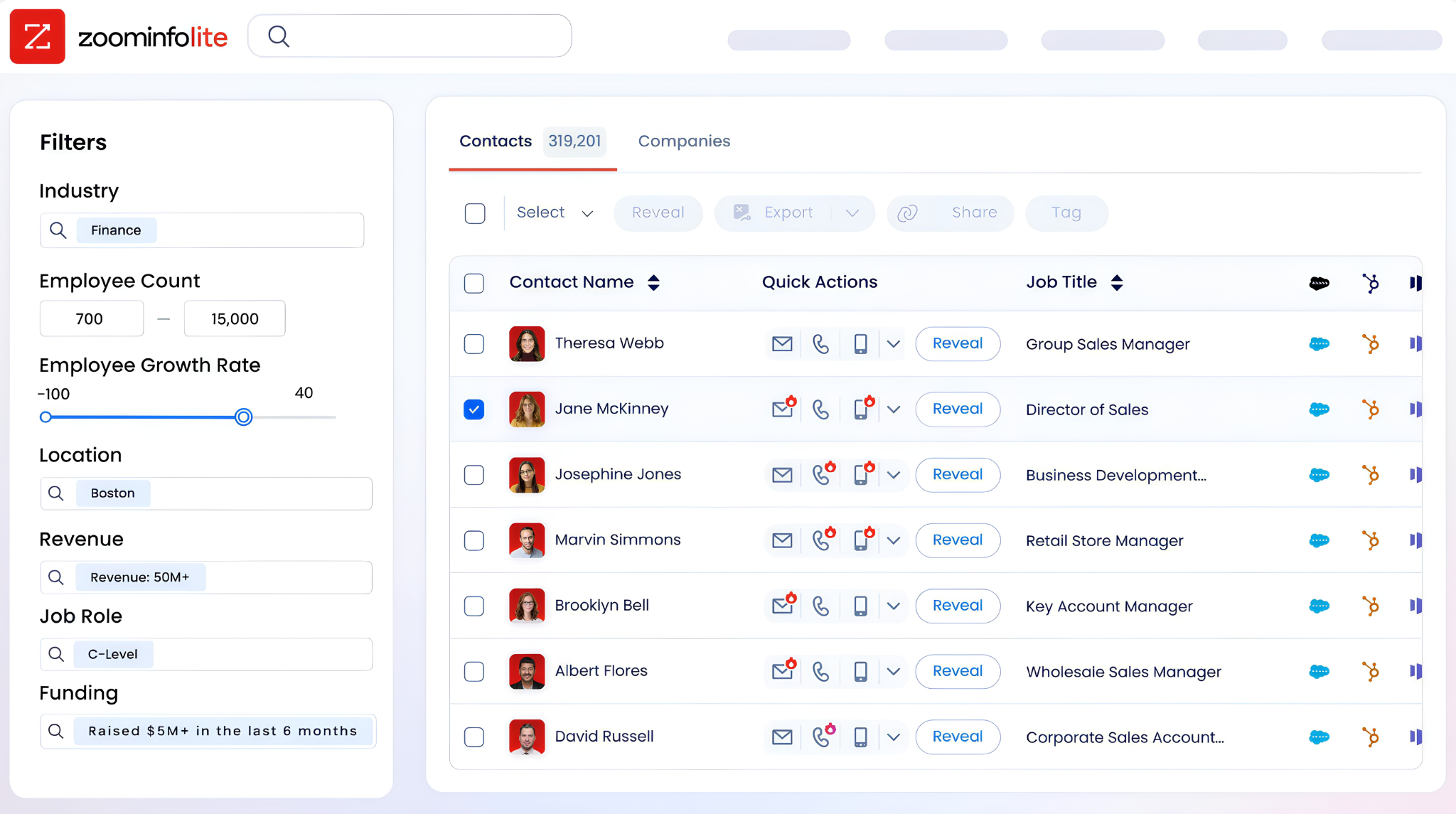
ZoomInfo offers what Brandwatch does not: a path into the platform without talking to sales. ZoomInfo Lite is a permanent free tier with access to ZoomInfo's B2B database, 10 monthly export credits, individual and company searches, a Chrome extension, and WebSights Lite with up to 10 website visitor reveals per day. A separate 7-day free trial provides broader access with no credit card required.
Source: ZoomInfo
Final Summary
Brandwatch is a strong toolkit for social intelligence and management: Consumer Intelligence draws from a 1.7 trillion-conversation archive with firehose access to X/Twitter and Reddit, Social Media Management unifies publishing and engagement across every major channel, Influencer Marketing covers the full campaign lifecycle through payment, Search Intelligence captures demand signals across Google, Amazon, TikTok, and GenAI engines, and Iris AI compresses analyst work across all of it.
It fits enterprise marketing and insights teams that need to understand, monitor, and respond to what consumers say about their brand and market.
It does not cover the layer that turns understanding into revenue action: no B2B contact database, no buyer intent signals tied to specific companies, no website visitor identification, and no sales execution or outbound orchestration.
If your team uncovers insights in Brandwatch and then needs to reach the right buyers at the right companies, that is the ground ZoomInfo covers.
Its 500M-contact, 100M-company database supplies verified emails and direct dials for the decision-makers your social intelligence identifies. ZoomInfo Intent surfaces which companies are actively researching your category from 6 trillion+ keyword-to-device pairings monthly. WebSights identifies site visitors down to the contact level.
GTM Studio turns those signals into multi-channel plays that launch in minutes. And the GTM Context Graph fuses all of it into an intelligence layer that connects market signals to deal outcomes, so social insights become revenue actions.
See what that buyer intelligence adds to your social insights: start with ZoomInfo Lite for free, or request a demo to see intent signals and verified contacts connect to your market intelligence.
FAQ
Does Brandwatch include a B2B contact database?
No. Brandwatch is a social intelligence and management platform that monitors public conversations, not a B2B data provider. It does not include verified business email addresses, direct-dial phone numbers, company firmographics, org charts, or technographic profiles. Teams that need to identify and reach specific business buyers alongside their social listening use a separate platform.
ZoomInfo provides 500M contacts, 100M companies, and 120M direct-dial phone numbers through a verified data pipeline.
Which Brandwatch module handles social publishing?
Social Media Management (the former Falcon.io suite) handles publishing, accessed at app.falcon.io. It supports scheduling and publishing across Facebook, Instagram, X/Twitter, LinkedIn, TikTok, YouTube, Pinterest, and Threads, with approval workflows, a Content Pool digital asset library, and the ability to boost organic posts as paid ads directly from the calendar.
Can Brandwatch monitor how AI chatbots describe your brand?
Yes. Search Intelligence, powered by Trajaan, submits thousands of prompts across leading LLMs worldwide (including ChatGPT, Gemini, and Perplexity) and records which brands are cited, in what context, and with what sentiment. It also reveals which media domains and pages LLMs trust, and recommends where to build presence to improve AI visibility.
Does Brandwatch support influencer payments?
Yes. Brandwatch Influence includes integrated payment processing powered by Tipalti, supporting 120+ currencies via PayPal, check, ACH, and wire transfer. Payments go directly from the platform, eliminating the need for a separate accounts payable workflow.
What does Brandwatch cost?
Brandwatch does not publish pricing for any of its products. All plans require contacting sales for a custom quote. The suite is composed of separately purchased products (Consumer Intelligence, Social Media Management, Influencer Marketing), each with standard and enterprise tiers. Fees are invoiced annually in advance. There is no self-serve free trial or free plan available through the website.
How many data sources does Brandwatch monitor?
Consumer Intelligence covers over 100 million unique sites, including firehose access to X/Twitter and Reddit, plus Facebook, Instagram, LinkedIn, Threads, Bluesky, TikTok, YouTube, review sites, forums, blogs, news, and broadcast TV and radio in 15+ languages.
Search Intelligence adds monitoring across Google, Amazon, TikTok, Baidu, and generative AI engines in 150+ countries. The combined Brandwatch and Cision dataset spans over 100 million media and digital sources across 196 countries in 69 languages.
Does Brandwatch offer buyer intent data for sales teams?
No. Brandwatch tracks consumer conversation sentiment and search query trends, but it does not identify which specific companies are actively researching a product category with intent signals tied to named accounts. The platform is built for marketing and brand intelligence, not sales prospecting.
ZoomInfo Intent tracks signals from 210 million IP-to-Organization pairings and 6 trillion+ keyword-to-device pairings sourced monthly, identifying in-market companies before any outreach begins, and connects those signals to verified contact data for immediate action.
