
Brevo serves 600,000+ customers globally and surpassed €200M ARR in 2025. The platform covers email, SMS, WhatsApp, live chat, push notifications, CRM, and loyalty programs from a single interface, with AI automation through its Aura agent suite and a pricing model that charges by emails sent rather than contacts stored.
But even a broad marketing platform has limits.
Brevo captures campaign engagement, manages contact lists, and automates multichannel workflows. On its own, it cannot tell you whether a prospect's phone number still works, enrich a new subscriber with company attributes and buying signals, trace a campaign click through to a closed deal in your CRM, or extend your workflows to the thousands of tools that lack a native Brevo connector.
The right integrations close those gaps. They feed your marketing platform verified data it cannot generate on its own, sync campaign activity with your sales pipeline, connect your tech stack without custom development, and give your team visibility into what happens after the click.
This guide covers the strongest integration for each job Brevo users most commonly need done:
Enrich contacts with verified B2B data and surface accounts that are actively in-market
Sync ecommerce purchase data for lifecycle automation and revenue attribution
Align marketing campaigns with enterprise CRM pipeline stages
Capture website sign-ups, route transactional email, and deploy live chat
Connect email campaign performance to downstream website behavior and conversions
Extend Brevo's reach to apps without native connectors using no-code automation
Surface campaign alerts and contact handoffs in real-time team channels
Each section walks through how the integration connects with Brevo, what data flows between the platforms, pricing, and who benefits most.
Best Brevo Integrations at a Glance |
|---|
Best Brevo Integration for B2B Contact Enrichment and Buyer Intent Intelligence. Enriches Brevo contacts with verified B2B data from a database of 500M contacts and 135M+ verified phone numbers, plus buyer intent signals that reveal which accounts are actively researching your category. Gives your marketing team accurate data to segment with and the signals to prioritize accounts that matter. |
Best Brevo Integration for Ecommerce Revenue Attribution and Lifecycle Automation. Syncs customer profiles, order data, and cart abandonment events into Brevo in real time, powering multichannel recovery sequences across email, SMS, and WhatsApp with revenue-per-campaign attribution that connects marketing activity directly to Shopify purchase outcomes. |
Best Brevo Integration for Enterprise CRM Pipeline Alignment. Creates bidirectional contact and lead sync between your CRM and your marketing platform, with pipeline-stage segmentation that lets marketing run different nurture tracks based on where each contact sits in the Salesforce sales funnel. |
Best Brevo Integration for Website Sign-Up Capture, Transactional Email, and Live Chat. Embeds Brevo subscription forms, routes all WordPress-generated emails through Brevo's SMTP relay for deliverability and tracking, and deploys Brevo's live chat widget sitewide, all from a single plugin. |
Best Brevo Integration for Cross-Channel Campaign Attribution. Tags every Brevo campaign link with UTM parameters and syncs conversion events into GA4, so email and SMS performance appears as a labeled channel alongside paid search, organic, and social in your existing analytics environment. |
Best Brevo Integration for Connecting Your Stack Without Code. Extends Brevo's automation reach to 8,000+ apps that lack native connectors, routing form submissions, payment events, and operational data changes into Brevo contact lists and automation workflows without writing code. |
Best Brevo Integration for Real-Time Campaign Alerts and Team Coordination. Routes campaign performance summaries, new subscriber alerts, and high-engagement contact handoffs into Slack channels, so your marketing and sales teams act on Brevo activity without leaving their workspace. |
What Is Brevo?

Source: Brevo
Brevo (formerly Sendinblue) is a customer engagement platform that handles the full customer lifecycle across email, SMS, WhatsApp, web and mobile push notifications, live chat, phone, and mobile wallet from a single interface.
Founded in Paris in 2012, Brevo reached unicorn status in December 2025 with a €500M funding round and has set a €1 billion ARR target for 2030. The platform serves 600,000+ customers including eBay, Louis Vuitton, Nestlé, IKEA, and Epic Games. Because it charges by emails sent rather than contacts stored, it costs less than contact-count competitors for businesses with large lists and moderate send volumes.
Brevo's integration ecosystem is one of its strongest features.
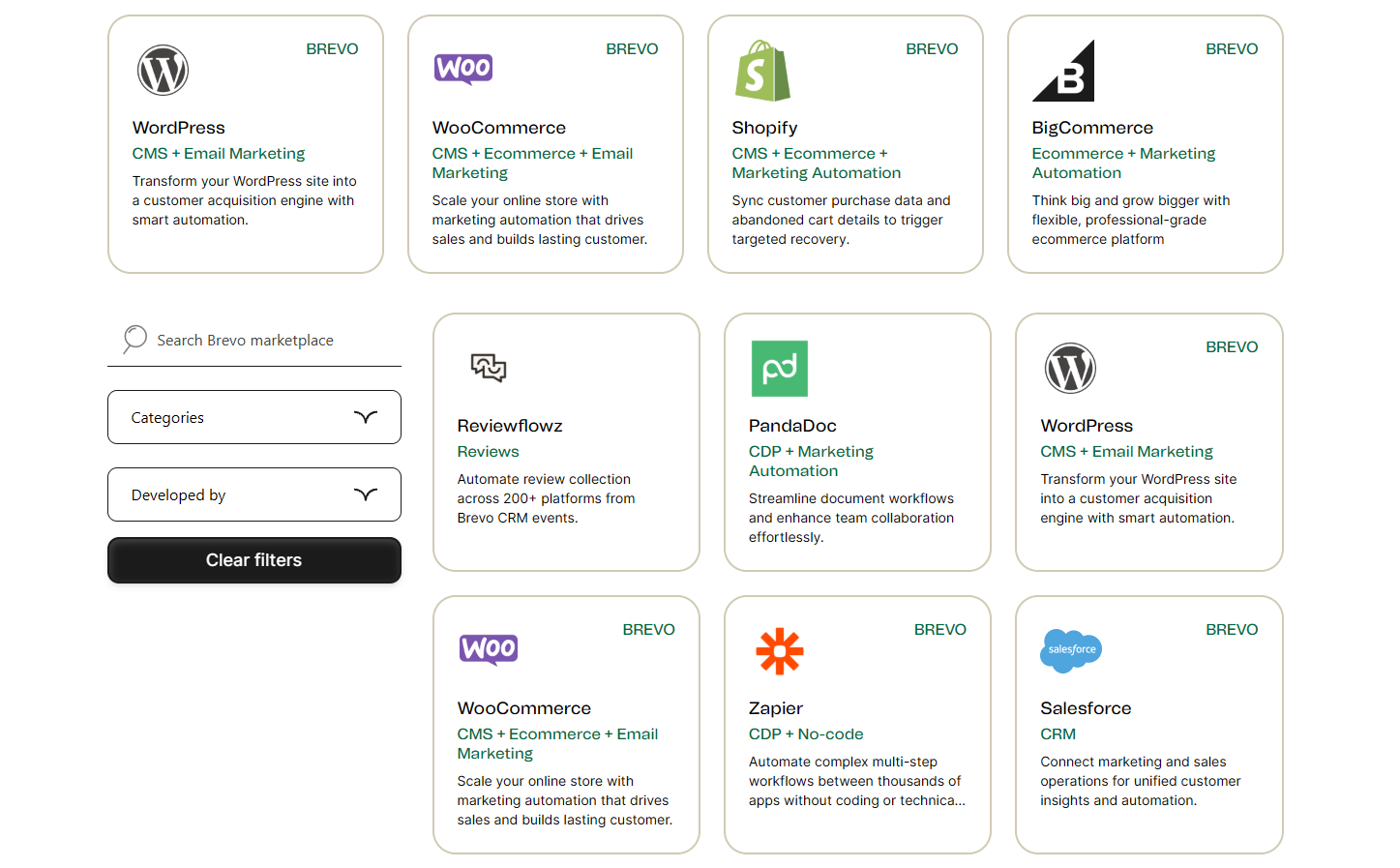
The Brevo Marketplace houses 150+ pre-built integrations spanning ecommerce platforms, CRMs, CMS tools, analytics, and workflow automation. Brevo also offers a REST API covering transactional email, SMS, WhatsApp, contact management, ecommerce data sync, loyalty programs, and CRM pipelines, with official SDKs for Node.js, PHP, Python, Java, C#, Go, and Ruby. The platform supports OAuth 2.0 authentication, webhook coverage across twelve event categories, and a Model Context Protocol (MCP) server that connects Brevo's data to AI assistants like Claude and ChatGPT. API access is included on every plan, including Free.
The integration categories available to Brevo users include:
Ecommerce: Shopify, WooCommerce, BigCommerce, PrestaShop, Magento
CRM and sales: Salesforce, native Brevo Sales CRM with deal pipelines
CMS and website: WordPress, with form capture and SMTP relay
Analytics: Google Analytics for UTM-based campaign attribution
Workflow automation: Zapier, Make for cross-platform orchestration
Team communication: Slack for campaign alerts and contact notifications
AI and developer tools: MCP server, REST API, SMTP relay
Source: Brevo
With that ecosystem as context, here are the seven integrations we selected as the best options for extending Brevo across the categories that matter most to marketing and revenue teams.
1. ZoomInfo: Best Brevo Integration for B2B Contact Enrichment and Buyer Intent Intelligence
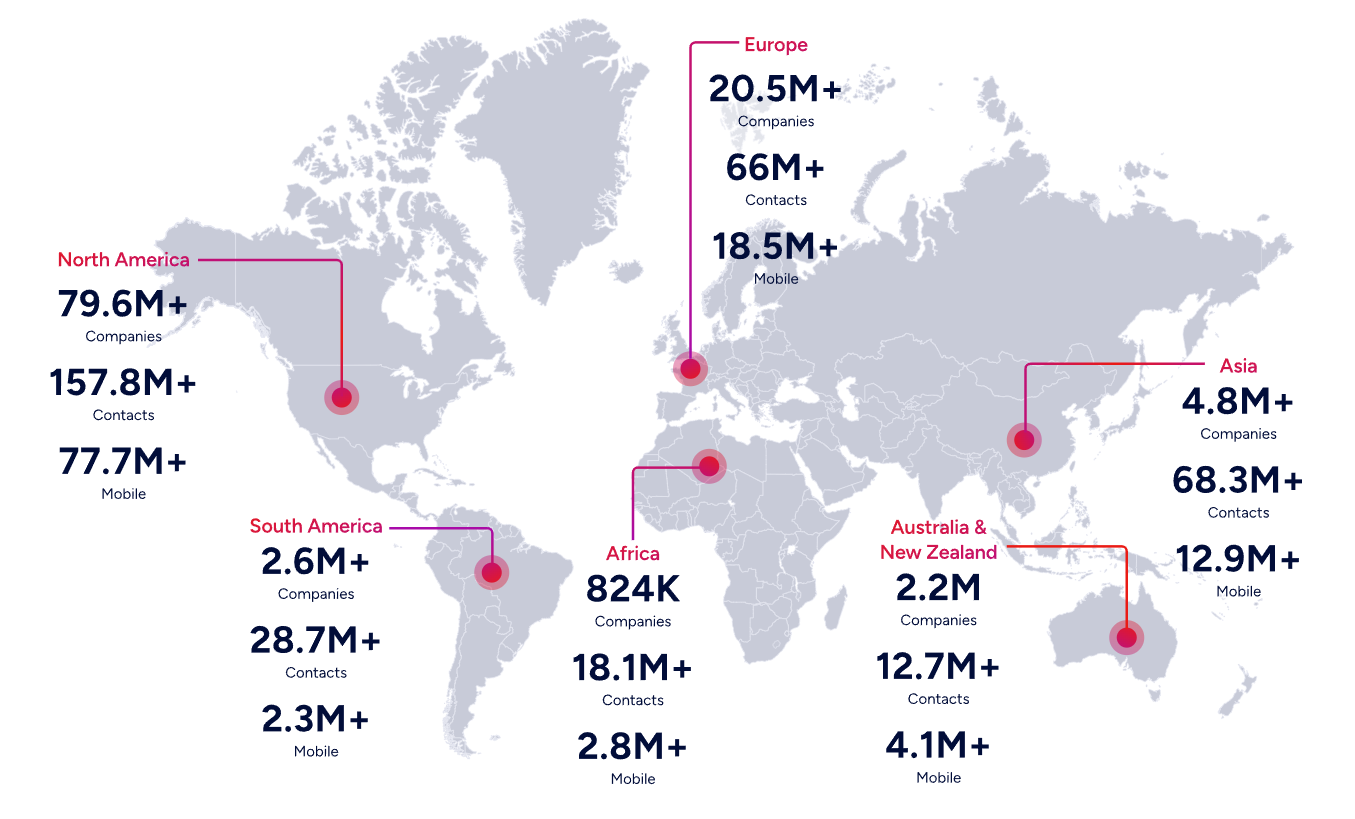
ZoomInfo is a B2B data and go-to-market platform built on 500M contacts, 100M companies, 135M+ verified phone numbers, and 200M+ verified business email addresses. It integrates with Brevo through Zapier, enabling automated workflows that enrich Brevo contacts with verified B2B data, company attributes, and buyer intent signals.
Connecting the two platforms unlocks:
A marketing database that stays accurate on its own, with verified emails, company attributes, and job titles appended to Brevo contacts as they enter your lists
Prioritization by buying signals, so campaigns target accounts actively researching your category this week rather than a static subscriber list
Smarter segmentation and lead scoring, with ZoomInfo attributes powering Brevo's dynamic lists and automation triggers
Outreach that reaches the right person, because direct dials and business emails are verified through a pipeline backed by 300+ human researchers
How ZoomInfo Integrates with Brevo
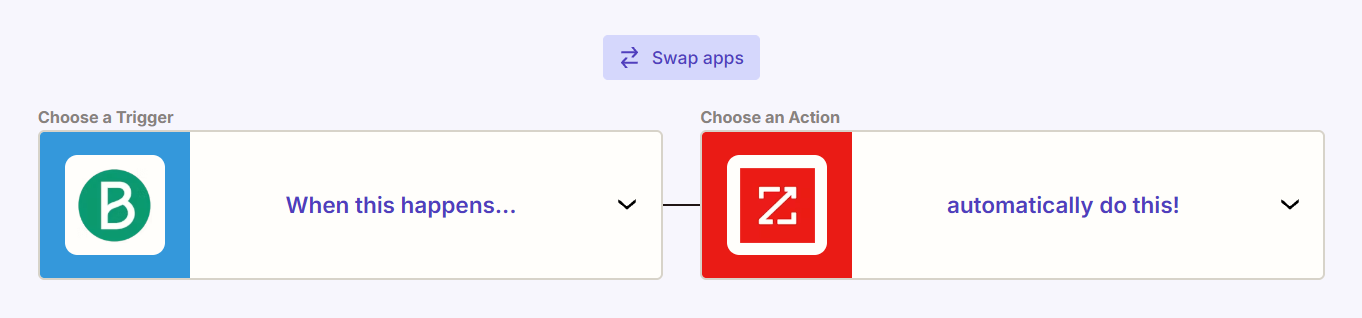
ZoomInfo connects to Brevo through Zapier's native connectors for both platforms. Zapier acts as the middleware: when a trigger fires in one platform (a new Brevo contact, a ZoomInfo intent signal), Zapier executes the corresponding action in the other (enrich the contact with company data, add an in-market account to a Brevo campaign list). Setup requires a Zapier account with both platforms authorized via API key (Brevo) and OAuth (ZoomInfo). No custom development is needed.
Source: Zapier
Because the integration runs through Zapier, it works with any paid Zapier plan and any Brevo plan that supports automation. Multi-step Zaps that combine enrichment with list assignment and automation triggers require Zapier Professional ($19.99/month annually) or higher.
Contact and Company Data Enrichment: Fill the Gaps Your Marketing Database Cannot Fill on Its Own
Brevo captures what contacts do: which emails they open, which links they click, which forms they submit. What it cannot do on its own is verify whether a contact's email address still works, determine their current job title, or reveal their company's size, industry, and technology stack.
When a new contact enters Brevo through a form submission, list import, or ecommerce event, a Zapier workflow triggers ZoomInfo to enrich that record with verified business email, direct dial, title, department, seniority, and company attributes. ZoomInfo's data flows through a verification pipeline backed by 300+ human researchers, reaching up to 95% accuracy on first-party data. In a Fortune 500 competitive RFP analyzing 25 million contacts across vendors, the independent consultant concluded that "no other competitor came even close."
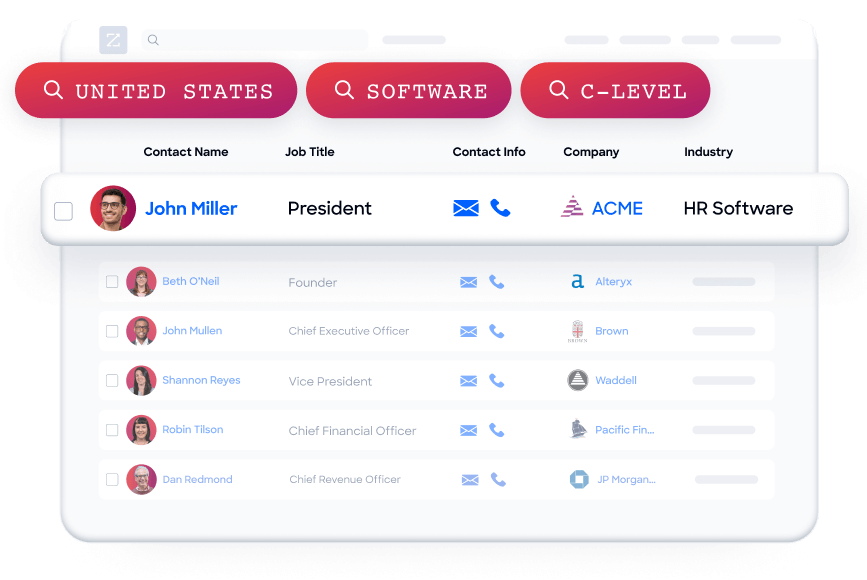
ZoomInfo in action: A prospect subscribes to your newsletter through a Brevo form, providing only a name and work email. ZoomInfo enriches the Brevo contact with their direct dial, current title (VP of Marketing), company profile (a 200-person SaaS company running HubSpot and Salesforce), and industry classification. Your team segments the contact into a mid-market nurture track and personalizes the welcome sequence based on company size and tech stack, all without manual research.
Buyer Intent Data: Identify In-Market Accounts for Targeted Campaigns
ZoomInfo's Buyer Intent tracks signals from 210 million IP-to-Organization pairings and 6 trillion+ new keyword-to-device pairings monthly, revealing which companies are actively researching topics relevant to your product.
Through the Zapier integration, intent signals flow into Brevo as contact attributes or list assignments. An account showing high research activity for topics related to your product can be added automatically to a targeted Brevo campaign list, triggering a dedicated email sequence while the buying window is open. Guided Intent, exclusive to ZoomInfo, identifies research topics historically correlated with deal success in your business, so the signals match your actual win patterns rather than generic keyword thresholds.
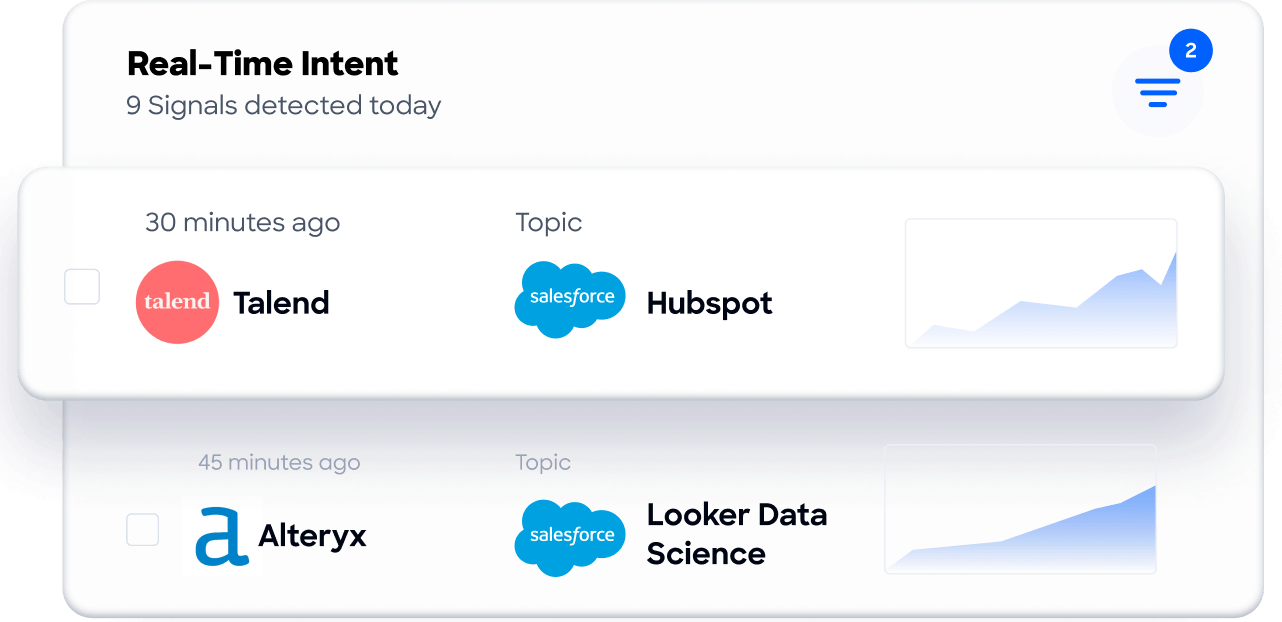
ZoomInfo in action: ZoomInfo detects a target account researching "email marketing automation" for two weeks. A Zapier workflow adds the account's decision-makers to a Brevo campaign list and triggers a nurture sequence featuring case studies and integration guides, reaching the buying committee while they are still evaluating options.
Technographic Intelligence: Segment and Personalize by Technology Stack
ZoomInfo profiles the tech stack of 30+ million companies, tracking 30,000+ technologies across 200+ categories. When enrichment data flows into Brevo contacts, technographic attributes let you personalize campaigns by referencing a prospect's specific tool stack.
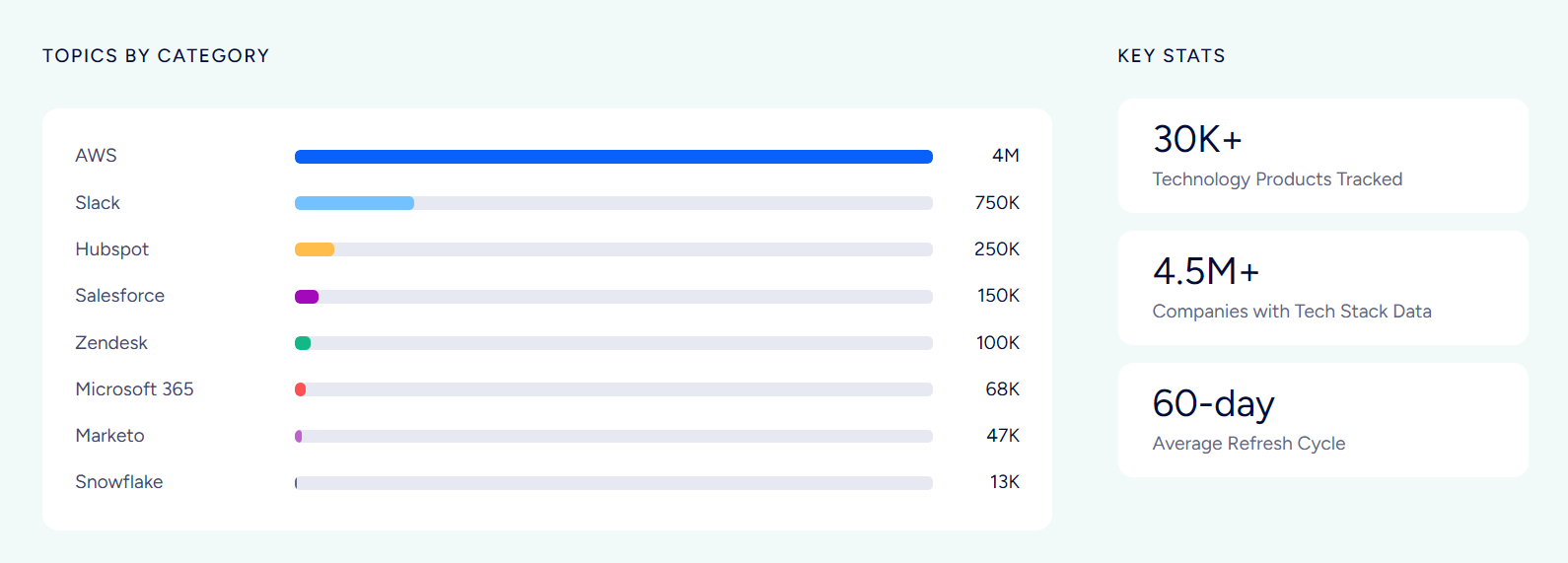
A campaign targeting companies running a competitor's marketing platform can reference that competitor by name and position your solution against it, while a separate sequence for companies using a complementary tool can highlight integration benefits. This data updates continuously, with nearly 90% of active pairings refreshed within three months, so Brevo segments built on technographic filters stay current without manual refresh.
Workflow Automation and Lead Scoring
ZoomInfo attributes (company size, industry, technology stack, intent score) flowing into Brevo contacts power the platform's segmentation and automation logic. A new contact enriched with company data can route automatically into the enterprise nurture track at 500+ employees or into the SMB welcome sequence below 50, with no manual triage. Brevo's lead scoring models gain company-level context alongside behavioral engagement signals, making scores more predictive of actual fit.
Seismic's sales team attributed 39% of active pipeline to opportunities identified or influenced by ZoomInfo signals, reporting 54% productivity gains and saving 11.5 hours per week per seller. (Seismic Case Study)
ZoomInfo Pricing
ZoomInfo uses a consumption-based pricing model with custom quotes based on usage, users, credit volume, and features.
It is organized into Sales, Marketing, and standalone product lines, each in Professional, Advanced, and Enterprise tiers. The Zapier integration works with any ZoomInfo plan that includes API access, which is available across all relevant plans.
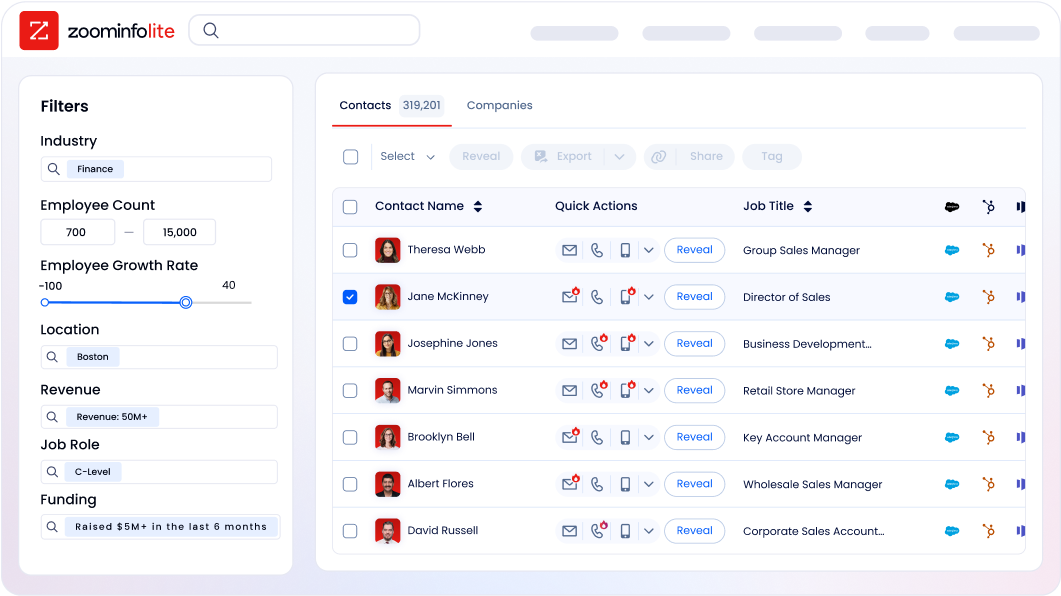
ZoomInfo Lite is a permanent free tier (no credit card, no time limit) with 10 monthly export credits, searches, the Chrome extension, and CRM integrations, making it a practical way to evaluate the data before committing. A separate 7-day free trial covers paid features including intent data and AI capabilities.
Who Should Use the ZoomInfo Integration?
B2B marketing teams running Brevo campaigns whose contact data lacks company context: enrichment adds firmographics, technographics, and verified contact details that power smarter segmentation and personalization than behavioral data alone
Revenue operations teams that need buyer intent signals flowing into Brevo campaign lists so outreach reaches accounts while they are in-market, not weeks after the buying window has closed
Teams running account-based marketing through Brevo that need dynamic segments of accounts showing buying signals now, built on ZoomInfo's intent data calibrated to their actual win patterns
2. Shopify: Best Brevo Integration for Ecommerce Revenue Attribution and Lifecycle Automation

Source: Shopify
Shopify is a hosted ecommerce platform powering 4.6M+ merchants across 175 countries that integrates with Brevo through a native plugin to sync purchase events, cart abandonments, and order lifecycle triggers into automated, revenue-attributed multichannel campaigns. The integration is a native first-party connector available through Brevo's marketplace.
Key integration capabilities include:
Real-time order and customer data sync updating Brevo contacts with order status, product categories, order value, and purchase frequency
Abandoned cart recovery across email, SMS, and WhatsApp with product details dynamically injected into each message
Revenue attribution per campaign connecting Brevo sends to completed Shopify purchases
Product catalog sync enabling dynamic product recommendation blocks within campaigns
Event-triggered lifecycle automation from order placement through fulfillment, refund, and win-back
How Shopify Integrates with Brevo
The Shopify-Brevo integration is available as a native plugin through Brevo's integration marketplace. Merchants connect their Shopify store via OAuth within the Brevo admin, and syncing begins automatically. No Shopify developer plan or API key configuration is required; the integration works across all paid Shopify plans. On the Brevo side, ecommerce automation features including abandoned cart recovery and event-triggered workflows are available from the Standard plan ($18/month and up).
Source: Brevo
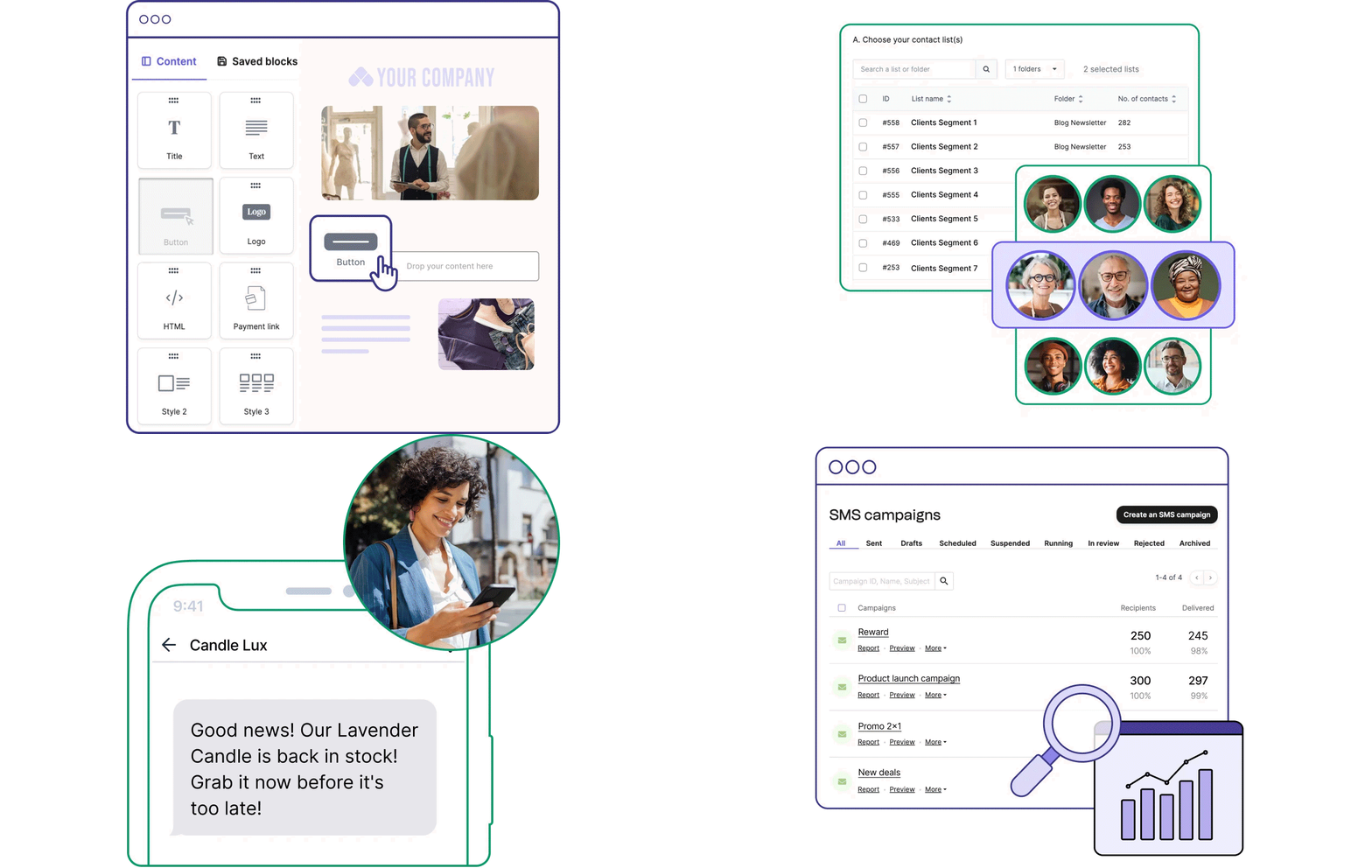
1. Real-Time Customer and Order Data Sync.
When a customer places an order in Shopify, Brevo creates or updates the contact record in real time with email address, order value, product categories purchased, order count, and purchase frequency. This is not a scheduled batch sync; it happens at the moment of the Shopify event, so Brevo segments and automation triggers always work against current data. A list filtering for "customers who purchased in the last 30 days" or "contacts with lifetime value above $500" stays accurate without manual maintenance. Brevo's segmentation lets teams filter by any combination of these attributes for targeting.
2. Abandoned Cart Recovery Across Email, SMS, and WhatsApp.
Shopify fires a cart abandonment event to Brevo the moment a shopper leaves without completing checkout. Brevo then triggers a multichannel recovery sequence at time intervals the merchant defines, with the abandoned product name, image, price, and checkout link dynamically injected into each message. A merchant can configure a Brevo automation workflow that sends an email one hour after abandonment, an SMS reminder six hours later, and a WhatsApp message the following morning. Brevo cites an average 10-15% revenue increase from abandoned cart workflows, driven by the multi-touch, multichannel recovery sequence. WhatsApp campaigns through Brevo achieve an average 98% open rate, making the WhatsApp step far more likely to be seen than a third email.
3. Revenue-Attributed Campaign Reporting.
Brevo tracks completed Shopify purchases back to the campaign that drove them. When a contact clicks through a Brevo email or SMS and completes a purchase in Shopify, Brevo attributes that order's revenue to the originating campaign in its analytics dashboard. Merchants see revenue generated per campaign, not just open rates and click rates, enabling direct revenue comparison across email and SMS channels within Brevo.
4. Product Catalog Sync and Dynamic Recommendations.
The integration pulls the merchant's live product catalog into Brevo via the product sync endpoints, making product data available for personalized campaign blocks. Brevo's product recommendations surface items based on each contact's purchase history and category affinity, and because the catalog sync keeps product data current, out-of-stock items do not appear in recommendation blocks.
5. Event-Triggered Lifecycle Automation.
Shopify exposes granular order lifecycle events (order placed, order fulfilled, order refunded) that each act as a distinct trigger inside Brevo's automation workflow builder. A shipping update email that references the specific product being shipped is delivered through Brevo's transactional messaging infrastructure at a 99% delivery rate with capacity for 120,000 emails per minute.
Shopify Pricing
Shopify uses a tiered monthly subscription model with approximately 25% savings on annual billing:
Basic: $39/month (2 staff accounts, online store with unlimited products, basic reports)
Shopify: $105/month (5 staff accounts, standard reports, 5 inventory locations)
Advanced: $399/month (15 staff accounts, advanced reports, custom report builder, carrier-calculated shipping)
Plus: from $2,300/month (unlimited staff, checkout extensibility, B2B features, dedicated Merchant Success Manager)
The Brevo native plugin works on all paid Shopify plans. Abandoned cart automation and revenue attribution on the Brevo side require the Standard plan ($18/month and up).
Who Should Use the Shopify Integration?
Ecommerce merchants who want to recover abandoned carts through email, SMS, and WhatsApp from a single automation trigger, rather than building separate recovery flows in each channel
Teams that need revenue-per-campaign reporting to allocate marketing budget across channels based on actual Shopify purchase outcomes, not just engagement metrics
Merchants running post-purchase lifecycle programs (review requests, win-back campaigns, upsell flows) who want each message to reference the specific product the customer ordered
3. Salesforce: Best Brevo Integration for Enterprise CRM Pipeline Alignment

Source: Salesforce
Salesforce is the world's #1 CRM by IDC revenue market share that integrates with Brevo through a native app on the Salesforce AppExchange to create bidirectional contact and lead sync between your CRM and your marketing platform. The integration is a native first-party connector.
Key integration capabilities include:
Bidirectional contact and lead sync with attribute changes in either system reflected in the other automatically
Pipeline-stage campaign targeting enabling different nurture tracks for contacts based on their Salesforce opportunity stage
Email engagement data surfaced inside Salesforce so sales reps see opens, clicks, and bounces from Brevo campaigns on the contact record
Custom field mapping preserving each platform's existing data schema without forcing a lowest-common-denominator model
How Salesforce Integrates with Brevo
Brevo offers a native Salesforce integration on its Professional and Enterprise plans. The connector installs from the Salesforce AppExchange and authenticates via OAuth 2.0, with sync running continuously in the background without scheduled exports or third-party middleware. For teams on Brevo's Starter or Standard plans, Zapier and Make offer pre-built Brevo-Salesforce workflow templates as an alternative, though the native connector supports true bidirectional sync and near-real-time updates.
Source: Brevo
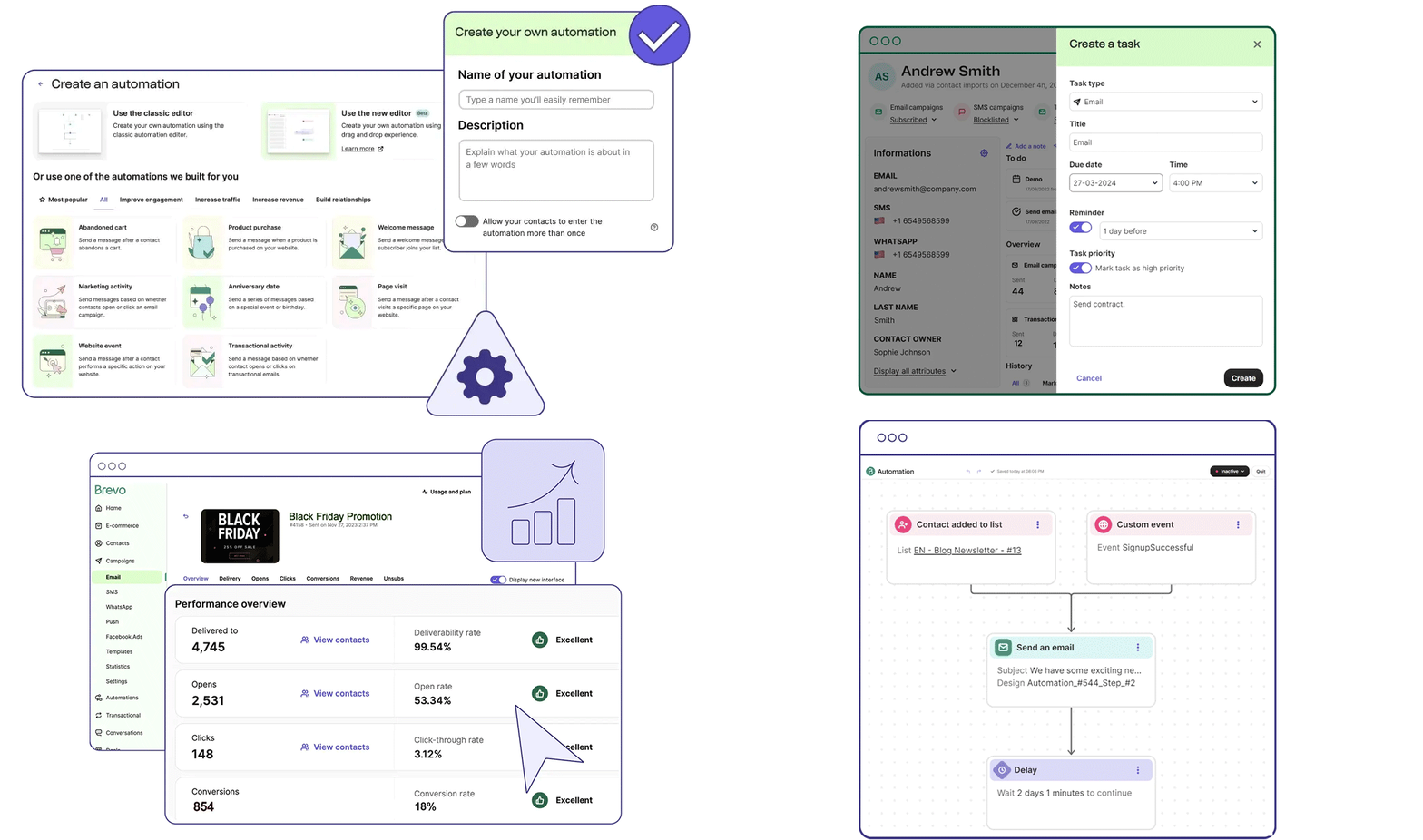
1. Bidirectional Contact and Lead Sync.
When a new lead is created in Salesforce, it automatically appears in Brevo as a contact record carrying the lead's email address, name, company, and configured fields. In the reverse direction, when a Brevo contact attribute changes (a form submission updates their role, a behavioral event triggers), those changes write back to the mapped Salesforce fields. This bidirectionality removes the reconciliation gap that accumulates when marketing and sales data operate independently: a lead that converted to an opportunity last Tuesday is no longer receiving top-of-funnel emails because Brevo reflects the same state as Salesforce.
2. Pipeline-Stage-Aware Campaign Targeting.
Because opportunity contact roles sync into Brevo along with each opportunity's current stage, Brevo's segmentation engine gains live visibility into where each contact sits in the sales funnel. Marketing teams can target only contacts tied to "Proposal Sent" opportunities for a mid-funnel case study sequence, route "Closed Won" contacts to an onboarding track, and exclude "Closed Lost" contacts from active campaign sends. Segment membership updates automatically as deals progress in Salesforce, without manual list management.
3. Email Engagement Data Surfaced Inside Salesforce.
Brevo pushes email engagement metrics back into Salesforce against corresponding contact and lead records. Opens, clicks, unsubscribes, and hard bounces appear as activity log entries inside Salesforce, giving reps engagement context from the contact view. A rep preparing for a follow-up call can see that the contact opened the last three emails and clicked the pricing page, without logging into Brevo. Hard bounces alert reps to invalid email addresses, and unsubscribes prevent awkward follow-up emails after a marketing opt-out.
4. Custom Field Mapping.
The integration supports field-level sync rules between Brevo contact attributes and standard or custom Salesforce fields. Teams with existing custom field structures (an "ICP Tier" field in Salesforce, a behavioral score in Brevo) can map these without forcing both systems into a shared schema.
Salesforce Pricing
API access, which the Brevo native integration requires, is available from Salesforce's Professional Edition and above. The Brevo native connector requires Brevo's Professional plan (from $499/month for 150,000 emails/month) or Enterprise plan.
Professional: $100/user/month (annual billing; 100,000 API requests per rolling 24-hour period)
Enterprise: $175/user/month (adds workflow automation, advanced field customization, field-level security)
Unlimited: $350/user/month (full AI suite, conversation intelligence, highest API allocation)
Salesforce's Starter Suite ($25/user/month) does not include API access, so teams on that tier cannot use the native Brevo integration.
Who Should Use the Salesforce Integration?
Enterprise and mid-market marketing teams whose sales pipeline lives in Salesforce and who need Brevo campaigns to reflect live CRM data without manual exports or periodic CSV reconciliation
Teams running account-based marketing programs that want campaign timing to coordinate automatically with Salesforce opportunity stage changes, rather than relying on manual pipeline segment requests
Organizations where sales reps need visibility into marketing engagement data (opens, clicks, bounces) inside the Salesforce contact record, without requiring access to Brevo
4. WordPress: Best Brevo Integration for Website Sign-Up Capture, Transactional Email, and Live Chat
Source: WordPress
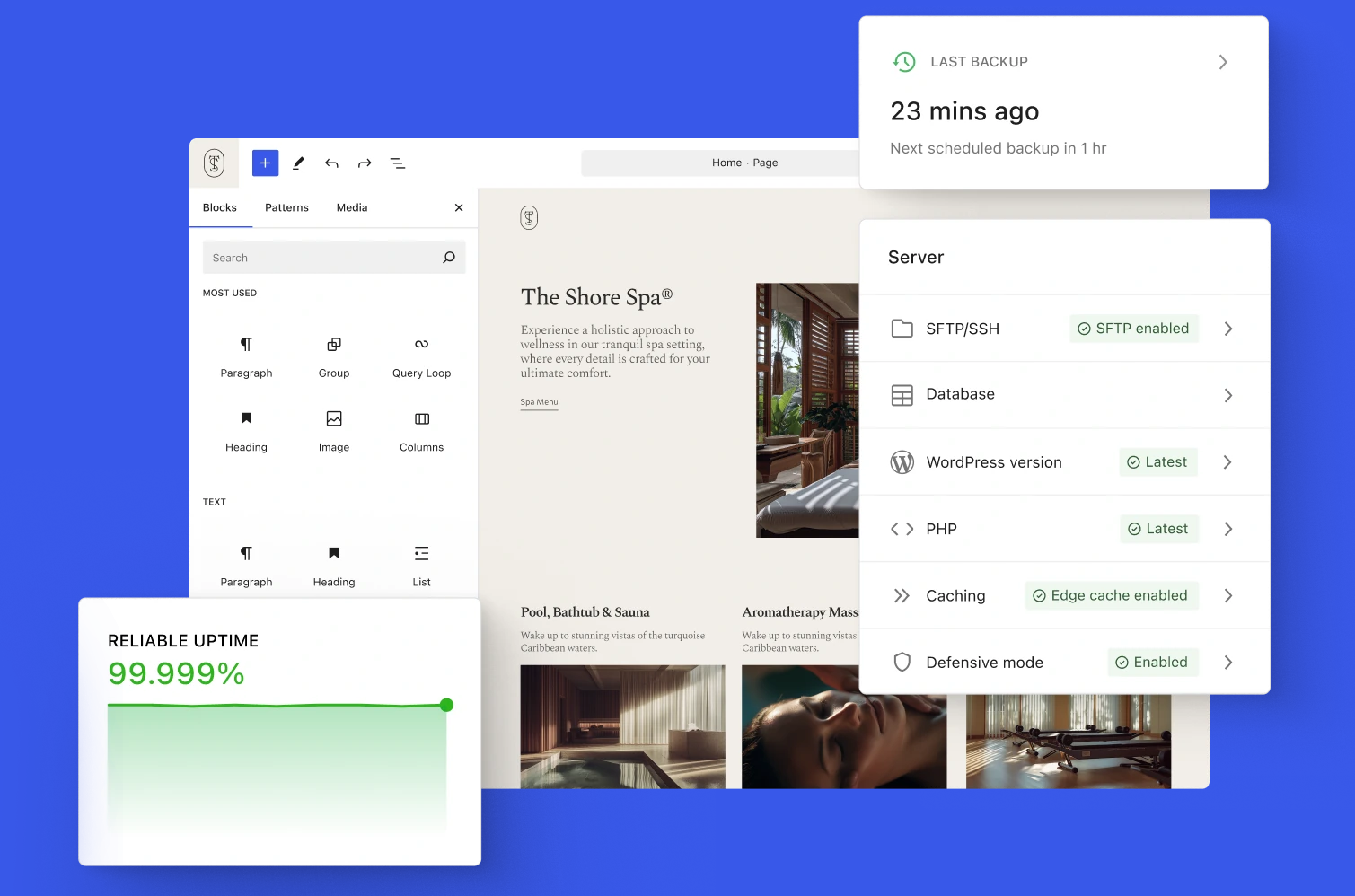
WordPress powers over 43% of all websites on the internet and integrates with Brevo through an official plugin that handles subscription form embedding, transactional email routing, and live chat deployment from a single installation. The plugin is maintained by Brevo and available in the WordPress plugin directory. This is a native first-party integration.
Key integration capabilities include:
Embedded subscription forms placed as Gutenberg blocks, sidebar widgets, or exit-intent popups, with direct assignment to specific Brevo contact lists and GDPR double opt-in enforcement
Transactional email routing through Brevo's SMTP relay so password resets, WooCommerce order confirmations, and contact form notifications deliver reliably with full tracking
Live chat widget deployment sitewide or on specific pages, with chat contacts synced to Brevo's CRM and conversations managed from the Brevo inbox
WooCommerce event triggers that fire Brevo automation workflows on order placement, fulfillment, and cart abandonment
How WordPress Integrates with Brevo
The official Brevo plugin for WordPress installs on any WordPress.com Business or Commerce plan ($25/month and up) or any self-hosted WordPress.org site. The plugin provides configuration UI inside the WordPress dashboard for form embedding, SMTP relay, and live chat deployment without writing code. A secondary path for SMTP-only use cases works through any WordPress-compatible SMTP plugin pointed at Brevo's SMTP server credentials.

Source: Brevo
1. Embedded Subscription Forms with Direct Brevo List Assignment.
The plugin generates subscription forms managed from the Brevo interface and embedded via Gutenberg block, sidebar widget, shortcode, or exit-intent popup. Each form drops sign-ups into a specific Brevo contact list, enabling segmentation by page context at the point of capture: a pricing page form populates a "pricing-intent" list, a blog sidebar form fills a newsletter list, and a product-page popup feeds a retargeting list. Each list drives a different Brevo automation workflow downstream. GDPR double opt-in is enforced at the plugin level, triggering a confirmation email through Brevo before the contact is added.
2. Transactional Email Routed Through Brevo SMTP.
By default, WordPress sends system emails through PHP's mail() function, which delivers unreliably due to shared server IP reputation issues. Routing through Brevo's SMTP relay (host: smtp-relay.brevo.com, ports 587 or 465 with SSL/TLS) replaces that path with Brevo's dedicated sending infrastructure, delivering at a 99% rate with capacity for 120,000 emails per minute. Every transactional message appears in Brevo's transactional logs with delivery status, open events, and bounce data, logged alongside marketing campaign sends for the same contact. Bounce events from transactional sends feed back into Brevo's contact status system, suppressing invalid addresses from future marketing sends automatically. Brevo's free plan includes 300 transactional emails per day via SMTP at no cost.
3. Live Chat Widget Deployment.
Brevo's Conversations live chat deploys on WordPress sites through the plugin with a single toggle, requiring no tag manager or custom JavaScript. All incoming chat conversations appear in Brevo's unified inbox alongside WhatsApp threads and email replies. When a visitor provides identifying information during a chat session, Brevo creates or updates a contact record, making the lead available for marketing list targeting and automation enrollment. Brevo's chatbot scenarios also run on WordPress pages where the widget is embedded, qualifying leads and capturing emails without a live agent.
WordPress Pricing
WordPress.com uses a tiered subscription model. Plugin installation, required for the Brevo plugin, unlocks at the Business plan:
Free: $0/month (no plugin support; Brevo plugin not available)
Personal: from $4/month annual (no plugin support)
Business: from $25/month annual (unlocks 60,000+ plugins including the Brevo plugin; SFTP/SSH, real-time backups)
Commerce: priced above Business (WooCommerce-integrated plan with AutomateWoo, abandoned cart recovery)
Self-hosted WordPress.org sites can install the Brevo plugin with no plan restriction. On the Brevo side, SMTP relay works on all plans including Free (300 emails/day). Automation workflows triggered by WooCommerce events require Brevo Standard ($18/month and up).
Who Should Use the WordPress Integration?
WordPress site owners who want subscriber sign-ups from multiple pages to flow directly into segmented Brevo contact lists without manual CSV exports or third-party sync tools
WooCommerce merchants who need order confirmation emails, shipping notifications, and password resets routed through Brevo's SMTP relay so transactional delivery data appears alongside marketing campaigns
Teams that want to deploy Brevo's live chat widget on WordPress and capture chat contacts into Brevo's CRM and marketing lists without a separate live chat subscription
5. Google Analytics: Best Brevo Integration for Cross-Channel Campaign Attribution

Source: Google Analytics
Google Analytics (GA4) is a web and app analytics platform offered free of charge that integrates with Brevo through a native connection to tie email and SMS campaign performance to downstream website behavior and conversion outcomes. This is a native first-party integration.
Key integration capabilities include:
Automatic UTM parameter injection on every Brevo campaign link, so email and SMS traffic appears as a labeled channel in GA4's acquisition reports
Conversion event sync from Brevo form submissions and automation-triggered actions into GA4 goals
Cross-channel attribution enabling side-by-side comparison of Brevo email and SMS performance against paid search, organic, social, and direct channels
How Google Analytics Integrates with Brevo
The integration operates primarily through UTM parameter injection and GA4 event sync. No API keys or complex configuration are required; the feature is toggled inside Brevo's campaign settings once the integration is active. Data flows from Brevo to GA4: campaign sends trigger UTM-tagged clicks and conversion events that appear in GA4 reports.
Source: Brevo
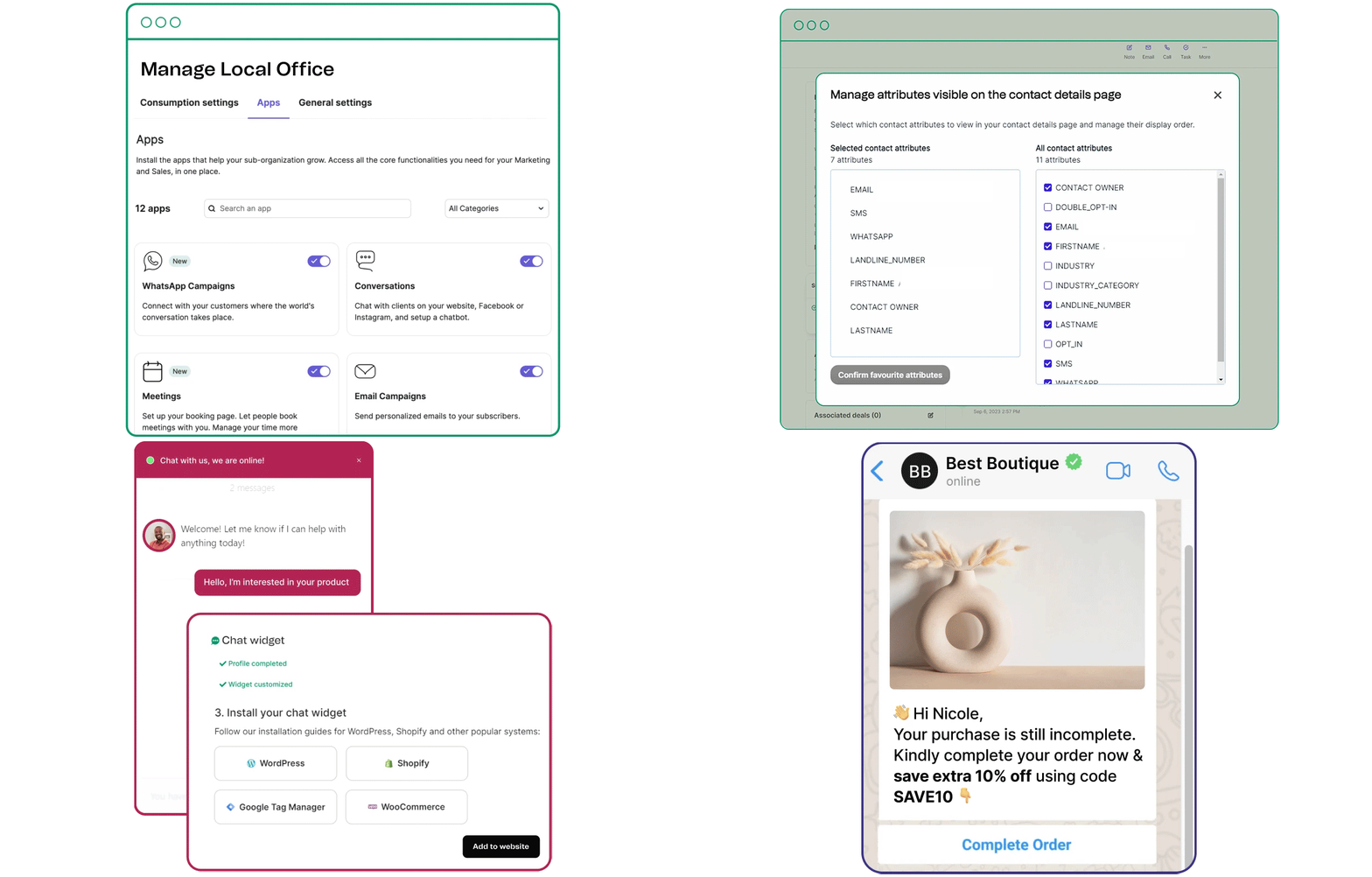
1. Automatic UTM Tagging on All Campaign Links.
When the integration is enabled, every link in every email and SMS campaign is appended with standardized UTM parameters at send time: utm_source=brevo, utm_medium=email, utm_campaign=[campaign name], and utm_id=[Brevo campaign ID]. This happens without manual tagging, URL builders, or tagging spreadsheets. In GA4, email-sourced sessions appear as a distinctly labeled segment in the Traffic Acquisition report, separated from paid search, organic, social, and direct channels. The alternative (manually tagging every link in every campaign) is error-prone at scale; when tags are missing, email traffic lands as direct traffic, distorting organic and direct channel figures.
2. Conversion Event Sync from Brevo to GA4.
The integration supports conversion event firing from Brevo workflows into GA4. When a contact completes a Brevo subscription form or triggers a defined action inside a Brevo automation, Brevo dispatches a conversion event into GA4, associating the marketing automation action with GA4 goals and funnel stages. This ensures that email-influenced conversions (particularly those from multi-touch journeys where email was an earlier-funnel touchpoint) are counted correctly in GA4's data-driven attribution model.
3. Cross-Channel Campaign Attribution in a Single Analytics Environment.
With UTM tracking active and conversion events flowing into GA4, marketers compare Brevo email and SMS performance directly against paid search, display, social, and organic channels inside GA4's acquisition and engagement reports. The email channel appears alongside other sources with the same metrics: sessions, engaged sessions, engagement rate, conversions, and revenue (for ecommerce properties). GA4's Explore module enables funnel explorations segmenting Brevo-sourced cohorts against visitors from other channels, and path explorations tracing post-click behavior.
Google Analytics Pricing
Google Analytics operates on a two-tier model:
Standard (GA4 Free): $0 permanently, no credit card required. Full UTM-based campaign tracking, cross-channel acquisition reporting, GA4 Data API access, and BigQuery export. Sufficient for the vast majority of Brevo users.
Analytics 360 (Enterprise): custom pricing via Google Sales or an authorized Google Marketing Platform partner. Adds unsampled explorations, continuous intraday data freshness, extended data retention up to 50 months, and SLAs.
The Brevo integration works fully on the free GA4 tier with no restrictions.
Who Should Use the Google Analytics Integration?
Teams that already use GA4 as their primary analytics layer and need Brevo email and SMS campaigns to appear as a labeled, attributable channel in the same acquisition reports rather than as anonymous direct traffic
Marketers running multichannel campaigns (email, paid search, social, organic) who need to compare Brevo's contribution to conversions against other channels using a shared attribution model
Ecommerce or lead generation teams that need to understand the full post-click journey: which pages Brevo-driven visitors view, where they drop off, and how they convert
6. Zapier: Best Brevo Integration for Connecting Your Stack Without Code
Source: Zapier
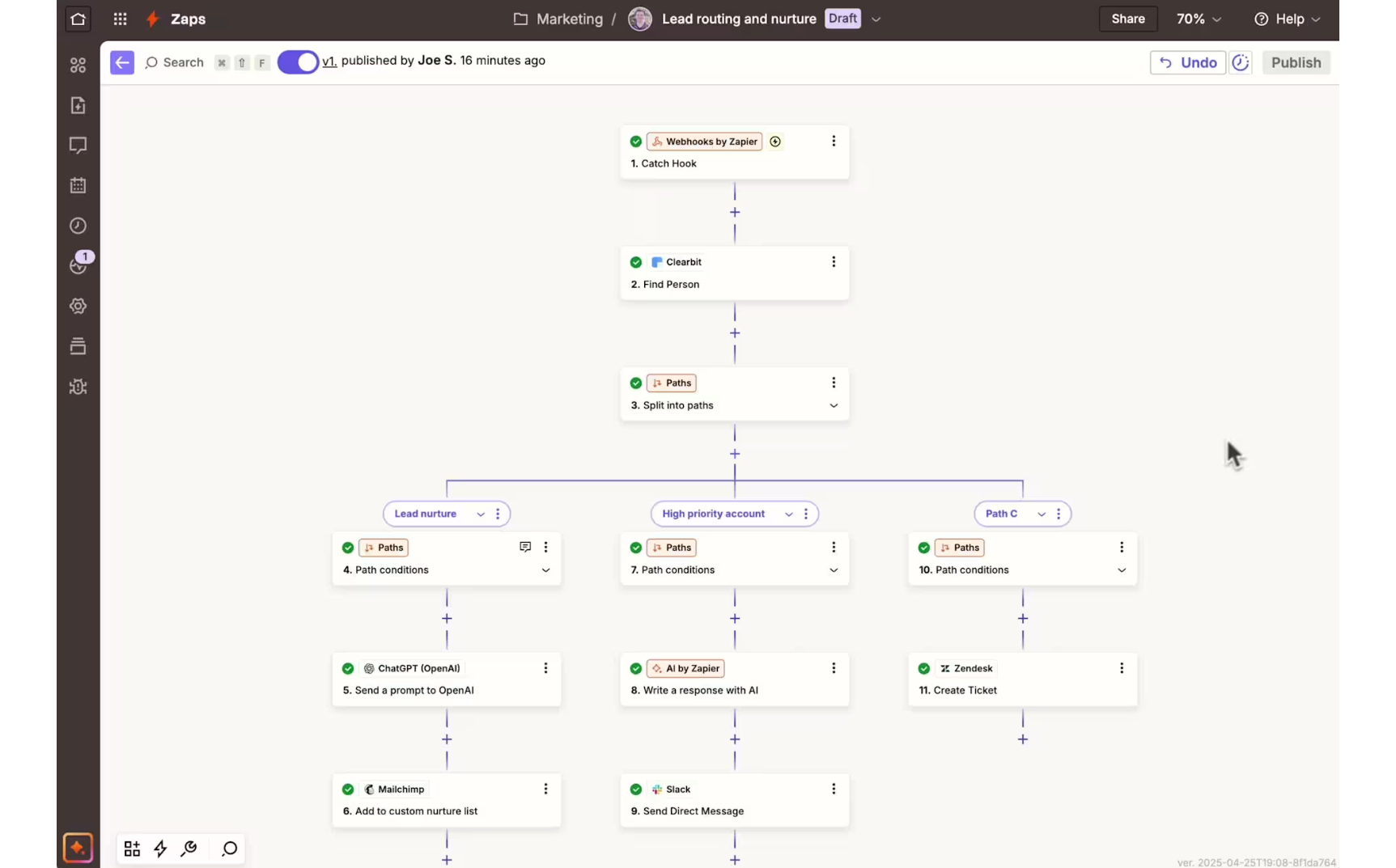
Zapier is a no-code automation platform with 8,000+ app connections that integrates with Brevo through a native connector to extend your marketing automation reach to virtually any tool in your stack, whether or not it offers a direct Brevo connector. This is a native marketplace integration.
Key integration capabilities include:
Trigger-based contact creation and list management routing lead data from any Zapier-connected form, CRM, or event tool into Brevo
Cross-platform lead capture sync connecting Typeform, Gravity Forms, Calendly, and Jotform to Brevo in real time
Payment event triggers firing Brevo lifecycle sequences when Stripe, Paddle, or Chargebee billing events occur
Operational database sync from Airtable, Google Sheets, and Notion keeping Brevo contact attributes current
How Zapier Integrates with Brevo
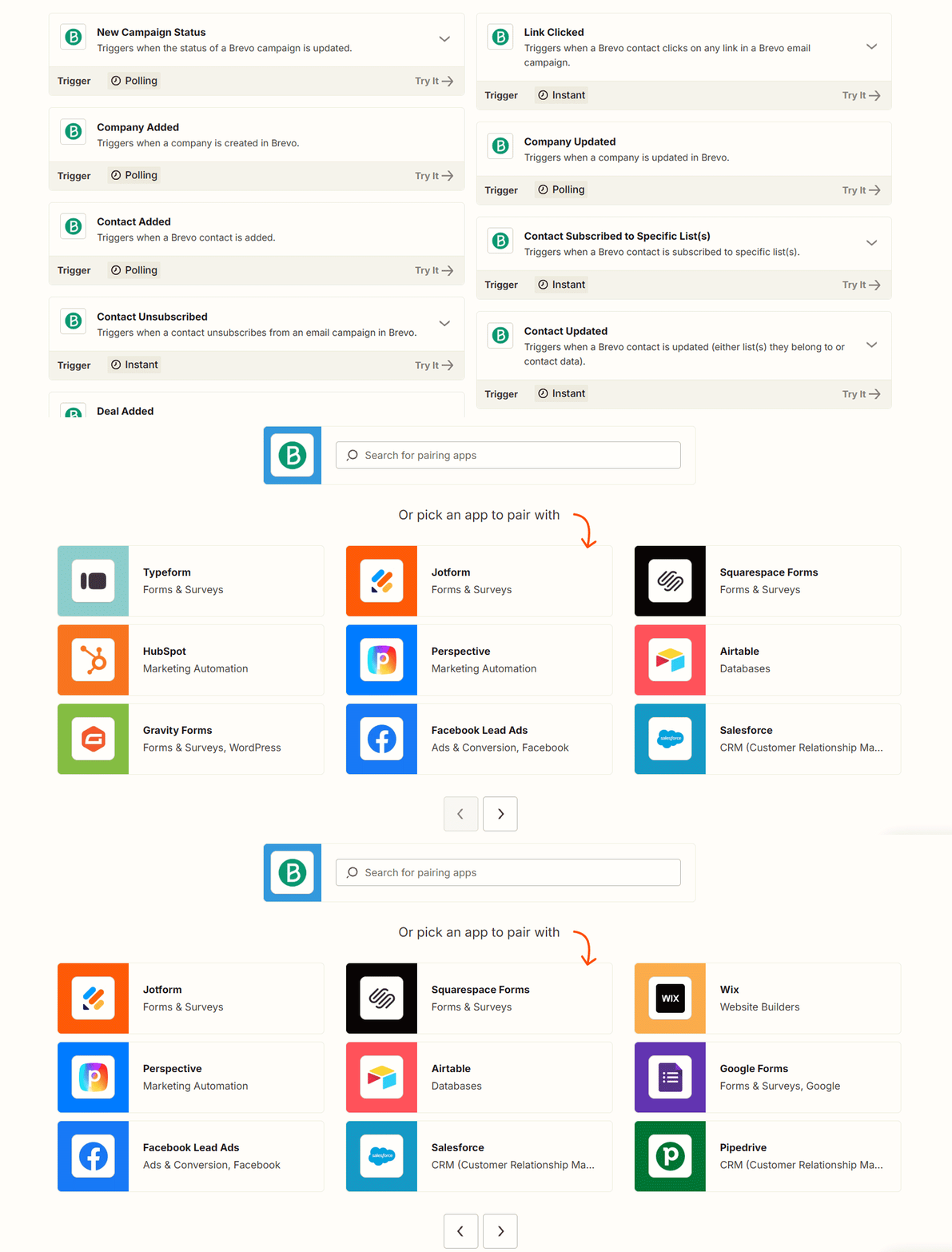
Brevo has a native integration listing on Zapier built on Brevo's REST API. Both platforms connect via OAuth in the Zap builder with no API keys or developer involvement. Available Brevo triggers include: new contact added, contact unsubscribed, campaign status changed, and new transactional email event. Available Brevo actions include: create or update a contact, add a contact to a list, send a transactional email, and send a transactional SMS. A library of pre-built Brevo Zap templates covers the most common workflows.
Source: Zapier
1. Lead Capture Form Sync Across Non-Native Form Tools.
Many teams use form and scheduling tools (Typeform, Calendly, Jotform, Google Forms) that lack native Brevo integrations. With Zapier, a form submission fires a Zap that creates or updates a Brevo contact, assigns that contact to the correct list based on which form was submitted, and can trigger a specific Brevo automation workflow. A Calendly booking creates a contact in a "demo-requested" list and triggers a pre-meeting sequence, while a Typeform survey submission populates an "inbound-research" list for a different nurture track.
2. Payment and Subscription Event Triggers.
For teams using Stripe, billing events carry high marketing relevance: a successful charge warrants an upsell sequence, a failed payment opens a dunning recovery window, a subscription cancellation signals a win-back campaign, and a trial start begins a trial-to-paid nurture series. Zapier maps each Stripe event to a Brevo automation entry point without custom webhook code. When a payment fails, a Zap moves the contact into a dunning sequence list; when a subscription cancels, the contact enters a win-back audience.
3. Operational Data Sources Feeding Brevo Contact Updates.
Many businesses maintain contact attributes in Airtable bases, Google Sheets, or Notion databases that serve as the source of truth for specific data categories. When a record changes in one of those tools, Zapier fires and updates the corresponding Brevo contact with the new attribute values. A renewal date approaching triggers a Brevo nurture sequence; a project marked complete moves the contact to a post-delivery survey list. No manual export-import required.
Zapier Pricing
Zapier uses task-based pricing where each action step counts as one task:
Free: $0/month (100 tasks/month, 2-step Zaps only, 15-minute polling intervals)
Professional: from $19.99/month annual (750 tasks, multi-step Zaps, conditional logic, 2-minute polling)
Team: from $69/month annual (2,000 tasks, shared workspace for up to 25 users, SAML SSO)
Enterprise: custom pricing (unlimited seats, SCIM provisioning, advanced admin controls)
A 3-step Zap firing on 500 contact updates a month consumes 1,500 tasks. Task overages are billed at 1.25x the plan's per-task rate.
Who Should Use the Zapier Integration?
Teams using form or scheduling tools (Typeform, Calendly, Jotform) without native Brevo connectors that need submissions to flow into Brevo contact lists and automation sequences automatically
SaaS and ecommerce teams using Stripe that want billing events (successful charge, failed payment, cancellation, trial start) to trigger Brevo lifecycle email sequences without custom webhook code
Non-technical marketing operators who need to build and maintain cross-platform automation connections without engineering support, using Zapier's template library and visual interface
7. Slack: Best Brevo Integration for Real-Time Campaign Alerts and Team Coordination
Source: Slack
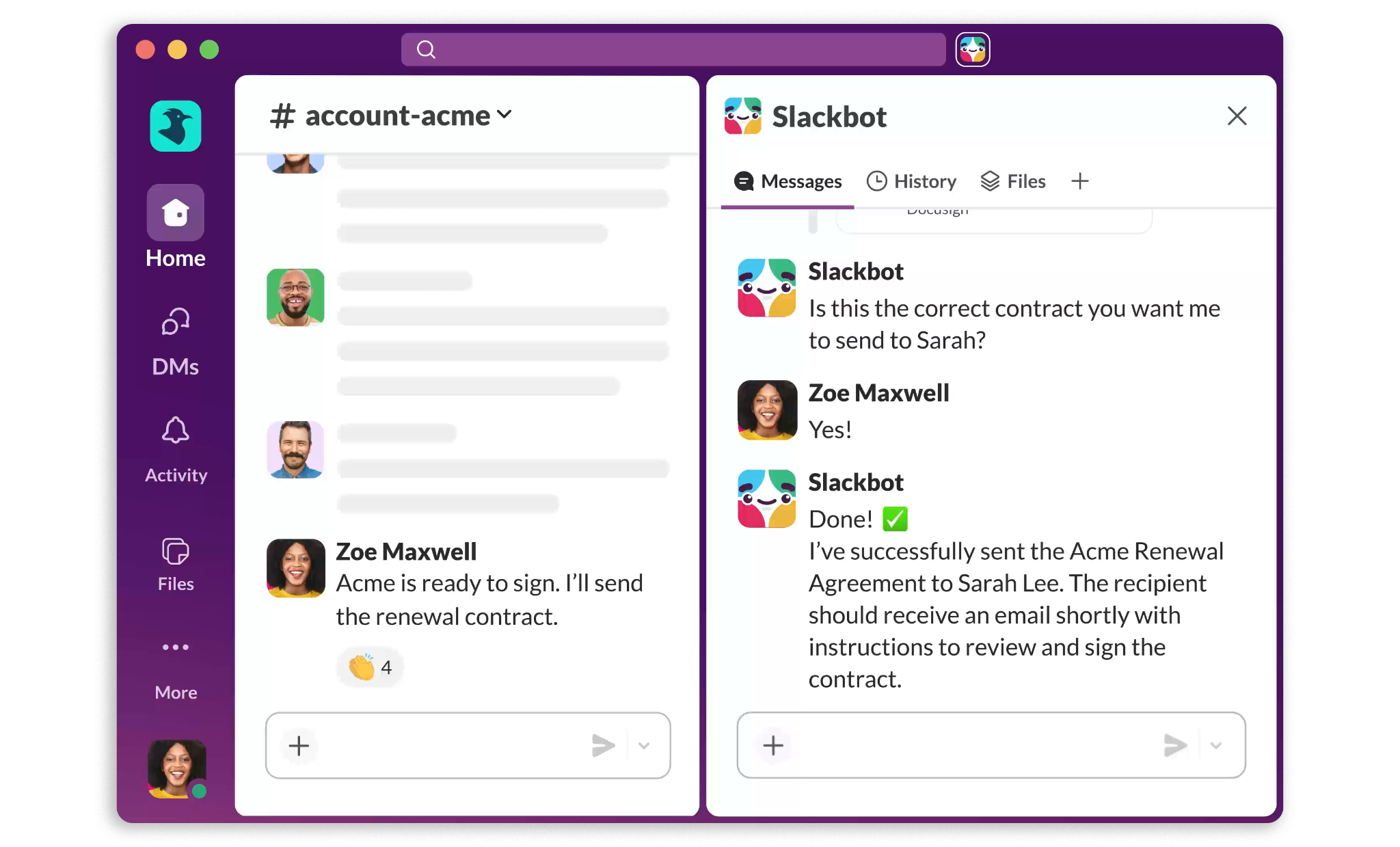
Slack is a team communication platform used by 200,000+ paid customers that integrates with Brevo to surface campaign activity, subscriber events, and contact handoffs inside the channels where marketing and sales teams already work. Brevo offers a native Slack integration and the connection can also run through Zapier for more complex workflows with conditional routing.
Key integration capabilities include:
Campaign performance summaries posted to a designated channel when a Brevo email or SMS campaign finishes sending
New subscriber alerts routed to sales or marketing channels with contact details for immediate follow-up
Hard bounce and deliverability alerts posted to ops channels for rapid suppression action
High-engagement contact handoffs surfaced in sales channels when contacts hit lead score thresholds or click high-intent links
How Slack Integrates with Brevo
Brevo lists Slack as a native integration partner in its marketplace. For workflows that require conditional filtering, multi-step logic, or formatted message payloads, the connection runs through Zapier or Make. Zapier surfaces Brevo's campaign, contact, and automation events as triggers that can post formatted messages to any Slack channel. Multi-step Zaps with filtering require a paid Zapier plan.

Source: Brevo
1. Campaign Performance Summaries Posted Automatically.
When a Brevo email or SMS campaign finishes its send, an automation posts a formatted summary to a pre-configured Slack channel: campaign name, emails sent, open rate, click rate, and unsubscribe count. The entire marketing team gets a performance notification without anyone opening Brevo's dashboard. Teams sending multiple campaigns per week or per day benefit most; no one has to remember to check analytics, copy numbers, and share them.
2. New Subscriber and Hard Bounce Alerts.
When a contact subscribes to a high-intent Brevo list (a demo request, trial signup, or gated content download), an automation posts that contact's details to a sales channel. SDRs watching the channel can pick up the lead in minutes, without waiting for CRM sync cycles or end-of-day reports. The same mechanism works for hard bounces: when Brevo flags a permanent delivery failure, the contact's information posts to a deliverability monitoring channel so the email ops team can act before the next campaign send.
3. High-Engagement Contact Handoff to Sales.
When a Brevo contact crosses a defined engagement threshold (clicking a pricing page link, reaching a lead score, or entering a late-stage automation), an automation posts a structured message to a sales channel with the contact's name, company, and the action that triggered the handoff. Because sales reps spend their day inside Slack rather than Brevo, routing the handoff to where reps already are compresses the response window from hours to minutes.
Slack Pricing
Slack uses per-seat pricing with a Fair Billing Policy that credits inactive users:
Free: $0/user/month (90-day message history, 10-app limit)
Pro: $7.25/user/month annual (unlimited history, unlimited apps)
Business+: $15/user/month annual (SAML SSO, custom retention policies, 4-hour priority support SLA)
Enterprise+: custom pricing (multi-workspace management, DLP, legal holds)
Pro is sufficient for most teams connecting Brevo to Slack. If using Zapier as the connector layer, multi-step Zaps that filter or format Brevo data before posting require a Zapier paid plan (from $19.99/month).
Who Should Use the Slack Integration?
Marketing and sales teams that live in Slack and need Brevo campaign events surfaced in channels where they already work, without requiring anyone to check Brevo's dashboard manually
Teams that need to compress the response time between a contact showing high engagement in a Brevo automation and a sales rep receiving an actionable alert
Organizations that send campaigns frequently and want passive campaign performance visibility delivered to team channels rather than dashboard-checking rituals
Final Verdict
The best Brevo integrations close gaps your marketing platform cannot fill on its own:
ZoomInfo: verified B2B data, buyer intent, and company intelligence enriching every contact; the highest-impact integration on this list if your pipeline depends on data quality
Shopify: storefront data powering purchase-driven lifecycle marketing with revenue attribution per campaign
Salesforce: bidirectional CRM sync with pipeline-stage segmentation for enterprise alignment
WordPress: subscription forms, transactional email routing, and live chat deployed from a single plugin
Google Analytics: email and SMS campaign attribution inside the analytics environment you already use
Zapier: no-code reach into 8,000+ apps where native connectors stop
Slack: real-time campaign alerts and contact handoffs surfaced where your team already works
These integrations also compound: you might run ZoomInfo for contact enrichment, Shopify for ecommerce data, Salesforce for pipeline sync, and Slack for team notifications on the same Brevo instance, each adding a layer that makes the others more valuable.
If you're building your Brevo integration stack and choosing where to start, start with the data layer everything else depends on. ZoomInfo enriches your marketing contacts with verified B2B data from 500M contacts and 135M+ verified phone numbers, plus buyer intent signals that surface the accounts actively researching your category. ZoomInfo Lite is a permanent free tier, so you can evaluate the data before committing to a subscription.
Frequently Asked Questions
How many integrations does Brevo support?
Brevo's marketplace houses over 150 pre-built integrations spanning ecommerce platforms (Shopify, WooCommerce, BigCommerce), CRMs (Salesforce), CMS tools (WordPress), analytics (Google Analytics), and workflow automation (Zapier, Make). Beyond the marketplace, Brevo's REST API covers the full platform programmatically, with official SDKs for Node.js, PHP, Python, Java, C#, Go, and Ruby, and a Model Context Protocol (MCP) server for AI assistant connectivity.
Do Brevo integrations work on the free plan?
Brevo's free plan includes unlimited contacts with 300 emails per day, full API access, SMTP relay for transactional email, and basic form capture. However, marketing automation workflows, A/B testing, and advanced segmentation require the Standard plan ($18/month and up). Ecommerce automation and WhatsApp campaigns require Professional ($499/month and up). Each integration's documentation specifies which Brevo plan tier unlocks the relevant features.
Does Brevo charge by contacts or by emails sent?
Brevo charges by email volume sent, not by contacts stored. Contacts are unlimited on all plans, including Free. This pricing model costs less than contact-count competitors for businesses with large lists but moderate send frequency. SMS and WhatsApp messaging is billed separately by message volume and destination country on all plans.
Can I connect Brevo to tools that are not in the marketplace?
Yes. Brevo's REST API supports standard HTTP methods and can integrate with any system capable of making API requests. For no-code solutions, Zapier connects Brevo to 8,000+ apps, and Make (formerly Integromat) provides visual multi-step automation with 3,000+ connectors. The SMTP relay option works with any application that supports SMTP configuration, including CMS platforms, ecommerce tools, and custom applications.
How does Brevo handle GDPR compliance for integrations?
Brevo was built for European data regulations from the start. The platform supports double opt-in with confirmation emails, maintains proof-of-consent records in contact profiles, stores data in the EU by default, and is ISO 27001:2022 certified. Integration plugins (such as the WordPress plugin) enforce GDPR double opt-in at the capture layer. Brevo acts as a data processor for customer contact data and provides tools for customers to fulfill data subject rights including deletion, export, and consent management.
Can multiple Brevo integrations run simultaneously without performance issues?
Each integration operates independently through its own API connection and sync schedule. Running Shopify for ecommerce data, Salesforce for CRM sync, and Zapier for cross-platform automation on the same Brevo account does not create conflicts. High-volume API usage is governed by Brevo's rate limits, which scale by plan tier: the Free plan allows 100 requests per hour on general endpoints, Professional allows 200, and Enterprise allows 600.
What is the best way to enrich Brevo contacts with verified B2B data?
Integrating a dedicated B2B data platform provides the most thorough enrichment for Brevo's marketing database. ZoomInfo's integration with Brevo, available through Zapier, enriches contacts with verified emails, direct-dial phone numbers, firmographic data, technographic profiles, and buyer intent signals from a database covering 500 million contacts and 100 million companies. The data flows through a verification pipeline backed by 300+ human researchers, reaching up to 95% accuracy on first-party data. For B2B marketing teams where campaign personalization and segmentation depend on company-level data that Brevo cannot generate on its own, connecting a platform built for B2B intelligence closes the gap between what you capture and what your campaigns need to convert.
