
Brevo has built an all-in-one marketing platform that undercuts most competitors on price. It charges for emails sent rather than contacts stored, and bundles email, SMS, WhatsApp, CRM, and transactional messaging into one product. That gives growing businesses tools that would otherwise require four or five separate subscriptions. With 600,000+ customers and a recent $583 million funding round that pushed it past unicorn valuation, Brevo is no longer just a Mailchimp alternative.
To write this Brevo review, we analyzed the platform thoroughly. It's the right choice if:
You need affordable multi-channel marketing automation across email, SMS, and WhatsApp
You want unlimited contacts without paying per subscriber
You value ease of use and fast onboarding over deep customization
Your primary need is campaign execution and customer engagement
You need transactional email included natively, not as a paid add-on
However, Brevo might not be the best choice if:
You need verified B2B contact data and direct-dial phone numbers for outreach
You want buyer intent signals showing which companies are researching your solution
You need AI-driven account prioritization rather than manual list building
You require conversation intelligence and deal analytics across your sales pipeline
Your go-to-market strategy depends on knowing who to target, not just how to reach them
In this case, consider ZoomInfo: an AI-powered GTM platform that starts where Brevo stops. Brevo handles marketing execution (sending campaigns, automating journeys). ZoomInfo provides the intelligence that tells B2B teams who to target, when they're in-market, and what to say, drawing on 500M contacts, 100M companies, and 200M+ verified business email addresses. That intelligence flows through the GTM Context Graph, which combines your CRM data with ZoomInfo's third-party signals to show not just what's happening in your pipeline, but why.
We've included a detailed look at ZoomInfo later in this Brevo review as the stronger choice for B2B teams that need intelligence-driven go-to-market, not just campaign automation. If you want to see what your pipeline looks like with verified data and buyer signals behind it, start with a free trial here.
What is Brevo?
Brevo is a cloud-based customer engagement platform founded in 2012 by Armand Thiberge in Paris, France, under the original name Sendinblue. The company rebranded to Brevo in 2023 to reflect its expansion beyond email into a broader platform covering marketing automation, CRM, transactional messaging, and loyalty programs.
Its pricing model set it apart early: Brevo charges by emails sent per month, not by contacts stored. Businesses can maintain large contact lists without per-subscriber penalties, a structural advantage Brevo promotes directly against Mailchimp's contact-count billing.
Today, Brevo serves customers across 180+ countries from eight global offices. It employs 1,000+ people and has surpassed €200M in annual recurring revenue. Named customers include eBay, Louis Vuitton, Nestlé, IKEA, and Volkswagen. The company has set a €1 billion ARR target for 2030 and is investing in AI through its Aura AI agent suite and a €50M AI commitment over five years.
Brevo's ideal customer is an SMB or growing mid-market business that needs multi-channel marketing and basic CRM in one platform, without the HubSpot or Salesforce price tag.
Brevo Pros & Cons
Pros | Cons |
|---|---|
- Unlimited contacts on all plans, including Free | - Advanced automation feels restrictive compared to ActiveCampaign or HubSpot |
- Multi-channel: email, SMS, WhatsApp, push, chat, phone | - Campaign analytics lack granularity for detailed performance analysis |
- Transactional email included natively (API + SMTP relay) | - Campaigns can be paused by an overly sensitive suspension algorithm |
- Send-volume pricing is cheaper than contact-count competitors | - Removing Brevo branding requires a paid add-on on Starter plan |
- Drag-and-drop editor with fast onboarding | - No B2B prospect database or buyer intent signals |
- GDPR-native architecture with EU data residency | - Phone support only available at Professional tier ($499/month) |
- AI send-time optimization and content generation (Aura) | - Email editor can slow down and bug out on complex layouts |
Brevo Review: How it Works & Key Features
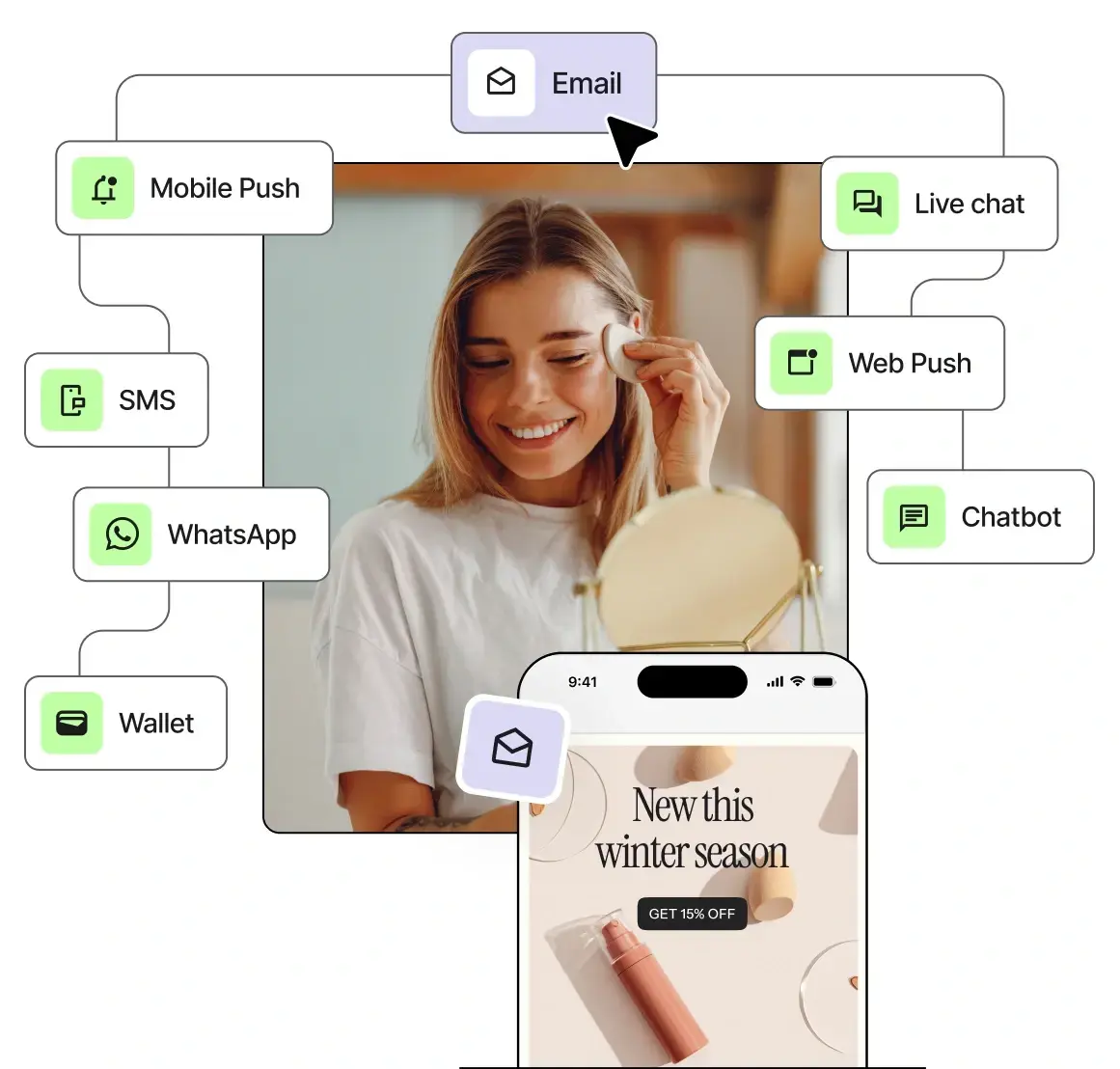
Multi-Channel Campaigns: Brevo lets you build and send campaigns across email, SMS, WhatsApp, and push from a single interface.
Brevo's campaign layer covers email, SMS, WhatsApp, web and mobile push notifications, live chat, chatbot, mobile wallet, and phone, all from one dashboard. Campaign creation starts with a drag-and-drop editor offering 50+ free responsive templates with multi-device preview, or you can build from scratch.
Source: Brevo
Each channel has its own campaign builder within the same interface. WhatsApp campaigns support messages up to 1,024 characters with CTAs, videos, and emojis. Brevo is a certified WhatsApp Business Solution Provider, so businesses get an official business profile and dedicated phone number instead of routing through third-party intermediaries. The platform reports a 98% average open rate for WhatsApp.
The Aura AI Marketing Agent generates subject lines and body copy from prompts, picks send times per recipient based on historical engagement, auto-segments audiences from real-time data, and delivers dynamic product recommendations within campaigns. AI features are available from the Standard plan ($18/month) upward.
Segmentation runs throughout the campaign layer. Contact lists update dynamically based on subscriber activity, demographics, purchase history, and campaign interactions. Automated lead scoring tracks engagement to prioritize outreach.
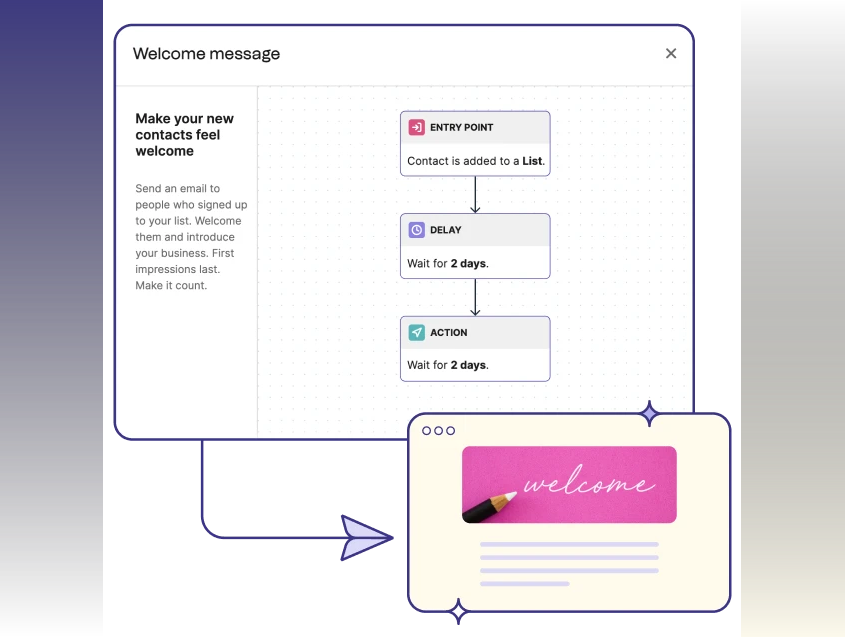
Marketing Automation: Brevo provides visual workflow automation across channels, with pre-built templates for common scenarios.
The automation engine uses a visual drag-and-drop workflow editor. Users pick from pre-built templates (welcome series, abandoned cart, birthday emails, lead scoring) or build custom workflows from scratch. Workflows trigger on contact actions: entering a list, submitting a form, clicking a link, abandoning a cart, or reaching a specific date.
What sets Brevo's automation apart from most email tools is cross-channel capability within a single workflow. A marketer can build a sequence that sends an email, waits 24 hours, then sends an SMS follow-up, all without switching tools. Brevo cites an average 10-15% revenue increase from abandoned cart workflows.
Source: Brevo
The free plan includes automation for up to 2,000 contacts. Standard plans and above unlock the full automation engine with A/B testing and advanced segmentation.
However, G2 and Capterra reviewers consistently note that multi-step workflows and dynamic segmentation feel restrictive compared to ActiveCampaign or HubSpot. For complex customer journeys with heavy conditional branching, users often need workarounds.
For a direct comparison of Brevo and ActiveCampaign's automation capabilities, see our ActiveCampaign vs Brevo comparison.
Transactional Messaging: Brevo includes transactional email, SMS, and WhatsApp natively, with a developer-friendly API.
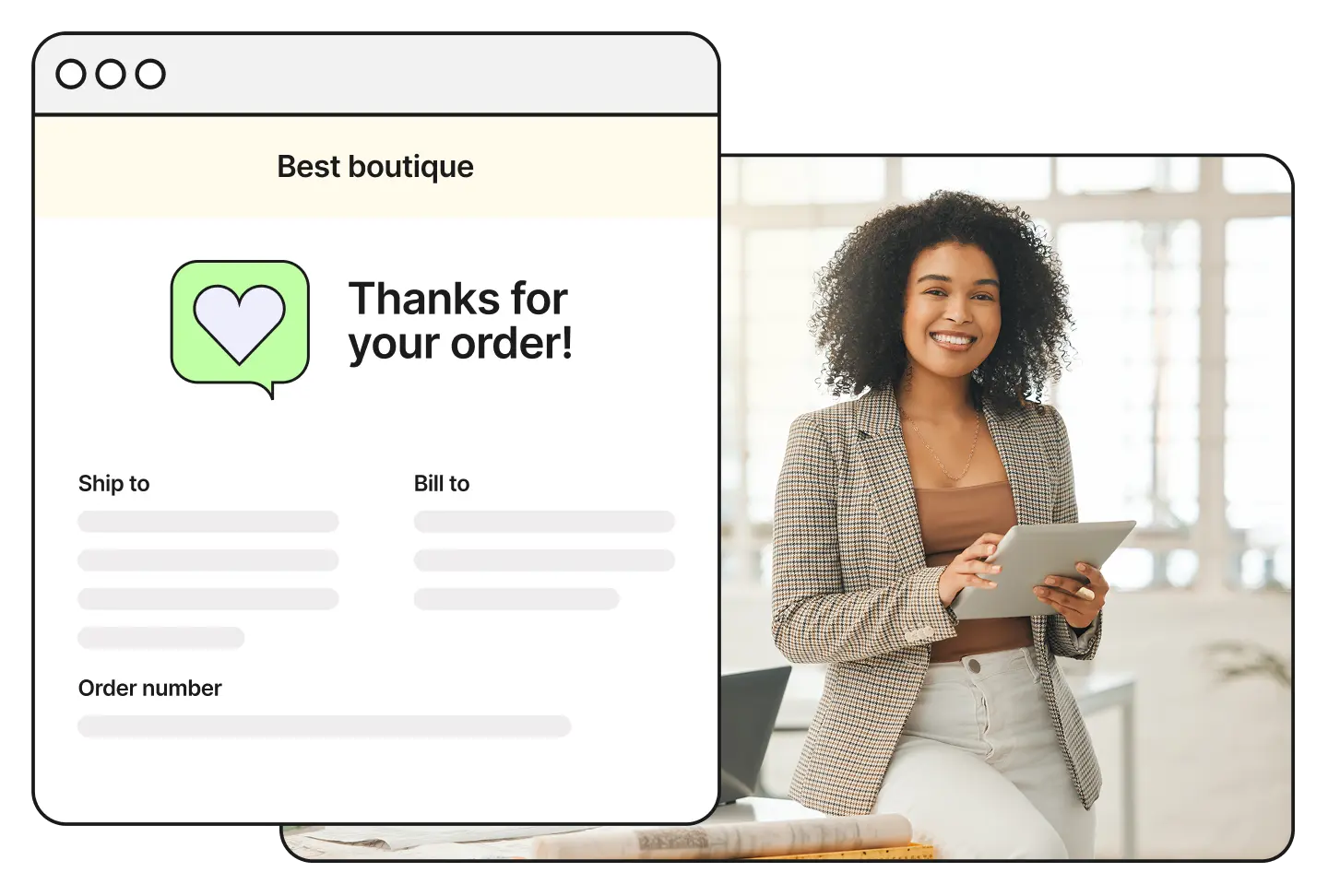
Brevo's transactional messaging handles order confirmations, shipping notifications, password resets, and other automated messages triggered by user actions. Unlike Mailchimp, which charges for transactional email as a paid add-on, Brevo includes it in any paid marketing plan, giving ecommerce and SaaS companies a real cost advantage.
Source: Brevo
The system offers two integration paths: a REST API and an SMTP relay. The API supports batch sending of up to 1,000 personalized versions per request, dynamic template personalization via a params object, and sandbox mode for testing without delivery. Brevo publishes specific throughput figures: 99.8% successful API requests and 120,000 emails per minute.
Real-time webhooks track twelve email events (Delivered, Opened, Clicked, Bounced, Complained, and others), each sending an HTTP POST payload to a developer endpoint. Inbound email parsing converts incoming replies into structured data, enabling two-way conversations like support ticket creation from email replies.
Official SDKs cover Node.js, PHP, Python, Java, C#, Go, and Ruby. The free plan includes 300 transactional emails per day with full API access. No credit card required.
Sales CRM: Brevo offers a built-in sales platform with deal pipelines, phone, live chat, and meeting scheduling.
The Sales Platform provides a Kanban-style deal pipeline where contacts, companies, and deals link in a single view. Deal stages are customizable, teams can assign tasks, and automation rules handle repetitive steps like follow-up reminders and stage progressions.
Reps make and receive calls directly from the CRM using Brevo's cloud-based phone, with transcripts and AI-generated call summaries attached to the contact record. A meeting scheduler lets prospects self-book through a personalized booking page, with payment collection built in. A live chat widget deploys to websites in a few clicks and automatically adds contacts to the CRM when a chat ends.
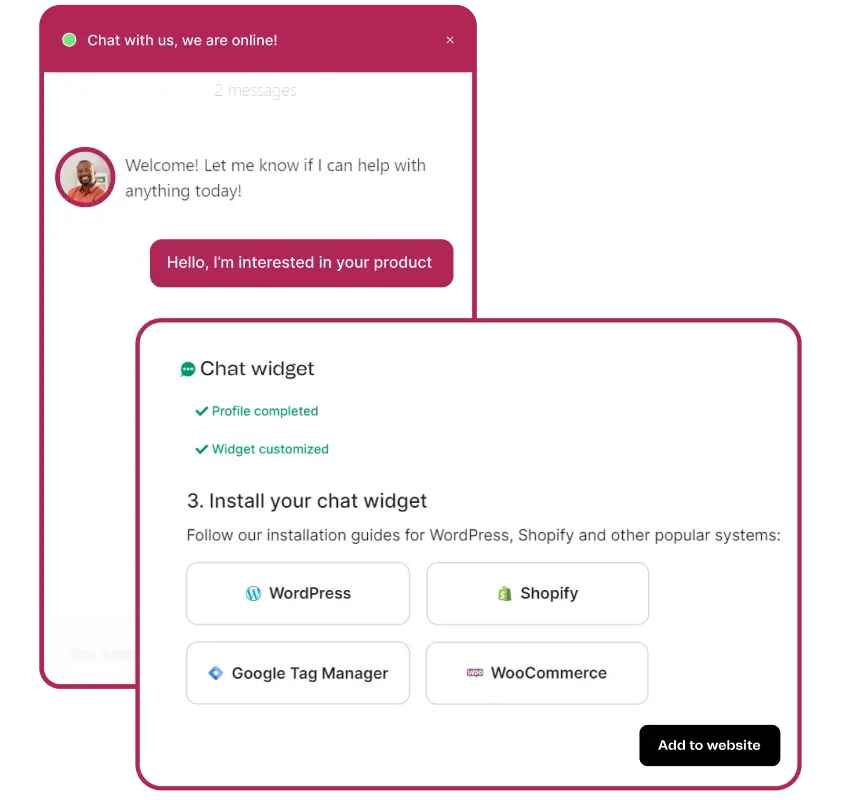
Source: Brevo
The Aura AI Sales Assistant enriches contact records in one click, creates deals from conversations, generates sales emails, and produces call transcripts, all within the deal view.
A Sales Free tier comes at no extra cost on base Brevo plans: 50 open deals, one pipeline, live chat, and meeting scheduling. Paid sales tiers add automation and reporting at $27.92/month (Essentials) and $58.50/month per user (Advanced).
Pricing: Brevo charges by email volume, not contacts, with a permanent free plan and monthly billing.
Brevo's pricing model centers on email send volume. Contacts are unlimited on every plan, including Free. Annual billing saves 10%.
Free (permanent): 300 emails/day (roughly 9,000/month), unlimited contacts, drag-and-drop editor, templates, AI content generator, advanced segmentation, forms, transactional email via API/SMTP. No automation, A/B testing, or landing pages.
Starter (from $9/month): 5,000 emails/month with a volume slider to scale. Adds email and SMS channels, email support. No automation or A/B testing. Brevo branding appears on outgoing emails unless you buy a $10.80/month add-on.
Standard (from $18/month): 5,000+ emails/month. Brevo branding removed by default. Adds marketing automation, A/B testing, email reporting with click heatmaps, AI send-time optimization, web tracking, and one landing page.
Professional (from $499/month): 150,000+ emails/month. 10 seats included. Adds WhatsApp campaigns, push notifications, popups, contact scoring, phone support, and a dedicated Deliverability Specialist.
Enterprise: Custom pricing for organizations with 1M+ contacts. Adds multi-account management, custom objects, Mobile Wallet, loyalty engine, dedicated IP, SSO/SAML, and a Customer Success Manager.
SMS and WhatsApp are billed separately by volume and destination country on all plans. The pricing page says "no hidden fees", though commonly needed features like white-labeling on Starter and the Sales CRM add-on cost extra.
Where Brevo Falls Short
Brevo does a lot well for the price. But several limitations appear as B2B teams try to build intelligence-driven go-to-market on the platform.
No Prospect Intelligence.
Brevo helps you communicate with contacts you already have. It does not help you find new ones. There is no B2B contact database, no company search, no org chart data, no direct-dial phone numbers, and no way to identify anonymous website visitors by company.
B2B sales teams that need targeted prospect lists must source that data elsewhere before they can use Brevo's campaign tools.
No Buyer Intent or Account Signals.
Brevo tracks what contacts do with your emails (opens, clicks, bounces) but sees nothing they do outside your campaigns. There are no intent signals showing which companies are researching your category, no technographic data showing what tools prospects use, and no job-change alerts when champions move to new accounts. Without these signals, you time your outreach by guesswork rather than buying activity.
Automation Complexity Ceiling.
G2 and Capterra reviewers consistently flag that multi-step workflows and dynamic segmentation feel restrictive. For B2B companies running nurture sequences with conditional branching based on account behavior, Brevo's automation often requires workarounds that more specialized platforms handle natively.
Limited Analytics and Attribution.
Multiple review sources note that Brevo's campaign analytics lack granularity for conversion-level analysis, that comparing campaign performance across time periods is cumbersome, and that revenue attribution reporting trails platforms like Klaviyo or HubSpot. For B2B teams trying to connect marketing activity to pipeline and closed revenue, this gap matters.
For a closer look at how Brevo and HubSpot compare on analytics and reporting, see our Brevo vs HubSpot comparison.
No Conversation Intelligence.
Brevo captures no insight from sales calls. There are no call transcripts feeding into deal records, no AI analysis of competitive mentions or objection patterns, and no way to see why deals move or stall based on what prospects say. Sales managers reviewing pipeline health must rely on rep-entered CRM notes instead of analyzed conversation data.
These limitations reflect Brevo's design as a marketing execution platform. It answers "how do I reach my contacts?" but not "who should I be reaching, and why now?" For B2B companies whose pipeline depends on that second question, a platform built on intelligence changes the equation.
Top Brevo Alternative for B2B Go-to-Market: ZoomInfo
ZoomInfo addresses Brevo's intelligence gap by starting from the opposite end. Where Brevo asks "how do I send this campaign?", ZoomInfo asks "who should receive it, and is now the right time?"
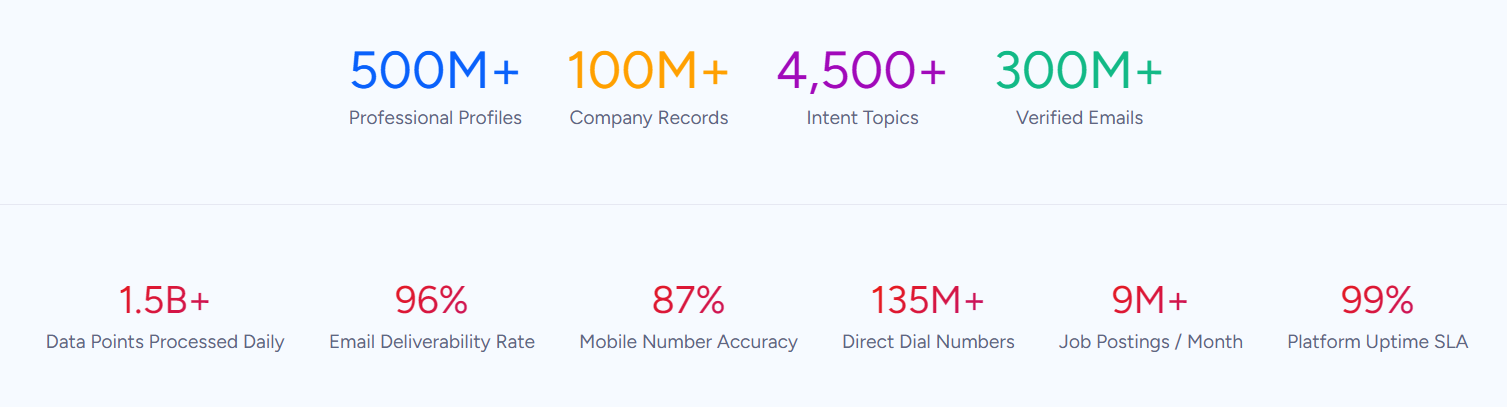
Built on a B2B data platform covering 500M+ contacts and an AI-powered GTM Context Graph that processes 1.5B+ data points daily, ZoomInfo gives B2B teams the foundation to identify, prioritize, and engage the right buyers at the right moment.

Comprehensive B2B Data: ZoomInfo provides verified contact and company intelligence across a large-scale B2B database.
ZoomInfo's data platform covers 500M contacts, 100M companies, 135M+ verified phone numbers, 120M direct dials, and 200M+ verified business email addresses.
The data spans three dimensions: identity (who buyers are and how to reach them), company context (firmographics, org charts, technographics across 30,000+ technologies), and dynamic signals (buyer intent, job changes, funding events) that show when an account is in-market.
Source: ZoomInfo
ZoomInfo verifies data through a multi-source pipeline backed by 300+ human researchers, reaching up to 95% accuracy on first-party data. This claim held up in a Fortune 500 competitive RFP that analyzed 25 million contacts across vendors. The independent consultant concluded that "no other competitor came even close."
For B2B teams using Brevo to send campaigns, the difference is practical. Instead of importing purchased lists of unknown quality into Brevo and hoping emails land, ZoomInfo provides verified email addresses and direct-dial phone numbers for the specific decision-makers you want to reach, filtered by job function, seniority, company size, industry, and technology stack.
SpringDB saw 2x-3x increases in campaign conversions, a 300% increase in database usability, 30-50% uplift in average deal size, and 20-40% reductions in customer churn using ZoomInfo's enriched data. (SpringDB)
GTM Context Graph: ZoomInfo's intelligence layer captures not just what happened in your pipeline, but why.
Raw data tells you a prospect's title and email.
The GTM Context Graph tells you that the CFO joined the last call, asked about six-month ROI, and that this pattern matches your closed-won deals in the same segment. It connects ZoomInfo's third-party data with your CRM records, conversation transcripts, email interactions, and behavioral signals into a single intelligence layer that processes 1.5B+ data points daily.
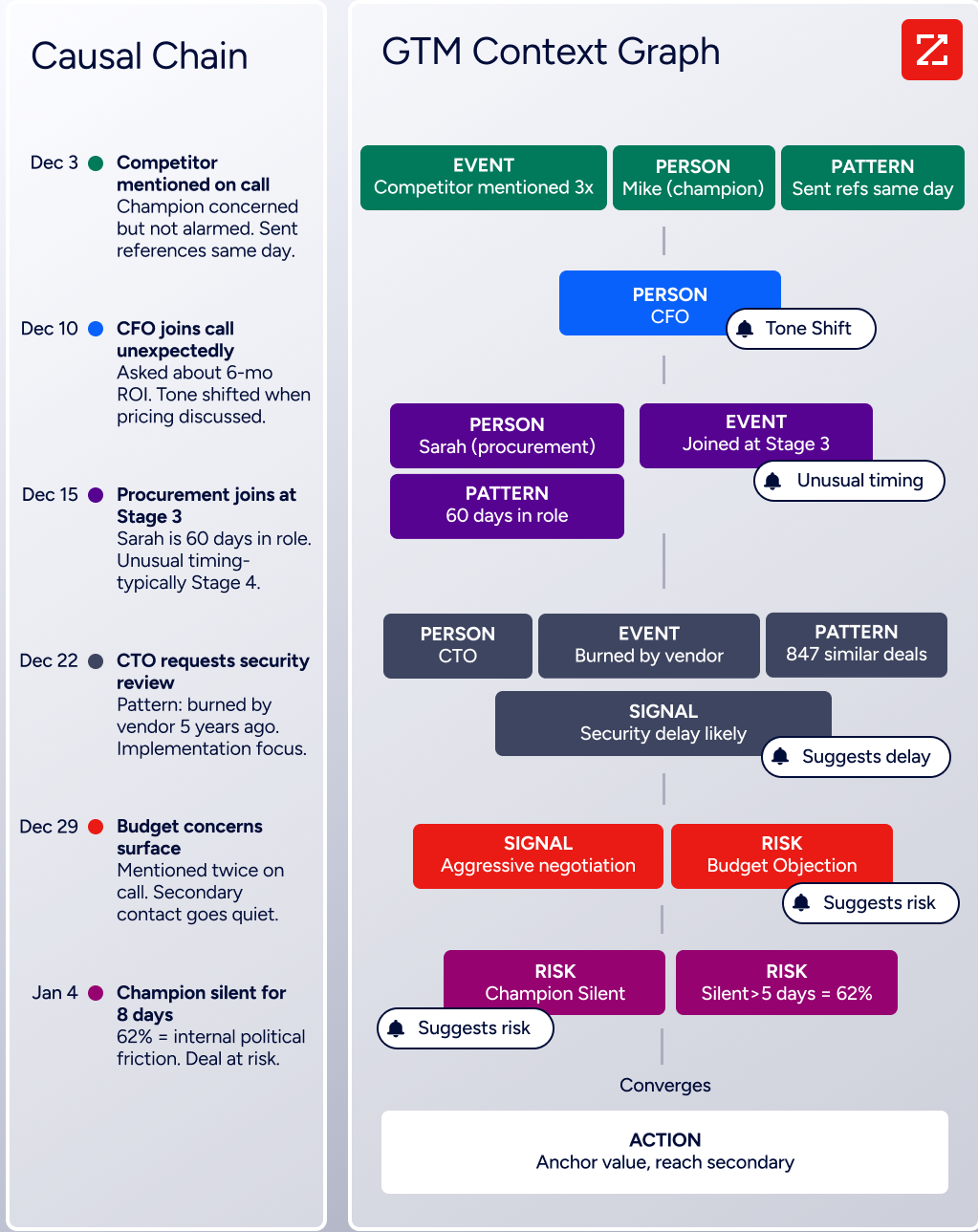
Source: ZoomInfo
Buyer Intent tracks signals from 210 million IP-to-Organization pairings and 6 trillion+ keyword-to-device pairings sourced monthly. Guided Intent (exclusive to ZoomInfo) identifies topics historically correlated with deal success, instead of requiring manual topic selection. WebSights resolves anonymous website traffic to companies, identifies buying-team members and their contact information, and filters out bots automatically.
Brevo's analytics tell you a contact opened your email three times. ZoomInfo tells you the same contact's company just raised a funding round, hired three VPs in your target department, and is researching your competitor. That context turns outreach from a volume game into a targeted one.
Seismic attributed 39% of active pipeline to opportunities identified or influenced by ZoomInfo signals, reported 54% productivity gains, and saved 11.5 hours per week per seller. "That combination of our internal CRM data, external signals, and AI that's given all that context has helped us craft very specific account- and persona-based messages. And people have responded to them right away." (Seismic)
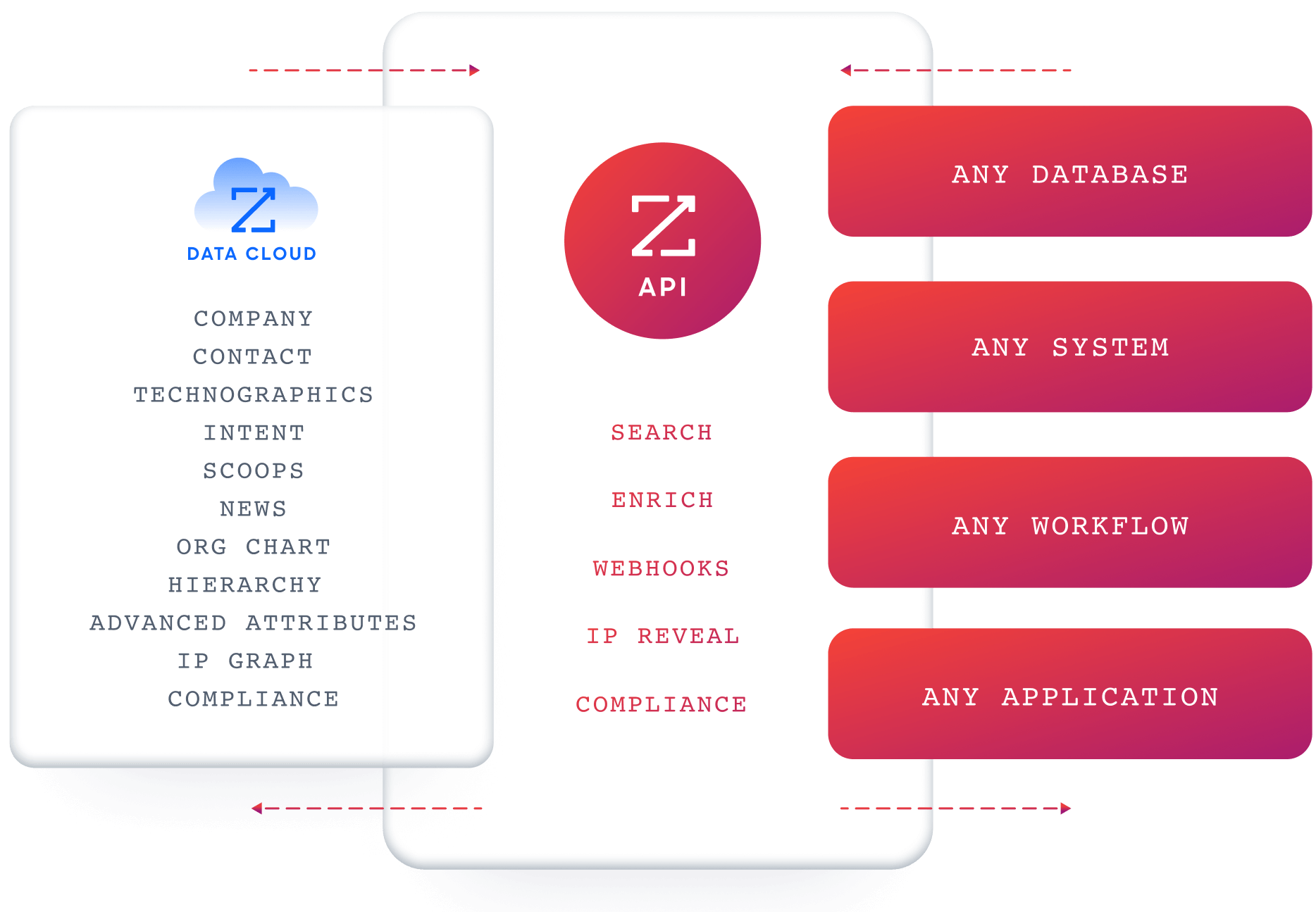
Universal Access: ZoomInfo delivers intelligence through native apps for sellers and marketers, plus APIs and MCP for any tool.
ZoomInfo delivers its intelligence through three paths.
GTM Workspace gives sellers a single view of prioritized accounts, AI-drafted outreach, and deal execution. AI agents handle account research, signal monitoring, outreach drafting, and CRM updates. An AI Assistant generates account briefs (pulling CRM history, company news, and stakeholder context) in 10 seconds. An Action Feed shows a live stream of in-market buyers matched to target criteria, with pre-drafted actions on every signal.
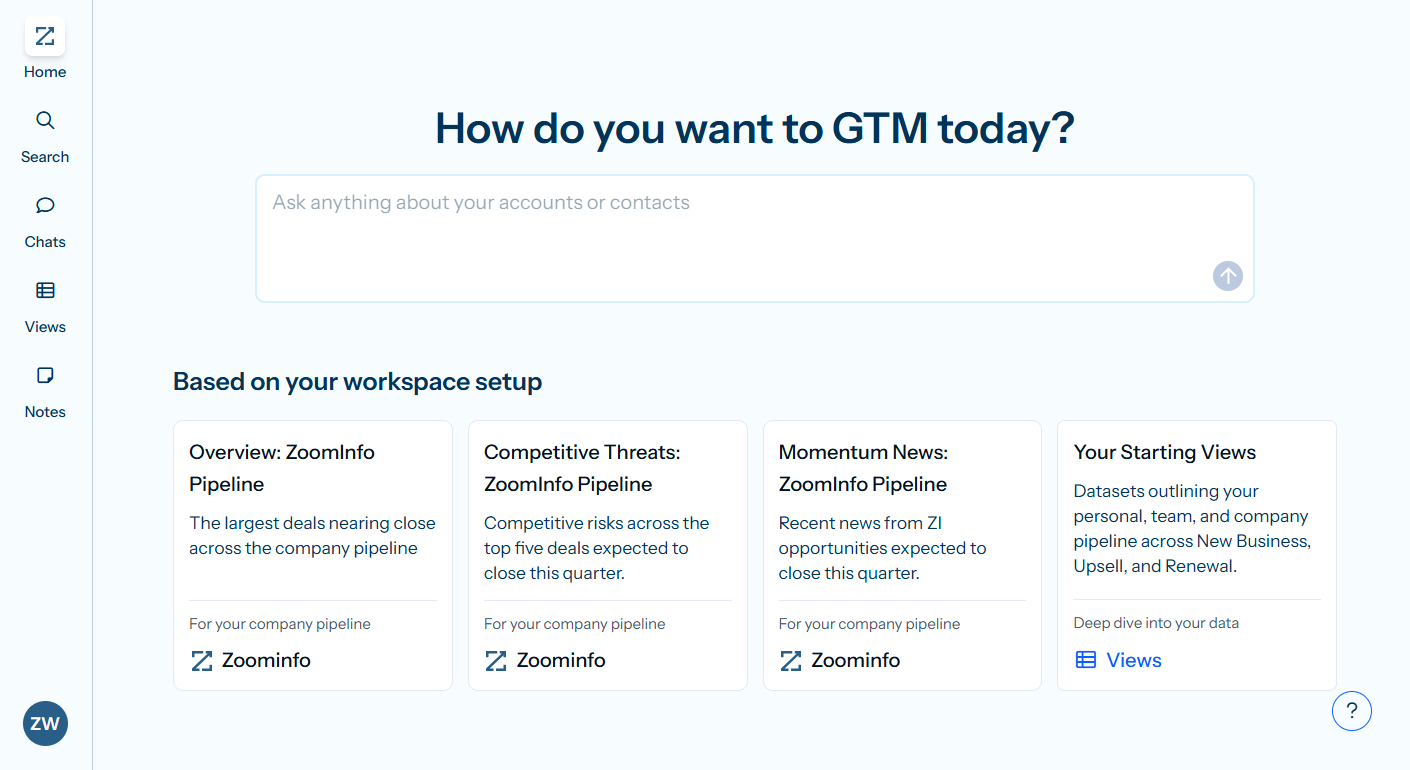
GTM Studio gives marketers, RevOps, and GTM engineers a workspace for audience definition, campaign orchestration, and pipeline measurement in natural language. Pre-built plays for inbound acceleration, champion tracking, competitive displacement, and ICP targeting launch in one click. Multi-channel orchestration triggers email, calls, ads, and direct mail based on buyer behavior. Expansion plays that used to take three weeks now launch in 30 minutes.
For teams building beyond ZoomInfo's products, APIs and MCP expose the same intelligence to any custom agent, internal tool, or partner platform. The MCP server connects AI models to ZoomInfo data with no custom coding. All three paths draw from the same GTM Context Graph: the same data, the same signals, the same intelligence, regardless of where you access it.
Source: ZoomInfo
BDO Canada achieved an 87% reduction in time spent on internal data dashboard updates using ZoomInfo's API. "The plug-and-play aspect of the API means I can integrate it very easily into any process and get information at a moment's notice." (BDO Canada)
Pricing: ZoomInfo uses custom consumption-based pricing, with a permanent free tier for individuals.
ZoomInfo uses a consumption-based pricing model with no publicly listed prices. Costs scale based on seats, credit volume, features, and contract length.
The platform organizes into Sales, Marketing, and add-on products, each with Professional, Advanced, and Enterprise tiers that unlock progressively more capabilities (intent signals, AI features, integrations, dedicated support).
Credits follow a simple model: 1 credit = 1 export of a professional or company profile. Searching and viewing data does not consume credits. Each package includes a set number of monthly credits, with the option to add more.
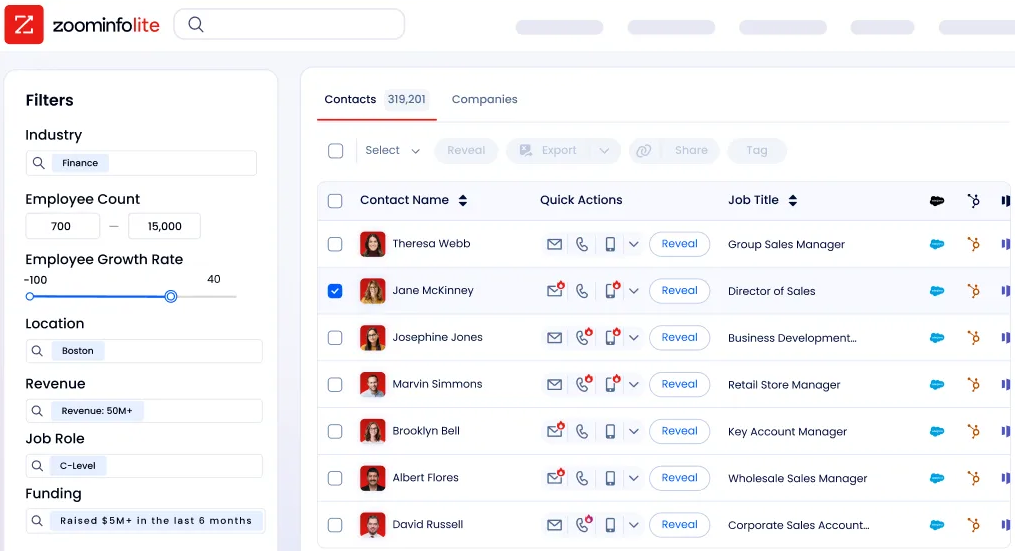
ZoomInfo Lite provides a permanent free tier (not a trial) with access to ZoomInfo's B2B database, 10 monthly export credits, individual and company searches, the ReachOut Chrome Extension, WebSights Lite (up to 10 visitor reveals per day), built-in email sending, and HubSpot integration. A separate 7-day free trial with broader feature access is also available. No credit card required.
Source: ZoomInfo
Brevo or ZoomInfo: Comparison Summary
Aspect | Brevo | ZoomInfo |
|---|---|---|
Primary focus | Multi-channel marketing automation and customer engagement | B2B data intelligence and AI-driven go-to-market |
Target audience | SMBs, ecommerce, B2B and B2C businesses | B2B enterprises and mid-market sales/marketing teams |
B2B contact database | None; relies on user-imported contacts | 500M contacts, 200M+ verified emails, 135M+ verified phones |
Buyer intent signals | None | 210M IP-to-Org pairings, 6T+ keyword-device pairings monthly |
Marketing channels | Email, SMS, WhatsApp, push, chat, phone, mobile wallet | Display ads (native DSP), email, LinkedIn, Meta, Connected TV |
Marketing automation | Visual workflow builder with cross-channel sequences | GTM Studio: AI-powered plays with multi-channel orchestration |
CRM | Built-in with deal pipelines and sales automation | Native CRM integrations (Salesforce, HubSpot, Dynamics) |
Conversation intelligence | None | Chorus: call recording, transcription, AI analysis |
Transactional email | Included natively (API + SMTP) | Not a core capability |
Website visitor ID | None | WebSights: company and contact-level identification |
AI capabilities | Aura AI: content generation, send-time optimization, segmentation | GTM Context Graph: pipeline intelligence, account prioritization, AI agents |
Free plan | 300 emails/day, unlimited contacts, permanent | ZoomInfo Lite: 10 exports/month, permanent |
Pricing model | Email volume-based, from $9/month | Consumption-based, custom-quoted |
Data compliance | GDPR, CCPA, ISO 27001 | ISO 27001, ISO 27701, SOC 2 Type II, TRUSTe GDPR/CCPA |
Best for | Affordable multi-channel campaign execution | Intelligence-driven B2B pipeline generation |
Final Verdict
The choice between Brevo and ZoomInfo depends on what your go-to-market strategy needs most: campaign execution or prospect intelligence.
Choose Brevo if your business already knows its customers and needs an affordable way to engage them across channels.
It fits ecommerce brands running abandoned cart sequences and promotional campaigns, SMBs sending newsletters and transactional emails on a budget, and any team that values multi-channel reach (email, SMS, WhatsApp, push) in a single, easy-to-use product. The send-volume pricing makes it cost-effective for businesses with large contact lists and moderate send frequencies.
If your marketing challenge is execution, not targeting, Brevo delivers real value at a fraction of what competitors charge.
Choose ZoomInfo if your growth depends on finding and engaging the right B2B buyers before competitors do.
It's built for teams where the hardest problem isn't sending the campaign but knowing who should receive it and whether now is the right time. With verified contact data, buyer intent signals, conversation intelligence, and an AI layer that reasons across your pipeline, ZoomInfo turns go-to-market from a volume exercise into a precision operation.
The platform's three access paths (GTM Workspace for sellers, GTM Studio for marketers and RevOps, APIs and MCP for custom builds) put that intelligence in reach of every team and tool in your stack.
Get started with ZoomInfo here.
Brevo and ZoomInfo solve different problems. Brevo makes it easy and affordable to communicate with your audience. ZoomInfo makes sure you're reaching the right audience at the right time, with context that makes every interaction count. For B2B teams serious about pipeline, the intelligence layer separates campaigns that generate opens from outreach that generates revenue.
Brevo FAQ
Is there a free version of Brevo?
Yes. Brevo offers a permanent free plan with 300 emails per day (roughly 9,000 per month), unlimited contacts, and access to the drag-and-drop editor, templates, AI content generator, segmentation, and transactional email via API and SMTP. No credit card is required and there is no time limit. The free plan does not include marketing automation, A/B testing, or landing pages.
ZoomInfo also offers a permanent free tier called ZoomInfo Lite, which provides access to its B2B database with 10 monthly export credits, search capabilities, and a Chrome extension.
How does Brevo's pricing model differ from Mailchimp?
Brevo charges based on emails sent per month, not contacts stored. Contacts are unlimited on all plans, including Free. This makes Brevo cheaper for businesses with large contact lists that send at moderate frequencies. Mailchimp charges by subscriber count, so costs rise as your list grows regardless of how often you email.
What marketing channels does Brevo support?
Brevo supports email, SMS, WhatsApp, web and mobile push notifications, live chat, chatbot, mobile wallet, and phone (VoIP). It is a certified WhatsApp Business Solution Provider, giving businesses an official business profile and dedicated phone number. SMS and WhatsApp are billed separately by volume and destination country, not bundled into the base email plan.
Does Brevo include a CRM?
Yes. Brevo includes a Sales Platform with customizable deal pipelines, task assignment, sales automation, a cloud-based phone with AI call summaries, a meeting scheduler with payment collection, and a live chat widget. A Sales Free tier with 50 open deals and one pipeline comes at no extra cost on base Brevo plans. Paid sales add-ons start at $27.92 per month.
Can Brevo help with B2B prospecting or lead generation?
Brevo is designed for engaging contacts you already have, not for finding new prospects. It does not include a B2B contact database, company search, org chart data, or buyer intent signals.
B2B teams that need targeted prospect lists, in-market account identification, or verified direct-dial phone numbers would need a platform like ZoomInfo, which provides 500M contacts, 135M+ verified phone numbers, and intent signals tracking when companies are researching relevant topics.
Does Brevo offer transactional email?
Yes, and this is a notable advantage. Brevo includes transactional messaging (order confirmations, shipping notifications, password resets) via REST API and SMTP relay on any paid plan, with 300 transactional emails per day on the free plan. Many competitors charge transactional email as a separate add-on. Brevo also extends transactional messaging to SMS and WhatsApp via the same API.
What are Brevo's biggest limitations for B2B companies?
Brevo lacks several capabilities B2B go-to-market teams rely on: there is no prospect database or contact enrichment, no buyer intent signals or account-based targeting, no conversation intelligence for analyzing sales calls, and campaign analytics lack the depth needed for revenue attribution. The automation engine, while capable for standard workflows, feels restrictive for complex conditional branching compared to ActiveCampaign or HubSpot.
Is Brevo GDPR compliant?
Yes. Founded in Paris, Brevo was designed for European data regulations from the start. The platform supports double opt-in, maintains proof-of-consent records in contact profiles, stores data in the EU by default, and holds ISO 27001:2022 certification. Brevo also supports CCPA compliance and is a certified B Corporation.
Related breakdowns to help you choose:
