
Choosing between Brevo and Klaviyo often comes down to five questions:
Are you marketing to consumers, selling to businesses, or both?
Do you need to nurture existing contacts or find new prospects you haven't identified yet?
Is your priority ecommerce revenue attribution or account-level intelligence about who's ready to buy?
Do you want to pay by emails sent or by contacts stored?
Would your marketing improve more from better campaign tools or better data about who to target?
In short, here's what we recommend:
Brevo is the multichannel marketing platform built for SMBs and mid-market businesses that want email, SMS, WhatsApp, live chat, push notifications, and a basic CRM in one package. Its send-volume pricing model means unlimited contacts on every plan (including the free tier), so you never pay more because your list grows.
With GDPR-native architecture, EU data residency, and a permanent free plan offering 300 emails per day, Brevo fits businesses that need multichannel reach without enterprise complexity. The tradeoff: automation workflows hit a ceiling compared to more specialized tools, and reporting lacks the revenue attribution ecommerce brands need.
Klaviyo is the B2C CRM designed for ecommerce brands that want every campaign informed by real customer data. Its built-in data platform stores every click, purchase, and interaction indefinitely with no look-back limits, enabling segmentation most marketing platforms cannot match.
The Shopify partnership gives Shopify merchants native features (Customer Hub, Customer Agent, locale-aware catalogs) no other platform offers. With 60+ pre-built automation flows and predictive analytics for CLV, churn risk, and next purchase date, Klaviyo turns customer data into revenue. The tradeoff: pricing scales steeply with list size, and many of its most advanced features require Shopify.
Both platforms excel at the same job: communicating with contacts you already have. They automate campaigns, personalize messages, and track engagement. But B2B companies face a harder problem upstream: identifying which companies are in-market, finding the right decision-makers, and knowing when to reach out. That's a different challenge, and it's the one ZoomInfo was built to solve.
ZoomInfo is the B2B go-to-market platform that provides the intelligence layer neither Brevo nor Klaviyo was designed to offer. Where marketing automation platforms manage campaigns, ZoomInfo manages the data those campaigns depend on: 500M contacts, 100M companies, 135M+ verified phone numbers, and 200M+ verified business emails.
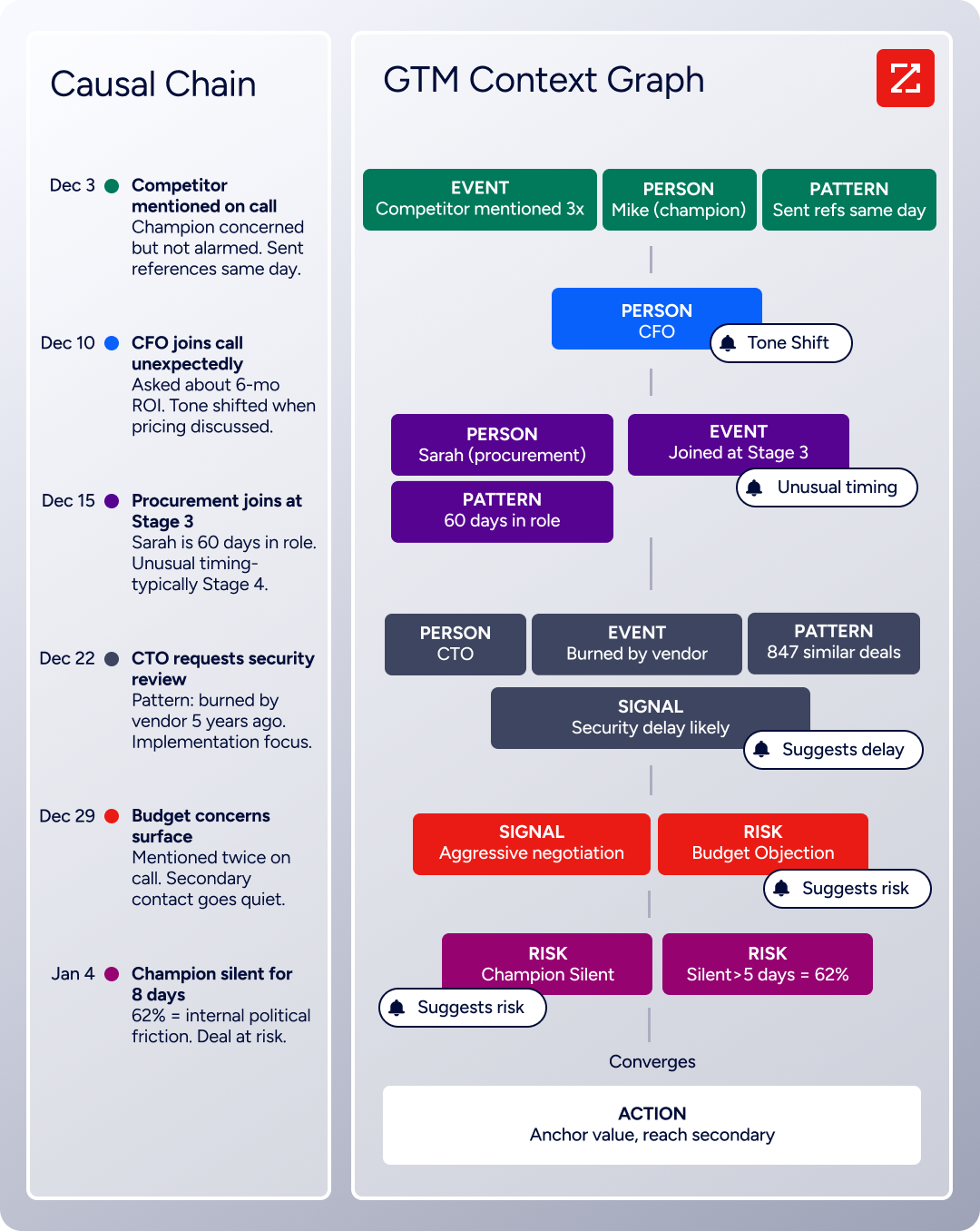
Its GTM Context Graph, processing 1.5B + data points daily, fuses this data with your CRM records, conversation transcripts, and behavioral signals to reveal not just who to contact, but why they're worth contacting now.
That intelligence reaches your team through GTM Workspace for sellers, GTM Studio for marketers and RevOps, or APIs and MCP in any front-end. For B2B teams, ZoomInfo doesn't replace your email platform. It ensures you're targeting the right people before you press send.
If building your go-to-market on verified data and real buying signals sounds like the missing piece, see how ZoomInfo works.
Brevo vs. Klaviyo vs. ZoomInfo at a glance
Brevo | Klaviyo | ZoomInfo | |
|---|---|---|---|
Primary focus | Multichannel marketing automation | B2C CRM for ecommerce | B2B go-to-market intelligence |
Channels | Email, SMS, WhatsApp, push, chat, phone | Email, SMS, push, WhatsApp, RCS | Multi-channel GTM outreach |
AI capabilities | Aura AI (4 agents) | K:AI (40+ features) | GTM Context Graph + AI agents |
Ecommerce depth | Broad integrations, moderate depth | Designed for Shopify/ecommerce | N/A (B2B focused) |
CRM | Basic sales CRM included | B2C CRM with unified profiles | B2B intelligence + CRM enrichment |
Data architecture | CDP with no-code data transformation | Lifetime customer profiles, 350+ integrations | 500M contacts, 100M companies, intent signals |
Security | ISO 27001, GDPR-native, B Corp | ISO 27001, SOC 2 Type II, PCI DSS | ISO 27001, ISO 27701, SOC 2 Type II |
Pricing model | Send volume (unlimited contacts) | Contact count (active profiles) | Consumption-based (custom quote) |
Free plan | 300 emails/day, unlimited contacts | 250 profiles, 500 emails/month | ZoomInfo Lite (permanent, free) |
Best for | SMBs, multichannel B2C marketing | Ecommerce brands, especially Shopify | B2B sales and marketing teams |
Klaviyo dominates ecommerce personalization
For ecommerce brands, particularly those on Shopify, Klaviyo holds a structural advantage that neither Brevo nor ZoomInfo attempts to match.
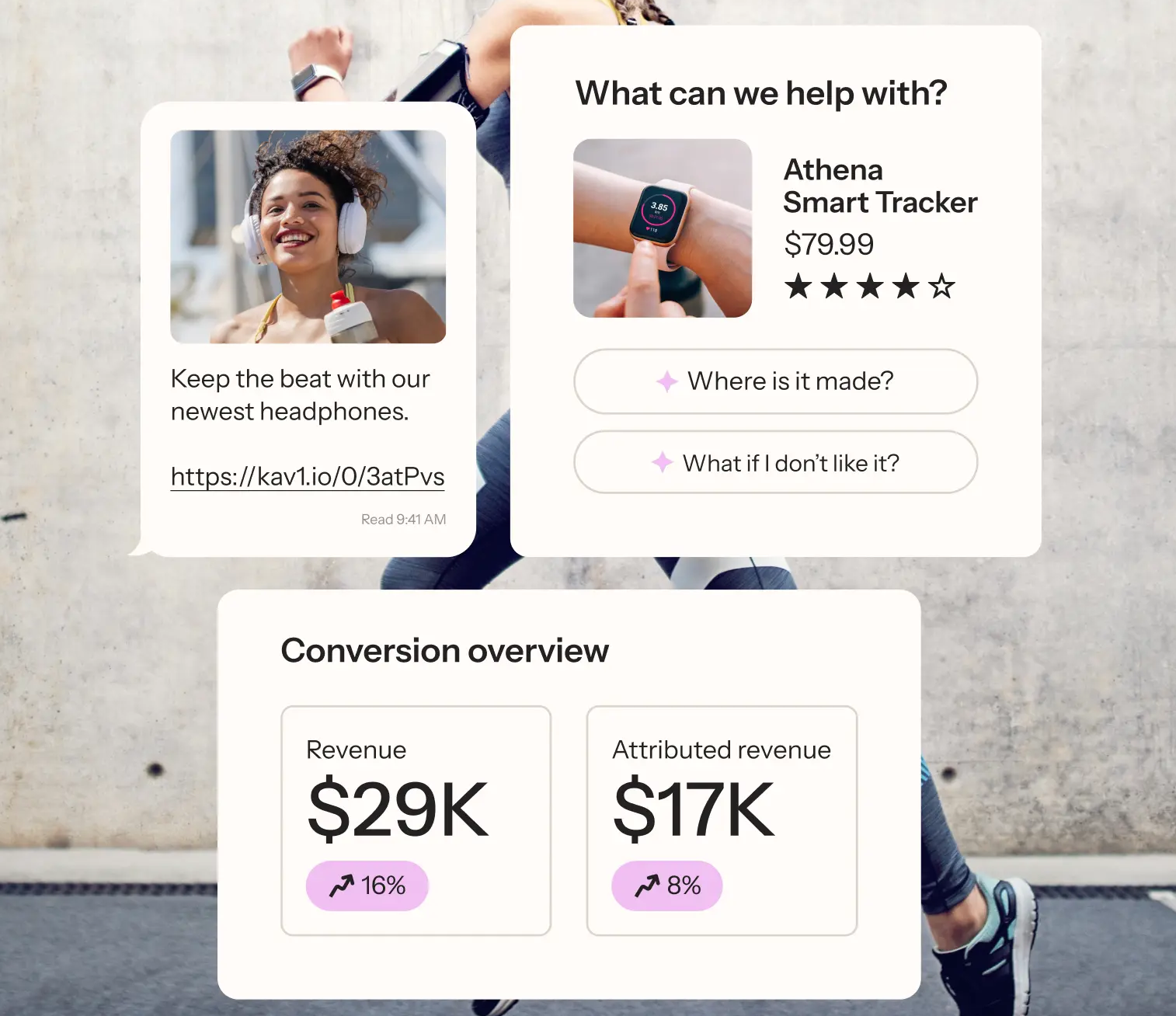
The Shopify partnership runs deep. Shopify holds a warrant position in Klaviyo. An IDC Business Value Executive Summary found brands using Klaviyo and Shopify together achieved 73% revenue growth over three years. Features like Customer Hub, Customer Agent, and locale-aware catalogs require Shopify and don't exist for other platforms.
Source: Klaviyo
Klaviyo's data model is built around ecommerce primitives: orders, carts, products, SKUs, price drops, and stock status. Its 60+ pre-built automation flows cover abandoned cart recovery, browse abandonment, post-purchase upsell, back-in-stock alerts, replenishment reminders, and price drop notifications.
Each flow branches by cart value, VIP status, product category, or any combination of behavioral data. Brands using email and SMS together see a 19% increase in GMV growth rate versus email alone.
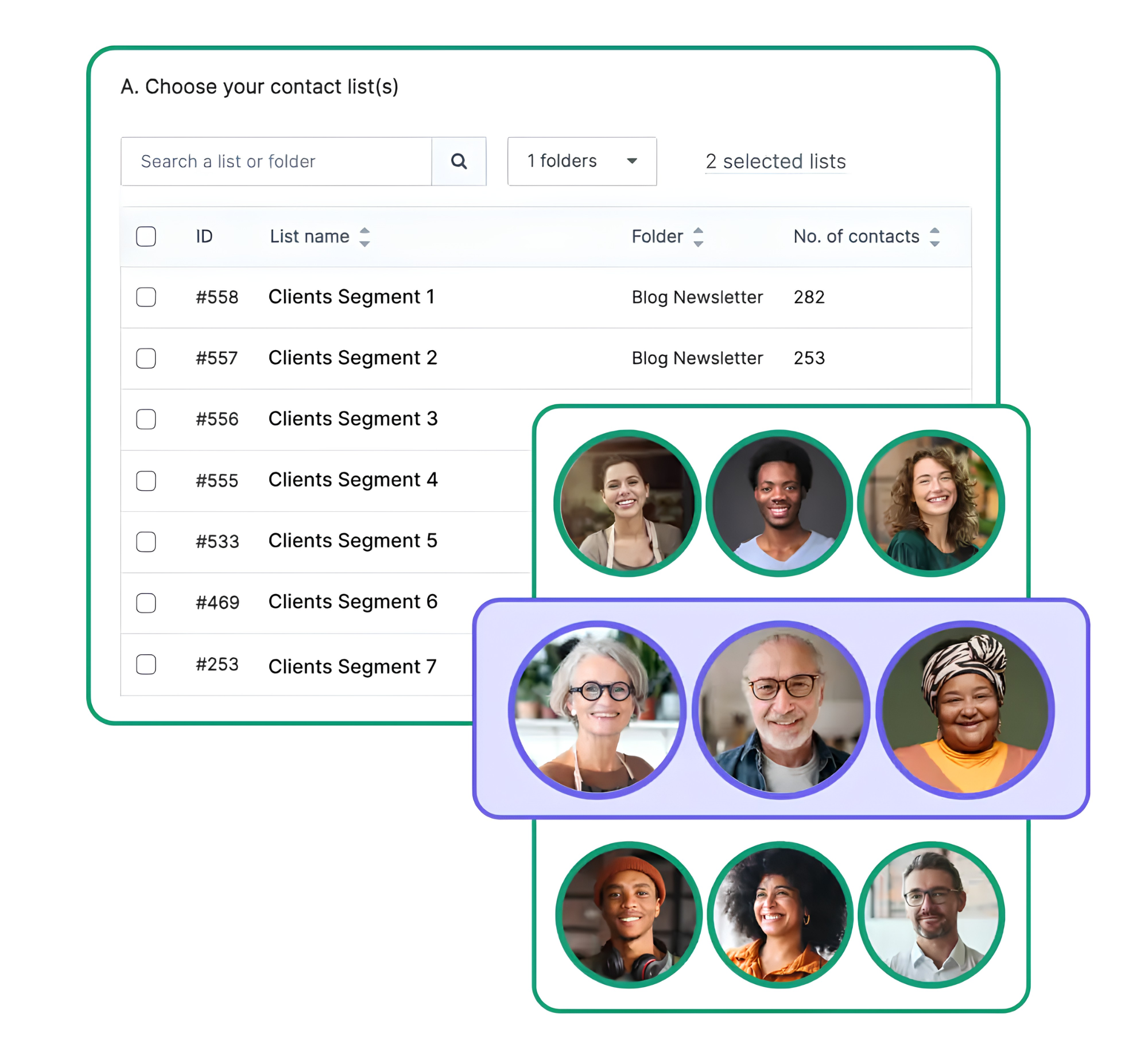
Brevo integrates with Shopify, WooCommerce, BigCommerce, PrestaShop, and Magento and offers abandoned cart recovery that reportedly produces an average 10–15% revenue increase. But the integration depth doesn't approach Klaviyo's.
Source: Brevo
Brevo's strength is breadth: it serves ecommerce, SaaS, hospitality, restaurants, and nonprofits without favoring one vertical. That versatility means no single segment gets Klaviyo-level treatment.
If your business runs on Shopify and you measure success in revenue per email, Klaviyo is the clear choice. If you need a platform that handles email alongside SMS, WhatsApp, live chat, and a basic CRM across multiple verticals, Brevo's flexibility has real value.
Brevo wins on multichannel reach
Where Klaviyo goes deep on ecommerce, Brevo goes wide on channels.
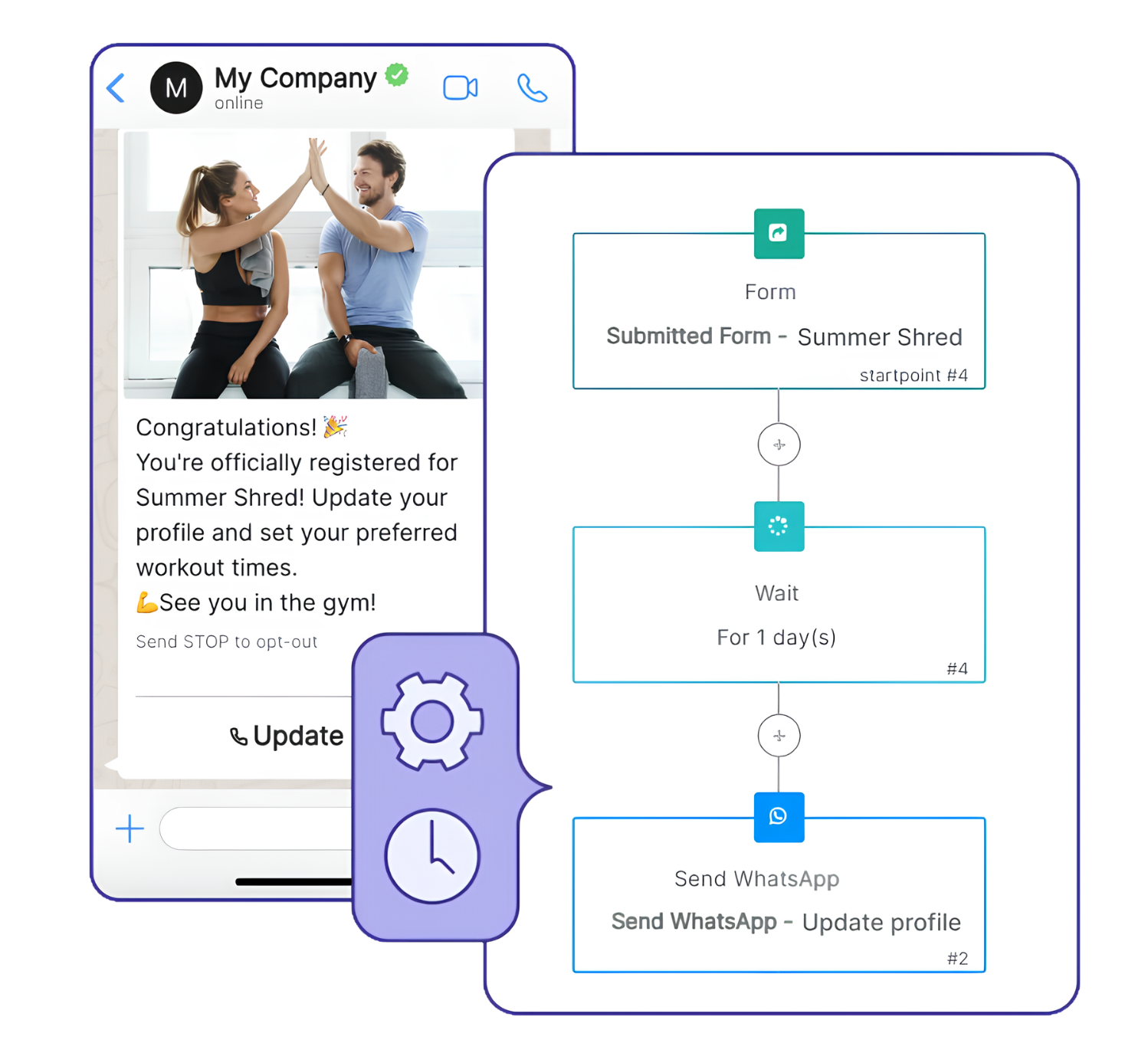
Email, SMS, WhatsApp, web and mobile push notifications, live chat, chatbot, mobile wallet, and VoIP phone are all managed from one interface and available within a single automation workflow. A marketer can build a sequence that sends an email, waits 24 hours, then sends an SMS follow-up, all without switching tools.
The WhatsApp capability stands out. Brevo is a certified WhatsApp Business Solution Provider with direct access to the WhatsApp Business API. WhatsApp campaigns sit inside the same automation workflows as email and SMS, with Brevo citing 98% average open rates for the channel.
Source: Brevo
For businesses with customers in Europe, Latin America, or Asia (where WhatsApp is the dominant messaging platform), this matters.
The Mobile Wallet integration adds another layer. Customers carry a digital loyalty card in Apple Wallet or Google Wallet and receive push notifications for point updates and offers. Brevo reports a 95% average card retention rate and a 77% average improvement in purchasing frequency among walletized customers.
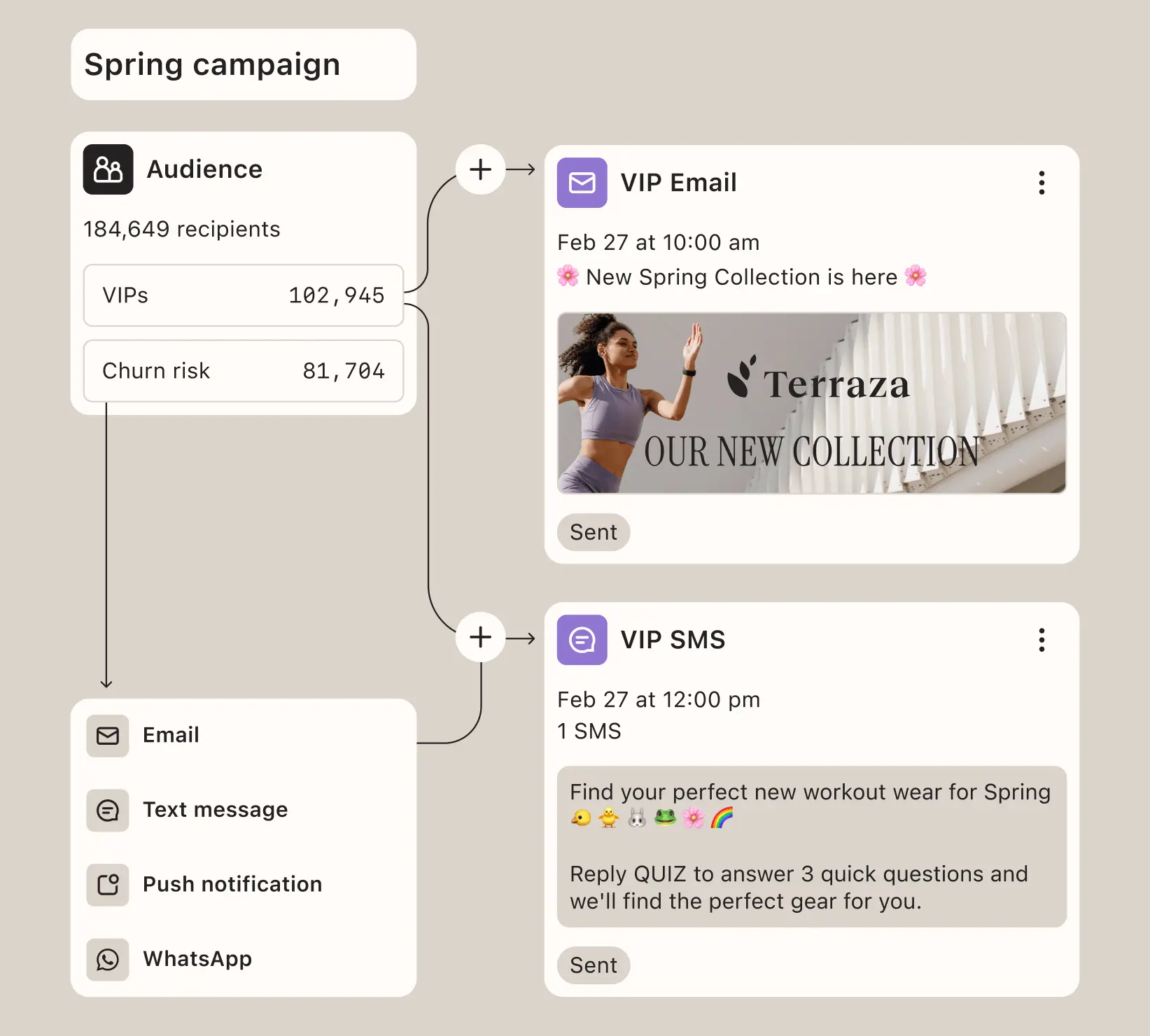
Klaviyo supports email, SMS/MMS, mobile push, WhatsApp, and RCS for Business, with social marketing added through the Gatsby acquisition. Its Channel Affinity AI learns each customer's engagement patterns per channel and routes messages to the one most likely to drive a response. That's useful for optimizing existing channels.
Source: Klaviyo
But Klaviyo lacks Brevo's native live chat, phone/VoIP, and mobile wallet features. For brands that need customer conversations alongside campaigns, Brevo has fewer gaps to fill with third-party tools.
The upstream problem neither marketing platform solves
Brevo and Klaviyo both answer the same question: "How do I communicate with the contacts I have?" They handle that job well.
But B2B companies face a different challenge. Your marketing automation platform can send a well-timed drip sequence to a segmented list. None of that matters if the list itself is incomplete, outdated, or aimed at the wrong accounts. The bottleneck isn't campaign execution. It's knowing who to target and when they're ready to buy.
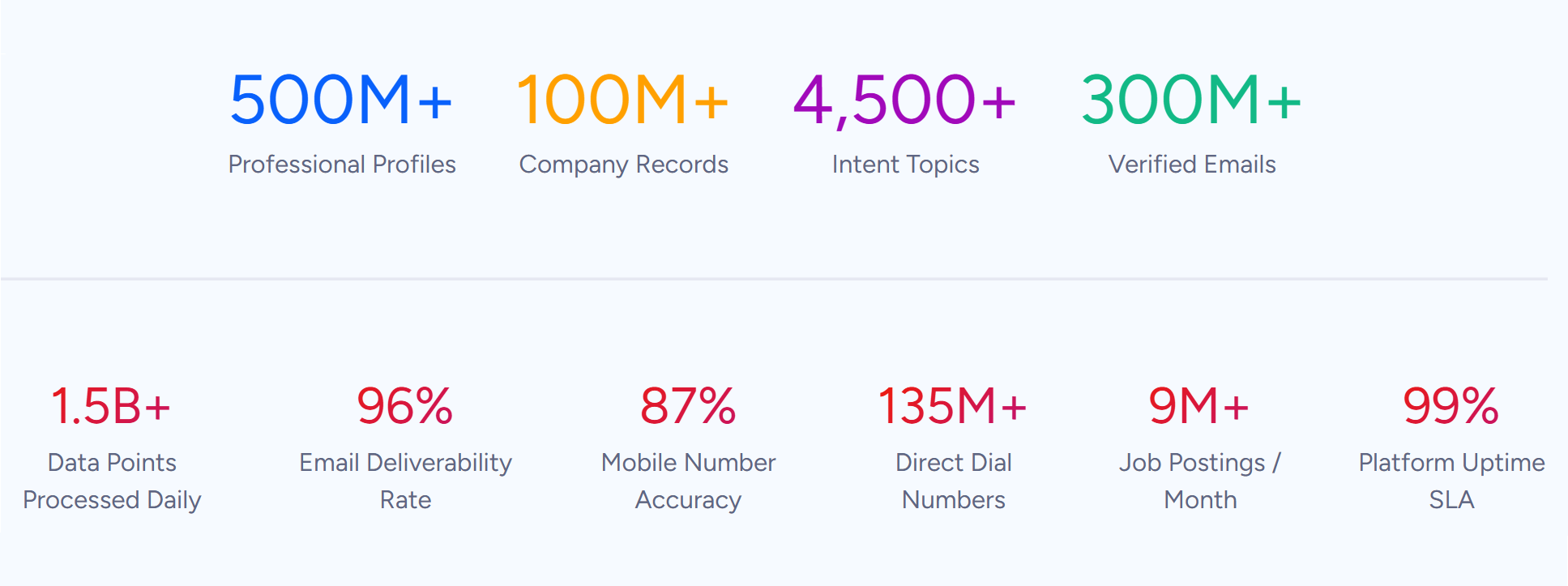
This is the problem ZoomInfo was built to solve. Its B2B database covers 500M contacts, 100M companies, 135M+ verified phone numbers, and 200M+ verified business emails, maintained through a verification pipeline that includes automated ML scanning of 28 million site domains daily and 300+ human researchers.
Source: ZoomInfo
When a Fortune 500 company ran a competitive RFP analyzing 25 million contacts across vendors, an independent consultant concluded that "no other competitor came even close."
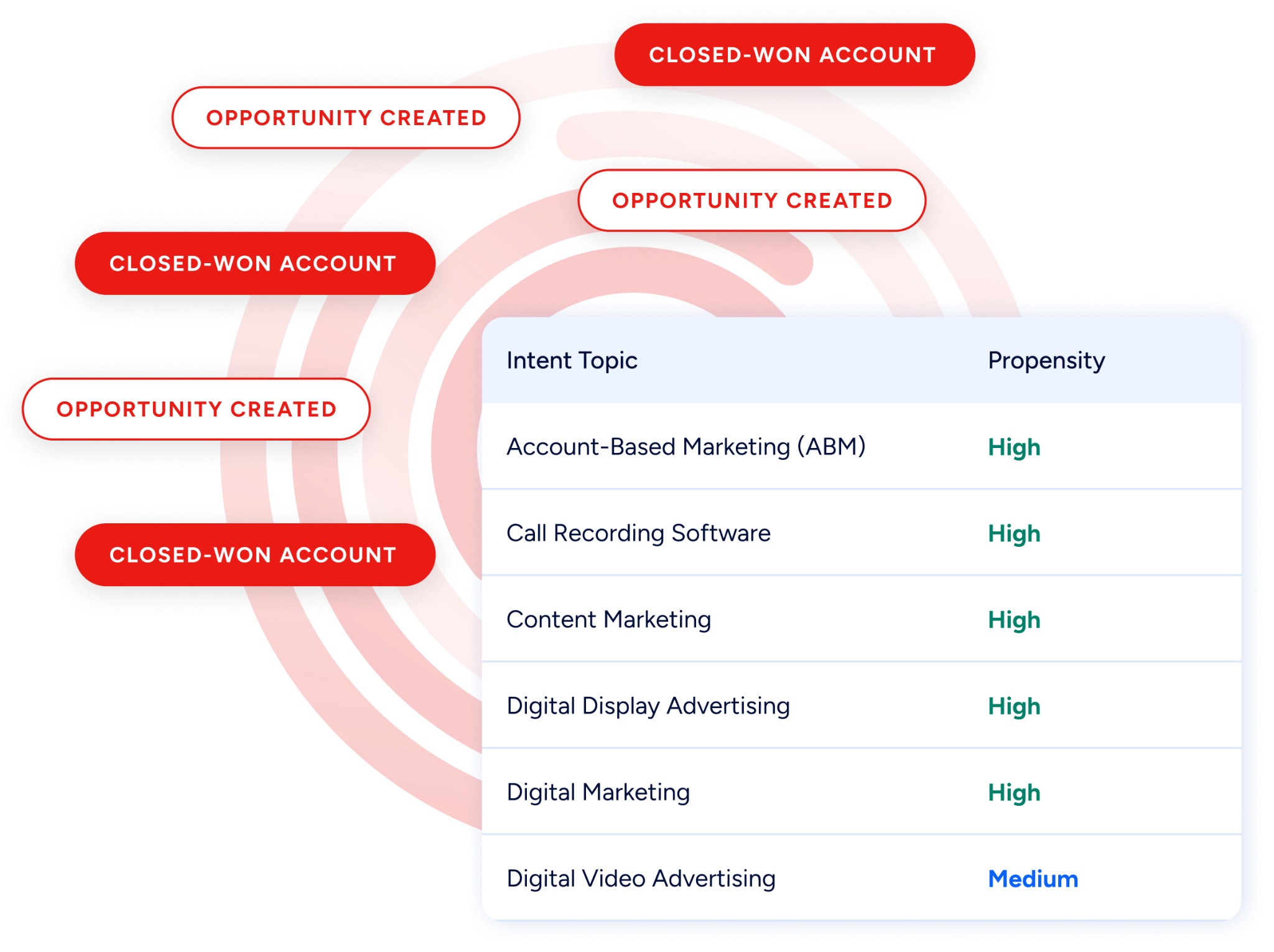
Beyond contact data, ZoomInfo's Buyer Intent signals track when companies are actively researching products in your category, using 210 million IP-to-Organization pairings and 6 trillion+ new keyword-to-device pairings per month. Guided Intent, exclusive to ZoomInfo, identifies the specific topics historically correlated with deal success rather than requiring manual topic selection.
Source: ZoomInfo
The GTM Context Graph ties this together. It fuses ZoomInfo's third-party data with your CRM records, conversation transcripts, and behavioral signals into a layer that captures not just what happened, but why it happened. A CRM records that a deal moved to stage 4.
The GTM Context Graph recognizes that executive sponsorship entering at this stage, combined with ROI-focused questions on the last call, matches the pattern behind closed-won deals in your segment. That recognition flows into every downstream action: outreach, prioritization, and forecasting.
For B2B teams, this means knowing which accounts to prioritize, which stakeholders matter, and when the timing is right, before you write a single email.
Seismic attributed 39% of active pipeline to opportunities identified or influenced by ZoomInfo signals, with their sales team reporting 54% productivity gains and 11.5 hours saved per week. (Seismic case study)
AI takes three different forms
All three platforms invest in AI. Each applies it to a different problem.
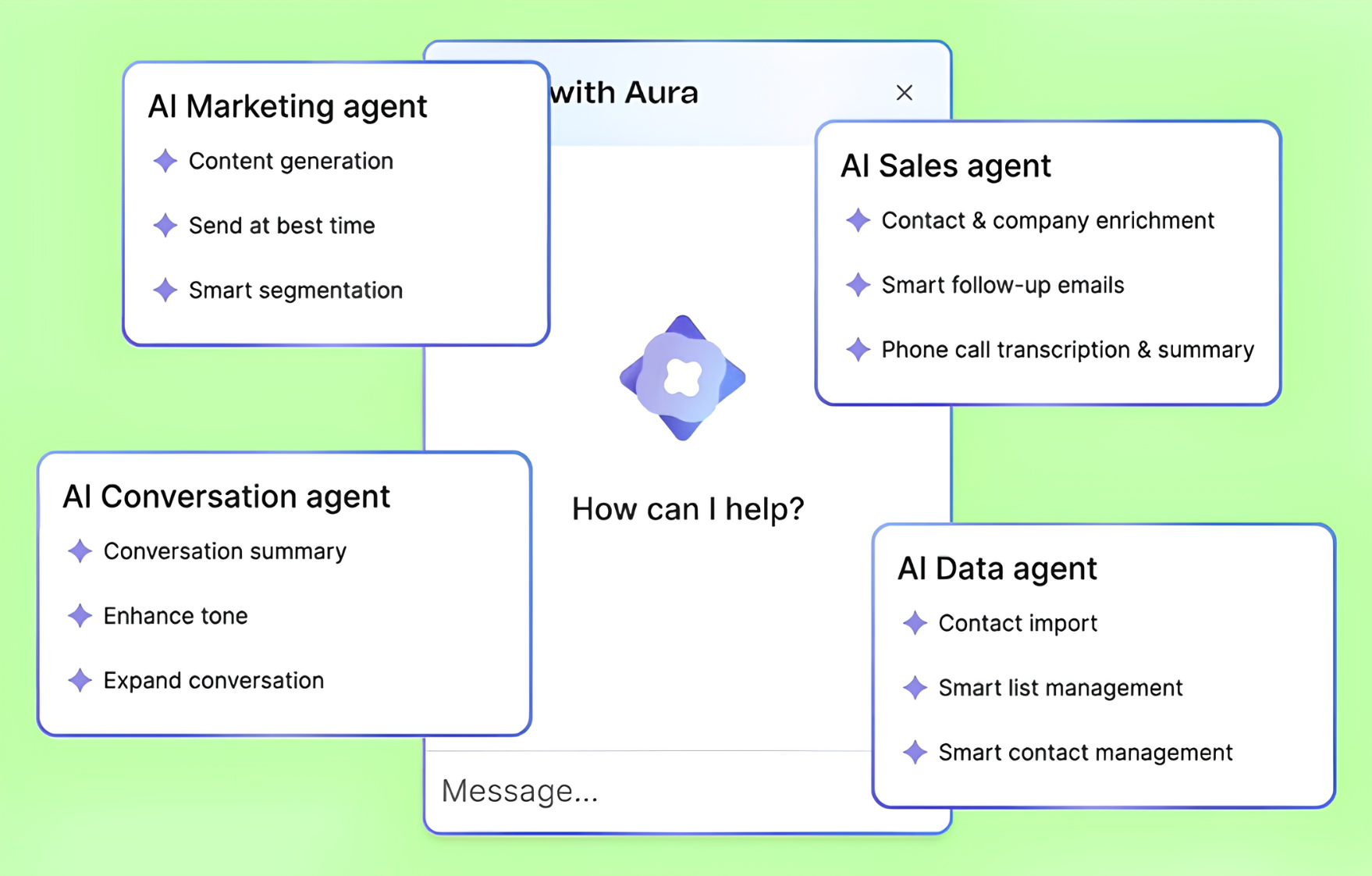
Brevo's Aura AI has four agents: a Marketing Agent for content generation and AI-powered segmentation, a Sales Assistant for contact enrichment and email drafting, a Data Analyst for natural-language queries, and a Conversations Agent for chat summarization and reply drafting.
Source: Brevo
Predictive send-time optimization picks the best delivery window per recipient. Brevo has committed €50M over five years to AI development. One notable bet is the Brevo MCP Server, which connects Brevo's data to external AI assistants like Claude and ChatGPT, positioning its data layer for agent-to-agent workflows.
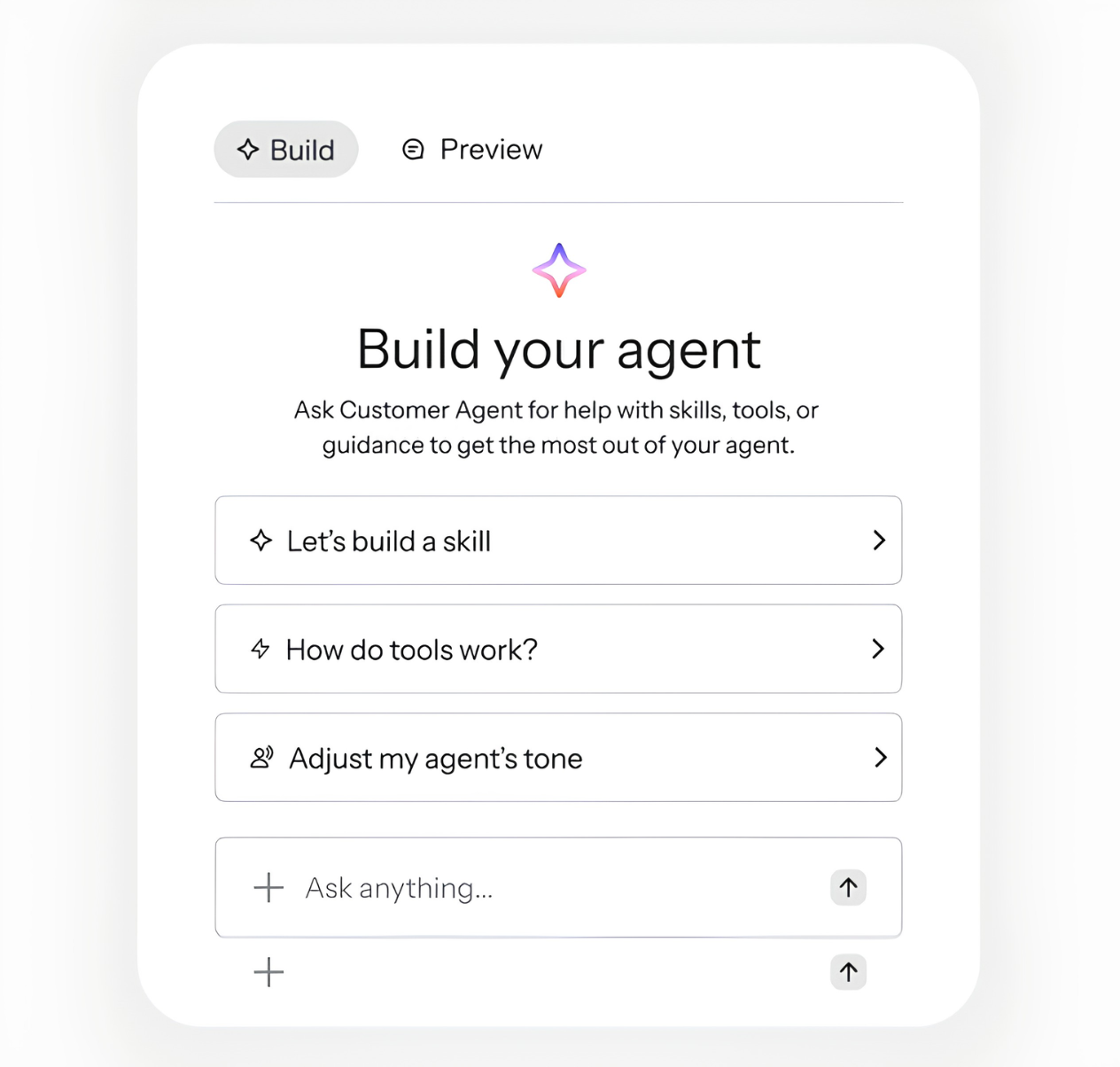
Klaviyo's K:AI includes over 40 AI features spanning predictive, assistive, and autonomous modes. Marketing Agent analyzes a brand's website and product catalog, then generates on-brand campaigns, activates flows, and creates signup forms (all in 3 clicks).
Customer Agent provides 24/7 conversational support and sales, letting shoppers add items to cart directly from the chat. Predictive analytics forecast CLV, churn risk, and next purchase date at the individual profile level. All AI tools come included at no additional cost. Klaviyo has been building AI features since 2017, and the depth shows.
Source: Klaviyo
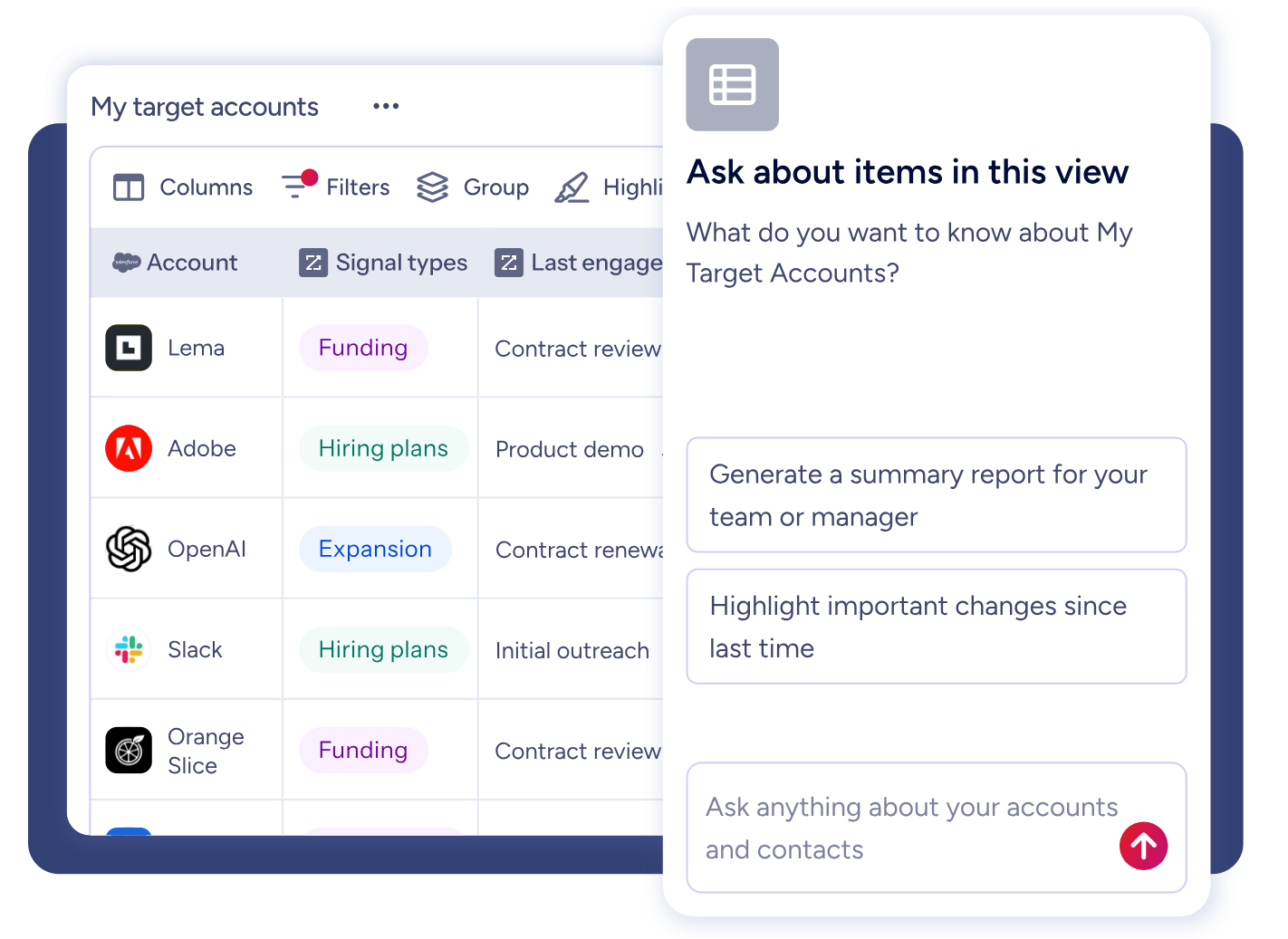
ZoomInfo's AI operates at the intelligence layer rather than the campaign layer. Inside GTM Workspace, AI agents research accounts, draft outreach based on full deal context, monitor buying signals, and update CRM fields, answering three questions for every rep: who to contact, when to engage, and what to say.
Source: ZoomInfo
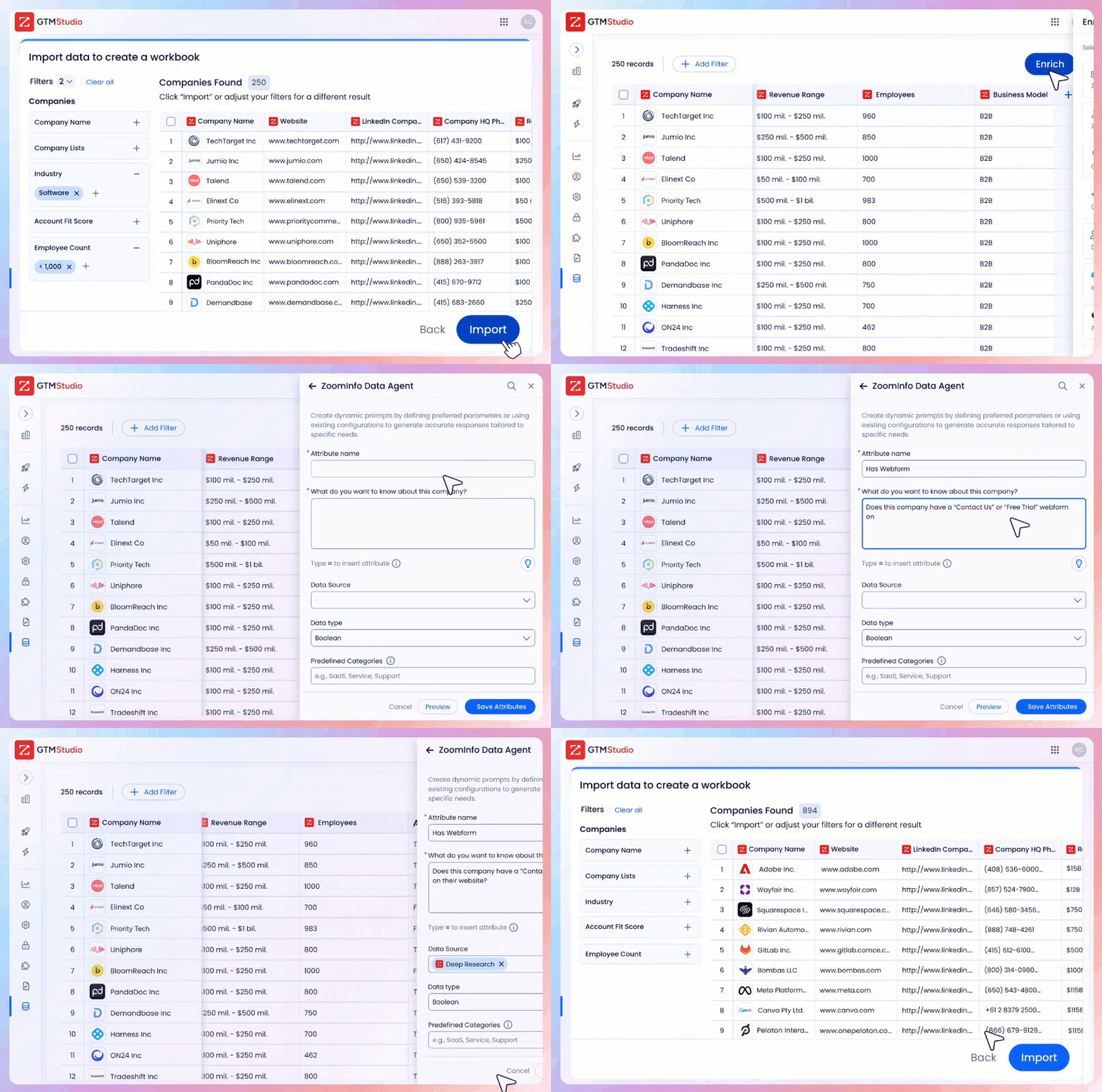
GTM Studio lets marketers and RevOps teams describe audiences in natural language, launch multi-channel plays, and watch them get smarter as prospects respond. Both surfaces draw from the same GTM Context Graph: the AI understands your deals, your accounts, and your win patterns, not just your subscriber list.
Source: ZoomInfo
"ZoomInfo's not just a contact data company anymore. They've built a full execution system that works the list, writes the outreach, triggers the play, and helps drive predictable growth," said Ian Brodie, CEO and Co-Founder of Levanta. (Levanta case study)
Data architecture determines what's possible
The way each platform handles data shapes what you can build on top of it.
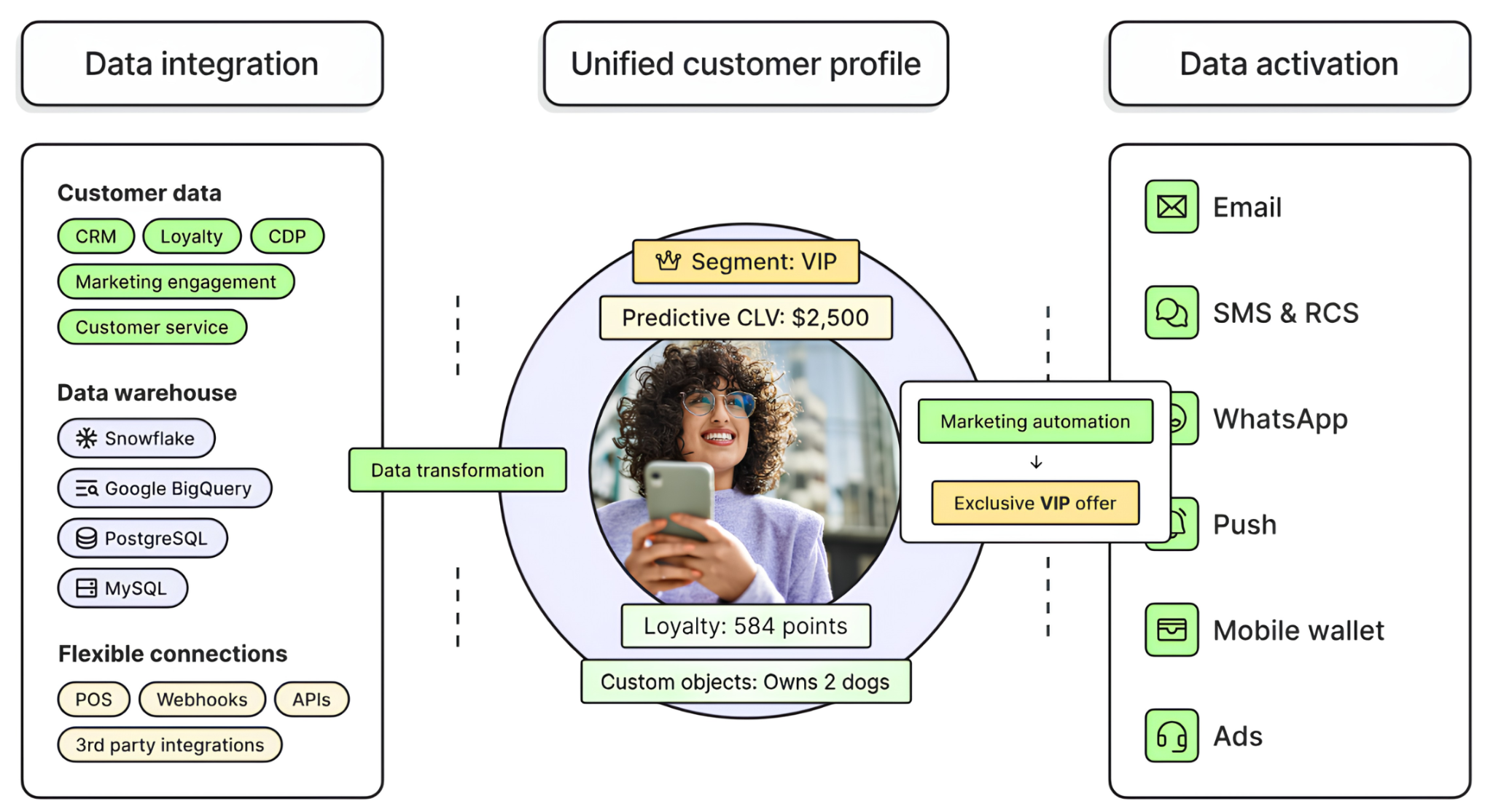
Brevo's Data Platform ingests data from databases, data warehouses, FTP servers, and APIs, then resolves duplicates and maps everything to a universal data model. A no-code Dataprep layer lets marketers clean and transform data without engineering support.
Source: Brevo
Pre-built RFM and LTV scoring models segment customers automatically. The Aura Data Analyst lets teams ask questions about their data in plain language and get visual answers. For SMBs that have never had a CDP, this makes unified customer data accessible for the first time.
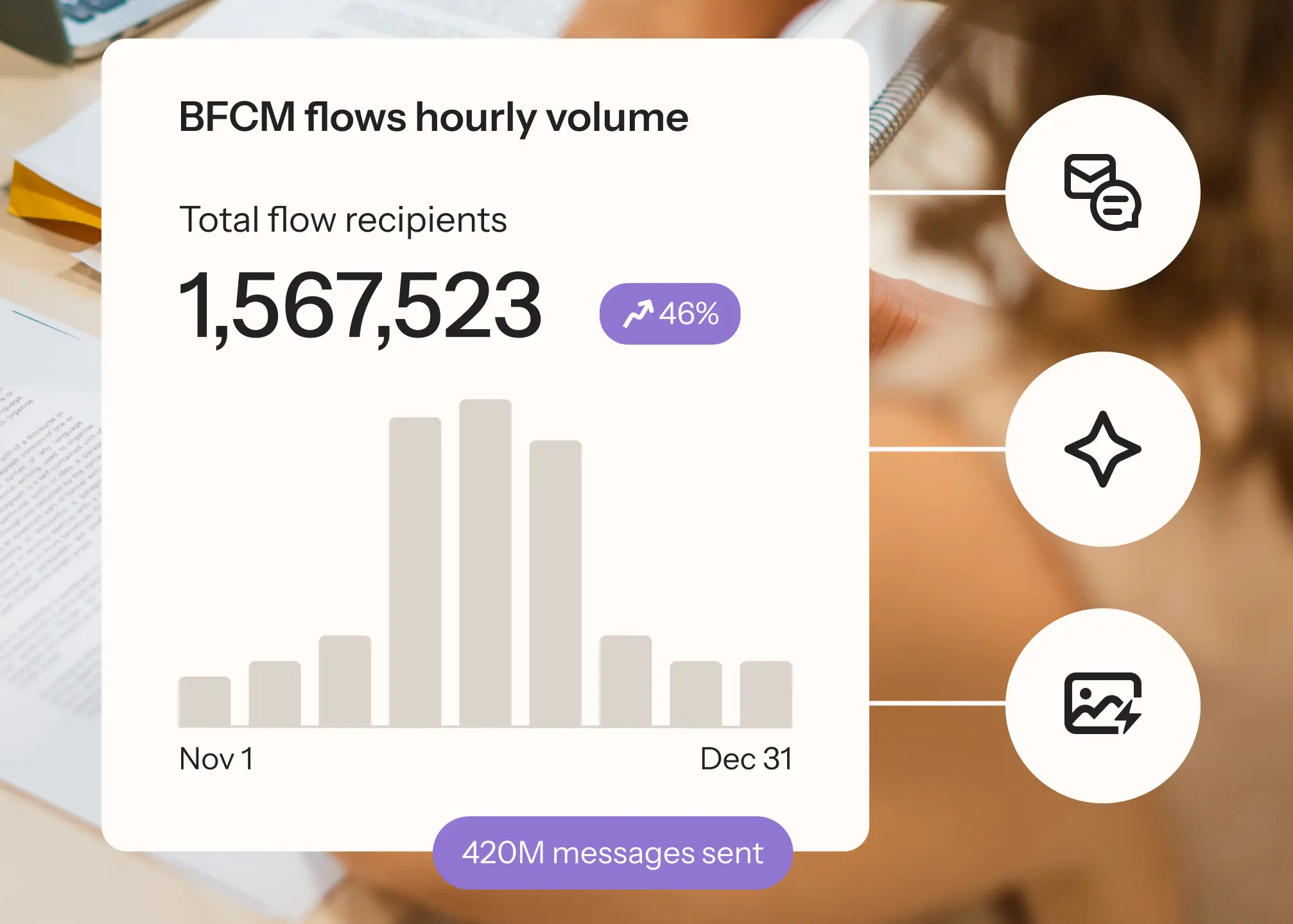
Klaviyo's Data Platform was built from day one to solve the customer data problem for B2C brands. It stores customer data with lifetime retention at no extra cost, processes 3.4 billion daily interactions across more than 8 billion profiles, and updates in real time. 350+ integrations feed data from ecommerce platforms, ad networks, POS systems, and loyalty apps.
Source: Klaviyo
The key distinction: Klaviyo's data platform is fused with its marketing and service layers. Segments, flows, and analytics all operate on the same live data with no syncing step. The Advanced KDP add-on extends this with data warehouse sync to Redshift, BigQuery, Snowflake, and Azure Synapse.
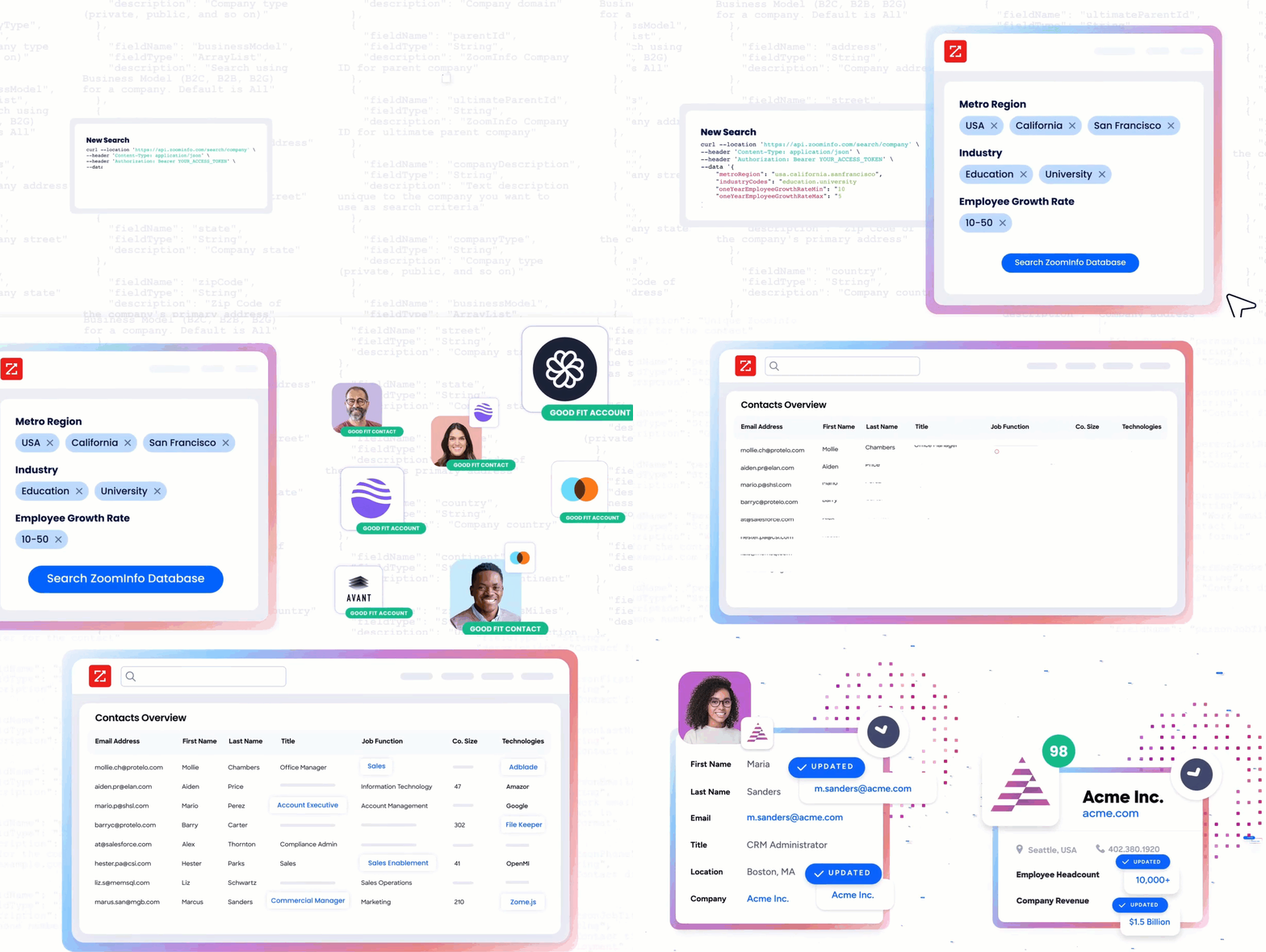
ZoomInfo's data architecture operates at a different scale and serves a different purpose. Its B2B database covers contact details alongside company attributes, technographics (tracking 30,000+ technologies across 200+ categories for 30+ million companies), org charts, and intent signals.
The GTM Context Graph processes 1.5B+ data points daily, fusing this foundation with your CRM records, conversation transcripts, and behavioral signals into a layer that captures not just what happened, but why.
Source: ZoomInfo
That intelligence feeds three surfaces: APIs and MCP for any tool or AI agent, GTM Workspace for sellers, and GTM Studio for marketers and RevOps. The same data, the same intelligence, available wherever you work.
Source: ZoomInfo
"ZoomInfo is our single source of truth for account data, and even more so for contact data. No other provider gives you that level of detail," said Thor Sanderson, Senior Manager of Sales Technology Enablement at Smartsheet. (Smartsheet case study)
Pricing tells you who each platform was built for
The pricing model each platform chose reveals its core audience.
Brevo charges by emails sent, not contacts stored. All plans include unlimited contacts, including the free tier. The Starter plan begins at $9/month for 5,000 emails. The Standard plan runs $18/month and adds automation, A/B testing, and AI send-time optimization.
The Professional tier starts at $499/month for 150,000 emails with 10 user seats included. For businesses with large lists and moderate send frequency, the savings are real.
Klaviyo charges by active profiles. The free plan covers 250 profiles and 500 emails per month. Beyond that, costs scale with your subscriber list. Specific dollar amounts are only visible through Klaviyo's pricing calculator, but the curve is steep.
For ecommerce brands generating high revenue per customer, this math works: the platform pays for itself through better conversion. For businesses building large lists with lower per-contact value, the bill climbs faster than the return.
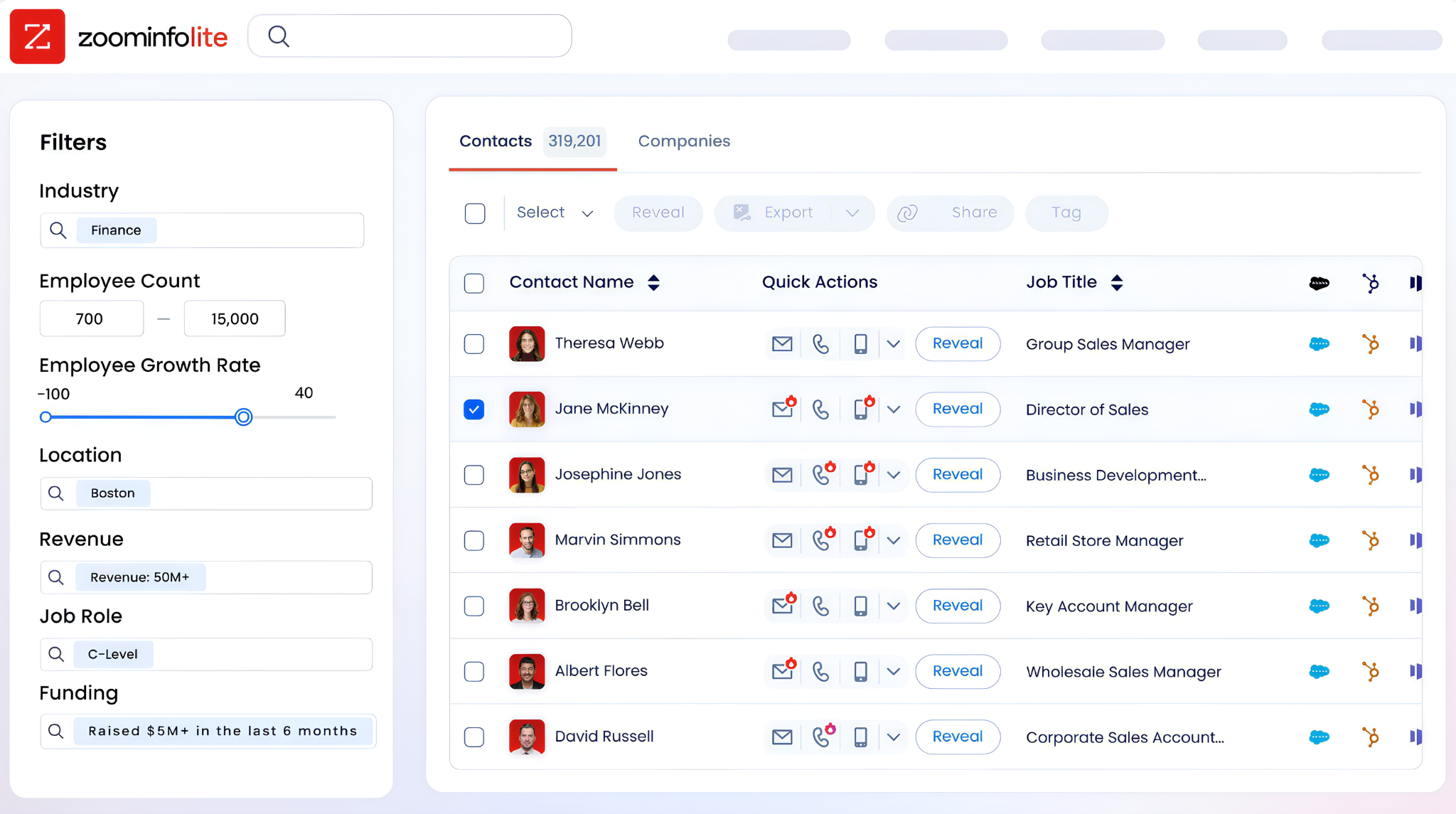
ZoomInfo uses consumption-based pricing with no published prices. Costs scale around enterprise license agreements, data access, and credit volume (one credit equals one contact or company export). ZoomInfo Lite provides 10 monthly export credits for free with access to the core B2B database. Paid plans are sales-quoted and built for teams that need verified B2B data at scale.
Source: ZoomInfo
Brevo optimizes for send volume. Klaviyo optimizes for revenue per customer. ZoomInfo optimizes for intelligence per account. The right model depends on the problem you're solving.
Brevo vs. Klaviyo vs. ZoomInfo: Which should you choose?
The right platform depends on what problem you're solving and who you're selling to.
Choose Brevo if:
You need multichannel marketing (email, SMS, WhatsApp, push, live chat) from one platform
Send-volume pricing matters because you have a large contact list with moderate send frequency
GDPR compliance and EU data residency are requirements
You want to consolidate multiple marketing tools on a manageable budget
Your business spans multiple verticals rather than focusing on ecommerce alone
Choose Klaviyo if:
You run an ecommerce brand, especially on Shopify
Personalization and revenue attribution are central to your strategy
You need advanced automation with predictive analytics (CLV, churn risk, next purchase date)
The depth of 60+ ecommerce-specific pre-built flows matters more than channel breadth
You're willing to pay by contact for a platform built around your business model
Choose ZoomInfo if:
You're a B2B company that needs verified prospect data and buyer intent signals
Finding the right accounts and decision-makers is a bigger challenge than campaign automation
You want AI-powered sales execution through GTM Workspace or marketing orchestration through GTM Studio
Enriching your CRM with accurate contact and company data would improve every downstream workflow
See how ZoomInfo's intelligence layer can strengthen your go-to-market.
The distinction matters. Brevo and Klaviyo are strong marketing automation platforms, each with a clear strength: Brevo for multichannel breadth at an accessible price, Klaviyo for ecommerce depth powered by first-party data. But for B2B companies, the real constraint is rarely campaign execution. It's having the right data, the right signals, and the right intelligence to know who to reach and when. That's the gap ZoomInfo fills, and it's the reason some teams need both a marketing platform and an intelligence platform to run an effective go-to-market.
Brevo vs. Klaviyo vs. ZoomInfo FAQ
What is the main difference between Brevo, Klaviyo, and ZoomInfo?
Brevo is a multichannel marketing automation platform that handles email, SMS, WhatsApp, push notifications, live chat, and a basic sales CRM, all priced by email volume with unlimited contacts. Klaviyo is a B2C CRM designed for ecommerce, with deep Shopify integration, lifetime customer data retention, and predictive analytics for revenue-driven personalization.
ZoomInfo is a B2B go-to-market intelligence platform that provides verified contact data, buyer intent signals, and account-level intelligence for sales and marketing teams targeting other businesses.
Which is cheaper for email marketing, Brevo or Klaviyo?
Brevo is cheaper for most use cases. Its send-volume pricing means you pay based on emails sent, not contacts stored, with unlimited contacts on all plans including the free tier. Brevo's Standard plan starts at $18/month for 5,000 emails. Klaviyo charges by active profile count, and costs scale steeply as lists grow.
For ecommerce brands where each subscriber generates meaningful revenue, Klaviyo's pricing can be justified by its deeper personalization and revenue attribution.
Which platform is best for Shopify stores?
Klaviyo is the strongest choice for Shopify. An IDC study found brands using Klaviyo and Shopify together achieved 73% revenue growth over three years.
Features like Customer Hub (branded self-service portal), Customer Agent (AI-powered 24/7 support), and locale-aware catalogs are exclusive to Shopify merchants. Brevo integrates with Shopify but at a general level, without the same native ecommerce depth.
Can ZoomInfo replace Brevo or Klaviyo?
No. ZoomInfo solves a different problem. Brevo and Klaviyo manage campaigns, automate marketing flows, and nurture customer relationships. ZoomInfo identifies and verifies B2B contacts, tracks buyer intent signals, and provides account intelligence for prospecting and sales execution.
For B2B companies, ZoomInfo and a marketing automation platform like Brevo are complementary: ZoomInfo finds the right targets, and Brevo or another email platform manages the communication.
Which platform has the best AI capabilities?
Each platform applies AI to a different problem. Klaviyo offers the broadest AI suite for B2C marketing, with over 40 features including Marketing Agent (autonomous campaign creation), Customer Agent (conversational AI for support and sales), and predictive CLV modeling. Brevo's Aura AI covers content generation, send-time optimization, AI segmentation, and natural-language data queries.
ZoomInfo's AI operates at the intelligence layer through the GTM Context Graph, powering account prioritization, AI-drafted outreach, and buying signal detection for B2B sales teams.
How do the free plans compare across all three platforms?
Brevo offers the most generous free plan for marketing: 300 emails per day, unlimited contacts, access to the drag-and-drop editor and templates, and transactional email via API. No credit card required, no time limit. Klaviyo's free plan covers 250 active profiles and 500 emails per month with access to all 350+ integrations, basic segmentation, and Marketing Agent.
ZoomInfo Lite is a permanent free tier offering access to the B2B database with 10 monthly export credits and basic search, but does not include mobile numbers, intent signals, or advanced AI features.
Which platform is best for B2B marketing?
ZoomInfo is built for B2B. Its database of 500M contacts and 100M companies, combined with buyer intent data and the GTM Context Graph, gives B2B marketing teams the intelligence to identify in-market accounts and the right decision-makers within them.
Brevo can serve B2B marketing needs at the campaign level (email sequences, transactional messaging, basic CRM) but lacks B2B-specific data intelligence. Klaviyo defines itself as a B2C CRM and is not designed for B2B use cases.
Can I use ZoomInfo alongside Brevo or Klaviyo?
Yes. ZoomInfo integrates with major CRMs and marketing automation platforms. B2B teams commonly use ZoomInfo to build verified prospect lists, enrich CRM data, and identify in-market accounts, then push those contacts into a campaign platform for nurturing and outreach.
ZoomInfo's APIs and MCP server make its data accessible in any tool or workflow, so it functions as the intelligence layer beneath whatever campaign platform you choose.
