

Choosing between BrightEdge and HubSpot for digital marketing comes down to five questions most comparison articles skip:
Do you need enterprise SEO intelligence, or would a broader marketing platform with built-in SEO tools serve you better?
Is your priority optimizing organic search visibility across Google and AI engines, or managing the customer lifecycle from first touch to closed deal?
Are you trying to rank higher, or trying to convert the traffic you already have into pipeline?
Does your team have dedicated SEO specialists who need advanced tooling, or do you need one platform that marketing, sales, and service can all use?
Do you know who your buyers are, when they're researching, and how to reach them?
In short, here's what we recommend:
BrightEdge is built for enterprise marketing teams that treat organic search as a primary revenue channel. DataCube X indexes over 4 billion data points with 10 years of historical context, letting SEO teams research keywords across 92 countries and 47 languages, track competitive share of voice with a patented methodology, and audit sites with hundreds of millions of pages.
With AI Catalyst and AI Hyper Cube, BrightEdge tracks brand visibility across Google AI Overviews, ChatGPT, and Perplexity from one dashboard. But BrightEdge is an SEO and content optimization platform only. It won't manage your sales pipeline, run email campaigns, or track customer interactions.
HubSpot is the combined customer platform for teams that need marketing, sales, service, and content working from shared data. Its Smart CRM connects Marketing Hub, Sales Hub, Service Hub, Content Hub, and more under a single contact record. HubSpot includes SEO tools, content creation, email marketing, pipeline management, and AI agents through Breeze, all in one login.
But HubSpot's SEO capabilities are a fraction of what BrightEdge offers. It covers the basics of content optimization but lacks enterprise competitive intelligence, site auditing at scale, or AI search visibility tracking.
Both platforms help you attract and engage buyers. But neither closes this gap: knowing who your buyers are, when they're researching your category, and having verified contact data to reach them. That layer is what separates content that ranks from content that generates revenue.
ZoomInfo is a B2B data and go-to-market platform built on 500M contacts, 100M companies, 135M+ verified phone numbers, and 200M+ verified business emails. ZoomInfo's GTM Context Graph processes 1.5B+ data points daily, combining this data with your CRM records, conversation transcripts, and behavioral signals to show not just what happened in a deal but why.
Whether your team works in ZoomInfo's GTM Workspace for sellers, GTM Studio for marketers and RevOps, or connects through the API and MCP, ZoomInfo provides the buyer intelligence that makes marketing and sales more precise. It integrates natively with HubSpot and the wider marketing stack, turning anonymous website visitors into identified prospects and content engagement into qualified pipeline.
If connecting your content efforts to buyer intelligence sounds like the missing piece, see how ZoomInfo works with a free trial.
BrightEdge vs. HubSpot vs. ZoomInfo at a glance
BrightEdge | HubSpot | ZoomInfo | |
|---|---|---|---|
Primary function | Enterprise SEO and AI search optimization | CRM and marketing platform | B2B data, intelligence, and GTM execution |
SEO depth | 4B+ data points, 10-year history, AI search tracking | In-editor SEO guidance, AEO Grader (beta) | Not an SEO tool; complements both with buyer data |
CRM capabilities | None | Full CRM with sales, service, and commerce | Native CRM integrations (Salesforce, HubSpot, Dynamics) |
AI search visibility | Tracks Google AI Overviews, ChatGPT, Perplexity | AEO tools in beta | Tracks buyer intent signals across the web |
Buyer intelligence | None | Contact records from inbound engagement | 500M contacts, intent data, org charts, direct dials |
Learning curve | Steep | Moderate | Moderate (90-day onboarding program) |
Pricing model | Custom enterprise contracts (~$12K–$100K+/year) | Freemium; $0–$3,600+/month per hub | Custom consumption-based; free tier available |
Best for | Enterprise SEO teams | Scaling companies needing unified marketing and sales | Revenue teams needing B2B data and GTM intelligence |
Enterprise SEO depth vs. all-in-one marketing breadth
BrightEdge and HubSpot solve different problems, even though both fall under "digital marketing."
BrightEdge exists because enterprise SEO is too complex for generalist tools. Managing organic visibility across thousands of pages, dozens of competitors, and multiple AI search engines requires infrastructure designed for it.
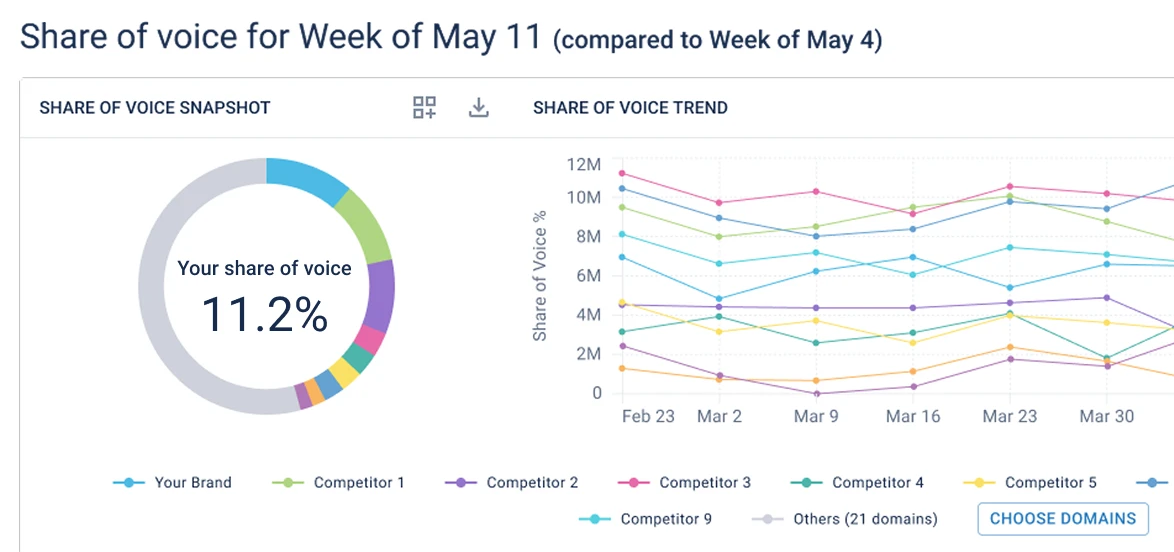
DataCube X reconstructs exact-match search volumes that Google stopped providing through its BrightEdge Volume methodology. ContentIQ crawls sites with hundreds of millions of pages. Share of Voice calculates competitive visibility using real click curves segmented by device, not industry-average approximations. For 57 of the Fortune 100, this depth justifies the investment.
Source: BrightEdge
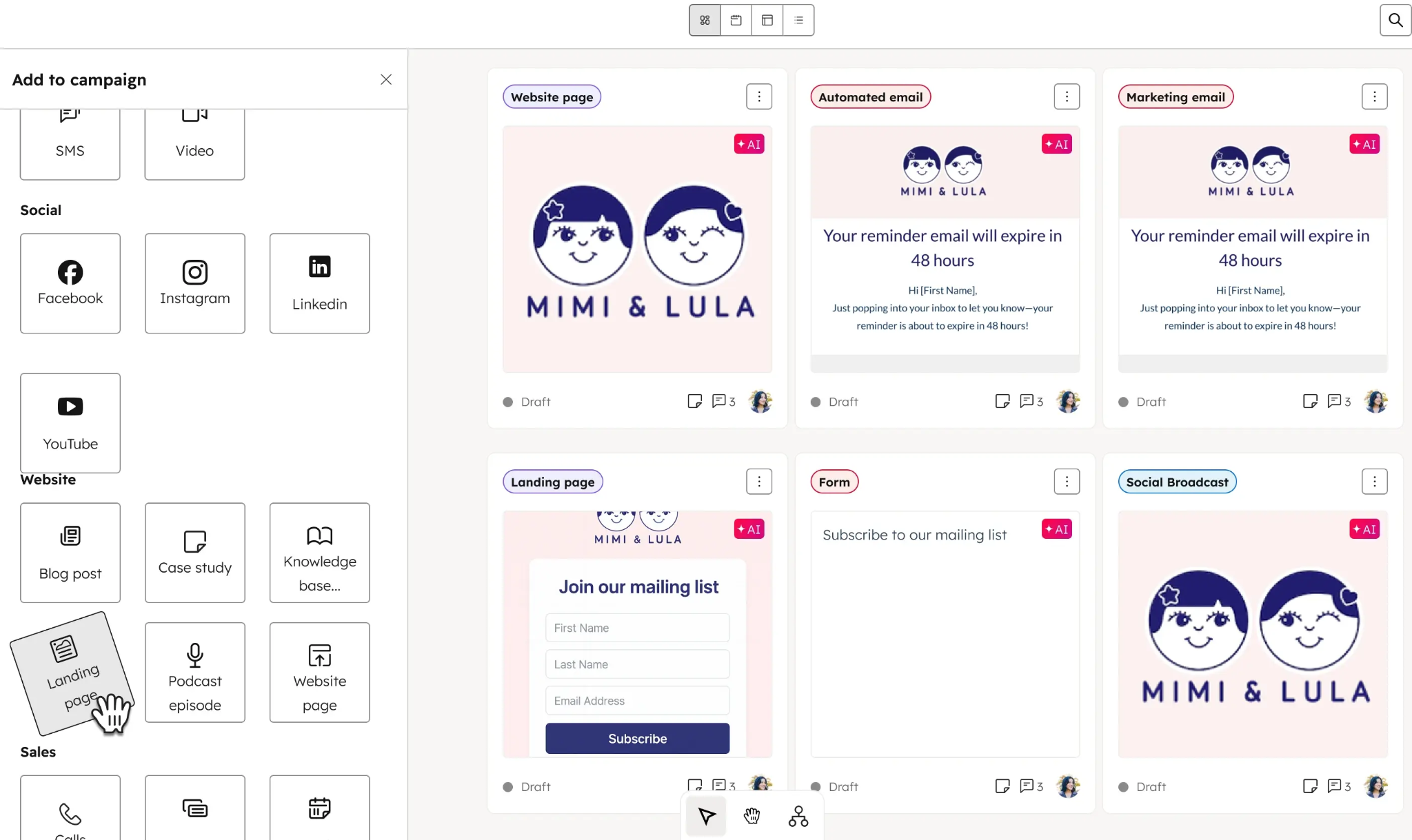
HubSpot exists because most growing companies don't need (or can't afford) a separate tool for every marketing function. Its Marketing Hub includes email marketing, social media management, landing pages, forms, workflows, and SEO recommendations.
Source: HubSpot
But those SEO recommendations are guidance within an editor, not a research engine. HubSpot's SEO tools tell you whether your blog post has a meta description. BrightEdge tells you which keywords drive revenue, which competitors own the search landscape, and whether AI engines cite your content.
The practical difference shows up in team structure. A company with five SEO specialists running campaigns across multiple brand domains will outgrow HubSpot's SEO tools quickly. A company with two marketers handling email, social, content, and lead management will find BrightEdge overbuilt for their needs.
Neither platform tells you who visited your content, what company they work for, or whether they match your ideal customer profile. Both generate traffic and engagement. Neither generates the buyer intelligence that sales teams need to act.
AI search is reshaping the competitive landscape
AI-generated answers in Google, ChatGPT, and Perplexity have changed how buyers discover products. Both BrightEdge and HubSpot recognize the shift, but their responses differ.
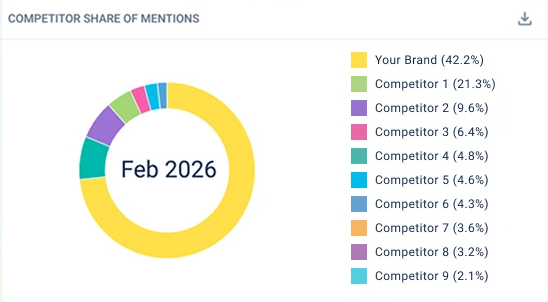
BrightEdge has made AI search its strategic bet. AI Catalyst, launched April 2025, tracks brand presence and sentiment across Google AI Overviews, ChatGPT, and Perplexity. AI Hyper Cube, launched March 2026, goes deeper: it reveals which AI conversations mention a brand, what sources AI engines cite, and where competitors appear in AI responses.
Source: BrightEdge
The BrightEdge Generative Parser monitors AI-generated results daily, detecting patterns in how AI engines construct answers. BrightEdge's data shows AI agent requests have reached 88% of human organic search activity.
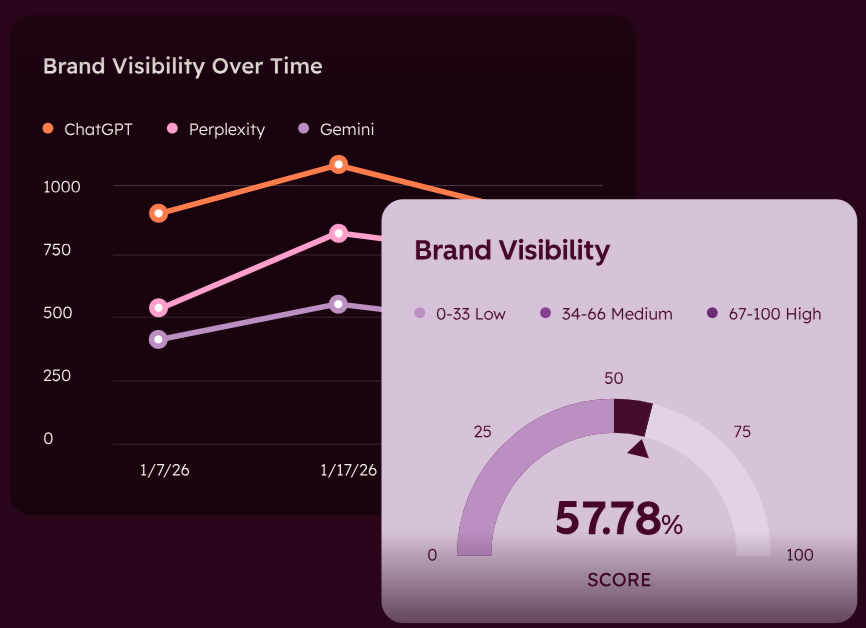
HubSpot's approach is earlier stage. Its AEO Grader checks whether content is structured for AI-generated answers, and an AEO Strategy tool offers recommendations, but both remain in beta. HubSpot estimates that chat-based search engines intercept up to 25% of traditional search traffic, but its tools for responding to that shift are still maturing.
Source: Hubspot
For enterprise brands where organic search drives significant revenue, BrightEdge's AI search capabilities are ahead. For mid-market companies that need awareness of the shift but aren't ready to invest in a dedicated AEO strategy, HubSpot's lighter tools may be enough to start.
The buyer intelligence gap both platforms leave open
BrightEdge tells you what content to create and how to rank it. HubSpot manages engagement once someone arrives. But between "a visitor landed on your site" and "a qualified lead entered your pipeline," a gap exists.
Consider a typical scenario: BrightEdge identifies that your competitor ranks for a high-value keyword, and your Content Advisor draft helps you claim that position. Traffic increases. HubSpot captures some of those visitors through forms and chatbots. But most B2B website visitors never fill out a form. They research, compare, and leave.
ZoomInfo closes this gap at three levels.
First, WebSights resolves anonymous website traffic to companies, identifying not just which organization visited but which individuals on the buying team were likely involved, with direct-dial phone numbers and verified business emails. The tool includes Automatic Traffic Filtering that separates real company visitors from bots.

Source: ZoomInfo
Second, Buyer Intent data tracks signals from 210 million IP-to-Organization pairings and 6 trillion+ new keyword-to-device pairings monthly to identify companies researching your category, even before they visit your website. Guided Intent identifies the topics historically correlated with deal success rather than requiring manual topic selection.

Source: ZoomInfo
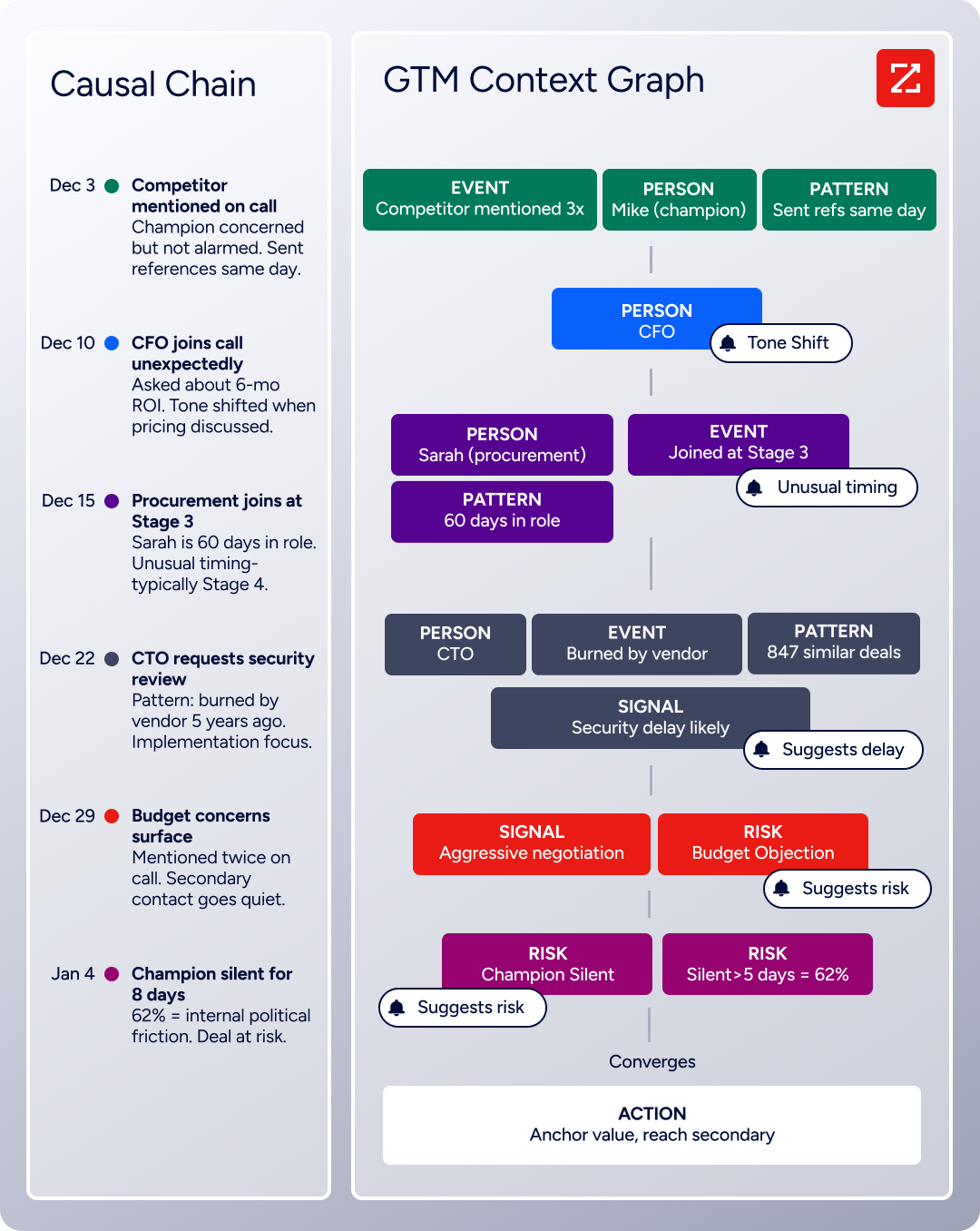
Third, the GTM Context Graph connects these signals with your CRM data, conversation history, and behavioral patterns to show why an account is worth pursuing now. A spike in intent signals alone is weak. A spike combined with an executive hire, a competitor mention on the last sales call, and a pattern matching your closed-won deals is strong.
Source: ZoomInfo
"It's not just the data itself. It's more about the right data at the right time to help us reach out with the right message across that full buyer journey." (Chelsea Kenyon, Senior Director of Digital Strategy, Redwood Logistics)
Content creation and optimization take different forms
All three platforms help teams create and optimize content, but for different purposes.
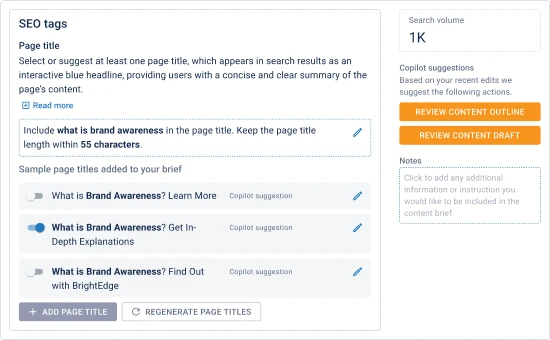
BrightEdge's Content Advisor generates content briefs and drafts grounded in search data. It analyzes the competitive SERP landscape, identifies content gaps, and produces drafts calibrated against ranking factors, all within 60 seconds.
Source: BrightEdge
The AI layer runs on DataMind, an engine trained on 15 years of SEO performance data. Autopilot goes further by implementing on-page optimizations automatically, without developer involvement.
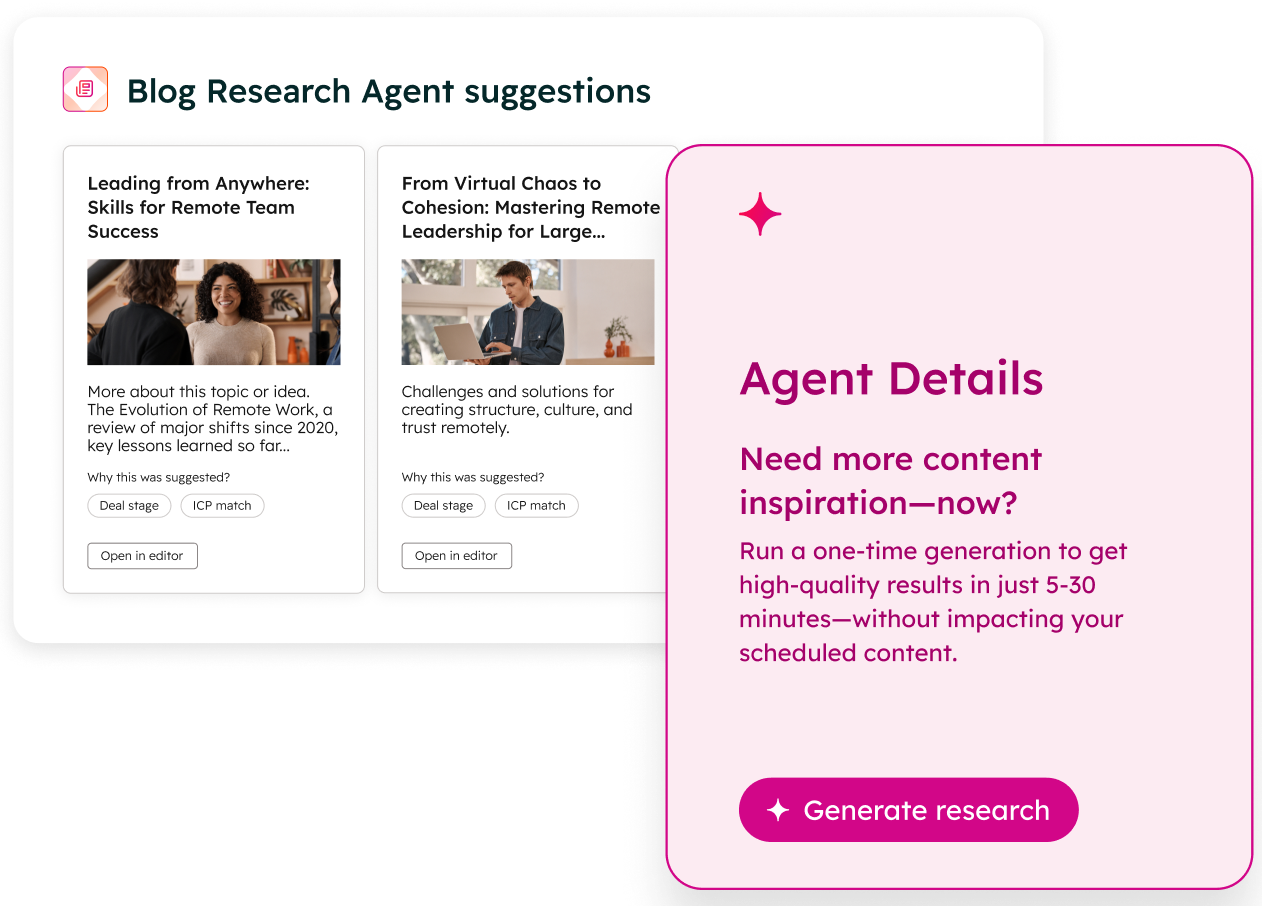
HubSpot's Content Hub is broader. It covers blog creation with an AI Blog Writer, an AI Website Generator, video marketing, podcast software (beta), and Content Remix for repurposing content into multiple formats.
Source: HubSpot
The AI runs on Breeze and operates within the same CRM context that informs all other HubSpot tools. A blog post created in Content Hub connects automatically to contact records, deal data, and attribution reporting in the Smart CRM.
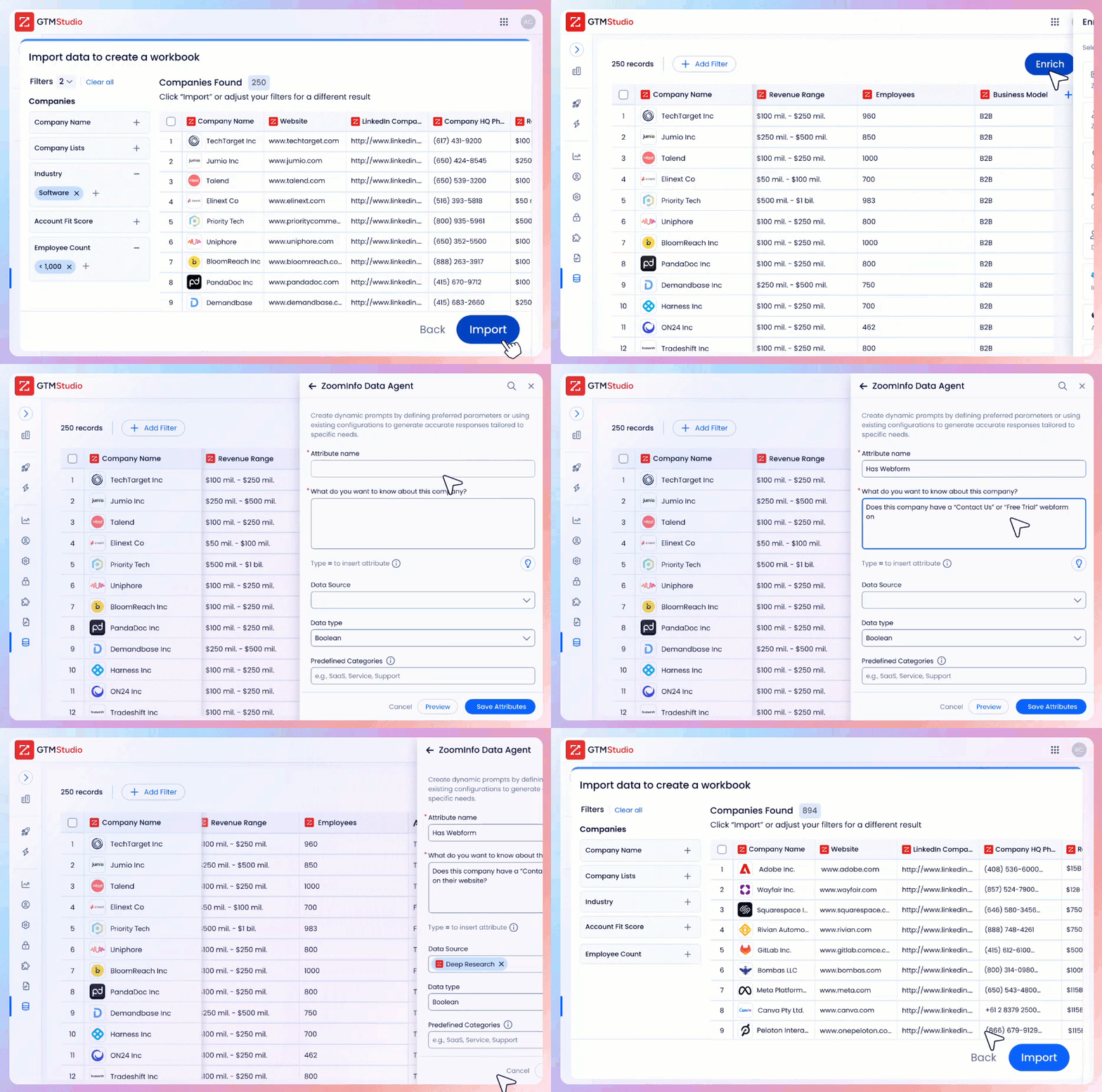
ZoomInfo doesn't create content. It ensures your content reaches the right buyers. GTM Studio lets marketers describe audiences in natural language, launch multi-channel campaigns targeting accounts that match proven win patterns, and measure pipeline impact in real time.
Source: ZoomInfo
When your BrightEdge-optimized blog post attracts a visitor from a target account, ZoomInfo identifies the company, enriches the contact data, and triggers outreach through whatever channel the buyer prefers.
"ZoomInfo has literally changed the way we go to market." (Jeremy Melius, Sr. Director of Marketing Operations, Impartner)
Reporting and ROI measurement diverge sharply
How each platform measures success reflects what it was built to do.
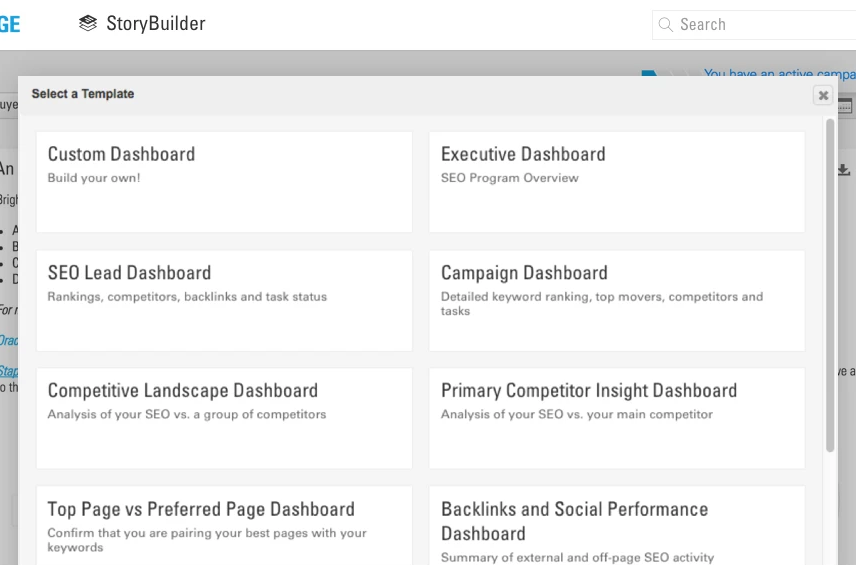
BrightEdge measures SEO performance. StoryBuilder creates executive dashboards connecting organic search activity to revenue, conversions, and competitive positioning. Page Reporting tracks content performance at the URL level, blending rankings, backlinks, social signals, and conversion data.
Source: BrightEdge
Anomaly Detection flags when on-page changes affect performance. The output is tailored for CMOs and VP-level stakeholders who need to justify organic search investment.
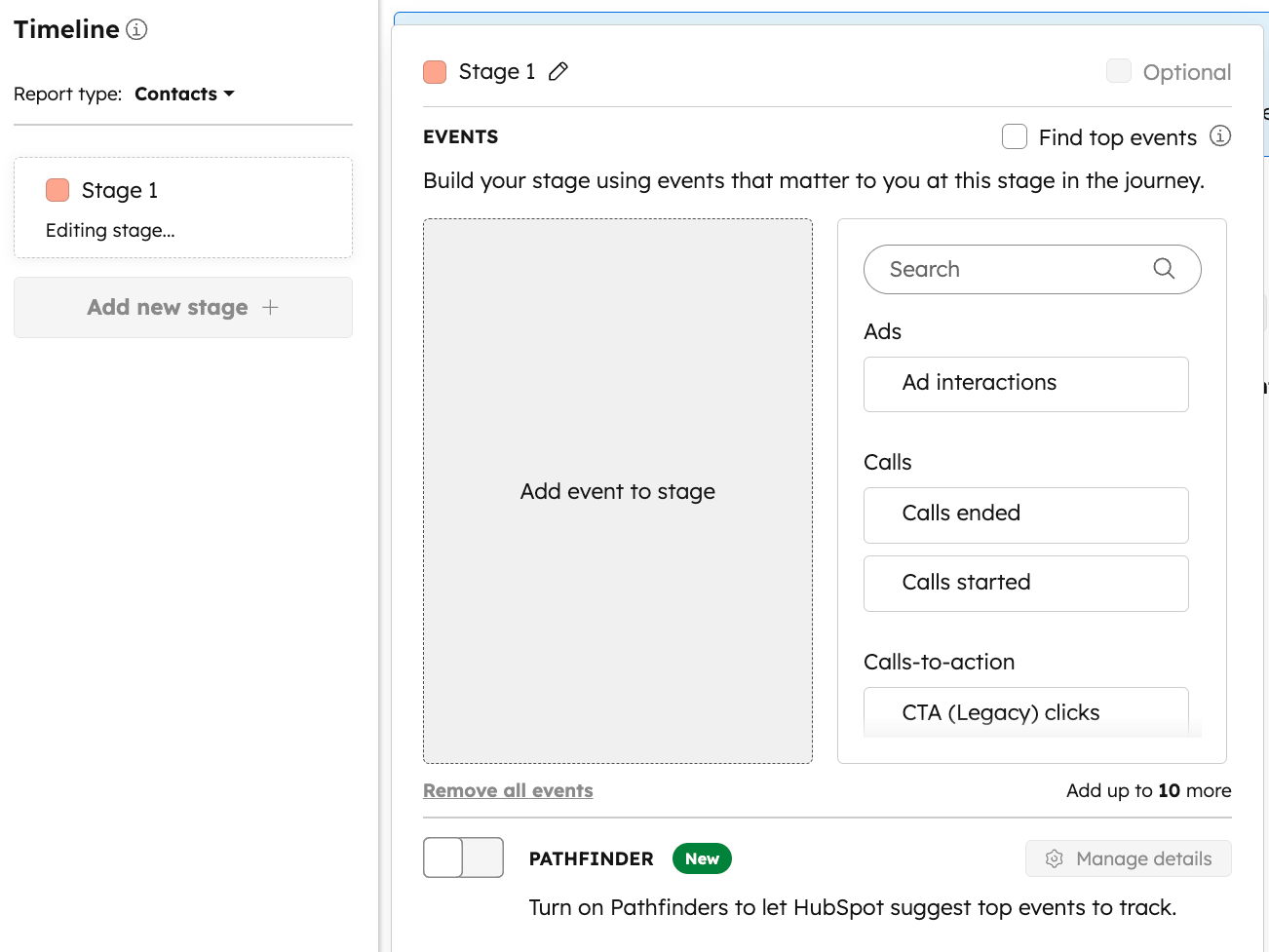
HubSpot measures the full customer journey. Advanced Marketing Reporting provides multi-touch revenue attribution across channels, customer journey analytics through Pathfinder, and customizable dashboards.
Source: HubSpot
Because marketing, sales, and service data share the same CRM, attribution extends from first website visit through closed deal to retention.
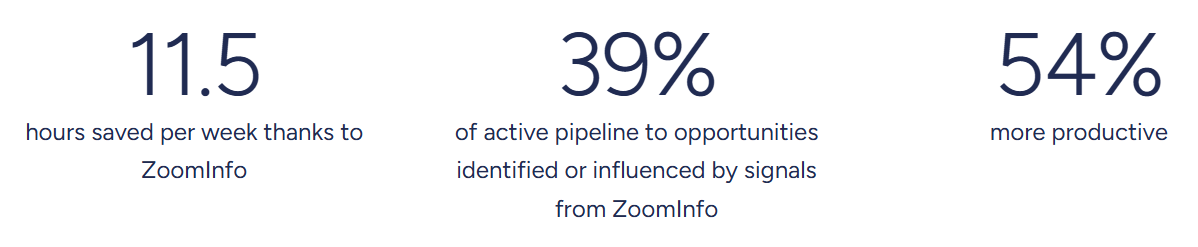
ZoomInfo measures pipeline impact. Its analytics track which signals led to meetings booked, which accounts moved through stages, and which outreach sequences generated responses. Seismic attributed 39% of active pipeline to opportunities identified or influenced by ZoomInfo signals, with the sales team achieving 54% productivity gains and saving 11.5 hours per week.
Source: ZoomInfo
The distinction matters because different teams care about different metrics. SEO teams need to show that ranking improvements translate to traffic and revenue. Marketing operations teams need to prove that campaigns generate pipeline. Sales leaders need to know which accounts to prioritize and why. A complete picture often requires more than one of these views.
Pricing models reflect different buyers
Each platform prices for its target customer, and the differences are substantial.
BrightEdge does not publish pricing. Contracts commonly start at $12,000/year and scale above $100,000 for enterprise deployments, with Capterra reviewers calling it "at least 3x what they're paying for alternative solutions." All purchasing requires a sales conversation. There is no self-serve tier and no free plan.
HubSpot uses a tiered model spanning free through enterprise. The free CRM includes unlimited contacts (up to 1M records) with basic marketing tools. Marketing Hub Professional starts at $800/month (annual) with a $3,000 mandatory onboarding fee. Enterprise reaches $3,600/month with a $7,000 onboarding fee.
Costs compound when adding Sales Hub, Service Hub, and additional seats. One pricing detail worth noting: when subscribing to multiple Hubs at different tiers, all Core Seats are billed at the rate of the highest tier.
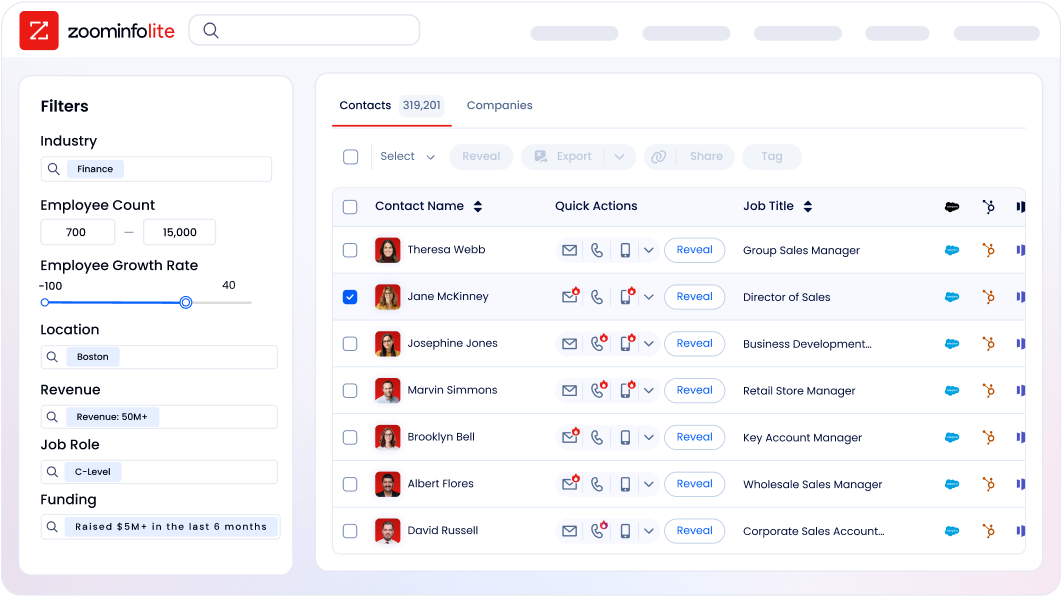
ZoomInfo uses custom consumption-based pricing with no published prices. ZoomInfo Lite provides a permanent free tier with access to ZoomInfo's B2B database, 10 monthly export credits, and WebSights Lite (up to 10 website visitor reveals per day). Paid plans scale based on seats, credits, features, and contract length. A 7-day free trial is available separately from Lite.
Source: ZoomInfo
The total cost depends on what you're trying to accomplish. BrightEdge is a large investment justified by organic search revenue. HubSpot's costs rise with seats and hubs but can replace multiple point solutions. ZoomInfo's pricing tracks data consumption and scales with how aggressively your team prospects.
Integration and ecosystem approaches differ
BrightEdge integrates with the tools enterprise SEO teams already use. Named integrations include Google Analytics (GA4 and GA360), Adobe Analytics, Google Search Console, and CMS platforms including Optimizely and Adobe Marketing Cloud. The BrightEdge MCP server extends data into AI tools like ChatGPT, Claude, and Microsoft Copilot.
Source: BrightEdge
The Connect API has over 1,500 active brand users. But BrightEdge's ecosystem focuses on analytics and content platforms. It does not integrate with CRMs or sales engagement tools because it does not serve those workflows.
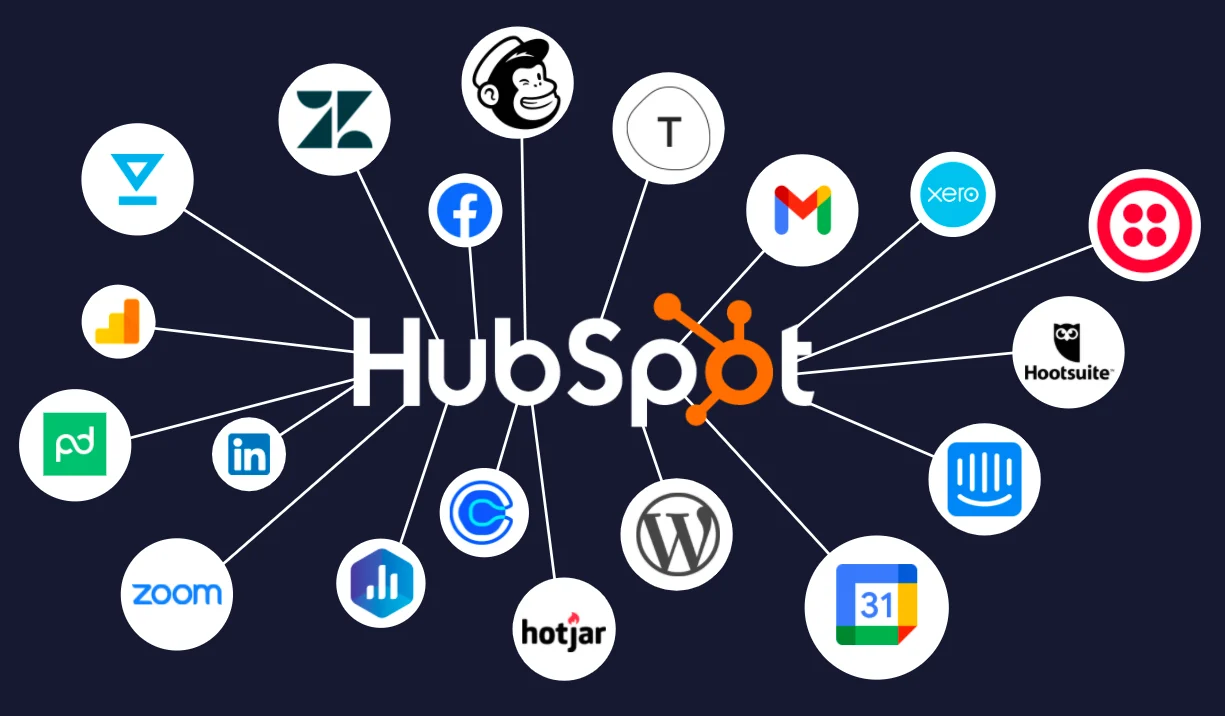
HubSpot runs one of the largest integration ecosystems in SaaS. The App Marketplace offers more than 2,000 integrations with 2.5 million active installs. Major connectors include Salesforce, Slack, Gmail, Outlook, LinkedIn, Jira, Snowflake, and Zapier (the largest connector by installs).
Source: Hubspot
HubSpot's developer platform supports custom apps, UI extensions, and a Remote MCP server for AI agent access to CRM data. The ecosystem breadth reflects HubSpot's role as a central platform for go-to-market teams.
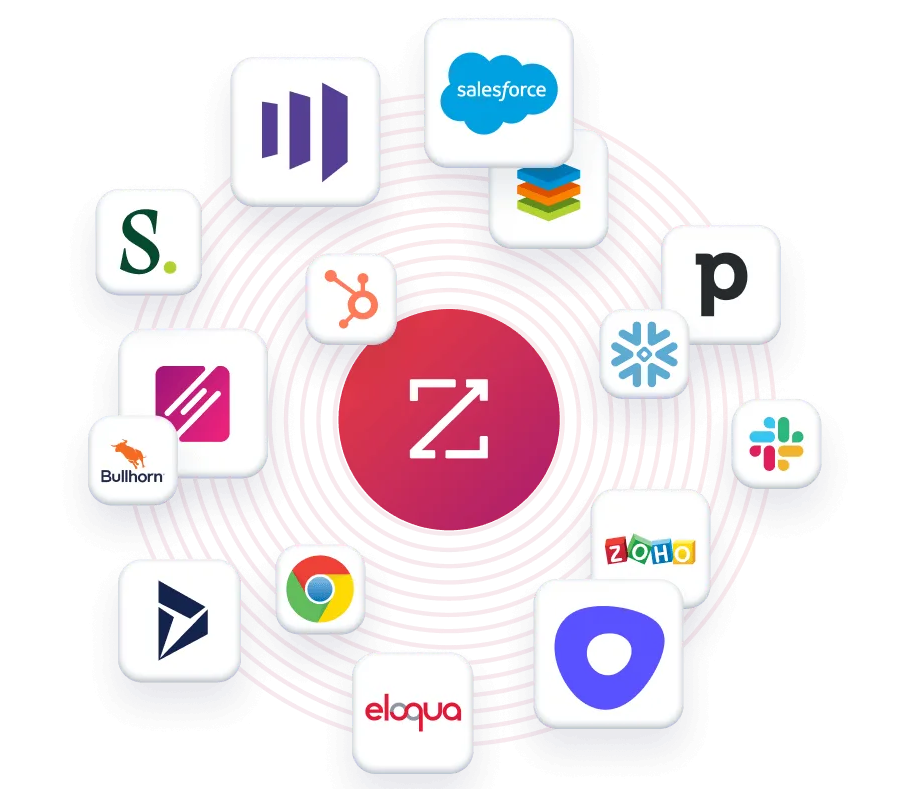
ZoomInfo's integration strategy serves three access methods: the platform UI, the API, and AI model connections. The App Marketplace lists 172+ integration partners across CRM, marketing automation, sales engagement, data warehouse, and AI categories.
Source: ZoomInfo
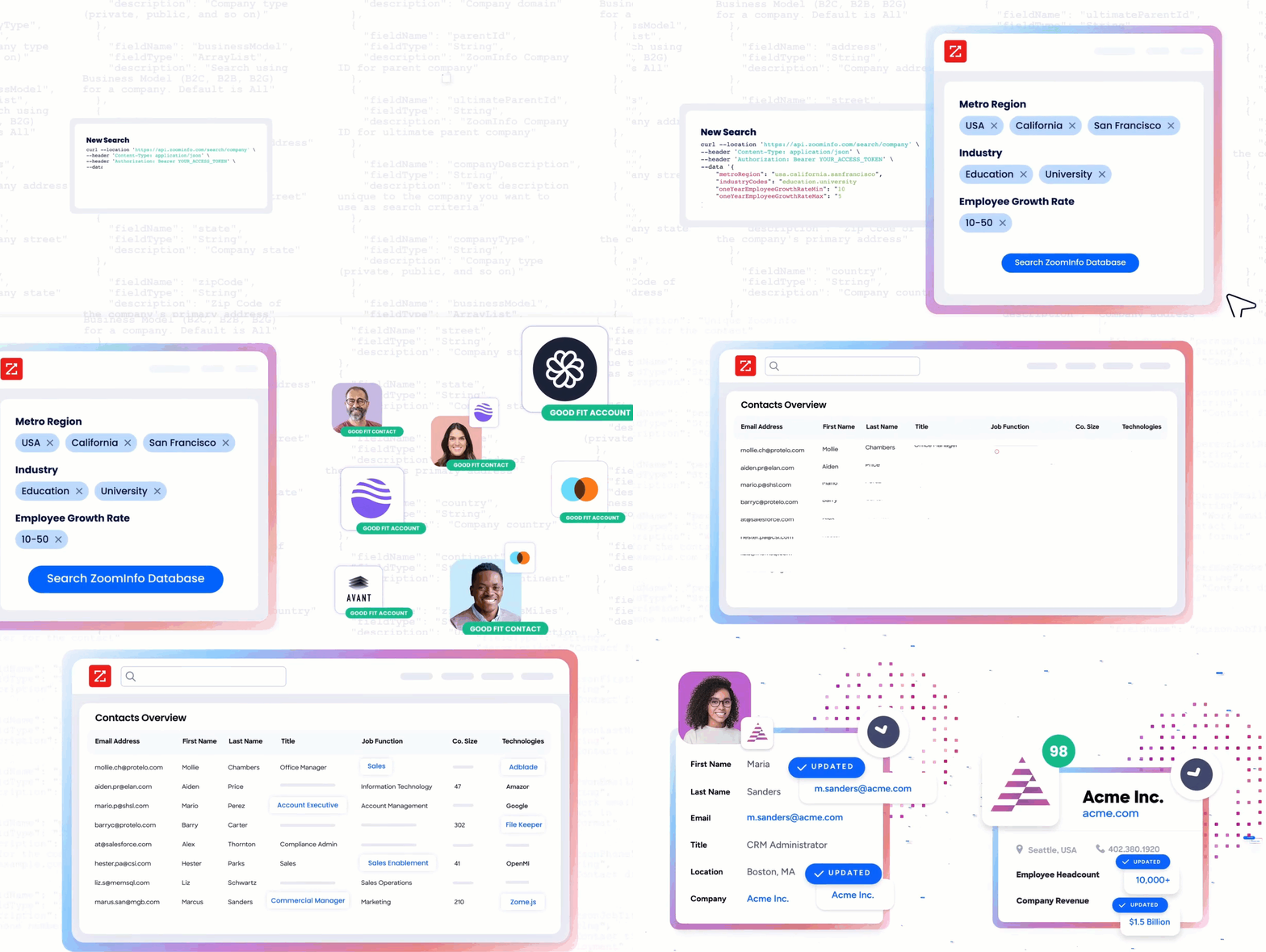
Featured integrations include Salesforce, HubSpot, Microsoft Dynamics 365, and cloud data platforms through the Cloud Partners program (AWS, Google Cloud, Snowflake, Databricks). The Enterprise API exposes search, enrich, AI intelligence, and marketing audience endpoints.
Source: ZoomInfo
The MCP server connects AI models to ZoomInfo's B2B data, currently supporting Claude and ChatGPT. ZoomInfo's native HubSpot integration means the two platforms work together directly, with ZoomInfo enriching HubSpot CRM records with verified contacts, intent signals, and company intelligence.
"The plug-and-play aspect of the API means I can integrate it very easily into any process and get information at a moment's notice." (Jerry Wilson, Senior Marketing Intelligence Analyst, BDO Canada)
Support models match platform complexity
BrightEdge invests in hands-on support. Its customer success team employs 60+ professionals with over 150 combined years of SEO experience. Every enterprise customer gets a dedicated Customer Success Partner who acts as an extension of the team. G2 reviewers give BrightEdge a Quality of Support score of 9.2.
The Ignite onboarding program provides guided one-on-one setup, and product training webinars run 10 times per year. For a platform this complex, the support matters. The learning curve is steep, and users report that the platform rewards experienced SEOs but requires significant training time.
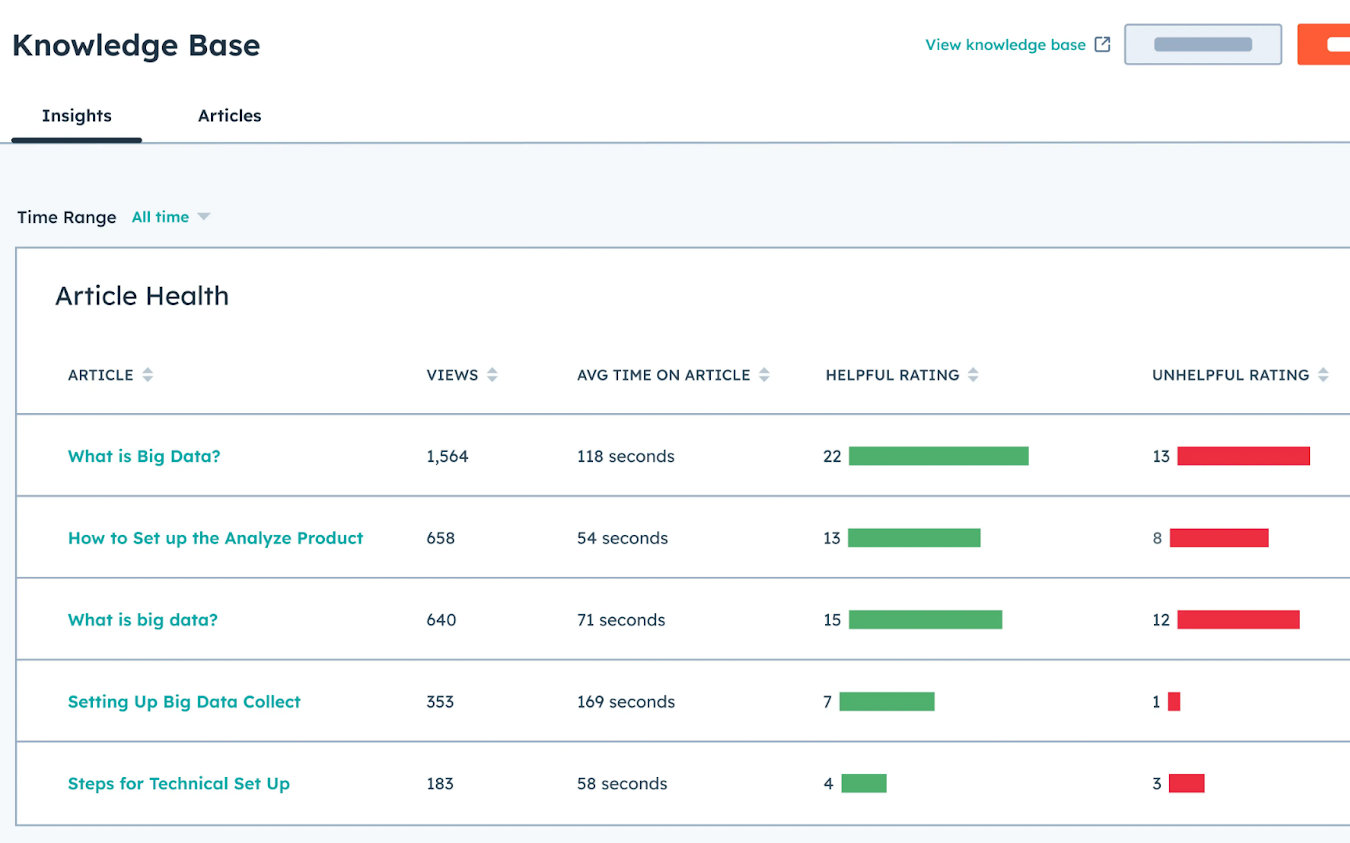
HubSpot tiers its support by subscription level. Free users get community-only support. Starter adds email and chat. Professional and Enterprise add phone support. HubSpot Academy offers free certifications and courses, with over 200,000 professionals certified.
The Knowledge Base spans 17+ languages. For complex implementations, HubSpot leans on its Solutions Partner ecosystem, since professional services revenue represents only about 2% of total revenue.
Source: HubSpot
ZoomInfo redesigned its onboarding program from 30 to 90 days, structured across planning, implementation, education, and adoption phases. The redesign produced a 25% improvement in customer satisfaction scores and won Rocketlane's Golden Comet award for Best Customer Onboarding Team of 2024. ZoomInfo University provides role-specific learning paths for sales, marketing, and administration.

Source: ZoomInfo
Security and compliance for enterprise buyers
All three platforms meet enterprise security requirements, though the certifications differ.
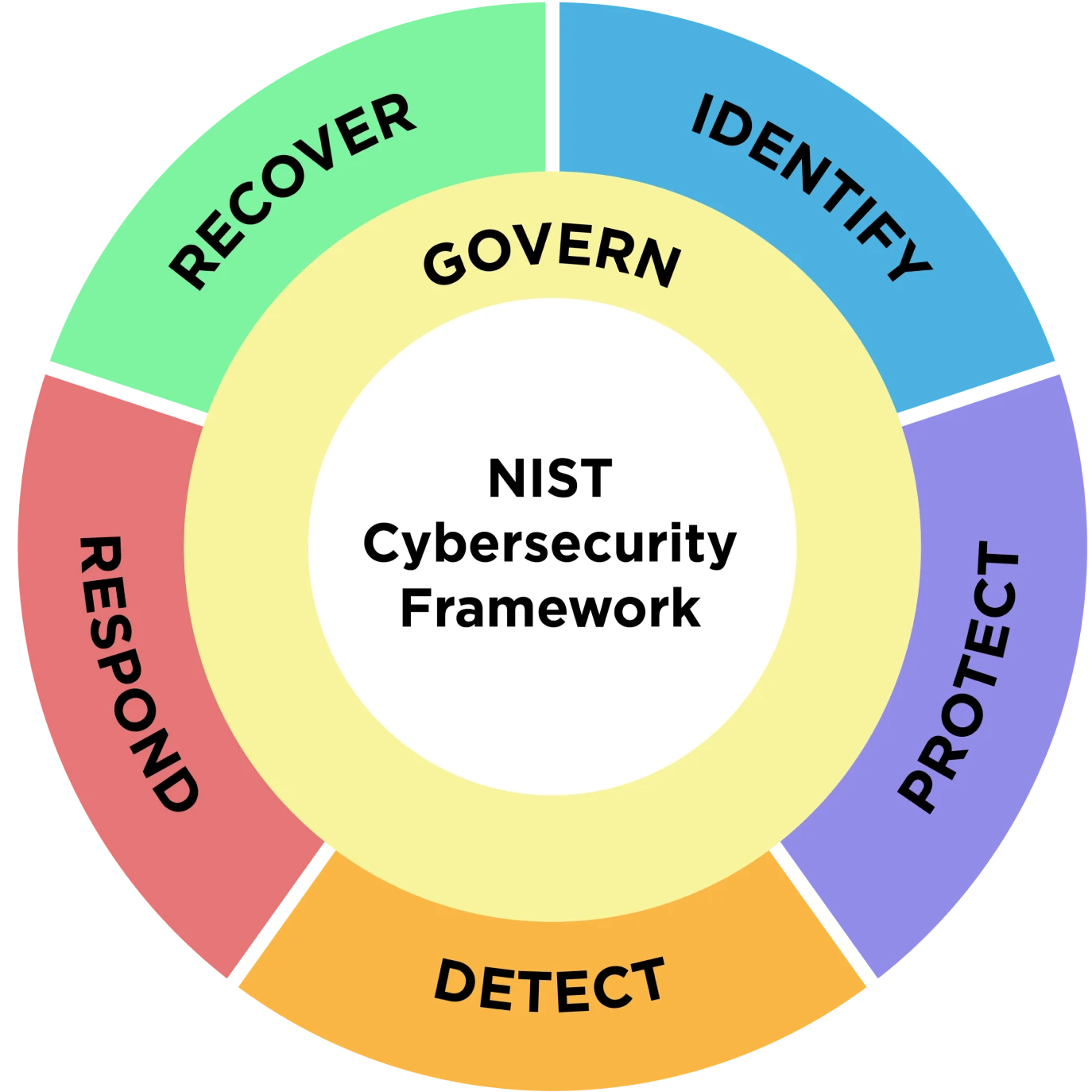
BrightEdge holds ISO 27001:2022, ISO 27701:2019, SOC 2, and conforms to the NIST Cybersecurity Framework and NIST AI Risk Management Framework. The platform maintains a 99.99% uptime SLA and undergoes annual third-party penetration testing. It supports SAML/SSO and customizable password policies.
Source: BrightEdge
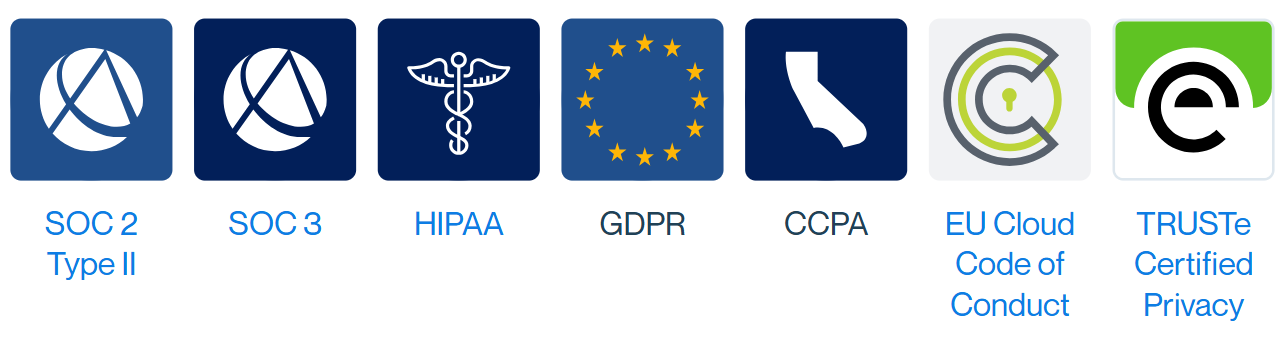
HubSpot holds SOC 2 Type II, SOC 3, and has obtained independent HIPAA attestation. Data is encrypted with AES-256 at rest and TLS 1.2/1.3 in transit. HubSpot offers an EU Data Center for organizations requiring EU data localization. It supports SSO, 2FA, passkeys, and IP allowlisting.
Source: HubSpot
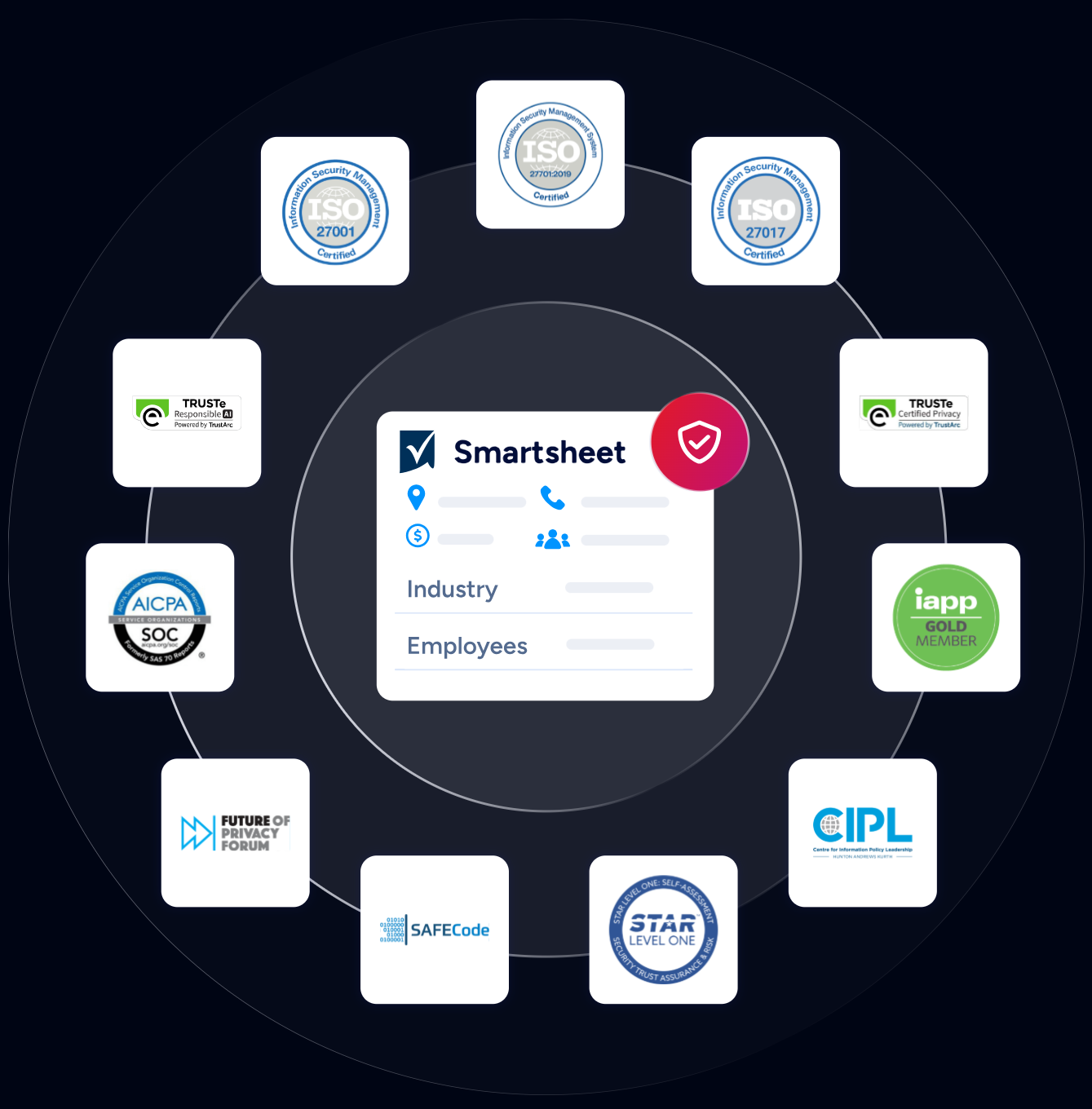
ZoomInfo holds ISO 27001, ISO 27701, SOC 2 Type II, TRUSTe GDPR, and TRUSTe CCPA certifications, all renewed annually. It is a registered data broker in California and Vermont. Because ZoomInfo handles B2B contact data at scale, its compliance infrastructure is built into the data layer.
Source: ZoomInfo
BrightEdge vs. HubSpot vs. ZoomInfo: Which should you choose?
The right choice depends on which problem is most urgent for your team.
Choose BrightEdge if:
Organic search is a primary revenue driver and you need enterprise SEO intelligence
You have a dedicated SEO team that needs keyword research, competitive analysis, and site auditing
Tracking brand visibility in AI-generated search results (Google AI Overviews, ChatGPT, Perplexity) is a priority
You manage multiple brand domains or international sites and need centralized reporting
Your budget supports enterprise contracts and your team can invest in platform training
Choose HubSpot if:
You need marketing, sales, and service tools working from a shared customer record
Your team wants one platform that covers email, social, content, CRM, and reporting
Fast implementation and ease of use matter more than specialized depth in any single function
You're a scaling company that has outgrown point solutions but doesn't need enterprise SEO tooling
The free tier or Starter bundle fits your current stage, with room to grow
Choose ZoomInfo if:
You need to know who your buyers are, when they're in-market, and how to reach them directly
Your content and campaigns generate traffic but converting that traffic to pipeline is the bottleneck
Your sales team needs verified contact data, org charts, intent signals, and AI-powered prospecting
You want a B2B intelligence layer that integrates with your existing CRM and marketing tools
You're building AI-powered go-to-market workflows and need data infrastructure that works in any front-end
Try ZoomInfo free and see how buyer intelligence changes your go-to-market execution.
These three platforms aren't competitors in the traditional sense. BrightEdge optimizes your content for discovery. HubSpot manages engagement across the customer lifecycle. ZoomInfo identifies the buyers behind the traffic and gives you the intelligence to reach them.
The best go-to-market teams don't choose one over the others. They build a stack where content visibility, customer engagement, and buyer intelligence reinforce each other.
The question isn't which platform to choose. It's which gap is costing you the most pipeline today.
BrightEdge vs. HubSpot vs. ZoomInfo FAQ
What is the core difference between BrightEdge, HubSpot, and ZoomInfo?
BrightEdge is an enterprise SEO and AI search optimization platform for teams that need keyword research, competitive analysis, site auditing, and AI search visibility tracking across Google, ChatGPT, and Perplexity. HubSpot is a combined customer platform with CRM, marketing automation, sales, service, and content tools under a shared data layer.
ZoomInfo is a B2B data and GTM intelligence platform with 500M contacts, buyer intent signals, verified contact data, and AI-powered prospecting to help revenue teams identify and engage the right buyers.
Which platform is best for SEO?
BrightEdge. Its DataCube X indexes over 4 billion data points across 92 countries and 47 languages, with 10 years of historical context. Its AI Catalyst and AI Hyper Cube modules track brand visibility in AI-generated search results (a capability HubSpot has only in beta and ZoomInfo does not offer).
HubSpot includes basic in-editor SEO recommendations and an AEO Grader, suitable for mid-market teams without dedicated SEO specialists. ZoomInfo does not provide SEO tools but complements both platforms with buyer intelligence and intent data.
How does pricing compare across the three platforms?
BrightEdge does not publish pricing, but contracts commonly start around $12,000 per year and scale above $100,000 for enterprise deployments. HubSpot offers a permanent free tier, with Marketing Hub Professional at $800 per month (annual billing) plus a $3,000 onboarding fee, and Enterprise at $3,600 per month with a $7,000 onboarding fee.
ZoomInfo uses custom consumption-based pricing and offers a permanent free tier (ZoomInfo Lite) with 10 monthly export credits and a separate 7-day free trial for paid features.
Can ZoomInfo work alongside BrightEdge or HubSpot?
ZoomInfo integrates natively with HubSpot as a featured Marketplace integration, enriching CRM records with verified contacts, intent signals, and company intelligence. ZoomInfo also integrates with Salesforce and Microsoft Dynamics.
There is no direct BrightEdge-ZoomInfo integration, but the two serve complementary functions: BrightEdge drives organic search traffic and content optimization, while ZoomInfo identifies the buyers behind that traffic and provides verified contact data for outreach.
Which platform has the best AI capabilities?
Each platform applies AI differently. BrightEdge uses AI for SEO automation (Autopilot implements on-page optimizations without developer involvement) and AI search intelligence (AI Catalyst and AI Hyper Cube monitor brand presence in generative search). HubSpot's Breeze AI powers agents for customer service, sales prospecting, content creation, and data management across its platform.
ZoomInfo's GTM Context Graph uses AI to reason across CRM data, conversation intelligence, and third-party signals, helping sellers understand why deals move and which accounts to prioritize. The best AI depends on whether your priority is search optimization, customer engagement automation, or sales intelligence.
Which platform is easiest to get started with?
HubSpot has the lowest barrier to entry, with a permanent free CRM tier and an interface designed for non-technical users. ZoomInfo Lite offers a free tier with access to B2B data, though paid features require a sales conversation. BrightEdge requires a sales process with no self-serve option and has a steep learning curve, with G2 and TrustRadius reviewers citing platform complexity as a recurring theme.
Do I need all three platforms?
Not necessarily. A company focused on content-led growth and organic search visibility would start with BrightEdge or HubSpot's content tools. A company focused on outbound prospecting and pipeline generation would start with ZoomInfo.
But teams running both inbound content strategies and outbound sales motions get the most value from combining platforms: one for search visibility (BrightEdge or HubSpot), one for customer engagement (HubSpot), and one for buyer intelligence (ZoomInfo).
ZoomInfo and HubSpot work well together because ZoomInfo's data enriches HubSpot's CRM directly, closing the gap between anonymous website visitors and qualified pipeline. For a closer look at how these two platforms compare on their own, see our HubSpot vs. ZoomInfo comparison.
Which platform tracks AI search visibility?
BrightEdge leads in AI search visibility tracking. AI Catalyst tracks brand presence across Google AI Overviews, ChatGPT, and Perplexity. AI Hyper Cube analyzes which AI conversations mention a brand, what sources AI engines cite, and competitive positioning within AI responses. HubSpot offers an AEO Grader and AEO Strategy tool, both in beta.
ZoomInfo does not track AI search visibility but monitors buyer intent signals across the web, including research activity that occurs through AI search engines.
More HubSpot comparisons:
