
Callbox has spent two decades building what it calls the world's largest outsourced B2B marketing and sales support operation. Founded in 2004, the company takes over outbound sales development for its clients (prospecting, multi-channel outreach, appointment setting, and lead qualification) through dedicated teams across eight global offices. With over 15,000 companies served and clients like Google, AWS, and Microsoft, Callbox has proven it can fill pipelines at scale.
To create this Callbox review, we analyzed the platform in detail. We believe it's the right choice if:
You want to outsource outbound sales development rather than build an internal SDR team
You need managed multichannel outreach across phone, email, LinkedIn, and events
You're expanding into new geographic markets and need local execution in 60+ countries
You have $15,000+ per month for pipeline generation
You prefer a ready-made team (SDRs, campaign managers, data analysts) over self-serve tools
However, Callbox might not be the best choice if:
You want direct ownership of your prospect data, outreach sequences, and pipeline intelligence
You need a self-serve platform your team can use to find and engage buyers independently
You prefer to pay based on results rather than resource allocation
You want to build internal sales development capability that compounds over time
Your pipeline budget is under $15,000 per month
In this case, you should consider ZoomInfo: an AI-powered GTM platform that takes a different approach to pipeline generation. Instead of outsourcing the work, ZoomInfo gives your team direct access to a large B2B dataset, an intelligence layer called the GTM Context Graph that reveals not just who to contact but why and when, and AI tools that handle the research, outreach drafting, and signal monitoring your team would otherwise do manually.
We've included a detailed look at ZoomInfo later in this Callbox review because it represents a different philosophy for companies that want to own their pipeline generation rather than rent it. If you're ready to explore self-directed prospecting with AI and verified data, you can start with ZoomInfo's free trial.
What is Callbox?
Callbox is a B2B lead generation agency headquartered in Encino, California, with a secondary headquarters in Singapore. Founded in 2004 by CEO Rom Agustin, the company started as a phone-first appointment setting shop and has grown into a multichannel outbound agency running what it calls a "Human + AI" model.
The core service is outsourced pipeline generation.
Callbox handles the full top-of-funnel process: identifying target accounts, enriching contact data, running coordinated outreach across seven channels (phone, email, LinkedIn, social media, website, live chat, events, and SMS/WhatsApp), qualifying prospects against BANT criteria, and booking confirmed meetings on client sales reps' calendars.
Source: Callbox
The company reports having run over 10,000 campaigns across 60+ countries and served 15,000+ companies across 35+ industries.
Callbox's proprietary platform, Smart Engage AI, supports its outreach with waterfall data enrichment, AI-generated personalization, and CRM integrations with Salesforce, HubSpot, Pipedrive, and 20+ other systems. The company operates 8 global offices across the USA, UK, Australia, Colombia, New Zealand, Singapore, Malaysia, and Hong Kong, with a team of 700+ members.
Callbox targets revenue leaders at mid-market and enterprise B2B companies who need a predictable pipeline without the overhead of hiring, training, and managing their own prospecting teams.
Callbox Pros & Cons
Pros | Cons |
|---|---|
20+ years of B2B lead generation experience across 10,000+ campaigns | High price floor ($15,000–$30,000/month per Campaign Pod) |
Multichannel execution across 7 outreach channels | No performance-based or pay-per-lead pricing option |
Dedicated team per engagement (SDR, campaign manager, data analysts, QA) | Uneven performance reported in non-English-speaking markets |
Global delivery across 60+ countries with 8 regional offices | Lead qualification can struggle with niche or technical products |
AI-powered data enrichment claiming 95%+ contact accuracy | Significant onboarding investment required before outreach begins |
Enterprise client roster (Google, AWS, SAP, Microsoft) | Clients don't build lasting internal prospecting capability |
Claims 2-week average time-to-first-lead | No free trial or self-serve evaluation option |
Callbox Review: How It Works & Key Features
B2B Lead Generation & Appointment Setting: Callbox handles the full outbound sales development cycle from prospecting to booked meetings.
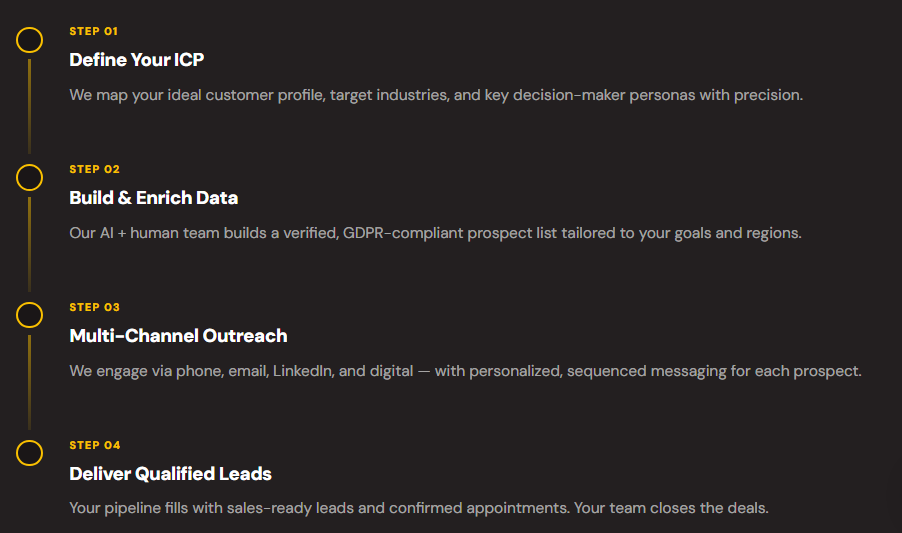
Callbox's core offering is a managed appointment setting service built around a five-step engagement process.
The workflow begins with ICP definition: Callbox works with the client's revenue leadership to map firmographics, technographics, buying signals, and target decision-maker roles. This feeds the AI prospecting platform, which builds a targeted account list (typically 2,000–8,000 matched accounts within 7 days of kickoff).
Source: Callbox
From there, Callbox maps stakeholders within each target account and develops persona-specific messaging. A coordinated 9-touch sequence spanning phone, personalized email, and LinkedIn runs over 30 days. Every prospective meeting is screened against BANT criteria (budget, authority, need, and timeline) before landing on a client AE's calendar. Confirmation sequences target a no-show rate under 12%, compared to a cited industry average of 28%.
Each booked appointment comes with a briefing note containing conversation history, pain points, and stakeholder context. Campaign data syncs to the client's CRM in real time, with weekly pipeline reports and bi-weekly strategy reviews.
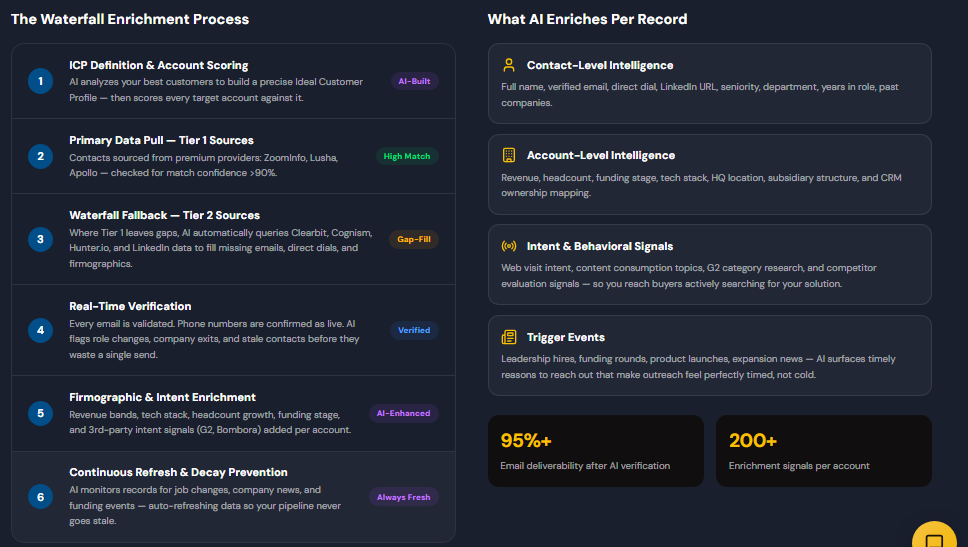
The data enrichment layer runs a waterfall process through ZoomInfo, Lusha, Apollo, Clearbit, Cognism, and Hunter.io, targeting 95%+ contact data accuracy versus the 60–75% accuracy typical of single-source providers.
Source: Callbox
Smart Engage AI Platform: Callbox's proprietary technology powers personalization and multichannel coordination across campaigns.
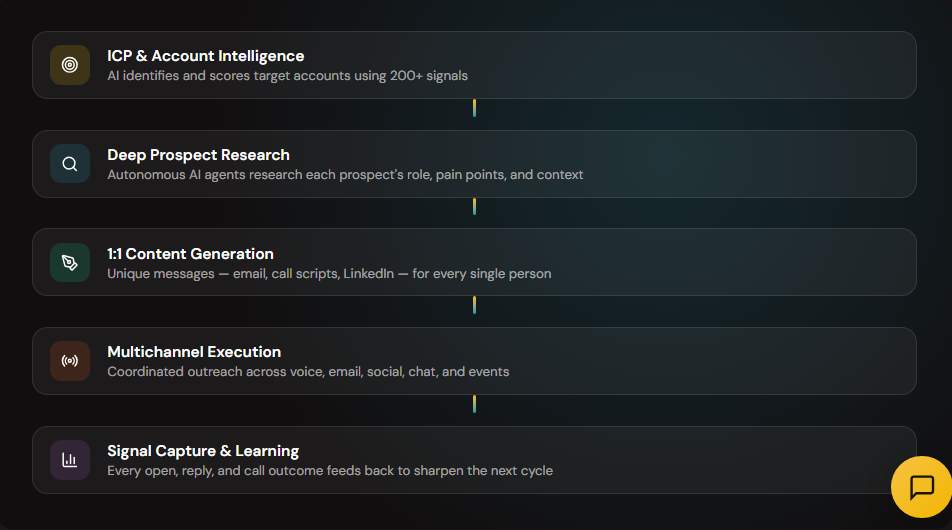
Smart Engage AI is the technology layer behind Callbox's managed services. The platform runs what Callbox calls an "AI Flywheel", a learning loop that feeds signals from every campaign interaction back into a central model.
The platform operates through four AI components.
Research AI scans each prospect's LinkedIn activity, company news, funding rounds, and third-party intent signals, reportedly finishing in under 2 minutes per prospect. Messaging AI generates unique email bodies, subject lines, CTAs, voice call scripts, and LinkedIn connection notes for each individual, with Callbox claiming zero duplicate messages across an entire campaign. Sequencing AI determines the best channel mix, timing, and follow-up cadence per account. Conversion AI handles lead scoring and routing.
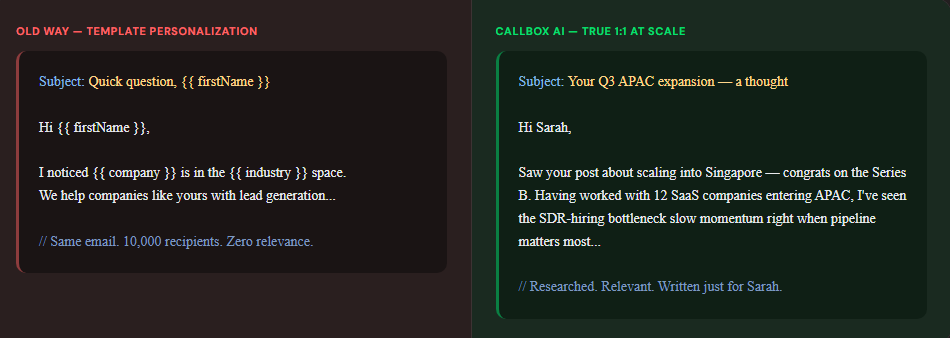
Source: Callbox
On the voice side, Callbox has introduced AI voice agents for high-volume transactional calls (appointment confirmations, no-show recovery, trial nudges) while reserving human SDRs for consultative conversations.
The platform integrates with Salesforce, HubSpot, Pipedrive, and 20+ CRMs in both directions. However, clients interact with Smart Engage primarily through their Campaign Manager's reporting rather than as a self-serve tool. Callbox does not publish screenshots, walkthroughs, or video demos of the platform on its website.
Outsourced SDR Teams: Dedicated Campaign Pods provide a full sales development function without internal hiring.
Callbox structures its outsourced SDR service around Campaign Pods, dedicated units priced at $15,000–$30,000 per month. Each pod includes a dedicated SDR, Campaign Manager, Copywriters and Content Specialists, Data Research Analysts, Quality Assurance Specialists, and an Account Strategist.
This goes beyond traditional SDR outsourcing limited to cold calling. Clients get the full operational infrastructure: data, tools, processes, and personnel. Callbox publishes a cost comparison claiming an annual team cost of $120K versus $280K+ for in-house SDRs, factoring in recruiting, onboarding, training, tools, and data costs.
Cross-border Lead Generation: Callbox runs localized campaigns across APAC, EMEA, LATAM, and North America from a single engagement.
For companies expanding internationally, Callbox's cross-border lead generation service provides a regional marketing arm.
With offices across three continents and six-language coverage (English, Spanish, Portuguese, Mandarin, Cantonese, and Vietnamese), the company handles market research, prospect list building, campaign setup, and HubSpot CRM configuration for each target region.
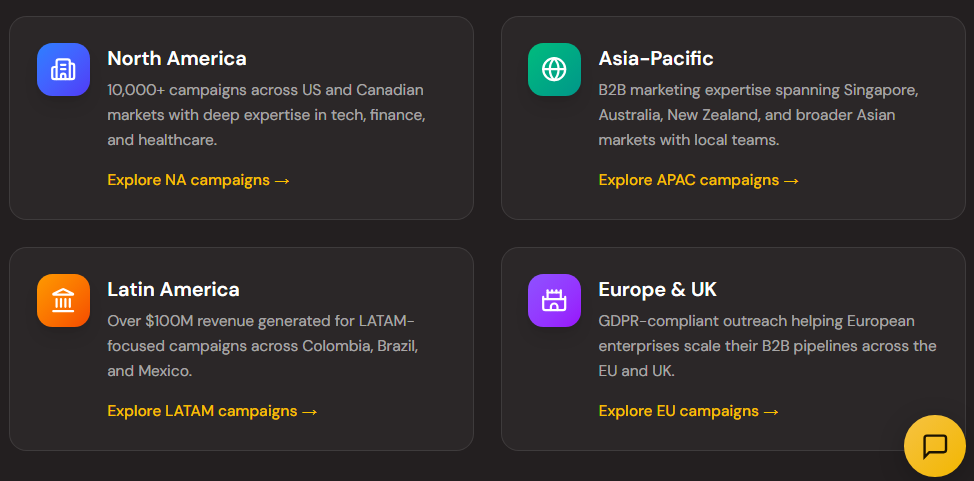
Source: Callbox
Campaigns adapt to local business norms, including compliance with jurisdiction-specific regulations like Singapore's PDPA, GDPR, ACMA, and CAN-SPAM. Callbox has run six concurrent APAC programs in parallel for a single client.
Callbox also offers event marketing services covering the full event lifecycle (setup, pre-event outreach, live engagement, and post-event follow-up) and Account-Based Marketing programs built around buying committee mapping and multi-stakeholder engagement within targeted enterprise accounts.
Pricing Structure: Callbox uses subscription-based pricing with no performance-based options.
Callbox operates on a resource-based subscription model built around Campaign Pods.
The published range is $15,000–$30,000 per month per Campaign Pod, with exact pricing depending on team size, SDR headcount, data volume, supported languages, target regions, and seniority of target personas. The FAQ pricing page states that clients typically spend $20,000–$40,000 per quarter for lighter engagements.
Callbox does not charge per lead and does not offer performance-based pricing.
Everything needed for lead generation (data, tools, processes, and team) is included, with no hidden fees. There is no free trial or free plan. The entry point is a free strategy consultation. Contract lengths and cancellation terms are not publicly disclosed.
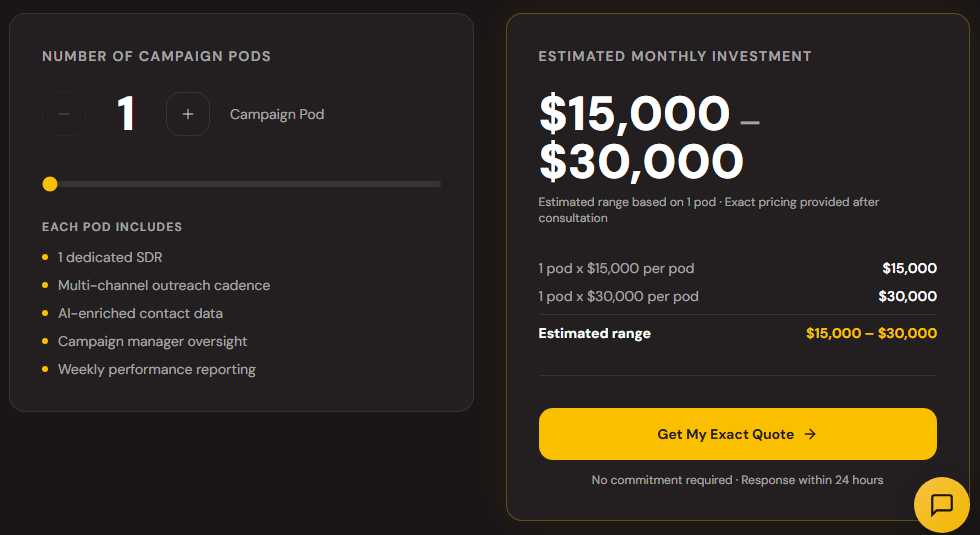
Source: Callbox
Where Callbox Falls Short
Callbox handles managed outbound execution well, but several limitations surface depending on your team's needs and growth trajectory. These reflect the constraints of an outsourced agency model rather than failures of execution.
High Cost Floor Limits Accessibility.
At $15,000–$30,000 per month per Campaign Pod, Callbox is priced for mid-market and enterprise budgets. Companies with smaller pipeline budgets, or those wanting to test outsourced lead generation before committing, have no entry point. There is no free trial, no starter tier, and no self-serve option.
Among Clutch's 119 verified reviews, cost rating (4.3/5) is the lowest of the four review dimensions, suggesting pricing is a friction point even among satisfied clients.
No Performance-Based Pricing.
Callbox does not offer performance-based or pay-per-lead contracts. All pricing is subscription-based and disconnected from outcome metrics. For companies that want lead generation costs tied to results, this is a structural mismatch. You pay for resources allocated, not for meetings booked or deals closed.
You Don't Build Internal Capability.
Outsourcing comes with a dependency tradeoff. When Callbox runs your pipeline generation, your organization doesn't develop its own prospecting expertise, data infrastructure, or knowledge about what messaging and channels work for your buyers.
If the engagement ends, the capability leaves with it. Companies that view sales development as a core competency may prefer tools that empower their own teams.
Uneven Results Outside English-Speaking Markets.
The most recurring criticism across Clutch reviews is underperformance in non-English-speaking markets. One reviewer noted that "while the results in the targeted India region did not meet expectations," recommending "a deeper understanding of regional nuances and market-specific tactics."
Six supported languages and regional offices don't fully resolve differences in local business culture and communication norms.
Qualification Challenges with Complex Products.
Client feedback on Clutch notes that some clients want better lead qualification for "more complex or niche products" where the sales conversation requires technical fluency. An outsourced SDR, even a well-briefed one, may not match the product knowledge of an internal team member who lives in the domain daily.
Limited Visibility into Platform and Process.
Callbox does not publish screenshots, demos, or documentation of its Smart Engage platform. Clients see results through their Campaign Manager's weekly reports and a HubSpot portal, but the depth of self-serve analytics is not publicly documented. Data-driven teams that want to dig into campaign mechanics and optimize directly may find this limiting.
These limitations follow from an agency model built for managed execution. But they create a clear opening for a different approach: platforms that put data, intelligence, and AI tools directly in your team's hands.
A Different Approach to Pipeline Generation: ZoomInfo
Where Callbox outsources pipeline generation, ZoomInfo takes the opposite approach: it gives your team direct access to the data, intelligence, and AI tools to generate pipeline themselves.
Rather than renting a team to prospect on your behalf, ZoomInfo provides the infrastructure that makes your sellers, marketers, and revenue operators more effective, and that capability stays with your organization.
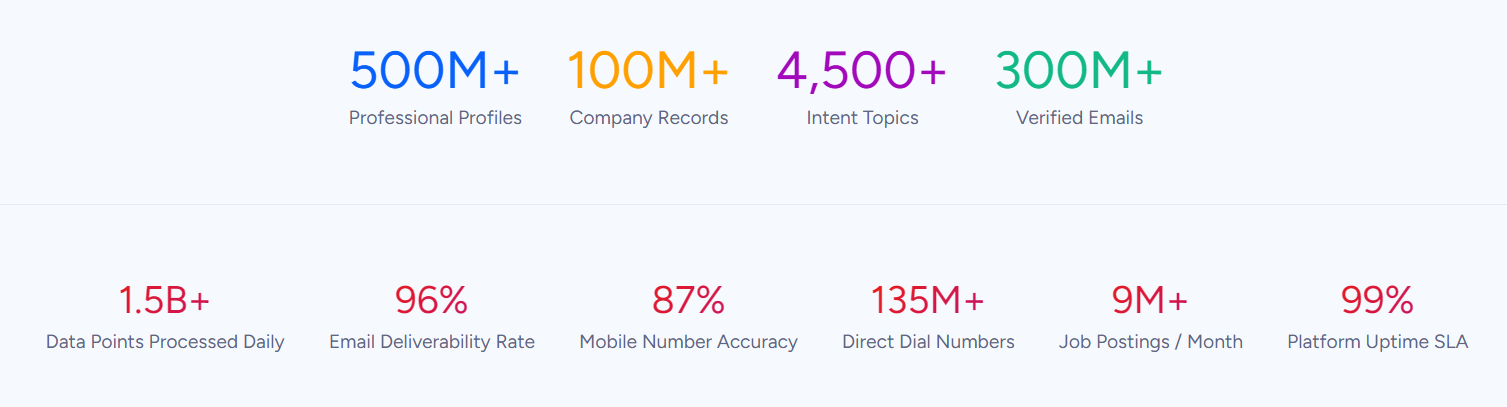
ZoomInfo is an AI-powered GTM platform built on a large B2B data foundation: 500M contacts, 100M companies, 135M+ verified phone numbers, and 200M+ verified business emails.
Its GTM Context Graph processes 1.5B+ data points daily, unifying this data with your CRM records, conversation transcripts, and behavioral signals to reveal the full context of your accounts. That context shows AI not just what happened, but why it happened, and what your team should do next. Your team can then drive sales motions from the GTM Workspace, run GTM plays from GTM Studio, or power their own tools through the API and MCP.
Direct Access to B2B Data: ZoomInfo gives your team the same contact data that agencies source from, without the middleman.
Callbox's data enrichment waterfall draws from ZoomInfo, Lusha, Apollo, Clearbit, and Cognism as its primary sources.
With ZoomInfo, your team accesses that foundational data layer directly: 500M contacts, 100M companies, 135M+ verified phone numbers, 120M direct-dial phone numbers, and 200M+ verified business email addresses. A multi-source verification pipeline backed by 300+ human researchers keeps this data at up to 95% accuracy on first-party records.
Source: ZoomInfo
Beyond contact records, ZoomInfo provides three data dimensions at once: identity data (who buyers are and how to reach them), company context (100M companies with attributes, org charts, and technographics covering 30,000+ technologies across 200+ categories), and signals that reveal when accounts are actively in-market.
Buyer Intent tracks signals from 210 million IP-to-Organization pairings and 6 trillion+ new keyword-to-device pairings sourced monthly. Guided Intent, exclusive to ZoomInfo, identifies topics historically correlated with deal success rather than requiring manual topic selection.
This data quality has external validation.
In a Fortune 500 competitive RFP analyzing 25 million contacts across vendors, the independent consultant concluded that "no other competitor came even close." ZoomInfo holds a Gartner Magic Quadrant Leader position for ABM Platforms and a Forrester Wave Leader position for Intent Data Providers.
Vensure scaled prospecting with ZoomInfo's data. Their VP of Revenue Operations noted: "ZoomInfo gives us the information we need to execute. We don't have to go through and spend our time digging. It's already there, so we can be three steps ahead." (Vensure)
The GTM Context Graph: ZoomInfo's intelligence layer captures why deals move or stall, not just what happened.
Raw data, no matter how large, only tells you who to contact and how to reach them.
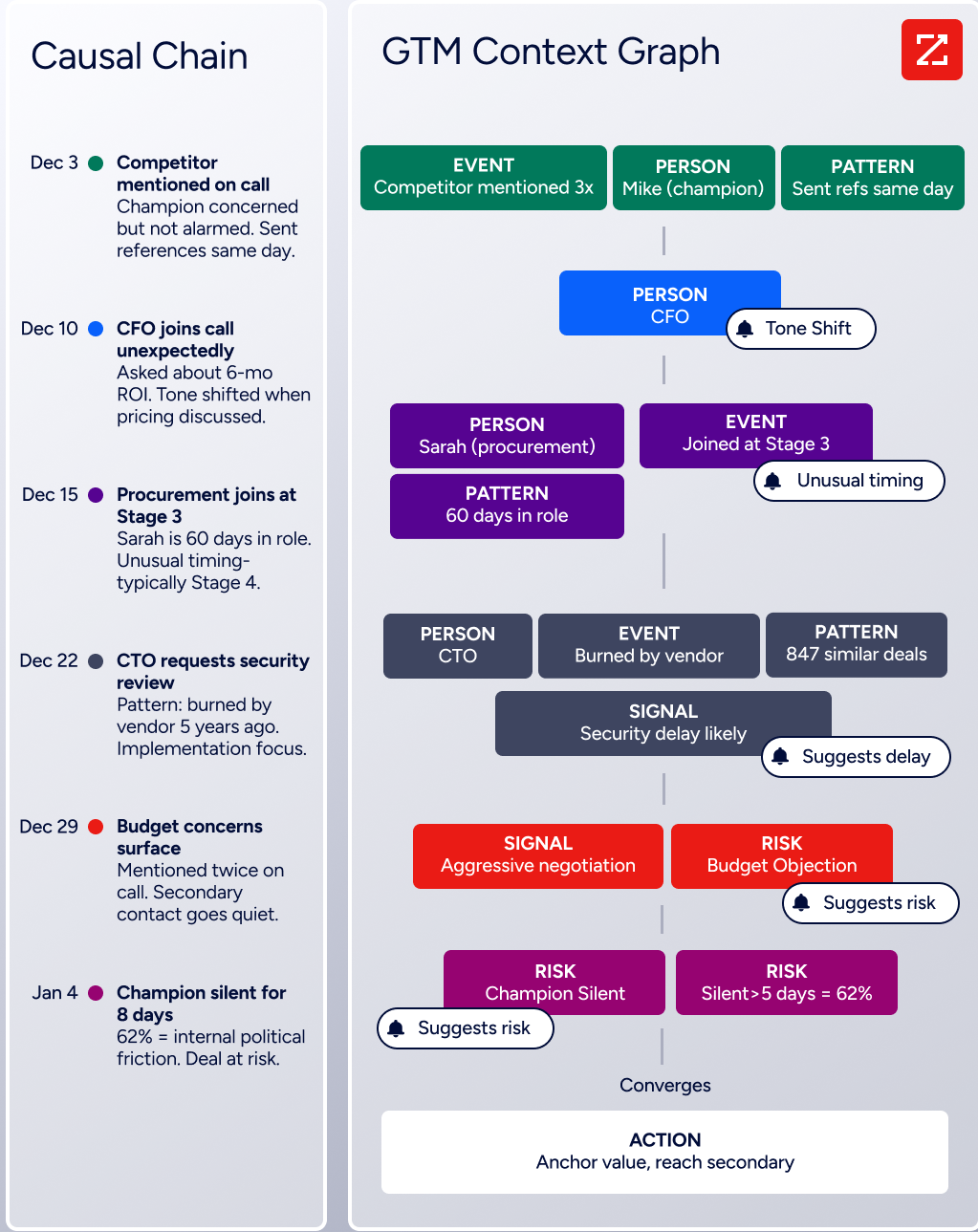
ZoomInfo's GTM Context Graph goes further by fusing ZoomInfo's B2B data with your CRM records, conversation intelligence from calls and meetings, email interactions, and behavioral signals into a single layer that processes 1.5B+ data points daily.
The difference matters for pipeline generation.
A CRM records that a deal moved stages. Conversation intelligence transcribes what the VP of Finance said on the last call. Intent data logs a spike in research activity. The GTM Context Graph reasons across all three to understand why the deal moved, and that reasoning flows into every downstream action: AI-drafted follow-up emails that address the specific concern raised, plays that target accounts matching your actual win patterns, and forecasts weighted by buying evidence rather than stage labels.
Source: ZoomInfo
This intelligence layer exists because ZoomInfo has spent 20 years building data unification infrastructure and developed conversation and behavioral intelligence that captures decision context in machine-readable form. As CPO Dominik Facher writes: "The CRM recorded the state change. It has no record of why it happened." The GTM Context Graph fills that gap.
Seismic attributed 39% of active pipeline to opportunities identified or influenced by ZoomInfo signals. Their CBO noted: "That combination of our internal CRM data, external signals, and AI that's given all that context has helped us craft very specific account- and persona-based messages." (Seismic)
GTM Workspace and GTM Studio: AI-powered workspaces for sellers, marketers, and RevOps.
ZoomInfo’s GTM Context Graph powers two front-ends designed for different roles.
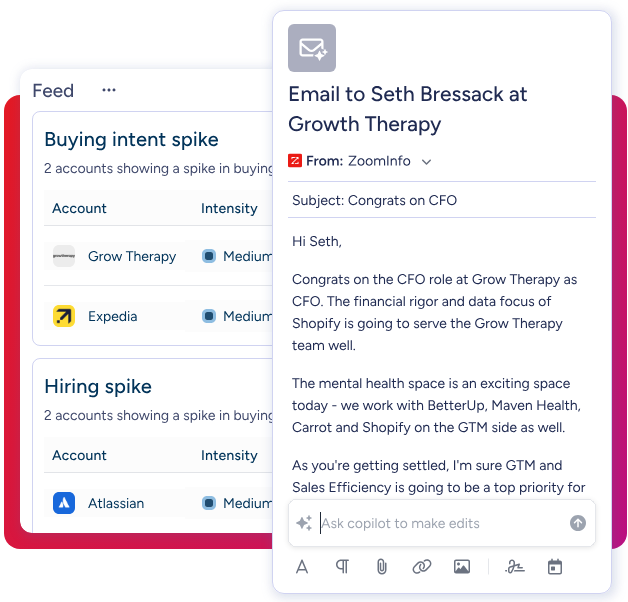
GTM Workspace is the seller's workspace: a single interface where prioritized accounts, AI-drafted outreach, deal intelligence, and CRM updates converge without toggling between tools. AI agents handle account research, outreach generation, signal monitoring, and CRM field updates. The Action Feed delivers a live stream of in-market buyers matched to target criteria, with pre-drafted actions on every signal.
Source: ZoomInfo
GTM Studio gives marketers, RevOps, and GTM engineers a builder for designing, enriching, and activating go-to-market plays. Audiences can be defined in natural language. Pre-built GTM plays (inbound acceleration, champion tracking, competitive displacement) launch in one click. Plays run continuously and get smarter as prospects respond. Expansion plays that used to take 3 weeks now launch in 30 minutes.
Both front-ends draw from the same GTM Context Graph, so a buying signal one team detects is immediately actionable by every other team.
For teams building beyond ZoomInfo's own products, APIs and MCP expose the same intelligence to any custom agent, internal tool, or partner platform. GTM Workspace deploys in weeks, not months, and early adopters report 23% larger pipelines, nearly 60% more meetings per week, and first-to-engage status in over half of target accounts.
BDO Canada activated ZoomInfo data within internal systems. Their Senior Marketing Intelligence Analyst noted: "The plug-and-play aspect of the API means I can integrate it very easily into any process and get information at a moment's notice," achieving an 87% reduction in time spent on data dashboard updates. (BDO Canada)
Flexible Entry Points: ZoomInfo offers a permanent free tier, a 7-day trial, and consumption-based paid plans.
ZoomInfo's pricing contrasts with Callbox's $15K+ monthly commitment.
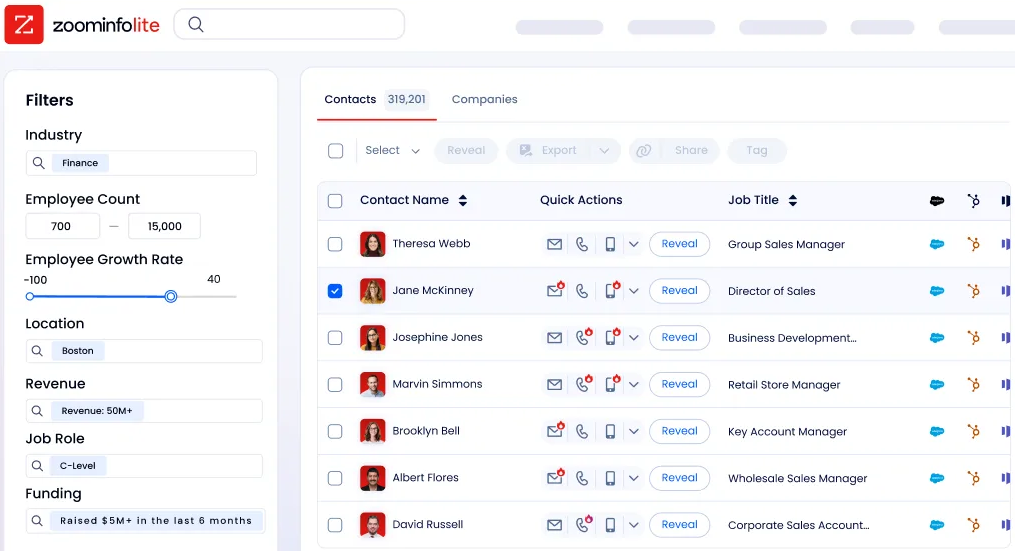
ZoomInfo Lite is a permanent free tier (not a trial) that includes access to ZoomInfo's B2B database, 10 monthly export credits, individual and company searches, a Chrome extension, and WebSights Lite for up to 10 website visitor reveals per day. A separate 7-day free trial provides broader access to core features with no credit card required.
Source: ZoomInfo
Paid plans use consumption-based pricing (credits, seats, and feature access) custom-quoted to each customer's needs. Three product lines (Sales, Marketing, and Operations) each offer tiered plans (Professional, Advanced, Enterprise) that unlock progressively more capabilities like intent signals, AI features, and advanced integrations. API access is included in all relevant plans.
ZoomInfo does not publish dollar amounts for paid tiers, so a direct cost comparison with Callbox requires a sales consultation.
But the economic model differs structurally: instead of paying for a team's time, you pay for access to data and intelligence that your existing team uses to generate pipeline. That investment compounds as your team builds knowledge about your buyers.
Callbox or ZoomInfo: Comparison Summary
Aspect | Callbox | ZoomInfo |
|---|---|---|
Approach | Outsourced agency (Callbox does the work for you) | Self-serve platform (your team does the work with AI and data) |
Core deliverable | Booked meetings and qualified leads | B2B data, intelligence, and AI-powered GTM tools |
Data access | Callbox controls the data; clients see results | Direct access to 500M contacts, 100M companies |
Outreach channels | 7 channels managed by Callbox team | Multi-channel execution through GTM Workspace and partner integrations |
AI capabilities | Smart Engage AI (managed by Callbox) | GTM Context Graph, AI agents in Workspace and Studio |
Internal capability building | No (capability leaves when engagement ends) | Yes (your team builds expertise and institutional knowledge) |
Pricing model | $15,000–$30,000/month per Campaign Pod | Consumption-based, custom-quoted |
Free entry point | None (strategy consultation only) | ZoomInfo Lite (permanent free) and 7-day trial |
Performance-based pricing | Not available | Not applicable (platform, not service) |
Global data coverage | 60+ countries, 8 offices, 6 languages | 500M contacts globally, 34M+ company profiles outside NA |
CRM integration | HubSpot, Salesforce, Pipedrive via Smart Engage | 120+ integrations via App Marketplace; API and MCP access |
Analyst recognition | Clutch Top Lead Gen Company; G2 Grid Leader | Gartner MQ Leader (ABM); Forrester Wave Leader (Intent Data) |
Best for | Companies wanting managed pipeline generation | Companies wanting to own and scale their GTM capability |
Final Verdict
The choice between Callbox and ZoomInfo comes down to one question: do you want someone else to generate your pipeline, or do you want to build that capability within your own team?
Choose Callbox if you need a managed outbound operation and have the budget for it.
Callbox fits revenue teams that need pipeline generated by experienced professionals without building an internal SDR function. Its 20-year track record, enterprise client roster, and global delivery make it a credible partner for companies entering new markets, launching new product lines, or supplementing internal teams during growth periods.
The $15,000–$30,000 monthly investment makes economic sense when your average contract value justifies it and you need appointments on calendars within weeks, not months.
Choose ZoomInfo if you want to own the data, intelligence, and tools that drive your pipeline.
ZoomInfo fits go-to-market teams that see sales development as a core competency worth investing in directly. With a large B2B dataset, an intelligence layer that captures why deals move, and AI-powered workspaces for every GTM role, ZoomInfo gives your team the infrastructure to prospect, prioritize, and engage buyers on their own terms.
The capability compounds over time: your team learns what works for your buyers, your GTM Context Graph gets richer with every interaction, and the investment stays with your organization regardless of any vendor relationship.
Get started with ZoomInfo here.
Both approaches solve the same problem (filling the pipeline with qualified opportunities) through different means. Callbox trades budget for managed execution. ZoomInfo trades budget for owned capability. The right answer depends on which resource your organization values more, and which it wants to build.
Callbox FAQ
What is Callbox and what does it do?
Callbox is a B2B lead generation agency founded in 2004 that provides outsourced sales development services. The company handles the full outbound pipeline generation process: prospecting, multi-channel outreach across phone, email, LinkedIn, and other channels, lead qualification, and appointment setting. It operates through dedicated Campaign Pods staffed with SDRs, campaign managers, content specialists, data analysts, and quality assurance specialists.
How much does Callbox cost?
Callbox's pricing is subscription-based, structured around Campaign Pods at $15,000–$30,000 per month per pod. The FAQ section of their website indicates clients typically spend $20,000–$40,000 per quarter for lighter engagements. Pricing varies based on team size, supported languages, target regions, and data scope. Callbox does not offer performance-based pricing, pay-per-lead contracts, a free trial, or a free tier.
Does Callbox offer performance-based pricing?
No. Callbox does not offer performance-based or pay-per-lead contracts. All pricing is subscription-based and tied to resources allocated (team headcount, data scope, geographic reach) rather than outcome metrics like meetings booked or deals closed. Companies wanting risk-sharing arrangements tied to results will need to consider alternative models.
What industries does Callbox specialize in?
Callbox's primary verticals are Software, SaaS, Cloud, Cybersecurity, Fintech, and AI, though its case studies span manufacturing, healthcare, data centers, and financial services. The company has served over 15,000 companies across 35+ industries and 60+ countries. Its typical client has a high average contract value and a sales-led motion requiring qualified appointments with decision-makers.
How does Callbox compare to building an in-house SDR team?
Callbox claims an annual team cost of $120K versus $280K+ for in-house SDRs, with first leads delivered within 2 weeks versus a typical 3–4 month ramp for new hires.
However, an in-house team builds institutional knowledge and internal capability that persists regardless of vendor relationships. Platforms like ZoomInfo provide the data and AI tools to make an internal team effective without the agency dependency.
What data sources does Callbox use?
Callbox's Smart Engage platform runs waterfall enrichment through multiple data providers: ZoomInfo, Lusha, and Apollo as Tier 1 sources, followed by Clearbit, Cognism, and Hunter.io as Tier 2 sources. The company claims this process produces 95%+ contact data accuracy versus the 60–75% accuracy typical of single-source providers.
ZoomInfo itself is one of Callbox's primary data sources, which means teams using ZoomInfo directly access that same foundational data layer without the agency fee.
Does Callbox work outside of English-speaking markets?
Callbox supports six languages (English, Mandarin, Spanish, Portuguese, Vietnamese, and Cantonese) and operates offices across APAC, EMEA, LATAM, and North America.
However, the most consistent criticism in client reviews is underperformance in non-English-speaking markets, with clients noting that regional nuances and market-specific tactics need improvement. Companies targeting primarily non-English markets should evaluate regional results carefully during the sales process.
What is the difference between Callbox and ZoomInfo?
Callbox is an outsourced agency that generates pipeline on your behalf through managed teams and multi-channel outreach campaigns. ZoomInfo is a self-serve AI GTM platform that gives your team direct access to B2B data, intelligence, and tools to generate pipeline themselves.
The approaches address the same goal (building qualified pipeline) through different methods.
Callbox charges $15,000–$30,000 per month for a dedicated team that does the prospecting work. ZoomInfo offers a permanent free tier, a 7-day trial, and consumption-based pricing for a platform your own team uses to find, prioritize, and engage buyers. The choice depends on whether you want to outsource the work or build the capability in-house.
Related breakdowns to help you choose:
