
Choosing between Cirrus Insight vs. Yesware for your sales engagement often comes down to these five questions:
Do you need two-way Salesforce integration at every pricing tier, or is Salesforce sync something you'll upgrade to later?
Is your team standardized on one email client, or do you need coverage across both Gmail and Outlook?
Do you want modular pricing where you pick only the features you need, or a tiered plan that bundles everything together?
Are AI-powered meeting prep and CRM hygiene tools worth paying for now, or is basic email tracking sufficient?
Does your team know which accounts to prioritize, or do they need help figuring out who's worth contacting in the first place?
In short, here's what we recommend:
Cirrus Insight is built for Salesforce-dependent sales teams who want their CRM embedded in their inbox. Its Salesforce Sidebar surfaces contacts, opportunities, and pipeline data inside Gmail and Outlook without switching tabs. The modular pricing ($5-20/user/month per feature) lets teams start small, and newer AI features like Meeting AI and CRM AI automate pre-call research and pipeline hygiene. The tradeoff: Cirrus Insight works only with Salesforce, and some users report intermittent sidebar reliability issues.
Yesware is the lighter option for sales teams that want email tracking, templates, and multi-channel campaigns running inside their inbox within an hour. Its 60-second install and short learning curve make it easy to onboard entire teams quickly. Multi-channel campaigns combine automated emails with phone, LinkedIn, and custom task reminders. However, Salesforce integration is locked behind the Enterprise tier ($65-85/user/month), and the platform's tracking accuracy suffers when corporate firewalls trigger false open signals.
Both tools solve the same core problem: making sales reps more productive inside their email client. But they share a limitation. Neither can tell your team which accounts are in the market right now, which contacts in those accounts matter, or what message will move a deal forward. They optimize the execution of outreach, not the strategy behind it.
ZoomInfo is an AI-powered GTM platform built on a large data foundation: 500M contacts, 100M companies, 135M+ verified phone numbers, and 200M+ verified business emails. Its GTM Context Graph, which processes 1.5B+ data points daily, combines this data with your CRM records, conversation transcripts, and behavioral signals to reveal the full context of your accounts (not just what happened, but why, and which actions will move deals forward). Sellers access this intelligence through GTM Workspace, marketers and RevOps build plays in GTM Studio, and teams that want ZoomInfo's data in their own tools connect through the API and MCP. For teams that need more than inbox productivity, ZoomInfo provides the intelligence layer that makes every email, call, and meeting count.
If knowing which accounts to prioritize and what to say sounds like what your team needs, see how ZoomInfo's GTM Workspace works.
Cirrus Insight vs. Yesware vs. ZoomInfo at a glance
Cirrus Insight | Yesware | ZoomInfo | |
|---|---|---|---|
Primary focus | Salesforce-inbox integration | Inbox-native sales engagement | AI-powered GTM intelligence and execution |
Email clients | Gmail + Outlook | Gmail + Outlook | Works alongside any email client; native integrations |
CRM support | Salesforce only | Salesforce (Enterprise tier only) | Salesforce, HubSpot, Microsoft Dynamics |
B2B contact database | None | 100M+ contacts (add-on) | 500M contacts, 200M+ verified emails, 135M+ verified phones |
Buyer intent signals | Email-level tracking (opens, clicks) | Email-level tracking (opens, clicks) | Account-level intent from 210M IP-to-Org pairings |
AI capabilities | Meeting AI, CRM AI, live coaching | Emerging AI recommendations | GTM Context Graph, AI agents, GTM Workspace |
Scheduling | Smart Scheduler with lead routing | Meeting Scheduler with round robin | Website chat with real-time booking |
Pricing entry point | $5/user/month (single feature) | Free plan (limited); $15/user/month paid | ZoomInfo Lite (free); custom-quoted paid plans |
Free trial | 14-day, no credit card | 14-day, no credit card | 7-day free trial; permanent free Lite tier |
Both tools live in your inbox, but one goes deeper into Salesforce
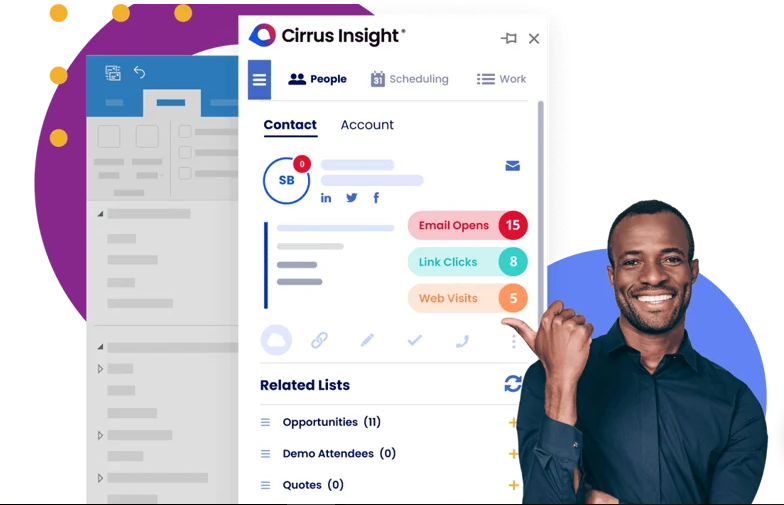
Cirrus Insight and Yesware both install as browser extensions or email add-ins. Both let you track emails, use templates, and schedule meetings from Gmail or Outlook. But beneath that surface similarity, their architectures diverge.
Cirrus Insight was founded in 2011 to bring Salesforce into the inbox. Every feature (from the Sidebar to Email Blast to Smart Scheduler) writes data directly to standard Salesforce objects, meaning all activity is queryable and reportable inside Salesforce.
The 2021 merger with ZynBit added full Outlook support, giving the combined platform coverage across both email ecosystems for Salesforce-centric teams. CRM Admins get 10+ consecutive years of Salesforce security review passes, SOC 2 certification, and support for all Salesforce editions including Experience Cloud.
Source: Cirrus Insight
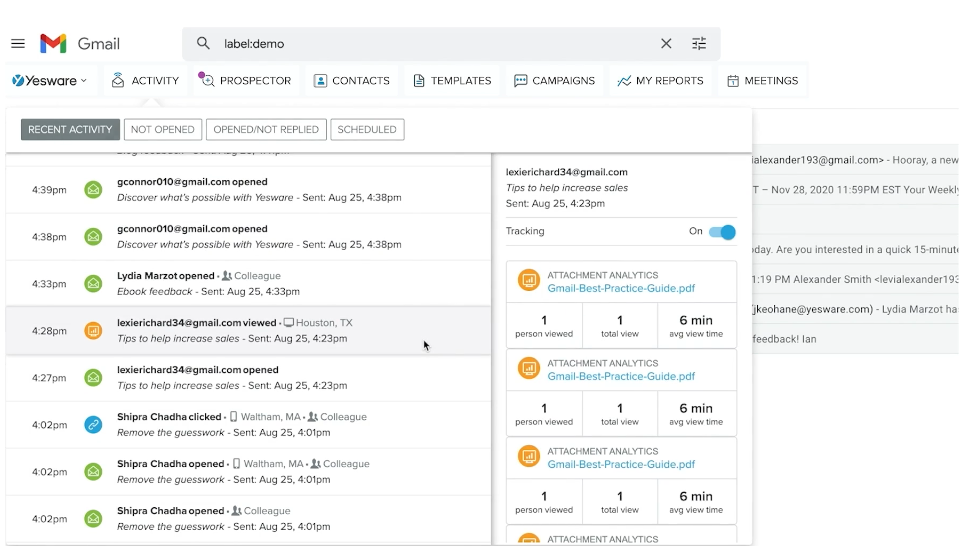
Yesware was founded in 2010 as an email tracking and productivity tool and created the SaaS sales engagement category.
But its Salesforce integration is available only on the Enterprise plan ($65-85/user/month). Teams on the Free, Pro, or Premium plans get no CRM sync at all. For organizations where Salesforce data accuracy matters, this gating can be a dealbreaker, or it can push Yesware's effective cost well above its sticker price.
Source: Yesware
The distinction matters for pipeline visibility. When Cirrus Insight automatically captures 100% of meetings, tasks, and emails to Salesforce at every tier, managers get reliable activity data without chasing reps for updates. Yesware delivers that same visibility, but only if you're paying for Enterprise.
ZoomInfo approaches CRM integration differently.
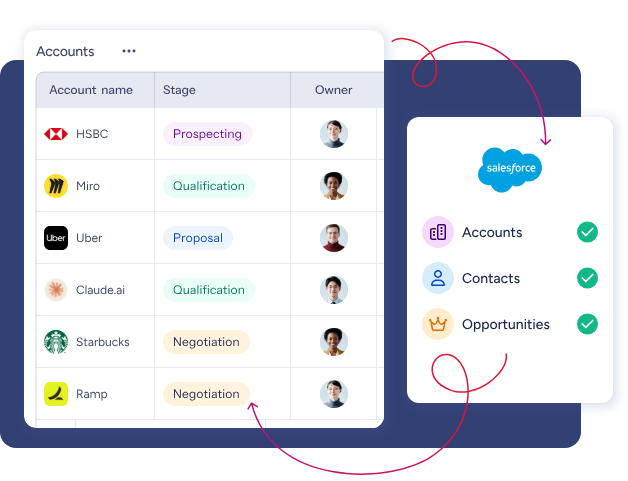
Rather than embedding inside an email client, ZoomInfo integrates natively with Salesforce, HubSpot, and Microsoft Dynamics, enriching CRM records with verified contact data, company intelligence, and buying signals. The value isn't in logging emails; it's in ensuring the contacts and accounts in your CRM are accurate, complete, and prioritized by actual buying intent.
Source: ZoomInfo
Email tracking tells you what happened, not what to do about it
All three platforms track email engagement, but they use that data for different purposes.
Cirrus Insight's Buyer Signals ($10/user/month) tracks opens, link clicks, and replies, combining them into a 30-day rolling score per contact.
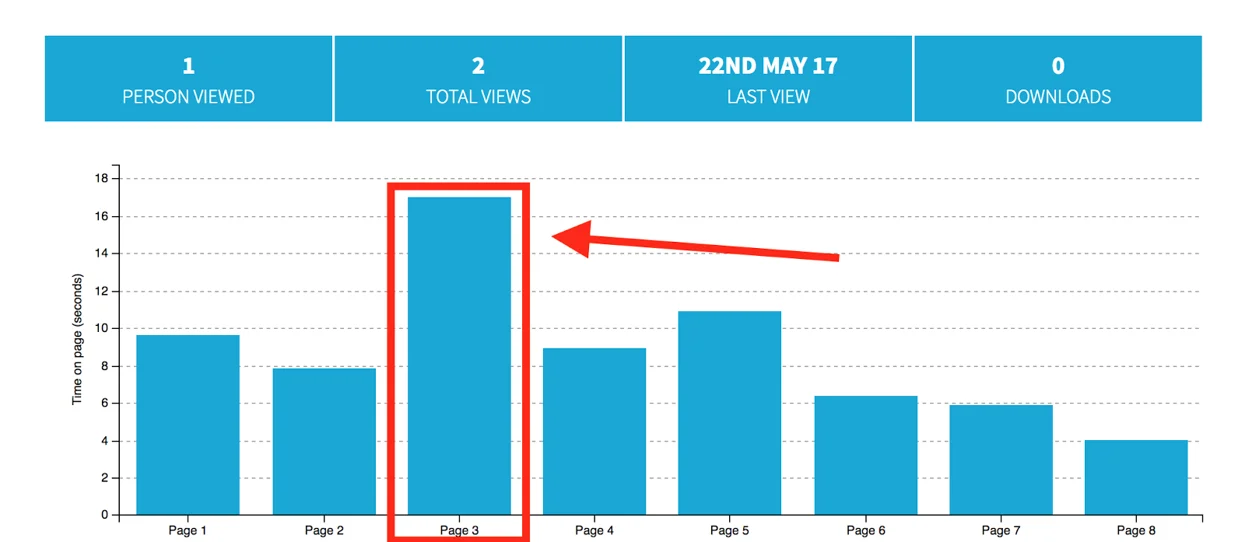
The score is designed for multi-contact deal cycles: when you're engaging several stakeholders at one account, it quantifies who's paying attention. Attachment Tracking goes further, showing which pages of a proposal a prospect read and who they forwarded it to. Cirrus even lets you swap a document with a new version after sending, useful when you catch a pricing error after hitting send.
Source: Cirrus Insight
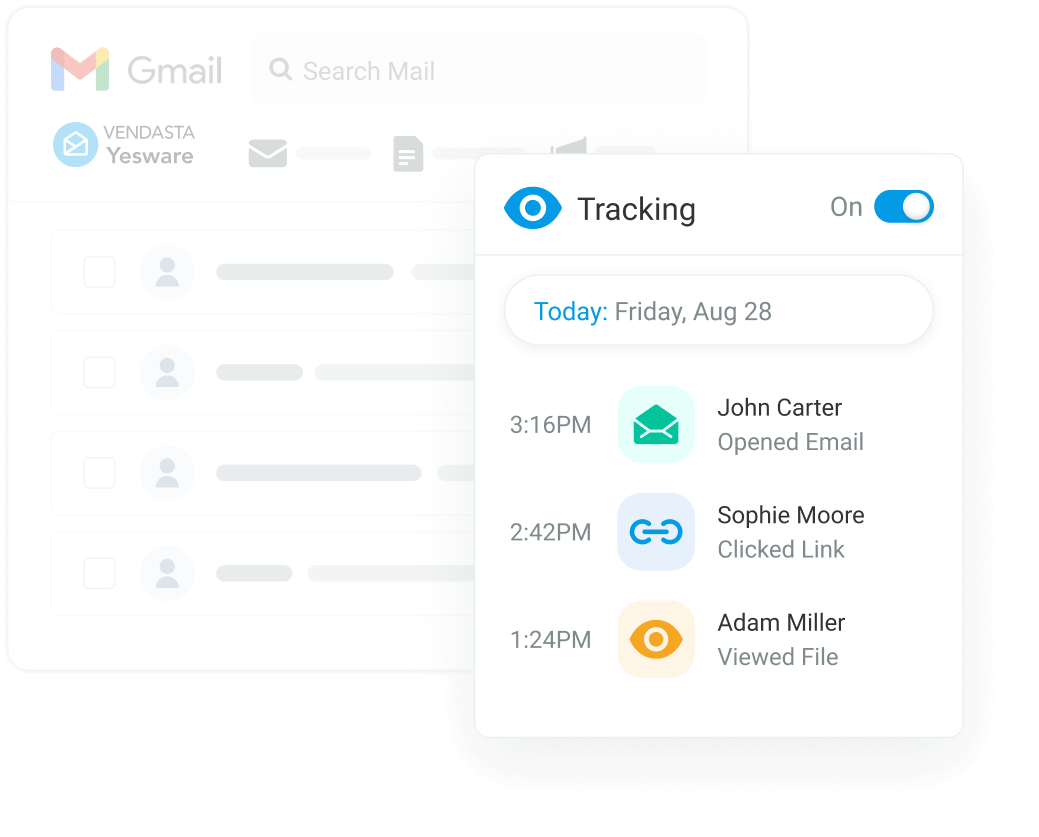
Yesware's email tracking uses a similar pixel-based approach, showing who opened emails, when, where, and on what device with real-time desktop notifications. The Recipient Engagement Report summarizes interaction history per contact, and template reporting shows which messages generate the highest open and reply rates. The analytics are useful for coaching and iteration.
Source: Yesware
Both tools share a limitation: false open tracking from corporate firewalls and email security tools that scan incoming emails and trigger tracking pixels. Cirrus Insight publicly documents the factors that skew signal data and provides mitigation guidance. Yesware users report this as a persistent pain point.
ZoomInfo operates at a different level of buyer intelligence.
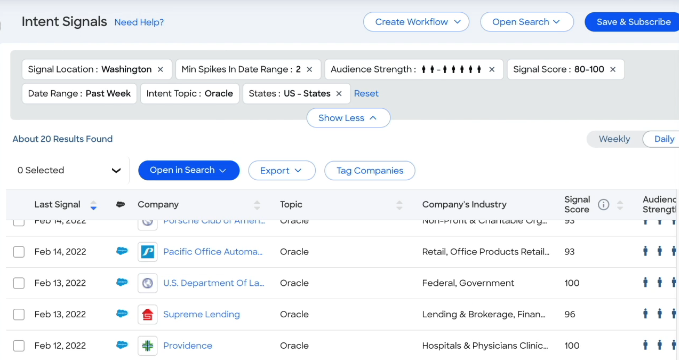
Instead of tracking whether one email was opened, ZoomInfo's Intent data tracks signals across 210 million IP-to-Organization pairings and 6 trillion+ new keyword-to-device pairings sourced monthly. This reveals which companies are researching topics related to your product before anyone on your team has sent a single email.
Guided Intent, exclusive to ZoomInfo, identifies the topics historically correlated with your closed-won deals rather than requiring manual topic selection.
Source: ZoomInfo
The practical difference: Cirrus Insight and Yesware tell you a prospect opened your email. ZoomInfo tells you which companies are researching your category right now, which contacts in those companies are decision-makers, and what message is most likely to resonate based on patterns across thousands of similar deals.
Seismic's sales team attributed 39% of active pipeline to opportunities identified or influenced by ZoomInfo signals, while boosting productivity by 54%. As Chief Business Officer Toby Carrington put it: "That combination of our internal CRM data, external signals, and AI that's given all that context has helped us craft very specific account- and persona-based messages. And people have responded to them right away." (Seismic Case Study)
Scheduling features reveal different ambitions
Meeting scheduling is where Cirrus Insight's investment in Salesforce depth shows most clearly.
Cirrus Insight's Smart Scheduler ($20/user/month) goes beyond personal calendar sharing.
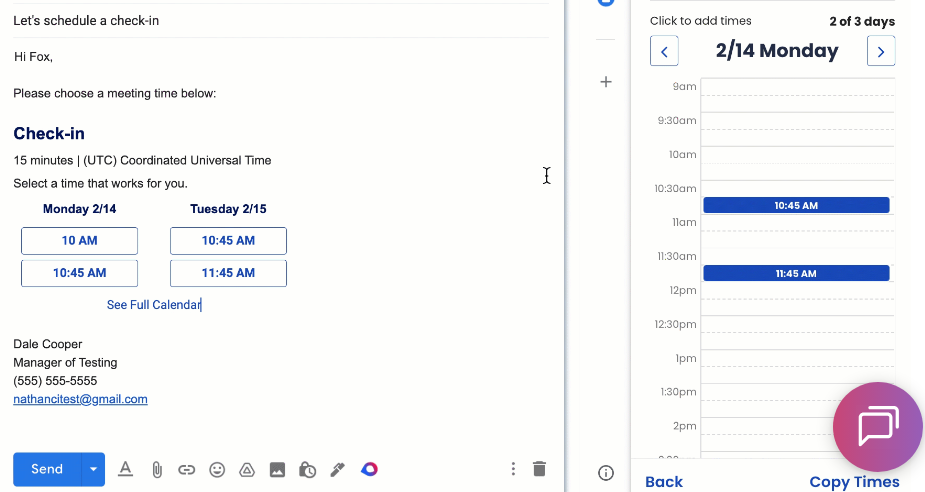
It is a lead routing engine that distributes meetings across up to 50 team members using three algorithms: Utilization (even distribution by booking count), Customer Availability (scheduling based on open slots), and Match Maker (routes based on criteria like territory or company size via Custom Attributes forms).
Every booked meeting auto-creates a Salesforce Key Interaction with UTM attribution data, giving marketing full attribution without middleware. The individual Calendar Scheduling tier ($7/user/month) handles one-to-one booking with team availability views.
Source: Cirrus Insight
Yesware's Meeting Scheduler covers the basics well: personalized booking links, custom meeting types, Zoom and Microsoft Teams integration, and the ability to add colleagues to meetings so their availability is considered.
Enterprise users get Round Robin functionality for up to 15 team members. It is straightforward and functional, but it lacks the Salesforce-native attribution and multi-criteria routing that Cirrus Insight offers.
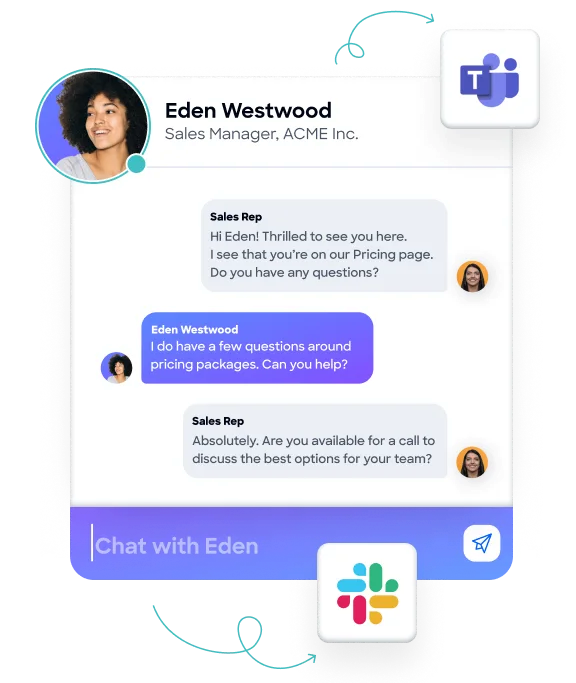
ZoomInfo's scheduling capability comes through Website Chat, which identifies visiting companies using ZoomInfo's data before the visitor self-identifies, then routes conversations based on company profile and intent signals.
It takes a different approach, converting anonymous website traffic into booked meetings with the right rep based on account intelligence rather than calendar availability alone.
Source: ZoomInfo
Prospecting data is where the three diverge most
This is the comparison that matters most for teams evaluating their full sales stack.
Cirrus Insight has no prospecting database. It is a workflow and productivity tool that assumes you already have contacts in Salesforce. If your CRM is well-populated, that's fine. If not, you need another source.
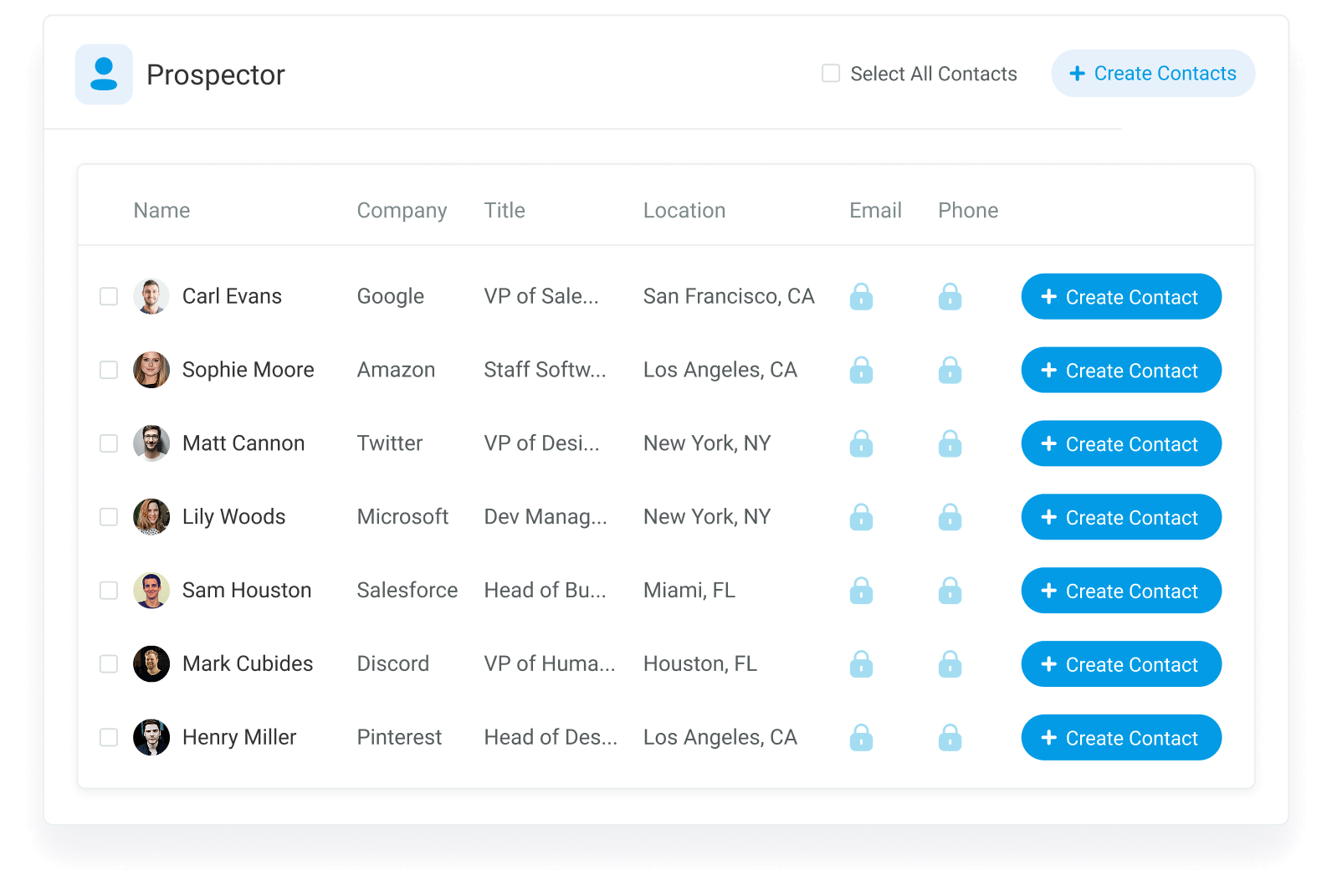
Yesware's Prospector provides access to a database of 100+ million B2B contacts with filters for job title, seniority, location, company size, and industry. It is a useful add-on for finding new contacts, with GDPR and CCPA compliant profiles. But it functions as a supplementary feature with credit-based pricing, not the core of the platform.
Source: Yesware
ZoomInfo's data operates at a different scale.
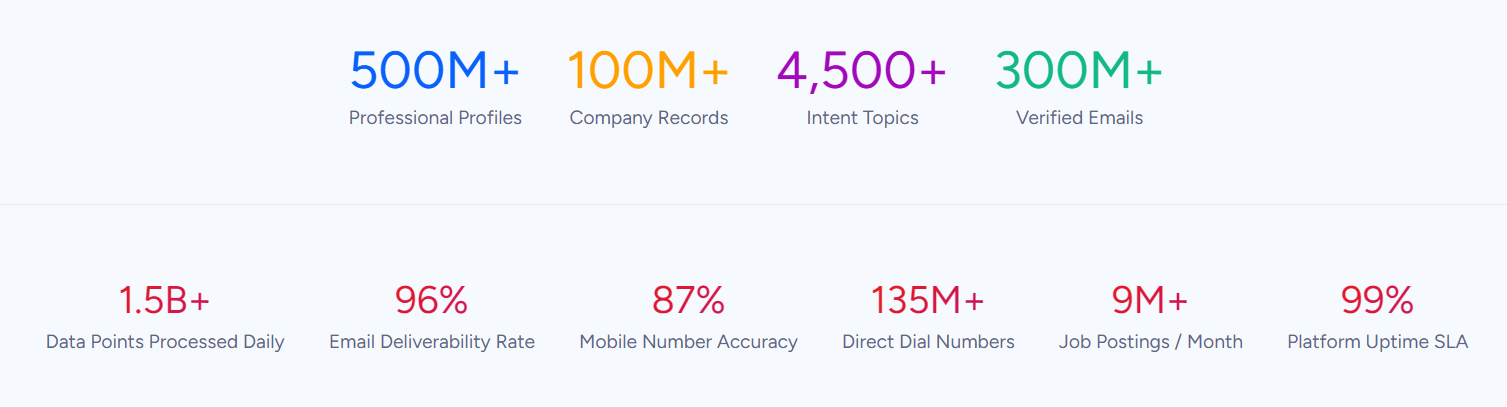
The platform covers 500M contacts, 100M companies, 135M+ verified phone numbers, 120M direct-dial phone numbers, and 200M+ verified business email addresses. 300+ human researchers back a multi-source verification pipeline that reaches up to 95% accuracy on first-party data.
In a Fortune 500 competitive RFP analyzing 25 million contacts across vendors, an independent consultant concluded that "no other competitor came even close."
Source: ZoomInfo
Beyond contact data, ZoomInfo provides company attributes, org charts, and technographics tracking 30,000+ technologies across 200+ categories, plus buyer intent signals that surface which accounts are in-market. The GTM Context Graph then combines all of this with your CRM data and conversation intelligence to surface not just who to contact, but why they're worth contacting right now.
For sales teams, the practical impact is direct: when the phone number actually rings and the email actually lands, reps spend their time selling instead of researching. When intent data shows which accounts are researching your category, reps focus on ready buyers instead of cold outreach to uninterested companies.
Vensure scaled prospecting with ZoomInfo's data, with VP of Revenue Operations William Kenimer noting: "ZoomInfo gives us the information we need to execute. We don't have to go through and spend our time digging. It's already there, so we can be three steps ahead." (Vensure Case Study)
AI capabilities are headed in different directions
Cirrus Insight has made the more aggressive AI push of the two inbox tools.
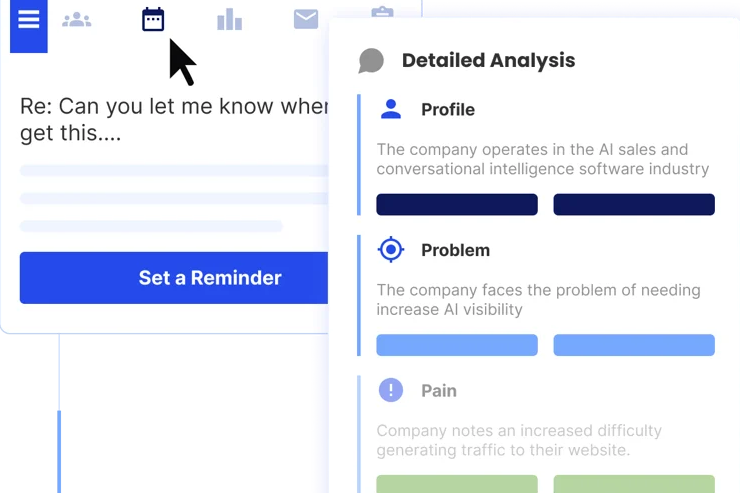
Meeting AI ($13/user/month) automatically researches every external meeting on a rep's calendar, pulling from web sources and Salesforce data to deliver a morning briefing with company intelligence, stakeholder profiles, and suggested talking points. The company cites that 82% of B2B decision-makers perceive sales reps as unprepared and claims Meeting AI delivers a 75% reduction in prep time.
CRM AI operates in the background, queuing up Salesforce opportunity updates for one-tap approval, reducing pipeline maintenance to a single confirmation. Conversation Intelligence adds real-time transcription and live coaching during calls, with the platform citing a 40% increase in close rate when using meeting intelligence software.
Source: Cirrus Insight
Yesware's AI investment is earlier-stage. The platform is building toward AI-powered recommendations for who to follow up with, when to send, and which content is most likely to convert. A useful direction, but the capabilities are not yet comparable to what Cirrus Insight ships today.
ZoomInfo's AI operates at a different scale.
The GTM Context Graph processes 1.5B+ data points daily, combining ZoomInfo's B2B data with customer CRM records, conversation intelligence, and behavioral signals into a single intelligence layer.
Where Cirrus Insight's Meeting AI researches one upcoming call, ZoomInfo's GTM Workspace provides AI-generated account briefs, deal context, and outreach drafts across every account in a seller's book of business, informed by patterns across thousands of similar deals. The AI agents inside Workspace answer three questions for every rep: who to contact, when to engage, and what to say.
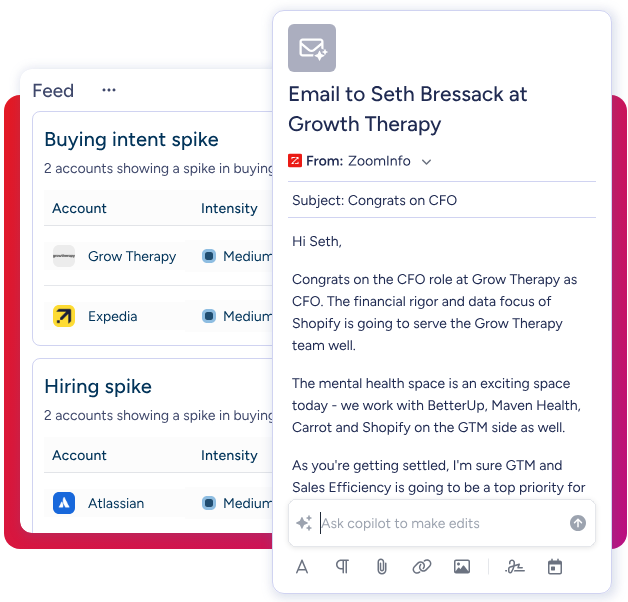
Source: ZoomInfo
The difference: Cirrus Insight's AI helps a rep prepare for a meeting they already booked. ZoomInfo's AI helps them identify which meetings they should be booking, with whom, and why those accounts are likely to convert based on behavioral evidence.
Spekit found that opportunities at higher-scoring accounts were 43% more likely to turn into qualified pipeline and moved 58% faster through qualification. RevOps Manager Ben Perceval noted: "Anything that minimizes our team's need to switch contexts is beneficial. ZoomInfo offers a unified view, eliminating the need to navigate between systems." (Spekit Case Study)
Multi-channel outreach: campaigns vs. sequences vs. plays
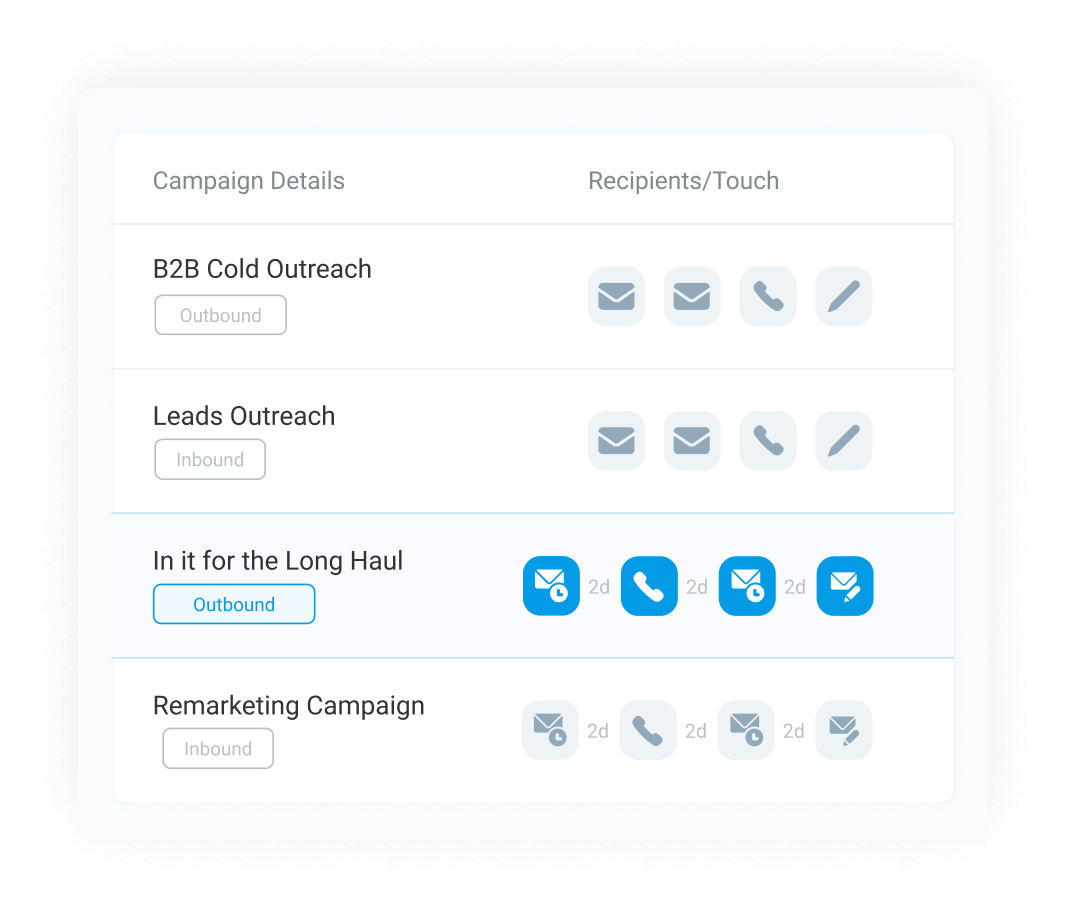
Yesware has the stronger multi-channel campaign capability of the two inbox tools.
Its Campaigns feature supports automated emails, manual emails, phone call reminders, LinkedIn InMails, custom tasks, and Sales Navigator connection requests in a single sequence. Emails send from your own inbox, not a third-party server, preserving deliverability. The system automatically removes recipients who reply or book meetings and includes out-of-office detection to prevent wasted touches.
For teams that live in their inbox and need structured follow-up sequences, it is well-designed.
Source: Yesware
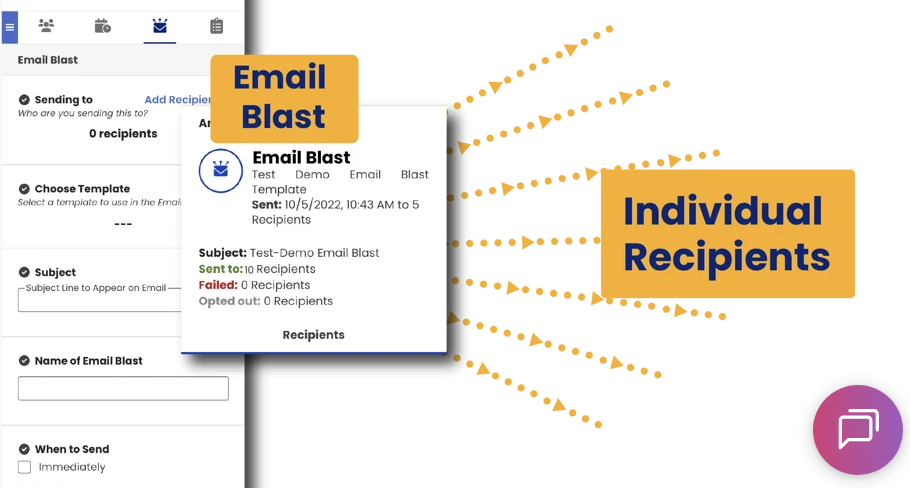
Cirrus Insight's outreach capability centers on Email Blast, which pulls recipient lists directly from Salesforce reports and sends personalized emails from the rep's own inbox using Salesforce merge fields.
The Salesforce integration is a real differentiator: pull lists from Salesforce, send, and sync results back with no CSV exports. But the platform is email-centric; it lacks native LinkedIn, SMS, or direct-dial integration for multi-channel sequences.
Source: Cirrus Insight
ZoomInfo's approach to outreach works at a higher level.
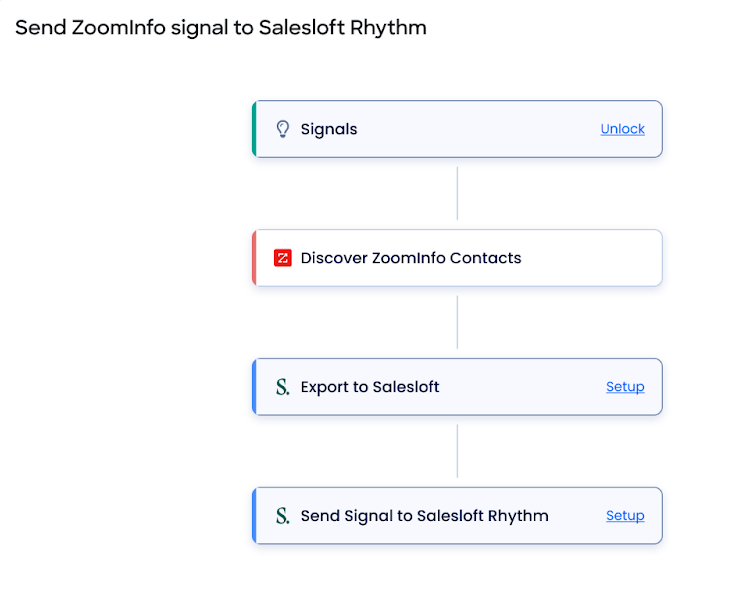
Through its partnership with Salesloft, ZoomInfo feeds buyer data and intent signals directly into multi-touch engagement sequences. GTM Studio takes this further, letting marketers and RevOps teams design, enrich, and activate GTM plays across email, calls, ads, and direct mail using natural language, launching expansion plays that used to take three weeks in 30 minutes. The plays run continuously and improve as prospects respond, with top-performing teams running 50+ plays per quarter.
Source: Salesloft
Pricing reflects different scopes
Cirrus Insight uses modular pricing where you pay only for the features you select:
Feature | Monthly Rate |
|---|---|
Salesforce Email Sync | $5/user/month |
Calendar Scheduling | $7/user/month |
Buyer Signals | $10/user/month |
Salesforce Sidebar | $11/user/month |
Salesforce Calendar Sync | $11/user/month |
Email Blast | $12/user/month |
Meeting AI | $13/user/month |
Smart Scheduler | $20/user/month |
A team of 10 users selecting three features pays roughly $368/month at annual billing. Annual commitments save 20%, with discounts up to 40% on three-year terms.
There's a 14-day free trial with no credit card required. Cancellation requires 30 days' notice before the renewal date via live chat. Usage-based features (Meeting Transcription, Live Coaching) are billed hourly on top.
Yesware uses tiered pricing:
Plan | Monthly | Annual |
|---|---|---|
Free | $0 (max 5 users, limited tracking) | N/A |
Pro | $19/seat/month | $15/seat/month |
Premium | $45/seat/month | $35/seat/month |
Enterprise | $85/seat/month | $65/seat/month |
Salesforce integration is Enterprise-only. The free plan caps tracking to emails sent within the last 24 hours and limits campaigns to 10 recipients per month. 14-day free trial with no credit card required. No mid-term downgrades and no refunds.
ZoomInfo uses custom-quoted, seat-and-credit-based pricing. Costs depend on users, credit volume, features, and contract length.
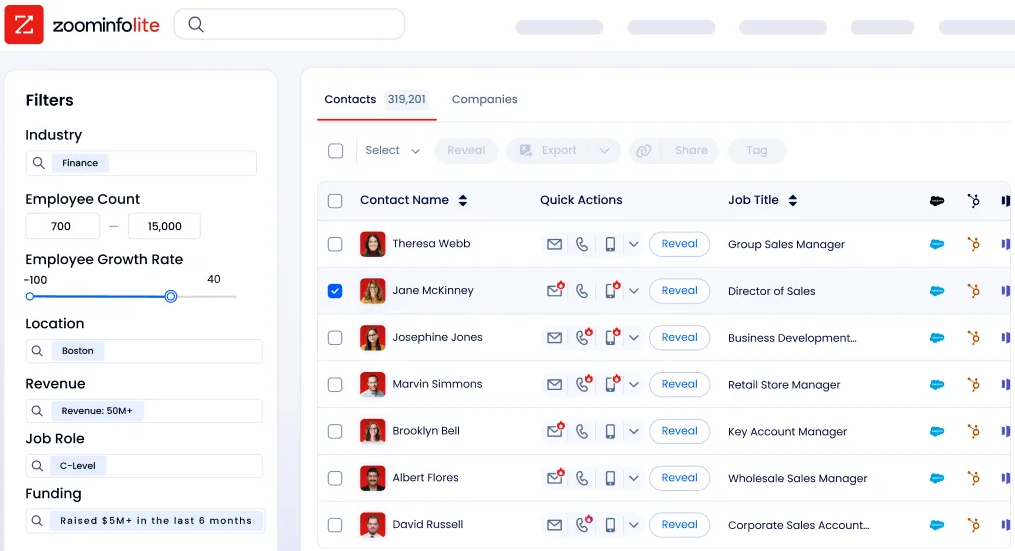
The scope is broader: you're paying for a B2B data platform, intent signals, AI execution, and conversation intelligence, not inbox features. ZoomInfo Lite provides permanent free access to the B2B database with 10 monthly export credits. A 7-day free trial is also available.
Source: ZoomInfo
Note: ZoomInfo is transitioning toward a consumption-based pricing model.
Comparing prices across these three is difficult because they solve different problems at different scales.
A team paying $65/user/month for Yesware Enterprise to get Salesforce sync might find that Cirrus Insight delivers deeper Salesforce integration for less. A team considering either tool might find that ZoomInfo's investment in data and intelligence pays for itself by improving the quality of every outreach action, regardless of which inbox tool executes it.
Cirrus Insight vs. Yesware vs. ZoomInfo: Which should you choose?
The right tool depends on what's actually limiting your sales team.
Choose Cirrus Insight if:
Your team runs on Salesforce and needs two-way CRM integration at every price point
CRM data accuracy (activity logging, pipeline reporting, native Salesforce reporting) is a priority
You want modular pricing where you pay only for the features your team uses
AI-powered meeting prep and automated CRM hygiene appeal to your workflow
Your team works across both Gmail and Outlook
Choose Yesware if:
You need a sales engagement tool your team can adopt in under an hour
Multi-channel campaigns with email, phone, LinkedIn, and custom tasks are core to your outreach process
Your budget is limited and you want a functional free plan to start with
Salesforce integration isn't required yet, or you're willing to pay Enterprise pricing for it
Ease of setup matters more than depth of CRM integration
Choose ZoomInfo if:
Your team needs to know which accounts are in-market before they start outreach
Accurate, verified B2B contact data (direct dials, emails, org charts) is the foundation of your prospecting
You want AI that doesn't just track engagement but understands deal context and recommends next actions
You need a platform that works across Salesforce, HubSpot, and Dynamics, not locked to one CRM
You're ready to move from inbox-level productivity to intelligence-driven go-to-market execution
See how ZoomInfo's GTM Workspace transforms sales execution.
Cirrus Insight and Yesware both do what they promise: making sales reps faster and more organized inside their email client. For teams whose bottleneck is inbox workflow, either tool delivers clear value.
But for teams whose real challenge is knowing which accounts to pursue, which contacts to reach, and what message will move a deal forward, ZoomInfo provides the intelligence layer that makes every downstream action more effective, whether that action happens in an inbox tool, a CRM, or ZoomInfo's own GTM Workspace.
Cirrus Insight vs. Yesware vs. ZoomInfo FAQ
What is the core difference between Cirrus Insight, Yesware, and ZoomInfo?
Cirrus Insight is a Salesforce-native productivity tool that embeds CRM data inside Gmail and Outlook, letting reps log activity, schedule meetings, and manage pipeline without leaving their inbox.
Yesware is a sales engagement platform focused on email tracking, templates, and multi-channel campaigns with fast setup and a short learning curve.
ZoomInfo is an AI-powered GTM platform providing 500M contacts, buyer intent signals, and AI execution, solving the upstream problem of knowing who to contact and when.
Which platform is best for Salesforce integration?
Cirrus Insight offers the deepest Salesforce integration, writing data to standard Salesforce objects at every pricing tier and supporting all Salesforce editions. It has passed the Salesforce security review for 10+ consecutive years.
Yesware restricts Salesforce integration to its Enterprise plan at $65-85/user/month. ZoomInfo integrates with Salesforce, HubSpot, and Microsoft Dynamics, focusing on enriching CRM records with verified contact data, company intelligence, and buying signals rather than logging inbox activity.
Which platform is cheapest to get started with?
Yesware has the lowest entry point with a permanent free plan, though it's limited to 5 users and 24-hour tracking windows. Cirrus Insight starts at $5/user/month for a single feature (Salesforce Email Sync) with a 14-day free trial. ZoomInfo Lite offers permanent free access to its B2B database with 10 monthly export credits. All three provide no-credit-card-required trials for their full platforms.
Can I use ZoomInfo alongside Cirrus Insight or Yesware?
Yes. ZoomInfo operates at a different layer of the sales stack. You can use ZoomInfo for account intelligence, contact data, and intent signals, then execute outreach through Cirrus Insight or Yesware.
ZoomInfo's data can be exported to Salesforce, where Cirrus Insight picks it up for inbox-based workflow. ZoomInfo also integrates with sales engagement platforms like Salesloft for direct signal-to-sequence execution.
Which platform has the best email tracking?
Cirrus Insight and Yesware both track email opens, link clicks, and replies using pixel-based tracking. Cirrus Insight adds attachment tracking with page-level read analytics and forward detection. Both platforms are susceptible to false positives from corporate email security tools.
ZoomInfo tracks buyer intent at the account level across the web, revealing which companies are researching your category before any email is sent.
Which platform offers the best multi-channel sales campaigns?
Yesware has the stronger multi-channel campaign feature among the three, supporting automated emails, phone call reminders, LinkedIn touches, and custom tasks in a single sequence. Cirrus Insight's outreach is primarily email-based through its Email Blast feature, which integrates tightly with Salesforce reports.
ZoomInfo's GTM Studio enables multi-channel orchestration across email, calls, ads, and direct mail, triggered by buyer behavior and intent signals at the account level.
How do the AI features compare across all three platforms?
Cirrus Insight ships Meeting AI for automated pre-call research, CRM AI for one-tap pipeline hygiene, and live coaching during sales calls. Yesware is investing in AI recommendations for follow-up timing and content selection, though capabilities are still emerging.
ZoomInfo's GTM Context Graph processes 1.5 billion data points daily, powering AI agents that research accounts, draft personalized outreach, prioritize deals, and surface next-best actions based on patterns across thousands of similar deals.
Which platform is best for a team that doesn't use Salesforce?
Yesware works with Gmail and Outlook without any CRM requirement, making it accessible to teams without Salesforce. Cirrus Insight requires Salesforce and provides no value without it.
ZoomInfo integrates with Salesforce, HubSpot, and Microsoft Dynamics, and its data can be accessed via API or MCP in any tool. For teams on HubSpot or Dynamics, ZoomInfo is the only option among the three that provides both data intelligence and CRM integration.
