
Choosing between ClickFunnels and HubSpot often comes down to five questions:
Are you building a personal brand or info-product business, or running a B2B company with a sales team?
Do you need a funnel builder focused on conversions or a full CRM that tracks every customer interaction?
Is your priority selling one product fast, or managing relationships across hundreds of accounts?
Are you comfortable paying a flat monthly fee, or do you prefer modular pricing that scales with your team?
Do you already know who your buyers are, or do you need help finding them?
In short, here's what we recommend:
ClickFunnels is built for entrepreneurs, coaches, and course creators who sell online through direct-response marketing. Its funnel-first architecture walks visitors through a structured buying journey (landing page to checkout to upsell) without requiring technical skills. With over 1 million funnels created and 2,000+ users who've generated $1M+ through a single funnel, ClickFunnels has proven its model for solopreneurs and small teams selling digital products, courses, and coaching packages. But its CRM is basic, its integrations are limited, and its pricing ($81 to $248/month) can be steep for businesses that don't fit the funnel model.
HubSpot serves growing businesses that need marketing, sales, and customer service working from shared data. Its Smart CRM connects six product hubs, over 2,000 marketplace integrations, and an AI layer called Breeze into one platform. HubSpot's free tier makes it accessible to startups, while enterprise capabilities (custom objects, predictive lead scoring, AI agents) serve companies like eBay, DoorDash, and Reddit. The tradeoff is complexity: pricing scales quickly across seats, hubs, and mandatory onboarding fees, and the platform takes time to learn.
Both platforms help you reach and convert customers. But neither tells you who your best customers are. For B2B companies, knowing who to target, what they care about, and when they're ready to buy is the foundation every marketing and sales effort depends on.
ZoomInfo is a B2B data and go-to-market platform built on 500M contacts, 100M companies, 135M+ verified phone numbers, and 200M+ verified business email addresses. Its GTM Context Graph processes 1.5B+ data points daily, combining ZoomInfo's B2B data with your CRM records, conversation transcripts, and behavioral signals to reveal not just what happened in a deal, but why. That intelligence reaches your team through GTM Workspace for sellers, GTM Studio for marketers and RevOps, or through the API and MCP in any front-end. ZoomInfo integrates natively with HubSpot and works alongside any marketing platform.
If knowing who to target and when to engage them sounds like what's missing from your go-to-market strategy, see how ZoomInfo works.
ClickFunnels vs. HubSpot vs. ZoomInfo at a glance
ClickFunnels | HubSpot | ZoomInfo | |
|---|---|---|---|
Core purpose | Sales funnel builder for online selling | CRM + marketing/sales/service platform | B2B data intelligence and GTM execution |
CRM depth | Basic pipeline and contacts | Full-featured Smart CRM | Contact and company intelligence layer |
Email marketing | Included (50K to 1.2M/mo by plan) | Included (varies by tier) | Not an email sender |
AI capabilities | AI copy generation (1M to 10M words/mo) | Breeze AI agents across all hubs | GTM Context Graph + AI agents in Workspace |
Integrations | ~20 native + Zapier | 2,000+ marketplace apps | 172+ marketplace + API/MCP for any tool |
B2B contact data | None | Basic CRM enrichment | 500M contacts, 200M+ verified emails |
Buyer intent signals | None | Limited | |
Free plan | No (14-day trial + 30-day money-back) | Yes (permanent) | Yes (ZoomInfo Lite, permanent) |
Starting price | Custom (consumption-based) | ||
Best for | Solopreneurs, coaches, course creators | Scaling B2B and B2C businesses | B2B sales, marketing, and RevOps teams |
Funnel-first vs. CRM-first: two different philosophies
ClickFunnels and HubSpot start from opposite assumptions about how businesses should sell.
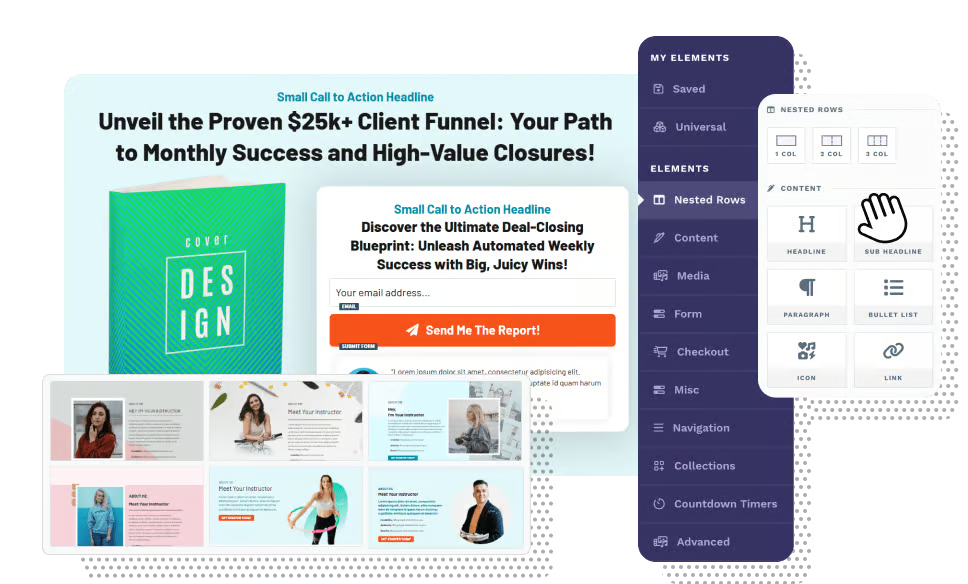
ClickFunnels treats every marketing effort as a funnel: a sequence of pages that moves a visitor from curiosity to purchase.
The platform assumes you know your offer and need the infrastructure to present it. You pick a template, customize it with the drag-and-drop editor, wire up an email sequence, and drive traffic.
Source: ClickFunnels
For a coach selling a $2,000 course or an ecommerce seller running a single-product campaign, this focus works. Every feature serves conversion.
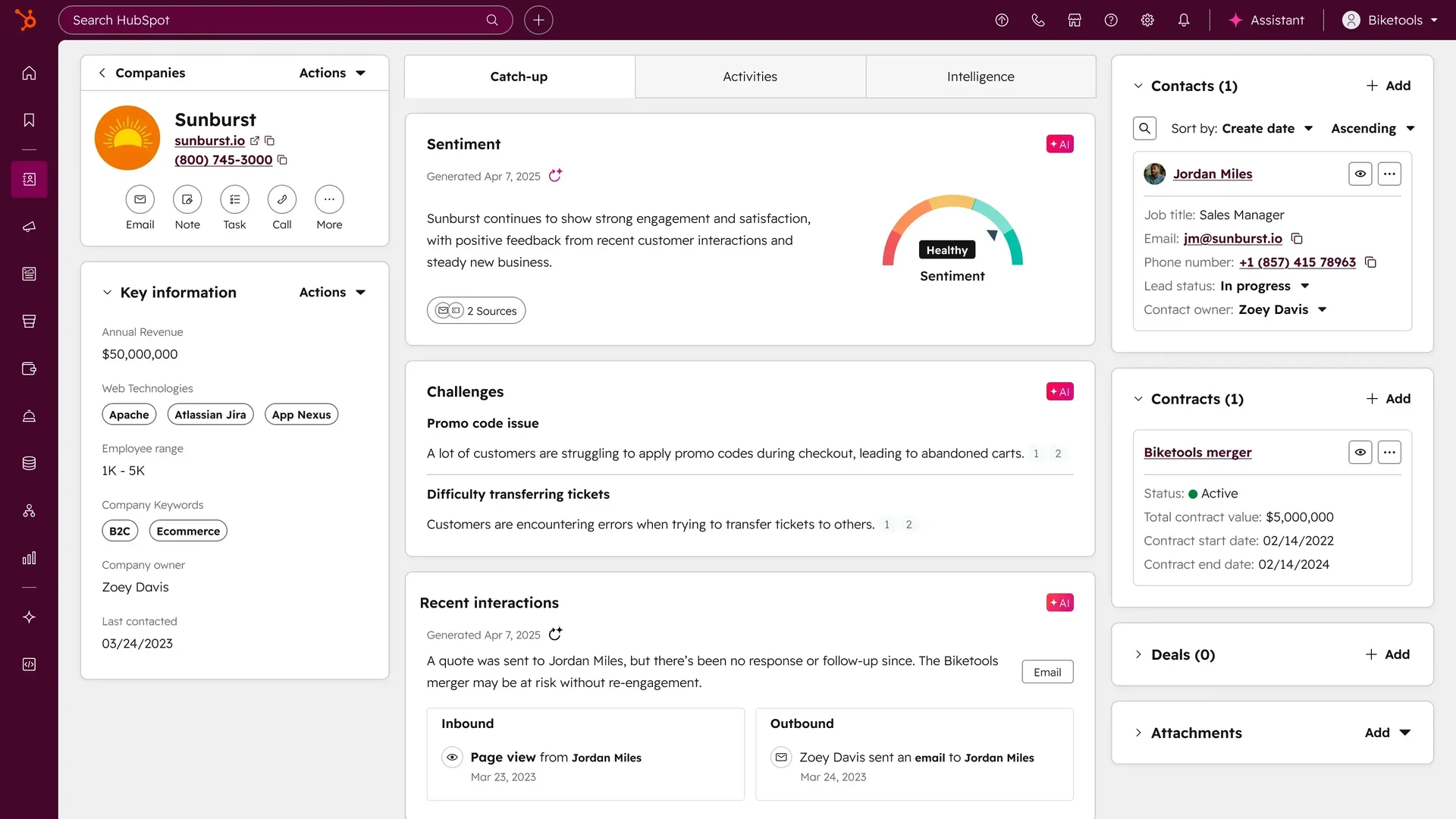
HubSpot treats every customer interaction as part of a longer relationship.
The Smart CRM records every form submission, email open, sales call, and support ticket in one contact record. Marketing Hub nurtures leads.
Source: HubSpot
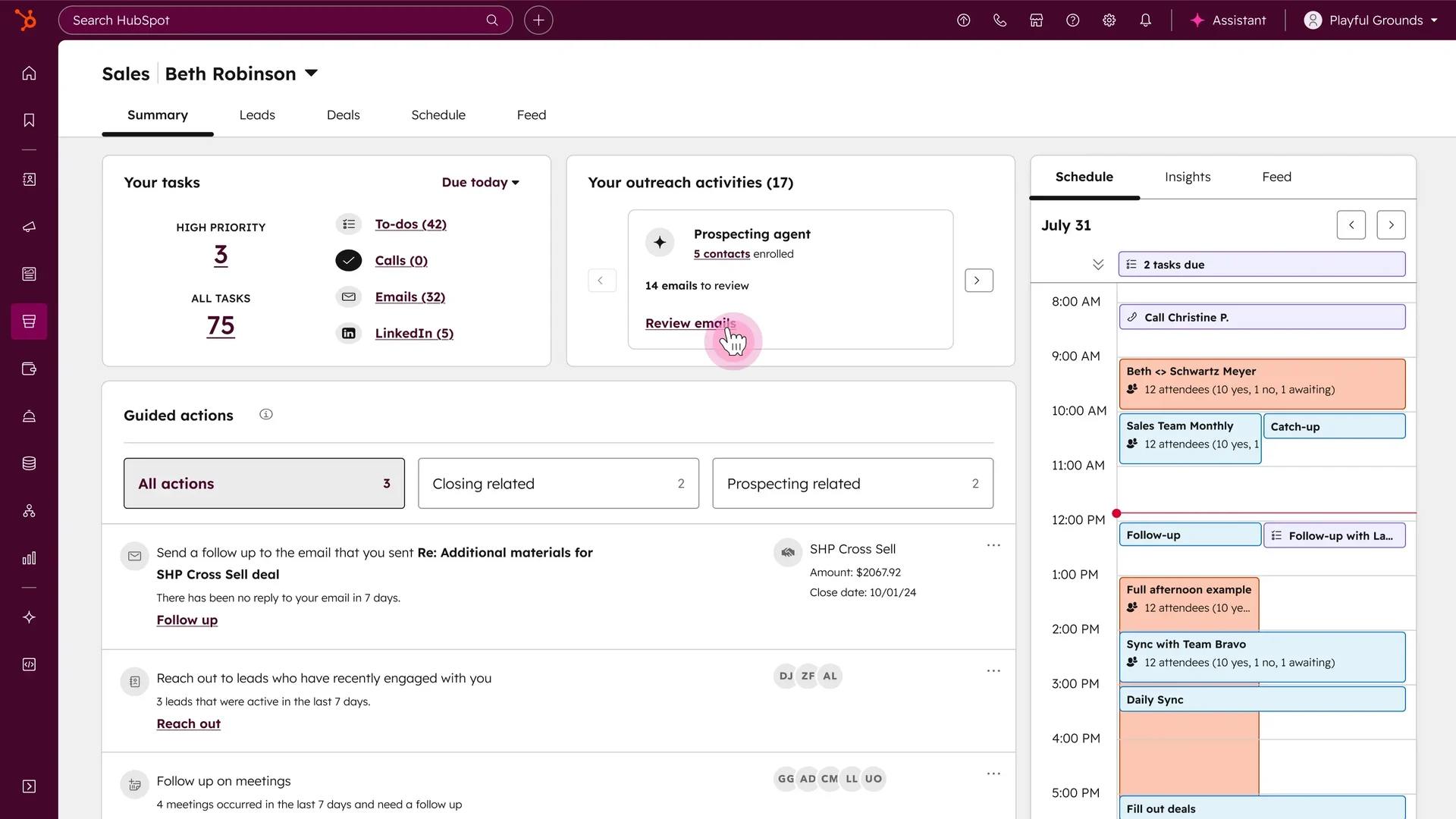
Sales Hub manages pipelines. Service Hub handles support. The platform assumes you're building a business that acquires customers and keeps them for years, not one that closes a single transaction.
Source: HubSpot
This split determines who should use each tool. If you sell info-products, coaching, or digital goods through targeted campaigns, ClickFunnels' funnel architecture removes friction you don't need. If you run a company with sales reps, multiple products, and ongoing customer relationships, HubSpot's CRM foundation gives you the infrastructure to coordinate across teams.
But for B2B companies, both platforms share a blind spot: neither helps you find the right prospects in the first place.
ClickFunnels wins at conversion-focused selling
ClickFunnels exists to move visitors through a buying sequence as efficiently as possible.
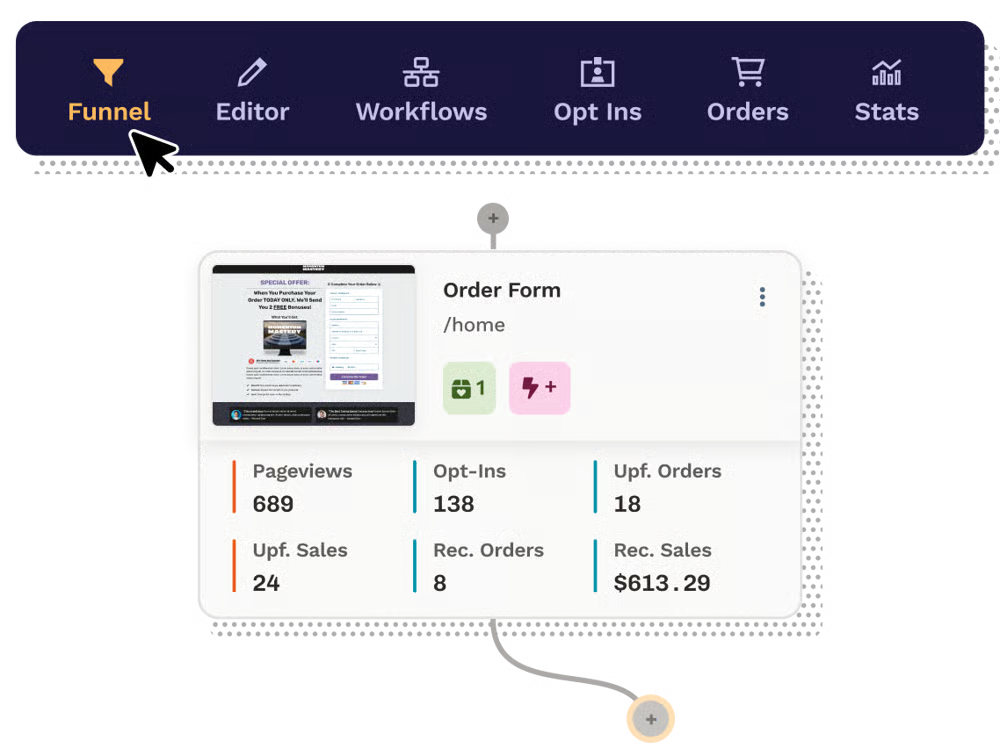
Its rebuilt funnel builder claims to be 300% faster than before, with step-level analytics (pageviews, opt-ins, orders, revenue) visible on the builder screen.
Source: ClickFunnels
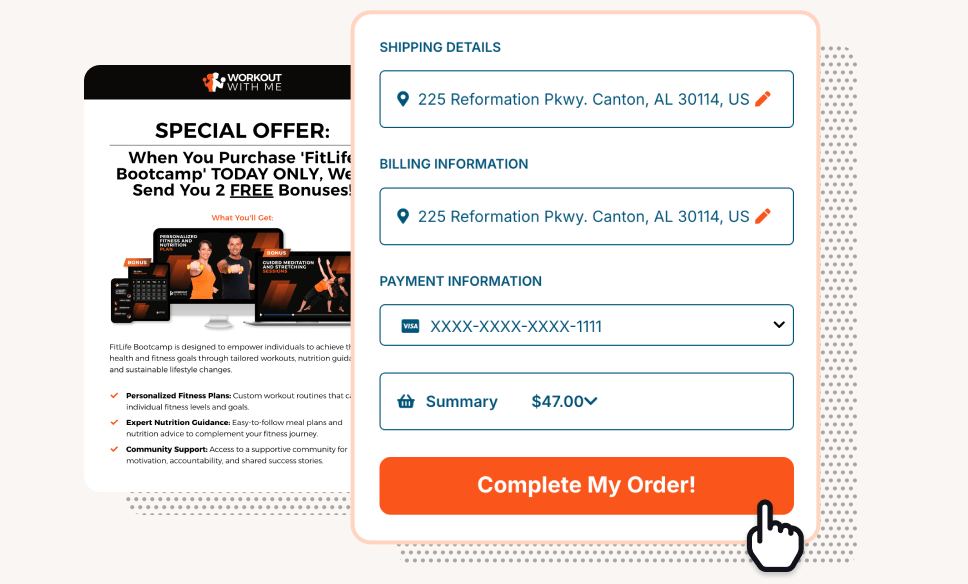
The platform includes upsells, downsells, and order bumps natively. Smart Checkout recognizes returning customers by email and auto-fills their payment information for one-click purchases.
Source: ClickFunnels
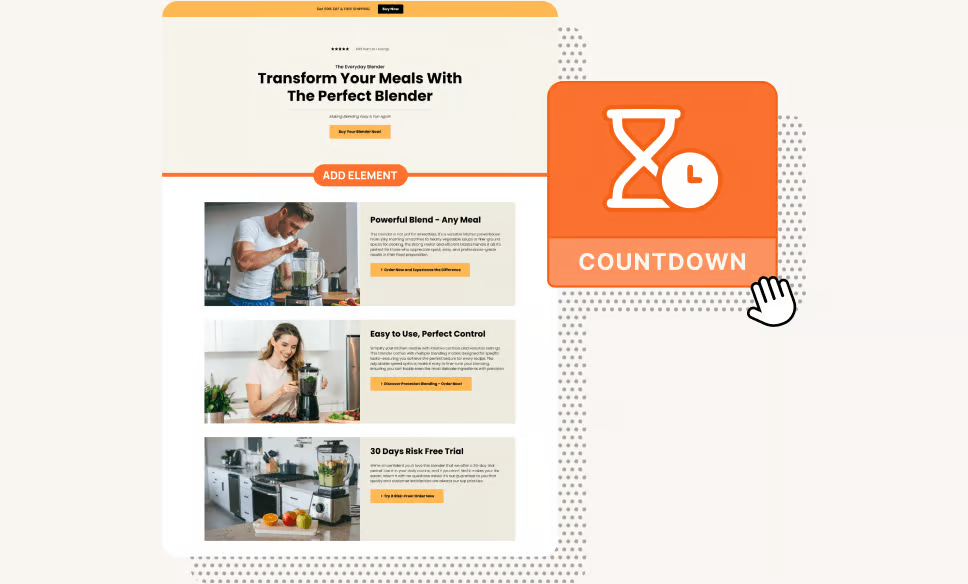
Countdown Funnels add urgency to limited-time offers. A/B testing covers funnel pages and email subject lines.
Source: ClickFunnels
For driving paid traffic to an offer and maximizing revenue per visitor, ClickFunnels is hard to beat. Its template library (lead funnels, product sales funnels, evergreen webinar funnels) gives experienced marketers a fast starting point.
The limitations appear when you step outside the funnel model. ClickFunnels' CRM (Opportunities) provides a basic visual pipeline, but it's lightweight compared to dedicated CRMs. Multi-touch sales cycles, complex deal stages, and team-based selling aren't its strength. The platform is designed for businesses where the funnel does the selling, not a sales team.

Source: ClickFunnels
HubSpot excels at managing the full customer lifecycle
HubSpot's advantage is breadth backed by a shared data layer.
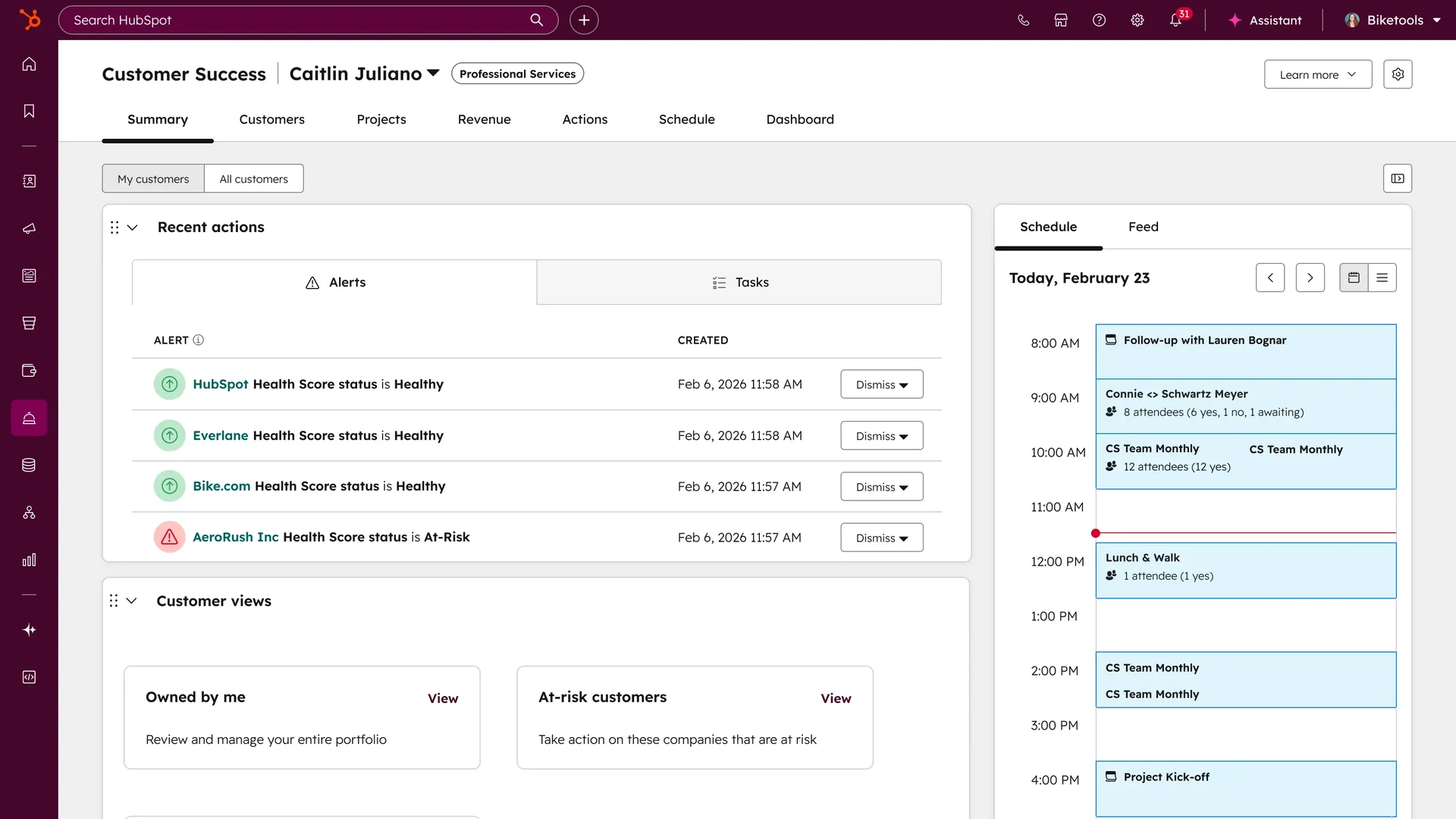
A lead captured by Marketing Hub flows into Sales Hub for pipeline management, then into Service Hub for post-sale support, with every interaction logged in one contact record.
Source: HubSpot
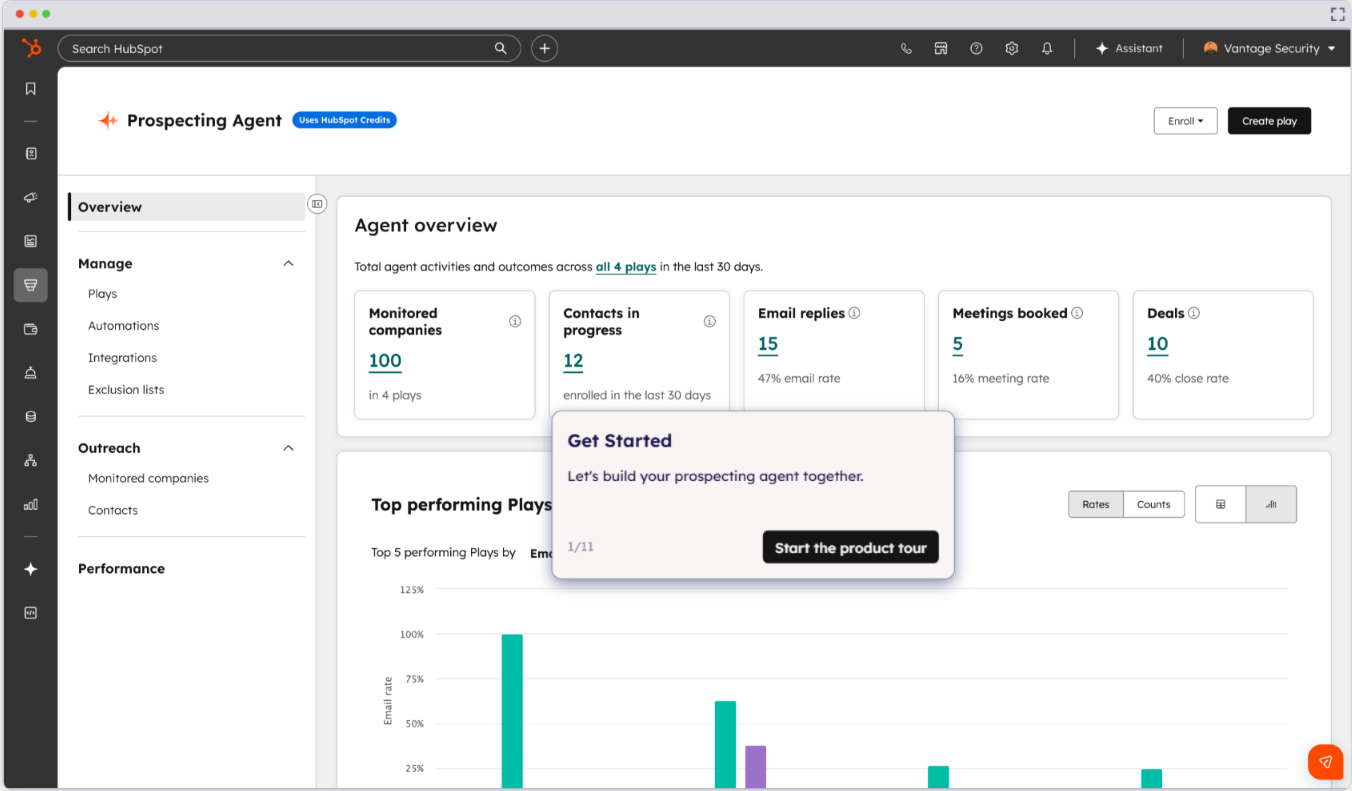
The Breeze Prospecting Agent monitors enrolled prospects for buying signals, drafts personalized outreach, and supports both autonomous and human-reviewed modes.
Source: HubSpot
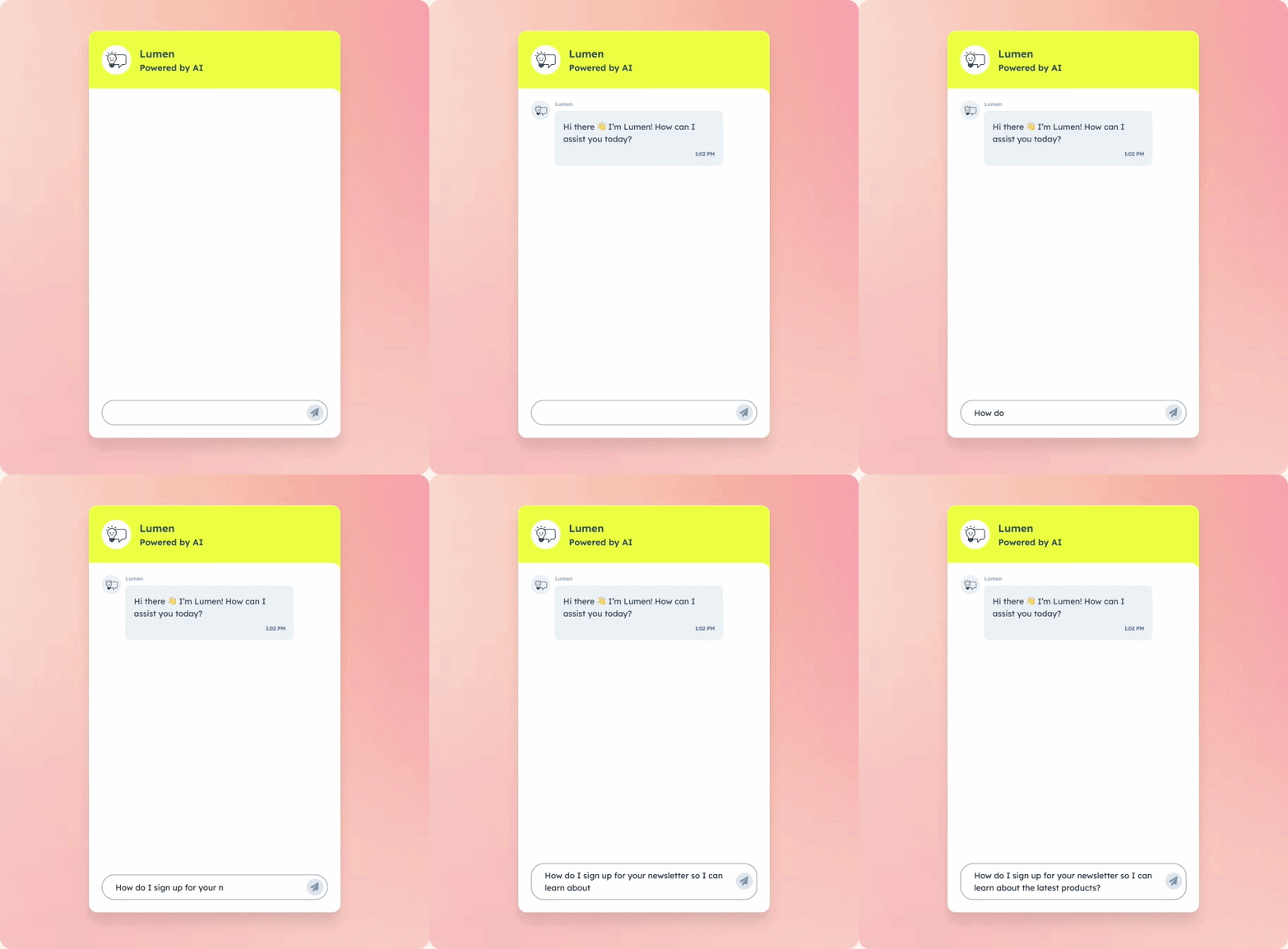
Marketing automation workflows handle multi-step nurture sequences triggered by contact behavior. The Breeze Customer Agent resolves customer inquiries across chat, email, WhatsApp, and Facebook Messenger.
Source: HubSpot
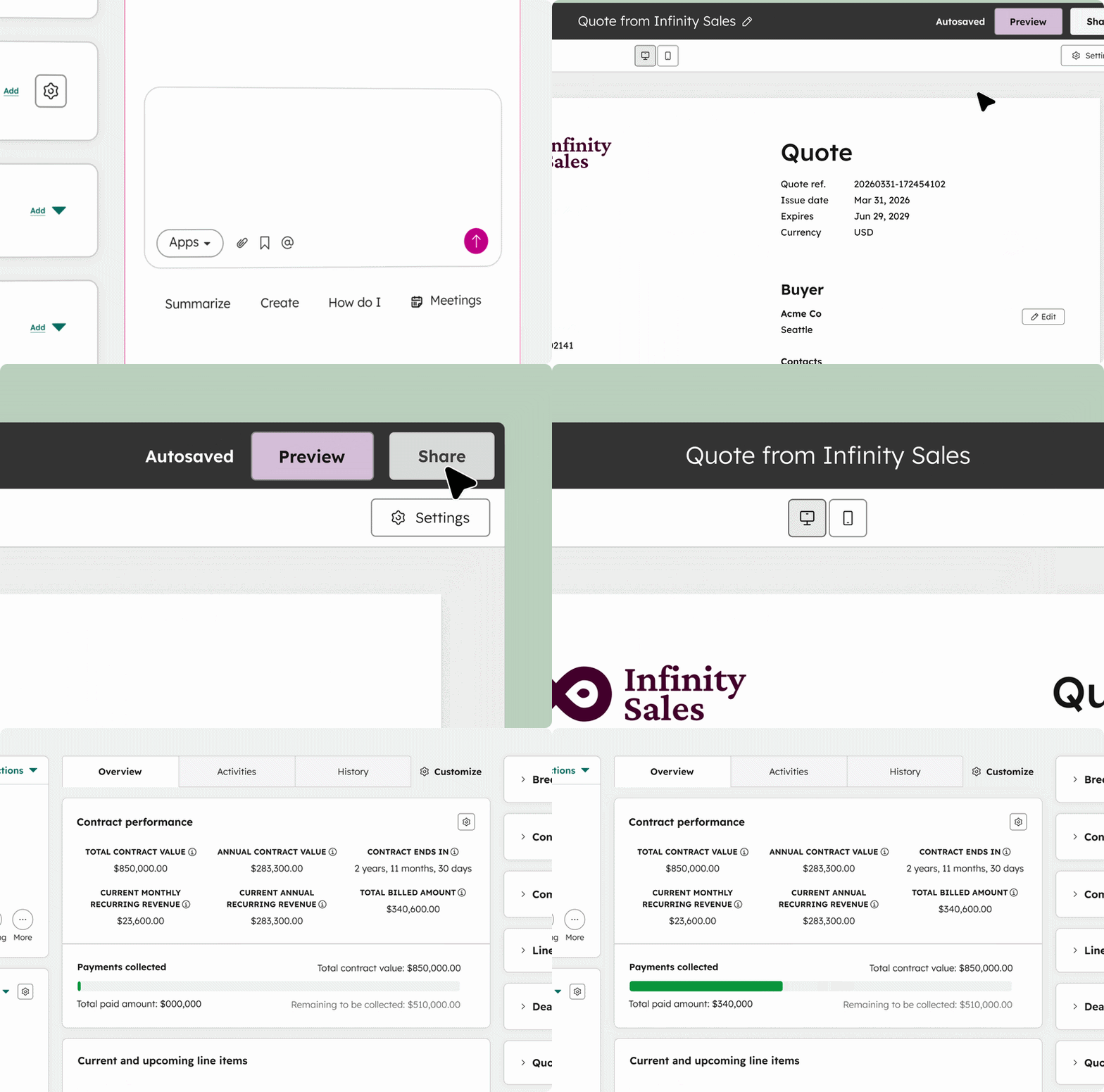
For content-driven businesses, Content Hub combines website building, AI content writing, SEO tools, and personalization in one package. Commerce Hub handles quotes, invoicing, and payment collection from deal records.
Source: HubSpot
The platform supports up to 15 million contacts, expandable to 50 million, with custom objects, field-level permissions, and sandbox environments at the Enterprise tier.
Where HubSpot falls short is data about prospects outside your existing database. The CRM records interactions with people who've already engaged with your business. It tells you nothing about the thousands of companies that match your ideal customer profile but haven't found you yet.
Neither platform solves the B2B prospecting problem
Here's the gap most comparisons between ClickFunnels and HubSpot miss: both platforms assume you've already figured out who to target.
ClickFunnels assumes you'll drive traffic through ads, content, or affiliates and convert whoever shows up. HubSpot assumes leads will find you through inbound marketing or that your sales team already has a prospect list. Both are execution platforms. Neither is an intelligence platform.
For B2B companies, this matters. You're not selling a $47 ebook to anyone with a credit card. You're selling to specific companies with specific needs, and you need to find the right person at those companies, verify their contact information, and reach them before your competitors do.
This is the problem ZoomInfo was built to solve.
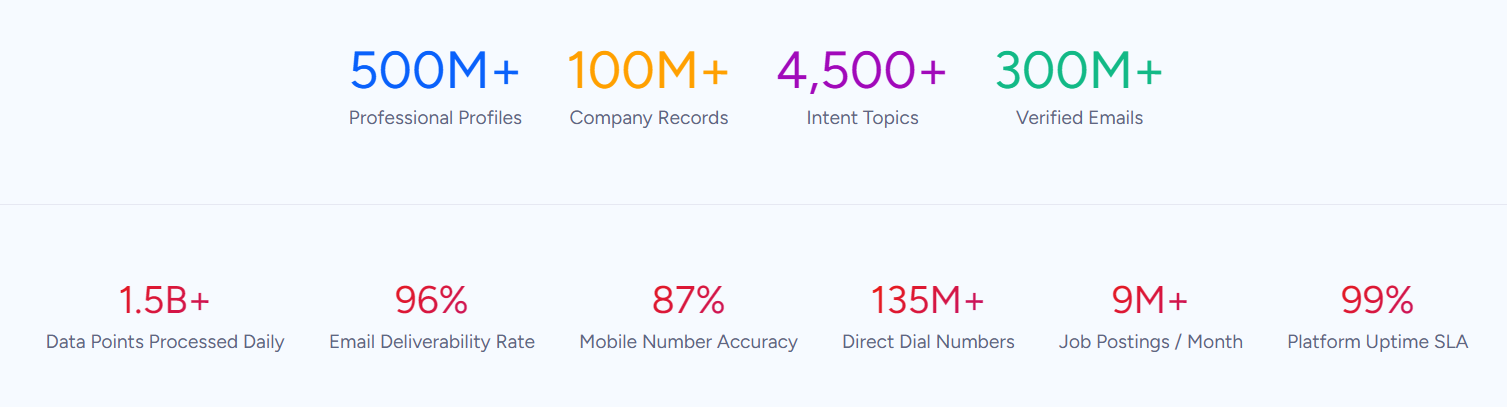
ZoomInfo's data covers 500M contacts and 100M companies, with 135M+ verified phone numbers and 200M+ verified business email addresses. That data is maintained through a multi-source pipeline backed by 300+ human researchers, achieving up to 95% accuracy on first-party data.
In a Fortune 500 competitive RFP analyzing 25 million contacts across vendors, the independent consultant concluded that "no other competitor came even close."
ZoomInfo goes beyond a contact database. Buyer Intent data tracks signals from 210 million IP-to-Organization pairings and 6 trillion+ new keyword-to-device pairings sourced monthly, revealing when companies are actively researching solutions like yours.
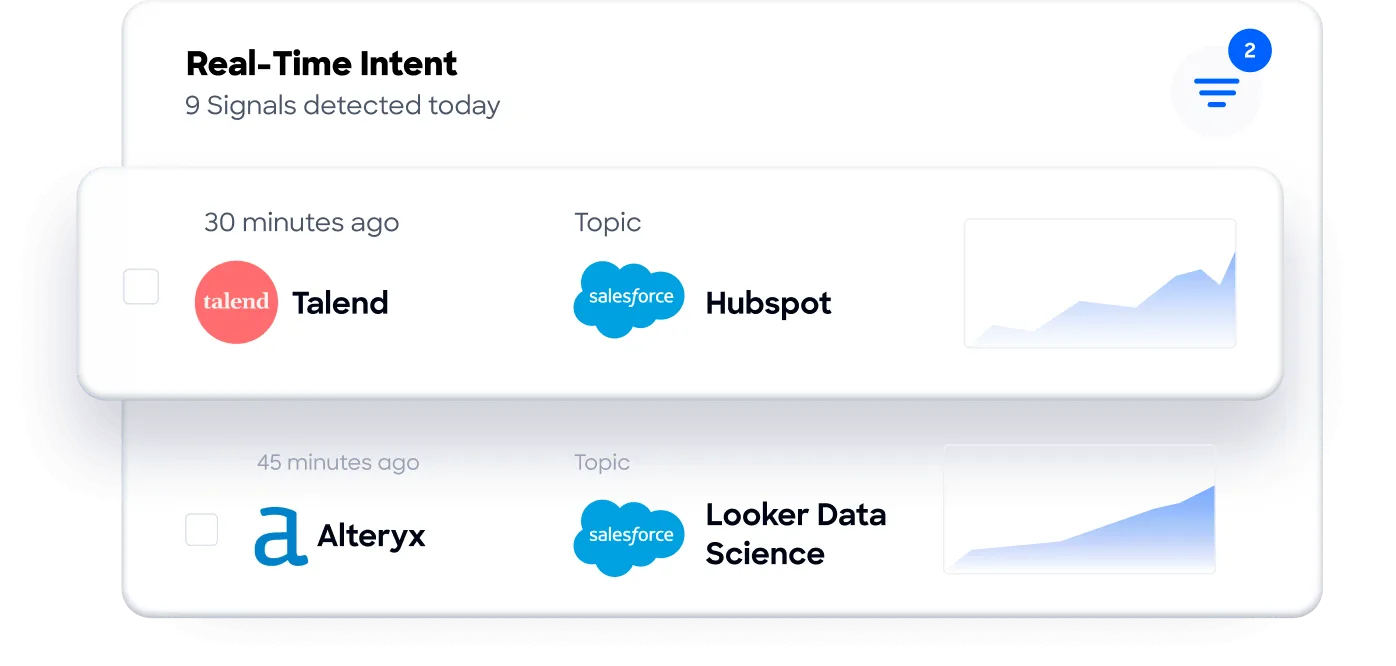
Guided Intent, exclusive to ZoomInfo, identifies topics historically correlated with deal success rather than requiring manual topic selection.
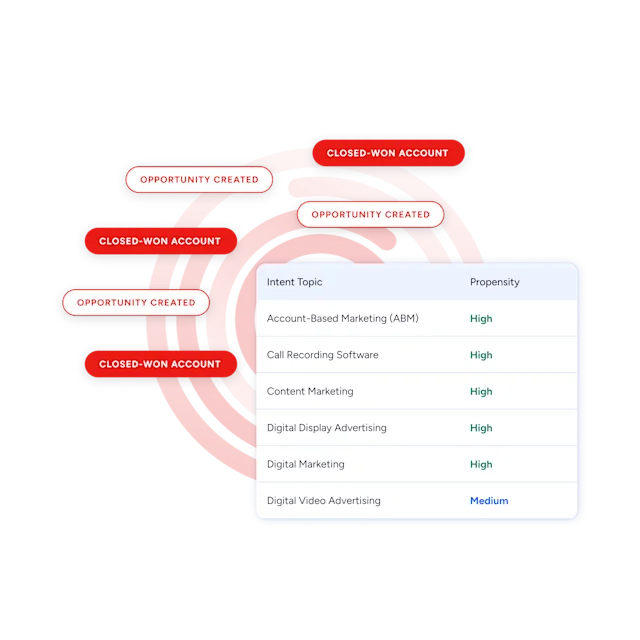
For a B2B company using HubSpot, ZoomInfo enriches the CRM with verified contacts, intent signals, and company intelligence through a native integration.
For businesses using ClickFunnels for landing pages, ZoomInfo identifies which companies visit and who the decision-makers are through WebSights, which resolves anonymous website traffic to companies.
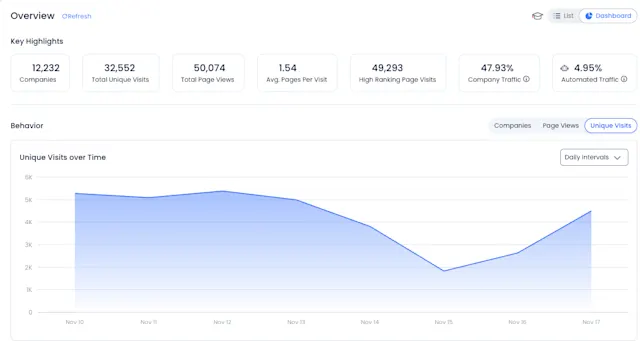
"ZoomInfo is our one source of truth for account data, and even more so for contact data. There's no other provider in the market that provides you with that level of detail." (Smartsheet)
Email and marketing automation compared
Email and marketing automation capabilities differ across all three platforms.
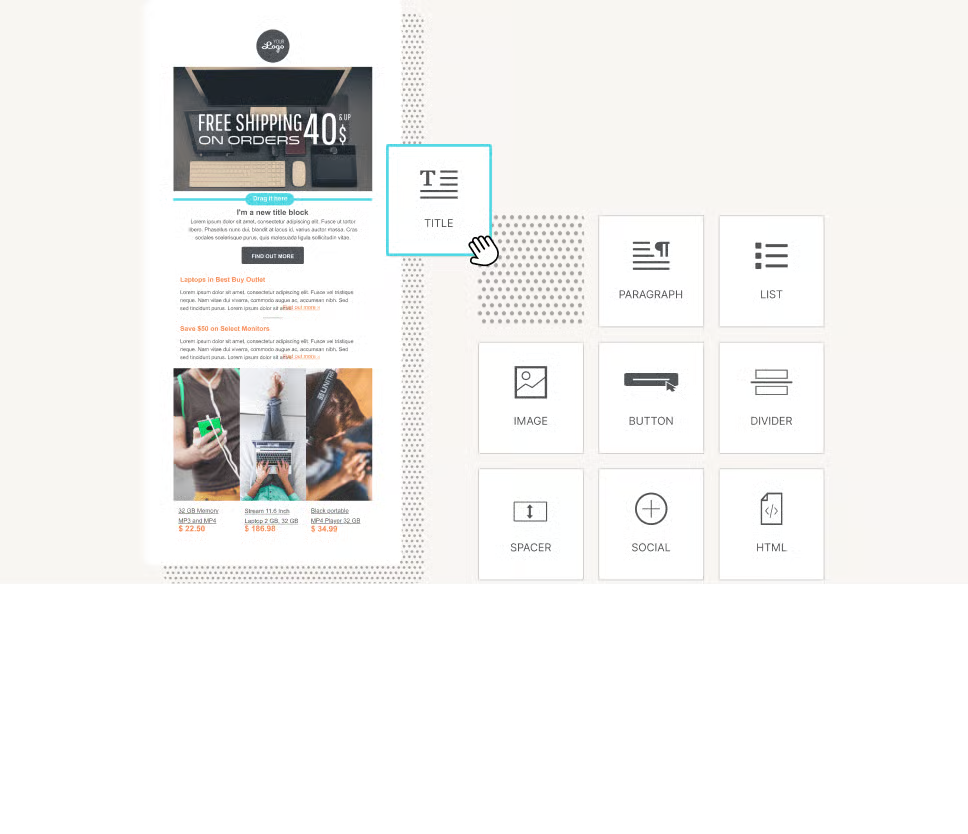
ClickFunnels includes a built-in Email App with drag-and-drop design, broadcast and drip sequences, and subject line split testing that automatically sends the winning variant to the full list. Email volume is capped by plan: 50K/month on Launch, up to 1.2M/month on Dominate.
Source: ClickFunnels
The Automations App triggers responses based on customer behavior (opt-ins, purchases, course enrollments), and MessageHub consolidates text, email, and social media conversations in one inbox. Everything is included in every plan.

Source: ClickFunnels
The limitation is depth. ClickFunnels' email and automation tools are built for funnel sequences: welcome series, cart abandonment, upsell reminders. For simple direct-response email marketing, they work well. For behavioral segmentation across dozens of properties, multi-branch nurture paths, or campaign attribution tied to revenue, they fall short.
HubSpot operates at a different level.
Marketing Hub includes a visual workflow builder for multi-step, branching automation sequences triggered by lifecycle stage, form fills, page visits, and hundreds of other signals.
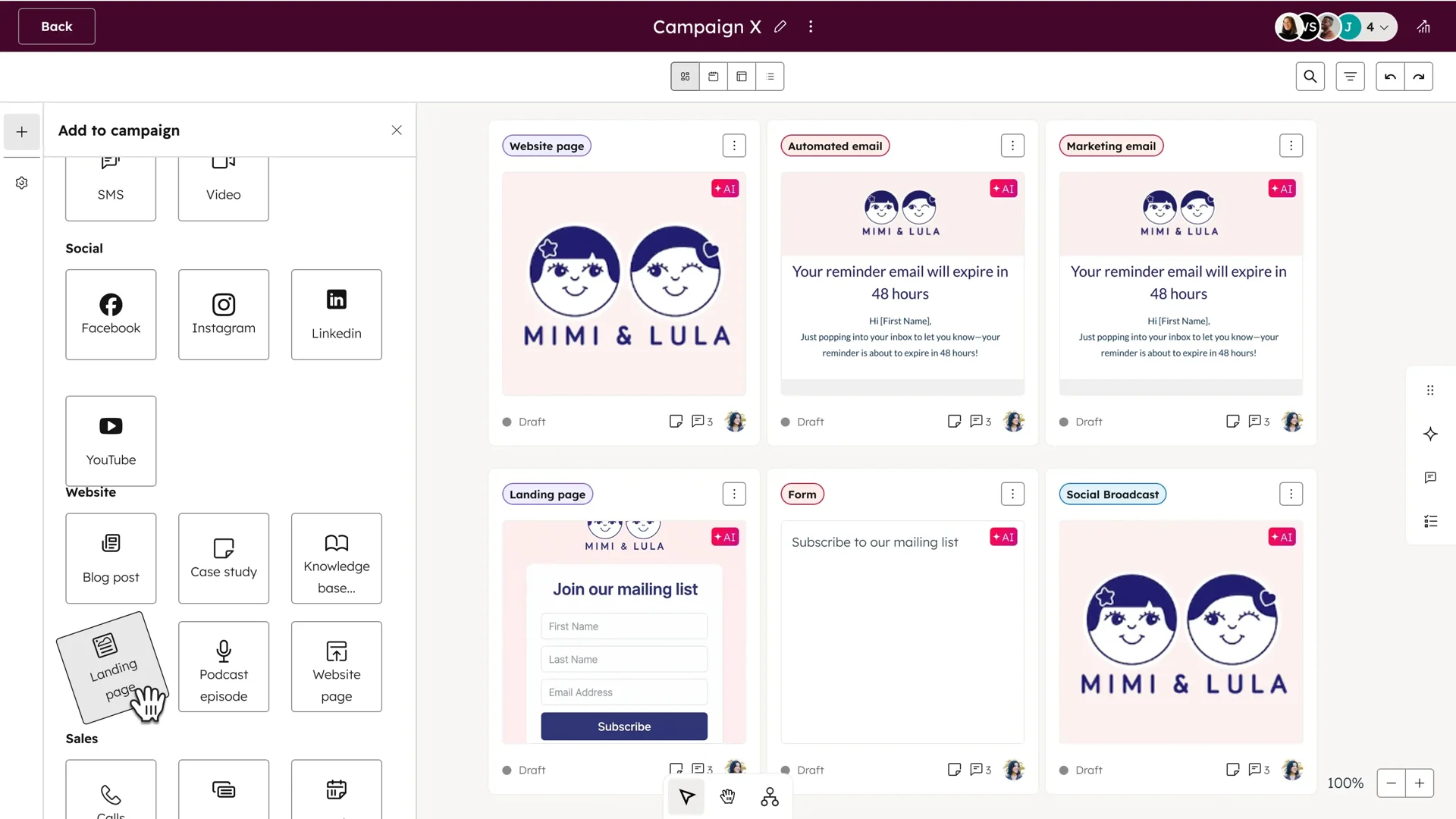
Source: HubSpot
Audience segments update in real time based on CRM properties and behavioral data. Advanced Marketing Reporting ties campaign activity to revenue through multi-touch attribution. Content Remix transforms one piece of content into formats for multiple channels.
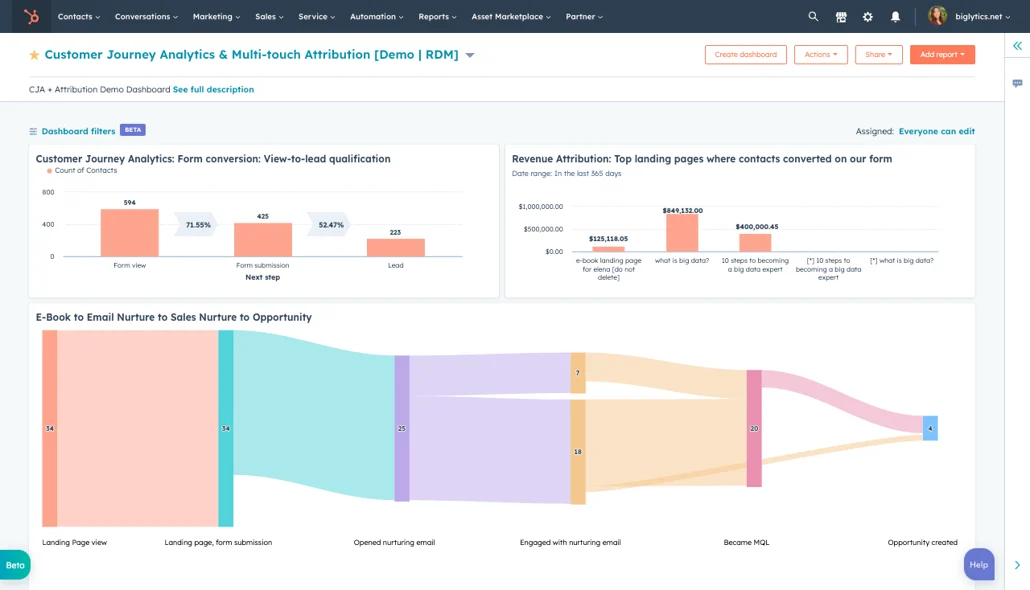
Source: HubSpot
The depth comes at a price. Marketing Hub Professional starts at $800/month (annual) with a $3,000 mandatory onboarding fee. Email send limits are tied to your marketing contact tier.
ZoomInfo doesn't send emails or build automation workflows.
It solves the problem upstream: making sure the contacts in your email lists are real, reachable, and worth contacting. A marketing automation platform is only as effective as the data feeding it. If 20% of your contacts have stale email addresses or wrong job titles, your open rates suffer, your sender reputation degrades, and your pipeline reports mislead you.
ZoomInfo's data enrichment and multi-vendor enrichment waterfall keep CRM records accurate and complete, while its intent signals tell you which accounts to prioritize in your next campaign.
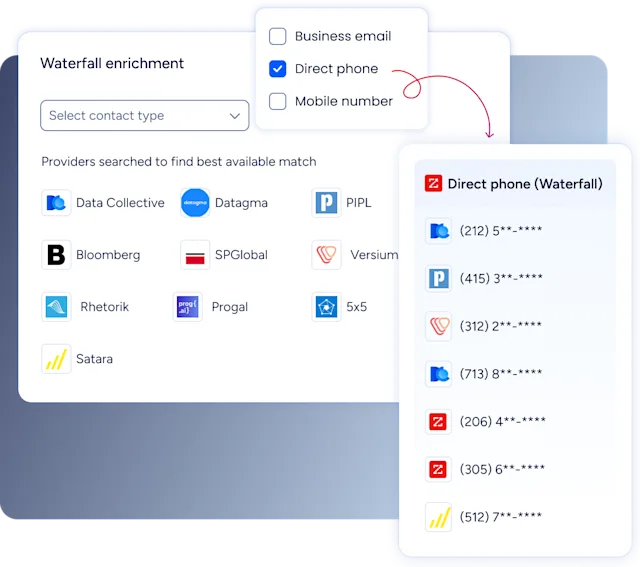
"It's not just the data itself. It's more about the right data at the right time to help us reach out with the right message across that full buyer journey." (Redwood Logistics)
CRM and sales pipeline capabilities
ClickFunnels' CRM is functional but limited.
Opportunities provides a drag-and-drop visual pipeline with automated follow-up sequences and team views.
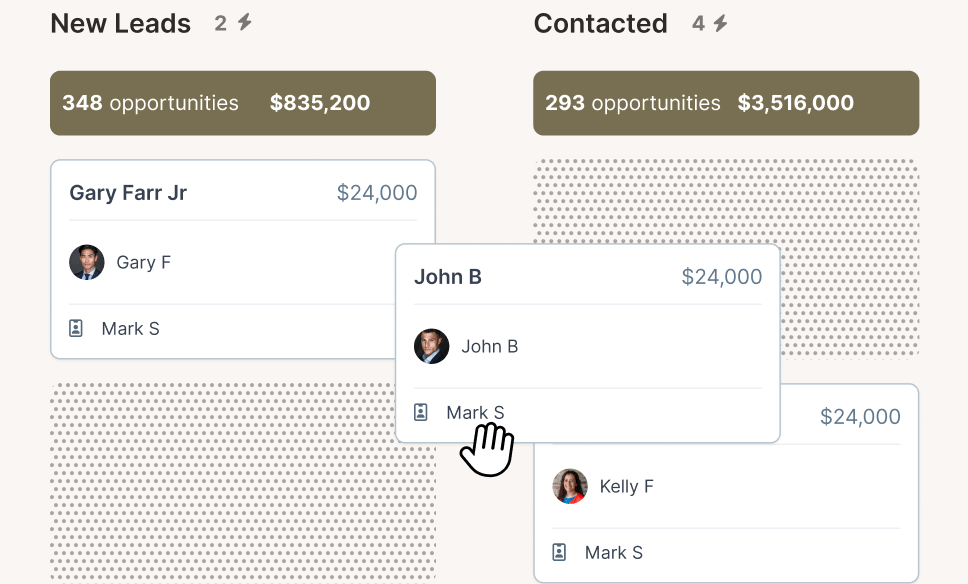
Source: ClickFunnels
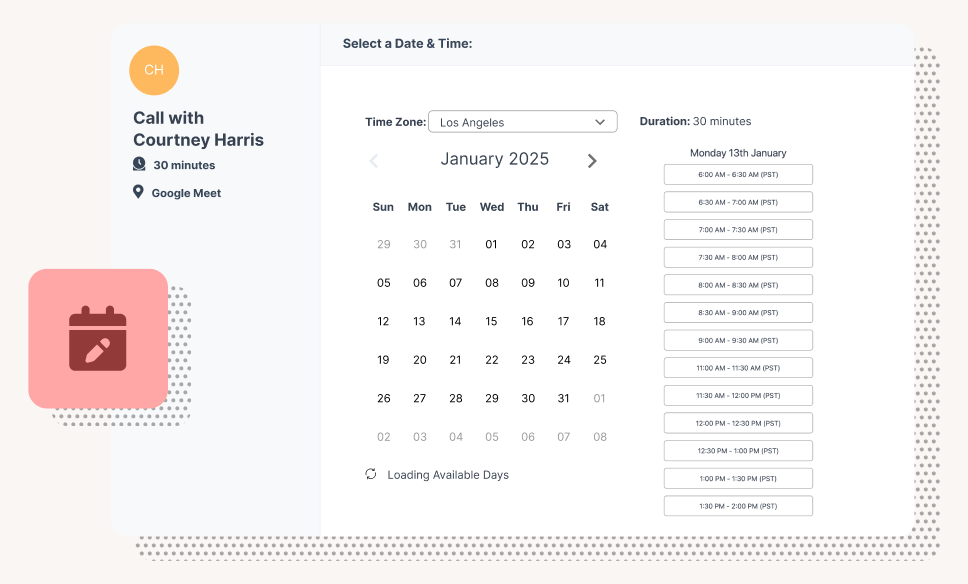
Appointments embeds booking into funnel pages and syncs with Google Calendar, Apple iCloud, Office 365, Exchange, and Outlook. Contacts are unlimited across all plans.
Source: ClickFunnels
For a solopreneur or small team running a high-ticket coaching business with a handful of active prospects, this covers the basics.
For a sales organization managing hundreds of deals across multiple reps, territories, and product lines, it's not enough. The platform has 89 open CRM requests on its public board, a sign that users want more.
HubSpot was built as a CRM first.
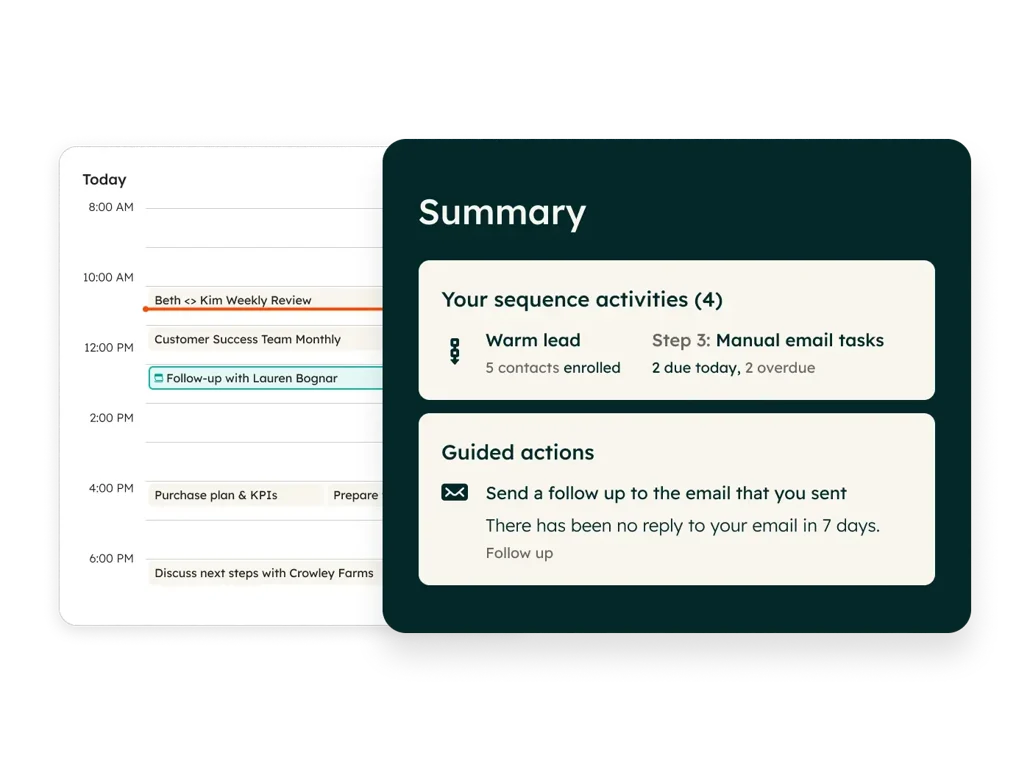
Deal pipelines support customizable stages, deal scoring, and task assignment. AI Guided Selling surfaces prioritized action queues and daily summaries.
Source: HubSpot
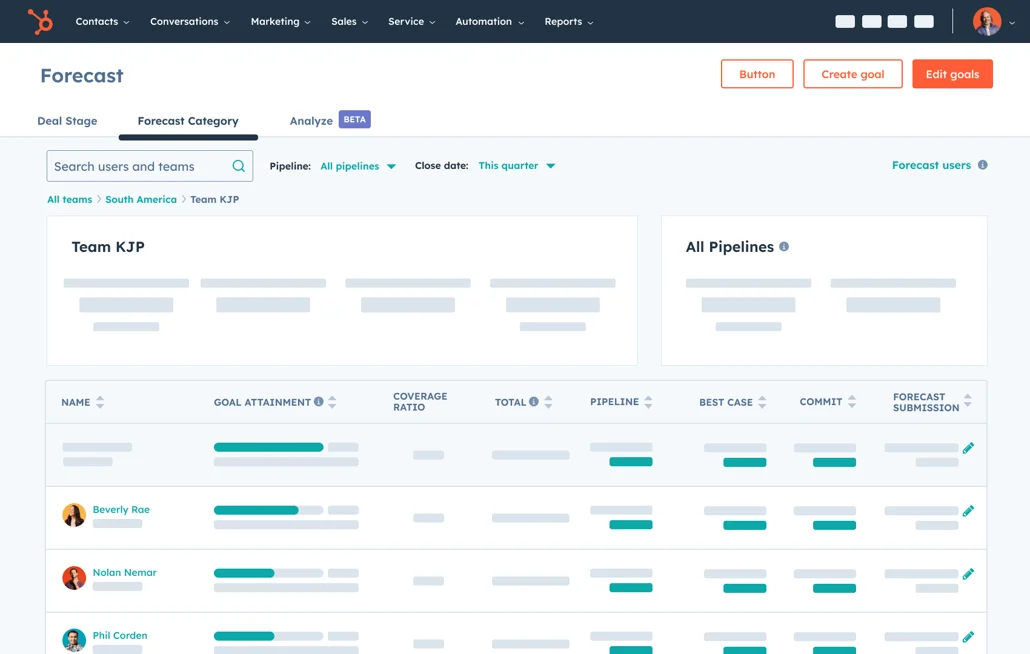
Conversation Intelligence records and transcribes sales calls for coaching. Forecasting provides AI-powered revenue projections. CPQ software generates branded quotes from deal context with approval workflows and e-signatures.
Source: HubSpot
At the Enterprise tier, HubSpot supports custom objects, predictive lead scoring, and complex data models. The CRM supports up to 15 million contacts, expandable to 50 million.
ZoomInfo adds a dimension neither CRM provides on its own: intelligence about what's happening outside your pipeline.
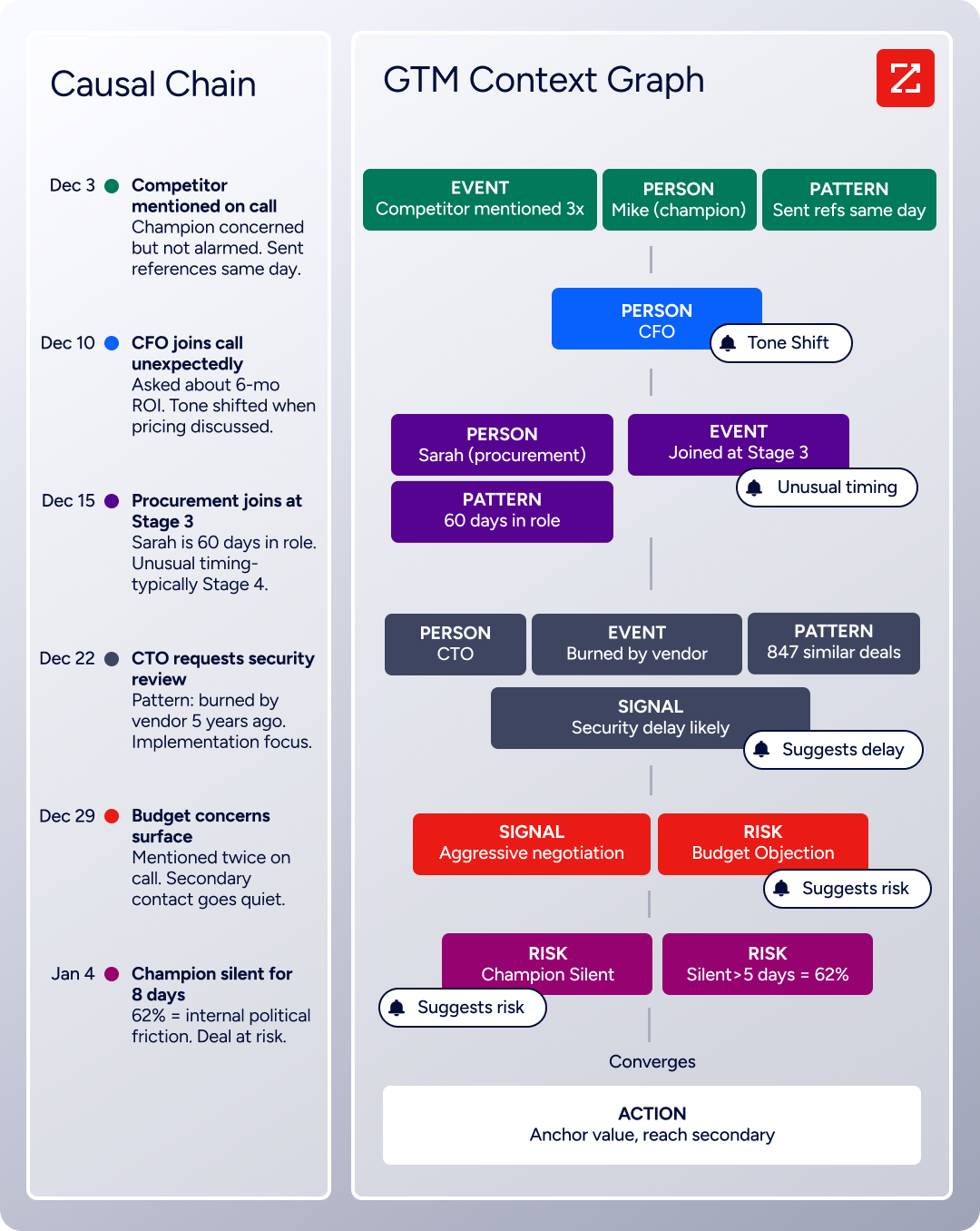
The GTM Context Graph processes 1.5B+ data points daily, unifying your CRM records with conversation transcripts, intent signals, and behavioral data to surface why deals move or stall. GTM Workspace gives sellers a single view of their accounts, with AI agents that handle research, draft outreach, monitor signals, and update CRM fields.
"That combination of our internal CRM data, external signals, and AI that's given all that context has helped us craft very specific account- and persona-based messages. And people have responded to them right away." (Seismic)
Pricing models reflect different target markets
The pricing structures reveal who each platform is built for.
ClickFunnels uses flat-fee tiers. The Launch plan starts at $97/month and includes 1 workspace, 2 team members, 10K contacts, and 50K emails/month. The Scale plan at $197/month adds API access, live chat support, and more workspaces. No transaction fees on sales. A 14-day free trial plus 30-day money-back guarantee creates a 44-day evaluation window. Annual subscribers who cancel mid-term receive credit only, not a cash refund.
For a solopreneur generating $5,000 to $10,000/month through funnels, the $81 to $164/month cost is manageable. For a team that needs multiple seats, integrations, and advanced features, costs climb toward $248/month (Optimize) or $5,997/year (Dominate) without proportionally deeper CRM or analytics capabilities.
HubSpot uses a layered model that starts free and scales steeply. The free CRM includes unlimited contacts (up to 1M records), basic email, forms, and live chat. Starter bundles all hubs at $10/seat/month. But Professional tiers jump to $800/month for Marketing Hub and $100/seat/month for Sales Hub, each with mandatory onboarding fees ($3,000 and $1,500, respectively). Enterprise Marketing Hub reaches $3,600/month with a $7,000 onboarding fee.
A critical detail: when you subscribe to multiple Hubs at different tiers, all Core Seats are billed at the highest tier rate. A company mixing Marketing Hub Professional with Sales Hub Enterprise pays the Enterprise rate on every seat, not just the sales seats.
ZoomInfo uses consumption-based pricing with no published dollar amounts. Costs scale around seats, monthly credit volume, features, and contract length. ZoomInfo Lite provides permanent free access with 10 monthly export credits, contact and company searches, the ReachOut Chrome Extension, and HubSpot integration. Paid plans span Professional, Advanced, and Enterprise tiers across Sales and Marketing product lines.
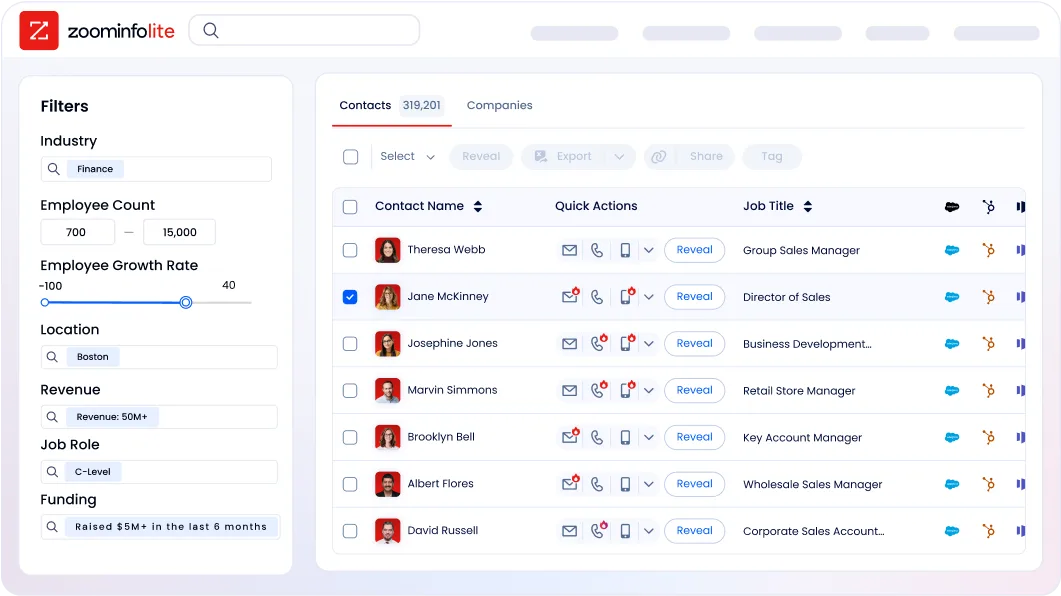
ZoomInfo sits in a different budget category. It's not competing with ClickFunnels or HubSpot for the same dollar. It's the data investment that makes whichever execution platform you choose produce results.
Integration ecosystems show different priorities
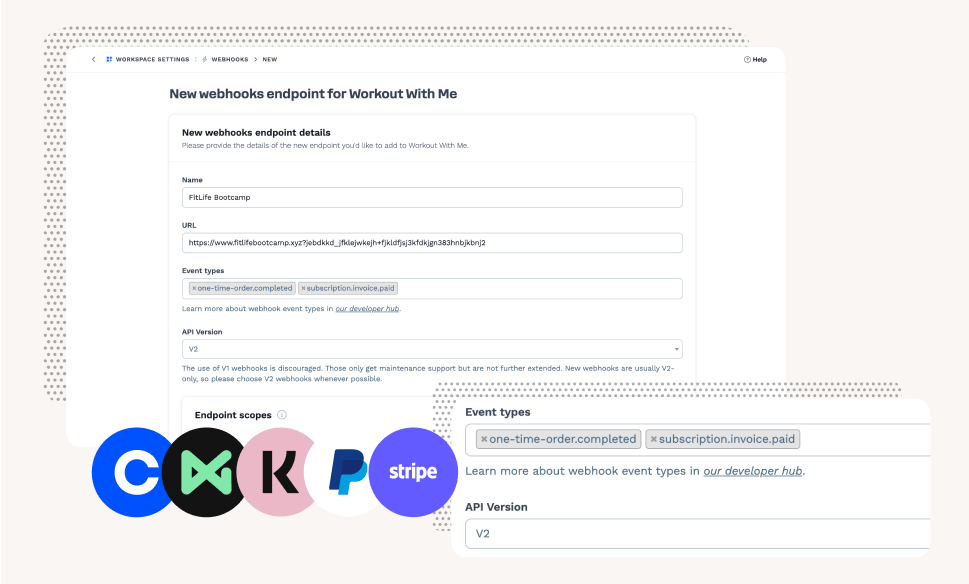
ClickFunnels' native integrations focus on email marketing and sales tools: ActiveCampaign, AWeber, ConvertKit, HubSpot, Klaviyo, MailChimp, Pipedrive, GoTo Webinar, and Shippo, among about 20 partners.
Zapier bridges everything else. API and webhook access are gated to the Scale plan ($164/month) and above, so Launch plan users have no programmatic access.
Source: ClickFunnels
The integration board has 200+ open requests, the largest category on ClickFunnels' feedback tracker. For businesses with simple tech stacks (ClickFunnels + email + payment processor), this may not matter. For businesses running multiple tools, it's a constraint.
HubSpot operates at a different scale.
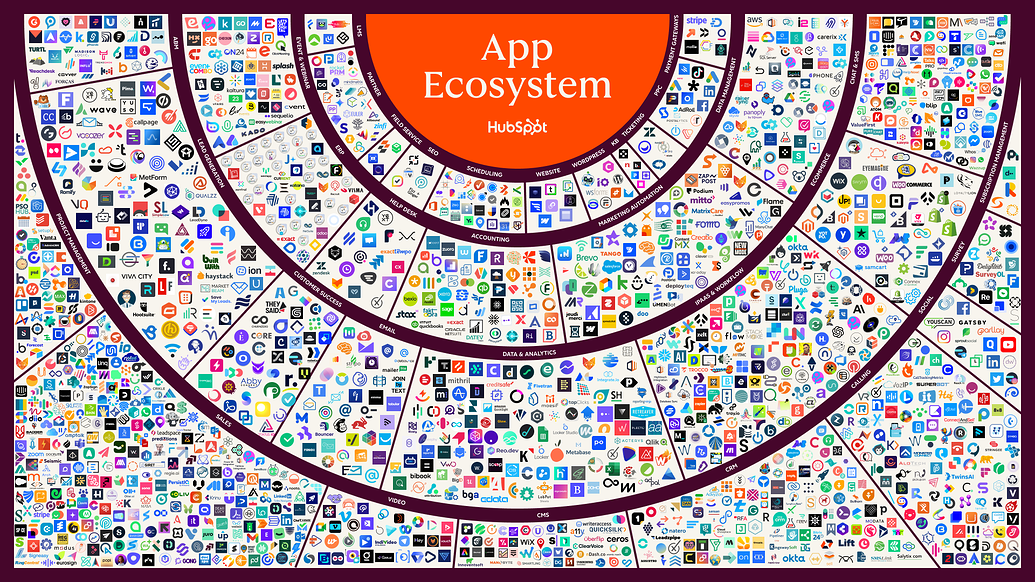
The App Marketplace has surpassed 2,000 apps with over 2.5 million active installs. Integrations include Salesforce (bidirectional CRM sync), Slack, Zoom, LinkedIn, Google Ads, Jira, and Amplitude.
Source: HubSpot
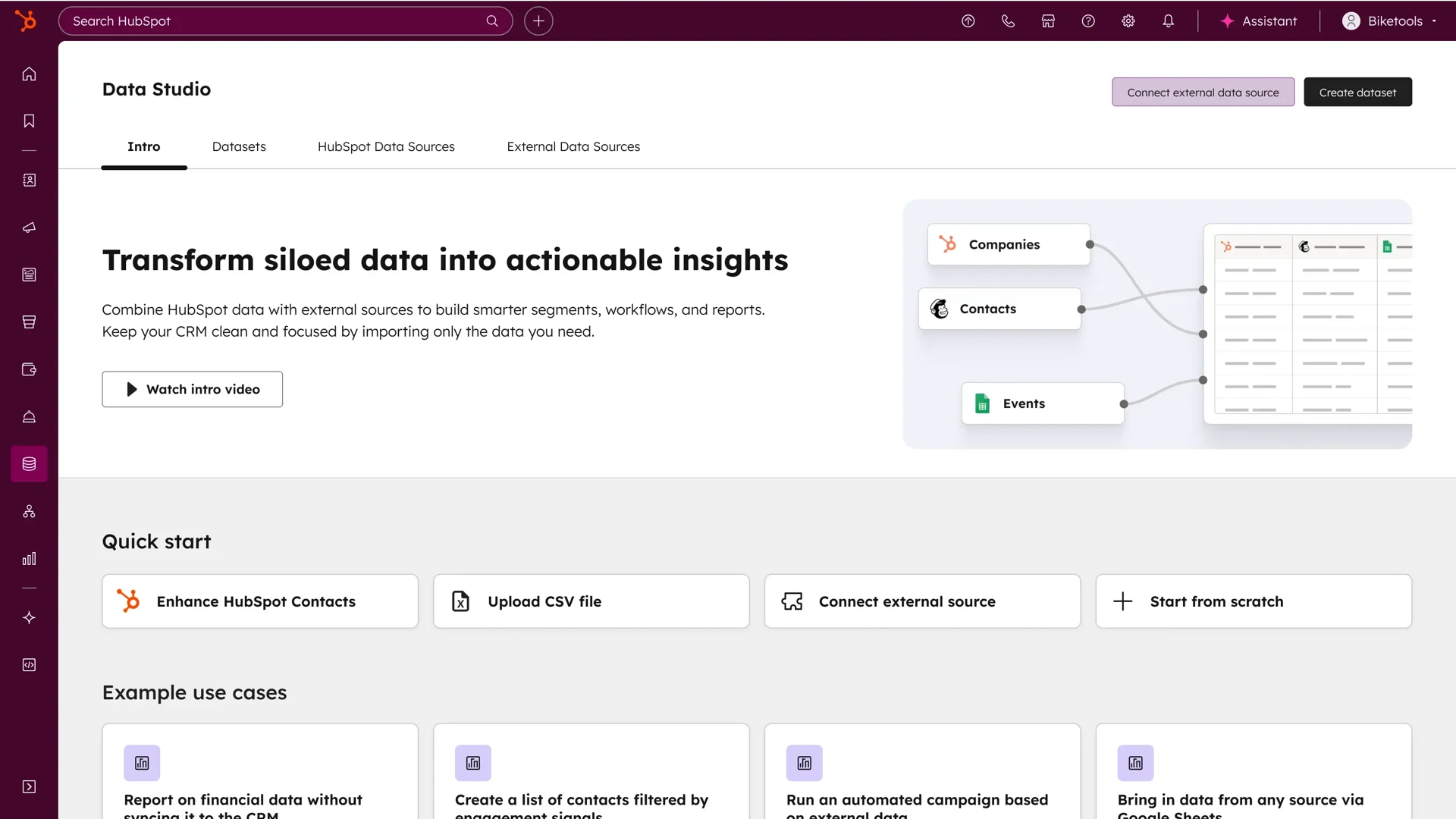
Data Hub connects to 100+ apps for bidirectional data sync, and Programmable Automation lets developers run custom JavaScript or Python inside HubSpot workflows. A remote MCP server gives AI agents read/write access to CRM data.
Source: HubSpot
ZoomInfo is designed to work wherever your team already works.
The Marketplace lists 172+ integrations spanning CRM, marketing automation, sales engagement, data warehouses, and communications. Native integrations include Salesforce, HubSpot, Microsoft Dynamics 365, Snowflake, and Salesloft. Cloud Partners push data into AWS, Google Cloud, Snowflake, and Databricks.
The ZoomInfo MCP server connects AI models to ZoomInfo's data through natural language, without custom coding, and is available in the Claude directory and compatible with ChatGPT.
ZoomInfo's API access is included in all relevant plans, so its intelligence flows into whatever tools your team already uses.
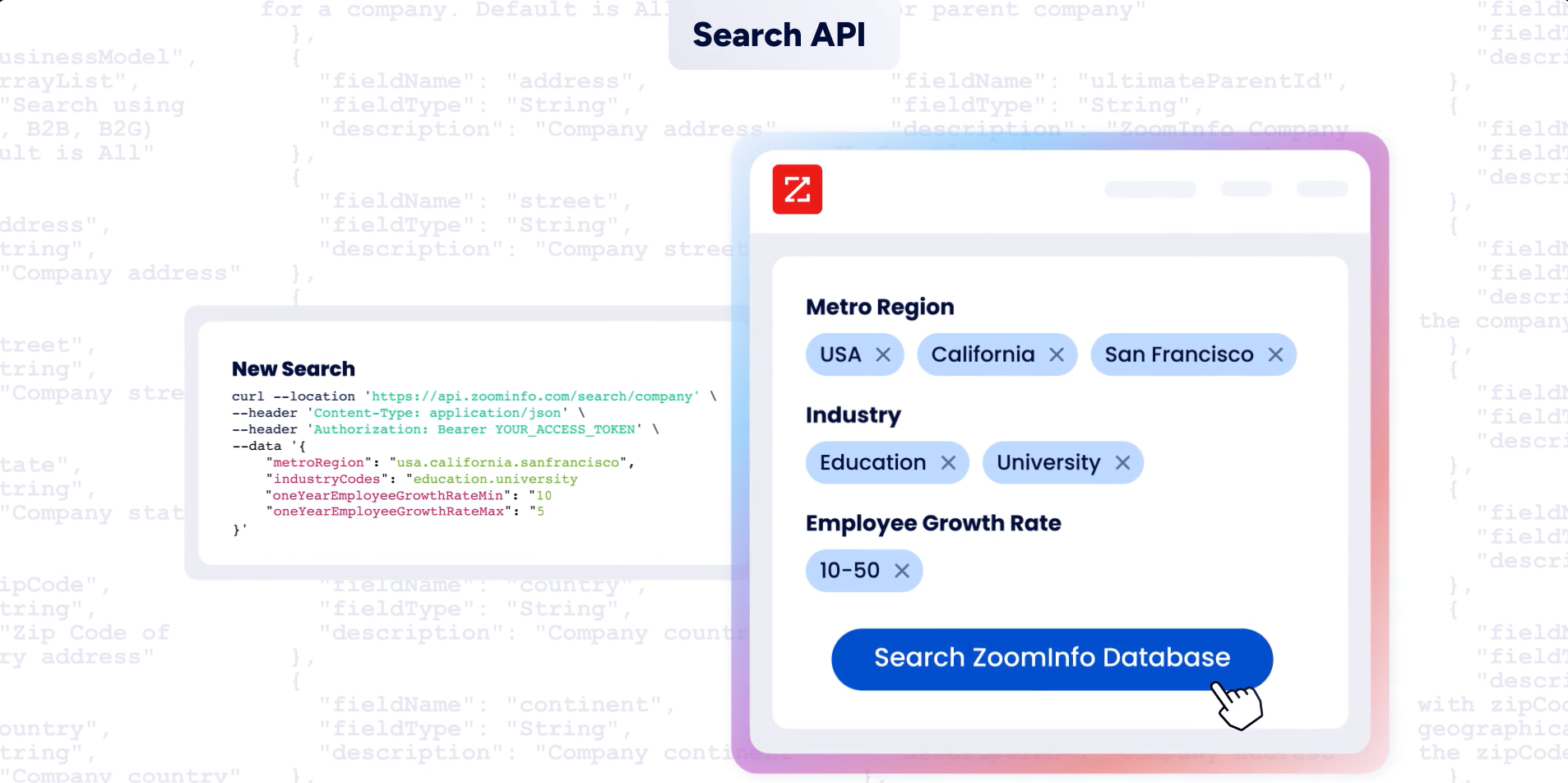
"The plug-and-play aspect of the API means I can integrate it very easily into any process and get information at a moment's notice." (BDO Canada)
AI capabilities take different forms
All three platforms invest in AI, but they solve different problems with it.
ClickFunnels uses AI for content generation.
Its Marketing.AI generates sales copy and page content inside the funnel builder, with 1M to 10M AI-generated words per month depending on plan. Co-founder Russell Brunson states that what previously took a day can now be done in under an hour.
The AI focuses on the creative side of funnel building: writing headlines, drafting email sequences, and generating page content.
HubSpot deploys AI as agents across the platform.
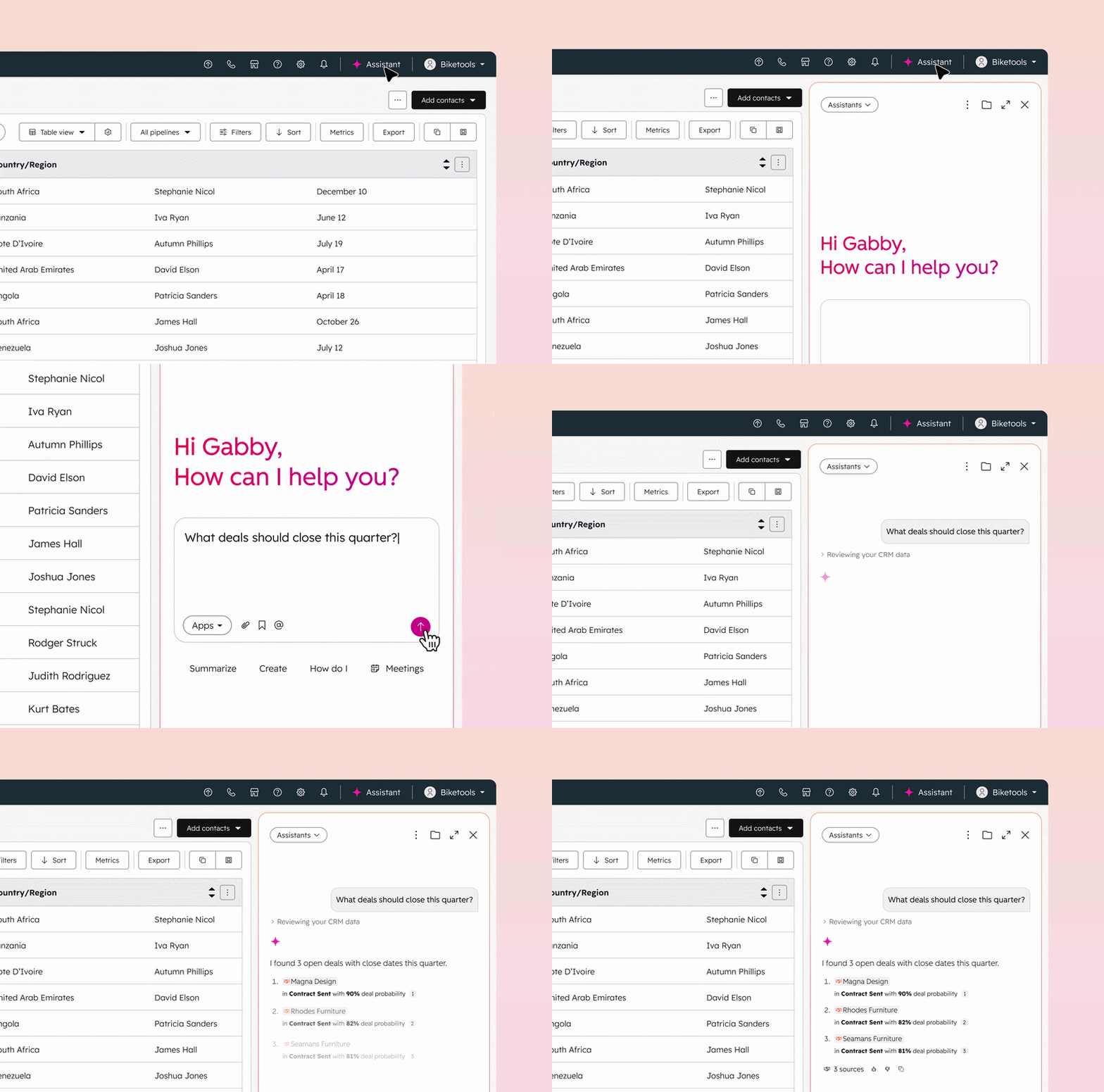
Breeze includes a Customer Agent, a Prospecting Agent (monitoring buying signals and drafting personalized outreach around the clock), a Data Agent (answering natural-language questions about CRM data), and an AI Content Writer embedded across all content tools.
Source: HubSpot
These agents draw on full CRM context, so recommendations and drafts reference your specific customer history rather than generic training data.
ZoomInfo applies AI to the intelligence layer.
The GTM Context Graph combines CRM data with conversation transcripts, intent signals, and behavioral data, capturing not just what happened but why. As ZoomInfo's CPO Dominik Facher writes: "The CRM recorded the state change. It has no record of why it happened."
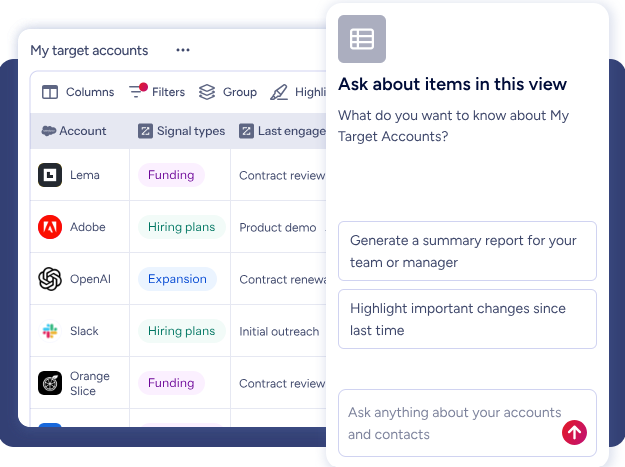
AI agents in GTM Workspace handle account research, draft outreach from full account context, and surface next best actions.
GTM Studio lets marketers describe audiences in natural language and launch multi-channel campaigns that get smarter as prospects respond.
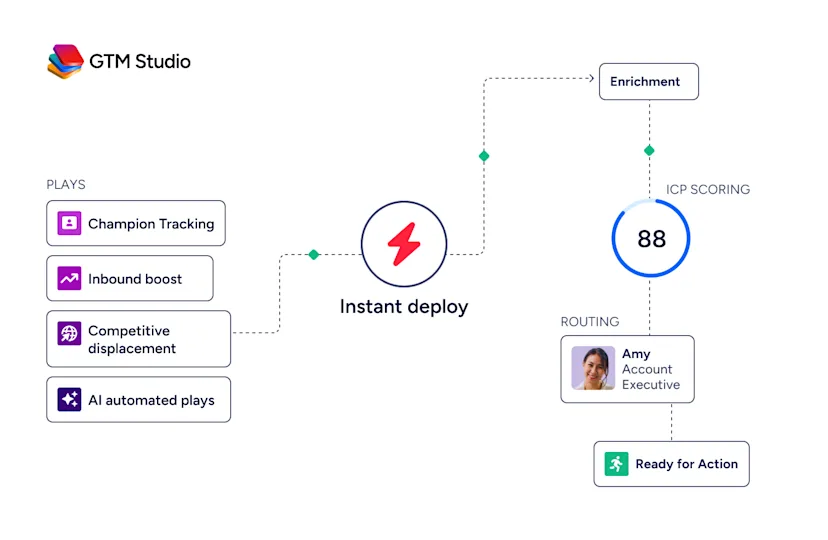
Where ClickFunnels' AI writes your copy and HubSpot's AI manages your workflows, ZoomInfo's AI tells you which accounts to prioritize and why.
ClickFunnels vs. HubSpot vs. ZoomInfo: Which should you choose?
The right choice depends on your business model and what stage of the go-to-market process you need help with.
Choose ClickFunnels if:
You sell digital products, courses, or coaching through direct-response funnels
Your business model is built around converting paid traffic into customers
You're a solopreneur or small team that doesn't need a full CRM
Speed to launch matters more than long-term relationship management
You value simplicity and want everything under one subscription
Choose HubSpot if:
You need marketing, sales, and service teams working from shared customer data
Your sales cycle involves multiple touchpoints and relationship building
You want a platform that scales from free tools to enterprise capabilities
Content marketing and inbound lead generation are core to your strategy
You need integrations with your existing tech stack
Add ZoomInfo if:
You sell B2B and need to identify, reach, and engage decision-makers at target companies
Your CRM data is incomplete, outdated, or missing key contacts
You want to know which accounts are actively researching solutions like yours
Your sales team spends too much time researching prospects and not enough time selling
You want the same intelligence available in your CRM, your AI tools, or any custom application
Try ZoomInfo Lite for free or request a demo of the full platform.
ClickFunnels and HubSpot are both effective at what they do. ClickFunnels converts traffic through optimized funnels. HubSpot manages the full customer relationship. But for B2B companies, the question that matters most comes before either platform enters the picture: Do you know who you should be selling to?
ZoomInfo answers that question with the largest B2B contact database, an intelligence layer that reveals why deals move, and access points that deliver those insights into whatever tools your team already uses. It's not a replacement for your marketing or CRM platform. It's the foundation that makes either one work harder.
ClickFunnels vs. HubSpot vs. ZoomInfo FAQ
What is the fundamental difference between ClickFunnels, HubSpot, and ZoomInfo?
ClickFunnels is a sales funnel builder for entrepreneurs and small teams selling products online through structured buying sequences. HubSpot is a CRM platform that connects marketing, sales, and service teams with shared customer data and AI-powered automation. ZoomInfo is a B2B data and go-to-market platform that provides verified contact information, company data, and buyer intent signals so sales and marketing teams can identify and reach the right prospects.
Can I use ZoomInfo with either ClickFunnels or HubSpot?
ZoomInfo integrates natively with HubSpot through its marketplace, enriching CRM records with verified contacts, company data, and intent signals. ZoomInfo also works alongside ClickFunnels through its API and MCP access. Its WebSights feature identifies companies visiting your ClickFunnels pages, even if those visitors never fill out a form. ZoomInfo's API access is included in all relevant plans, so its data can flow into any tool your team uses.
Which platform is cheapest to start with?
HubSpot's free CRM is the most accessible entry point, with unlimited contacts, basic email, and core CRM features at no cost. ZoomInfo Lite is also free permanently, with 10 monthly export credits, contact and company search, and a HubSpot integration. ClickFunnels has no free plan, starting at $81 per month on an annual commitment, though it offers a 14-day trial plus a 30-day money-back guarantee.
Is ClickFunnels or HubSpot better for a small B2B company?
HubSpot is the stronger fit for most B2B companies because its CRM tracks multi-touch sales cycles, supports team-based selling, and integrates with tools like Salesforce, LinkedIn, and ZoomInfo. ClickFunnels works for B2B companies with a specific funnel-driven sales motion (such as selling a single SaaS product through a webinar funnel) but its CRM and reporting are too basic for complex B2B pipelines.
How does ZoomInfo's data compare to what ClickFunnels and HubSpot provide?
Neither ClickFunnels nor HubSpot is a B2B data provider. ClickFunnels stores contacts who opt into your funnels but provides no external prospecting data. HubSpot's CRM stores contacts who interact with your business and offers basic AI enrichment, but it doesn't maintain a standalone B2B contact database. ZoomInfo maintains 500 million contacts, 100 million companies, 135 million verified phone numbers, and 200 million verified business email addresses, all backed by 300-plus human researchers and achieving up to 95% accuracy on first-party data.
Which platform has the best AI capabilities?
Each platform applies AI to a different problem. ClickFunnels uses AI for copywriting and funnel page generation. HubSpot uses Breeze AI agents across marketing, sales, and service for tasks like autonomous prospecting, customer support, and CRM data analysis. ZoomInfo's GTM Context Graph combines CRM data with conversation intelligence, intent signals, and behavioral data to capture why deals succeed or fail, then surfaces prioritized accounts and recommended actions through GTM Workspace and GTM Studio.
Do I need both HubSpot and ZoomInfo, or can one replace the other?
They solve different problems and work best together. HubSpot manages your customer relationships, marketing automation, and sales pipeline. ZoomInfo provides the verified contact data, intent signals, and account intelligence that HubSpot's CRM needs to be effective. Companies using both typically use ZoomInfo to enrich HubSpot records, identify new target accounts, and surface buying signals, then use HubSpot's automation and CRM to engage and nurture those prospects. For a full side-by-side breakdown of how the two platforms compare, see our HubSpot vs. ZoomInfo guide.
What kind of business should not use any of these platforms?
ClickFunnels is not built for businesses with large product catalogs, complex enterprise sales cycles, or teams needing deep CRM customization. HubSpot may be more platform than a solopreneur selling a single digital product needs, especially at Professional and Enterprise pricing. ZoomInfo is designed for B2B companies and provides no value for B2C businesses selling to consumers.
See how HubSpot compares against other CRMs and platforms:
