

Choosing between Close vs. HubSpot for your CRM often comes down to five questions:
Do you need a CRM built for outbound selling, or one that spans marketing, sales, and customer service?
Is built-in calling with power and predictive dialers central to your daily workflow?
Are you a small sales team that prizes speed, or a growing company with multiple customer-facing departments?
How much of your team's time goes to finding the right prospects versus actually selling to them?
Would knowing which accounts are actively researching solutions in your category change how you prioritize your pipeline?
In short, here's what we recommend:
Close is built for small, outbound-heavy B2B sales teams who want to call, email, and text from their CRM without switching tools. Its Power Dialer and Predictive Dialer let reps burn through call lists fast, and automated workflows handle follow-ups so nothing slips. Close claims to run 50% faster than big CRMs and backs that up with a clean interface that earns a 9.3/10 for Ease of Use on G2. However, Close has no native marketing automation, limited customization on lower tiers, and is designed for teams that hand clients off after the sale rather than managing the full customer lifecycle.
HubSpot is a customer platform covering marketing, sales, service, content, data, and commerce, all connected through a shared Smart CRM. With 288,706 customers across 135+ countries and a free CRM tier, HubSpot covers more ground than any focused sales tool. Its Breeze AI layer adds agents that handle prospecting, customer service, and data queries across the platform. The tradeoff: pricing scales quickly across per-seat, per-hub, and per-contact dimensions, with mandatory onboarding fees at Professional and Enterprise tiers and a mixed-tier seat billing rule that catches many buyers off guard.
Both platforms help you manage your sales process once you've identified who to pursue. But which accounts are worth pursuing, who the decision-makers are, and whether those companies are in-market right now are questions neither CRM answers on its own.
ZoomInfo is an AI GTM platform built on the largest B2B dataset in the industry: 500M contacts, 100M companies, 135M+ verified phone numbers, and 200M+ verified business emails. That data means your reps can find verified direct dials and emails for the people they need to reach, instead of bouncing off generic inboxes. ZoomInfo's GTM Context Graph (an intelligence layer that fuses this data with your CRM records, conversation transcripts, and behavioral signals) reveals not just what's happening in a deal, but why. Sellers access this intelligence through GTM Workspace, marketers and RevOps through GTM Studio, and any other tool through APIs and MCP.
If your team's biggest bottleneck is knowing which accounts to pursue and when, see how ZoomInfo's GTM Workspace works.
Close vs. HubSpot vs. ZoomInfo at a glance
Close | HubSpot | ZoomInfo | |
|---|---|---|---|
Core focus | Sales CRM with built-in calling, email, SMS | Full customer platform (marketing, sales, service, content) | AI GTM platform powered by B2B intelligence |
B2B contact database | No (bring your own data) | No (bring your own data) | Yes (500M contacts, 200M+ verified emails) |
Built-in calling | Power Dialer + Predictive Dialer | Call tracking and recording | Via GTM Workspace + CRM integrations |
Marketing automation | None | Full suite with AI agents | ABM and audience targeting via GTM Studio |
Buyer intent signals | None | Limited | 210M+ IP-to-organization pairings |
AI capabilities | Email rewrite, call transcription, lead summaries | Breeze AI agents across all hubs | GTM Context Graph, AI account research, outreach |
Free option | 14-day trial only | Permanent free CRM | ZoomInfo Lite (permanent) + 7-day trial |
Starting price | $9/seat/month (annual) | $0 (free), paid from $15/seat/month | Custom (consumption-based) |
Best for | Small outbound sales teams (1-25 reps) | Growing companies with multiple departments | Revenue teams that need to know who to sell to and when |
Three platforms, three design philosophies
Close, HubSpot, and ZoomInfo each start with a different assumption about what sales teams need most.
Close assumes the biggest drag on sales is friction in the selling process itself. Every feature shrinks the gap between "I need to call this person" and "I'm on the phone with them." The CRM, the dialer, the email client, the SMS tool all live in one interface so reps never leave to check another tab. This philosophy works when your team already knows who to call and just needs to reach them faster.

Source: Close
HubSpot assumes the biggest challenge is connecting the full customer journey. A lead that marketing captured needs to flow to sales with full context. A deal that closes needs to trigger onboarding in service. HubSpot's eight natively integrated products share a single data layer so teams don't work from different versions of the truth. This philosophy works when your company has multiple departments that all touch the customer.
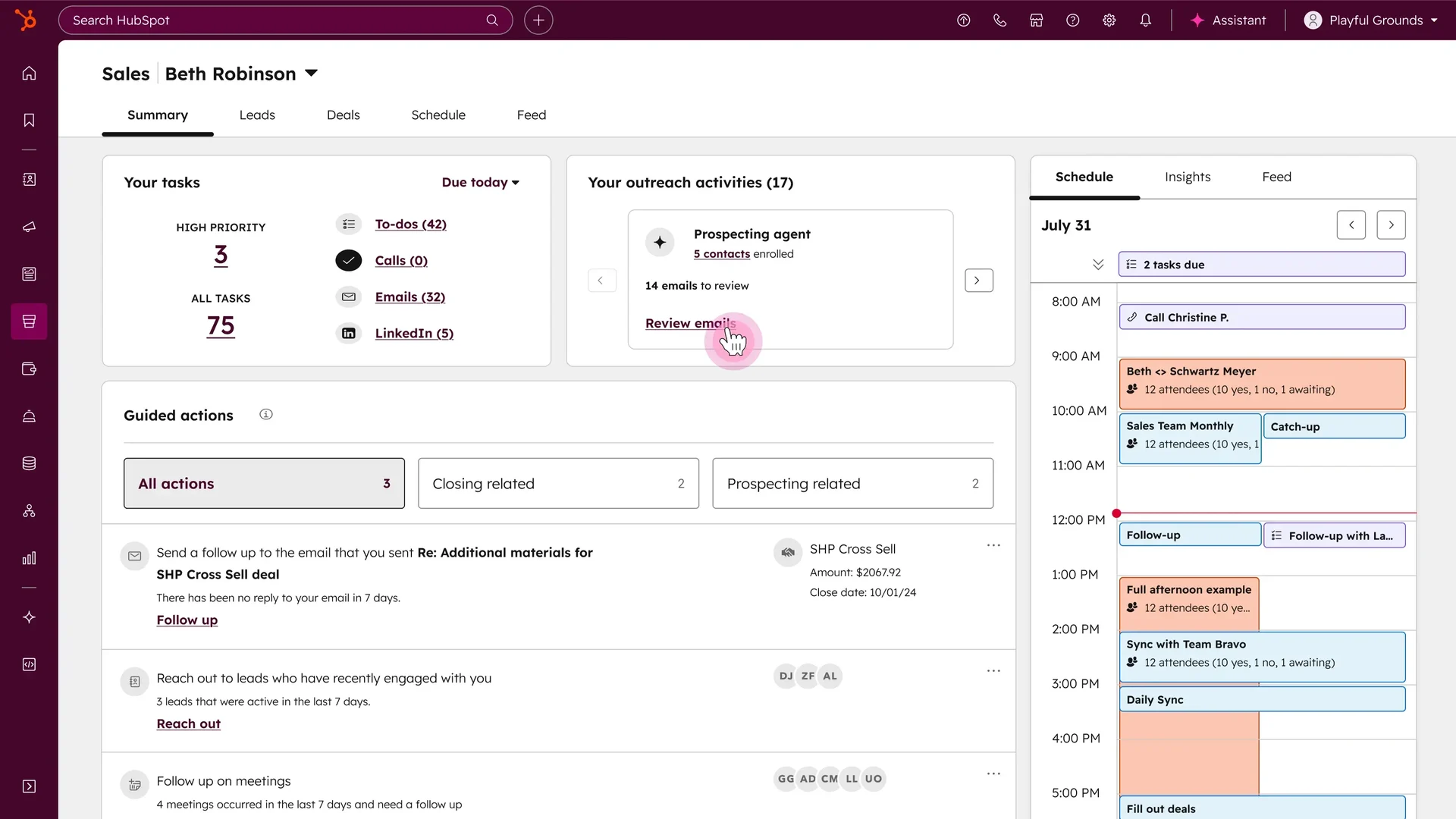
Source: Hubspot
ZoomInfo assumes the biggest problem isn't managing the process but knowing where to aim it. The GTM Context Graph (ZoomInfo's intelligence layer, processing 1.5B+ data points daily) fuses the industry's largest B2B dataset with your internal CRM and conversation data to surface which accounts are in-market, who the buying committee members are, and what signals suggest they're ready to engage. This philosophy works when the difference between a good quarter and a bad one depends on whether your team is pursuing the right accounts at the right time.
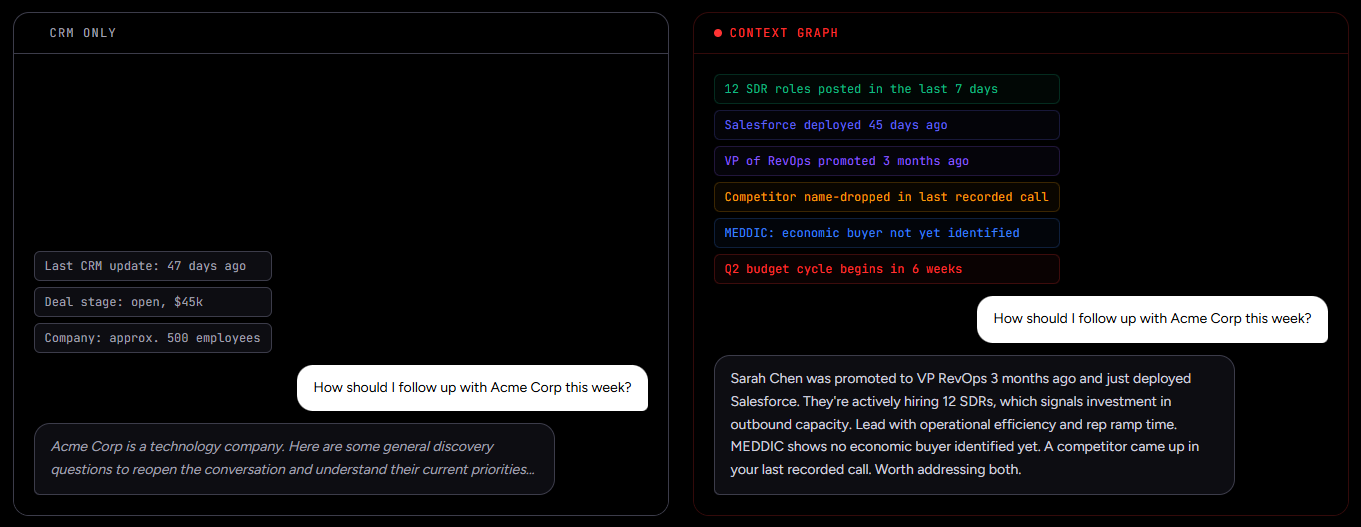
These aren't just product differences. They shape everything: how AI is applied, what data matters, and where you'll hit limitations.
Close excels at outbound sales velocity
Close built its reputation on one promise: reps spend time selling, not updating CRM fields.
The communication stack is the core advantage. Reps make calls, send emails, and text prospects without leaving the CRM. Every interaction is logged automatically. The Power Dialer works through call lists sequentially, while the Predictive Dialer dials multiple numbers at once and connects reps only when someone answers. For teams making 50+ calls daily, this increases actual talk time considerably.
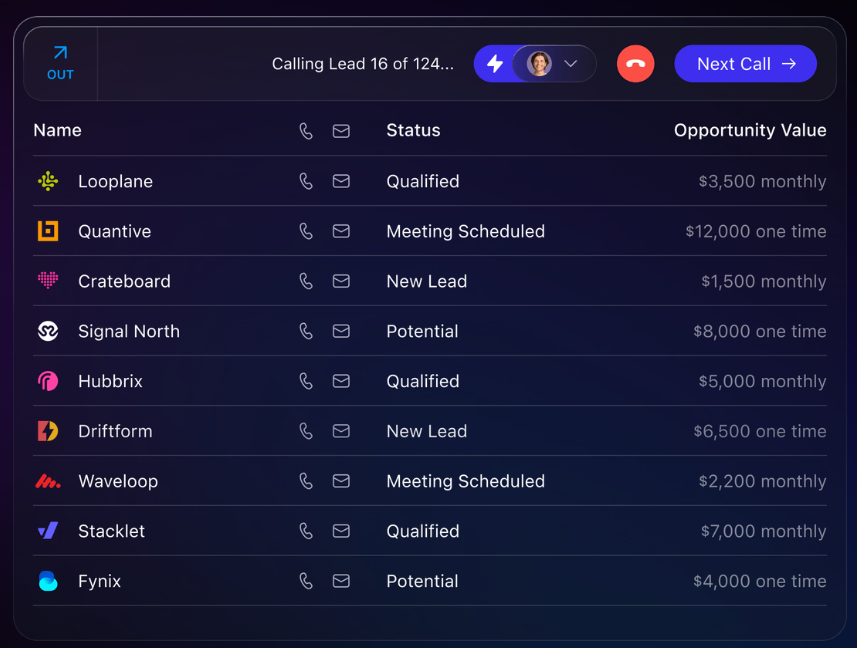
Source: Close
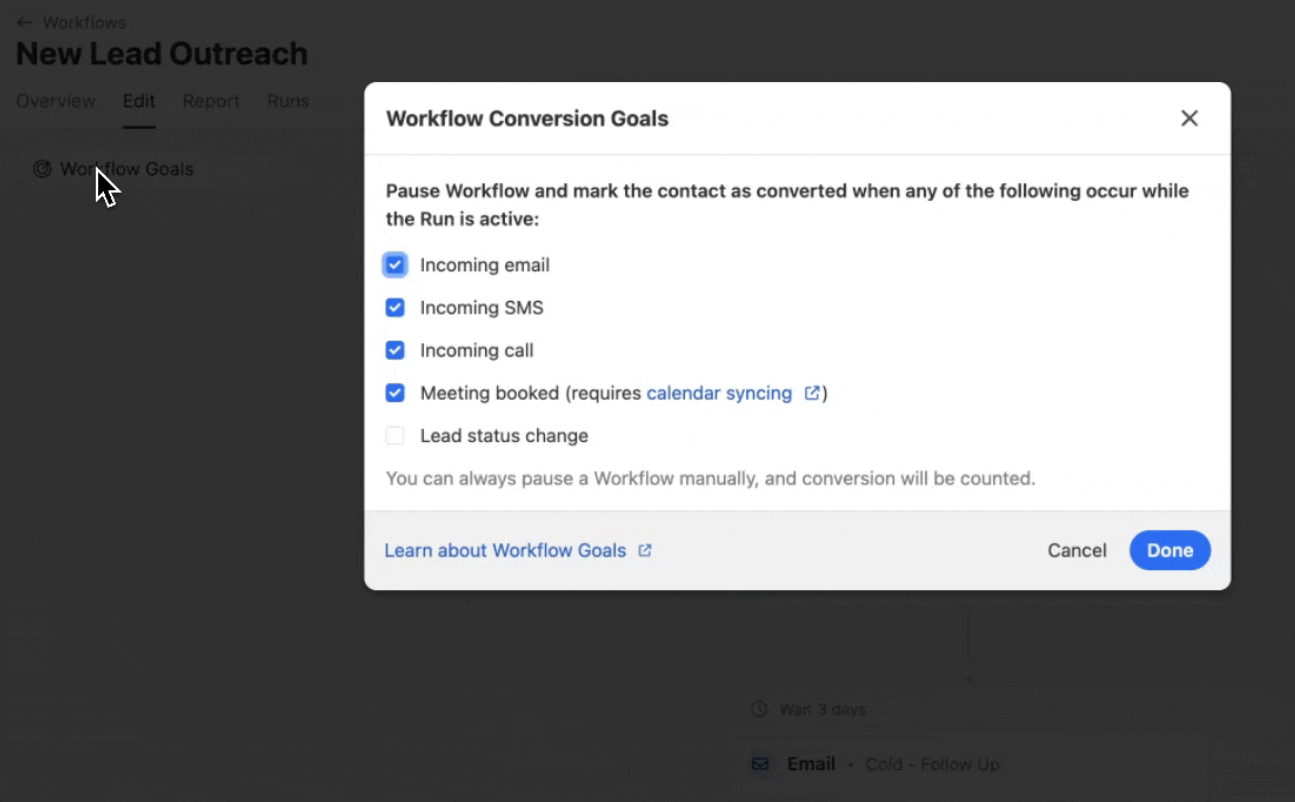
Automation extends beyond calling. Close's Workflows automate follow-ups, task creation, and lead routing, and 98% of users report saving at least 3 hours per week on admin work. The system pauses sequences when a prospect replies rather than continuing to send automated messages.
The limitations mirror the philosophy. Close lacks marketing automation, doesn't manage post-sale relationships well, and reviews note the features target SaaS sales models rather than retail or agency workflows. It's a focused tool for a specific job: outbound B2B sales execution.
HubSpot covers the full customer lifecycle
Where Close goes deep on sales, HubSpot goes wide across the business.
Marketing Hub handles lead generation, email campaigns, social media, and landing pages. Sales Hub manages pipelines, sequences, and forecasting. Service Hub provides ticketing, live chat, and a knowledge base. Content Hub powers websites and blogs. Commerce Hub handles quoting, invoicing, and payments. All share one database, so a marketing lead's full engagement history travels with them through every stage.
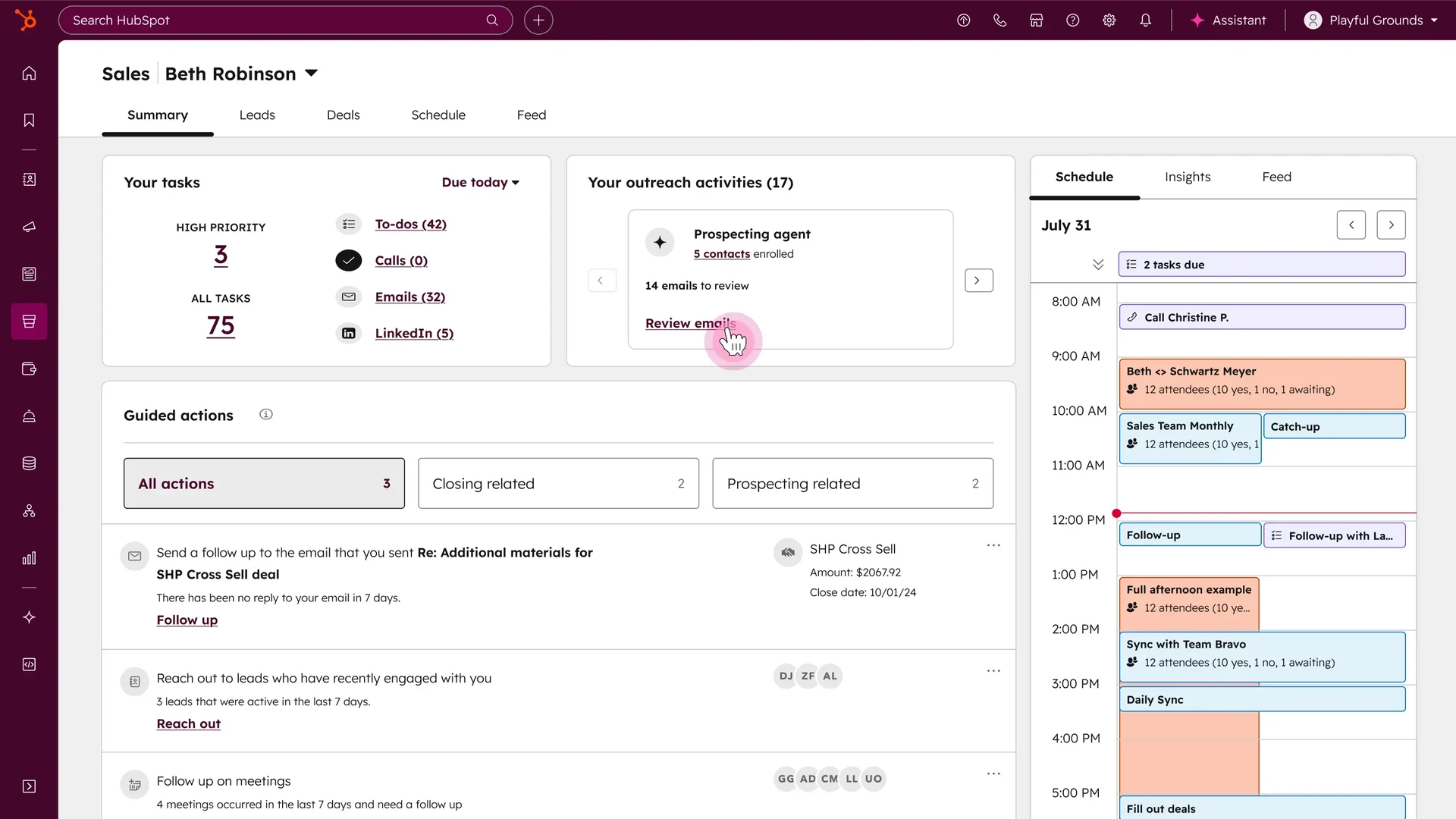
Source: Hubspot
This shared data layer is HubSpot's structural advantage. When a prospect fills out a form on your website, that action can trigger a sales sequence, enrich the contact record, and score the lead without anyone importing a CSV or configuring a third-party integration.
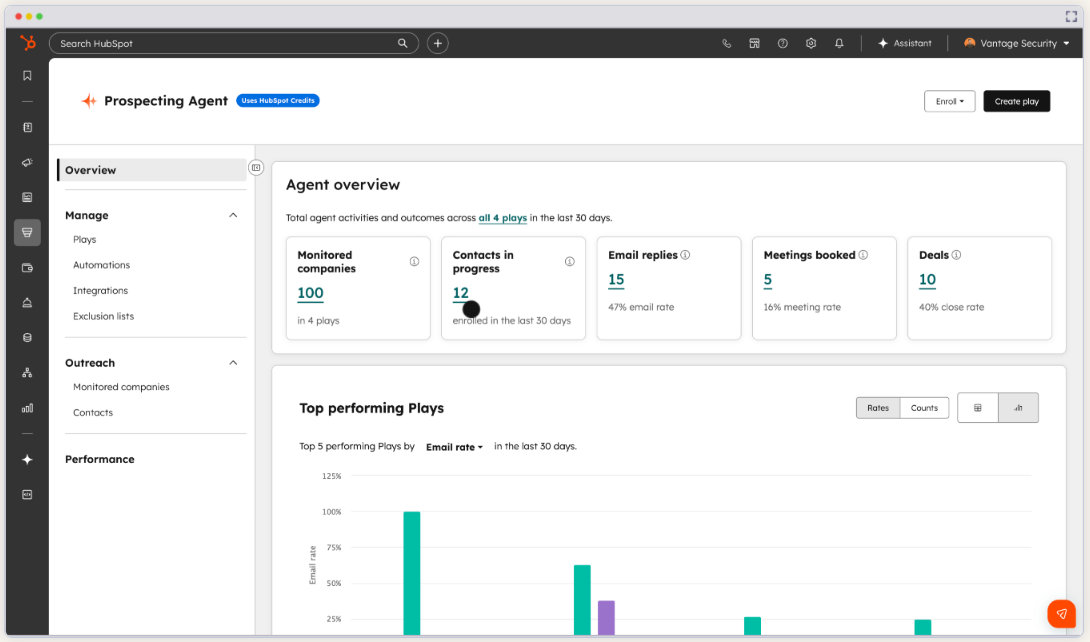
The Breeze AI layer runs across all hubs. The Prospecting Agent monitors buying signals and drafts outreach using HubSpot's customer history. The Customer Agent handles support inquiries, reportedly resolving over 50% of conversations on its own. The Data Agent answers natural-language questions about your CRM data.
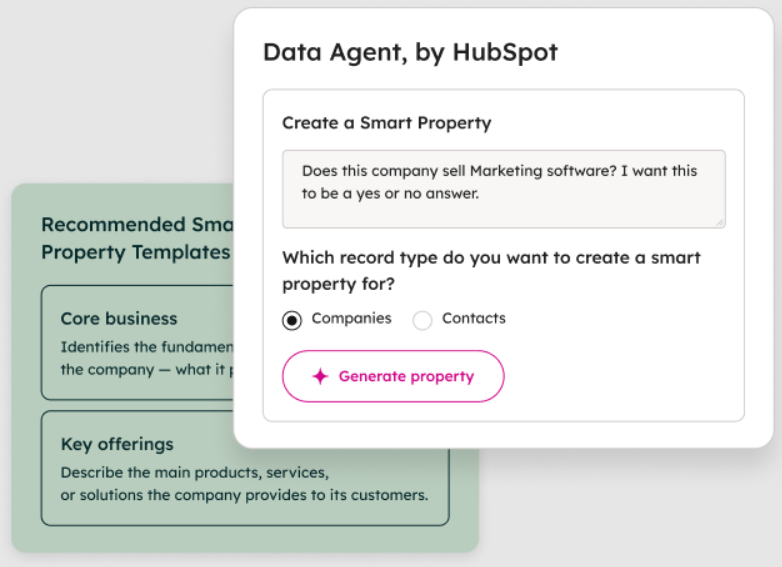
Source: Hubspot
HubSpot's breadth introduces complexity. The pricing model layers per-seat fees, per-contact charges, mandatory onboarding fees, and hub-specific tiers. If you subscribe to multiple hubs at different tiers, all Core Seats are billed at the rate of the highest tier. A company mixing Marketing Hub Professional with Sales Hub Enterprise might not realize every seat across both hubs is billed at Enterprise rates.
For companies that need all these capabilities, HubSpot can replace five or six separate tools. For those that primarily need a sales CRM, much of the platform goes unused while the pricing complexity remains.
The intelligence gap neither CRM fills on its own
Both Close and HubSpot expect you to bring your own prospect data. Close lets you import leads. HubSpot captures them through forms and content. Neither tells you which companies outside your existing database are actively researching solutions in your category right now.
This is where ZoomInfo changes the equation.
ZoomInfo's dataset spans 500M contacts, 100M companies, 135M+ verified phone numbers, 120M direct-dial phone numbers, and 200M+ verified business email addresses. That data is maintained through a multi-source pipeline: automated ML scanning of 28 million site domains daily, 95 million businesses covered through third-party partner data, a community of 200,000+ ZoomInfo Lite users who share data back, and 300+ in-house human researchers. First-party data reaches up to 95% accuracy.
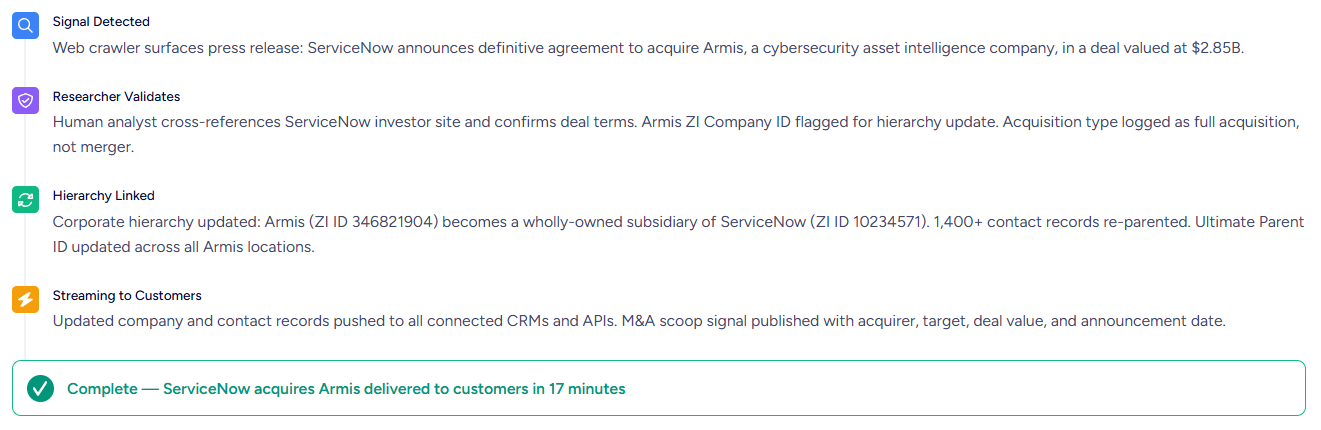
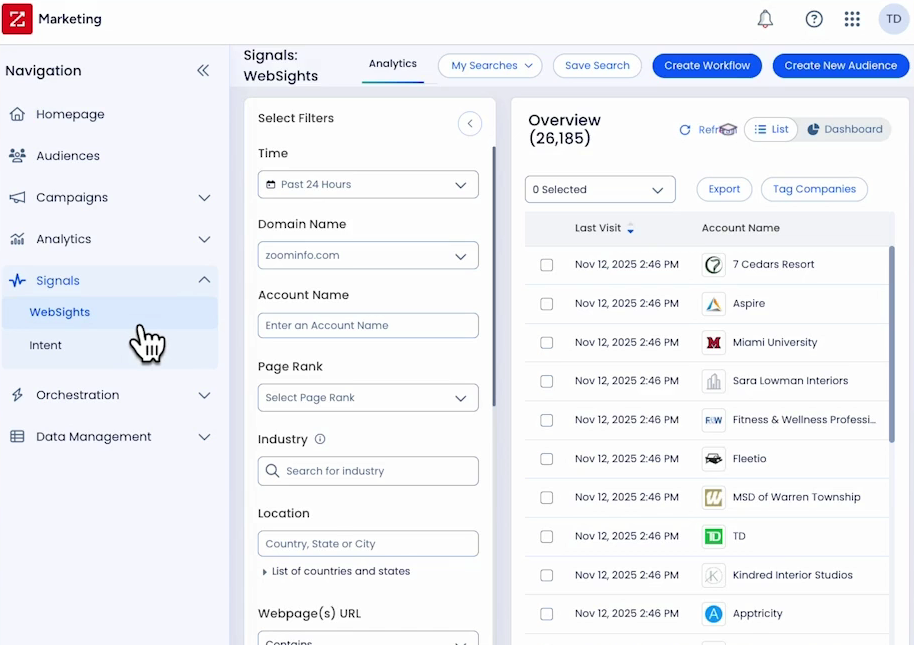
Beyond contacts, ZoomInfo Intent tracks buying signals from 210 million IP-to-Organization pairings and 6 trillion+ new keyword-to-device pairings sourced monthly. WebSights identifies which companies visit your website before they fill out a form. Guided Intent (exclusive to ZoomInfo) identifies topics historically correlated with your deal success rather than requiring manual topic selection.
This isn't self-reported. In a Fortune 500 competitive RFP analyzing 25 million contacts across vendors, the independent consultant concluded that "no other competitor came even close." ZoomInfo holds a Leader position in the Gartner MQ for ABM Platforms and the Forrester Wave for Intent Data Providers.
The practical impact: instead of cold-calling through a list, your team focuses on accounts actively researching your category, reaches verified decision-makers on direct dials that connect, and opens conversations informed by what those companies care about right now.
Vensure scaled prospecting with ZoomInfo's data, eliminating hours of manual research so their team could reach prospects faster and close more clients. (Vensure)
For a closer look at how HubSpot and ZoomInfo compare on data, intelligence, and GTM fit, see our HubSpot vs. ZoomInfo comparison.
AI takes a different shape on each platform
All three platforms invest in AI, but each applies it to a different problem.
Close uses AI to cut admin work inside the CRM. The Call Assistant transcribes and summarizes calls in over 20 languages. AI email rewriting adjusts tone and phrasing. AI Lead Summaries (available on Growth and Scale plans) generate overviews from the last 90 days of activity. AI Enrich fills missing lead data at $0.05 per enrichment. These are useful productivity features, but they operate within the boundaries of data already in your CRM.
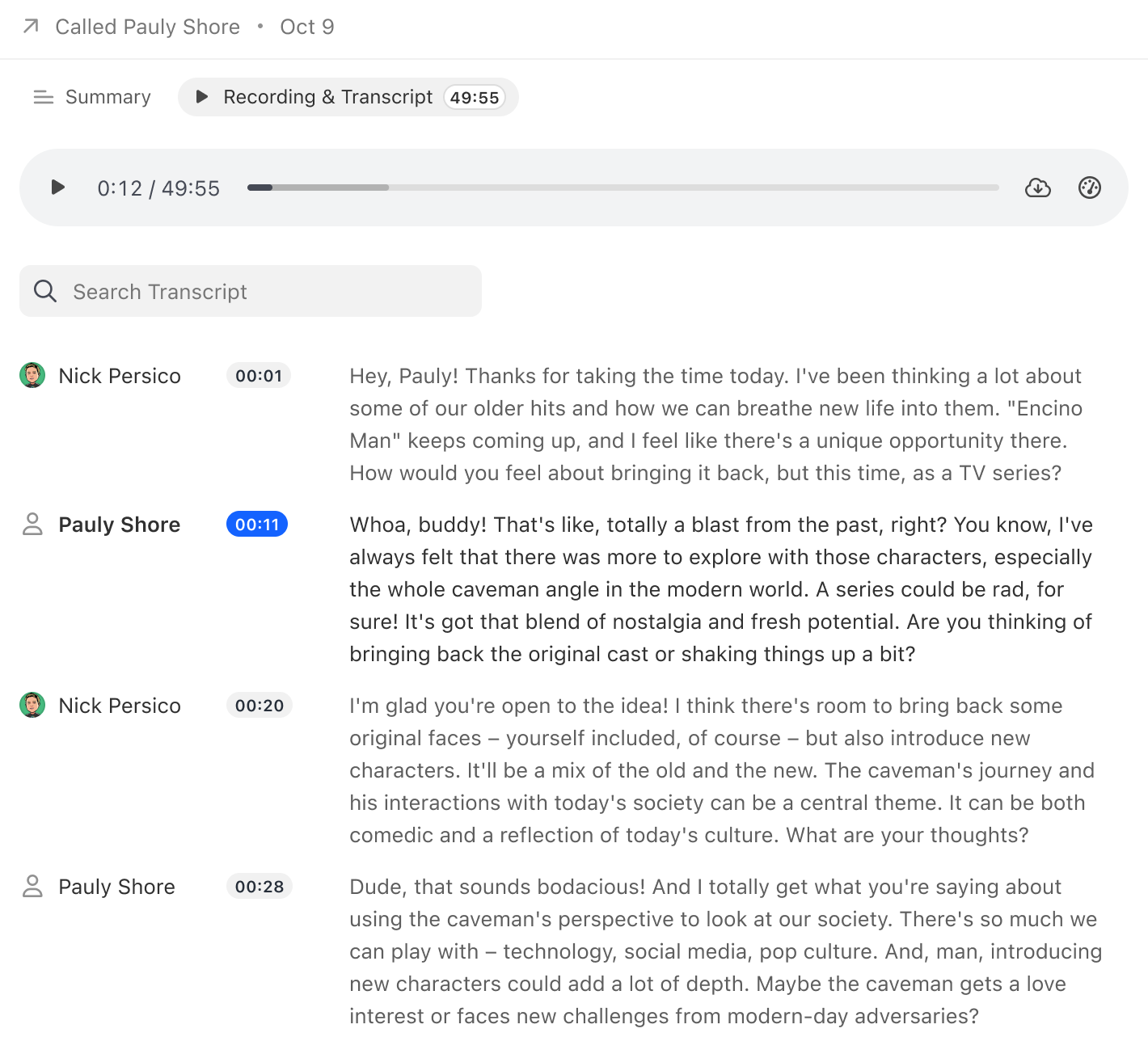
Source: Close
HubSpot applies AI more broadly through Breeze agents. The Prospecting Agent uses HubSpot's customer history to personalize outreach, referencing specific pain points from won deals and support tickets. The Customer Agent handles support conversations across chat, email, WhatsApp, and Facebook Messenger. The Data Agent answers natural-language questions about your CRM. Several capabilities, including AI-Powered Segmentation and Marketing Studio, remain in Beta as of the Fall 2025 Spotlight. AI features run on HubSpot Credits, allotted monthly by tier and not rolling over.
Source: Hubspot
ZoomInfo applies AI to the problem that sits upstream of both: understanding what's actually happening in your deals and your market. The GTM Context Graph doesn't just know that a deal moved to Stage 3. It reasons about why, drawing on conversation transcripts, intent signals, and patterns from thousands of similar deals. As ZoomInfo's CPO Dominik Facher writes: "The CRM recorded the state change. It has no record of why it happened." That reasoning flows into GTM Workspace, where AI agents research accounts, draft outreach, monitor buying signals, and surface next best actions. In GTM Studio, AI agents build audiences from natural language prompts, launch GTM plays, and optimize targeting based on engagement patterns.
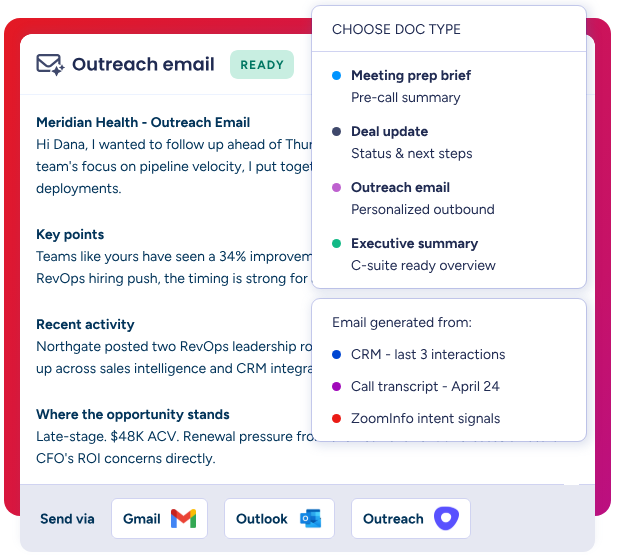
The difference is clearest during daily work. Close's AI helps you write a better email. HubSpot's AI helps you manage more interactions efficiently. ZoomInfo's AI tells you which account to prioritize, why that account is showing buying behavior right now, and which specific people to engage.
Seismic attributed 39% of active pipeline to opportunities identified or influenced by ZoomInfo signals, with the sales team reporting 54% greater productivity and 11.5 hours saved per week. (Seismic)
Pricing reveals different market strategies
Close keeps pricing straightforward. Four tiers, all per-seat: Solo at $9/month (annual) for a single user, Essentials at $35/seat/month for small teams, Growth at $99/seat/month with automation and AI, and Scale at $139/seat/month with advanced permissions and predictive dialing. No contracts required. The catch: calling costs extra per minute (via Twilio pricing), SMS costs extra per message, and Workflows are only on Growth and Scale plans. There's no free plan beyond the 14-day trial.
Source: Close
HubSpot offers a permanently free CRM with basic functionality for up to 2 users. Paid plans start at $15/seat/month for Starter (monthly billing). But costs escalate at Professional and Enterprise levels. Sales Hub Professional runs $90/seat/month (annual) with a $1,500 mandatory onboarding fee. Marketing Hub Professional costs $800/month (annual) with a $3,000 onboarding fee. A mid-sized company using multiple hubs at Professional or Enterprise tiers can reach five figures monthly. Paid subscriptions can only be canceled at the end of the commitment term, not mid-contract.
ZoomInfo uses custom, consumption-based pricing with no published dollar amounts. Pricing scales around seat count, credit volume (1 credit = 1 data export), features selected, and contract length. The entry point is higher than either Close or HubSpot's basic tiers, reflecting ZoomInfo's enterprise focus. However, ZoomInfo Lite provides a permanent free tier with access to the B2B database, 10 monthly export credits, a ReachOut Chrome Extension, and a HubSpot integration, with no credit card or time limit required.
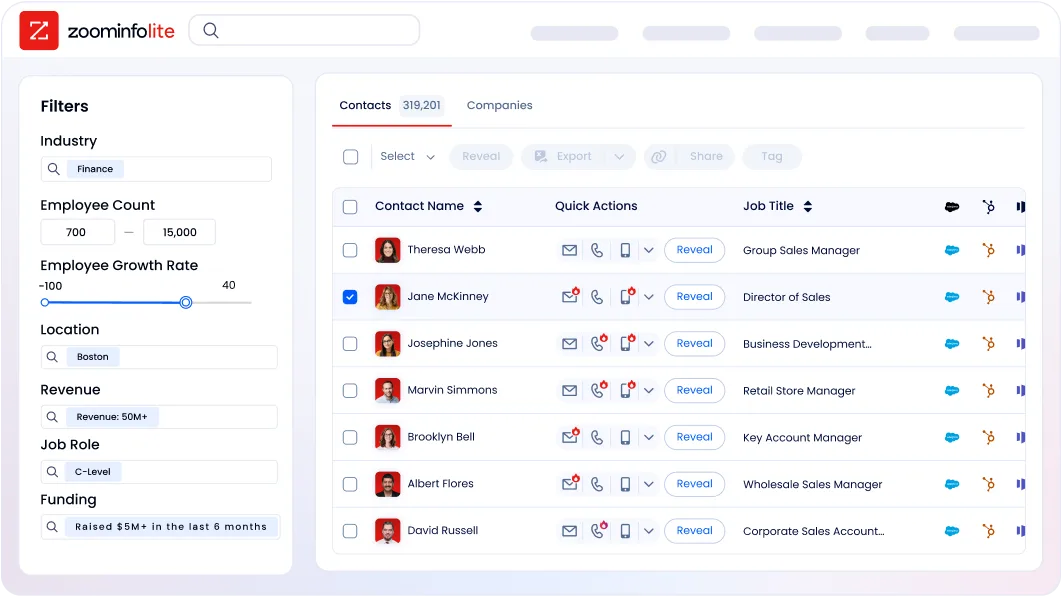
The price comparison tells only half the story. A sales team paying $99/seat/month for Close still needs to source prospect data somewhere. A company paying $800+/month for HubSpot Marketing Hub still needs enrichment to fill gaps in their contact database. ZoomInfo bundles the intelligence layer that these CRMs depend on, which can reduce or eliminate spend on separate data vendors, enrichment tools, and intent providers.
How the platforms scale differently
Close scales for a specific use case: small to mid-sized outbound sales teams. It serves 11,500+ teams globally and earns high marks from SaaS startups, agencies, and B2B sales organizations. But it lacks the complex CRM objects enterprise buyers need, has no post-sale customer success functionality, and offers custom pricing only at 10+ seats. Teams that outgrow Close typically migrate to HubSpot, Salesforce, or a broader platform.
HubSpot scales across the full customer lifecycle. From a free CRM for a solo founder to an Enterprise deployment supporting up to 15 million contacts (expandable to 50 million) with custom objects, sandbox environments, and SSO. The challenge is cost: scaling HubSpot means scaling a complex pricing model across multiple hubs, seat types, and contact tiers. Each department that touches customers adds another pricing dimension.
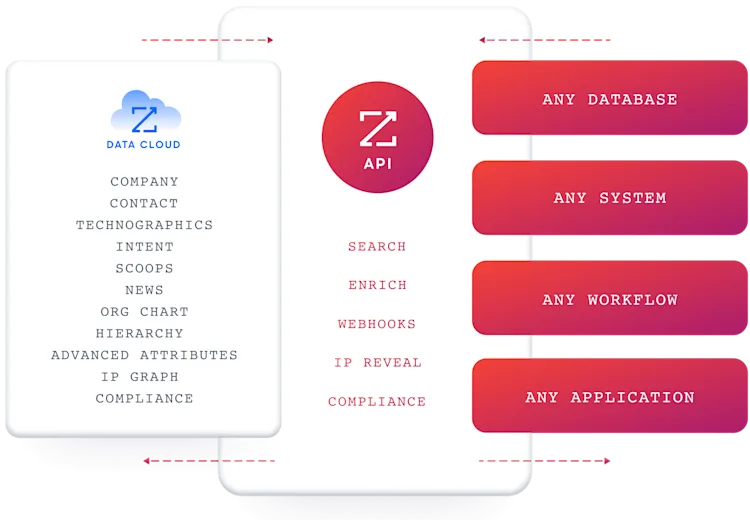
ZoomInfo scales at the intelligence layer. With 35,000+ companies served worldwide and 1,921 customers spending $100K+ annually, ZoomInfo's customers include organizations like Adobe, Snowflake, and Databricks. The platform grows more valuable as organizations scale: intent signals become more actionable with larger deal volumes, the GTM Context Graph gets smarter with more CRM data flowing through it, and the API and MCP access layer lets engineering teams build custom workflows on top of ZoomInfo's data. ZoomInfo integrates with Salesforce, HubSpot, and Microsoft Dynamics, so it grows alongside whatever CRM a company uses.
Levanta prioritized high-value opportunities using ZoomInfo's intent signals and AI execution, with their CEO describing ZoomInfo as "a full system of execution" that drives predictable growth. (Levanta)
Close vs. HubSpot vs. ZoomInfo: Which should you choose?
The right choice depends on where your biggest gap is: executing sales conversations, managing the full customer lifecycle, or knowing which accounts to pursue.
Choose Close if:
Your team is primarily outbound sales, making high volumes of calls and emails daily
Built-in Power Dialer and Predictive Dialer would increase your talk time
You want the fastest CRM with minimal data entry
You need a focused sales tool, not a full platform
Your team is 1-25 reps and you don't need marketing automation or post-sale management
Choose HubSpot if:
Your company has marketing, sales, and service teams that all need shared customer data
You want one platform to replace five or six separate tools
Marketing automation, content management, and customer service are as important as sales
You're willing to navigate complex pricing for the breadth of capabilities
A free CRM tier lets you start small and expand as needs grow
Choose ZoomInfo if:
Your biggest challenge is finding the right accounts to pursue, not managing the ones you've found
Verified B2B contact data, direct dials, and intent signals would change how your team prospects
You want AI that understands deal context and surfaces which accounts are in-market
You need an intelligence layer that works inside your existing CRM or through its own GTM Workspace
Your organization is ready for data infrastructure that compounds in value as you scale
See how ZoomInfo's GTM Workspace puts intelligence into action.
Close and HubSpot each solve real problems well. Close reduces the friction between identifying a prospect and having a conversation. HubSpot connects fragmented departments onto a shared platform. But neither addresses the foundational question: are your teams working the right accounts? ZoomInfo's data, intelligence layer, and open access points ensure that every call, email, and play targets an account that matters. The CRM you choose manages the process. The intelligence behind it determines the outcome.
Close vs. HubSpot vs. ZoomInfo FAQ
What is the core difference between Close, HubSpot, and ZoomInfo?
Close is a sales CRM built for small outbound teams, with native calling, email, and SMS in one interface. HubSpot is a customer platform spanning marketing, sales, service, content, and commerce, all sharing a single database. ZoomInfo is an AI GTM platform built on the largest B2B dataset in the industry, designed to tell teams which accounts to pursue, when to engage, and what to say.
Which platform is cheapest for a small sales team?
Close starts at $9/seat/month (annual billing) for a solo user, though most teams need the Growth plan at $99/seat/month for automation features. HubSpot's free CRM is the lowest entry point with no time limit, but meaningful sales features require Sales Hub Professional at $90/seat/month plus a $1,500 onboarding fee. ZoomInfo uses custom pricing with no published rates, though ZoomInfo Lite provides permanent free access to the B2B database with 10 monthly export credits.
Can I use ZoomInfo with Close or HubSpot?
Yes. ZoomInfo integrates directly with HubSpot and connects with other CRMs via its API and native integrations. ZoomInfo enriches CRM records with verified contact data, intent signals, and company intelligence regardless of which CRM you use. Teams can also work within ZoomInfo's GTM Workspace for seller execution while syncing data back to their CRM of choice.
Which platform has the best built-in calling features?
Close leads on native calling. Its Power Dialer and Predictive Dialer are core features, with call coaching tools (whisper and barge), voicemail drop, call recording, and international calling to nearly 200 countries. HubSpot offers call tracking and recording in Sales Hub but lacks a predictive dialer. ZoomInfo provides calling capabilities through GTM Workspace and integrations with sales engagement platforms like Salesloft.
Does HubSpot or Close include B2B contact data?
Neither includes a proprietary contact database. Both require you to import leads or capture them through forms and inbound marketing. ZoomInfo is the only platform among the three with its own B2B dataset, covering 500 million contacts and 100 million companies with verified phone numbers and email addresses, verified at up to 95% accuracy on first-party data.
Which platform has the strongest AI capabilities?
Each applies AI to different problems. Close uses AI for email rewriting, call transcription in 20+ languages, and lead summaries within the CRM. HubSpot's Breeze AI runs agents across marketing, sales, and service hubs, including a prospecting agent and customer service agent. ZoomInfo's GTM Context Graph processes 1.5 billion data points daily to reason about deal context, buyer intent, and account prioritization, powering AI agents in GTM Workspace that research accounts, draft outreach, and surface next best actions based on actual buying patterns.
How do the free options compare?
Close offers only a 14-day trial with no permanent free plan. HubSpot provides a permanent free CRM with basic features for up to 2 users. ZoomInfo offers both a permanent free tier (ZoomInfo Lite with 10 monthly export credits and B2B database access) and a separate 7-day full trial of paid features. Among the three, HubSpot's free tier has the broadest functionality, while ZoomInfo Lite provides verified B2B contact data at no cost.
Which platform is best for companies that need both sales and marketing tools?
HubSpot is the most complete option, covering marketing automation, sales, service, and content in a single platform. Close has no marketing features. ZoomInfo provides marketing capabilities through GTM Studio (audience targeting, ABM campaign orchestration, cross-channel advertising) and excels at feeding high-quality prospect data and intent signals into whatever marketing tools a company already uses.
