
Customer.io is a customer engagement platform that turns first-party behavioral data into automated, personalized messaging across email, SMS, push notifications, in-app messages, WhatsApp, and LINE.
If you run a product-led SaaS company or digital subscription business, your users generate a constant stream of behavioral events: signups, feature activations, purchases, lapses. Customer.io ingests those events in real time and lets you build multi-channel campaigns that respond to what each user does inside your product, not just which list they landed on. This breakdown covers every feature, how it works, who it serves, and which plan unlocks it.
Customer.io's feature set has you covered if:
You trigger lifecycle messaging (onboarding, activation, retention, upsell) based on real-time in-product user behavior
You orchestrate campaigns across email, SMS, push, in-app, WhatsApp, and LINE from a single visual workflow canvas
You need a data model that handles custom objects, nested JSON attributes, and unlimited API calls on every plan
You want AI inside your campaign workflows, generating personalized content per recipient at send time
You run transactional messages (password resets, order confirmations) and marketing automation from the same platform
You need HIPAA, SOC 2, and GDPR compliance for regulated-industry messaging
You'll reach the edges of its capabilities if:
You need a B2B contact and company database to identify and reach prospects you have never interacted with
You want buyer intent signals showing which companies are researching your product category across the web
You need sales pipeline management, deal tracking, or conversation intelligence alongside your messaging
You want account-based marketing orchestration with display advertising, audience management, and multi-channel campaign activation beyond lifecycle messaging
For those needs, the reference point is ZoomInfo: a go-to-market platform built on a B2B database of 500M contacts, 100M companies, 135M+ verified phone numbers, and 200M+ verified business email addresses.
Its GTM Context Graph combines B2B data with CRM records, conversation intelligence, and behavioral signals into a single intelligence layer, accessible through APIs, MCP, GTM Workspace, and GTM Studio.
Where Customer.io activates messaging to known users, ZoomInfo identifies and reaches the buyers you have not yet met.
After the feature breakdown, this article covers where Customer.io stops and how ZoomInfo fills those edges.
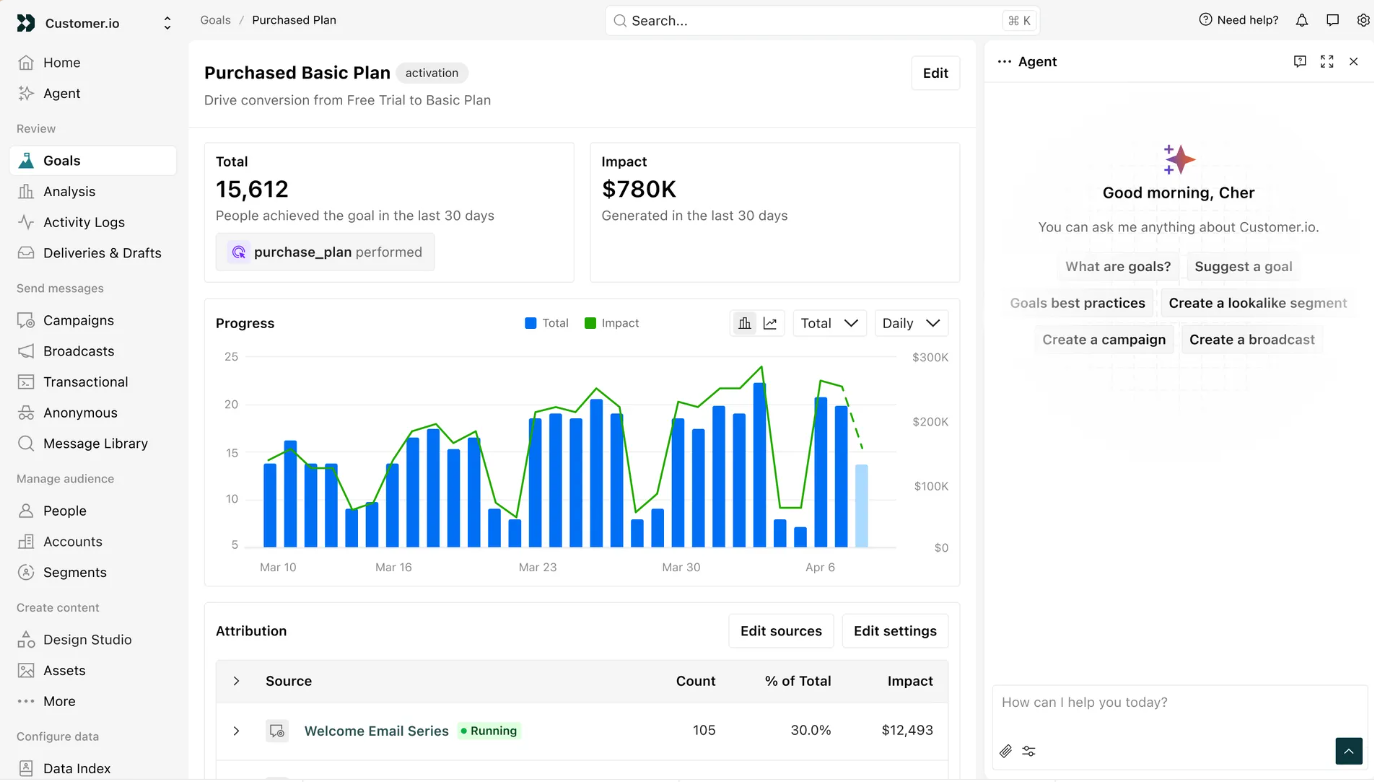
Customer.io Platform Overview
Source: Customer.io
Customer.io targets product-led SaaS companies, digital subscription businesses, fintech platforms, and mobile apps that generate high volumes of behavioral event data and need to act on it across channels without constant engineering support.
The platform has crossed $100M+ ARR with 37% year-over-year growth, serves 9,000+ brands with 78,000 active users, and has sent over 100 billion messages. Named customers include Notion, Buffer, Monarch Money, Attio, and Nordnet.
The platform is organized around five capability areas plus an AI layer:
Module | What It Does | Plan Availability |
|---|---|---|
Visual workflow builder for automated, multi-channel campaigns | All plans | |
Real-time, data-driven segmentation with AI-assisted segment creation | All plans | |
Embedded CDP with reverse ETL, APIs, mobile SDKs, and MCP server | All plans (warehouse destinations: Premium+) | |
Dual-mode email editor with code, visual, and MJML support | All plans (components, templates, version control: Enterprise) | |
Goals, conversion tracking, A/B testing, workspace performance dashboards | All plans | |
Conversational AI that builds campaigns, analyzes performance, and runs scheduled monitoring | All plans (session limits and routines scale by tier) |
Customer.io Journeys: Multi-Channel Campaign Automation
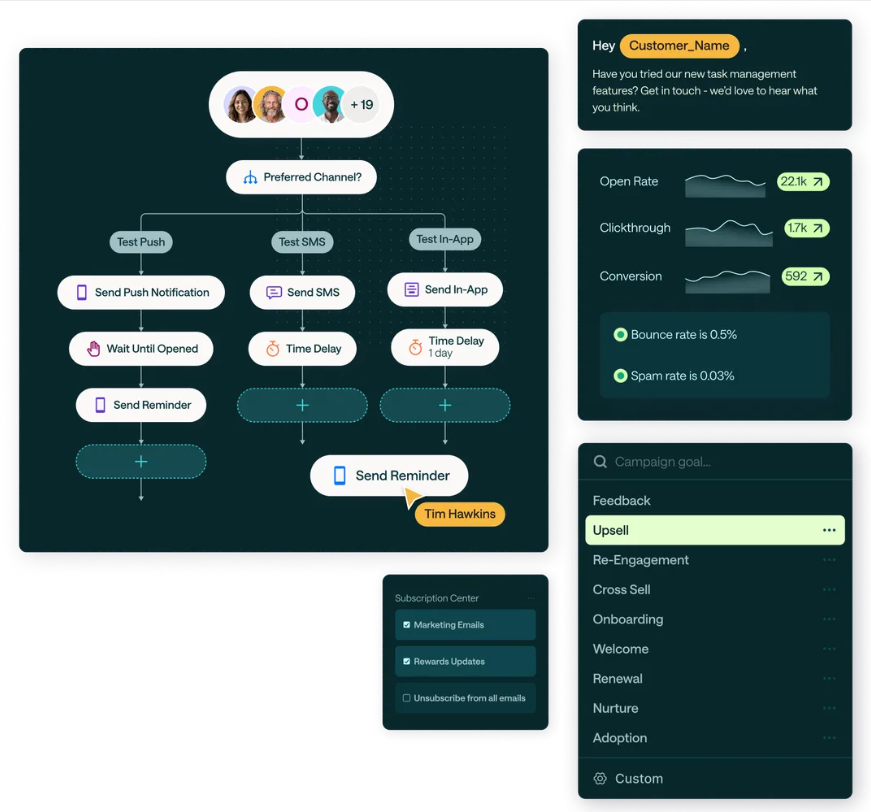
Journeys is the core of the platform and the feature most buyers evaluate first. It handles three sending modes from a single workspace: automated campaigns triggered by user behavior, one-time broadcasts and newsletters for scheduled sends, and transactional messages (password resets, order confirmations) that bypass marketing suppression lists and fire immediately via API.
Source: Customer.io
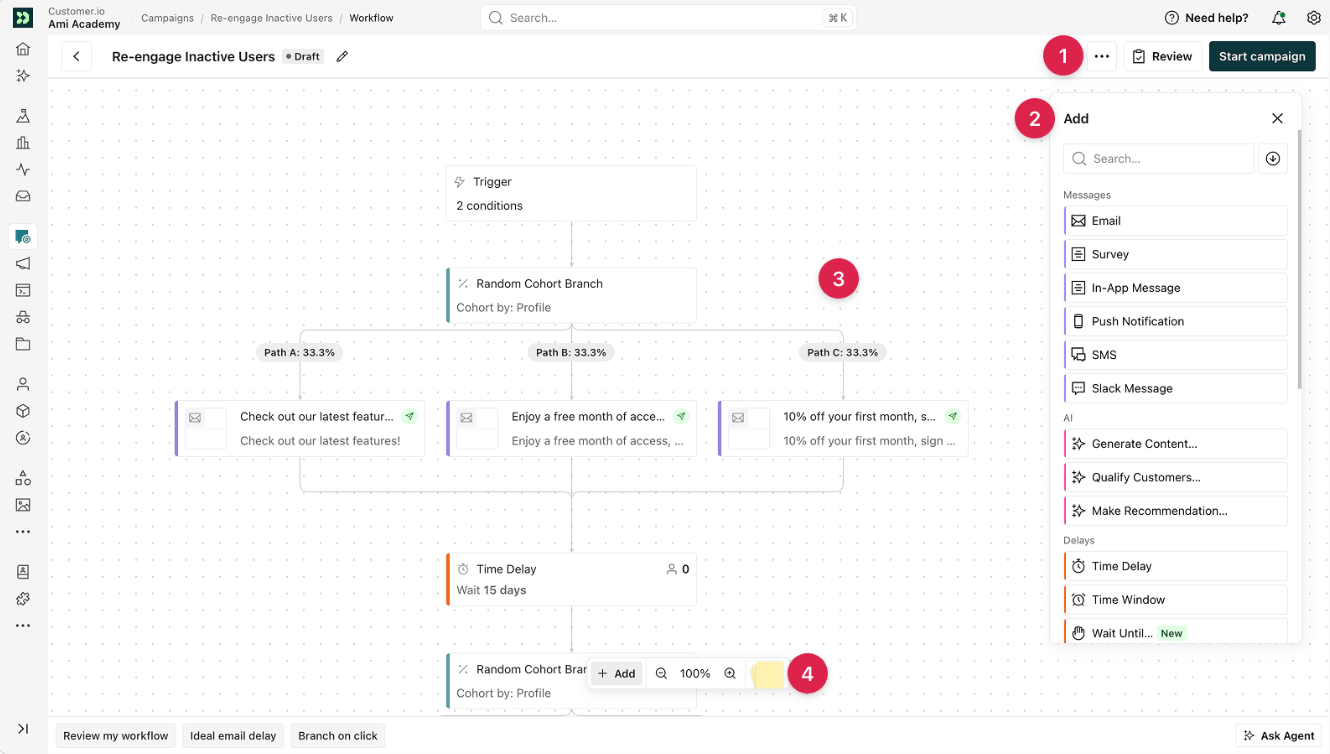
The building block is a campaign, which combines a trigger, optional filters, and a workflow: a visual sequence of steps assembled through a drag-and-drop builder.
Source: Customer.io
A campaign can be triggered by segment membership, behavioral events, dates, object relationships, form submissions, or incoming webhooks. Once triggered, each person travels through the workflow step by step.
Inside a workflow, you assemble message steps across every supported channel (email, SMS, push, in-app, WhatsApp, LINE, and webhook-delivered channels such as direct mail via Lob), time delays (fixed waits, "Wait Until" conditions, Time Windows, randomized delays), and branching logic (True/False branches, Multi-Split branches, Random Cohorts, Exit Blocks).
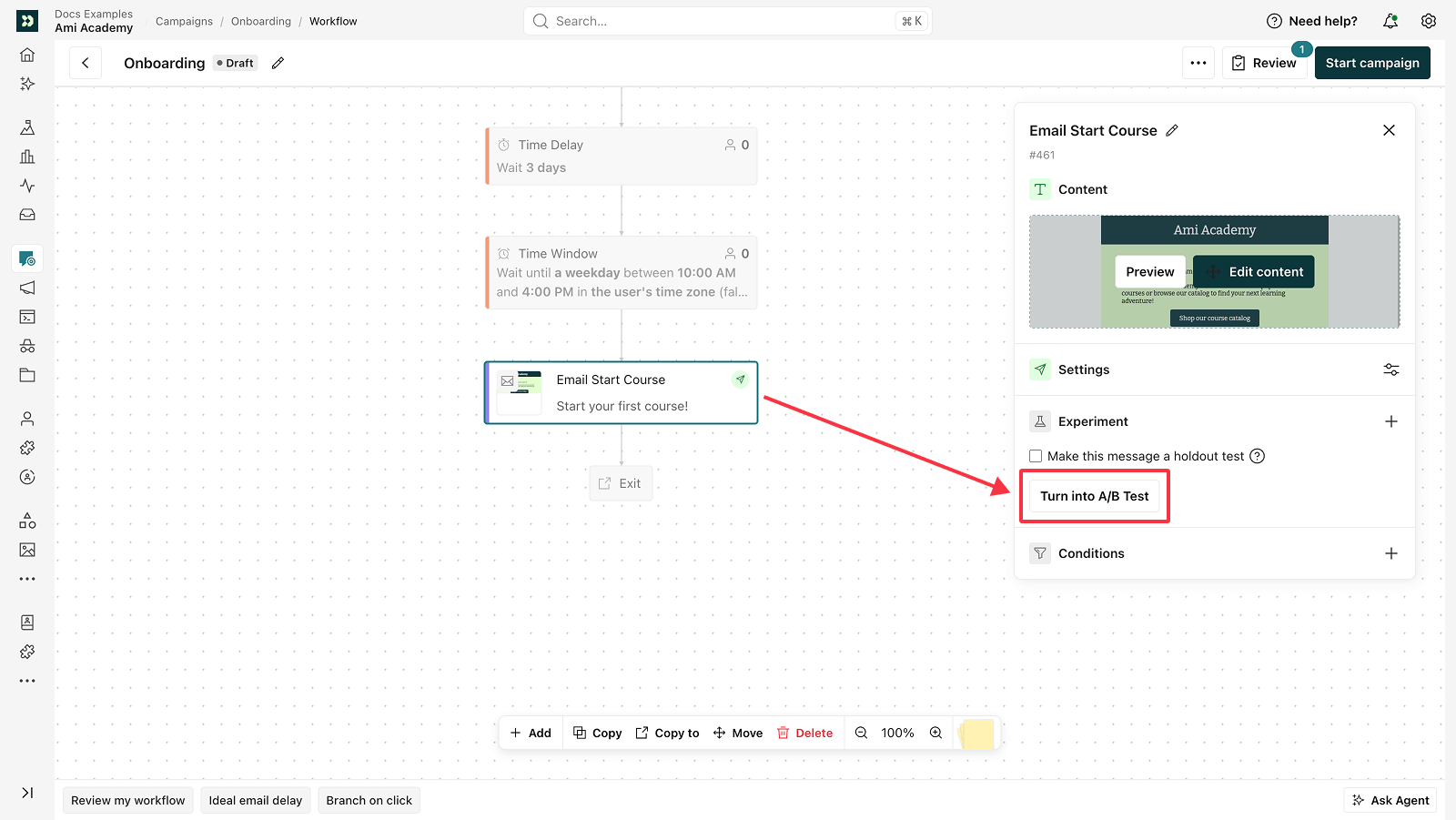
A/B testing lets you compare message variations and measure campaign lift through holdout groups.
Source: Customer.io
Attribute updates modify person-level data mid-flow, and webhook actions send or receive data from external systems during campaign execution.
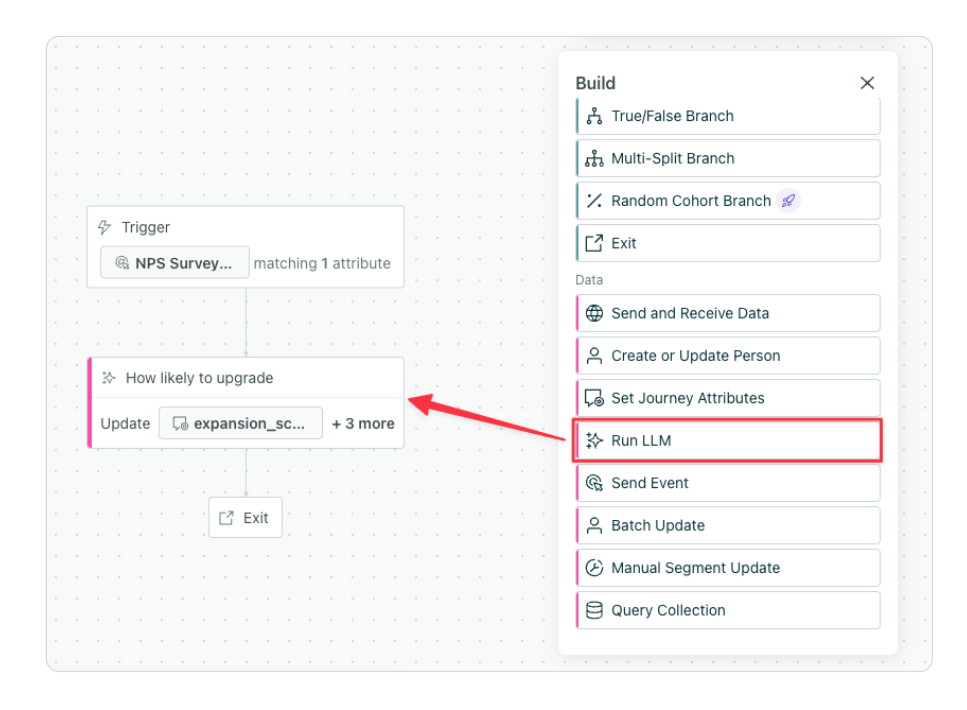
LLM Actions, launched in April 2026, are the most distinctive workflow step. They let you call any large language model inside a live campaign, pass in the current customer's attributes and event data as context, and store the output as journey attributes.
Source: Customer.io
A retention campaign can generate a personalized win-back message for each recipient at send time, referencing their specific usage patterns and last active features, without a marketer writing hundreds of variations.
LLM Actions cost $10 per 100,000 AI Credits, with 100,000 introductory credits granted to paying accounts.
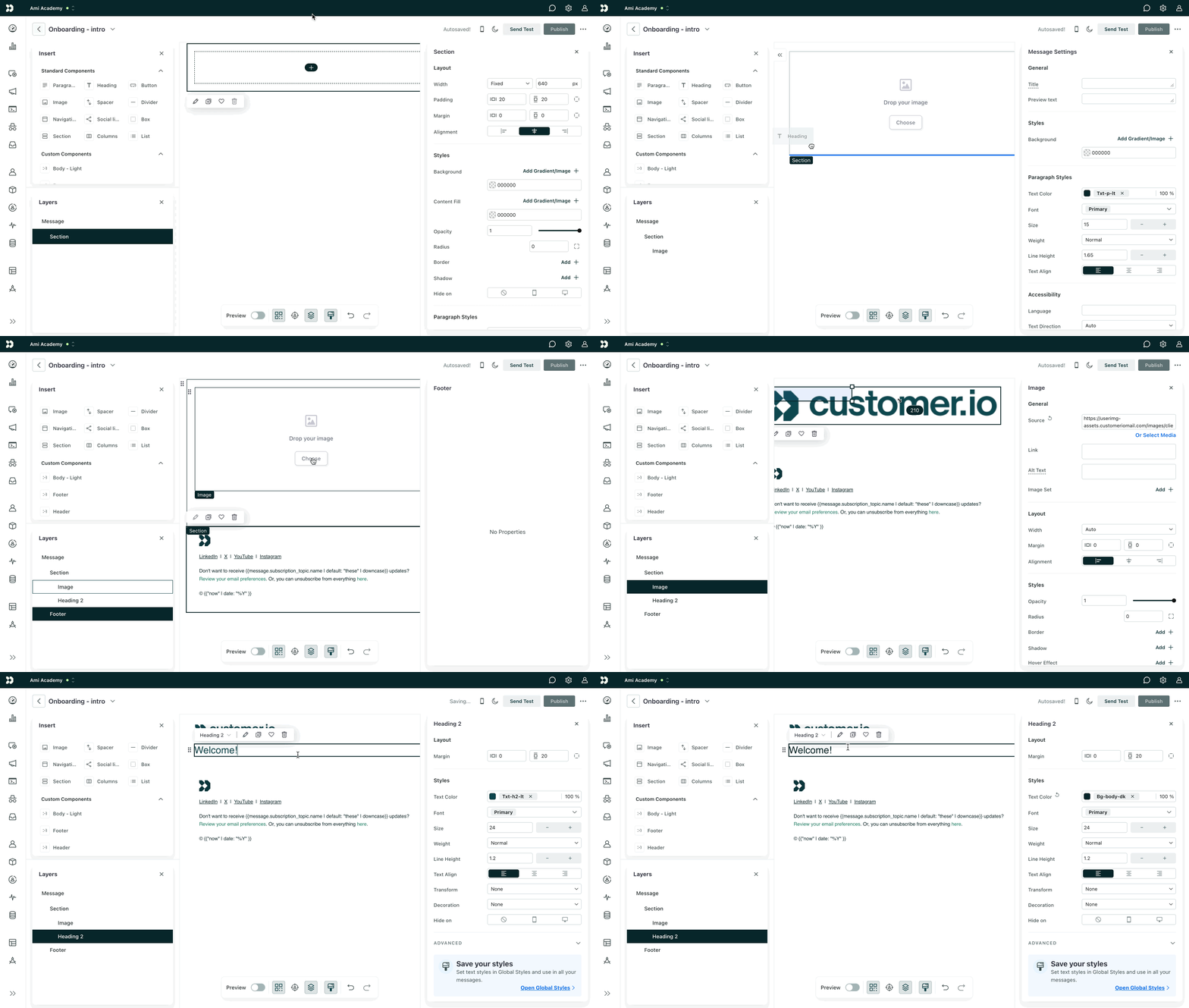
All messages are built in Design Studio with Liquid templating for per-recipient dynamic content. Recommended send time optimizes delivery timing per individual recipient.
Source: Customer.io
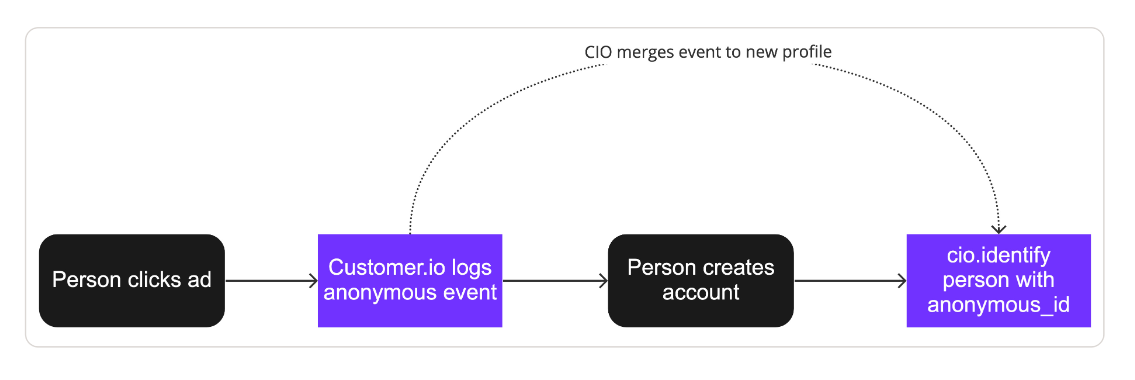
Anonymous event tracking captures pre-signup behavior and retroactively associates it with identified profiles, so a visitor who browsed three pricing pages before signing up enters their onboarding campaign with that context already attached.
Source: Customer.io
The data model underneath supports People (individual profiles with unlimited attributes and event history), Objects (non-person entities like companies, subscriptions, or courses), and Collections.
Objects let you model B2B or complex B2C relationships and trigger campaigns based on relational data: when a company's subscription status changes, everyone related to that company object can receive a contextual message.
Customer.io provides campaign recipes (pre-built templates for welcome emails, cart abandonment, double opt-in, onboarding, trial expiration, and anniversary campaigns), a subscription center for customer-managed messaging preferences, and localization for multi-language message variations.
Ad audience sync keeps segments current with Google, Facebook, Instagram, and YouTube ad networks. The platform handles 12 billion+ daily API calls and maintains 99.98% uptime.
Customer.io Audiences: Real-Time Segmentation
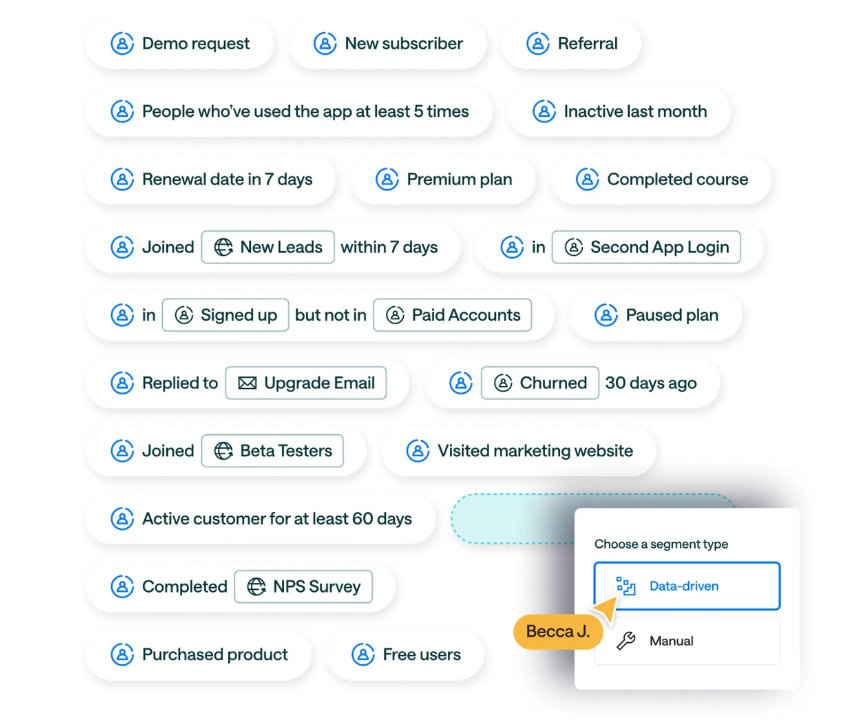
Audiences is Customer.io's segmentation engine. It operates in real time: people enter segments when they match conditions and leave when they stop matching, with no manual upkeep.
Source: Customer.io
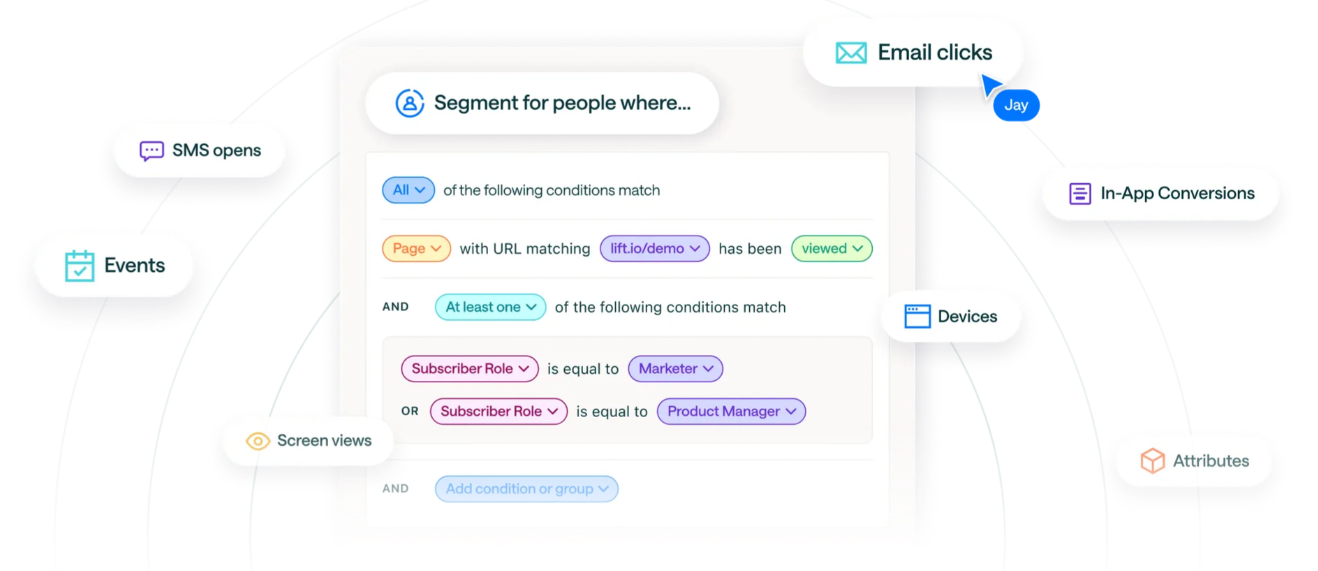
Data-driven segments are the primary type. Conditions span attributes, events, object relationships, form submissions, page events, devices, screens, existing segment membership, and messaging engagement data.
You join conditions with All (AND) or At least one (OR) logic and nest them using a Group option for complex boolean expressions. JSON attributes and timestamp-based recency conditions ("within the past X days") are both supported.
Object relationship segmentation lets you build segments based on the relationship between people and custom objects: "all users related to a company whose subscription is expiring within 30 days."
Manual segments allow grouping based on business logic defined outside the platform, populated via CSV upload, workflow actions, the Track API, data-in integrations, or directly from a person's profile.
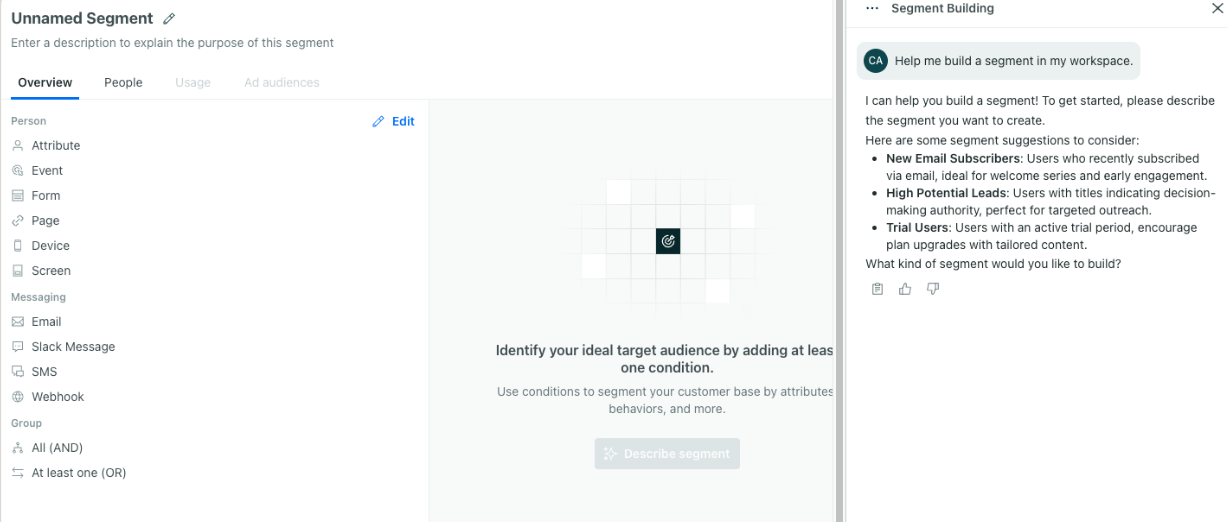
The AI-powered segment builder generates conditions from plain-language descriptions. Describe "users who signed up in the last 30 days but haven't completed onboarding" and the agent produces the full condition set. It uses only attribute names, never attribute values or PII, a deliberate privacy design. The agent also suggests relevant segments based on the workspace's data.
Source: Customer.io
Ad audience sync connects segments to Meta (Facebook/Instagram), Google Ads, and YouTube Ads. Existing members sync automatically, then update on hourly intervals for Meta and every 24 hours for Google Ads. All data is sha256-hashed before transmission.
The Google Ads integration uses Customer Match to create audiences without cookies.
Segments serve as campaign triggers, entry filters, conversion goals, broadcast audiences, and ad network audiences from a single definition. Changes propagate everywhere the segment is used. Mobile device segments handle device-specific audiences. Identity resolution merges duplicate profiles, designating primary and secondary records.
Source: Customer.io
Customer.io Data and Integrations: The Embedded CDP
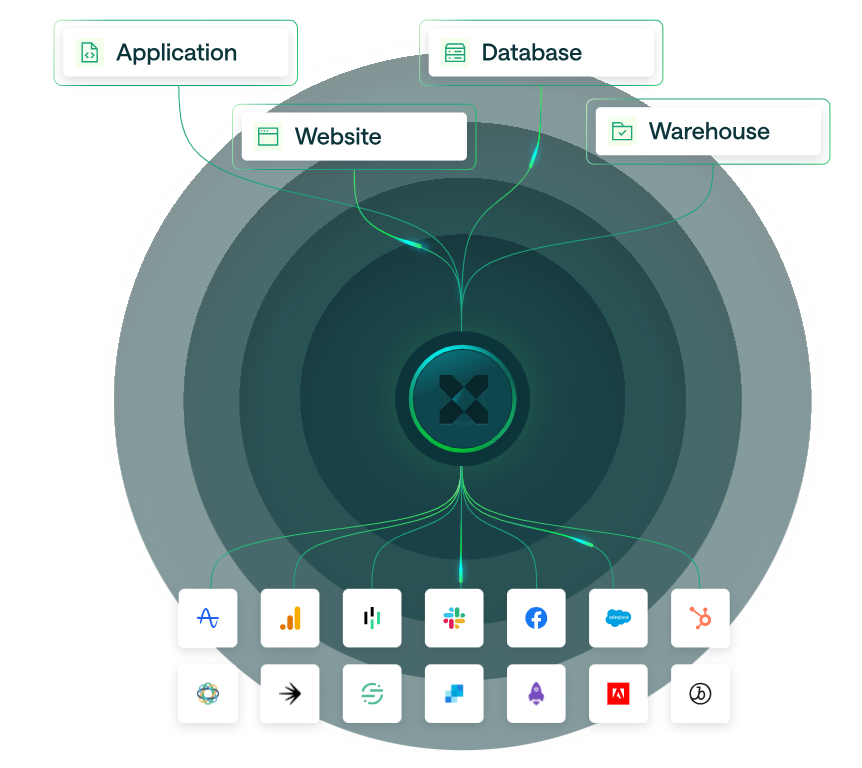
Customer.io positions its Data & Integrations layer as an embedded Customer Data Platform. Rather than requiring a separate CDP vendor, the same platform that ingests and unifies customer data also runs campaigns against it.
Source: Customer.io
Data flows in through multiple paths: pre-built integrations (Salesforce, HubSpot, Segment, Typeform, Facebook Lead Ads), Reverse ETL from data warehouses (available on all plans), a Pipelines API for CDP-style data collection, a Track API for event and people data, mobile SDKs (iOS, Android, React Native, Flutter, Expo), webhooks, and CSV import.
Data flows out to analytics and warehouse destinations: Snowflake, Amazon S3, Amplitude, Mixpanel, Google Ads, HubSpot, and Facebook Lead Ads. Data Replay lets teams add a new destination and retroactively resend historical data without making new API calls, so you don't have to rebuild event streams when onboarding a new analytics tool.
Data warehouse destinations and Data Replay require Premium or Enterprise.
The platform exposes four distinct APIs:
Pipelines API: CDP-style semantic event model (identify, track, page, screen, group), with batch support up to 500 KB
Track API: The original event and people data API, with v2 adding batching and object support
App API: Managing campaigns, segments, broadcasts, transactional sends, and Design Studio assets
Reporting Webhooks: Streaming delivery and engagement event data to external systems in real time
All plans include unlimited API calls with no usage caps.
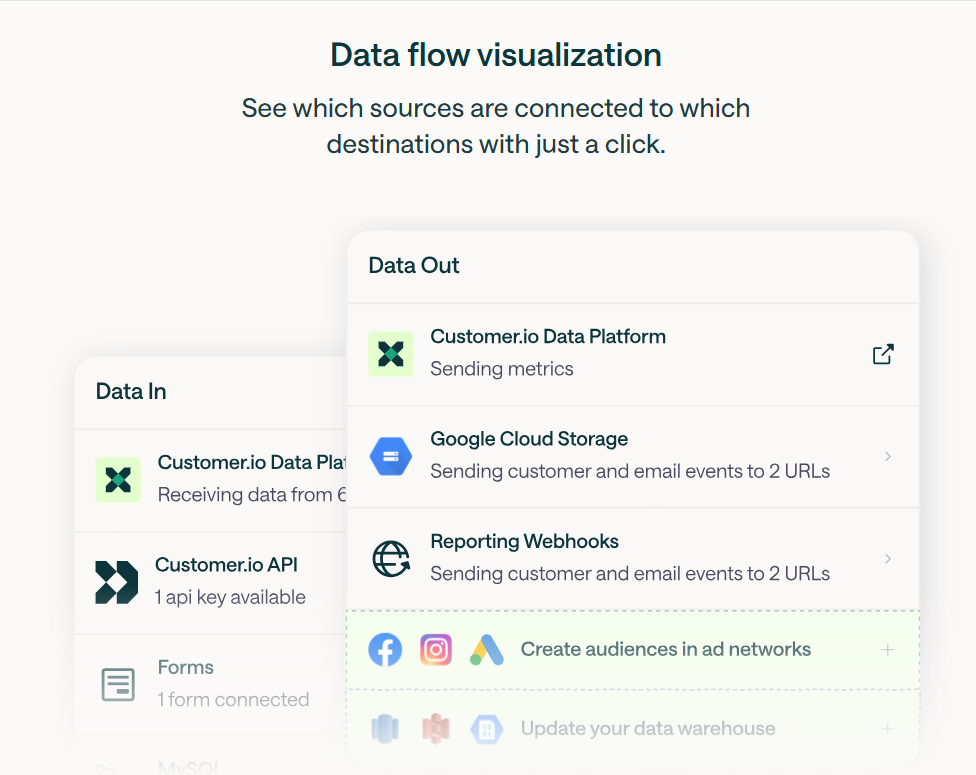
A Data Flow Visualization tool shows which sources connect to which destinations. Detailed event logs surface diagnostics for tracking and repairing data flow issues.
Source: Customer.io
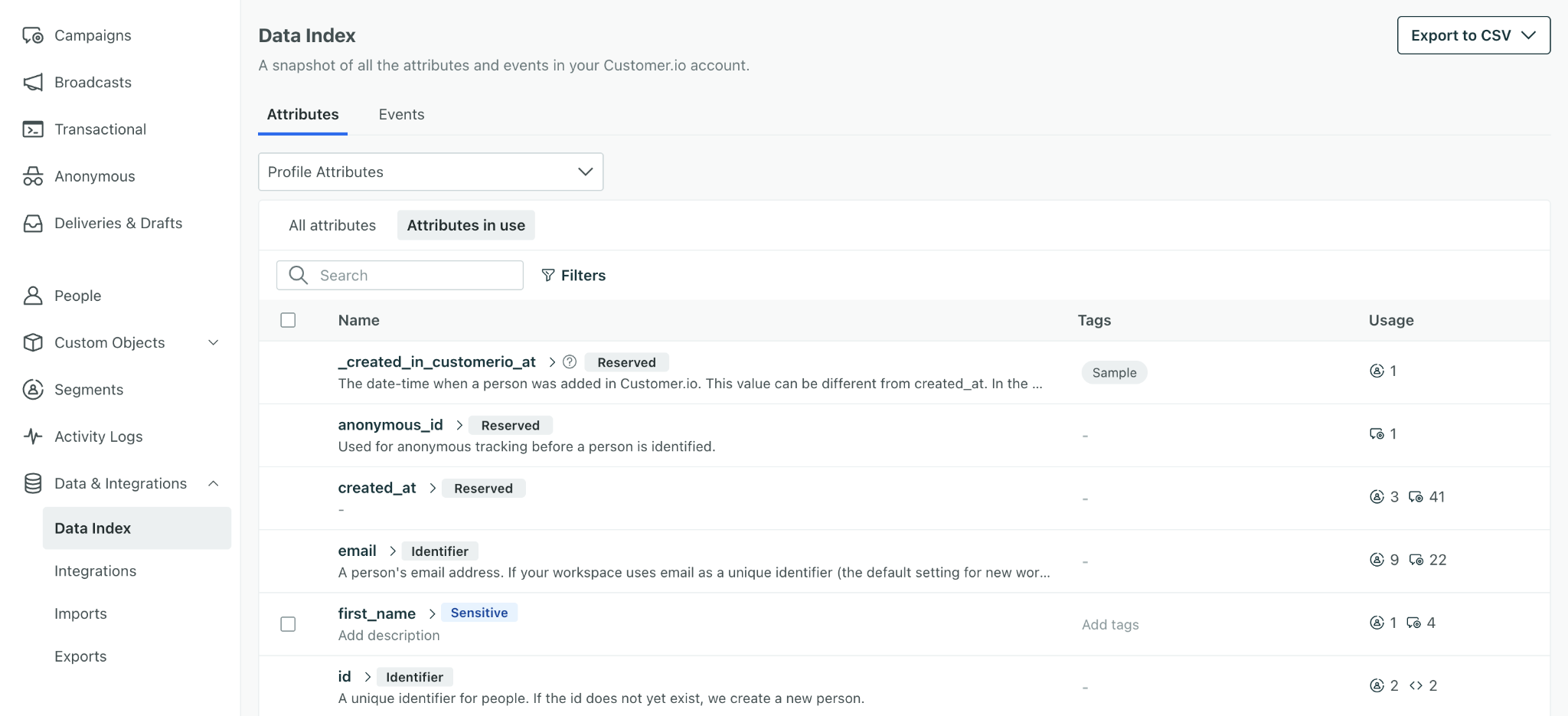
The Data Index discovers what event and attribute data exists across the workspace.
Source: Customer.io
Privacy management includes rules to block restricted personal data, role-based access controls, and US and EU data centers.
For AI tool connectivity, Customer.io provides a Model Context Protocol (MCP) server at https://mcp.customer.io/mcp (US) and https://mcp-eu.customer.io/mcp (EU), compatible with Claude Desktop, Cursor, Windsurf, VS Code, and ChatGPT. The MCP server exposes seven tools (create, get, integration, list, list_workspaces, metrics, search) and is available on all plans.
Customer.io Design Studio: Email Creation and Collaboration
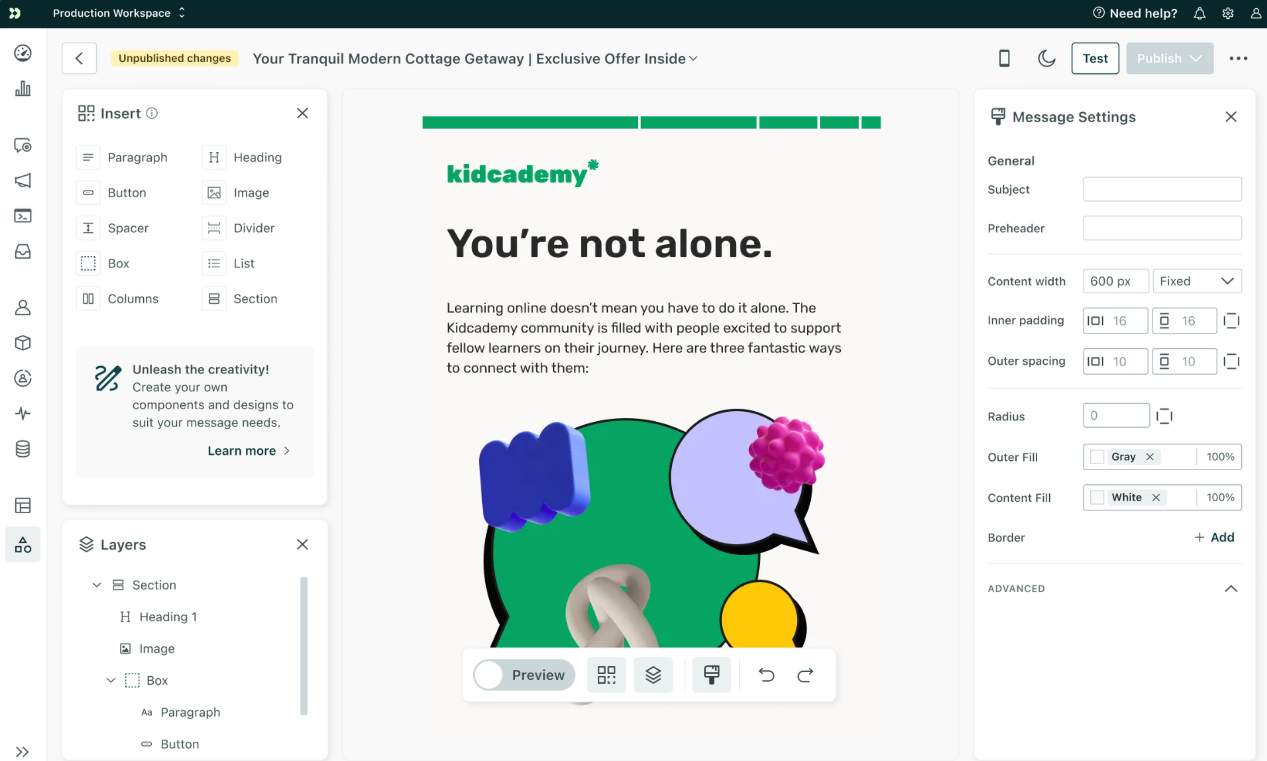
Design Studio is Customer.io's email creation environment, built into the platform. It replaces the pattern of designing in an external tool, exporting HTML, and importing into a separate sender.
Source: Customer.io
The distinguishing feature is the dual-editor model: users switch between visual and code editors on the same email without losing work. The visual editor lets non-technical users add content blocks through a properties menu.
The code editor provides full HTML access with Emmet syntax support, MSO syntax for Outlook rendering, and a suite of one-click Transformers: MJML compilation, CSS inlining, formatting/prettify, URL parameter injection, CSS cleanup, CSS variables, and accessibility fixes.
Customer.io is officially listed as a supported MJML editor, so teams standardized on MJML can use it natively.
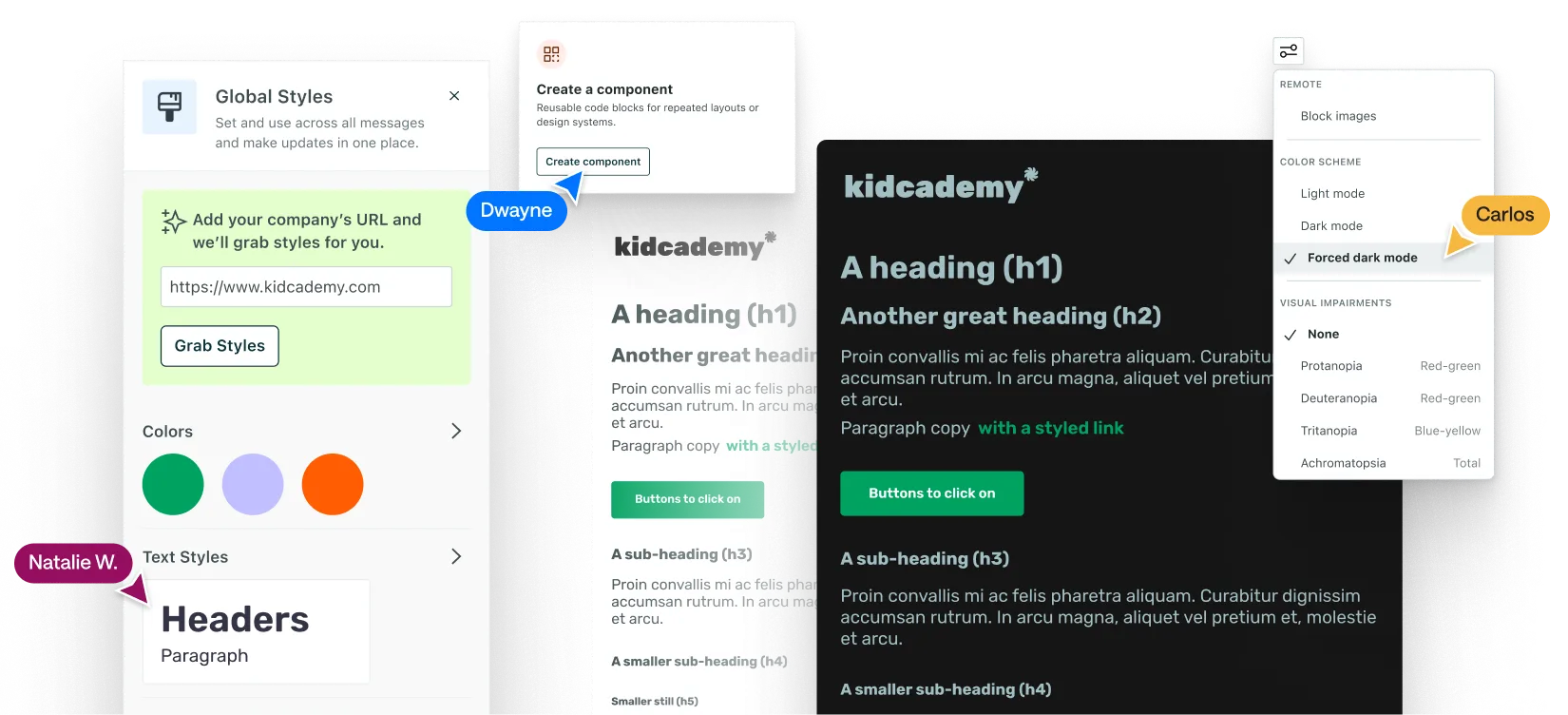
Global Styles act as a centralized brand hub. Teams define a color palette, font families, text styles, and button formatting once, and all emails referencing those styles update when the styles are published.
Components are reusable content blocks supporting JavaScript variables, conditionals, directives, and loops, so developers can author components that non-developers consume safely. Components, saved templates, and version control are Enterprise-only features.
Source: Customer.io
Quality tooling goes deeper than most marketing automation platforms offer natively. SpamAssassin integration checks spam filter likelihood before sending. An accessibility evaluation applies Deque University rules with severity classification.
Dark mode emulation previews emails during the build process. Inbox previews render across hundreds of devices.
Can I Email compatibility data surfaces in the code editor so developers see rendering support while writing. The output code is optimized to remove bloat, reducing the risk of Gmail clipping.
Collaboration features include real-time visibility into who is editing, annotated comments, formal feedback requests, and version history with revert capability. Changes are made in draft mode and go live only when published.
AMP for Email adds dynamic content within email messages. Link and image validation checks for errors before sending.
Enterprise-tier additions include AI-generated global styles, an AI translator for messages, and AI-powered email content analysis.
Customer.io Analytics: Outcome Measurement and Testing
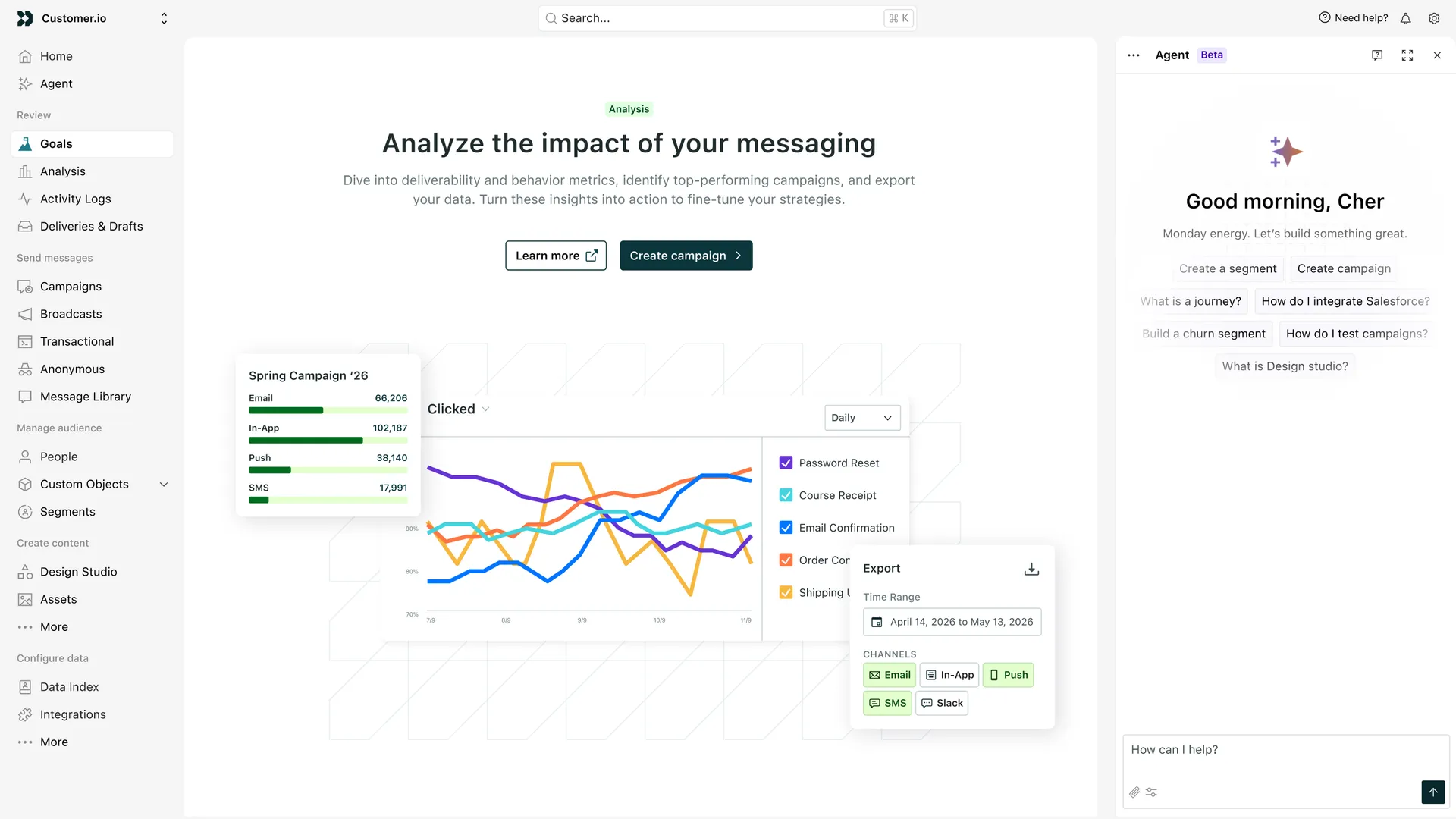
Analytics answers what actually drives revenue, not just which campaigns sent. The core capability addresses fragmented attribution: when multiple campaigns touch the same customer before conversion, traditional per-campaign tracking double-counts.
Source: Customer.io
Goals (currently in beta) are workspace-level objects, independent of any campaign, that define specific outcomes: a purchase, a subscription upgrade, an activation event. A single Goal connects to many campaigns and broadcasts at once.
The platform counts achievement by people, not events, deduplicating conversions across overlapping campaigns. Progress tracking begins from day one, and teams can retroactively associate campaigns to outcomes rather than configuring attribution before launch.
Within individual campaigns, conversion criteria define what a conversion means: an event-based action, a person entering a specific segment, or a person exiting a segment. Attribution can be tied to message receipt, open, or link click, with conversion windows up to 90 days.
A/B testing is built into the campaign workflow with configurable traffic distribution, statistical significance indicators, and a dedicated results tab.
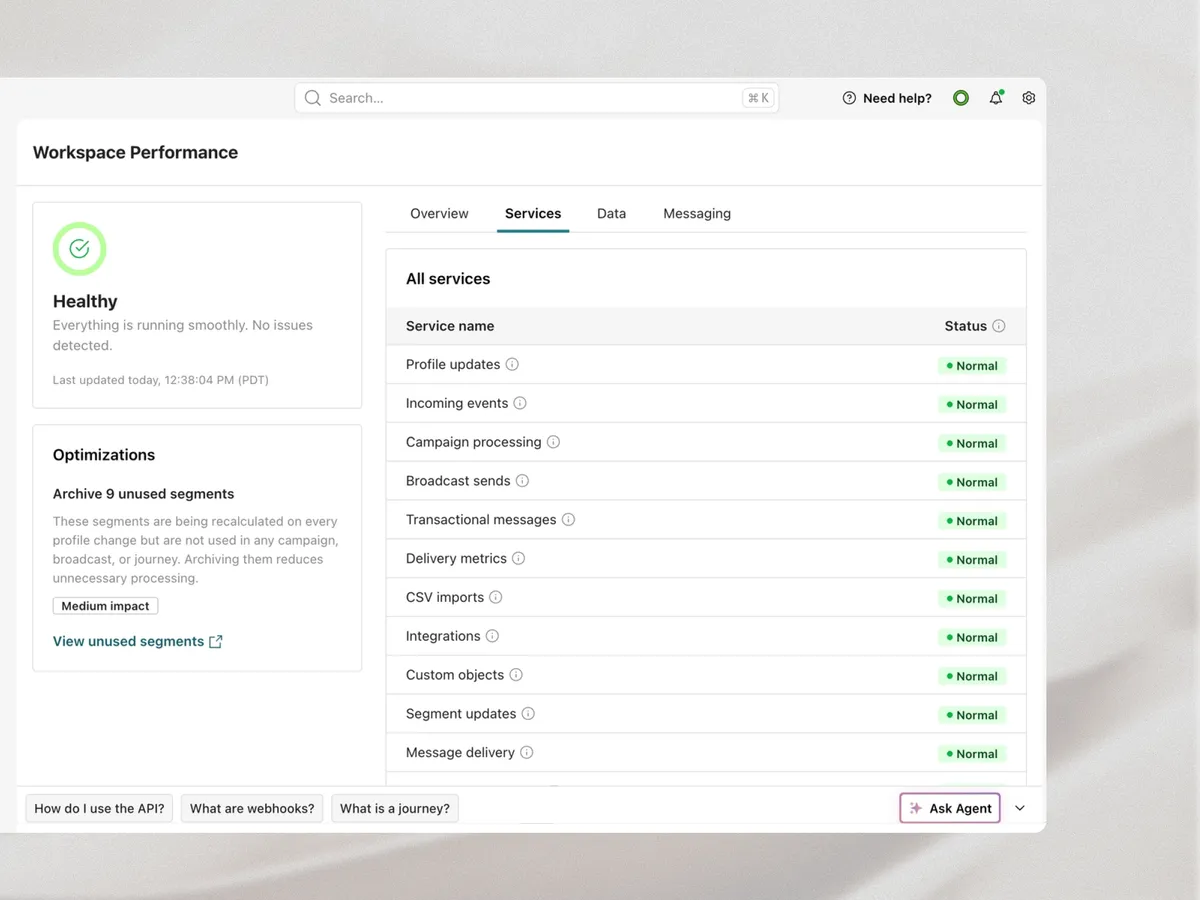
The workspace performance dashboard gives real-time visibility into send timing, campaign processing, and workspace health.
Source: Customer.io
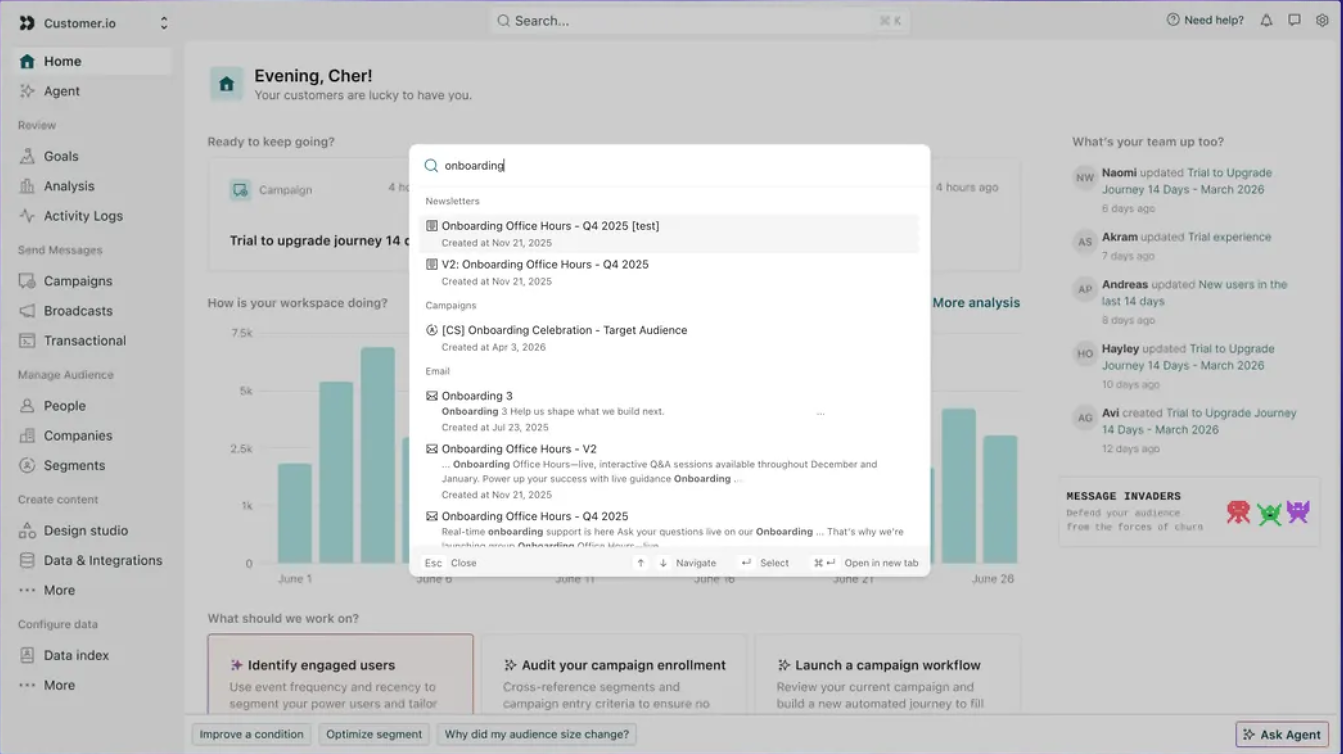
Universal search via Command+K provides semantic search across all workspace objects: campaigns, broadcasts, segments, attributes, and templates.
Source: Customer.io
The AI Agent answers questions about message performance in natural language and recommends next steps. Automated survey analysis processes responses from in-app surveys, synthesizing results into insights with a data quality assessment for low-response scenarios. Deliverability monitoring tracks inbox placement and filters bot activity.
All analytics features (Goals, dashboards, campaign reporting, conversion tracking, A/B testing, data export, Universal search) are included across all plans.
Customer.io AI Agent: Conversational Campaign Building and Monitoring
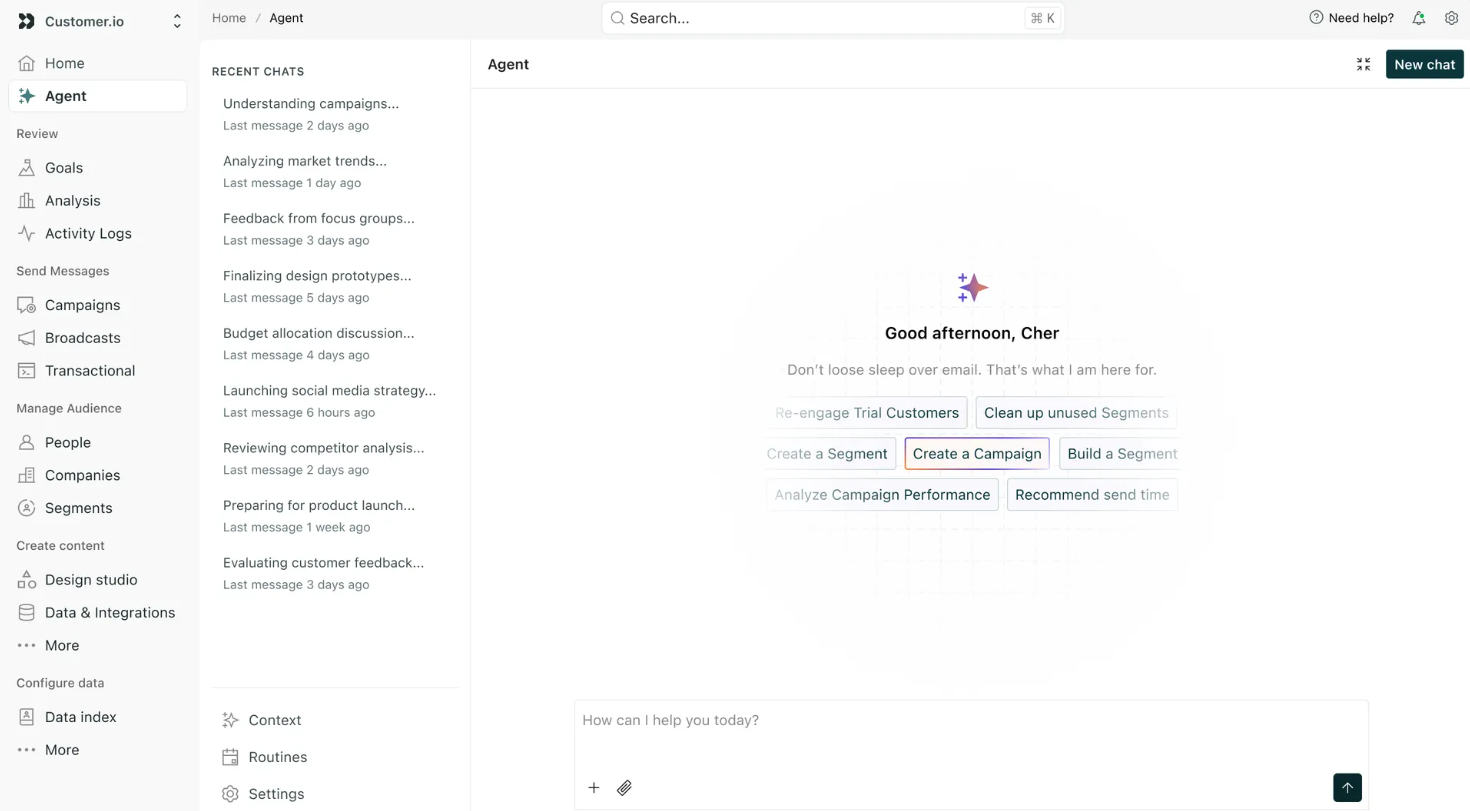
Customer.io's AI Agent (currently in beta), launched in April 2026, is a conversational AI built into the platform. It operates in three modes.
Source: Customer.io
Remember: the Agent maintains persistent memory of brand voice, goals, and preferences across sessions. Context carries over between conversations, and outputs improve with continued use. Most AI assistants reset context each session; this one does not.
Build: describe an objective ("build a re-engagement journey for users inactive 14+ days") and the Agent constructs an end-to-end campaign, including trigger, content, timing, and workflow logic.
It does not generate a generic template: it reviews existing inactive segments, analyzes engagement data, and proposes a solution grounded in the workspace's actual setup. Users iterate in the same conversation without starting over.
Analyze: ask how any journey or campaign is performing and the Agent returns data-grounded recommendations on what to do next, pulling from campaign metrics, broadcast metrics, and workspace data.
The Agent operates with the user's own permissions and asks for confirmation before taking high-impact or destructive actions. It can create campaigns, segments, newsletters, and Design Studio emails, search documentation, diagnose workspace issues, and accept image uploads for contextual assistance.
It cannot query external databases, browse the web, or send live messages on its own. Conversation history saves for 30 days.
Routines add a scheduled monitoring layer. A user tells the Agent what to monitor and how often; it delivers an email summary on schedule. Built-in suggestions include deliverability watchdog (bounce rates, spam complaints, domain reputation), broadcast recap, segment hygiene check, goal conversion report, subscriber churn early warning, and audience growth tracker.
Routines run in safe mode (read and analyze only, no campaign changes) and auto-pause after three consecutive failures.
Tier-gating for the AI Agent:
Essentials: Standard session limits, 1 active Routine (weekly frequency max), 3 custom execution skills
Premium: Elevated session limits, 5 Routines (daily frequency), 10 custom execution skills
Enterprise: Custom limits across all dimensions
Customer.io Messaging Channels
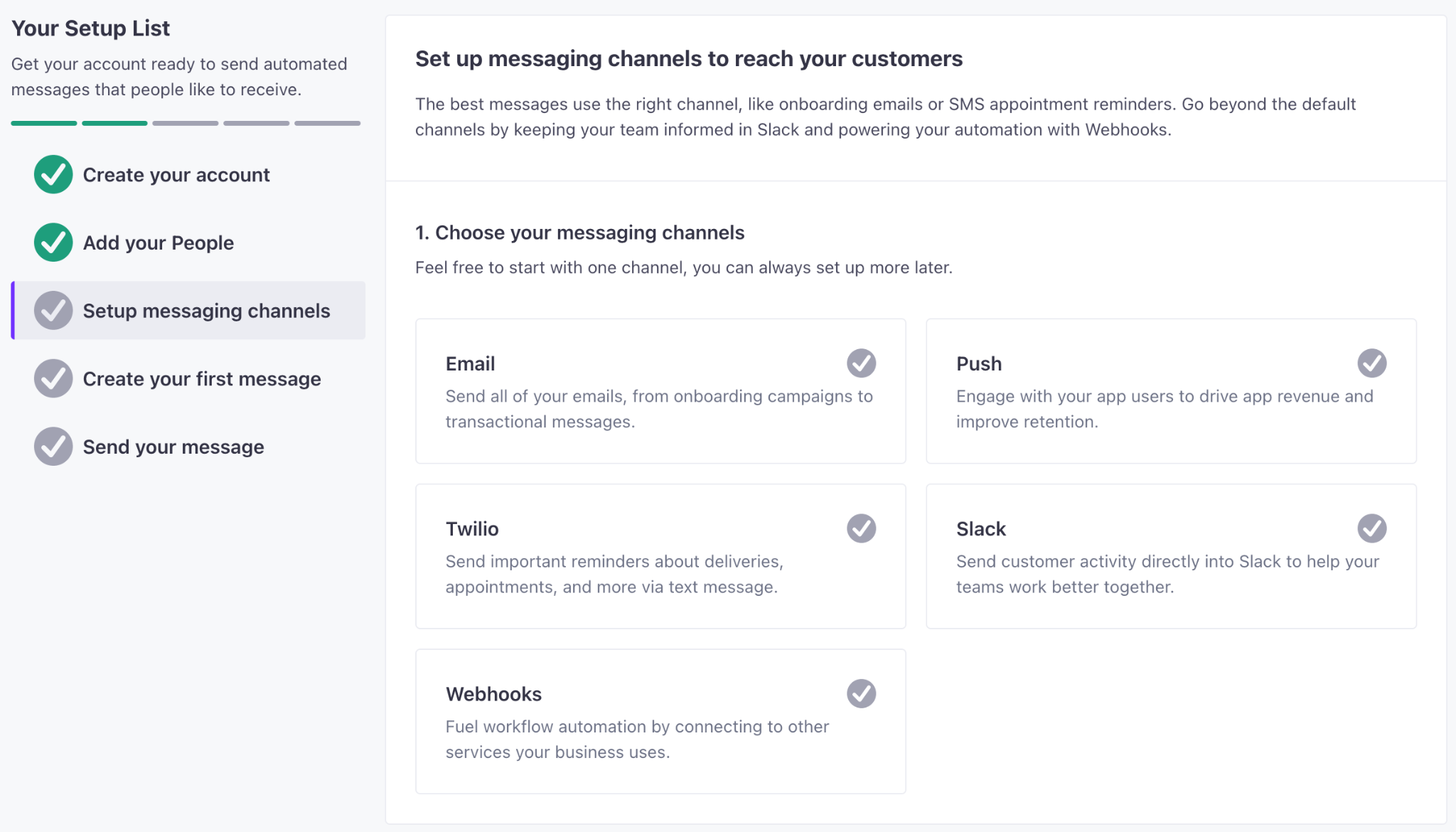
Customer.io supports seven messaging channels, all orchestrated from the same Journeys workflow canvas.
Source: Customer.io
Email is the primary channel, supported on all plans with 1 million sends/month on Essentials, custom volume on Premium and Enterprise, and overage at $0.12 per 1,000 emails. Transactional emails bypass marketing suppression lists and fire immediately via the App API.
Design Studio provides the creation environment, and the platform manages deliverability with managed deliverability on Premium and Enterprise.
SMS is available on all plans at custom pricing. Setup requires 10DLC registration per Customer.io's Feature Terms.
Push notifications (mobile and web) are supported through the platform's iOS, Android, React Native, Flutter, and Expo SDKs, with unlimited sends on all plans.
In-app messages deliver content inside mobile and web applications, including in-app surveys with NPS, CSAT, and custom question types. Unlimited sends on all plans.
WhatsApp was added as a native channel in the April 2026 release, reaching WhatsApp's 2 billion+ global users. Available on Premium and Enterprise.
LINE was added as an integration in the same release, targeting markets where LINE dominates (Japan, Thailand, Taiwan, Indonesia). Available on Premium and Enterprise.
Webhook-delivered channels extend the platform's reach to any external system, including direct mail providers like Lob, custom notification services, and Slack. Webhooks fire from within campaign workflows with response data available for downstream branching.
Customer.io Security and Compliance
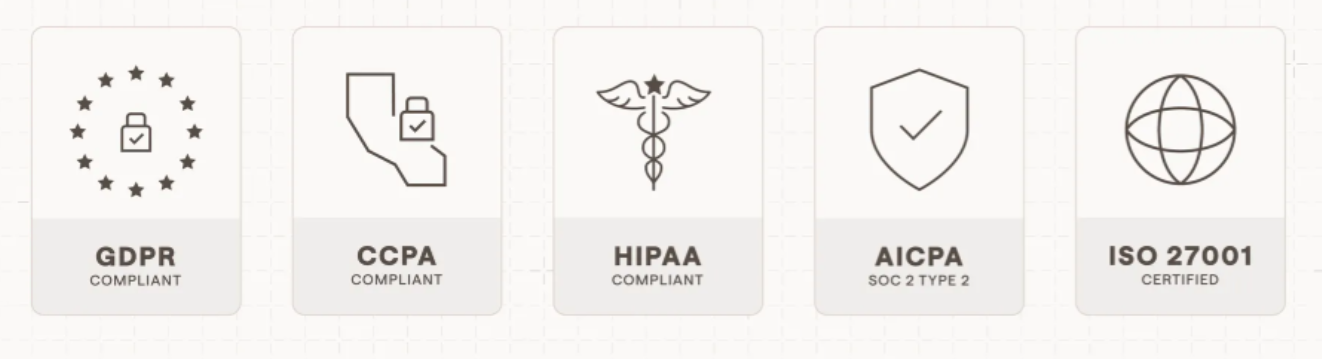
Customer.io maintains SOC 2 Type II certification (AICPA), GDPR compliance with Data Processing Addendum and Standard Contractual Clauses, and CCPA/US State Privacy Laws compliance. HIPAA compliance is available on Premium plans and by consultation for Enterprise.
Source: Customer.io
Account-level security controls include 2FA and SSO on all plans, standard role-based permissions on all plans with custom RBAC on Premium and Enterprise, and audit logging and data governance on Enterprise.
Dedicated hardware is Enterprise-only. All application communication uses 128-bit TLS encryption. Infrastructure practices include 24/7 monitoring, annual third-party penetration testing, social engineering drills, and strict employee device policies.
US and EU data centers are available on all plans, giving European companies and regulated industries a compliant option without additional configuration.
Where Customer.io Stops: The Gaps
Customer.io is built around a specific job: activating messaging to known users based on their behavioral data. That focus shapes its strengths, but it also means the platform does not cover several capabilities a go-to-market team eventually needs.
No B2B contact or company database. Customer.io works with the people you already know. It does not include a database of contacts, companies, direct dials, or verified business emails for prospecting.
You can send a timed re-engagement campaign to a lapsed user, but you cannot discover the 500 companies in your ICP that have never visited your site. The Objects feature models relational data for existing profiles; it is not a prospecting engine.
No buyer intent signals. Customer.io segments and triggers campaigns based on what users do inside your product or on your site. It does not track which companies are researching your product category across the broader web. Engagement signals tell you who responded to your messaging; intent signals tell you who is in-market before you ever reach them.
No sales pipeline or CRM. Customer.io is a messaging and lifecycle automation platform, not a CRM. It does not offer deal pipelines, contact management for sales teams, opportunity tracking, or sales forecasting. Teams that need combined CRM and marketing automation must integrate Customer.io with a separate CRM (Salesforce, HubSpot, Attio).
No conversation intelligence. The platform does not record, transcribe, or analyze sales calls. There is no coaching layer, no objection detection, and no mechanism to connect what was said on a call to what happens in a campaign workflow.
No account-based marketing orchestration. Customer.io can sync segments to ad audiences on Google, Meta, and YouTube, but it does not include a native demand-side platform for display advertising, multi-channel ABM campaign management, or account-level orchestration that coordinates email, ads, direct mail, and sales outreach against the same target list.
Steep pricing jump between tiers. Essentials starts at $100/month; Premium starts at $1,000/month with an annual commitment. There is no middle tier. Companies that outgrow the Essentials profile limit face a 10x cost step.
How ZoomInfo Covers the Gaps
The gaps above share a common thread: Customer.io excels at messaging users already in your system but depends on external tools for the intelligence and outreach infrastructure that fills the top and middle of the funnel. ZoomInfo is a go-to-market platform that supplies those layers.
ZoomInfo's B2B Data Platform: The contact and company database Customer.io does not include
ZoomInfo operates the largest B2B data platform in the industry: 500M contacts, 100M companies, 135M+ verified phone numbers, 120M direct-dial phone numbers, and 200M+ verified business email addresses.
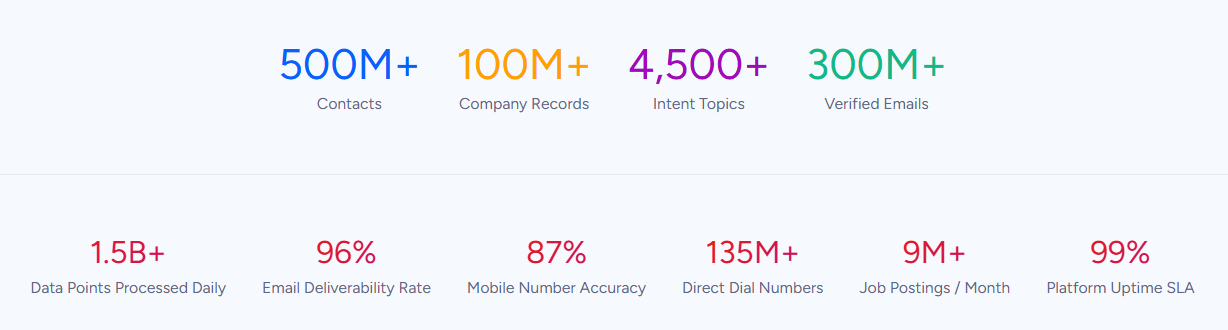
The data flows through a proprietary verification pipeline backed by 300+ human researchers and automated ML scanning of 28 million site domains daily, reaching up to 95% accuracy on first-party data.
For a team using Customer.io for lifecycle messaging, this fills the discovery gap. Customer.io can nurture a trial user through onboarding, but it cannot tell you who else at that company should receive a message, whether the company matches your ICP, or who the decision-maker is.
ZoomInfo provides department org charts with decision-makers' direct dials and emails, 300+ company attributes for market segmentation, and contact tracking with job-change alerts. Global coverage extends to 34M+ company profiles outside North America, 200M+ professional profiles outside NA, and 45M+ mobile numbers outside NA.
In a Fortune 500 competitive RFP analyzing 25 million contacts across vendors, an independent consultant concluded that "no other competitor came even close."
The data quality is externally validated: Leader in the Forrester Wave for Intent Data Providers (Q1 2025), Leader in the Gartner MQ for ABM Platforms for the second consecutive year, and the only vendor positioned in the Gartner Customers' Choice quadrant with a 4.7/5.0 rating.
ZoomInfo Intent and Website Visitor Tracking: Signals that show who is in-market before any messaging
ZoomInfo Intent tracks signals from 210 million IP-to-Organization pairings and 6 trillion+ new keyword-to-device pairings sourced monthly. Where Customer.io segments users based on what they do inside your product, ZoomInfo's intent data reveals which companies are researching topics related to your product across the web, before they have signed up or visited your site.
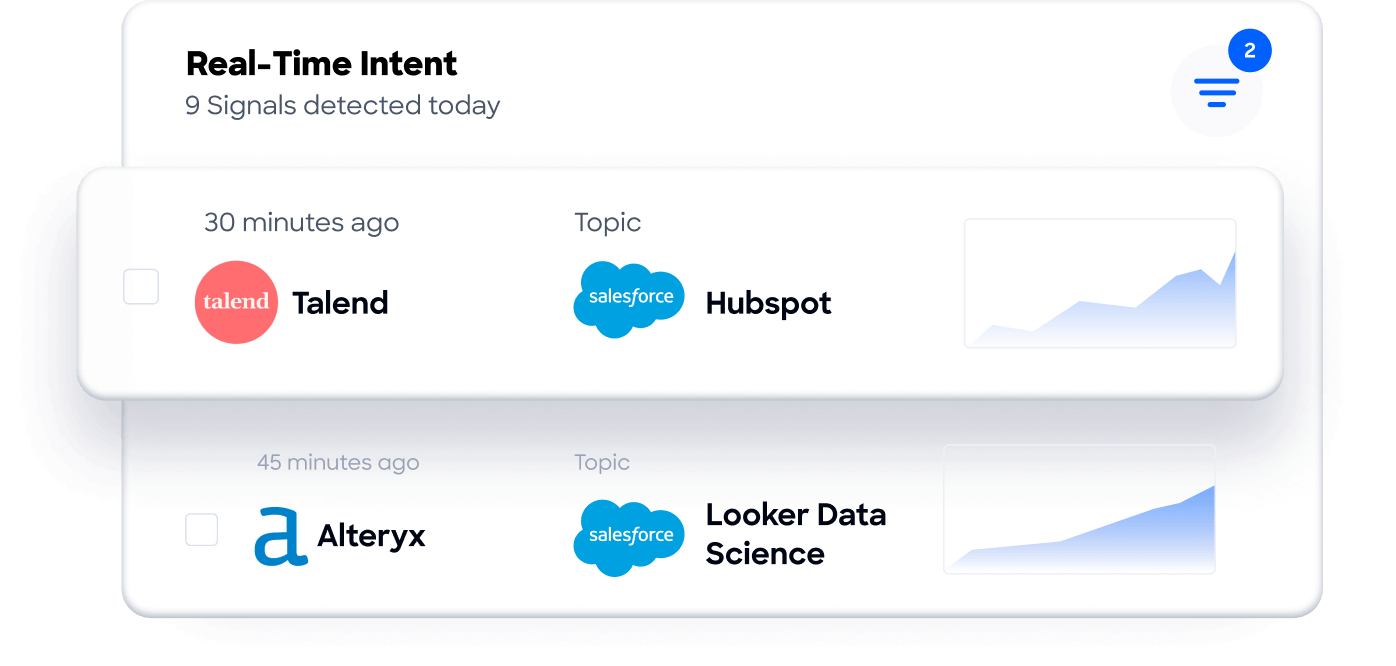
Guided Intent, exclusive to ZoomInfo, identifies the topics historically correlated with deal success rather than requiring manual topic selection.
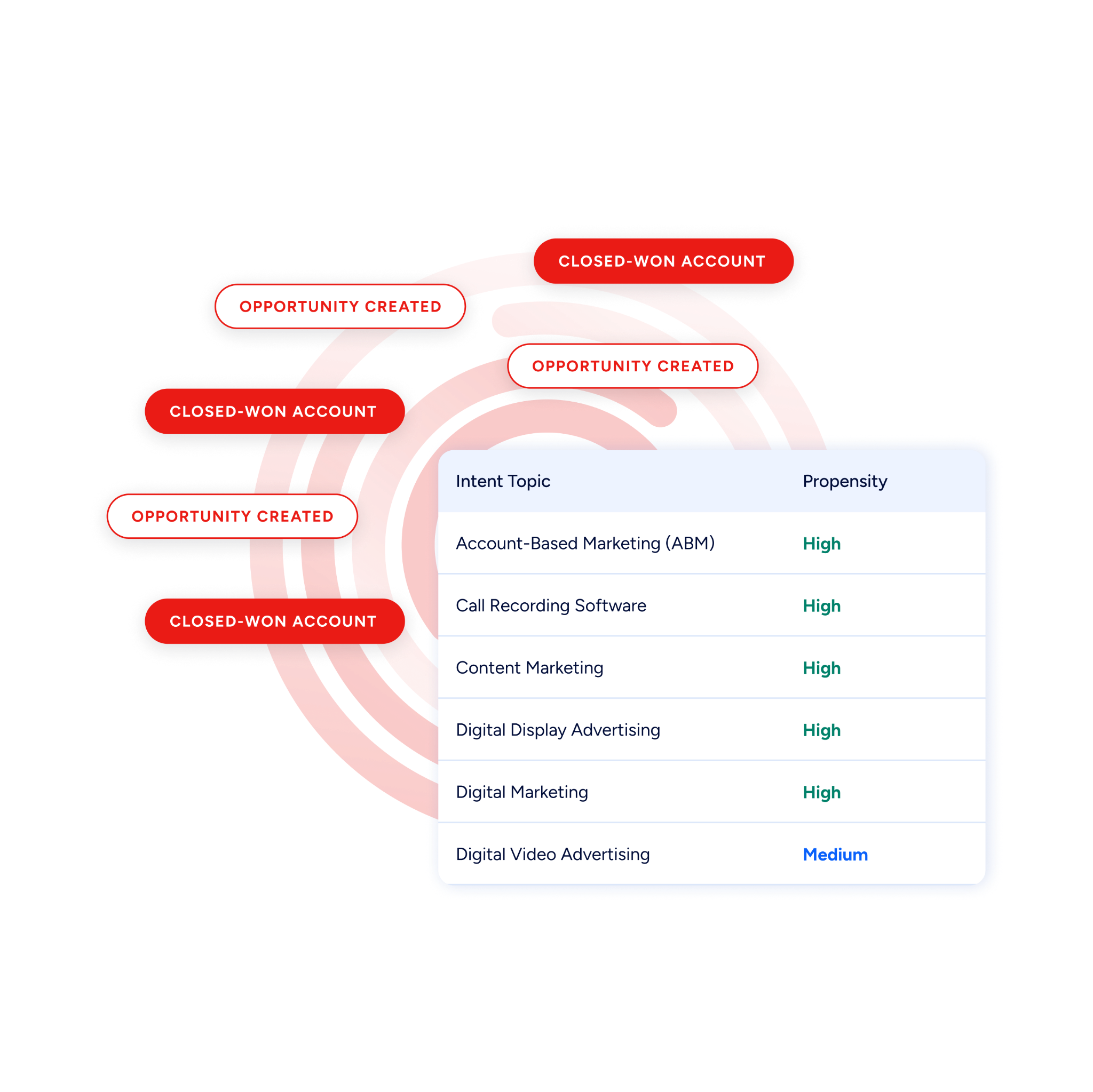
WebSights resolves anonymous website traffic to companies with Automatic Traffic Filtering that distinguishes real visitors from bots.
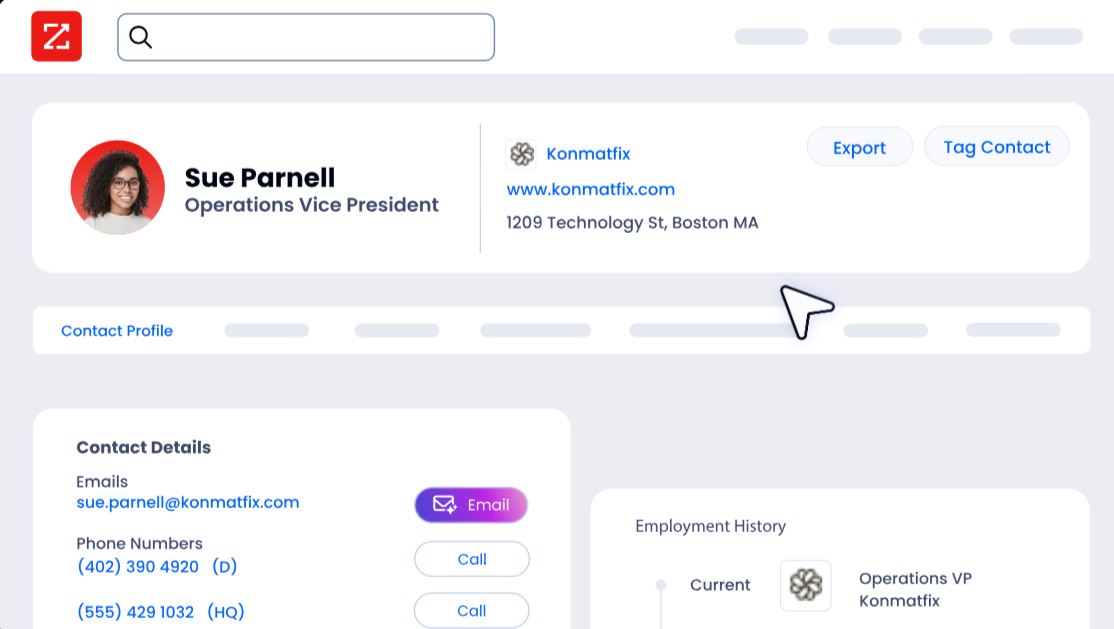
ZoomInfo Marketing goes further with contact-level site visitor identification, identifying who specifically visited (not just which company) and triggering personalized outreach.
ZoomInfo's GTM Context Graph and Chorus: Intelligence from calls and deals, not just messages
Customer.io captures what happens in messaging channels (opens, clicks, conversions, survey responses).
ZoomInfo's GTM Context Graph captures why deals move or stall by processing 1.5B+ data points daily, combining B2B data with CRM records, conversation intelligence from Chorus, email interactions, and behavioral signals into a single intelligence layer.
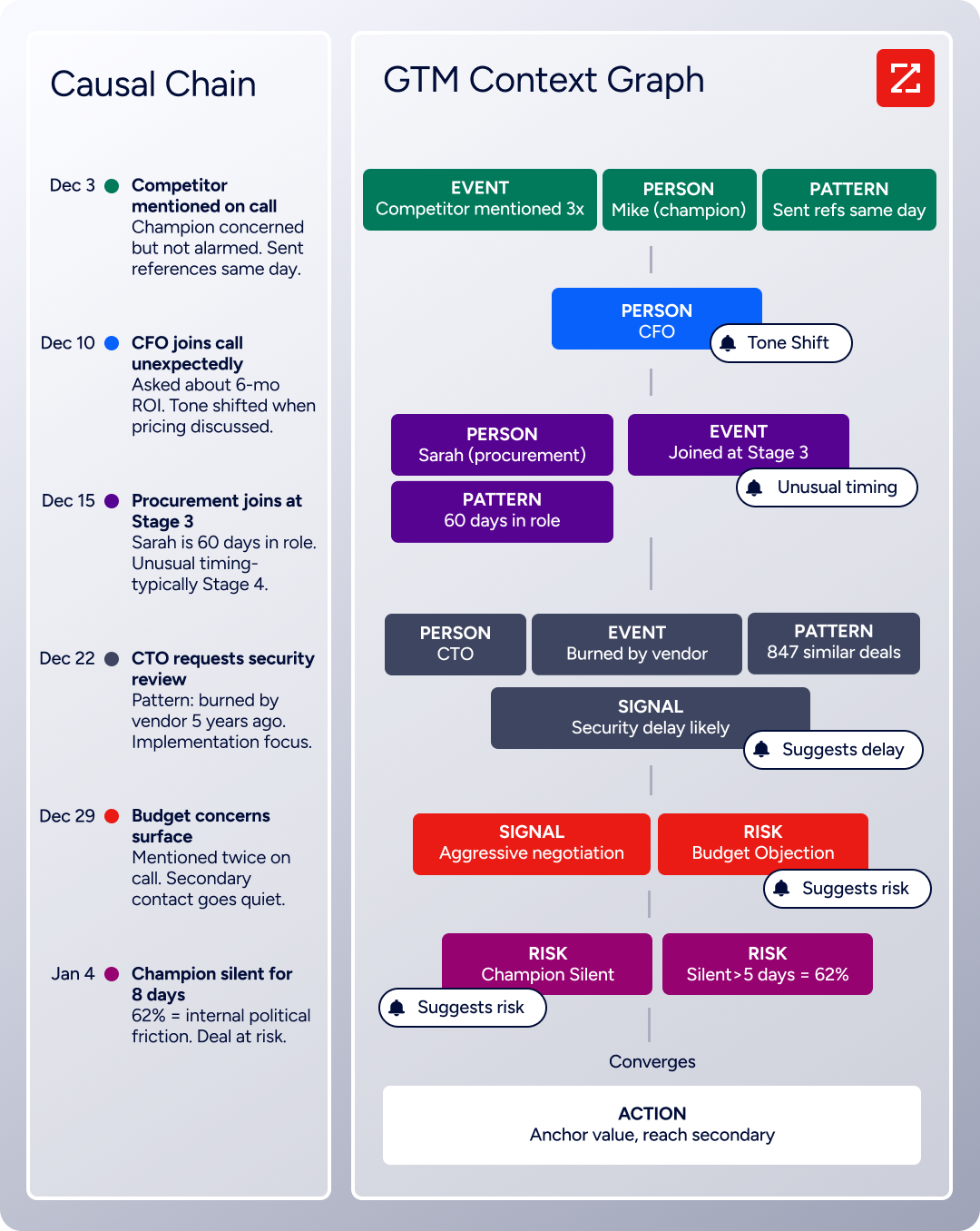
Chorus, backed by 14 technology patents, records and transcribes sales calls, surfaces AI-generated insights (talk ratios, sentiment, objection detection), auto-syncs deal intelligence to the CRM, and provides coaching scorecards and clip sharing.
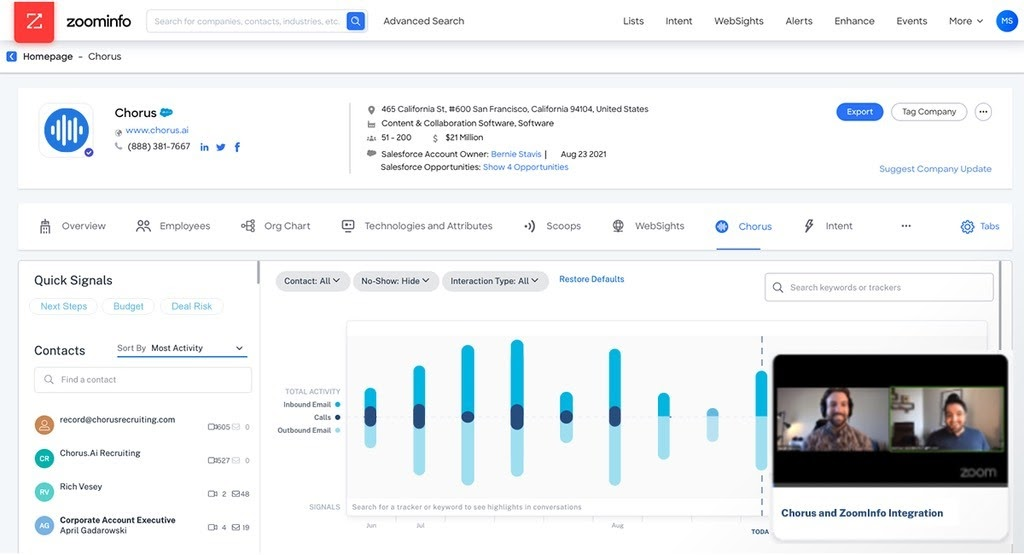
It captures the context that messaging analytics miss: why a champion went quiet, what a competitive mention means for deal risk, which objection patterns predict closed-lost outcomes. That reasoning flows into every downstream action.
Seismic's sales team attributed 39% of active pipeline to opportunities identified or influenced by ZoomInfo signals, boosted productivity by 54%, and saved 11.5 hours per week per seller. (Seismic Case Study)
ZoomInfo GTM Studio: Account-based marketing orchestration beyond lifecycle messaging
GTM Studio addresses the marketing orchestration gap directly. Marketers, RevOps teams, and GTM engineers can build audiences using natural language, enrich with first- and third-party data, define triggers, and activate plays across channels (email, calls, display ads, direct mail, LinkedIn, Meta, Connected TV) without engineering support.
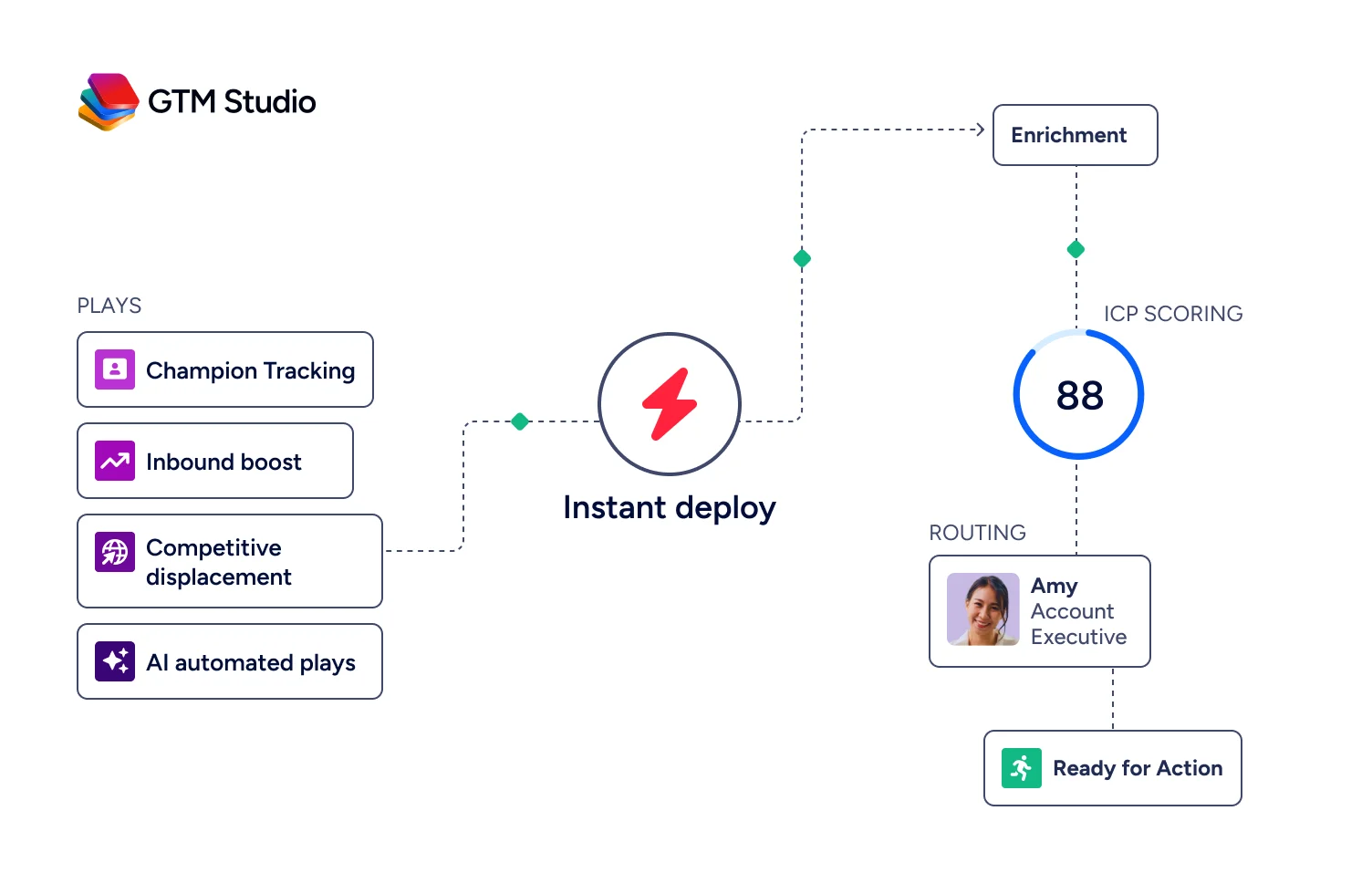
Where Customer.io's ad audience sync pushes behavioral segments to Google and Meta, ZoomInfo Marketing includes a native Demand-Side Platform that deploys display ads based on 300+ company attributes, FormComplete (reducing forms to a single field while auto-appending data), and Account Fit Scoring (predictive AI scoring 0-100 based on company attribute patterns).
Pre-built GTM plays cover inbound acceleration, champion tracking, competitive displacement, and ICP targeting. Expansion plays that used to take 3 weeks now launch in 30 minutes.
ZoomInfo APIs and MCP: Data access for any tool or AI agent
ZoomInfo delivers its intelligence through APIs and MCP, so the same data and GTM Context Graph powering ZoomInfo's own products is accessible inside any third-party tool, custom AI agent, or partner platform.
The MCP server connects AI models directly to ZoomInfo's B2B data as a native tool, currently supporting Claude and ChatGPT.
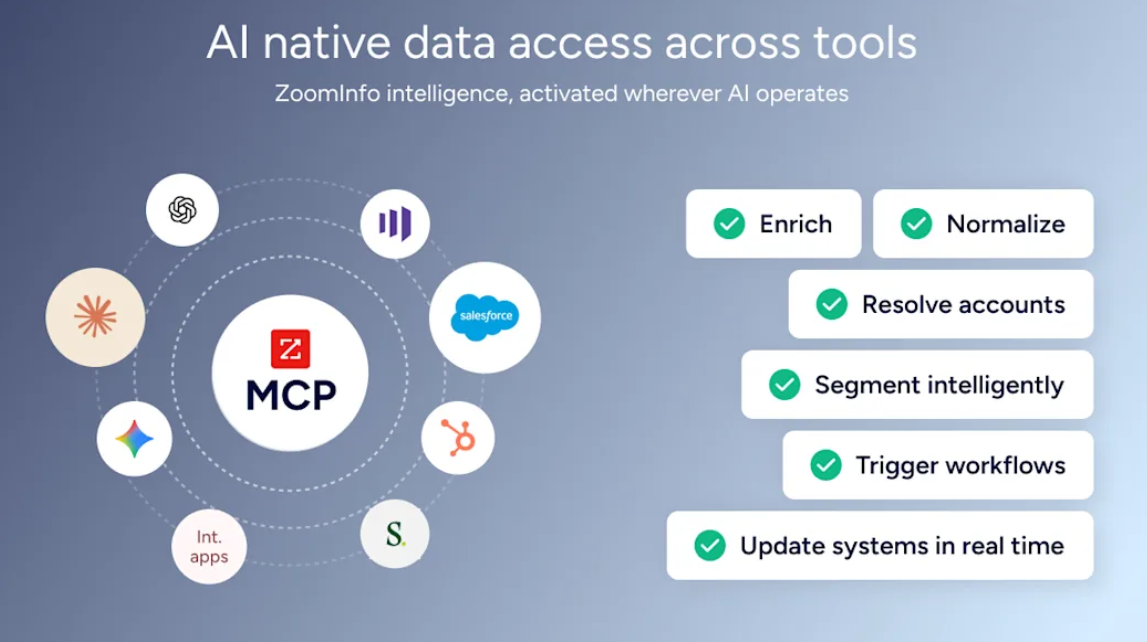
API access is included in all relevant plans, and the Enterprise API covers Search, Enrich, Copilot (AI intelligence), Marketing (audience management), and Engagements endpoints.
ZoomInfo's Free Entry Points: A way to evaluate the platform without commitment
ZoomInfo Lite is a permanent free tier with access to ZoomInfo's B2B database, 10 monthly export credits, individual and company searches, a Chrome extension, and WebSights Lite with up to 10 website visitor reveals per day.
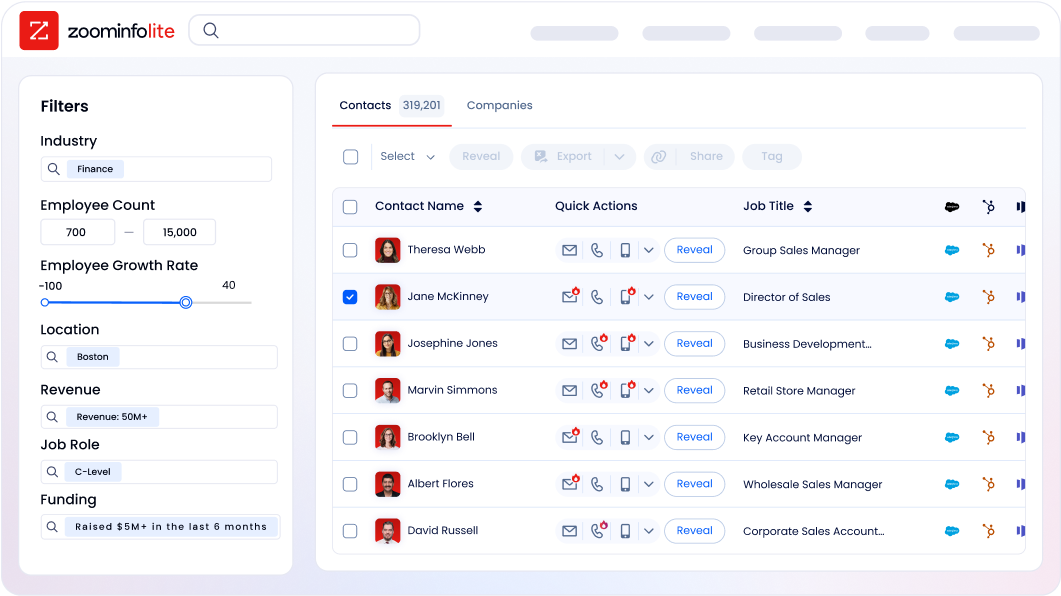
A separate 7-day free trial provides broader access with no credit card required.
Final Summary
Customer.io is a technically flexible platform for behavioral lifecycle messaging: a real-time event engine that ingests unlimited API calls on every plan, a visual workflow builder spanning seven channels, LLM Actions that generate personalized content per recipient inside live campaigns, an embedded CDP with reverse ETL and data replay, and an AI Agent that builds and monitors campaigns from natural language.
It serves product-led SaaS and digital subscription businesses that need to act on first-party behavioral data with precision.
It does not cover the layers before and around the messaging: no B2B contact database, no buyer intent signals, no conversation intelligence, no account-based marketing orchestration, and no sales pipeline management.
If your bottleneck is upstream of lifecycle messaging (knowing which companies are in-market and who to reach before anyone signs up or visits your site), or alongside it (understanding what happened on sales calls and orchestrating multi-channel ABM campaigns), that is the ground ZoomInfo covers.
Its 500M-contact, 100M-company database supplies the verified emails and direct dials your team cannot find inside Customer.io. ZoomInfo Intent surfaces accounts researching your category from 6 trillion+ keyword-to-device pairings monthly.
Chorus captures and analyzes every sales conversation. GTM Studio gives marketing teams multi-channel orchestration and ABM beyond lifecycle email. And the GTM Context Graph combines all of it into a single intelligence layer that captures why deals move, not just that a message was opened.
See what that intelligence layer adds to your go-to-market stack: start with ZoomInfo Lite for free, or request a demo to watch intent signals and verified contacts flow into your pipeline.
FAQ
Does Customer.io support WhatsApp and LINE messaging?
WhatsApp is available as a native channel and LINE as an integration, both added in the April 2026 release. Both require a Premium or Enterprise plan. Essentials users are limited to email, SMS, push, in-app, and webhook-delivered channels.
Which Customer.io plan includes HIPAA compliance?
HIPAA compliance is available on Premium ($1,000/month, annual billing) and by consultation on Enterprise. Essentials does not include HIPAA. Customer.io's security documentation advises against sending sensitive PHI over email and recommends linking to authenticated areas of the customer's own site for HIPAA-sensitive use cases.
Can Customer.io's AI Agent build entire campaigns from a prompt?
Yes. The AI Agent (currently in beta) can construct end-to-end campaigns (trigger configuration, content, timing, and workflow logic) from a natural language description. It reviews existing segments and engagement data in the workspace to ground its output in the team's actual setup. It asks for confirmation before taking high-impact actions and cannot send live messages on its own.
What are LLM Actions in Customer.io?
LLM Actions are workflow steps that call any large language model inside a live campaign. You pass the current customer's attributes and event data as context, and the model generates personalized content, scoring, or routing logic stored as journey attributes for downstream use. They cost $10 per 100,000 AI Credits, with introductory credits included on paid plans.
Does Customer.io have a free plan?
There is no permanent free plan. Customer.io offers a 14-day free trial with no credit card required. The Startup Program provides up to 12 months free (with 30,000 profiles) for companies that have raised under $10M and have never been Customer.io customers. After the trial or program ends, the entry paid plan is Essentials at $100/month.
Can Customer.io identify anonymous website visitors?
Customer.io supports anonymous event tracking that captures pre-signup behavioral events and retroactively associates them with profiles once users identify themselves. It does not resolve anonymous visitors to specific individuals or companies by name. For company-level and contact-level website visitor identification, ZoomInfo's WebSights resolves anonymous traffic to companies and individuals globally.
How does Customer.io's pricing scale with profile volume?
Essentials includes 5,000 profiles (people plus custom objects) at $100/month. Additional profiles cost $0.009 each. Premium starts at $1,000/month with custom profile volume and pricing on annual contracts. Enterprise offers custom pricing with the best per-profile rates. Additional email sends cost $0.12 per 1,000 on Essentials and Premium. All plans include unlimited user seats and unlimited API calls.
Does Customer.io include a B2B contact database for prospecting?
No. Customer.io is a messaging and lifecycle automation platform, not a data provider. It works with the people already in your system, identified through your product's event data, API calls, CSV imports, or integrations. It does not include a database of contacts, companies, phone numbers, or email addresses for outbound prospecting.
ZoomInfo's database of 500M contacts, 100M companies, and 120M direct-dial phone numbers supplies the contact discovery layer Customer.io does not cover.
