
Choosing between Dripify vs. Dux-Soup for your LinkedIn prospecting often comes down to five questions:
Do you need cloud-based automation that runs while you sleep, or are you comfortable keeping a browser open?
Is LinkedIn your only outreach channel, or do you need email and other channels in one workflow?
Are you an individual rep, a sales team, or an agency managing multiple client accounts?
Do you know exactly who to target, or do you still need to figure out which accounts are worth your time?
Is automating LinkedIn actions enough, or do you need an intelligence layer that tells you who to contact, when to engage, and what to say?
In short, here's what we recommend:
Dripify is a cloud-based LinkedIn and email automation platform built for sales teams that want to run outreach campaigns around the clock without keeping a browser open. Its drag-and-drop sequence builder combines LinkedIn actions with email steps, and it supports up to 75 connection requests and 100+ messages per day on its Pro and Advanced plans.
For teams that already know their target list and want to automate execution, Dripify delivers a clean, intuitive experience. However, it starts at $39/month per user with significant feature restrictions on its Basic plan, and it has no built-in intelligence for identifying which prospects are worth reaching.
Dux-Soup is one of the original LinkedIn automation tools, operating since 2015 with 300,000+ users worldwide. Starting at $14.99/month, it costs less than Dripify, with a browser extension model that keeps your automation local and a Cloud tier for always-on execution. Dux-Soup is particularly strong for agencies, with a dedicated Agency plan that manages unlimited client accounts from a single dashboard.
The trade-off: a dated interface, no native email outreach, and analytics the company itself acknowledges are still catching up.
Both platforms solve the same problem: automating the mechanical work of LinkedIn outreach. But automation without intelligence just sends messages faster to people who may not care. The deeper question is whether you're reaching the right people at the right time with the right message.
ZoomInfo is an AI-powered GTM platform that addresses what LinkedIn automation tools leave out: knowing who to target before you press send.
Built on a B2B data platform of 500M contacts, 100M companies, 135M+ verified phone numbers, and 200M+ verified business email addresses, ZoomInfo's GTM Context Graph combines this data with your CRM records, conversation transcripts, and behavioral signals to reveal which accounts are actively in-market and why deals move or stall.
Instead of blasting connection requests and hoping, ZoomInfo lets your team act on buyer intent signals, AI-prioritized account lists, and multi-channel orchestration through GTM Workspace for sellers and GTM Studio for marketers and RevOps.
If targeting the right accounts with real buying signals sounds more valuable than automating messages to a static list, see how ZoomInfo works with a free trial.
Dripify vs. Dux-Soup vs. ZoomInfo at a glance
Dripify | Dux-Soup | ZoomInfo | |
|---|---|---|---|
Primary function | LinkedIn + email automation | LinkedIn automation | AI-powered GTM intelligence + multi-channel execution |
Starting price | $39/user/month (annual) | $14.99/user/month (annual) | Custom-quoted; free Lite tier available |
Deployment | Cloud-based (24/7) | Browser extension + Cloud option ($99/mo) | Cloud platform with native apps |
Email outreach | Built-in (Gmail/Outlook) | Not included (CRM integration required) | Multi-channel via GTM Workspace + Salesloft partnership |
Contact database | None (uses LinkedIn search) | None (uses LinkedIn search) | 500M contacts, 200M+ verified emails, 135M+ verified phones |
Buyer intent data | None | None | Built-in intent signals from 210M IP-to-Organization pairings |
AI capabilities | AI Icebreaker for personalization | None native | GTM Context Graph, AI-drafted outreach, account scoring |
CRM integrations | HubSpot, Salesforce, Zapier | HubSpot, Salesforce, Pipedrive, 6 native CRMs + open API | 120+ integrations via App Marketplace + Enterprise API + MCP |
Team management | Advanced plan ($79/mo) | Team plans with deduplication | Role-based access across all tiers |
Agency support | No dedicated plan | Cloud Agency plan ($371/mo) | Enterprise plans with custom pricing |
Free trial | 7-day, no credit card | 14-day free trial | 7-day trial + permanent ZoomInfo Lite |
Best for | Teams automating LinkedIn + email sequences | Budget-conscious reps and agencies automating LinkedIn | Organizations that need intelligence-driven, multi-channel GTM execution |
Automation without intelligence is just faster guessing
Dripify and Dux-Soup both assume you already know who to contact. They automate the sending, not the thinking.
With Dripify, you pull a list from LinkedIn search, load it into a campaign, and the platform sends connection requests, messages, profile views, and emails on a schedule you set. With Dux-Soup, you do the same through a browser extension or cloud session, cycling through profiles and executing connection requests, messages, InMails, post likes, and skill endorsements during automated visit passes.
Both tools are effective at what they do. The problem is what they don't do: they cannot tell you whether the people on your list are actually in-market, whether the company is researching solutions like yours, or whether the VP you're targeting changed jobs last week. You're automating outreach to a list that's only as good as a LinkedIn search filter can make it.
ZoomInfo approaches prospecting from the opposite direction. Before any message goes out, the platform identifies which accounts show buyer intent signals across 210 million IP-to-Organization pairings and 6 trillion+ new keyword-to-device pairings sourced monthly.

Source: ZoomInfo Intent Data
Guided Intent, exclusive to ZoomInfo, identifies topics historically correlated with deal success rather than requiring you to guess which keywords matter. The result: your outreach targets companies actively researching what you sell, not a generic list of people with the right job title.
"That combination of our internal CRM data, external signals, and AI that's given all that context has helped us craft very specific account- and persona-based messages. And people have responded to them right away." (Seismic)
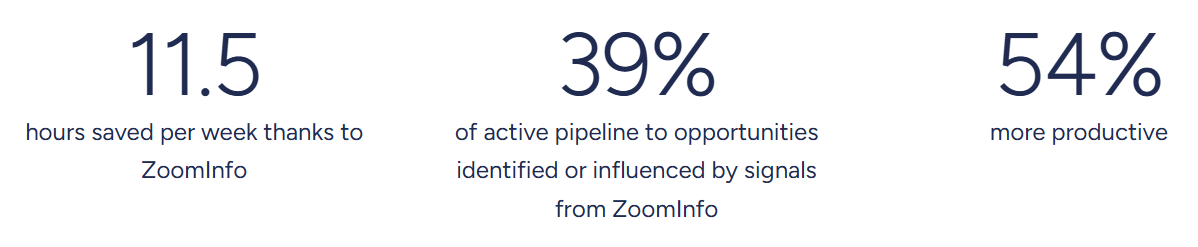
Source: ZoomInfo Seismic
Cloud-based vs. browser-based: how each tool runs your campaigns
One of the clearest differences between Dripify and Dux-Soup is where the automation runs.
Dripify operates entirely in the cloud. Once you launch a campaign, it runs 24/7 on Dripify's infrastructure with a unique local IP address assigned to your account. You can close your browser, shut down your computer, and campaigns keep running. This applies to all Dripify plans.
Dux-Soup started as a Chrome extension and still works that way on its lower tiers. The Pro ($14.99/mo) and Turbo ($55/mo) plans run through the browser, which means automation stops when the browser closes or the laptop sleeps. The Cloud Dux plan ($99/mo) moves execution to Dux-Soup's servers, but it still requires the Chrome extension for enrolling prospects.
For individual reps who work at their computers most of the day, browser-based execution may be fine. For teams running campaigns across time zones or agencies managing multiple client accounts, cloud-native execution matters.
ZoomInfo sidesteps this question entirely. It's a cloud platform, but it doesn't automate LinkedIn clicks on your behalf. Instead, ZoomInfo's GTM Workspace surfaces prioritized accounts and AI-drafted outreach, then executes multi-channel sequences through native integrations with Salesforce, HubSpot, and Microsoft Dynamics, plus sales engagement tools like Salesloft.
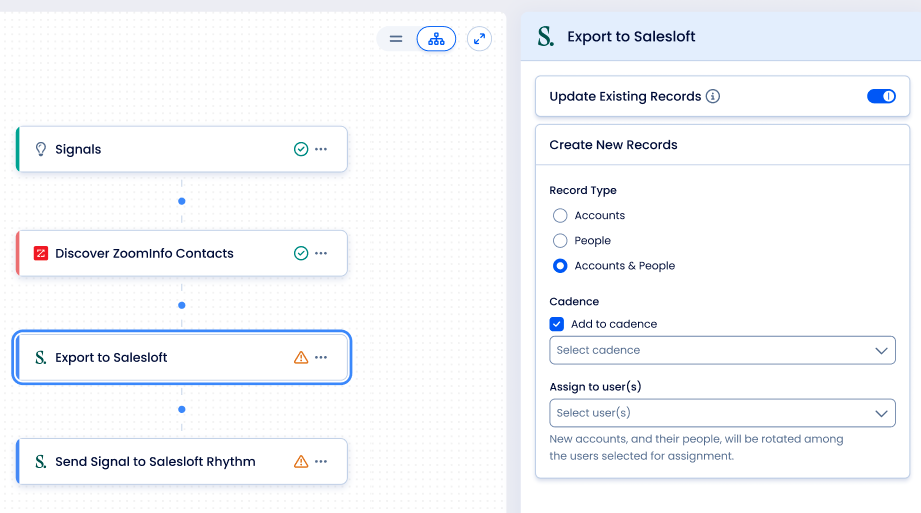
Source: ZoomInfo with Salesloft
The outreach reaches prospects through proper channels (direct dials, verified emails, ad targeting) rather than automated LinkedIn profile visits.
Multi-channel outreach: one tool or many?
Dripify's strongest advantage over Dux-Soup is its built-in email capability. The platform lets you combine LinkedIn actions with email steps in a single sequence, sending automated emails through connected Gmail or Outlook accounts.
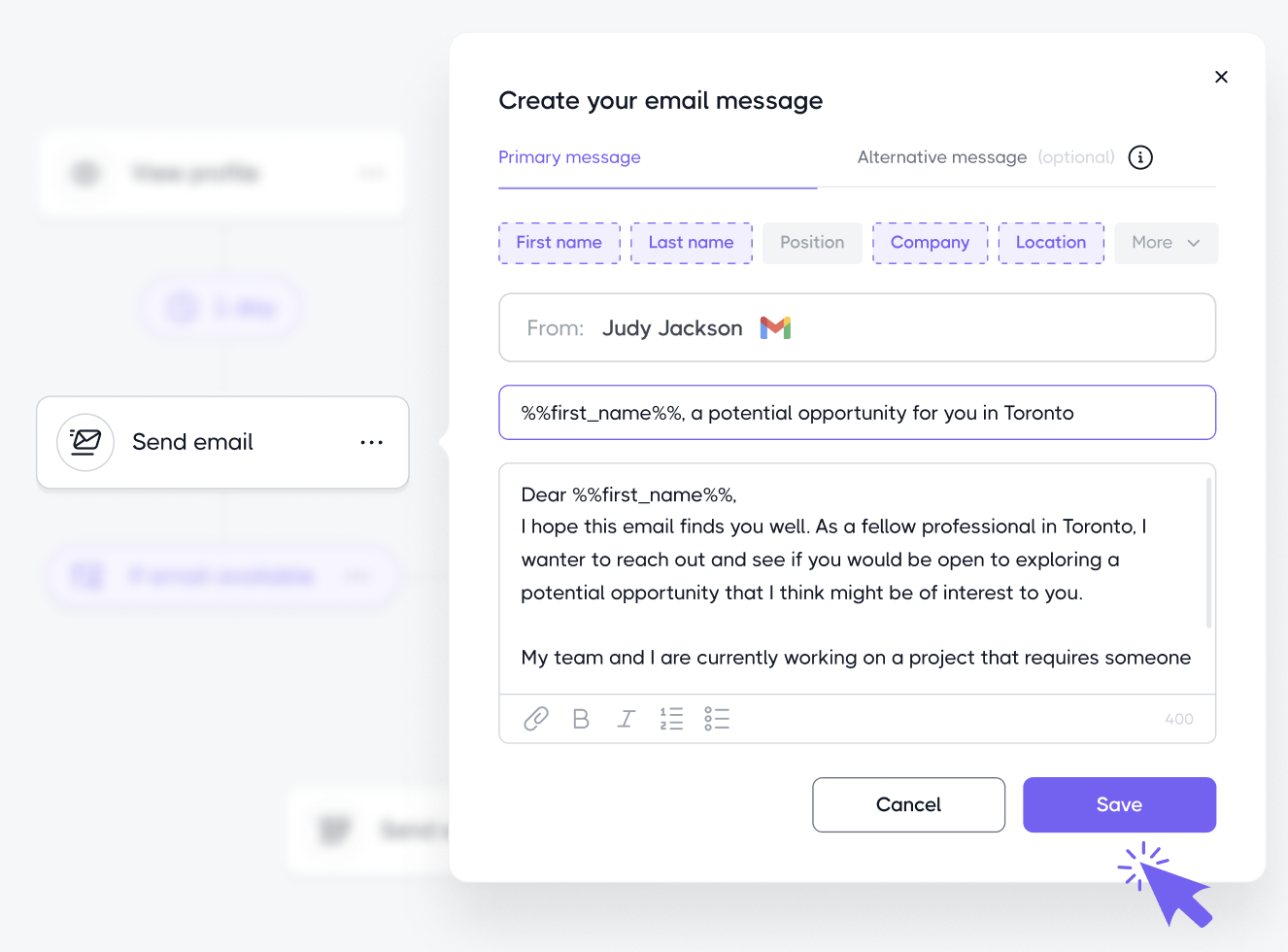
Source: Dripify Emails
The platform also includes an email finder with 100 credits per month and email verification with 98% accuracy.
Dux-Soup is LinkedIn-only. If you want email outreach, you need to route LinkedIn data through CRM integrations or Zapier/Make workflows into a separate email tool. This works, but it adds complexity. Dux-Soup offers Dux-points as a separately purchased add-on for email lookup on non-connected profiles, but there's no native email sending.
Source: Dux-Soup Integrations
ZoomInfo operates on a different level. Rather than automating actions on two channels, ZoomInfo coordinates outreach across every relevant channel from a single platform. GTM Studio enables marketers to launch plays across email, calls, ads, and direct mail triggered by buyer behavior.
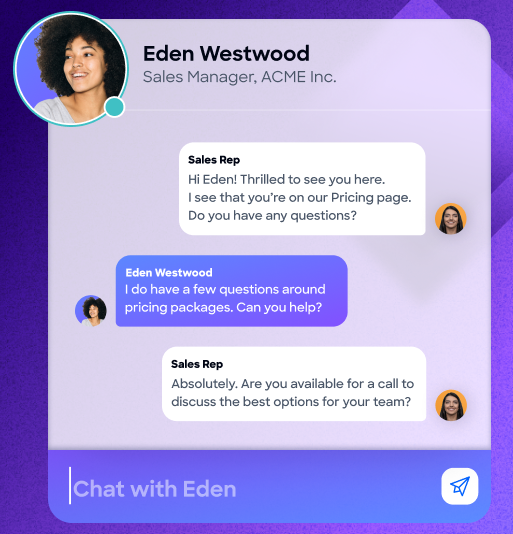
The native Demand-Side platform deploys display ads based on 300+ company attributes. ZoomInfo Chat identifies anonymous website visitors by company. And the Salesloft integration creates a signal-to-sequence flow where ZoomInfo Buying Signals sync to Salesloft Rhythm for AI-prioritized multi-touch engagement.
Source: ZoomInfo Chat
The distinction matters. Dripify adds email alongside LinkedIn. ZoomInfo coordinates every channel around the same buyer signals and account intelligence.
Sequence building and campaign logic
Both LinkedIn automation tools offer sequence builders, but with different levels of sophistication.
Dripify provides a visual campaign builder with 15+ LinkedIn actions and conditional logic that creates branching paths. For example, you can configure a campaign to check "If connected" and route leads down different paths based on connection status.
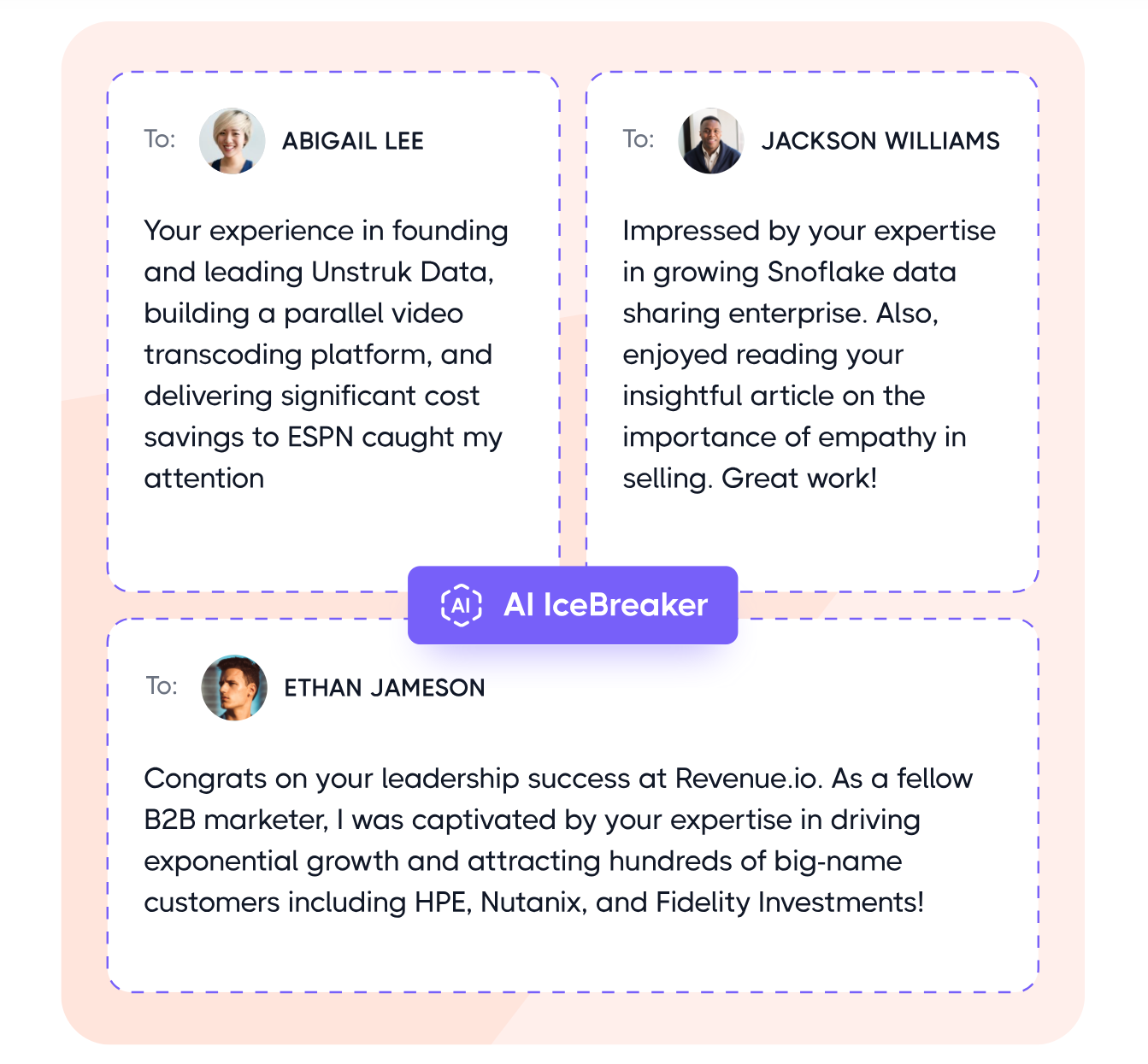
Messages support 20+ personalization variables including an AI-powered Icebreaker. Users can run unlimited campaigns simultaneously on the Pro plan and above, though the Basic plan limits you to 1 campaign.
Source: Dripify AI Icebreaker
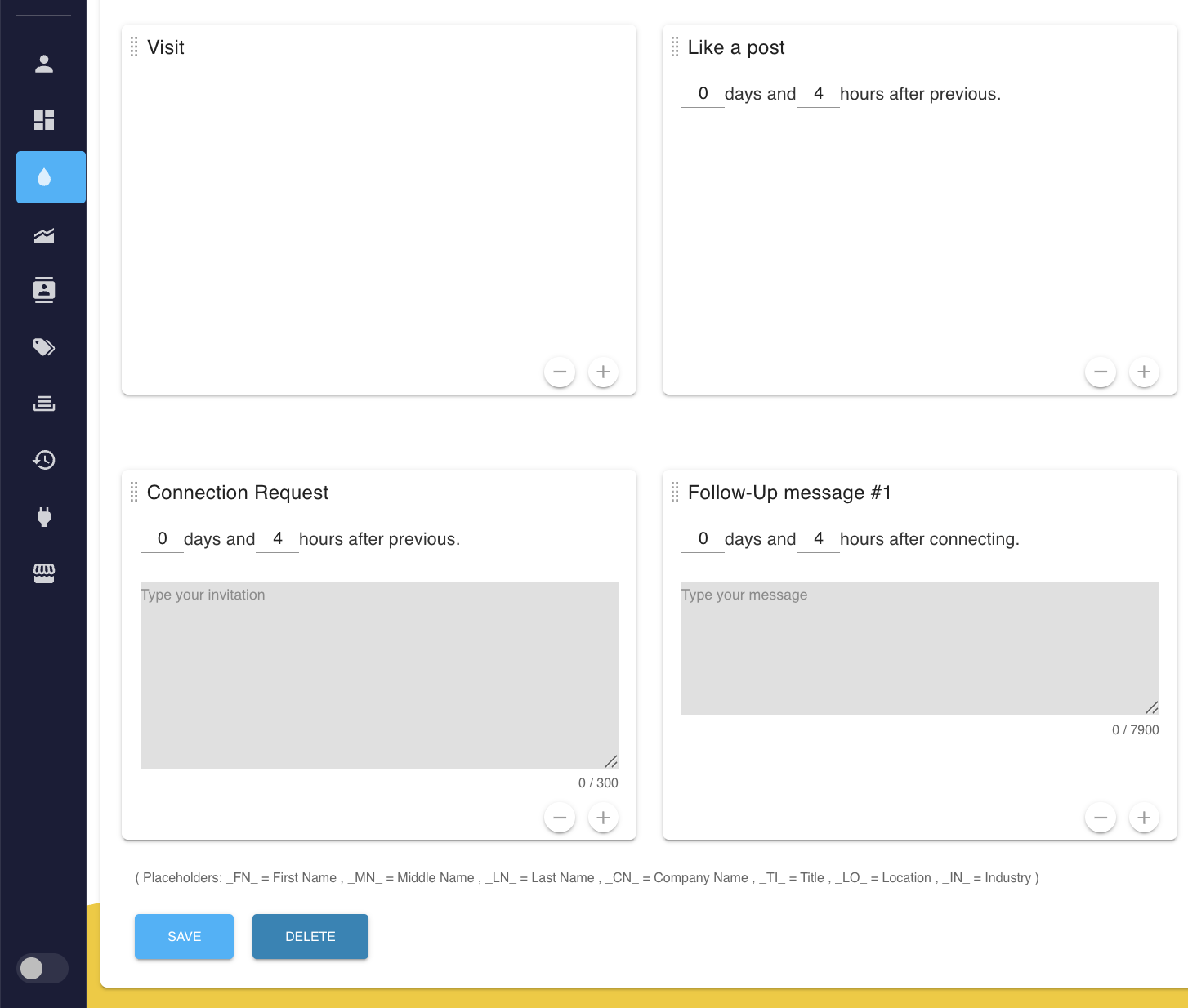
Dux-Soup uses a different campaign architecture. Its drip campaigns (available on Turbo and Cloud plans) support up to 12 actions per campaign across four campaign types: Preconnect, Postconnect, Connect, and Visit. Each type targets a specific prospect relationship stage, which prevents you from accidentally messaging someone you haven't connected with yet.
Source: Dux-Soup Connect Campaign
The sequence builder enforces guardrails at the builder level: InMails can only go before a connection request; follow-ups and endorsements cannot go before one. When a prospect replies, all pending follow-ups stop automatically and the profile is blacklisted from further campaign sends.
One notable Dux-Soup limitation: multiple G2 reviewers report that once a drip campaign is running, you cannot edit messages without restarting it. Dripify doesn't have this restriction.
ZoomInfo's approach to outreach sequencing works through GTM Workspace, where specialized AI agents handle account research, outreach drafting, CRM updates, and signal monitoring.
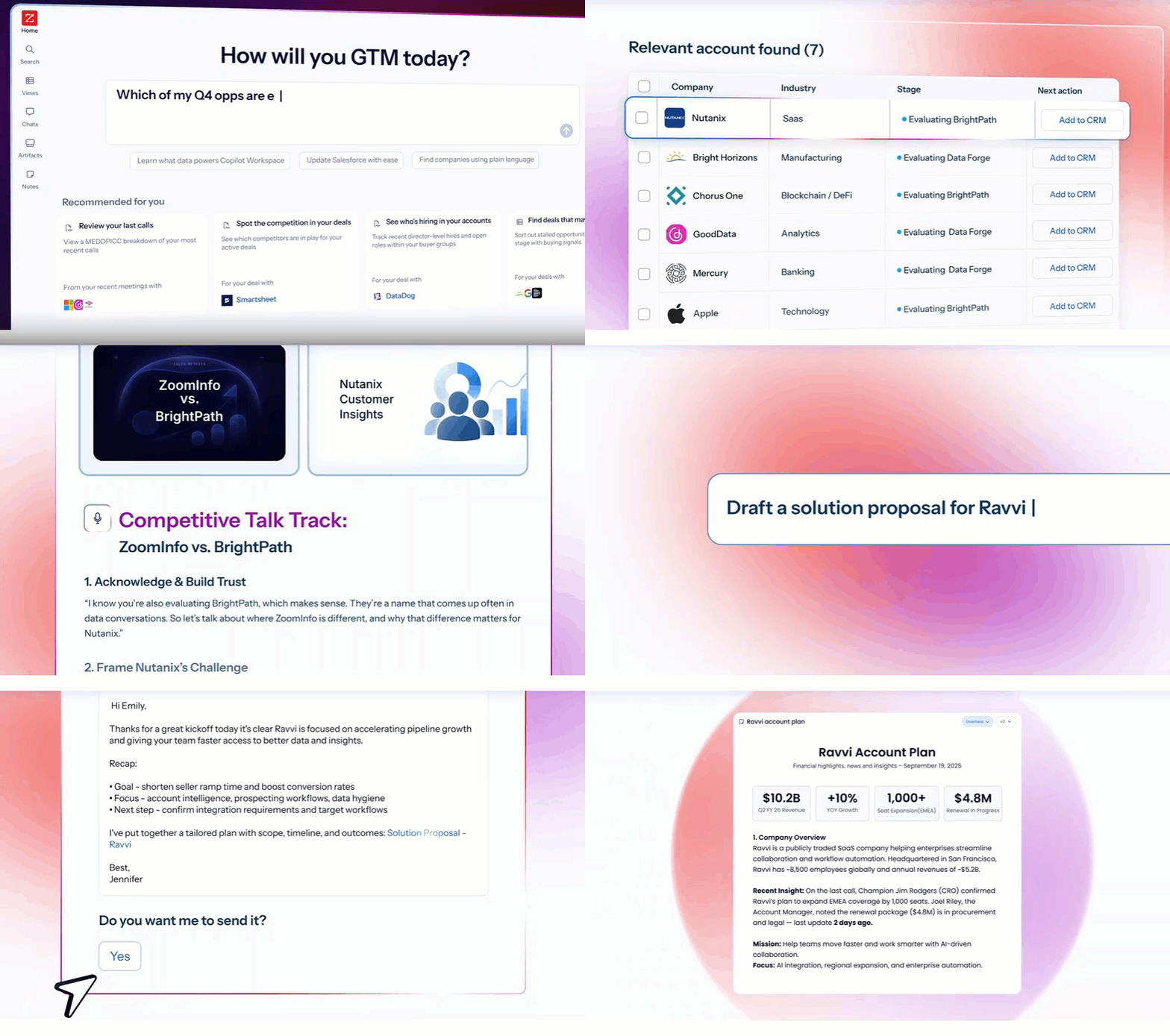
Source: ZoomInfo GTM Workspace
Rather than building static sequences by hand, sellers get an Action Feed with pre-drafted actions on every signal (G2 comparisons, funding events, executive hires) and AI-generated outreach that draws on full account context.
For ops teams, GTM Studio includes pre-built GTM plays for inbound acceleration, champion tracking, competitive displacement, and ICP targeting, launchable without engineering support. Top-performing teams run 3x more plays than average (50+ per quarter).
Team management and agency support
For solo users, either LinkedIn automation tool works fine. The differences sharpen when you add team members or manage client accounts.
Dripify offers team management on its Advanced plan ($79/month per user), which includes role assignment, duplicate outreach prevention, and centralized performance tracking. There's also an Enterprise plan with custom pricing, onboarding, and a dedicated customer success manager. However, Dripify has no dedicated agency plan. Agencies using Dripify need separate accounts for each client.
Dux-Soup has invested heavily in team and agency infrastructure. Shared Team Campaigns enforce prospect deduplication at the platform level, so two reps never accidentally target the same person. The Cloud Agency plan ($371/month) provides a single dashboard managing unlimited client LinkedIn accounts with metered daily billing for seats above the 5-seat base.
Agencies pay only for active client sessions on a given day. The Unified Inbox aggregates replies from all client accounts into one interface. The 2025 Slack and Microsoft Teams integrations let team members read LinkedIn conversations and respond from inside those tools without sharing LinkedIn credentials (Dux-Soup says this is unique among LinkedIn automation tools).
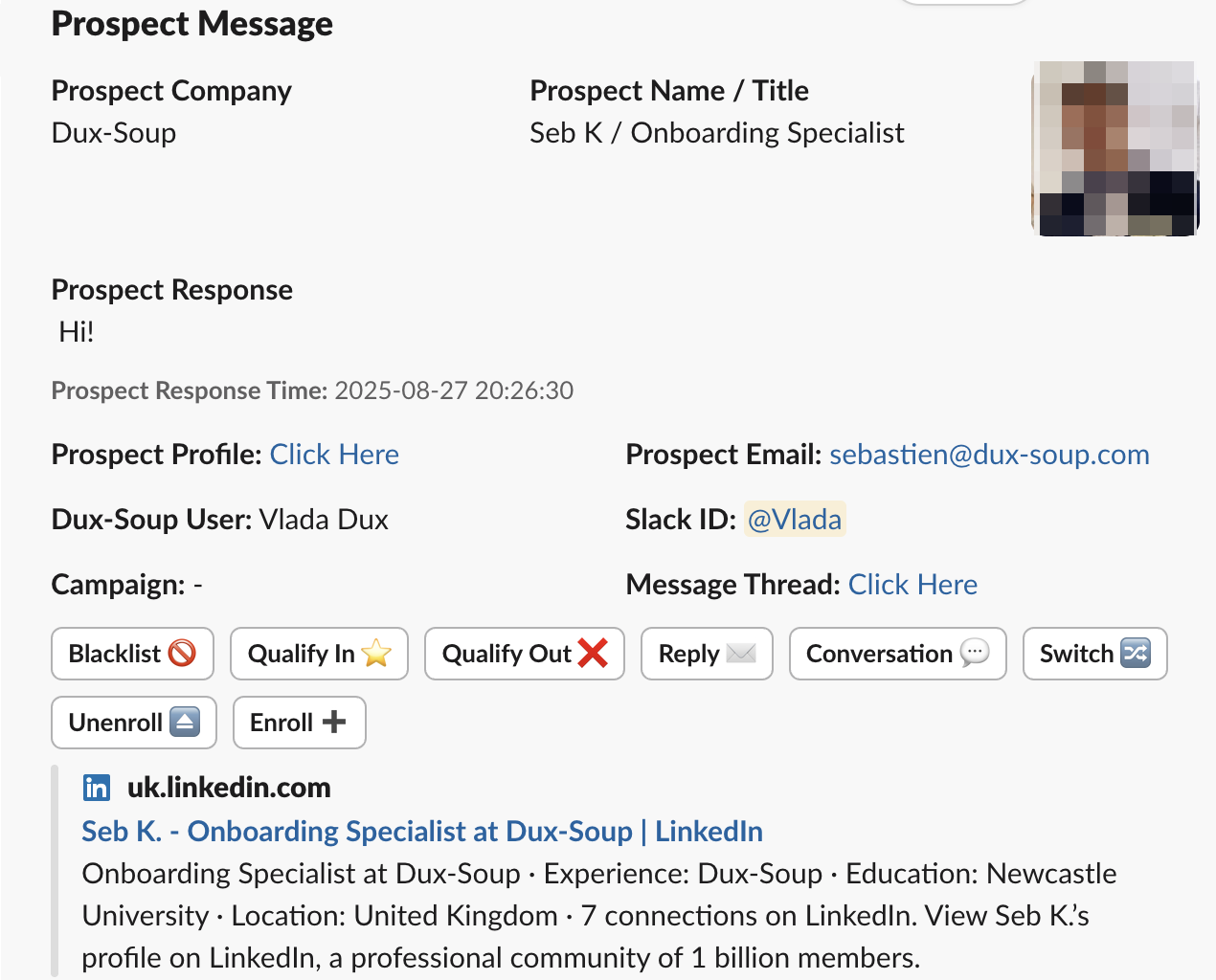
Source: Dux-Soup with Slack
ZoomInfo serves teams at a different scale. The platform supports 35,000+ companies worldwide, including enterprises like Adobe, Snowflake, and Thomson Reuters. Role-based access spans five GTM personas: Sales Development, Account Executives, Account Management, RevOps, and Demand Generation.
Rather than managing individual LinkedIn accounts, ZoomInfo unifies the go-to-market motion across teams. GTM Studio outputs (hot accounts, signals, recommended actions) feed directly into GTM Workspace for seller execution, keeping marketing and sales aligned without manual handoffs.
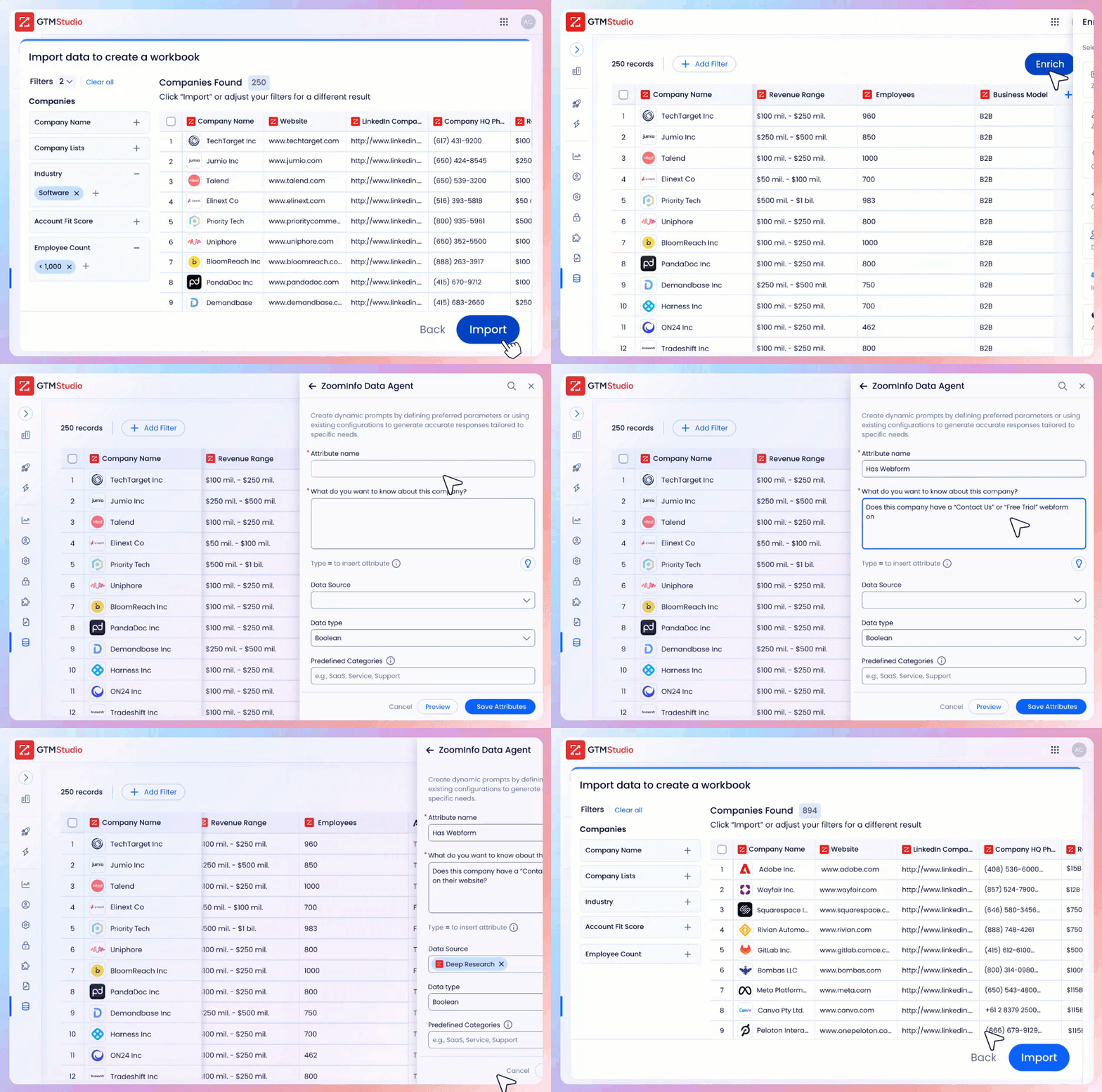
Source: ZoomInfo GTM Studio
"ZoomInfo gives us the information we need to execute. We don't have to go through and spend our time digging. It's already there, so we can be three steps ahead." (Vensure)
Pricing reveals what each platform prioritizes
Dripify and Dux-Soup compete on price. ZoomInfo competes on the value of having the right data before you automate anything.
Dripify charges per user per month: $39 Basic, $59 Pro, $79 Advanced (annual billing) or $59/$79/$99 monthly. The Basic plan is heavily restricted: 1 campaign, 20 connection requests per day, no inbox, no CSV export. Most users will need the Pro plan at minimum for unlimited campaigns and full daily quotas.
The jump from Basic to Pro doubles the useful capacity. All plans include 100 email finder credits that reset monthly but don't roll over.
Dux-Soup offers the lowest entry point in this comparison. Pro Dux starts at $14.99/month ($11.25 annual) for basic LinkedIn automation. Turbo Dux at $55/month ($41.25 annual) adds drip campaigns, CRM integrations, and the lead management dashboard. Cloud Dux at $99/month ($74.17 annual) adds always-on cloud execution.
Team plans offer volume discounts up to 50%. The 31-day refund window and ability to pause subscriptions offer contract flexibility that Dripify doesn't match.
ZoomInfo uses custom-quoted, seat-and-credit-based pricing that reflects its enterprise positioning. There are no published dollar amounts for paid tiers. However, ZoomInfo offers two free entry points: ZoomInfo Lite (a permanent free tier with 10 monthly export credits, access to the B2B database, and WebSights Lite), and a 7-day free trial with broader feature access.
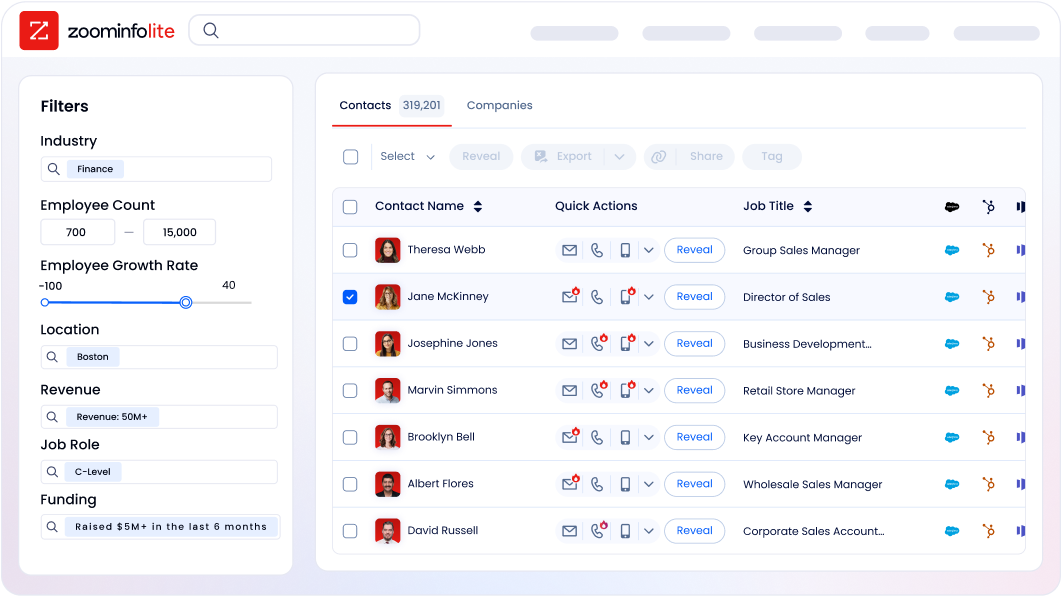
Source: ZoomInfo Lite
The pricing comparison needs context. Dripify and Dux-Soup charge for the automation engine. ZoomInfo's cost includes the data, the intelligence, the intent signals, the conversation intelligence, and the multi-channel execution layer.
A fair comparison isn't "$39/month vs. custom pricing." It's the cost of a LinkedIn automation tool plus all the supplementary data tools, email finders, and intent providers you'd need to match what ZoomInfo delivers natively.
Data and contact quality comparison
This is where the gap between LinkedIn automation tools and an intelligence platform becomes most visible.
Dripify and Dux-Soup both depend entirely on LinkedIn for their data. Your prospect lists are LinkedIn search results. Contact information is whatever LinkedIn profiles contain. Email discovery is limited: Dripify's email finder has a 45-55% success rate and provides 100 credits per month.
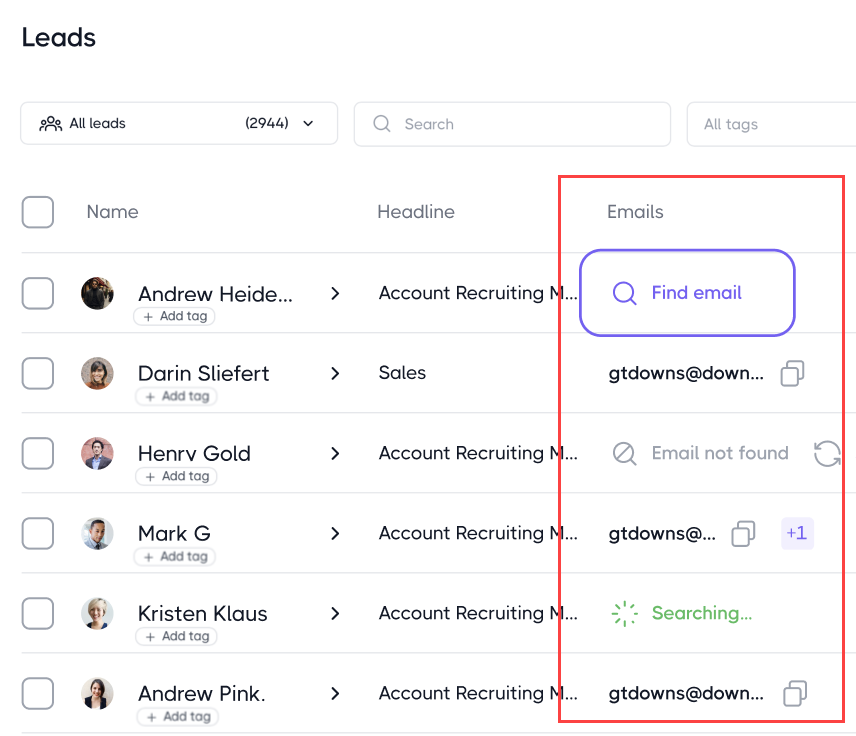
Source: Dripify Email Finder
Dux-Soup requires Dux-points, a separately purchased add-on, for email lookup beyond 1st-degree connections. Neither platform provides direct-dial phone numbers, company attributes, or buyer intent data.
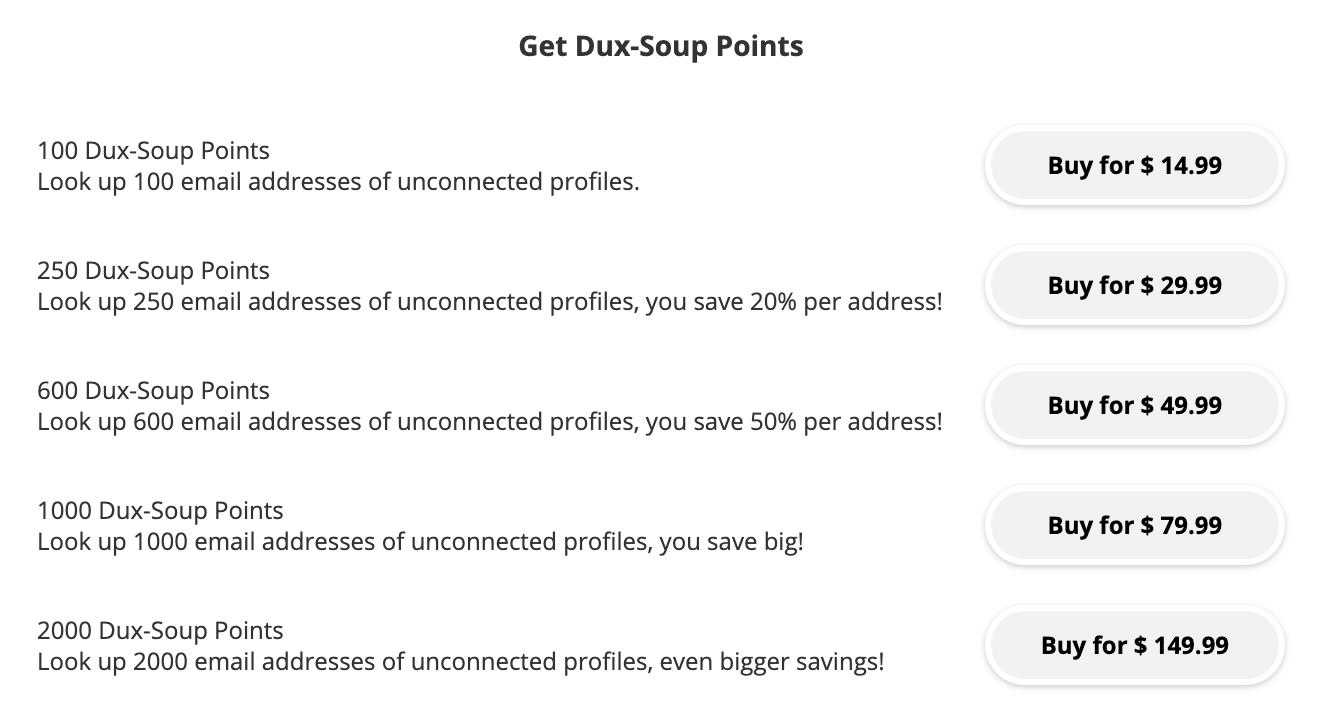
Source: Dux-Soup Points
ZoomInfo maintains the largest B2B data platform in the industry. The numbers: 500M contacts, 100M companies, 135M+ verified phone numbers, 120M direct-dial phone numbers, and 200M+ verified business email addresses.
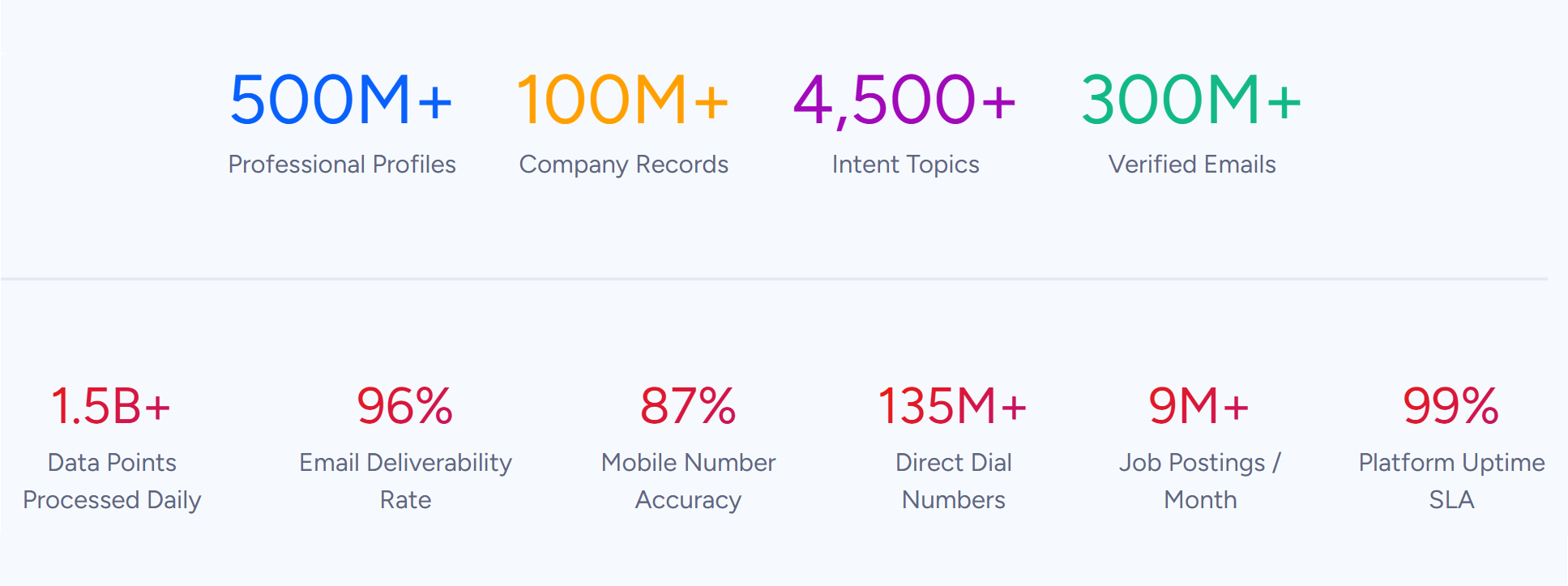
Source: ZoomInfo Data
The data comes from multiple sources: automated ML scanning of 28 million site domains daily, 95 million businesses via third-party partner data, a community of 200,000+ ZoomInfo Lite users who share data back, and an in-house Data Training Lab of 300+ human researchers. First-party data reaches up to 95% accuracy.
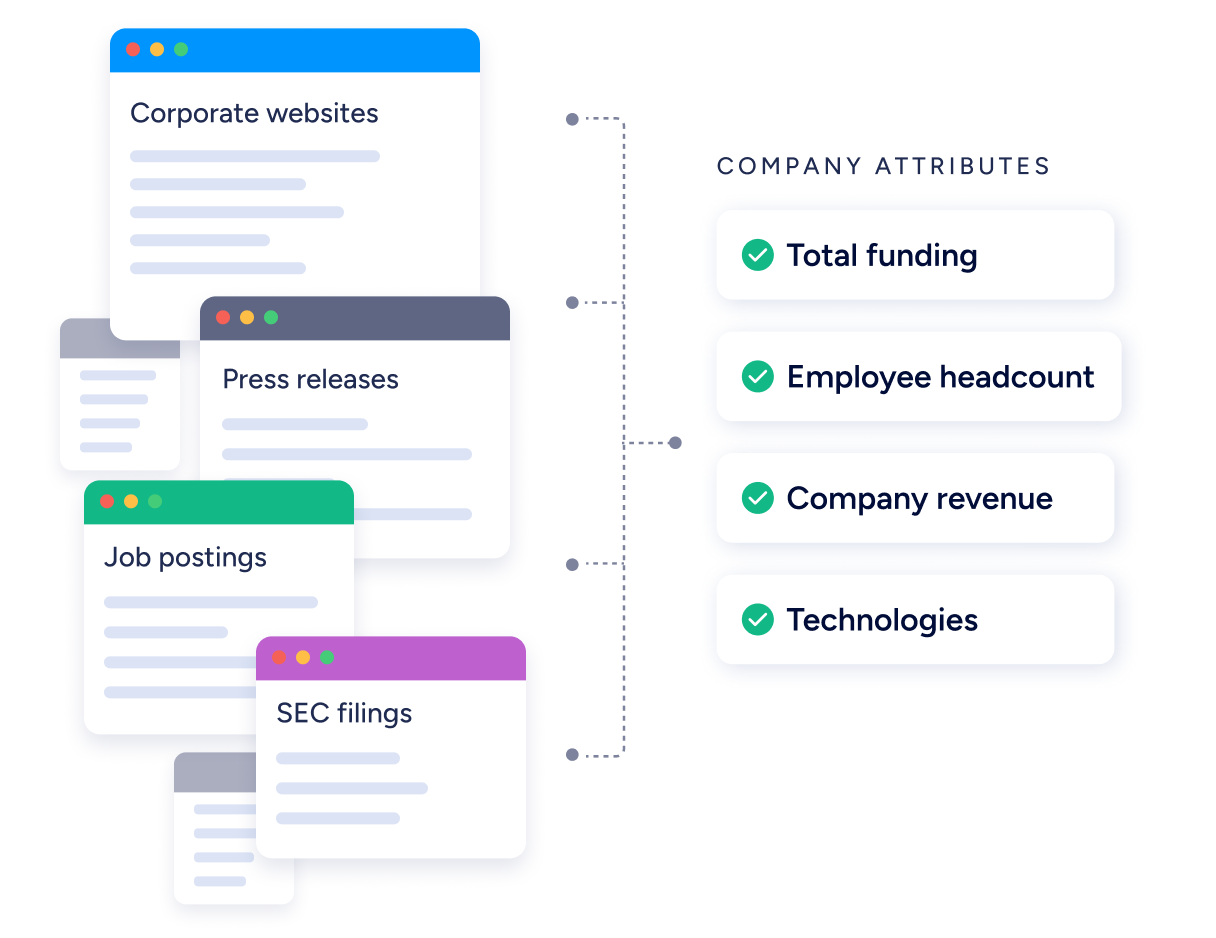
Source: ZoomInfo Scanning
The data advantage is externally validated. In a Fortune 500 competitive RFP analyzing 25 million contacts across vendors, the independent consultant concluded that "no other competitor came even close."
ZoomInfo holds 133 No. 1 rankings on G2 across Sales Intelligence, Buyer Intent, Data Quality, and related categories, and is the only vendor positioned in the Customers' Choice quadrant on Gartner's 2025 Voice of the Customer report.
"Without ZoomInfo, it would be extremely difficult (if not impossible) to achieve our business objectives. Without it, we wouldn't be able to understand the market, have the right contact data, and make meaningful connections." (Smartsheet)
Analytics and performance tracking
Knowing whether your outreach works requires different levels of visibility.
Dripify provides real-time analytics across all plans, including campaign conversion rates, daily usage stats, and period-over-period comparisons. Team analytics and step analytics are restricted to the Advanced plan. Users can A/B test by creating multiple campaigns and comparing different audiences and message templates, though a dedicated A/B testing feature is still on the waitlist.
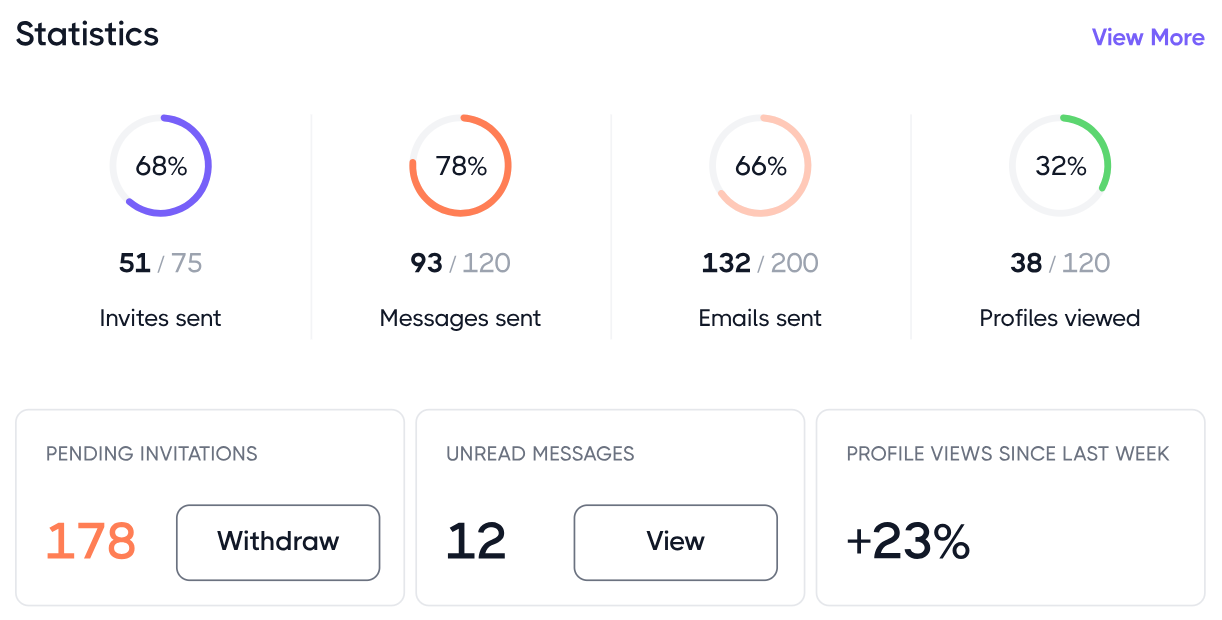
Source: Dripify Analytics
Dux-Soup offers Funnel Flow, a pipeline visualization tool that tracks prospects through seven stages: Enrolled, Invited, Accepted, Followups, Responded, Qualified, and Qualified-Out. The funnel stages map directly to completed automation activity, so a prospect's stage is always accurate without manual data entry.
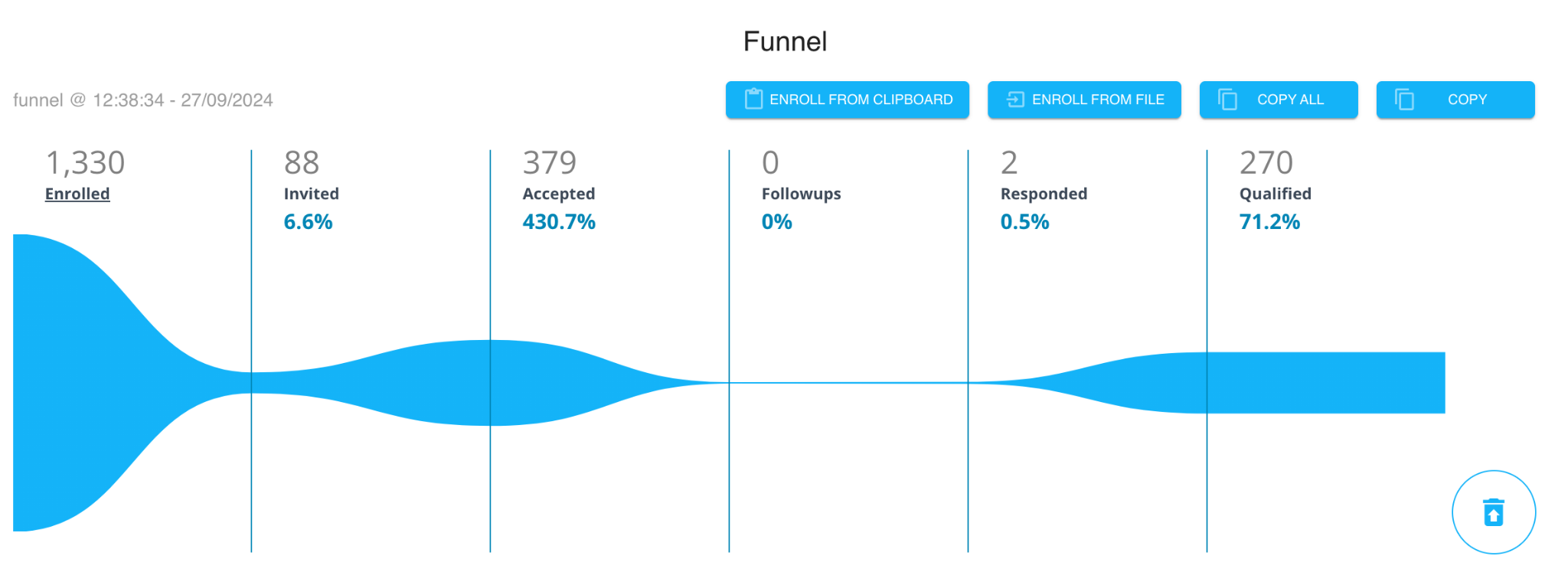
Source: Dux-Soup Funnel Flow
The Stats panel tracks KPIs like acceptance rate, response rate, and messages sent, with automatic period-over-period comparisons. However, advanced reporting and KPI tracking are explicitly listed as 2026 development priorities, confirming that current analytics are still limited.
ZoomInfo measures what matters most: pipeline and revenue impact. GTM Studio includes AI-powered dashboards tracking engagement, funnel progression, and top-performing segments. GTM Workspace provides Views, dynamic interfaces combining CRM data with real-time buying signals, filterable by intent spikes, technology changes, funding events, or personnel movements.
Chorus adds conversation analytics: talk ratios, sentiment analysis, objection detection, and deal momentum tracking. The analytics connect outreach to outcomes, not just activity to vanity metrics.

Source: ZoomInfo Chorus
"It's not just the data itself. It's more about the right data at the right time to help us reach out with the right message across that full buyer journey." (Redwood Logistics)
LinkedIn account safety: a shared concern
Every LinkedIn automation tool operates in tension with LinkedIn's terms of service. Both Dripify and Dux-Soup take this seriously, but their approaches differ.
Dripify emphasizes cloud-based execution, unique local IP addresses, and human behavior simulation. The Advanced plan adds an Activity Control feature that gradually increases daily activity limits to prevent sudden spikes. All LinkedIn credentials are encrypted.
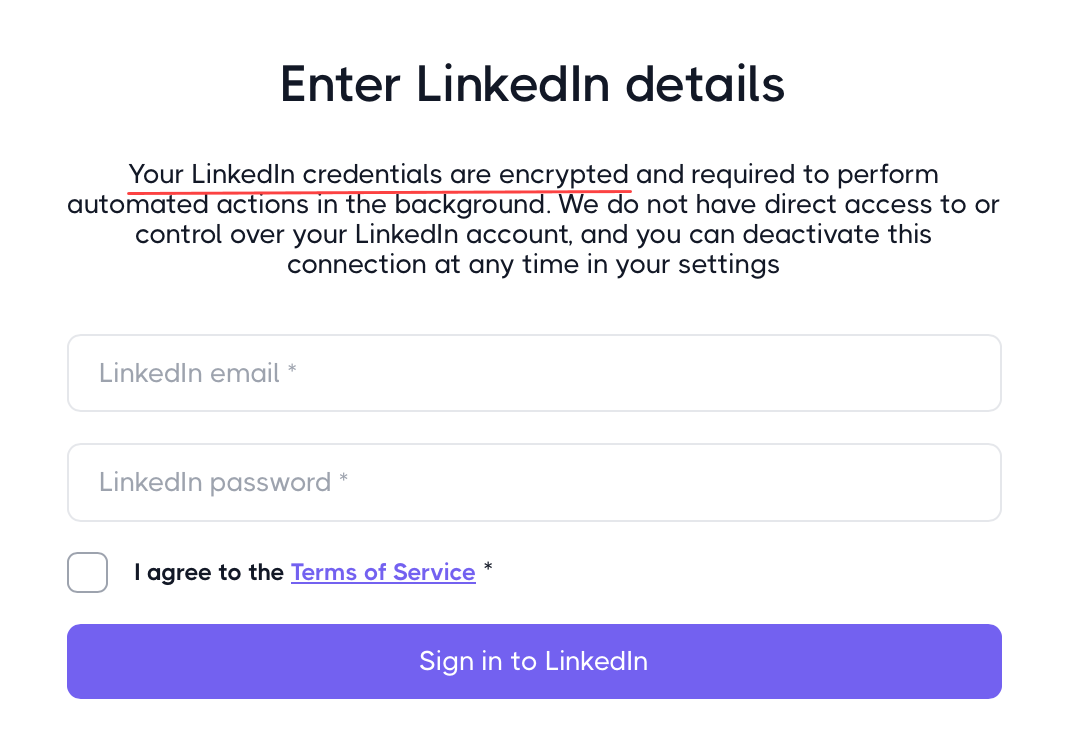
Source: Dripify with LinkedIn
Dux-Soup ships with four built-in safety features on its entry plan: activity limits, on/off scheduling, snooze-on-daily-limits, and robot-speed auto-management. On Cloud Dux, robot speed is randomized by default at the infrastructure level, removing user configuration risk.
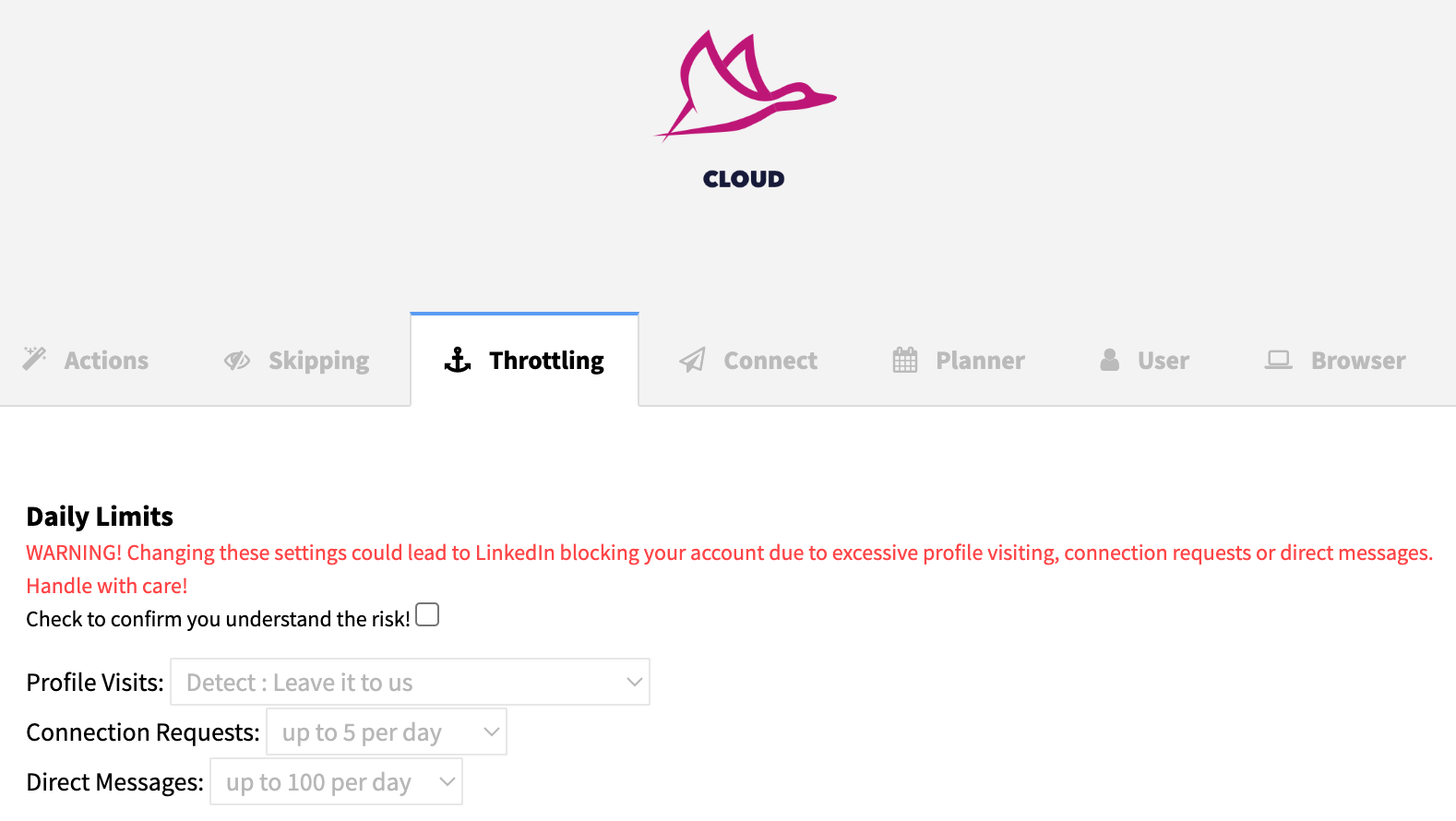
Source: Dux-Soup Cloud Dux
Because the browser extension works directly inside your own LinkedIn session, LinkedIn never sees API calls from an external IP. The company claims no reports of account bans among users operating within recommended settings.
Both platforms face the same structural reality: LinkedIn reduced monthly InMail limits to 5-10 messages per month for standard users as of January 2026. Any tightening of LinkedIn's automation policy affects the entire category.
ZoomInfo avoids this risk altogether. Instead of automating actions within LinkedIn's UI, ZoomInfo provides the intelligence and contact data for outreach through proper channels: verified direct dials, verified business email addresses, display ads, and integrated sales engagement platforms. LinkedIn remains a useful channel, but it's not the bottleneck.
Dripify vs. Dux-Soup vs. ZoomInfo: Which should you choose?
The right choice depends on what's actually limiting your sales pipeline.
Choose Dripify if:
You need cloud-based LinkedIn and email automation in a single tool
Your team already knows exactly who to target on LinkedIn
You want an intuitive interface with minimal setup time
Multi-channel sequences (LinkedIn + email) matter more than analytics depth
You're comfortable investing $59-79/user/month for full functionality
Choose Dux-Soup if:
Budget is a priority and you want LinkedIn automation starting at $14.99/month
You're an agency managing multiple client LinkedIn accounts
Browser-based automation is acceptable, or you're willing to pay $99/month for Cloud
You need CRM integrations with an open API for custom workflows
You value a decade-long track record with 300,000+ users
Choose ZoomInfo if:
You need to know which accounts are in-market before you start outreach
Your pipeline depends on data accuracy, not just automation volume
You want AI-powered account prioritization, multi-channel orchestration, and buyer intent signals
You're building a scalable GTM operation across sales, marketing, and RevOps
You need verified direct dials, business emails, and company intelligence in one platform
Try ZoomInfo's intelligence-first approach with a free trial or start with ZoomInfo Lite at no cost.
LinkedIn automation tools like Dripify and Dux-Soup solve a real problem: manual outreach doesn't scale. But the harder problem isn't sending more messages. It's sending the right message to the right person at the right time.
ZoomInfo provides the intelligence layer that makes every outreach channel, including LinkedIn, more effective. The data tells you who to reach. The intent signals tell you when they're ready. The GTM Context Graph tells you what to say and why it will resonate.
For teams still building their target lists from LinkedIn search, Dripify or Dux-Soup will automate the execution. For teams ready to move from activity-based selling to intelligence-driven GTM, ZoomInfo is the foundation everything else should build on.
Dripify vs. Dux-Soup vs. ZoomInfo FAQ
What is the main difference between Dripify, Dux-Soup, and ZoomInfo?
Dripify and Dux-Soup are LinkedIn automation tools that automate actions like connection requests, messages, and profile visits. Dripify adds built-in email outreach and runs entirely in the cloud. Dux-Soup offers a lower-cost browser extension model with an optional cloud tier and strong agency infrastructure.
ZoomInfo is an AI-powered GTM intelligence platform that provides B2B data (500M contacts, 200M+ verified emails, 135M+ verified phone numbers), buyer intent signals, and a multi-channel execution layer that LinkedIn automation tools do not include.
Which platform is the cheapest?
Dux-Soup has the lowest starting price at $14.99/month (Pro Dux, annual billing) for basic LinkedIn automation. Dripify starts at $39/month (annual) but limits the Basic plan to 1 campaign and 20 daily connection requests. ZoomInfo uses custom pricing for paid plans but offers a permanent free tier (ZoomInfo Lite) with 10 monthly export credits and access to the B2B database.
Can Dripify or Dux-Soup replace ZoomInfo?
No. Dripify and Dux-Soup automate LinkedIn outreach actions but do not provide contact databases, direct-dial phone numbers, buyer intent data, company attributes, or AI-powered account intelligence. ZoomInfo provides all of these. The tools serve different purposes: LinkedIn automation handles execution, while ZoomInfo provides the intelligence that determines who to target and when.
Which platform is safest for my LinkedIn account?
Both Dripify and Dux-Soup include safety features like activity limits, human behavior simulation, and gradual ramp-up controls. Dripify uses cloud-based execution with unique local IP addresses. Dux-Soup's browser extension operates within your own LinkedIn session, avoiding external API calls.
ZoomInfo does not automate LinkedIn actions directly, so it carries no LinkedIn account restriction risk. It provides contact data and intelligence for outreach through other channels.
Which is better for agencies: Dripify or Dux-Soup?
Dux-Soup is the stronger choice for agencies. Its Cloud Agency plan ($371/month) offers a single dashboard managing unlimited client LinkedIn accounts with metered daily billing, a unified inbox across all client accounts, and automatic VIP support status. Dripify has no dedicated agency plan, requiring separate accounts for each client.
Does ZoomInfo include LinkedIn automation?
ZoomInfo does not automate LinkedIn actions (connection requests, profile visits, or InMails). Instead, it provides verified contact data (direct dials, business emails), buyer intent signals, and AI-powered outreach through its GTM Workspace for sellers and Salesloft integration for multi-channel sequences.
Organizations that want both can use ZoomInfo for intelligence and targeting alongside a LinkedIn automation tool for execution.
Which platform has the best CRM integrations?
ZoomInfo has the broadest integration ecosystem with 120+ partner integrations in its App Marketplace, including Salesforce, HubSpot, Microsoft Dynamics, Snowflake, and Databricks, plus an Enterprise API and MCP server for custom integrations.
Dux-Soup has native CRM connectors for HubSpot, Salesforce, Pipedrive, Freshsales, SharpSpring, and HighLevel, plus an open API. Dripify integrates with HubSpot, Salesforce, and 1,000+ tools via Zapier and Make, but has no public API.
Can I use ZoomInfo together with Dripify or Dux-Soup?
Yes. ZoomInfo can identify which accounts are in-market and provide verified contact data, while Dripify or Dux-Soup automates the LinkedIn outreach execution. ZoomInfo data can be exported to build more targeted LinkedIn prospect lists, and both LinkedIn tools integrate with the same CRMs that ZoomInfo enriches.
